
AFTERPLAY
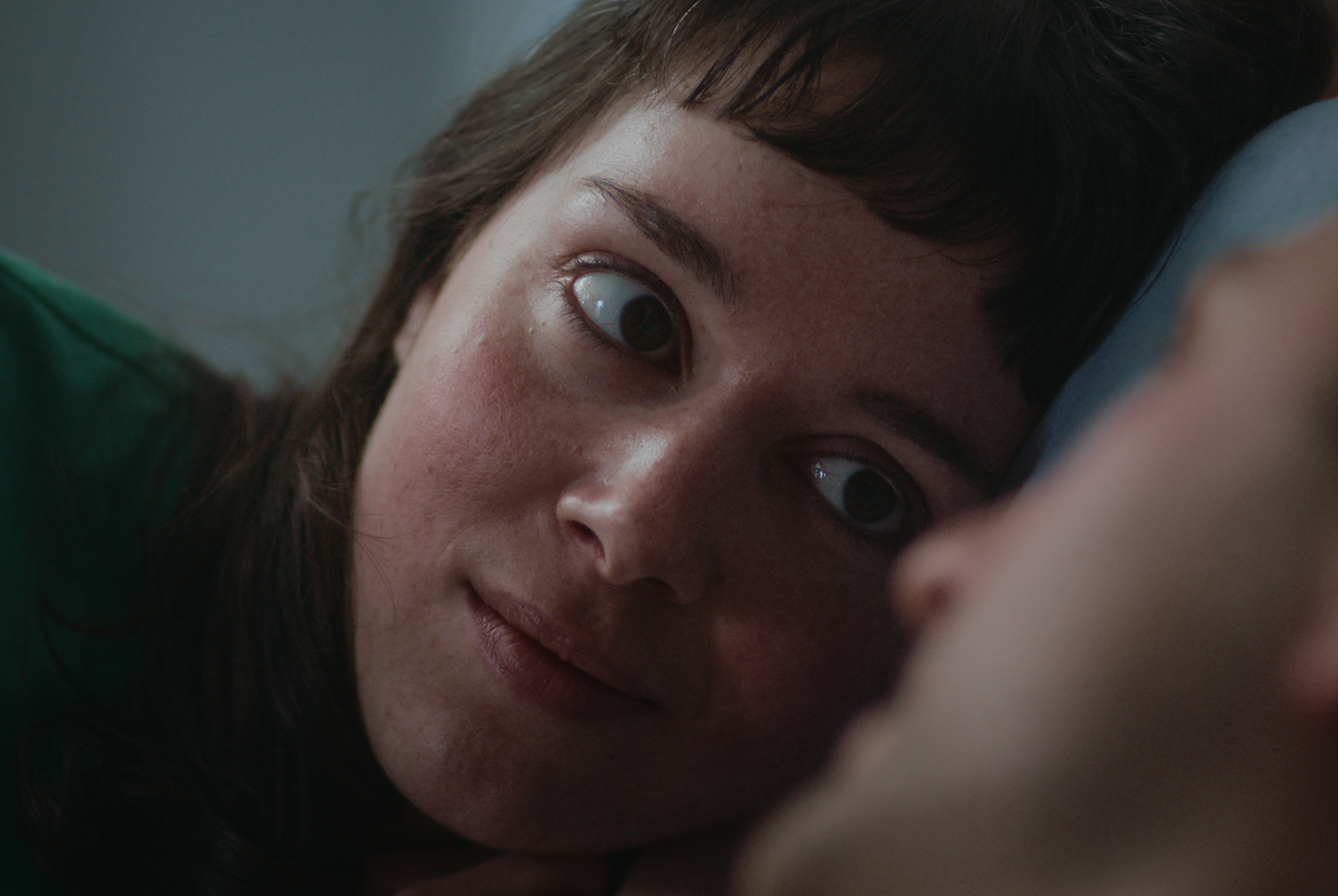
Written & Directed by Iris Breward
Produced by Chloe Huybens
After sex, a couple’s conversation about opening their relationship gets derailed by a persistent fly.
ABOUT THE FILMMAKER
Iris Breward is a writer and director based in London. Her work blends humour with keenly-observed character studies, often exploring power, intimacy and the awkward realities of human relationships.
She holds a BA in Spanish and Film Studies (UCL), and has built her practice through short-form storytelling informed by her background in film theory. Her most recent short, Micro Bangs, premieres at London Short Film Festival (2026) and was one of eight selected for Primetime Re:Present, a private industry showcase highlighting emerging voices to leading UK talent agents.
Her previous films have screened at BAFTA- and BIFA-qualifying festivals including Aesthetica Short Film Festival, Women X (where she was nominated for the Rising Star Award 2025) and Kino London. Her short film Sidney premiered online on Directors Notes and was nominated for Best Comedy at their 2025 DN Awards. Her short Afterplay also recently premiered on their platform and is in the top 25 films on their YouTube channel, with over 100k views. She is the recipient of multiple awards, including Best Director, Best Comedy and Best Short Film and was a finalist for The Pitch Film Fund 2025 with her comedy screenplay Sauna.
READ OUR INTERVIEW WITH IRIS
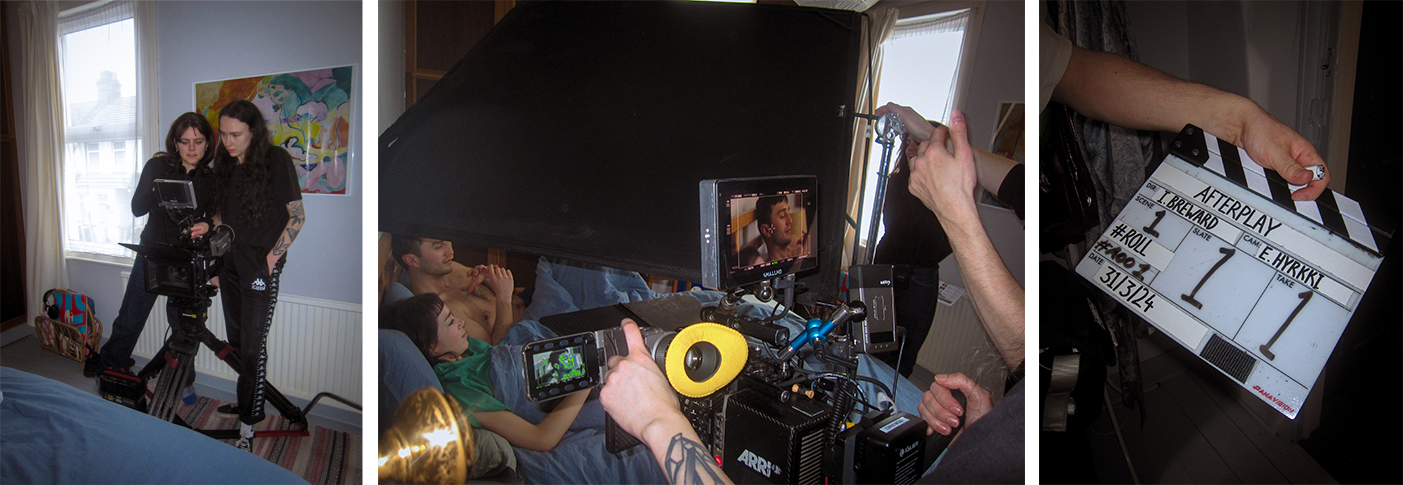
Welcome to our Weekly Pick! Let's dive straight in. I understand that your starting point for Afterplay was wanting to tell a contained, performance-focused story with tension built through a single conversation. Obviously, that inspiration could manifest itself in a variety of ways. How did you land on this particular scenario as the one you wanted to breathe life into?
Afterplay was the culmination of various ideas and anecdotes I’d had in my head for a while. I wanted to explore power dynamics in romantic relationships - particularly that push and pull between avoidance and anxiety, and how differently people respond to emotional pressure. The fly element is inspired by a story my Mum tells about a time my Dad got obsessed with killing a fly, and I’d always found funny and loaded with meaning. From there I explored scenarios that felt relatable and reflected the kind of conversations people in my generation are having around commitment and monogamy. I wanted to find a scene that moved a very intimate place to somewhere more dangerous and destabilising, so the post-coital conversation felt perfect for that.
Afterplay has themes of decision paralysis and fear of sacrifice. Can you chat about what attracted you to comment on these themes within your work?
Being someone who struggles with decision paralysis and fear of sacrifice! This film very much speaks to my own anxieties around doors closing with every choice made, and the doom spiral of reckoning with your own mortality. It feels pertinent to the choice overload/optimisation culture moment we’re in, where we are constantly bombarded with the idea of better options, better selves, better lives. I think especially in my early 20s, before the frontal lobe kicked in, I spent a lot of time looking around for guidance, answers, someone to decide for me. And I think the paralysis and communication breakdown between these characters is linked to that sense of being untethered and insecure in your own direction.
Afterplay first caught our eye as an Official Selection at our film festival last year. Can you tell us a bit about your festival journey with this film? The highs, the lows, the in-betweens.
We had such a great time at Kino! It was so special to premiere in London in such a brilliant block of films about complex intimacy, so that was definitely a highlight. Afterplay had a mostly UK-based festival run, I wanted to focus on submitting to festivals that I would be able to attend. That said, we premiered at British Shorts Berlin but then came home to Brighton Rocks, Women X and Kino London. I’ve really enjoyed seeing the film with audiences and experiencing the full spectrum of reactions! Of course there’s always lows in a festival run, and plenty of rejections, but I’m really happy with our short and sweet circuit because I was quite impatient to get the film online and out in the world. And now it is!
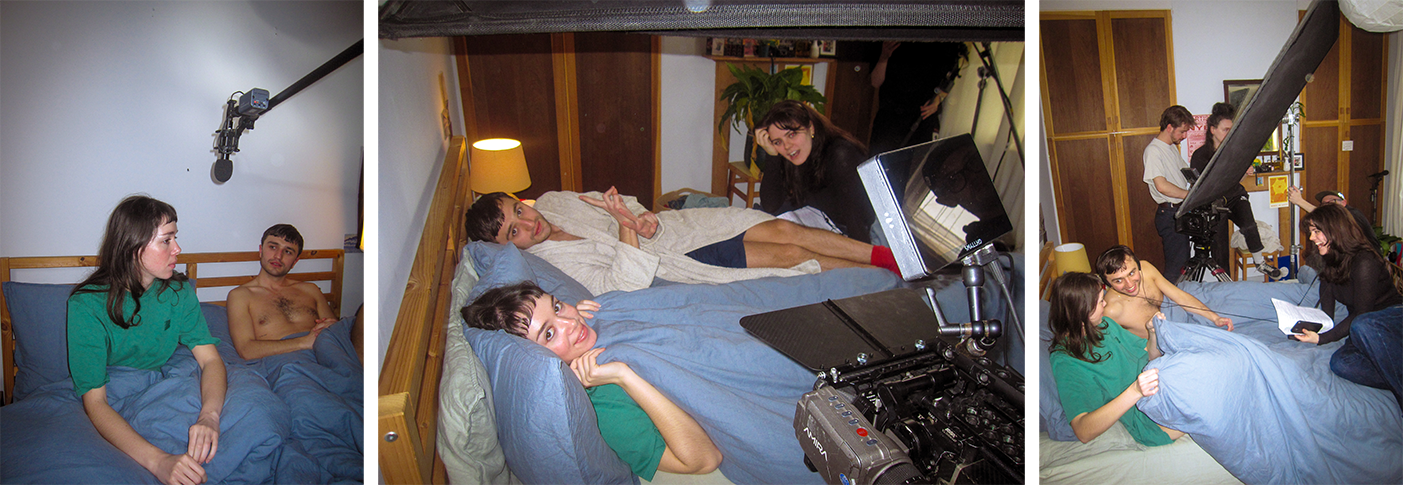
For the project you worked with Intimacy Coordinator Ian West. Can you talk a bit about the director / IC collaboration and that worked for your production?
Since IC's are such a new role there's a lot of curiosity about them. Sure there's lots of talk about boundaries and on-set safety for all involved, yet many directors have expressed a deeper sense of creativity and authenticity working with an IC. In your experience did you feel working with an IC unlocked more creativity?
It was my first time working with an IC so I was a bit nervous, but Ian was great. We initially were going to have more nudity in the film, but even with the nudity that remained and the intimate nature of the scenes, he brought so much care and clarity to the process. There was a real sense of structure around boundaries and consent, which was honestly quite eye-opening for me as a director. It made everything feel very considered rather than awkward or uncertain. Honestly it was so nice to have someone with that hat on, so that the actors and I were more free to focus on the story. Working with Ian certainly unlocked some creativity around how to direct the simulated sex audio, he had a fantastic approach that relaxed everyone and opened up space for more authentic performances.
What advice or hacks would you give to other short filmmakers?
Ooft that’s hard. I can’t take credit for a lot of it, but reading Directing Actors by Judith Weston was huge for me. Learning how to work with actors, doing some acting myself and basically just appreciating how important performance is. If the script and the performances aren’t good - very little else matters, so practice your writing as well (if nothing else because it’s free!). Finding community and a sacred circle of peers who you vibe with, I’ve done an annual writing retreat for 2 years now and it’s been seminal for me. And don’t spend all your money on your first film.
For the women filmmakers, have conviction in yourself and make the work how you wanna make it, not how someone tells you you’re supposed to. Something I still have to hold myself to!
What are you working on now?
Right now I have two shorts in development, which I’m hoping to make in 2026 and 2027. One is about a woman clashing with her best friend’s boyfriend over a birthday cake, the other about a blocked plughole that becomes impossible to ignore. Beyond that I recently wrote my third feature, and feel like I’m finally cracking that form, at least in terms of writing! I’m developing a new concept which I’m hoping could become my debut feature, so I’m quite locked in on that. And my new 5-min short Micro Bangs is currently on the festival circuit!
Any film recommendations that we should add to our watchlist?
God don’t get me started. I dunno what the people have watched! My most recent 5 stars are: The Cranes Are Flying (phenomenal and radical, feels so cutting edge for a film made in 1957), Mysterious Skin (trailblazing and so fucking cool) and Woman in the Dunes (left me genuinely speechless). I’ve actually been on a bit of a Japanese cinema hype which also included The Human Condition trilogy (insane, staggering, also - too long) and Audition which I LOVED.
