

BENJI
A seemingly innocent TV commercial for a family-friendly recycling bin becomes increasingly bizarre when the father decides to recycle more than just household waste.
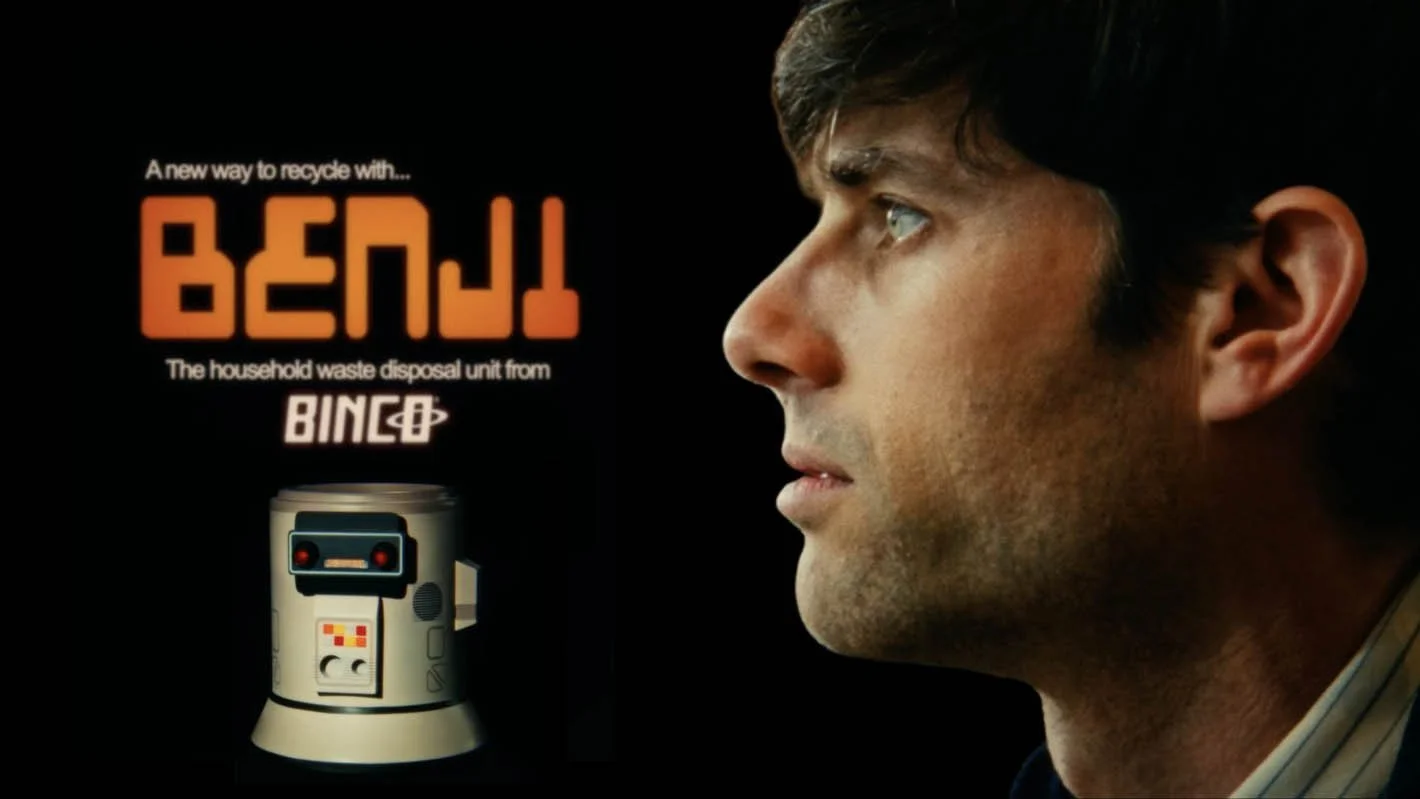
Written, Produced, & Directed by Oscar Garth
A seemingly innocent TV commercial for a family-friendly recycling bin becomes increasingly bizarre when the father decides to recycle more than just household waste.
ABOUT THE FILMMAKER
A director of photography with a bold, playful style, Oscar brings surreal stories to life through the lens. With multiple shorts under his belt, Oscar recently completed his first feature film, and is currently developing a series with comedy writer/director/performer James Button. Oscar's passion for storytelling has recently led him to explore directing as well, with his debut short Benji.
READ OUR INTERVIEW WITH OSCAR
Welcome to our Weekly Pick! Let's dive straight in.
Benji first caught our eye as an Official Selection at the 2024 edition of our film festival when it won an award for production design.
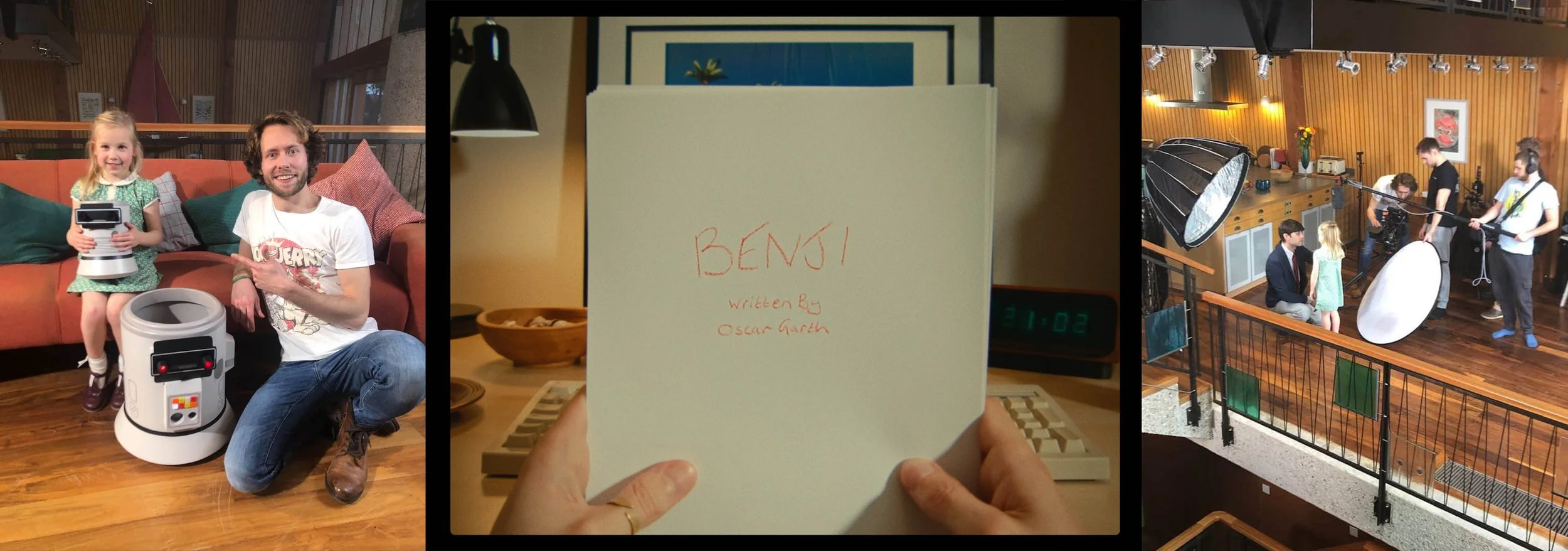
First let's chat about the design of the film and its awesome retro aesthetic. How did you go about sourcing all of the elements needed to pass off a convincing classic look that feels more like it's been plucked from the past vs made anytime recently?
I watched a LOT of old TV ads. They were bonkers back then, but there’s something incredibly charming about them that has always appealed to me. Possibly the happy-go-lucky, overly optimistic vision for the future, and all the goofy tech.
I was really meticulous about everything with Benji, it was so much fun to design the look for such a bold, playful world. It all clicked into place when I stumbled upon 'The Houseboat' in Dorset. Most locations I looked at were just normal modern houses with a bit of vintage wallpaper, but this place was a literal 1960s 'House of Tomorrow'. It came almost completely dressed, so our production designer Jamie just had to swoop in and add some finishing touches, along with a few random retro knick-knacks I nabbed from my flat.
On the tech side, I shot on a Blackmagic Micro, which has a gorgeous super 16mm sensor, getting me most of the way to a film look. Coupled with an old, beat-up Canon servo zoom lens to get those playful TV ad snap-zooms, and give an overall de-tuned feel.
And then of course, there are the Benji bins. I found an amazing illustrator on Instagram, Ann-Sophie De Steur, to sketch them out, and then JSM Model Makers down in Marlborough brought them to life with actual moving eyes, switches, and LEDs. They now live with me in my flat. One is a functioning desk bin.
Can you tell us a bit about your festival journey with this film? The highs, the lows, the inbetweens.
Well, Benji had a great run, and nabbed a handful of awards including the Andy Jones Award at Aesthetica, Best Micro-Budget Short at Kino, and was one of the Judges 6 at Exit6 fest. More importantly though were the reactions I got from people leaving the cinema. It was always a joy hearing peoples’ verdict on exactly what was going on in the film, with one notable review being “I’ve no idea what happened at the end there but I was in tears”.
Getting the film online has been a long time coming. How have you found the reception of the online release of the film?
I think again, the biggest joy for me is witnessing in-person reactions to the film, discussing it over a pint, and using it as a springboard to chat creatively about other projects. Now that it’s online, I honestly don’t think about it much, my head is already onto the next project.
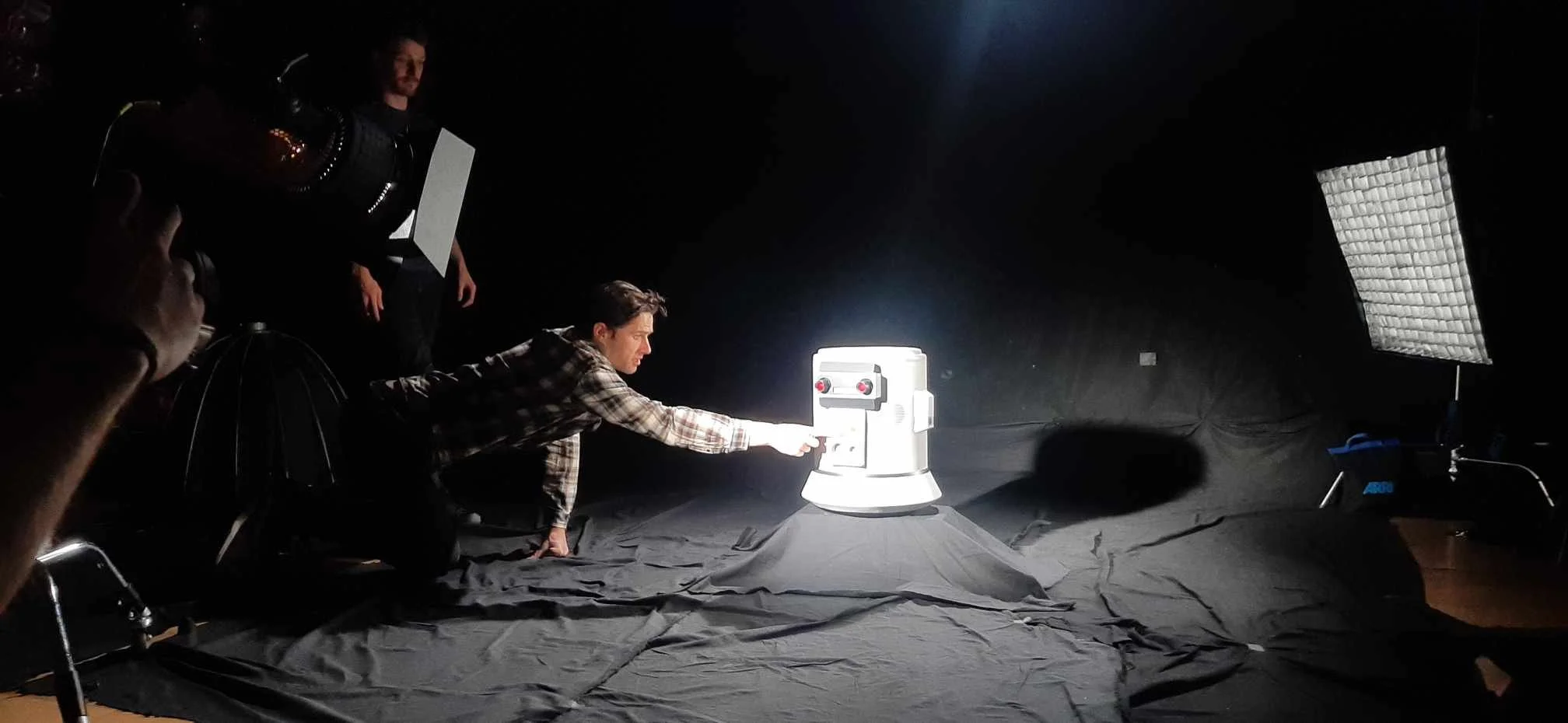
You often work as a cinematographer for other directors. Can you talk about how your process changes when shooting for others vs shooting for yourself?
When it’s your own film, you’ve got the whole project - the script, the performances, the existential dread, all of it your brain at once. When I’m just wearing the DP hat it gets a little simpler.
It’s pretty similar in terms of storytelling. I’m always thinking about the narrative and what my own creative eye can bring to the table. And so, the directors I love working with most trust that together we can create something more than the sum of its parts. It’s always a hugely collaborative effort, I’m not just chucking a camera down, the vision for the whole project has to be mutual. It’s a great feeling when you develop a shorthand with a director and suddenly every creative decision you both make it in-line with that vision.
What advice or hacks would you give to other short filmmakers?
My advice would be don’t look for hacks. Focus on creating something authentic, that brings up some emotion in you. Try and look at whatever anyone else is doing as little as possible, and for the love of god don’t hang your worth as a filmmaker on laurels or accolades.
What are you working on now?
I’ve always got a bunch of daft ideas bubbling away. The next one will likely be a short called Channelling Walter Fishman, about a hermit who lives underground and makes crap electronic music. Parallel to that, I’m jumping into feature development with long-time partner-in-crime James Button. We’re writing a comedy feature debut about a 900-year-old man stuck in a bleak care home who just wants to get back to his castle… so stay tuned for that nonsense.
Any film recommendations that we should add to our watchlist?
The last short I saw at a festival that really landed for me and deserves a shoutout, was ‘I Have a’ by Rory Waudby-Tolley. Fast-paced daft animation about a guy listing all the things he has… You have to just watch it.
One short I do keep coming back to as a solid source of inspiration is The Privates by Dylan Allen. “An unknown rock band struggles with a radioactive energy in their music that blows up amps, liquefies tape decks, and starts electrical fires”. It’s a little bit Edgar Wright, with a touch of Spielberg whimsy, and not only is it beautifully crafted in terms of cinematography, art direction, score and sound design, but the stand-out attraction for me is the naturalistic performances and editing. It all feels highly conversational, a bit like in Alien, where quite often you’re lingering on reactions rather than line delivery, and fully buying into the idea these guys are in the same room talking over each other. I honestly can’t believe it was never picked up for a feature.
Apply to get your short selected as our Weekly Pick

DO AS I SAY
A middle-aged piano teacher, mourns her failed career as a concert pianist with a drink always in hand. Grappling with this aching disappointment and unfulfilled legacy, she is pushed to the end of her tether by the rebellious student she once perceived as her younger self.
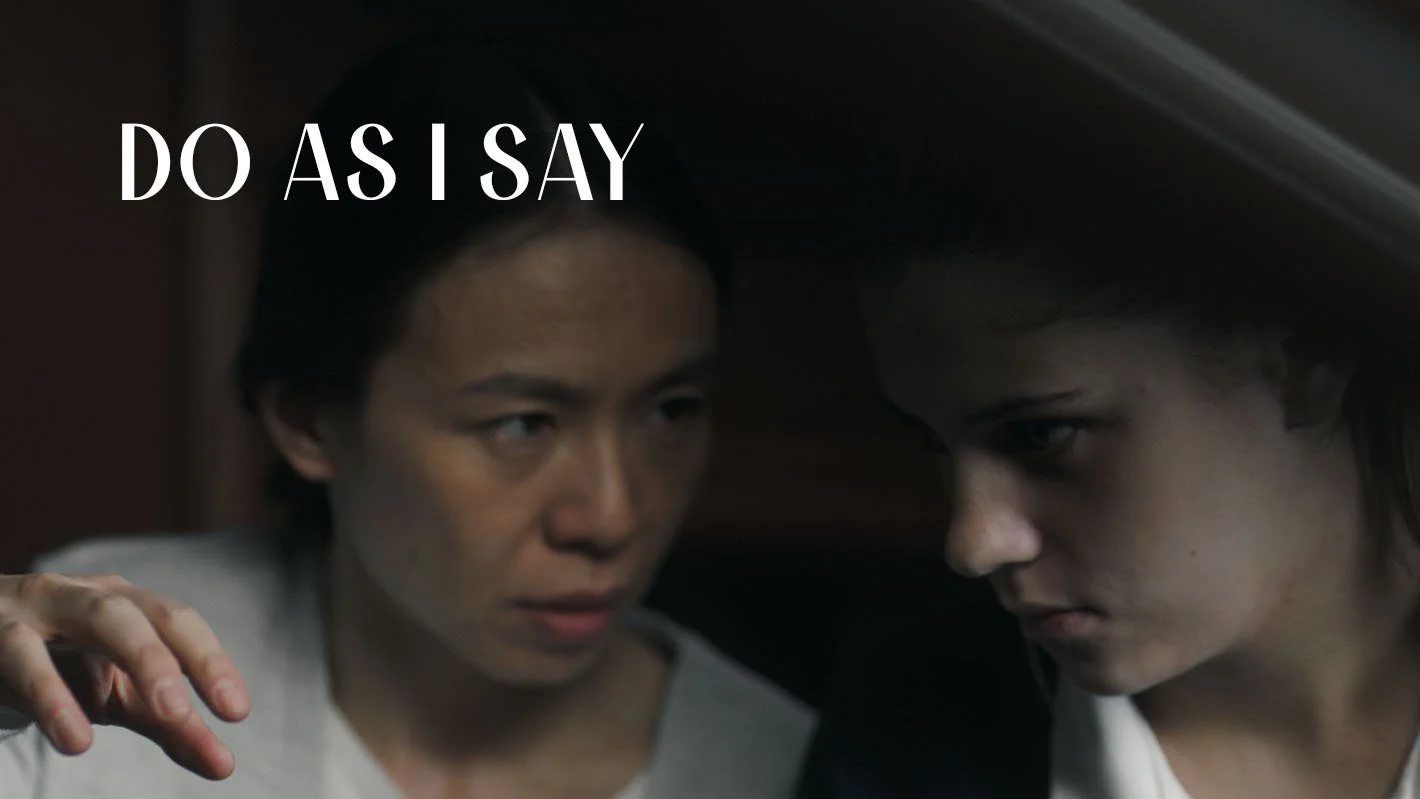
Directed by Ana Pio
Written by Nathan Davis | Produced by Andrea Land
A middle-aged piano teacher, mourns her failed career as a concert pianist with a drink always in hand. Grappling with this aching disappointment and unfulfilled legacy, she is pushed to the end of her tether by the rebellious student she once perceived as her younger self.
ABOUT THE FILMMAKER
Ana Pio is a film director who graduated with short period drama 'Eden' from her Directing Masters at London Met Film School in 2015.
From the Sara Putt Associates trainee scheme in 2017, Ana Pio became a freelance Script Supervisor, working on iFeatures 'Perfect 10' and assisting the Script Supervisors on BBC/Amazon TV series 'Good Omens' alongside Douglas MacKinnon and Neil Gaiman as well as Apple TV 'Liaison' directed by Stephen Hopkins, starring Eva Green and Vincent Cassel.
Ana was mentored by Rose Glass, the director of 'Saint Maud' and 'Love Lies Bleeding', through the Directors UK Inspire programme, and has been a BAFTA Crew/ Connect member since 2019.
In recent years, Ana completed short films ‘PMS’ (nominee for best comedy at the 2022 BAFTA Qualifying London Short Film Festival), ‘Do As I Say’ (winner of Best Performance for Angela Yeoh and nominated for Best Director and Best Low Budget Short at BIFA qualifying film festivals) and ‘7 to 10’ (award nominated for Best Performance, Best Editing and winner of Best Director at several international film festivals, including BIFA qualifying) in preparation for the filming of her debut feature film 'Mother Nature'.
In 2024, Ana and producer Andrea Land were selected to pitch 'Mother Nature' to Film4 at Aesthetica Short Film Festival and in 2025 to pitch at the co-production JETS Initiative during the 75th Berlinale. Ana was also selected for the prestigious Reykjavík Talent Lab where she won the Golden Egg Special Mention in 2025.
Ana is represented by Kelly Spearman, Sara Putt Associates.
READ OUR INTERVIEW WITH ANA
Welcome to our Weekly Pick! Let's dive straight in. Do As I Say first caught our eye as an Official Selection at the 2024 edition of our film festival where you were nominated for Best Director.
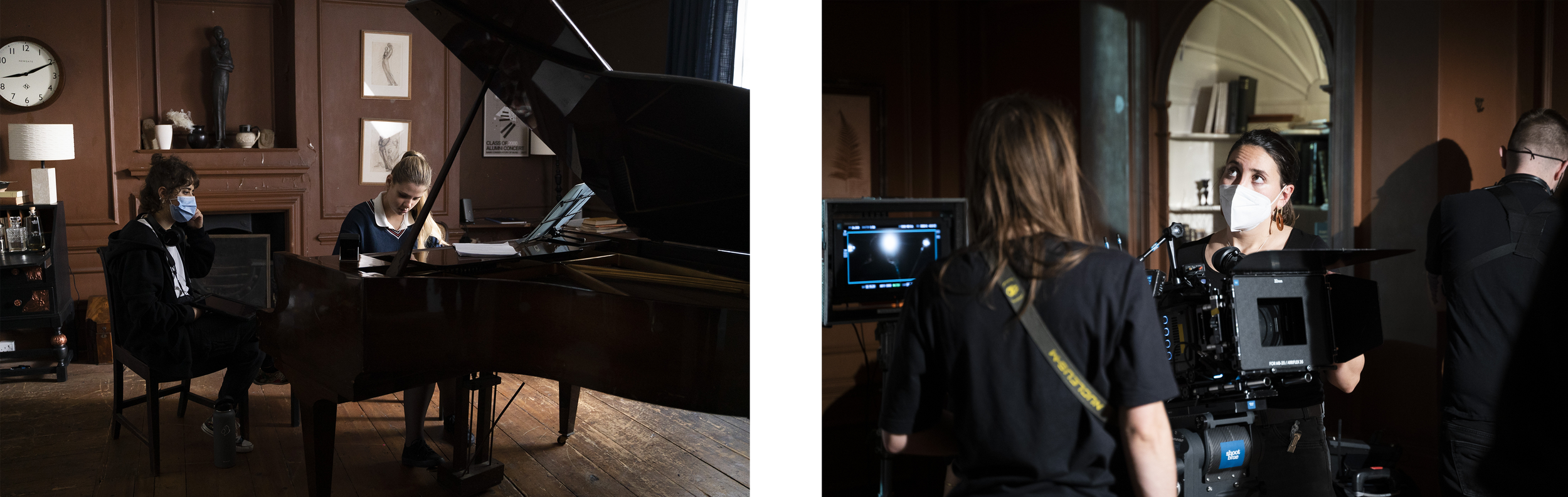
Can you tell us a bit about your festival journey with this film? The highs, the lows, the in-betweens.
We actually approached the festival circuit with a comprehensive two-year strategy. Because the technical and production quality of the film turned out so high, we intentionally aimed for top-tier festivals. We did receive some rejections from A-list festivals, but they often came with personal notes from programmers stating that under normal circumstances, the film would have likely been selected. However, in the post-COVID landscape, programmers collectively seemed to be looking for lighter, "feel-good" content - which ours isn't. It was a clear reminder that a short film's trajectory isn't solely based on its quality; so much of it comes down to timing and the current global climate. It's a bittersweet feeling, because I truly believe the film could have gone even further had the cultural context been different. That said, we still experienced some incredible highs. The film was BIFA-qualifying and very well received overall, and Angela Yeoh even won Best Actress at the North East International Film Festival. So while it's worth noting that the film could have achieved even greater heights in a different festival climate, we are still incredibly proud of the journey it had.
In 2024, you had two films on the festival circuit - Do As I Say (of course), and 7 to 10. What was it like having two shorts in circulation at the same time? Did you feel you were competing against yourself, or did they work in tandem to bring more attention to your filmmaking?
Because they are so completely different in tone, story, and genre, it never really felt like they were in direct competition with one another. However, managing both did come with some unique logistical challenges. Knowing that most festivals rarely select two films from the same director in a single year, we had to be very strategic. Submission fees pile up quickly, so we often had to make calculated guesses on which film was the right fit for a specific festival to avoid wasting resources. Overall, I think they worked beautifully in tandem. They allowed us to connect with two entirely different audiences on the circuit, which was a fantastic experience. It was also a fascinating learning curve in terms of audience and programmer preferences. Going into it, I personally predicted that Do As I Say would be the bigger festival hit, but 7 to 10 actually ended up performing better in comparison. Seeing how differently the two films were received was a really eye-opening and valuable experience for me as a filmmaker.
Getting the film online has been a long time coming. How have you found the reception of the online release of the film?
We were very intentional about finding the right online home for the film, so it took some time to get the ideal partners on board. Ultimately, CenterFrame, MilkTea Films, and KINO were the perfect communities to reach out to, especially given how closely their values align with our own filmmaking network. The response so far has been good. We’ve seen incredible engagement through our distribution channels, with one of our pages surpassing 100K views so I am excited to continue sharing the film with as wide an audience as possible and see where it takes us. Navigating an online release is a completely new pathway for me, so I’m learning as I go.
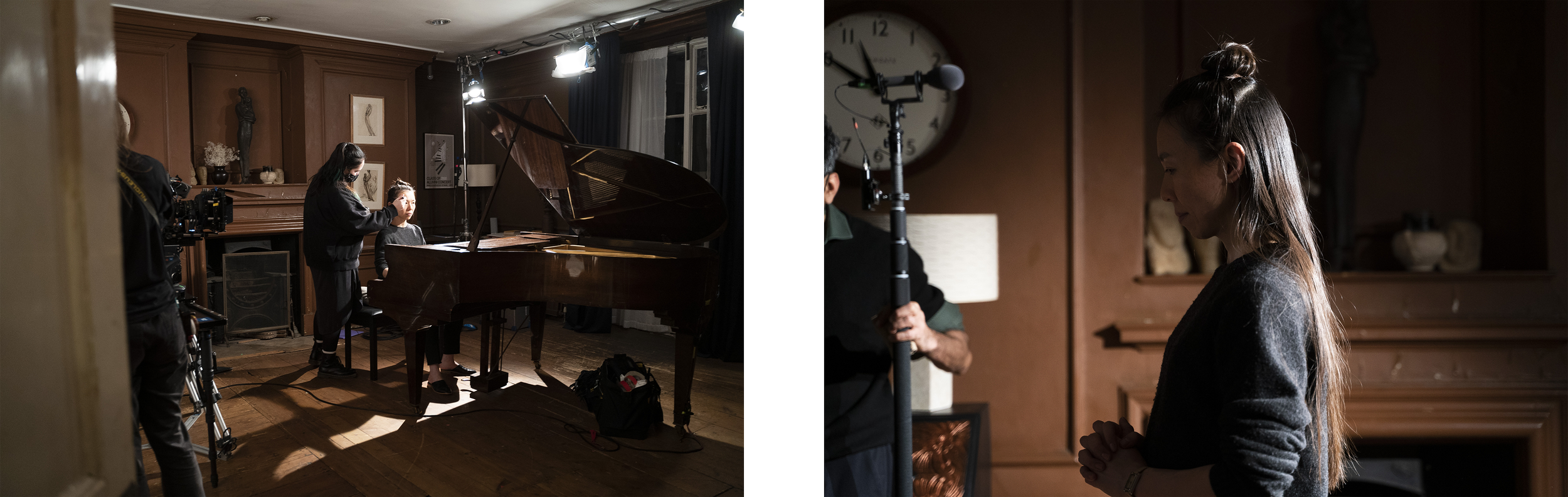
What advice or hacks would you give to other short filmmakers?
First and foremost, take the time to cast your HODs right. Connect with them on a personal level and actually build relationships - collaboration is what makes filmmaking fun. Remember that it’s not all about you; everyone on set loves the craft and wants to feel truly involved in the vision. Secondly, waiting around for public funding can set you back for years because it is insanely competitive. If you’re low on cash, write a script tailored to the resources, locations, and actors you already have access to, and just shoot it over a weekend with friends who support you. It doesn’t need to cost a fortune. That said, don't rush the writing process. Be patient, get honest feedback from your peers, and keep rewriting until the script is absolutely airtight. Lastly, be incredibly strategic about distribution. This is often the hardest part financially because you do need a budget to sustain a run for at least a year. To make your money count, don't waste funds on festivals that aren't accredited or affiliated with recognized bodies. Having a poster covered in laurels from obscure festivals no one has heard of won't advance your career. It's much smarter to submit to fewer, higher-quality festivals that can actually move the needle for you.
Can you chat about about how you went about finding the right actors these roles?
I think the only thing I'd add would be about how special the casting process was. It took my fantastic Casting Director, Mandy Steele, and I about four months to find Angela Yeoh and Julia Haworth because we wanted the piano playing to be real. They both had to be perfect for the roles, have the right chemistry, and possess a high enough level of piano skill to learn the Rachmaninoff piece. Finding this niche was a very exciting process and very rare for a short. I'm very grateful that we were able to find Angela’s intense depth of emotion and rawness and Julia’s dynamic shifts between sweetness and strength.
What are you working on now?
I’m currently working with my producer Andrea Land on developing my debut feature film that centres around a mother-daughter relationship, titled Mother Nature. It's a dark comedy with magical realism about female hormones and menstruation, very much in the tone of films like The Favourite. Do As I Say was a proof of concept in the sense that I explore an adult and a teenager generationally clashing about female expectations which has really moved along the financing opportunities for the feature.
Any film recommendations that we should add to our watchlist?
I try to catch as many new releases in the cinema as I possibly can. While some stick with me, I have to admit that a lot of what's coming out lately feels pretty forgettable. That said, a film that completely floored me recently is Kokuho. If you haven't seen it yet, definitely add it to your watchlist. It has the DNA of those grand, full-scale masterpieces we grew up watching - the kind of movies that made us want to become filmmakers in the first place. In an era where so much of what gets financed feels formulaic or repetitive, Kokuho was a massive breath of fresh air. There is a real fear in the industry right now about backing original, challenging material because there's a belief that audiences won't engage with it, but this film completely disproves that. Even though it is deeply rooted in Japanese culture, the story is profoundly relatable on a universal scale. I honestly couldn't recommend it more.
Apply to get your short selected as our Weekly Pick

AFTERPLAY
After sex, a couple’s conversation about opening their relationship gets derailed by a persistent fly.
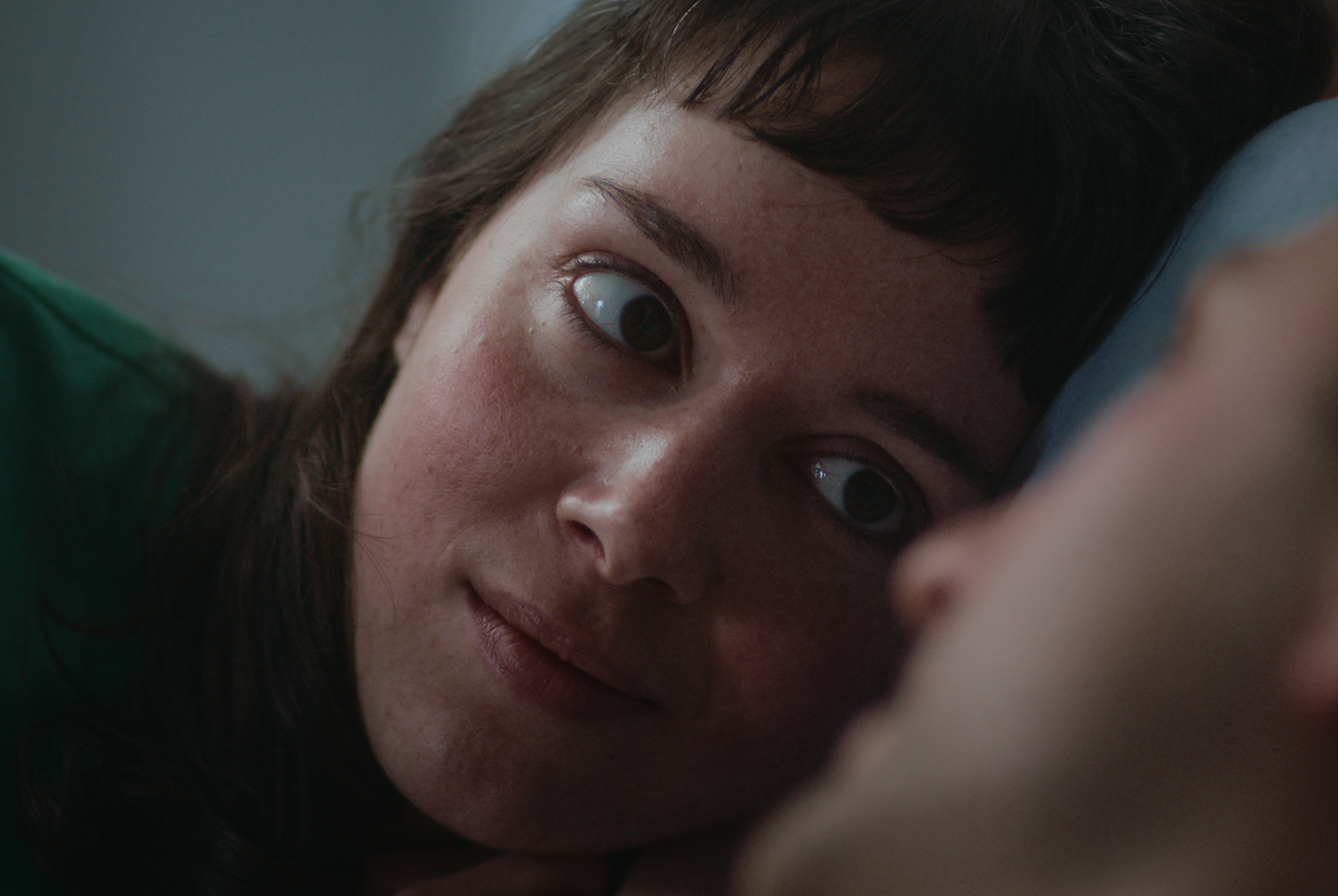
Written & Directed by Iris Breward
Produced by Chloe Huybens
After sex, a couple’s conversation about opening their relationship gets derailed by a persistent fly.
ABOUT THE FILMMAKER
Iris Breward is a writer and director based in London. Her work blends humour with keenly-observed character studies, often exploring power, intimacy and the awkward realities of human relationships.
She holds a BA in Spanish and Film Studies (UCL), and has built her practice through short-form storytelling informed by her background in film theory. Her most recent short, Micro Bangs, premieres at London Short Film Festival (2026) and was one of eight selected for Primetime Re:Present, a private industry showcase highlighting emerging voices to leading UK talent agents.
Her previous films have screened at BAFTA- and BIFA-qualifying festivals including Aesthetica Short Film Festival, Women X (where she was nominated for the Rising Star Award 2025) and Kino London. Her short film Sidney premiered online on Directors Notes and was nominated for Best Comedy at their 2025 DN Awards. Her short Afterplay also recently premiered on their platform and is in the top 25 films on their YouTube channel, with over 100k views. She is the recipient of multiple awards, including Best Director, Best Comedy and Best Short Film and was a finalist for The Pitch Film Fund 2025 with her comedy screenplay Sauna.
READ OUR INTERVIEW WITH IRIS
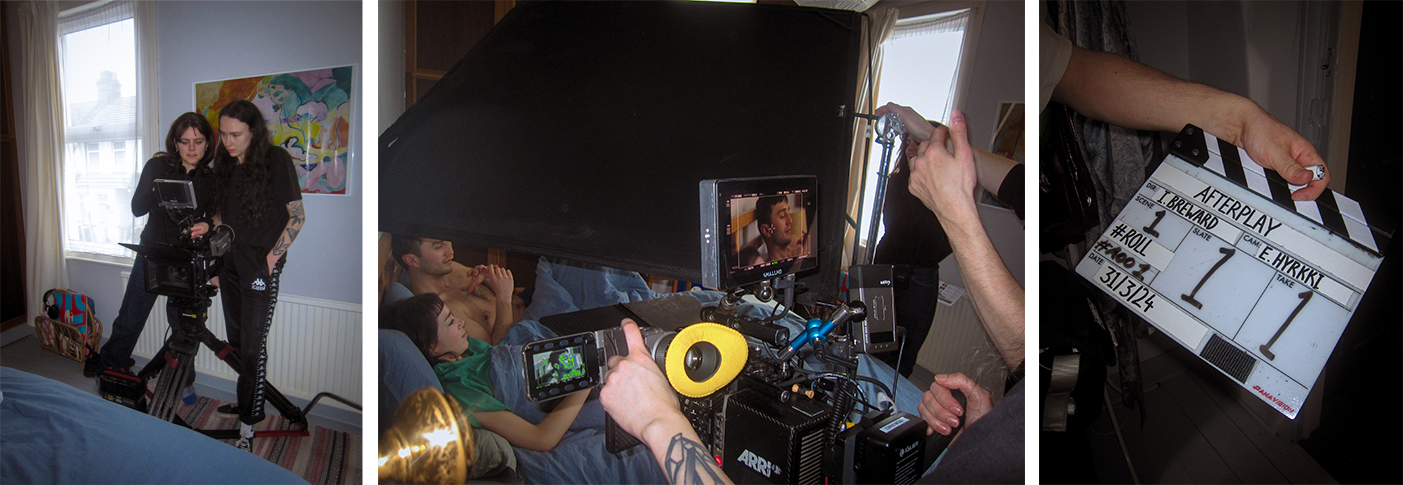
Welcome to our Weekly Pick! Let's dive straight in. I understand that your starting point for Afterplay was wanting to tell a contained, performance-focused story with tension built through a single conversation. Obviously, that inspiration could manifest itself in a variety of ways. How did you land on this particular scenario as the one you wanted to breathe life into?
Afterplay was the culmination of various ideas and anecdotes I’d had in my head for a while. I wanted to explore power dynamics in romantic relationships - particularly that push and pull between avoidance and anxiety, and how differently people respond to emotional pressure. The fly element is inspired by a story my Mum tells about a time my Dad got obsessed with killing a fly, and I’d always found funny and loaded with meaning. From there I explored scenarios that felt relatable and reflected the kind of conversations people in my generation are having around commitment and monogamy. I wanted to find a scene that moved a very intimate place to somewhere more dangerous and destabilising, so the post-coital conversation felt perfect for that.
Afterplay has themes of decision paralysis and fear of sacrifice. Can you chat about what attracted you to comment on these themes within your work?
Being someone who struggles with decision paralysis and fear of sacrifice! This film very much speaks to my own anxieties around doors closing with every choice made, and the doom spiral of reckoning with your own mortality. It feels pertinent to the choice overload/optimisation culture moment we’re in, where we are constantly bombarded with the idea of better options, better selves, better lives. I think especially in my early 20s, before the frontal lobe kicked in, I spent a lot of time looking around for guidance, answers, someone to decide for me. And I think the paralysis and communication breakdown between these characters is linked to that sense of being untethered and insecure in your own direction.
Afterplay first caught our eye as an Official Selection at our film festival last year. Can you tell us a bit about your festival journey with this film? The highs, the lows, the in-betweens.
We had such a great time at Kino! It was so special to premiere in London in such a brilliant block of films about complex intimacy, so that was definitely a highlight. Afterplay had a mostly UK-based festival run, I wanted to focus on submitting to festivals that I would be able to attend. That said, we premiered at British Shorts Berlin but then came home to Brighton Rocks, Women X and Kino London. I’ve really enjoyed seeing the film with audiences and experiencing the full spectrum of reactions! Of course there’s always lows in a festival run, and plenty of rejections, but I’m really happy with our short and sweet circuit because I was quite impatient to get the film online and out in the world. And now it is!
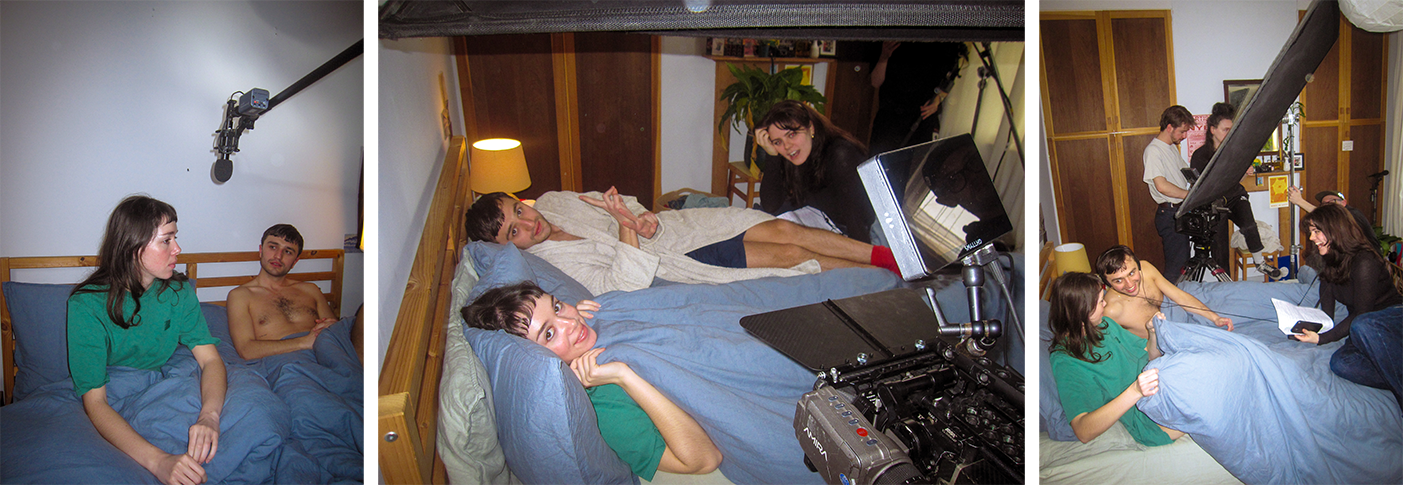
For the project you worked with Intimacy Coordinator Ian West. Can you talk a bit about the director / IC collaboration and that worked for your production?
Since IC's are such a new role there's a lot of curiosity about them. Sure there's lots of talk about boundaries and on-set safety for all involved, yet many directors have expressed a deeper sense of creativity and authenticity working with an IC. In your experience did you feel working with an IC unlocked more creativity?
It was my first time working with an IC so I was a bit nervous, but Ian was great. We initially were going to have more nudity in the film, but even with the nudity that remained and the intimate nature of the scenes, he brought so much care and clarity to the process. There was a real sense of structure around boundaries and consent, which was honestly quite eye-opening for me as a director. It made everything feel very considered rather than awkward or uncertain. Honestly it was so nice to have someone with that hat on, so that the actors and I were more free to focus on the story. Working with Ian certainly unlocked some creativity around how to direct the simulated sex audio, he had a fantastic approach that relaxed everyone and opened up space for more authentic performances.
What advice or hacks would you give to other short filmmakers?
Ooft that’s hard. I can’t take credit for a lot of it, but reading Directing Actors by Judith Weston was huge for me. Learning how to work with actors, doing some acting myself and basically just appreciating how important performance is. If the script and the performances aren’t good - very little else matters, so practice your writing as well (if nothing else because it’s free!). Finding community and a sacred circle of peers who you vibe with, I’ve done an annual writing retreat for 2 years now and it’s been seminal for me. And don’t spend all your money on your first film.
For the women filmmakers, have conviction in yourself and make the work how you wanna make it, not how someone tells you you’re supposed to. Something I still have to hold myself to!
What are you working on now?
Right now I have two shorts in development, which I’m hoping to make in 2026 and 2027. One is about a woman clashing with her best friend’s boyfriend over a birthday cake, the other about a blocked plughole that becomes impossible to ignore. Beyond that I recently wrote my third feature, and feel like I’m finally cracking that form, at least in terms of writing! I’m developing a new concept which I’m hoping could become my debut feature, so I’m quite locked in on that. And my new 5-min short Micro Bangs is currently on the festival circuit!
Any film recommendations that we should add to our watchlist?
God don’t get me started. I dunno what the people have watched! My most recent 5 stars are: The Cranes Are Flying (phenomenal and radical, feels so cutting edge for a film made in 1957), Mysterious Skin (trailblazing and so fucking cool) and Woman in the Dunes (left me genuinely speechless). I’ve actually been on a bit of a Japanese cinema hype which also included The Human Condition trilogy (insane, staggering, also - too long) and Audition which I LOVED.
Apply to get your short selected as our Weekly Pick

THE PEARL COMB
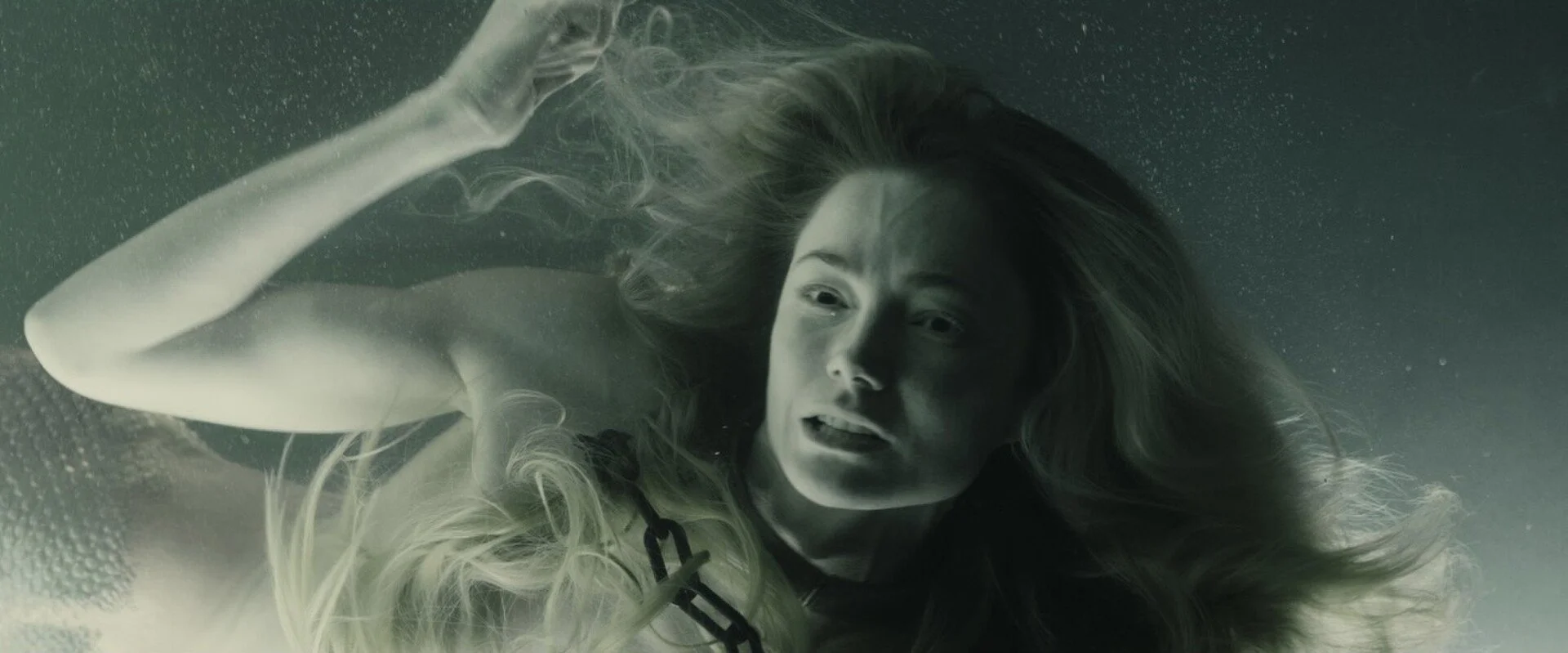
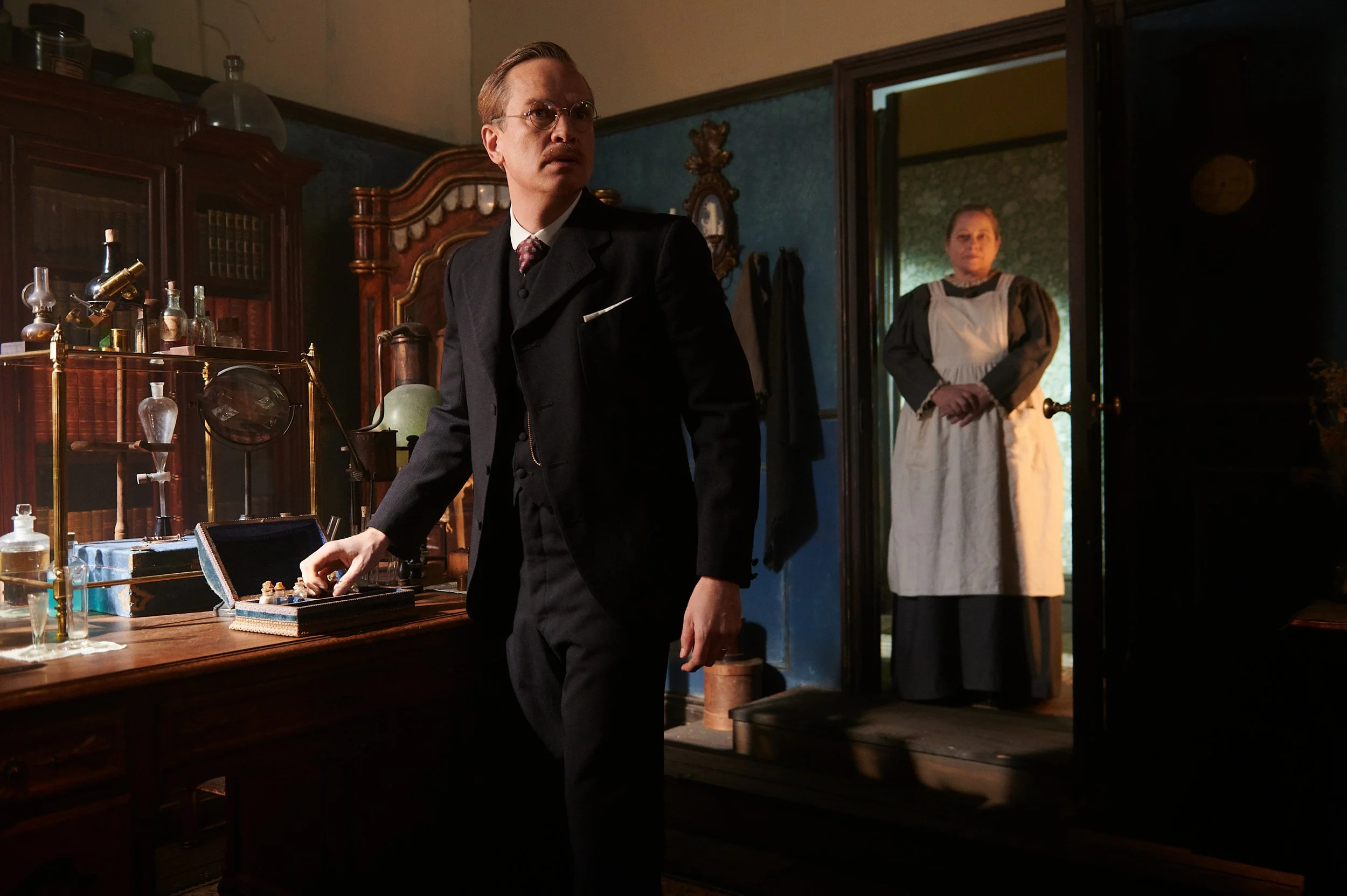
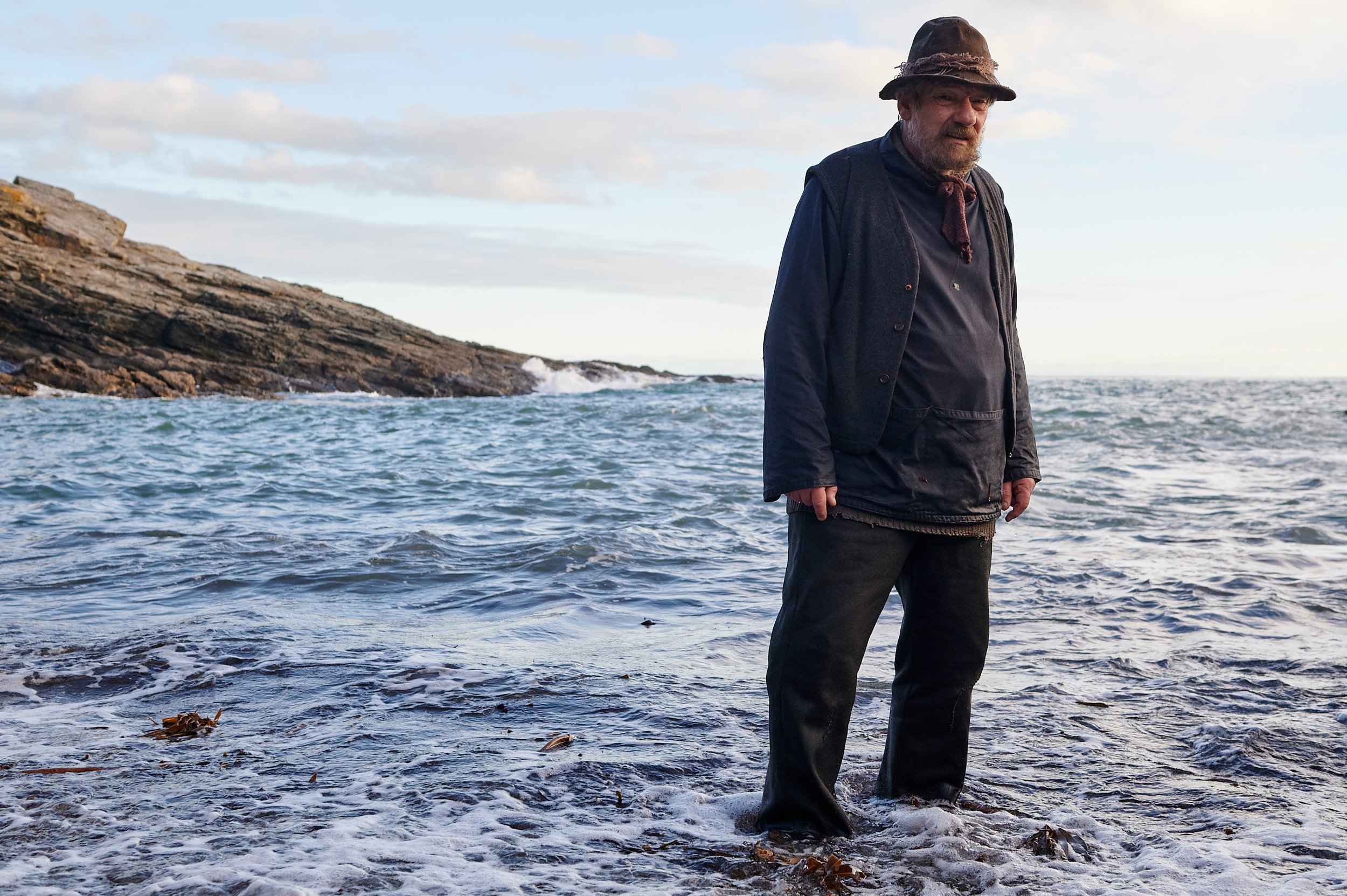
In 1893, a fisherman’s wife becomes the first person to cure someone of tuberculosis. A doctor, intent on proving a woman’s place is in the home and not practising medicine, investigates - only to discover the source of her unearthly power.
Watch on

Written & Directed by Ali Cook
Produced by Ross Williams & Matthew James Wilkinson
In 1893, a fisherman’s wife becomes the first person to cure someone of tuberculosis. A doctor, intent on proving a woman’s place is in the home and not practising medicine, investigates - only to discover the source of her unearthly power.
ABOUT THE FILM
The Pearl Comb was an Official Selection at our 2025 BIFA Qualifying Kino London Short Film Festival, having been nominated for 6 awards, and winning Best Production Design and Best Cinematography.
It premiered at FrightFest and Tampere, making quite a dent in the festival circuit. Highlights include winning a Méliès d’Argent Award – Best European Fantastic Short Film at Grossmann Fantastic Film and Wine Festival, winning Best Cinematography & Best Horror Short at Flickers Rhode Island’s Vortex, winning Best After Hours Short at Cleveland International Film Festival, and many, many more…
The film was recently Oscar Shortlisted and BAFTA Longlisted.
ABOUT THE FILMMAKER
The Pearl Comb follows Cook’s BAFTA-longlisted short The Cunning Man, which screened at 88 international festivals, including Cinequest, FrightFest, Cleveland, and the BAFTA- and BIFA-qualifying Norwich Film Festival, winning 33 awards and earning a Méliès d’Argent nomination.
Cook first broke out as a writer-performer with seven of his own comedy series, including Channel 4’s Dirty Tricks, which was nominated for a British Comedy Award. As an actor, he is known for playing Sgt. Paul McMellon in the BAFTA-nominated Kajaki and as series regular DCI Simmons in Ragdoll for AMC/BBC One. He will soon appear as Ben in Channel 4’s Falling, written by Jack Thorne.
Cook’s next directorial project will be the feature The Grimoire, co-written with Eric Garcia (showrunner of Netflix’s Kaleidoscope) and produced by Chris Curling at Zephyr Films. Curling has produced more than 60 films, including Oscar-nominated The Last Station, starring Helen Mirren, Christopher Plummer and James McAvoy, and The Miracle Club with Maggie Smith and Kathy Bates.
READ OUR INTERVIEW WITH ALI

Hi Ali!
We're excited to be featuring The Pearl Comb as our Weekly Pick. Not only because it's Oscar Shortlisted and BAFTA Longlisted, but because it's a film that we believed in even before its recent success.
Can you tell our audience a bit about yourself and all the hard work tha’s led to this point?
Originally, and for a long time, I was a professional magician. I was very lucky to be on TV as a magician, which is like the holy grail for most of us. I ended up making seven TV series for a company called Objective Productions. My old boss there was Andrew O’Connor who famously invented Peep Show; he’s a very clever TV producer. One day whilst we were making a TV series, he said: “You know I think you’d be a good actor.” And the cameraman said: “I think you’ve got a good face to be a villain”. These comments kind of stuck with me so I started acting, kept writing and here I am.
Tell us about the genesis of The Pearl Comb. Where did the idea come from and how did you develop that idea into the short that’s now made its way out into the world?
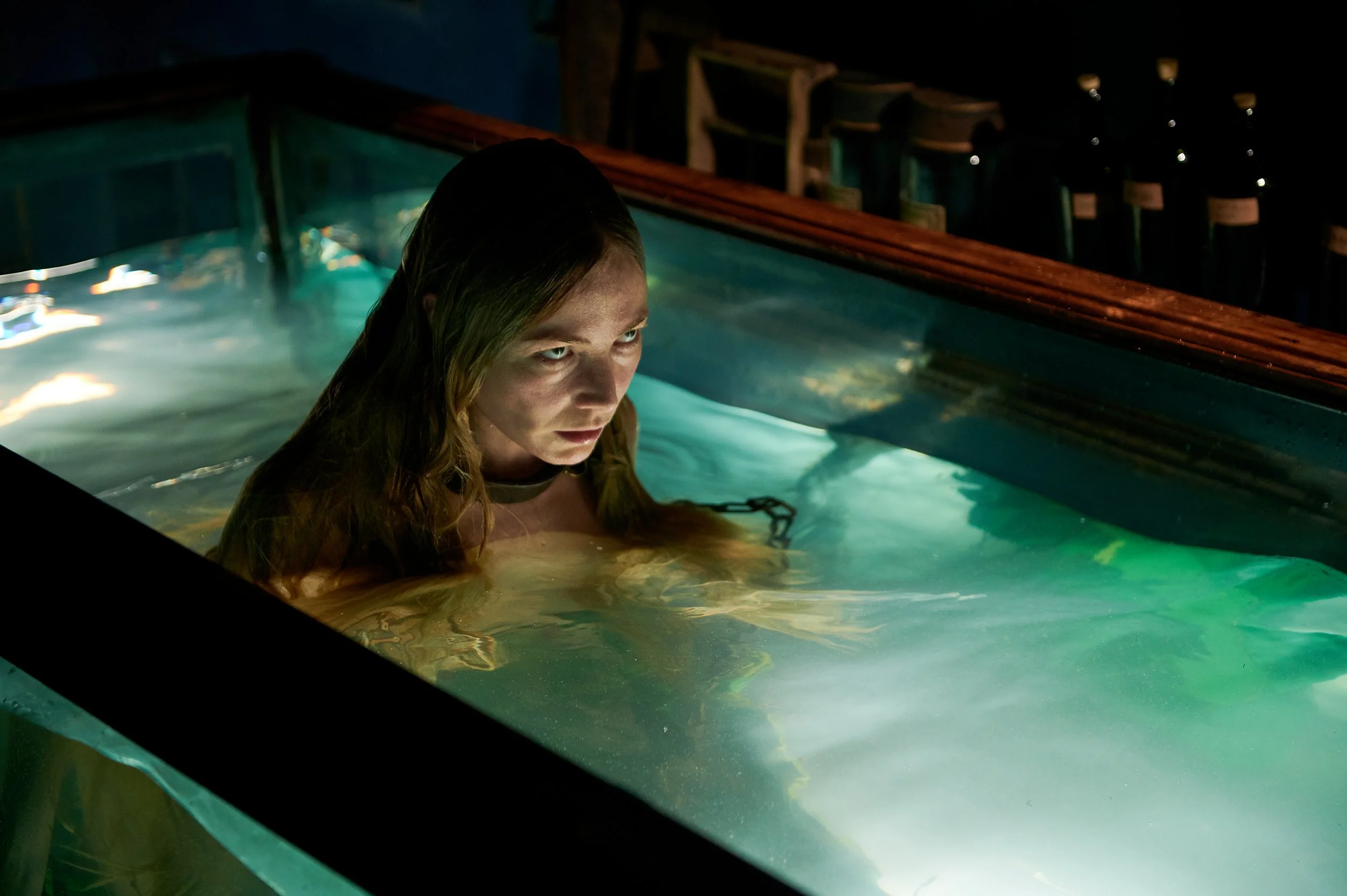
I’ve always wanted to portray mermaids authentically, as brutal killers like in the original folk tales, not as Disney princesses.
Then I heard the true story of the Edinburgh Seven: The first seven women to qualify as doctors in the UK. The medical profession did everything they could to stop them from practicing and the female doctors of that time had to come up with inventive lies to justify the work they were doing by claiming to be midwives or natural healers.
It felt like the right time to bring these stories together - especially now, when there’s a bigger conversation happening around gender, power, and the way women have historically been overlooked, misunderstood, or even seen as threatening or strange, just for being different.
What were some of the main obstacles you experienced during the making of the film?
Creating a convincing mermaid on screen!
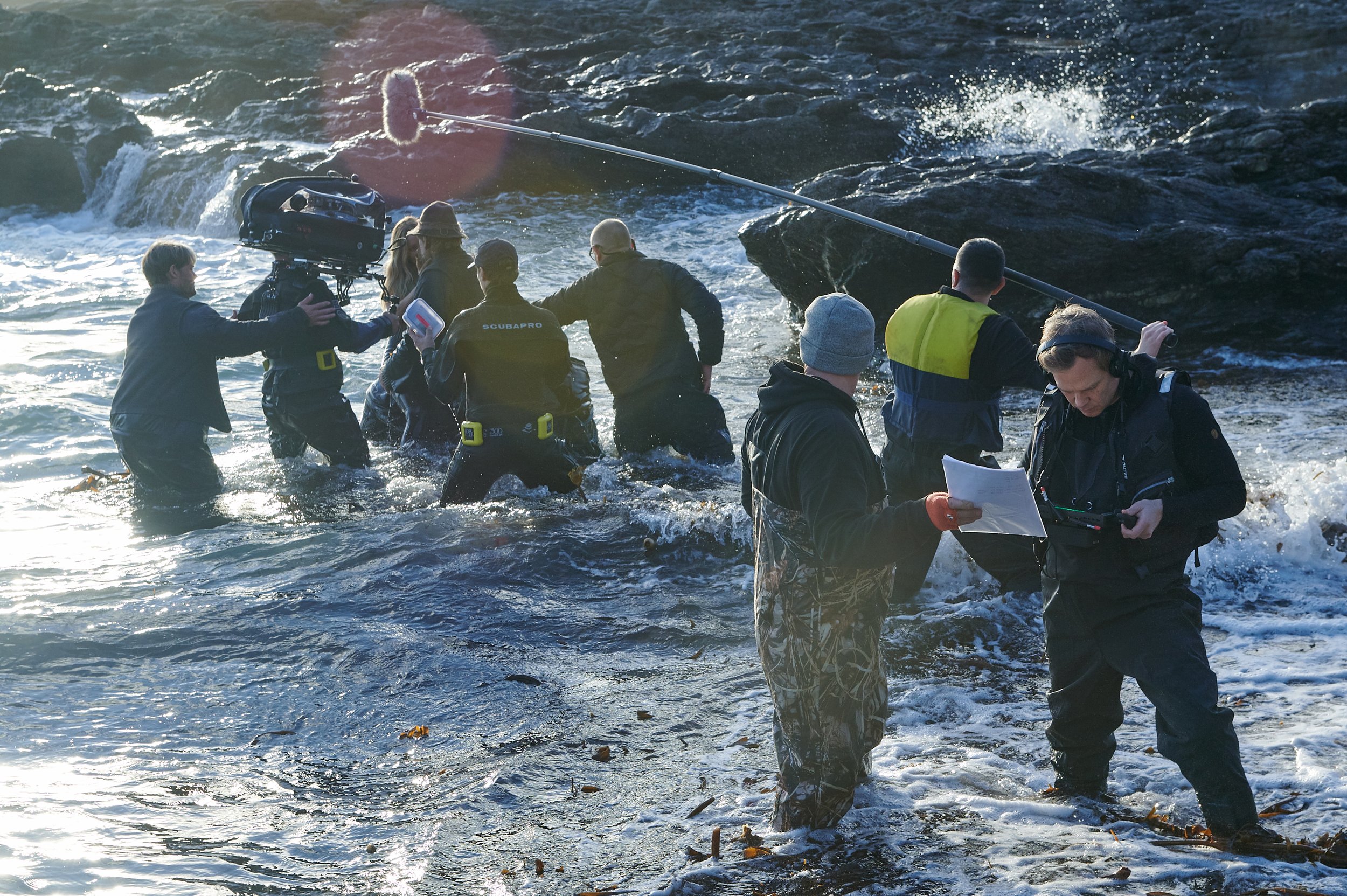
Also, the mermaid shooting out of the water during the boat scene springs to mind. It’s such a pivotal scene and the sequence was shot in a studio, with all the water effects achieved digitally. The challenge of creating that moment, making the digital effects blend seamlessly with the performance, gave me a whole new appreciation for how visual storytelling can transform a scene.
How did you overcome them?
It took months of discussion and inventive work with the SFX and VFX teams. I had to trust my imagination and the brilliance and experience of the team. When you believe in your instincts and you surround yourself with people who bring their own spark, the work starts to flow naturally.
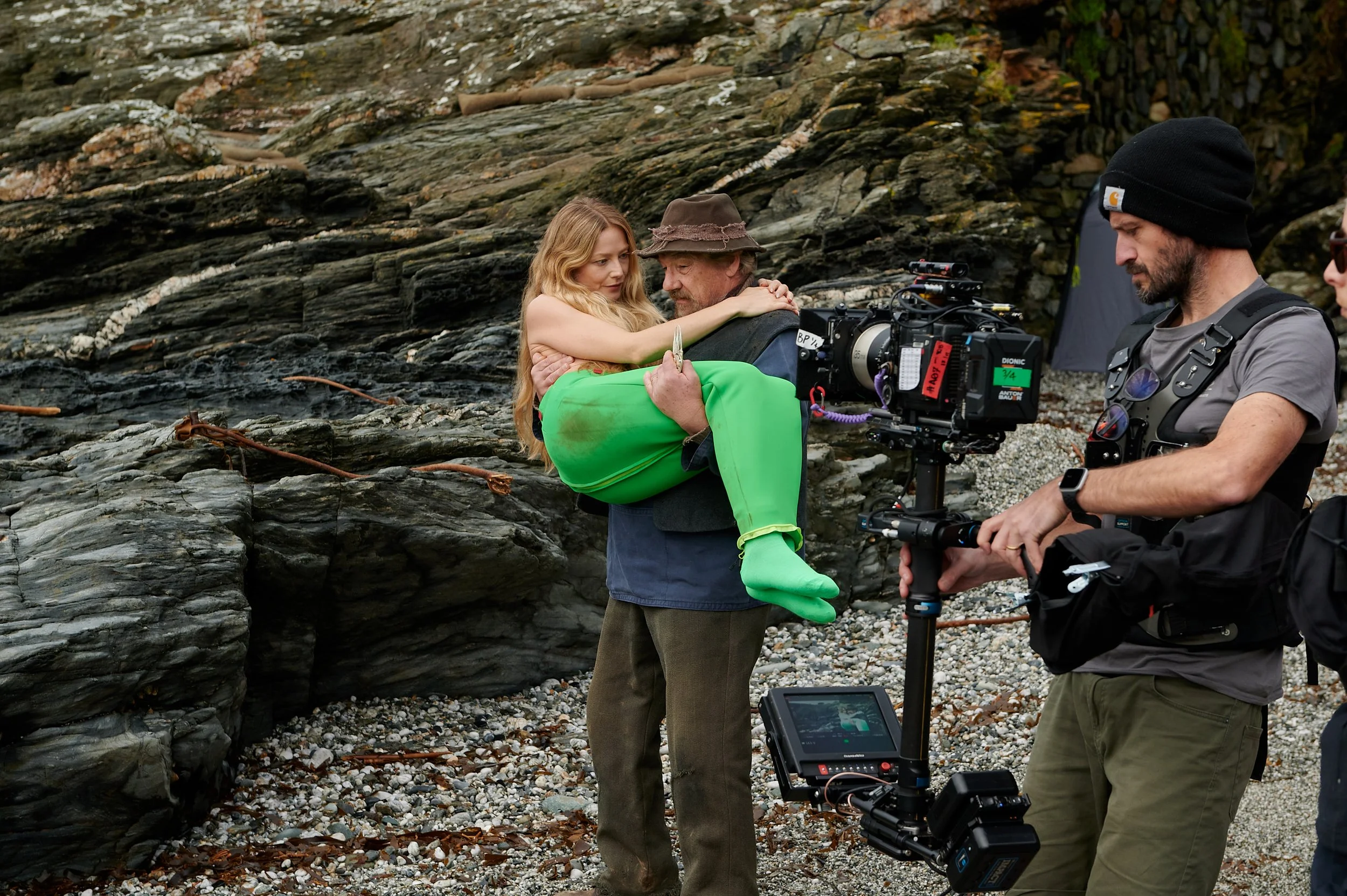
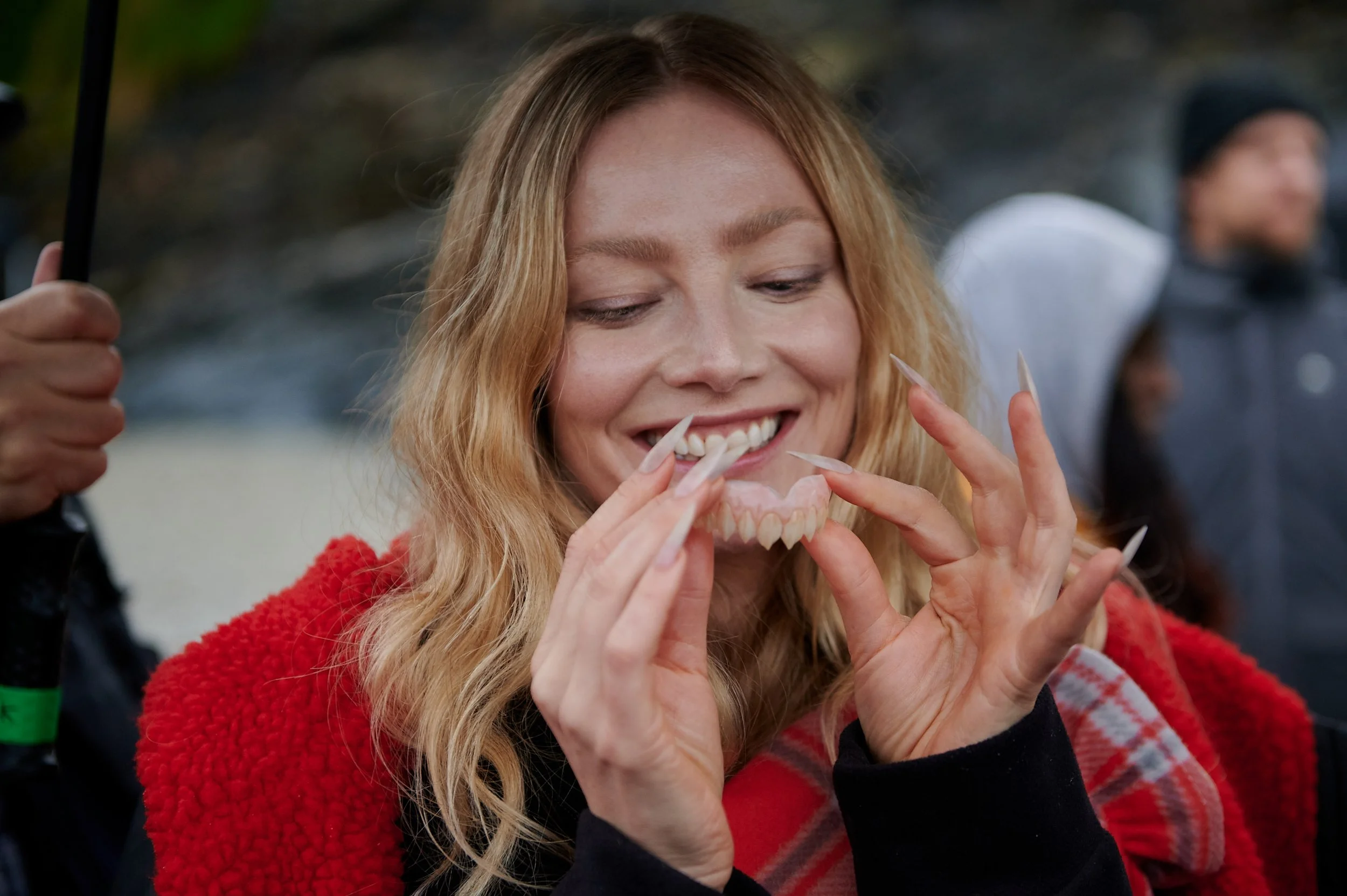
Can you talk a bit about your process and how you balanced your performance with your role as director?
Preparation was crucial for me so that once I was in front of the camera, I could fully focus on the performance. I also found it invaluable to have someone I trust watching the monitor and giving me feedback, which I did.
Being an actor myself, I know how vulnerable it feels when all eyes are on you. Therefore, I know the best approach is to constantly reassure your actors and give them encouragement. Strangely, being in the ring with the other cast makes it feel more like a team effort for me, as if we’re all in it together. It really works well.
Who was the first collaborator to come on board the project and how did their early adoption help propel you forward?
Our storyboard artist Daniel O’Donnell-Smith and Koala FX.
We knew from the outset that the project would involve a significant amount of VFX, so it made sense for us to get to grips with this early on. Having a tight shot list allowed us to have conversations with Koala at an early stage and work out how to approach the work as economically as possible while still giving the story what it demanded.
Can you chat about your producers Ross and Matthew, how they came aboard the project and what they brought to the table?
I first met Ross on a short film I wrote called The Cunning Man. He did such a fantastic job that I knew I wanted to collaborate with him again on this project. When Ross had to jump on to the series Funny Woman, Matt Wilkinson came on board.
I’ve known Matt for years and have acted in several of his films. Even though this project was a short, he treated it the same as a feature and held me accountable to a tight shoot and post-production schedule. It really felt like I was responsible for delivering and that was a good push.
If I’ve done my research correctly, I believe you premiered at FrightFest, yes? How was that experience?
Yes, FrightFest was our first screening and UK premiere. Being recognised by one of the world’s top-reviewed genre festivals means so much. Genre films often push boundaries and take risks, and to have our work acknowledged in that space was so exciting.
At the same time, we premiered at Tampere Festival in Finland which is known for high-end art-house cinema. So, it was an honour to play both on the same weekend.
A lot of filmmakers believe they need to hit the world’s top festivals first. They often blow their submissions budget in the Sundance level festivals, and they wait to submit to (or skip altogether) second tier/genre/community festivals. But that doesn’t seem to be the approach you took.
The Pearl Comb has played quite a range of festivals, almost like working your way up the circuit. Can you chat about the approach you took to festival submissions?
I worked with Rebekah at Film Festival Doctor and trusted her strategy. We mainly hit the genre festivals first. When we started getting reviews that this is just as much a drama as a fantasy, we showed it to the drama festival organisers to expand the range of festivals. We just wanted to get it as far and wide as possible. Anything else was a bonus.
The festival circuit is a whiplash whirlwind - doldrums of rejection vs peaks of awards.
Most filmmakers can’t help but to compare themselves to their peers since we all advertise our successes on social media, but oftentimes keep our struggles hush-hush.
During your festival journey, what has been the hardest pill to swallow, and how did you keep going despite that setback?
I’m also a stand-up comedian, and the experience of trying out brand-new material is very similar and can feel quite scary! Ultimately, you have to say that new joke on stage and the audience either love it or they don’t. It’s the same with a short film. The overall motivation to keep going is that when it does kick in, it’s the greatest feeling in the world!
And now the question everyone has been waiting for... How did you manage to get your film released on Disney+ in multiple countries?
By the time the film had built momentum on the festival circuit, we already felt very happy with where things were. Then I came home one day to an email with an offer to stream on Disney which was completely unexpected. All interest is fantastic, but this was especially exciting.
What do you think are the biggest challenges facing emerging filmmakers at the moment, and as someone who’s been able to cut through the noise, what advice would you give to those hoping to follow in your footsteps?
My advice would be to get the story right first within the genre you are trying to master. Even if it’s a film you make on your iPhone with a budget of £500; if it’s a great story with great dialogue it doesn’t matter. The number one issue is people often shoot something where they have a premise or a theme, but no real story or ending.
What aspirations do you have for what’s next?
I have a supernatural horror feature, The Grimoire, in pre-production with Zephyr Films so we’re heading full steams towards that!
How helpful has The Pearl Comb been in getting you on a trajectory of being able to actualise those aspirations?
This was the first film I’ve directed, and pardon the pun, I threw myself in at the deep end by taking on a high-end project with a lot of VFX. I wanted to see if I could handle that level of pressure. Now that I have that experience behind me, and with the encouraging response the film has received, I feel reassured both in myself and in showing others that I can do it again.
FOLLOW ALI COOK ON INSTAGRAM
Apply to get your short selected as our Weekly Pick

Decksdark
In a dystopian realm where consciousness is encased within neural implants, Logan, a solitary Decksdark, finds himself intertwined with an ethereal entity.
Written, Directed & Produced by Kane Wilson
Co-Produced by James Freeman
In a dystopian realm where consciousness is encased within neural implants, Logan, a solitary Decksdark, finds himself intertwined with an ethereal entity.
ABOUT THE FILM
DECKSDARK first came across our desk when it was in post-production and seeing completion funds via our Short Film Fund. We shortlisted the projected, and while it did not win the funding, we screened the film at the 2025 edition of our BIFA qualifying film festival as part of the Lovers & Ones That Got Away screening block which featured exclusively films either produced via our fund (a.k.a. “Lovers“) or shortlisted for our fund (a.k.a. “Ones That Got Away“).
Other festival highlights include winning Best Short Made in Wales at the BAFTA-qualifying Carmarthen Bay Film Festival, winning several awards at BIAFF, and winning the Big Picture Film Festival. It was nominated at SCI-FI LONDON, the BIFA qualifying Sunrise Film Festival, Waco Independent Festival, Northampton Film Festival, and a Smei-Finalist at Flickers' Rhode Island International Film Festival. The film was handpicked and given 5 Stars at Short Films Matter.
ABOUT THE FILMMAKER
Kane Wilson is a filmmaker from rural Leicestershire, England. Growing up surrounded by open landscapes and quiet spaces shaped his sensitivity to mood, silence, and human behaviour. He began making films as a teenager, quickly gaining recognition for his experimental approach to storytelling and earning Student of the Year in college.
Kane’s films inhabit dystopian worlds that feel uncomfortably close to our own. His work examines how technology reshapes intimacy, memory, and identity, always anchored by an emotional core.
READ OUR INTERVIEW WITH KANE
Welcome to our Short of the Week series. Tell us a bit about yourself and your filmmaking background.
I’m a UK-based writer and director who came into filmmaking in a fairly hands-on way. I started making shorts young, mostly through trial and error, and that process of experimenting and learning by doing has stuck with me. Early on I realised I was less interested in polish for its own sake and more interested in mood, character, and what sits beneath the surface of a story.
My work often leans toward dystopian ideas, but it’s really about human connection within those worlds, how people cling to intimacy, routine, or escape when systems start to fail them.
I’ve just finished a new film called We Dream in Colour, which has been an incredible experience to make. It pushed me creatively and emotionally in ways I couldn’t fully expect, and I genuinely can’t wait for people to see it and bring their own interpretations to it.
Tell us about the genesis of Decksdark. Where did the idea come from and how did you develop that idea into the short that's now made its way out into the world?
"Decksdark" was born out of my fascination with the rapid advancement of AI and the way technology shapes our lives. We live in an era where the world is completely reliant on technology, and our everyday existence is intricately woven with it. This film explores the desire to break free from that digital grip and live off-grid, away from the pervasive influence of a technology-driven society. Decksdark is a future where escaping that control isn’t easy, and Neural Implants become devices of societal oppression rather than tools for human evolution.
In today’s hyper-connected world, we ironically find ourselves more disconnected from each other than ever. Strangers remain strangers, and our ability to empathise and communicate on a deep, human level is diminishing. I see younger generations losing their connection to nature and their belief in the unexplainable magic of the world around us. Through "Decksdark," I wanted to create a beacon of hope, a reminder that true freedom lies in understanding oneself and reconnecting with the natural world, the only reality that cannot be manipulated by technology.
We're of course very familiar with this film as it was also shortlisted for our Kino Film Fund, and although it didn't win the funding in the end, we did feature it as an Official Selection at our 2025 festival. What were some of the main obstacles you experienced when making Decksdark and how did you overcome them?
The biggest obstacle on Decksdark was fairly simple but significant: we were filming in a very remote part of Wales, and we only had three days to make the film. That immediately shaped every creative and practical decision.
We got through it with a lot of preparation and a genuinely brilliant crew who were ready to adapt to anything the location threw at us. On the creative side, I designed the story so that character and atmosphere could do most of the heavy lifting, rather than relying on scale. In the end, those limitations pushed us to be more focused, and they played a big part in defining the tone and identity of the film.
Tell us about the journey of getting your film to audiences and some of the festival circuit highlights and/or online release.
Decksdark had a really strong journey to audiences. It began on the festival circuit, where it was fortunate enough to win at a BAFTA-qualifying Welsh film festival, which gave the film an incredible early boost.
As a fitting send-off to its festival run, the film was then selected to be showcased on DUST, the largest online platform dedicated to sci-fi short films. Seeing it reach a wider audience has been hugely rewarding. It’s now passed 80,000 views, which is far beyond anything I initially imagined for the film.
Licensing popular songs for use in a short film is something that's typically unaffordable for most filmmakers, but you have a pretty amazing story about how you got permission to use the Joy Division track. Can you tell us about it?
A lot of filmmakers shy away from using well-known music because licensing can feel intimidating or completely out of reach, which can be true for some films, but with shorts there’s a light at the end of the tunnel.
My approach was to take the time to properly understand how music licensing works for film.
It can feel complex at first, but once you get past that initial barrier, you realise there are people on the licensing side who genuinely want to help independent filmmakers, especially when it comes to short films.
Once you’ve made contact, I’d always suggest arranging a quick ten-minute phone call and simply shooting your shot. Speaking to someone directly makes the process feel far more human, and that personal connection often goes a long way in building trust and opening doors.
With Decksdark, I initially secured a licence that covered the festival run only. When the opportunity came to release the film on YouTube, I was worried that extending the licence would come with huge additional costs. Instead, I found the process long, but straightforward, and the agreement could be extended without dramatically changing the deal. That experience really changed how I think about using existing music in independent films.
What advice or hacks would you give to other short filmmakers?
I’ve always been drawn to telling stories where the world feels bigger than the film itself, so audiences leave wanting more. No matter where an idea starts, whether it’s a concept, a character, or even a piece of music - my biggest advice is to keep bringing your focus back to character. Ask yourself what you’re actually trying to say to the audience through that character’s journey.
I’d also say: don’t rush casting. Getting the right actor changes everything. When the performance is right, the film opens up in ways you can’t always plan for, and your role as a filmmaker shifts from controlling every detail to discovering new possibilities within the story.
Any film recommendations that we should add to our watchlist? Give us one Hollywood feature, one short, and one indie feature.
Go and watch Children of Men if you haven’t. If you have, watch it again. And if you can recite most of the scenes like I can, drag someone along and insist they experience it with you. Who you watch a film with, completely changes how it lands, and Children of Men manages to give you something new every single time.
For a true indie feature that inspired parts of Decksdark, I’d recommend The Survivalist. It uses its environment brilliantly, feels properly lived-in, and features some fantastic performances - including a very early, very memorable Mia Goth.
For a short film, check out Dogbone by Austen Taylor Pease. It’s a film that pulls every possible emotion out of its central character and delivers something genuinely honest. Austen and his team are absolutely ones to watch.
Interested in getting your work selected?

Alone Across Gola
Follow Jude’s extraordinary solo journey through Liberia's dense Gola rainforest - a landscape uncharted by roads or paths, where every step meant battling through thick undergrowth with nothing more than a bicycle and a tent.
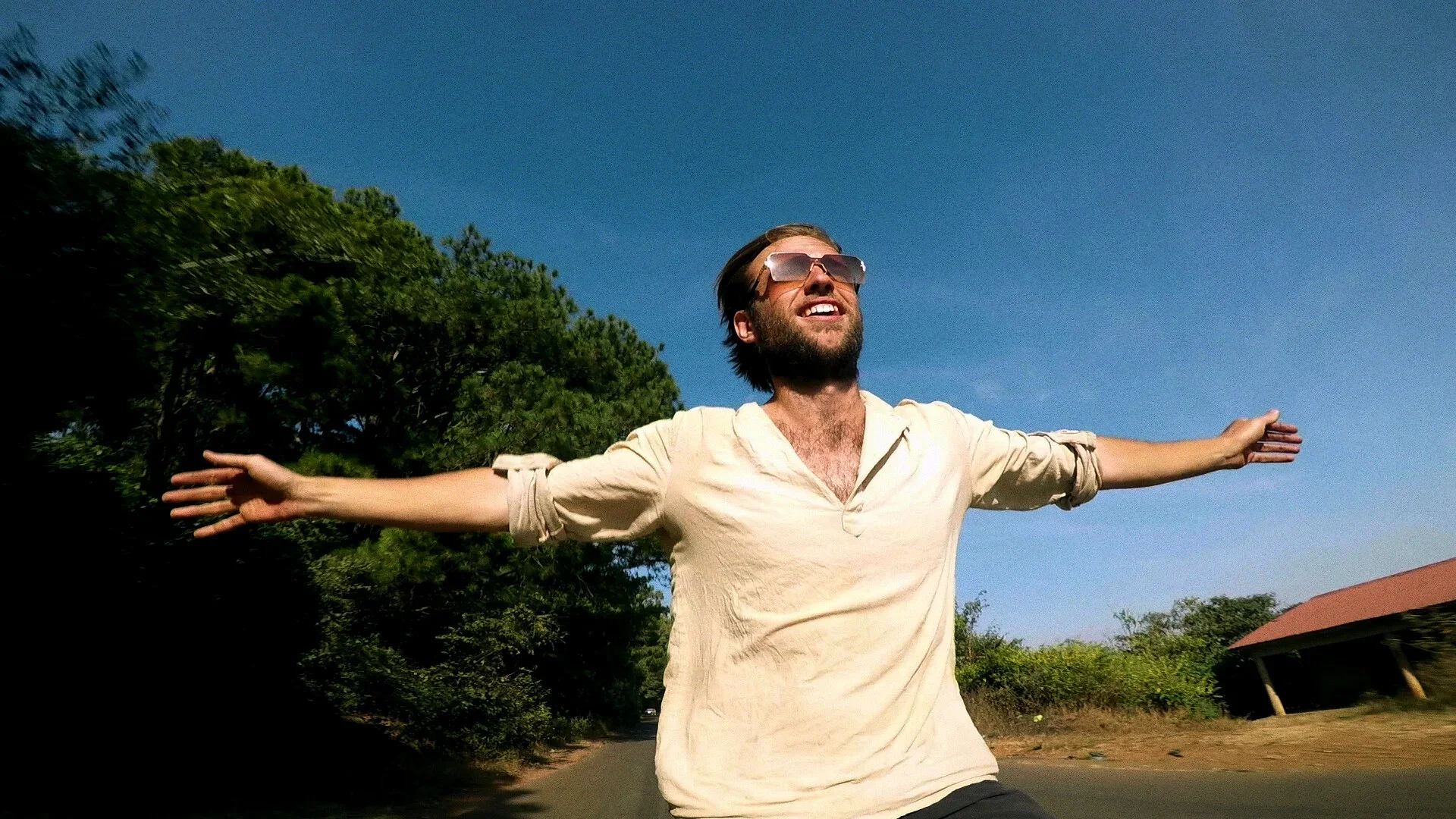
Written, Directed & Produced by Jude Kriwald
Edited by Christian Burnett
Alone Across Gola is an award-winning adventure documentary by debut filmmaker Jude Kriwald. This gripping short film follows Jude’s extraordinary solo journey through Liberia's dense Gola rainforest - a landscape uncharted by roads or paths, where every step meant battling through thick undergrowth with nothing more than a bicycle and a tent.
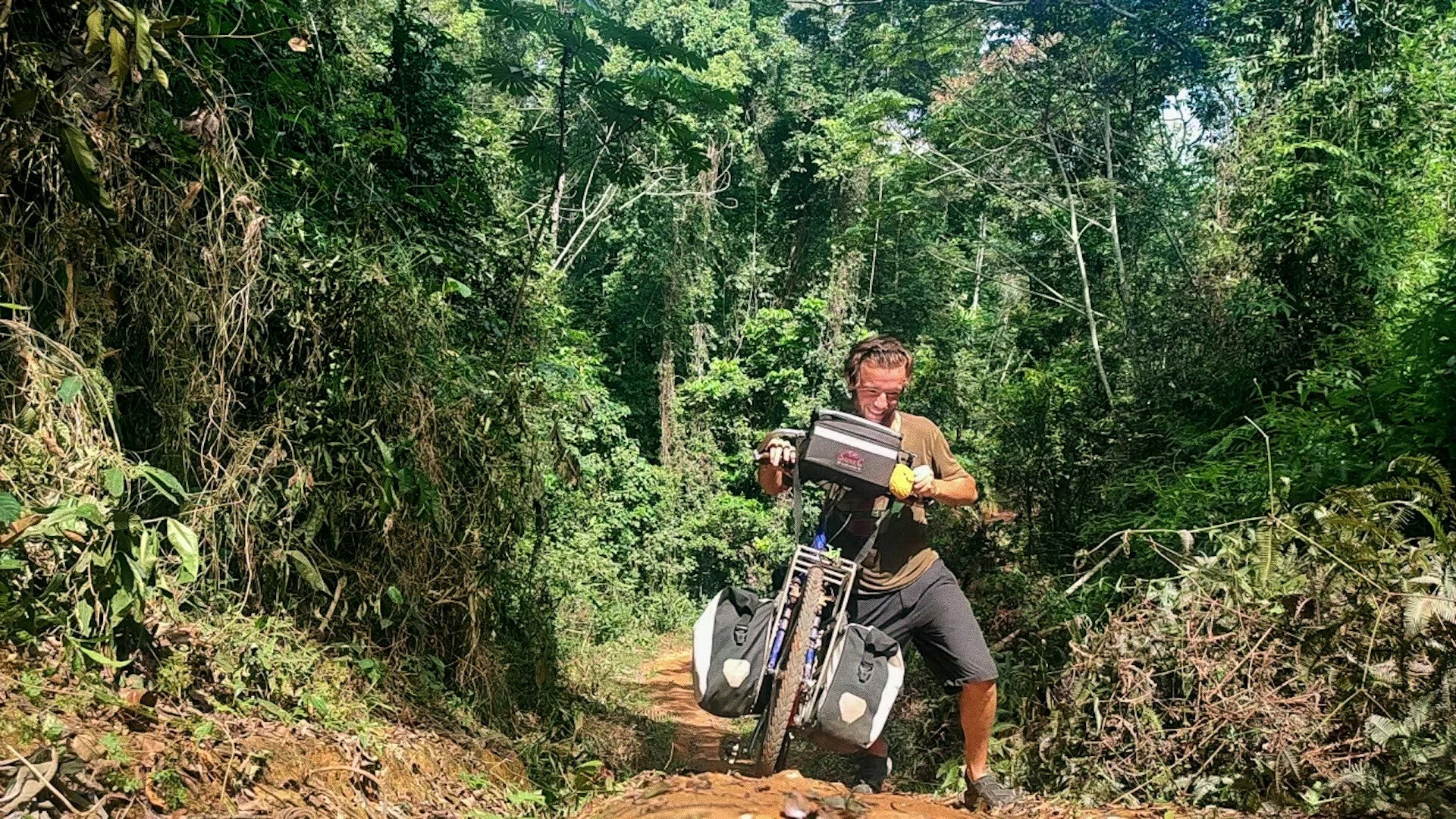
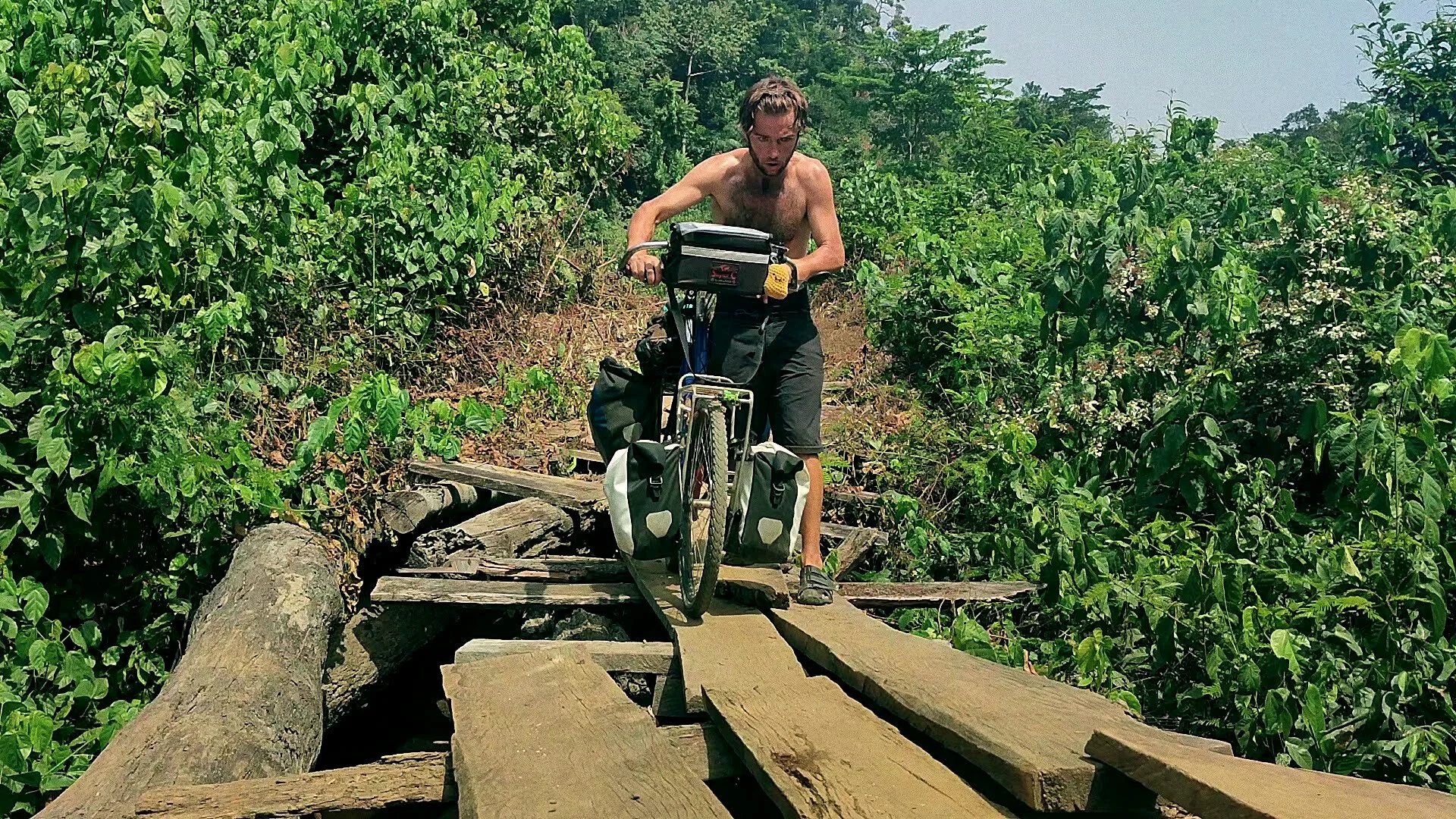
His clothes drenched with sweat, Jude carried his 53kg bike over fallen trees, navigated ravines with collapsed bridges, and faced life-threatening moments. It’s an adventure that pushes the limits of endurance, self-reliance and the human spirit, and often has Jude asking “is this route even possible”, all whilst filming the endeavour totally unsupported.
The film goes beyond clichés of gnarly adventure to offer a reflection on the struggles of pursuing childhood dreams that often get sidelined by the pressures of modern life. Through moments of profound introspection, Jude’s journey asks: What happens when we step off the beaten track of our careers and everyday routines to follow the dreams we thought we’d left behind?
ABOUT THE FILM
ALONE ACROSS GOLA won Best Micro-Budget Short at our BIFA qualifying film festival this past summer 2025. Other festival awards highlights include winning Best Short Documentary at the London Global Film Awards and Best Documentary at Phoenix Rising Film Festival and Feel the Reel Film Festival. It was nominated for Best Documentary at Cambridge Short Film Festival and selected for the Royal Geographical Society Preview - Explore Symposium.
ABOUT THE FILMMAKER
Jude Kriwald is a first-time filmmaker from Bristol, UK. An experienced explorer, he has recently turned his hand to creating his first short film, a documentary edited by award-winning editor Christian Burnett.
Jude was recently named as Emerging Leader of the Year by the British Exploring Society, in recognition of his voluntary work as Basecamp Manager on their summer expedition. The expedition saw Jude and 11 other leaders guide 30 teenagers and young adults from difficult backgrounds on a life-changing and confidence-building two-week expedition in the Scottish Highlands.
In 2012, aged just 19, Jude cycled from England to India through regions such as Afghanistan and Tibet, whilst enduring temperatures as low as -31c and navigating malaria, typhoid, and being held up at gunpoint.
In 2023, Jude has opened his adventures up to the world. He is the founder of AdventureMentor.org, a service which offers free mentoring for people typically under-represented in the world of adventure. Through Adventure Mentor, Jude offers practical support as well as confidence and mindset mentoring to ensure that lack of knowledge, confidence or privilege should never be a reason someone misses out on the life-changing benefits of adventure.
READ OUR INTERVIEW WITH JUDE
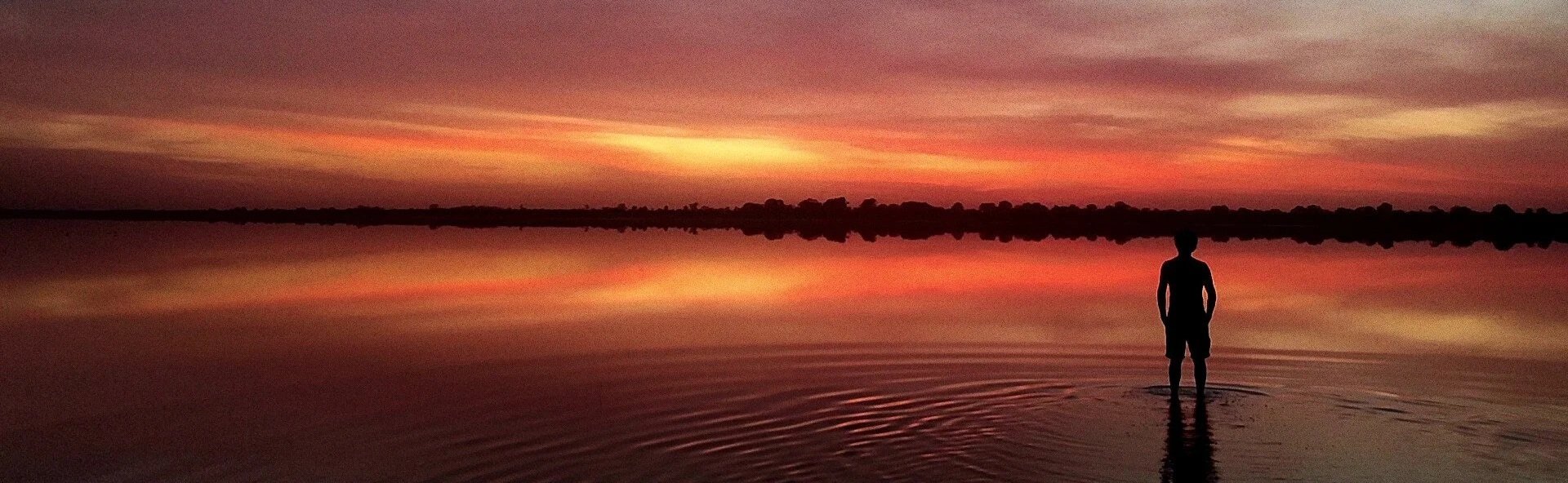
Hi Jude!
Welcome to our Short of the Week series.
Alone Across Gola isn’t only your debut film, but it was also an Award Winner at our festival this past summer. Impressive debut! Can you tell our audiences a bit about yourself and your background?
I'm an adventurer interested in using challenging trips to explore what drives us, connects us and, sometimes, troubles us. My real passion lies in authentic adventures and I share these through film, public speaking and writing. Alone Across Gola is my first film and has exceeded all my expectations in terms of how much I've enjoyed it and how it's been received!
Let's talk about the genesis of Alone Across Gola.
This is a very personal documentary project. It's more about you documenting your ambitious journey vs scratching a filmmaking desire.
I assume the idea for the trip came before the idea to film it. Can you tell us about how and why you decided to take this journey, and when you decided filming would be a part of it?
Great question! I decided to make the journey through West Africa after ignoring, for too long, a burning desire to get back out in the wild. West Africa seemed like the perfect blend of fascinating cultures, untamed wilderness, and the right amount of large animals to make things exciting. I initially filmed the trip for my own YouTube series that I was editing and producing on the go, from West African hotel rooms. In the end, I got fed up with using my travel time for post production so continued filming and resolved to edit upon returning home.
It was only after having the wild, unexpected and immensely challenging experience on the jungle, the key vehicle of the film, that I decided to create a proper short film.
We usually ask filmmakers what the main obstacles were experienced when making their films, however, in your case the entire journey is one big obstacle that you had to overcome. Maybe you can chat about how documenting this trip added to the challenges?
That was a pretty unique challenge! I was truly alone in the jungle - no crew or fixers of any sort. So after 12 hours of slogging my bike across jungle terrain each day, often progressing only 7km every 24 hours, I'd have to sit up in my sauna of a tent and spend an hour copying files from my SD cards, onto my laptop and then onto my hard drive at night. That hard drive was the only "copy" I had of any of those files, so I always feared losing it.
Then there's of course the challenge of setting up tripods before any tough section of the jungle - essential if I wanted to capture the right footage to share the story back home. There were times when the going was just too tough and I didn't film - safety had to come first!
Let's chat about the editing process. Your film has a longer run time for a short, yet it's captivating every minute without a second of run time wasted. How much footage did you walk away with and what stuff ended up on the cutting room floor?
The best decision I ever made was to work with seasoned editor, Christian Burnett. He not only edited the film but mentored me through the whole post-production stage. I ended up with about 100 clips each day to choose from. There are still whole stories and fascinating sections that have never been seen as we were really conscious to keep the flow tight. We even discussed making it a feature film at the start, there was that much footage. On the other hand, once we had a tight cut, one of my favourite parts was going through and working with Christian to add short bits of space for the audience to breathe - it's such a high octane and emotive film that it felt important to allow people to catch their breath and reflect.
Tell us about the journey of getting your film to audiences and some of the festival circuit highlights and online release.
What advice or hacks would you give to other short documentary filmmakers?
The festival circuit was such a journey for me! It started with six straight "no"s but, by the end of its run a year later, I was getting almost all "yes"s, even from the big ones. That just showed to me that, rightly or wrongly, many festivals do look at how your film has performed at other festivals, and I had to build up organically. I also changed my film poster after that first run of rejections, working with a pro to make something more reflective of the film itself, which I think made a huge difference.
It's been such a momentous joy sharing it with audiences, and there are too many highlights to properly choose from. Ones that stand out are picking up the Audience Award at the very first festival I attended (English Riviera) - that meant a lot as all the "judges" were sat in the room with me! To finish, Alone Across Gola ended its festival run by showing at the Grand Rex in Paris, the largest cinema hall in Europe - where it also picked up an award - that was a night I'll never forget! As for its YouTube release, that's just been crazy, especially in terms of the viewing numbers - it's so moving to see people from around the world, that I'd never otherwise reach, resonate with the message and share that back to me.
My best tip would be to make sure you're applying to at least some festivals that are very specific for your niche (in my case mountain film festivals). That's where at least 50% of your selections are likely to come from, plus you'll meet people directly involved in your industry or interests. And don't be too perturbed if you get a load of "no"s at the start!
What's next for you, in terms of filmmaking?
Honestly, I'm not too sure. I've grown increasingly aware of how filming myself on adventures can detract from having an authentic adventure. I'm very interested in exploring more analogue adventures (e.g. no GPS or phone, navigating with a compass and the stars), so that would either require someone else to film or, alternatively, maybe I'll write about these explorations rather than make a film, we'll have to wait and see!
Any film recommendations that we should add to our watchlist?
Do all you can to see the short film Sand Dancers. I saw it recently at Kendal Mountain Film Festival - it left me inspired, deeply moved and with tears rolling down my cheeks.
Apply to get your short selected as our Weekly Pick

Amigo
'Amigo', the rent-a-friend app has taken London by storm. An unfriendly Amigo's life comes crashing down when he finds out his life is a lie.
Directed by James & Harrison Newman
Written by James Newman & Tom Waterhouse
Produced by Guy Lindley
'Amigo', the rent-a-friend app has taken London by storm. An unfriendly Amigo's life comes crashing down when he finds out his life is a lie.
ABOUT THE FILM
AMIGO was an Official Selection at the 2025 edition of our BIFA qualifying Kino London Short Film Festival. Other festival highlights include the BAFTA qualifying Bolton International Film Festival & Aesthetica Film Festival. It also played at Discover Film Festival, Indie-Lincs Film Festival, Northampton Film Festival, and Cardiff Mini Film Festival. It was released online by Directors Notes.
ABOUT THE FILMMAKER
James Newman is an award-winning writer-director from Reading, Berkshire, specializing in comedy. With 7-8 short films and an award-winning feature screenplay under his belt, Newman has quickly become a rising force in British independent cinema.
Starting as a runner in Soho’s production companies, he’s since earned 2nd place at Slamdance’s Short Film Screenwriting Competition, 2nd place in The Pitch Film Fund, a British Short Film Award for Best Comedy, and Best Short at our very own Kino London Short Film Festival.
READ OUR INTERVIEW WITH JAMES
Welcome James!
You’re no stranger to Kino. Your film Viskar I Vinden won the 2022 edition of our festival, which awarded you our film fund to help make Do Not Touch - your first collaboration with comedian Sean Walsh. Now you’ve teamed up with Sean once again on your latest film to have just come off the festival circuit, Amigo.
Can you talk about how you came up with the idea for Amigo and how it was initially developed as series, and why you decided to pivot to make it as a short film instead?
So initially, it was about a prostitution app like Uber, and the lead would have been a male prostitute. We wrote that as a TV pilot around 5 or 6 years ago. But we pivoted as the storylines we came up with were about people being lonely and not using the app for sex, but for companionship. And then we thought that there was something in that—the core of the idea is about lonely people desperate to connect with someone. The most valuable thing I’ve learned from going to short film festivals is that all cinema and media which involves storytelling is about human connection, or the lack thereof.
Currently, you’re branching out as you gear up to make another short, The Ladder. You often co-direct. Will this be your first time solo-directing a short?
This isn’t my first time solo directing—I directed my first short, Viskar I Vinden, on my own. But I have co-directed recently on The Pitch’s new comedy short, Kitty, with Lizzie Hart, which I didn’t write. It was incredible to come in on a project that I hadn’t been involved in the writing process for. It’s so far away from what I normally do—it’s super duper charming and sweet. It was really nice to play in someone else’s really well-constructed world.

Join us for a sneak peak at THE LADDER
We’ll screen the key creative team’s previous works + do a public table read of upcoming work in order to get audience feedback.
All proceeds to go directly to topping up production funding for The Ladder, shooting early 2026.
In the past, what has been your motivation to co-direct in most instances & what excites you about helming the director’s chair solo this time around?
The motivation to go back to being solo is that I really enjoy the full responsibility of the film. I want to become a better director, and I think the way to do that is to be fully responsible for all areas of the production rather than delegating between two people. With Kitty, I was more of a conduit for the crew and technical aspects than the actual story and world, whereas I want to stretch myself and get out of my comfort zone to do things that I’m creatively excited about. With the rise of AI, I think we need to tell more human stories and have choices that the characters make that an LLM won’t agree with but makes sense to humans.
The Ladder will be another Kino Original, making you the first filmmaker in Kino’s history to have been granted funds twice. What’s your secret to closing deals to secure funding?
I think the key is to try to outwork your competition. Enter everything, as I think it’s a numbers game. Do your research—what are they likely to commission? I think the key is to write things that interest you rather than trying to win the fund, otherwise people will be able to sniff it out, especially when it’s made and screening at festivals.
The Ladder has also been shortlisted for several other funds including Slick Films, From The Silver Screen, First Flights & more. Can you talk a bit about your funding strategy?
To be honest, I’m very surprised we’ve gotten into the finals or been longlisted for like 75% of the funds we’ve gone after. I think it’s actually quite bizarre. I’m not sure if it’s the subject matter or that it’s quite relatable and speaks to something people are feeling at the moment? But I think the strategy is: package it nicely, reach out to talent and get them attached. I think the goal is to make an undeniable film where everyone can see it doing well on the festival circuit.
Many short filmmakers struggle with even getting in the room to pitch, so well done on making it the room so many times. What do you think within your work and your funding application materials has made the difference to get such positive reception?
I think the subject matter of the housing crisis and intergenerational inequality is something I’m quite angry about, and it’s blended with real experiences with a bailiff. And it’s from lived experience of being really poor in London that I don’t think sounds like a repurposed Guardian article. It helps having producers like yourself and Guy Lindley on board, and a great creative team with Nathan Claridge. I think what’s helped me was going to a webinar with First Flights about what they care about in a funding application, and that helped. I think they have some resources on their website. But I think having a story that connects and characters you care about are crucial, because if you don’t have that, you don’t have a film, in my opinion.
Recommendations to add to our watchlist? Give us 1 short, 1 Hollywood feature, & 1 indie feature.
Short: The Farm
Feature: Bugonia
Indie feature: Grand Theft Hamlet
Interested in getting your work selected?

Busy
Emma-Leigh and her friends decide to put their next date in the diary, but it proves harder than they anticipate.
Written & Produced Megan Smith
Directed by Jane Moriarty
Emma-Leigh and her friends decide to put their next date in the diary, but it proves harder than they anticipate.
ABOUT THE FILM
BUSY screened earlier this year at our BIFA Qualifying Kino London Short Film Festival. Additionally it’s played at Brighton Rocks Film Festival & Spirit of Independence Film Festival, both also BIFA qualifiers.
ABOUT THE FILMMAKER
Jane Moriarty is a theatre and film director, working in the UK and Ireland. Jane directed SHUSH, a 25-minute drama produced by Charmer Pictures for RTÉ, written by and starring Liv O’Donoghue. It can be streamed on the RTE Player. Jane’s debut short film KITCHEN TALES, is now featured on BFI Player Her second film, I CALLED YOU, recently screened at the IFTA and BAFTA-qualifying IndieCork Film Festival. Jane was the Rehearsal Director for Sky comedy-drama series THE LOVERS, working with the lead cast prior to filming and during production. And she was a voice and performance director on the BAFTA-winning video game, BALDUR’S GATE 3. Jane was awarded the Young Directors Silver Screen Award 2025 for SHUSH.
Megan Smith is an actor, writer and producer for theatre and film. Megan's latest film BUSY, has qualified for BIFA 2025.. Her other comedy films received international recognition. SURGEONS (2021 ) was selected for BAFTA qualifying Bolton Film Festival and won 6 awards. BEST FRIENDS (2020) won 9 film festival awards. Other producing credits include I CALLED YOU AND ROBOT LADY. Megan is currently producing FROG, a short film written by Rebecca Crookshank about IVF, to be filmed later this year.
READ OUR INTERVIEW WITH MEGAN
Tell us about the genesis of Busy. Where did the idea come from and how did you develop that idea into the short that's now made its way out into the world?
Busy came after I observed several conversations with friends. I noticed people were very quick to make out I was the busiest person in the room, or that I had to send dates to find a time to meetup, but when it came down to it, everyone was actually as busy as each other. We all have different commitments in our lives, albeit children, family, work or selfcare, but sometimes it's easy to see yourself as the least busy because then you're not the problem. I thought it would be funny to have a double ending, just to show it wasn't about being mean. I talked about the idea for a while. to gauge the connectivity, and if other people would relate, and then I wrote the script very quickly and then went about trying to get it made.
What were some of the main obstacles you experienced when making Busy and how did you overcome them?
As with many films, we were constrained by budget and scheduling. We used a minimal crew and an empty location (pub was closed!) to make sure we could get the most out of the day.
Tell us about the journey of getting your film to audiences and some of the festival circuit highlights and/or online release.
Hearing BUSY with a live audience for the first time was amazing, as you could slowly hear the slow reveal being realised by the audience. Making people laugh, who you don't know, is the best thing in the world.
What advice or hacks would you give to other short filmmakers?
Work with people who are as caring and enthusiastic as you are.
Any film recommendations that we should add to our watchlist?
Check out SHUSH by our very own talented Jane Moriarty.
Interested in getting your work selected?

I Understand
After an argument, Ben and Eve meet a friend in a pub to each tell their side of the story. But what really happened that night?
Written & Directed by Mark Van Heusden
Produced by Victoria Fäh
After a heated argument Ben and Eve let off some steam by meeting a friend in a pub and each telling their side of the story. As they both tell their version of events and what they wished they had done instead, we find out what really happened that night.
ABOUT THE FILM
I Understand is the third short film from festival alumni Mark van Heusden. Thus far all three of his shorts have been screened by Kino, with I Understand being an official selection at our 2024 edition of the BIFA qualifying Kino London Short Film Festival. Other highlights for I Understand include screening at the Kingston International Film Festival and it’s online premiere with Film Shortage.
ABOUT THE FILMMAKER
Mark is a London based editor and occasionally writer and director. His films as director include British Graffiti (Norfolk Film Festival best student film winner, Birmingham Film Festival best short film & best editing nominee) and David French Is a Piece of Shit and I want Him Dead (Hollyshorts Film Festival official selection, Kino London Short Film Festival best short, best screenplay, best actor nominee and winner of best score). His latest effort as an editor Us & In Between just finished it’s highly successful festival run and premiered on Director’s Notes.
Mark also works as a visual effects editor on feature films and tv shows (House of the Dragon, The Witcher, The Lord of the Rings: The Rings of Power, Doctor Who)
READ OUR INTERVIEW WITH MARK
Welcome back to our Short of the Week series. What have you been up to since we featured your last short David French Is A Piece of Shit And I Want Him Dead?
After David French Is a Piece of Shit and I Want Him Dead, I took a long mental health break because I burned myself out a bit. This film is a direct result of that because I wrote it to make sense of all the thoughts going through my head. Before I went into production on I Understand I directed a few music videos (for bands Wyldest and GUYY respectively) working with Max Conran who is a great DOP and even greater friend. And I was fortunate enough to edit Katia Shannon’s short film Us & In Between which is probably my favourite thing I worked on so far.
Tell us about the genesis of I Understand. Where did the idea come from and how did you develop that idea into the short that's now made its way out into the world?
As I said I wrote this when I wasn’t feeling very well. I went through a break up which was quite messy and I kept thinking about what was said by both of us and what I wished I had said or done instead. I wanted to explore that strange occurrence where you lie to yourself and don’t say what you mean because you’re afraid to hurt the other person. Initially I wrote it as a breakup movie but I ended up changing it to a brother/sister story because I got over the break up and didn’t want to open those wounds again. I felt I moved on. Also my grandmother was dying at the time and she had a difficult relationship with my mother. Despite this my mum was by her side day and night before she died. And that made me realise that with family, even if you don’t get along, you have this connection that you can’t ignore. So I wanted to explore the difficulties of a family quarrel because I know many people will have experienced something similar.
What were some of the main obstacles you experienced when making I Understand and how did you overcome them?
We shot a house party with 20 extras in a 2 bedroom apartment. I was adamant we use a dolly in there too. It was very tight. But it all went smooth because the crew was prepared and we had set up a chill area outside so not everyone had to be in the apartment all the time.
Tell us about the journey of getting your film to audiences and some of the festival circuit highlights.
Honestly this has been a difficult part of the journey for me. You hope a film gets into loads of festivals and that it connects to people that way, but I Understand had only two festival selections out of many submissions. However of people who did see it at these festivals I got some nice responses of people who had troubled relationships with their siblings or their parents, and said that this is exactly what it feels like. Ever the self critic, I have some gripes with the film too, but instead of seeing it as a failure I see it as part of my journey as a filmmaker to see the mistakes I’ve made and focus on improving my craft.
What advice or hacks would you give to other short filmmakers?
Don’t do everything by yourself. I’m very introverted and do as much as I can by by myself. I edited this, mainly because I love editing and to save money, but I was too close to the material and afraid to kill any darlings. I think having an editor on board would have been better for the film in hindsight.
Any film recommendations that we should add to our watchlist?
Some things I saw recently that I really liked.
Carnal Knowledge
Lone Star
Ponyo
The Return of the Living Dead
Flow
Ordinary People
What are you working on next?
I’m attached to edit a short by the end of this year and I’m hoping to edit more shorts in the next year and to connect with directors that way. Otherwise I wrote a feature film I’m very passionate about, a thriller about a young girl who finds out her father is an incarcerated serial killer. A director friend of mine read it, loves it and we’re hoping to get this made as his directorial debut feature.
Interested in getting your work selected?

Satisfaction
Georgian England. A society lady raises her pistol to duel with her aristocratic mentor over a grave insult.

Directed by Bailey Tom Bailey
Written BY Christopher Buckley
Produced by Marek Lichtenberg & Nathan Craig
Georgian England. A society lady raises her pistol to duel with her aristocratic mentor over a grave insult.
ABOUT THE FILM
Satisfaction was an Official Selection at our very own BIFA qualifying Kino London Short Film Festival in 2024 where it was nominated for Best Score. Other festival highlights include the Oscar Qualifying Flickers’ Rhode Island IFF, the BAFTA qualifying Bolton IFF, the four other BIFA qualifying festivals including Exit 6 (Nominated for Best Editing), Crystal Palace IFF, Brighton Rocks FF, and Sunderland SFF.
ABOUT THE FILMMAKER
Bailey Tom Bailey has made many shorts and music videos that have played international BIFA, BAFTA & OSCAR qualifying festivals and online platforms including Short of the Week, Slamdance, Fright Fest, Berlinale, LSFF, Rhode Island, Bolton, Nowness, Omeleto, 1.4 awards, Shiny awards, and have won several awards along the way. He also works as an editor and sometimes VFX artist for clients including Nike, Adidas, Somesuch, AMV, BBH, Dazed. He has a background in painting, is an alumnus of Arts University College Bournemouth, Berlinale Talent Campus and has studied Meisner acting and improv comedy. Bailey is developing several features and a series based on Satisfaction.
Christopher Buckley is an actor and writer. He has written two shorts, including Satisfaction and a play ‘Third Grade’ performed at the online ‘8x8’ theatre festival in May 2020. Chris was a lead part in the original cast of Stranger Things: The First Shadow. He has performed onstage across the UK and Europe, winning the Theatrepreis Hamburg Rolfe Mares award for ‘Best Actor’ in 2017 for ‘Orphans’. He has also recorded various radio and audio dramas for BBC4 and Audible. Through his writing, he hopes to champion and elevate neglected stories and characters, both onscreen and onstage.
READ OUR INTERVIEW WITH BAILEY
Tell us about the genesis of Satisfaction and your motivation for making this film.
I (Bailey) and Christopher connected through Centerframe's Get It Made competition. Christopher had written a script about petticoat duels (duels between women), which were uncommon but happened throughout history. In his research, he found a famous Georgian cartoon of two women duelling with pistols, and the script grew from there. We were fascinated by how Georgian social structures were dehumanising these old friends, making them rivals. Over the course of the script, they rediscover their humanity, their mercy. Chris developed a brilliant Georgian slang that had me looking up various words, but gave the project a unique voice and tone. In later drafts, I encouraged Chris to draw out the duel and heighten the suspense, an approach that continued into production, where I took cues from how Sergio Leone built his shootouts.
What were some of the main obstacles you experienced when making Satisfaction and how did you overcome them?
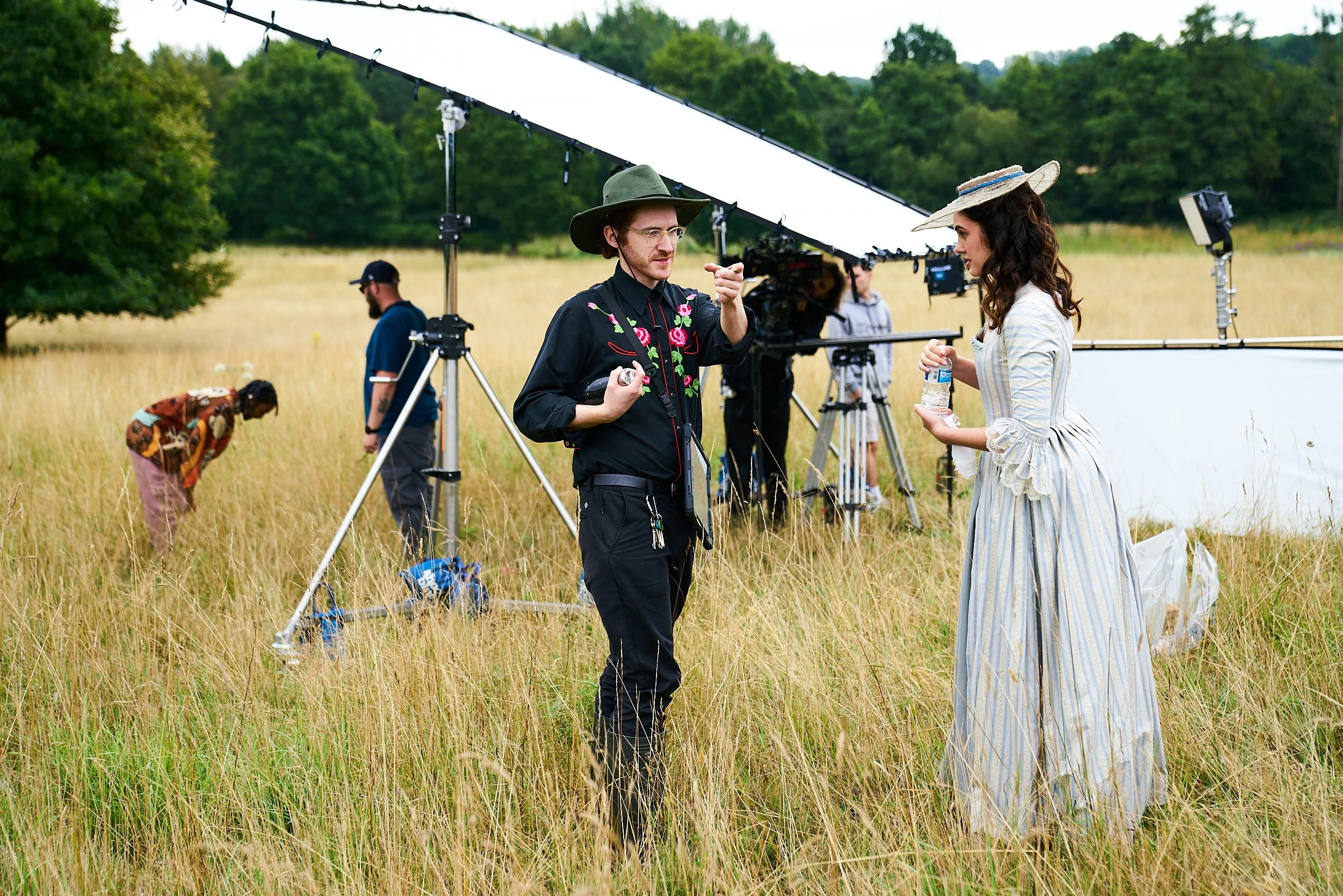
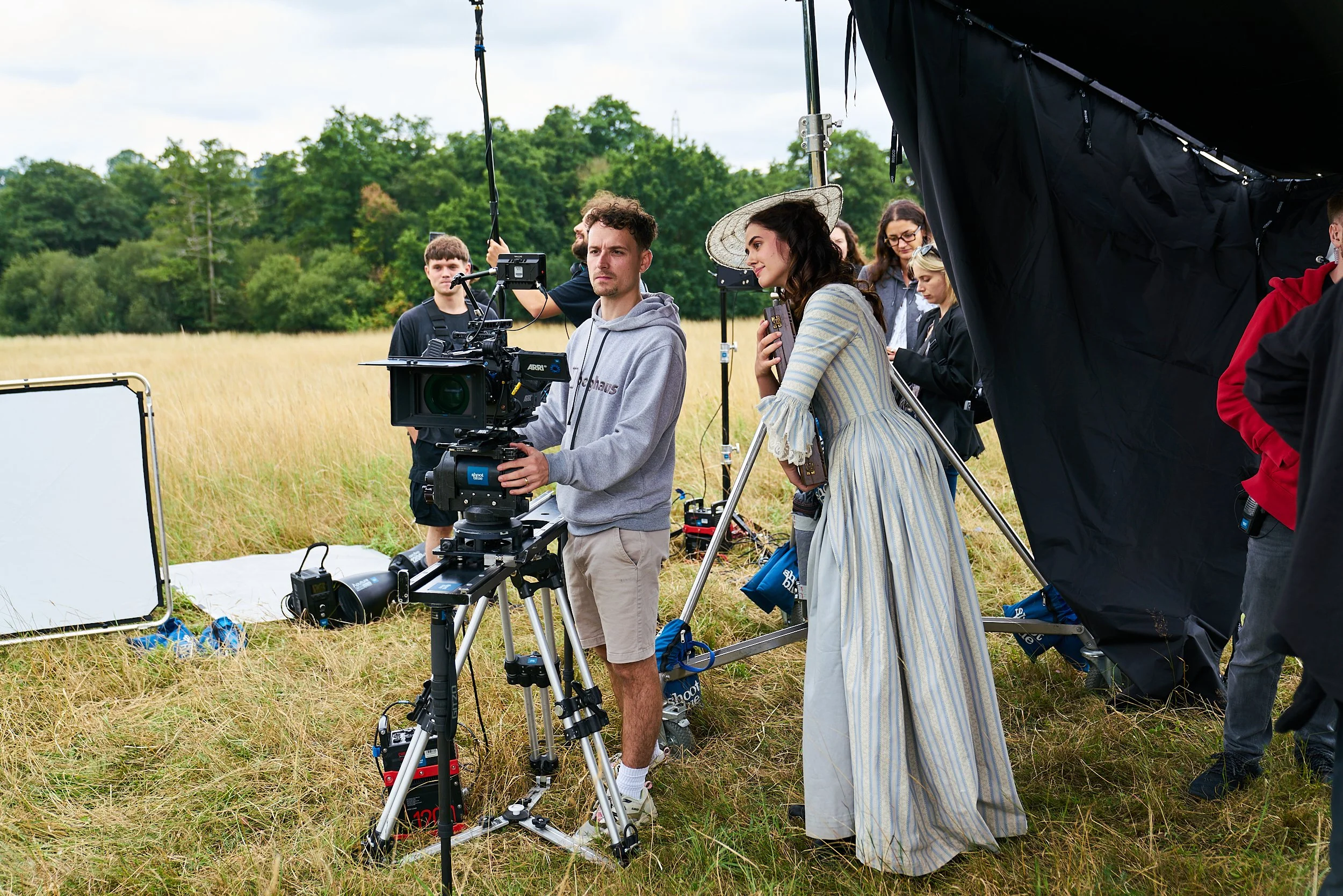
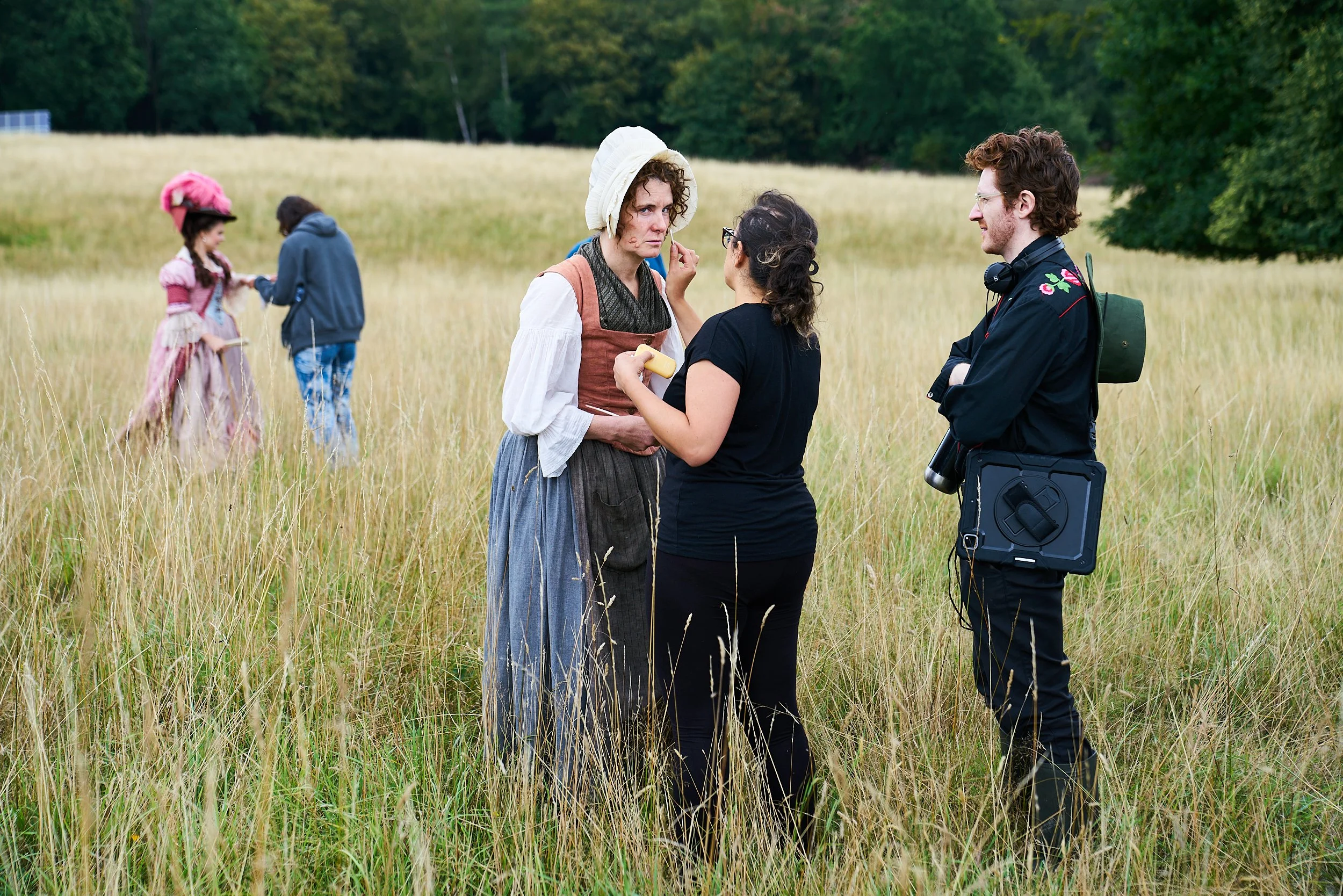
Fields. It's surprisingly hard to find a field / landscape that offered compositional possibilities, where you don't risk some member of the public slowly traipsing across the back of the frame. We realised the answer was to find a location that had private grounds, likely a stately home. However, these came with a hefty price tag, and often their lawns were too manicured. Finally, one of our producers Nathan Craig, found a stately home (that anecdotally, had briefly been owned by Led Zepplin) that wasn't on a location library, which was sympathetic to our project and had natural and photogenic grounds.
As we led up to the shoot day it was forecast to rain on our second day, but didn't feel we could move everything. So we crossed our fingers - and the gods laughed. It was torrential and our morning was mostly rained out. To cover ourselves, we had shot longer on our first day, then on the second we worked under cover for close-ups and grabbed the remaining necessary shots in a brief dry patch at day's end.

Photo Credit: DEVIN DE VIL @ licence to capture
Tell us about the journey of getting your film to audiences and some of the festival circuit highlights.
Post on a short can be slow but we managed to complete this within 5 month, with a deadline for a screening hosted by our funders Centerframe. Iron Box Films came on as a partner to fund the festival run. We quickly got it onto the festival circuit and focused on BIFA qualifying events. The film is short and fairly punchy so was often programmed towards the end of blocks as a big finish or pick-me-up before people left. It was nice to see the film, an intended audience pleaser, was landing with gasps, 'oo's and 'no's in the right place. Kino London gave us our first nomination for Andreas Aaser's score, which I believe was much deserved. Music is such an important part of my films and Andreas is very gifted and imaginative. Rhode Island gave us our US premiere and Bolton International film festival also stood out as a great experience.
What advice or hacks would you give to other short filmmakers?
Keep it short of focus the story and make it easy to programme. Keep it in one location so its easier to produce. iIf you're trying to make something that opens doors - keep the audience in mind.
Plan as much as you can, I storyboard everything myself, which is the final re-write before shooting (until we edit, of course!), which saves time.
Have an idea for every department, and brief them as clearly as you can.
Get the best cast you can! Our casting director, Chloe Blake was really helpful, she works with the National Theatre and has her ear to the ground about new talent.
Any film recommendations that we should add to our watchlist?
Once Upon a Time in the West, is a film I thought about a lot during the making of this film, as with the rest of the dollars trilogy, its inventive, plays with audience expectation and has such an operatic quality. It's climax's and pure cinema and I get the buzz I get when I watch a Hitchcock movie that you can see what the director is doing, which I always find thrilling.
Sweet Smell of Success, a noir-drama that I thought of because in his book 'On Filmmaking' the director Alexander Mackendrick (a Brit making his first US film) said he had been given a 'wordy' script but the writer Clifford Odett's (a famous playwright) told him - 'just do it fast'. I thought about that when dealing with the stylised language of Satisfaction. I also marvelled at the blocking of the film and stole moments from it. I'm a huge fan of the blocking of mid-centrury movies (40s-60s).
Days of Heaven - is always and inspiration for its editing, structure and elliptical storytelling, but this time I was thinking about the photography. Along with the paintings of Andrew Wyeth, this film helped me figure out the look and composition of the landscape. It was pivotal in me picking a location that have long grass that was somewhat yellowing, like corn, but not as difficult to work around.
All Watched Over by Machines of Loving Grace, Adam Curtis' documentary, draws incredible connections between obscure historical figures, science, philosophy, politics and society - I believe these alternative versions of history are a little subjective, but the ideas and stories had my jaw on the floor every ten minutes. Expanding Saisfactions' historical subject into a series we're constantly finding the roots of social concepts we now take for granted and Curtis will be in my mind when doing this.
What are you working on next?
We’re developing Satisfaction into a limited series about Ann and Belinda becoming hired guns fighting for women’s honour.
I’m also developing a few features, and packaging one caled Torn Velvet, about a fashion marketer who unravels when she discovers that the sight of safety pins triggers orgasmic, spiritually awakening seizues.
Interested in getting your work selected?

Cry Like A Guy
Why do we cry? What’s the deal with those little droplets of emotion? Kieran Bew (HBO's 'House of the Dragon', Netflix's 'Warrior') leads us on a gruff, goofy, educational and emotional adventure through the senses into the fascinating world of tears. A feast for the feels.
Directed by Ant Rubinstein
Written by Catherine Willoughby
PRODUCED BY UNIT 9 FILMS
Why do we cry? What’s the deal with those little droplets of emotion? Kieran Bew (HBO's 'House of the Dragon', Netflix's 'Warrior') leads us on a gruff, goofy, educational and emotional adventure through the senses into the fascinating world of tears. A feast for the feels.
ABOUT THE FILM
CRY LIKE A GUY has been featured online with Film Shortage, Beyond the Short, Minute Shorts, and Curation Hour. I won awards at Sunday Shorts and Indie Short Fest in LA, received Honourable Mention at the Margate Film Festival, and was nominated for Best Micro Film, best editing, and best sound at Phoenix Rising. Additional festival highlights include Little Venice Film Festival and Boundless Film Festival.
ABOUT THE FILMmakers
Ant Rubinstein is a London based director / VFX artist / general creative nerd. Armed with an Engineering degree from the University of Cambridge and a couple of years working internally at Red Bull Media House - he’s recently moved into directing commercials for global brands (Google, Meta, Mastercard, Honda, Ford) and music videos for Chart topping artists (Sean Paul, Camilla Cabello). He picked up aa Young Director Award at Cannes for a zero-budget pandemic short film - which is now preserved in the BFI national archives. In his filmmaking he is all about innovating and pushing boundaries wherever possible, he loves that intersection where tech meets art, and especially loves getting his hands dirty building creative contraptions using the latests tools and technologies.
Catherine Willoughby is a planing director at Adam & Eve DDB by day, and a passionate poet / writer of spoken word by night.
READ OUR INTERVIEW WITH ANT & CATHERINE
Welcome to our Short of the Week series. Tell us a bit about yourself and your filmmaking background.
We’re a London based writer director duo - by day Catherine (writer) is a planning director at Adam & Eve DDB and by night an avid poet / writer of spoken word. Ant (director) is a freelance filmmaker working in commercials, with a keen interest in VFX and messing about with the latest tools and technology. Together we love collabing on projects like this, we like to make things that play to our creative strengths and that can also inspire, educate and entertain at the same time. Our last short ‘There’s Something Going Around’ was about how memes kept us sane during the pandemic, and it ended up preserved in the BFI national archives (as well as garnering a coveted Kino short of the week selection too) .


Tell us about the genesis of Cry Like A Guy and your motivation for making this film.
Believe it or not, the topic was inspired by a disagreement between Catherine and Ant. We realised we’d been socially conditioned to have opposing views about the value and usefulness of tears, and wanted to explore that in a piece of creative writing. Catherine wrote a longer spoken word poem originally, then we decided to make it into a film - and target it specifically at men as that had more of a cultural hook than crying in general.
We started by researching to answer the simple question “why do we cry?”, and the explanation fit into those three broad themes. So we wove them together in a story that builds continuously; starting with what’s happening in your body (biological), then looking outwards to your interaction with other people around you (sociological), and then zooming out even further to consider people across time (historical) - painting the full picture that today’s stigmatisation of male tears is not very productive or sensible. The whole process was a fascinating journey of research and discovery.
This is a huge topic, and such an important one too. We feel that the boundaries of traditional masculinity are very much in flux at the moment, and we hope this film can play a small part in reshaping the narrative. We’d love it to be seen by as many people as possible in an educational context and we’re working on charity partnerships / amplification to get it in front of the people who could benefit the most from the messaging.


What were some of the main obstacles you experienced when making Cry Like A Guy and how did you overcome them?
The hardest bit of any short film project has go to be getting it off the ground and building that initial momentum! We had such a great script and I knew we needed to find the right narrator who could do it justice, but at the start when it’s just an idea in your head how do you convince people to see the value in it? Because I do a lot of VFX, my approach was to create a really intricate 3D animatic of the whole thing, we plotted out exactly what was going to happen and when - particularly how it was going to flow together with these theatrical sliding scenery pieces. I worked on this for a good few months, knitting the story together and figuring out exactly what we needed. This was the only thing I could really do to drive the project forward by myself, but the pre-vis actually became invaluable in getting people excited and on board - It’s what enabled us to attract Kieran as our narrator. It also meant on the shoot we could be super efficient with coverage, as we had the film pretty much all laid out already in terms of what shots we needed where, to stretch our slender budget to the absolute maximum.
Tell us about the journey of getting your film to audiences and some of the festival circuit highlights.
My approach to getting this out there in the world has just been make as much noise as I possibly can about it online! Our premiere was just on my YouTube channel (after a screening for friends and crew) - and I’m constantly posting behind the scenes snippets and making-ofs on instagram to get people to go and watch the full thing. Side note: I’d definitely recommend behind the scenes content as a great way to promote a film on social media, little snackable snippets are much more engaging and shareable than a full film that requires attention and focus, plus there’s a multitude of pages that will repost good behind the scenes content if you make it for them! Because we both work in advertising we’re trying to get it in front of as many industry people, brands and agencies as we can - with the ambition being we can find a purpose for it with a charity or a cause to amplify the message.
What advice or hacks would you give to other short filmmakers?
This was my time doing a short with a really established actor, we were so lucky to get Kieran on board and I think my big learning / hack would be don’t be scared to go after a big star! If you can find a way to get through to them and you’ve got a good idea I don’t think anyone is off limits. That applies to crew, VFX artists and everyone involved in the process. Filmmaking is a team sport and you never know who you might be able to get on board and how much they might be able to elevate your work if you don’t try! For us, the narrator was always going to be what the success of the film hinged on and Kieran’s experience in House of the Dragon, Netflix’s Warrior and all manner of other ‘tough guy’ roles made him a perfect fit for the part.
Any film recommendations that we should add to our watchlist?
An inspiration for this film that I heartily recommend was Wes Anderson’s adaptation of Henry Sugar on Netflix, mainly for the theatrical transitions and sliding set pieces - they add a whimsical sprinkle of surprise and delight to every scene and elevate moments that could just be a mundane cut. I think in this world of oppressive CGI and Ai there’s something so special about clunky mechanical transitions that really feel handmade. Another big inspiration for us was ‘Quarter life poetry’ by Samantha Jane, we love the spoken word narrator lead narrative. It’s such a great way to tell a story with so much lyrical flair and creative flourish, a piece we defintely aspired to emulate!
Interested in getting your work selected as Short of the Week?

London's Forgotten
In the urban streets of London, the stories of would-be knife crime victims are connected by a wandering drifter who has loose ends to tie.

Written & Directed by Liam Pinheiro-Rogers
Produced by Cyrus Mirzashafa & Levon Gharibian
In the urban streets of London, the stories of would-be knife crime victims are connected by a wandering drifter who has loose ends to tie.
ABOUT THE FILM
LONDON’S FORGOTTEN screened at our BIFA Qualifying Kino Short Film Festival earlier this year. Other notable festival selections include Shorts On Tap, The British Urban Film Festival, Leeds International Film Festival, and Liverpool Film Festival. It won Best Experimental Short at The South London Film Festival and was nominated for Best Director at The British Short Film Awards. It recently premiered on Director’s Notes.
ABOUT THE FILMMAKERS
Liam Pinheiro-Rogers is the Writer/Director of London’s Forgotten. Since leaving film school in 2015, he has been making independent short films, with genres ranging from horrors to sci-fi to dramas. He built up a portfolio as a director of short films and music videos, while screenwriting short and feature films. One of his feature screenplays, “A Flood To Remember” won Second Rounder at the Austin Film Festival. Recently on the directors front, he has worked with clients such as musicians May Roze and Alex Ko, and the charity Missing People.
READ OUR INTERVIEW WITH LIAM
Welcome to our Short of the Week series. Tell us a bit about yourself and your filmmaking background.
So I was always very creative growing up, doing lots of drawings and coming up with all sorts of ideas for different concepts but never really knowing what exactly I wanted to do. Be a drawing artist? Novel writer? Comics? Videogames? I explored all of these different thoughts but nothing stuck. At 13 years old, I got to do a short (and terrible) film in my secondary school and it was there I realised I wanted to be a filmmaker. I wanted to write and direct specifically. From there, I went to film school to learn a bit more about the craft and after leaving, I started making a lot of self funded short films, producing most of them and building relationships, and really cutting my teeth making dramas, horrors, science fiction stories and so on until I found my voice. I always saw films as the best way for me to articulate different thoughts and ideas within my favourite genres and types of films.
Tell us about the genesis of London's Forgotten and your motivation for making this film.
London's Forgotten had a long journey from the concept to the finish line. I thought up the concept back in 2019, inspired by growing up in Tottenham and knowing people who were involved in gang activities. I lived in Tottenham for a good portion of my early life. It was when I went to secondary school where I realised what was going on in my area in terms of the gang lifestyle, and knife and gun crime. The catalyst for my parents deciding to get us out was our next door neighbour's son being shot in a neighbouring area to Tottenham. I wanted to use these facts, about the why and how questions about knife crime victims, to create a story about knife crime and my love of surrealism and horror played into that too. It was going to be a no budget thing shot on the weekend with a skeleton crew about a guy who finds his dead body in an alleyway. But the shoot was cancelled, which was a blessing in disguise. I went back to the drawing board and a montage kept popping in my head of knife crime victims, so I decided to combine that idea with my old idea to create something fresh and unique. Throughout the year, I met people who would eventually become members of the crew. We were going to shoot in April 2020 only for COVID to stop us. This gave me time to go over the script and make changes, which was a secondary blessing in disguise funnily enough! It was over a year later, in 2021, that we finally managed to successfully crowdfund London's Forgotten and shoot the film.
What were some of the main obstacles you experienced when making London's Forgotten and how did you overcome them?
We were battling up against a few issues doing the shoot for sure. One that really sticks to mind was having to recast an important character the night before the shoot. As we were shooting during COVID in 2021, one of our cast members unfortunately caught it a day before the shoot. Luckily, I kept my composure and the night before, I ran through different actors that could suit the role and managed to find the perfect fit for the character.


Tell us about the journey of getting your film to audiences and some of the festival circuit highlights.
We had our premiere in the Peckhamplex in October 2022 where we screened our film to not just the cast and crew but also those that are part of the community, charities and those who contributed to our crowdfund campaign. After that, we got good news after good news with various festivals. We managed to get into a decent amount at the end of the day. Highlights include meeting some great likeminded filmmakers at the Leeds International Film Festival and seeing some great horror shorts there. The South London Film Festival was another highlight as it unexpectedly snowed heavily that night! At the end of the day, every festival was great as I got to see some awesome films and meet some talented people.
What advice or hacks would you give to other short filmmakers?
I think that it is great to be ambitious and you should have a lot of ambition when it comes to making your short film but be realistic and know your limitations. I see too many short films that are very clunky and rushed because they tried to cram a lot of big budget aspects into it with a small budget. London's Forgotten was ambitious and had many locations but it's not something I'm expecting to get all the time, and we had a decent budget to go with that. Also, take time with the script. As stated above, it took a year until I truly understood what London's Forgotten was. Don't rush into things.
Any film recommendations that we should add to our watchlist?
Oh, well, I'll recommend some good ones that fit in with the style of London's Forgotten for sure. I would say David Lynch films, such as Eraserhead and Muholland Drive for the surrealism. The Exterminating Angel by Luis Buñuel is also a good shout equally for the surrealism as well as using it for social commentary. Bullet Boy if you're looking for a grounded urban London story.
What are you working on next?
A proof of concept social-horror short film called Scelus! (Scelus is Latin for "To commit a crime"). I'm currently looking to shoot Scelus sometime within the next six months after I secure funding, and I couldn't be more excited to share the story with the rest of the world! The short deals with Riley, a 24 year old ex-criminal on community service, who plans to use his gift of seeing the dead to confront an entity in a run-down council flat before his curfew begins. I'm hoping to develop this short film into a feature to expand the world further.
Interested in getting your work selected?

Stones
On a trip to his old family home in the Scottish Highlands, a troubled man argues on the phone with his stoic father, forcing him to confront a dark issue in their relationship.
Written, produced, & Directed by Matthew Hopper
On a trip to his old family home in the Scottish Highlands, a troubled man argues on the phone with his stoic father, forcing him to confront a dark issue in their relationship.
ABOUT THE FILM
STONES won Best Low Budget Short Film at our BIFA qualifying short film festival earilier this year, where it was also nominated for Best Cinematography. Additional festival highlights include the BAFTA Qualifying Aesthetic Short Film Festival, and BIFA Qualifying Brighton Rocks International Film Festival, and Wimbledon Short Film Festival.
ABOUT THE FILMmakers
Matthew Hopper is a London based filmmaker. He has directed commercial/branded content for brands such as Qatar Tourism, The National Lottery and Booking.com.
In 2016 he wrote and directed “Rumble”, which screened internationally at festivals including Phoenix, Sao Paulo and Manchester. In 2018 he co-wrote and directed, “Between the Devil and the Deep Blue Sea”, which was part-funded by the BFI/Film London’s, London Calling Shorts Scheme.
In November 2018, his short western script, No Ordinary Stranger, was selected as one of the 3 winners of the Shore Scripts screenwriting competition.
His spec scripts have reached the semi-finals of several competitions such as Shore Scripts, The Golden Script Competition, and the Screencraft Fellowship.
His latest short, “Stones” won best low budget short film at Kino London festival and played at festivals such as Aesthetica, Brighton and Wimbledon. He has another short “Elephant” in the final stages of post-production.
Ludovic Hughes is a Scottish actor, producer and writer who began his career on the London stage. He has since starred in award winning short films Alegna, Miss Moneypenny and Man of the Hour. His film credits include Ride (2018) and Sacrifice (2020). His TV credits include Dune: Prophecy (2024), Belgravia: the Next Chapter (2023), Hotel Portofino (2023).
READ OUR INTERVIEW WITH MATTHEW
Tell us a bit about yourself and your filmmaking background.
Where to start? I'm a bit of a country bumpkin at heart, having grown up in Somerset in the West Country.
My passion for filmmaking sparked early on as a hobby. I used to watch old war films and westerns with my dad, and I'd make copy-cat TV shows and ridiculous little films with my sister and cousins on my grandfather's camcorder.
That said, growing up I never really considered filmmaking to be an option for me. I thought it was something that happened far away in Hollywood and it wasn’t until I went to uni and started making short films and music videos in my spare time and making contacts in the industry in London that I thought I could actually make a stab of it.
Since then, I have been stabbing away and over the past 10 years I’ve worked for various production companies as a runner, an editor, a self-shooter and in production before I made the decision to focus on writing and directing around 5 years ago. I now work full time as a director, making narrative films in my spare time because I love them and branded stuff/commercials because I need to eat!
Tell us about the genesis of Stones and your motivation for making this film.
The origin of how Stones came to be is actually a long (albeit incredibly poignant!) story. The abridged version is that Ludo Hughes (the film’s co-writer and lead) and I were good friends at primary school in Somerset but drifted apart when he moved away. We randomly reconnected in London five or so years ago when I saw him act in a friend’s short film.
Even though I hadn’t seen him for 17ish years we picked up right where we left off as 10 year olds and once again became good mates. As we were catching up, Ludo shared with me that his father, Mark, had sadly taken his own life about 8 years prior, which was a huge shock as both our families were close growing up.
We talked a lot about mental health, having both struggled with imposter syndrome and depression brought on by bereavement.
A couple of years later, after some serious deliberation we decided to make a film about our personal experiences as men, and also pay tribute to Ludo’s father, Mark. Ultimately we decided that a fictional story with characters inspired by real events and our experiences was the way to go.
What were some of the main obstacles you experienced when making Stones and how did you overcome them?
The main hurdle we faced was, unsurprisingly, funding. We were rejected by every funding scheme we applied to. But rather than letting that stop us, Ludo and I decided to scrape together what we could and make it happen on as little as possible. We saved up diligently and committed to bringing Stones to life no matter what.
Just as we were about to start shooting, that pesky old virus that begins with C came along and put everything on pause. Initially, it felt like the worst timing ever, but it actually turned out to be a blessing in disguise. We were originally set to shoot a different version of the script that involved brothers but were never fully happy with it. Being in lockdown gave us the time to really reflect and rewrite the story, honing in on what was truly important - the father-son relationship. This not only strengthened the narrative but also simplified the production, making it easier to shoot once restrictions lifted.
Shooting in a remote part of Scotland was another adventure altogether. It wasn't without its headaches, that's for sure. We filmed right up until the last light of day, then had to rush down the mountain in the dark to catch a local fishing boat I'd arranged to take us back to civilization. It was a bit of a race against time and quite the logistical challenge but it added a layer of excitement and camaraderie to the whole experience. In the end, overcoming these obstacles made the film all the more rewarding and fun. That along with AC Matt Farrant playing LOTR music on a speaker as we hiked for hours to get to shooting locations!


Tell us about the journey of getting your film to audiences and some of the festival circuit highlights.
Getting a film seen is actually one of the hardest challenges. There are so many good films out there and the bar is incredibly high, but there's also so much noise. Festival rejections are a major part of the process and I have developed a thick skin over time!
We decided to focus mainly on UK festivals, and were lucky enough to be selected at several BAFTA and BIFA qualifying festivals such as Aesthetica, Brighton, Kino, and Wimbledon. All of them were well attended, which was fantastic to see. I've been to festivals in the past where it's just one man and his dog, so it was really gratifying to watch our film with a real audience.
The highlight for us was undoubtedly the incredible messages we received from the audiences. We were blown away by the response; so many people reached out to say how much they enjoyed the film and how it resonated with them, having either struggled with mental health themselves or knowing someone who has. Plus, it was absolutely awesome to pick up the award for Best Low Budget Short at Kino!
Overall we’re really pleased with our journey so far and incredibly proud of the film we have made. Shout out to the awesome crew and actors who helped make it happen! You are all godsends and thanks for giving 110% to our film.

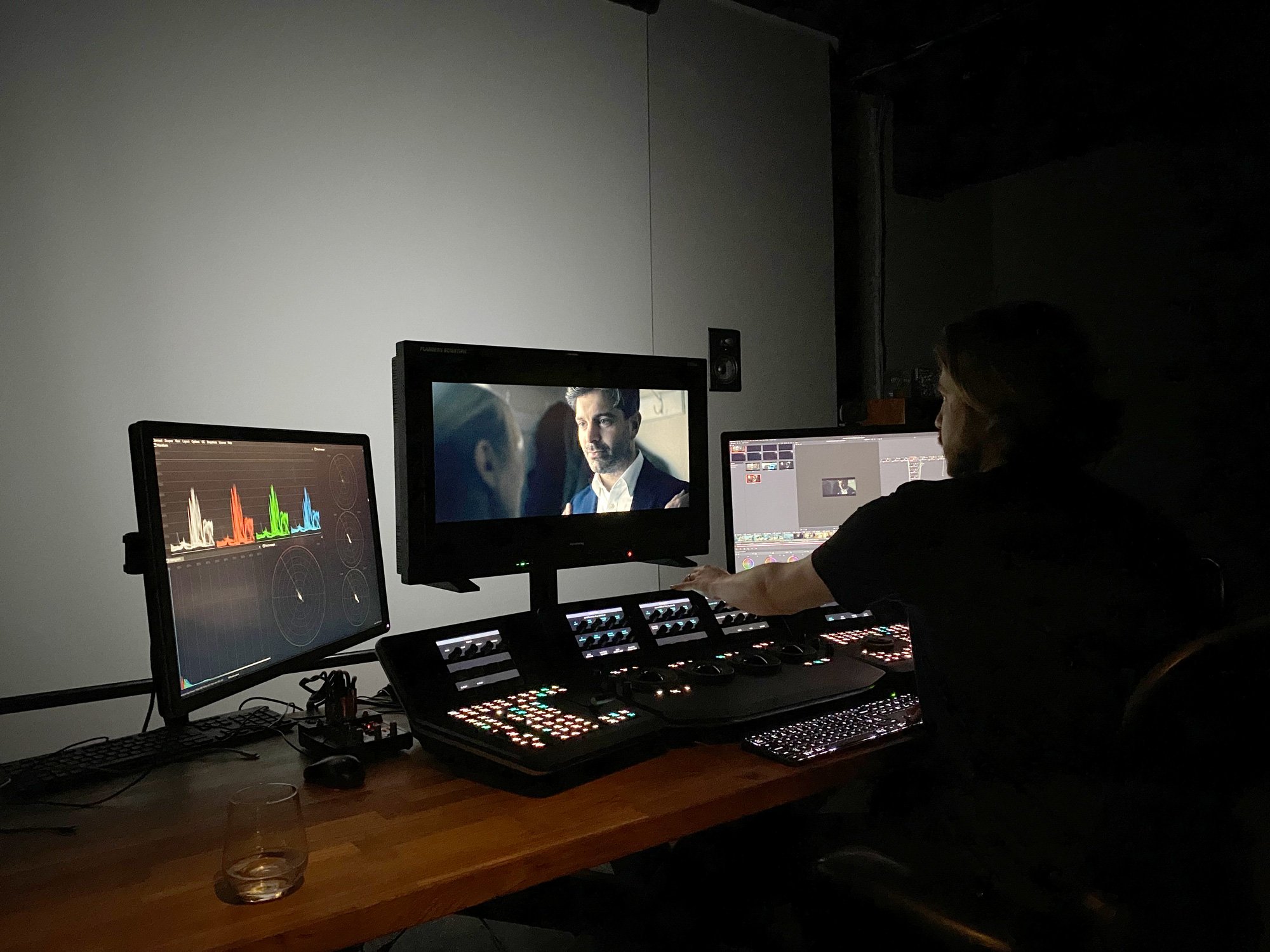

What advice or hacks would you give to other short filmmakers?
I have two, very cliched pieces of advice!
One is to make sure you have a good script. Take the time to iron out the kinks and make sure it says what you want to say. Get people to read it and feedback, as sometimes you get so close to a project that it is hard to see the wood from the trees.
The second is just make films with the resources you have available. Don’t wait for permission. Funding is a lottery. The odds are not in your favour. I have lost count of the number of times I have been rejected by funding schemes and festivals.
I now kinda live by Mark Duplass’ "The Calvary isn’t coming" philosophy. Save as much money as you can, persuade a bunch of filmmaker friends and get out and make stuff. You’d be surprised how many people are up for the ride.
Any film recommendations that we should add to our watchlist?
I was at Wimbledon Short Film Festival last week and saw a documentary short called ‘Blackstroke' and a comedy called 'Thanks for the Milk' that were fantastic!
Also, at Aesthetica and Kino, a short called ‘Terror’ which is such a cool idea and executed so well - again with not much money or means!
Interested in getting your work selected as Short of the Week?

Scrutiny
On a bus journey across south London, a young man’s anxiety spirals into a vortex of self-doubt and torment - causing him to question: can he trust his memories?
Written & Directed by James Quinn
Produced by Maria Ogunyale
On a bus journey across south London, a young man’s anxiety spirals into a vortex of self-doubt and torment - causing him to question: can he trust his memories?
An illustration of the process and impact of anxiety, and the demands of city life that intensify it.
ABOUT THE FILM
SCRUTINY was an Official Selection at the 2023 edition of our BIFA Qualifying Film Festival where is was nominated for Best Performance In A Drama (Isaiah Bobb-Semple) and Best Editing. I was also an Official Selection at the Manchester International Film Festival, S.O.U.L. Fest, EFN Short Film Festival, British Urban Film Festival, and South London Shorts.
ABOUT THE FILMmakers
James Quinn | Writer Director - James is a London based film writer and director whose work focuses on the internal battles we face. His latest short, Scrutiny, featured in the 1.4 Awards Shortlist, and screened at the BAFTA-qualifying British Urban Film Festival, Leeds International Film Festival, and S.O.U.L. Fest, as well as six BIFA-qualifying festivals.
Maria Ogunyale | Producer - Maria is an emerging producer known for her work on drama series for top broadcasters like Apple TV, Amazon Prime, BBC, Netflix, and Sky. With a strong background in production she focuses on creating high-end stories that are often untold, championing inclusivity and fresh perspectives. Maria's credits include "Trying," "This is Christmas," "I AM RUTH," "The Tower," "Mood," and "Top Boy." Her dedication to unique storytelling was highlighted in producing the short film "Scrutiny," showcased at the S.O.U.L Film Festival 2023. Maria is dedicated to exploring themes like social justice, mental health, and cultural representation, pushing the boundaries of traditional drama.
READ OUR INTERVIEW WITH JAMES
Welcome to our Short of the Week series. Tell us a bit about yourself and your filmmaking background.
Hi, thanks so much for having me! I’m James, a writer director based in London. I picked up a video camera as a kid and made films to make my friends and family laugh… and it stuck. At that age, I was at a major crossroad to decide whether to try to be either a filmmaker or a carpenter. I picked filmmaking. In hindsight, I don’t think they’re that different as professions. Filmmaking feels like carpentry to me.
Tell us about the genesis of Scrutiny. We understand that it stems from your personal experiences with anxiety. Can you tell us more about the inspiration behind the film?
I expect like most people, I’ve had various battles with anxiety and poor mental health. I was in a privileged enough position to be able to afford therapy. Shining a light on the mental process of my anxiety was transformative - seeing how it worked took its power away.
I felt like I’d peeked behind the curtain, but I’d never seen anxiety on screen how I experience it. So, I wanted to pay it forward. This film was an extension of that. It was like, ‘How does anxiety light, block, and edit my thoughts?’
Hopefully other people can take something helpful from this film too.
What were some of the main obstacles you experienced when making Scrutiny and how did you overcome them?
Shooting on a bus was loads of fun but really tricky. We wanted the genuine feeling of a moving bus, so our production team found us an amazing bus hire. We created a loop around south London and circled it for a whole day. We knew continuity and shot precision was out the window so we leant into that limitation and made it our style. The disorientating, staccato editing was a deliberate choice to reflect the internal anxiety and disguise that limitation.
Our brilliant DoP (Jasper Enujuba) was shooting on an easyrig. With the bus swinging up and down the roads, he needed some help to stay upright. I was the lucky crew member selected to steady him with a bear hug.
Tell us about the journey of getting your film to audiences and some of the festival circuit highlights.
In truth, I’m quite shy about my films. I find distribution and self-promotion hard, so we did a focused and limited festival run. With the type of festivals, we aimed high and I was absolutely delighted to get into the ones we did - all BIFA or BAFTA qualifying. We played alongside some amazing films. To share a screen with them was amazing.
But, I’m less interested in the number of viewers than catching those few people who feel a deep connection with the film. I’ve had quite a few people reach out with very personal messages about Scrutiny. Those are more meaningful to me than a 5 or 6 figure view count.
What advice or hacks would you give to other short filmmakers?
You’ll stop yourself long before anyone else does. That’s the case with me, at least. I get so focussed on the problem-solving aspect of filmmaking that I start finding more and more problems. And you can hide behind that and never make anything. A friend once told me ‘think less, do more.’ That’s advice I need to follow more.
Any film recommendations that we should add to our watchlist?
I was blown away by The Zone of Interest. My mind was in tatters for weeks after. And I recently watched the classic, Investigation of a Citizen Above Suspicion. What a distainful deconstruction of misogyny and patriarchy.
Interested in getting your work selected as Short of the Week?

Waving
His worst fears seemingly realised; a distraught father takes one last walk through his ruined world.
Written, Produced & Directed by Rolfin Nyhus & Steven Brumwell
His worst fears seemingly realised; a distraught father takes one last walk through his ruined world. For most people, being at the centre of their own world and having a loving family is a wonderful thing. For Charlie, it's literally a nightmare. A short film about OCD.
Starring globally acclaimed actor Ralph Ineson (The Witch, The First Omen), Waving is an unflinching, but ultimately hopeful examination of the much-misunderstood condition of Obsessive-Compulsive Disorder.
** Viewer Discretion Advised **
The film contains scenes depicting intensive, intrusive thoughts that some may find triggering.
ABOUT THE FILM
Waving was recently made available as a general release on YouTube following a successful run on the global festival circuit (35 festivals, 35 Nominations, 20 Awards) including the 2023 edition of our Kino London Short Film Festival where it won Best Cinematography.
Other festival highlights include Sitges, being nominated for Best East Anglian Film at the BAFTA Qualifying Norwich Film Festival, winning Best Production Design at the 2023 British Short Film Awards (where it was also nominated for: Best Actor, Best British Short Film, and Best Sound), winning Best Actor for Ralph Ineson at the BIFA Qualifying Manchester Film Festival and the Romford Film Festival, winning Best Editing at the BIFA Qualifying Brighton Rocks Film Festival and winning Best Editing, Best Art Direction and Best Cinematography at the BIFA Qualifying Unrestricted View Film Festival.
The team behind the production were assembled across a wide range of neuro-diverse backgrounds, and the writer has lived with OCD since the age of 11, only being diagnosed at 18. Employing a surrealist filter to portray the terrifying thoughts that the condition causes sufferers, the film has been embraced by the community, festivals, and critics alike. The team hopes that this general release without any form of paywall will continue to shine a light on this cruel and misunderstood illness.
ABOUT THE FILMMAKERS
ROLFIN NYHUS developed his interest in filmmaking while reading English Literature, producing work for other directors in his spare time. Spurred on by his love of European cinema - particularly the work of Bergman, Haneke, Herzog and Mike Leigh, he decided to abandon further academic study at King’s College to establish TankTop Films as a vehicle for his own projects. He is a native Londoner with English, Irish and Scandinavian roots and a fond habitué of the Cannes Film Festival. Waving is his 4th narrative film with a festival run planned from summer 2022.
STEVEN BRUMWELL has been fascinated by the silver screen since being left awestruck by the magnificence of Indiana Jones’ heroism at the ABC in Birmingham, 1981. A bit of a polymath, he has launched numerous enterprises but always returned to the written word. Influenced by Wilder, Lynch, Kurosawa and Lynne Ramsey, he strives to portray broad emotions in interesting ways. His work is continually drawn to the deep well of mental wellbeing by his battles with OCD since early childhood, Waving is his first project to be filmed
READ OUR INTERVIEW WITH ROLFIN
Welcome to our Short of the Week series. Can you tell us a little bit about yourself and your filmmaking background?
I am a native Londoner with English, Irish and Scandinavian roots. I developed an interest in filmmaking when reading English Literature, producing work for other directors in my spare time. Spurred on by a love of European cinema - particularly the work of Bergman, Haneke, Herzog and Mike Leigh - I decided to abandon further academic study at King’s College to establish TankTop Films as a vehicle for like minded creatives to collaborate and produce work they care about.
Tell us about the genesis of Waving. What was the inspiration behind the film and how did you come to be attached to the project?
My creative cohort (and brilliant writer) on ‘Waving’, Steve Brumwell, has had OCD since childhood. Along with writing his own material he has always been generous with his time when it comes to supporting other writers. That is how we met, with him helping me sharpen up my own scribbles. We hit it off and struck up a friendship. We often share script ideas with each other to move them along. ‘Waving’ was an idea in the mill we liked enough to not leave it languishing on a hard drive.
With 'Waving', Steve really wanted to portray OCD in a way as yet unseen: The internal torture rather than the external compulsions are rarely shown in any form of media. The idea for the dystopian elements comes from a love of horror and a desire to explore ways of showing how intrusive thoughts do make the sufferer feel as though existence is dependent on fulfilling the authoritarian orders OCD creates in one’s mind.
Tell us about the experience of working with a Casting Director to get Ralph Ineson attached.
Our Casting Director, Cameron Culver, has become a dear friend and supporter of TankTop Films’ work. We do our best to give him whatever materials are needed to pitch the project we are working on and he diligently does the rest. Forgive the platitude but casting is so, so vital and it is a godsend having someone you trust looking after that side of things, which can be fraught with rejection and disappointment.
With Ralph, I think we simply got lucky with the timing. So, hopefully, there is a ray of hope there for other filmmakers. All you can do is work hard on the material, have faith in it, and then hope for the best that the talent you really want are able to fit the project into their schedule. A word of caution, we did have to wait over a year for Ralph’s diary to free up, but it was 100% worth the wait.
What were some of the main obstacles you experienced when making Waving and how did you overcome them?
All the usual ones. Finance. Locations. Logistics. British weather. Namely, it pissing down with rain on the last day of shooting. There isn’t a magic formula, I don’t think. You overcome it all by, hopefully, keeping cool and maintaining a tenacious attitude as best you can.
Tell us about the journey of getting your film to audiences and some of the festival circuit highlights.
With festivals, my attitude after innumerable rejections is that every “No” is leading closer to a ‘Yes”. Reaching an audience hopefully starts via the festival circuit, and if what you have made is actually any good hopefully your peers and audiences respond. Given all the artistic modes of expression there are, film remains meritocratic, relatively speaking. I have friends in the art and music worlds and their experiences of getting eyes (and ears) on their work is even more brutal, believe it or not, despite their obvious talent and hard work.
Highlights on the circuit were our premiere at Sitges and the screening at Norwich Film Festival (as we shot some of the film in East Anglia). A stroke of luck meant we had four US festivals almost back to back, so I got the opportunity to attend Austin, Idyllwild, Dam Short and Cinema On The Bayou.
‘Waving’ was made in the hope people suffering from OCD might find some solace in the portrayal. We were deeply honoured that the IOCDF and OCD Action were unrelenting in their support. Through them (and our incredible Exec Producers, Ethan S. Smith and Catherine Benfield) we have been able to get the film out via the OCD Community first of all. Since releasing it, we have had a deluge of thank you messages which has left the entire team teary eyed. Our hope though, is that we eventually reach a more mainstream audience so that, slowly over time, some misconceptions about this widely misunderstood condition can start being challenged.

Cinematographer Andrew Alderslade accepting the award for Best Cinematography at our 2023 Kino London Short Film Festival for his work on “Waving“

What do you think is the biggest challenge short filmmakers face in the early stages of their career when trying to break into the industry?
The same challenges everyone experiences in anything they ever attempt to do. You start out not knowing much, really. You have to go through the pain of learning. Watch films and read as voraciously as you can. Make something and embrace whatever successes or failures it brings your way. Rinse and repeat.
What advice or hacks would you give to other short filmmakers?
Filmmaking needs “belief and momentum” - a few sage words I try to keep in mind courtesy of Terry Gilliam.
Any film recommendations that we should add to our watchlist?
Cache (2005) by Hankeke - a modern masterpiece.
Autumn Sonata (1976) by Bergman - a complex and compassionate exploration of the relationship dynamic between a mother and daughter.
Camera Buff (1978) by Kiewlowski - one of the most charming films ever made. Hard to find!
Nuts In May (1976) by Mike Leigh - an old ‘Play For Today’ TV Film by the BBC. A testimony to how you can create something relatively inexpensive with wise location choices, a great script and capable actors.
Interested in getting your work selected?

Voices
A couple overhears a violent fight next door and must decide whether or not to get involved.
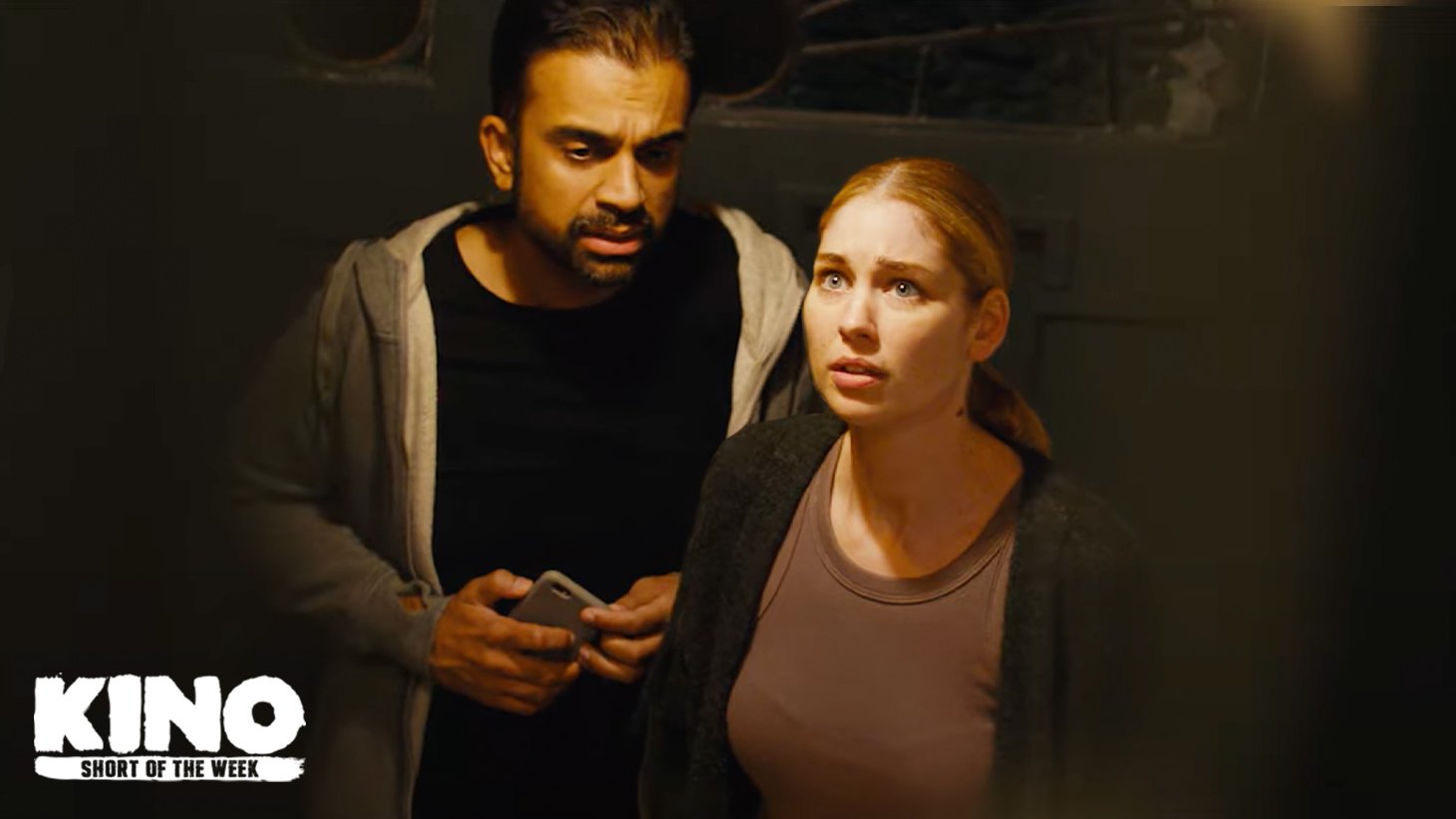
DIRECTED BY Abbie Lucas
Written BY OMAR KHAN | PRODUCED BY Håkan Carlsson
A couple overhears a violent fight next door and must decide whether or not to get involved.
ABOUT THE FILM
Voices is a short film that defies genre. It won Best Drama at the BIFA Qualifying Beeston Film Festival, Best Horror Short at the Atlanta Shortsfest, and Best Suspense at Chicago Reel Shorts. Drama? Horror? Suspense? Whatever the genre is, all we know is that it’s goooooood!
It also won the Audience Award at Tweetfest and the Si Spencer Award & Best Screenplay at Unrestricted View (as well as a Special Mention for Best Director) - both festivals were BIFA qualifiers.
Voices played at over 45 festivals internationally, but highlights include the BAFTA Qualifying Aesthetica, Fastnet, the Oscar qualifying Seattle International, Durban, ScreamFest, Waterford, Milwaukee, Nevermore, and our very own BIFA qualifying Kino London Short Film Festival, where Omar Khan was nominated for Best Performance in a Comedy. The film was also nominated for Best Score.
ABOUT THE FILMmaker
Omar Khan has written for TV, theatre, short films and radio dramas. His short film The Plunge, premiered at Palm Springs ShortsFest and was long-listed for a BAFTA after being selected for over 60 international film festivals.
In 2021 he was selected for the BBC Children’s Scripted Development mentorship which led to a radio drama for the CBBC show, Malory Towers, and ten TV credits; episodes of the CBBC shows Princess Mirror-Belle, Odd Squad, Little BadMan and The Dumping Ground and the CBeebies show Biff and Chip. He also wrote an episode of the BBC3 show The Break. In 2023, he wrote two episodes of the Channel 4 continuing drama Hollyoaks and became a BAFTA Connect member.
Abbie Lucas is a film director based in London, originally from New Zealand. In 2018, Levile TV listed her as one of the Top 20 Rising Female Filmmakers in the UK. She is a member of Directors UK and BFI NETWORK x BAFTA Crew 2021. In 2022 she was invited to participate in the Reykjavik International Film Festival Talent Lab.
As a storyteller, she enjoys stories with flawed relationships, female protagonists, vigilantes, crime, and a bit of magical realism but most of all loves work with strong performances and impactful story lines. She is known for exploring dark themes in ways that are humorous and unexpected.
Her recent film credits include the award winning TESTING GRETA, an unusual story about domestic abuse, which took the 'Greeks of the World' Prize at the 40th Drama Film Festival in Greece and was screened at the BAFTA recognised Aesthetica Film Festival in 2018, and another short comedy titled DEAD TIRED which was been nominated for Best Script and Best Comedy at the Beeston Film Festival 2018 and also for Best International Comedy at the Austrian Film Festival 2018. In 2020 she completed two more dark comedies, GOOD VIBRATIONS and THE HANKERBOX, and in 2022 she completed CAPTURE HER and VOICES, all of which are on the festival circuit.
READ OUR INTERVIEW WITH OMAR & abbie
Welcome to our Short of the Week series. Can you tell us a little bit about yourself and your filmmaking background?
OMAR: My name is Omar Khan and I’m a screenwriter and reluctant producer! I’ve written and produced five short films, including The Plunge and Voices, both of which had successful festival journeys. I work mainly as a screenwriter, currently I am part of the team at Hollyoaks and I’ve worked extensively at CBBC.
ABBIE: My name is Abbie Lucas and I'm a Director, Writer and Editor. I studied Directing and Writing back home in Aotearoa, New Zealand and when I moved to the UK, got involved in directing theatre and then moved into web series and short films. I also co-write features with my US based writing partner Kevin Kautzman and have many years experience editing commercials, branded content and short films.
Tell us about the genesis of Voices. What was the inspiration behind the film and how did the project get greenlit?
OMAR: Voices started as an idea, after a news report about Boris Johnson and his partner having an argument at home, which was overheard by the neighbours who then called the police to report possible domestic violence. This turned into a small media frenzy, with some papers arguing that you have no right to call the police on a private, domestic matter and other saying that you have a duty to do so if you suspect someone is being hurt. This inspired the start of the film in which the couple have this very argument when overhearing their neighbours domestic dispute.
ABBIE: I first became involved with Voices when Omar sent me an email introducing himself. He had seen some of my work and was interested in potentially collaborating, so we met up for a coffee, got along well and he sent me a couple of shorts he's written. Voices was the one I connected with because I like stories that are told in an unusual way, it was almost like a modern myth or fairy tale about a very adult situation.
What were some of the main obstacles you experienced when making Voices and how did you overcome them?
OMAR: I had saved up funds of about £6k and had decided that I would make the film myself without any other funders. I didn’t want to be a the mercy of gatekeepers and had the utmost belief if the story I was telling. Though it did mean we didn’t go on any holidays for a while!
The main obstacles were around the limited funds and ensuring we could make the money within that and ensure everyone was paid. The last day became a bit of a mad rush and we only just got the last shot while the sun was about to go up. Also, I had a wonderful producer in Hakan Carlsson, who got a great acting job the week we were supposed to film. So he had to produce the film remotely from Sweden, while I took over some producing responsibilities on set. We made it work!
Tell us about the journey of getting your film to audiences and some of the festival circuit highlights.
OMAR: We started submitting to festivals in early 2022 via Film Freeway. We had a slow start. At first we were reluctant to submit to genre festivals. We had made a sort of horror/thriller but I was concerned the film wasn’t horror enough for the horror specific festivals. Once I embraced the horror festivals though, the festival submissions snowballed. This included selection to the renowned horror festival in LA, Screamfest. Other highlights include, Bafta qualifying Aesthetica, Oscar qualifying Seattle International and Durban. We were also grateful from the support of some UK festivals that had also liked my previous film The Plunge and were really supporting me as a filmmaker such as Tweetfest, Kino and Beeston.
What do you think is the biggest challenge short filmmakers face in the early stages of their career when trying to break into the industry?
OMAR: The biggest hurdles is raising the money and convincing people to make the film for lower than their usual rate. I am lucky that I have a day job as an optometrist and am reasonably well paid and so I was able to save up and raise the funds myself. This made it slightly easier as I wasn’t at the mercy of gatekeepers and funding bodies and could make the film I wanted. Low funds create other problems, such as reduced crews and less shoot days, which create a real pressure.
ABBIE: The biggest challenge I think filmmakers face early on in their career is finding a way to jump from shorts to features or TV. The technological advances have made it so much easier to get a short off the ground but it remains difficult to go professional as the industry is risk averse, expensive, cliquey and doesn't afford a great deal of opportunities to people that don't have private access to funds. I wish I had the kind of radical ideas that could provide a solution to this.
What advice or hacks would you give to other short filmmakers?
OMAR: The biggest hack is to have a script that can be made easily. Voices was a ten page script with two characters and one location. All of this lowered the cost and made the film possible. It also helped that people really liked the script and were willing to shoot the film for lower than their usual day rate. Always take the time to get the script right.
ABBIE: The advice I have to give is kind of cliched, but that's because there is truth to it - tell a story that you love because trying to predict what festivals will want to see is a losing battle. Figure out what interesting things (locations, cast etc) you have access to and tell a story based around that, it will help you keep a budget in control.
Any film recommendations that we should add to our watchlist?
OMAR: Film recommendations: I have to say I very rarely watch films these days as I have a three year old daughter and she controls what I watch, which is basically Disney princess films. We did enjoy Wish. But for a real recommendation, we just finished watching the TV show Succession, which was one of the best shows I’ve ever seen.
ABBIE: The best film I've seen recently is Zone of Interest (in terms of filmmaking, it's the opposite of feel good!) a movie I like to recommend in general is Mr. Death: The Rise and Fall of Fred A. Leuchter, Jr. a documentary by Errol Morris. I saw it at film school and it's a masterful character study and disturbing as it unfolds. Actually, both of those films have some crossover themes!
Interested in getting your work selected as Short of the Week?

Everybody Dies… Sometimes
Mara grapples with the belief that she has killed everybody she's gotten close to.

Written & directed by Charlotte Hamblin
Produced by Leonora Darby, Charlotte Hamblin, James Harris, & Mark Lane
A dark comedy about death anxiety that follows Mara as she grapples with the belief that she has killed everybody she's gotten close to.
ABOUT THE FILM
Everybody Dies… Sometimes swept our Kino London Short Film Festival 2023 awards taking home four awards including our Grand Prize Short Film Fund for writer/director Charlotte Hamblin’s next project, Best First Time Filmmaker, Best Performance in a Comedy for Tanya Reynolds, and our Audience Award. Additionally it was nominated for Best Original Score and Best Editing.
The film then went onto it’s International Premiere at Tribeca Film Festival and to win Best Director – Silver Prize at the Young Director Awards for CANNES LIONS 2023.
But… before all that Everybody Dies… Sometimes had it’s World Premiere at the Raindance Film Festival 2022 where it was Nominated for Best UK Short. It also won Best UK Short and Best Editing at the British Short Films Awards 2022, where it was also nominated for Best Director, Best Actress (Tanya Reynolds), and Best Supporting Actor (Mathew Horne).
Additional awards include the JURY PRIZE and Best Actress at Filmoramax 2023 and Best British Comedy at the Discover Film Awards 2023.
Festival highlights include the Academy Award qualifying HollyShorts, the BAFTA qualifying Norwich International Film Festival, Women X Festival, and the BIFA qualifying Bolton International Film Festival.
Everybody Dies Sometimes has been selected to screen on all Virgin Atlantic Flights.
ABOUT THE FILMmaker
Charlotte is a queer director, writer and actor. She is currently writer/director for her TV series THE COMMANDMENTS a comedy/drama starring and produced by Olivia Colman and her company South of the River Pictures. Charlotte is also co-creating a series with Keeley Hawes for her production company Buddy Club. Amongst other projects she’s adapting the best selling novel THE FAMILY UPSTAIRS by Lisa Jewell Paramount Plus, due to shoot in 2024. Her next second short film as a director is NOT A MOURNING PERSON, written by Toto Bruin produced by Izzy Meikle-Small has just started its festival journey and has screened at Women X Festival.
Charlotte has two feature films in development with Federation Stories and BAFTA Award winning producer Christine Langan. Charlotte has also written episodes of Amazon Series HANNA She has taken part in writers roomS for Sky, Working Title, NBC Universal, Paramount Plus UK, and South of the River Pictures to name a few. Charlotte currently has TV shows in development with Pure Fiction, Mark Gordon Pictures, Route24 and Federation US Charlotte took part in the Zurich Film Festival Film Lab 2023 as a director.
Charlotte has recently finished shadow directing Dearbhla Walsh on Bad Sisters Series 2. Charlotte was also on the Jury for RAINDANCE Film Festival 2023.
READ OUR INTERVIEW WITH CHARLOTTE
Welcome to our Short of the Week series. Can you tell us a little bit about yourself and your filmmaking background?
Thank you for having me! As you know I’m a massive fan of Kino. You guys have been so endlessly supportive so I’m chuffed to be featured! So, with filmmaking… I had none before Everybody Dies! Well that’s not strictly true, I did make what I called a ‘filming camera’ out of a ReadyBreck box and a toilet roll in my kitchen when I was six.
I’ve always been in this industry, I started as an actor and then went a bit mad because I had no say on how my life was going to go and so I started writing. So I was working as a full time screenwriter which is utterly dreamy, until I was encouraged to direct. And I wrote Everybody Dies… Sometimes and here we are! I’m so glad I just did it. I’ve honestly learnt so much and had the time of my life. Still a lot to learn I hasten to add!
Tell us about the genesis of Everybody Dies Sometimes. What was the inspiration behind the film and how did the project get greenlit?
So I was working on a feature film with Tea Shop Productions and producer Leonora Darby said that I should direct it. I thought she was a bit mental, but then the more she encouraged me I thought, yeah maybe I could do that. So I started with a short film. But it had to be story I wanted to tell, that only I could tell. I’m very open about this film being semi- autobiographical. I suffered really badly from death anxiety as a kid, because a lot of people in my life kicked the bucket. Anyway, I was sent to a therapist to deal with it and would you believe it, he died. Six sessions in. Couldn’t write it hey? But I did. I was telling someone that story in lockdown and they were saying how mad and really funny it is. So I put pen to paper and wrote the film in one sitting.
Very luckily Leo and Tea Shop backed me and put half the finance in, wanting to support me as a director. That was very cool and I couldn’t have done it without them. I put the other half in. It’s the best investment I’ve ever made, but I’m aware I was in a really lucky position to be able to do that. So that’s how it came to life!
Tell us about the casting process and getting Tanya Reynolds attached to the project.
I met Tanya when the casting director Claudia Blunt took me to see her in a play at the Royal Court and obviously I thought she was amazing. So we stayed in contact and then when Covid hit and I wrote this, I only had her in mind to play Mara. So I sent it to her and I can’t believe she said yes. She’s won awards on the festival journey and I’m not surprised. I think her performance is a master class for comedy/tragedy acting. The film wouldn’t be half as magic without her. Or any of the cast for that matter. Utter gems all of them.
What were some of the main obstacles you experienced when making Everybody Dies Sometimes and how did you overcome them?
Probably me having no idea what I was doing! But I was guided by a lot of experienced, generous people. The main one was we lost our grip the day before shooting. Turns out Peaky Blinders stole every grip in the country. So I had no set ending. I knew what I wanted in my head, but I didn’t have the vocabulary to verbalise it. I kept saying ‘I’ll fix it in edit’. I didn’t… the genius editor Caitlin Spiller did.
Tell us about the journey of getting your film to audiences and some of the festival circuit highlights.
Well, I knew very little about the festival circuit. I’d written a short a few years before that went to Aesthetica. But I didn’t really get how big of deal it all was. We submitted to a few initially, and then out of nowhere got Raindance and Nominated for Best UK Short. I don’t think at the time I realised how good that was, specifically as a debut. They amazingly, asked me to be on the jury the year later and it was only then was I like. Holy shit. That was big deal. I think the naivety played quite well into my hands as I had zero strategy and a lot of blind faith. James Newman who I met when I acted in his Kino orginal was such a lot of help and took me under his wing a lot which how/what to apply. I really would have been stuck without him. When we got Tribeca I was like holy fuck. I knew what that was! And honestly, I had the time of my life. I mean now I can say Ben Stiller and Martin Scorsese have seen my first short. I can die happy. Winning 4 Kino awards wasn’t bad either… that felt pretty wild too!
congrats on getting distribution on Virgin Atlantic! How did that come about?
Our film was selected to screen on all Virgin Atlantic Flights because we won Best Comedy at the Discover Film Awards. All the winners were offered to Virgin and luckily ours was selected!
What do you think is the biggest challenge short filmmakers face in the early stages of their career when trying to break into the industry?
Money. Money is always going to be the thing. Even if you make your film paying people a packet of crisps and a curly whirly, festival submissions are SO expensive. I dread to think what I spent on submissions. It’s quite grim, but I don’t know a way around it. Also, who you know… who you know helps so much. I always knew someone who knew someone. Mainly from being in the industry for so long. Coming to directing a bit later than my peers was weirdly good as my mates had been doing it a while and were so damn kind helping me out. Freddie Hall who I rang asking if he knew a newbie who wanted to first. He said he ‘d do it. And he was my guardian angel!
What advice or hacks would you give to other short filmmakers?
Ok. Keep your short under 10 minutes, if you have to 12. I think part of the reason Everybody Dies did well was because it was 8 minutes. As soon as people see it’s longer, your film has to work that much harder to get them on side. We live in a TikTok world now and peoples attention spans aren’t what they were.
If you’re starting out, go to a short film festival. I did that and must have watched nearly 100 in weekend. It kind of goes into your DNA what works, what doesn’t. I also think it super obvious if a short is a proof of concept. Now proof of concept shorts are great, we need them. BUT, your short has to stand alone as well. Short film is an art form in and of itself. I’m a bit traditional… I love a beginning middle and end. And a lot of shorts I’ve seen over the last eighteen months have a cracking beginning, middle and they end weirdly. Ending a short is way harder than ending a feature or a pilot. It’s hell. So give the script to three different people who have no idea what you’ve written about and ask them, doesn’t this make sense. What do you think you’re meant to be left feeling? Then you’ll work your way to a stronger ending.
Any film recommendations that we should add to our watchlist?
Oh well, Zone of Interest was unlike any other cinematic experience I’ve ever had. My favourite films of all time are Almodovar’s Bad Education and the 1994 version of Little Women. It’s perfect. Don’t come for me.
Interested in getting your work selected as Short of the Week?

Bad Penny
An antiques dealer gets a lot more than he bargained for when he comes across a cursed object that won’t take no for an answer.
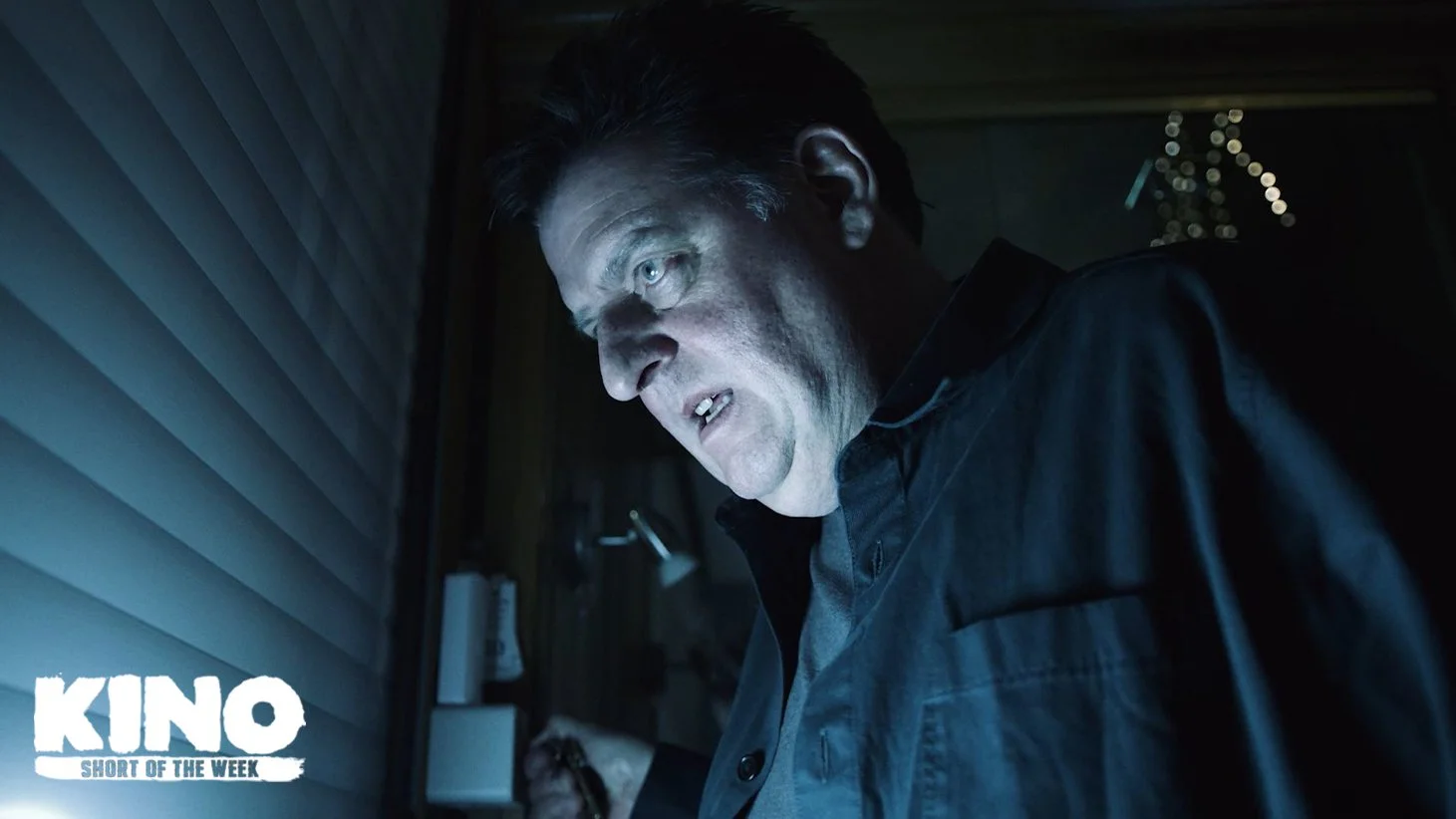
Written & directed by TONY HIPWELL
An antiques dealer gets a lot more than he bargained for when he comes across a cursed object that won’t take no for an answer.
ABOUT THE FILM
Bad Penny was an Official Selection at our BIFA Qualifying Kino London Short Film Festival. Other festival highlights include: Dead Northern, Beeston Film Festival
Panic Fest, Leeds Horror Festival. It won Best Horror Short at the Underground Indie Film Fest and was nominated for Best Actor at the Dark Red Film Festival, as well receiving an Honourable Mention from GASP!
It’s since been released online via Klipist.
ABOUT THE FILMmaker
Tony is a multi-award-winning filmmaker whose work has screened at Academy Award, Canadian Screen Award, BAFTA and BIFA qualifying festivals such as Fantasia, HollyShorts and the Edinburgh Film Festival.
Their debut feature, Whoops! premiered at Raindance 2013 and was the only British film selected for the Raindance Tour 2014. Since then, Tony has developed projects with the BBC and Searchlight Pictures, worked as the Video Producer for Young Thug Records in association with EMI Records and been selected for the inaugural Future of Film and IHS X FEAR incubators.
Tony's most recent projects include the award-winning adaptation of 'Standing Woman' by internationally acclaimed author Yasutaka Tsutsui which was nominated for the Yorkshire Film Award at Leeds International Film Festival 2021 and has since been acquired by ALTER. Their new short, 'The Lure' premiered at FrightFest 2023 and is touring festivals around the world now with sponsorship from CenterFrame.
READ OUR INTERVIEW WITH TONY
Welcome back to our Short of the Week series. What have you been up to since we featured your last short "Standing Woman"?
I’ve been winding down the festival run for Bad Penny and starting the tour for The Lure, my new micro short. We premiered at FrightFest which is always a thrill and it’s had a great response so far which has been really exciting. I also had the pleasure of seeing How To Kill Monsters launch its festival run which I worked on last year with Dark Rift Horror who also just released my low fi horror comedy Zomblogalypse on Blu Ray which is kind of like The Disaster Artist meets One Cut of the Dead.
Can you tell us about the genesis of Bad Penny?
Bad Penny was really borne from two things, a desperate desire to shoot anything after lockdown and lucking into a great location a friend had a small window of access to. I also just wanted to make something really stripped down. Standing Woman took 5 years to make and I wanted something closer to 5 months this time round!
What were some of the main obstacles you experienced when making of Bad Penny and how did you overcome them?
It was the definition of a skeleton crew, I did literally everything except the make up so that was a fun kind of stress – making sure everything was technically sound whilst still trying to actually just direct. We had a really short window of time to shoot so it’s probably the fastest I’ve ever shot something. I did have a DOP lined up to shoot the film but they quite rightly balked at the shooting schedule so I leapt in myself as I knew what I wanted and the cast were all old friends and pros so I knew they could nail what I needed quickly. I think the whole thing was shot in no more than 6-8 hours.
Tell us about the journey of getting Bad Penny to audiences.
It was relatively straightforward but also a bit of a sobering one. The Standing Woman run had given me a great education on what I really wanted out of a festival run and potential end point but BP had a really shaky start. I had the most rejections I’ve ever had up front and for a while I thought I’d fucked up for not making something as ambitious as Standing Woman as a follow up. But then the tide turned and it found an audience. We picked up two BIFA qualifiers and festivals like Dead Northern and Panic Fest so that was a really gratifying reminder that it’s a marathon, not a sprint. Now that the run is over, we’ve premiered with Klipist who we met at KINO last year and have been a great partner for the film. I’m also really excited to have it featured as a short of the week with KINO as that was a highlight of the festival run for the film.
What's next for you?
I’ve got some great new projects lined up for 2024 including a found footage collaboration with the Indie Horror Society, Orillo Films and FEAR as well as a seasonal horror feature with the producers of How To Kill Monsters.
Any film recommendations that we should add to our watchlist?
I saw Godzilla Minus One over Xmas and like most, absolutely adored it so will add to the chorus and give it an atomic breath sized recommendation. I’d also highly recommend The Moor and New Life, two phenomenal low budget horror features I caught on the circuit last year and will hopefully see release this year.
Interested in getting your work selected as Short of the Week?

The Foul
When a litterer doesn't pick up after his dog, he's taught a valuable lesson from a giant poo.
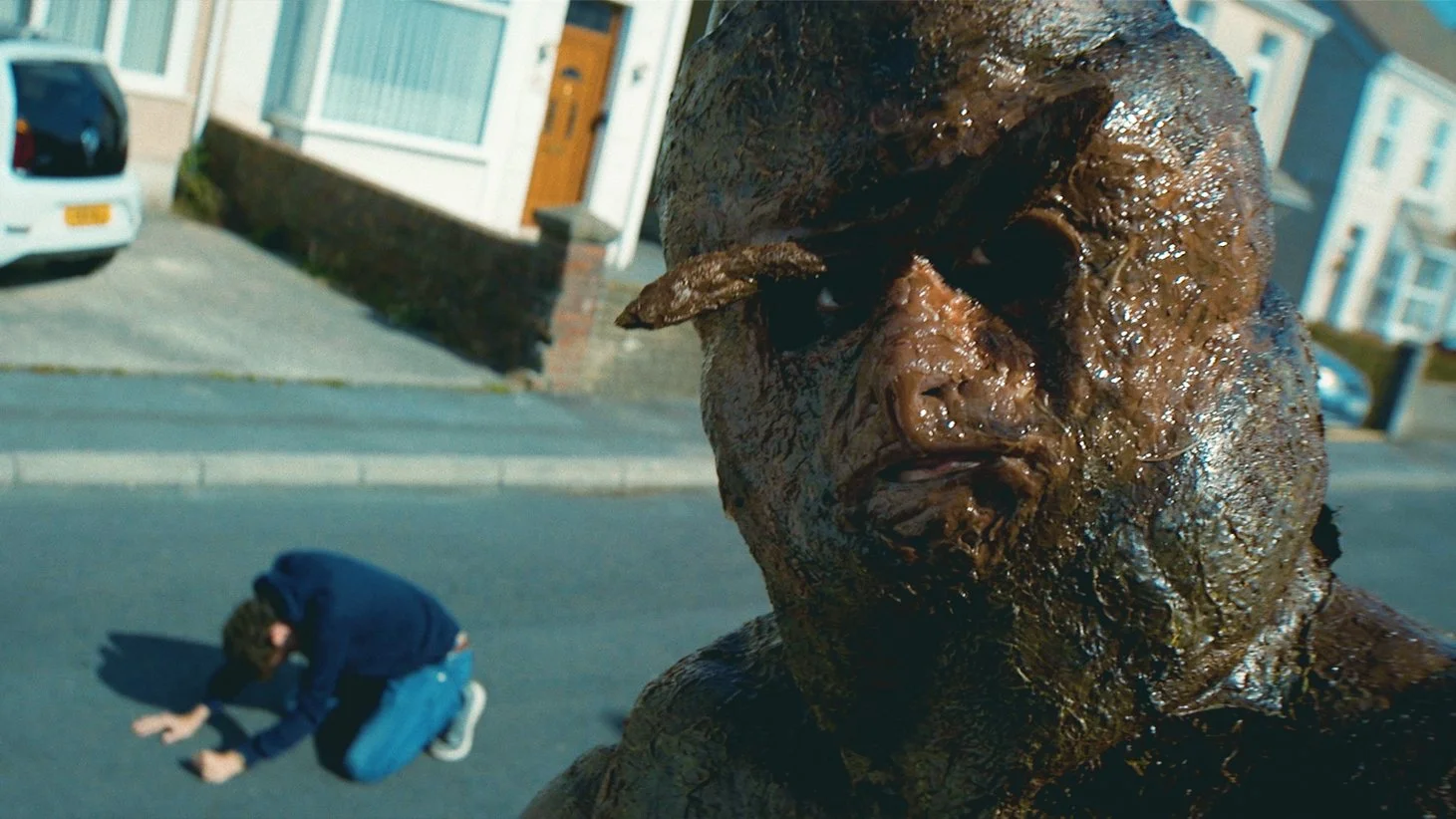
Written, directed, PRODUCED & starring James Button
When a litterer doesn't pick up after his dog, he's taught a valuable lesson from a giant poo. This short horror comedy was commissioned as a public information corporate video (but was deemed too gross by the council!)
ABOUT THE FILM
The Foul started off as a commission from a council for a PSA about picking up after your dog. What was supposed to be interviews about picking up dog poo, turned into filmmaker James Button dressing as a giant poo. He delivered a short film deemed “too disgusting!” for his client, however, not many BAFTA/BIFA and world renowned festivals didn’t feel the same way.
The film played at over 30 festivals, including our Kino London Short Film Festival. Other festival highlights include BAFTA/BIFA qualifiers such as the London Short Film Festival, Aesthetica Film Festival, Carmarthen Bay Film Festival, Short Com International Comedy Film Festival, and Norwich Film Festival. International festival highlights include FilmQuest, Screamfest® Horror Film Festival, MotelX Lisbon International Horror Film Festival, Santa Fe International Film Festival, Monster Fest, Rome International Film Festival, Atlanta Horror Film Festival.
It was nominated for 'Best Costume Design', 'Best Welsh Short Film' at the 2021 British Short Film Awards, and won Best Monster Short Film at the Adbhooture Film Festival 2021, Best Editing & Best Special Make-up at the Indie Short Fest, Best Costume at the Horror Film Award New York, and Best Dark Comedy Short at IndieX Film Fest.
ABOUT THE FILMmaker
James Button is a double BAFTA Cymru-nominated writer/director of 23 short films, all gaining official selections and screenings. Mostly comedies, they've nabbed 60 awards at international film festivals and competitions. James has had fun making fun films for fun for the past 10 years alongside working full-time in commercial work. In 2024, Jame is focussing on longer-form projects with two comedy feature scripts in development- and a brand new comedy short in post-production.
READ OUR INTERVIEW WITH JAMES
Welcome back to our Short of the Week series. What have you been up to since we featured your last short "RoButler”?
Hehe! No good at all. I literally just got back from another (mad) comedy horror short film shoot that my friend Paul Marke (always typo-ed to Pual*) cooked up over the past few months! Mainly out of the frustration of a year of trying to get funding for a level-up project and that build of a creative juices had to go somewhere, otherwise I’d go crazy…so we made a crazy new film as a cure. Can’t reveal much about it just yet as it is a spoiler-centric title but will be releasing a teaser in the very near future so look out for that…it’s going to make The Foul look tame. Also have a few short scripts on the boil which I hope to continue to hunt for some funding for because they are too fun not to make.
Can you tell us about the genesis of The Foul?
To an extent I can! But won’t name any names! As it is a bit of a funny story… It started off as a commission from a council (tragically the first job that came my way after lockdown!) and it was to try to encourage people to pick up after their dogs. Was supposed to be interviews about how gross dog poo is but instead I risked pitching me making a ‘memorable’ comedy horror instead. After some convincing…I put 100% of the budget into getting a poo costume for myself created. I found an incredible talented SFX master called Jayne Hyman who created something beyond my wildest dreams…or nightmares. Just a few (skilled!) friends of mine then came together and blasted this film out in a few fun days…only for the client to deem it “too disgusting!”. But obviously I knew this was too important a message to keep on a hard-drive so nobly sent it out to film festivals to get the word out there instead. Ended up traveling to MotelX in Portugal, FilmQuest in Utah and a whole bunch of other surprisingly forgiving film festivals who literally screened dog shit. So yeah, pick up after your dogs…or else.
Any interesting/funny stories about filming in public dressed as a giant poo?
So…we filmed in three locations. The first was an alley not to far from my mum’s house (a notorious spot for fouling)- and right next to a wall where a resident had graffitied his own wall saying: “if you don’t pick up after your dog you twats I will fucking kill you”. Which seemed rather apt. This slightly scary individual came out during the shoot (I was doing a lot of screeching after all) but surprisingly instead of killing what was surely(?) the largest poo he’d ever seen, approved of our endeavors. Phew. So after giving us a rant (which we should have recorded), let us get back to it. The second location was my sister’s street, where she had JUST bought her house…and I ended up meeting all her (concerned) neighbours before she did. “Hi there, I’m Laura’s brother. Just making a film for the council. Sorry about the noise!”. Then the third location was a random airbnb we chose for the nice decor for the nightmare scene where Arran Fear (perfect name for the role) wakes up in a bed of shit. To this day I still pray that the lovely AirBnb host never comes across the film and recognises his lovely bed and whatever that concoction was we filled it with (can’t for the live of me remember…but seem to remember the smell of coffee, beans, carrots and syrup?). I’m sure he’ll understand we had to do what we had to do…for the message.
What were some of the main obstacles you experienced when making of The Foul and how did you overcome them?
To be honest, it was a load of fun. I think the costume struggled in thirty degree heat (of course it was the bloody hottest day of the year!), let alone me inside it…but found going method was the key there! The dripping and splashing you can see in the film coming of the glistening costume is assumed to be SFX, but can proudly say that is all me. I’ve NEVER sweat so much in my life. Jayne not only did an excellent job re-sticking the poo face prosthetics to my face but kind enough to regularly drain me. Literally cutting a little hole in my flapping hand parts and emptying it like a lil hose. Nasty. But I think the dehydration, migraine and whatever else was going on, definitely only helped my performance. The only other obstacle really was the client…as I was aware that they might not give final sign off unless we included all the key bullet points in their brief e.g. the maximum amount you can be fined in the magistrate’s court etc., so made sure to slip these in amongst the improv and manic laughter.
Tell us about the journey of getting The Foul to audiences, and what kind of reactions you got.
I still love the sound of the audiences cry out (must have attended like 10+ screenings) when that bed sheet is thrown back! I always whip out my phone because it doesn’t seem to fail to get a visceral reaction from a cinema of unsuspecting gentlefolk. However can’t claim that as good filmmaking, it’s literally just a natural reaction to a bed full of poo. But it still makes me giggle (as it did my character). So the journey from the originally intended public information film which might have gotten a few dozen views on Facebook to the accidentally commissioned horror comedy short which has now been seen at some prestigious film festivals has been quite a nice turn of events. But to be honest I think it is all worth it to be told by people (I’ve lost count) that they think of my face every time their dog does a shit.
What do you think is the biggest challenge short filmmakers face trying to break into the industry?
Oof. I won’t go off on one but I think film funding is notoriously difficult to get! Applying and forms (and all that nonsense) It is such a different skill that us creatives have to somehow learn and even then, have to just get super lucky etc. Not ever having had a decent budget (and not even knowing anyone rich and generous!) I can’t help but feel a chasm between what we’ve managed to do as a small group of creative friends dying to make more and what we could be doing if someone took a risk in one of our bonkers scripts. I think making the jump todebut feature (MY DREAM) is therefore even scarier because I’ve been guilty of exhausting myself and pushing to get ambitious small scale projects made but know that a feature is a whole different thing…it is much longer for one! But I think it is still all about still making weekend project and whatever else to keep the dream alive and the juices flowing because it can be really easy to give up hope so it’s important to remind yourself how much you love it.
What next for you?
I’m stupidly excited to have left a shoot last week with a full harddrive of bants to get editing. The bruises and aches haven’t healed yet but can’t resist diving into the edit because it was truly a fun one. (Paul and I thought, if we’re going to make something ourselves, we might as well make something no one would ever give us funding for and have some fun doing it!). So that will tide me over for now, sanity-wise. But I’ve got a fancy new comedy script, a next level one (meaning, I’m not risking me in it!) which I’m going to be seeking funding because it could just be the flagship short film I’ve been needing to showcase what we can do! RoButler and The Foul to me will always be 48 hour projects capped by film challenge restrictions (or client briefs!) so am so eager to get out there and pour some creative energy into a calling card bant.
Any film recommendations that we should add to our watchlist?
I may have copped out last time on this question when I did the RoButler interview…but here I go again because it is worth repeating… Go to film festivals! Attend as many screenings as you can, bombard your eyes with short films great and small…and soak in all that work and inspiration. Then chat about what you saw, go into detail with (trusted) friends and collaborators. What would you do different? Which ones do you wish you had made? And what went wrong with that one? (Probably too long…that is usually the answer with short films…hehe). But yeah then dive into the next festival…or Kino Open Mic night (I’m not flirting I promise). I definitely learnt more about filmmaking from the shorts I’ve binged at festivals than 3 years at ‘film school’- plus even more so from the filmmakers (now collaborators/friends!) who made them! However one word of warning…be careful at film festivals about just how honest you are! Because although honesty is always the best policy, I will never leave a cinema shouting about which ones were “nonsense” because once I was lucky enough to screen a comedy film where I play a dinosaur as a warm-up for Jurassic Park at a open-air cinema…and when my silly lil short started and there I was naked and painted green, bouncing around like a bald raptor- a complete randomer turned to me (obviously not recognising me) out of the thousands of people there and went, “what the hell is this shit?!”. To which I obviously found hilarious and said, “pff, definitely not Spielberg, that’s for sure”. But does go to show that you never know who you’re turning to at a screening! Link to that film can be found on my website jamesbuttonfilms.com along with my full portfolio (the short film I mean, not Jurassic Park). Sorry for the shameless plug. Never sure how to sign off on these things! X (Thank you Dustin- keep doing what you’re doing please and promotion us silly little filmmakers who just wanna take play seriously and call it work)
Interested in getting your work selected as Short of the Week?

The Forfeit
When a working-class woman is thrown into her wealthy boyfriend’s eccentric family Christmas game, she begins to uncover a dark secret in the family’s past.
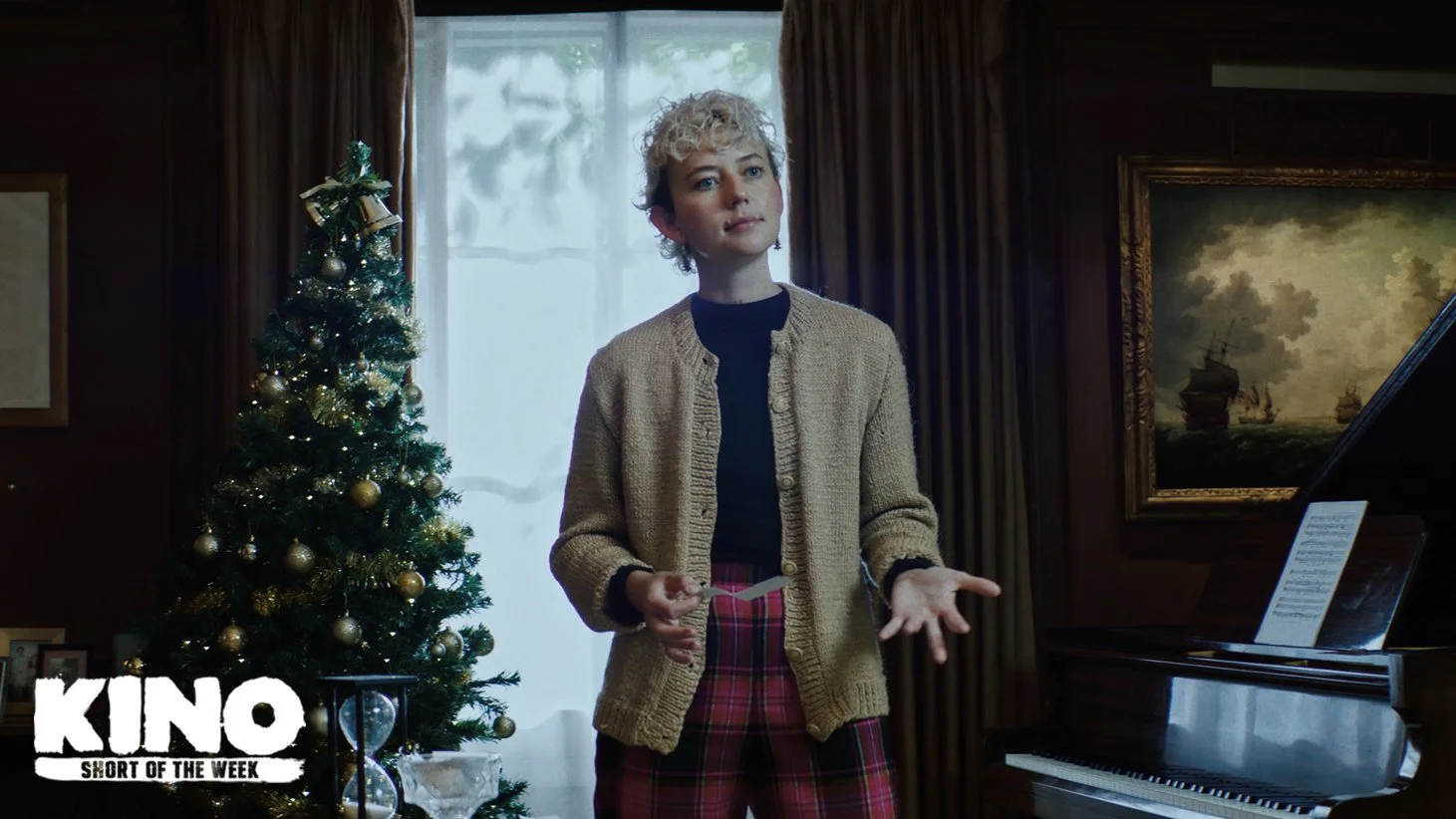
Written & directed by Josie Charles and Phoebe Brooks
Produced by Lily Donnelly and Amy George
A young working-class Welsh woman meets her wealthy English boyfriend’s eccentric family for the first time on Christmas Eve.
She’s thrown straight into the family’s traditional Christmas game, and struggles to keep up with its in-jokes and strange rules. But as she improves, she begins to uncover a dark secret in the family’s past.
ABOUT THE FILM
The Forfeit won Best Screenplay and Best Score at our film festival earlier this year, as well as being nominated for Best Director, Best Cinematography, and in the Best Sponsored Short category. Other notable awards are winning Best Director (Thriller) at the London Director Awards 2023 and Best UK-Made Short at The Gogs International Short Film Festival. The film was recognised as a finalist at the 2022 British Short Film Awards in the categories of Best Director, Best Production Design, and Best Sound Design. It also received praise and nominations from London Film Week, Underwire Festival, the BIFA qualifying Beeston Film Festival and Scream Queen Film Festival. Notable festivals selections include British Shorts Berlin 2023, Final Girls Berlin Film Festival, Brighton Rocks Film Festival 2023, Bute Street Film Festival, and more.
The film was recently release on Omeleto - a direct result of their screeners seeing the film as our festival.
ABOUT THE FILMmakerS
Josie is a director from Somerset, now based in London. Her previous shorts have screened at festivals including Underwire, London Film Week & Bolton Film Festival. In 2023 she was selected for the Directors UK ‘Inspire’ scheme, to be mentored by BAFTA-winning director Tom George. Her most recent short ‘Dead Cat Film’ features Hugh Bonneville (Notting Hill) & Will Gao (Heartstopper). www.josiecharles.com
Phoebe Brooks has directed short films, music videos, and commercials for global brands and charities, including Formula 1, Tinder, Samaritans and the NSPCC. Her short films have won multiple awards at international festivals, and she was recently selected as part of the BFI Flare x BAFTA Mentoring scheme for 2023. She is currently developing her debut feature. www.pbrooks501.com
READ OUR INTERVIEW WITH Josie & Phoebe
Welcome to our Short of the Week series. Can you tell us a little bit about yourself/yourselves and your filmmaking backgrounds?
PB: I made terrible videos with my mum’s camcorder from age 11. Like, really bad. And I just kept doing that and never really decided to do anything else. I’m often like - why did I let an 11 year old decide what my career would be? But it’s too late now.
JC: I originally trained as an actor, and my first short film was meant to be good showreel material - I was just co-writing and acting. But my co-writer promoted me to co-director when it was clear I would need to have a say in all aspects of it… and I haven’t looked back!
Tell us about the genesis of The Forfeit. You also co-wrote the script. What's your process for developing and writing together?
JC: Phoebe and I both come from families who love games and are very competitive about them.
PB: This film literally came about because me and Josie got too aggressively competitive at a party playing this game, and we realised no one else in the room cared at all, and it made us want to make a film about how weird we were.
What were some of the main obstacles you experienced when making The Forfeit and how did you overcome them?
PB: The pandemic was the big one. We shot this at the start of one of the lockdowns, and it was the most stressful thing that’s ever happened to me.
JC: Yeah we realised that with 8 principal cast members and a number of locations we’d designed a very impractical shoot for ourselves under COVID regulations.
How did your process work as co-directors? Did you delegate and each take aspects of directing duties, or did you work as a unified team on all aspects?
JC: I think because we’d co-written the script we were always pretty aligned on the characters and performances - we knew who those people were and how each moment should feel.
PB: I completely agree with what Josie said.
Tell us about the journey of getting your film to audiences.
PB: We submitted to a load of festivals, and got into some! It’s been an absolute joy travelling to different countries and seeing it with so many different kinds of audiences.
JC: Yeah it was your classic cocktail of some lovely acceptances with many other rejections. But we’ve been really lucky with the selections we’ve had, and because it’s a comedy there is nothing like hearing the audience’s reaction in person!
What do you think is the biggest challenge short filmmakers face in the early stages of their career when trying to break into the industry?
PB: It’s really, really hard. I think making shorts is so soul crushing. There’s so little funding, and so few opportunities.
JC: Funding is the big one. Even the funding that is available is tied up in long application processes, which feels a bit antithetical to the creative process. But I don’t think funding is ever easy to come by (unless you’re literally Steven Spielberg).
What advice or hacks would you give to other short filmmakers?
JC: Because funding is limited, I always tell people to design shorts based on the resources they have. Like, if you can’t afford multiple locations, write something in one location, ideally a place you have access to for free. If you know amazing actors who will help you out, write them a part! One of my most recent shorts is all shot on camcorder because the writer/performer told me she wanted to make something for under £500.
PB: In terms of hacks… find people who will help you do it. You can’t do this alone - The Forfeit was only possible because of all the amazing people who gave us their time and talents to make it happen. Also work with Josie Charles, she’s pretty good.
Any film recommendations that we should add to our watchlist?
PB: I just watched Valerie and her Week of Wonders. Completely batshit Czech film from the ‘70s. Zero plot, just vampires and vibes. Incredible film.
JC: I’m so basic with films, I don’t have a good niche recommendations like Phoebe.
PB: Harsh but fair.