
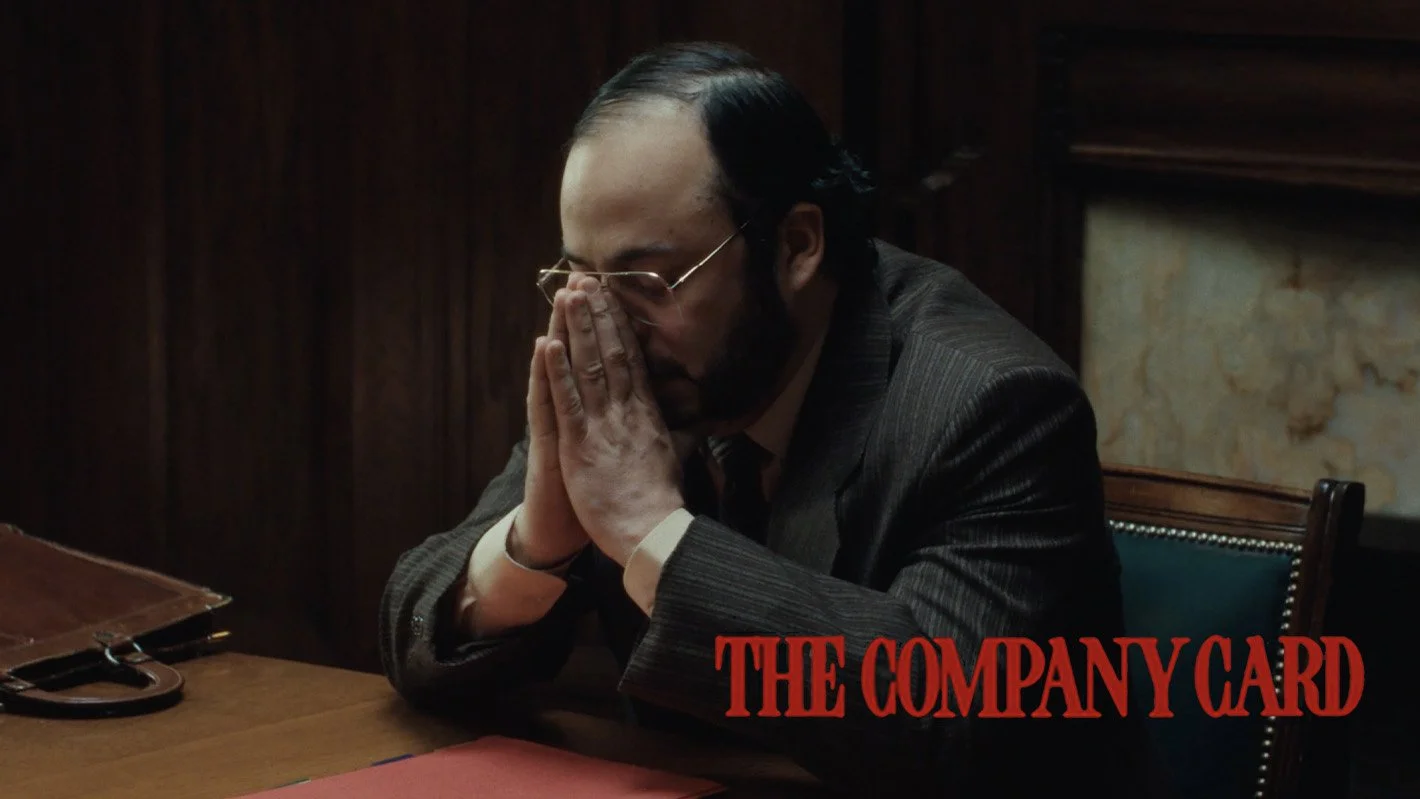
The Company Card
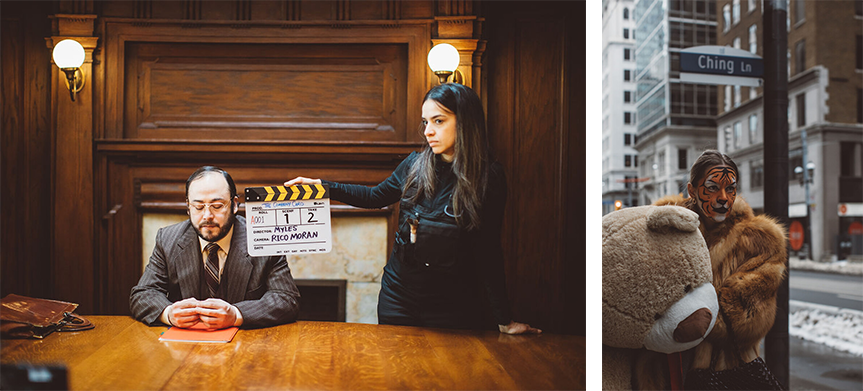
When a questionable charge appears on the company credit card, Terry suspects his employee Sandra might be behind it, causing the otherwise routine meeting to descend into chaos.
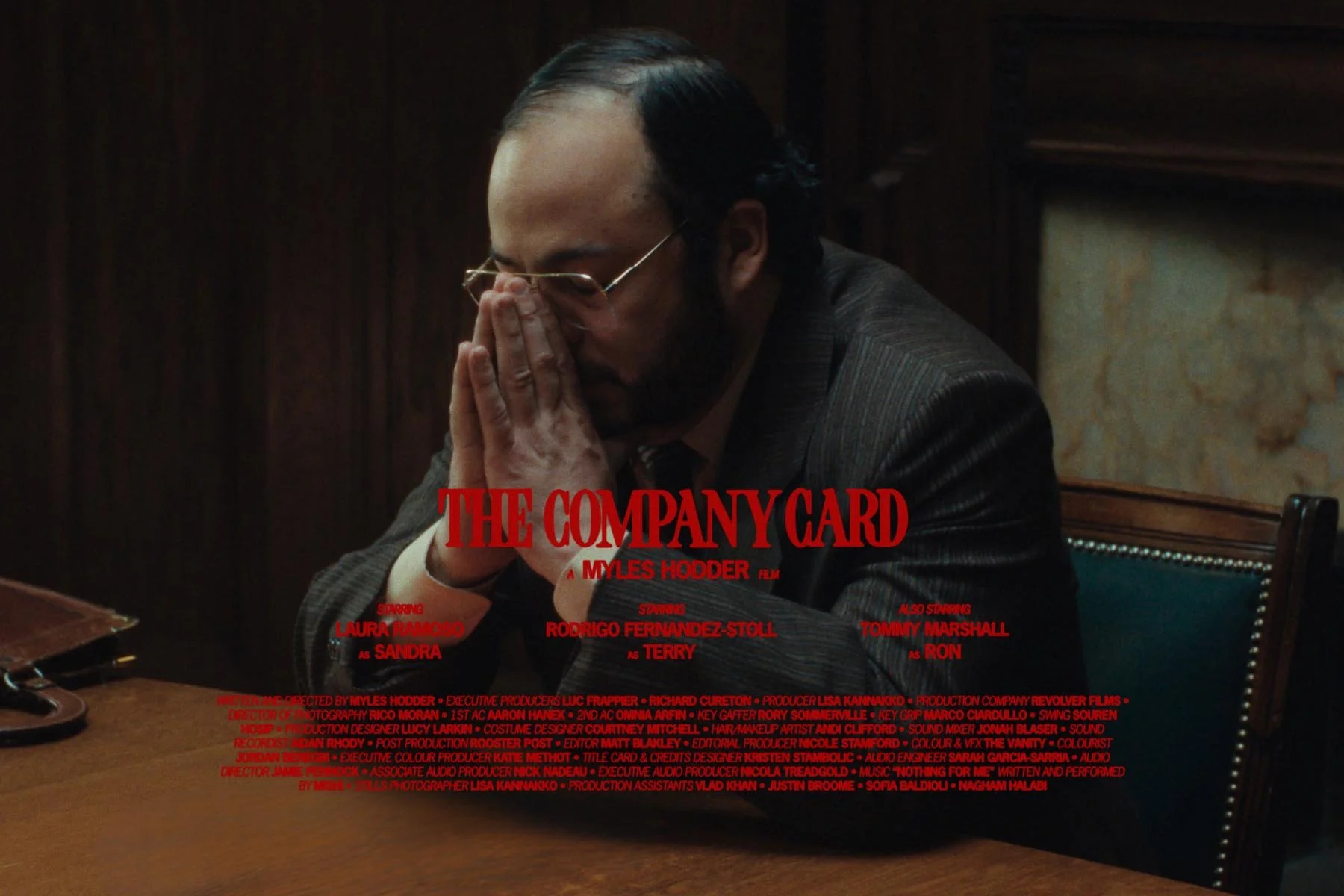
Written & Directed by Myles Hodder
Produced by Lisa Kannakko
When a questionable charge appears on the company credit card, Terry suspects his employee Sandra might be behind it, causing the otherwise routine meeting to descend into chaos.
ABOUT THE FILMMAKER
Myles Hodder was named one of Canada’s Brightest Rising Directors in 2025. His work spans narrative, commercial, and music video, inspired by a rural upbringing in early-2000s coastal Newfoundland, where his fascination with storytelling began.
His latest short film, The Company Card, premiered at the 2026 Fantasia International Film Festival and won the Audience Award for Best Film at the 2026 50/50 Comedy Festival in Los Angeles. His previous film, Little Bird, had its world premiere at TIFF in 2021, where it was nominated for the IMDbPro Award for Best Canadian Film.
His most recent spot for the Canadian Museum for Human Rights won Ad of the Year at the Manitoba Tourism Awards. His music video work has included artists at Universal Music and Island Records, such as Canadian pop star Rêve and indie rock singer Banners. Myles is represented by Revolver Films in Canada for commercials and music videos.
READ OUR INTERVIEW WITH MYLES
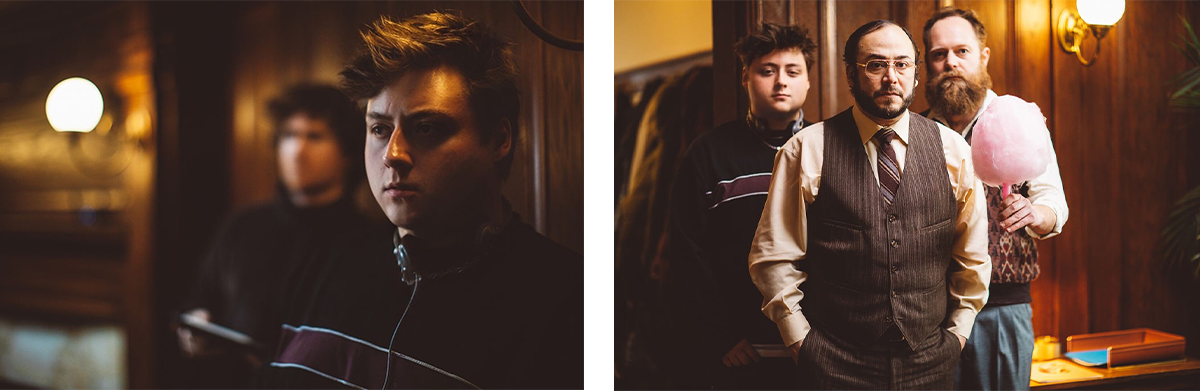
Welcome to our Weekly Pick!
Congrats on being named one of Canada's Brightest Rising Directors in 2025 by Little Black Book. Thus far you've worked primarily on music videos and short films, with previous work screened at TIFF and the film we're to talk about today, The Company Card, screened at Fantasia.
What else can you tell us about your background and how you got into filmmaking?
Thanks so much!
I've always been in the arts. I started out in theatre, and then when I was a teenager I was in a TV pilot and a few indie films back home. I always wanted to be in the film industry, but growing up in outport Newfoundland, that was not something that seemed attainable or realistic. I got accepted into an acting program at Toronto Film School, and my parents saw I was determined, so they agreed I should go try and make it happen. When I was at TFS, I was always more drawn towards writing and directing. I still act, but being behind the camera is where I feel the most fulfilled.
After film school I fell into directing music videos, which led to some cool opportunities with Universal Music, and then a friend of mine told me about ads and that whole world, so then I pivoted and kind of followed that journey, all while writing/directing my own films when I can.
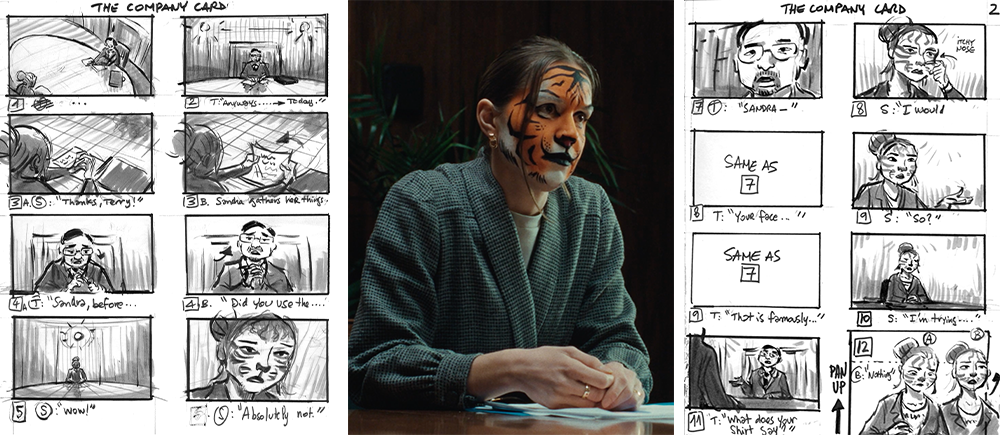
The Company Card is not your typical short film about frustration in the workplace. Tell us about the genesis of the project? Where did the idea come from and why did you choose to focus on this project in particular?
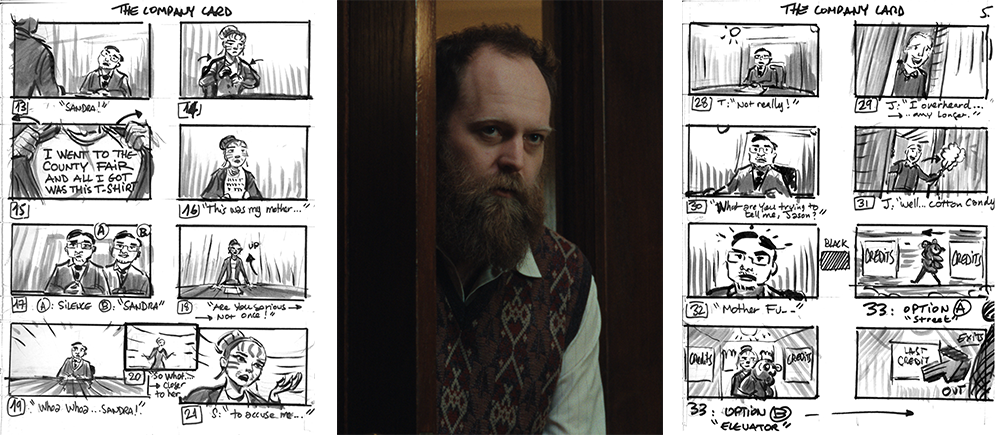
In the beginning, all I had was the image of the tiger face reveal in my head. It then morphed into 'what if someone was accused of doing something absurd, and even though all signs point to them having done it, they actually didn't". A wrong place, wrong time situation. I originally wanted to make something short and quick for my commercial reel that could help me get comedy work, but this became something more. When we were actually making the film, my execs suggested we also do a festival run with it, and I'm glad we did. It made me build the world out a little more.
I think most filmmakers would make the choice of having the corporate stooge being a cookie cutter villain, while making the employee the relateable anchor for audiences to identify with. Pardon our French, but both of your characters kinda come across like douche bags - which is an excellent fresh take by the way.
In taking that original approach, the piece seems to elevate itself above political/social commentary so it can deliver fresh laughs. Was this an approach that was intentional from the get go, or did that emerge as you developed the project?
Haha, I like that take.
Yeah, they're both insane in their own way, but I would love to go for drinks with Sandra. I think I'd follow her anywhere.
The goal wasn't to make any kind of statement, I just wanted to make people laugh. I'm really drawn to heightening / campifying mundane situations, and creating characters that exist in their own world and who follow their own rules. Something as simple as getting 'in trouble' as an adult, and showing how the worst person you've ever met might handle that situation.
For your previous short, Little Bird (which played at TIFF), you also starred in that as well. Can you tell us about the differences you've experienced in directing a film whilst acting vs just focusing on directing?
I notice when I solely write/direct and don't act, I have way more time to focus on watching performance, which is great. When I shot Little Bird I gave myself three takes and would watch playback on the last take to see if I was going in the right direction. It's nice to not have to do that all the time. Although, I will say that as an actor/director, I feel like I really understand actors and having been on both sides of the camera makes it easier for me to connect and direct them. I always admire people that can do both, it's definitely a skill to master and a lot harder than it looks.
Excellent casting choices! Can you talk about how you went about finding the right actors for these roles?
Thank you! I love my cast.
Laura and I met at Second City in Toronto, where we were both doing the conservatory for sketch comedy. I saw her on stage during a Tuesday night 'Anyone Goes' improv jam, and was immediately obsessed with her. We stayed close and have always wanted to do something together, so when I thought of this, I knew it had to be Laura.
Rodrigo and I met on a film set, and he's one of the most talented Canadian actors in the game. I knew he'd be perfect for this as well, and I really wanted to just watch him and Laura play off each other. The improv he came to set with was unmatched, and so much of it made it into the final film.
Let's chat about the release of your film now that you've played at festivals and online? What were the highlights and low-points of the journey to finding your audience?
The first screening in LA at 50/50 Fest was definitely a highlight. I was really caught off guard with how big of a laugh we got at the initial reveal, and it just made every bit of the journey worth it. To watch your film in a theatre and have people have such a strong reaction is such a dopamine hit. I was riding that for a while.
Fantasia was also a great experience, the crowds in Montreal are amazing. So energetic and ready to laugh. I think people just really want to laugh, and sometimes it can be as simple as that. Comedy really helps us escape.
Any film recommendations that we should add to our watchlist? Give us both a short and a feature.
Yes! Between Late April and Early May directed by Sophia Smith, and Frequency directed by Lauren Andrews. Two great Canadian comedy writer/directors on the rise right now, both with really strong POVs.
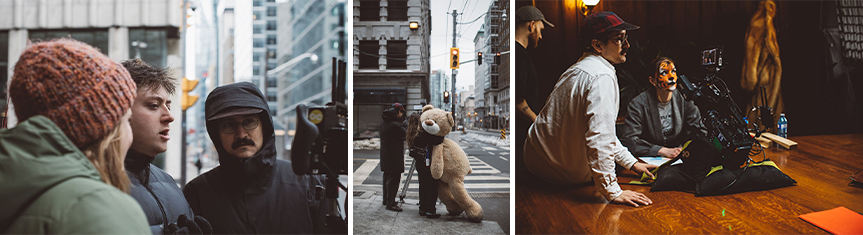
Apply to get your short selected as our Weekly Pick

Tastemaker
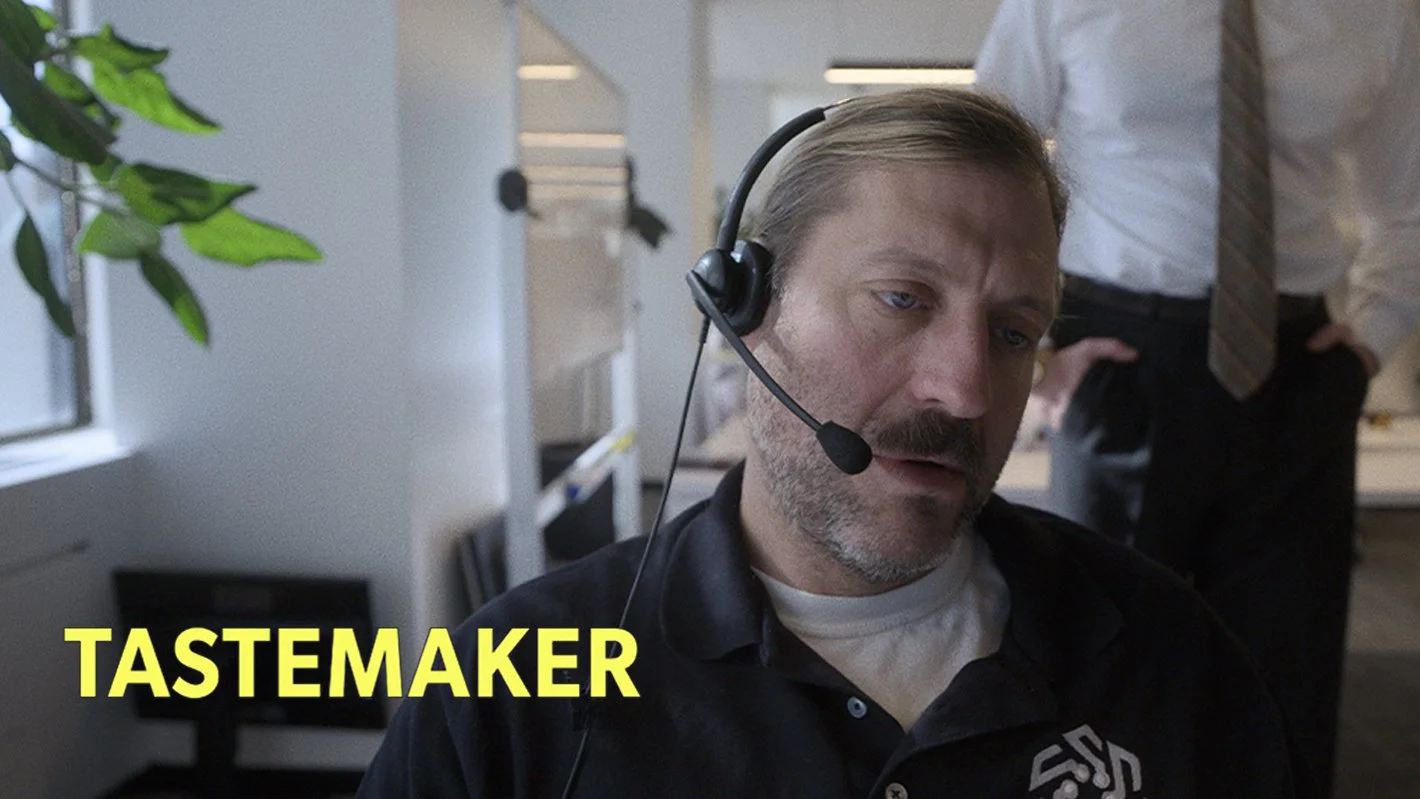
When apps use human spies to generate suggested content, one data analyst struggles with matters of taste.
Written & Directed by Eli Speigel
Produced by Joshua Rosen, Dan Feldman Green, & Conrad Osei-Bonsu
When apps use human spies to generate suggested content, one data analyst struggles with matters of taste.
ABOUT THE FILMMAKER
Eli Speigel is a freelance director, editor, and shooter based in Toronto.
READ OUR INTERVIEW WITH ELI
Welcome back! Other than making Tastemaker, what have you been up to since we featured your short The Jokes?
Woo! In between The Jokes and Tastemaker, I made another short called Gone Fishin' which is available online in a few places. I didn't send it around too much but I really like it!
Tell us about the origins of Tastemaker. What inspired the story and what are your personal feelings about Tim Buckley and Scott Walker?
Tastemaker originated as a sketch idea based on people saying, “Our phones are listening to us.”
I had just been complaining about how Spotify constantly recommends Scott Walker to me, despite the fact that I’ve never actively sought out his music or even talked about him in my life. It got me thinking about how these algorithms essentially function like curators: they listen to our behaviour, collect information about our tastes, and make suggestions based on what they think we might like. And if that algorithmic curator were an actual person and were actually listening to us through our phones, then maybe I’d be hurting their feelings by complaining about their recommendations.
For the record, I actually like Scott Walker. I just don’t necessarily think I should be listening to him simply because I happened to listen to Tim Buckley.
At the same time, I had been receiving a consistent stream of spam calls from a call centre offering air-duct cleaning services. These two things started to bleed together in my mind.
I had also just rewatched Mulholland Drive, and I began thinking about what a call-centre employee might dream about. Ie, what does someone dream about when their entire job consists of recommending things people don’t necessarily want or need? Would they ever fantasize about spying on people? Not to exploit them, but to understand what they actually want? Would they dream of becoming a respected curator/tastemaker/selector whose recommendations people genuinely value, rather than a nuisance whose calls everyone wants to avoid?
From there, the idea started to warp, much like when you become aware that you’re dreaming and are starting to wake up. What does it look like when the reality of your everyday life starts seeping into your dreams? What happens when the facade begins to wear away? And ultimately, when are we actually our most real? I don’t know XD!
I love the desperation of the personified algorithm. It really illustrates how invasive algorithm based marketing is. How much do you want your film to speak for itself vs how much do you want to use this film to engage in a conversation about the strange brave new world we live in?
Ideally, the film should always be able to speak for itself.
That said, I recognize that my shorts often do not have an easily traceable narrative.
There is a lot to be said about the role online algorithms play in our lives, but I’m more interested in the absurdity of it all. It feels like magic realism to be living alongside systems that are constantly trying to predict, and influence us to... shape us! That sounds scary but there’s humour in that absurdity. And if we can find a way to laugh at these things, they don’t necessarily have to dominate our lives. Or, if they inevitably dominate our practical lives, they don’t necessarily have to weigh on us emotionally.
Tell us a bit about this film's journey.
Any interesting hurdles you needed to overcome during pre-production, production, post-production?
Making a movie of any size will break your heart in ways you didn’t even think were possible. Thankfully, nothing too outrageous happened on this one, but there were still plenty of bumps along the way: an actor dropping out at the last second; a DoP having a scheduling conflict, which meant we ended up having two different DoPs shoot on different days (I wouldn’t recommend it, but they were both excellent); and never quite having enough time in each location, which meant fewer takes and setups than I would have liked.
The most stressful was the night of the outdoor scene at the music venue with all the extras. It started to very lightly drizzle, but the rain wasn't enough to actually register on camera, only enough to make everyone look wet. I had to hand out a collection of umbrellas from my closet to everyone, emphasising the drizzle as actual rain and an intentional visual choice rather than pretending it wasn’t happening... and also I wanted to keep my friends dry.
Where are you at in getting this film in front of audiences? Any festival highlights, etc.
I had high hopes for this short, but the festival circuit is a cruel one. One highlight would be Low Budge No Budge in Portland, Maine. They gave me a beautiful ceramic trophy. They rock. Getting to be a part of Bleeding Edge Fest here in Toronto is always a treat; a fun summit of local filmmakers and foreign. Getting to be a part of NoBudge's online collection is a point of pride, and so is getting to talk about my shorts with Kino!
What are you working on next?
Since finishing Tastemaker, I made a short documentary called Tasty Morsels, which is about a music label of the same name. I'm currently wrapping up post for a feature length documentary about an amateur entering the world of professional Elvis Tribute Artists, and have just started post for another comedic short with Joel Edmiston called Bongo Laundromat.
Any film recommendations that we should add to our watchlist? Give us both a short and a feature.
Toronto Apartment by Tristan Wheeler, Taxi Drivers by Sacha Kingston-Wayne
Apply to get your short selected as our Weekly Pick

Olympus Lost
Now a mortal, the wrathful Greek God Zeus faces his greatest challenge to date: assembling a piece of flat-pack furniture.
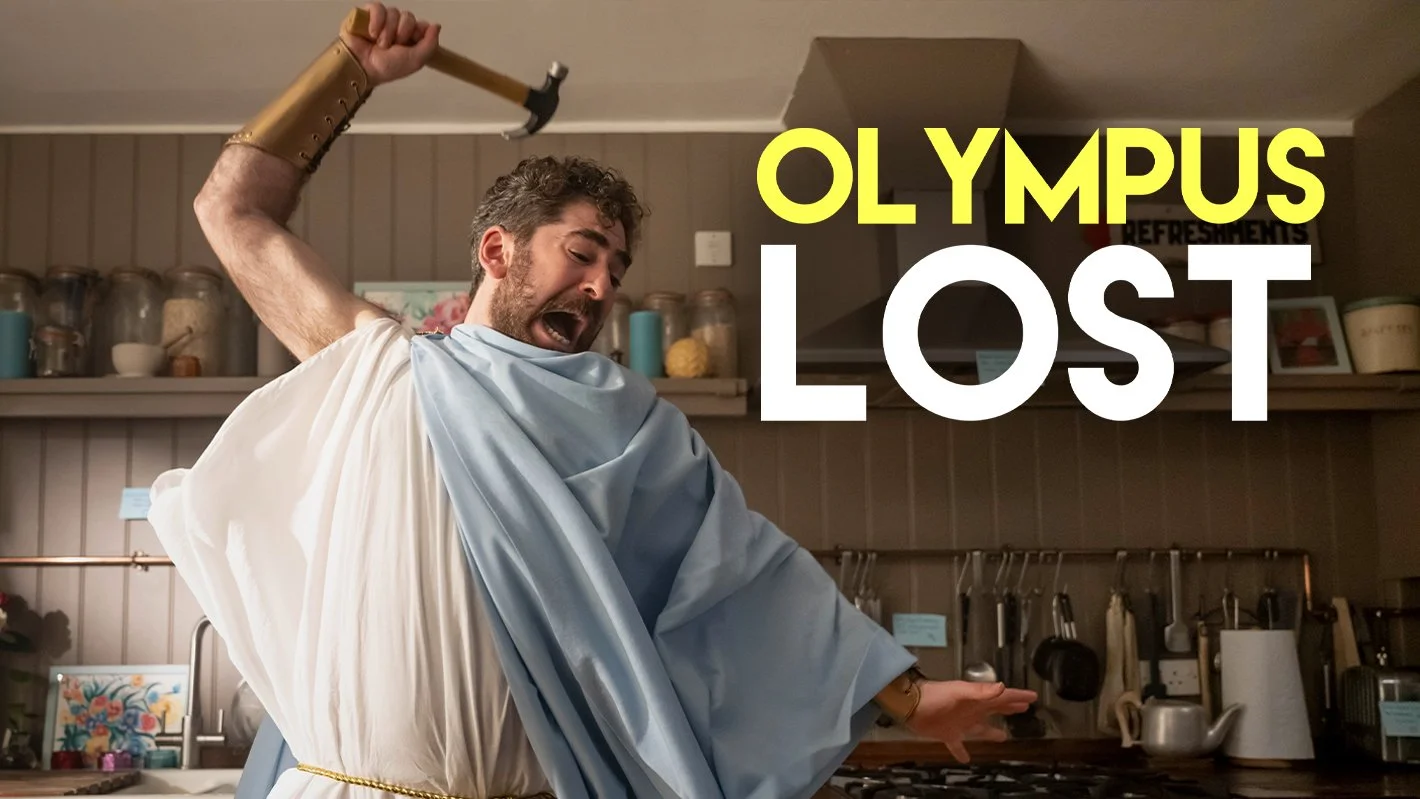
Written & Directed by Amadeus Redha
Produced by Cherene Bracegirdle-Smith
Now a mortal, the wrathful Greek God Zeus faces his greatest challenge to date: assembling a piece of flat-pack furniture.
ABOUT THE FILMMAKER
Amadeus Redha is an Iraqi-British, BIFA-qualifying Writer-Director based in London. He has been shortlisted in the 2024 BAFTA Rocliffe competition, the Netflix Screenwriters Fellowship, and the BBC Writersroom. As a Middle Eastern man that grew up in a working class community in London, he cares deeply about representation and has a vested interest in creating films that tell optimistic, hopeful stories – ones that show us a better version of what the world could be. His short film, The Rally (2024), has been selected at the BAFTA-Qualifying Aesthetica Film Festival, and his short film Olympus Lost (2025), won Best Comedy at Stamford International Film Festival. His next short film, Hazard Perception (2026), starring Aidan Cheng (Netflix’s You and Three Body Problem) has just begun the festival circuit. His feature film, Paradise By Way of Jordyn, was awarded £3000 in development funding from CenterFrame and has previously been pitched to Film4 as well as Joi Productions.
READ OUR INTERVIEW WITH AMADEUS
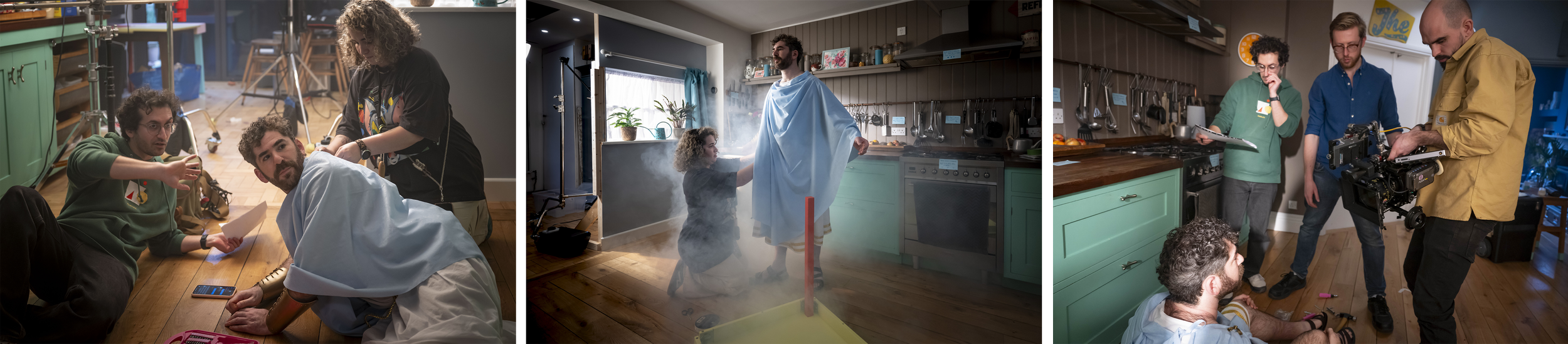
Welcome to our Weekly Pick! Obviously, you're no stranger to Kino since Olympus Lost won our short film fund in 2024, but can you tell our audience a bit about your background and what got you into filmmaking?
I've always been into films and a film lover since I can remember. But mostly as a viewer. Then one day I decided to take a screenwriting course in 2020 after doing a short 'intro to screenwriting' course as a bit of a fun side hustle. And that side hustle turned into a bit of an obsession. So I wrote a feature script. Wrote several shorts, one of which ended up getting made and being BIFA-qualifying. And at that point I got the itch to try something new and direct. So I decided I would go full guns blazing with this wacky idea I had about a Greek God trying to build a piece of flat-pack furniture. And here I am now!
You've since gone on to make more shorts, but Olympus Lost was your debut. Oftentimes first time filmmakers struggle to find a good producer, but you seem to have hit the jackpot by getting Cherene onboard. Can you chat about how your creative collaboration came about?
I really did hit the jackpot with Cherene! This came about in a really weird way. Just as I decided to try my hand at directing, I knew I'd need a producer to actually bring this project to life. And at the same time, I was a member of a filmmaking WhatsApp group, where someone had forwarded this directory of UK-based Producers. I scanned through the list to see if anyone would be a good fit for Olympus Lost, and alongside Cherene's name it had 'comedy' and 'mythology' as interests. I couldn't believe my luck. So I cold emailed her. She liked the project. We hopped on a call. And the rest is history. We're now on our 4th project together ... thank you random online WhatsApp directory.
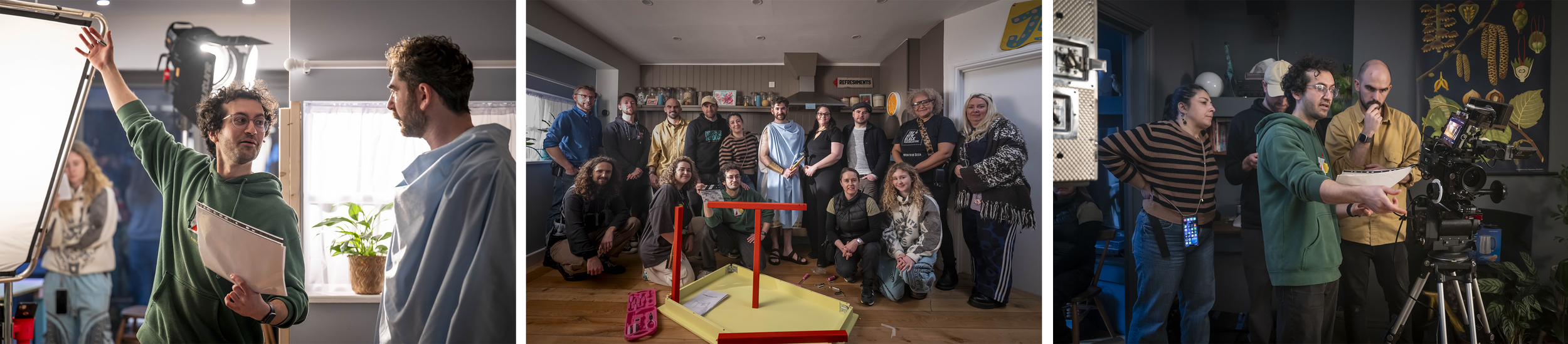
Tell us about how the project came to be a Kino Original. How did you find the process of applying for (and eventually winning) funds from us?
We'd raised a bit of money from our own pockets and through a crowdfunding campaign. But that wasn't enough to get the project over the line. We had a financing gap we needed to close. Thankfully, we knew about Kino (via Genera), and applied for the funding. And we were super specific in our ask. We had everything in place short of a final bit of funding, along with camera kit as well. And I think that worked to our favour since we won it in the end. All in all, a super straightforward, super fun process.
Once Kino was onboard, how did this change the trajectory of your project?
I guess it's not an exaggeration to say we couldn't have done the project without Kino. Kino provided us with brilliant kit, some funding, but also guidance and supervision. We didn't have a DIT on the day, so got help with that. We had NO idea what we were doing when it came to the festival circuit and we got a lot of help on that. Simply put, without Kino, we wouldn't have a film.
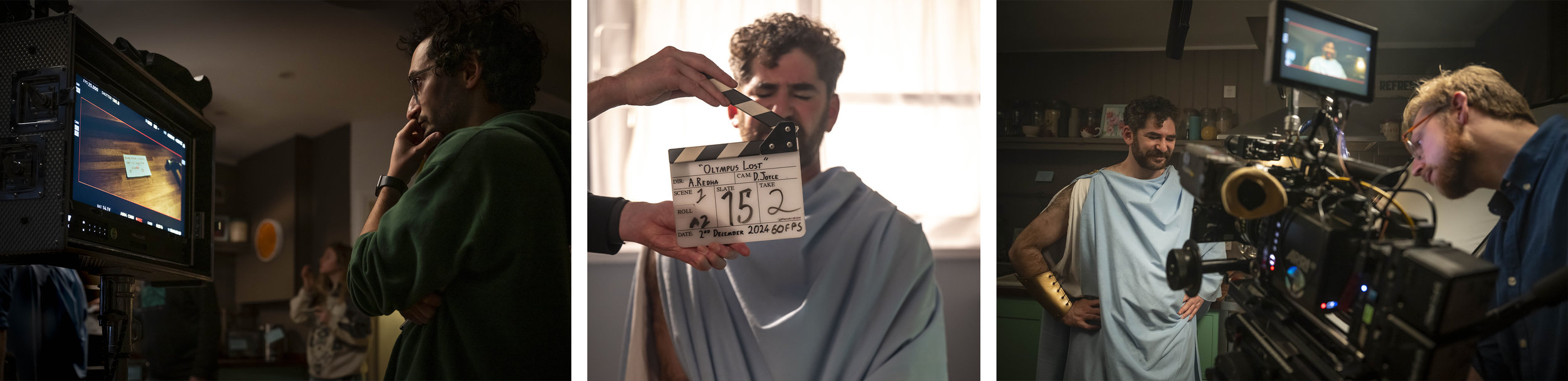
Let’s chat about Olympus Lost finding its audience. You dipped your toe into the festival circuit, but instead of waiting for external validation, you also took matters into your own hands and did something quite unique with your Best of British Comedy screening. Can you chat about that?
This was also a bit of a harebrained idea that just took full flight. We wanted to run our own premiere and screening – mostly to help try and raise funds for our festival circuit. But also because we knew we could do it. So Cherene and I built this 'Best of British' ticketed event – showcasing Olympus Lost as a premiere alongside some fantastic, multi-award winning comedy shorts. We had a 150-person cinema. We branded the whole thing. Got a presenter. Recorded interviews with each director. Sold every ticket (we had a waitlist by the end) and just put on a bloody good show for everyone.
What's next for you?
I've currently just started the festival circuit with Hazard Perception, my latest short (also with Cherene!) and that got into our first BIFA-qualifying festival last weekend, which was great. So hoping to see where that one ends up. And I've got 2 other shorts on the go – both in the financing stage and waiting to hear back from the powers that be that can make either one happen. And then it's straight on to features!
And last, but not least? Any film recommendations for our audience?
Everybody Wants Some!! by Richard Linklater. Totally low stakes, slacker movie set in a college dorm in the 80s. If you're nursing a hangover, anxiety, sadness, go watch this film it'll cheer you right up. This was Glen Powell before Glen Powell got big and inundated us with his screen presence.
Apply to get your short selected as our Weekly Pick

BENJI
A seemingly innocent TV commercial for a family-friendly recycling bin becomes increasingly bizarre when the father decides to recycle more than just household waste.
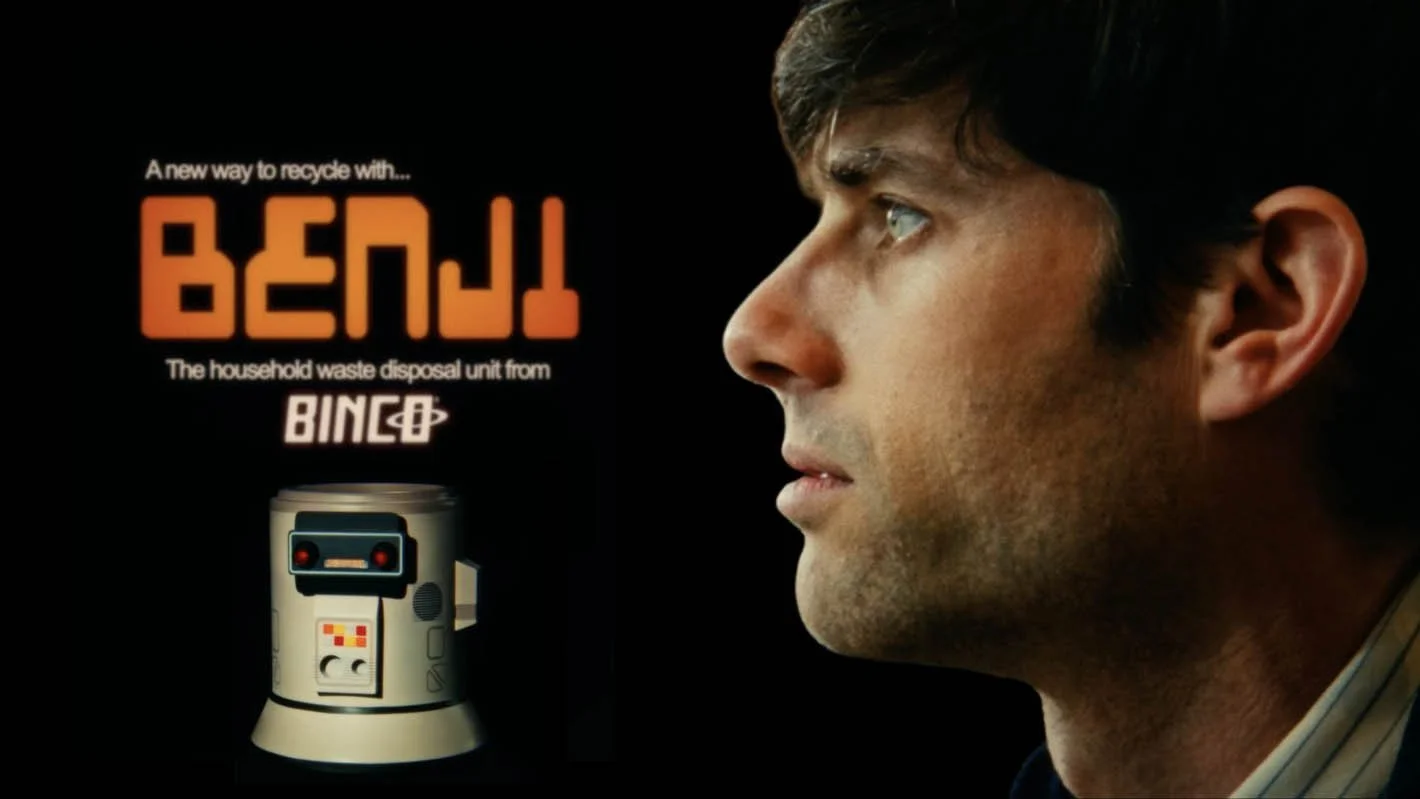
Written, Produced, & Directed by Oscar Garth
A seemingly innocent TV commercial for a family-friendly recycling bin becomes increasingly bizarre when the father decides to recycle more than just household waste.
ABOUT THE FILMMAKER
A director of photography with a bold, playful style, Oscar brings surreal stories to life through the lens. With multiple shorts under his belt, Oscar recently completed his first feature film, and is currently developing a series with comedy writer/director/performer James Button. Oscar's passion for storytelling has recently led him to explore directing as well, with his debut short Benji.
READ OUR INTERVIEW WITH OSCAR
Welcome to our Weekly Pick! Let's dive straight in.
Benji first caught our eye as an Official Selection at the 2024 edition of our film festival when it won an award for production design.
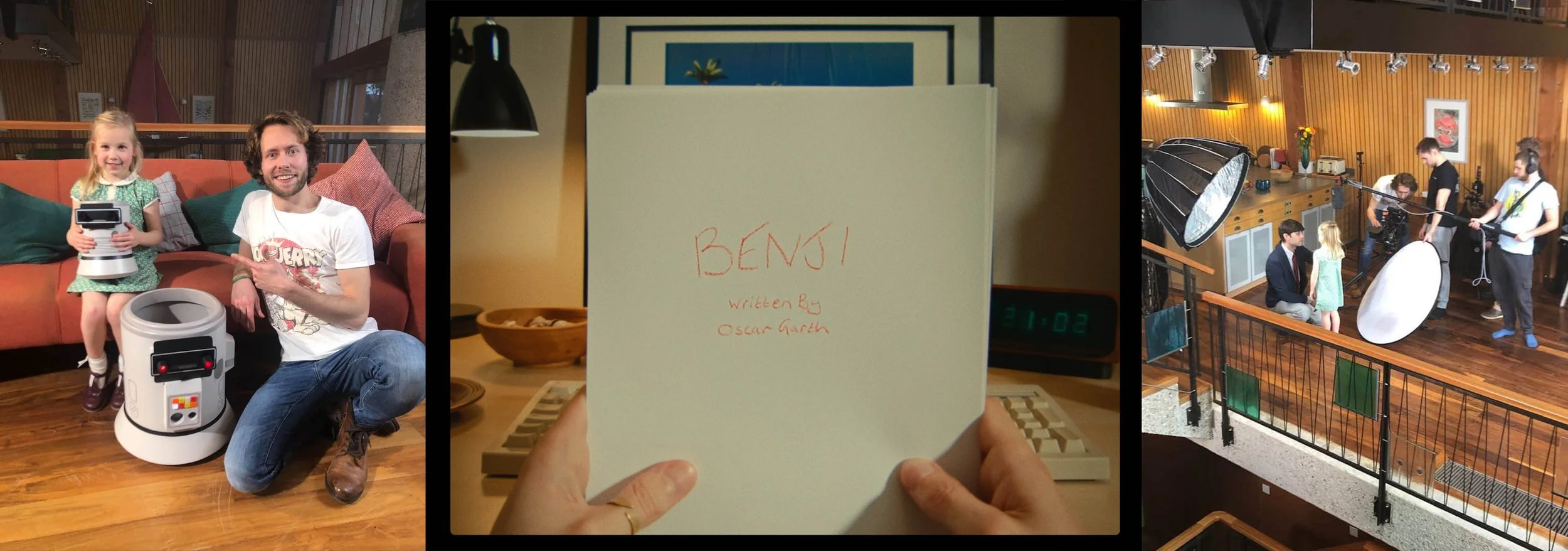
First let's chat about the design of the film and its awesome retro aesthetic. How did you go about sourcing all of the elements needed to pass off a convincing classic look that feels more like it's been plucked from the past vs made anytime recently?
I watched a LOT of old TV ads. They were bonkers back then, but there’s something incredibly charming about them that has always appealed to me. Possibly the happy-go-lucky, overly optimistic vision for the future, and all the goofy tech.
I was really meticulous about everything with Benji, it was so much fun to design the look for such a bold, playful world. It all clicked into place when I stumbled upon 'The Houseboat' in Dorset. Most locations I looked at were just normal modern houses with a bit of vintage wallpaper, but this place was a literal 1960s 'House of Tomorrow'. It came almost completely dressed, so our production designer Jamie just had to swoop in and add some finishing touches, along with a few random retro knick-knacks I nabbed from my flat.
On the tech side, I shot on a Blackmagic Micro, which has a gorgeous super 16mm sensor, getting me most of the way to a film look. Coupled with an old, beat-up Canon servo zoom lens to get those playful TV ad snap-zooms, and give an overall de-tuned feel.
And then of course, there are the Benji bins. I found an amazing illustrator on Instagram, Ann-Sophie De Steur, to sketch them out, and then JSM Model Makers down in Marlborough brought them to life with actual moving eyes, switches, and LEDs. They now live with me in my flat. One is a functioning desk bin.
Can you tell us a bit about your festival journey with this film? The highs, the lows, the inbetweens.
Well, Benji had a great run, and nabbed a handful of awards including the Andy Jones Award at Aesthetica, Best Micro-Budget Short at Kino, and was one of the Judges 6 at Exit6 fest. More importantly though were the reactions I got from people leaving the cinema. It was always a joy hearing peoples’ verdict on exactly what was going on in the film, with one notable review being “I’ve no idea what happened at the end there but I was in tears”.
Getting the film online has been a long time coming. How have you found the reception of the online release of the film?
I think again, the biggest joy for me is witnessing in-person reactions to the film, discussing it over a pint, and using it as a springboard to chat creatively about other projects. Now that it’s online, I honestly don’t think about it much, my head is already onto the next project.
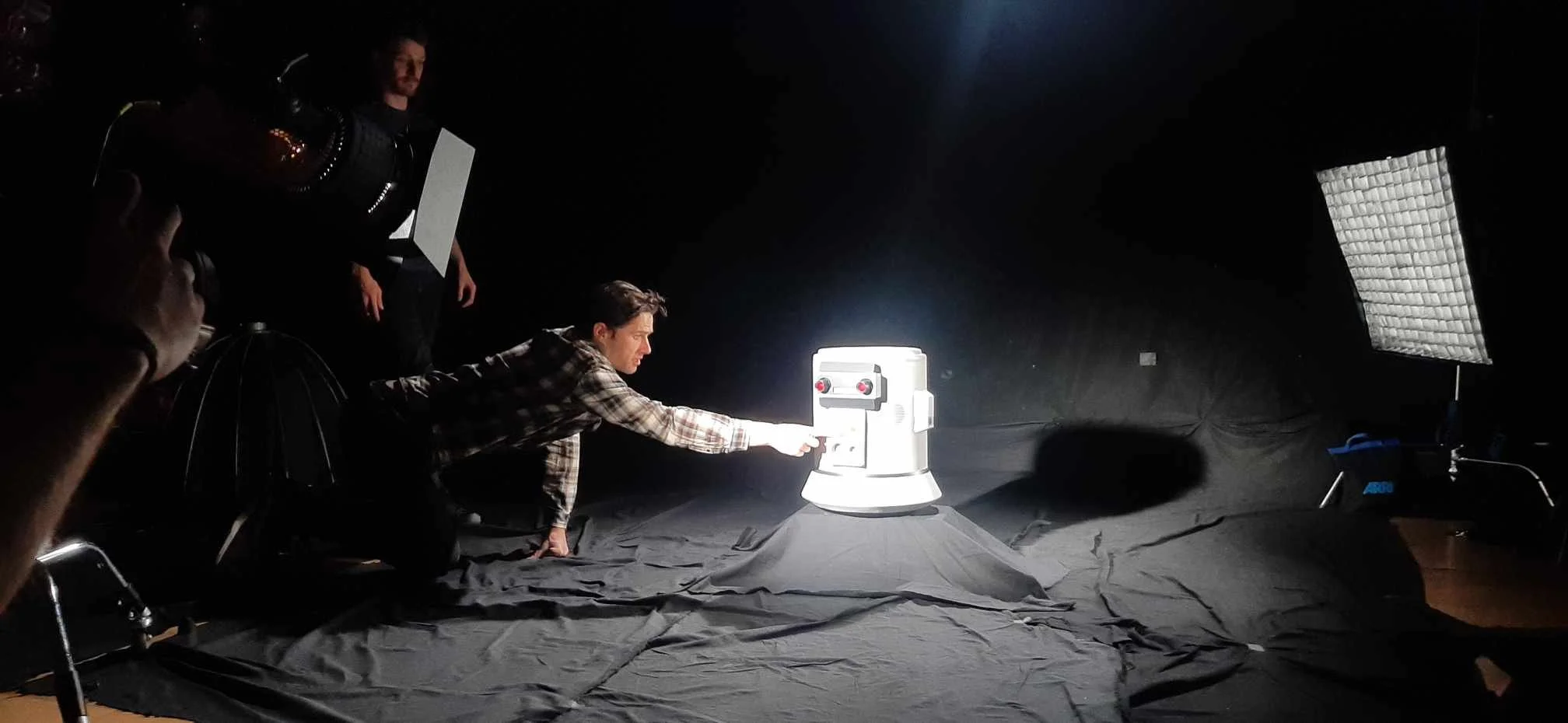
You often work as a cinematographer for other directors. Can you talk about how your process changes when shooting for others vs shooting for yourself?
When it’s your own film, you’ve got the whole project - the script, the performances, the existential dread, all of it your brain at once. When I’m just wearing the DP hat it gets a little simpler.
It’s pretty similar in terms of storytelling. I’m always thinking about the narrative and what my own creative eye can bring to the table. And so, the directors I love working with most trust that together we can create something more than the sum of its parts. It’s always a hugely collaborative effort, I’m not just chucking a camera down, the vision for the whole project has to be mutual. It’s a great feeling when you develop a shorthand with a director and suddenly every creative decision you both make it in-line with that vision.
What advice or hacks would you give to other short filmmakers?
My advice would be don’t look for hacks. Focus on creating something authentic, that brings up some emotion in you. Try and look at whatever anyone else is doing as little as possible, and for the love of god don’t hang your worth as a filmmaker on laurels or accolades.
What are you working on now?
I’ve always got a bunch of daft ideas bubbling away. The next one will likely be a short called Channelling Walter Fishman, about a hermit who lives underground and makes crap electronic music. Parallel to that, I’m jumping into feature development with long-time partner-in-crime James Button. We’re writing a comedy feature debut about a 900-year-old man stuck in a bleak care home who just wants to get back to his castle… so stay tuned for that nonsense.
Any film recommendations that we should add to our watchlist?
The last short I saw at a festival that really landed for me and deserves a shoutout, was ‘I Have a’ by Rory Waudby-Tolley. Fast-paced daft animation about a guy listing all the things he has… You have to just watch it.
One short I do keep coming back to as a solid source of inspiration is The Privates by Dylan Allen. “An unknown rock band struggles with a radioactive energy in their music that blows up amps, liquefies tape decks, and starts electrical fires”. It’s a little bit Edgar Wright, with a touch of Spielberg whimsy, and not only is it beautifully crafted in terms of cinematography, art direction, score and sound design, but the stand-out attraction for me is the naturalistic performances and editing. It all feels highly conversational, a bit like in Alien, where quite often you’re lingering on reactions rather than line delivery, and fully buying into the idea these guys are in the same room talking over each other. I honestly can’t believe it was never picked up for a feature.
Apply to get your short selected as our Weekly Pick

AFTERPLAY
After sex, a couple’s conversation about opening their relationship gets derailed by a persistent fly.
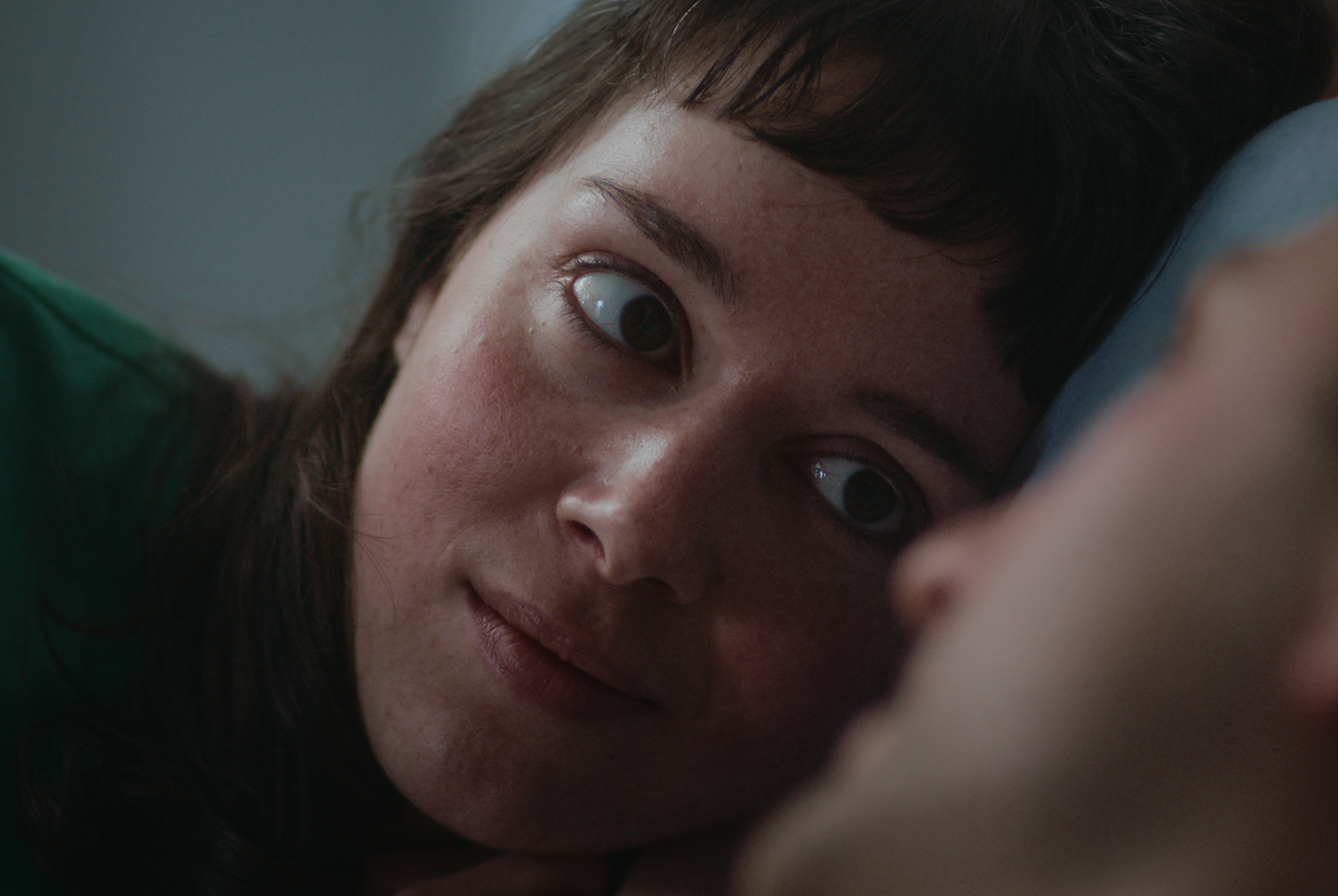
Written & Directed by Iris Breward
Produced by Chloe Huybens
After sex, a couple’s conversation about opening their relationship gets derailed by a persistent fly.
ABOUT THE FILMMAKER
Iris Breward is a writer and director based in London. Her work blends humour with keenly-observed character studies, often exploring power, intimacy and the awkward realities of human relationships.
She holds a BA in Spanish and Film Studies (UCL), and has built her practice through short-form storytelling informed by her background in film theory. Her most recent short, Micro Bangs, premieres at London Short Film Festival (2026) and was one of eight selected for Primetime Re:Present, a private industry showcase highlighting emerging voices to leading UK talent agents.
Her previous films have screened at BAFTA- and BIFA-qualifying festivals including Aesthetica Short Film Festival, Women X (where she was nominated for the Rising Star Award 2025) and Kino London. Her short film Sidney premiered online on Directors Notes and was nominated for Best Comedy at their 2025 DN Awards. Her short Afterplay also recently premiered on their platform and is in the top 25 films on their YouTube channel, with over 100k views. She is the recipient of multiple awards, including Best Director, Best Comedy and Best Short Film and was a finalist for The Pitch Film Fund 2025 with her comedy screenplay Sauna.
READ OUR INTERVIEW WITH IRIS
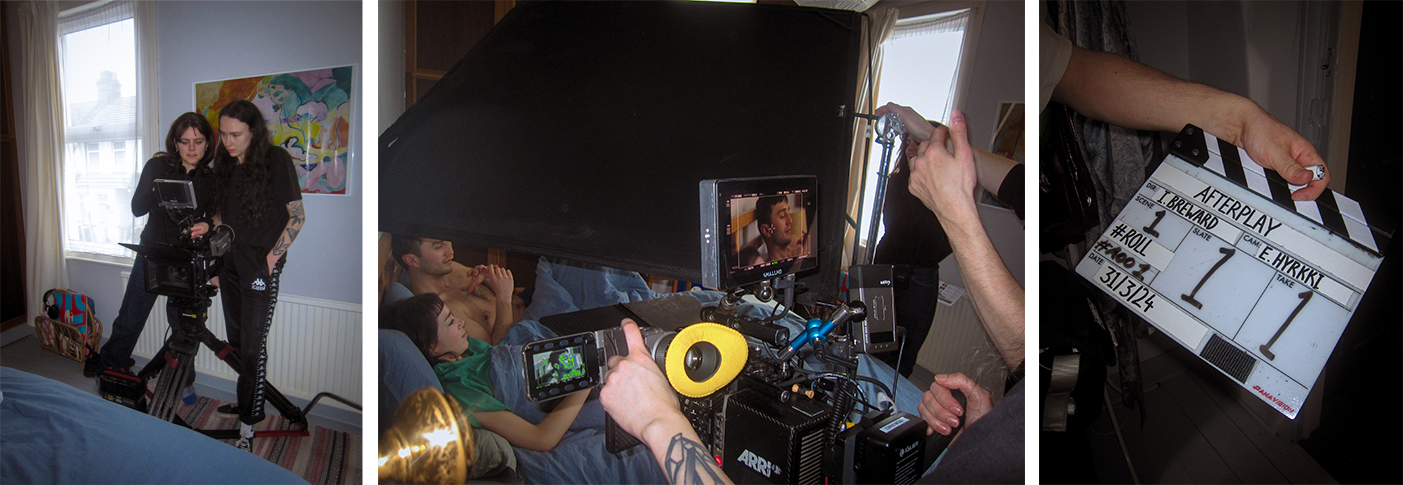
Welcome to our Weekly Pick! Let's dive straight in. I understand that your starting point for Afterplay was wanting to tell a contained, performance-focused story with tension built through a single conversation. Obviously, that inspiration could manifest itself in a variety of ways. How did you land on this particular scenario as the one you wanted to breathe life into?
Afterplay was the culmination of various ideas and anecdotes I’d had in my head for a while. I wanted to explore power dynamics in romantic relationships - particularly that push and pull between avoidance and anxiety, and how differently people respond to emotional pressure. The fly element is inspired by a story my Mum tells about a time my Dad got obsessed with killing a fly, and I’d always found funny and loaded with meaning. From there I explored scenarios that felt relatable and reflected the kind of conversations people in my generation are having around commitment and monogamy. I wanted to find a scene that moved a very intimate place to somewhere more dangerous and destabilising, so the post-coital conversation felt perfect for that.
Afterplay has themes of decision paralysis and fear of sacrifice. Can you chat about what attracted you to comment on these themes within your work?
Being someone who struggles with decision paralysis and fear of sacrifice! This film very much speaks to my own anxieties around doors closing with every choice made, and the doom spiral of reckoning with your own mortality. It feels pertinent to the choice overload/optimisation culture moment we’re in, where we are constantly bombarded with the idea of better options, better selves, better lives. I think especially in my early 20s, before the frontal lobe kicked in, I spent a lot of time looking around for guidance, answers, someone to decide for me. And I think the paralysis and communication breakdown between these characters is linked to that sense of being untethered and insecure in your own direction.
Afterplay first caught our eye as an Official Selection at our film festival last year. Can you tell us a bit about your festival journey with this film? The highs, the lows, the in-betweens.
We had such a great time at Kino! It was so special to premiere in London in such a brilliant block of films about complex intimacy, so that was definitely a highlight. Afterplay had a mostly UK-based festival run, I wanted to focus on submitting to festivals that I would be able to attend. That said, we premiered at British Shorts Berlin but then came home to Brighton Rocks, Women X and Kino London. I’ve really enjoyed seeing the film with audiences and experiencing the full spectrum of reactions! Of course there’s always lows in a festival run, and plenty of rejections, but I’m really happy with our short and sweet circuit because I was quite impatient to get the film online and out in the world. And now it is!
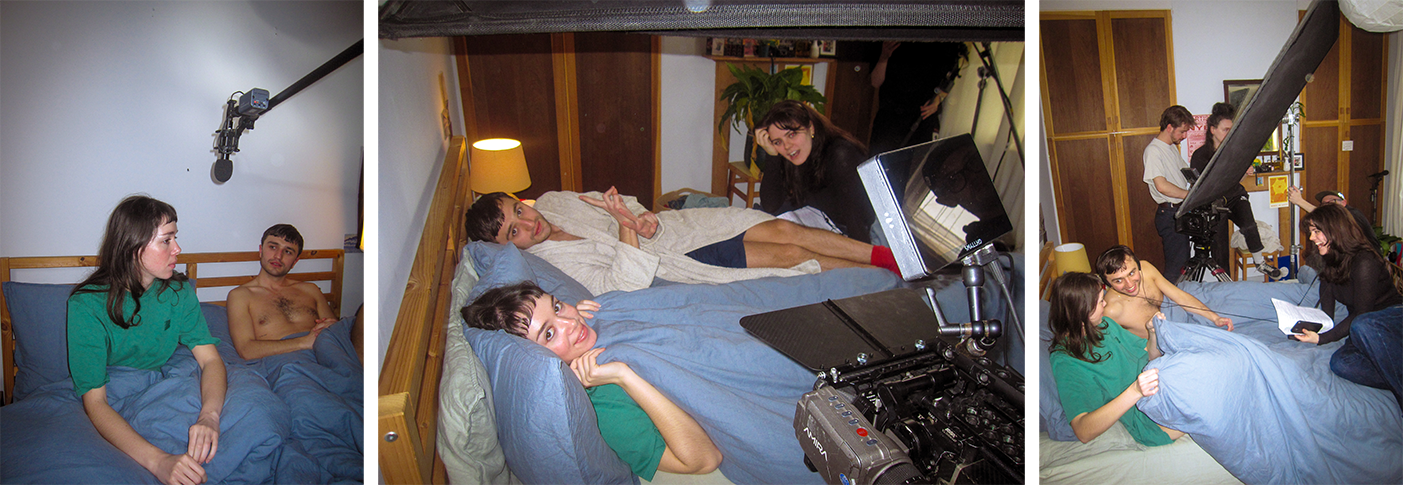
For the project you worked with Intimacy Coordinator Ian West. Can you talk a bit about the director / IC collaboration and that worked for your production?
Since IC's are such a new role there's a lot of curiosity about them. Sure there's lots of talk about boundaries and on-set safety for all involved, yet many directors have expressed a deeper sense of creativity and authenticity working with an IC. In your experience did you feel working with an IC unlocked more creativity?
It was my first time working with an IC so I was a bit nervous, but Ian was great. We initially were going to have more nudity in the film, but even with the nudity that remained and the intimate nature of the scenes, he brought so much care and clarity to the process. There was a real sense of structure around boundaries and consent, which was honestly quite eye-opening for me as a director. It made everything feel very considered rather than awkward or uncertain. Honestly it was so nice to have someone with that hat on, so that the actors and I were more free to focus on the story. Working with Ian certainly unlocked some creativity around how to direct the simulated sex audio, he had a fantastic approach that relaxed everyone and opened up space for more authentic performances.
What advice or hacks would you give to other short filmmakers?
Ooft that’s hard. I can’t take credit for a lot of it, but reading Directing Actors by Judith Weston was huge for me. Learning how to work with actors, doing some acting myself and basically just appreciating how important performance is. If the script and the performances aren’t good - very little else matters, so practice your writing as well (if nothing else because it’s free!). Finding community and a sacred circle of peers who you vibe with, I’ve done an annual writing retreat for 2 years now and it’s been seminal for me. And don’t spend all your money on your first film.
For the women filmmakers, have conviction in yourself and make the work how you wanna make it, not how someone tells you you’re supposed to. Something I still have to hold myself to!
What are you working on now?
Right now I have two shorts in development, which I’m hoping to make in 2026 and 2027. One is about a woman clashing with her best friend’s boyfriend over a birthday cake, the other about a blocked plughole that becomes impossible to ignore. Beyond that I recently wrote my third feature, and feel like I’m finally cracking that form, at least in terms of writing! I’m developing a new concept which I’m hoping could become my debut feature, so I’m quite locked in on that. And my new 5-min short Micro Bangs is currently on the festival circuit!
Any film recommendations that we should add to our watchlist?
God don’t get me started. I dunno what the people have watched! My most recent 5 stars are: The Cranes Are Flying (phenomenal and radical, feels so cutting edge for a film made in 1957), Mysterious Skin (trailblazing and so fucking cool) and Woman in the Dunes (left me genuinely speechless). I’ve actually been on a bit of a Japanese cinema hype which also included The Human Condition trilogy (insane, staggering, also - too long) and Audition which I LOVED.
Apply to get your short selected as our Weekly Pick

SURPRISE
Three women arrive at a surprise birthday party for their girlfriend, only to discover it was thrown to reveal they're all dating the same woman.
Written, Directed & Produced by Anoushka Zena
Three women arrive at a surprise birthday party for their girlfriend, only to discover it was thrown to reveal they're all dating the same woman.
ABOUT THE FILMMAKER
Anoushka Zena is a London-based director and screenwriter whose work centres on naturalistic, character-led storytelling with coming-of-age themes and the intimate portrayal of nuanced female characters.
She has written and directed four independent short films, Going Nowhere, Fast (2021) , The End of Love (2023), Surprise! (2026) and Until Morning, Margaux (2026). Anoushka is currently in pre-production on her next short film, Skin, which explores self-identity, adolescence, nostalgia, and queer love. This film is supported by Producer Molly Blumsom, House On Fire Productions and SkyeAngel Productions. Anoushka serves as both writer and director on the project.
READ OUR INTERVIEW WITH ANOUSHKA
Welcome to our Weekly Pick! We first saw your film at our Open Screen event earlier this year. Can you talk about that experience?
I love the concept, it's so refreshing having a free submission, first-come-first-served lineup. Everyone who makes a film deserves a space to bring their cast, crew, and friends together to see their collective work on a big screen. The event had such a nice atmosphere, and I saw a lot of films that night that wouldn't have come across my radar otherwise.
What are your thoughts on the need for more accessible spaces for emerging filmmakers to screen their work?
Accessible spaces are so important for the morale of emerging filmmakers. There’s something incredibly motivating about physically screening your work, feeling the energy in a room, hearing the film through proper speakers, giving it the showcase it deserves after the huge amount of hard work put in from everyone in bringing it to life. It's such a rewarding part of the filmmaking process.
Apart from Kino, have you tapped into any other creative spaces who take a similar welcoming approach?
Genesis Cinema in Bethnal Green often runs a Shorts Showcase, as does ReDavolt in Hackney Wick. It would be amazing if more small cinema’s opened their doors, even once a month, for these kinds of showcases. In a dream world, I’d love to screen at Close-Up Cinema in Shoreditch or The Nickel in Clerkenwell.
Tell us a bit about the genesis of Surprise!
From the start, I knew I wanted the story to centre queer characters and explore a slightly absurd concept, while keeping the execution grounded in realism. I currently have three other films in various stages of development, all of which lean more toward the genre of drama. I wanted a project I could tap into as almost a palate cleanser, and a dark comedy felt exciting. Surprise! ended up being exactly that. I found it so refreshing to write.
Where did the idea come from?
Not personal experience, unless my girlfriend is leading a triple life behind my back. The punchline of ‘My sister’s a whore’, cutting straight to the title card Surprise! , was actually the first idea that landed, and everything else grew out from there. I was drawn to the idea of revealing the big surprise at the start, rather than building up to it. What interested me most was how each character might respond differently to the same news, depending on the nature of their relationship.
How did you develop that idea into the short that's now made its way out into the world?
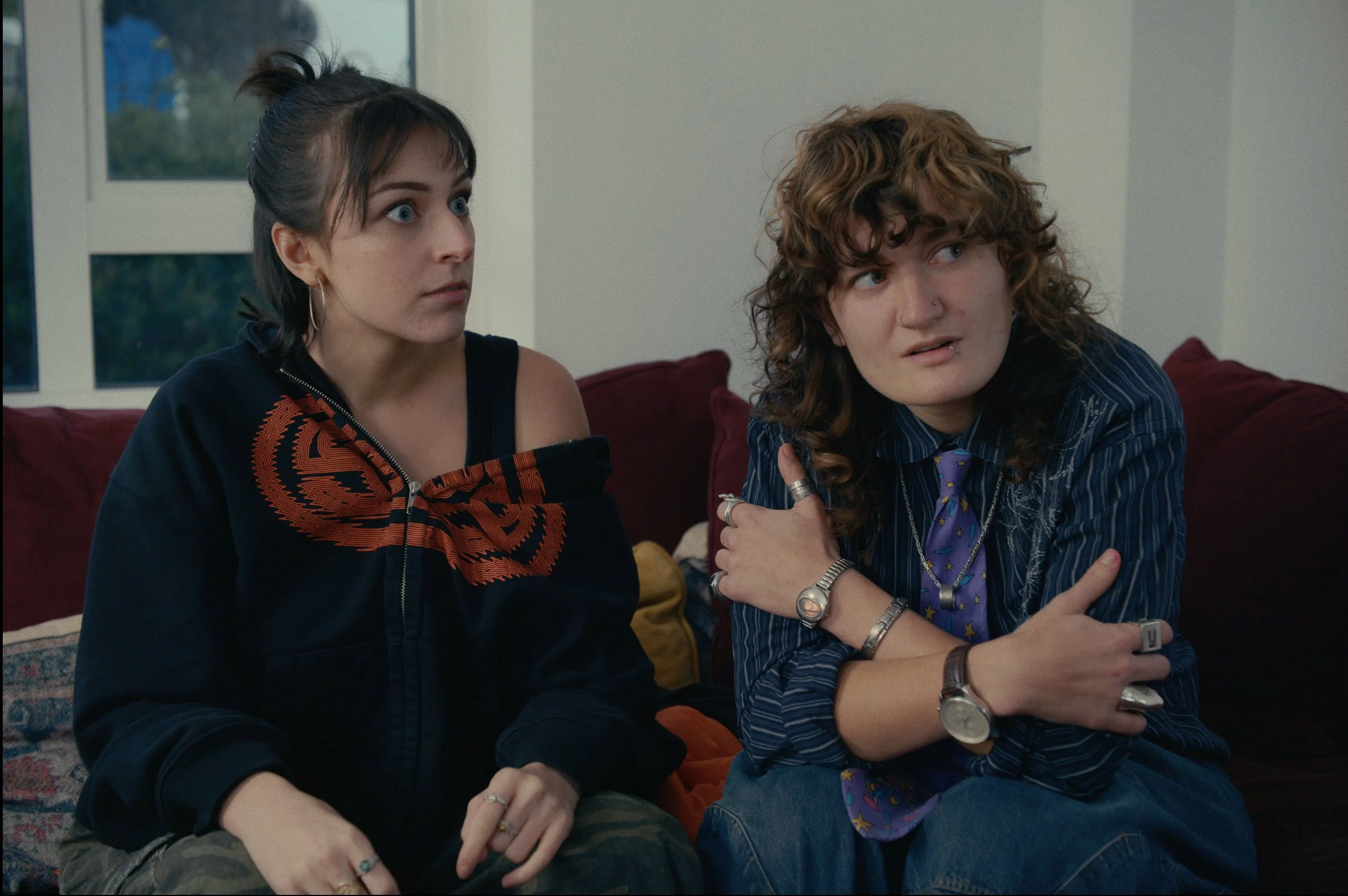
I wanted the evolving conversations and relationships between the three women to be the heart of the film. Casting the lead girlfriends felt like the biggest challenge, finding actors to naturally embody that dry, sarcastic humour. Jordanne Jones came first, recommended by another filmmaker. Elsa Mills is, incidentally, both my flatmate and a great actress. And finally, Maaike Ter Woort, a close friend of mine, who had actually never acted prior to this film. I was struggling to cast her character and suddenly thought, hang on, she would be absolutely perfect. And she was. She rocked up on the day wearing that party-animal tie, and I knew straight away that she was the right call. The shoot was so much fun, we shot the whole film in ten hours with a skeleton crew of four, and the three girlfriends had such good chemistry that I had to stop myself from sitting down and chatting with them the whole time instead of actually making the film.
While introducing your film at our Open Screen, you mentioned how many LGTBQ+ stories rely heavily on interweaving experiences of trauma into their storylines, but how you wanted to take a different approach. Can you expound on that?
While telling stories of trauma within the LGBTQ+ community will always be essential, I think it’s equally important to centre queer characters in narratives where sexuality isn’t a defining element of the story. Restricting queer relationships to arcs of tragedy or redemption risks conditioning audiences to associate queer cinema with these themes.
What advice or hacks would you give to other short filmmakers?
Don’t wait for someone to tell you that your script is worth shooting. If you want to watch your own film, that’s reason enough to hit the ground running. Self-funding or financing a project is always daunting and demoralising, but have faith. There are talented and kind creatives all around who want to see your story brought to life just as much as you do, even if it takes a while to find them. Send emails that feel unrealistic. Be persistent if (when) they don’t reply. Message that DOP. Message that Producer. Message everyone you’d love to work with, even the ones you admire that feel unattainable. Have faith in your work, have faith other people will too.
What are you working on now?
I’m currently shooting a film at the end of the month called Until Morning, Margaux, which explores themes of connection, loneliness and expectation. The film stars Rachel Fielding and Raffaello Degruttola. Alongside this, I’m in pre-production for a coming of age short film titled Skin, the story explores identity, nostalgia, adolescence and queer love. Skin is being brought to life by Producer Molly Blumsom, House On Fire Productions and SkyeAngel Productions. More details can be found at @skintheshortfilm on instagram!
Any film recommendations that we should add to our watchlist?
The Eight Mountains, an Italian film co-directed by Belgian filmmakers Felix van Groeningen and Charlotte Vandermeersch. I first watched this last year and have thought about it every day since. It’s such a visceral and melancholic film. A lot of the soundtrack is also unbelievably beautiful, with music by Daniel Norgren, particularly the tracks ‘As long as we last’ and ‘Everything you know melts away like snow’. I recommend this film for fans of Aftersun (2022), Close (2022) and Boyhood (2014).
Apply to get your short selected as our Weekly Pick

ROLE PLAY
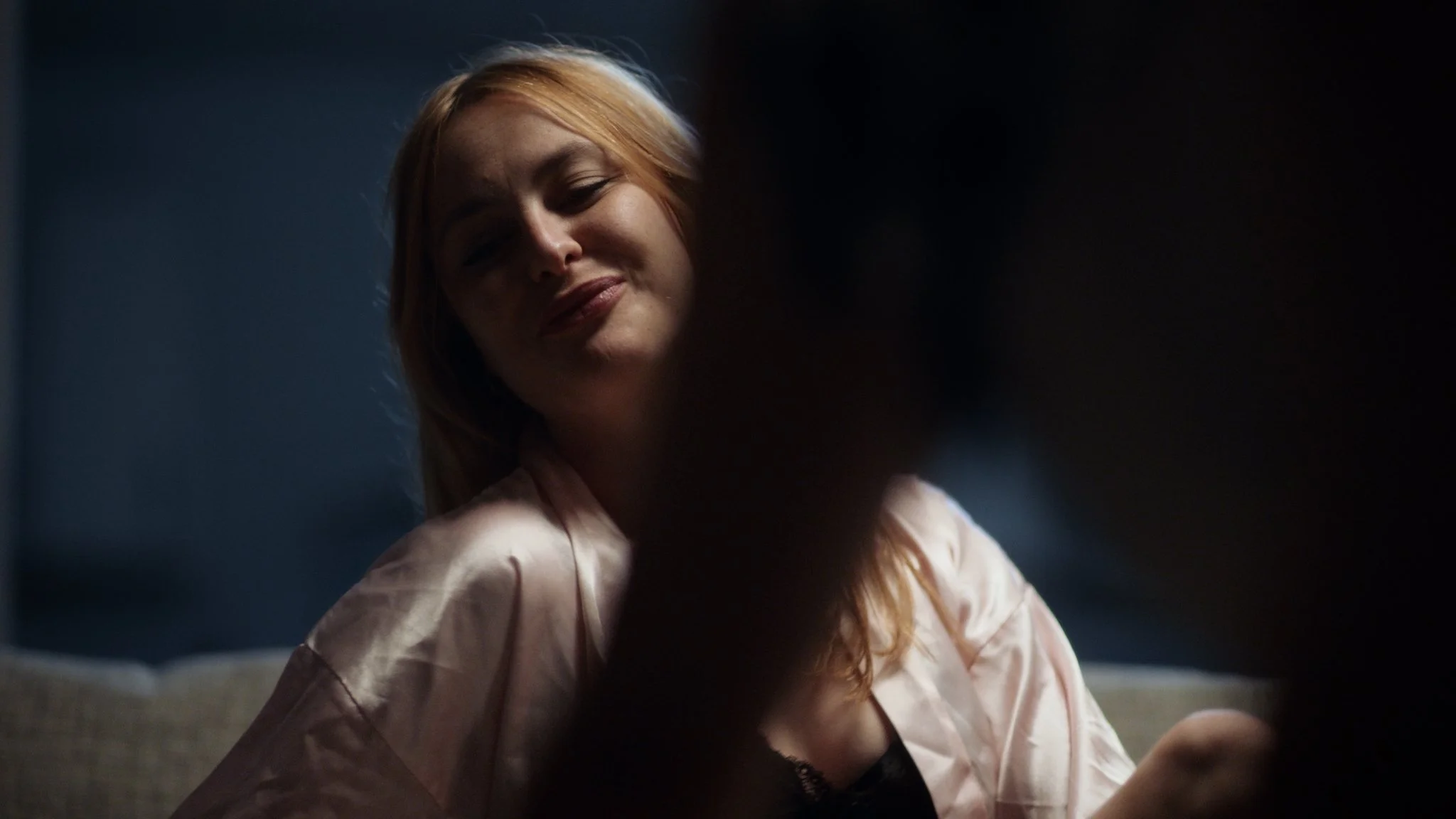
A couple’s attempt to reignite their relationship through awkward role-playing spirals into chaos when a mysterious man arrives, leading to dark confrontations and blurred lines between fantasy and reality.
Directed by Kyle Jon Shephard
Written by Kit Loyd
Produced by Georgina House
A couple’s attempt to reignite their relationship through awkward role-playing spirals into chaos when a mysterious man arrives, leading to dark confrontations and blurred lines between fantasy and reality.
ABOUT THE FILMMAKER
London-based director and proud squirrel from the Wirral, Kyle Jon Shephard, started out as a comedy writer and actor (after overcoming the initial setback of being banned from taking A-Level Drama as a “known troublemaker”). That background has been pivotal in shaping his sharp eye for performance, keen sense of story and mischievous wit. With a well-observed, dry comedic style, Kyle has gone on to direct commercial projects for major brands including Lego, Tesco, Vinted and British Airways. Kyle is prolific in short-form filmmaking, with work that has received awards and nominations at BAFTA- and BIFA-qualifying festivals, including the Manchester Film Festival Jury Prize Winner 2025, Directors Notes Best Comedy Short Winner 2025 and is a two times nominee of the internationally renowned Webby Awards. Kyle was also recently hand-picked to direct a short film for Channel 4’s 2025 Playground programme. Kyle thrives on scripts and concepts that carry an element of risk and playfulness, and lives to create memorable characters that leave a lasting impression on audiences. His deep love of comedy, cinema and storytelling bleeds naturally onto the screen, where he masterfully captivates attention through his own distinctive style of directing.
READ OUR INTERVIEW WITH KYLE
Welcome to Kino Weekly Pick! Your short film Stress Head was an official selection at the 2025 Kino London Short Film Festival and now you’re back with another absurd dark comedy. Can you tell us what draws you to dark and surreal comedy?
Well I guess Simon Mulvaney and I, who I started making films with back when we were kids, always had a very dark sense of humour between us both, and pretty surreal too. I think the darker elements of my humour come from wanting to make people question whether to laugh or not. I’ve never really been attracted to easy gag humour - I like comedy that has a secondary layer. Then the surrealist elements came later on when I started watching more independent cinema in my early-20s - like Charlie Kauffman films etc.
Tell us about the origins of Role Play. Where did the idea come from and how did you develop that idea into the short that's now made its way out into the world?
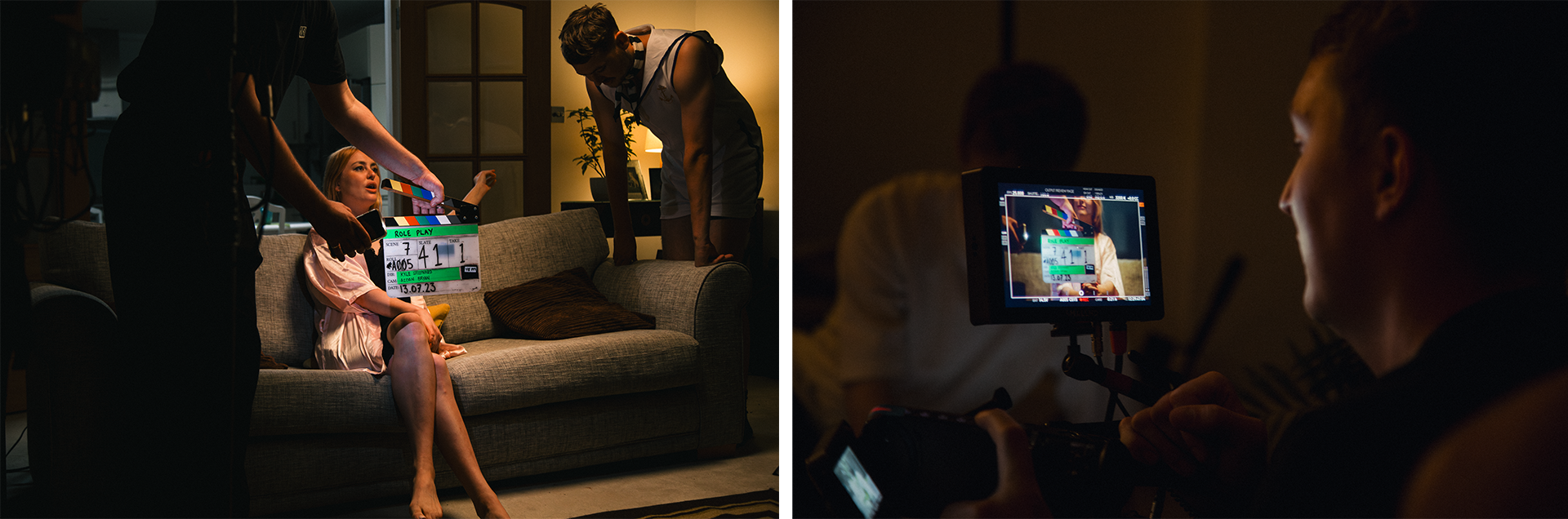
Well Kit Loyd (who plays Tim in the short) wrote it. He brought the script to me which I really loved and we just made the decision to go for it and actually get it shot. We did a few rounds table reads and rehearsals, found a decent location and then we just went feet first into shooting it.
You put your cast in some interesting situations for the role play the film is named after, how did you prepare them for this and how was the experience directing them?
Again that was kind of Kit who put them into those situations I guess. But in terms of preparing them for it, I think I just made sure that when we did the darker elements, they approached their performances from as serious position as possible - reminding them on the severity of what their characters were doing and asking them how they felt people would actually act in that situation.
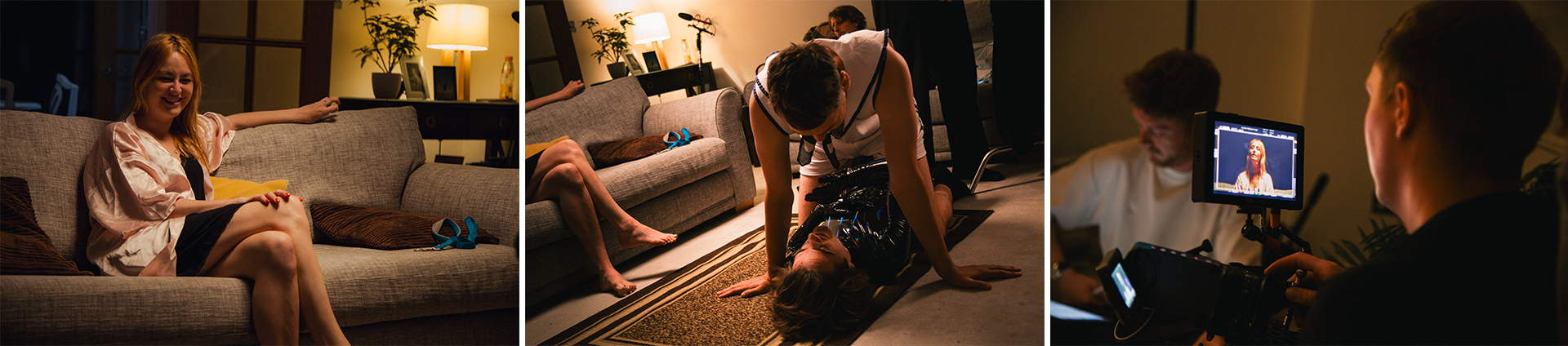
What were some of the main obstacles you experienced when making Role Play and how did you overcome them?
Creating a film that is completely split down the middle with two opposing genres was the biggest challenge. Usually comedy/horror films are either comedy with a bit of horror mixed into it, or horror with a bit of comedy, but we literally did comedy in the first half, horror in the second which was almost implemented and changed like a light switch. It was a bit of a risk to do that, but I think it worked quite nicely in the end.
How did you find the film festival journey of Role Play and how do you feel now it’s released publicly?
Yeah really great. For the first eight or so years of my career I never really had much success with film festivals, so it’s nice to finally get my latest films selected for some. It always really nice to hear the live audience reaction to your work - especially for comedy. Makes all that hard work worth while. And for the reception of the film itself, both myself and Kit couldn’t have been happier. I don’t think either of us were quite expecting it to do as well as it did with some award wins etc. Over the moon.
What advice or hacks would you give to other short filmmakers?
I guess the main one is listen to your instincts and don’t talk yourself out of them just because other people don’t think in the same way you do. Following well trodden paths is super tempting but your job as a filmmaker is to get a little lost from time to time and explore new approaches. And try to avoid making short films with the mindset of “I’m making this to get into [insert prestigious festivals]", I think you just end up making proper boring stuff like that - go out and take risks, and be playful in your approach.
Any film recommendations that we should add to our watchlist?
Deli Meat (2026) directed by Brick, I think is a masterclass in comedy filmmaking. The plot keeps you gripped and feels fluid and seamless, but the tension and conflict are never far away – it keeps you on your toes. The performances feel totally committed and genuine, and the camerawork is beautifully handled. If you haven’t seen it already… do!
What are you working on next?
Just finished writing four new short films - and plan to shoot all four this year. Which is a bit of an ambitious task but, I like working that way.
Apply to get your short selected as our Weekly Pick

THE ABSENCE OF HEAT
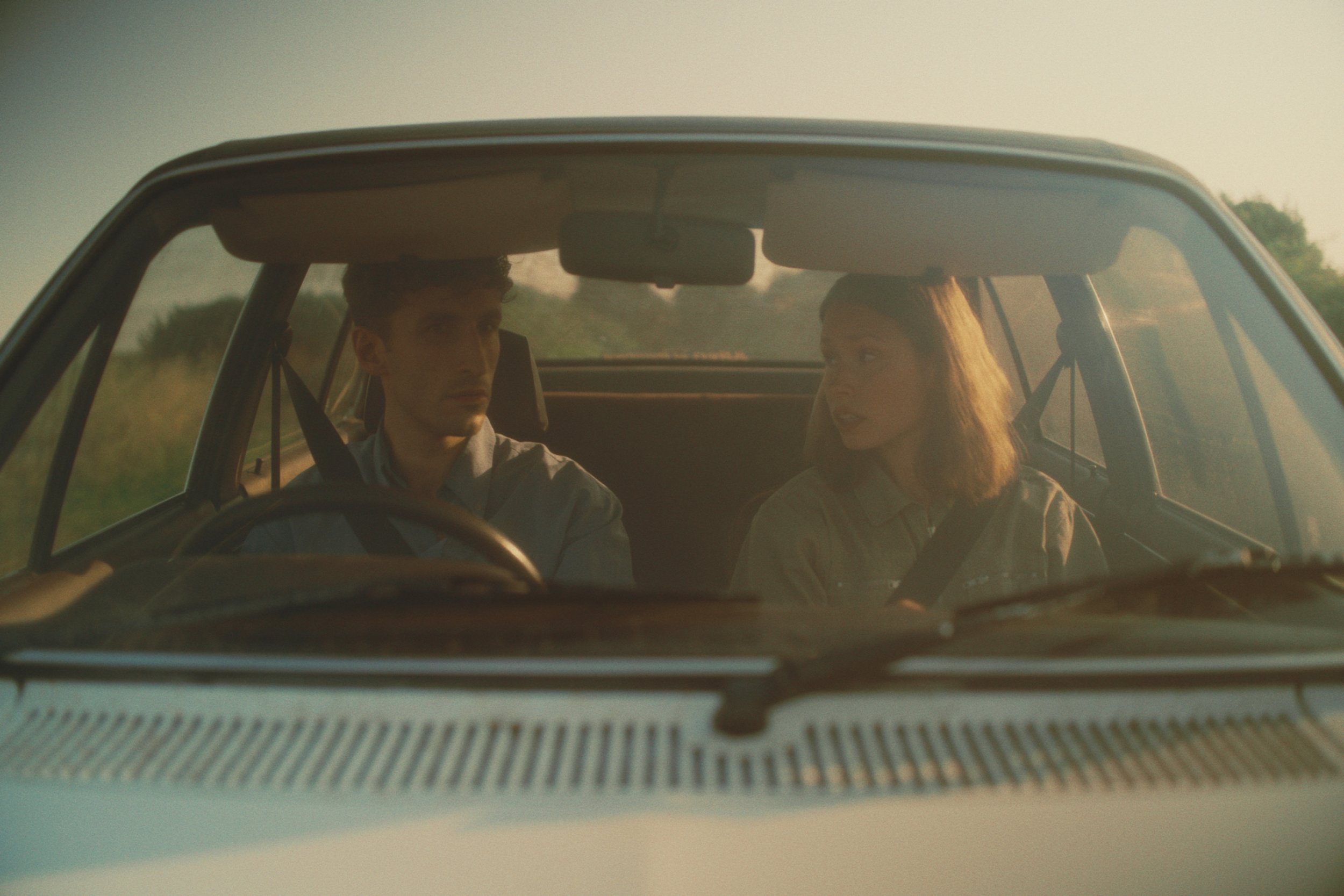
During a drive, an engaged couple engage in a lighthearted conversation that subtly reveals the dynamics of their relationship.
Directed by Harding & Young
Written by Dave Harding
During a drive, an engaged couple engage in a lighthearted conversation that subtly reveals the dynamics of their relationship.
ABOUT THE FILMMAKERS
Harding & Young, a director duo born and bred in East Sussex, with backgrounds in commercial and corporate documentary filmmaking, David Harding and Thomas Young seamlessly transitioned from documenting real-world stories to crafting fiction, thriving on small teams and modest budgets. Their commitment to creative storytelling shines through in every project.
READ OUR INTERVIEW WITH DAVE
Tell us about the genesis of The Absence of Heat.
The Absence of Heat was born from an evening of doom scrolling. I (Dave) came across a video of Neil deGrasse Tyson talking about how cold doesn’t actually exist. Me and my partner almost never argue and if we do it’s always over the most mundane things. She often remarks on how I can look a little too deeply into the wording of things rather than the actual subject we’re arguing about. I usually see the humour in these arguments before they’ve even finished, much to her enjoyment.
The combination of these two things led to the bulk of the dialogue being written very quickly in my notes app. A quick polish, plus the fact I’d always wanted to shoot a driving scene, and we basically had a full script the next day.
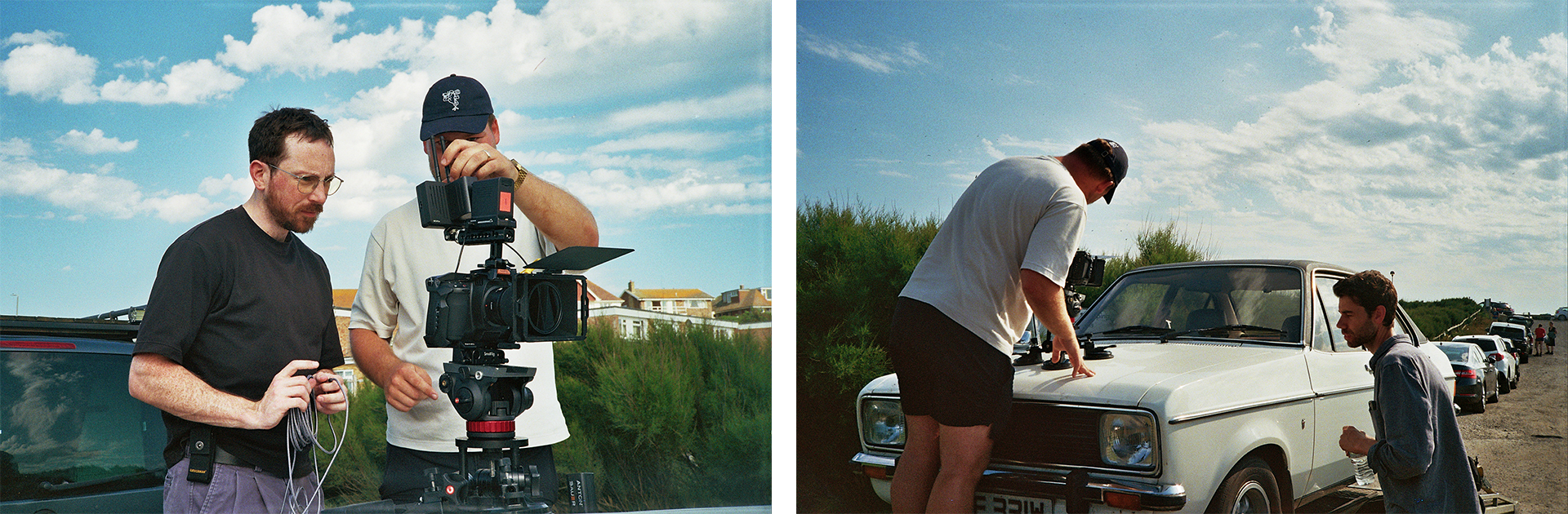
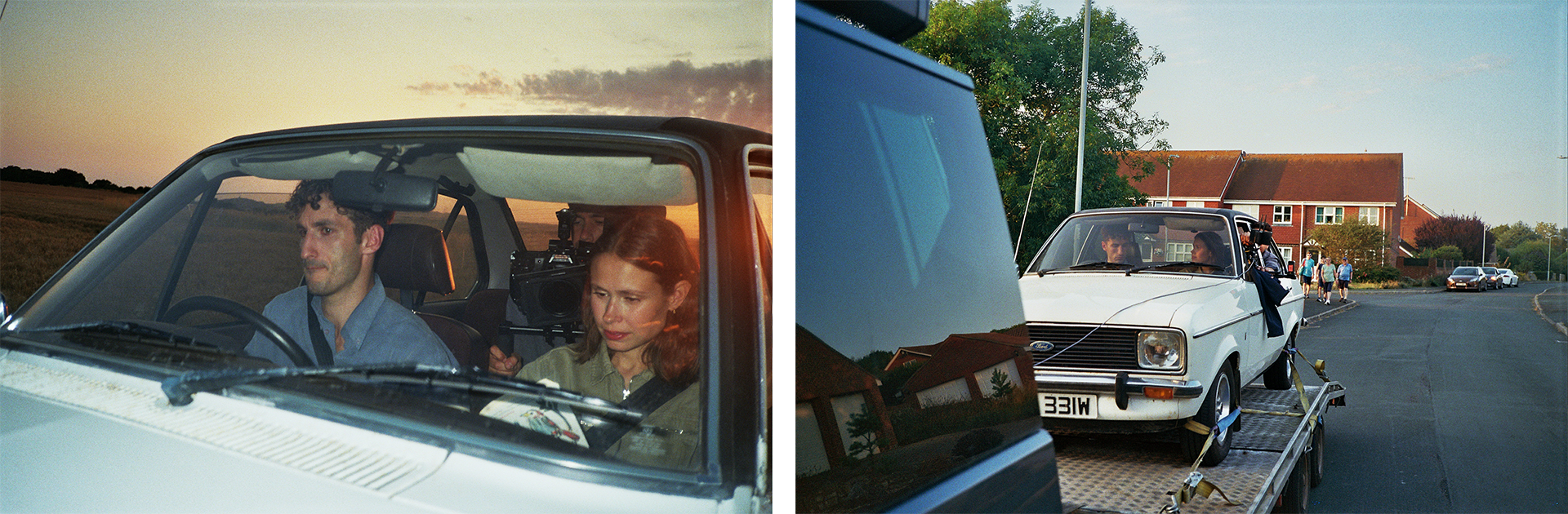
My friend Zach is an amazing filmmaker and a big car guy so it felt like an obvious collab. We put his dad’s beautiful old car on a trailer on the back of Zach’s van and rigged the camera up. We did a few drives down one of our favourite hometown roads during golden hour and had the whole film wrapped in an hour, thanks to the absolute pros and real life couple Ed and Lily.
The edit also came together super fast the next day, along with writing and recording a short piece of music. It’s probably the quickest and most seamless anything I’ve created has ever come together!
Tell us about the journey of getting your film to audiences.
So far we’ve only shared it on YouTube, but we’re hoping to have it screened at some festivals over the summer.
What advice or hacks would you give to other short filmmakers?
Based on our experience of this film, I’d say look for something you notice in the everyday that you find some sort of humour, enjoyment or fear in, and write a small, contained moment in a character’s life. Try to keep it in one location and as simple to shoot as possible.
What are you working on now?
I’ve just written a new, longer short script which totally ignores all of the advice above. It’s a lot more ambitious and is going to take a while to get into production but I’m very excited for it!
Any film recommendations that we should add to our watchlist?
A hugely underrated favourite of mine is A Ghost Story.
Apply to get your short selected as our Weekly Pick

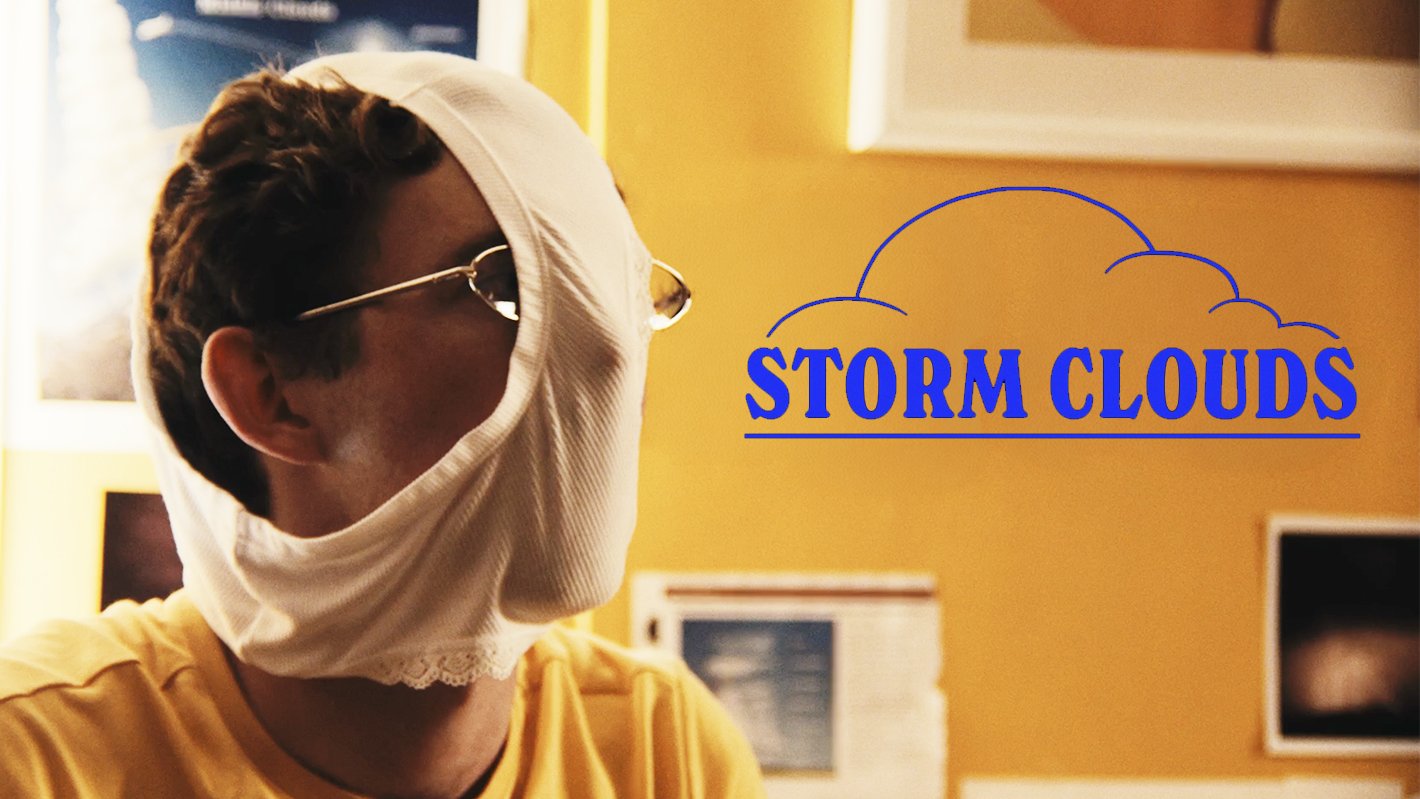
STORM CLOUDS
An identical twin takes on his dead brother’s identity to evade responsibility to the family business, which is controlling the weather via masturbation.
Written & Directed by Adrian Delcan
Produced by Henrik Larsen & Adrian Delcan
An identical twin assumes his dead brother’s identity to evade the responsibility involved with his weather-controlling gift; the centerpiece of his family’s business.
ABOUT THE FILMMAKER
Adrian is a writer and director from Southern California. He worked as a writer on Judas, the latest game from BioShock creator Ken Levine. He directed the short film Animal Behavior, which screened at festivals including LA Shorts, NFFTY, and PÖFF in Estonia. He was a YoungArts x Ignite Fellow at the 2025 Sundance Film Festival. His debut feature film, Old Man, was released by Gravitas Ventures in January 2025.
READ OUR INTERVIEW WITH ADRIAN
Hi Adrian! Welcome back. Other than making Storm Clouds, what else have you been up to since we featured your previous film Animal Behaviour?
Hi Dustin! It’s a pleasure to be back, thanks for having me. Since we last spoke I’ve moved back and forth between Los Angeles and New York City a few times for work. I’m in New York now. So other than packing and unpacking I’ve been spending my time writing. I’ve actually been working on a feature adaptation of Animal Behavior.
I also completed another short film; that one is titled Early Human Media. It’s a comedic and surrealist take on a guy going up to a girl’s apartment for the first time. It will be premiering at a festival this March.
Your work in general has absurd comedic tones with quite dark sharp edges. It's akin to the work of Aster and Lanthimos, yet unique in its own right. How would you classify your style? What are some of the main influences on your style?
I love the work of Ari Aster and Yorgos Lanthimos, they’re absolutely influences so I’m flattered by the comparison. If I had to point to our shared interest it would probably the be the concern for comedy. I really love going to the movies to laugh, and sometimes the best laughs are the ones that make you second guess if you should’ve at all. I often feel that way watching the movies of Aster and Lanthimos, it may be a performance choice or something deeply disturbing. They’re always heightening the reality in ways I couldn’t have expected but never enough to alienate me, and I think that’s because their stories are anchored in deeply relatable characters. These are things I constantly aim for in my writing and directing.
I would say that I make character-driven comedies, often blending thriller, sci-fi, or crime elements.
Tell us about the genesis of Storm Clouds. Where did the idea come from? How did you develop that idea into the short that's now made its way out into the world?
I’m a big fan of science fiction and have always tip-toed around it in my own work, but it wasn’t until I started reading more Stephen King did I feel like there was a way to do it that was true to me. This project came on the heels of that feeling. Before writing there were a few things I knew I wanted to explore in the next project, like having a larger cast, lots of moving camera, and I wanted to involve images of the sky. The sex of it all was something that came later. It was important to me how the family created clouds. There’s a much simpler version of this movie that removes all of the sex and just has the family meditating to conjure the rain, but I felt that framing the ability as shameful and disturbing created good tension. I also thought it would be cinematically interesting to sequence clouds forming this way.
I can imagine that the concept of this film would be difficult to pitch. How did you get collaborators onboard? Did any of the actors have reservations? How do you build trust with your talent to know that they're in safe hands despite the more absurd and crude elements of the story?
I felt pretty strongly that the script was coming from an earnest place, with a keen interest in exploring the Fontaine family, and that the crude elements weren’t employed as spectacle. So a lot of my job as the director was communicating this vision to my collaborators, and it was through lots of practical discussions did they understand how we’d be treating the subject matter. We also had an intimacy coordinator that helped us breakdown the sex scenes so that it felt like we were just following a cookbook. By the time we got to set it all became very technical: you go there, open the window, put your hand in your pants, and the camera will track with you whenever you’re ready.
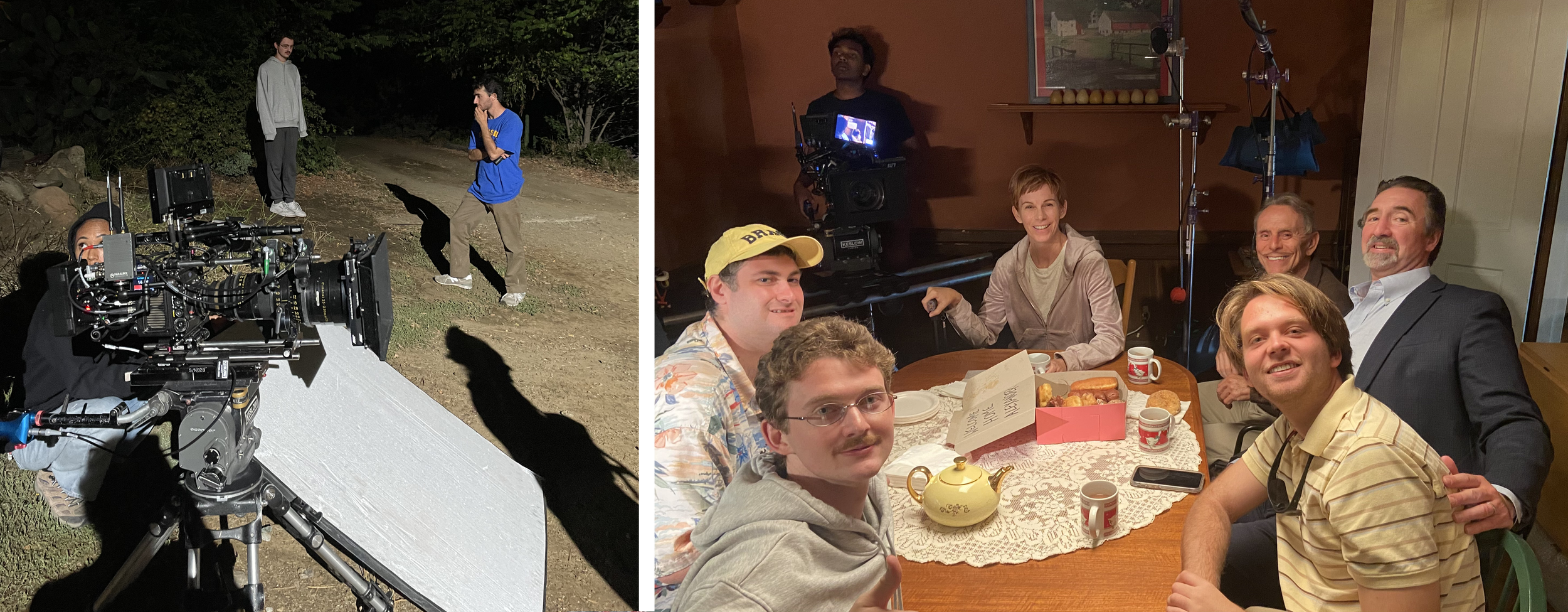
Tell us about the journey of getting your film to audiences? Did you experience much festival rejection? If so, how did you overcome that?
We had Storm Clouds screened at Whammy in Los Angeles and at the Laugh After Dark Festival in Las Vegas. However, the 24 minute runtime and heavy subject matter definitely made it a difficult short to program at festivals. As much as I tried, I never had a chance at getting this movie under 20 minutes. There was a 50 minute cut, 18 minute cut, 10 minute cut, but in the end the story decides how long it should be, and for us that was 24 minutes.
What advice or hacks would you give to other short filmmakers?
There’s so much to learn in challenging yourself to make an extremely short cut of your movie, even if you immediately revert back to the original version. The search for the most distilled version of your story reveals who you are as a filmmaker. The elements you can’t bear to lose, the ones that make your stomach turn when they’re not in the movie, is your voice speaking.
What are you working on now?
I have a new short film titled Early Human Media that will have its festival premiere this March 2026!
Any film recommendations that we should add to our watchlist?
I’ve recently come into the movies of American filmmaker Joseph Losey: The Prowler, The Servant, and many other incredible works of his from the 40s and 50s. If you have a blind spot for this era of cinema, please do yourself a favor and start with his movies.
Apply to get your short selected as our Weekly Pick

STILL GOT IT
A cheeky Grandpa seizes a moment of freedom while the nurse is out.
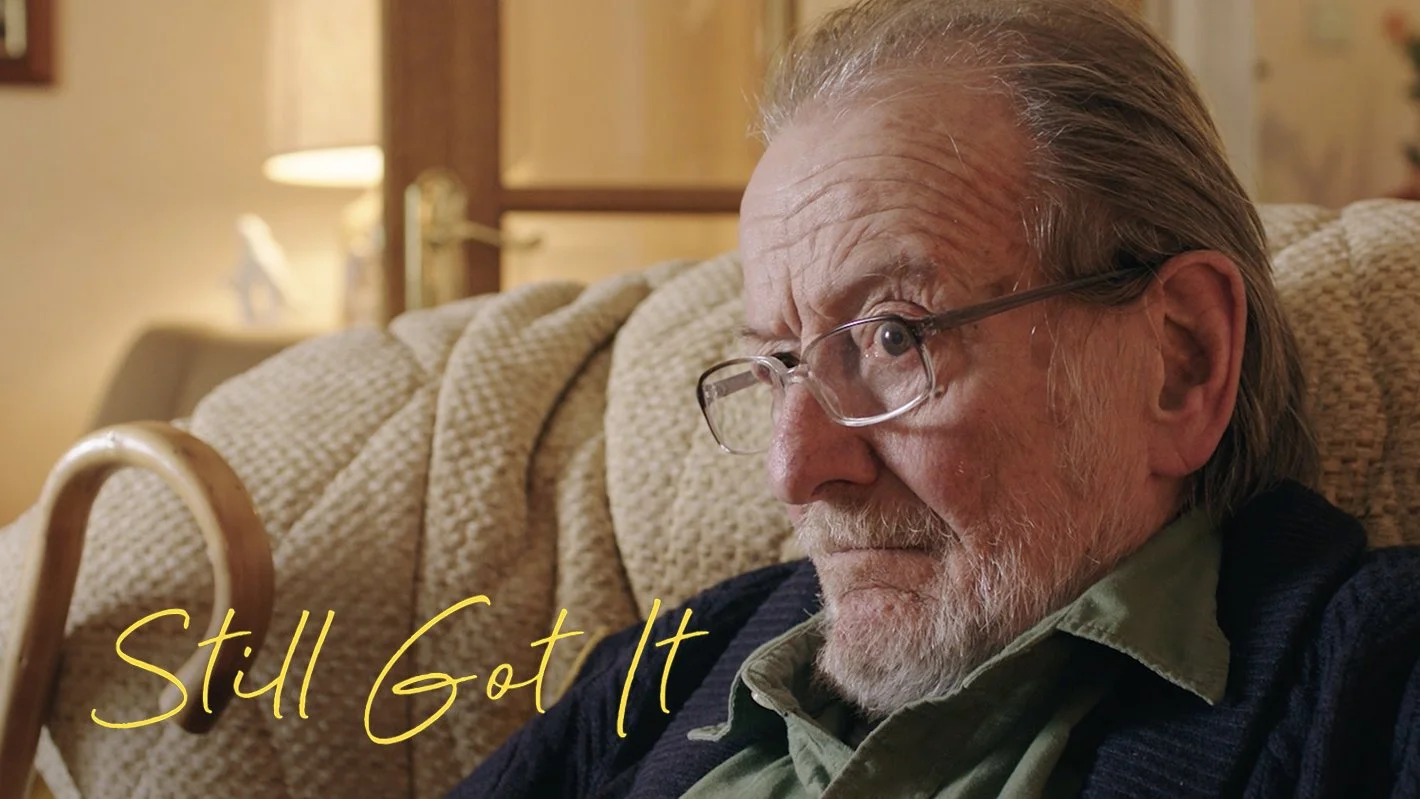
Starring Ronald Pickup & Jackie Howe
Written & Directed by Miles Dickinson
Produced by Sam Simmons-Betts & Matt Ashworth
A cheeky Grandpa seizes a moment of freedom while the nurse is out.
ABOUT THE FILMMAKER
Miles Dickinson is a Leeds based filmmaker with a background in commercial production across branded content, TV commercials, radio and social campaigns. He currently works for the University of Leeds as a Production Lead in their Digital Education team.
READ OUR INTERVIEW WITH MILES
Welcome to our Short of the Week series. Tell us a bit about yourself and your filmmaking background.
Thank you for having me. My name is Miles Dickinson and I’m a UK-based filmmaker. It feels strange to describe myself like this because it’s been so long since I last made a film, and so much of my life has changed since I shot this back at the start of 2019. I started out making short films and music videos after graduating from university in 2015. Over time, I slowly moved away from narrative filmmaking and into agency life, working in commercial production across branded content, TV commercials, radio and social campaigns. During the pandemic, my wife and I relocated from London to Leeds, and sadly the filmmaking side of my life gradually faded away.
Short films have always been a really important part of my development, though, and I’ve often said that one day I’d return and make another short. Some of my best memories are scraping money together and working with friends to create something we felt was worth sharing with the world. That’s exactly what this film is. A passion project made between friends, and at the time it was an opportunity for me to continue honing my writing and directing skills. I made Still Got It over seven years ago, but it genuinely feels like yesterday. Making short films gave me the freedom to experiment with tone and storytelling, while also focusing on performance, pacing and visual language, all without the pressure of scale or commercial clients.
Tell us about the genesis of Still Got It. Where did the idea come from and how did you develop that idea into the short that's now made its way out into the world?
The idea came from spending time with my grandparents and noticing how much of their identity had quietly faded from view as they got older. You meet someone late in their life and you rarely get any sense of who they were before age, illness or routine took over. I kept thinking about how many elderly people are walking around with entire histories, passions, talents and stories that never get acknowledged. With Still Got It, I wanted to tell a story that reveals that hidden inner life in a playful way, rather than something overly sentimental or bleak.
Once I landed on the idea of an older man secretly dancing, the rest of the film grew quite naturally around that. The relationship with Karen, his daughter and carer, became the emotional framework. She isn’t a villain; she loves him. But her care has become controlling. This dynamic gave the film both its humour and its heart. The film I made before Still Got It was called Orchid, which also featured an elderly character. That film was much more serious in tone, exploring grief. After making these two films, it became clear to me that I’m drawn to hidden stories and the emotional depth that comes with ageing and having most of your life behind you. I’m drawn to themes of nostalgia, memory and past experience. You learn things about yourself when you make films!
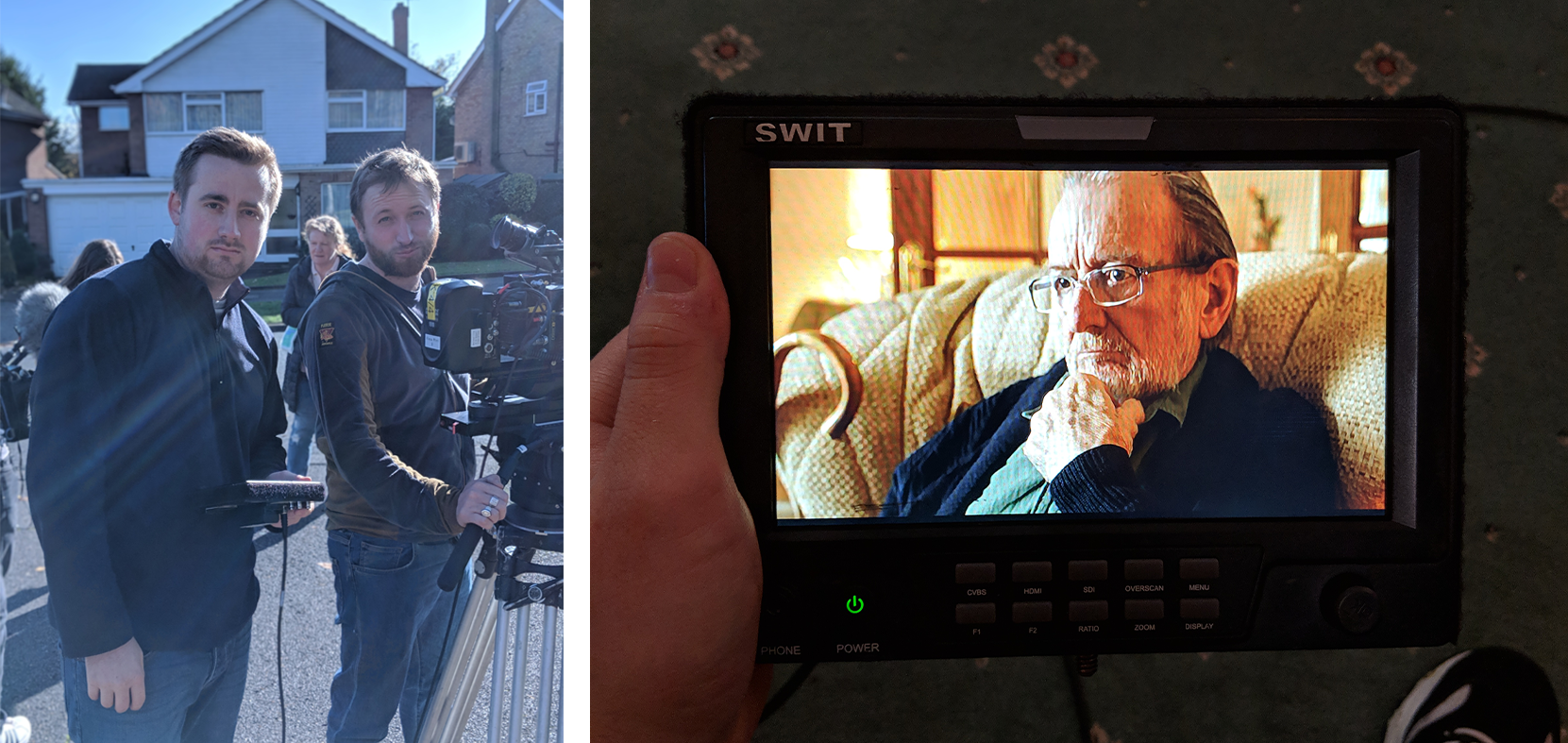
What were some of the main obstacles you experienced when making Still Got it and how did you overcome them?
One of the biggest challenges was working with an elderly lead and building a physically demanding dance sequence around him. Ron Pickup was extraordinary, and it was an absolute privilege to work with such an established actor, especially at that early stage of my career. Ron did'nt have to say yes to this film. He chose to do it purely to support me as a young filmmaker, and he did so with immense generosity and kindness. He worked without any ego, without expectation, and with total commitment to the story. Over the course of the shoot, Ron and I became genuine friends, and that trust was fundamental to how the film came together.
Because of his age and the physicality required, his safety was always the priority for us. We approached the dance sequence with careful planning, rehearsal and flexibility, adapting the choreography and coverage to suit Ron rather than forcing the performance to meet a preconceived idea. That allowed the scene to feel joyful and liberated while remaining safe and respectful.
Still Got It became one of Ron’s final screen performances before his tragic passing, which makes the film incredibly special to me. He was a kind, gentle soul, and I feel truly honoured that I had the opportunity to work with him and to capture such a beautiful, playful performance so late in his life.
Another major challenge for me was working with a Director of Photography whom I’d not worked with before, whose creative approach was different to mine. Due to scheduling, I hadn’t been able to spend much time with him prior to the shoot, as I normally would with DoPs I’d previously worked with. On set, we had different ideas around framing, blocking and action, which threw off my process. I’m not taking anything away from his clear talent and all of his ideas were strong, but in my inexperience I didn’t know how or when to push back on those differing opinions. It was a valuable learning experience because, ultimately, I do wish that I’d held firm and stuck to my storyboard. You live and learn!
There were also the usual short-film realities: an extremely tight budget, limited shoot days and a small crew. But we were lucky to have an incredibly committed team who genuinely believed in the project. That belief made a huge difference, and everyone went the extra mile to make sure the film felt polished and emotionally honest.
Tell us about the journey of getting your film to audiences and some of the festival circuit highlights?
We didn't screen the film at any festivals. Mainly due to financial restrictions! It's amazing that the film is now starting to be seen all these years later.
We understand that you've sat on this project for quite a while before releasing it online. Would you mind telling us why?
Yes, it's been in a metaphorical dusty box for many years! In all honesty, for a long time I really wasn't proud of this film. I must stress that my disappointment is not a result of any lack of talent or ability in my crew. Far from it. I was blown away by the quality of work they brought to this. I was just disappointed in the decisions I made during the creation of the film and the direction I took it. I felt for a long time that it didn't represent my original vision, and I was frustrated that I'd decided to take a departure from a style of filmmaking I'd worked so hard to hone in my other works.
Letting it breathe allowed me to gain some distance from it and start to appreciate it for what it is, rather than constantly thinking about what I would have changed. All these years later, I now smile when I watch it because these are great memories for me, and I really am now proud of what we achieved with it. Yes, it's not exactly how I'd imagined it, but it has plenty of charm, it looks beautiful, and it's an entertaining short film – in my humble opinion, of course!
What advice or hacks would you give to other short filmmakers?
Great question! My advice would be to work with people more talented than you. When you find them, reach out, be genuine, meet with them, become friends, and make sure that you're creatively aligned. Don't be afraid to send scripts to agents, ask for favours, and wheel and deal. So many of my opportunities came from this way of thinking. I learned so much by surrounding myself with people who were better than me, who had more of an education in the arts than I did. I desperately wanted to study Film Directing at the prestigious National Film and Television School. I applied every year for about five years and heard nothing back. So instead, I decided to work with alumni from the school on many of my short films – what's the difference?
What are you working on now?
Nothing at the moment! Who knows, being selected for KINO's Weekly Pick might bring my inner filmmaker back to the surface. Maybe it's time to dig out some of my old scripts and go again...
Any film recommendations that we should add to our watchlist?
I've been out of the game for a long time now so nothing hot off the press to recommend. But, doing some digging back through my old liked shorts on vimeo I've found a couple worth mentioning here. Hala (2016) by Minhal Baig is fantastic. I absolutely love Mixtape Marauders (2018) by Peter Edlund. Milton (2019) by Tim Wilkime is great fun too. My good friend Mark Van Heusden makes great films too.
Apply to get your short selected as our Weekly Pick

Jinx
An embittered, young woman discovers she has the power to exact revenge on her ex-boyfreind who has the audacity to move on with another woman.
Written, directed & Produced by Gillian Harker
An embittered, young woman discovers she has the power to exact revenge on her ex-boyfreind who has the audacity to move on with another woman.
ABOUT THE FILM
JINX was created for the 2020 Straight 8 competition and placed Top 25. It also won Best Celuloid at Film Only Festival, was an official section at Tweetfest 2020, and was selected by Shiny Network for the New Directors Programme 2021.
ABOUT THE FILMMAKER
Gillian is an award-winning writer and director, recognised by Shiny Network as one of the ‘best new directing talents worldwide’. She is a member of Directors UK and specialises in bold, character-driven storytelling.
Her latest short film, Strip the Peacock Bare- starring Abigail Hardingham, Jess Douglas-Welch, Andre Flynn and Simon Phillips- is currently in post-production. Her previous short film, Tackling, premiered at the BAFTA-qualifying Aesthetica Film Festival in 2022. As a writer, she reached the quarter-finals of the Outstanding Screenplays TV Pilot Competition (2024) with her debut pilot script, 'Blooming Elle.'
Gillian’s debut short, Cross, starring Ryan Hayes, won multiple awards, including Best Male Actor at the BIFA-qualifying Little Wing Film Festival 2019 and the Audience Award at the 20th Keswick Film Festival 2020.
Her Straight 8 films Jinx and Day 60 were selected for the 2020 and 2021 competitions by a judging panel that included Academy Award-winners Asif Kapadia and Robbie Ryan. Her 2021 film Feast screened at several UK festivals, including BIFA-qualifying Little Wing and Kino: The People’s Festival, and was nominated for Best English Short Film at the British Short Film Awards 2021.
READ OUR INTERVIEW WITH GILLIAN
Welcome Gill!
You’re no stranger to Kino. A few of your shorts have been Official Selections during the early years of our festival, we’ve featured Cross as a previous Short of the Week, and you’ve been programming for KLSFF the past three years.
How has your experience as a film programmer informed your own filmmaking?
My experience as a film programmer has definitely informed my filmmaking, though the influence is sometimes more instinctive which I find harder to articulate. After three years programming at Kino, I’d say I've developed a much sharper sense of what doesn’t work in a film and a real appreciation for not wasting a single second of screen time. The opening has to be strong and decisive, of course, but it also needs a distinct tone, whatever the genre. How to achieve that is the challenge every filmmaker wishes they had a blueprint for. Whether I'm able to harness that understanding and apply it to my own filmmaking remains to be seen! No film is ever perfect.
Programming has also reinforced something I've felt almost allergic to: films that lean too heavily on style over substance. I want every creative choice- the aesthetic, the costumes, the production design, etc...- to feel rooted in the world of the story, not just a “let’s make it a bit Wes Anderson here”. Finding your own distinct voice is hard, and trusting it without being swayed by what looks “cool” is even harder. When I made my latest short, Strip the Peacock Bare, I was really conscious of staying anchored in the roots of the story when making stylistic decisions. Part of the fun for me is always asking why: Why do they wear this and not that? Why does the scene take place here and not somewhere else? Why this choice over that one?
I’d also hope my experience as a programmer will make rejection a little easier to swallow, because I’ve genuinely seen how often we have to make really tough decisions. We’ve rejected films that one (or more) of us have absolutely loved, for reasons completely beyond the filmmaker’s control. Having said that, I don't feel like rejection is ever palatable!
You’ve also been quite heavily involved with the Straight 8 community, and Jinx was created specifically for their competition. Can you tell us a bit about the competition?
I love the Straight 8 competition and I love talking about it. I’ve recommended it to so many people, especially emerging filmmakers, I feel like I should be on commission! In a nutshell, you shoot on a single roll of Super 8, which gives you around 2.5 to 3 minutes. Only in-camera editing is allowed, and there’s zero post-production. The sound and score have to be created separately and then synced at the lab, so nailing the timing is everything. It’s really challenging. But so, so fun! It's a wonderful community of filmmakers and I've been so incredibly inspired by many of the Straight 8 films I've seen.
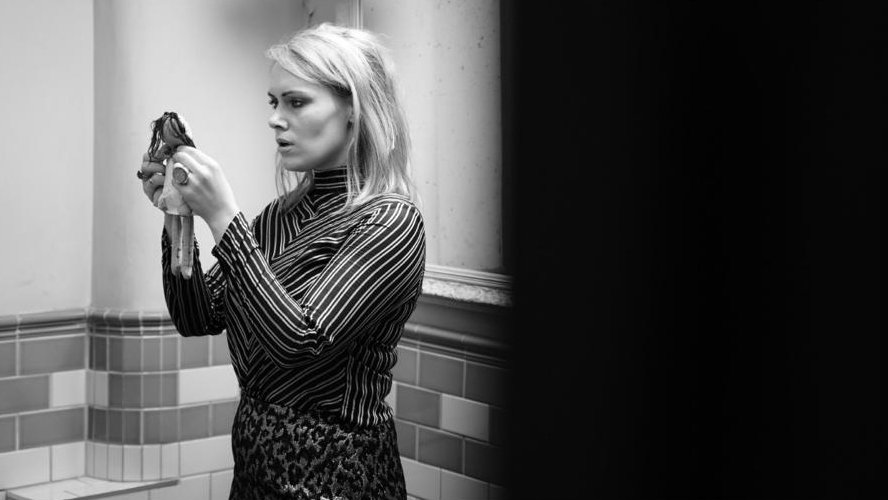
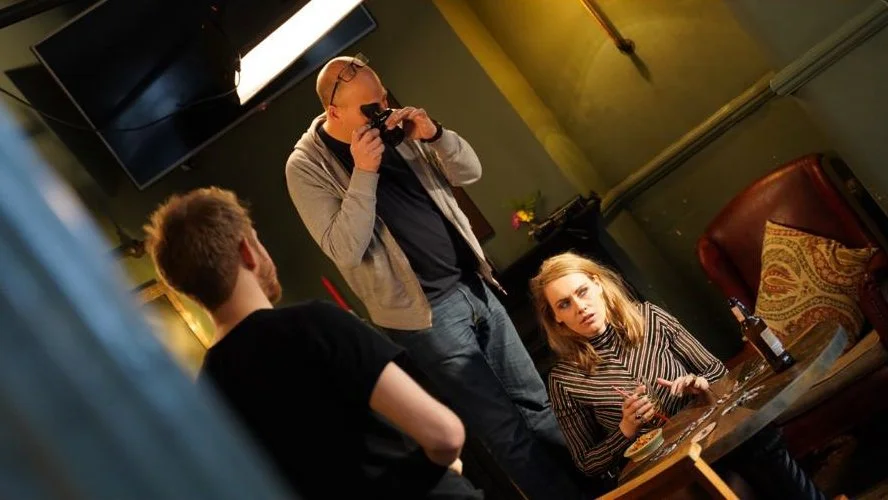
Sounds quite challenging. How did you find the process, and any tips & tricks for filmmakers looking to try Straight 8?
I absolutely loved making Jinx. Hard to believe it was over five years ago now. It was my first time doing Straight 8 and also my first time working on celluloid, and the process ended up teaching me a huge amount, especially about “show, don’t tell.” Because syncing dialogue is so difficult in Straight 8, I decided early on to make it a silent film, which pushed me to think in a much more purely visual way. With only one roll of Super 8, every frame had to matter and every moment had to move the story forward. Oddly enough, those limitations were incredibly energising.
Acting in it myself added another layer. I felt that in past projects I had been a bit vague with my character intentions, but Straight 8 leaves no room for that- there’s no rescuing a performance in the edit. I had to be very precise about what the character wanted in every single take. And honestly, I loved the chance to lean into something a bit heightened; Super 8 can really embrace slightly over-the-top performances.
Because you only get one take per shot, rehearsal became a crucial part of the process. I adore rehearsing with actors anyway- it’s where the magic happens- but for Straight 8 it’s basically essential. That would be my number one tip to someone looking to make a Straight 8 film. Rehearse!
To help with the musical score sync, I also shot and edited a rough proxy version on my phone, which acted as both a storyboard and a pacing guide. It was incredibly useful, and I’d definitely recommend that to anyone attempting Straight 8 for the first time. My 1st AD was really dilligent with helping me keep the pacing accurate for each shot. The whole process is challenging, but if you embrace the constraints, it becomes really fun.

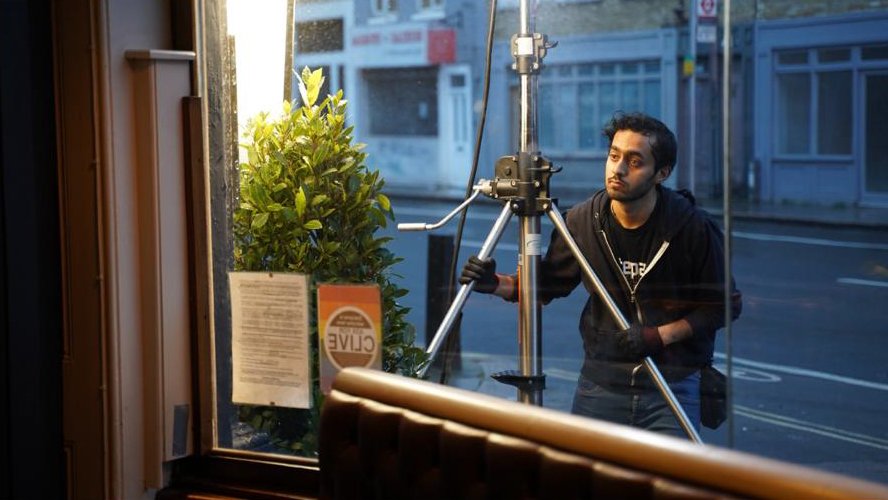
What’s the inspiration behind Jinx? Would the themes & characters you explore in Jinx have manifested themselves in a digital short had you not done the Straight 8 competition or is there something specific to this story that you felt needed to be told via an 8mm format?
One of my favourite short stories is Thomas Hardy’s 'The Withered Arm'. The ostrasized protagonist learns her ex-lover, and father to her illegitimate child, has just got married to a beautiful, younger woman. Her curiosity and jealously of the new bride quickly becomes a dark obsession and the story takes a gory, supernatural turn with devastating consequences. It's incredible. The seeds of Jinx came from a really and truly dreadful short script I had written based, very loosely, on this brilliant Hardy story, but in a contemporary setting. I soon abandoned that version but the themes of jealousy- particularly between women- loneliness and obsession present in 'The Withered Arm' was something I wanted to keep exploring. I also loved the supernatural element in the original story.
I did feel Super 8 was naturally suited to a tale with gothic undertones. Its texture and moodiness complement that world beautifully. And, as I mentioned before, Super 8 also lends itself to slightly heightened performances reminiscent of the silent era, which fit the tone of the film perfectly.
The idea for the doll came from exploring and researching folk magic and witchcraft in Old England. 'Poppets' were dolls made to represent a person, for casting spells on that person- sometimes love spells, but often harmful, vengeful spells. I quite liked the idea of exploring the reasons for wanting to use one of these dolls on someone, and it was particularly fascinating to think about its use for revenge. I wish I had a more scholarly answer as to why I was interested in exploring themes of revenge and jealously at that time, but I had just come out of a long-term relationship so I thought maybe it would be best to channel my heartbreak in a healthy, creative way!! I also wanted to find the dark humour in it all, and hopefully that translates in the final film.
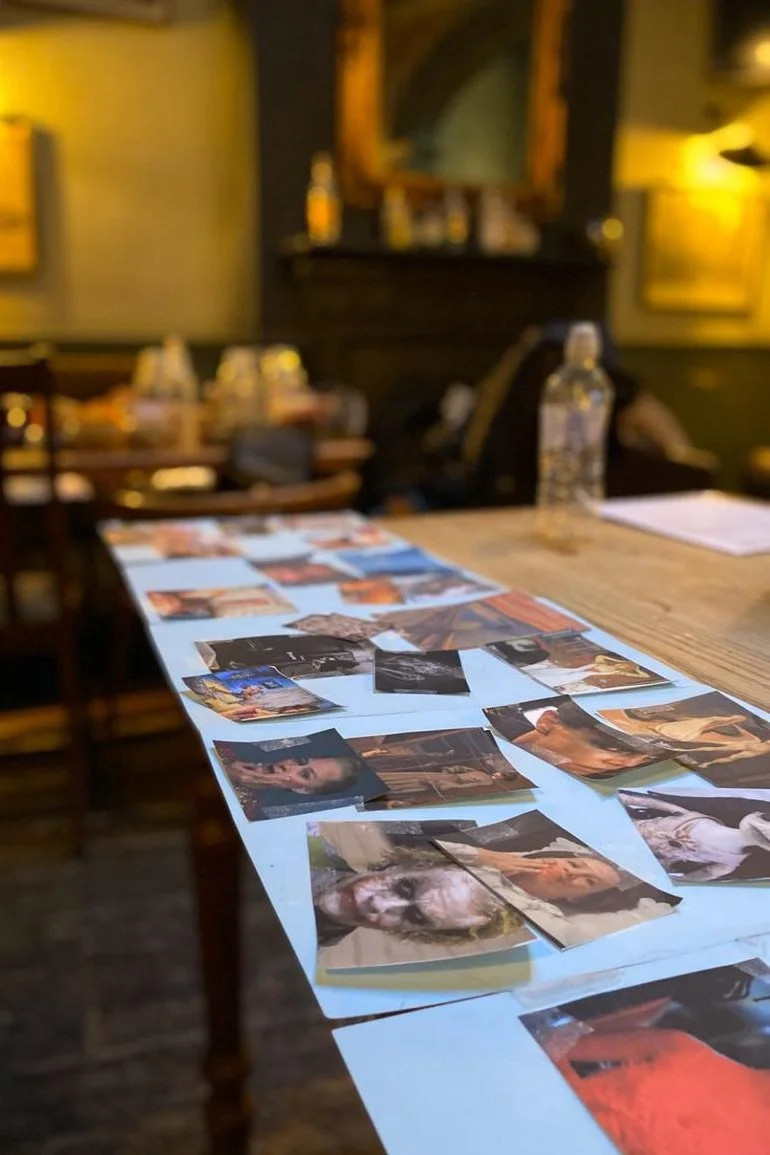
The characters actually did manifest themselves more becasue of the 8mm and competition restraints. Everything had to come down to the aesthetic. My mood board for this film was an eclectic mix of visuals. I was really drawn to the work of Edvard Munch too, not just The Scream, but his other works which all depict mental illness, self-loathing, isolation and loneliness in such vividly harrowing, heart-breaking ways. The raw, devastation leaps off the canvas and I wanted to capture some of that in my film. I was really struck by the iconic images of Heath Ledger as The Joker with the smeared red lips, which I echoed for the first moment of possession. I hoped to evoke from that a sense of madness, unbalance and the thirst for violence the protagonist has. For the choreography and movement visuals, we looked at moments from The Exorcist, and images of contortionists to try to evoke the feeling of violence being inflicted on Maddy's character, and the fear and pain she would be in having been possessed.
As a short film programmer, what pieces of feedback do you find yourself giving to filmmakers most consistently? How can filmmakers looking to make moves in the short film space avoid common mistakes?
I don’t really know if I give advice. I think most filmmaker can sense what works and what doesn’t when they watch something but it’s much harder to apply to our own work. I would say that the opening few moments in a short film really do matter. If other programmers are like me, they’ll be watching your short on their laptop with a bunch of other films waiting to get seen. I would definitely watch lots of short films, not just features. Watch some early short films from filmmakers that you are inspired by. I think it’s important to watch the early stuff because in most cases you can see the spark but without the finesse which can perhaps be intimidating to grassroots filmmakers.
You’ve recently wrapped your next short, the ambitious period drama Strip the Peacock Bare. How did production go & can you give us a sneak peak?
I’m really excited to get Strip the Peacock out there. It’s an idea that’s been brewing for about a decade but lay dormant for many years. Production went (mostly) really well. There were really stressful moments at the time, but I look back now and think how much luck was on our side. In terms of a sneak peak, I can't share anything just yet other than a still from the film, but what I will say is that the actors are astonishing. I think we have something really unique to show people. I'm a little apprehensive to talk about it becasue I don't want to 'jinx' anything!!
Recommendations to add to our watchlist? Give us 1 short, 1 Hollywood feature, & 1 indie feature.
This is tough, but as we're talking about a film I made on film, I thought I would recommend films also shot on film.
1 Short:
I’d definitely recommend browsing the Straight 8 website as they’ve got a great selection of past films. One of my favourites is Crumbs, which you can find there. It’s a perfect example of how inventive filmmakers can get within the Straight 8 constraints.
1 Hollywood Feature:
Since it’s currently in cinemas, I’d suggest One Battle After Another. It’s bold, beautifully crafted and dizzyingly exciting. It's definitely worth seeing on the big screen.1 Indie:
Bait by Mark Jenkin. I adore this British indie, shot on 16mm. It’s a brilliant example of a filmmaker with a truly distinct voice- someone who isn’t swayed by trends or what’s considered “marketable,” and instead commits completely to the aesthetic and storytelling style that serves the film. I also think its trajectory is incredibly inspiring for grassroots filmmakers.
Interested in getting your work selected?

Amigo
'Amigo', the rent-a-friend app has taken London by storm. An unfriendly Amigo's life comes crashing down when he finds out his life is a lie.
Directed by James & Harrison Newman
Written by James Newman & Tom Waterhouse
Produced by Guy Lindley
'Amigo', the rent-a-friend app has taken London by storm. An unfriendly Amigo's life comes crashing down when he finds out his life is a lie.
ABOUT THE FILM
AMIGO was an Official Selection at the 2025 edition of our BIFA qualifying Kino London Short Film Festival. Other festival highlights include the BAFTA qualifying Bolton International Film Festival & Aesthetica Film Festival. It also played at Discover Film Festival, Indie-Lincs Film Festival, Northampton Film Festival, and Cardiff Mini Film Festival. It was released online by Directors Notes.
ABOUT THE FILMMAKER
James Newman is an award-winning writer-director from Reading, Berkshire, specializing in comedy. With 7-8 short films and an award-winning feature screenplay under his belt, Newman has quickly become a rising force in British independent cinema.
Starting as a runner in Soho’s production companies, he’s since earned 2nd place at Slamdance’s Short Film Screenwriting Competition, 2nd place in The Pitch Film Fund, a British Short Film Award for Best Comedy, and Best Short at our very own Kino London Short Film Festival.
READ OUR INTERVIEW WITH JAMES
Welcome James!
You’re no stranger to Kino. Your film Viskar I Vinden won the 2022 edition of our festival, which awarded you our film fund to help make Do Not Touch - your first collaboration with comedian Sean Walsh. Now you’ve teamed up with Sean once again on your latest film to have just come off the festival circuit, Amigo.
Can you talk about how you came up with the idea for Amigo and how it was initially developed as series, and why you decided to pivot to make it as a short film instead?
So initially, it was about a prostitution app like Uber, and the lead would have been a male prostitute. We wrote that as a TV pilot around 5 or 6 years ago. But we pivoted as the storylines we came up with were about people being lonely and not using the app for sex, but for companionship. And then we thought that there was something in that—the core of the idea is about lonely people desperate to connect with someone. The most valuable thing I’ve learned from going to short film festivals is that all cinema and media which involves storytelling is about human connection, or the lack thereof.
Currently, you’re branching out as you gear up to make another short, The Ladder. You often co-direct. Will this be your first time solo-directing a short?
This isn’t my first time solo directing—I directed my first short, Viskar I Vinden, on my own. But I have co-directed recently on The Pitch’s new comedy short, Kitty, with Lizzie Hart, which I didn’t write. It was incredible to come in on a project that I hadn’t been involved in the writing process for. It’s so far away from what I normally do—it’s super duper charming and sweet. It was really nice to play in someone else’s really well-constructed world.

Join us for a sneak peak at THE LADDER
We’ll screen the key creative team’s previous works + do a public table read of upcoming work in order to get audience feedback.
All proceeds to go directly to topping up production funding for The Ladder, shooting early 2026.
In the past, what has been your motivation to co-direct in most instances & what excites you about helming the director’s chair solo this time around?
The motivation to go back to being solo is that I really enjoy the full responsibility of the film. I want to become a better director, and I think the way to do that is to be fully responsible for all areas of the production rather than delegating between two people. With Kitty, I was more of a conduit for the crew and technical aspects than the actual story and world, whereas I want to stretch myself and get out of my comfort zone to do things that I’m creatively excited about. With the rise of AI, I think we need to tell more human stories and have choices that the characters make that an LLM won’t agree with but makes sense to humans.
The Ladder will be another Kino Original, making you the first filmmaker in Kino’s history to have been granted funds twice. What’s your secret to closing deals to secure funding?
I think the key is to try to outwork your competition. Enter everything, as I think it’s a numbers game. Do your research—what are they likely to commission? I think the key is to write things that interest you rather than trying to win the fund, otherwise people will be able to sniff it out, especially when it’s made and screening at festivals.
The Ladder has also been shortlisted for several other funds including Slick Films, From The Silver Screen, First Flights & more. Can you talk a bit about your funding strategy?
To be honest, I’m very surprised we’ve gotten into the finals or been longlisted for like 75% of the funds we’ve gone after. I think it’s actually quite bizarre. I’m not sure if it’s the subject matter or that it’s quite relatable and speaks to something people are feeling at the moment? But I think the strategy is: package it nicely, reach out to talent and get them attached. I think the goal is to make an undeniable film where everyone can see it doing well on the festival circuit.
Many short filmmakers struggle with even getting in the room to pitch, so well done on making it the room so many times. What do you think within your work and your funding application materials has made the difference to get such positive reception?
I think the subject matter of the housing crisis and intergenerational inequality is something I’m quite angry about, and it’s blended with real experiences with a bailiff. And it’s from lived experience of being really poor in London that I don’t think sounds like a repurposed Guardian article. It helps having producers like yourself and Guy Lindley on board, and a great creative team with Nathan Claridge. I think what’s helped me was going to a webinar with First Flights about what they care about in a funding application, and that helped. I think they have some resources on their website. But I think having a story that connects and characters you care about are crucial, because if you don’t have that, you don’t have a film, in my opinion.
Recommendations to add to our watchlist? Give us 1 short, 1 Hollywood feature, & 1 indie feature.
Short: The Farm
Feature: Bugonia
Indie feature: Grand Theft Hamlet
Interested in getting your work selected?

On Purple
Seeking constructive criticism, a couple shares their poetry with each other. But it turns into a condescending competition of who’s the better poet.
Written & Directed BY Joe Quartararo
Produced by Thomas D White
Seeking constructive criticism, a couple shares their poetry with each other. But it turns into a condescending competition of who’s the better poet.
ABOUT THE FILM
ON PURPLE was a Semi-Finalist at the past edition of our very own Kino London Short Film Festival. It’s also played at the New York Short Film Festival and online with Film Shortage and Short Films Matter.
ABOUT THE FILMMAKER
Joe Quartararo is a Brooklyn-based filmmaker and graduate of the film program at the School of Visual Arts. He has been making films professionally through his production company Lakhota Film for over a decade. Joe grew up on Long Island and before going to film school worked as a truck driver, delivering furniture and granite while pursuing filmmaking. His films focus on social class and ambition.
READ OUR INTERVIEW WITH JOE
Welcome to our Short of the Week series. Tell us a bit about yourself and your filmmaking background.
I am a Brooklyn based filmmaker. I have worked, and continue to work in the film industry both in production and adjacent in presentation. Whether it is handling film, 70mm, 35mm and now Vista Vision, or shooting film both digital and analog formats. I am always interested in helping others create and produce their work, in addition to my own creative pursuits. I've been fortunate to be part of a great collective of filmmakers and crew members in NYC, who helped produce "On Purple," as well as many others projects.
Tell us about the genesis of On Purple. Where did the idea come from and how did you develop that idea into the short that's now made its way out into the world?
The idea for On Purple, came from wanting to explore the idea of indirect communication and the dysfunction of relationships. Poetry felt like a fitting device for the characters to use to build off of and illustrate the marital discord without being too heavy handed.
What were some of the main obstacles you experienced when making On Purple and how did you overcome them?
Many of the obstacles we would've incurred on this shoot were mitigated by the technical strengths and expertise of the cast & crew we were very fortunate to have. We shot the interiors of this film in one 10hr day with exteriors shot the morning after for a few hours. The amount of material we were able to cover in a single day of shooting without compromising setups & script is uncommon, and that's coming from experience. Because of their collective preparedness and professionalism we were able to maximize the effect of the film.

The score does a really good job elevating and supporting the film, as well as set the tone. Can you tell us a bit about the process of working with your composer on this?
Really glad you asked that question. I was very happy to have connected with Sam Carey, to compose the music for this film. While editing the film, I felt strongly that we would need an original composition to help elevate the material and Sam excelled at capturing the tone of the piece. He developed a musical contrast for the individual poets, to shed light on the subtext of their characters and importantly guide the viewer. Whereas one poet was erratic and angry, the other was elegant and grand. The associated instrumentation was a deliberate mixture of piano, violin and electronics that said a lot about the ebb and flow of their relationship. I had a great collaboration with Sam on this project, I think we both understood that music could help with detailing that mysterious, cryptic and unspoken thing between the two dueling poets.
Tell us about the journey of getting your film to audiences and some of the festival circuit highlights and/or online release.
We are screening in person in New York next week, and have had multiple online releases (Film Shortage, Short Films Matter, and now Kino). Online releases have been very helpful in that you can reach such a wide audience quickly, although we are excited about screening in person next week, so we can meet and engage with New York filmmakers & producers.
What advice or hacks would you give to other short filmmakers?
Write within your means, write from experience and what you know. If you are passionate about making films, then be around the process of filmmaking as much as you can be. It will not only make you learn to be a better filmmaker, but it will introduce you to the network of people you will need to collaborate with. It truly is a group effort to make a film. Be positive, helpful and resourceful and your film will be better for it.
Interested in getting your work selected?

Plop
A desperate woman from the society of rejected singles, known as the Leftovers, takes a bold leap of faith on a revolutionary new dating app, risking everything for one last chance at love.
Directed & Produced Darius Shu
Written by Arron Blake
A desperate woman from the society of rejected singles, known as the Leftovers, takes a bold leap of faith on a revolutionary new dating app, risking everything for one last chance at love.
ABOUT THE FILM
PLOP premiered in competition at the Manchester Film Festival 2025. Other festival highlights include the BIFA qualifying Sunrise Film Festival & Brighton Rocks Film Festival. Plop also played at SCI-FI London, Clapham International Film Festival, Big Fridge International Film Festival and it was a Semi-Finalist at our very own Kino Short Film Festival earlier this year.
ABOUT THE FILMMAKER
Darius Shu is a writer-director drawn to humanistic, emotionally resonant stories told through a visually poetic lens. His work often centres on underrepresented voices and overlooked narratives.
A passionate advocate for Asian and LGBTQIA+ representation in cinema, Darius is committed to using film as a catalyst for meaningful dialogue and cultural progress. His stories aim to create space, for reflection, visibility, and connection.
Darius made his directorial debut with His Hands (2019), a silent psychological drama nominated for Best Narrative Short at the Tribeca Festival 2019. He followed this with I Am Norman (2021), a fictional documentary thriller which premiered at the Oscar-qualifying Rhode Island International Film Festival. His latest short film PLOP (2025) premiered In Competition at the Manchester Film Festival and has screened at Picturehouse Finsbury Park, with selections at over five BAFTA/BIFA-qualifying festivals.
With over nine years of experience as a cinematographer, Darius has shot a wide range of acclaimed projects, including the BAFTA-nominated film Always, Asifa (2023), the Netflix documentary Peach Paradise (2022), Queer Parivaar (2022), Where We Came From (2024) starring Archie Panjabi, Cuddle (2026) featuring Mark Gatiss and served as 2nd Unit DOP on the feature film Last Days, directed by Justin Lin (Fast & Furious franchise, Star Trek Beyond) which world premiered at Sundance Film Festival 2025. He shot his first feature 'Slim', directed by Sky Yang and produced by Chi Thai.
Through his work, Darius continues to push the boundaries of independent film while championing stories that challenge, heal, and humanise.
READ OUR INTERVIEW WITH DARIUS
Welcome to our Short of the Week series. Tell us a bit about yourself and your filmmaking background.
Thank you so much for having me and for spotlighting PLOP. I’m Darius Shu, a director and cinematographer based in London. I'm drawn to stories that explore the existential questions of identity, humanity, connection and the social constructs that shape our lives. I'm always fascinated to create something fresh out of something ordinary, to have my characters deal with the presence of anxiety, and be morally ambiguous. My background started in cinematography and have been a DP for 9 years, where I learnt how to build moods and emotion visually, and over the years that naturally led me into directing and storytelling. I like to blend social awareness with a touch of surrealism, creating films that feel both emotionally grounded and a little poetic. At the heart of it, I’m just obsessed with cinema’s ability to connect people and spark conversations.
Tell us about the genesis of Plop. Where did the idea come from and how did you develop that idea into the short that's now made its way out into the world?
My writer and actor, Arron Blake, pitched me a story he’d been developing, one I knew could really surprise and challenge audiences. I’ve always wanted to make a sci-fi film, being a huge fan of shows like Star Trek and Black Mirror, so I thought, why not take his concept and set it within a dystopian world? Finally getting the chance to bring that vision to life was incredibly exciting. The idea came from observing the absurdity and vulnerability of modern dating, one we both relate and is really fed up of...the endless swiping, algorithms, and the curated personas we present to the world. I wanted to see what happens when these societal constructs collide with our raw, unfiltered desire to be loved and accepted for who we truly are.
In the story, we disguise this in the app’s unconventional way of assessing compatibility which pushes people to confront their most honest, primal selves. The Leftovers aren’t just single people, they represent anyone who has ever felt rejected, outcast, or unworthy. Through the protagonist’s journey, we get a world where societal expectations clash with personal desires, and humour helps highlight the awkwardness, fears, and hopes that come with love and rejection on a first date. Developing Plop meant blending genres to feel fresh, using a sci-fi backdrop to exaggerate societal norms while keeping the emotions grounded, awkward, and relatable. At its heart, it’s about relationships, human connection, and navigating the modern world of AI and dating in a way that hopefully sparks both reflection and conversation.
What were some of the main obstacles you experienced when making Plop and how did you overcome them?
One of the biggest challenges with making Plop was juggling the sci-fi elements while keeping the human emotion grounded and awkwardly relatable. I wanted a world that looked heightened and visually striking, but with characters who still felt like real people stumbling through life and love. Another hurdle was the logistics of creating a dystopian world on a short film shoestring budget… because let’s face it, sci-fi is expensive, and our budget definitely wasn’t.
We got creative with production design, most of the story is in a single room, so we had to make it feel engaging without breaking the bank. A mix of practical and simple VFX, clever camera work, lighting, and little details helped make the world feel bigger than it actually was. Working closely with Joanna and Arron was crucial, we were constantly bouncing ideas off each other, improvising on set, and not afraid to scrap or tweak things in the moment.
In the end, all these obstacles forced us to be more inventive, and honestly, it made the process way more fun. I think that energy and chaos comes through on screen and maybe a little of our stress too!
Tell us about the journey of getting your film to audiences and some of the festival circuit highlights and/or online release.
The festival circuit has been amazing, we had our world premiere at Manchester Film Festival and 3 other BIFA qualifying festivals. It’s been so rewarding to see how audiences react in real time, especially when they laugh, cringe, or feel moved by the characters’ awkward, relatable moments.
Every film I make leaves room for interpretation and I like giving people the chance to come up with wildly different takes on the story’s metaphors, symbolism and concept. Honestly, sometimes I listen to someone’s interpretation and think, “Wow… I didn’t even notice that!", or "That was darker than what I had in mind" and at times "You're spot on, you just said exactly what I had in mind". Meeting fellow filmmakers and audiences who really get the world we were trying to create has been amazing. But the absolute best part of Plop? Watching it spark conversations about connection, dating, and human vulnerability… and realising that, just like my characters, people are awkward, confused, and completely winging it when it comes to love. Makes me feel a little less alone, and hopefully makes them laugh too, because in the world we are living now, we just have to have some laughs in our lives.
What advice or hacks would you give to other short filmmakers?
My biggest advice? Embrace the chaos. Short films are tiny worlds with tiny budgets, but that doesn’t mean you can’t make them look beautiful. Be creative, flexible, and a little fearless. Use your limitations as an advantage, turn a one-room set into a whole universe, and don’t be afraid to improvise on set. Feed your crew good food, happy people make better films. And most importantly, don’t take yourself too seriously; if you can laugh at your mistakes, the audience probably will too.
Any film recommendations that we should add to our watchlist?
Might be a completely different genre but I really love Monster by Hirokazu Kore-eda
Interested in getting your work selected?

Busy
Emma-Leigh and her friends decide to put their next date in the diary, but it proves harder than they anticipate.
Written & Produced Megan Smith
Directed by Jane Moriarty
Emma-Leigh and her friends decide to put their next date in the diary, but it proves harder than they anticipate.
ABOUT THE FILM
BUSY screened earlier this year at our BIFA Qualifying Kino London Short Film Festival. Additionally it’s played at Brighton Rocks Film Festival & Spirit of Independence Film Festival, both also BIFA qualifiers.
ABOUT THE FILMMAKER
Jane Moriarty is a theatre and film director, working in the UK and Ireland. Jane directed SHUSH, a 25-minute drama produced by Charmer Pictures for RTÉ, written by and starring Liv O’Donoghue. It can be streamed on the RTE Player. Jane’s debut short film KITCHEN TALES, is now featured on BFI Player Her second film, I CALLED YOU, recently screened at the IFTA and BAFTA-qualifying IndieCork Film Festival. Jane was the Rehearsal Director for Sky comedy-drama series THE LOVERS, working with the lead cast prior to filming and during production. And she was a voice and performance director on the BAFTA-winning video game, BALDUR’S GATE 3. Jane was awarded the Young Directors Silver Screen Award 2025 for SHUSH.
Megan Smith is an actor, writer and producer for theatre and film. Megan's latest film BUSY, has qualified for BIFA 2025.. Her other comedy films received international recognition. SURGEONS (2021 ) was selected for BAFTA qualifying Bolton Film Festival and won 6 awards. BEST FRIENDS (2020) won 9 film festival awards. Other producing credits include I CALLED YOU AND ROBOT LADY. Megan is currently producing FROG, a short film written by Rebecca Crookshank about IVF, to be filmed later this year.
READ OUR INTERVIEW WITH MEGAN
Tell us about the genesis of Busy. Where did the idea come from and how did you develop that idea into the short that's now made its way out into the world?
Busy came after I observed several conversations with friends. I noticed people were very quick to make out I was the busiest person in the room, or that I had to send dates to find a time to meetup, but when it came down to it, everyone was actually as busy as each other. We all have different commitments in our lives, albeit children, family, work or selfcare, but sometimes it's easy to see yourself as the least busy because then you're not the problem. I thought it would be funny to have a double ending, just to show it wasn't about being mean. I talked about the idea for a while. to gauge the connectivity, and if other people would relate, and then I wrote the script very quickly and then went about trying to get it made.
What were some of the main obstacles you experienced when making Busy and how did you overcome them?
As with many films, we were constrained by budget and scheduling. We used a minimal crew and an empty location (pub was closed!) to make sure we could get the most out of the day.
Tell us about the journey of getting your film to audiences and some of the festival circuit highlights and/or online release.
Hearing BUSY with a live audience for the first time was amazing, as you could slowly hear the slow reveal being realised by the audience. Making people laugh, who you don't know, is the best thing in the world.
What advice or hacks would you give to other short filmmakers?
Work with people who are as caring and enthusiastic as you are.
Any film recommendations that we should add to our watchlist?
Check out SHUSH by our very own talented Jane Moriarty.
Interested in getting your work selected?

P is for Penis
An overdue catch up down the pub between two old friends is thrown into chaos by the inclusion of a terrifying third wheel with an embarrassing secret.

Written, Produced & Directed by Joe Mcgowan
An overdue catch up down the pub between two old friends is thrown into chaos by the inclusion of a terrifying third wheel with an embarrassing secret.
ABOUT THE FILM
P is for Penis was a Semi-Finalist at our BIFA qualifying Kino London Short Film Festival in 2024. It also won the Audience Choice award at the BIFA Qualifying Exit 6 Film Festival. Other notable festival highlights include the BIFA Qualifying Sunderland Short Film Festival and The Shortest Nights, The Romford Film Festival, London Lift-Off Film Festival, and the Funny Life Film Festival where it was nominated for Best Screenplay. Other awards include Best Micro Short and Best British Film at the Lit Laughs International Comedy Film Festival, Best Comedy Film at the WILDsound FEEDBACK Film & Screenplay Festival, Best Comedy Short at the London Seasonal Short Film Festival, and Best UK Comedy at the London Worldwide Comedy Short Film Festival.
ABOUT THE FILMMAKER
Joe is a London born and Essex-raised filmmaker with over ten years of experience as a director and editor in the TV commercial and branded content world. Comedy caught his eyes and ears at a young age, listening to Blackadder cassette tapes late into the night and being shattered for school the next day. His love of comedy and passion for filmmaking allow him to explore the funny, silly, and absurd and have an absolute blast doing so! Joe’s comedy work has racked up millions of views across social media, won numerous awards at film festivals in the UK and internationally, and has been featured on BBC Radio. Not bad for an Essex boy!
READ OUR INTERVIEW WITH JOE
Welcome back to our Short of the Week series. What have you been up to since we featured your last short Couple Noises ?
Thanks for having me back! It’s been a busy year for me. Have been up and down the country on the festival run with P is for Penis, have worked with British comedy legends Kimberly Nixon (Fresh Meat) and Simon Greenall (I’m Alan Partridge) on some training videos for a company set up by John Cleese in the 1980’s, worked with Kelly Brooke and Big Narstie on a campaign for SlimFast, and most importantly got married in June. How time flies!
Tell us about the genesis of P Is For Penis. Where did the idea come from, and how did you develop that idea into the short that's now made its way out into the world?
My end goal is to work in sitcoms, so I treated this as practice in creating a scene that you’d expect to see in a sitcom show. Comedy and conflict are my happy place when watching films or TV shows, and I’ve always found the dynamic of someone oversharing a secret about another person in a social setting a great setting for some real comedic sparks to fly.
I don’t know exactly how I landed on a misshapen penis being somebody's deepest and darkest secret, but once I thought of it the ball started rolling from there. The big question was what peculiar shape could it be to create a double-take moment in the film, but also lead to some snappy jokes for the script. I was in the car with my wife (who was my girlfriend at the time) and was brainstorming this out loud to her. I started going through shape options like a square, a triangle, a parallelogram, before moving onto letters from the alphabet. I thought a lower-case ‘T’ would be funny and said that a ‘T’ with two O’s from the testicles would spell the word ‘Too’, and maybe there’s a joke there. My wife, who this isn’t her sense of humour at all, turned to me and said ‘Well, if his penis was shaped like the letter ‘P’, it would spell the word ‘Poo’. I simply looked at her adoringly and said I love you so much, and quickly came up with the title after she said that. I started writing it in December 2023, and by March 2024, the film was done and dusted, and I proposed to my wife to be!
What were some of the main obstacles you experienced when making P Is For Penis and how did you overcome them?
The main challenge was time. I hired a pub called The Virgin Queen in Bethnal Green for eight hours, 7am-3pm. The pub opened at 4pm and the script was 13 pages long. I had originally planned some more cinematic shots with a dolly and track, some fun POV shots with a fish eye lens, and a dramatic lighting change when Perry realises Tim and Dom know about his appendage. Very quickly into the shoot, those bells and whistles were cut. We were shooting on two cameras (thank God), and we locked them off and cross-shot all the coverage. It still has that sitcom feel to it that I wanted, but it also comes across as an extended sketch rather than a cinematic short film, like I’d originally intended. It was a big lesson in what you can realistically achieve with a tight turnaround.
The other challenge was shooting the nudity. The pub was fine with it as long as we covered the windows so the public couldn’t see anything. The problem with that was that the windows had no curtains, and there were a lot of windows. When it came to shooting those shots, we used an old trick I’d learnt from a gaffer to block light out quickly from windows. We sprayed the windows with window cleaner from a spray bottle and stuck sheets of tin foil on them. Took fifteen minutes to block out all the windows with the whole crew on board. Would highly recommend this method if you’re in a pinch.

Tell us about the journey of getting your film to audiences and some of the festival circuit highlights.
Sitting in an audience when P is for Penis is screening has been a real treat. Overall, it’s had a fantastic reception and get’s lot of laughs, which, as the writer, director, producer, and editor of the film, is amazing to hear live. It’s become a BIFA qualifying short, been played on BBC Radio as a radio sketch, and won multiple awards at film festivals. The highlight on the festival circuit was winning the Audience Choice awards at the BIFA Qualifying Exit 6 Film Festival. The films that were winning all the awards were incredibly cinematic films, with heavy subject matters, and had funding from the BFI and other film funding outlets. To see my self-funded short about a maniac with a funny shaped knob standing with these juggernaughts in the short film world was very gratifying for me.
Any film recommendations that we should add to our watchlist?
‘Bad Thoughts’, Tom Segura’s Netflix sketch show, is a must watch for any twisted sickos like myself. If you like my film, this is a show you need to check out.
I’d like to recommend some short films I’ve seen over the last year that stood out to me. James Button’s latest absurd short, ‘The Quackening’, is a must see. Twenty minutes of non-stop madness and big laughs. ‘Daddy Superior’, directed by Benjamin Partridge. Such a wholesome and hilarious masterpiece of a short film. This is the perfect small cast and one location comedy short. ‘Us & In Between’ directed by Katia Shannon. A wonderful, heartwarming tale of two people finding love in their later years. Beautifully shot too.
What are you working on next?
Earlier this year, I directed a National Film & Television School comedy short called Pushing Up Plastic. Set in the near future, a couple finds out their microplastic test results from their solicitor to see if they can be legally buried without becoming an environmental hazard, or risk being recycled. It’s got a Wes Anderson meets Edgar Wright aesthetic to it, and it's been a lot of fun to work on. It should be on the film festival circuit next year.
I’m slowly writing a short mockumentary called Good Egg, which revolves around an omelette chef who works in a Chinese restaurant, so he rarely has anything to do. I’m also writing a sitcom pilot that’s a mash up of It’s Always Sunny in Philadelphia meets Lord of the Rings.
Interested in getting your work selected?

Amina
As a way of mastering her skills, Amina takes on every new relationship as a chance to perfect her cooking.
Written, Produced & Directed by Christie Fewry
A girl tries her best to master love through her artistic expression of cooking. She learns as quickly as she keeps making mistakes. For her, making the perfect dish and finding love is an act of service to herself that she is relentless on achieving. This micro-short film is based on West African, Sierra Leone/British women who love to cook.
ABOUT THE FILM
Aminia had it’s UK Premiere at the Manchester Film Festival and it’s London Premiere at the New Renaissance Film Festival where it also received an Honourable Mention for Best Short Short. It won the Black Power Award at the Reale Film Festival and it was nominated for the Best Micro Short Award at the Wolverhampton Film Festival. Other festival highlights include Women Of The Lens Film Festival, Spark Micro-Short Film Festival, FILMSshort Online Film Festival, Atlanta Micro Short Film 2024, and the Austin Micro Film Festival.
ABOUT THE FILMMAKER
Christie Fewry is a natural storyteller, actor and filmmaker, who recently graduated from Rose Bruford College in BA Acting. She produced her debut award-winning short film, Amina, which had its UK premiere at the BAFTA and BIFA qualifying Manchester Film Festival, then received an Honourable Mention at the New Renaissance Film Festival. Amina earned a total of nine festival selections worldwide. Christie made her stage debut in the world premiere of The Great Privation: How To Flip Ten Cents Into a Dollar at Theatre503. Beyond acting and filmmaking, Christie delves into her spiritual experiences through her writing, with her poems published in Breadfruit magazine’s Black British Writers Feature Project.
READ OUR INTERVIEW WITH CHRISTIE
Welcome to our Short of the Week series. Tell us a bit about yourself and your filmmaking background.
I’m Christie Fewry, a London-based actor and emerging filmmaker of Sierra Leonean heritage. I made my debut as a writer-director with Amina, a micro-short that explores love, identity and heritage through the act of cooking. My background is in performance, I graduated from Rose Bruford College with a First Class in BA Acting but storytelling has always been at the heart of my creative journey.
As a filmmaker, I'm fascinated with the stories of the women around me, and I’m always drawn to intimate, character-driven stories centring African and Black-British women and girls. Amina was made with heart and community, and it’s been incredibly affirming to see it resonate on the festival circuit, especially making its UK Premiere at Manchester Film Festival. I screened my second short film, Made of A Million, in 2025 and am now developing my third short. I’m excited to continue building stories that feel both grounded and bold.
Tell us about the genesis of Amina. Where did the idea come from and how did you develop that idea into the short that's now made its way out into the world?
Growing up, I observed women in my family commit to one specific stereotypical gender role, which was to spend a lot of time in the kitchen, and this bothered me. Rebelliously, I observed their behaviour from a place of judgment. However, as I investigated the reasoning behind why they cooked so much, I found it was their love language. A way of presenting and expressing their artistry as a gift to the family and with every dish they strived for excellence. This inspired me to write Amina and explore the parallels of a young woman cooking the perfect dish and finding love. Her relentlessness causes her to move on quickly from mistakes in order to create what she knows she deserves, whether it is through cooking or a new relationship.


What were some of the main obstacles you experienced when making Amina and how did you overcome them?
One of the biggest obstacles I faced making Amina was working with limited resources while being far from home. It was a self-funded, micro-budget project costing 900 GBP, and I was making it in Los Angeles without an established network. Every decision from locations to the size of the crew had to be incredibly intentional. On top of that, finding the right collaborators in an unfamiliar city felt daunting.
That changed when I attended a screening and saw a short film that really moved me. I reached out to the DP, Isaak Kimmel, and to my surprise and gratitude, he connected with Amina and came on board. That moment reminded me of the power of sharing your vision and not being afraid to ask, even as a new filmmaker. In the end, what felt like limitations became a source of strength. They pushed me to focus on the emotional core of the story and lean into creativity, collaboration, and belief in the work and in myself.
Tell us about the journey of getting your film to audiences and some of the festival circuit highlights and/or online release.
Getting Amina to audiences has been such a rewarding journey. The film screened at Manchester Film Festival as a UK Premiere, was nominated for Best Micro Short at Wolverhampton Film Festival, and received an Honourable Mention for Best Short Short at the New Renaissance Film Festival, each moment felt like a meaningful nod to the story and the work behind it. One of the most special highlights was screening at the National Youth Theatre, where the film was watched by a room full of young, aspiring creatives, the kind of audience I deeply hope Amina connects with. Now that the festival circuit has wrapped, I’m excited for it to live online through Kino Short of The Week and continue reaching new viewers.
What advice or hacks would you give to other short filmmakers?
My biggest piece of advice is, start with what you have. Amina began as a poem, and I had a very clear moving image in my head that I couldn’t ignore. I didn’t wait for the “perfect” conditions, I used what I had, trusted the story, and let that lead the way. Also, don’t be afraid to submit to festivals, even the ones that feel “too big.” I almost didn’t apply to Manchester Film Festival because I thought it was out of my league, but it ended up being one of the most affirming experiences of the journey. Take the risk. Let your film travel further than your doubt allows.
Any film recommendations that we should add to our watchlist?
The Photograph (2020), Soul (2020), Molly's Game (2017), Slumdog Millionaire (2008), and The Woman King (2022).
What are you working on next?
Next, I'm working on a new short called Pageant Sweet, that's sits in the sports drama genre. The Premise is a competitive and desperate young woman wants to win a beauty pageant, to pay back a loan shark but her biggest competitor is winning. Using her beauty, she turns to the pageant sponsors for help. When that fails, she goes to extreme lengths to win.
Interested in getting your work selected?

Satisfaction
Georgian England. A society lady raises her pistol to duel with her aristocratic mentor over a grave insult.

Directed by Bailey Tom Bailey
Written BY Christopher Buckley
Produced by Marek Lichtenberg & Nathan Craig
Georgian England. A society lady raises her pistol to duel with her aristocratic mentor over a grave insult.
ABOUT THE FILM
Satisfaction was an Official Selection at our very own BIFA qualifying Kino London Short Film Festival in 2024 where it was nominated for Best Score. Other festival highlights include the Oscar Qualifying Flickers’ Rhode Island IFF, the BAFTA qualifying Bolton IFF, the four other BIFA qualifying festivals including Exit 6 (Nominated for Best Editing), Crystal Palace IFF, Brighton Rocks FF, and Sunderland SFF.
ABOUT THE FILMMAKER
Bailey Tom Bailey has made many shorts and music videos that have played international BIFA, BAFTA & OSCAR qualifying festivals and online platforms including Short of the Week, Slamdance, Fright Fest, Berlinale, LSFF, Rhode Island, Bolton, Nowness, Omeleto, 1.4 awards, Shiny awards, and have won several awards along the way. He also works as an editor and sometimes VFX artist for clients including Nike, Adidas, Somesuch, AMV, BBH, Dazed. He has a background in painting, is an alumnus of Arts University College Bournemouth, Berlinale Talent Campus and has studied Meisner acting and improv comedy. Bailey is developing several features and a series based on Satisfaction.
Christopher Buckley is an actor and writer. He has written two shorts, including Satisfaction and a play ‘Third Grade’ performed at the online ‘8x8’ theatre festival in May 2020. Chris was a lead part in the original cast of Stranger Things: The First Shadow. He has performed onstage across the UK and Europe, winning the Theatrepreis Hamburg Rolfe Mares award for ‘Best Actor’ in 2017 for ‘Orphans’. He has also recorded various radio and audio dramas for BBC4 and Audible. Through his writing, he hopes to champion and elevate neglected stories and characters, both onscreen and onstage.
READ OUR INTERVIEW WITH BAILEY
Tell us about the genesis of Satisfaction and your motivation for making this film.
I (Bailey) and Christopher connected through Centerframe's Get It Made competition. Christopher had written a script about petticoat duels (duels between women), which were uncommon but happened throughout history. In his research, he found a famous Georgian cartoon of two women duelling with pistols, and the script grew from there. We were fascinated by how Georgian social structures were dehumanising these old friends, making them rivals. Over the course of the script, they rediscover their humanity, their mercy. Chris developed a brilliant Georgian slang that had me looking up various words, but gave the project a unique voice and tone. In later drafts, I encouraged Chris to draw out the duel and heighten the suspense, an approach that continued into production, where I took cues from how Sergio Leone built his shootouts.
What were some of the main obstacles you experienced when making Satisfaction and how did you overcome them?
Fields. It's surprisingly hard to find a field / landscape that offered compositional possibilities, where you don't risk some member of the public slowly traipsing across the back of the frame. We realised the answer was to find a location that had private grounds, likely a stately home. However, these came with a hefty price tag, and often their lawns were too manicured. Finally, one of our producers Nathan Craig, found a stately home (that anecdotally, had briefly been owned by Led Zepplin) that wasn't on a location library, which was sympathetic to our project and had natural and photogenic grounds.
As we led up to the shoot day it was forecast to rain on our second day, but didn't feel we could move everything. So we crossed our fingers - and the gods laughed. It was torrential and our morning was mostly rained out. To cover ourselves, we had shot longer on our first day, then on the second we worked under cover for close-ups and grabbed the remaining necessary shots in a brief dry patch at day's end.

Photo Credit: DEVIN DE VIL @ licence to capture
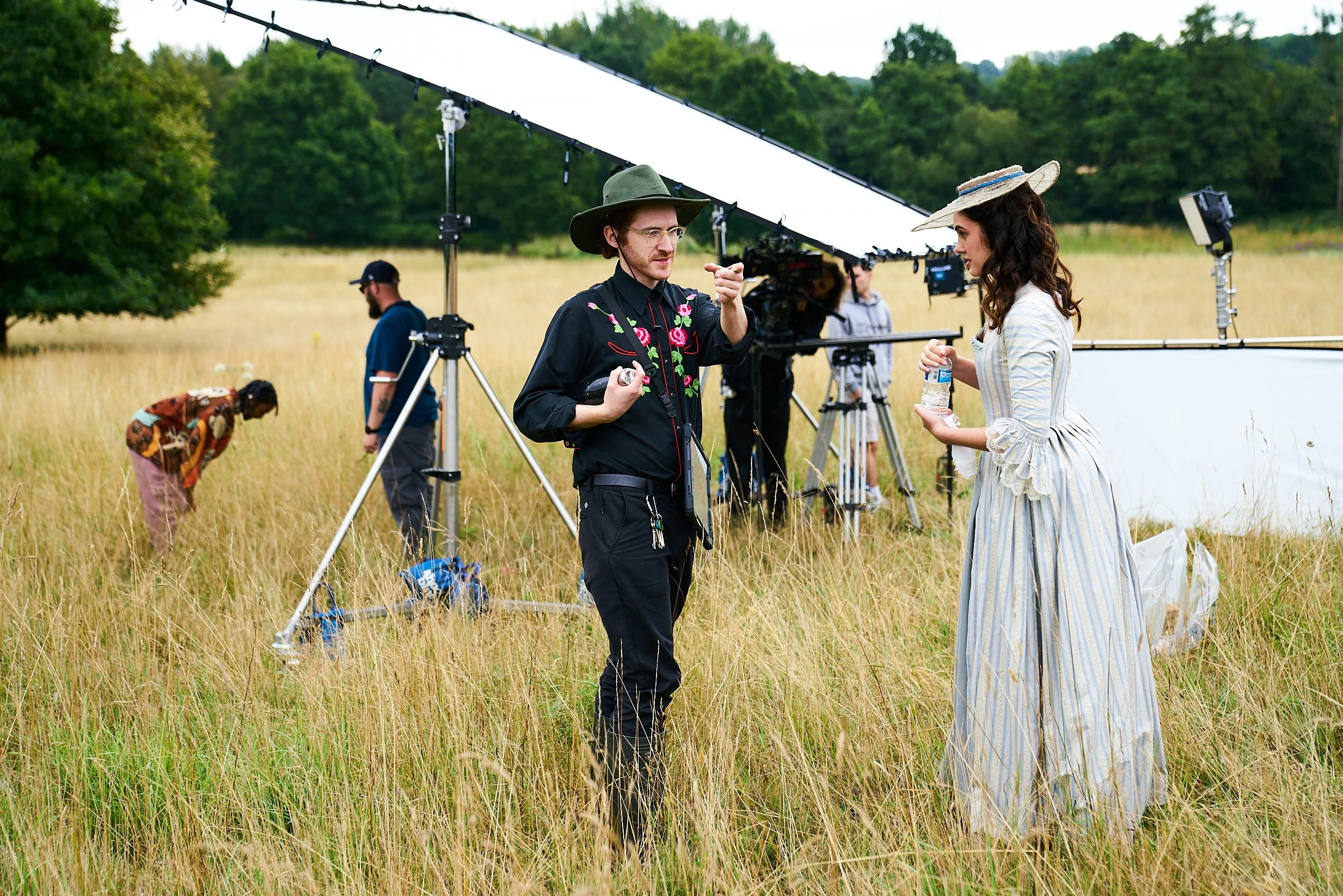
Tell us about the journey of getting your film to audiences and some of the festival circuit highlights.
Post on a short can be slow but we managed to complete this within 5 month, with a deadline for a screening hosted by our funders Centerframe. Iron Box Films came on as a partner to fund the festival run. We quickly got it onto the festival circuit and focused on BIFA qualifying events. The film is short and fairly punchy so was often programmed towards the end of blocks as a big finish or pick-me-up before people left. It was nice to see the film, an intended audience pleaser, was landing with gasps, 'oo's and 'no's in the right place. Kino London gave us our first nomination for Andreas Aaser's score, which I believe was much deserved. Music is such an important part of my films and Andreas is very gifted and imaginative. Rhode Island gave us our US premiere and Bolton International film festival also stood out as a great experience.
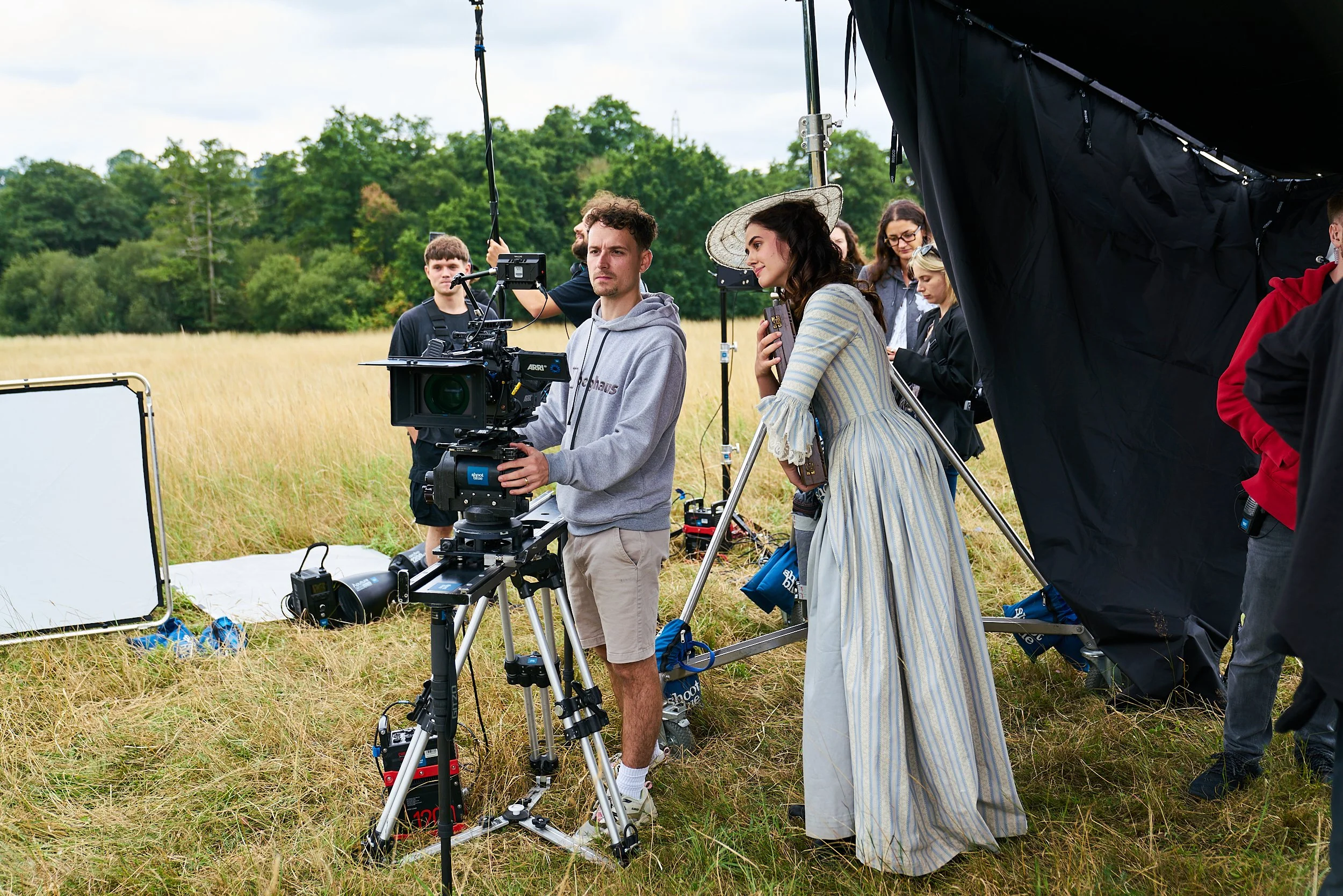
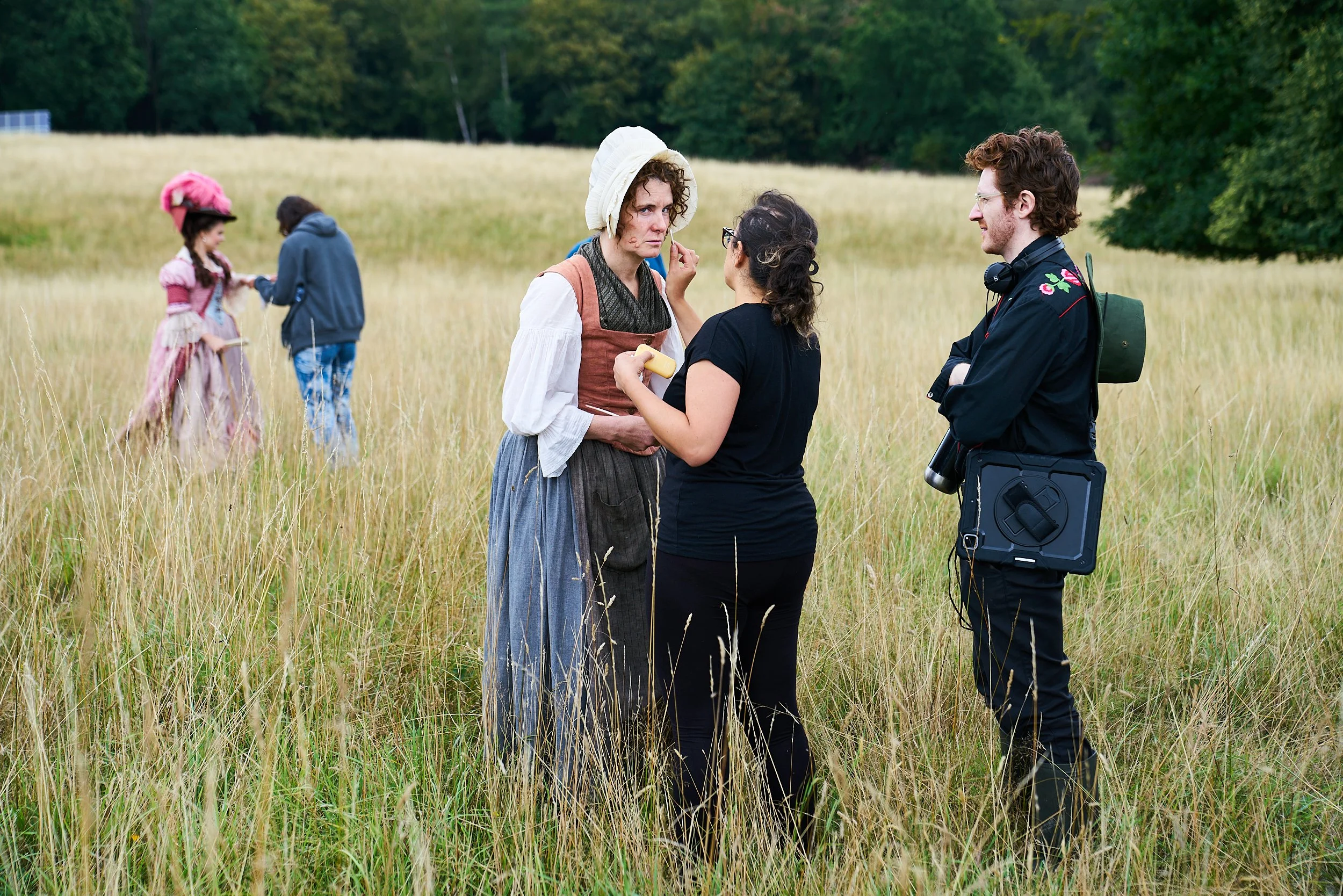
What advice or hacks would you give to other short filmmakers?
Keep it short of focus the story and make it easy to programme. Keep it in one location so its easier to produce. iIf you're trying to make something that opens doors - keep the audience in mind.
Plan as much as you can, I storyboard everything myself, which is the final re-write before shooting (until we edit, of course!), which saves time.
Have an idea for every department, and brief them as clearly as you can.
Get the best cast you can! Our casting director, Chloe Blake was really helpful, she works with the National Theatre and has her ear to the ground about new talent.
Any film recommendations that we should add to our watchlist?
Once Upon a Time in the West, is a film I thought about a lot during the making of this film, as with the rest of the dollars trilogy, its inventive, plays with audience expectation and has such an operatic quality. It's climax's and pure cinema and I get the buzz I get when I watch a Hitchcock movie that you can see what the director is doing, which I always find thrilling.
Sweet Smell of Success, a noir-drama that I thought of because in his book 'On Filmmaking' the director Alexander Mackendrick (a Brit making his first US film) said he had been given a 'wordy' script but the writer Clifford Odett's (a famous playwright) told him - 'just do it fast'. I thought about that when dealing with the stylised language of Satisfaction. I also marvelled at the blocking of the film and stole moments from it. I'm a huge fan of the blocking of mid-centrury movies (40s-60s).
Days of Heaven - is always and inspiration for its editing, structure and elliptical storytelling, but this time I was thinking about the photography. Along with the paintings of Andrew Wyeth, this film helped me figure out the look and composition of the landscape. It was pivotal in me picking a location that have long grass that was somewhat yellowing, like corn, but not as difficult to work around.
All Watched Over by Machines of Loving Grace, Adam Curtis' documentary, draws incredible connections between obscure historical figures, science, philosophy, politics and society - I believe these alternative versions of history are a little subjective, but the ideas and stories had my jaw on the floor every ten minutes. Expanding Saisfactions' historical subject into a series we're constantly finding the roots of social concepts we now take for granted and Curtis will be in my mind when doing this.
What are you working on next?
We’re developing Satisfaction into a limited series about Ann and Belinda becoming hired guns fighting for women’s honour.
I’m also developing a few features, and packaging one caled Torn Velvet, about a fashion marketer who unravels when she discovers that the sight of safety pins triggers orgasmic, spiritually awakening seizues.
Interested in getting your work selected?

Swimming
A film about a girl who wants to be a fish…

Written & Directed by Gregory Randolph Jr.
Produced by Stanley Mathews
Cinematography by Bethany Yang
A film about a girl who wants to be a fish…
ABOUT THE FILM
SWIMMING premiered at Animal Nature Future Film Festival. It appeared at 2 iterations of Day Dream Fantasy Youth Festival in Glasgow, Scotland and Milan, Italy, as well as being selected for the Earls Court International Film Festival (UK), Goa International Film Festival (India), Canal Dream ICI as part of the London Design Festival, and the Lift Off Global Network Sessions 2023 Jury Choice.
ABOUT THE FILMMAKER
Gregory Randolph Jr. (writer/director) was born in New York City and raised in Boston, Massachusetts. After graduating from Providence College in Rhode Island he moved back to New York to pursue a career in filmmaking. There he worked as a video editor for NBC Universal, ABC News, and HBO. He started his own production company Grandolp Media in 2016. Greg enrolled in the MA filmmaking program at London Film School in 2021. Greg is currently working on a feature film which he is developing now.
Stanley Mathews (producer) is an Indian-born, Qatar-raised filmmaker and producer known for his captivating storytelling. With a Bachelor of Arts in Filmmaking from Whistling Woods India and a Master of Arts in International Film Business from the University of Exeter and the London Film School, Stanley has worked on over 15 short films, some available on Disney+ Hotstar India. He has also directed brand videos with 400k social media views and co-produced the upcoming Indian Feature documentary "Rest in Manhole." Recent credits include the Doha Film Institute Granted short film "Project: Aisha ", Swimming & Different Faces (16mm, 35mm) supported by Kodak & shot on film.
Bethany Yang (cinematographer) is a cinematographer and gaffer from Harbin, China. She enrolled at the London Film School in 2021. Since then she has DoP'd over 15 grad films from London Film School and worked extensively in the camera and lighting department for film and television.
READ OUR INTERVIEW WITH GREGORY
Welcome to our Short of the Week series. Tell us a bit about yourself and your filmmaking background.
Sure, I've been making films for quite a while. I was born in New York City and raised in Boston. I was always making short movies with my friends growing up. I did my undergrad at Providence College as an English major and film minor. I made a short documentary on a music venue and a short narrative. I also did a short experimental film called Purgatory Brook with a friend from BU who has an assignment to do somehting in the vein of David Lynch.
I worked as a video editor after college. I lived in New York and worked for the television show Open House NYC and National as a segment and show editor. I worked on all aspects of post-production from ingest of footage to delivery of the final show for broadcast internationally.
I joined the London Film School in 2021. There I made several shorts both narrative and documentary. Swimming is an independent film I made in between terms at LFS. We shot it on 16mm film and had a wonderful time making it. I am glad its received recognition and I have a brilliant cast and crew to thank for helping me make this film a reality.
Tell us about the genesis of Swimming and your motivation for making this film.
Swimming is about a girl who wants to be a fish. I got the idea one day after another shoot we had just wrapped. A friend of mine brought a book out of a bookshop we were having a coffee at. I thought it odd and asked if she had stolen the book. She didn't have a receipt or bag. For some reason, it got in my head - what if someone was stealing books from a bookshop because they didn't want to confront the cashier with what it was they were reading? As if they were embarrassed about the contents of the book. That was the genesis of Swimming. To me, Swimming is about achieving want you want in life and finding your "school" or community.
What were some of the main obstacles you experienced when making Swimming and how did you overcome them?
We wanted to shoot from film and challenge ourselves in that regard. Finding an affordable way to shoot the film and rent the camera equipment necessary was difficult. We have Kodak London to thank for offering an affordable rate to shoot film. We have the now inactive Pro Cam Take 2 for offering the camera equipment necessary to make the project. We also tapped Student Union Lighting at the London Film School for all the necessary lighting equipment and camera dolly.
The film was also about explaining the world of the film to the actors. A world in which it is possible to become a fish. The film is metaphorical but I wanted to find that line between metaphorical and real. That is what makes the movie special.
Tell us about the journey of getting your film to audiences and some of the festival circuit highlights.
It took some time to find an audience for Swimming as it usually does with a new film from an emerging filmmaker. There is often a lot of rejection and self-doubt when trying to find a home for a film you spent so much of your time and thought on. We were very happy when an LFS alumni-run film festival Animal Nature Future Film Festival saw merit in the project. We premiered the film and it has been received very well by audiences since then. I was able to speak in front of an audience at ANFFF. It was then accepted at the Day Dream Fantasy Youth Festival in Glasgow. I was able to go there to speak about the film. Since then it has had some other nice film festival placements in Milan, Goa, India, and at Earls Court International Film Festival. We are very excited to have Swimming be a part of Kino Short of the Week. Swimming was also recently accepted to the Ukrainian short film festival Max Sir International Film Festival. Swimming will be shown at Lviv Art Palace in Ukraine. It will also be screened at over 100 schools in small towns and villages where children have limited access to international films.
What advice or hacks would you give to other short filmmakers?
Just make it. Try and write something possible within your means, but dream big. Think about the simplicity of Swimming's log line. A girl who wants to be a fish. There is a lot possible there. I hope one can watch Swimming and be inspired to think conceptually about whatever it is you are looking to make. We made this film on a very small budget and it is now being shown all over the world. You can make a film with a limited budget and still receive praise for it if that is what you wish. For me, I am grateful to my co-collaborators for achieving the things we did within our means. I am happy others can watch the film and be inspired by it.
Any film recommendations that we should add to our watchlist?
I just watched Kneecap and enjoyed it. It's a nice mix of storytelling sensibilities, but also something fresh about it. And the rapping is absolutely terrific. I highly recommend it.
What are you working on next?
My grad film from London Film School, Different Faces is currently in the film festival selection process. We are excited to announce its premiere soon.
A short film script I wrote was recently accepted to the Linz International Short Film Festival Talent Academy. They offer a short film lab with residencies at both the Cannes Film Festival and the Linz International Short Film Festival. The lab also offers courses to improve the script and market the film. I will start the lab in January and am very much looking forward to making the next film. It's about a failing actress who is looking for the next step in her career.
Interested in getting your work selected?

Slay
Living with flatmates can be tough. Living with an influencer can be even tougher. Phoebe, Jade and Heather have had enough and conspire to 'deal with' Danielle once and for all.
Written, Directed & Produced by Fran St. Clair
Living with flatmates can be tough. Living with an influencer can be even tougher. Phoebe, Jade and Heather have had enough and conspire to 'deal with' Danielle once and for all.
ABOUT THE FILM
SLAY screened at Sunday Shorts, Nightmares Film Festival, the Greenwich Film Festival (where Fran St Clair won for Emerging Actor) Boundless Film Festival (where it won a Special Mention), Rome Prisma, Poor Life Choices (winning Best Horror Comedy Short), Independent Shorts Awards (winning Best Dark Comedy Short) and Women’s Comedy Film Festival in Atlanta
ABOUT THE FILMMAKER
Fran St Clair is an award-winning actor, writer, and director based in London. What started as an actor's desire to create her own roles evolved into the founding of Myrtle Tree Studios. Her passion for comedic storytelling was sparked by SLAY, leading her to focus on writing comedy. Her latest surreal comedy, NICE PACKAGE, is currently in post-production, and she also stars in her co-created web series DO WE EAT HIM. The series has quickly gained attention worldwide, racking up 70,000 views in just over a week, with plans to bring it into the mainstream. Other notable projects include GREENSLEEVES INC., a co-written sustainability satire that won the 2024 VMI Sustainable Script competition. Fran will take on the lead role of eco-fashion influencer Fleur in the upcoming film, which is set to premiere at the BIFA-Qualifying Crystal Palace Film Festival in March 2025.
READ OUR INTERVIEW WITH FRAN
Welcome to our Short of the Week series. Tell us a bit about yourself and your filmmaking background.
Thank you so much for featuring SLAY as part of your Short Film of the Week series! My name is Fran St Clair and I’m the writer, directer, producer of the film. Oh, and I also play Jade! My journey into filmmaking has been a little different as my main passion is acting. I’ve always loved storytelling and I’ve acted for as long as I can remember, so naturally with the unpredictable nature of this industry I decided that if I wanted to keep working on creative projects I would have to start making my own. That’s how SLAY was born. Prior to this, I’d made another film called CAKE earlier in 2023 which was my first little experimental short with just me and my DoP and friend Jay Fisher. After that experience, I decided I wanted to make something bigger, better, less serious and much more ridiculous. So I gathered all of my amazingly talented filmmaker and actor friends and we got to work.
Tell us about the genesis of slay and your motivation for making this film.
The SLAY journey began in December 2022 with the intention of writing a flatmate horror story. There were few people in my life at the time that has shared their annoyances with flat sharing. People leaving their dirty dishes in the sink for weeks, using up and never replacing the toilet roll, helping themselves to snacks that aren’t theirs and so on. I also love stories about unlikeable characters and the complexities of female friendships and thought it would be a really fun premise for a short. So, I took all of these flatmate dramas, threw in some unlikeable characters and thought of what the worst case scenario could be when you’ve absolutely had enough. I knew from the very start that I wanted my friends Kelsey Cooke and Charlotte Pathe (who are amazing actors) to take on the roles of Heather and Phoebe. This made the writing process super easy as I pictured all of their voices so strongly and knew we would have so much fun together in these roles. I wanted the film to be fun, camp and feminine and even though it’s a comedy and the surface level themes are unserious, the characters are also complex and emotionally intelligent. Once we had the script, we found the talented India Plummer to take on the role of the terrible ‘Influencer' flatmate Danielle and we were all set. Some of my references included Mean Girls, Heathers and Bodies Bodies Bodies.
Tell us about the genesis of Slay and your motivation for making this film.
We had a fair few obstacles when making this film! It was made on a very low budget. Though we did raise some funds through crowdfunding, like most things it would have been much easier with some more money. We also booked a location that didn’t quite look like the photos, so we had to do some re-jigging when it came to our floor plans. The house next door was also having an entire renovation happening. So that was a nice surprise. During filming for the living room scene we had to stop and start quite a few times whenever they starting drilling and banging - which was the whole day. I was so lucky to have such an amazing and passionate team around me that really believed in the vision and worked so hard to make it happen. So obstacles aside this film was such a dream to make!
What were some of the main obstacles you experienced when making Slay and how did you overcome them?
We had a fair few obstacles when making this film! It was made on a very low budget. Though we did raise some funds through crowdfunding, like most things it would have been much easier with some more money. We also booked a location that didn’t quite look like the photos, so we had to do some re-jigging when it came to our floor plans. The house next door was also having an entire renovation happening. So that was a nice surprise. During filming for the living room scene we had to stop and start quite a few times whenever they starting drilling and banging - which was the whole day. I was so lucky to have such an amazing and passionate team around me that really believed in the vision and worked so hard to make it happen. So obstacles aside this film was such a dream to make!
Tell us about the journey of getting your film to audiences and some of the festival circuit highlights.
After a few selections, SLAY had its first in person screening at Big Fridge Film Festival which was really exciting. Some of the team were able to join and it was exciting seeing it up on the big screen. I have a few other shots in the works right now so the hope is to do a special screening event for all of them in the future.
What advice or hacks would you give to other short filmmakers?
Not sure I’m in the position yet to impart wisdom, but I do feel like I’m always learning. I think the most important thing is having a great team around you that share your vision. If you don’t have those people yet you’ll find them, that’s why networking events and festival screenings are so great because you can meet so may interesting and talented people. Another piece of advice to offer would just be if you have an idea - write it. It doesn’t matter if you don’t make it, getting something down on paper is the only way you’ll ever start.
Any film recommendations that we should add to our watchlist?
Sticking to comedy, Bottoms by Emma Seligman was an instant 5 star from me. Then leaning more towards drama, Scrapper by Charlotte Regan. Loved it.
What are you working on next?
I have a few things in the works right now that are keeping me nice and busy. I’m in pre-production for my next short film Nice Package which is filming at the end of January. Another comedy but this one is a more dreamy and surreal approach to the mundane life of a very bored young woman. I’m also working on another short film called Lava Cake with my friend and collaborator Govind Chandran, as well as a Zom-Com mini series.