
Directed by Felicia Manning
Cinematography by Jesse Aragon
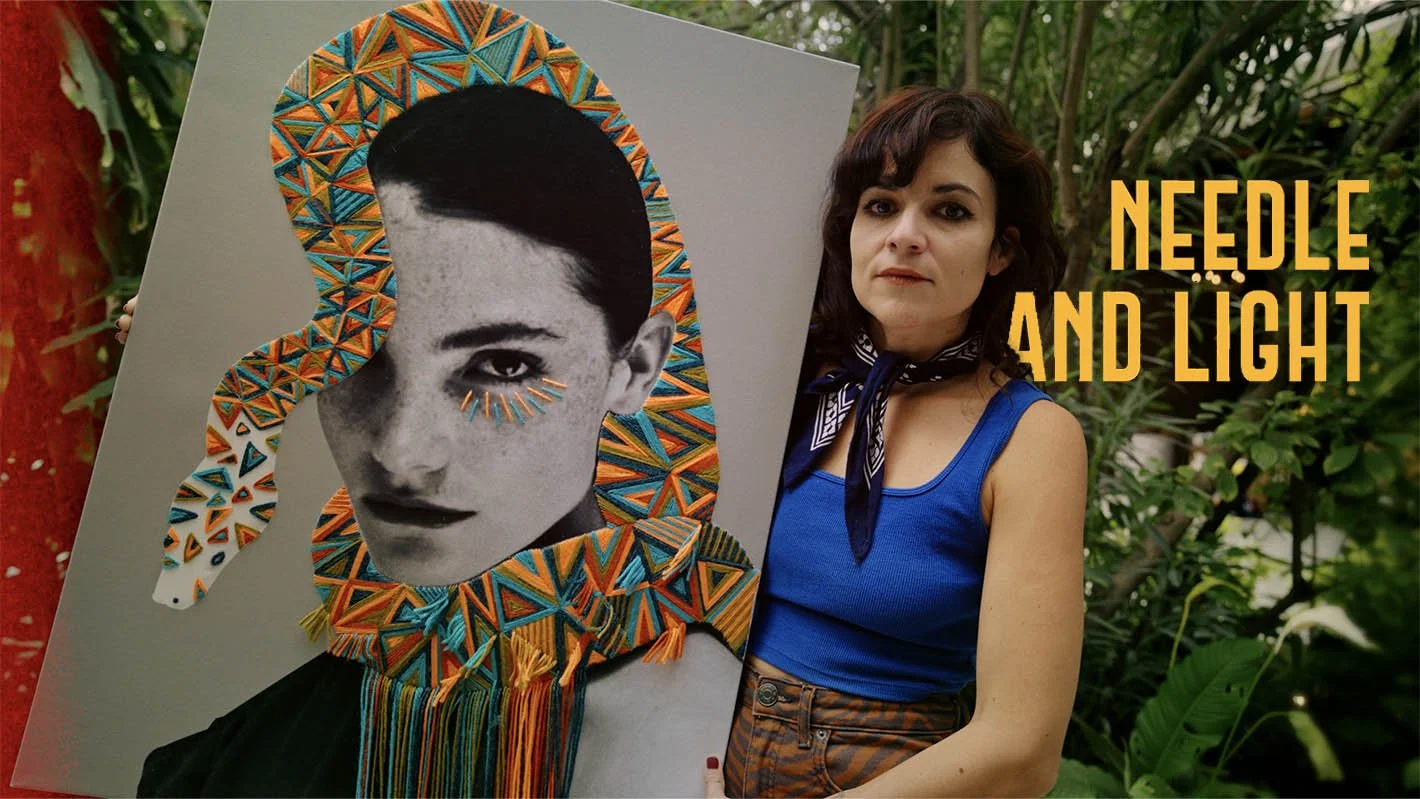
This short documentary explores the creative process of Mexican textile artist Victoria Villasana. Her work is vibrant and emotional, with each piece telling a story through the blending of thread and monochrome photos. Victoria’s careful selection of colors, geometric shapes, and forms brings her vision to life. We delve into her sources of inspiration, the power of working with her hands, and her unique approach to art.
ABOUT THE FILMMAKER
Felicia is a self-taught Mexican-American director and writer based in Los Angeles. She is deeply passionate about human-interest stories, particularly those that offer intimate glimpses into everyday life. She founded Feee Films, an independent production company producing narrative-led commercials, branded content, animation and digital content with a focus on authenticity and story.
Her work has been featured in various publications, including Vogue Italia, Beyond the Short, Booooooom, Girls in Film, and Directors Notes. She is a Women in Film Mentee, a Stowe Producers Lab Fellow, selected for the DGA/AICP Commercial Director’s Diversity Program, and shortlisted for the Cannes Lions Young Director Award.
Felicia's short films have gained recognition at renowned and Oscar qualifying film festivals such as HollyShorts, LA Shorts International Film Festival, Dallas International Film Festival, SCAD Savannah Film Festival, Indie Memphis, and numerous others. She is drawn to intimate stories that delve into the complexities of the human condition, often focusing on the experiences of women and BIPOC characters discovering their strength. Felicia is continuing her filmmaking journey with both commercial and feature-length projects within her production company, Feee Films.
READ OUR INTERVIEW WITH FELICIA
When did you first become aware of Victoria's work?
I found Victoria’s work through an artist account on Instagram that highlights women artists. Her work immediately struck me and I followed ever since.
What kicked off this project? Did you bring the impetus to this project, or were you brought on more as a facilitator?
I had the inclination to film Victoria’s process and capture her story so I eventually reached out to her directly with a deck and presented my approach.
You chose to shoot Needle and Light in multiple formats - both digital and analog. Do you frequently work in multiple formats or is this your first foray into this creative methodology?
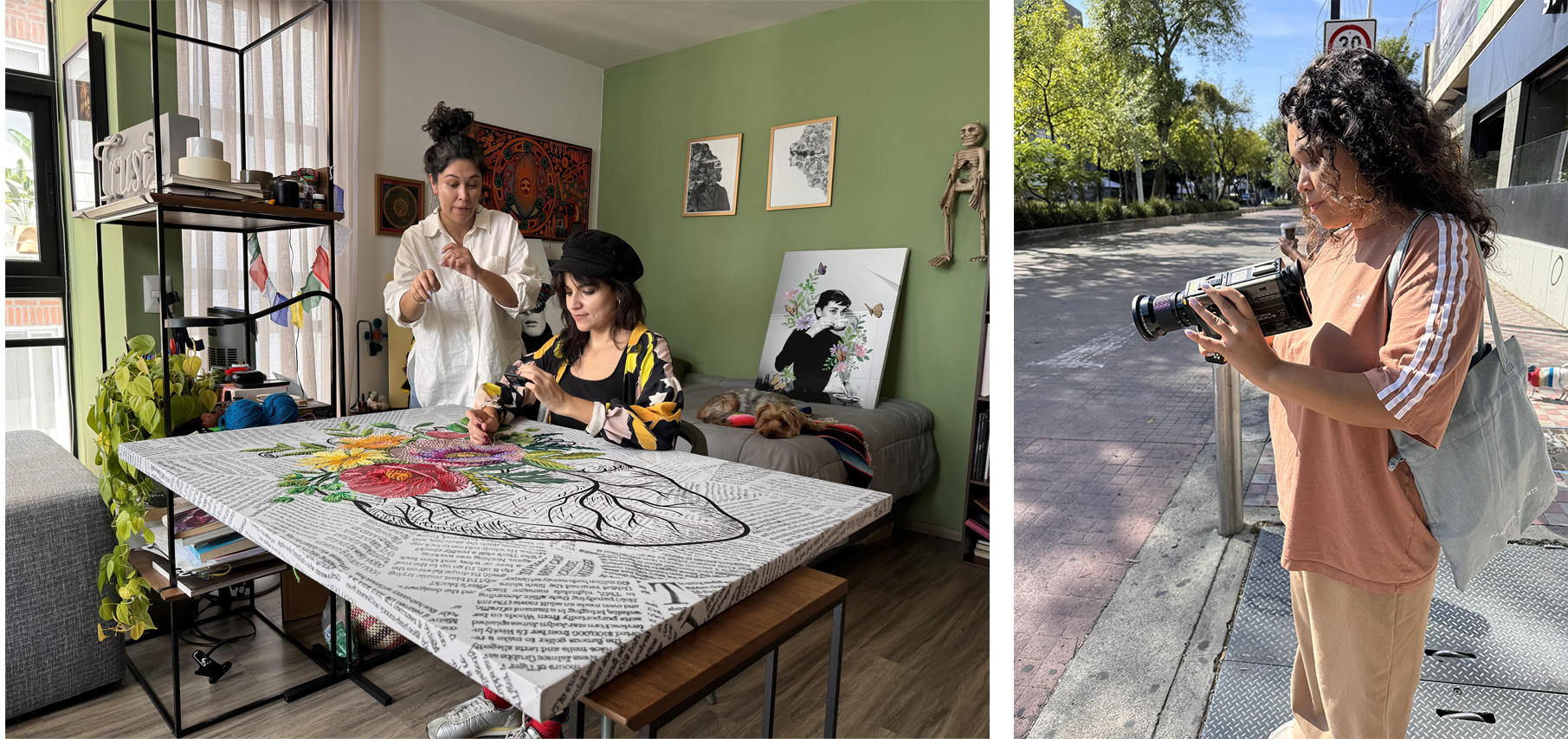
That was an approach that came as a result of Victoria’s work. She uses multiple formats and in working with my DP it made sense to also adapt to multiple formats.
Can you talk about your motivation for choosing multiple formats in exploring Victoria's work? Why was shooting both film and digital the right choice for this project?
I feel like Victoria’s work utilizes two dynamic styles, black and white portraits, many times of important figures, and contrasts that with vibrant thread giving the work a tangible texture. In terms of film, that really translated well into digital as a reflection of the portraits and 8mm film as the grain linking us to her textile material.
How much of the narrative did you establish prior to shooting and how much was discovered in the edit?
I had a pre-interview with Victoria, really just a conversation, where I learned about her process, her point of view, and where she came from. She’s naturally a strong storyteller so all I needed to do was capture her story in person. I had visual references and discussed approaches with my DP in finding a way to reflect the motion of her threading through the swift camera work. However, I wanted much of the content to be capture organically and very doc-style so we discovered the bulk of the footage on-location in Guadalajara with Victoria.
What advice or hacks would you give to other short filmmakers?
If you have any connection with a story or subject matter pursue it. Find the most minimal way to tell that story by taking it a step at a time and the project can become a reality. It’s better to make your film than standby for the perfect circumstances. Hacks? You would be surprised who is open to supporting you if you’re really clear on your vision from crew to talent.
What are you working on now?
Right now, I’m in pre-production on my next short film, BASELINE, it’s a tennis drama where a mom and son meet on the court after some distance. I’m excited to capture a sport on film blended with a dramatic story.
Any film recommendations that we should add to our watchlist?
I’ll throw it back to a film that impacted me called THIRTEEN by Catherine Hardwicke. It’s a really raw film following two young girls in middle school and things just spiral out of control. Not only is the film pretty intense, but I love how it was made. Catherine Hardwicke was a production designer that wanted to direct, she wrote the script with Nikki Reed the lead actor who shared her personal experiences for the story, and Catherine intentionally designed the film in a contained way so she could afford to make it.
