

BENJI
A seemingly innocent TV commercial for a family-friendly recycling bin becomes increasingly bizarre when the father decides to recycle more than just household waste.
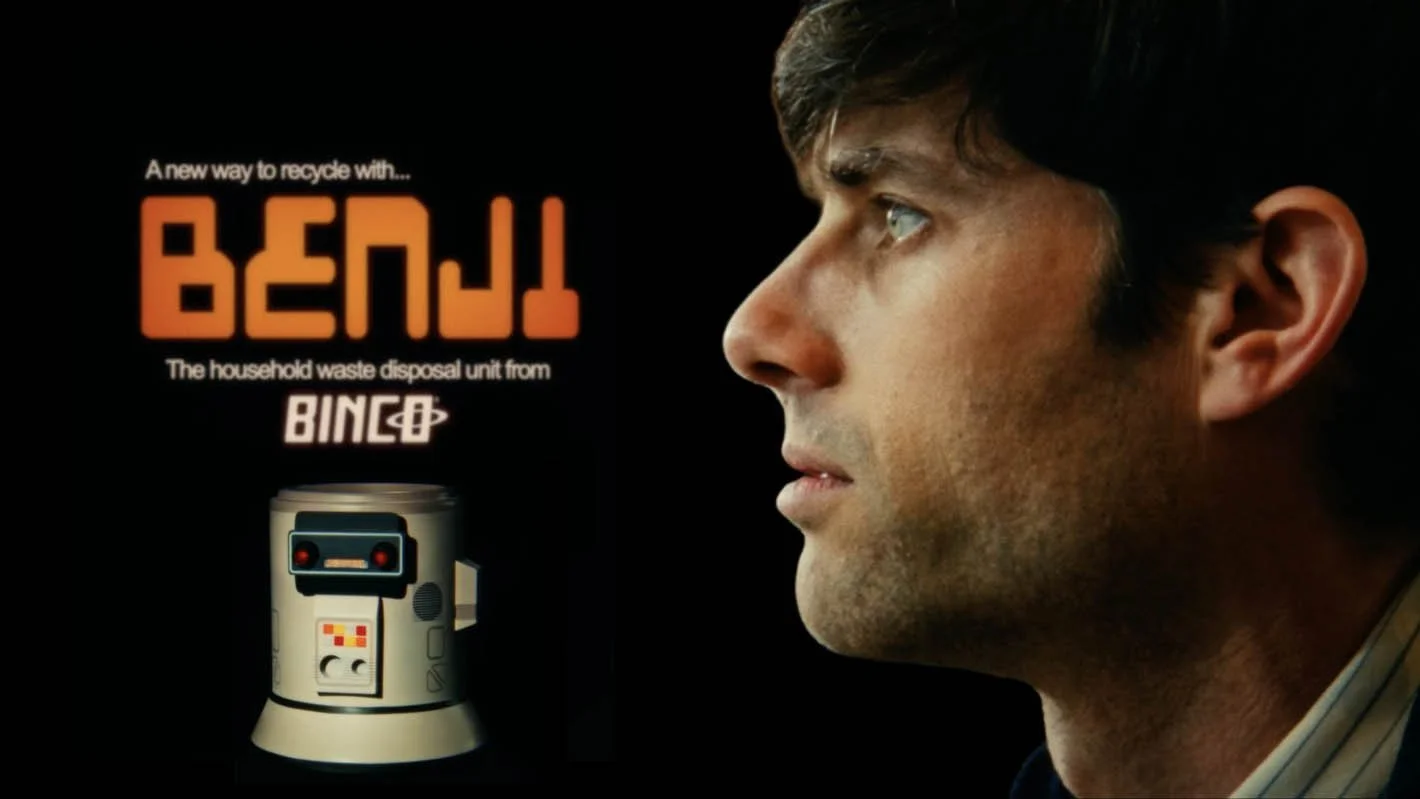
Written, Produced, & Directed by Oscar Garth
A seemingly innocent TV commercial for a family-friendly recycling bin becomes increasingly bizarre when the father decides to recycle more than just household waste.
ABOUT THE FILMMAKER
A director of photography with a bold, playful style, Oscar brings surreal stories to life through the lens. With multiple shorts under his belt, Oscar recently completed his first feature film, and is currently developing a series with comedy writer/director/performer James Button. Oscar's passion for storytelling has recently led him to explore directing as well, with his debut short Benji.
READ OUR INTERVIEW WITH OSCAR
Welcome to our Weekly Pick! Let's dive straight in.
Benji first caught our eye as an Official Selection at the 2024 edition of our film festival when it won an award for production design.
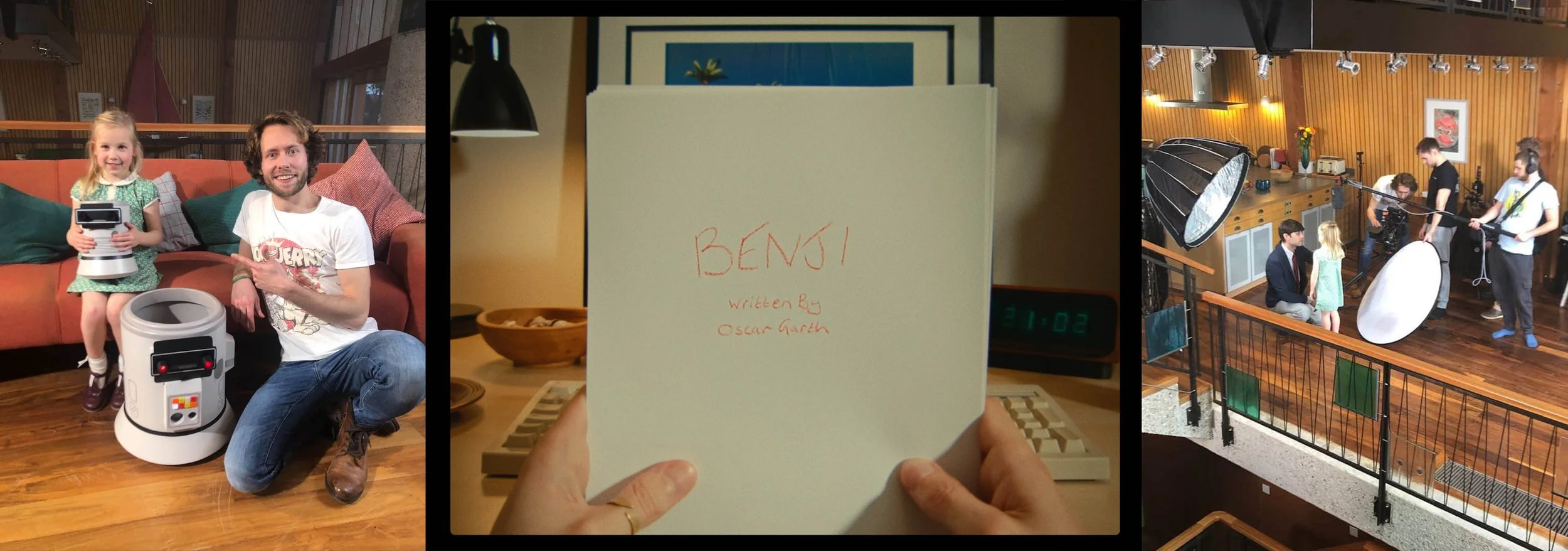
First let's chat about the design of the film and its awesome retro aesthetic. How did you go about sourcing all of the elements needed to pass off a convincing classic look that feels more like it's been plucked from the past vs made anytime recently?
I watched a LOT of old TV ads. They were bonkers back then, but there’s something incredibly charming about them that has always appealed to me. Possibly the happy-go-lucky, overly optimistic vision for the future, and all the goofy tech.
I was really meticulous about everything with Benji, it was so much fun to design the look for such a bold, playful world. It all clicked into place when I stumbled upon 'The Houseboat' in Dorset. Most locations I looked at were just normal modern houses with a bit of vintage wallpaper, but this place was a literal 1960s 'House of Tomorrow'. It came almost completely dressed, so our production designer Jamie just had to swoop in and add some finishing touches, along with a few random retro knick-knacks I nabbed from my flat.
On the tech side, I shot on a Blackmagic Micro, which has a gorgeous super 16mm sensor, getting me most of the way to a film look. Coupled with an old, beat-up Canon servo zoom lens to get those playful TV ad snap-zooms, and give an overall de-tuned feel.
And then of course, there are the Benji bins. I found an amazing illustrator on Instagram, Ann-Sophie De Steur, to sketch them out, and then JSM Model Makers down in Marlborough brought them to life with actual moving eyes, switches, and LEDs. They now live with me in my flat. One is a functioning desk bin.
Can you tell us a bit about your festival journey with this film? The highs, the lows, the inbetweens.
Well, Benji had a great run, and nabbed a handful of awards including the Andy Jones Award at Aesthetica, Best Micro-Budget Short at Kino, and was one of the Judges 6 at Exit6 fest. More importantly though were the reactions I got from people leaving the cinema. It was always a joy hearing peoples’ verdict on exactly what was going on in the film, with one notable review being “I’ve no idea what happened at the end there but I was in tears”.
Getting the film online has been a long time coming. How have you found the reception of the online release of the film?
I think again, the biggest joy for me is witnessing in-person reactions to the film, discussing it over a pint, and using it as a springboard to chat creatively about other projects. Now that it’s online, I honestly don’t think about it much, my head is already onto the next project.
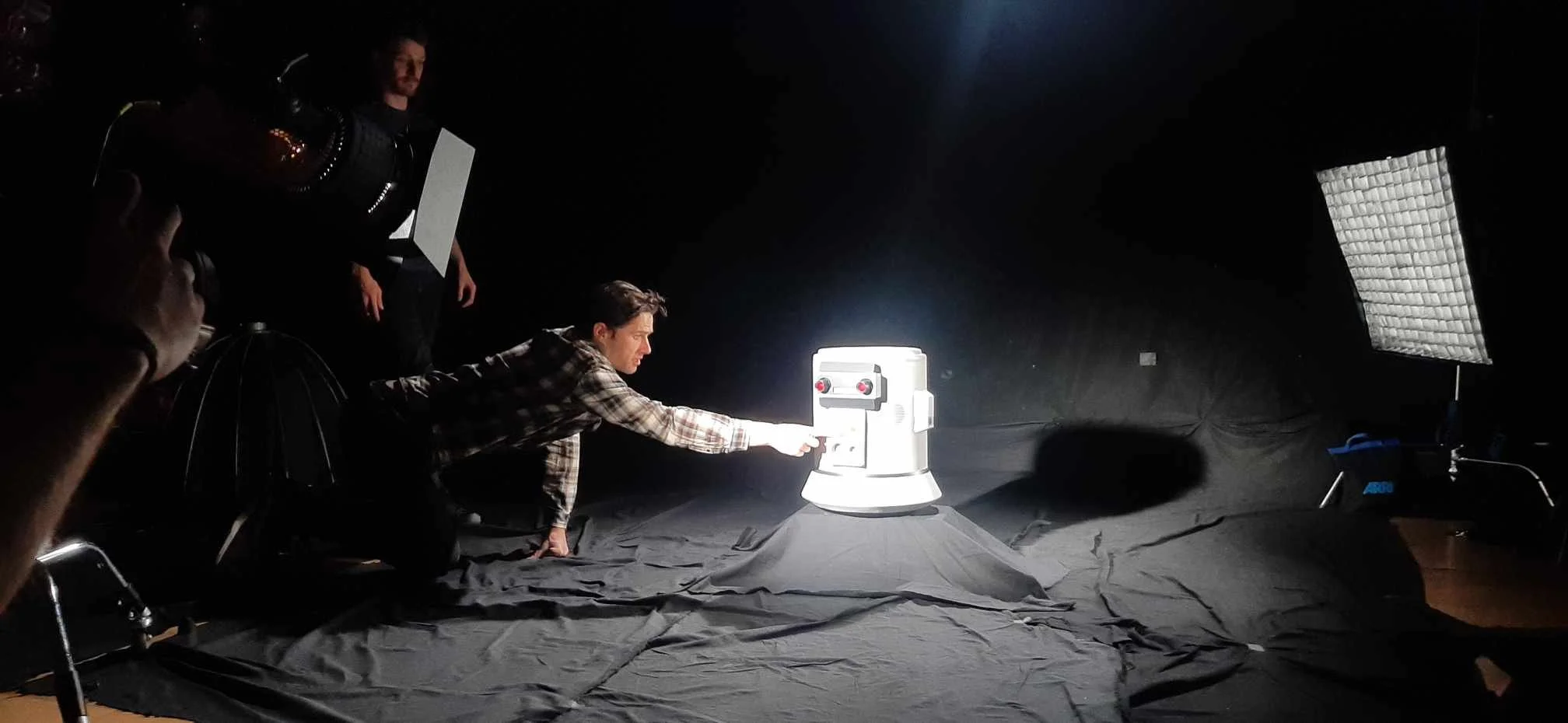
You often work as a cinematographer for other directors. Can you talk about how your process changes when shooting for others vs shooting for yourself?
When it’s your own film, you’ve got the whole project - the script, the performances, the existential dread, all of it your brain at once. When I’m just wearing the DP hat it gets a little simpler.
It’s pretty similar in terms of storytelling. I’m always thinking about the narrative and what my own creative eye can bring to the table. And so, the directors I love working with most trust that together we can create something more than the sum of its parts. It’s always a hugely collaborative effort, I’m not just chucking a camera down, the vision for the whole project has to be mutual. It’s a great feeling when you develop a shorthand with a director and suddenly every creative decision you both make it in-line with that vision.
What advice or hacks would you give to other short filmmakers?
My advice would be don’t look for hacks. Focus on creating something authentic, that brings up some emotion in you. Try and look at whatever anyone else is doing as little as possible, and for the love of god don’t hang your worth as a filmmaker on laurels or accolades.
What are you working on now?
I’ve always got a bunch of daft ideas bubbling away. The next one will likely be a short called Channelling Walter Fishman, about a hermit who lives underground and makes crap electronic music. Parallel to that, I’m jumping into feature development with long-time partner-in-crime James Button. We’re writing a comedy feature debut about a 900-year-old man stuck in a bleak care home who just wants to get back to his castle… so stay tuned for that nonsense.
Any film recommendations that we should add to our watchlist?
The last short I saw at a festival that really landed for me and deserves a shoutout, was ‘I Have a’ by Rory Waudby-Tolley. Fast-paced daft animation about a guy listing all the things he has… You have to just watch it.
One short I do keep coming back to as a solid source of inspiration is The Privates by Dylan Allen. “An unknown rock band struggles with a radioactive energy in their music that blows up amps, liquefies tape decks, and starts electrical fires”. It’s a little bit Edgar Wright, with a touch of Spielberg whimsy, and not only is it beautifully crafted in terms of cinematography, art direction, score and sound design, but the stand-out attraction for me is the naturalistic performances and editing. It all feels highly conversational, a bit like in Alien, where quite often you’re lingering on reactions rather than line delivery, and fully buying into the idea these guys are in the same room talking over each other. I honestly can’t believe it was never picked up for a feature.
Apply to get your short selected as our Weekly Pick

THE PEARL COMB
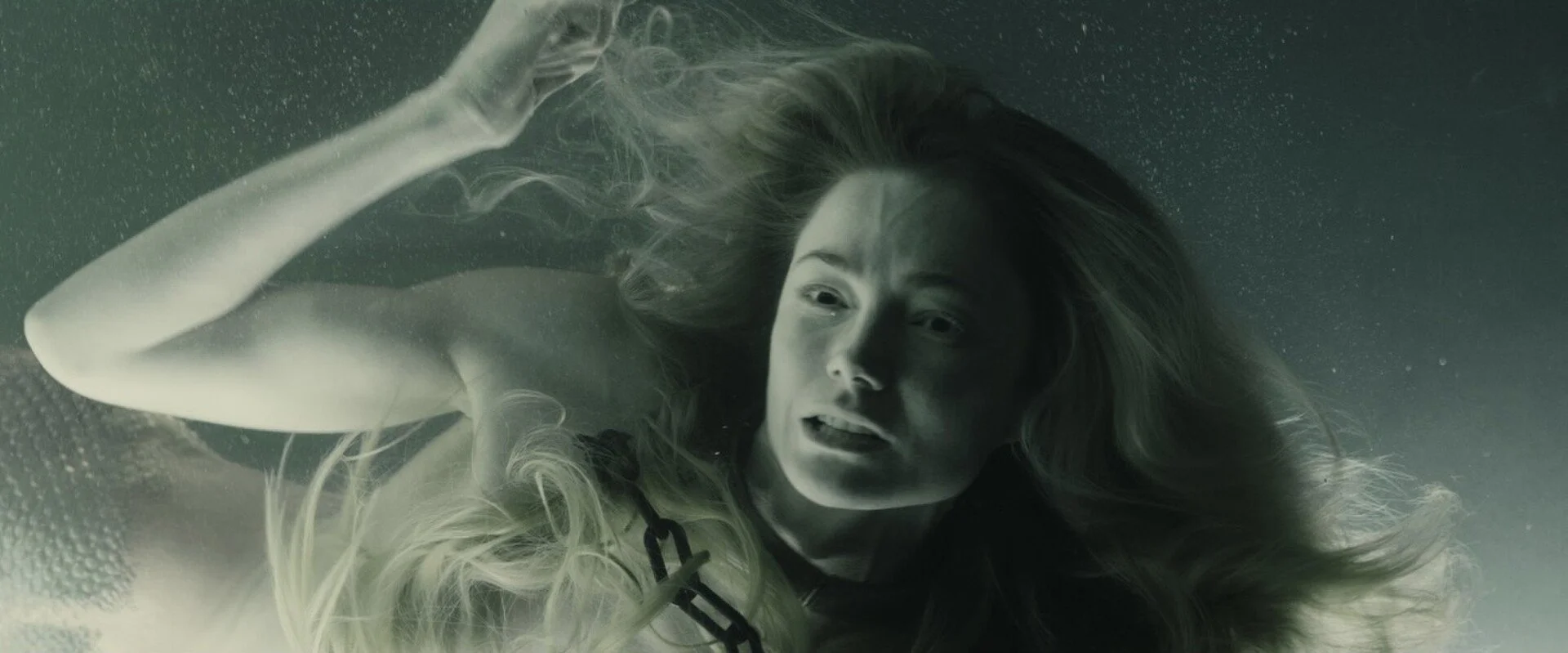
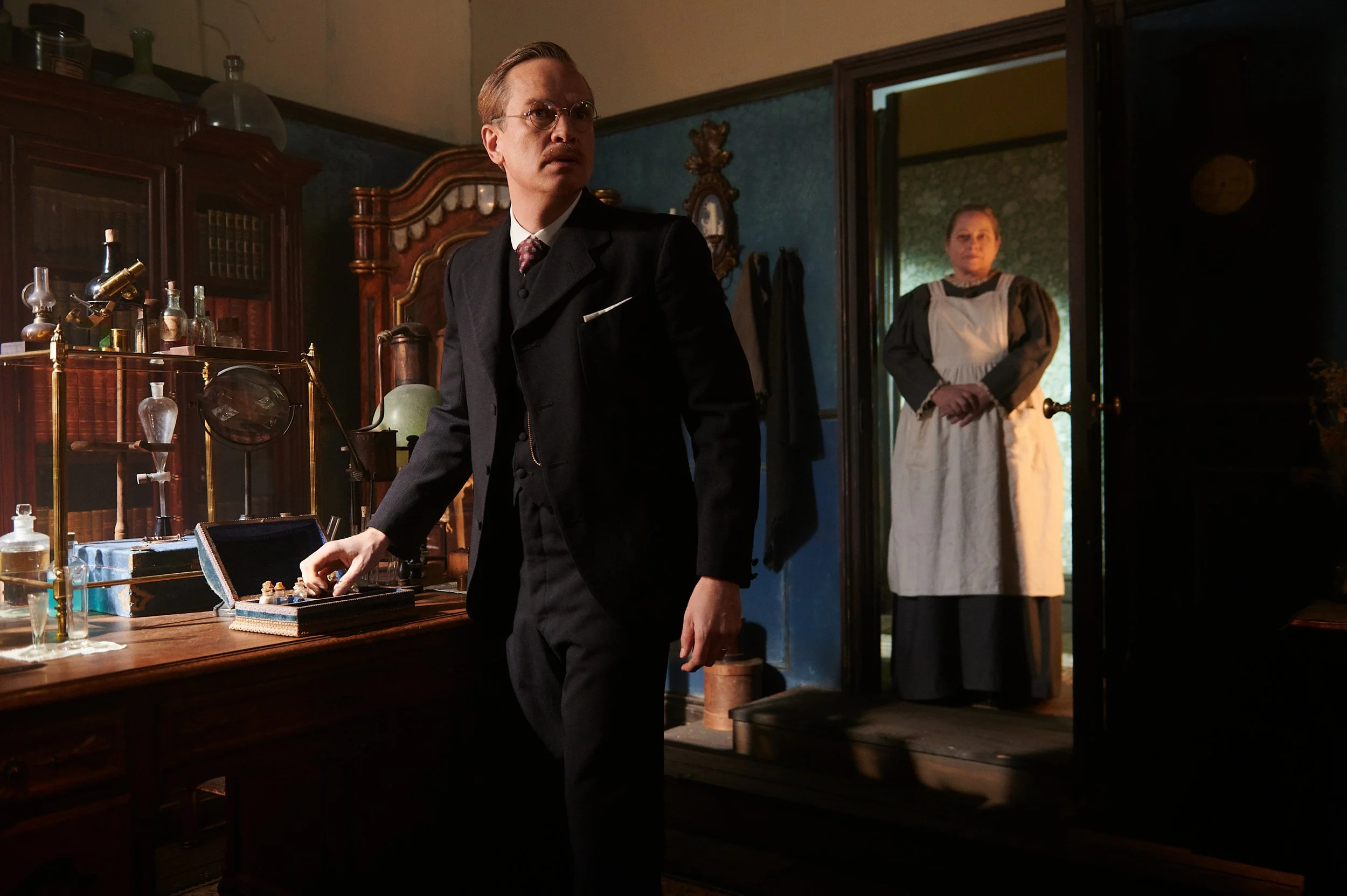
In 1893, a fisherman’s wife becomes the first person to cure someone of tuberculosis. A doctor, intent on proving a woman’s place is in the home and not practising medicine, investigates - only to discover the source of her unearthly power.
Watch on
Written & Directed by Ali Cook
Produced by Ross Williams & Matthew James Wilkinson
In 1893, a fisherman’s wife becomes the first person to cure someone of tuberculosis. A doctor, intent on proving a woman’s place is in the home and not practising medicine, investigates - only to discover the source of her unearthly power.
ABOUT THE FILM
The Pearl Comb was an Official Selection at our 2025 BIFA Qualifying Kino London Short Film Festival, having been nominated for 6 awards, and winning Best Production Design and Best Cinematography.
It premiered at FrightFest and Tampere, making quite a dent in the festival circuit. Highlights include winning a Méliès d’Argent Award – Best European Fantastic Short Film at Grossmann Fantastic Film and Wine Festival, winning Best Cinematography & Best Horror Short at Flickers Rhode Island’s Vortex, winning Best After Hours Short at Cleveland International Film Festival, and many, many more…
The film was recently Oscar Shortlisted and BAFTA Longlisted.
ABOUT THE FILMMAKER
The Pearl Comb follows Cook’s BAFTA-longlisted short The Cunning Man, which screened at 88 international festivals, including Cinequest, FrightFest, Cleveland, and the BAFTA- and BIFA-qualifying Norwich Film Festival, winning 33 awards and earning a Méliès d’Argent nomination.
Cook first broke out as a writer-performer with seven of his own comedy series, including Channel 4’s Dirty Tricks, which was nominated for a British Comedy Award. As an actor, he is known for playing Sgt. Paul McMellon in the BAFTA-nominated Kajaki and as series regular DCI Simmons in Ragdoll for AMC/BBC One. He will soon appear as Ben in Channel 4’s Falling, written by Jack Thorne.
Cook’s next directorial project will be the feature The Grimoire, co-written with Eric Garcia (showrunner of Netflix’s Kaleidoscope) and produced by Chris Curling at Zephyr Films. Curling has produced more than 60 films, including Oscar-nominated The Last Station, starring Helen Mirren, Christopher Plummer and James McAvoy, and The Miracle Club with Maggie Smith and Kathy Bates.
READ OUR INTERVIEW WITH ALI

Hi Ali!
We're excited to be featuring The Pearl Comb as our Weekly Pick. Not only because it's Oscar Shortlisted and BAFTA Longlisted, but because it's a film that we believed in even before its recent success.
Can you tell our audience a bit about yourself and all the hard work tha’s led to this point?
Originally, and for a long time, I was a professional magician. I was very lucky to be on TV as a magician, which is like the holy grail for most of us. I ended up making seven TV series for a company called Objective Productions. My old boss there was Andrew O’Connor who famously invented Peep Show; he’s a very clever TV producer. One day whilst we were making a TV series, he said: “You know I think you’d be a good actor.” And the cameraman said: “I think you’ve got a good face to be a villain”. These comments kind of stuck with me so I started acting, kept writing and here I am.
Tell us about the genesis of The Pearl Comb. Where did the idea come from and how did you develop that idea into the short that’s now made its way out into the world?
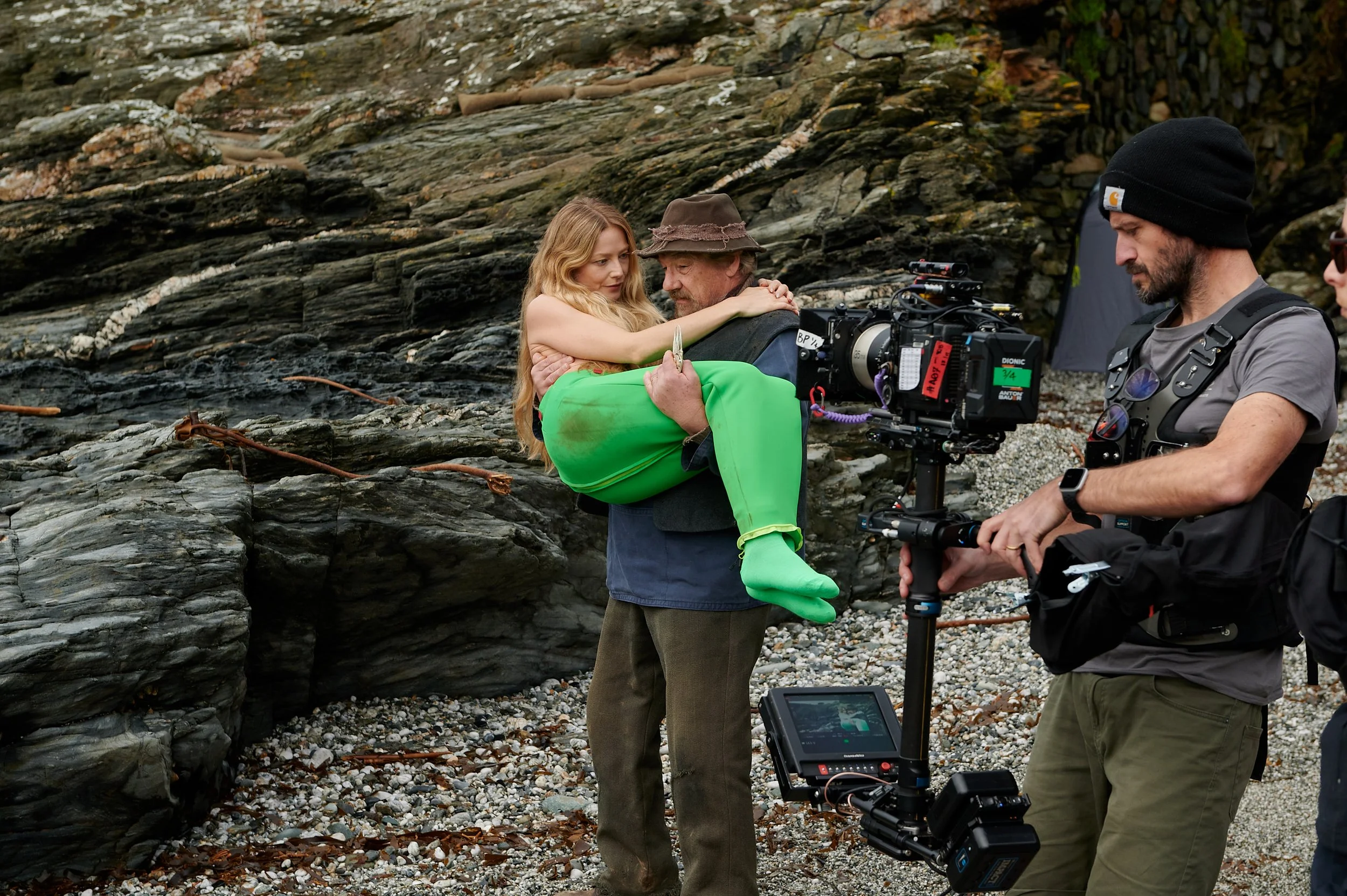
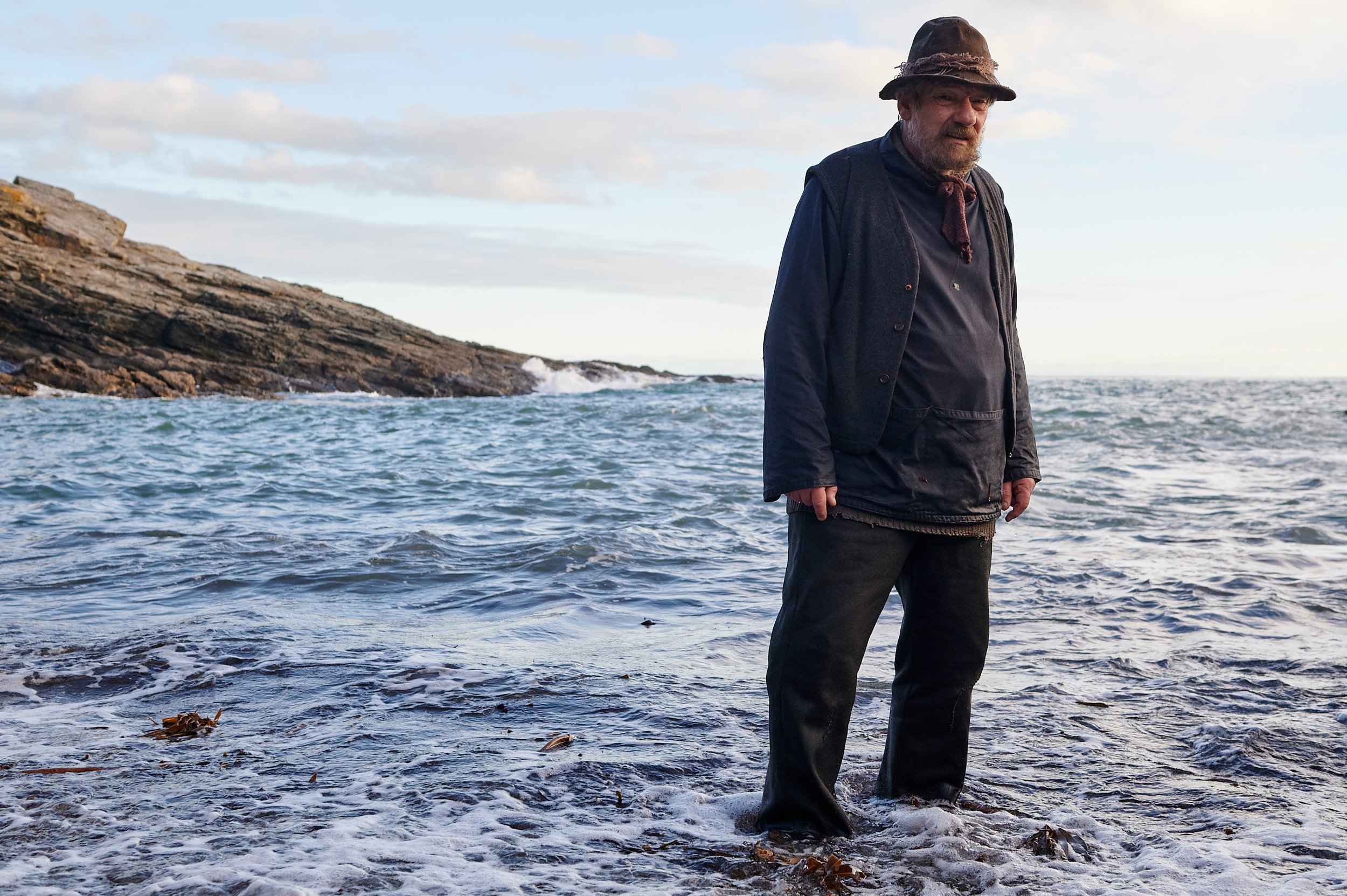
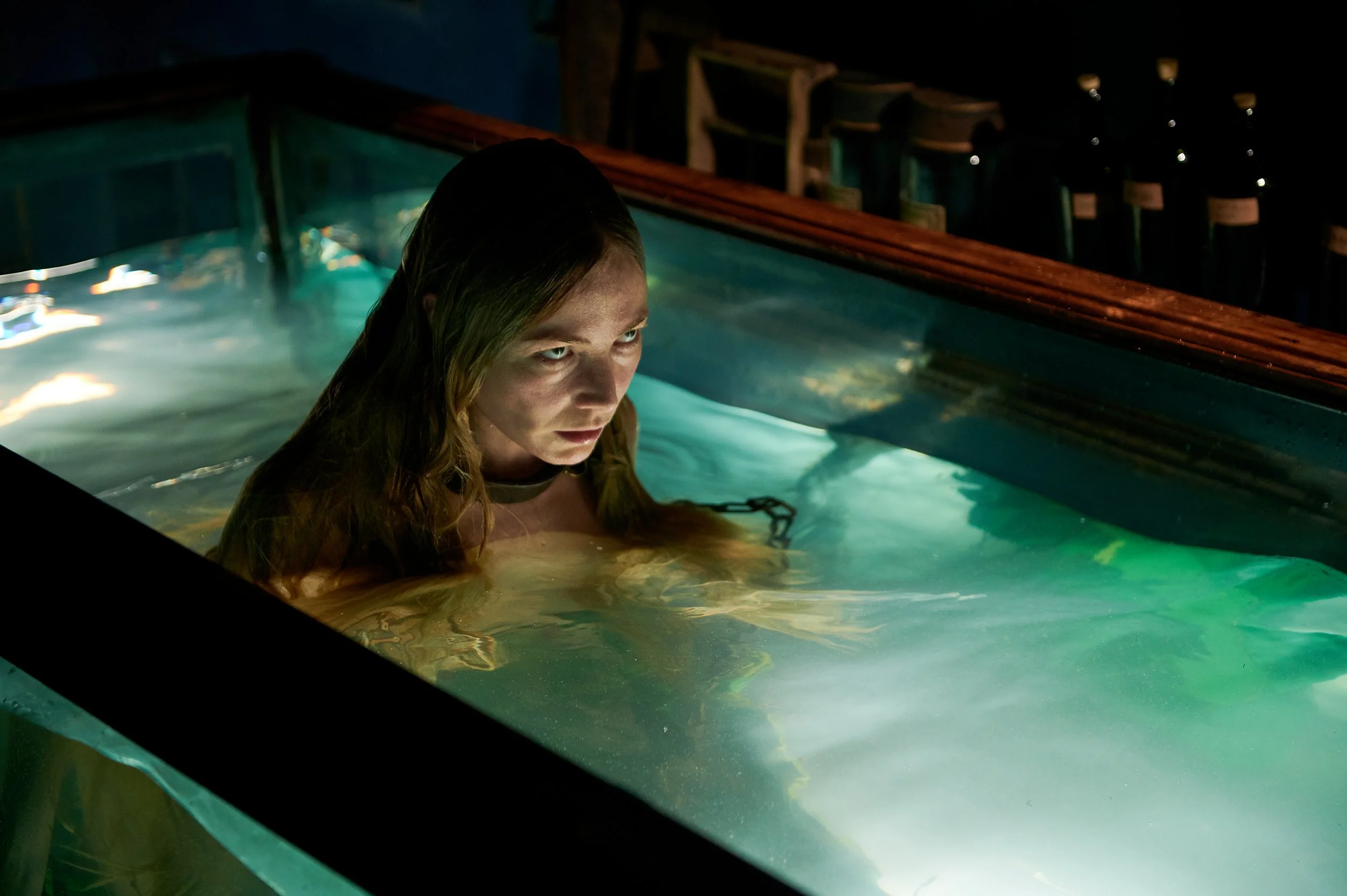
I’ve always wanted to portray mermaids authentically, as brutal killers like in the original folk tales, not as Disney princesses.
Then I heard the true story of the Edinburgh Seven: The first seven women to qualify as doctors in the UK. The medical profession did everything they could to stop them from practicing and the female doctors of that time had to come up with inventive lies to justify the work they were doing by claiming to be midwives or natural healers.
It felt like the right time to bring these stories together - especially now, when there’s a bigger conversation happening around gender, power, and the way women have historically been overlooked, misunderstood, or even seen as threatening or strange, just for being different.
What were some of the main obstacles you experienced during the making of the film?
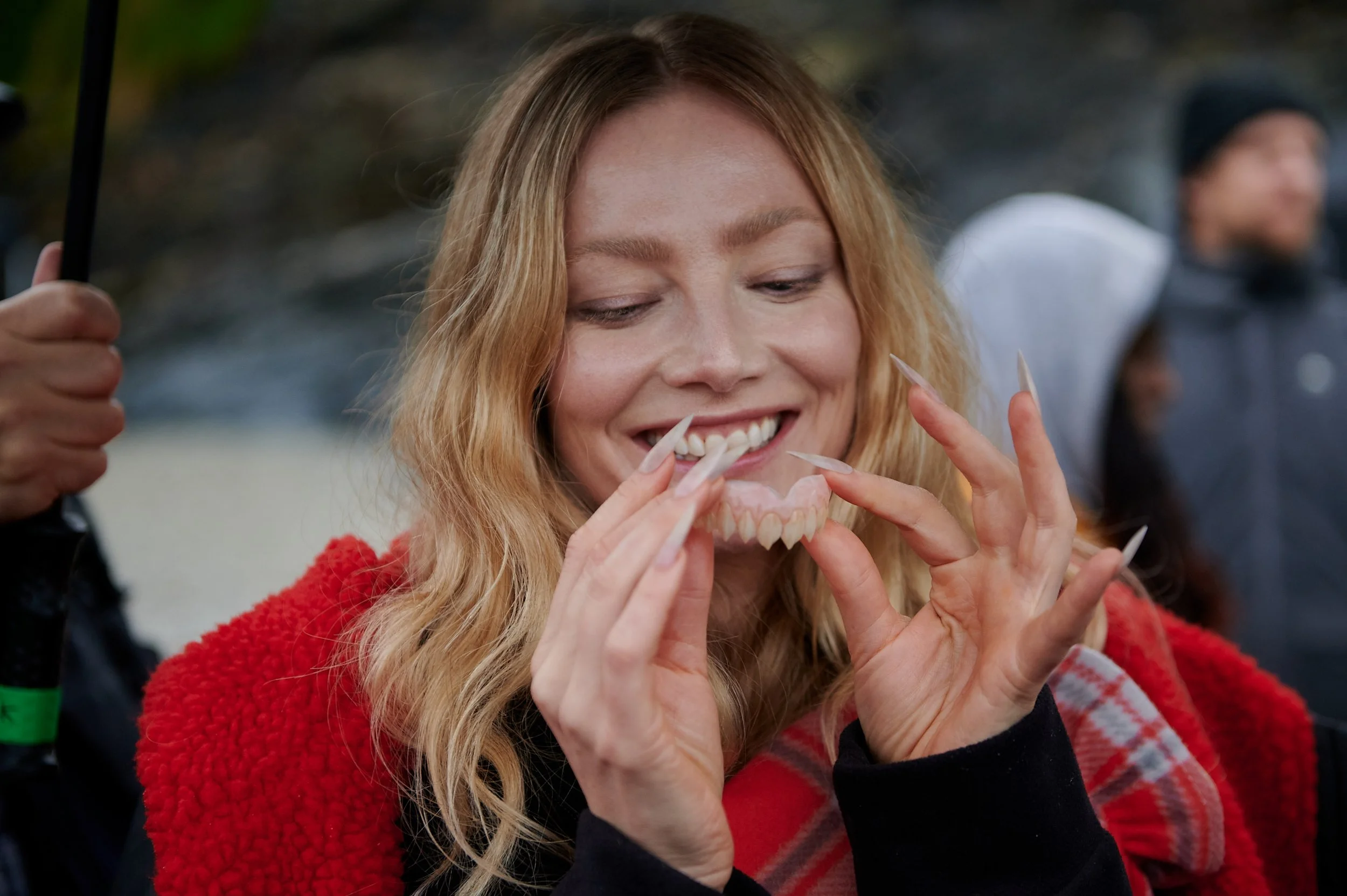
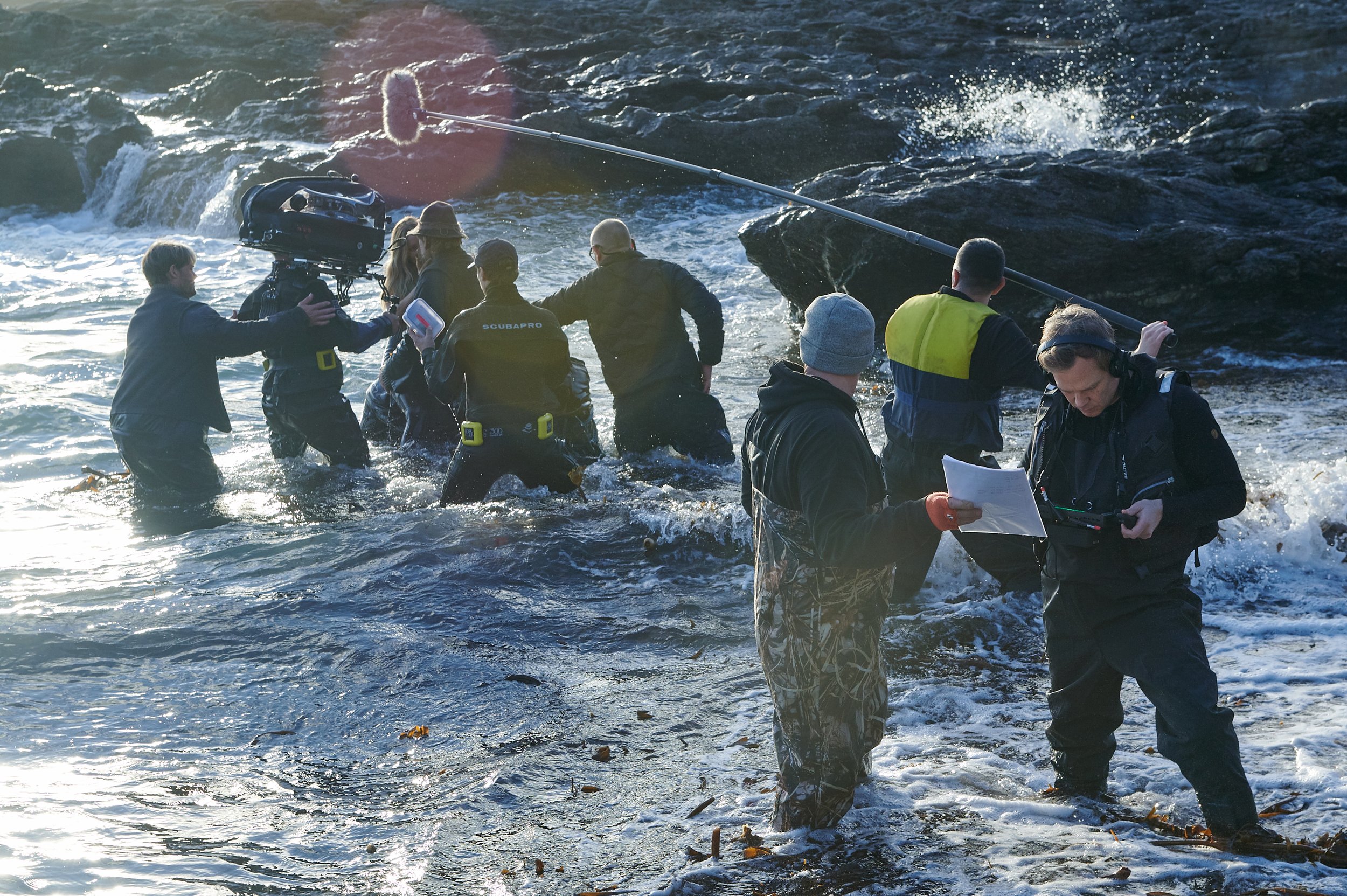
Creating a convincing mermaid on screen!
Also, the mermaid shooting out of the water during the boat scene springs to mind. It’s such a pivotal scene and the sequence was shot in a studio, with all the water effects achieved digitally. The challenge of creating that moment, making the digital effects blend seamlessly with the performance, gave me a whole new appreciation for how visual storytelling can transform a scene.
How did you overcome them?
It took months of discussion and inventive work with the SFX and VFX teams. I had to trust my imagination and the brilliance and experience of the team. When you believe in your instincts and you surround yourself with people who bring their own spark, the work starts to flow naturally.
Can you talk a bit about your process and how you balanced your performance with your role as director?
Preparation was crucial for me so that once I was in front of the camera, I could fully focus on the performance. I also found it invaluable to have someone I trust watching the monitor and giving me feedback, which I did.
Being an actor myself, I know how vulnerable it feels when all eyes are on you. Therefore, I know the best approach is to constantly reassure your actors and give them encouragement. Strangely, being in the ring with the other cast makes it feel more like a team effort for me, as if we’re all in it together. It really works well.
Who was the first collaborator to come on board the project and how did their early adoption help propel you forward?
Our storyboard artist Daniel O’Donnell-Smith and Koala FX.
We knew from the outset that the project would involve a significant amount of VFX, so it made sense for us to get to grips with this early on. Having a tight shot list allowed us to have conversations with Koala at an early stage and work out how to approach the work as economically as possible while still giving the story what it demanded.
Can you chat about your producers Ross and Matthew, how they came aboard the project and what they brought to the table?
I first met Ross on a short film I wrote called The Cunning Man. He did such a fantastic job that I knew I wanted to collaborate with him again on this project. When Ross had to jump on to the series Funny Woman, Matt Wilkinson came on board.
I’ve known Matt for years and have acted in several of his films. Even though this project was a short, he treated it the same as a feature and held me accountable to a tight shoot and post-production schedule. It really felt like I was responsible for delivering and that was a good push.
If I’ve done my research correctly, I believe you premiered at FrightFest, yes? How was that experience?
Yes, FrightFest was our first screening and UK premiere. Being recognised by one of the world’s top-reviewed genre festivals means so much. Genre films often push boundaries and take risks, and to have our work acknowledged in that space was so exciting.
At the same time, we premiered at Tampere Festival in Finland which is known for high-end art-house cinema. So, it was an honour to play both on the same weekend.
A lot of filmmakers believe they need to hit the world’s top festivals first. They often blow their submissions budget in the Sundance level festivals, and they wait to submit to (or skip altogether) second tier/genre/community festivals. But that doesn’t seem to be the approach you took.
The Pearl Comb has played quite a range of festivals, almost like working your way up the circuit. Can you chat about the approach you took to festival submissions?
I worked with Rebekah at Film Festival Doctor and trusted her strategy. We mainly hit the genre festivals first. When we started getting reviews that this is just as much a drama as a fantasy, we showed it to the drama festival organisers to expand the range of festivals. We just wanted to get it as far and wide as possible. Anything else was a bonus.
The festival circuit is a whiplash whirlwind - doldrums of rejection vs peaks of awards.
Most filmmakers can’t help but to compare themselves to their peers since we all advertise our successes on social media, but oftentimes keep our struggles hush-hush.
During your festival journey, what has been the hardest pill to swallow, and how did you keep going despite that setback?
I’m also a stand-up comedian, and the experience of trying out brand-new material is very similar and can feel quite scary! Ultimately, you have to say that new joke on stage and the audience either love it or they don’t. It’s the same with a short film. The overall motivation to keep going is that when it does kick in, it’s the greatest feeling in the world!
And now the question everyone has been waiting for... How did you manage to get your film released on Disney+ in multiple countries?
By the time the film had built momentum on the festival circuit, we already felt very happy with where things were. Then I came home one day to an email with an offer to stream on Disney which was completely unexpected. All interest is fantastic, but this was especially exciting.
What do you think are the biggest challenges facing emerging filmmakers at the moment, and as someone who’s been able to cut through the noise, what advice would you give to those hoping to follow in your footsteps?
My advice would be to get the story right first within the genre you are trying to master. Even if it’s a film you make on your iPhone with a budget of £500; if it’s a great story with great dialogue it doesn’t matter. The number one issue is people often shoot something where they have a premise or a theme, but no real story or ending.
What aspirations do you have for what’s next?
I have a supernatural horror feature, The Grimoire, in pre-production with Zephyr Films so we’re heading full steams towards that!
How helpful has The Pearl Comb been in getting you on a trajectory of being able to actualise those aspirations?
This was the first film I’ve directed, and pardon the pun, I threw myself in at the deep end by taking on a high-end project with a lot of VFX. I wanted to see if I could handle that level of pressure. Now that I have that experience behind me, and with the encouraging response the film has received, I feel reassured both in myself and in showing others that I can do it again.
FOLLOW ALI COOK ON INSTAGRAM
Apply to get your short selected as our Weekly Pick

Recovery of the Fallen
A lone man wanders a barren landscape on a foreign planet, salvaging items off of bodies that have fallen to the surface.
Written & Directed by Curtis Matzke
Produced by La Selva Ecosistema Creatiu
A lone man wanders a barren landscape on a foreign planet, salvaging items off of bodies that have fallen to the surface.
ABOUT THE FILM
Recovery of the Fallen was made as part of Werner Herzog's Filming a Strange Planet accelerator program. It won Best Horror/Thriller/Sci-Fi Short at Cinequest. Other festival highlights include the Chicago Critics Film Festival, Other Worlds, Tallahassee Film Festival, FilmQuest, and Hell’s Half Mile among others.
ABOUT THE FILMmaker
Curtis Matzke is a director, screenwriter, and producer based in Chicago, IL. His work has been recognized at dozens of festivals, including Athens International, Cinequest, NFMLA, and more. The legendary Werner Herzog recently mentored Curtis in the Canary Islands during a two-week accelerator program. In 2019, Curtis directed a short documentary celebrating Chicago’s Music Box Theatre, which earned him regional Emmy nominations for Off-Camera Directing and Historical Documentary. His full-length documentary (FIRST FEATURE), is in post and fiscally sponsored by Film Independent. His latest horror short film, SINK, premiered at the Academy-qualifying Chicago International Film Festival and has since screened at a dozen festivals. Curtis completed residencies at the Vermont Studio Center, Stowe Story Labs, Chicago International Feature Development Lab, Reykjavik Talent Lab, and Chateau Orquevaux. Three of his feature screenplays have advanced in the Austin Film Festival and won awards, including Best Screenplay at the Anchorage International Film Festival. He holds a B.A. in Media Arts and Technology and an M.A. in Telecommunication, Information Studies, and Media from Michigan State University with a concentration in Television, Cinema, and Radio, and a minor in Film Studies.
READ OUR INTERVIEW WITH CURTIS
Welcome to our Short of the Week series. Can you tell us a little bit about yourself and your filmmaking background?
Thanks so much for having me! I always say that my filmmaking evolved from an early interest in fine arts, particularly painting and drawing, which then evolved into an interest in photography, performance, writing, and cinematography. I went to Michigan State University, where I received my B.A. and M.A. in Media Arts and Technology I've been in Chicago ever since working as a freelance videographer and editor, which allowed me the time and flexibility to develop my own work. I've worked almost every role on a film set and directed nearly a dozen of my own short films and music videos. I also do a lot of documentary work which is nice because there are often a lot fewer logistics to deal with than in narrative fiction filmmaking. The work has certainly evolved into more directing and producing work, which is exciting. That being said, I'm most proud of my work as a writer and generating new ideas from the ground up.
Recovery of the Fallen was made as part of Werner Herzog's Filming a Strange Planet accelerator program. Can you tell us about that experience?
The program was an amazing experience. I could speak for hours about all that happened, including the many Herzog-isms he bestowed upon us during that time. I wrote a pretty in-depth article about what happened for Filmmaker Magazine so I could remember it all. The program consisted of about fifty international filmmakers, all of whom were mid-career professionals. I was one of only ten Americans. We spent two weeks on the island of Lanzarote off the coast of Spain, which is a beautiful island covered in black beaches and amazing landscapes. Herzog was with us every day. We would have lunch and dinner together and he would speak for hours after, answering any questions about his life and career. The program was set up where we would quickly have to scout pre-selected locations on the island, write our own short script, cast with local actors (many of whom were non-professionals), shoot and edit the film, and then present it to Werner and the other participants by the end of the trip. Because we were all well experienced, one of my takeaways was the importance of unlearning a lot of things about the traditional aspects of the filmmaking process and going back to the basics of storytelling. This new mindset allowed us to rely on our instincts while adding economy to the filmmaking approach. As we progress in our careers, we tend to put up barriers to what we think we may need for a production when it's often very simple. This program helped us refocus our skills.


Tell us about the genesis of Recovery of the Fallen. What was the inspiration behind the film?
The initial inspiration was just from walking around the island of Lanzarote. The first two days of the program were location scouting on a big bus with Werner, which is incredible (especially with his commentary over the microphone). We would stop at these locations and just wander, looking at the landscapes. He wanted us all to make science fiction films (which I love) because the island naturally looks like another planet. So the idea of walking around this barren planet came to mind in a way that was similar to Cormac McCarthy's "The Road." I thought about these portals and being thrown into space (which is how I felt at the time). It subconsciously evolved into an environmentalist film about Earth dying and how someone can maintain faith when there is no hope left in the universe. I'm drawn toward these open-ended ideas that hint at a bigger world, particularly in short films where it's tricky to cram in a full three-act structure. I wanted it to wash over you like a visual poem rather than a straight narrative. And as a horror filmmaker, I had to throw in a few dead bodies as well.
Tell us about the experience of shooting the film.
The film was shot digitally on my Sony a7sii with a limited crew of pretty much myself and the people you see on screen. Nacho, our lead actor who lived on Lanzarote, was incredibly gracious in driving us around the island. Production was only one day with Nacho coming in to record the voiceover on a separate day. I was the cinematographer and my friend Jake helped with a bit of the dialogue recording (and acted as the first body). I also included a bit of drone footage that was filmed during my initial scout on a separate day. I collected so much b-roll from the trip that I even made another short film, a documentary titled LA ISLA DE ALFREDO, in which I speak to a local character who lives in Lanzarote. That film screened at half a dozen film festivals as well.

What were some of the main obstacles you experienced when making Recovery of the Fallen and how did you overcome them?
The opening scene of the film takes place on a huge volcano, so practically, hiking up that thing with gear was quite the physical obstacle. Overall, I was under a deadline and only had one day to shoot. Luckily, the producer part of my brain kicked in and I overcame the logistical issues with a pretty detailed pre-production plan. I didn't storyboard the film but had an extensive shot list and trusted my instincts while shooting. I was very economical in the way we did it didn't overshoot. Pretty much everything I shot is in the film, aside from a few alternate takes.
It was quite stressful trying to pull off the film in a limited amount of time. The pressure of showing it to Herzog, without the time to analyze the edit in depth, added extra anxiety. He did not mince words about what he thought about the films, which was pretty intimidating at first. To my surprise, however, I wasn't as worried as I thought I would be on the day we showed him our work. We were all professionals selected for this experience so all of a sudden this strange relief washed over me. I think the greatest gift he gave me was that confidence moving forward: if I can stand up and show my work to such a legendary filmmaker, I can do the same with anybody. Thankfully he did like the film, calling it "well shot, well acted, and mysterious," which is probably the best pull quote I'm ever going to have for one of my films.
Tell us about the journey of getting your film to audiences and some of the festival circuit highlights, particularly your win at Cinequest.
The response has been amazing. It's an odd little film so I wasn't sure where it was going to go, particularly because it doesn't fit into one particular genre. That said, it did go to a few of my favorites that I've had films at in the past, including FilmQuest and Genre Blast. Cinequest was great because it screened before a feature and receiving a top award at an Academy Award-Qualifying festival was quite the surprise. I had been to that festival before with a short screenplay so was thrilled to come back and win. The context of making the film in such a short amount of time adds a lot to the story and has proven to be quite a good sample for me as I move into bigger projects. I've even had a few executives ask me if it was intended as a proof-of-concept for a feature. "The Wind Is Your Enemy" essay I wrote for Filmmaker Magazine was another great privilege and helped reach a lot of people.
What do you think is the biggest challenge short filmmakers face in the early stages of their career when trying to break into the industry?
I think a lot of short filmmakers struggle to find their voice early on and explore topics they don't know much about. I don't believe in the idea that you should "write what you know," but would encourage people to write what they're curious about instead. Explore something new, do research, and talk to different people. You may find something far more unexpected. So when it comes to career and "breaking in" you'll be able to do the job much better because you've put in the work. We live in an oversaturated landscape so the more unique you are, the more likely you are to get noticed. I'd also say to just keep making work consistently, don't sweat over one project. Try something new, keep writing, and move on to the next one.
What advice or hacks would you give to other short filmmakers?
One thing Herzog emphasized was to focus on what is achievable but don't shy away from being ambitious. Don't make a film just because you think Sundance is going to like it, make a film that you are going to like. I'd also say to learn about every part of the filmmaking process. A good filmmaker knows how to intimately communicate with every member of their team. Learn the ins and outs of cinematography, sound, editing, graphic design, etc. so you know what you need and how to articulate it. It's a collaborative medium but don't shy away from your vision and what compels you.
Any film recommendations that we should add to our watchlist?
Well, I just saw DUNE: PART II the other night, which was pretty enjoyable. In terms of newer films, this was a great year for international films so be sure not to shy away from subtitles and catch PAST LIVES, GODZILLA: MINUS ONE, PERFECT DAYS, etc. There are too many great things out there and I'm far too behind. I also just came back from SXSW and caught DICKWEED, AZRAEL, and THINGS WILL BE DIFFERENT. A lot to seek out!
Interested in getting your work selected as Short of the Week?

Dead Whistle Stop
Daniel’s not going to the office today. A dying man asked him to deliver a letter. Though he’s not sure who the dying man was or where the person he’s delivering it to is. Or what, if anything, it has to do with his new neighbours, The Illuminated Brotherhood of the All Seeing Eye.
Written & directed by Sean Mckenna
PRODUCED by Jamie Macdonald
Daniel’s not going to the office today. A dying man asked him to deliver a letter. Though he’s not sure who the dying man was or where the person he’s delivering it to is. Or what, if anything, it has to do with his new neighbours, The Illuminated Brotherhood of the All Seeing Eye.
ABOUT THE FILM
Dead Whistle Stop was commissioned by BFI NETWORK and Film Hub North. Produced by Paisley Films and narrated by Kate Dickie (The Witch, Game of Thrones), the short film won the RTS NE Award for Best Short Form and has screened in competition at the BAFTA Qualifying festivals Aesthetica, POFF, Bolton and LA Shorts. We saw the film while attending the BIFA Qualifying Sunderland Shorts, a fellow member of AIFF.
ABOUT THE FILMmaker
Sean Mckenna makes funny, dark and often surreal films. Prior to Dead Whistle Stop he completed the short Future Perfect which was commissioned by Channel 4’s Random Acts and narrated byJulian Barratt (The Mighty Boosh, Flowers). It premiered in competition at Encounters Film Festival and was selected as Short of the Week following its festival run which included screenings at British Shorts Berlin, Aesthetica Short Film Festival and Reykjavik Film Festival, where it won best experimental short. He was also one third of Hot Gulp writing, directing and performing short form comedy for TV and online including writing a TV pilot for Bonefide Films and Channel 4 titled Storydweller starring Steve Oram (End of the F***ing World) which went on to win best sitcom pitch at LOCO.
Previously he’s also taken part in a comedy feature development programme with Screen Yorkshire and in funded development with Northern Film & Media on comedy sitcom Sea Bastards. In 2020 he was commissioned to direct a short comedy for Channel 4 online (1.7m views). Most recently he was selected for the Screen Yorkshire Talent Lab: Flex where he’s part of a newly formed team developing a mystery/drama TV series -All Souls. In 2023 he was selected for BAFTA’s Connect Programme. When not making his own work he works as a freelance filmmaker supporting young people and communities to develop their filmmaking skills. He works with a variety of organisations including New Writing North and Beacon Films.
READ OUR INTERVIEW WITH Sean
Welcome to our Short of the Week series. Can you tell us a little bit about yourself and your filmmaking background?
In my youth I used to work as a floor layer but after pulling up one too many stinking night club carpets I decided I didn’t enjoy that job so, as I’d always been the one in the group who liked weird (ie not mainstream) films, I decided to study film-making. I quickly discovered that most of the people teaching that in the college I went to didn’t seem to be enjoying their jobs either but I concentrated on using the gear and with friends to start making my own work. I’ve been making films since. And teaching film-making which I, fortunately, do also happen to enjoy.
For a number of years I was in a comedy group, Hot Gulp, with a couple of other of friends. We produced a lot of videos, writing, directing and appearing them – really as a collective but when we stopped doing that I returned to focusing on writing and directing my own films again. I was generally the one who’d be pulling for us to be a bit stranger and so now I’m back to doing my own thing that’s where I tend to gravitate. I still kind of think most of what I’ve done recently is funny. But it may just be a few people who are getting the joke now.
Tell us about the genesis of Dead Whistle Stop. This was produced with BFI Network, yes? What was that experience like?
I actually wrote the film several years before making it, before my previous short Future Perfect. When coming up with a follow up to that I was toying with an idea that I realised was like something I’d written before, so I dug it out and to my surprise I still liked it. BFI Network funded it and were great. I redrafted it myself, but really had very little requests for alterations from them and was left to my own devices, perhaps cause it’s so odd. Why take one odd bit out and not another?
Where the initial inspiration came from is hard to say but there are a lot of my own preoccupations in there. I would say broadly that we get fixated on some things in life, we want answers to mysteries and searching for the answers. Answers which mostly aren’t there. And all this distracts us from other, maybe more important things.
But then if you ask me this tomorrow I might say something else.
What were some of the main obstacles you experienced when making Dead Whistle Stop and how did you overcome them?
I think generally I was very lucky with Dead Whistle Stop. I had a group of people working with me who, despite wondering themselves what the fuck was going on a lot of the time, threw themselves into it and the shoot was a great experience. Having a team doing that in sync is a wonderful thing and all credit to producer Jamie Macdonald and AD Hal Branson for facilitating that. This was also the first time I’d worked with a casting team, Olly Gilbert and Katy Covell, and without them I wouldn’t have found Taurean or got to Kate Dickie for the narration.
I suppose figuring out how to travel round Europe without leaving the general Newcastle area was tricky. Finding places that could stand in for the other countries and arranging unit moves but overall that was quite good fun and finding the places got me out of the house during the fag end of the lockdown times.
Tell us about the journey of getting your film to audiences. How have you found the online release of your film compared to its festival run?
The festival process is a long one but I’m very pleased to have got into where we got to. One word of advice for other film-makers, if you get the opportunity to go to festivals, go to them. I attended a few but wish I’d gone to more. Having the film released through Omeleto has also been great. It’s really helped get it out to a broader audience than it otherwise would have. I’m not the greatest at online self promotion. I may in fact be the worst. So having that platform has been invaluable. Having people see it online is different to a festival. With the latter you get people who love film, want to be supportive and, if you’re there, will say nice things to you. Online, when people comment, they have no association with you or your film so are free to mouth off and pull it apart if they don’t like it. There’s value in both.
What do you think is the biggest challenge short filmmakers face in the early stages of their career when trying to break into the industry?
If we’re talking about Directors, Writers and Producers, the biggest challenge is you don’t get money from it. You may even end up out of pocket. As a result it’s hard to sustain, to make more, mess up and get better.
Having said that, access to cameras to shoot, software to edit, even software to create incredible FX has never been easier to come by. A lot of great stuff is on your phone, but even stepping beyond that is easier than it was in the past. As a result there’s a flood of stuff and getting yourself noticed is a skill in itself.
Ultimately though, I think another big hurdle is how much people get in the way of themselves. Often people are too self critical and scared of failing, so they don’t just get out and do it. On the other side some people are too convinced of their own brilliance and won’t take advice from anyone and feel like they're being treated unfairly cause they don't get their hands in the small pot that's out there..
You’ve got to find a sweet spot – being confident without being an arrogant arsehole and having some humility without being paralysed with doubt. If you figure out how to do that let me know.
What advice or hacks would you give to other short filmmakers?
If you don’t feel confident – fake it. Everyone is faking it.
Get good actors and make sure it’s in focus.
Related note – if you’ve not already done it, do some acting. What actors do is a total mystery until you do it yourself.
Get a good sound recordist.
Watch more films and read more books. The greats all steal. You’ve got to know where the jewellery box is if you want to stuff it under your coat.
Download DaVinci Resolve and Unreal Engine. It absolutely blows my mind that they’re free.
Any film recommendations that we should add to our watchlist?
I’m more inclined to say what not to watch, like Marvel films and the other big franchise behemoths that suck up all the air these days. If we don’t keep watching independent and leftfield stuff it will stop being made and we’ll miss it when it’s gone. One thing I’ll add is if you like someone don’t just watch what they’ve done, watch who they stole from.
Interested in getting your work selected as Short of the Week?

RoButler
Overworked in the email department at the a local Welsh council, Cwnt Jones purchases a personalised AI assistant in order to help make his life better- the RoButler.
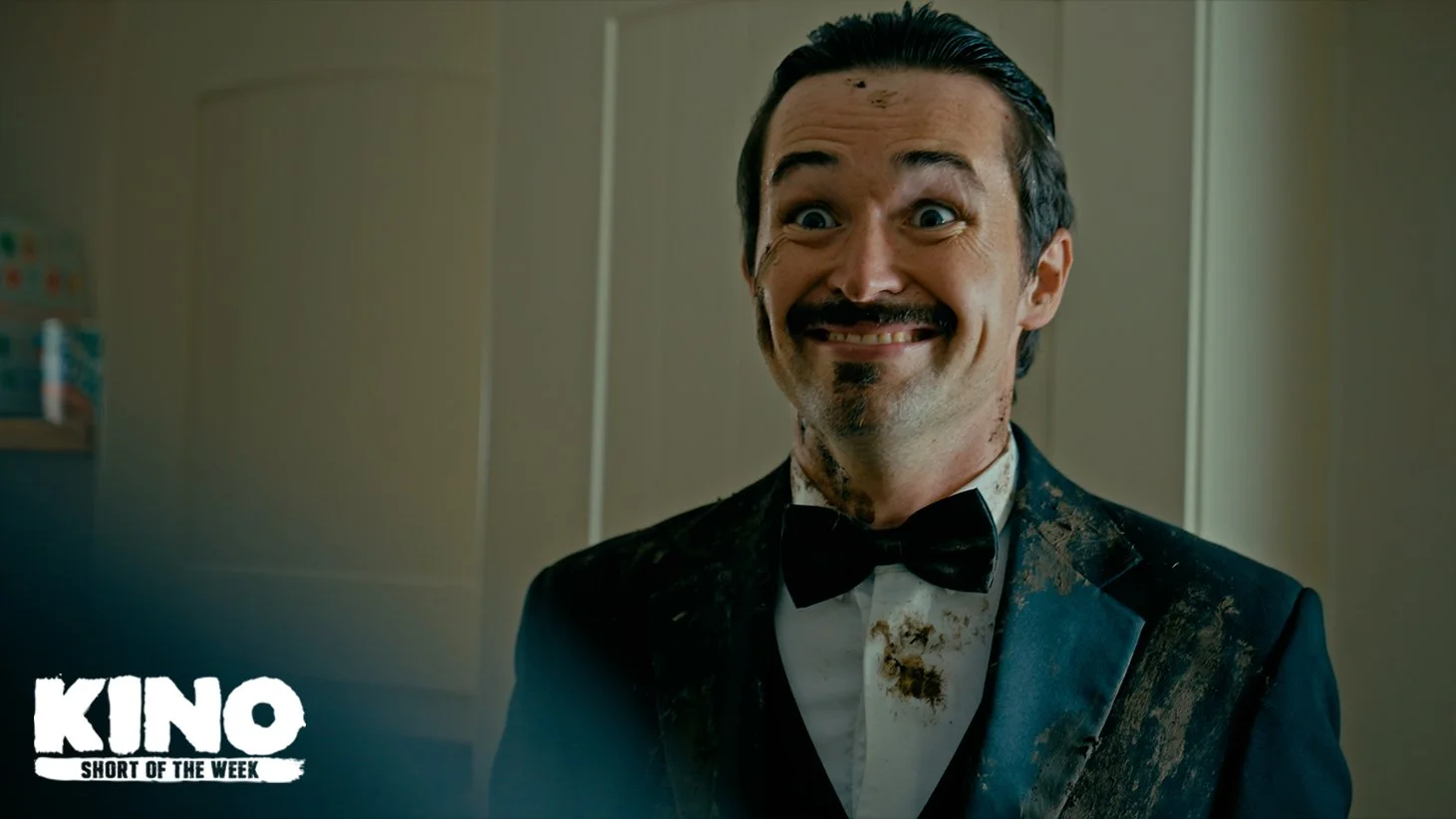
Written, directed, edited & starring James Button Director of Photography & visual effects Paul Marke
Overworked in the email department at the a local Welsh council, Cwnt Jones purchases a personalised AI assistant in order to help make his life better- the RoButler.
ABOUT THE FILM
RoButler was created for the London Sci Fi 48 Hour Film Challenge. It was nominated for Best Micro-Budget Short, Best Performance in a Comedy, and Best Editing at the 2023 edition of our Kino London Short Film Festival. It also played at the BAFTA qualifying Carmarthen Bay Film Festival and the BIFA qualifying Short Com and The Shortest Nights.
ABOUT THE FILMmaker
Welsh filmmaker from Wales who loves making weird, wacky and silly comedy- James Button has made films about aliens, dinosaurs, time travelling in traffic, adorable goats and dog poo! Double BAFTA Cymru-nominated writer/director of 23 short films, all gaining official selections and screenings. Mostly comedies, they've nabbed 57 awards at international film festivals and competitions. James had fun making fun films for fun for the past 10 years alongside working full-time in commercial work. In 2023 James is now focussing on longer-form projects with two (dream) comedy feature scripts he is very excited to get made.
READ OUR INTERVIEW WITH JAMES
Welcome to our Short of the Week series. Can you tell us a little bit about yourself and your filmmaking background?
Ever since getting my hands on a camcorder at age twelve I’ve been making all kinds of nonsense. I simply love it and can’t imagine doing anything else, so have somehow managed to get away with basing my life about making stuff.
My favourite things in life are traveling, sleepovers, friends and films- and filmmaking kinda blends all of them.
Brilliant. So yeah basically, I just haven’t stopped making my own projects my way about fun things that we have fun with which hopefully people have fun watching! Never having had big budgets, my small band of filmmaker friends have had to get super creative with DIY indie filmmaking to make a lot with a little.
Tell us about the genesis of RoBulter - how the project came about and where you found your inspiration?
Well, this one never really should have happened.
Paul Marke and myself had previously done the London Sci Fi 48 Hour Film Challenge twice before- not taking it too seriously with me playing an angry Welshman shouting at aliens once (Flying Visit) and an AI house the other (Melting Point). So when Paul messaged me the day before the Challenge in 2022 and was like, “you up for it?”, I was like “oh alright then”. However, I had a migraine, we had ZERO budget, ZERO crew, ZERO cast but any excuse for a sleepover, even one with ZERO sleep.
What is the most challenging and/or exciting aspect of creating a film in 48 hours?
Subconsciously, I think we really wanted to test (or punish) ourselves by defaulting back to barebones DIY filmmaking to see what we could get away with.
I grabbed a few costume bits (including a tux and coloured contact lenses) from my dressing up box and just the two of us...went for. We ended up roping in Paul’s statistician wife Helen, his cat Narla (also a keen statistician) and then our composer (James Morris) popped around to see what we were up to...which resulted in him getting recruited on his first ever film set as boom operator, body double and prop maker. He even had to make a circuit board that would fit up my bum.
I think the most exciting thing about making a film in 48 hours is just getting to make something- no excuses. There is no time to overthink, self-doubt, delay- you just have to commit and dive in headfirst and really push yourselves. It’s mad.
Did any pre-existing creative ideas happen to fit the brief for RoButler or did you make the film 100% from scratch?
I knew I’d probably have to play multiple characters as we didn’t have any (actual) actors lined up so on the way over in the car I cycled through some weird voices to try see who I could invite to the party. Then I basically went off to a bedroom and wrote way too many silly scenes based on a quickly brainstormed concept with Paul, of someone stressed (based on our clients) who tries to get help, but only makes things worse.
In terms of scripting it was relatively simple as I knew I’d be improvising around it anyway (I can’t help myself) and having played multiple characters before I kinda knew what could and wouldn’t work.
Also Paul is a VFX genius and the real brains behind getting this actually made. Although whilst writing, I completely accepted we probably wouldn't get it done in time...but it would be fun. Turns out...we got it done in time and despite it being a whirlwind without sleep, oh it was fun.
Would you ever continue working on the film after 48 hours for your own personal satisfaction, or once the deadline is complete do you walk away from making any tweaks?
The version of RoButler selected at Kino (and other festivals) is a polished version where basically Paul revamped some of the VFX, James Morris did a new sound mix (he was sleep mixing the first time) and I attempted to do a re-edit. However, I soon found the frantic pace, lack of sleep and rushing really gave the film the energy so barely made any tweaks as part of the magic of a 48 hour film is the harnessed fun and ticking clock vibes. So just because we loved it, it seemed to go down well (and because we thought it would be really funny for it to get into festivals!) we did a visual polish and an audio tidy- and sent it out!
If you had more time to work on this project, what is the main thing you would like to change/develop further?
I think I’d make something better to be honest!
It’s a love/hate thing with me and RoButler- like I love that we bashed something out in a couple of days and that we’re still screening it all over. Buuuut I’m also painfully aware every time I watch it that we can do so much more!
If we had more time, any money, and probably even a bit of planning we could make something more reflective of where we are in our filmmaking adventure. I think RoButler is what it is, a very silly film- too fast and and something that shouldn’t be taken seriously- which is kinda our style but would really love now to get one of the backlog of comedy short scripts produced to have some fun for a little longer!
Tell us about the journey of getting your film to audiences.
I originally popped RoButler straight on YouTube after we finished but I think seeing the laughs it got, I was tempted to see if we could get it seen on a bigger screen with a live audience. I feel I really learn a lot by screening our comedies live as although my heart goes way too fast, I like how you can hear and feel the reaction it gets to learn from it about pacing, gags etc. for next time. But really didn’t expect it to go to like five BIFA and BAFTA qualifying film festivals and I’m not just saying that! It’s shot in Paul’s kitchen, with a tiny crew, with a script I rushed out to just make Paul laugh and it feels as rushed as it was- however, it is short and fun so I’m more than happy to have it be an ice-breaker laugh, or palette cleanser after a proper heavy drama or just something to wake people up literally going “what the hell is this?” (which I’ve witnessed happening!).
What advice or hacks would you give to other short filmmakers?
Oh just go and make some stuff. I know it sounds too simple and has been said a billion times. Obviously you’ll be capped to an extent without a budget and all that- but if you can find filmmaker friends (just one apparently!) who loves doing it as much as you, even if it’s just a weekend go have some fun and practice.
I’ve made films for so long now but it's only really when I’m running around doing a bit of everything, solving silly practical problems (“how do we make the lights move when the drone flies in?” “Fishing wire!”) or laughing on set that I feel I’m really living it and learning from it.
Paul Marke is one of the best filmmakers I’ve ever met- a truly amazing person, dedicated and reliable friend but a damn good filmmaker. He inspires me by making a thirty minute comedy sketch show just to get out of doing a speech at his own wedding, which ended up being better than a lot of commissioned broadcast TV comedy- and just the quality of the work he can create on a whim with a laptop is insane. He can do that because he just does that- as in, he just goes and does it and if he hadn’t messaged me asking “you up for the 48 sci fi challenge tomorrow?”, I wouldn’t be here now. Writing this I mean, not dead.
Any film recommendations that we should add to our watchlist?
Argh! This was the only question that scared me because it’s so much pressure with so many better filmmakers reading this who have already seen them all!
I think I’m going to have to do a cheat answer...(sorry) and say, go to a film festival. Go in blind. No recommendations, no hit list, no hype, no expectations. A whole block of short films..no wait, multiple BLOCKS of short films.
Some of the best learning and some of the best constructive conversations I have is coming out of a screening with some trusted friends, going and hiding in a coffee shop (or on a sleepover) and just go through them ALL. What did you think? What did you feel or did you even? Why didn’t they work? What would you do differently? I’ve found you can really bond with collaborators over this and find your tribe, because your director to DP relationship or with your composer or any collaborator really can really be proven when you find yourself in agreement on this. Once you watch films and talk films with people, you soon find yourself making better films and the films that you all want to make.
Obviously you always try work with people that are better that you (I do) but also with ones who’d do things the same way or wouldn’t do that or would do this instead? Sorry I don’t know if any of this makes sense but basically watch SHORT FILMS. Watch good inspiring films and just as importantly watch yummy BAD films. You can literally watch like 300 in a weekend (I did earlier this year!. So I’d say go to Kino 2024 ;)
That was a flirt. Sorry what was the question?!
Interested in getting your work selected as Short of the Week?

Mimesis
A lonely technology addict signs up for a bizarre dating service, which calls his human existence into question.

Written & Directed by Rumen Russev
produced by Dessy Tenekedjieva
A lonely technology addict signs up for a bizarre dating service, which calls his human existence into question.
ABOUT THE FILM
MIMESIS was created as part of the prestigious 355 FILM AWARD in Bulgaria – where three young filmmakers are chosen by an international jury to create three five-minute films in five days with a budget just shy of £1000.
The film premiered at the Stoyan Karmbarev Foundation ceremony in Bulgaria where it was the winner of The Goldfinch Film Award. Following it’s premiere, the film started a Bulgarian festival tour including playing at Киноваканция New Bulgarian Cinema Festival and Golden Rose Bulgarian Feature Film Festival, followed by an International festival tour with highlights including: Film 4 Fun International Comedy Short Film Festival, Soundscreen Film Festival, Sci-Fi Floripa International Film Festival (2023), with it’s British premiere at the Electric Film Festival in Bournemouth.
ABOUT THE FILMmaker
Rumen Russev developed a passion for storytelling during his "Creative Writing" classes at Liverpool College before going on to study "Film, Television and Digital Media" at UCLA. Currently, he creates in a studio space in Sofia.
READ OUR INTERVIEW WITH RUMEN
Can you tell us a little bit about yourself and your filmmaking background?
Hello, my name is Rumen Russev (@rurussev) – a creative and film director from Bulgaria. I studied “Film” at UNIVERSITY OF KENT and “Film, Television & Digital Media” at UNIVERSITY OF CALIFORNIA, LOS ANGELES. In 2022, I founded a production company in Sofia, STUDIO FLICKERS, which is specialised in the creation of digitally distributed films, shows, music videos & commercials.
During my childhood years, I wanted to become an astronaut and reach the unreachable. Many years later, I realised that you don’t need a rocket to land on the Moon – a camera, a detailed set & a professional crew can also bring you there. So, in the summer after eighth grade, with the help of family and friends, I made my first adventure-comedy film. It was screened at the local cinema in my hometown and everyone loved it. Ever since then, I have never stopped pushing the cinematic boundaries further and creating inspirational projects, which could leave lasting memories in people’s minds.
Tell us about the genesis of Mimesis?
The story was born from my own relationship with technology and how it pulls us away from the present. For example, the amount of time we spend on video sharing apps by simply swiping up and down or the number of photos we edit on social media apps to make our content more suitable for the algorithm.
I wanted to portray our modern world by focusing on two aspects: online dating and digital content consumption. Taking inspiration from real-life events, I decided to examine the moments when time “freezes” and we get lost in the vortex of our (phone, TV, computer) screens. Ultimately, I asked myself a question: To what extent will technology intervene in our personal lives? The final scene of MIMESIS serves as an answer to the aforementioned question.
What were some of the main obstacles you experienced when making of Mimesis and how did you overcome them?
It is important to mention that my short film was created as part of THE 355 FILM AWARD – a prestigious competition in Bulgaria – where three young filmmakers are chosen by an international jury to create three five-minute films in five days.
So, taking this into consideration, time was obviously the biggest challenge for my project. However, I managed to create a good schedule. Day one was for filming. Day two and day three were for editing. Day four was for color correction. Day five was for sound design and music.
Another problem I had was the small budget. It was just below £1000. However, by pulling in favors from my friends, family & colleagues, I managed to assemble a team and a collection of great locations to set the film in.
Apart from the limited time and small budget, production went pretty smoothly.
Can you tell us a bit about working with the 360 spiral camera rig and your decision to use it stylistically at a few key points in your film?
The technique allowed me to create more immersive sequences. Honestly, I have used the 360 spiral camera rig in so many projects, that it is now part of my signature. Usually, I achieve the effect with the help of a gimbal. However, since I used a RED camera for this project, which is much heavier than a DSLR camera, a gimbal wasn’t an option. So, my director of photography used a really old, significantly bigger & much heavier device, so that we can get perfect shots.
Tell us about the journey of getting your film to audiences.
I was really lucky to have my premiere at the STOYAN KAMBAREV ART FOUNDATION ceremony, which is a big event in Bulgaria. Straight after that, MIMESIS was screened at a few national festivals and then started its international festival journey. It was accepted by plenty of festivals from around the word, but it was also rejected by others. I think it’s just important to remember that every festival is subjective. Furthermore, I realize that my film has an interesting concept, but it doesn’t have a fully-fleshed out story (since I only had 5 days to make it). Overall, I was happy with the distribution and, as the festival circuit came to an end, I reached out to several online platforms, which decided to feature the film.
What advice or hacks would you give to other short filmmakers?
There is a perfect quote by Quentin Tarantino: “If you want to make a movie, make it. Don’t wait for a grant, don’t wait for the perfect circumstances, just make it.” Honestly, that’s the best advice I can give. Surround yourself with talented people, bond with them and create awesome stuff together.
What do you think is the biggest challenge short filmmakers face trying to break into the industry?
In my opinion, finding the right path (distribution) for your film would be the biggest challenge. Submitting your six-minute project to every A-list festival is definitely not a good idea (it is also an expensive one). There are hundreds of smaller (and still great) festivals, which are willing to screen your work in front of hundreds of people. In short, before hitting that submit button, you should definitely do your research. At the end of the day, every good film finds its audience sooner or later. You just have to be patient.
Any film recommendations that we should add to our watchlist?
The biggest influence on MIMESIS is probably the work of Spike Jonze, especially HER (2013) and I'M HERE (2010). Additionally, there is a truly creative commercial, called LAMP (2002), also directed by him. So, if you haven’t seen those yet, you should definitely check them out.
Interested in getting your work selected as Short of the Week?

Standing Woman
In the near future an authoritarian government turns those it deems to be criminals into trees as part of an insidious environmental campaign.
Directed by Tony Hipwell
Produced by Tony Hipwell & Max Gee
Screenplay adapted by Max Gee
Based on the short story by Yasutaka Tsutsui
Standing Woman is a dystopian drama with flourishes of body horror that depicts a near future where an authoritarian government turns those it deems to be criminals into trees as part of an insidious environmental campaign. Under this green dictatorship, a propaganda filmmaker wrestling with the recent ‘planting’ of his wife for making seditious comments, embarks on an emotional journey to say a final goodbye. Featuring incredible depictions of a populace being slowly vegetised by a production team who have worked on the likes of Censor, Doctor Who, and Peaky Blinders, the vision presented in Standing Woman is of a world that has edged into eco-fascism.
ABOUT THE FILM
Standing Woman is based on a short story from internationally acclaimed author Yasutaka Tsutsui. The short film screened in competition at Leeds International Film Festival 2021 as well as playing at Frightfest, Fantasia, Filmquest, and Hollyshorts just to name a few. It was released online on ALTER.
ABOUT THE FILMmaker
Tony Hipwell is a multi-award-winning filmmaker whose work has screened at Academy Award, Canadian Screen Award, BAFTA and BIFA qualifying festivals such as HollyShorts, Fantasia and the sadly departed Edinburgh Film Festival.
Their debut feature, Whoops! premiered at Raindance and made the Top Ten picks of 2013. It was also the only British film selected for the nationwide Raindance Tour the following year. Since then, Tony has developed projects with the BBC and Searchlight Pictures, worked as the Video Producer for Young Thugs Records in association with EMI and been selected for the inaugural Future of Film Incubator.
READ OUR INTERVIEW WITH TONY
Welcome to our Short of the Week series. Can you tell us a little bit about yourself and your filmmaking background?
I’m a writer/director based in Yorkshire and have been making films for nearly 20 years, usually in the horror genre. I always wanted to be a filmmaker but got heavily pushed away from that career path as a kid and found myself miserable in a law degree as a result. Eventually I thought screw it and decided to follow my dreams and moved to York to go to film school. I’ve not looked back since. I’ve made a little bit of everything including two features. I love the indomitable spirt of indie filmmaking; the can-do attitude, the sense of community and the sheer fun of making something happen at a grass roots level.
Tell us about the genesis of Standing Woman and the genesis of the project?
A friend of mine, Max Gee, came across the original short story and adapted it as a short screenplay for fun and shared it with me. I was immediately transfixed by the dystopian world it presented that was both incredibly benign and spectacularly cruel. I was convinced we could translate the script to screen and thankfully, Max agreed with my ambition.


What were some of the main obstacles you experienced when making of Standing Woman and how did you overcome them?
There were many obstacles for making the film. The first one was just getting the rights. The author of the short story, Yasutaka Tsutsui is incredibly well regarded and there was really no reason for him to trust his story with us, but Max moved oceans to make contact. We had a copy of the screenplay meticulously translated to Japanese for him to approve. Amazingly he approved the script, and we were given a window of time to produce it which we JUST made.
The next trick was getting the tree effects to work and that took a long time to develop and even led to us delaying the shoot by a year as we didn’t want to rush them. I also really wanted to have a very autumnal look for the film so had to wait out the seasons.
Casting was hard. We had a casting director at first, but they just couldn’t find what we were looking for. Max and I were adamant that one of the leads be played by someone Japanese so we weren’t white washing the source material, but we were repeatedly told there just weren’t any to cast in the UK or it would be too difficult. In the end I cast the film myself and found Yuriri who was phenomenal in the film.
Raising money was incredibly difficult as well. We went through the usual routes but got rejection after rejection. At one point we had to ask ourselves whether we should retire the project. But we had the rights and couldn’t let this world go so I got a loan to cover the costs. I don’t advise this, but sometimes you just have to see an idea through.
Can you chat about the process of creating the makeup and production design for the tree people?
The design phase was an exciting time. It was a collaboration between myself, the production designer Bethan King and make up designer Rachel Red. At first, we had designs which were a little too ‘magical’ for lack of a better description. They were beautiful but looked too much like something you might find in a Guillermo Del Toro film. This would seem a good idea, but we needed something more grounded. Bethan really pushed to go as real as possible and took casts of countless trees to develop individual looks for the different tree people. Each tree person or animal in the film is turning into a different kind of tree which gives them a real sense of individuality and personhood. We have the Oaks at the post office and Mari who is turning into a Cherry Blossom Tree. Even the dog is turning into a specific kind of shrub.
We thought at first there might be some digital work to enhance the trees but, in the end, it was all accomplished in camera and represented a seamless blend of production design and make up effects. Bethan also fabricated some full size tree builds which were incredible, including the final one for Mari at the end of the film.


Tell us about the journey of getting your film to audiences. It appears you've had quite some success in the festival circuit with Standing Woman. with highlights including Frightfest, Fantasia, Filmquest, Hollyshorts, Leeds & more. Tips and tricks for other short filmmakers looking to crack the festival circuit?
The festival run for the film has been extremely gratifying. It felt like such a wild idea we wondered if audiences might think it was too outlandish, but I think the themes had become so much more current over the time we developed it that the bizarre premise only added to the subtext on climate change and authoritarianism.
I had mainly done comedy tinged work up to this point and this film represented a tonal shift for me as a filmmaker and so we were a little unsure of how to approach our festival run at first, especially as it straddles sci-fi and horror as well. We partnered with Festival Formula and they designed a fantastic strategy for us. I can definitely recommend them as they led us to some incredible festivals we would not have initially considered. From there we were able to build out the festival campaign ourselves as the longer you’re on one, the more you start to spot your running mates or become aware of other festivals that fit what you’re offering. This was especially important for ours as we locked more into the horror side of things as time went on as we recognised we were getting a stronger response, there.
That would be one of my key pieces of advice, to look for festivals that truly suit YOUR film. Don’t send to the top ten festivals in the world and hope for the best, actually research what kind of festival you want to be a part of and what kind of film they cater for. And with that in mind, actually GO to festivals. Being a part of that experience gives you such a stronger understanding of the process and leads to so many new collaborators. I’ve had a great time on the festival circuit, and it’s benefited me in many ways, but one of the most powerful has been in the friendship’s I’ve struck up with other filmmakers. It should never just be about your film.
Your online premiere was with Alter, correct? How did you find the online release of your film compared to your festival run?
The online release was great. We couldn’t have hoped for a better partner than Alter to launch as they are by the far the biggest platform for short form horror. It guaranteed an audience which was amazing but also nerve wracking as this would be the true litmus test for the film. Thankfully the response was largely positive. Most really responded to the body horror and the themes of the film and we got likened to Black Mirror which is high praise. I think some would prefer the film to be more gnarly with the gore but that wasn’t the story we were telling. It’s a quiet horror that is befalling the characters. If we went really out there it would break the reality as the general population in the film are meant to think this method of punishment via planting is more humane.
One thing that was really interesting is how you discover things you did not intend through other people’s eyes. I’ve been told the film has a humorous Edgar Wright vibe, which we weren’t going for at all! I think sometimes extreme or awful scenarios are reacted to with laughter as people don’t know how else to respond. I’ve also had others completely miss the point which is informative in other ways. We as filmmakers may believe our film is saying something very clearly, but we really cannot control the audience’s reaction to it. They own that.


What advice or hacks would you give to other short filmmakers?
Don’t wait. I’ve had friends work on the same script for ten years and not do anything in the interim. Just make something, anything. It will keep you sharp. It’s very easy to fall into this trap of chasing perfection but you’ll learn more and increase your chances of making something closer to that ideal in your head if you’re actually making stuff. So stop thinking about it and just fucking do it.
This especially applies to features. I know so many directors who say they’re never making any more shorts then spend years chasing a feature. Make shorts while you’re waiting! It keeps you in the conversation and it keeps you current. They don’t have to be wildly ambitious but believe me, if that feature comes together, you’ll be glad you kept making things than if you hadn’t and you step on set for the first time in years for that feature.
And as for hacks, the audience only knows what it sees. You can play with that in so many ways. We couldn’t afford to make more than 2 tree sculptures but needed 3. So, to get around this we took one of the sculpts and slightly reshaped and redressed it to make our third. It worked perfectly.
What do you think is the biggest challenge short filmmakers face trying to break into the industry?
Money. More than anything right now it’s money. So many of us can make something as the tools have never been easier to come by, but when we need to go beyond that entry level and break through you need money. It is incredibly difficult and there are no easy answers to it. We’re all hustling.
Any film recommendations that we should add to our watchlist?
I’ve seen so many great shorts these past few years by some truly amazing filmmakers. There’s too many to count but here’s a few (and yes, of course they’re horror films).
O, Glory! – Charlie Edwards-Moss & Joe Williams
Bleep – Ben S. Hyland
Molar – Tiago Teixeria
Eric – David Yorke
Demon Box – Sean Wainsteim
Blank – Avishai Weinberger
Sucker – Alix Austin
The Heritage – Andrew Rutter
Interested in getting your work selected as Short of the Week?

Jettison
A restless young woman ships off to fight an interstellar war, only to struggle with the effects of being cut off from her home by both time and space.

Written & Directed by JJ Pollack
produced by Cassie Wineland & Carrie Cates
A restless young woman ships off to fight an interstellar war, only to struggle with the effects of being cut off from her home by both time and space.
ABOUT THE FILM
JETTISON screened at the Academy Award qualifying Hollyshorts and Austin Film Festival before being released online via Dust. It was also nominated for Best Sci-Fi short at FilmQuest and played at the Sci-Fi London Film Festival.
READ OUR INTERVIEW WITH JJ
Welcome to our Short of the Week series. Tell us a bit about yourself and your filmmaking background.
Outside of some early attempts at screenwriting, and the occasional random gig working on local sets as a teenager (restacking cases of Mark Wahlberg’s special bottled water in the production office of The Fighter is truly an experience I’ll never forget), most of my background with film is as a viewer, rather than as a maker. It wasn’t until going to college that I really started participating in filmmaking, working on student sets every semester and directing my first short my senior year. After graduating I moved to the indie-film utopia of Austin, TX and continued making shorts, and now work as a freelance editor there.
Tell us about the genesis of Jettison What inspired this film?
There was a great (and unfortunately now defunct) sci-fi film festival in Austin called Other Worlds, who were at one point awarding pretty sizable grants for filmmakers to make sci-fi shorts. I figured it was a super competitive process and wasn’t ever planning on applying, until I mentioned it to a friend who knew some of the people who worked at the fest. She told me they had a whopping two people apply the year prior. So knowing that my odds were a lot better than expected, I wrote something that combined two subjects I’m always interested in exploring (science fiction and veterans’ experiences) and surprise surprise, got the grant to make it.
In terms of tonal influences on the film, the two biggest were actually books, not other movies — Joe Haldeman’s The Forever War, and Tim O’Bren’s The Things They Carried. Me and my cinematographer, Garson Ormiston, did look at lot of other films for visual and aesthetic references though — Arrival, Interstellar, Elysium, Annihilation, Aliens, as well as others outside the sci-fi genre like The Thin Red Line.
What were some of the main obstacles you experienced when making of Jettison and how did you overcome them?
Far and away the biggest snafu we encountered on set involved the costumes. Originally the soldier characters were only supposed to wear jumpsuits during the mess hall and non-combat scenes, and were going to have enclosed space suits when out on patrol, since the implication is that these are alien planets and one wouldn’t necessarily expect them to have breathable atmospheres. Without getting into it too deeply, those costumes weren’t ready in time, and we had to think of alternate solutions the same morning we shot the scene of soldiers patrolling the beach. Ultimately we pivoted to an Annihilation-type look, repurposing the jumpsuits and adding backpacks & sleeping bags bought from Walmart on the way to set (they’ve got a very filmmaker-friendly return policy!). While it’s certainly far from perfect, I think we did an okay job of cobbling something usable together in the span of, quite literally, hours.
Jettison is extremely understated for a sci-fi. I notice you always cut away when an action sequence is about to occur, and instead you focus on the moments in between the action. Can you tell us about why you decided to make that creative choice?
Part of that decision, frankly, is due to the practicalities of trying to make sci-fi on a low budget. I really hate when obvious, cheap-looking VFX ruins your immersion in a film, and wanted to avoid using it as much as possible. Going into pre-production, I also knew that we were never going to have the budget to do a whole battle scene with practical effects. So I was very intentional about the story not needing to revolve around the action itself.
But another, more artistically-driven part of it is that I didn’t want the audience fixating on any violence we depicted, when the film is really more about the psychological effect it has on soldiers. When people talk about the horrors of war, I think they’re usually picturing the bloodshed and carnage that can happen on the battlefield. But since 9/11, four times as many US service members have killed themselves than have died in combat. To me, that’s just as horrifying an idea. So if we’re going to use film to talk about why war is hell, the disconnect veterans feel when returning home and the terrible job we do of successfully reintegrating them into society has to be part of that conversation.
The use of black and white is also a bold artististic choice, why did you choose to make the film in this style?
I wish I could say it was purely an artistic choice. But between the aforementioned costuming problems, the lack of a huge budget to afford shooting at more exotic locations, and my desire to have the VFX be as seamless and unobtrusive as possible, black & white was ultimately just our way of smoothing some of the film's rougher edges. That’s the the thing about art though, constraints and mistakes within the process of making it can sometimes help the final product as much as they hurt.
There’s a great story I heard about Steven Spielberg asking Akira Kurosawa why he framed a certain shot in Ran the way he did. Kurosawa responded (and I’m paraphrasing here) “It was a period piece. And if we moved the camera an inch left you'd see a Sony factory, and an inch right you'd see an airport." That's more or less the same sentiment behind Jettison being black and white -- practical necessity.
Jettison has had some good festival success. Can you tell us about your experiences screening the film with Austin and Hollyshorts? Also any tips for filmmakers currently trying to navigate the festival circuit?
Both those festivals were wonderful experiences. I volunteered for AFF the first year I moved to Austin, so getting to be a part of it was literally a dream come true. Playing at Grauman’s for Hollyshorts was equally exciting, and despite expecting any LA-based fest to be filled with unpleasant people (live there for a month and you’ll understand why!), everybody I met there was extremely nice and genuine. And that’s the most important thing I look for now in fests — Do the people who organize it really care? Do they actually engage and make the effort to get filmmakers to attend?
As easy as FilmFreeway has made the submission process for filmmakers, it’s also unfortunately attracted a lot of people starting (air-quotes) “fests” who don’t care whether they’re providing anything of value to audiences or filmmakers. And the site’s rating & reviews system is beyond useless, since anonymous feedback is kept hidden and people don’t want to risk backlash for publicly calling out a fest as being a waste of time. So my advice when deciding whether to submit to a fest or not is to privately reach out to filmmakers who’ve attended previously, and see how they really feel about it. If you’re not actively developing relationships with other filmmakers at those fests, and getting to discover quality new work that excites and informs you, why spend the money to submit?
Now that you've completed your festival journey the film has been picked up by Dust and Film Shortage. How have you found the online release of the film compared to the festival circuit? Any tips for filmmakers looking to release their film online?
More people saw Jettison in its first hour online than did at all its festival screenings combined. And that’s about a hundred times more views than anything else I’ve ever made, so I was definitely very lucky to be able to tap into the pre-existing userbases of DUST and Film Shortage. Validating as those kinds of numbers are though, it doesn’t really change anything for my career trajectory. No one can make a living just doing shorts. So whether it got 50 views or 50 million, the film was always just going to be a portfolio piece, and (hopefully) a stepping stone to bigger things.
So my advice for other shorts filmmakers is to not worry too much about online exhibition, and just make the movie you want to make, however weird or uncommercial you think that is. If you’re able to get it on a shorts curation site and get some exposure for your work, that’s great. But the format is perfect for experimentation and finding your voice as a creative, and in my opinion that’s the most important thing you can do with a short.
What do you think is the biggest challenge short filmmakers face trying to break into the industry?
I think it’s probably the same challenge that everyone faces trying to break in, whether you’re making shorts or features or are a writer or actor or producer— How do I get noticed by the people who matter? How do I cut through the noise and convince those with money that I’m the right person to back? If anything we may have it a little easier as shorts directors, since we have a pretty digestible, sub-20 minute piece that we can show to demonstrate our abilities. It’s way harder to get someone to read a full TV pilot or commit 90+ minutes to watching a feature, say. But with how many people want to be in the film industry, there’s naturally going to be a lot of competition for a limited number of spots. Figuring out how you make yourself valuable enough to snag one is the problem we all face.
Any film recommendations that we should add to our watchlist?
So many to choose from...I’ll go with two new movies and two underrated ones.
New:
Breaking - My favorite film of 2022, I really wish more people had seen this one. With how awful the new Star Wars films were, I kinda forgot that John Boyega could actually act. But man is he amazing in it. Feels like it could be our generation’s Dog Day Afternoon, in the way that it combines a tense bank robbery plot with pointed social commentary. And of course I’ve got a soft spot for anything that highlights the problems veterans face.
The Whale - Uncomfortable as it was to watch, this is an extremely well made, well acted, and genuinely empathetic movie that had me and everyone else in the theater bawling by the end (granted it was a Sunday night and there were only six of us there, but the point stands!). I was ready to put Aronofsky in movie jail after suffering through Mother!, but he totally redeemed himself!
Underrated:
Streets of Fire - Walter Hill is at his absolute best here with endlessly quotable dialogue, memorable action sequences (Willem Dafoe wielding a pickaxe in leather overalls, anyone?) and a truly fantastic soundtrack. Apparently this was the first film of a planned trilogy, and it’s a shame we’ll never get to see the rest. I feel bad for Michael Pare too, think he really should’ve been a bigger action star.
The Core - I had to put at least one sci-fi film on the list, right? I don’t care if the premise is complete nonsense, I don’t care if it’s schlocky B-grade action, I don’t even care that they used the word “unobtainium” (though they did hang a lampshade on it). This is the best disaster movie ever made, as far as I’m concerned. Wickedly fun dialogue and loads of chemistry between the cast. Plus it’s got Stanley Tucci with hair! How often do you see that?
What are you working on now?
I'm currently trying to find funding to shoot a grounded sci fi-thriller feature I wrote. The story’s about the slowly deteriorating mental state of a social media moderator, and how we as a society are handling (or rather, failing to handle) the sheer volume of negative information we’re constantly bombarded with on the internet. Think Taxi Driver, but instead of the Vietnam War and urban decay, it’s conspiracy theories and the 24/7 news cycle that’s wearing on our collective psyche.
Interested in getting your work selected as Short of the Week?

eureka!
A lazy, uninspired woman (Karen Gillan) is visited by an otherworldly being responsible for giving humanity all its great ideas.
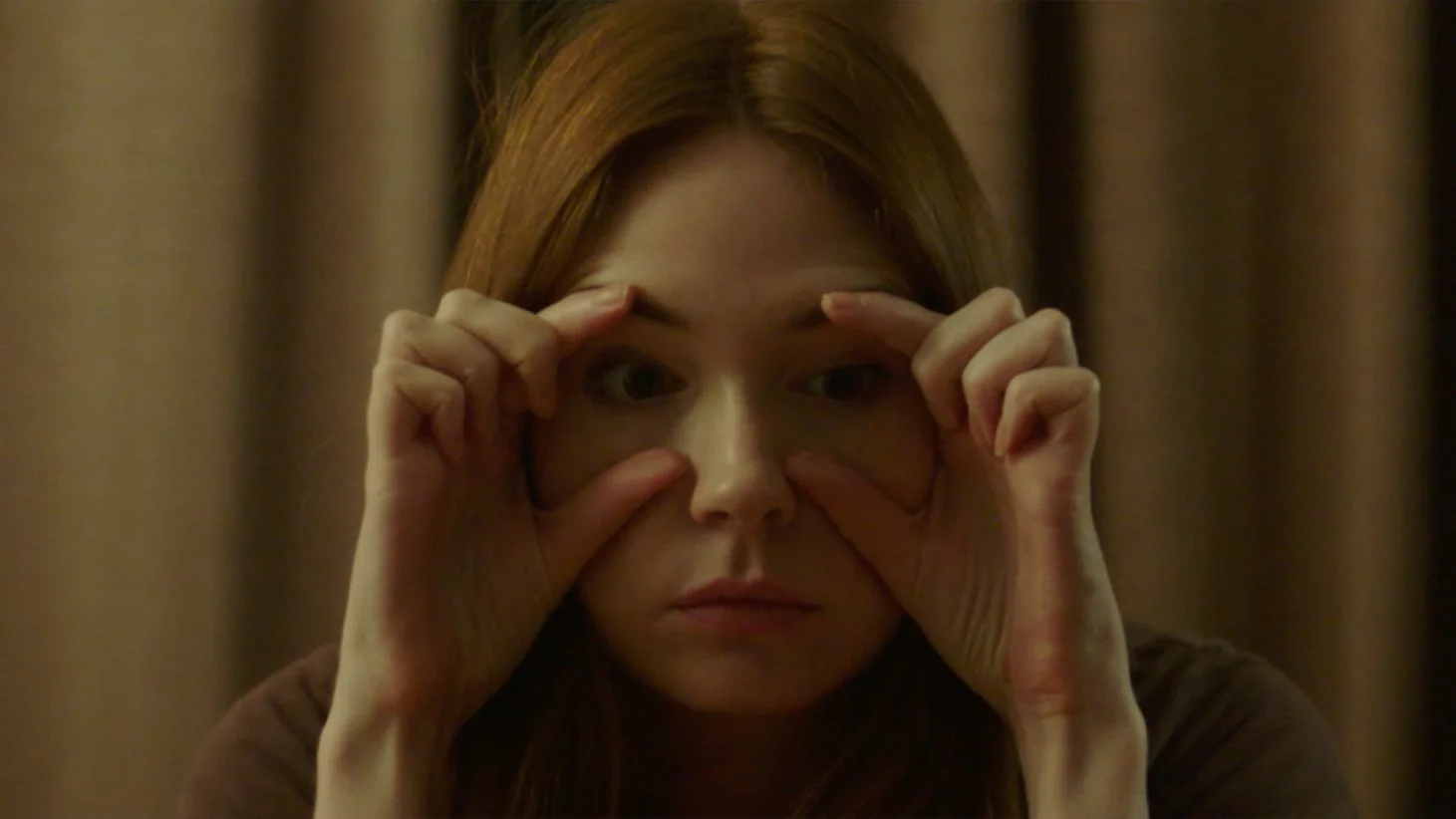
Directed by Laura Moss
Written by Nick Kocher
A lazy, uninspired woman (Karen Gillan) is visited by an otherworldly being responsible for giving humanity all its great ideas.
eureka! premiered at the Tribeca Film Festival as part of an anthology called Neurotica, and recently premiered online on Dust.
ABOUT THE FILMMAKERS
Laura started out in the film industry doing prosthetic and effects makeup. They wound their way through the industry as an art director and production designer. Laura just premiered their debut feature Birth/Rebirth at the Sundance Film Festival in January.
Nick went to school for acting and his early career included making youtube sketches under the name “BriTANicK” with his friend Brian McElhaney. Nick has written for Saturday Night Live, performed at the Edinburgh Fringe, continued to act in films and television, and has various writing projects in development.
READ OUR INTERVIEW WITH LAURA & NICK
Tell us about the genesis of eureka!. What inspired the film and how did the project come about?
Nick: The idea came from me wondering about the very nature of ideas themselves. Where they come from, and where they go if you don’t bring them from your brain into the real world. I wondered how many times throughout history the cure for cancer has popped into somebody’s head and then they just, like, forgot it or they didn’t want to put in the work to really flesh it out. I struggle constantly with procrastination and not seeing things through, so in some ways I was writing this script to therapeutically encourage myself to finish more of my dumb ideas (this short film included).
I had met Laura a few months before and had really enjoyed both of their shorts (Fry Day and Allen Anders: Live at the Comedy Castle). In the past, I’ve co directed everything I’ve written with my writing partner, but for this I wanted to take more of a backseat and see what a director from outside the comedy world could do with my material, and I was thrilled with the life Laura breathed into everything.
Laura: I knew Nick for a little bit and was honored when he asked me to join the eureka! team. I was really struck by how fast and funny the script was, while still having actual depth to it. I was instantly hooked.
Can you talk about casting eureka! At what stage did Jon Bass and Karen Gillan come on board the project? Were the roles written for them or, if not, what attracted them to the material?
Nick: I very much had Jon Bass in mind when I was writing the part (I mean the character is fully called “Jon’). He’s an old friend of mine and I’ve always been a fan of his work. Karen and I met when I was about halfway through the script, and I thought she would be great as Chloe (largely because she’s great in everything). Luckily both of them loved the script and immediately wanted to be involved.
Laura: We had this dream cast who also happened to be friends. I had the chance to play around and rehearse a bit with Karen and Jon before we shot, but I met Jillian and Karan the morning of, and they were amazing. They all knew each other, knew Nick, and it led to a really fun, relaxed environment on set that it usually takes more time to create.
What obstacles did you overcome while in the making of this film?
Nick: Laura had to deal with all the technical problems that pop up, so for me it was just the standard crippling self doubt.
Laura: For me it was one of the most common obstacles when you’re dealing with indie filmmaking: not enough time. We shot this 25-page script in three days, and at that breakneck pace I really had to rely heavily on Ben Rutkowski, our DP, and the prep work we had put into this to make sure it still had a cinematic quality. Karen, also, is a machine. She’s done so much - I had never had the chance to work with someone so technically proficient before. She would drop in, stay present, hit every mark, and find the humor in every scene without playing the humor. We never could’ve gotten this done if she wasn’t so lighting-fast.
So eureka! was first released at Tribeca as part of an anthology called Neurotica, correct? Can you tell us more about the journey of getting your film to audiences?
Nick: Yeah, so basically we just lied to Tribeca and told them it was a pilot to an anthology series because no one would ever have programmed this long of a short. THAT BEING SAID, it wasn’t a total lie because I would absolutely have loved to write a comedy science fiction anthology series, and this absolutely could be one of the episodes. It also ended up being sorta true, because after the festival a major network put “eureka!” into development as a narrative series featuring the “Jon” character visiting various humans and getting them to implement their assigned “ideas”. It was then in development for so long that everybody at the network who liked the project ended up leaving for other jobs, and so it just kinda petered out.
Laura: The short film universe, especially when it pertains to festivals, is pretty limited. A long short (ours is 20 minutes) is particularly difficult to program - it has to anchor a program and it’s one film potentially taking up the space of two or more pieces. The fact that Tribeca and other major festivals have been opening up their programming to include TV pilots and web content is huge: It allows works of this kind of length to reach an audience.
What do you think is the biggest challenge short filmmakers face trying to break into the industry?
Nick: I think the MAIN challenge for anything is just your own crippling self doubt. I believe if you just keep making good stuff, you’ll eventually break through. In the short world, I think it sucks that there aren’t more places that will pay for short films out there. If there were more established homes for short films, I think filmmakers would have an easier time raising the money necessary to make them.
Laura: I think right now it’s breaking through the noise. It’s easier now than ever to create good-looking content, but there’s just so much out there. A short film can be a calling card that helps you break into the industry, but it’s hard to find a way to make your work stand out.
What advice would you give to short filmmakers looking to use shorts as a way to launch them into a feature film career?
Nick: A lot of people use shorts as a proof of concept for their feature, or as a showcase for their own abilities. Which is fine and great and a totally valid way to approach them. But I would also encourage them to really think about and take advantage of the medium. I think the best short films come from ideas that could ONLY be short films.
Laura: I always suggest to young filmmakers seeing a lot of shorts that have been programmed at major festivals. You can find a lot of them online, or become a screener for a festival if you can. It’s helpful to expose yourself to a lot of work, to identify what you respond to. To really experience what feels new and different, and what kinds of things you see repeated over and over again - what well-trodden territory to avoid.
What are you working on now?
Nick: I’m working on a bunch of stuff with my writing partner that’s all at very different stages. We’re doing a final polish on a feature we sold a year ago, a second draft of a multi-cam sitcom for FOX, and we’re just starting to outline a low budget feature that we plan to direct later in the year.
Laura: I’m just finishing up my first feature, birth/rebirth, which was produced by Mali Elfman, who produced eureka! It’s a modern-day Frankenstein-inspired body horror, starring Marin Ireland and Judy Reyes, and it’ll be premiering at Sundance in January 2023.
Any film recommendations that we should add to our watchlist?
Nick: Laura Moss’s Birth/Re-Birth! And also, this came out in 1991, but I recently watched and loved “A Brighter Summer Day”.
Laura: Thank you Nick ;) Speak No Evil was my favorite movie of last year. It’s so funny and uncomfortable and horrifying, while being strategic and economical in terms of the violence it actually shows.
Apply to get your short selected as our Weekly Pick

EMBERS
Alice sits alone at a restaurant, waiting for her date to arrive…

Written, Produced & Directed by Tom Ganley
Alice sits alone at a restaurant, waiting for her date to arrive… Doesn’t sound like an interesting synopsis, but don’t be fooled by it. Embers is an emotionally complex film, winning multiple awards at film festival this past April for best screenplay, best performance in a drama & best first time filmmaker.
Tell us a bit about yourself and your filmmaking background.
I've always had a deep love for filmmaking.
Growing up as a teenager, I'd spent most weekends with school friends shooting silly, self-shot shorts - everything from a Reservoir Dogs Remake: Reservoir Cats to our iconic superhero franchise Lycra Lad.
As you'd expect, they were mostly terrible, but looking back now it was innocent, creative expression in its purest form. A gaggle of stupid kids thinking they were Spielberg and having the best time doing it.
Between then and now I'd filmed the odd bit here and there, as well as writing a handful of scripts which never saw the light of day. But with Embers, I knew I had something different.
What was your inspiration? Why did you decide to make Embers?
The idea first formed in the wake of the loss of my wonderful Grandmother. She was a truly angelic force and her passing affected people around us in so many ways. It was coming to terms with this and seeing how family and friends around me also tried to cope.
Once the core concept began to form, I became pretty obsessive, writing out the first draft script over a couple of days - it flowed out of me in a way I'd never had with any script I'd written before, so I knew I was onto something. I shared the piece with a group of close friends – this kick-started a snowball effect that attracted and inspired an incredible team of friends, cast and crew, committed to bringing this story to life on a shoestring budget.
This self-funded film was in many ways a step into the unknown. What began as a passion project became something bigger and more meaningful. Something that brought people together with a common creative focus in a time when COVID called the shots.
What obstacles did you overcome while in the making of this film?
Embers was the first 'proper' film I'd made with a crew and talent, so there were a fair few logistical elements to get my head around as a first-time filmmaker. Then a pesky pandemic rocked up and made things somewhat more challenging.
There were many moments where it felt like the world didn’t want this film to happen. COVID lockdowns led to three shoot cancellations and I was on the cusp of shelving it altogether...
But it was the enthusiasm, passion and drive of the amazing team around me who made sure it could happen. A group of friends, some old, some new, making something for the sheer love of making something.
Tell us about the journey of getting your film to audiences.
Using Film Freeway it was all pretty smooth. Embers is now coming to the end of its run on the festival circuit and has just launched on Klipist, following an intro at the Kino People's Film Festival.
While I'm on the subject, I couldn't let this moment pass without giving a massive shout out to Dustin and the team at Kino.
It was truly a magical festival experience and has already spawned some exciting opportunities. It's festivals like this that truly connect audiences and filmmakers and enable them to take those all-important next steps.
Words of wisdom. What advice would you give to other filmmakers?
Make sure to surround yourself with kind, passionate people. People who care about each other and creating something together.
What are you working on now?
I've got a couple of new ideas in the works, but it's very early days. Watch this space!
Any film recommendations that we should add to our watchlist?
Right now, I'd have to say Everything Everywhere All At Once & The Worst Person In The World. Obviously Bo Burnham: Inside if you've not seen it already!
Interested in getting your work selected as Short of the Week?

EJECT
After discovering a USB port in her wrist, Kate uncovers a world where she has the ability to change herself for the better. But she will slowly discover that greed will come at a cost.
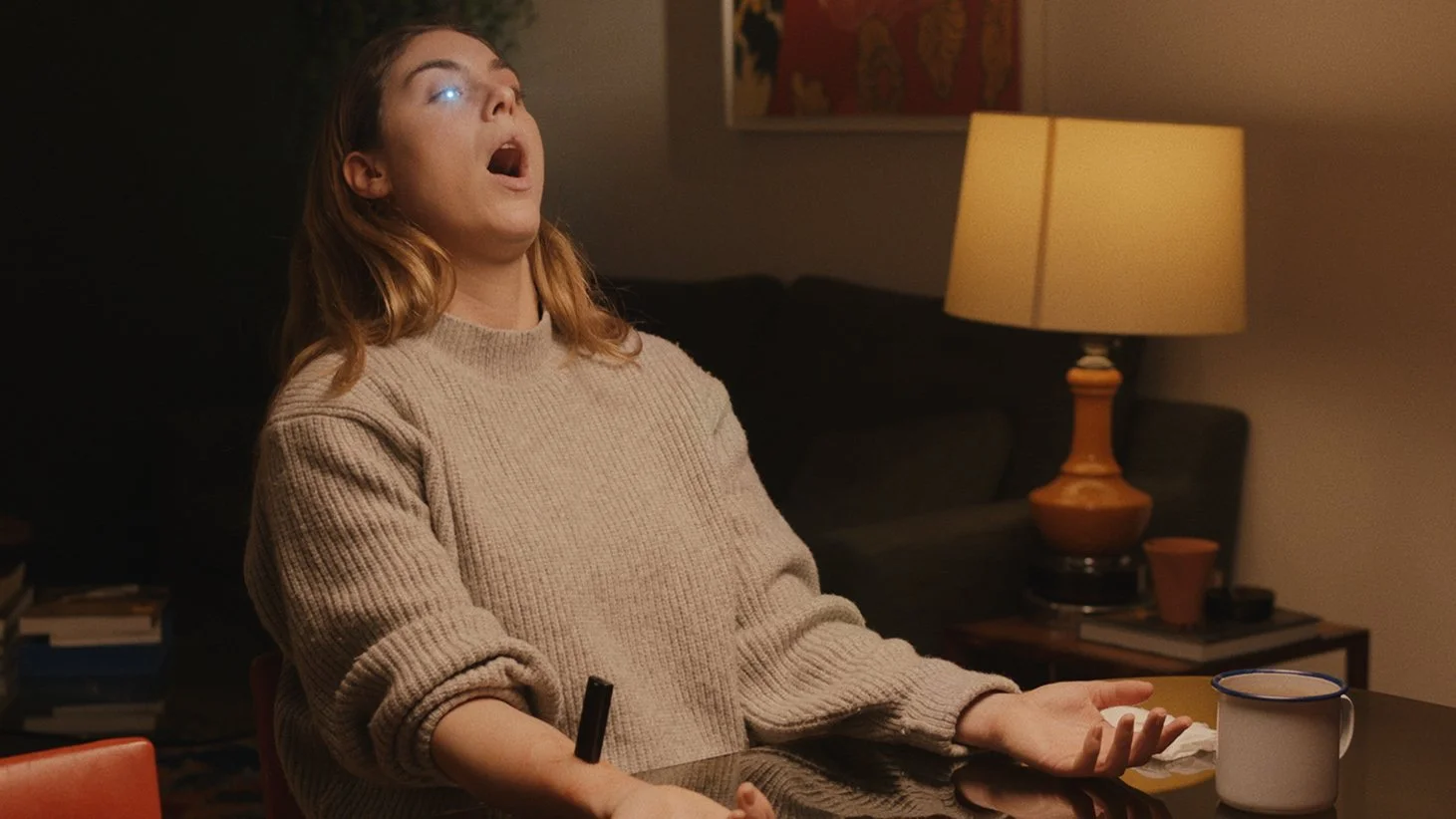
Written & Directed by David Yorke
After discovering a USB port in her wrist, Kate uncovers a world where she has the ability to change herself for the better. But she will slowly discover that greed will come at a cost.
EJECT was featured in our Grindhouse section of The People’s Film Festival 2020 and recently won Best Short Film at Dead Northern. With over 30 festival selections, including the prestigious Sitges and Leeds Film Festivals, Eject is a great short to kick off this Halloween season.
READ OUR INTERVIEW WITH THE FILMMAKER
Welcome back to our Short of the Week series! What have you been up to since we last interviewed you for WE?:
Thanks for having me again, it mean’s a lot that you continue to spotlight myself and my work. Since WE I have been making more short films and submitting them to festivals, I have been fortunate to have my films play at alot, including Leeds and Sitges, which meant a great deal to me.
I have also been writing my feature scripts and building towards making one of them.
What is your inspiration and influences behind Eject? Have you ever found a USB port in your arm?
My inspirations stem from my love of John Carpenter films and just horror in general, many people think I’m influenced by David Cronenberg when truth be told I hadn’t seen many of his films until recently, so I didn’t grow up watching a lot of body horror, I’m much more of a drama director but I tend to add a horror spin to some of my stories.
Not just yet, I keep waking up and hoping that a USB port will appear. I will update you should anything change.
What obstacles did you overcome while in the making of this film?
It was a film I had been trying to make for over 10 years, so location was the biggest obstacle, but I managed to find the perfect place and really increase the production value of my whole film. There were many other obstacles along the way, but all my films tend to come with their fair share of problems to overcome. I think that’s what makes the process more interesting and it also keeps you on your toes.
Any hacks or tips for filmmakers working within the psychological thriller / horror genre?
Yes, watch as many horror films as possible, even the really bad ones, learn from their mistakes, figure out what’s been done and find your own new take. I tend to take something personal from my own life and inject it with a little horror. Also earn your jump scares, don’t just throw one in to scare an audience.
Tell us about the journey of getting your film to audiences.
It’s still a battle that I and many other filmmakers are facing, do you go the festival or online route? do viewing numbers or awards mean more to you? I think ultimately it’s about exposure, I make my films to be seen on a big screen and with an audience, so the festival route is really important to me and so far I have had some great experiences showcasing my work and meeting new people.
It’s not an easy journey though that’s for sure. A lot of rejection and mostly without feedback and also due to a little thing called the pandemic our work mostly has been viewed online, more people see it but audience engagement is missing and I’m excited for festivals now reopening the doors and audiences returning.
Any film recommendations that we should add to our watchlist for this Halloween season?
Halloween Kills is out soon which I’m excited for and I have to recommend Censor and Saint Maud, I thought both of them were fantastic. There’s also a show coming out on Netflix called Midnight Mass by Mike Flanagan, I think he’s one of the best and most interesting directors working in horror at the moment. I also recommend everyone subscribe to Shudder, it’s essentially if Netflix only showed horror films, there are two amazing 4 hour documentary’s called In Search of Darkness Part I and Part II. They cover the best of 80’s horror. I have no doubt I will give them both a rewatch in October.
Interested in getting your work selected as Short of the Week?

SPEED OF TIME
Johnny Killfire must go back in time and team up with his former self to stop the TimeBorgs from getting their hands on an app that breaks the space-time continuum by delivering pizzas into the past... before they were even ordered.

Directed by William J. Stribling
Johnny Killfire must go back in time and team up with his former self to stop the TimeBorgs from getting their hands on an app that breaks the space-time continuum by delivering pizzas into the past... before they were even ordered.
READ OUR INTERVIEW WITH WILLIAM
Tell us a bit about yourself and your filmmaking background.
Hi, my name is William and I’m an Al-aholic. As in Weird Al. As in Yankovic. When I was a kid, I really gravitated towards comedy. Monty Python, Weird Al, the movie Airplane!, Homestar Runner, anything Robin Williams touched. The 90s was a fun decade to grow up in. A lot of comedies being released in theaters every week. If Martin Lawrence was in a movie, I was guaranteed to see it several times. But I was also a child of the Blockbuster generation, so when I wasn't seeing a movie in the theater, I was devouring anything and everything at home on VHS and eventually DVD. I saw so many films way too young, like Citizen Kane and Cuckoo's Nest. I saw Iñárritu's 21 Grams in theaters when I was 12. A few times. I’m originally from St. Petersburg, Florida, and I was always the kid with the video camera wherever I went, making little movies just for fun, just to make myself and my friends laugh. I went to a performing arts high school but realized quickly that I didn’t want to pursue performing in college and beyond. So I looked into film schools, applied to a bunch, and ended up at NYU for undergrad. And I’m glad I did, because it’s where I met one of my closest collaborators, Alex Gallitano, who has shot just about every movie I’ve made. After college I went to Chapman to get my masters in screenwriting, which is where I met my writing partner Russ Nickel. A few months after graduating we were on set making our feature film Bear with Us. That film and the relationships we made in the process have been responsible for a lot of the work we’ve done since. I’m still proud of that one.
What was the inspiration behind SPEED OF TIME?
The challenge we posed to ourselves was pretty simple: can we cram an entire action flick into 10 minutes? The answer was resounding no. The film ended up being almost 13 minutes long. But oh well! Russ and I had been working with John Hennigan (who plays Johnny Killfire) for a few years on a handful of other projects. We were chomping at the bit, just anxious to get out there and shoot something that married John’s unique style of stunts/fighting with our comedic chops. And the rest is history! Back to the Future is obviously a clear inspiration, along with all the other big silly action films of the 80s and 90s. We tried to channel that without actually making too many specific references. I think the Predator handshake is the only thing we just straight-up stole. The rest is us tapping into that vibe.
What was it like to bring this film to life and what obstacles did you overcome along the way?
Though we all live in Los Angeles, we actually shot the film in my hometown in Florida, with a lot of help from the good people at the St. Petersburg/Clearwater Film Commission. Most of the prep was done remotely, and when we arrived in Florida we found out that our primary shooting location had backed out at the last minute. Which sent us into panic mode, because the plan was to use that one location to play as about a dozen locations in the film. The thinking behind that was we’d be able to make better use of a shooting day and avoid company moves at all costs. But there wasn’t a replacement available, so we scrambled to scout as many places as we could and I’m honestly happier with what we ended up with. There’s a lot more variety to the locations that wouldn’t have been possible with the original plan. Sure, we shaved years off our lives in those two manic days leading up to the shoot, but I’d say it was worth it.
What is your favourite part of the filmmaking process?
Easy! Being on set. In the entire process, we spend so little time on set, proportional to the writing, pre-production, and post-production processes. So I try to really enjoy myself when we’re shooting.
So you’ve made both shorts and features. How important has short film been in springboarding you into feature filmmaking?
I’ve never really used a short film as a springboard into a feature. Not intentionally anyway. It’s always just been a way to tell a different kind of story, or to make a film in a way that wouldn’t necessarily work as a feature. The Speed of Time, for example, works as a calling card, but the basic conceit of the short doesn’t work as a feature. So as we’ve been developing the feature version of The Speed of Time, we’ve been finding funny ways to maintain the spirit, knowing that the basic gag doesn’t work in a 90 minute film the way it does in a 10 12 minute film. Shorts are such a different medium, and the process of making one is so different from features. As easy as it is to put your short film online or take it around to festivals, shorts in America just don’t have a great distribution model the way features do. So I don’t find myself actively working on short films, but when an opportunity arises, I’m always game to use it as an excuse to try something I haven’t done before. The DUST release of The Speed of Time was a godsend. 2020 was going to be a fun year of taking the film all over the world to film festivals, but when they all went virtual, those plans evaporated. Being able to launch the movie to DUST’s giant, passionate audience has been an absolute blast.
What advice would you give to short filmmakers trying to make the jump to features?
Just make a feature! Do it! I dare you! I see so many people spending so much money on shorts. And I get it. But also, I don’t really get it. You can make a feature film that can be shot for whatever you were going to spend on your short. I just made a feature film in 5 nights in Las Vegas for faaaaaaaaar less than we spent on The Speed of Time. It can be done! And in my experience, a feature is simply a more valuable investment with a better chance of getting distribution.
Any film recommendations that we can watch to keep us busy while social distancing?
I’ve spent the entire pandemic binge-watching RuPaul’s Drag Race. If you haven’t gotten into it yet, what are you waiting for??? Two of my favorite films from last year were The Sound of Metal and Uncle Frank. Highly recommend.
Apply to get your short selected as our Weekly Pick

RABBIT'S FOOT
A man's dependency on an obscure future device causes him to lose sight of what is real.
A man's dependency on an obscure future device causes him to lose sight of what is real.
Rabbit’s Foot is about a man waiting on his luck to change, and instead of doing something for himself, he devotes himself to the first thing that arrives at the door. The arrival of a futuristic head sphere represents the plague of distractions we face like social media, news, phones, tv. Rabbit’s Foot becomes this cautionary tale about the dangers of not relying on yourself to find purpose.
Paul | Brock Russell
June | Larissa White
A.I. | Anu Samarajiva
Executive Producer | Bruton Stroube
Producer | Matt Siemer
Writer/Director | Dustie Carter
AD | Casey Nation
Director of Photography | Mike Dalton
TELL US A BIT ABOUT YOURSELF AND YOUR FILMMAKING BACKGROUND:
I grew up working in my grandfather’s cotton and rice fields. In the times away from the toils of farm-life, I would make dumb videos with my friends. When I say dumb, I mean dumb. Our intentions were not to make anything of it, we just enjoyed hanging out and filming each other doing stupid shit. I honestly thought my path was to be a farmer. The work was hard, but I didn't mind, and at some point, it would have been a good living.
I remember in high school looking into film schools, never thinking of it as a serious option. It wasn’t until I visited my twin brother attending college for a degree in sculpture that he talked me into applying to their small TV and Film program. Two weeks before the start of the semester I applied and got accepted. I broke the news to my grandpa then would head off towards a BA degree that I would never receive. I dropped out of college after 2 or 3 years thanks to my internship with Bruton Stroube Studios getting me consistent freelance work. This all eventually leading to a full-time place at Bruton Stroube.
Being at Bruton on large sets built up my confidence to try stuff on my own. I would experiment with music videos, but always wanted to tackle something narrative. My first attempts will never see the light of day, but helped prepare me for my film Rabbit’s Foot".
CAN YOU TELL US ABOUT THE INSPIRATION BEHIND YOUR FILM?:
The image of a man sitting on a bed with a large sphere on his head was the first visual that not only started the writing process but set the tone of the film. I wanted to know more about this man and understand how he arrived in this situation, and for me to do that, I had to look at myself.
The optics of my life looked great. I have a cool job, a great wife, an amazing daughter, but I felt stuck. Not from any of these things, but creatively. I had to look at the cause. I concluded that it was my time away from reality, the time stuck in my phone. My phone had become an obstacle. Instead of writing, spending time with my family, or advancing my career. I would spend a few hours escaping into YouTube or social media. This became the large sphere on the man's head. Once I had that I wanted to create a story that lasted beyond it’s screen time.
WHAT WAS IT LIKE TO BRING THIS FILM TO LIFE AND WHAT OBSTACLES DID YOU OVERCOME ALONG THE WAY?:
Seeing this film come together was a surreal experience. I felt as if the cast, crew, and post department where entirely in sync with my vision, elevating it along the way.
Most of the obstacles were caused by location and time. On our first day, first shot, a paving crew came in to repave the parking lot. We were set up for the establishing shot and had to have Casey Nation our AD ask if they could come back on another day. We were also filming in a pretty seedy hotel, so we had some minor issues with the tenants to resolve. For the time aspect, since we had a tiny budget, the principal photography had to be captured in a weekend, so that forced us to do some Night for Day, and Day for Night scenes that had to match up.
DID YOU HAVE ANY CREATIVE SOLUTIONS FOR CREATING QUALITY CONTENT ON A MINIMAL BUDGET:
First and foremost, collaboration is key. Everyone that worked on this was all in. No one was getting paid, so set had to be fun, and everyone had to be well feed. For me, that is important. We forget to step back and look at how fortunate it is we get to make something cool, so I like to keep it collaborative and listen.
The other solution was to keep the story contained in a single location.
WHAT'S YOUR FAVOURITE PART OF THE FILMMAKING PROCESS:
For me, it's writing the first page and getting my collaborators excited to tackle this beast with me.
ANY FILM RECOMMENDATIONS THAT WE CAN WATCH TO KEEP US BUSY WHILE SOCIAL DISTANCING:
Shoplifters is a fantastic Japanese film that has stuck with me recently. It’s this great family drama that tests the old adage “blood is thicker than water”. I felt like a fly on the wall into this family’s world. The acting and dialogue was so real I felt as if I was an intruder.
Interested in getting your work selected as Short of the Week?

19 COVID LANE
As the covid pandemic sweeps the world, three neighbors shelter in a makeshift bunker while struggling to maintain their sanity.

As the covid pandemic sweeps the world, three neighbors shelter in a makeshift bunker while struggling to maintain their sanity.
Director: RYAN MONOLOPOLOUS
Co-Writers: HAMID THOMPSON, RYAN MONOLOPOLOUS
Producers: CARLOS VELASCO, HAMID THOMPSON, PARIS SCHULMAN, CHRIS EVANS
In an amazing feat of lockdown filmmaking, the team behind 19 Covid Lane have created a wonderful satirical homage to 10 Cloverfield Lane, giving it a covid twist. Check out our interview with the filmmakers…
WE TYPICALLY ASK “WHAT WAS YOUR INSPIRATION” BUT I THINK WITH YOUR FILM IT’S PRETTY OBVIOUS. COULD YOU TELL US ABOUT THE PROCESS OF CREATING A 10 CLOVERFIELD LANE HOMAGE AROUND COVID-19:
Interestingly while the film is inspired, on a base level, by 10 Cloverfield Lane, we did not hold to that film’s structure, plot, or devices. Instead that film served as our thematic inspiration - embodying the paranoia and hysteria of the Covid-19 pandemic. When Georgia and the rest of the world issued a shelter in place order - suddenly millions of people felt afraid, trapped, and in a void of information - making this film a perfect parallel. Using 10 Cloverfield Lane as the foundational premise, we then constructed our story upon that; with scenes that satire the menagerie of the horror / psychological thriller genre. Our end goal was to not create a spoof, but to approach 19 Covid Lane as a piece of intelligent satire that stands on its own as original, entertaining, and thoughtful.
WHAT WAS IT LIKE TO BRING THE SCRIPT TO LIFE DURING LOCKDOWN:
People respond to crisis in a lot of ways. For Hamid and I, we try to funnel our thoughts and energy into something creative that may help progress the conversation. Bringing a project to life was a unique problem - in that we had to be very aware of safety concerns, but more importantly of creative something that spoke about the issue without mocking those affected by it. We feel we really hit that balance.
DID YOU HAVE ANY CREATIVE SOLUTIONS FOR CREATING QUALITY CONTENT DURING LOCKDOWN:
The biggest disruptor to our traditional production process was access to team. The solution there was to take the members of Hamid and I’s homes and turn them into our crew, to convert my basement into the bunker, and have everyone on double or triple duty (for example our producers served as crafty, camera assists, etc). In this way, we created the film in a fashion similar to film school - which was a fulfilling in that we grew to connect with and trust each other in new ways.
WHAT'S YOUR FAVOURITE PART OF THE FILMMAKING PROCESS:
RYAN: For me, my favorite part of filmmaking is the energy and tactical problem solving on set that leads to truth. And by truth here I don’t mean anything densely philosophical, I mean multiple parties working as hard as they can to create the great illusion that is a film - where characters and the story ultimately become believable and ‘real’. I am heavily involved in film technologies and immersive storytelling that are pushing filmmaking into new direction (something this pandemic will ultimately fast track) but I strongly believe nothing will ever replace the human energy of being on a set.
SCREENING RECOMENDATIONS FOR QUARANTINE:
HAMID: When it comes to gaining an audience - there are always challenges. During quarantine events and film festivals have been placed on hold, meaning short films have to work to find a new venue to reach audiences. We combined a social media push with a well planned marketing campaign that landed us with a distributer: Funny or Die where we will be releasing soon.
Interested in getting your work selected as Short of the Week?

NO GUARANTEE
London 2056 - the city is dying and those living in the smog-clogged ruins live by their wits. The ones who can afford to opt out by uploading their consciousnesses to Cloud 9. This is advertised as a one-way ticket to virtual heaven - but can the Company who run it really be trusted?
London 2056 - the city is dying and those living in the smog-clogged ruins live by their wits. The ones who can afford to opt out by uploading their consciousnesses to Cloud 9. This is advertised as a one-way ticket to virtual heaven - but can the Company who run it really be trusted?
This short film won the Sci-Fi London 48 Hour Film Challenge 2016.
Written & Directed by STUART BLACK & NICK MATHER
Produced by IOANNA KARAVELA
Starring JUSTIN MAROSA & ALICE HENLEY
We first came across No Guarantee as one of the earliest entries to The People’s Film Festival last year. It quickly rose to the top of the list of our favourite submissions, and at the time we had no idea the film was produced from concept to completion in 48 hours - which makes it even more impressive! Last week we caught up with director Stu Black to chat about his process…
SO THIS FILM WAS CREATED AT 48 FILM CHALLENGE, CORRECT? CAN YOU TELL US A BIT ABOUT THAT?
We made No Guarantee for the Sci-Fi-London 48 Hour Film Challenge. It was our second attempt at the competition with the same group of filmmakers, so we'd learnt a lot together and had a great team spirit.
WHAT WAS THE BIGGEST CHALLENGE IN CREATING A FILM IN 48 HOURS?
It's a fun but draining experience - you're shooting late into the evenings then staying up on the final night to get masses of post-production work done. Our poor composer was waiting until we had a locked edit - which was around 4am on Sunday night. But everyone pulls together and there's a huge feeling of satisfaction at the end.
DID YOU MAKE ANY TWEAKS TO THE FILM AFTER THE CHALLENGE BEFORE SENDING IT OUT TO FESTIVALS?
We tweaked some of the VFX and did a tiny bit more work on the grade - but it's essentially the same film we won with.
DID YOU HAVE ANY CREATIVE SOLUTIONS FOR WORKING ON A SMALL BUDGET?
Creative problem-solving is the key to these competitions - you have to get everyone helping each other, not constrained in their department. That meant rifling through all our collective cupboards to find props and costumes that would work. Our production designer actually works in motorcycles - so a lot of what we used came out of her stockroom - the Cloud 9 devices, for example, are ventilator plugs removed from a motorcycle face-mask.
WHAT ARE SOME OF YOUR FILM'S BIGGEST SUCCESSES?
We are very happy with the way the story builds - which is really down to the editor, actors and composer. It's also really cool to see different audiences react to the ultimate 'yes/no' twist - we always get a gasp or two.
WHAT'S YOUR FAVOURITE PART OF THE FILMMAKING PROCESS?
I've been a journalist for years which is basically a lone wolf profession - filmmaking is fun for me because you get to cook something up together with friends.
SCREENING RECOMENDATIONS FOR QUARANTINE:
If you've got through all the good stuff on Netflix and are at the bottom of their barrel, it's definitely worth trying out the less famous platforms (many have free trials too) - for example, I just signed up to Marquee TV, which is all opera and ballet - and not normally my thing - but it was refreshing to spend a night watching something totally different from the norm.
Visit the facebook page here: facebook.com/noguarantee/
Interested in getting your work selected as Short of the Week?