

Do Not Touch
An adulterer (played by Seann Walsh) discovers his one-night stand is now the subject of an art exhibition to which his girlfriend has tickets. He must destroy the artwork before it destroys his relationship.
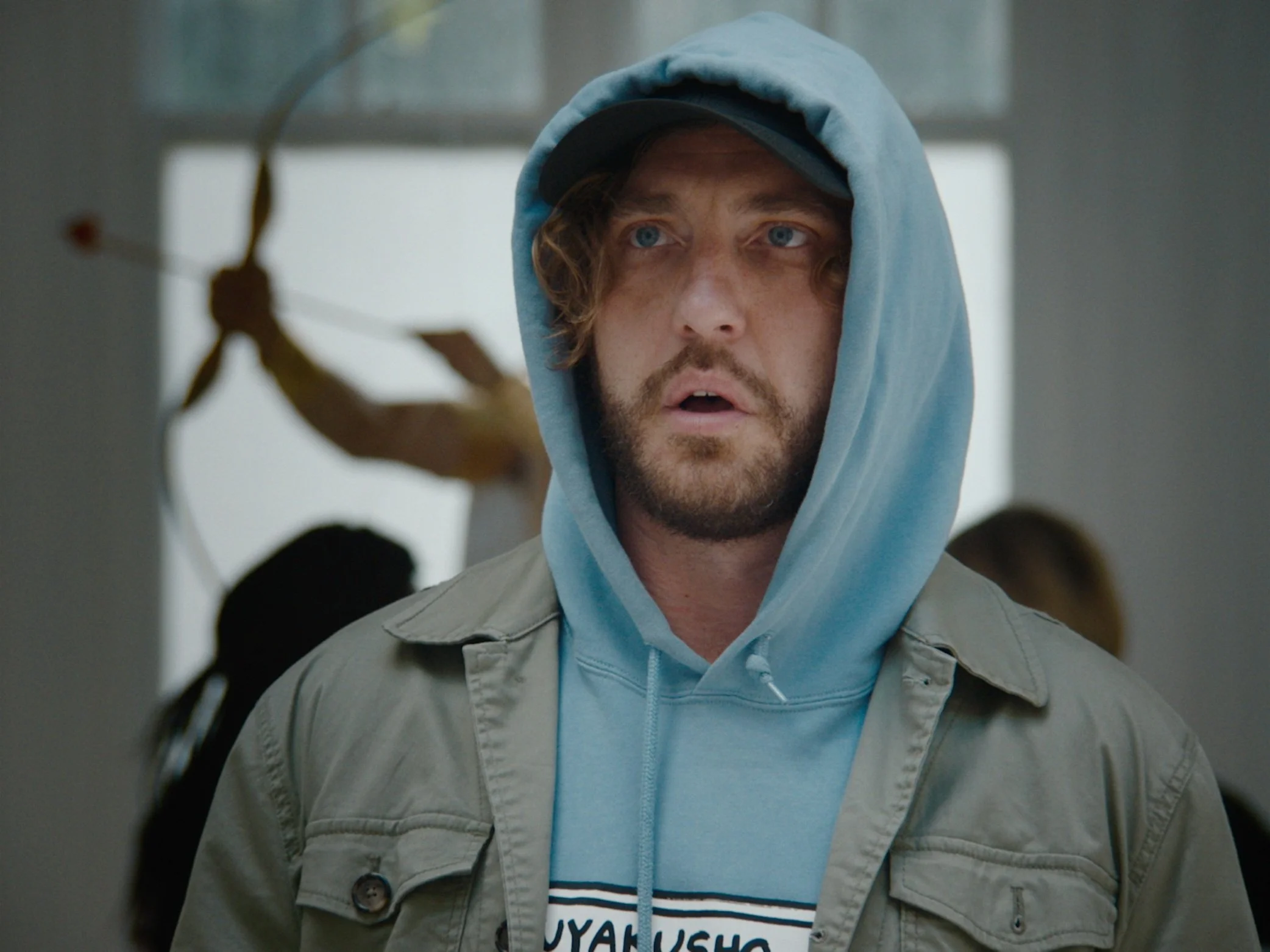
Directed by James & Harrison Newman
Producer Alex Waterhouse
An adulterer (played by Seann Walsh) discovers his one-night stand is now the subject of an art exhibition to which his girlfriend has tickets. He must destroy the artwork before it destroys his relationship.
ABOUT THE FILMMAKERS
James and Harrison Newman won the grand prize at the 2022 Kino London Short Film Festival with Viskar I Vinden unlocking our film fund. DO NOT TOUCH was produced summer 2022 and is fresh off the festival circuit.
READ OUR INTERVIEW WITH JAMES
Tell us about the genesis of DO NOT TOUCH? Where did you get the idea and why did you choose this project to focus on?
"Do Not Touch" was always just a dream sitcom episode in my mind. I always thought it would be a shame if we never brought it to life. But, it wasn't until I was isolated that I realised it could work as a short film. The inspiration came from Tracey Emin's artwork "Everyone I Have Ever Slept With 1963–1995". I had initially thought the artwork displayed the used condoms of everyone she'd ever slept with, but I was wrong. It was actually a tent with names stitched inside. However, that false memory was a great source of inspiration for the film. The reason we chose this is that it was completely different to the first short in terms of tone, this is a bit more of a straight comedy than Viskar I Vinden. We needed to do something different and ultimately have fun doing it, because if we’re not having fun - what’s the point?
Watch Behind the Scenes
Tell us about your experience winning the Kino fund and how it changed the way you approached making Do Not Touch? Would you still have put it into production at a lower budget or would you have continued to pitch it around?
It's a good thing the Kino Production fund came to our rescue! Without you guys, we would've been stuck twiddling our thumbs, trying to figure out how to make a short without breaking the bank. We were down to the last pound, and with the additional £2K we put into making this. I don’t think we would’ve shopped it around, I think we would’ve done a cheaper idea and gone ahead with that. So without you, this wouldn’t have happened.
What were some of the main obstacles you experienced when making Do Not Touch and how did you overcome them?
Do Not Touch was probably the most fun I’ve had doing this. We were really blessed with everyone, everyone wanted the best for the project and we were pulling in the right direction. I think the biggest obstacle was initial casting and getting the right people for the right roles in pre-production. We brought someone on board and it didn’t work out, but in the end, I think it was the best for both parties. We’ve learnt some lessons and how we approach casting in certain scenarios.
How did you secure the cast for the film?
It all started at the Crystal Palace Film Festival, Sofia, Tom and I met the brilliant Seann. He liked our first short and he agreed we could send him the script, and the rest is history! Seann brought Charlotte on board, and before we knew it, we had our dream team in place. We found Ingrid, Blair, and, Julia on casting websites, just like that. It was almost too easy, everyone killed it. And to top it all off, Ollie a friend from school was sweet enough to fill in as the cupid statue, what an absolute thirst trap. We couldn't be more grateful for everyone who has been a part of it.
Tell us about your festival journey. Any tips and tricks for other filmmakers?
Definitely! One great way to get your film in front of the right people is to find a film that's similar in genre or style to yours and see where they've played. Take note of the film festivals they've entered and won awards at, and consider submitting your film to those same festivals.
It’s a bit cheeky, but fuck it – you don’t want to waste loads of money on festivals that won’t accept you.
What do you think is the biggest challenge short filmmakers face trying to break into the industry?
It’s a closed circuit in this industry and you’re at the behest of gatekeepers. You’re working with such limited resources and at these festivals, you’re up against the BBC, BFI, Film4, and filmmakers with actual backing. The biggest challenge is competing and standing out. A key component for filmmaking is time, money and resource. You’ve got to make the largest impact with the least amount of resources and you’re competing with people who do have that resource. The biggest challenge is trying to get your work seen by the right people. I think people have to remember there’s a lot of luck that goes into this and it necessarily isn’t fair.
Any film recommendations that we should add to our watchlist?
All of the work of Nathan Fielder. The Rehearsal, and Nathan For You, it's hilarious. Also, check out Extraordinary on Disney plus; it’s ace.
Interested in getting your work selected?

Where The Dog Is Buried
After a man accidentally runs over a dog, he and his wife argue over how to hide it from their violent neighbor and whether they’re fit to raise a family.
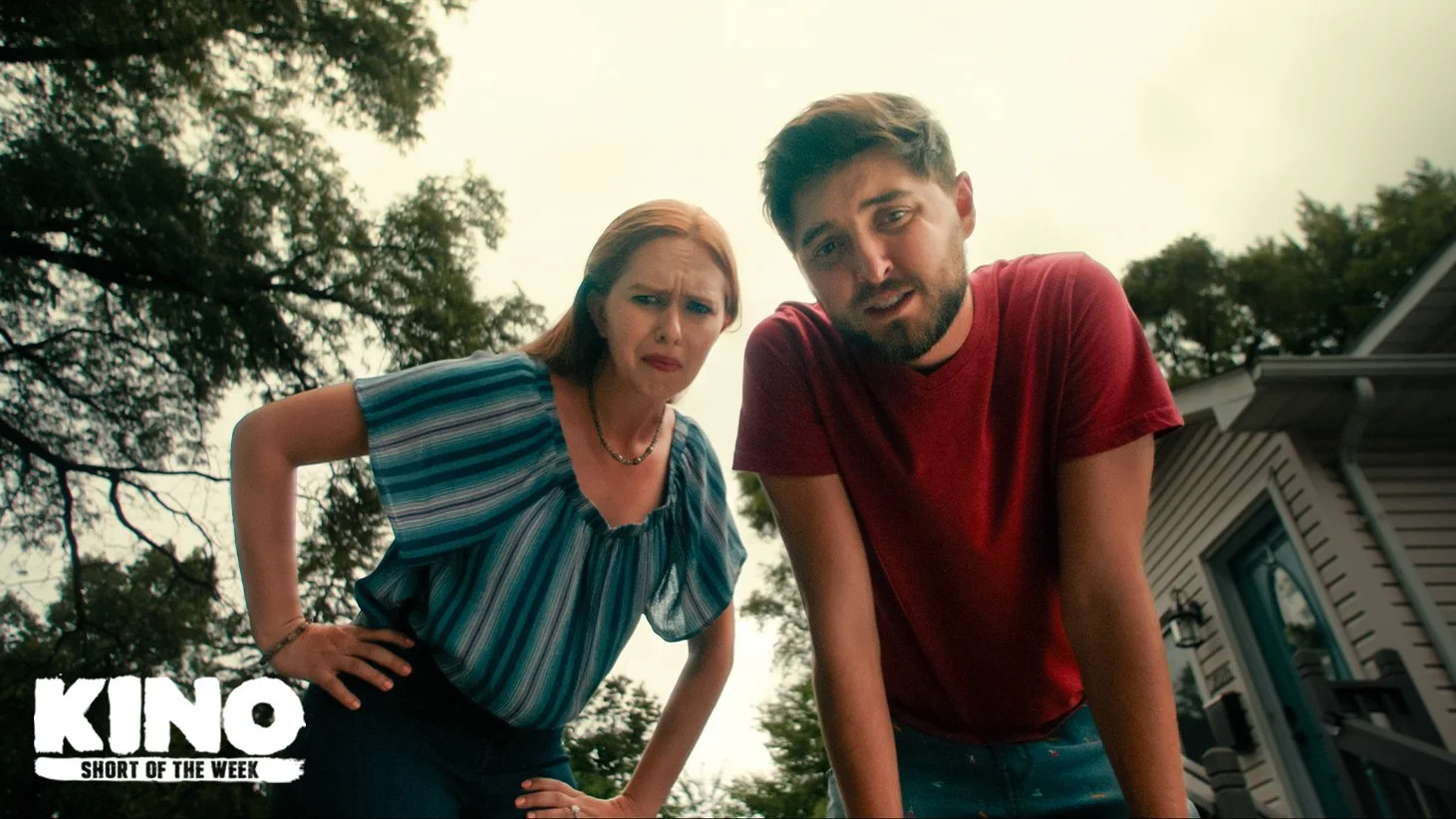
WRITTEN & DIRECTED BY Santiago Bukovsky
produced by BRANDON BREFKA, Santiago Bukovsky & MARISSA CLEMENT
After Kaleb backs over a dog in the driveway, his wife Megan discovers it belongs to Eddie, their biker gang neighbor across the street. Anxious about their upcoming housewarming, Megan convinces Kaleb to hide the body in the backyard. Through the ordeal, they delve into the issues of their relationship including their willingness (or lack thereof) to raise children. All the while, Eddie draws closer having discovered his dog has gone missing.
ABOUT THE FILM
Where The Dog Is Buried won the Audience Choice Award at the 2023 "Cans" Film Festival, Grand Rapids, MI.
ABOUT THE FILMmaker
Santiago Bukovsky is a Mexican American filmmaker drawing inspiration from the oral storytelling traditions within his family and the magical realism of Mexican cinema. He is the founder of Wild Duck Films and is represented by Phoenix Films for commercial production. Raised in a low-income family in rural Oregon, he did not have access to formal training in filmmaking, instead embracing a self-taught approach. This unique path shaped his storytelling, emphasizing the raw, unpolished aspects of the human experience. After completing an undergraduate degree in chemistry, Santiago fully embraced his passion for filmmaking. But as a Mexican American filmmaker, he recognized the lack of accessible role models in the industry. These early career experiences fueled a desire to educate and support others interested in entering the film industry, making it a point to create a welcoming environment for other aspiring filmmakers. His commercial work has been featured on Ads of the World, part of the Clio Network, and his short film screenplay "Where the Dog is Buried" was named a semi-finalist in the 2019 Screencraft Short Screenplay Competition. The dark comedy film is currently entering its festival run and stars Elizabeth McLaughlin (Hand of God; the Clique) and Jordan Fry (Charlie and the Chocolate Factory; Meet the Robinsons).
READ OUR INTERVIEW WITH Santiago
Welcome to our Short of the Week series! Can you tell us a little bit about yourself and your filmmaking background?
Absolutely and thank you so much for having me and my film as part of Kino’s Short of the Week! My name is Santiago Bukovsky and I'm an independent film director living in Michigan. I’m an experienced assistant director, as well as a director of narrative films, commercials and music videos. My film background is completely self-taught, I learned everything I know from YouTube tutorials and a lot of different movies in order to piece my skills together. For a couple of years, I worked on small films by myself before eventually finding a filmmaking community out here in Michigan, where I've been able to collaborate with other artists on a variety of independent shorts and feature films.
Can you tell us about the genesis of where the dog is buried and how you came up with the idea?
Oh yeah! “Where the Dog is Buried,” had a really interesting start. I initially had the idea for a story where a couple's relationship falls apart after the death of a dog because I noticed some friends on my social media had, in fact, broken up after the death of a pet. There's no way of knowing what actually caused the break up but it seemed like a really interesting premise full of dramatic tension.
I was in my twenties and feeling a lot of anxiety about growing up and settling down so I wanted to explore that a bit further and create a story where the death of a pet causes a couple to confront their feelings about each other they may have been holding back. From there I sprinkled in dark comedy and a little bit of satire, poking fun at suburban living in order to keep things lighter and a bit more fun and entertaining. The end result was this dark comedy set in the suburbs.
What were some of the main obstacles you experienced when making where the dog is buried and how did you overcome them?
There were so many pieces when it came to making “Where the Dog is Buried.” But the biggest one had to be funding. This was a script that I had been working on for a while. I had actually shelved it in order to make other short film projects and work on projects in the community. And I knew that I wanted to do something really big with it. I wanted it to serve as my calling card, as my directorial voice for filmmaking.
So a big obstacle for that would be having the finances readily available in order to bring on the cast and crew that I wanted and to have the gear that we needed for the shots that I had envisioned for this piece. I was very fortunate that during that time the project was shelved, I was able to set aside a good amount of money from my own personal savings. And then we were able to come up with the rest of the budget for the film through the use of crowdfunding, through Seed and Spark, which I cannot say enough good things about. The good news is by the time it came to film, if a neighbor was out mowing their lawn, we could slip them some cash to hold off for a couple of hours. And we did, haha.


Tell us about the journey of getting your film to audiences.
The journey of getting “Where the Dog is Buried” to audiences has been an exciting one and something that I'm learning more and more about every day. We've submitted the film to festivals and have had mixed results.
We were rejected from the top tier festivals (but you have to try!) and we're hoping to make headway with some of the smaller regional festivals because it would be really great to take this film to live audiences.
I think playing live is really an exciting opportunity for filmmakers, but what cannot be overlooked is the importance of building an online community and getting the film out to audiences that way. Once we cleared festivals that had premiere requirements, I made the decision to release “Where the Dog is Buried” on YouTube, where it just crossed 900 views after being out for only about a week.
So it's been really exciting to see the response online and to see that the reach has been just about as good as you would hope from festivals.
What advice or hacks would you give to other short filmmakers?
There's so many elements when it comes to filmmaking that it's hard to pick just one piece of advice. But something that I’ve learned about is start thinking about your audience and your release early, the earlier, the better. If you can start building an audience for the short film as you're writing it, as you're taking it through pre-production, as you're filming it and editing it, you can bring people along on that process, get them excited about it, and then have a built in audience when it's ready to be released, most likely in an online space.
What do you think is the biggest challenge short filmmakers face trying to bring into the industry?
I'll speak from my own experience and say that the biggest challenge so far has been trying to get eyes on your work. There's so much good content out there right now that it can be really difficult to have people watch something that you have worked on, even if it is of good quality. That's kind of the bare minimum that audiences expect.
You know, short films used to serve as a calling card that would then springboard filmmakers into feature films. And that can still be the case. But I don't think it's as common these days.
So I really think that building a brand around your filmmaking, your aesthetic, your journey and building an audience around yourself, an audience that is excited to hear updates from you and see your work is a really great way to go these days.
What is next for you?
I'm currently working in post-production on a feature length film that I directed over the fall. It's titled “American Swelling,” and it's a crime family drama about estranged siblings who are forced to reunite after the younger brother gets a concussion in a home burglary.
It's a really unique piece because we filmed it in one location and we filmed it in a series of very long, unbroken takes that are going to be stitched together. Very similar to one of my favorite films, Birdman.
So I'm in post-production on that, and I'm also currently working on writing the feature length version of “Where the Dog is Buried.” I'm excited to take that story in new directions as it expands to a longer form.
Are there any film recommendations that we should add to our watch list?
I'm trying to think if there are any hidden gems out there that I might know of, but I'll just have to go with my favorite movie for the time being, which is “Little Miss Sunshine.” I love how it blends drama and comedy with a dysfunctional family environment. That's one of my favorite genres of movie and it's one of my favorite movies of all time.
I would also recommend the early works and Martin McDonagh. So if you haven't seen “In Bruges” or “Seven Psychopaths,” those are hilarious dark comedies that are a lot of fun and they had a big influence on “Where the Dog is Buried” at the same time.
Interested in getting your work selected as Short of the Week?

Hundreds & Thousands
One scorching hot summer, two misfits come up with a get-rich-quick scheme: illegally selling ice cream out of their car.

Written, PRODUCED, & directed by Rhys Aaron Lewis
One scorching hot summer, two misfits come up with a get-rich-quick scheme: illegally selling ice cream out of their car.
ABOUT THE FILM
Hundreds & Thousands was the winner of the night at Raindance’s Open Screen event. It also screened at OnlyinPeckhamplex short film night, the Stockholm City Film Festival and the Greenwich Film Festival.
ABOUT THE FILMmakerS
Rhys Aaron Lewis is a writer-director from London working across both documentary and fiction. His past work has been supported by the BFI, BBC, The Guardian and most recently, Amazon Prime. His films have screened at several BAFTA qualifying festivals such as Aesthetica, Bolton and SOUL Fest as well as appearing online on popular short film platforms such as Omeleto.
READ OUR INTERVIEW WITH RHYS
Welcome to our Short of the Week series. Can you tell us a little bit about yourself and your filmmaking background?
My career started as a documentary filmmaker. I always planned to eventually make fiction, but documentaries seemed like the easiest way to start making films, as all I needed was a camera. I began making a bunch of shorts (that no one will ever see) and eventually was awarded a grant by BFI Doc Society to make a short documentary. That was really my entry to the film industry (the process of making that film felt like doing a year of film school) and the experience gave me the confidence to start self-producing a series of comedy shorts. Each project has really led to the next and it’s been a bit of a snowball effect.
Can you tell us about the genesis of Hundreds & Thousands and how you came to be attached to the project?
I wish there was a deep reason why I made this film but it actually had a really simple genesis. About a month before we made the film I was shadowing on a film shoot where I met the DP, India Opzoomer, who was shooting the project. We really got along and decided to meet up again to talk film. We wanted to work together but she was heading back to film school in the USA like ten days after our meeting. So we knew that if we wanted to make something it’d have to be something super short, super cheap and super simple. So we decided that we would shoot everything in a car, using natural light. It was a really, really hot summer so I thought it would be funny to shoot in an ice cream van - but that would’ve been too expensive. So I thought if I can’t shoot in an ice cream van, then I would just make the story about two guys selling ice cream from their car. So the story emerged really organically from this desire to make something with the DP as quickly as possible!
What were some of the main obstacles you experienced when making of Hundreds & Thousands and how did you overcome them?
I wrote the script in a few hours on a Sunday morning and immediately sent it to India so that she could prep for the shoot three days later (the only day that week we were both free). I called up Maayan, who plays Alcia, an actor I’d wanted to work with for ages who was fortunately free on the shoot day. I found Naweed (who plays Matteo) online and fortunately he was free too. The only problem was that they were free at different times of the day with only a short overlap where they’d both be available. So we had to shoot everything really quickly. I spent like £20 on Fabs and ice lollies for the shoot. Maayan ate about ten Fabs during the shoot before she told me that she’s vegan - woops. I had an actor in mind to play the traffic warden but he couldn’t make it as it was too last minute. So I decided to play the part. So this is technically my acting debut haha
Tell us about the journey of getting your film to audiences.
The film sat on my hard drive for a long time because I initially thought I’d just use it as a proof of concept and as I shot it so cheaply I didn’t want to spend loads on festivals. Eventually I submitted it to a short film night organised by Raindance Film Festival. I wasn’t really sure what to expect as no one had seen the film yet, but we ended up winning Best Film that night! After I saw how much people loved the film I was encouraged to start sending it off to more festivals so that more people could see it.
What advice or hacks would you give to other short filmmakers?
Film festivals are really expensive and if you’re anything like me you’ll get rejected from A LOT of the ones you submit to. It took me a while to realise that sometimes it’s better to immediately release the film online (especially if you do so on a platform with a lot of subscribers). Not every film is a “festival film” but that doesn’t mean it’s not a “good film” and that it won’t find an audience.
What do you think is the biggest challenge short filmmakers face trying to break into theindustry?
Finding funding for projects is probably the number 1 challenge in my opinion.
What's next for you?
I have a bunch of projects in the pipeline. I just finished working on my biggest short yet, which I’m really excited about. I’m also writing my first feature.
Any film recommendations that we should add to our watchlist?
I wanna recommend a short film that’s probably one of my favourite films (short or feature length) of the past few years. Fauve by Jeremy Comte. It's a popular one (it was nominated for an Oscar) and I know a lot of filmmakers have watched it but I’d say it's really the film that showed me that a short can really be a work of art in and of itself. It's genius and I think it fits the short film format perfectly.
Interested in getting your work selected as Short of the Week?

Venus Again
After suffering a deep and painful heartbreak, a lost woman embarks on a ritualistic journey to rediscover herself.
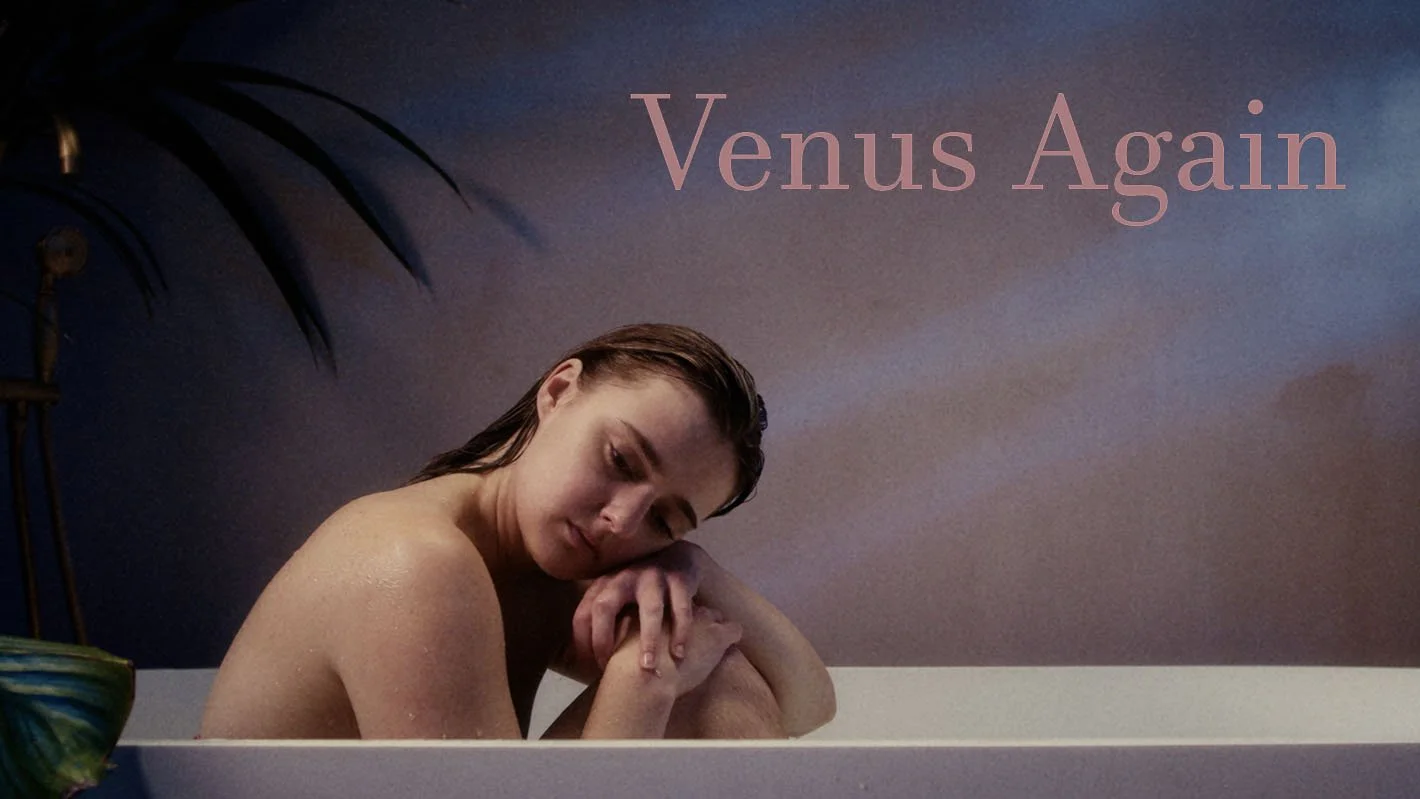
Directed by Sulin Hasso | Written by Jessica Balmer
Produced by Joseph Hobbs & Sulin Hasso
After suffering a deep and painful heartbreak, a lost woman embarks on a ritualistic journey to rediscover herself.
ABOUT THE FILM
Venus Again was selected for the Lift-Off Global Sessions 2023, in the First-Time Filmmaker category where it went on to be voted top 10 out of 100 films, and it is a finalist in the European Cinematography Awards.
ABOUT THE FILMMAKER
Sulin is a British Iraqi-Kurdish Actor/Writer and Director. As an Actor, Sulin has worked across theatre and tv. Her first narrative short film, which she wrote and starred in, The Yellow Wallpaper, premiered at Underwire Film Festival where she was nominated for Best Screenwriter. Venus Again is Sulin's first directorial piece.
READ OUR INTERVIEW WITH SULIN
Welcome to our Short of the Week series. Can you tell us a little bit about yourself and your filmmaking background?
My name is Sulin, I started off in this industry as an Actor, working in theatre and screen. Slowly I have been developing an itch to tell my own stories and I am making an effort to move into directing. My first short film that I wrote, The Yellow Wallpaper- which ended up being funded by Genera, got into Underwire Film Festival, where I was nominated for Best Screenwriter. Venus Again is my first ever directorial piece and I hope more opportunities to direct come my way!
Can you tell us about the genesis of Venus Again and how you came to be attached to the project?
So Venus Again, I guess started as a little bit of an experiment for myself. At this point, I had an inkling that I wanted to start directing, however I had no prior experience/knowledge on whether directing was something that I would enjoy or be good at. So I wanted to focus on doing a very short film, ideally a poetry piece, just to see (without putting immense pressure on myself) whether it would be something I would want to persue. I approached Jessica Balmer, who is a dear friend of mine and a brilliant poet and actor, and I essentially asked whether she would be willing to collaborate on turning one of her poems into a short film- thankfully she said yes, we then developed the script together- and the piece took off from there.
What were some of the main obstacles you experienced when making of Venus Again and how did you overcome them?
The two main obstacles that stick out to me were location and the hero shot with the flowers. In regards to location, because most of the film takes place in a bath tub, we had real difficulty in finding locations where the bathroom was simply big enough for us to be able to do the shots that we wanted. I ended up spending hours on websites like Airbnb, just sifting through houses all over London, with a reasonable budget. Finally, we found this location, where the bathtub is actually in the very same bedroom, where Jess is sat at the mirror. This was ideal because the film was nearly completely contained in that single room- I am very grateful to the owners of the property who allowed us to film in their home. Secondly, for the shot where we reveal Jess in the bath tub covered in flowers, we planned on having the camera on a close up on Jess's eyes as she opens them and then for the camera to pull upward in a single shot to reveal her in the bath with flowers all over. In the end we couldn't execute this because of the lack of space in the room, to be able to centre the camera and then to be able to get the camera high enough to reveal the full bath. Luckily my DOP, Joseph Hobbs, came to recce the room and pointed this out to me from the start. So I went in with a Plan B, that if we couldn't get that shot. We would get a close up of her eyes opening and then jump cut to a wider frame of her surrounded by the flowers. Which ultimately was the route we had to go down.
Tell us about the journey of getting your film to audiences.
We wanted to keep the release of the film fairly simple- Jess and I discussed entering it into some film festivals, but we were careful about the festivals, as most do not allow your film to be online whilst it's doing the festival run. Our aim was never getting the film into festivals, but more getting the film out to an online audience. So we set up a plan of posting the film on Instagram, Vimeo and reaching out to online platforms to see if they would take the film on.
What advice or hacks would you give to other short filmmakers?
For me, the best advice I can give is to surround yourself with people who have more experience than you and are willing to collaborate with you. I think viewing short films as a collaborative process, elevated my own knowledge and understanding of what goes into making a film. Each film that you make needs to be a learning curve, so surround yourself with people who you can learn from and who can push you into being a better filmmaker.
What do you think is the biggest challenge short filmmakers face trying to break into the industry?
The biggest challenge is accessibility and finances, which I think go hand in hand. There are not nearly enough opportunities for those who cannot afford to go to film school, or whom cannot finance their own films, to create shorts and develop their own voices and talents as filmmakers. Of the short film funds that are available, the competition is fierce and certain funds have specific genres and narrative styles that they favour over others. I have also noticed that a lot of courses and fellowships are within a specific age group, which is great- however alienates early career filmmakers who have chosen this path later on in life or who simply did not know that these existed, because the idea of being a filmmaker was never accessible in the first place.
What's next for you?
I have a short film that I have written and will be directing, called Dayke (which translates to Mum in Kurdish). I am currently in the long and very difficult process of finding funding for it- however I have a great team with me so hopefully we can get the ball rolling on this project soon!
Any film recommendations that we should add to our watchlist?
There are two films that I love, the first- which has been a recent watch is Limbo; the performances, story and visual language of the film is exactly up my street and falls within the space of films that I would love to create. The second, is a beautiful film called Half-Moon by Bahman Ghobadi- no matter how many times I watch this film it always takes my breath away.
Interested in getting your work selected?

The Forfeit
When a working-class woman is thrown into her wealthy boyfriend’s eccentric family Christmas game, she begins to uncover a dark secret in the family’s past.
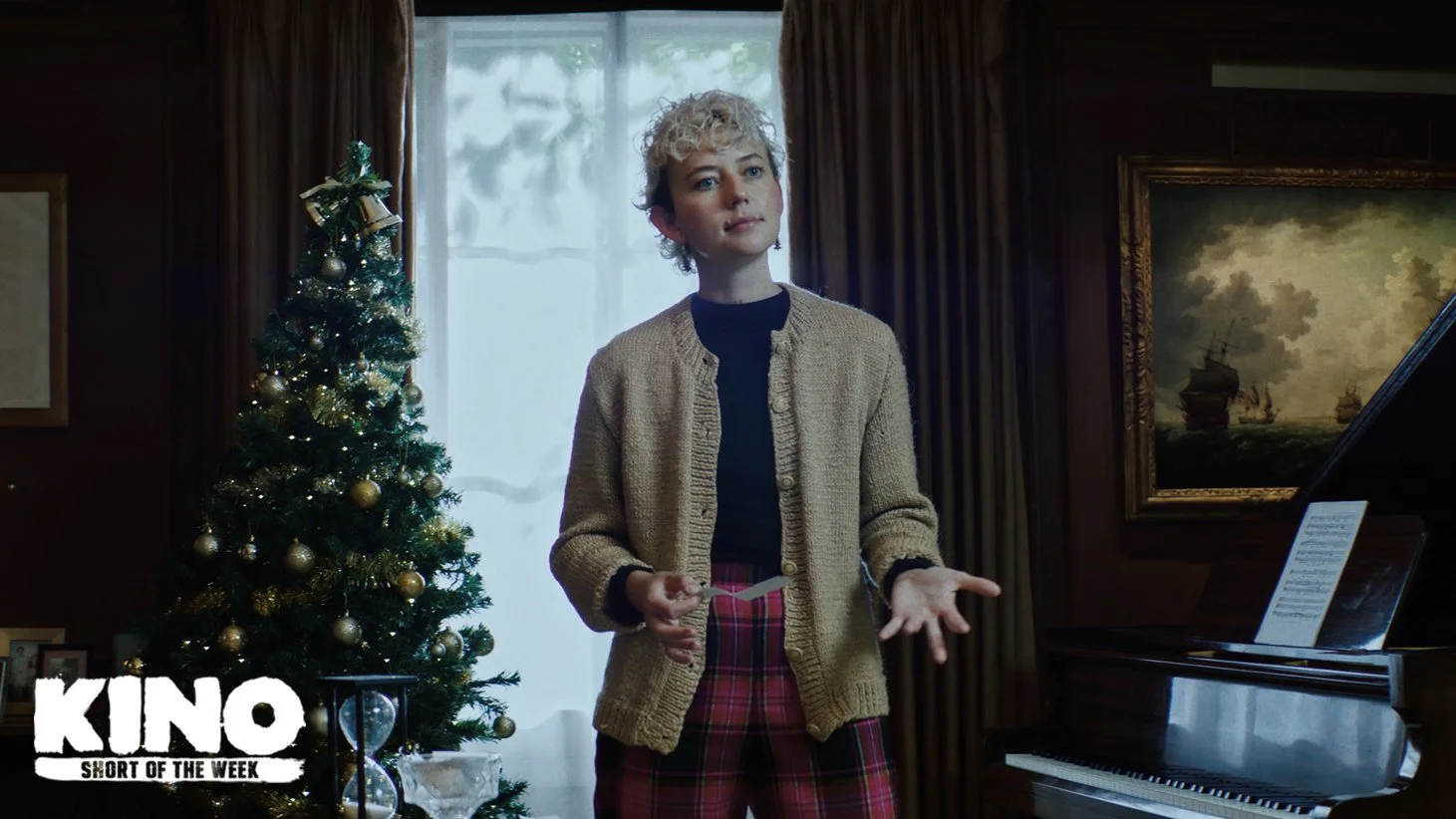
Written & directed by Josie Charles and Phoebe Brooks
Produced by Lily Donnelly and Amy George
A young working-class Welsh woman meets her wealthy English boyfriend’s eccentric family for the first time on Christmas Eve.
She’s thrown straight into the family’s traditional Christmas game, and struggles to keep up with its in-jokes and strange rules. But as she improves, she begins to uncover a dark secret in the family’s past.
ABOUT THE FILM
The Forfeit won Best Screenplay and Best Score at our film festival earlier this year, as well as being nominated for Best Director, Best Cinematography, and in the Best Sponsored Short category. Other notable awards are winning Best Director (Thriller) at the London Director Awards 2023 and Best UK-Made Short at The Gogs International Short Film Festival. The film was recognised as a finalist at the 2022 British Short Film Awards in the categories of Best Director, Best Production Design, and Best Sound Design. It also received praise and nominations from London Film Week, Underwire Festival, the BIFA qualifying Beeston Film Festival and Scream Queen Film Festival. Notable festivals selections include British Shorts Berlin 2023, Final Girls Berlin Film Festival, Brighton Rocks Film Festival 2023, Bute Street Film Festival, and more.
The film was recently release on Omeleto - a direct result of their screeners seeing the film as our festival.
ABOUT THE FILMmakerS
Josie is a director from Somerset, now based in London. Her previous shorts have screened at festivals including Underwire, London Film Week & Bolton Film Festival. In 2023 she was selected for the Directors UK ‘Inspire’ scheme, to be mentored by BAFTA-winning director Tom George. Her most recent short ‘Dead Cat Film’ features Hugh Bonneville (Notting Hill) & Will Gao (Heartstopper). www.josiecharles.com
Phoebe Brooks has directed short films, music videos, and commercials for global brands and charities, including Formula 1, Tinder, Samaritans and the NSPCC. Her short films have won multiple awards at international festivals, and she was recently selected as part of the BFI Flare x BAFTA Mentoring scheme for 2023. She is currently developing her debut feature. www.pbrooks501.com
READ OUR INTERVIEW WITH Josie & Phoebe
Welcome to our Short of the Week series. Can you tell us a little bit about yourself/yourselves and your filmmaking backgrounds?
PB: I made terrible videos with my mum’s camcorder from age 11. Like, really bad. And I just kept doing that and never really decided to do anything else. I’m often like - why did I let an 11 year old decide what my career would be? But it’s too late now.
JC: I originally trained as an actor, and my first short film was meant to be good showreel material - I was just co-writing and acting. But my co-writer promoted me to co-director when it was clear I would need to have a say in all aspects of it… and I haven’t looked back!
Tell us about the genesis of The Forfeit. You also co-wrote the script. What's your process for developing and writing together?
JC: Phoebe and I both come from families who love games and are very competitive about them.
PB: This film literally came about because me and Josie got too aggressively competitive at a party playing this game, and we realised no one else in the room cared at all, and it made us want to make a film about how weird we were.
What were some of the main obstacles you experienced when making The Forfeit and how did you overcome them?
PB: The pandemic was the big one. We shot this at the start of one of the lockdowns, and it was the most stressful thing that’s ever happened to me.
JC: Yeah we realised that with 8 principal cast members and a number of locations we’d designed a very impractical shoot for ourselves under COVID regulations.
How did your process work as co-directors? Did you delegate and each take aspects of directing duties, or did you work as a unified team on all aspects?
JC: I think because we’d co-written the script we were always pretty aligned on the characters and performances - we knew who those people were and how each moment should feel.
PB: I completely agree with what Josie said.
Tell us about the journey of getting your film to audiences.
PB: We submitted to a load of festivals, and got into some! It’s been an absolute joy travelling to different countries and seeing it with so many different kinds of audiences.
JC: Yeah it was your classic cocktail of some lovely acceptances with many other rejections. But we’ve been really lucky with the selections we’ve had, and because it’s a comedy there is nothing like hearing the audience’s reaction in person!
What do you think is the biggest challenge short filmmakers face in the early stages of their career when trying to break into the industry?
PB: It’s really, really hard. I think making shorts is so soul crushing. There’s so little funding, and so few opportunities.
JC: Funding is the big one. Even the funding that is available is tied up in long application processes, which feels a bit antithetical to the creative process. But I don’t think funding is ever easy to come by (unless you’re literally Steven Spielberg).
What advice or hacks would you give to other short filmmakers?
JC: Because funding is limited, I always tell people to design shorts based on the resources they have. Like, if you can’t afford multiple locations, write something in one location, ideally a place you have access to for free. If you know amazing actors who will help you out, write them a part! One of my most recent shorts is all shot on camcorder because the writer/performer told me she wanted to make something for under £500.
PB: In terms of hacks… find people who will help you do it. You can’t do this alone - The Forfeit was only possible because of all the amazing people who gave us their time and talents to make it happen. Also work with Josie Charles, she’s pretty good.
Any film recommendations that we should add to our watchlist?
PB: I just watched Valerie and her Week of Wonders. Completely batshit Czech film from the ‘70s. Zero plot, just vampires and vibes. Incredible film.
JC: I’m so basic with films, I don’t have a good niche recommendations like Phoebe.
PB: Harsh but fair.
Interested in getting your work selected as Short of the Week?

Other Half
As an Individual Being in a world comprised of Merged Couples, Ren longs to find his other half and become complete.
Directed by Lina Kalcheva
Written BY Laura Jayne Tunbridge
Produced by Michelle Brøndum
As an Individual Being in a world comprised of Merged Couples, Ren longs to find his other half and become complete.
ABOUT THE FILM
This animated short was produced as a graduation project at NFTS. It combines several animation techniques - namely plasticine, oil paint and model sets on a multiplane.
Other Half premiered at Cannes Cinéfondation, alongside 16 other student films of all genres as part of Festival de Cannes. It won the award for Best Sponsored Short at our festival this year. It was also nominated for Best Animated Short at the British Short Film Awards and Best Post-Graduate Animation at the British Animation Awards. Festival highlights include the Academy Award qualifying Hollyshorts, Flicker’s Rhode Island International Film Festival, SITGES, Underwire, British Shorts Berlin, Foyle Film Festival, The Chicago International Film Festival, Norwich Film Festival, Bolton Film Festival.
It was released online recently by Directors Notes.
ABOUT THE FILMMAKER
Lina is a Bulgarian animation director currently based in England. Her animation work uses combinations of different techniques across drawing, painting and stop-motion. Lina is interested in experimenting and mixing techniques. Her films are inspired by mythology, nature, the occult, and human relationships. She has also done some design and art direction work for student video games. Lina has a BA in Art, Film and Theatre from the University of Reading (2017), an MA in Animation from the London College of Communication (2018) and she has just finished her MA in Directing Animation from the National Film and Television School (2021).
READ OUR INTERVIEW WITH LINA
Welcome to our Short of the Week series. Can you tell us a little bit about yourself/yourselves and your filmmaking background?
I’m Lina Kalcheva and I’m an animation director. I have a background in film theory and fine art and switched onto animation as a kind of combination of everything I was interested in - research, visual storytelling, experimenting with techniques, working in a team. Before Other Half I had directed a few other shorts but nothing close to that kind of scale, so it was a really great experience for me.
Tell us about the genesis of Other Half. This was produced at NFTS, yes? What was that experience like?
We made Other Half as our graduate animation project. The support and resources we had available to make the film were something I’m appreciating even more in retrospect after graduating from NFTS, and in general the environment was very engaging and inspiring - while also of course being quite intense, always coming up with new things we wanted to achieve and never feeling like there is enough time for everything. It felt like there was a lot of space to experiment and try things we hadn’t done before, and we always ended up finding a way to make them work no matter how complicated they seemed initially - which was obviously stressful at the time but has given me a lot of confidence as and animator and a director in the long run. Generally though, having the team come together and working with so many talented people I could learn from was the best part and I’m super happy to have found collaborators I can bring to future projects.
What were some of the main obstacles you experienced when making Other Half and how did you overcome them?
I think the film would have always been challenging but doing it during the pandemic definitely didn’t do us many favours. Since it was a new technique there was a lot we had to just guess about without being able to test in person - things like scale, materials, colour, timing - which then inevitably required lots of adjustments once we got back to working together in person. Although I think we eventually realised that there was no way to fully plan for everything in advance and got really good at setting time aside for experimenting and problem-solving alongside the shoot, and we ended up with really cool things from that process.
Gender politics can be a divisive topic, but what we love so much about Other Half is that the character is gender neutral which enables audiences of all genders to relate to the protagonist. Can you talk about the decision to tell this story from a gender neutral perspective and how that contributes to the film's universality?
As far as I remember the decision was really easy - Michelle (producer), Laura (writer) and I were talking about all these archetypal characters we wanted to create and it just didn’t feel right to gender them because that felt like it immediately made the characters - “a vain woman”, or a “self-absorbed man”, or it made the relationships we’re representing seem like we’re addressing issues that pertain to a specific sexuality - when really all of this seemed irrelevant and unnecessary - we wanted to have a universality in these experiences for the film - and the reception to that aspect of it has been super positive: people who watched it refer to Ren and the other main characters sometimes as male, sometimes as female, sometimes as gender-neutral and I’ve never really corrected anyone because it seems like people are projecting themselves or people they know onto the character regardless of gender and just looking at their relationships and the story - which is exactly what we wanted to do.
Tell us about the journey of getting your film to audiences. How have you found the online release of your film compared to its festival run?
Very different experience! Obviously going to festivals, sitting in on the screenings and really seeing people’s reactions was amazing (and a little nerve-wracking too) - but it was also great to finally put the film online a few months ago and make it more widely accessible. It became a Vimeo Staff Pick this summer and got nearly 20k views in just a couple of weeks which is still overwhelming for me to comprehend - nothing I have made before has been seen by so many people. It feels kind of weirdly abstract compared to going to a cinema and being a part of the audience but it’s definitely a nice feeling knowing that everyone’s hard work is being seen by so many people.
What do you think is the biggest challenge short filmmakers face in the early stages of their career when trying to break into the industry?
For me at least in the moment it’s finding funding and support to make more short films that can eventually help me get work on longer format stuff. It’s difficult to have projects stuck in development for a long time and keep the momentum and excitement for it going.
What advice or hacks would you give to other short filmmakers?
I don’t know about hacks but the most useful thing I learned was making my work challenging and varied, so there’s always things to work out and solve the whole way through. Animation being such a long and repetitive process it’s easy to kind of go on autopilot and ending up finding the work tedious - but if there’s always something new to figure out and learn, I find it a lot more engaging and exciting.
Any film recommendations that we should add to our watchlist?
My favourite animation is La Planete Sauvage (1973) - beautiful visually and really unconventional, kind of distant approach to a fantasy narrative. I also love everything by Satoshi Kon and I’m a fan of campy fantasy and sci fi from the 70s and 80s - Labyrinth, Flash Gordon, Neverending Story, etc.
Interested in getting your work selected?

Oluwale
The first documentary to explore the story of David Oluwale, a Nigerian immigrant chased or thrown into the River Aire by Leeds Police in 1969.
Written, Produced & Directed by Jeremiah Quinn
OLUWALE is the first documentary to explore the story of David Oluwale, a Nigerian immigrant chased or thrown into the River Aire by Leeds Police in 1969.
ABOUT THE FILM
Oluwale won the Best Micro-Budget Short award at our 2023 film festival and was also nominated for Best Screenplay. It also won Best Documentary at the Kino Manchester Film Festival and Small Axe Radical Film Festival. It was also an Officials Selection at the BAFTA and BIFA qualifying festivals - British Urban Film Festival and Bolton International Film Festival. It also played at the Real Documentary Film Festival, Filmmakers for Change, and Shorts on Tap Venice.
ABOUT THE FILMMAKER
Jeremiah Quinn is a screenwriter, filmmaker and lecturer. He has won many awards in film festivals all over the world. He often tells stories of real people who aren't well-known. He has had various feature scripts optioned. Jeremiah is shooting his first feature documentary right now.
READ OUR INTERVIEW WITH JEREMIAH
Welcome to our Short of the Week series. Can you tell us a little bit about yourself and your filmmaking background?
When I was 19 I was offered a few weeks work in a 35mm cutting room and have never looked back. I worked on a lot of high budget productions but took to videography when cheaper cameras came out. I have also written screenplays. Have an agent. Had some scripts optioned, others commissioned. I also teach filmmaking in a few places.
Tell us about the genesis of Oluwale? When did you first get exposed to this story and how did it affect you?
Oluwale is an old Leeds United song which haunted me since I was a boy. I always wondered what it was about. I didn't recognise "Oluwale" as a name, so I thought it was a nonsense rhyme. Decades went by and one day I found a book about the case and the mystery was solved. I thought it was an amazing story and I wanted to tell it. I found it very moving. I grew up in Leeds and it was very multicultural and inclusive and the Oluwale story was very disturbing and in the end satisfying. It's like Red Riding blending into Line of Duty. It's incredible that my film is the first on the subject. It would make an extraordinary film or TV show. I didn't have the budget or the profile for that so I made a personal documentary.


What were some of the main obstacles you experienced when making Oluwale and how did you overcome them?
We needed archive to tell it. Yorkshire Film Archive did a deal which reflected it was my own money. They were great. The archive is so beautiful, it was my first time making an archive film. Aarif Laljee the editor was my main collaborator on this. He watched everything in the archive. We did an edit and sent it off to YFA and they told us which bits we couldn't use. There were some LUFC matches that were off limits and a few other bits and pieces. They also told us at this point that the police cadet film which we had used extensively was part-owned by West Yorkshire Police. We were crestfallen. But Graham at YFA gave us an email address to write to and the police surprisingly gave their permission for free and with no further questions. Oluwale is about a police atrocity, but it was a young police cadet who told Scotland Yard about it and they went after the perpetrators and got convictions.
Aarif then played a blinder by finding the son of the policeman who was the whistleblower, and adding him on LinkedIn. He told him we were making a film about Oluwale and his dad. As it turns out, the son is also a policeman. He let us film his dad's scrapbook and gave us a video of his dad getting his Ph.D. So we've ended up making a tribute to his father, who is not known or recognised for what he did. The son is absolutely delighted with the film and has passed it on to be used as part of police diversity training.


Tell us about the journey of getting your film to audiences.
I always say to my students not to make a short film over 15 minutes. The reality is that for a programmer looking at our film which is 21 minutes, they are saying No to perhaps three or four other films to say Yes to us. And that is very hard for them. But Oluwale did pretty well at fests. It opened a couple of festivals and was played by itself in a couple of festivals, won three awards, including one at Kino. We are just starting to share online and the numbers are good so far. Online is the most important section of distribution of a documentary I think. You want it out there being seen by thousands. I find it strange that the police love it so much. I imagine that for anyone who knows Leeds it will be very interesting to see it in the past and present in the film but it will take time and the algorithm to find them. The first two motion picture shots in the world were shot in Leeds in 1888 and one of them includes the very place that Oluwale was thrown into the river. We have not yet connected to Leeds United's fanbase, and they are bound to love it.


Jeremiah Quinn pictured here at the Kino London Short Film Festival awards show.
What do you think is the biggest challenge emerging documentary filmmakers face in the early stages of their career?
With the invention of the 5d Mark ii on the 17th September 2008, suddenly filmmaking was in the hands of anyone with a disposable income. Youtube was just three years old back then, and small affordable handheld audio recorders and cheap editing software and powerful computers were already in place. So the access is incredible for me because I can remember each of these inventions and the very dark era that we lived in before that.
The challenge now is the noise. Years ago I applied to a festival where I knew no one: Milan IFF. I sent them two copies of my film on DVD, that was still how it was done in 2012. I won Best Short that year. When I submitted there were hundreds of submissions but now there are a few thousand. That is the problem. Would that same film get picked out today against thousands of others? Probably not. Look at the submission numbers, they are huge. And remember that any programmer goes to other festivals and probably invites some films. They also have friends who are filmmakers and so not all the slots in any festival are up for grabs. Added to that many festivals will block book BFI funded films or all the NFTS graduate films, or all the regional funding body films so there aren't 80 slots in an 80-film festival. It's really hard to get into festivals no matter how good your film is you will have to face a lot of rejection. You have to keep going, keep the passion for your project, and set a budget and a time limit for your festival run. You should also focus on what you want to do by making a film. Take pride in your craft, enjoy what successes come, and don't curse the festivals that don't accept your film. Except Leeds IFF, who rejected Oluwale, which is unforgivable.
What advice or hacks would you give to other documentary filmmakers?
I think you should be very generous as director of short films. Nobody will ask you about your editor or your scriptwriter. We won a prize with Oluwale and in the review they wrote they wrote "[Jeremiah] Quinn cuts to images of newspaper clippings". It was edited by Aarif Laljee during lockdown. I literally wasn't there when it was cut. Nobody will ask about your team. So do what I just did and big them up. They will want to work with you again and you will still be given all the credit.
Very few narrative short films are based on truth. I don't know why this is. With documentary or films based on truth, however obscure the story, there are still people who are interested in that area and they make a natural audience for your film. I recommend niche projects as well, and that is one very effective way of cutting through noise. I made a film called Incognito, closely based on truth, about two Nazis on the run who used to meet for coffee. UK Jewish FF played it and then loads of other Jewish fests around the world picked it up. I didn't even have to apply, they wrote to me and requested it on FilmFreeway. Naturally the submission numbers for any niche festival are tiny compared to non-niche so you are much more likely to be selected. Also many of them are free. This is a big hack. Whoever you are, there are niche things that you love, whether it's your religion, your sexuality, or the fact that you go foraging each weekend.
Another hack of mine, and it took me a while to latch on to this, is that small festivals rock. There's a natural prejudice in novice filmmakers against lower prestige and smaller fests. I got into a small festival a few years ago, Souq, in Milan. I saw a brilliant film and got introduced to the director. I told him how much I loved his film. We had a great old chat. He was remaking the short into a feature which was called Les Miserable, which was nominated for Best Foreign Oscar the following year. At a small festival you meet everyone and you are aware of all the filmmakers. By contrast there's a festival, big and prestigious, I got into a few times. Each time you file in, watch your film with a packed audience and then file out into the night. I stopped applying as there didn't seem to be any point. Some big festivals are very good at the networking and introductions thing, but small fests don't have to be. If there are thirty people at an event, you are going to meet most of them.
Any film recommendations that we should add to our watchlist?
I love An Irish Goodbye, it deserved every bit of success that it got. It doesn't seem to be released yet, but the French short The Girl who Never Watched Friends is superb. I make my students watch Standby so I've seen it twenty times but it still hits me.
Did you mean by me? I made a very quirky short about a man I met in bookshop who told me extraordinary stories about himself and they were all true. Charles - A Life in 5 Books. Otherwise Incognito and The Strange Death of Harry Stanley are the films I'm proudest of.
Interested in getting your work selected?

Ooze
Mysterious goo drips from an awkward young man’s luggage while visiting his overbearing parents for dinner
Written & Directed by MATTHEW ROLLINS
Produced by MATTHEW ROLLINS & BEN TUROK
Mysterious goo drips from an awkward young man’s luggage while visiting his overbearing parents for dinner.
ABOUT THE FILM
Ooze premiered at the film at Ridgewood Off-Kilter Film Festival in Queens, NY. This is it’s online premiere.
ABOUT THE FILMmaker
Matthew Rollins is a Brooklyn-based filmmaker, sound designer, and composer from Santa Barbara, CA. He is a graduate of the film program at Emerson College.
READ OUR INTERVIEW WITH MATTHEW
Welcome to our Short of the Week series. Can you tell us a little bit about yourself and your filmmaking background?
I’m Matthew Rollins and I’m a 23 year-old filmmaker and sound designer based in Brooklyn. I grew up in Santa Barbara, CA and focused mostly on making experimental electronic music and hosting a radio show at UCSB’s radio station in high school. I’ve always loved movies, but I feel like I really discovered my taste in them during my time at Emerson College. There, I’d do post-production sound and scoring for my friends’ work. Eventually, that led to me wanting to make films of my own that put an emphasis on sound design as a key player in the storytelling.
My first short, Whiskey Throttle, had no dialogue and the sound was re-created entirely after the shoot. Ooze is kind of a development on that, where we use the dialogue in a rhythmic way that ties into the whole soundscape of the film to create this unsettling atmosphere.
Tell us about the genesis of Ooze? Where did the idea come from and why did you choose to pursue this film to make?
Ooze came from the idea of wanting to make a monster movie inspired by practical effects-heavy 80s movies. Leaning into the fact that we were working with a very limited budget, it resulted in this elusive ooze. We also wanted to lean into, and exaggerate, the humor of movies like that, and the humor in family dynamics in general. This film came out of the feeling of the time when I was writing it—about to graduate college and anxious about the future, and connecting that to the fear of disappointment and distance from parents—something I know a lot of people my age go through.
What were some of the main obstacles you experienced when making of Ooze and how did you overcome them?
Ooze was a run-n-gun project, so there were little hurdles at every step of the way, but that’s expected. For example, having to get all the shots we need before getting kicked out of the train station or having to keep an eye out for the train conductor while pouring a vat of ooze onto Gus, our actor. Otherwise, it was fairly smooth.


Ooze is a bit abstract, but very visceral. Does the symbolism in the film hold a specific meaning for you, or did you leave it intentionally open-ended to allow audiences to draw their own interpretations?
The ooze, to me, is this growing, living material (or monster) that holds our guilt, anxieties, pressures, etc. Everything. Something that we all have to control, maintain, and deal with. The film is a cautionary tale about a young man who could not control his ooze. He gets lost in the ooze. I did intentionally keep it abstract, though, just like the very nature of the ooze. Everybody’s got their own ooze with a different recipe, a different concoction of anxieties and pressures. I hope this film gives people a chance to reflect on their personal ooze.
Tell us about the journey of getting your film to audiences.
This is the journey! I’m on it! I’m submitting the film to everyone that might want it. It’s a weird film so it’s not going to be for everyone. Nonetheless, it’s fun to cast a wide net and see what happens. Hopefully some people resonate with it.
What advice or hacks would you give to other short filmmakers?
I’m still figuring out what I’m doing! One thing I’d say is that when you have an idea that you’re excited about, get some people on board and get the ball rolling. It’s a lot easier to get it done when other people are relying on you.
What do you think is the biggest challenge short filmmakers face trying to break into the industry?
It’s purely an uphill battle, but it’s a pretty fun one. It seems like people need validation to like stuff a lot of the time. More people will pay attention to your film if names they know are attached to it. So maybe one of the most challenging things, for me at least, is that initial push.
Any film recommendations that we should add to our watchlist?
As it relates to Ooze, I’d definitely say Videodrome (and most other Cronenberg films) is at the top of the list. The comedy side of the film can be traced back to the feeling of flipping to Adult Swim on accident as a young child—things like Tim & Eric. Their movie, Tim & Eric’s Billion Dollar Movie, is an essential watch. The last one I’d say is Eraserhead. The energy and use of sound design in that film is something I’ll always be inspired by. That inspiration was definitely put to use with Ooze.
Interested in getting your work selected as Short of the Week?

#NOFILTER
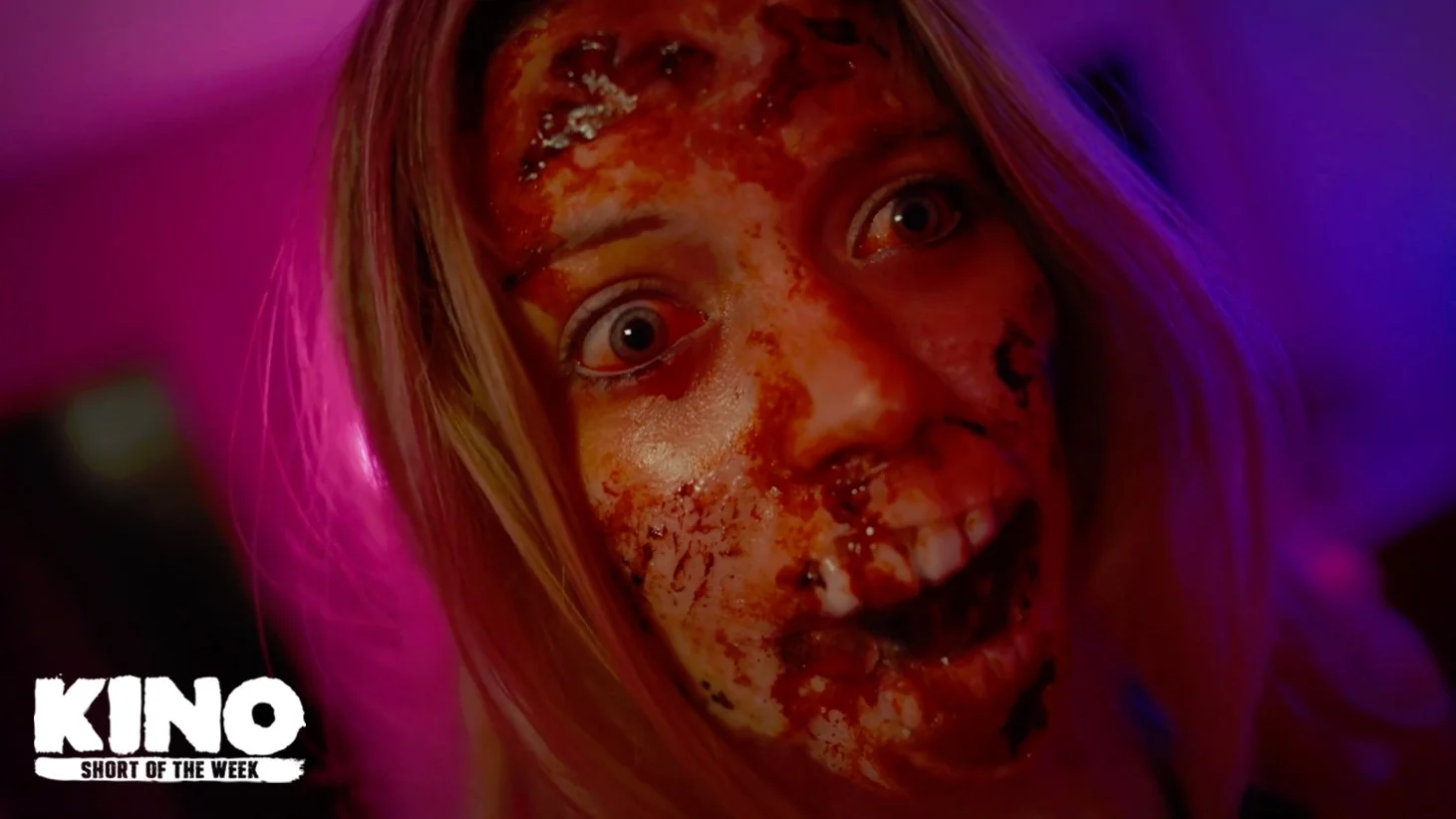
Beth, an insecure twenty-something, becomes obsessed with an insidious filter, leaving her to question real beauty.
Written & Directed by Nathan Crooker
Produced by Maya Korn & Nathan Crooker
Insecure twenty-something Beth struggles with her digital self-image until her friend Micah introduces her to a transformative filter. The digital magic boosts her online presence and attracts new admirers, but the allure comes with a dark and insidious price.
ABOUT THE FILM
#NOFILTER won Best Horror Short at the 2022 edition of our film festival. Not only did we think it was a winner, but this short hit 100+ festivals & won 50+ awards including Best Horror Short at the Phoenix International Horror and Sci-fi Film Festival, Director Award for Unique Concept and Execution at Filmquest, Best Score at Horror Haus Film Festival, and a Special Jury Mention at Shockfest. Other notable Official Selections include Flickers Rhode Island, Dances with Films, Chicago International, Screamfest LA, Crystal Palace, Unrestricted View, Boston Sci-FI, Atlanta After Dark, Horror-On-Sea, and Shivers.
It was recently released online via Omeleto.
ABOUT THE FILMmaker
NATHAN CROOKER, with roles as a Producer, Director, Writer, and Actor, transitioned from commercials and music videos to specialize in horror. His recent shorts, "Playback" and "Midnight Delivery," have achieved global acclaim, with "#Nofilter" making significant strides in the festival circuit. As a producer, he masterminded the horror anthology "Isolation" and produced "Before Someone Gets Hurt," featuring Michael Welch from "Twilight."
Behind Nathan is Ghost Gang Productions, dedicated to bold content across various platforms. Ghost Gang is passionate about diverse, disruptive narratives that echo contemporary social issues, especially in horror and dark drama. With a commitment to artistic collaborations and genre innovation, Ghost Gang's essence is about disruptive and compelling storytelling.
READ OUR INTERVIEW WITH NATHAN
Welcome back to our Short of the Week series. What have you been up to since we featured your film Midnight Delivery?
Thank you for welcoming me back to the Short of the Week series! I deeply appreciate the feature of "Midnight Delivery." That film, with the incredibly talented Danielle Guldin at its helm, holds a special place in my heart. Lately, I've been immersed in writing a few features and intensively developing projects with my production company, GhostGangProductions.com We're actively seeking scripts and building collaborations with visionary filmmakers.I'm also thrilled to share that "Isolation," an anthology film I created and co-produced with the talented James P. Gannon, at the height of lockdown is now on VOD. This anthology paints a vivid picture of a pandemic-stricken world through the lens of iconic horror directors like Larry Fessenden, Bobby Roe, Keir Sewart, Alix Austin, Andrew Kasch, and Christian Pasquariello. Lastly, I'm gearing up for my debut feature film, aiming to start shooting by year-end. It's indeed shaping up to be an exhilarating year!
Tell us about the genesis of #NoFilter. What was your inspiration and decided to put it into production?
The genesis of #NoFilter is deeply rooted in the phenomena I observed during the pandemic. As isolation became the norm, I began to notice a surge in the use of digital filters amongst friends and acquaintances. Whether it was borne out of boredom or insecurities, the filter usage increased noticeably. What began as perhaps a fun, quirky way to interact online seemed to morph into a standard. Suddenly, it wasn't just about sharing a digitally enhanced photo; the filters extended to casual family dinners and regular catch-ups. This continuous, perhaps excessive, use of filters began to concern me. It wasn't just a harmless phase unique to the pandemic's isolation anymore; it appeared to evolve into an integral aspect of self-presentation. The thought of "this isn't truly you" kept lingering. What happens when you post unfiltered content? Does your perception of self-worth hinge on the number of 'likes' a digitally enhanced version of you receives? Delving deeper into this, I stumbled upon the term "Snapchat Dysmorphia". It was alarming to discover that Snapchat had to retract certain filters due to the potential dysmorphic effects they could have. But even more startling was the growing trend in Europe and the US, where plastic surgeons, who once modeled procedures after celebrities, were now being presented with filtered selfies by clients wanting to emulate their digitally altered selves. While #NoFilter is undeniably a cautionary tale, it underscores pertinent issues that society grapples with today, issues that I believe, show no sign of fading away.

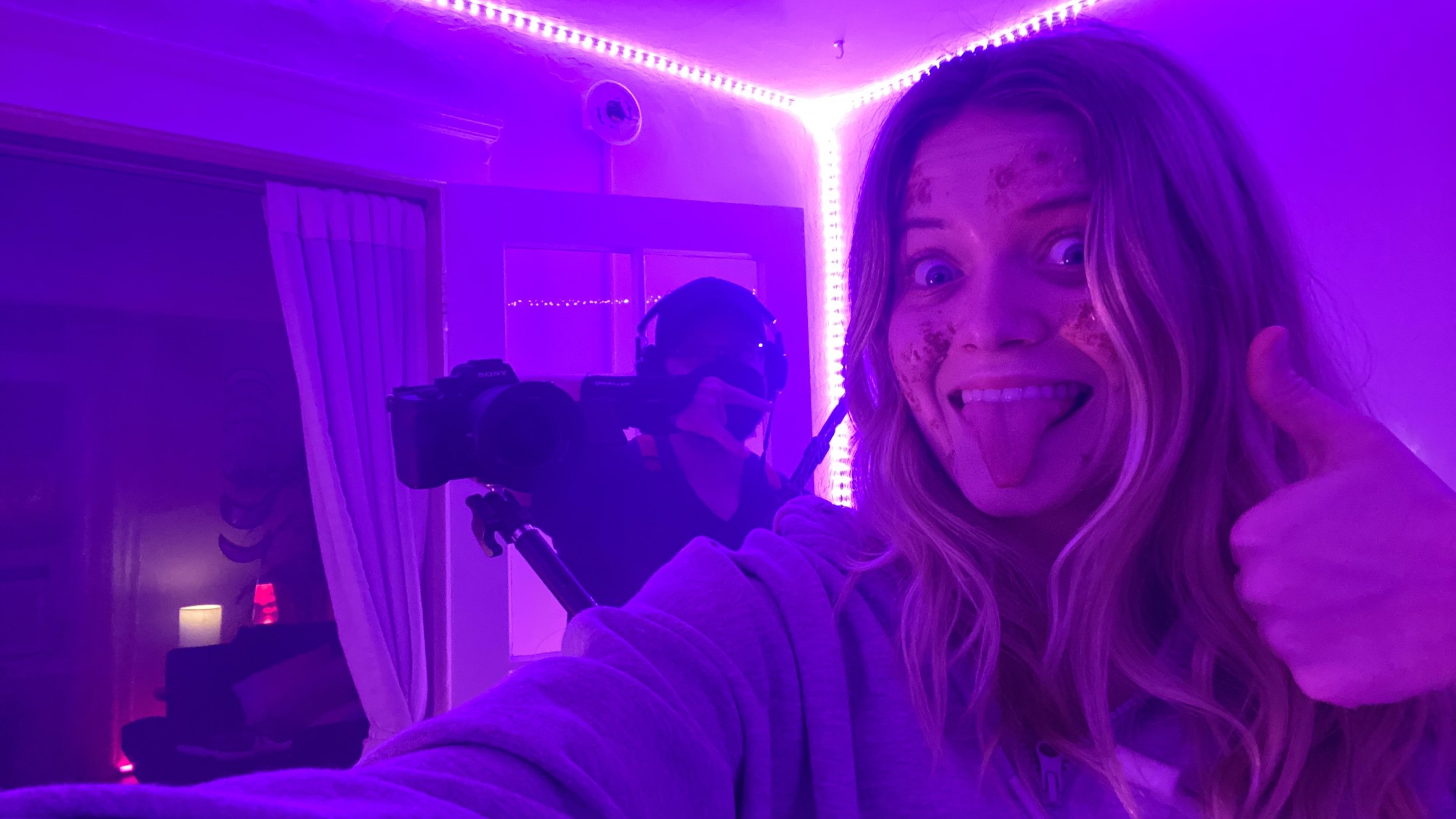

What I love about about #NoFilter is that not only is it a well crafted horror film, but it also has a lot to say. Can you talk about how you balanced the elements of social commentary with elements of horror?
Absolutely. When creating #NoFilter, it was essential for me to seamlessly blend horror with relevant social commentary. What I’ve always loved about the horror genre is it has always been a powerful medium to reflect societal fears, concerns, and critiques. So from the start story integration was key. I wanted to ensure that the social commentary was integral to the plot. Instead of just adding it as a secondary layer, it was woven into the fabric of the story. This ensured that the narrative wasn't just unnerving, but also thought-provoking. Character development was always key. Our characters are representative of various facets of society. Their experiences, reactions, and choices within the setting reflect broader societal issues, allowing the audience to both relate to them and I hope evaluate the deeper messages. I wanted incorporate subtle nuances as well. While it was tempting to be overt about our social critiques, we used subtlety to our advantage. We allowed the horror elements to serve as metaphors. I wanted to give the audience a chance to engage and interpret the film on multiple levels, depending on their own experiences and perspectives. In the filmmaking process I love sound design and the use of audio cues. The sound design done by Andrew Smetek, played a pivotal role. By juxtaposing certain sounds with key moments, we were able to accentuate the underlying themes without detracting from the suspense and terror. Ultimately you need to respect the genre. At its very essence, #NoFilter is a poignant drama about a young woman grappling with deep-seated feelings of inadequacy and pain. While the film is undeniably steeped in horror, every narrative twist and social commentary was carefully woven in to enhance the story's dramatic undertones, rather than overshadow them. My primary mission was to deliver a thrilling cinematic experience, but it was equally vital to leave the audience introspective and contemplative about the broader implications presented.The fusion of drama and horror enabled us to craft a tale that was both deeply unsettling and profoundly resonant. In the realm of horror, there's a unique potential to make viewers confront and reflect upon uncomfortable truths. With #NoFilter, our ambition was to harness this potential, using it as a vessel to spotlight critical societal concerns.
What were some of the main obstacles you experienced when making #NoFilter and how did you overcome them?
Creating #NoFilter presented a myriad of challenges, but time undoubtedly stood out as the primary one. My vision for the film encompassed an extensive range of shots, each tailored to make the cinematic world feel not just immersive, but thrillingly dynamic. I aimed for the film's pace and flow to emulate the restless energy of a doom scroller, constantly moving and capturing the audience's attention. A significant credit for this achievement goes to my director of photography, Jason Banker. His expertise was pivotal in translating my vision to the screen. It's one thing to envision a story, but another to have an exceptional cinematographer who understands the nuances of storytelling. Jason's innate ability to capture the essence of a scene, coupled with his technical prowess, added layers of depth and dynamism to #NoFilter. His collaboration was instrumental in ensuring that every frame not only looked visually stunning but also narrated a part of the story, driving the narrative forward. Jason is also a director, who’s done some two incredible horror features that are must see, the cult hit Toad Road and Felt. Back to our story, both Jason and I were keen on achieving unique shots that not only looked visually compelling but also significantly advanced the narrative. This often translated to numerous takes to capture a scene just right, leading to extended hours on set. However, the dedication of our cast played a crucial role in helping us manage time. Our lead Kelly Lamor Wilson, Misha Osherovich, and Sam Bixby were nothing short of exceptional. Their ability to consistently deliver on every take, regardless of the demands of the scene, was a incredible. Their professionalism and commitment helped us save precious hours. Another significant time challenge was the intricate makeup required for Kelly. The removal process was notably lengthier than the application, eating into our tight schedule. That said, our makeup team was absolutely stellar. Their expertise and efficiency ensured that the quality of work wasn't compromised, even under time constraints. What made a considerable difference was the foresight to conduct makeup tests before the actual shoot. This pre-emptive approach allowed us to perfect the look in advance, ensuring that no time was wasted on set making adjustments. Despite these challenges, the dedication and expertise of our fantastic crew ensured that #NoFilter was realized as envisioned, and I hope delivers a visually and narratively compelling film to the viewer.


Tell us about the journey of getting your film to audiences. Midnight Delivery and Playback both had good festival runs, but #NoFilter seems to be your biggest festival hit yet. Is that fair to say? You played over 100 festivals and won more than 50 awards. What do you think is the secret to your success?
Thank you for recognizing our journey. Indeed, the path from 'Midnight Delivery' and 'Playback' to #NoFilter has been marked with both challenges and triumphs. #NoFilter, in particular, has seen remarkable success in the festival circuit, which has been wonderful. The subject of Snapchat filters and body dysmorphia is undeniably timely. Today, with the pervasive influence of social media, the issues surrounding self-image, digital alterations, and their impact on mental health are more relevant than ever. #NoFilter sought to explore these nuances, diving deep into the psychological repercussions in a horror setting. The success of the film, I believe, lies in its resonance with the zeitgeist. Audiences could see a part of their own experiences and anxieties reflected in the narrative. Couple this with a passionate team dedicated to perfecting every detail, from story to production, and we had a film that both entertained and provoked thought. Every element, from storytelling to cinematography, was meticulously crafted. We aimed for each frame to echo the aesthetic of an Instagram feed. In post-production, tools like Neat Video were utilized to eliminate noise, rendering a crisp, saturated image, emulating that quintessential 'Insta' vibrancy. Our cast and crew's dedication was unparalleled, ensuring our vision was perfectly translated on screen. Another pivotal element to the success of #NoFilter is its compelling musical composition. I'm an avid collector of horror soundtracks on vinyl, which has cultivated in me a deep appreciation for the nuances of musical storytelling. Because of this passion, I'm especially discerning when it comes to selecting music for my films. This led me to the brilliant composer, Alexander Taylor. His grasp on musical composition is truly unparalleled. Alexander doesn't just create music; he meticulously crafts auditory experiences. He understands the intricacies of timing, ensuring that each note or chord strikes at the perfect moment to elicit the desired emotion from the audience. Beyond his technical mastery, Alexander possesses an intuitive sense for the nuances of music, enabling him to create scores that breathe life into scenes, adding layers of tension, dread, or relief as needed. Working with him was an enlightening experience, and his contributions significantly elevated the atmospheric depth of the film. Go check out Alexander Taylor’s score for the film on Spotify! I also want to add that we were fortunate to be able to incorporate a song from the gifted and up-and-coming artist Cottontail. Their track "Earworm" also on Spotify isn't just thematically in sync with our film's message, but it's also irresistibly catchy and dance-worthy. It's a testament to their versatility as an artist, to be able to produce a track that resonates on such a thematic level. It is all these nuanced elements really make this film a success.
What do you think is the biggest challenge short filmmakers face trying to break into the industry?
One of the most daunting challenges that short filmmakers face when trying to break into the industry is visibility. The film landscape is vast, and ensuring that your work gets seen by the right eyes can be an uphill task. Many talented filmmakers produce incredible shorts that unfortunately go unnoticed because they lack the right platform or avenue for exposure. That’s why I feel Kino Short Films is invaluable. Your dedication to celebrating the art of short filmmaking is commendable. What I truly appreciate about you is your genuine love for cinema and your unwavering commitment to championing filmmakers. Kino offers a much-needed spotlight, ensuring that these short films don't just get seen, but that they're appreciated by audiences and industry professionals alike. I love that you don’t just provide a platform but you cultivate a community. It helps bridge the gap between emerging filmmakers and industry insiders, granting us as creators the visibility and connections we need to make our mark in the film world. Kino helps to level the playing field, allowing talent and passion to shine through. So thank you. Also budget constraints are always a challenge. Short films typically operate on limited budgets, which can restrict the quality of equipment, locations, talent, and post-production elements available to the filmmaker. You have to call in favor and in my case put on multiple hats if you want your film to excel. A real bummer after putting all the time an money into a short is you don’t really get it back. There’s no monetary ROI. It's often harder to monetize short films compared to feature-length projects. The traditional avenues of revenue for films, such as box office and distribution deals, are not as accessible or lucrative for shorts. Yet, some of us get lucky and a deal comes our way to turn our film into a feature or we find that companies who want to buy our shorts in put them into an anthology. This has happened to me numerous times with Playback and Midnight Delivery which can be seen in the anthology feature Nightmare Radio - The Night Stalker, Strange Events and Charlotte The Return. As short filmmakers reach out to these companies with your films!
Any film recommendations that we should add to our watchlist?
There are countless films I'd recommend, but since we're focusing on shorts, I'd love to highlight a few that really stand out to me. First off, Kelsey Bollig’s “The Fourth Wall” and "Kickstart My Heart" which is a must-see. Then there's Ramone Menon’s wild works "My Scary Indian Wedding" and "The Pey." Ryan Valdez’s incomparable films, "Make It Stop" and "We Got A Dog," are both amazing. The talented twin duo, Rob and Russell Summers, have created impactful pieces with "I’ll Be Back Tomorrow" and "See You On The Other Side." The pulse pounding bangers, “Retch” by Keir Siewert and “Sucker” by by Alix Austin. “Lastly, don't miss out on Christian Bachini’s bat shit crazy film “Escalation." All these filmmakers are making waves in the industry, and I'd highly recommend following them on their social media platforms. They're rising talents are worth keeping an eye on!
Interested in getting your work selected as Short of the Week?

Couple Noises
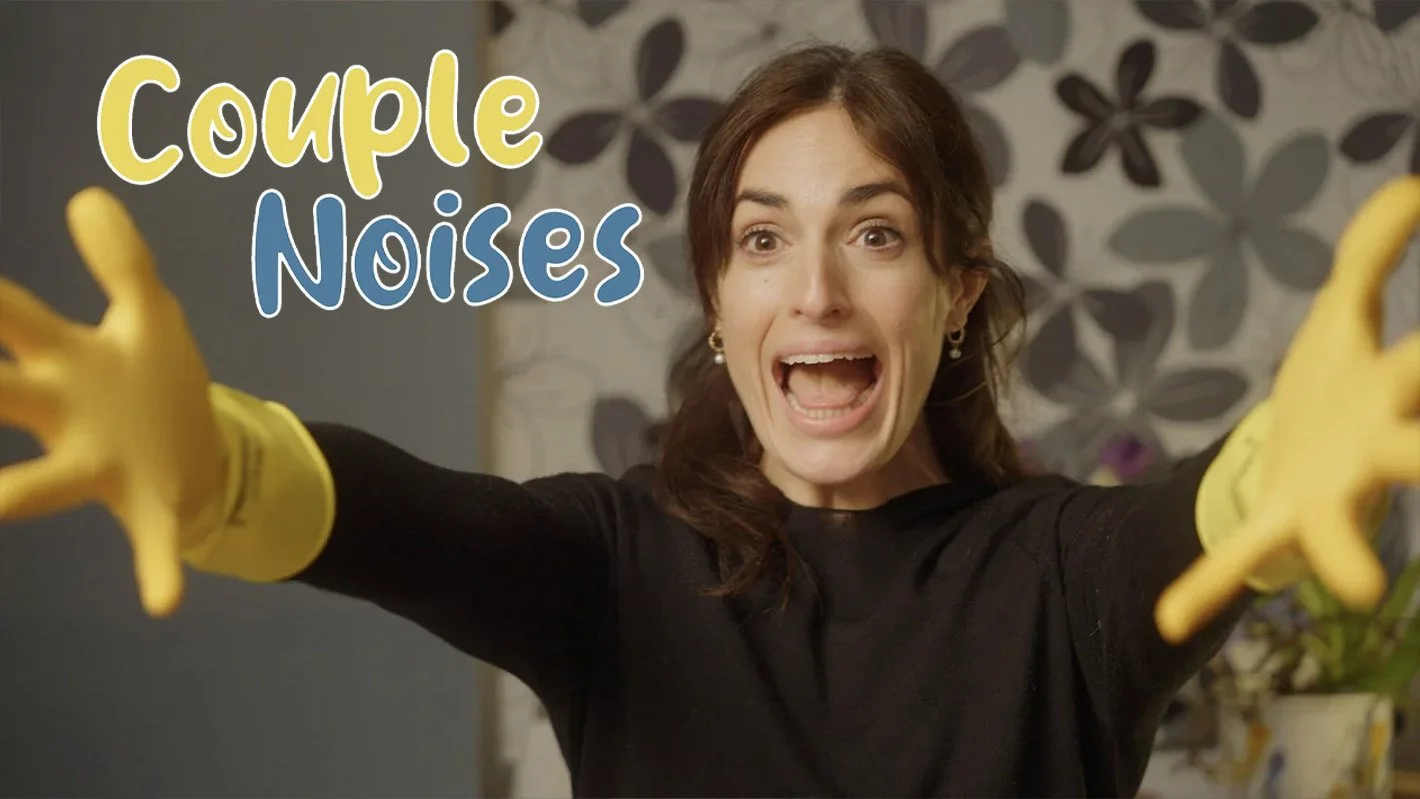
When sweet and affectionate noises between a loving couple get really weird, real quick.
Written & directed Joe McGowan
When sweet and affectionate noises between a loving couple get really weird, real quick.
ABOUT THE FILM
Couple Noises caught our attention at our Short Film Open Mic event. It won Best Micro Film at the Los Angeles Comedy Films & Screenplay Festival, came in 3rd place at the Lit Laughs International Comedy Film Festival, was a finalist at the Pigeon Laughs International Short Comedy Festival, and an Official Selection at Funny Life Film Festival. It was also featured on BBC Upload.
ABOUT THE FILMMAKER
London born and Essex raised, Joe McGowan is a writer, director and editor with over 10 years of experience working in video production for both online and broadcast. His love for comedy has steered his career: making commercials, directing stand up comedy specials and letting loose with his own unique, bizarre yet relatable comedy shorts. His first film ‘Nigel’ was shortlisted for the Youtube Play exhibition at the Guggenheim Museum in New York back in 2010, and since then he has racked up views and pulled in a number of awards across the film festival circuit.
READ OUR INTERVIEW WITH JOE
Welcome to our Short of the Week series. Can you tell us a little bit about yourself and your filmmaking background?
When I moved to sixth form and saw there was a Media course where you could learn to make films, my sixteen year old mind was blown. “This sounds so much fun” I thought to myself, and couldn’t pick the course quicker. Since then I fell deeply in love with filmmaking and storytelling. I studied Video and Animation Production at Confetti Institute for Creative Technology, and have gone on to have a 10+ years crack as a director and editor, and haven’t looked back.
As much as I adore filmmaking, the thing that’s brought me the most joy is making people laugh. Over the years I’ve dabbled in making comedy shorts for myself and have made commercials with a comedic twist, but a year ago I quit my full time role at a production company to niche down as a comedy writer, director and editor…and look at me now ma! I tend to lean towards making things silly, absurd but also endearing.
Tell us about the genesis of Couple Noises? Where did the idea come from and why did you choose to pursue this film to make?
Everyone has inside jokes. Friends, family and especially couples and from my own experiences in relationships and observing others, sometimes a joke can be as simple as two people making sounds at each other. If anyone witnessed the daft noises me and my girlfriend make at each other they’d be very concerned. The thing I wanted to explore was what if those cute sweet nothings went a little too far.
For the last few years I’ve been enrolled on the comedy writting course ‘Think Funny’, run by the incredible Brian Luff and Georgina Sowerby. One of the sessions was all about escalation sketches, and how a situation that progressively gets worse or more bizarre for characters can lead to hilarious results. I took what I learned from the session and merged it with my idea, and that became Couple Noises.

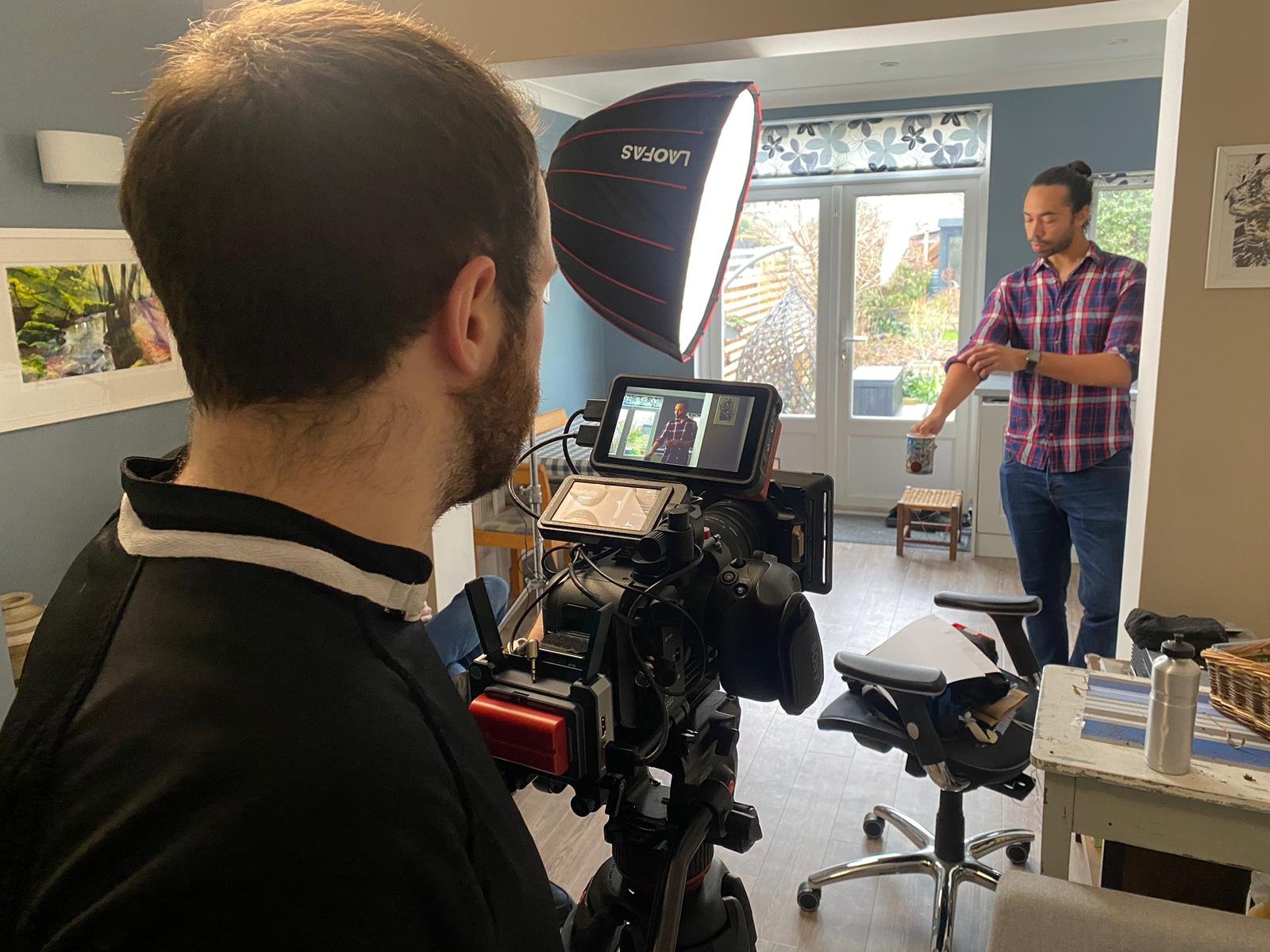
What were some of the main obstacles you experienced when making Couple Noises and how did you overcome them?
Overcoming imposter syndrome. I remember thinking on the day before we started filming ‘Is this funny?’ ‘Are people going to get it?’ I had to remind myself that I had amassed a really talented cast and crew who were giving up their time to help make the film and we had an absolute blast. This film was really an exercise in finding the tone on the day. The initial dialogue and props were scripted, but the noises and performances that Chloe Zeitoinain and Julian Lloyd Patten gave were mostly them just playing and improvising. When I asked them to go bigger and weirder they jolly well went for it. Without their willingness to be as bonkers as possible, the film would fall flat, and I am so grateful for them and the crew in being invested in what I was trying to accomplish. I’d always wanted to make a film that relied heavily on improv and look forward to doing more of it in the future.
Tell us about the journey of getting your film to audiences.
I was a bit hesitant to just put the film online. There’s so much content out there and I didn’t want Couple Noises to get lost in the shuffle. I had another short that was doing well on the film festival circuit, so I entered Couple Noises for a few festivals here and there. It even made an apparence at Kino’s Short Film Open Mic earlier this year. The audiences response to the film has been nothing short of heart warming. The amount of people who have come up to me and said they do the same thing with their other half and it resonated with them is really lovely and gratifying to hear. It also means I’m not that mad either, which is a bonus.
The craziest thing that’s happened this year is seeing Couple Noises on the BBC’s main Instagram channel and BBC Comedy Facebook page. BBC Upload was looking for comedy sketches, poetry and other creative submissions and I thought why not, so I sent them Couple Noises. A few weeks later, the film had gained over 200k views and I appeared on BBC Essex Radio to talk about the film. For something I made at my mum’s house on a shoestring budget, I was blown away by the run my little film was having. I’d highly recommend anyone that has made a comedy short (or sketch that could translate well to radio) to send your work to BBC Upload. It’s free, and it feels good to say your comedy work got featured by the BBC.
Listen to Joe’s Interview on BBC
What advice or hacks would you give to other short filmmakers?
Go out and make it, and don’t be afraid to ask for help.
I sat on the initial idea for Couple Noises for a few years before pulling the trigger and I’m so glad I did. You won’t grow as a filmmaker if you aren’t making stuff you enjoy. Every shoot is an opportunity to learn something new about your own process and what works versus what doesn’t work. Also, other people want to help make films too. I met my DOP Maximillian Newcombe through the filmmakers networking website Shooting People. I loved his work and he’s a fellow Essex boy, so I reached out to him and we hit it off immediately. When I asked if he wanted to shoot Couple Noises he jumped at the chance to work on a comedy project. We’ve worked together on a few professional (and paying) jobs since, and he’s now my go to DOP.
We’re all learning and growing in this industry constantly. Put your vision and yourself out there and see what happens.
What do you think is the biggest challenge short filmmakers face trying to break into the industry?
Money, money, money. I’ve had to re-think what project I want to make next due to my ideas being bigger than my wallet. I want my next project to be grander in every way possible, but it’s definitely going to be baby steps rather than taking that massive creative leap. One comedy sketch idea I have would require over 50 breakable prop bottles, and they are on average between £15-£20 each…I’ll come back to that at some point.
I’ve looked into funding options and find it all quite daunting, but it’s another step I need to take, and I know I’m not alone in wanting to know how to navigate through that world and get my next comedy project off the ground.
Any film recommendations that we should add to our watchlist?
Two comedy shorts that I saw this year that I’d highly recommend are:
‘The Foul’ directed by James Button. Disgusting, outrageous, a true piece of art. Going in blind is the best way to watch this short, so do yourself a favour and watch it on Youtube.
‘The Sharkey’ directed by Calum Weir. Three guys waiting for a bus in the Scotland highlands, and along comes a completely pissed menace that spouts nonsense. Neil Bratchpiece gives the best comedic performance I’ve seen in anything all year.
I also recently watched ‘Marcel the Shell with Shoes on’ and it’s one of the most heartfelt and endearing films I’ve seen in a long time. Seeing what started as a short series of Youtube videos back in the early days of Youtube be made into a gorgeous A24 film is so lovely to see.
Interested in getting your work selected?

The Stream
When a first-gen American son learns of his Russian immigrant father’s financial crisis, he reluctantly agrees to one last trip to their beloved family lake house before it’s sold.

Written & DIRECTED BY Sam Dubin
Produced by Santiago Bukovsky, Lauren Guido, Maggie Shea & Sam Dubin
When a first generation American son learns of his Russian immigrant father’s financial catastrophe, he reluctantly agrees to one last tumultuous trip to their beloved family lake house before it’s sold.
What follows is the journey of a father and son on the road, bound towards selling a home they love. Trapped with one another they must confront their opposing views of America and ultimately their views of each other.
ABOUT THE FILM
The Stream premiered at the Fayetteville Film Festival and was release online by Omeleto. It was a Semi-Finalists at Flickers' Rhode Island International Film Festival, screened at the Cobb International Film Fest's Indie Night, and was featured by Film Shortage.
ABOUT THE FILMmaker
Sam Dubin is an actor, writer, and filmmaker from Atlanta, Georgia, and a proud graduate of The University of Michigan's BFA Acting Program. He also got a minor in creative writing! The Stream is his directorial debut, but he's been acting all his life in many different plays and films, some of which include Angels in America, Grapes of Wrath, and Proud to Present..., plus a handful of student films. He's also had the opportunity to study at the Atlantic Theatre Company and the Moscow Art Theatre! He is so, so excited to bring this film to you!!
READ OUR INTERVIEW WITH SAM
Welcome to our Short of the Week series. Can you tell us a little bit about yourself and your filmmaking background?
Hi! Thank you for including The Stream in your series! We are honored to be featured by Kino! My name is Sam Dubin. I wrote, directed, and acted in The Stream. I'm from Atlanta, Georgia, but I recently relocated to New York City. I studied acting and creative writing at the University of Michigan, but I've been a film lover my whole life. The Stream is my directorial debut and it was born during the pandemic. Most of my experience comes from being in front of the camera, but everything I know about making films I've learned from watching them. I didn't go to film school or have any kind of formal training. I had always wanted to write and direct my own work, but it wasn't until I was inspired to write this story that I was ready to commit to the challenge of making my first short. I had an amazing crew on this project and this film would not exist without them!
The Stream is a very personal project for you. Can you tell us about the film's genesis?
The Stream was born from a deep curiosity about the relationship between my immigrant father and myself. Throughout most of my childhood, my family owned a lake house. Owning this house was one of the prouder moments of our family’s life. But a few years ago my father fell into a deep financial crisis and we had no choice but to part ways with it. After passing this house again for the first time in a few years, the feelings and memories of selling it came flooding back. And out of that was born The Stream. I wrote and rewrote and rewrote and eventually showed the script to a University of Michigan cinematographer friend. From there I brought on producers -- also Michigan alumni. Eventually, I had to show the script to my dad. I couldn't make the film without his blessing. At first, he was hesitant for this story to be told. Honestly, there was a moment when I thought I would have to scrap the film altogether. And I understand completely. It's nearly autobiographical and this moment in our family's life was a constant source of shame for my father. But I believed that this was an important story tell. My dad slept on it and the next morning he gave me his blessing. From there we crowdfunded the project, pulled together the rest of our team, and shot the film in four days. We've had a short festival run, premiered to sold-out crowds in NYC and Atlanta, and recently premiered online on the YouTube channel Omeleto. The most meaningful part of this whole project has been having people come up and tell me that the film reminded them of their father, or their old house, or a time in their lives when they struggled financially. Those comments will keep me going for a lifetime. And what was once a source of shame for my father has become something that he can stand to be proud of.


What were some of the main obstacles you experienced when making of The Stream and how did you overcome them?
We experienced obstacles every single day while making The Stream. During pre-production, production, post -- even now problems will still arise! I learned so much about directing and producing by throwing myself into the process of making a film and one thing I can say is that much of a director/producer's job is just constant problem solving. A problem arises you figure out a solution and before you know it there will be another issue. Our picture car broke down on us, we were rained out on certain days, we had to change locations, we worked late into the night, and we worked against the sun. Camera issues, cast issues, food issues, money issues. The list goes on and on! And no one will ever know! The biggest lesson I learned as a director is to rely on your team. I often thought I had to solve every problem. But there's a reason why you have a team. You owe it to them to focus on the story, the actors, and the film itself. So on a personal level, one of my biggest obstacles was learning that not every obstacle was my responsibility. Other than that I can say that time was our biggest enemy. I took a big bite with this project. The script was originally nearly thirty pages and there were two driving scenes (which I learned after the fact are much more complicated to film than you realize) and the film takes place in two time periods. It was a lot to squeeze into four days. We were constantly working against time and constantly having to reevaluate what were the most important shots to get. It was like editing the film while we were shooting it.
Tell us about the journey of getting your film to audiences. Festival Circuit vs Online Release, the highs and lows of both.
I think the release portion was one of the most difficult parts of the process of making this film. We did do a small festival run. We premiered at the Fayetteville Film Festival. With film fests, there are just so many factors that are out of your control. The length of the film, the subject, the style -- what the festivals are programming and how your film fits in alongside it. We had a nice audience built up from our crowdfunding work so we put together sold-out screenings in Atlanta and New York City. Besides being an amazing experience to view the film with such large and enthusiastic crowds putting together those screenings on our own turned out to be a great look online. So I would recommend that to other filmmakers. Host your own screenings! Once our film fest run was over I applied to online platforms and we were lucky to be accepted by Omeleto -- and now Kino's Short of the Week! In my experience, with shorts, there's a lot to be gained by pushing an online release. Film fests are cool and there are so many positives to be gained by attending them, but you never know who's going to see your work online. And it's available to everyone, everywhere!
What advice or hacks would you give to other short filmmakers?
If you want to learn how to do crowdfunding well then check out "The Kickstarter Guy". Everything I learned about crowdfunding I learned from their program. Watch a ton of other shorts. Write every single day. Write another draft. Definitely listen to people when they say you should cut pages. Don't get married to anything cause you'll end up cutting it in the edit anyway. Always keep your cool on set. The director sets the temperature of the room. Don't be afraid to reach out to your friends for help. They want to help you. Whatever you're thinking about making definitely definitely make it. Don't think about doing it just do it. Cause you'll think about it forever.
What do you think is the biggest challenge short filmmakers face trying to break into the industry?
I think the biggest challenge most short filmmakers face is that they have to do it all themselves and for very cheap. There's no real market for short films so there's no return on investment when you make one. You do it for passion, experience, and for your own portfolio. So it's hard to secure money to make the thing. In my experience pre-production, financing, all the way to post and release was almost entirely my responsibility and the truth is that can get a bit exhausting. You have to be willing to put your entire heart and soul into the thing. And that can take a lot out of you. Short filmmakers can't afford the luxury of time and a big team. I'm really proud of what I made, but there's a lot you have to sacrifice to make it happen. I wish it could be different, but I think that's just the way it goes.
What are you working on next?
I'm working on a feature right now and a play as well! I'd love to make another short early next year before I commit to a feature. And I'd like to use the work I have to help me leverage making a feature. Part of the fascination in making The Stream was this idea of a home and what it can mean to humans so it's possible I may continue to explore that idea. I'm also clearly inspired by my own family and culture and I've been thinking about a short documentary about my Russian grandparents! I'm grateful to be full of ideas and I'm working on them everyday!
Any film recommendations that we should add to our watchlist?
So many! But I'll just mention the films that were guiding lights for The Stream which I happen to love. Paris, Texas / Wim Wenders. Taste of Cherry / Abbas Kiarostami. Old Joy / Kelly Reichardt. Nomadland / Chloe Zhao. Salesman / Albert and David Maysles and Charlotte Zwerin.
Interested in getting your work selected as Short of the Week?

RoButler
Overworked in the email department at the a local Welsh council, Cwnt Jones purchases a personalised AI assistant in order to help make his life better- the RoButler.
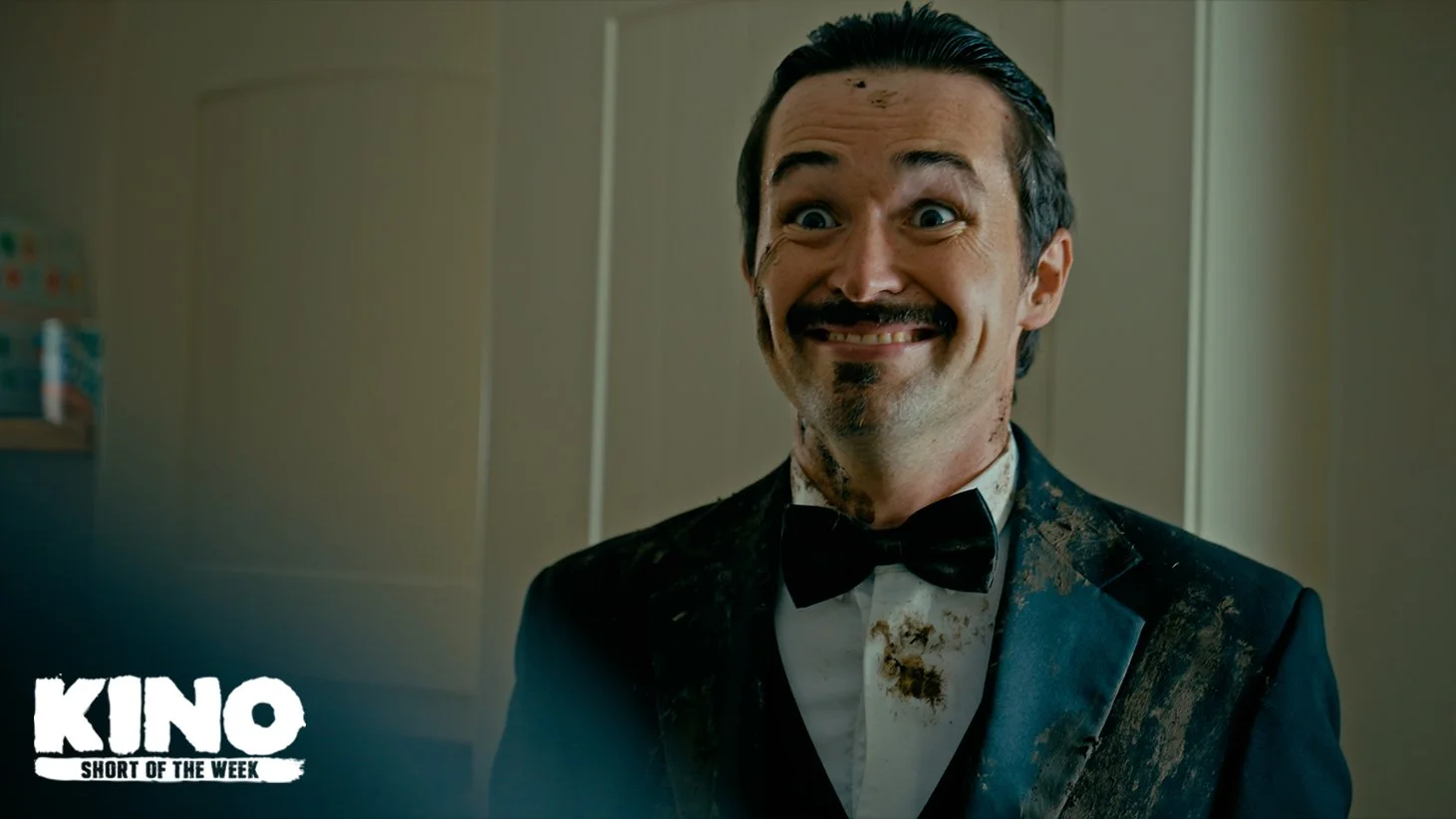
Written, directed, edited & starring James Button Director of Photography & visual effects Paul Marke
Overworked in the email department at the a local Welsh council, Cwnt Jones purchases a personalised AI assistant in order to help make his life better- the RoButler.
ABOUT THE FILM
RoButler was created for the London Sci Fi 48 Hour Film Challenge. It was nominated for Best Micro-Budget Short, Best Performance in a Comedy, and Best Editing at the 2023 edition of our Kino London Short Film Festival. It also played at the BAFTA qualifying Carmarthen Bay Film Festival and the BIFA qualifying Short Com and The Shortest Nights.
ABOUT THE FILMmaker
Welsh filmmaker from Wales who loves making weird, wacky and silly comedy- James Button has made films about aliens, dinosaurs, time travelling in traffic, adorable goats and dog poo! Double BAFTA Cymru-nominated writer/director of 23 short films, all gaining official selections and screenings. Mostly comedies, they've nabbed 57 awards at international film festivals and competitions. James had fun making fun films for fun for the past 10 years alongside working full-time in commercial work. In 2023 James is now focussing on longer-form projects with two (dream) comedy feature scripts he is very excited to get made.
READ OUR INTERVIEW WITH JAMES
Welcome to our Short of the Week series. Can you tell us a little bit about yourself and your filmmaking background?
Ever since getting my hands on a camcorder at age twelve I’ve been making all kinds of nonsense. I simply love it and can’t imagine doing anything else, so have somehow managed to get away with basing my life about making stuff.
My favourite things in life are traveling, sleepovers, friends and films- and filmmaking kinda blends all of them.
Brilliant. So yeah basically, I just haven’t stopped making my own projects my way about fun things that we have fun with which hopefully people have fun watching! Never having had big budgets, my small band of filmmaker friends have had to get super creative with DIY indie filmmaking to make a lot with a little.
Tell us about the genesis of RoBulter - how the project came about and where you found your inspiration?
Well, this one never really should have happened.
Paul Marke and myself had previously done the London Sci Fi 48 Hour Film Challenge twice before- not taking it too seriously with me playing an angry Welshman shouting at aliens once (Flying Visit) and an AI house the other (Melting Point). So when Paul messaged me the day before the Challenge in 2022 and was like, “you up for it?”, I was like “oh alright then”. However, I had a migraine, we had ZERO budget, ZERO crew, ZERO cast but any excuse for a sleepover, even one with ZERO sleep.
What is the most challenging and/or exciting aspect of creating a film in 48 hours?
Subconsciously, I think we really wanted to test (or punish) ourselves by defaulting back to barebones DIY filmmaking to see what we could get away with.
I grabbed a few costume bits (including a tux and coloured contact lenses) from my dressing up box and just the two of us...went for. We ended up roping in Paul’s statistician wife Helen, his cat Narla (also a keen statistician) and then our composer (James Morris) popped around to see what we were up to...which resulted in him getting recruited on his first ever film set as boom operator, body double and prop maker. He even had to make a circuit board that would fit up my bum.
I think the most exciting thing about making a film in 48 hours is just getting to make something- no excuses. There is no time to overthink, self-doubt, delay- you just have to commit and dive in headfirst and really push yourselves. It’s mad.
Did any pre-existing creative ideas happen to fit the brief for RoButler or did you make the film 100% from scratch?
I knew I’d probably have to play multiple characters as we didn’t have any (actual) actors lined up so on the way over in the car I cycled through some weird voices to try see who I could invite to the party. Then I basically went off to a bedroom and wrote way too many silly scenes based on a quickly brainstormed concept with Paul, of someone stressed (based on our clients) who tries to get help, but only makes things worse.
In terms of scripting it was relatively simple as I knew I’d be improvising around it anyway (I can’t help myself) and having played multiple characters before I kinda knew what could and wouldn’t work.
Also Paul is a VFX genius and the real brains behind getting this actually made. Although whilst writing, I completely accepted we probably wouldn't get it done in time...but it would be fun. Turns out...we got it done in time and despite it being a whirlwind without sleep, oh it was fun.
Would you ever continue working on the film after 48 hours for your own personal satisfaction, or once the deadline is complete do you walk away from making any tweaks?
The version of RoButler selected at Kino (and other festivals) is a polished version where basically Paul revamped some of the VFX, James Morris did a new sound mix (he was sleep mixing the first time) and I attempted to do a re-edit. However, I soon found the frantic pace, lack of sleep and rushing really gave the film the energy so barely made any tweaks as part of the magic of a 48 hour film is the harnessed fun and ticking clock vibes. So just because we loved it, it seemed to go down well (and because we thought it would be really funny for it to get into festivals!) we did a visual polish and an audio tidy- and sent it out!
If you had more time to work on this project, what is the main thing you would like to change/develop further?
I think I’d make something better to be honest!
It’s a love/hate thing with me and RoButler- like I love that we bashed something out in a couple of days and that we’re still screening it all over. Buuuut I’m also painfully aware every time I watch it that we can do so much more!
If we had more time, any money, and probably even a bit of planning we could make something more reflective of where we are in our filmmaking adventure. I think RoButler is what it is, a very silly film- too fast and and something that shouldn’t be taken seriously- which is kinda our style but would really love now to get one of the backlog of comedy short scripts produced to have some fun for a little longer!
Tell us about the journey of getting your film to audiences.
I originally popped RoButler straight on YouTube after we finished but I think seeing the laughs it got, I was tempted to see if we could get it seen on a bigger screen with a live audience. I feel I really learn a lot by screening our comedies live as although my heart goes way too fast, I like how you can hear and feel the reaction it gets to learn from it about pacing, gags etc. for next time. But really didn’t expect it to go to like five BIFA and BAFTA qualifying film festivals and I’m not just saying that! It’s shot in Paul’s kitchen, with a tiny crew, with a script I rushed out to just make Paul laugh and it feels as rushed as it was- however, it is short and fun so I’m more than happy to have it be an ice-breaker laugh, or palette cleanser after a proper heavy drama or just something to wake people up literally going “what the hell is this?” (which I’ve witnessed happening!).
What advice or hacks would you give to other short filmmakers?
Oh just go and make some stuff. I know it sounds too simple and has been said a billion times. Obviously you’ll be capped to an extent without a budget and all that- but if you can find filmmaker friends (just one apparently!) who loves doing it as much as you, even if it’s just a weekend go have some fun and practice.
I’ve made films for so long now but it's only really when I’m running around doing a bit of everything, solving silly practical problems (“how do we make the lights move when the drone flies in?” “Fishing wire!”) or laughing on set that I feel I’m really living it and learning from it.
Paul Marke is one of the best filmmakers I’ve ever met- a truly amazing person, dedicated and reliable friend but a damn good filmmaker. He inspires me by making a thirty minute comedy sketch show just to get out of doing a speech at his own wedding, which ended up being better than a lot of commissioned broadcast TV comedy- and just the quality of the work he can create on a whim with a laptop is insane. He can do that because he just does that- as in, he just goes and does it and if he hadn’t messaged me asking “you up for the 48 sci fi challenge tomorrow?”, I wouldn’t be here now. Writing this I mean, not dead.
Any film recommendations that we should add to our watchlist?
Argh! This was the only question that scared me because it’s so much pressure with so many better filmmakers reading this who have already seen them all!
I think I’m going to have to do a cheat answer...(sorry) and say, go to a film festival. Go in blind. No recommendations, no hit list, no hype, no expectations. A whole block of short films..no wait, multiple BLOCKS of short films.
Some of the best learning and some of the best constructive conversations I have is coming out of a screening with some trusted friends, going and hiding in a coffee shop (or on a sleepover) and just go through them ALL. What did you think? What did you feel or did you even? Why didn’t they work? What would you do differently? I’ve found you can really bond with collaborators over this and find your tribe, because your director to DP relationship or with your composer or any collaborator really can really be proven when you find yourself in agreement on this. Once you watch films and talk films with people, you soon find yourself making better films and the films that you all want to make.
Obviously you always try work with people that are better that you (I do) but also with ones who’d do things the same way or wouldn’t do that or would do this instead? Sorry I don’t know if any of this makes sense but basically watch SHORT FILMS. Watch good inspiring films and just as importantly watch yummy BAD films. You can literally watch like 300 in a weekend (I did earlier this year!. So I’d say go to Kino 2024 ;)
That was a flirt. Sorry what was the question?!
Interested in getting your work selected as Short of the Week?

Road Trip
A mother and daughter connect during a road trip, but their destination isn’t what you’d expect.

Written & DIRECTED BY Natalie A. Evans
Produced by Luiza Herdy, Verity Wislocki, Morgan Tovey Frost & Ronnie Mukwaya
A mother and daughter connect during a road trip, but their destination isn’t what you’d expect.
ABOUT THE FILM
Road Trip received several awards, nominations and official selections at BAFTA and BIFA qualifying film festivals while on the circuit. Awards include winning Best of the Fest at the BIFA qualifying North East International Film Festival and the Nottingham International Film Festival, Best British Film at the Soho London Independent Film Festival and LA1 Shorts, Best Editor at Toronto International Women Film Festival and Kate Robbins won Best Actress at the Birmingham Film Festival. The film was also nominated for the XX Award at the BAFTA qualifying Underwire and Best Comedy at the Crystal Palace International Film Festival.
ABOUT THE FILMmakers
Natalie A. Evans' 2018 debut short - TODAY IS A GOOD DAY - and 2019 follow up short - #BRUNCH - are award-winning films. Born and bred in the North West of England, Natalie graduated with a Bachelor of Arts and a Masters in Film Production and now lives and works in London. She has worked for many reputable studios including Warner Bros, Amazon Studios and most recently, Marvel Studios. Her ambition is to write and direct feature films; to create raw and honest stories that resonate with audiences all around the world.
READ OUR INTERVIEW WITH THE FILMMAKER
Welcome to our Short of the Week series. Can you tell us a little bit about yourself and your filmmaking background?
Hey, it's good to be here and thanks for selecting our film! I'm Natalie - the writer/director of Road Trip. I'm a northerner and moved down to London to work in Film. I didn't know anyone here (or in the industry, for that matter), so it was pretty difficult to find a way in and land my first entry level job. It took about 2 years of working for several smaller companies, getting my foot in the door, then an opportunity came up at De Lane Lea (now owned by Warner Bros.) for an Office Coordinator, so I went for it and got it! I soon realised this role was more front-of-house, as I was the first person who the clients would see when they came in to edit and mix their films - and I immediately loved it! This really helped me gain confidence and meet industry people, so even though I was still far from doing my dream role of writing/directing, I knew this role was helping me on my way. It opened my eyes to the world of post production and being surrounded by such talented people, I learned so much with what you can achieve in this part of the film process. So, it was during my time here that I started making my own short films. Over the past 6 years, I've been making shorts while working my way up to a Post Production Supervisor role in my 'day job', which I feel has massively broadened my filmmaking abilities with understanding what exactly is needed to be captured on set to make sure we have a film in the edit.
Tell us about the genesis of Road Trip, how you came about the idea and decided to put it into production?
Two things. The first was my Mum having cancer and how we dealt with it as a family - choosing tears of joy, over tears of sadness to get us through it - laughter is magic, so any opportunity to crack a joke, we took it! Seeing that twinkle in a loved ones eyes when they laugh is priceless, especially when it could be for the last time... The second was my friend's mum who drove her friend to Switzerland to end her life with dignity. I was fascinated with the actual journey itself in the car - I presumed it would have been sombre and heavy hearted the whole way, but she said it was the complete opposite. By that point, her friend was so far beyond doubting her decision, that the journey was like any other day - they laughed, sang along with each other, and shared memories. There was so much love, respect and admiration for one another. So I wanted to combine both of these experiences and have it be a mother-daughter relationship - not only focussing on the strength of the mother making this decision, but also highlighting the strength of the daughter who was able to honour her mum's dying wish - all of this, along with a strong message to never underestimate laughter!
What were some of the main obstacles you experienced when making of Road Trip and how did you overcome them?
Bad weather! There's always the risk of bad weather when shooting exteriors in the UK, and we got it really bad! What made it worse, was one minute it would be cracking the pavements with sunshine, then 10 minutes later, the heavens would open, and repeat... In between takes we'd need to constantly cover and uncover all of the kit and dry down the car which wasted so much shooting time.
You guys shot quite a bit in the car. Can you tell us about the logistics of that and the variety of rigs used? Did you mount to the hood or was the car being towed?
Yeah, we shot this film over a weekend. On Day 1 we shot the moving car scenes, then on Day 2 from when they pull up at their destination. As the actress didn't drive, we hired a private proving ground track and used a low loader on day one, but the suspension on it broke at some point early on in the day, so our camera rigs (that were attached to the car) were making the car panels dent inwards/outwards constantly with the vigorous shaking when we were moving, so we had to strap our DOP (Damian) to some scaffolding at the side of the low loader to get the close up 3/4 shots of them inside the car... I'd planned for the whole sing-a-long sequence to be one take to help stay in the moment with the characters, so to avoid having that shot all bumpy and naff-looking for the audience, we decided to change the (countryside) road that we were shooting, to a 1-mile straight which was like a tarmac'd motorway which eliminated all of the camera jerkiness. Luckily, the actresses absolutely nailed their performances and we managed to capture the whole performance in one take. From beginning to end of the shoot, all of the troubleshooting needed was free-styled to a premier league standard! But we got what we needed.
Tell us about the journey of getting your film to audiences.
This is actually Road Trip's public premiere online! It's been on the festival circuit since Feb '22 and I'm so grateful for all of the audiences that this has exposed us to - it's enabled us to connect with complete strangers all over the world, which is the exact reason for wanting to make this story, in particular. So, I can't wait to have it public online now for anyone and everyone to stumble across it, and hopefully it'll reach some people who will either get comfort or joy (or both!) from it.
What advice or hacks would you give to other short filmmakers?
Don't wait around for someone to give you money to make your short films, because you'll never get anything made. I personally feel it's unfair the way funding is distributed and who some of it goes to, but it's just the way it is. I've spent so many weeks/months filling out applications for short film funds and never received a penny from a funding body, so I got bored of waiting around and found ways to save little bits of money (I'm talking 'very little' as my wage was minimum), but there's always a way to do things on the cheap, without jeopardising the story that you want to tell - you just have to get creative both in-camera and in post! I do feel a lot of short filmmakers underestimate the power of post production sound, and what you can achieve with this to help build on the images you've got in the edit to really breathe the life into the 'world' you're creating for the audience. Another important thing I'd say is, it's about having the right people around you who understand the story you're trying to tell, and to trust those people - let them bring their views and expertise to the project, because (as much as you think you do) you don't know everything! And being open to this only makes your projects better.
What do you think is the biggest challenge short filmmakers face trying to break into the industry?
A few things. One if the prices of festival submissions - it's one thing scraping together enough funds to make your film, but once it's complete, I feel the festival circuit can quite quickly get out of hand with costs and is a factor as to why a lot of short filmmakers just can't get their films noticed by industry people. I totally get that festivals need to make money to be able to run the festival itself, but particularly US festivals are SO expensive - some of the submission fees are crazy, and immediately limits to type of filmmaker who can submit their work. But I guess that's the beauty of the digital world we now live in - anyone can put their film up online for free for people to see! It's just getting it in front of the right people who can help take you to the next stage of your filmmaking journey as a professional filmmaker. I've been told it only takes for one person to take a risk on you, so having a catalogue of your short films to back you up, surely, will help for when that time comes.
Any film recommendations that we should add to our watchlist?
I really enjoy films with good characters in it, so Ridley Scott's 1977 debut feature The Duellists is a cracker. The tension and rivalry between the two leads is awesome! I'm also a nerd and slightly obsessed with the Lord of the Rings films - they're just SO good in every. single. way... On the flip side, I enjoy sci-fi and horrors also, but so many films reveal the monster too soon, or reveal too much of it - so much so, that it's no longer scary. That being said, still to this day, whenever the (1987) Predator reveals himself at the end of the film, it's way worse that I had ever expected and imagined!! It's such a good lesson in how not to reveal the monster but still be able to amp up the tension and threat throughout the whole film - a priceless tip for short filmmakers!
Interested in getting your work selected as Short of the Week?

Mimesis
A lonely technology addict signs up for a bizarre dating service, which calls his human existence into question.

Written & Directed by Rumen Russev
produced by Dessy Tenekedjieva
A lonely technology addict signs up for a bizarre dating service, which calls his human existence into question.
ABOUT THE FILM
MIMESIS was created as part of the prestigious 355 FILM AWARD in Bulgaria – where three young filmmakers are chosen by an international jury to create three five-minute films in five days with a budget just shy of £1000.
The film premiered at the Stoyan Karmbarev Foundation ceremony in Bulgaria where it was the winner of The Goldfinch Film Award. Following it’s premiere, the film started a Bulgarian festival tour including playing at Киноваканция New Bulgarian Cinema Festival and Golden Rose Bulgarian Feature Film Festival, followed by an International festival tour with highlights including: Film 4 Fun International Comedy Short Film Festival, Soundscreen Film Festival, Sci-Fi Floripa International Film Festival (2023), with it’s British premiere at the Electric Film Festival in Bournemouth.
ABOUT THE FILMmaker
Rumen Russev developed a passion for storytelling during his "Creative Writing" classes at Liverpool College before going on to study "Film, Television and Digital Media" at UCLA. Currently, he creates in a studio space in Sofia.
READ OUR INTERVIEW WITH RUMEN
Can you tell us a little bit about yourself and your filmmaking background?
Hello, my name is Rumen Russev (@rurussev) – a creative and film director from Bulgaria. I studied “Film” at UNIVERSITY OF KENT and “Film, Television & Digital Media” at UNIVERSITY OF CALIFORNIA, LOS ANGELES. In 2022, I founded a production company in Sofia, STUDIO FLICKERS, which is specialised in the creation of digitally distributed films, shows, music videos & commercials.
During my childhood years, I wanted to become an astronaut and reach the unreachable. Many years later, I realised that you don’t need a rocket to land on the Moon – a camera, a detailed set & a professional crew can also bring you there. So, in the summer after eighth grade, with the help of family and friends, I made my first adventure-comedy film. It was screened at the local cinema in my hometown and everyone loved it. Ever since then, I have never stopped pushing the cinematic boundaries further and creating inspirational projects, which could leave lasting memories in people’s minds.
Tell us about the genesis of Mimesis?
The story was born from my own relationship with technology and how it pulls us away from the present. For example, the amount of time we spend on video sharing apps by simply swiping up and down or the number of photos we edit on social media apps to make our content more suitable for the algorithm.
I wanted to portray our modern world by focusing on two aspects: online dating and digital content consumption. Taking inspiration from real-life events, I decided to examine the moments when time “freezes” and we get lost in the vortex of our (phone, TV, computer) screens. Ultimately, I asked myself a question: To what extent will technology intervene in our personal lives? The final scene of MIMESIS serves as an answer to the aforementioned question.
What were some of the main obstacles you experienced when making of Mimesis and how did you overcome them?
It is important to mention that my short film was created as part of THE 355 FILM AWARD – a prestigious competition in Bulgaria – where three young filmmakers are chosen by an international jury to create three five-minute films in five days.
So, taking this into consideration, time was obviously the biggest challenge for my project. However, I managed to create a good schedule. Day one was for filming. Day two and day three were for editing. Day four was for color correction. Day five was for sound design and music.
Another problem I had was the small budget. It was just below £1000. However, by pulling in favors from my friends, family & colleagues, I managed to assemble a team and a collection of great locations to set the film in.
Apart from the limited time and small budget, production went pretty smoothly.
Can you tell us a bit about working with the 360 spiral camera rig and your decision to use it stylistically at a few key points in your film?
The technique allowed me to create more immersive sequences. Honestly, I have used the 360 spiral camera rig in so many projects, that it is now part of my signature. Usually, I achieve the effect with the help of a gimbal. However, since I used a RED camera for this project, which is much heavier than a DSLR camera, a gimbal wasn’t an option. So, my director of photography used a really old, significantly bigger & much heavier device, so that we can get perfect shots.
Tell us about the journey of getting your film to audiences.
I was really lucky to have my premiere at the STOYAN KAMBAREV ART FOUNDATION ceremony, which is a big event in Bulgaria. Straight after that, MIMESIS was screened at a few national festivals and then started its international festival journey. It was accepted by plenty of festivals from around the word, but it was also rejected by others. I think it’s just important to remember that every festival is subjective. Furthermore, I realize that my film has an interesting concept, but it doesn’t have a fully-fleshed out story (since I only had 5 days to make it). Overall, I was happy with the distribution and, as the festival circuit came to an end, I reached out to several online platforms, which decided to feature the film.
What advice or hacks would you give to other short filmmakers?
There is a perfect quote by Quentin Tarantino: “If you want to make a movie, make it. Don’t wait for a grant, don’t wait for the perfect circumstances, just make it.” Honestly, that’s the best advice I can give. Surround yourself with talented people, bond with them and create awesome stuff together.
What do you think is the biggest challenge short filmmakers face trying to break into the industry?
In my opinion, finding the right path (distribution) for your film would be the biggest challenge. Submitting your six-minute project to every A-list festival is definitely not a good idea (it is also an expensive one). There are hundreds of smaller (and still great) festivals, which are willing to screen your work in front of hundreds of people. In short, before hitting that submit button, you should definitely do your research. At the end of the day, every good film finds its audience sooner or later. You just have to be patient.
Any film recommendations that we should add to our watchlist?
The biggest influence on MIMESIS is probably the work of Spike Jonze, especially HER (2013) and I'M HERE (2010). Additionally, there is a truly creative commercial, called LAMP (2002), also directed by him. So, if you haven’t seen those yet, you should definitely check them out.
Interested in getting your work selected as Short of the Week?

Ear, Eye & Head
To alleviate her struggles with social anxiety, a girl tries to block out the world by dismembering herself.

Directed & Produced by Hwanyi Kim
There is a girl who desires to block out the world, to silence her hearing, vision, and thoughts. This aversion to her senses stems from the presence of those around her. Their incessant chatter and constant scrutiny disrupt her thinking, making it difficult for her to concentrate. The reality is that she struggles with social anxiety, and the daily routines of life weigh heavily on her.
The portrayal shows that people with social anxiety think similarly to the average person, presented in a unique and casual way.
ABOUT THE FILM
This short animation is from South Korea and this is it’s online premeire.
ABOUT THE FILMMAKER
Hwanyi Kim is an artist who works in 2D animation and painting. She studied painting at Dongguk University in South Korea from 2011 to 2015, and animation at Royal College of Art in London from 2018 to 2020.
READ OUR INTERVIEW WITH HWANYI
Welcome to our Short of the Week series. Can you tell us a little bit about yourself and your filmmaking background?
Hi, I'm Hwanyi Kim, and I'm thankful to be part of Kino Short Week. I'm an animator and designer in London. I studied animation at the Royal College of Art from 2018 to 2020. My graduation film, 'EYES,' was shown at a few animation festivals. Right now, I'm planning more projects that explore social issues.
Tell us about the genesis of Ear, Eye & Head?
My work is inspired by my daily life, especially during the tough times of the COVID-19 pandemic when I faced depression. I withdrew from the world and stayed in my room, wanting to disconnect from everything. It was during this isolation that the idea for my story started to form in my mind.
What were some of the main obstacles you experienced when making of Ear, Eye & Head and how did you overcome them?
During the pandemic, I had financial difficulties and couldn't easily get the equipment needed for stop-motion animation. But I thought using charcoal animation with just a camera could be the best way to tell this story. Despite the challenges, I'm happy with how it's turning out.
What advice or hacks would you give to other short filmmakers?
I'm still a beginner, so I might not have many filmmaking tips. But I do think it's important for animators to connect with each other. Sharing information and asking for help with things like plot or technical aspects can be really helpful. Being open to other people's ideas is a big part of the creative process.
What do you think is the biggest challenge short filmmakers face trying to break into the industry?
The main challenge is budgeting, and there are limited opportunities to showcase short films. This creates a cycle where it's tough for short films to reach a broader audience, and small markets struggle to support creators financially.
Any film recommendations that we should add to our watchlist?
I'd like to recommend an animation by one of my RCA seniors titled 'A Girl Who's Afraid of Touching People' by Liang-Hsin Huang. It's not just because I was one of her assistants, her stop-motion animation is truly beautiful and distinctive in character, and the narrative of the protagonist's emotions is impressive.
Interested in getting your work selected?

Stuck
When Cassie's dismissive boyfriend refuses to take her home for Christmas, it looks like she's going to be stuck in her flat, in more ways than one.

Written & Directed by Hannah Nixon
Produced by Natalie Wetherall
When Cassie's dismissive boyfriend refuses to take her home for Christmas, it looks like she's going to be stuck in her flat, in more ways than one.
ABOUT THE FILM
“Stuck” played at Sunday Shorts, and this is its online premiere.
ABOUT THE FILMmaker
Hannah Nixon is a writer/director who has been hailed by theatre critic Lyn Gardner (stagedoor) as a “real talent”. She graduated from The Royal Central School of Speech and Drama with an MFA in Writing for Stage and Broadcast Media. In 2016 she produced a short play night in response to Donald Trump’s election called ‘This is happening’ which raised over $800 for Planned Parenthood. Hannah is supported by the Peggy Ramsey Foundation and The Arts Council. She previously wrote the short BARNEY which was nominated for Best Script at Underwire Festival. STUCK is her directing debut.
READ OUR INTERVIEW WITH HANNAH
Welcome to our Short of the Week series. Can you tell us a little bit about yourself and your filmmaking background?
I'm predominately a writer and STUCK is my first time directing. I did my MFA in Playwriting at Royal Central School of Speech and Drama and then off the back of that I had a short film I'd written get made called Barney. The experience of that made me realise I wanted to try directing.
Tell us about the genesis of Stuck? It's somewhat based on a personal experience, right?
Everyone thinks it's my personal experience but it's not! It happened to a friend of mine, Loretta almost 10 years ago. I remember when she posted the photo of the door on facebook and people were making jokes like, "I would have taken a bath" but I could tell from the state of the door she'd been frantic and terrified. I thought it was such a strong story about saving yourself when no one is coming to help you. I saw it as a story about female strength and almost a rebirth. When I got the chance to make a film years later I got in touch with her to ask if she'd be up for me making it and she said yes, though that was a week before Covid so it obviously had to go on hold for a couple of years.
What were some of the main obstacles you experienced when making of Stuck and how did you overcome them?
The main obstacle was finding a producer. Once Natalie agreed to be the producer, everything fell quickly into place because she's highly skilled with strong industry relationships. I think that it's a real slog to find someone who is as excited about your project as you are and who can see solutions and not just problems.
In order to demolish the door did you guys have to do a set build or did you still shoot in a real location?
We had four doors because we knew they were going to get hammered. Georgina Pragnell is a set designer who works in fashion and this was her first set that was going to be interacted with. We had three people standing behind the door helping to brace it when Michelle was kicking it. Our biggest worry was the set would wobble and ruin the effect. When we had our rough edit that was one of the main questions we asked everyone, but no one noticed a wobble so I think it held together - just.
Tell us about the journey of getting your film to audiences.
I've put Stuck in to film festivals but I think that my attitude to them has changed recently. As wonderful as it is to see your film on a big screen, I also want as many people to see it as possible and online platforms deliver that audience.
What advice or hacks would you give to other short filmmakers?
You don't need a huge amount of money to get a short made. My boyfriend used stills and a voice over and made one of the most inventive and scary shorts I've seen.
What do you think is the biggest challenge short filmmakers face trying to break into the industry?
Funding and distribution. In an ideal world short films would be played before features at the cinema so if you were into it you could watch them before a film. I think that would encourage more funding as well.
Any film recommendations that we should add to our watchlist?
I tell everyone to watch After Hours by Martin Scorsese. It's got Griffin Dunne in it (Joan's nephew), as a man who can't get home. It was made in '80s New York when SoHo was still grimy artists lofts and it's incredible to see how NYC used to be before it was cleaned up. I also love the story, it's basically another Stuck, he has to get out of the situation he's in even when everything is conspiring against him.
Interested in getting your work selected as Short of the Week?

The Room
Trapped in her room, a woman pops a pill eliciting a dreamlike vision of her history of toxic relationships.
Directed by Fiorella Pomarino
Produced by Joaquin Jeri
The Room is a fashion film that talks about how a woman feels about being trapped in different relationships. The whole story happens in her room creating a tense atmosphere for her and the viewer.
ABOUT THE FILM
The Room is a fashion film that started as a photography project for a fashion editorial in 2019. It’s been featured in Beyond the Short, Curation Hour, and Latex Magazine.
ABOUT THE FILMMAKER
Fiorella is a multidisciplinary artist based in Lima. Her work is characterized by its great aesthetic care, the constant testing of different formats and the emphasis on the visual aspect to create new narratives. Pomarino’s personal work explores social and cultural issues related to identity of women and Latin America through films and photography.
READ OUR INTERVIEW WITH FIORELLA
Tell us a bit about yourself and your filmmaking background.
I grew up in Lima, Peru. I am Latin and was raised in a patriarchal society. I feel this two things have shaped the way I see the world or in what my attention is focus on. I started working in the film industry when I was 25 years old. I did a little bit of production and art. You could find me helping in the make up department or looking for some random prop the product designer needed. At the age of 28 I started doing art direction for photography and film. Although I love doing art Direcion or production design for feature films, short films, music videos and advertising I can’t deny I adore to direct my own projects.
I direct mostly fashion films and video art. These two moves me a lot. It is the only way I know how to express myself through film. Perhaps it is because I think first through images instead of words. I usually visualise and draw what I want to tell rather than write the script first. For me, it is really important to put into images the emotions I am feeling. None of my films have voice over, that’s why music and rhythm in the film are very important for me.
Currently, I work as an art director/production designer in advertising but I direct my own projects.


Tell us about the genesis of The Room? How did the project come about?
The Room is a fashion film that started as a fashion editorial in 2019. I was used to make fashion stories for magazines, so while I was planning “The Room” as a photography project it came to me that I could film it. I started with a photo board and from there everything started to grow. Some friends joined me in this adventure. It was the first time directing a short film with no notion of it. One night we sat down and started to break down all the scenes. It was a very nice process that I never had before. Just some friends making films. It was very enriching.
I think the moment I more struggled with was when I needed to say what I wanted to say with the film. I wanted to talk about some toxic experiences of women in really bad relationships. The use of only one main set, the bedroom, was a very important decision as for the wallpaper we used. I really wanted the viewer to feel trapped. It was my aim to visualise this story in a surrealistic, immersive, emotional and cinematic experience.
What obstacles did you overcome while in the making of this film?
The fear. It was my first time directing and being the person who leads a whole crew. I have seen it done before but being there and making all the decisions it was actually pretty hard. At the end of the day I saw my self directing and making my first short film. It was amazing.


Tell us about the journey of getting your film to audiences.
This film in particular was the first one I made but not the first one I showed. It took me three years to put it out. It was showed in some fashion film festivals and in some short film platforms but to be honest because it was my first film I didn’t have a plan for its diffusion. Now I know I need a distribution plan since day one.
Words of wisdom. What advice would you give to other filmmakers?
Have a distribution plan since day one. Don’t be afraid of doing something wrong. There is nothing wrong with your ideas or the way you film. Experiment as much as you can. Try new film genres. Listen to yourself, you know exactly what you want to say through your films. Film even though you don’t have the perfect camera or lenses. Some great films have been made with cellphones.
What are you working on now?
At the moment I am working on a film based project about the innocence of girls after facing a traumatic childhood. I am questioning if the innocence is lost after the childhood traumas or if it stays and how these women express it.
Any film recommendations that we should add to our watchlist?
The color of Pomegranates - Sayat Nova
La montana sagrada - Alejandro Jodorowsky
Mustang - Deniz Gamze
Interested in getting your work selected?

Standing Woman
In the near future an authoritarian government turns those it deems to be criminals into trees as part of an insidious environmental campaign.
Directed by Tony Hipwell
Produced by Tony Hipwell & Max Gee
Screenplay adapted by Max Gee
Based on the short story by Yasutaka Tsutsui
Standing Woman is a dystopian drama with flourishes of body horror that depicts a near future where an authoritarian government turns those it deems to be criminals into trees as part of an insidious environmental campaign. Under this green dictatorship, a propaganda filmmaker wrestling with the recent ‘planting’ of his wife for making seditious comments, embarks on an emotional journey to say a final goodbye. Featuring incredible depictions of a populace being slowly vegetised by a production team who have worked on the likes of Censor, Doctor Who, and Peaky Blinders, the vision presented in Standing Woman is of a world that has edged into eco-fascism.
ABOUT THE FILM
Standing Woman is based on a short story from internationally acclaimed author Yasutaka Tsutsui. The short film screened in competition at Leeds International Film Festival 2021 as well as playing at Frightfest, Fantasia, Filmquest, and Hollyshorts just to name a few. It was released online on ALTER.
ABOUT THE FILMmaker
Tony Hipwell is a multi-award-winning filmmaker whose work has screened at Academy Award, Canadian Screen Award, BAFTA and BIFA qualifying festivals such as HollyShorts, Fantasia and the sadly departed Edinburgh Film Festival.
Their debut feature, Whoops! premiered at Raindance and made the Top Ten picks of 2013. It was also the only British film selected for the nationwide Raindance Tour the following year. Since then, Tony has developed projects with the BBC and Searchlight Pictures, worked as the Video Producer for Young Thugs Records in association with EMI and been selected for the inaugural Future of Film Incubator.
READ OUR INTERVIEW WITH TONY
Welcome to our Short of the Week series. Can you tell us a little bit about yourself and your filmmaking background?
I’m a writer/director based in Yorkshire and have been making films for nearly 20 years, usually in the horror genre. I always wanted to be a filmmaker but got heavily pushed away from that career path as a kid and found myself miserable in a law degree as a result. Eventually I thought screw it and decided to follow my dreams and moved to York to go to film school. I’ve not looked back since. I’ve made a little bit of everything including two features. I love the indomitable spirt of indie filmmaking; the can-do attitude, the sense of community and the sheer fun of making something happen at a grass roots level.
Tell us about the genesis of Standing Woman and the genesis of the project?
A friend of mine, Max Gee, came across the original short story and adapted it as a short screenplay for fun and shared it with me. I was immediately transfixed by the dystopian world it presented that was both incredibly benign and spectacularly cruel. I was convinced we could translate the script to screen and thankfully, Max agreed with my ambition.


What were some of the main obstacles you experienced when making of Standing Woman and how did you overcome them?
There were many obstacles for making the film. The first one was just getting the rights. The author of the short story, Yasutaka Tsutsui is incredibly well regarded and there was really no reason for him to trust his story with us, but Max moved oceans to make contact. We had a copy of the screenplay meticulously translated to Japanese for him to approve. Amazingly he approved the script, and we were given a window of time to produce it which we JUST made.
The next trick was getting the tree effects to work and that took a long time to develop and even led to us delaying the shoot by a year as we didn’t want to rush them. I also really wanted to have a very autumnal look for the film so had to wait out the seasons.
Casting was hard. We had a casting director at first, but they just couldn’t find what we were looking for. Max and I were adamant that one of the leads be played by someone Japanese so we weren’t white washing the source material, but we were repeatedly told there just weren’t any to cast in the UK or it would be too difficult. In the end I cast the film myself and found Yuriri who was phenomenal in the film.
Raising money was incredibly difficult as well. We went through the usual routes but got rejection after rejection. At one point we had to ask ourselves whether we should retire the project. But we had the rights and couldn’t let this world go so I got a loan to cover the costs. I don’t advise this, but sometimes you just have to see an idea through.
Can you chat about the process of creating the makeup and production design for the tree people?
The design phase was an exciting time. It was a collaboration between myself, the production designer Bethan King and make up designer Rachel Red. At first, we had designs which were a little too ‘magical’ for lack of a better description. They were beautiful but looked too much like something you might find in a Guillermo Del Toro film. This would seem a good idea, but we needed something more grounded. Bethan really pushed to go as real as possible and took casts of countless trees to develop individual looks for the different tree people. Each tree person or animal in the film is turning into a different kind of tree which gives them a real sense of individuality and personhood. We have the Oaks at the post office and Mari who is turning into a Cherry Blossom Tree. Even the dog is turning into a specific kind of shrub.
We thought at first there might be some digital work to enhance the trees but, in the end, it was all accomplished in camera and represented a seamless blend of production design and make up effects. Bethan also fabricated some full size tree builds which were incredible, including the final one for Mari at the end of the film.


Tell us about the journey of getting your film to audiences. It appears you've had quite some success in the festival circuit with Standing Woman. with highlights including Frightfest, Fantasia, Filmquest, Hollyshorts, Leeds & more. Tips and tricks for other short filmmakers looking to crack the festival circuit?
The festival run for the film has been extremely gratifying. It felt like such a wild idea we wondered if audiences might think it was too outlandish, but I think the themes had become so much more current over the time we developed it that the bizarre premise only added to the subtext on climate change and authoritarianism.
I had mainly done comedy tinged work up to this point and this film represented a tonal shift for me as a filmmaker and so we were a little unsure of how to approach our festival run at first, especially as it straddles sci-fi and horror as well. We partnered with Festival Formula and they designed a fantastic strategy for us. I can definitely recommend them as they led us to some incredible festivals we would not have initially considered. From there we were able to build out the festival campaign ourselves as the longer you’re on one, the more you start to spot your running mates or become aware of other festivals that fit what you’re offering. This was especially important for ours as we locked more into the horror side of things as time went on as we recognised we were getting a stronger response, there.
That would be one of my key pieces of advice, to look for festivals that truly suit YOUR film. Don’t send to the top ten festivals in the world and hope for the best, actually research what kind of festival you want to be a part of and what kind of film they cater for. And with that in mind, actually GO to festivals. Being a part of that experience gives you such a stronger understanding of the process and leads to so many new collaborators. I’ve had a great time on the festival circuit, and it’s benefited me in many ways, but one of the most powerful has been in the friendship’s I’ve struck up with other filmmakers. It should never just be about your film.
Your online premiere was with Alter, correct? How did you find the online release of your film compared to your festival run?
The online release was great. We couldn’t have hoped for a better partner than Alter to launch as they are by the far the biggest platform for short form horror. It guaranteed an audience which was amazing but also nerve wracking as this would be the true litmus test for the film. Thankfully the response was largely positive. Most really responded to the body horror and the themes of the film and we got likened to Black Mirror which is high praise. I think some would prefer the film to be more gnarly with the gore but that wasn’t the story we were telling. It’s a quiet horror that is befalling the characters. If we went really out there it would break the reality as the general population in the film are meant to think this method of punishment via planting is more humane.
One thing that was really interesting is how you discover things you did not intend through other people’s eyes. I’ve been told the film has a humorous Edgar Wright vibe, which we weren’t going for at all! I think sometimes extreme or awful scenarios are reacted to with laughter as people don’t know how else to respond. I’ve also had others completely miss the point which is informative in other ways. We as filmmakers may believe our film is saying something very clearly, but we really cannot control the audience’s reaction to it. They own that.


What advice or hacks would you give to other short filmmakers?
Don’t wait. I’ve had friends work on the same script for ten years and not do anything in the interim. Just make something, anything. It will keep you sharp. It’s very easy to fall into this trap of chasing perfection but you’ll learn more and increase your chances of making something closer to that ideal in your head if you’re actually making stuff. So stop thinking about it and just fucking do it.
This especially applies to features. I know so many directors who say they’re never making any more shorts then spend years chasing a feature. Make shorts while you’re waiting! It keeps you in the conversation and it keeps you current. They don’t have to be wildly ambitious but believe me, if that feature comes together, you’ll be glad you kept making things than if you hadn’t and you step on set for the first time in years for that feature.
And as for hacks, the audience only knows what it sees. You can play with that in so many ways. We couldn’t afford to make more than 2 tree sculptures but needed 3. So, to get around this we took one of the sculpts and slightly reshaped and redressed it to make our third. It worked perfectly.
What do you think is the biggest challenge short filmmakers face trying to break into the industry?
Money. More than anything right now it’s money. So many of us can make something as the tools have never been easier to come by, but when we need to go beyond that entry level and break through you need money. It is incredibly difficult and there are no easy answers to it. We’re all hustling.
Any film recommendations that we should add to our watchlist?
I’ve seen so many great shorts these past few years by some truly amazing filmmakers. There’s too many to count but here’s a few (and yes, of course they’re horror films).
O, Glory! – Charlie Edwards-Moss & Joe Williams
Bleep – Ben S. Hyland
Molar – Tiago Teixeria
Eric – David Yorke
Demon Box – Sean Wainsteim
Blank – Avishai Weinberger
Sucker – Alix Austin
The Heritage – Andrew Rutter
Interested in getting your work selected as Short of the Week?

Kill List
While carrying out his latest contract, a hitman’s demons are exposed when he comes face to face with the man who killed his brother.
Written & Directed by JAMES MILLAR
Produced by Chris Datson & Ashley Millar
Get ready for an action-packed ride with 'Kill List'! Follow a ruthless bounty hunter as he sets out to take down his latest target. This short film is a proof of concept for a larger story that will keep you hooked.
ABOUT THE FILM
Kill List Won Best Cinematography at the Midland Movies Awards. It also played at the Northampton Film Festival and the Lift Off Global Network Sessions.
ABOUT THE FILMmaker
Growing up in a movie-loving household, James Millar knew he was destined to make films. Since his first short film in college, he's made over 20 shorts and music videos, snagging a variety of awards, including one judged by Watchmen author Alan Moore.
With experience as a CG artist for major brands like O2 and Marks and Spencer, James is now head of video production at Jaguar Land Rover. But his ultimate dream is to write and direct a feature film.
READ OUR INTERVIEW WITH James
Welcome back to our Short of the Week series. What have you been up to since we featured SWINE?
Since the release of SWINE in 2021, my creative journey has been an exhilarating ride. Following the labour of love that SWINE entailed, I experienced a period of fatigue and burnout, especially while balancing a full-time role at Jaguar Land Rover and the responsibilities of family life alongside my passion projects.
However, I am thrilled to share that things are now back on track. SWINE's journey took us to some fantastic festivals where we had the pleasure of connecting with incredible individuals from the film community. The film's success was further bolstered by the recognition it received through various awards, which served as an inspiration and validation of our hard work.
As the dust settled, I dedicated my time to writing and nurturing exciting new projects. The experience with SWINE has fuelled my passion and motivated me to embark on an array of future endeavors.
With a renewed sense of enthusiasm and a vision for what lies ahead, I am eager to delve into these upcoming projects.
Tell us about the genesis of Kill List and how the project came about.
For years, I've been brewing an idea for a project called Shoe Town, named after my hometown of Northampton. This place holds a special significance as it was once a global hub for shoe manufacturing, and that legacy lives on through our football team, the Cobblers, and the enduring nickname 'Shoe Town' among the locals.
Shoe Town delves into the gritty underbelly of the town, drawing inspiration from personal experiences and the tales of others. It revolves around larger-than-life characters whose paths intertwine in unexpected ways, building up to a climactic finale.
Kill List emerged as an audacious experiment. We wanted to test the limits of our small filmmaking team, pushing the boundaries of what we could achieve without any external funding. We decided to shoot exactly what we envisioned, curious to see if compromises would hinder our artistic vision. To our delight, the outcome far exceeded our initial expectations.
It was an exhilarating journey, breathing life into our passion project, and discovering the untapped potential within our talented crew. Kill List stands as a testament to our collective dedication and creativity, proving that even with limited resources, we could craft a compelling and impactful film.


Kill List seems like it's part of a much larger story. Is this a proof of concept for a feature or just one in a series of Shoe Town short stories?
Kill List serves as an exciting glimpse into a larger narrative universe we've been developing. In our discussions, we envisioned a twofold approach: continuing to produce Shoe Town story shorts as standalone proof-of-concept projects, while ultimately aiming to bring forth a feature film set within the same universe.
Kill List, being the inaugural entry in this series of shorts, was a bold proof-of-concept experiment. It allowed us to test the waters, exploring the potential of this dark and immersive world we've created. As we move forward, we're thrilled to expand on the compelling characters and intricate storylines, paving the way for a future feature that will truly bring the Shoe Town universe to life.
Can you tell us about the world of Shoe Town?
Certainly! Welcome to the captivating realm of Shoe Town, a hyper-real, darkly comic reimagination of my hometown, Northampton. Prepare to be immersed in a world steeped in visceral crime, rampant corruption, and a multitude of sins that intertwine with its very fabric. In this twisted reflection of reality, the characters that inhabit Shoe Town serve as amplified caricatures, embodying the town's pervasive darkness in larger-than-life ways.
Within these streets, you'll encounter a colourful cast of characters whose lives intertwine amidst the chaos. Each individual represents a unique facet of the town's seedy underbelly, revealing the extremes of human nature in a way that blurs the boundaries of plausibility and amplifies the grotesque.
Shoe Town is a place where every corner hides secrets, every interaction brims with tension, and every moment pulses with a dark energy that keeps you on the edge of your seat. It's a world that challenges perceptions, provokes laughter through discomfort, and pushes the boundaries of storytelling.
Check out this awesome behind the scenes video
What were some of the main obstacles you experienced when making of Kill List and how did you overcome them?
Throughout the making of Kill List, we encountered several formidable obstacles that tested our creativity and problem-solving skills. The first challenge arose with continuity as we commenced shooting during a local fair's arrival last May. To capitalize on the golden hour lighting, we aimed to capture as much footage as possible before nightfall.
Initially, this approach worked seamlessly. However, as the week progressed, we faced sudden closures of the fair due to low attendance. In some instances, we found ourselves in the middle of a take only to have all the rides abruptly shut down. This disruption threatened our desired consistency.
To mitigate this issue, we ingeniously implemented Astera Titan tubes to light our talent. By simulating the hues emitted by the rides, we could seamlessly match the lighting and maintain visual continuity when the fair abruptly closed.
Given that Kill List was a proof-of-concept project, we embarked with a loose idea of what we wanted to capture. Our vision truly took shape as we pieced together the footage during post-production. Unfortunately, this coincided with the fair's final week, resulting in its departure and leaving us in a bind, in need of additional footage.
To overcome this setback, we actively tracked the fair's movements through social media. As it relocated to different locations, we strategically shot in each new setting. For instance, the scenes featuring the talent walking around were captured in the initial location, while the drone shots were taken in a completely new location where the fair had relocated. We repeated this process for a total of three different fairgrounds to obtain all the necessary footage.
Despite these challenges, our resourcefulness and adaptability enabled us to triumph over unexpected hurdles. We emerged with a cohesive and visually stunning short film, Kill List, that captures the essence of our original vision.
Awesome location! How did you go about securing that or did you pull it off guerilla style?
Thank you! The truth is, securing the location was mostly a guerrilla-style endeavour. One evening, while visiting the fair with friends and family, I was struck by the incredible atmosphere and realized it would be the perfect setting for a shoot. Inspired by this revelation, I quickly formulated a rough plan that aligned with the Shoe Town concept, and we took the plunge!
During the shoot, we did encounter fair workers who expressed curiosity about our project. Fortunately, their inquiries were never derogatory; instead, they showed genuine interest and excitement about us shooting something in their workplace.
Embracing the guerrilla-style approach allowed us to capture the essence of the fair authentically and without constraints. It added an element of spontaneity and adventure to the process, enhancing the overall experience and resulting in some truly remarkable footage.
Tell us about the journey of getting your film to audiences.
The journey of bringing our film to audiences has been nothing short of exhilarating. Like every project we've undertaken in the past, our approach has always been to harness the power of social media and expand our reach. It can sometimes feel like an uphill battle, but through incredible platforms like yours and the support of remarkable film festivals, we've been able to ensure that the right people discover and appreciate our work.
With this film, we took a unique approach that added a new layer of excitement. We collaborated with a local musician, the sensational FFSYTHO, and incorporated her electrifying track, "Bop Through your manor," as the opening music of the film. Being a literal local legend and boasting a devoted fan base, it made perfect sense to infuse her high-energy track into our cinematic creation. The result was a seamless fusion of music and visuals, elevating the overall cinematic quality of the film to new heights.
This collaboration was just the beginning of our exciting journey together. We have plans to reciprocate the creative energy by working with FFSYTHO on one of her upcoming projects. It's a testament to the power of collaboration and mutual support within the artistic community.
We are grateful for the platforms and partnerships that have allowed us to connect with audiences who appreciate our work. It is through these meaningful connections that our film finds its way into the hearts and minds of those who truly resonate with it.
What do you think is the biggest challenge short filmmakers face trying to break into the industry?
Undeniably, one of the biggest challenges facing short filmmakers breaking into the industry lies in making a significant impact within an already vast and competitive market. With the rise of short-form videos on platforms like TikTok and Instagram Reels, capturing audiences' attention has become increasingly challenging. People's attention spans have shortened, and the patience to watch content exceeding a minute online has diminished compared to the past.
Countless successful individuals in the industry have emphasized the importance of not solely relying on short films as a means to break through. Instead, they suggest using short films as a platform to showcase one's capabilities and seize opportunities to secure talented actors, crew members, and funding. The prevailing advice has been to leverage these short films as stepping stones toward embarking on ambitious feature film projects.
Navigating this landscape requires strategic thinking, adaptability, and the willingness to embrace change. As short filmmakers, we must find innovative ways to captivate audiences, while simultaneously utilizing our short films as powerful tools to demonstrate our vision, talents, and potential. By leveraging these opportunities effectively, we can build the necessary foundation to make a lasting impact within the industry.
Any film recommendations that we should add to our watchlist?
Something I watched recently was a short film called Lay Me by the Shore by David Findlay which was a Vimeo staff pick and It just got me! I loved it, also another short film I loved recently was Look at Me by Sally Potter starring Chris Rock and Javier Bardem and again it was just great! Also, the latest season of ‘Love Death and Robots’ on Netflix is inspiring! Feature film wise the new Spiderverse movie was epic! And I randomly watched ‘Wheelman’ on Netflix starring Frank Grillo from 2017 and I thought it was a cool concept kind of like DRIVE if he never left the car. Also, Guy Ritchie's new film on Amazon called Covenant was really cool.
Interested in getting your work selected as Short of the Week?

Dance With Me
Insecure millennial Nicole attempts to rekindle intimacy with her distant boyfriend by forcing him to do an online ecstatic dance.
DIRECTED BY Simon Lex | Written by Celine Arden
Produced by Celine Arden, Simon Haines & Simon Lex
Insecure millennial Nicole attempts to rekindle intimacy with her distant boyfriend by forcing him to do an online ecstatic dance.
ABOUT THE FILM
“Dance With Me” was created for Mandy.com’s Mini Movie Fest where it won. As it’s prize it played off-competition at the Raindance Film Festival. The film also won Best International Short and Simon Haines won Best Actor at the Golden Horse International Film Festival. Simon also won Best Actor the Berlin Indie Film Festival.
ABOUT THE FILMmakers
Simon Lex is an award-winning film director and doctor working in London. He has worked most notably on DANCE WITH ME (2022), winner of the Mandy Mini Movie Fest and screened at Raindance Film Festival; EMILY (2020), awarded Best Romantic Comedy Micro Film at the Austin Comedy Short Film Festival. From 2018 to the events of 2020 he worked with Actors East in London, hosting their Scene Night - a monthly theatre scratch night. His short film MAGPIES (2021) premiered at the Oscar-qualifying Bengaluru International Short Film Festival. He is passionate about working closely with actors to get truthful performances and create nutritious experiences for his audiences.
Simon Haines is an award-winning actor and filmmaker. Screen roles include Litvinenko (ITVX), I Am Einstein (Netflix/BBC), Knightfall (Netflix), Forgive Me Father (ADB Films), Bombing Auschwitz(BBC/PBS) and several award-winning shorts. Stage roles include The Mousetrap (West End), Straight White Men (Southwark Playhouse), his one-man show Animals and Children (Dutch National Theatre), Posh and Rubenstein Kiss (Nottingham Playhouse/Tour), Europe After the Rain (Mercury Theatre), Distinguished Villa (Finborough), as well as performing Shakespeare around Europe and Asia including Cambridge Arts Theatre, Orange Tree Theatre, Elsinore Castle and Shakespeare's Globe. He also directs and teaches at drama schools.
Celine Arden is an award-winning actress and producer with a slate of award winning films. Her most recent TV credits include, Mimi in Netflix's thriller Obsession, Sally Bloom in Sky's comedy Bloods, Stak in SyFy's Krypton S2, Alice in Acorn TV's Agatha Raisin to name a few. Recent film credits: MGM's ‘The Hustle’, ‘The Postcard Killings’ opposite Jeffrey Morgan Stanley and ‘Us or Them’ opposite Malin Akerman.
READ OUR INTERVIEW WITH THE FILMMAKERS
Welcome to our Short of the Week series. Can you tell us a little bit about yourself and your filmmaking background?
SIMON LEX: Hi, thanks so much for hosting us and our film Dance With Me. I’m Simon Lex and I directed the film. The other key collaborators on it are Celine Arden (writer, actor and producer), Simon Haines (actor and producer) and Horia Cojan (cinematographer). We have all worked together on a number of films. The collaborative aspect of filmmaking is hugely important to me and is key to how I like to work. I started out directing films through 48 hour film challenges in Exeter back in 2014 I think. It’s funny because the process we did for Dance With Me reminds me a lot of those times. We shot the film in a day with really minimal planning and a tiny crew (we were 5 people on set including the cast!), and then bashed out an edit in another 2-3 days in time to submit it for the Mandy Mini Movie festival. There’s something really liberating about forcing limitations upon creative acts.
Tell us about the genesis of Dance With Me?
LEX: Simon Haines, Celine and I have worked together for a number of years. Both on theatre scenes and on short films. We wanted to make something else together so we had compiled a list of film ideas/half-baked scripts. We were struggling to pick one, until Celine discovered the Mandy Mini Movie Fest and suggested we make something for it, which forced our hand to pick one of the ideas…
CELINE ARDEN: During the first portion of the lockdown, my partner and I were doing an online ecstatic dance and a similar moment happened where my partner (rightly so) did not want to dance with me. However, in the real-life situation I shrugged that off and we carried on dancing. Afterwards, I thought what if I had taken the ‘rejection’ personally and Dance With Me was born.
The performances in Dance With Me are wonderful - especially the chemistry between the two leads. Can you talk more about the director/actor dynamic, and what it’s like directing a script written by one of your actors?
LEX: Thanks for your kind words about the performances in our film. The director/actor dynamic is something that I am infinitely passionate and curious about and I can talk ad nauseam about. So I’ll be conscious to try and make this succinct. I see it as something sacred. It requires so much trust, going both ways. When it works, there is some serious magic that can take place and the end result of this can be so much richer than either director or actor could possibly have imagined before. I owe a huge amount to my directing teacher Adrienne Weiss and my acting teacher Tom Radcliffe for teaching me so much about this divine dance. Check them out!
Regarding directing a work that has been written by the actor who is going to perform it. Well, as a general rule I try to avoid this. I feel that it’s exceptionally difficult to have written something and then act in it with the same amount of freedom and flexibility as you do on another script. But having worked with Celine before and knowing what an incredible actor she is, and the fact that we both trust each other and have that working relationship already in place, I knew we would be able to achieve some really great work regardless.
What were some of the main obstacles you experienced when making Dance With Me and how did you overcome them?
LEX: For me, the biggest one with this film was that I rushed out an edit of it in time for the submission deadline for the Mandy Mini Movie Fest. And then - I mention this not out of self-promotion, but just that it’s essential for the point that I’m about to make - it won one of the categories in the festival. But I knew that the edit wasn’t as good as it could be, so I wanted to go back and re-edit it. But the motivation to do that, once it was out in the world and it appeared evident that people thought that it was alright, was excruciating to muster. Thanks to a lot of prodding and nudging from Simon Haines and Celine (with their producer hats on), I did finally get there but I think it took me 6 months!
Tell us about the journey of getting your film to audiences.
SIMON HAINES: I love film festivals: the people, conversations, sense of community and mutual support, reconnections/new connections - and of course the buzz of watching new work.
I had a lot of fun working with Celine on our festival strategy but no matter how much you plan, there’s always a sort of mysterious kismet that comes into play. For example, we’d never planned on taking the film to Raindance, but screening at Raindance was part of the prize for winning the Mandy Mini Movie Fest. Kino wasn’t part of our original strategy either. Then I discovered the festival when a friend invited me to your final-night award ceremony in April, and I loved both the films we saw and the whole Kino ethos. Basically: stuff leads to stuff in beautifully unplannable ways.
What advice or hacks would you give to other short filmmakers?
LEX: Gosh, I don’t think there are any hacks. Get in touch if you want to ask me anything: @simonlexfilms on insta, I’m more than happy to help in any way that I can. I think the best advice that I was ever given was to just make things, you most likely have a camera on your phone and probably editing software too nowadays, so just make stuff!
CELINE: 1) Find a group of people that you love working with. It makes life so much easier. 2) Keep the locations of the script minimal so you can spend your time filming rather than setting up and moving locations. 3) Preparation is KEY! Rehearsals!!! So important. And if you can get the DOP in on the rehearsal days, DO IT!
HAINES: Agreed. Make stuff and find your people. Celine has taught me so much about grabbing the bull by the horns and just doing something, rather than procrastinating until it’s ‘perfect’. It’ll never be perfect. When you just make stuff, it’s not perfect but it actually tends to be unexpectedly lovely in moments. And from all the unlovely stuff between those moments, you’ve learnt something. And then it’s iterative: each thing you make is a little more lovely than the thing before.
What do you think is the biggest challenge short filmmakers face trying to break into the industry?
LEX: I’m very much of the view that if artists continue to make good work, it will find an audience, so artists shouldn’t get discouraged by the apparent challenges of “breaking into the industry”. We just need to keep on making stuff and do the work.
HAINES: Money. Our first short together was shot on an iPhone – and you could tell – but people loved it. We effectively shot that for £50, split between us plus a small festival budget. Dance With Me is the second short we’ve made together and it cost more, but not a lot more.
Stepping up to each ‘next level’ is a challenge but it feels easier if you go step by step.
Any film recommendations that we should add to our watchlist?
LEX: Really depends what you are into… the two films over the last year that left a big impression on me were ‘Close’ by Lukas Dhont and ‘Everything Everywhere’ but you’ve probably already seen those!
HAINES: Ellie Foumbi’s stunning ethical thriller ‘Mon Père, Le Diable’ aka ‘Our Father, The Devil’.