
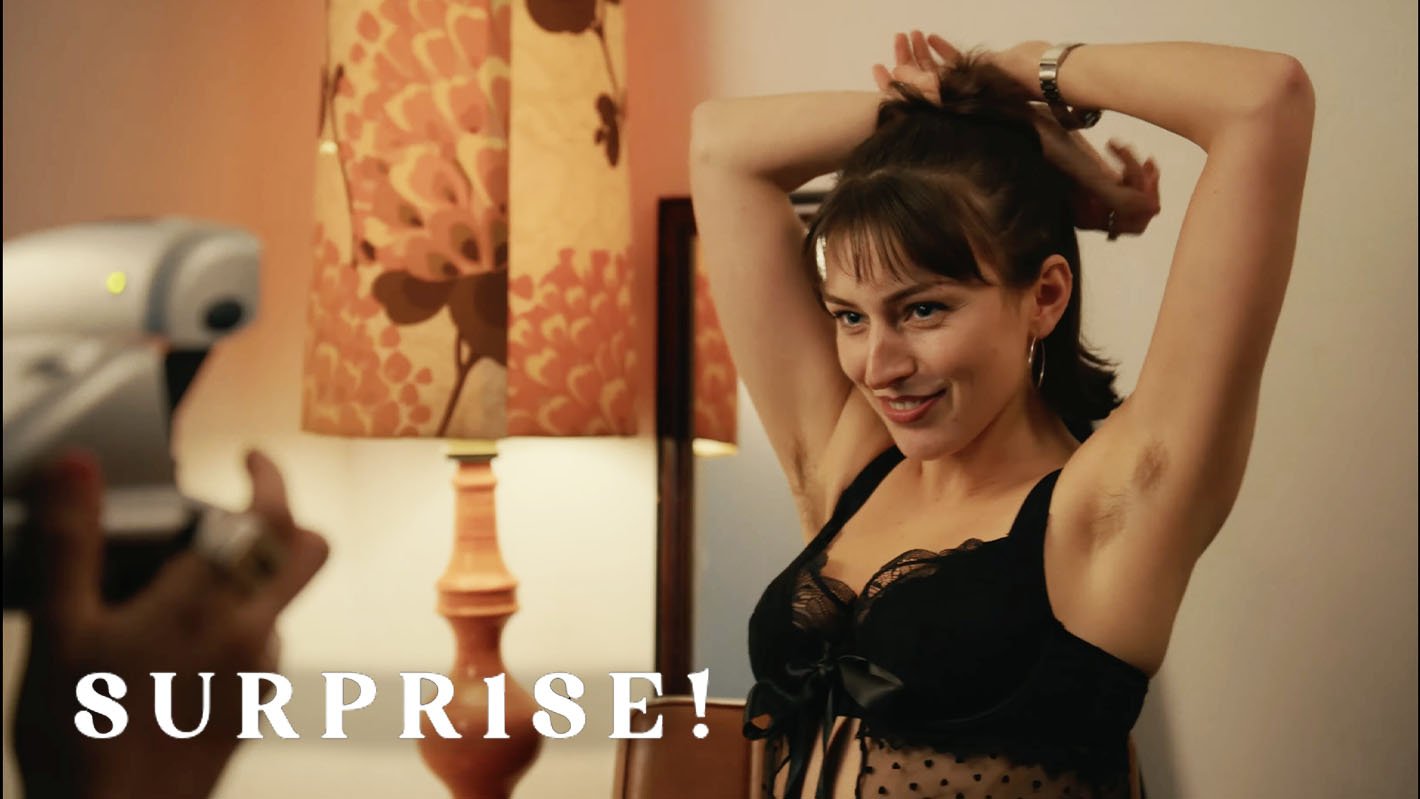
SURPRISE
Three women arrive at a surprise birthday party for their girlfriend, only to discover it was thrown to reveal they're all dating the same woman.
Written, Directed & Produced by Anoushka Zena
Three women arrive at a surprise birthday party for their girlfriend, only to discover it was thrown to reveal they're all dating the same woman.
ABOUT THE FILMMAKER
Anoushka Zena is a London-based director and screenwriter whose work centres on naturalistic, character-led storytelling with coming-of-age themes and the intimate portrayal of nuanced female characters.
She has written and directed four independent short films, Going Nowhere, Fast (2021) , The End of Love (2023), Surprise! (2026) and Until Morning, Margaux (2026). Anoushka is currently in pre-production on her next short film, Skin, which explores self-identity, adolescence, nostalgia, and queer love. This film is supported by Producer Molly Blumsom, House On Fire Productions and SkyeAngel Productions. Anoushka serves as both writer and director on the project.
READ OUR INTERVIEW WITH ANOUSHKA
Welcome to our Weekly Pick! We first saw your film at our Open Screen event earlier this year. Can you talk about that experience?
I love the concept, it's so refreshing having a free submission, first-come-first-served lineup. Everyone who makes a film deserves a space to bring their cast, crew, and friends together to see their collective work on a big screen. The event had such a nice atmosphere, and I saw a lot of films that night that wouldn't have come across my radar otherwise.
What are your thoughts on the need for more accessible spaces for emerging filmmakers to screen their work?
Accessible spaces are so important for the morale of emerging filmmakers. There’s something incredibly motivating about physically screening your work, feeling the energy in a room, hearing the film through proper speakers, giving it the showcase it deserves after the huge amount of hard work put in from everyone in bringing it to life. It's such a rewarding part of the filmmaking process.
Apart from Kino, have you tapped into any other creative spaces who take a similar welcoming approach?
Genesis Cinema in Bethnal Green often runs a Shorts Showcase, as does ReDavolt in Hackney Wick. It would be amazing if more small cinema’s opened their doors, even once a month, for these kinds of showcases. In a dream world, I’d love to screen at Close-Up Cinema in Shoreditch or The Nickel in Clerkenwell.
Tell us a bit about the genesis of Surprise!
From the start, I knew I wanted the story to centre queer characters and explore a slightly absurd concept, while keeping the execution grounded in realism. I currently have three other films in various stages of development, all of which lean more toward the genre of drama. I wanted a project I could tap into as almost a palate cleanser, and a dark comedy felt exciting. Surprise! ended up being exactly that. I found it so refreshing to write.
Where did the idea come from?
Not personal experience, unless my girlfriend is leading a triple life behind my back. The punchline of ‘My sister’s a whore’, cutting straight to the title card Surprise! , was actually the first idea that landed, and everything else grew out from there. I was drawn to the idea of revealing the big surprise at the start, rather than building up to it. What interested me most was how each character might respond differently to the same news, depending on the nature of their relationship.
How did you develop that idea into the short that's now made its way out into the world?
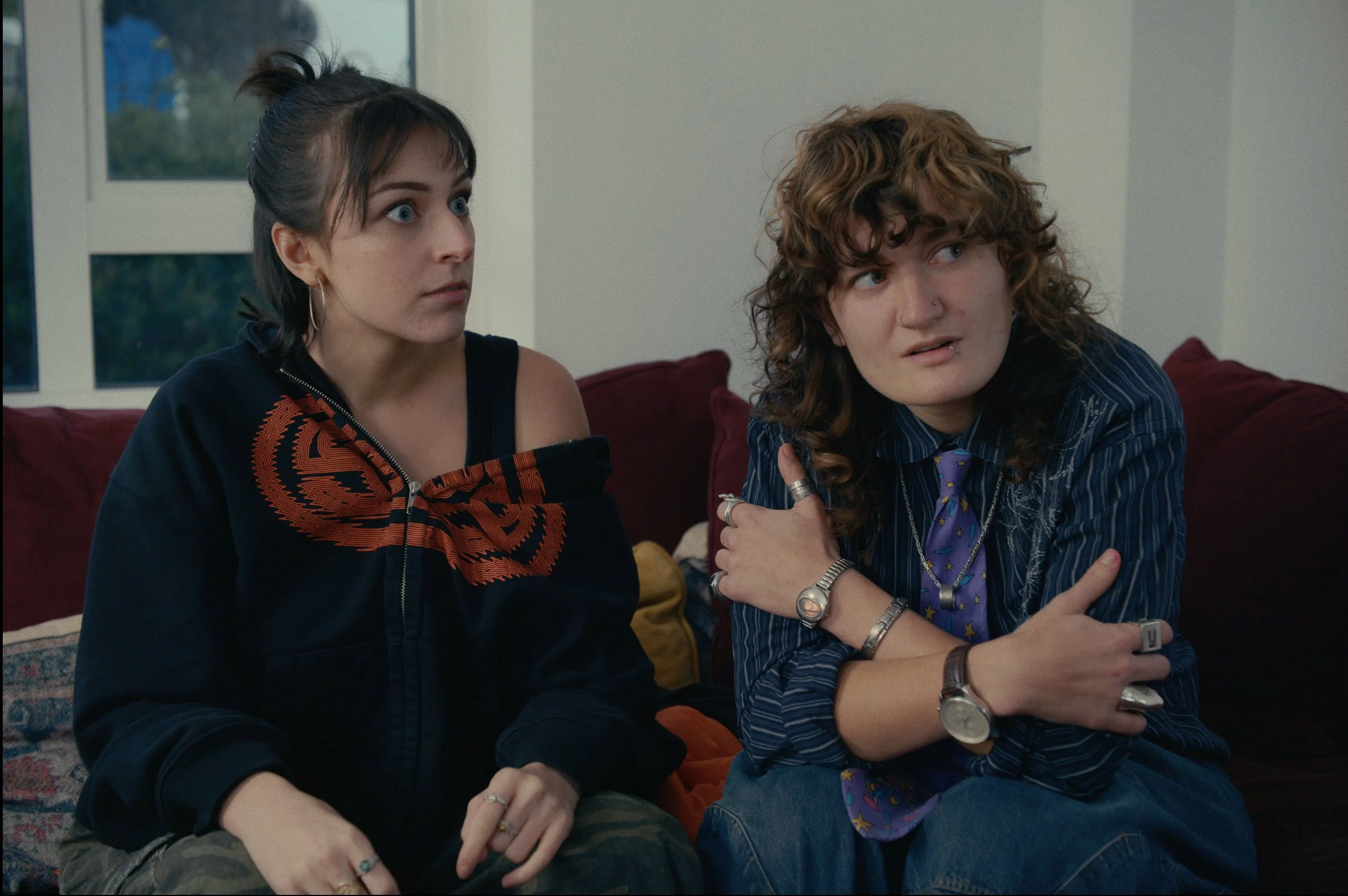
I wanted the evolving conversations and relationships between the three women to be the heart of the film. Casting the lead girlfriends felt like the biggest challenge, finding actors to naturally embody that dry, sarcastic humour. Jordanne Jones came first, recommended by another filmmaker. Elsa Mills is, incidentally, both my flatmate and a great actress. And finally, Maaike Ter Woort, a close friend of mine, who had actually never acted prior to this film. I was struggling to cast her character and suddenly thought, hang on, she would be absolutely perfect. And she was. She rocked up on the day wearing that party-animal tie, and I knew straight away that she was the right call. The shoot was so much fun, we shot the whole film in ten hours with a skeleton crew of four, and the three girlfriends had such good chemistry that I had to stop myself from sitting down and chatting with them the whole time instead of actually making the film.
While introducing your film at our Open Screen, you mentioned how many LGTBQ+ stories rely heavily on interweaving experiences of trauma into their storylines, but how you wanted to take a different approach. Can you expound on that?
While telling stories of trauma within the LGBTQ+ community will always be essential, I think it’s equally important to centre queer characters in narratives where sexuality isn’t a defining element of the story. Restricting queer relationships to arcs of tragedy or redemption risks conditioning audiences to associate queer cinema with these themes.
What advice or hacks would you give to other short filmmakers?
Don’t wait for someone to tell you that your script is worth shooting. If you want to watch your own film, that’s reason enough to hit the ground running. Self-funding or financing a project is always daunting and demoralising, but have faith. There are talented and kind creatives all around who want to see your story brought to life just as much as you do, even if it takes a while to find them. Send emails that feel unrealistic. Be persistent if (when) they don’t reply. Message that DOP. Message that Producer. Message everyone you’d love to work with, even the ones you admire that feel unattainable. Have faith in your work, have faith other people will too.
What are you working on now?
I’m currently shooting a film at the end of the month called Until Morning, Margaux, which explores themes of connection, loneliness and expectation. The film stars Rachel Fielding and Raffaello Degruttola. Alongside this, I’m in pre-production for a coming of age short film titled Skin, the story explores identity, nostalgia, adolescence and queer love. Skin is being brought to life by Producer Molly Blumsom, House On Fire Productions and SkyeAngel Productions. More details can be found at @skintheshortfilm on instagram!
Any film recommendations that we should add to our watchlist?
The Eight Mountains, an Italian film co-directed by Belgian filmmakers Felix van Groeningen and Charlotte Vandermeersch. I first watched this last year and have thought about it every day since. It’s such a visceral and melancholic film. A lot of the soundtrack is also unbelievably beautiful, with music by Daniel Norgren, particularly the tracks ‘As long as we last’ and ‘Everything you know melts away like snow’. I recommend this film for fans of Aftersun (2022), Close (2022) and Boyhood (2014).
Apply to get your short selected as our Weekly Pick
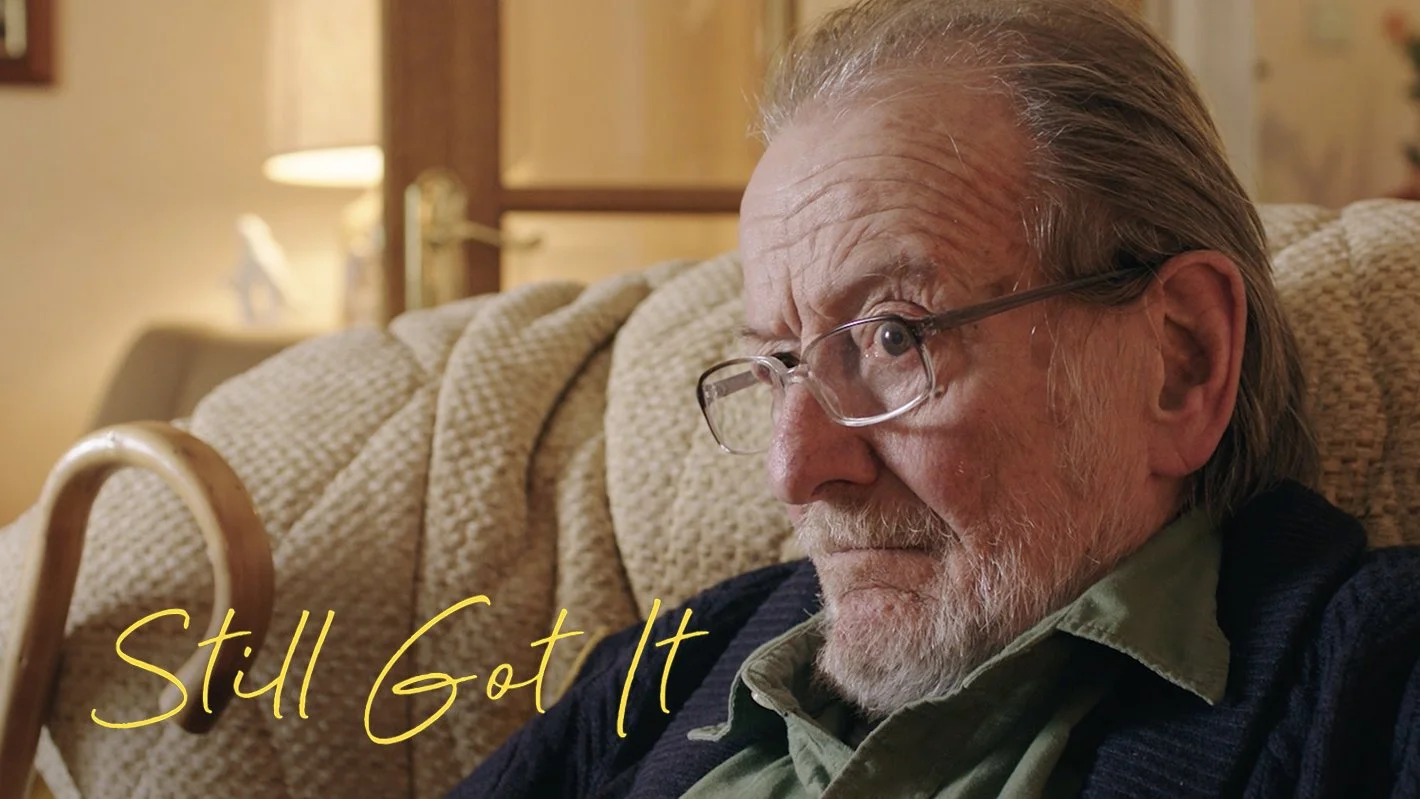
STILL GOT IT
A cheeky Grandpa seizes a moment of freedom while the nurse is out.
Starring Ronald Pickup & Jackie Howe
Written & Directed by Miles Dickinson
Produced by Sam Simmons-Betts & Matt Ashworth
A cheeky Grandpa seizes a moment of freedom while the nurse is out.
ABOUT THE FILMMAKER
Miles Dickinson is a Leeds based filmmaker with a background in commercial production across branded content, TV commercials, radio and social campaigns. He currently works for the University of Leeds as a Production Lead in their Digital Education team.
READ OUR INTERVIEW WITH MILES
Welcome to our Short of the Week series. Tell us a bit about yourself and your filmmaking background.
Thank you for having me. My name is Miles Dickinson and I’m a UK-based filmmaker. It feels strange to describe myself like this because it’s been so long since I last made a film, and so much of my life has changed since I shot this back at the start of 2019. I started out making short films and music videos after graduating from university in 2015. Over time, I slowly moved away from narrative filmmaking and into agency life, working in commercial production across branded content, TV commercials, radio and social campaigns. During the pandemic, my wife and I relocated from London to Leeds, and sadly the filmmaking side of my life gradually faded away.
Short films have always been a really important part of my development, though, and I’ve often said that one day I’d return and make another short. Some of my best memories are scraping money together and working with friends to create something we felt was worth sharing with the world. That’s exactly what this film is. A passion project made between friends, and at the time it was an opportunity for me to continue honing my writing and directing skills. I made Still Got It over seven years ago, but it genuinely feels like yesterday. Making short films gave me the freedom to experiment with tone and storytelling, while also focusing on performance, pacing and visual language, all without the pressure of scale or commercial clients.
Tell us about the genesis of Still Got It. Where did the idea come from and how did you develop that idea into the short that's now made its way out into the world?
The idea came from spending time with my grandparents and noticing how much of their identity had quietly faded from view as they got older. You meet someone late in their life and you rarely get any sense of who they were before age, illness or routine took over. I kept thinking about how many elderly people are walking around with entire histories, passions, talents and stories that never get acknowledged. With Still Got It, I wanted to tell a story that reveals that hidden inner life in a playful way, rather than something overly sentimental or bleak.
Once I landed on the idea of an older man secretly dancing, the rest of the film grew quite naturally around that. The relationship with Karen, his daughter and carer, became the emotional framework. She isn’t a villain; she loves him. But her care has become controlling. This dynamic gave the film both its humour and its heart. The film I made before Still Got It was called Orchid, which also featured an elderly character. That film was much more serious in tone, exploring grief. After making these two films, it became clear to me that I’m drawn to hidden stories and the emotional depth that comes with ageing and having most of your life behind you. I’m drawn to themes of nostalgia, memory and past experience. You learn things about yourself when you make films!
What were some of the main obstacles you experienced when making Still Got it and how did you overcome them?
One of the biggest challenges was working with an elderly lead and building a physically demanding dance sequence around him. Ron Pickup was extraordinary, and it was an absolute privilege to work with such an established actor, especially at that early stage of my career. Ron did'nt have to say yes to this film. He chose to do it purely to support me as a young filmmaker, and he did so with immense generosity and kindness. He worked without any ego, without expectation, and with total commitment to the story. Over the course of the shoot, Ron and I became genuine friends, and that trust was fundamental to how the film came together.
Because of his age and the physicality required, his safety was always the priority for us. We approached the dance sequence with careful planning, rehearsal and flexibility, adapting the choreography and coverage to suit Ron rather than forcing the performance to meet a preconceived idea. That allowed the scene to feel joyful and liberated while remaining safe and respectful.
Still Got It became one of Ron’s final screen performances before his tragic passing, which makes the film incredibly special to me. He was a kind, gentle soul, and I feel truly honoured that I had the opportunity to work with him and to capture such a beautiful, playful performance so late in his life.
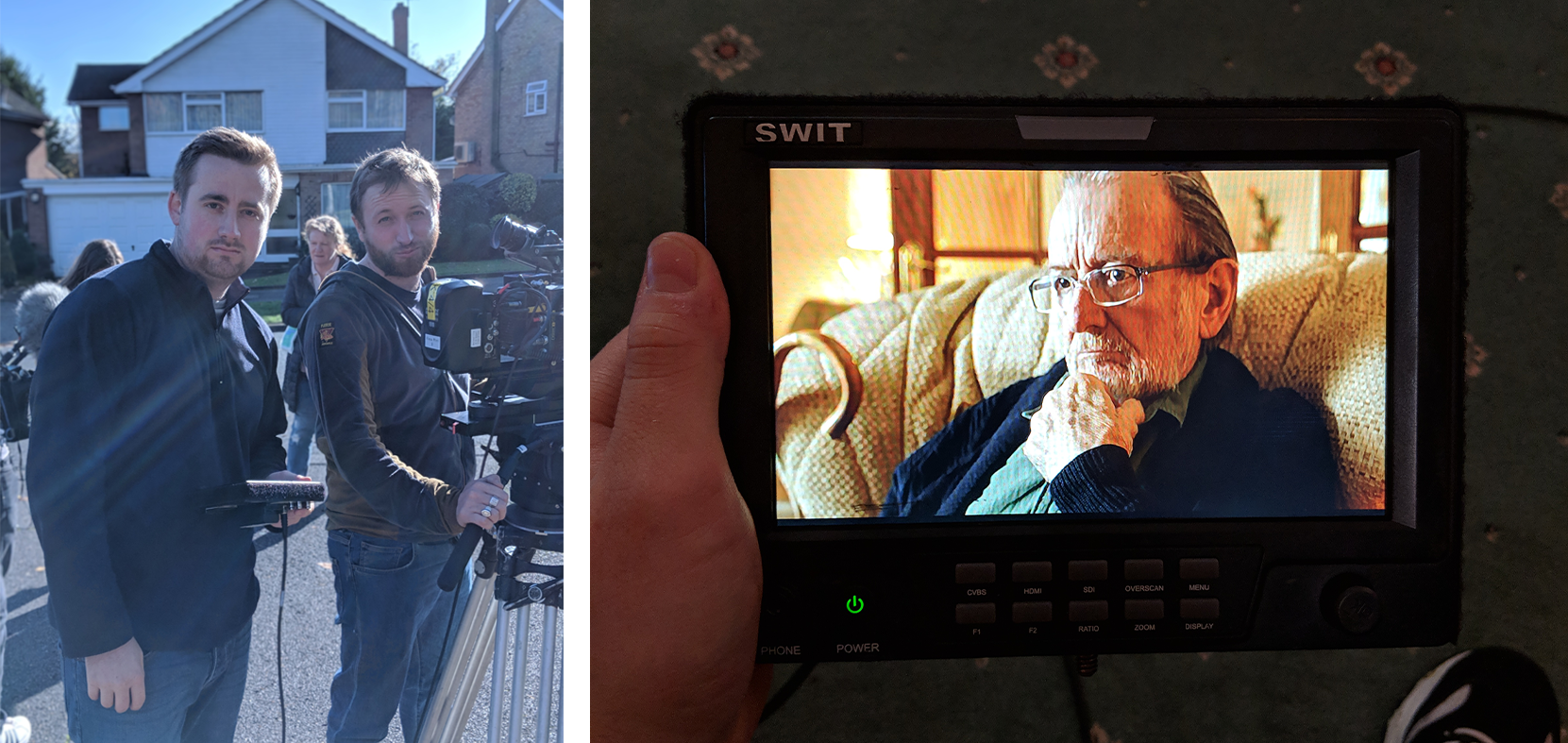
Another major challenge for me was working with a Director of Photography whom I’d not worked with before, whose creative approach was different to mine. Due to scheduling, I hadn’t been able to spend much time with him prior to the shoot, as I normally would with DoPs I’d previously worked with. On set, we had different ideas around framing, blocking and action, which threw off my process. I’m not taking anything away from his clear talent and all of his ideas were strong, but in my inexperience I didn’t know how or when to push back on those differing opinions. It was a valuable learning experience because, ultimately, I do wish that I’d held firm and stuck to my storyboard. You live and learn!
There were also the usual short-film realities: an extremely tight budget, limited shoot days and a small crew. But we were lucky to have an incredibly committed team who genuinely believed in the project. That belief made a huge difference, and everyone went the extra mile to make sure the film felt polished and emotionally honest.
Tell us about the journey of getting your film to audiences and some of the festival circuit highlights?
We didn't screen the film at any festivals. Mainly due to financial restrictions! It's amazing that the film is now starting to be seen all these years later.
We understand that you've sat on this project for quite a while before releasing it online. Would you mind telling us why?
Yes, it's been in a metaphorical dusty box for many years! In all honesty, for a long time I really wasn't proud of this film. I must stress that my disappointment is not a result of any lack of talent or ability in my crew. Far from it. I was blown away by the quality of work they brought to this. I was just disappointed in the decisions I made during the creation of the film and the direction I took it. I felt for a long time that it didn't represent my original vision, and I was frustrated that I'd decided to take a departure from a style of filmmaking I'd worked so hard to hone in my other works.
Letting it breathe allowed me to gain some distance from it and start to appreciate it for what it is, rather than constantly thinking about what I would have changed. All these years later, I now smile when I watch it because these are great memories for me, and I really am now proud of what we achieved with it. Yes, it's not exactly how I'd imagined it, but it has plenty of charm, it looks beautiful, and it's an entertaining short film – in my humble opinion, of course!
What advice or hacks would you give to other short filmmakers?
Great question! My advice would be to work with people more talented than you. When you find them, reach out, be genuine, meet with them, become friends, and make sure that you're creatively aligned. Don't be afraid to send scripts to agents, ask for favours, and wheel and deal. So many of my opportunities came from this way of thinking. I learned so much by surrounding myself with people who were better than me, who had more of an education in the arts than I did. I desperately wanted to study Film Directing at the prestigious National Film and Television School. I applied every year for about five years and heard nothing back. So instead, I decided to work with alumni from the school on many of my short films – what's the difference?
What are you working on now?
Nothing at the moment! Who knows, being selected for KINO's Weekly Pick might bring my inner filmmaker back to the surface. Maybe it's time to dig out some of my old scripts and go again...
Any film recommendations that we should add to our watchlist?
I've been out of the game for a long time now so nothing hot off the press to recommend. But, doing some digging back through my old liked shorts on vimeo I've found a couple worth mentioning here. Hala (2016) by Minhal Baig is fantastic. I absolutely love Mixtape Marauders (2018) by Peter Edlund. Milton (2019) by Tim Wilkime is great fun too. My good friend Mark Van Heusden makes great films too.
Apply to get your short selected as our Weekly Pick
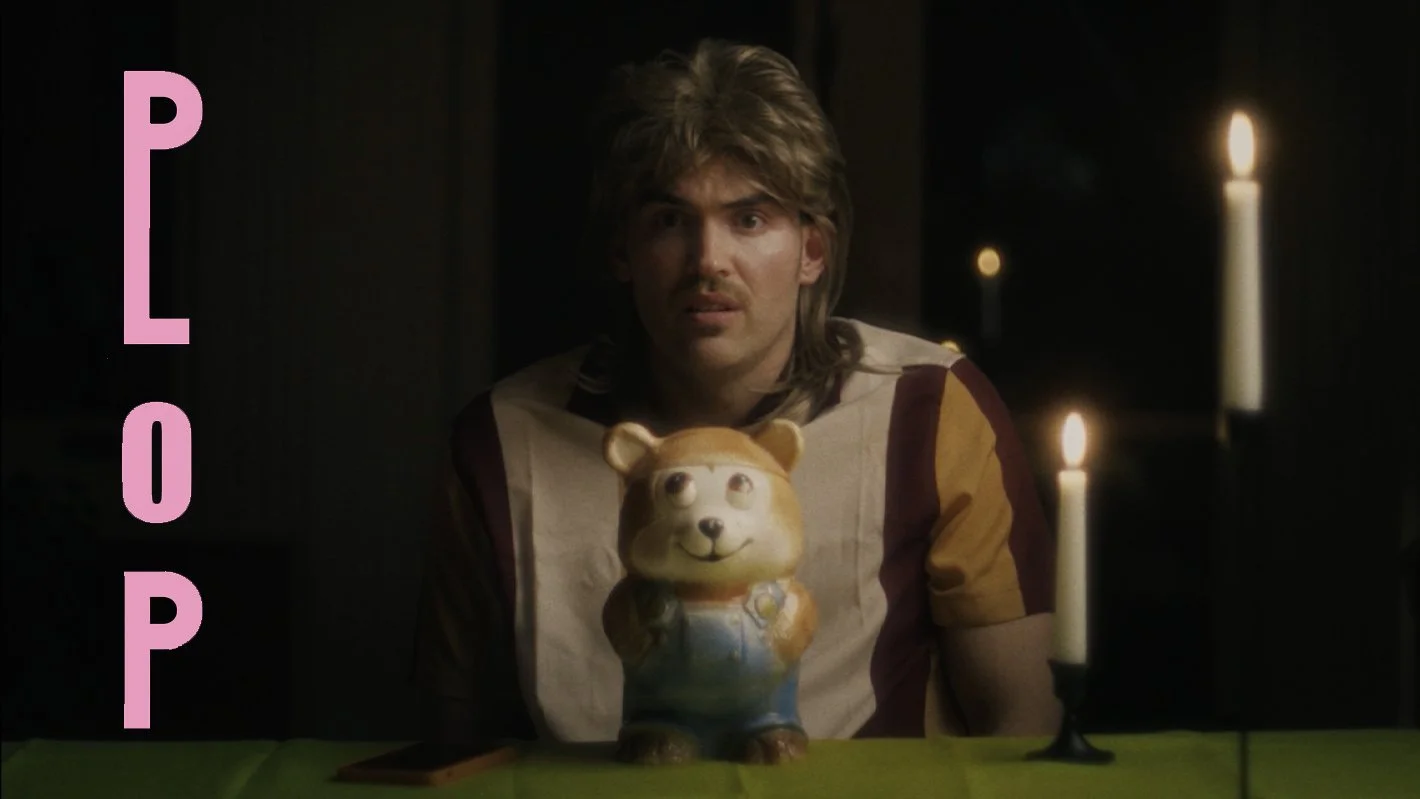
Plop
A desperate woman from the society of rejected singles, known as the Leftovers, takes a bold leap of faith on a revolutionary new dating app, risking everything for one last chance at love.
Directed & Produced Darius Shu
Written by Arron Blake
A desperate woman from the society of rejected singles, known as the Leftovers, takes a bold leap of faith on a revolutionary new dating app, risking everything for one last chance at love.
ABOUT THE FILM
PLOP premiered in competition at the Manchester Film Festival 2025. Other festival highlights include the BIFA qualifying Sunrise Film Festival & Brighton Rocks Film Festival. Plop also played at SCI-FI London, Clapham International Film Festival, Big Fridge International Film Festival and it was a Semi-Finalist at our very own Kino Short Film Festival earlier this year.
ABOUT THE FILMMAKER
Darius Shu is a writer-director drawn to humanistic, emotionally resonant stories told through a visually poetic lens. His work often centres on underrepresented voices and overlooked narratives.
A passionate advocate for Asian and LGBTQIA+ representation in cinema, Darius is committed to using film as a catalyst for meaningful dialogue and cultural progress. His stories aim to create space, for reflection, visibility, and connection.
Darius made his directorial debut with His Hands (2019), a silent psychological drama nominated for Best Narrative Short at the Tribeca Festival 2019. He followed this with I Am Norman (2021), a fictional documentary thriller which premiered at the Oscar-qualifying Rhode Island International Film Festival. His latest short film PLOP (2025) premiered In Competition at the Manchester Film Festival and has screened at Picturehouse Finsbury Park, with selections at over five BAFTA/BIFA-qualifying festivals.
With over nine years of experience as a cinematographer, Darius has shot a wide range of acclaimed projects, including the BAFTA-nominated film Always, Asifa (2023), the Netflix documentary Peach Paradise (2022), Queer Parivaar (2022), Where We Came From (2024) starring Archie Panjabi, Cuddle (2026) featuring Mark Gatiss and served as 2nd Unit DOP on the feature film Last Days, directed by Justin Lin (Fast & Furious franchise, Star Trek Beyond) which world premiered at Sundance Film Festival 2025. He shot his first feature 'Slim', directed by Sky Yang and produced by Chi Thai.
Through his work, Darius continues to push the boundaries of independent film while championing stories that challenge, heal, and humanise.
READ OUR INTERVIEW WITH DARIUS
Welcome to our Short of the Week series. Tell us a bit about yourself and your filmmaking background.
Thank you so much for having me and for spotlighting PLOP. I’m Darius Shu, a director and cinematographer based in London. I'm drawn to stories that explore the existential questions of identity, humanity, connection and the social constructs that shape our lives. I'm always fascinated to create something fresh out of something ordinary, to have my characters deal with the presence of anxiety, and be morally ambiguous. My background started in cinematography and have been a DP for 9 years, where I learnt how to build moods and emotion visually, and over the years that naturally led me into directing and storytelling. I like to blend social awareness with a touch of surrealism, creating films that feel both emotionally grounded and a little poetic. At the heart of it, I’m just obsessed with cinema’s ability to connect people and spark conversations.
Tell us about the genesis of Plop. Where did the idea come from and how did you develop that idea into the short that's now made its way out into the world?
My writer and actor, Arron Blake, pitched me a story he’d been developing, one I knew could really surprise and challenge audiences. I’ve always wanted to make a sci-fi film, being a huge fan of shows like Star Trek and Black Mirror, so I thought, why not take his concept and set it within a dystopian world? Finally getting the chance to bring that vision to life was incredibly exciting. The idea came from observing the absurdity and vulnerability of modern dating, one we both relate and is really fed up of...the endless swiping, algorithms, and the curated personas we present to the world. I wanted to see what happens when these societal constructs collide with our raw, unfiltered desire to be loved and accepted for who we truly are.
In the story, we disguise this in the app’s unconventional way of assessing compatibility which pushes people to confront their most honest, primal selves. The Leftovers aren’t just single people, they represent anyone who has ever felt rejected, outcast, or unworthy. Through the protagonist’s journey, we get a world where societal expectations clash with personal desires, and humour helps highlight the awkwardness, fears, and hopes that come with love and rejection on a first date. Developing Plop meant blending genres to feel fresh, using a sci-fi backdrop to exaggerate societal norms while keeping the emotions grounded, awkward, and relatable. At its heart, it’s about relationships, human connection, and navigating the modern world of AI and dating in a way that hopefully sparks both reflection and conversation.
What were some of the main obstacles you experienced when making Plop and how did you overcome them?
One of the biggest challenges with making Plop was juggling the sci-fi elements while keeping the human emotion grounded and awkwardly relatable. I wanted a world that looked heightened and visually striking, but with characters who still felt like real people stumbling through life and love. Another hurdle was the logistics of creating a dystopian world on a short film shoestring budget… because let’s face it, sci-fi is expensive, and our budget definitely wasn’t.
We got creative with production design, most of the story is in a single room, so we had to make it feel engaging without breaking the bank. A mix of practical and simple VFX, clever camera work, lighting, and little details helped make the world feel bigger than it actually was. Working closely with Joanna and Arron was crucial, we were constantly bouncing ideas off each other, improvising on set, and not afraid to scrap or tweak things in the moment.
In the end, all these obstacles forced us to be more inventive, and honestly, it made the process way more fun. I think that energy and chaos comes through on screen and maybe a little of our stress too!
Tell us about the journey of getting your film to audiences and some of the festival circuit highlights and/or online release.
The festival circuit has been amazing, we had our world premiere at Manchester Film Festival and 3 other BIFA qualifying festivals. It’s been so rewarding to see how audiences react in real time, especially when they laugh, cringe, or feel moved by the characters’ awkward, relatable moments.
Every film I make leaves room for interpretation and I like giving people the chance to come up with wildly different takes on the story’s metaphors, symbolism and concept. Honestly, sometimes I listen to someone’s interpretation and think, “Wow… I didn’t even notice that!", or "That was darker than what I had in mind" and at times "You're spot on, you just said exactly what I had in mind". Meeting fellow filmmakers and audiences who really get the world we were trying to create has been amazing. But the absolute best part of Plop? Watching it spark conversations about connection, dating, and human vulnerability… and realising that, just like my characters, people are awkward, confused, and completely winging it when it comes to love. Makes me feel a little less alone, and hopefully makes them laugh too, because in the world we are living now, we just have to have some laughs in our lives.
What advice or hacks would you give to other short filmmakers?
My biggest advice? Embrace the chaos. Short films are tiny worlds with tiny budgets, but that doesn’t mean you can’t make them look beautiful. Be creative, flexible, and a little fearless. Use your limitations as an advantage, turn a one-room set into a whole universe, and don’t be afraid to improvise on set. Feed your crew good food, happy people make better films. And most importantly, don’t take yourself too seriously; if you can laugh at your mistakes, the audience probably will too.
Any film recommendations that we should add to our watchlist?
Might be a completely different genre but I really love Monster by Hirokazu Kore-eda
Interested in getting your work selected?
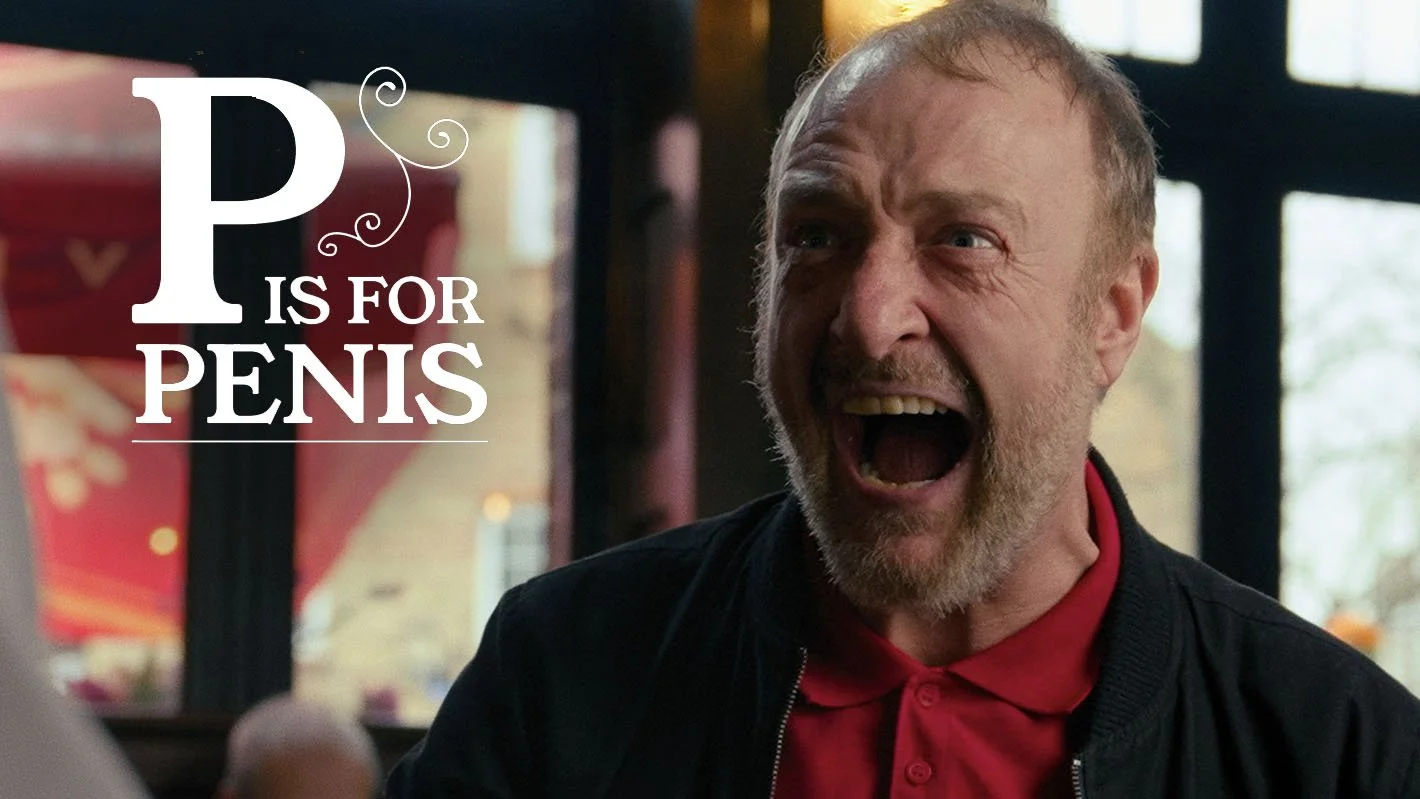
P is for Penis
An overdue catch up down the pub between two old friends is thrown into chaos by the inclusion of a terrifying third wheel with an embarrassing secret.

Written, Produced & Directed by Joe Mcgowan
An overdue catch up down the pub between two old friends is thrown into chaos by the inclusion of a terrifying third wheel with an embarrassing secret.
ABOUT THE FILM
P is for Penis was a Semi-Finalist at our BIFA qualifying Kino London Short Film Festival in 2024. It also won the Audience Choice award at the BIFA Qualifying Exit 6 Film Festival. Other notable festival highlights include the BIFA Qualifying Sunderland Short Film Festival and The Shortest Nights, The Romford Film Festival, London Lift-Off Film Festival, and the Funny Life Film Festival where it was nominated for Best Screenplay. Other awards include Best Micro Short and Best British Film at the Lit Laughs International Comedy Film Festival, Best Comedy Film at the WILDsound FEEDBACK Film & Screenplay Festival, Best Comedy Short at the London Seasonal Short Film Festival, and Best UK Comedy at the London Worldwide Comedy Short Film Festival.
ABOUT THE FILMMAKER
Joe is a London born and Essex-raised filmmaker with over ten years of experience as a director and editor in the TV commercial and branded content world. Comedy caught his eyes and ears at a young age, listening to Blackadder cassette tapes late into the night and being shattered for school the next day. His love of comedy and passion for filmmaking allow him to explore the funny, silly, and absurd and have an absolute blast doing so! Joe’s comedy work has racked up millions of views across social media, won numerous awards at film festivals in the UK and internationally, and has been featured on BBC Radio. Not bad for an Essex boy!
READ OUR INTERVIEW WITH JOE
Welcome back to our Short of the Week series. What have you been up to since we featured your last short Couple Noises ?
Thanks for having me back! It’s been a busy year for me. Have been up and down the country on the festival run with P is for Penis, have worked with British comedy legends Kimberly Nixon (Fresh Meat) and Simon Greenall (I’m Alan Partridge) on some training videos for a company set up by John Cleese in the 1980’s, worked with Kelly Brooke and Big Narstie on a campaign for SlimFast, and most importantly got married in June. How time flies!
Tell us about the genesis of P Is For Penis. Where did the idea come from, and how did you develop that idea into the short that's now made its way out into the world?
My end goal is to work in sitcoms, so I treated this as practice in creating a scene that you’d expect to see in a sitcom show. Comedy and conflict are my happy place when watching films or TV shows, and I’ve always found the dynamic of someone oversharing a secret about another person in a social setting a great setting for some real comedic sparks to fly.
I don’t know exactly how I landed on a misshapen penis being somebody's deepest and darkest secret, but once I thought of it the ball started rolling from there. The big question was what peculiar shape could it be to create a double-take moment in the film, but also lead to some snappy jokes for the script. I was in the car with my wife (who was my girlfriend at the time) and was brainstorming this out loud to her. I started going through shape options like a square, a triangle, a parallelogram, before moving onto letters from the alphabet. I thought a lower-case ‘T’ would be funny and said that a ‘T’ with two O’s from the testicles would spell the word ‘Too’, and maybe there’s a joke there. My wife, who this isn’t her sense of humour at all, turned to me and said ‘Well, if his penis was shaped like the letter ‘P’, it would spell the word ‘Poo’. I simply looked at her adoringly and said I love you so much, and quickly came up with the title after she said that. I started writing it in December 2023, and by March 2024, the film was done and dusted, and I proposed to my wife to be!
What were some of the main obstacles you experienced when making P Is For Penis and how did you overcome them?
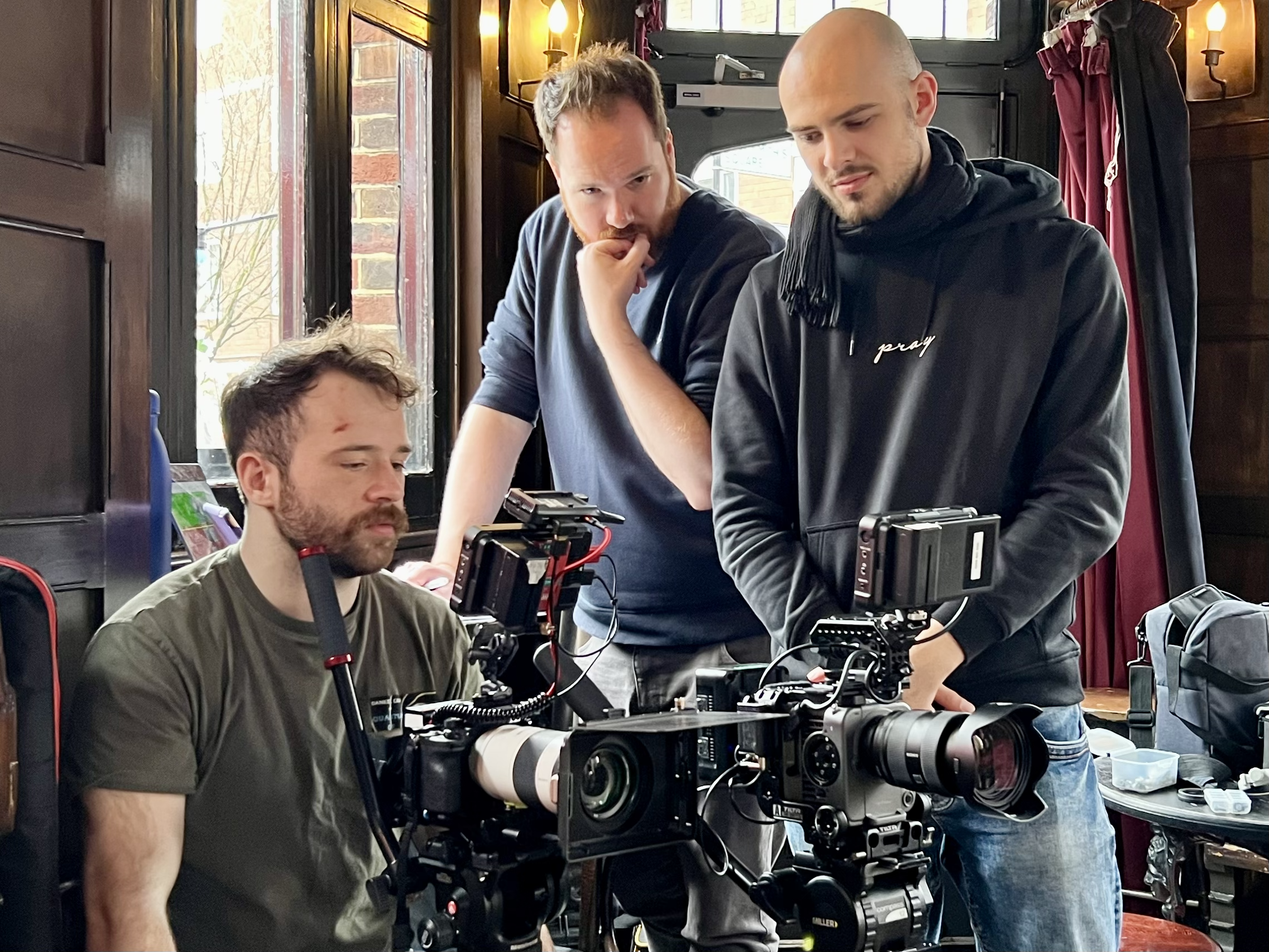
The main challenge was time. I hired a pub called The Virgin Queen in Bethnal Green for eight hours, 7am-3pm. The pub opened at 4pm and the script was 13 pages long. I had originally planned some more cinematic shots with a dolly and track, some fun POV shots with a fish eye lens, and a dramatic lighting change when Perry realises Tim and Dom know about his appendage. Very quickly into the shoot, those bells and whistles were cut. We were shooting on two cameras (thank God), and we locked them off and cross-shot all the coverage. It still has that sitcom feel to it that I wanted, but it also comes across as an extended sketch rather than a cinematic short film, like I’d originally intended. It was a big lesson in what you can realistically achieve with a tight turnaround.
The other challenge was shooting the nudity. The pub was fine with it as long as we covered the windows so the public couldn’t see anything. The problem with that was that the windows had no curtains, and there were a lot of windows. When it came to shooting those shots, we used an old trick I’d learnt from a gaffer to block light out quickly from windows. We sprayed the windows with window cleaner from a spray bottle and stuck sheets of tin foil on them. Took fifteen minutes to block out all the windows with the whole crew on board. Would highly recommend this method if you’re in a pinch.

Tell us about the journey of getting your film to audiences and some of the festival circuit highlights.
Sitting in an audience when P is for Penis is screening has been a real treat. Overall, it’s had a fantastic reception and get’s lot of laughs, which, as the writer, director, producer, and editor of the film, is amazing to hear live. It’s become a BIFA qualifying short, been played on BBC Radio as a radio sketch, and won multiple awards at film festivals. The highlight on the festival circuit was winning the Audience Choice awards at the BIFA Qualifying Exit 6 Film Festival. The films that were winning all the awards were incredibly cinematic films, with heavy subject matters, and had funding from the BFI and other film funding outlets. To see my self-funded short about a maniac with a funny shaped knob standing with these juggernaughts in the short film world was very gratifying for me.
Any film recommendations that we should add to our watchlist?
‘Bad Thoughts’, Tom Segura’s Netflix sketch show, is a must watch for any twisted sickos like myself. If you like my film, this is a show you need to check out.
I’d like to recommend some short films I’ve seen over the last year that stood out to me. James Button’s latest absurd short, ‘The Quackening’, is a must see. Twenty minutes of non-stop madness and big laughs. ‘Daddy Superior’, directed by Benjamin Partridge. Such a wholesome and hilarious masterpiece of a short film. This is the perfect small cast and one location comedy short. ‘Us & In Between’ directed by Katia Shannon. A wonderful, heartwarming tale of two people finding love in their later years. Beautifully shot too.
What are you working on next?
Earlier this year, I directed a National Film & Television School comedy short called Pushing Up Plastic. Set in the near future, a couple finds out their microplastic test results from their solicitor to see if they can be legally buried without becoming an environmental hazard, or risk being recycled. It’s got a Wes Anderson meets Edgar Wright aesthetic to it, and it's been a lot of fun to work on. It should be on the film festival circuit next year.
I’m slowly writing a short mockumentary called Good Egg, which revolves around an omelette chef who works in a Chinese restaurant, so he rarely has anything to do. I’m also writing a sitcom pilot that’s a mash up of It’s Always Sunny in Philadelphia meets Lord of the Rings.
Interested in getting your work selected?
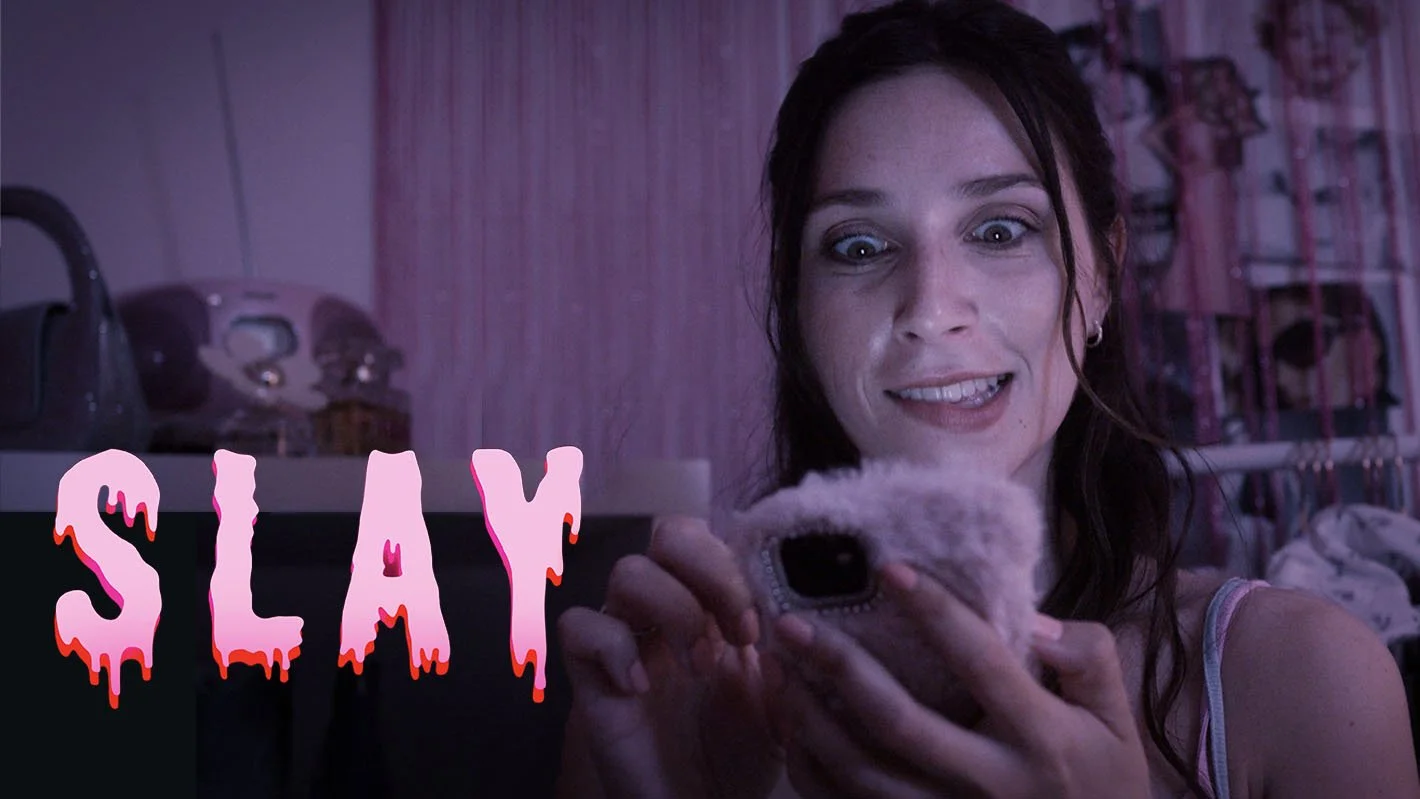
Slay
Living with flatmates can be tough. Living with an influencer can be even tougher. Phoebe, Jade and Heather have had enough and conspire to 'deal with' Danielle once and for all.
Written, Directed & Produced by Fran St. Clair
Living with flatmates can be tough. Living with an influencer can be even tougher. Phoebe, Jade and Heather have had enough and conspire to 'deal with' Danielle once and for all.
ABOUT THE FILM
SLAY screened at Sunday Shorts, Nightmares Film Festival, the Greenwich Film Festival (where Fran St Clair won for Emerging Actor) Boundless Film Festival (where it won a Special Mention), Rome Prisma, Poor Life Choices (winning Best Horror Comedy Short), Independent Shorts Awards (winning Best Dark Comedy Short) and Women’s Comedy Film Festival in Atlanta
ABOUT THE FILMMAKER
Fran St Clair is an award-winning actor, writer, and director based in London. What started as an actor's desire to create her own roles evolved into the founding of Myrtle Tree Studios. Her passion for comedic storytelling was sparked by SLAY, leading her to focus on writing comedy. Her latest surreal comedy, NICE PACKAGE, is currently in post-production, and she also stars in her co-created web series DO WE EAT HIM. The series has quickly gained attention worldwide, racking up 70,000 views in just over a week, with plans to bring it into the mainstream. Other notable projects include GREENSLEEVES INC., a co-written sustainability satire that won the 2024 VMI Sustainable Script competition. Fran will take on the lead role of eco-fashion influencer Fleur in the upcoming film, which is set to premiere at the BIFA-Qualifying Crystal Palace Film Festival in March 2025.
READ OUR INTERVIEW WITH FRAN
Welcome to our Short of the Week series. Tell us a bit about yourself and your filmmaking background.
Thank you so much for featuring SLAY as part of your Short Film of the Week series! My name is Fran St Clair and I’m the writer, directer, producer of the film. Oh, and I also play Jade! My journey into filmmaking has been a little different as my main passion is acting. I’ve always loved storytelling and I’ve acted for as long as I can remember, so naturally with the unpredictable nature of this industry I decided that if I wanted to keep working on creative projects I would have to start making my own. That’s how SLAY was born. Prior to this, I’d made another film called CAKE earlier in 2023 which was my first little experimental short with just me and my DoP and friend Jay Fisher. After that experience, I decided I wanted to make something bigger, better, less serious and much more ridiculous. So I gathered all of my amazingly talented filmmaker and actor friends and we got to work.
Tell us about the genesis of slay and your motivation for making this film.
The SLAY journey began in December 2022 with the intention of writing a flatmate horror story. There were few people in my life at the time that has shared their annoyances with flat sharing. People leaving their dirty dishes in the sink for weeks, using up and never replacing the toilet roll, helping themselves to snacks that aren’t theirs and so on. I also love stories about unlikeable characters and the complexities of female friendships and thought it would be a really fun premise for a short. So, I took all of these flatmate dramas, threw in some unlikeable characters and thought of what the worst case scenario could be when you’ve absolutely had enough. I knew from the very start that I wanted my friends Kelsey Cooke and Charlotte Pathe (who are amazing actors) to take on the roles of Heather and Phoebe. This made the writing process super easy as I pictured all of their voices so strongly and knew we would have so much fun together in these roles. I wanted the film to be fun, camp and feminine and even though it’s a comedy and the surface level themes are unserious, the characters are also complex and emotionally intelligent. Once we had the script, we found the talented India Plummer to take on the role of the terrible ‘Influencer' flatmate Danielle and we were all set. Some of my references included Mean Girls, Heathers and Bodies Bodies Bodies.
Tell us about the genesis of Slay and your motivation for making this film.
We had a fair few obstacles when making this film! It was made on a very low budget. Though we did raise some funds through crowdfunding, like most things it would have been much easier with some more money. We also booked a location that didn’t quite look like the photos, so we had to do some re-jigging when it came to our floor plans. The house next door was also having an entire renovation happening. So that was a nice surprise. During filming for the living room scene we had to stop and start quite a few times whenever they starting drilling and banging - which was the whole day. I was so lucky to have such an amazing and passionate team around me that really believed in the vision and worked so hard to make it happen. So obstacles aside this film was such a dream to make!
What were some of the main obstacles you experienced when making Slay and how did you overcome them?
We had a fair few obstacles when making this film! It was made on a very low budget. Though we did raise some funds through crowdfunding, like most things it would have been much easier with some more money. We also booked a location that didn’t quite look like the photos, so we had to do some re-jigging when it came to our floor plans. The house next door was also having an entire renovation happening. So that was a nice surprise. During filming for the living room scene we had to stop and start quite a few times whenever they starting drilling and banging - which was the whole day. I was so lucky to have such an amazing and passionate team around me that really believed in the vision and worked so hard to make it happen. So obstacles aside this film was such a dream to make!
Tell us about the journey of getting your film to audiences and some of the festival circuit highlights.
After a few selections, SLAY had its first in person screening at Big Fridge Film Festival which was really exciting. Some of the team were able to join and it was exciting seeing it up on the big screen. I have a few other shots in the works right now so the hope is to do a special screening event for all of them in the future.
What advice or hacks would you give to other short filmmakers?
Not sure I’m in the position yet to impart wisdom, but I do feel like I’m always learning. I think the most important thing is having a great team around you that share your vision. If you don’t have those people yet you’ll find them, that’s why networking events and festival screenings are so great because you can meet so may interesting and talented people. Another piece of advice to offer would just be if you have an idea - write it. It doesn’t matter if you don’t make it, getting something down on paper is the only way you’ll ever start.
Any film recommendations that we should add to our watchlist?
Sticking to comedy, Bottoms by Emma Seligman was an instant 5 star from me. Then leaning more towards drama, Scrapper by Charlotte Regan. Loved it.
What are you working on next?
I have a few things in the works right now that are keeping me nice and busy. I’m in pre-production for my next short film Nice Package which is filming at the end of January. Another comedy but this one is a more dreamy and surreal approach to the mundane life of a very bored young woman. I’m also working on another short film called Lava Cake with my friend and collaborator Govind Chandran, as well as a Zom-Com mini series.
Interested in getting your work selected?
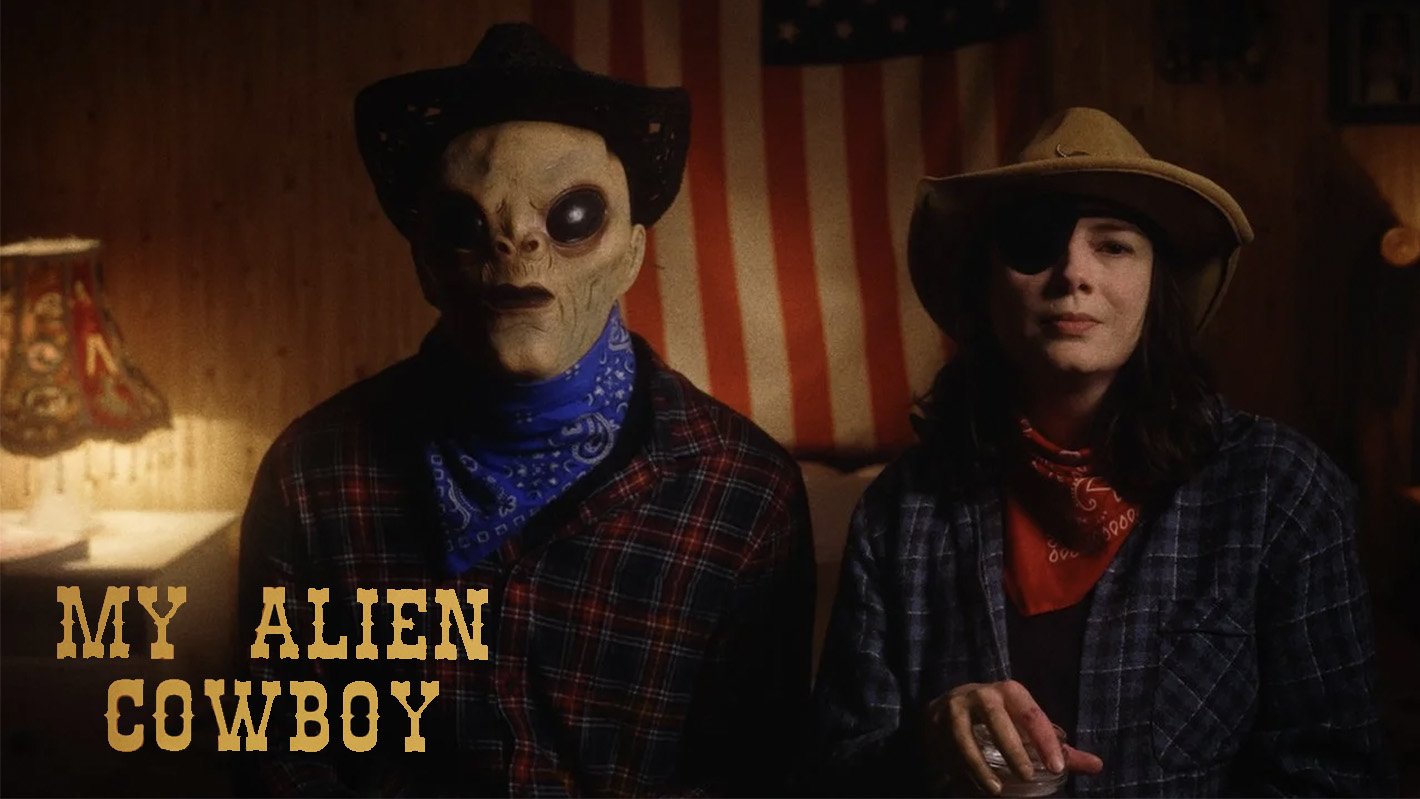
My Alien Cowboy
Mary-Sue and her alien boyfriend have the most unusual, out of this world meet-cute story.

Written & Directed by Kate Lloyd
A comedy short about Mary-Sue and her alien boyfriend, who have the most unusual, out of this world meet-cute story.
ABOUT THE FILM
MY ALIEN COWBOY screened at our Short Film Open Mic Night earlier this year and we’re exicted to spread this alien invasion to the web with it’s online premiere.
ABOUT THE FILMMAKER
Kate Lloyd is a writer/director born and raised in London, UK. Her short films have screened at numerous film festivals around the world including London Short Film Festival, Lisbon and Hamburg. She previously worked in production/producing for companies including Manchester International Festival and the BBC. Kate has an unhealthy obsession with the weird, so she writes dark comedies inspired by a punk sensibility to disrupt the status quo. She likes to write about good people who do bad things, complicated characters who grab the audience by the heart and genitals.
READ OUR INTERVIEW WITH KATE
Welcome to our Short of the Week series. Tell us a bit about yourself and your filmmaking background.
I started off in a fine art background, and studied Video Art at Brighton University, which is sort of like a fine art degree but in film. This provided me with a lot of education around theories, concepts and ideas, much more of an “intellectual” approach to art, which I later rejected in my work.
I am more interested in people - relationships and narrative, so I started making my own short films with more emphasis on these subjects..which was also much more fun than having to win intellectual points!
Tell us about the genesis of My Alien Cowboy. Can you tell us about the inspiration behind the film?
I absolutely love cheesy 70s B Movies, like early John Carpenter and David Cronenberg. So I knew I wanted to play around with this genre and make a film that was really sludgy, gnarly and off-beat film.
I also wanted to see what I could make with a limited budget of 300 pounds. There is a hotel in Brighton that has themed hotel rooms and one of them was an Americana themed room which looked absolutely fantastic, so I purposely wrote something I could set in that hotel.
And I wanted to explore in a comedic way the desperation people could go to in love, even losing your eye for a partner!
What were some of the main obstacles you experienced when making My Alien Cowboy and how did you overcome them?
Definitely the accent! I’m pretty new to on screen acting and I underestimated what a challenge an accent like that could be.
The shot where the eyeball falls on the floor also took a few practice shots to get right as you have to get the exact part of the eyeball to line up in focus.
Not sure if it’s was an “obstacle” exactly but I know the colour grader Alex Marshall and the DP Andrew Butler worked hard on making the flashback scene look like film, which I think it really does and adds a lot of texture and old school B Movie vibe to the short.
Tell us about the journey of getting your film to audiences and some of the festival circuit highlights.
We’re waiting to hear from a few genre festivals and local festivals in Brighton, due to financial limitations I am being cautious with over submitting and instead putting most of my finances into the budget for my next short.
It was a real pleasure to see it in front of an audience with Kino Short Film Open Mic, and I was super delighted to hear the laughs from the audience, it’s interesting that some parts I didn’t expect to get much laughs were the biggest.
Also excited to be part of Kino’s Short of the Week! Thanks for having us.
What advice or hacks would you give to other short filmmakers?
If you can find an interesting location and write your film around that, it will instantly stand out.
Any film recommendations that we should add to our watchlist?
Love Lies Bleeding by Rose Glass, I’m obsessed.
Interested in getting your work selected?
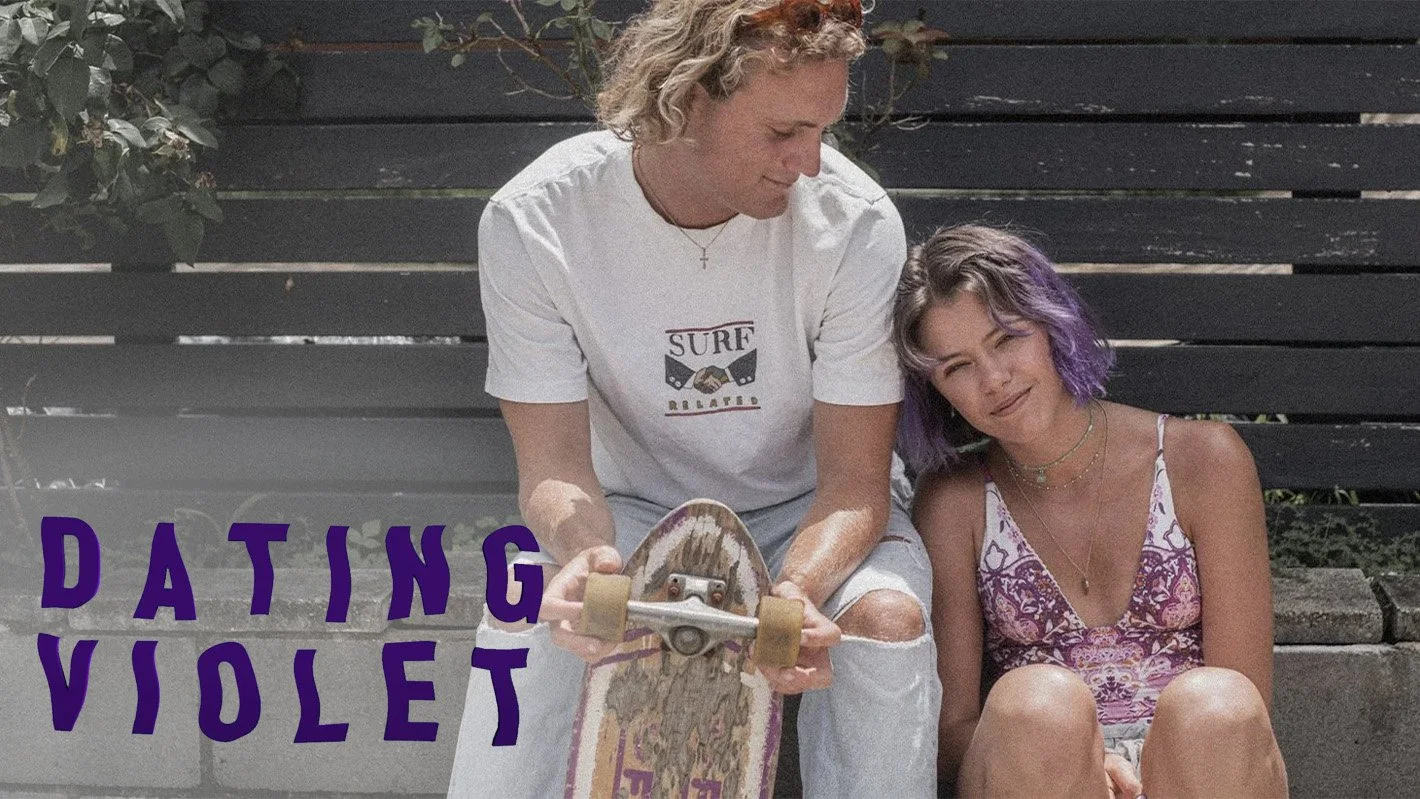
Dating Violet
In a small-coastal town, where everyone knows everyone, Violet’s life crashes down when she is dumped by her boyfriend and her parents contemplate divorce.

Written & Directed by Holly Trenaman
Produced by Madeleine Jurd
In a small-coastal town, where everyone knows everyone, Violet’s life crashes down when she is dumped by her boyfriend and her parents contemplate divorce. Violet realises she has never known love at all and it affects her personal relationships. Violet is imprinted with scars of domestic violence, her parents failed marriage, and the pain of heartbreak, but through her friendship with Hunter Thorn, who is dealing with similar issues, she begins her road to recovery. Together, they depict different perspectives of broken families and exhibit the healing power of love, as they learn to accept the love they deserve.
ABOUT THE FILM
DATING VIOLET is the short film directorial debut of writer/director Holly Trenaman. Earlier this year we had the pleasure of screening it at our Kino Short Film Open Mic, however, the film enjoyed it’s World Premiere at Flickerfest International Film Festival. Additionally it won Best Director at Far South Film Festival and the Young Australian Filmmaker of the Year Nominee at Byron Bay International Film Festival.
ABOUT THE FILMMAKER
Holly Trenaman is a writer and filmmaker from a small town south of Sydney. She has a Bachelor of Screen Production from the Australian Film, Television and Radio School, and a Masters of Creative Writing from The University of Technology, Sydney. She’s the writer and director of 6-part 'SISTAS' web series on YouTube, the award-winning short film 'Dating Violet', and she's in post-production on her first documentary short film. She works freelance in the TV industry - across reality and scripted - working her way up to screenwriting, while also writing fiction on the side. She hopes to address mental health topics, sex positivity, and darker issues through comedy, as well as alleviate standards of perfection in society by creating work that showcases imperfect characters.
READ OUR INTERVIEW WITH HOLLY
Welcome to our Short of the Week series. Tell us a bit about yourself and your filmmaking background.
I consider myself a writer first, and I actually decided to explore the film industry as a writer/director after stumbling upon the BFI London Film Festival in Leicester Square in 2017. I was on my gap year, and looking for 'purpose' as you do, and I ended up going to two weeks worth of premieres and screenings, and networking with other filmmakers, and knowing I needed to be part of this world. Being from a small town south of Sydney, I'd never seen anything like it, so I'm always very grateful that I decided to take that walk that night.
Tell us about the genesis of Dating Violet. Can you tell us about the inspiration behind the film?
Dating Violet is an allegory for domestic violence, which explores mental health issues and the different forms of violence in relationships through the perspectives of Violet and Hunter, who have both grown up in abusive homes. It details how this can affect children who have witnessed violence second-hand, since they are equally afraid that they will grow to perpetuate these violent behaviours in their romantic relationships - and I hope to expand on this if I can develop it into a longer form piece. Again, I thought of the title while standing in the crowd of a film premiere at the BFI LFF in 2017. I knew I wanted to explore these themes, but when the character of Violet came to me, it gave the whole idea clarity, and I went back to Sydney to study Film Production to understand how to execute ideas. I made this film in 2020 as my graduation film.
What were some of the main obstacles you experienced when making Dating Violet and how did you overcome them?
Filming the ocean scenes were the most challenging. They were so key to my vision for the film, since I wanted to capture visceral highs and lows, the turbulence of the ocean, and see Violet 'beneath the surface'. Violet and Hunter surf for the escapism, and I wanted to give the audience this feeling of freedom to contrast with their darker lives on shore. We filmed this at my local beach with a small but dedicated team, with volunteer lifeguards, and many friends and family members on set offering their help too. That is the only way we overcame and got these incredible shots on no budget!


Tell us about the journey of getting your film to audiences and some of the festival circuit highlights.
Our world premiere at Flickerfest in 2022 was special because that was a goal of mine, in a dream location, with Flickerfest being held on Bondi Beach. Byron Bay International Film Festival was also a highlight, since the night was hosted by Jack Thompson, an Australian veteran actor. But also I won prize money in other film festivals, so they are close contenders as well! I've also since done local screenings for people in my hometown who hadn't seen it, and it's been well received. The film is dedicated to my ex boyfriend Kane Richardson, and to my late cousin Zane Cahill, and I really felt their love during our screening at the KINO Open Mic night in London 2024 too.
What advice or hacks would you give to other short filmmakers?
Just do it! But also, I had written and directed a no-budget web series consisting of six 6-minute episodes before making Dating Violet and this was a masterclass in filmmaking do's and don'ts. I don't think I would've been able to pull off the quality of this short film without having the experience of the web series, as I was able to delineate certain production standards and up my game a little bit professionally too.
Any film recommendations that we should add to our watchlist?
My favourite movie is 17 Again and nobody can tell me otherwise.
Interested in getting your work selected?
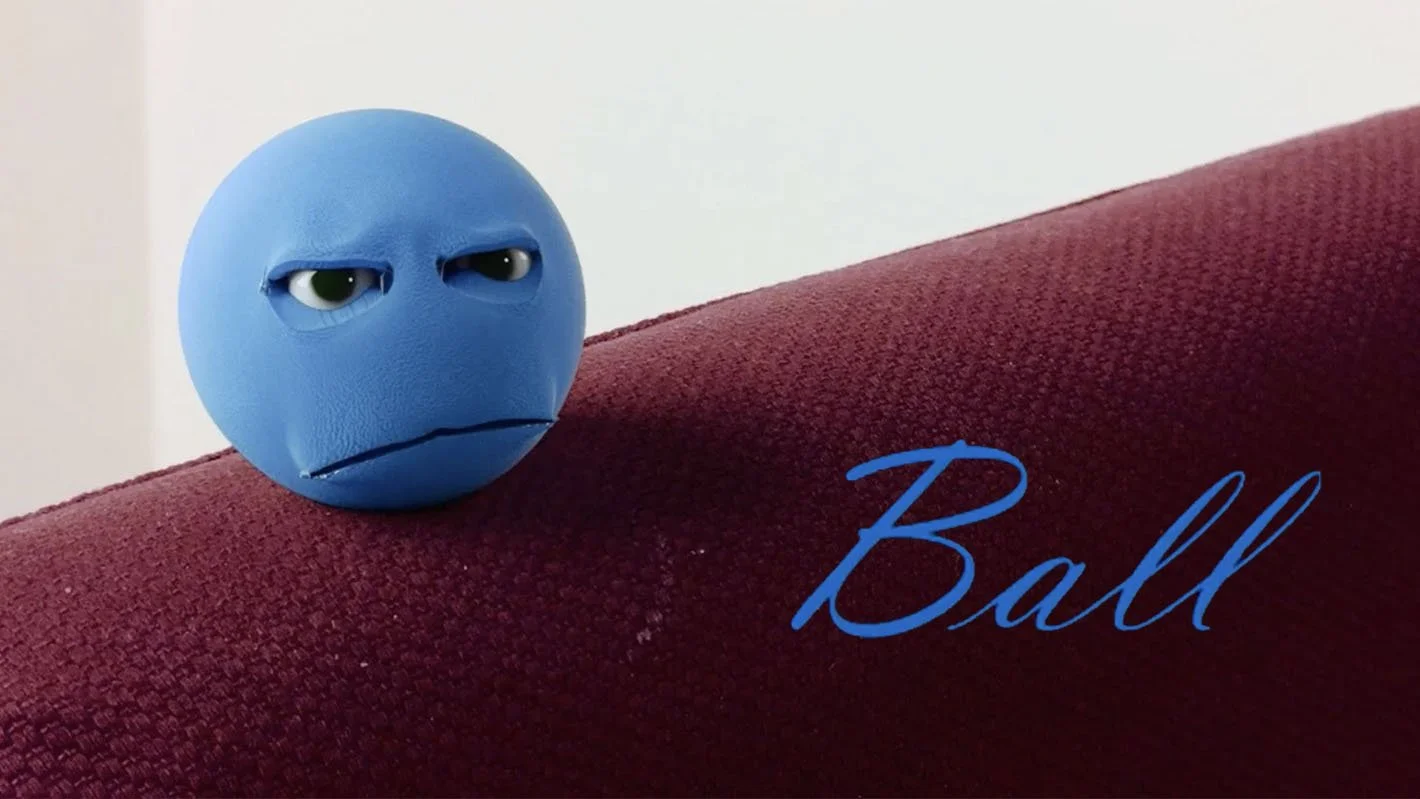
Ball
A painter has to deal with a hostile subject.
Written, Directed, Produced & Starring Enrico Mughetti
In this hybrid live action and animation short comedy, a painter has to deal with a hostile subject.
ABOUT THE FILM
BALL was shot on a camera phone and screened at our Short Film Open Mic. Additionally, festival selections include the XXV Festival Internazionale Corti da Sogni Antonio Ricci, the Lift-Off Filmmaker Sessions, London Cinefest, Deptford Cinema Film Festival, SmartPhilm Festival, and the African Smartphone International Film Festival.
ABOUT THE FILMMAKER
Enrico Mughetti started making short films in his hometown (Ravenna, Italy) to express his evergreen passion about cinema. He explored other video forms (documentaries, film concerts and spots) made on commission before moving to London, England for studies. The multicultural background of London and its rich artistic network gave Enrico a renewed creative flair. Enrico does not see short films as a business card to move to more complex projects but as an artform on their own. What fascinates him the most is the expressive freedom that comes from having a limitation from the start (duration of the movie).
READ OUR INTERVIEW WITH ENRICO
Welcome to our Short of the Week series. Can you tell us a little bit about yourself and your filmmaking background?
I was born in Ravenna (Italy) where I started making short films with the help of friends and no budget. Later on I explored other video forms (documentaries, film concerts and spots) made on commission before moving to London for my studies. Having then pursued a career in fire engineering, my passion for cinema never turned to a profession. I deem filmmaking as a means of self expression, not as a job opportunity. In time I realised my interests as a creator lay entirely on making short films where in few minutes an impression and/or emotion is conveyed to the audience via a combination of images, sound and music. I strongly believe in the power of experimentation that short movies have and feature films, not always but often, lack of, as these are burdened by commercial goals and the need for conventional storytelling viewers can easily digest.
Can you tell us about the genesis of Ball and how you came up with the idea?
In conjunction with filmmaking I'm also passionate about painting, which I find is another exciting means of artistic expression but more flexible and, very often, more practical. One of my favourite subjects is still life, which is called "dead nature" in italian. This sparked the idea of a subject, supposed to be "dead", taking on a life on its own and rebelling against its painter. I was also intrigued by the idea of making a sort of "live action cartoon", which is something I never tried before.
What were some of the main obstacles you experienced when making of Ball and how did you overcome them?
One of the main issues was shooting in the very tight space of my studio. Luckily, cast and crew were minimal (only 2 people) and it was a location I always had access to. Blocking beforehand, which I'd always recommend and even more when filming in small rooms, also helped. Another challenge was integrating the animation of the ball with the live action. Meticulous storyboarding to provide clear and effective communication with the visual effects artist and ensure all the necessary footage was captured was the key.


Tell us about the journey of getting your film to audiences.
I sent Ball to a number of festivals via few platforms (FilmFreeway, ShortFilmDepot, etc...). Competition is very high but with perseverance I was able to get my movie screened in front of an audience, which is my ultimate goal.
We first saw this film at our Short Film Open Mic event. Can you talk about that experience why you think short filmmakers need more accessible open mic type events?
It is a great opportunity to get used to talk in front of an audience and pitch your work. Also, knowing that each filmmaker has a chance to get his/her movie screened is also a very good motivation to create. Furthermore, I find invaluable the possibility to connect with like-minded individuals, who may become future collaborators. One of my short films, Mosquito, was made as a result of a networking event at Kino.
What advice or hacks would you give to other short filmmakers?
Given that filmmaking is a group effort grab every opportunity to network. However, bear in mind there are a lot of people who love the idea of filmmaking but much less people who actually love filmmaking in itself (and, therefore, are willing to make the necessary effort and disrupt their daily routine). Learn to recognise who is really motivated, disregard who is not and trust your instincts: few enthusiastic and reliable individuals are much better than a big team of time wasters. Also, as a director you have the final say but always listen to and respect any advice that may come your way. In the end all team members should share the same goal, which is not displaying egos but producing the best work possible with the available resources. Furthermore, enjoy the process, instead of considering filmmaking as a means to an end. Every short film I made was a passion project and I would not do otherwise. Last piece of advice is: catering. Your movie may be no budget but always keep your cast and crew (who are likely giving up their time for free) well fed!
What's next for you?
I'm writing the script of my next short film, which is intended to be a mix of horror and family drama. As always, I'm going to fund it out of my own pockets and, hopefully, build up a team of people willing to dedicate their time/energy and sharing the same enthusiasm as mine about the project.
Any film recommendations that we should add to our watchlist?
Not many as I spent the past year reading novels (something I neglected for too long), rather than watching movies. However, I'd recommend the works of Kyle Edward Ball (the feature "Skinamarink" and his Youtube channel "Bitesized Nightmares" containing all his short films), which go beyond traditional horror storytelling and provide a more visceral experience.
Interested in getting your work selected?
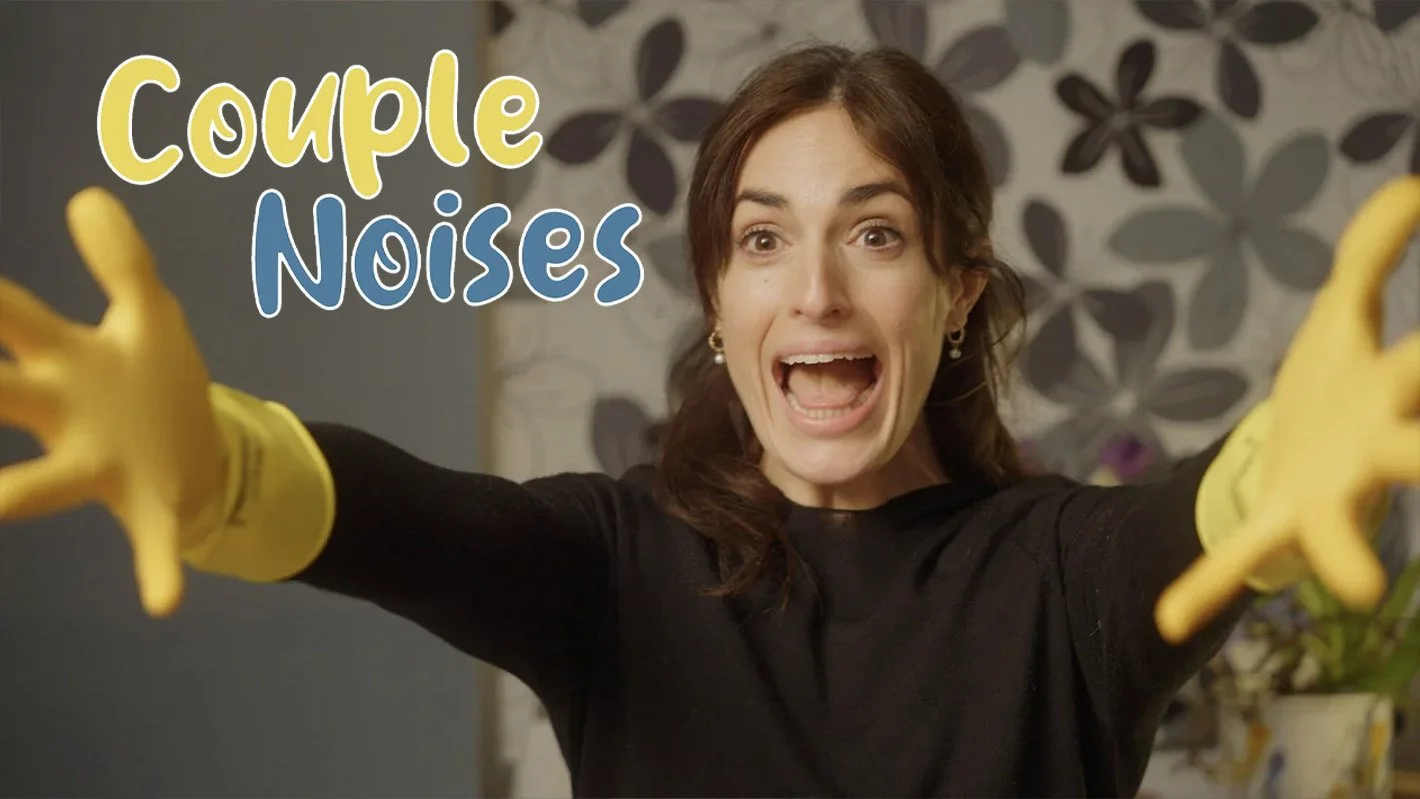
Couple Noises
When sweet and affectionate noises between a loving couple get really weird, real quick.
Written & directed Joe McGowan
When sweet and affectionate noises between a loving couple get really weird, real quick.
ABOUT THE FILM
Couple Noises caught our attention at our Short Film Open Mic event. It won Best Micro Film at the Los Angeles Comedy Films & Screenplay Festival, came in 3rd place at the Lit Laughs International Comedy Film Festival, was a finalist at the Pigeon Laughs International Short Comedy Festival, and an Official Selection at Funny Life Film Festival. It was also featured on BBC Upload.
ABOUT THE FILMMAKER
London born and Essex raised, Joe McGowan is a writer, director and editor with over 10 years of experience working in video production for both online and broadcast. His love for comedy has steered his career: making commercials, directing stand up comedy specials and letting loose with his own unique, bizarre yet relatable comedy shorts. His first film ‘Nigel’ was shortlisted for the Youtube Play exhibition at the Guggenheim Museum in New York back in 2010, and since then he has racked up views and pulled in a number of awards across the film festival circuit.
READ OUR INTERVIEW WITH JOE
Welcome to our Short of the Week series. Can you tell us a little bit about yourself and your filmmaking background?
When I moved to sixth form and saw there was a Media course where you could learn to make films, my sixteen year old mind was blown. “This sounds so much fun” I thought to myself, and couldn’t pick the course quicker. Since then I fell deeply in love with filmmaking and storytelling. I studied Video and Animation Production at Confetti Institute for Creative Technology, and have gone on to have a 10+ years crack as a director and editor, and haven’t looked back.
As much as I adore filmmaking, the thing that’s brought me the most joy is making people laugh. Over the years I’ve dabbled in making comedy shorts for myself and have made commercials with a comedic twist, but a year ago I quit my full time role at a production company to niche down as a comedy writer, director and editor…and look at me now ma! I tend to lean towards making things silly, absurd but also endearing.
Tell us about the genesis of Couple Noises? Where did the idea come from and why did you choose to pursue this film to make?
Everyone has inside jokes. Friends, family and especially couples and from my own experiences in relationships and observing others, sometimes a joke can be as simple as two people making sounds at each other. If anyone witnessed the daft noises me and my girlfriend make at each other they’d be very concerned. The thing I wanted to explore was what if those cute sweet nothings went a little too far.
For the last few years I’ve been enrolled on the comedy writting course ‘Think Funny’, run by the incredible Brian Luff and Georgina Sowerby. One of the sessions was all about escalation sketches, and how a situation that progressively gets worse or more bizarre for characters can lead to hilarious results. I took what I learned from the session and merged it with my idea, and that became Couple Noises.

What were some of the main obstacles you experienced when making Couple Noises and how did you overcome them?
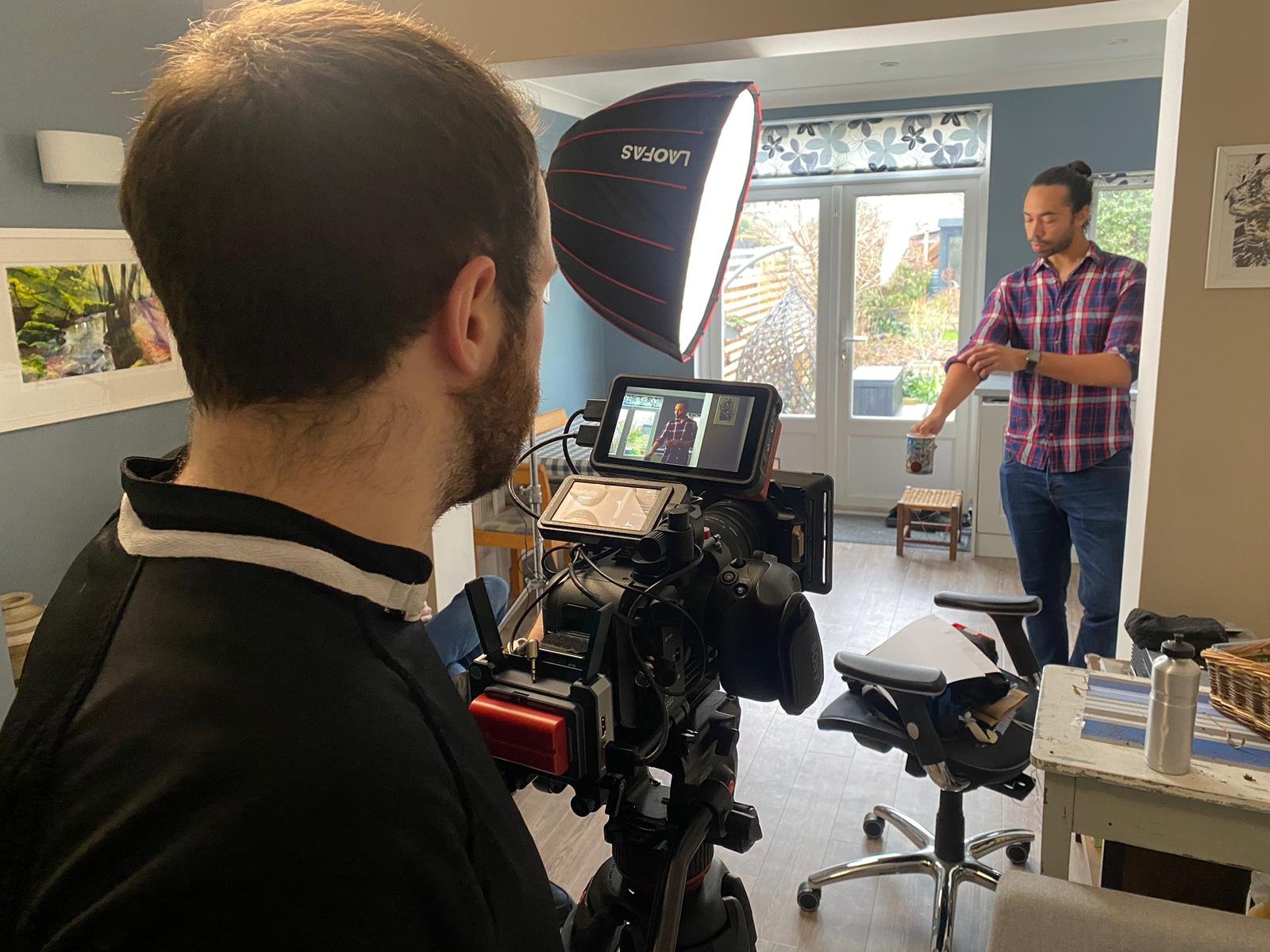
Overcoming imposter syndrome. I remember thinking on the day before we started filming ‘Is this funny?’ ‘Are people going to get it?’ I had to remind myself that I had amassed a really talented cast and crew who were giving up their time to help make the film and we had an absolute blast. This film was really an exercise in finding the tone on the day. The initial dialogue and props were scripted, but the noises and performances that Chloe Zeitoinain and Julian Lloyd Patten gave were mostly them just playing and improvising. When I asked them to go bigger and weirder they jolly well went for it. Without their willingness to be as bonkers as possible, the film would fall flat, and I am so grateful for them and the crew in being invested in what I was trying to accomplish. I’d always wanted to make a film that relied heavily on improv and look forward to doing more of it in the future.
Tell us about the journey of getting your film to audiences.
I was a bit hesitant to just put the film online. There’s so much content out there and I didn’t want Couple Noises to get lost in the shuffle. I had another short that was doing well on the film festival circuit, so I entered Couple Noises for a few festivals here and there. It even made an apparence at Kino’s Short Film Open Mic earlier this year. The audiences response to the film has been nothing short of heart warming. The amount of people who have come up to me and said they do the same thing with their other half and it resonated with them is really lovely and gratifying to hear. It also means I’m not that mad either, which is a bonus.
The craziest thing that’s happened this year is seeing Couple Noises on the BBC’s main Instagram channel and BBC Comedy Facebook page. BBC Upload was looking for comedy sketches, poetry and other creative submissions and I thought why not, so I sent them Couple Noises. A few weeks later, the film had gained over 200k views and I appeared on BBC Essex Radio to talk about the film. For something I made at my mum’s house on a shoestring budget, I was blown away by the run my little film was having. I’d highly recommend anyone that has made a comedy short (or sketch that could translate well to radio) to send your work to BBC Upload. It’s free, and it feels good to say your comedy work got featured by the BBC.
Listen to Joe’s Interview on BBC
What advice or hacks would you give to other short filmmakers?
Go out and make it, and don’t be afraid to ask for help.
I sat on the initial idea for Couple Noises for a few years before pulling the trigger and I’m so glad I did. You won’t grow as a filmmaker if you aren’t making stuff you enjoy. Every shoot is an opportunity to learn something new about your own process and what works versus what doesn’t work. Also, other people want to help make films too. I met my DOP Maximillian Newcombe through the filmmakers networking website Shooting People. I loved his work and he’s a fellow Essex boy, so I reached out to him and we hit it off immediately. When I asked if he wanted to shoot Couple Noises he jumped at the chance to work on a comedy project. We’ve worked together on a few professional (and paying) jobs since, and he’s now my go to DOP.
We’re all learning and growing in this industry constantly. Put your vision and yourself out there and see what happens.
What do you think is the biggest challenge short filmmakers face trying to break into the industry?
Money, money, money. I’ve had to re-think what project I want to make next due to my ideas being bigger than my wallet. I want my next project to be grander in every way possible, but it’s definitely going to be baby steps rather than taking that massive creative leap. One comedy sketch idea I have would require over 50 breakable prop bottles, and they are on average between £15-£20 each…I’ll come back to that at some point.
I’ve looked into funding options and find it all quite daunting, but it’s another step I need to take, and I know I’m not alone in wanting to know how to navigate through that world and get my next comedy project off the ground.
Any film recommendations that we should add to our watchlist?
Two comedy shorts that I saw this year that I’d highly recommend are:
‘The Foul’ directed by James Button. Disgusting, outrageous, a true piece of art. Going in blind is the best way to watch this short, so do yourself a favour and watch it on Youtube.
‘The Sharkey’ directed by Calum Weir. Three guys waiting for a bus in the Scotland highlands, and along comes a completely pissed menace that spouts nonsense. Neil Bratchpiece gives the best comedic performance I’ve seen in anything all year.
I also recently watched ‘Marcel the Shell with Shoes on’ and it’s one of the most heartfelt and endearing films I’ve seen in a long time. Seeing what started as a short series of Youtube videos back in the early days of Youtube be made into a gorgeous A24 film is so lovely to see.
Interested in getting your work selected?
Plantman
A humble gardener shares his philosophy of finding meaning in simple living and nature.
Written, Produced & Directed by Tim Astley
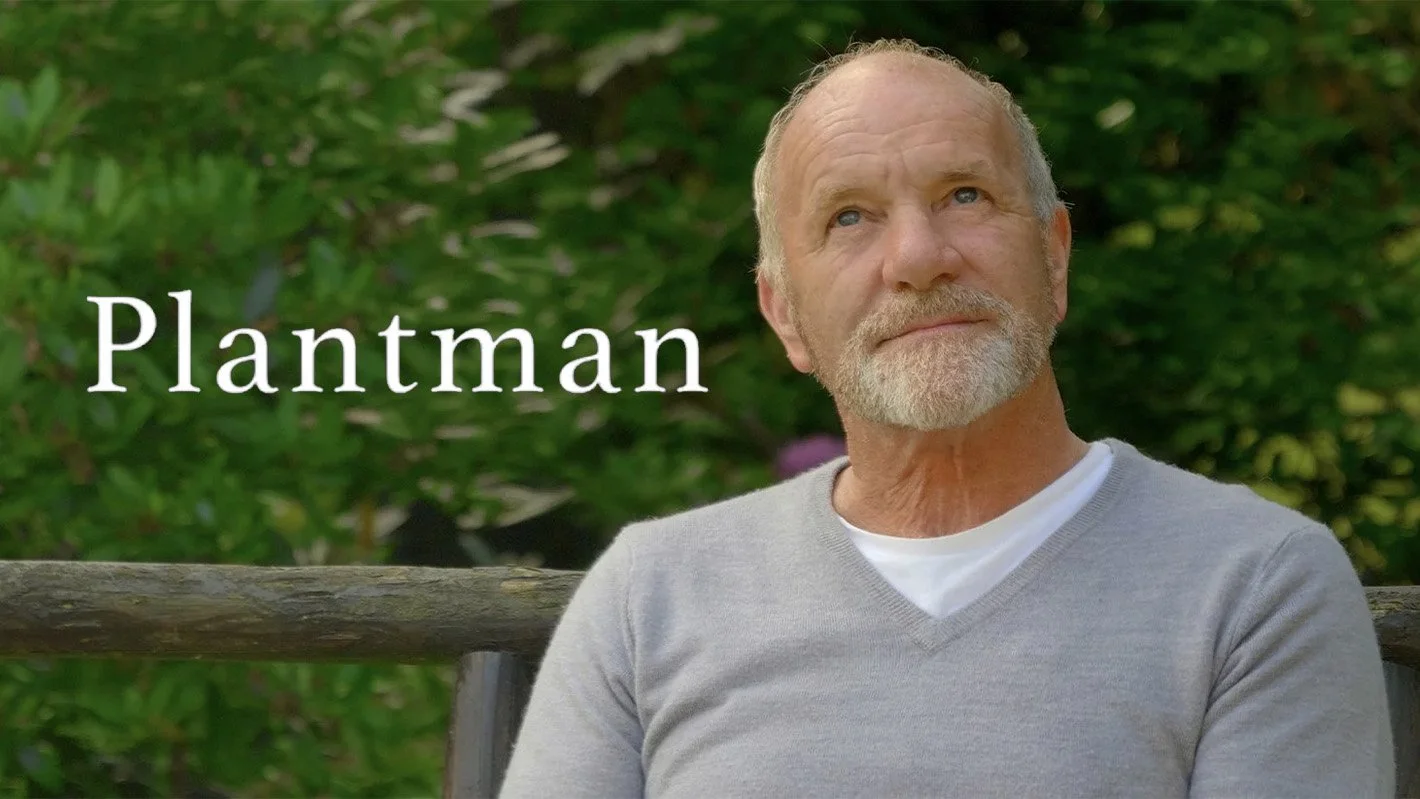
The day begins, and so does the Plantman's work. This is a look inside a day and the life of a humble gardener. Plantman is a film about understanding and believing in our life choices and recognising the difficulties we face along the way; however big or small our impact, we can be proud of our achievements.
ABOUT THE FILM
Plantman was an official selection at the Wolverhampton Film Festival & Derby Film Festival. It first caught attention at our March 2023 Short Film Open Mic and was recently released via Klipist.
ABOUT THE FILMMAKER
Tim Astley studied Film & English in Leicester, moved down to London to pursue a career in filmmaking. He has found a home in editing, but directing is his passion.
READ OUR INTERVIEW WITH TIM
Welcome to our Short of the Week series. Can you tell us a little bit about yourself and your filmmaking background?
I’ve been interested in filmmaking for a long time, it became my life ambition to become a director from about the age of 16. It did take me a while to actually realise what that meant and how I needed to get there. I didn’t study practical filmmaking, my degree was in English Literature and Film studies, so it was very academic. I think that gave me a good grounding in the cultural importance of films and film history.
Then after uni I worked as a runner on set on some low budget features and shorts, and then I eventually ended up getting a role as a runner in a post-production facility in the advertising industry. I worked there for a while and trained as an assistant editor; this was like film school part 2 where I actually learned how to do something practical. Editing is maybe the most satisfying part of the filmmaking process because you see all the pieces come together.
I love editing, but directing is where I want to be - it’s the central role where you can use so many different skills beyond even your creativity. You have to think practically, you can have a great idea but there’s no use in it if you can’t actually do it.
Tell us about the genesis of Plantman and how you found your subject?
Sort of following on from what I was saying about thinking practically, I felt like I only really had one weapon as a first time filmmaker: me. I asked myself what could I bring to the table that no-one else could? I didn’t have a big budget, I didn’t have access to big names and I had basically no experience and no idea what I was doing. So I needed to make something only I could make.
As long as I’ve been alive my Dad has always been a gardener. He’s a rare example of someone whose passion is his vocation; which is basically my life aim because my parents always encouraged me to pursue something that I actually wanted to do - not just make money. Gardening also feels kind of similar to filmmaking as well in that you have to combine creativity with a certain physicality and have faith in what you’re doing is the right thing.
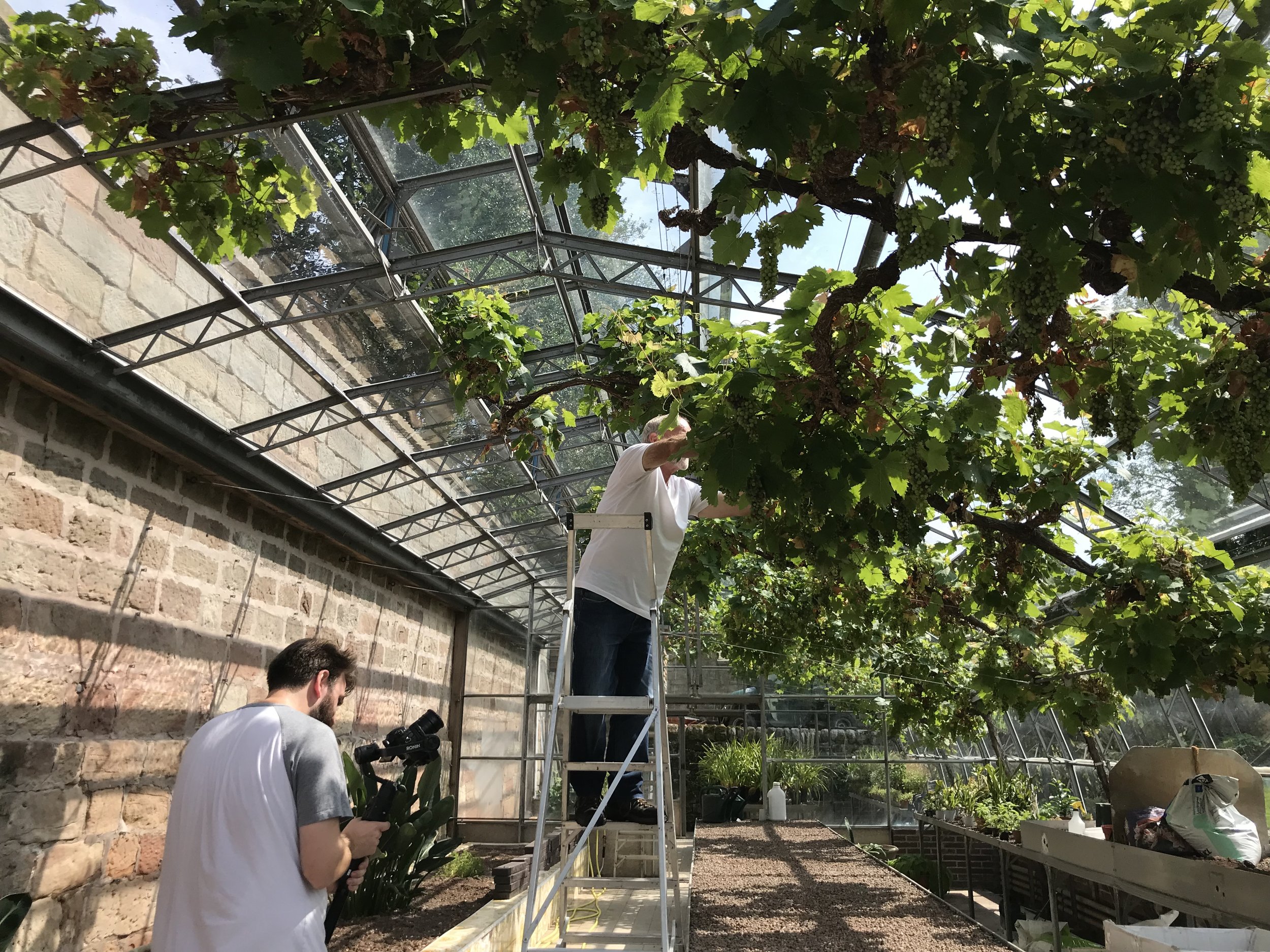
So bearing all this in mind, it felt like making a film about my Dad and what he does was the perfect film to make because it brought together my own sense of self, could be told my perspective and only I could make the film about my Dad. He also worked in a beautiful location with few to no other people around so we could shoot it very peacefully and it was at least going to look really nice. This meant that it could be heart-felt, true and have a feel of professionalism because we had a champagne location on a lager budget.

What were some of the main obstacles you experienced when making of Plantman and how did you overcome them?
I think the most difficult thing was figuring out what story we were telling. I think I always wanted to do a straight case study and just tell Dad’s story of his journey but I was worried it wasn’t perhaps interesting enough so I kept trying to think of different general interest themes to give it a broader appeal. For example I was trying to tie together how gardening is an excellent way to relieve stress and help with mental health to give it that angle. But in the end I knew it just had to be his story that was the central theme, which as it turns out has a universality to it because it’s just as simple as: this is a man who knows what he likes, gets up every day and does it. That’s all something we can admire and relate to.
Tell us about the journey of getting your film to audiences.
This was tricky because I knew we had a good film, but it was pretty slow and soft so that it might not make the cut for a lot of big festivals. I didn’t really bother applying to the Sundances of the festival circuit because I knew it would be a waste of money, of which I had little. There was of course a small part of me that hoped it would be accepted and then somehow be nominated for all these awards but that’s just not how this works for most people.
So I decided to apply for more regional festivals that I had more of a personal connection to. We went to Wolverhampton Festival, for their first year, because that’s where my Dad is from and then we also went to Derby Festival because that’s where we shot the film. I didn’t have a huge audience at either screening but just the event of going up with my Dad and other friends and watching it on a big screen was so satisfying.
Then bringing it down to open mic nights (like the legends at Kino) in London has been amazing. Everyone is so keen to share their praise and exchange ideas, I think in part because they know what it takes to put one together so they appreciate it more. It’s a really lovely thing to be able to do.
Then through Kino I discovered the wonderful Klipist! They have put the film on their site which was so great because it has a platform dedicated to showcasing short films and new talent. It’s gone better than I could have expected really.

What advice or hacks would you give to other short filmmakers?
All filmmakers tell each other to do is go out there and start shooting which is great advice because the only way to learn is by doing. BUT - I am a big supporter of thinking a lot about different ideas. Have a long think about what you can bring to the table. What is it that you want to do? You will probably be restricted by budget and other resources, so you really need to dig deep inside yourself and think about what it is you want to do. Don’t just make a film for its own sake: make your film. Once you figure out what kind of film you want to make, then the right idea will become apparent - whether it’s a small drama about a piano teacher or a broad comedy about Instagram influencers, your voice can shine through any idea - you just have to figure out what it is.
Then the next thing to do, which I didn’t do soon enough the first time, is get people on board who will help you. Once you’ve got your idea, it probably won’t feel ready to shoot but filmmaking is the discovery of that idea through this medium so you kind of have to feel a bit out of control for it to work.
Then it’s those collaborators who will make the film what it is. Choose those people carefully. You need to be able trust them and they need to understand your idea for you to be able to execute it. Probably the best thing about filmmaking in my experience, is the bond I created with those I worked with - particularly if you all like and believe in the idea to begin with, because you watch it grow and develop as a team because of your co-operative work.
So in summation: have a great idea and find an equally great team, easy.
What do you think is the biggest challenge short filmmakers face trying to break into the industry?
For me it’s finding an audience and the person or people who will take me to the next level. You can make all the short films or low budget features you want but if no-one sees it, then you’re going to stay at the same level because like every business, it’s not a meritocracy. I’m not trying to peddle a cynical viewpoint here, I just think it’s important to know what you’re up against and not care. If you know how hard it is to get your feature made or break into the mainstream and you still want to make films, then you’ve already won because you’re dedicated to making it no matter what.
Any film recommendations that we should add to our watchlist?
I was really struck by “a film made entirely of mushrooms” when I came to the Kino Open Mic a few months ago - aka The Boat. It’s a stop-motion short film, with a kind of psychedelic jaunt. It was so creative, and it looked amazing. It was a simple idea, executed beautifully.
Continuing the theme of forest delicacies, I recently watched Pig for the first time. It was a great twist on the revenge thriller, and so great to see a quiet, lean film with such a resonant message. It really spoke to the depths of my soul!
One more that maybe not as many people have seen is, Sweet Smell of Success which again I watched only recently. It’s an Alexander MacKendrick film, who for many might be best known as the writer of the great filmmaking book: On Filmmaking. It’s extremely sharp and quick-witted, kind of Sorkin-esk, but it’s got a great ending.
Interested in getting your work selected?
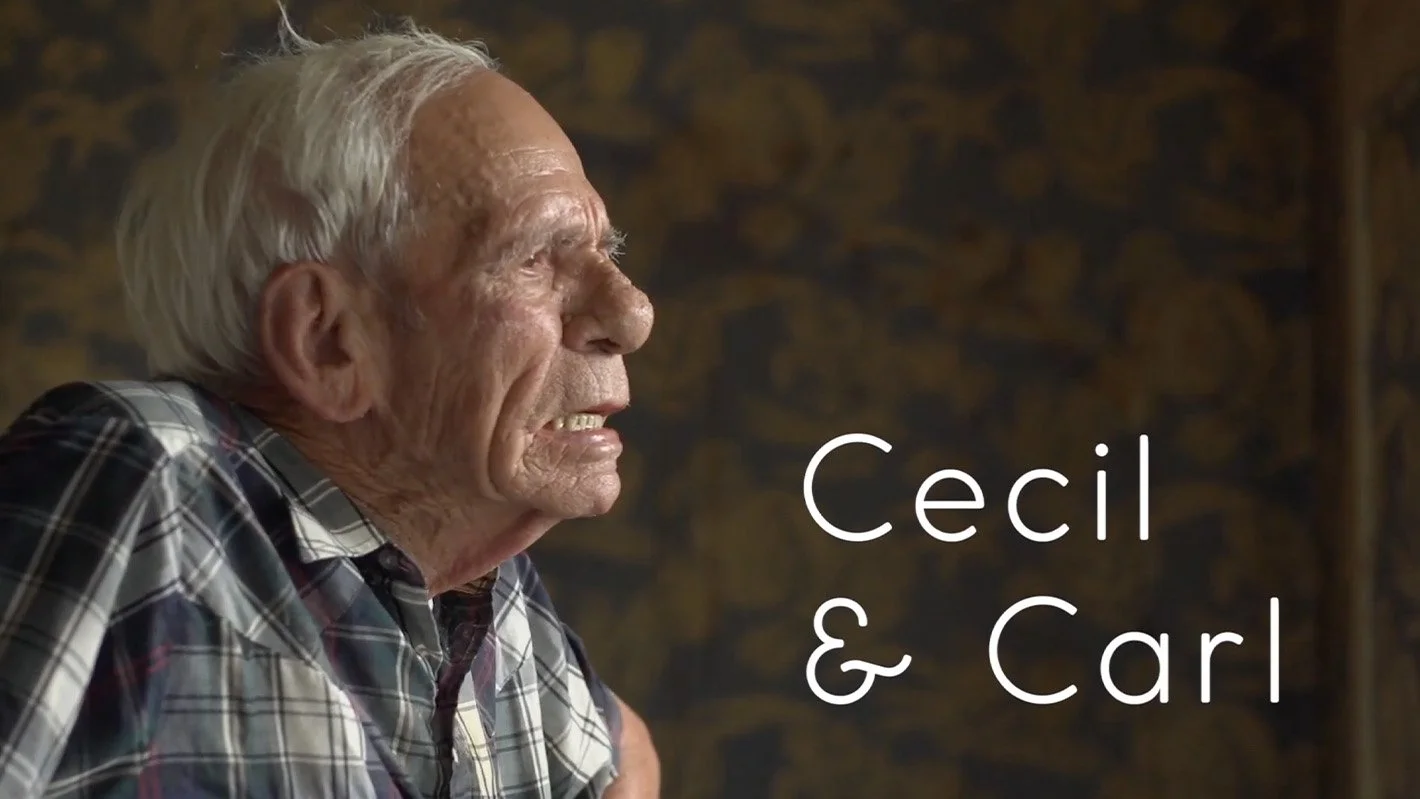
CECIL & CARL
An award-winning LGBTQ+ documentary short about partners coping with a diagnoses of advanced dementia and the decision to seek the help of a nursing home.
Directed by Elvis León & Gastón Yvorra
Produced by Elvis León & Sasha Milonova
An award-winning LGBTQ+ documentary short about partners coping with a diagnoses of advanced dementia and the decision to seek the help of a nursing home.
READ OUR INTERVIEW WITH ELVIS
Tell us a bit about yourself and your filmmaking background.
Since I was a kid, I always had a tough time expressing myself. This changed when I discovered film school and a few years later, I graduated with a Film Producing and Screenwriting degree in 2013. Making movies has given me an outlet, and I feel lucky to have found a passion that keeps me marching forward. My career has taken me to massive productions such as Fast and Furious: Hobbs and Shaw and adverts for high-profile name brands, but my focus lately has been to complete my first feature documentary film called, We Are Lions. It's a true crime story about my family's pursuit of justice.
Tell us about the genesis of Cecil & Carl. How did the project come about?
A few years ago, we were working on a comedic web series project written by Elvis called Charlie’s. The story was about a straight bar owner that attempts to open a gay bar. The production took place in a gay bar in Denver, Colorado. On one of our production visits, we encountered a group of around 50 elderly gay men, gathered around tables having lunch. We soon found out that the group of men was in fact a club called The Primetimers. They meet every Wednesday.
Our first impression was that there were a lot of stories in that place. We also imagined what it was like for these men to be gay 30 or 40 years ago, in a society less open [compared] to the one that exists today. We felt the need to learn these stories. One day, we asked the Primetimers group if there was anyone who would be interested in participating in a film project that would take their story and turn it into a visual portrait.
We had a lot of people approach us that day, but long story short, Cecil Bethea was the first one to step up and open up to us. We eventually learned his story and that of the relationship he had with Carl Shepard — we were immediately hooked. On a side note, after completing the Cecil & Carl documentary, Cecil volunteered to do a cameo appearance in Charlie’s. He has a memorable five seconds in the film!
How did you get access to such a personal story and what was your relationship like with your subjects? What obstacles did you overcome while in the making of this film?
Gaining Cecil's full trust was the biggest challenge. This required going to many coffee meetings prior to and between filming days, where Cecil would tell stories and smoke a pack of cigarettes in one sitting. Cecil and Carl love to smoke, as you will see in the film. It took us a few weeks before he gave us permission to enter his home. We weren't sure where this documentary was going, but once he opened his doors to us and showed us pieces from their 40+ year relationship, it changed the course of our film. After we wrapped filming, Cecil and I would still meet for coffee and cigarettes. This film became a highlight of his life, and it was an honor to tell Cecil and Carl's story.
Tell us about the journey of getting this film to audiences.
Our film festival journey began with 20 festival rejections in a row, and we thought we made a terrible film. Everything changed when it Toronto picked us up, and then Cecil and Carl took off like a rocket. We have been fortunate enough to have screened at 50 festivals and some of the most recognized LGBT film festivals, such as the Gaze International in Ireland, Vancouver Queer Film Festival. We were nominated for the prestigious Iris Prize that takes place in Wales and at the New Orleans Film Festival in the Documentary Shorts section, which is an Academy Award qualifying competition.
Now that you're working on a feature, in your experience what's been the biggest or most surprising difference about making a feature vs a short. Is it just the difference between a sprint and a marathon, or how much does the craft change?
A 3 month film process on this project still took about a year to complete. With no budget, it was tough recruiting a team to help us edit and score the film. Making a feature is a different animal. I'm working on a story about my father's kidnapping and his quest to get closure the legal way, but when that fails, he considers taking matters into his own hands. This being a personal family story requires you to be more patient and delicate when it comes to trying to be a neutral storyteller when the subject is your father. When I began filming, I had no idea that I would be working on this film for over seven years. Principal photography has been completed and we still have a few months of editing to go! Not all features will take this long, but just keep in mind that the more complex the story, the longer it will take. Whatever you think it's going to take, double that time period.
What do you think is the biggest challenge short filmmakers face trying to break into the industry?
There's no one way solution to make it in the industry. Some people don't go to film school and have incredibly successful careers, and others go to film school and end up finding a "real" job. Filmmaking is about persevering through the challenging times in the name of telling a story only you can tell. The biggest challenge is finding your voice as a filmmaker, the thing that will separate you from the rest. Finding mentors and collaborates can also be really tough, so a lot of networking needs to be done to find your tribe. You can't do this alone, so look for assistance in any way that you can.
Any film recommendations that we should add to our watchlist?
The Fire Within: Requiem for Katia and Maurice Krafft by Wernor Herzog! One of the most visually satisfying documentaries that I've ever seen. It's an incredible story of a married couple that research and visit the most dangerous volcanos around the world.
Interested in getting your work selected?

JOURNEY
When life couldn't get any worse, Jack realises his flight is from Glasgow and not Gatwick. Attempting to catch a last minute train from London, he is confronted with his stage in life by his fellow passengers.
Directed by Panji Kaonga
Written & Produced by Stephen Maddox
When life couldn't get any worse, Jack realises his flight is from Glasgow and not Gatwick. Attempting to catch a last minute train from London, he is confronted with his stage in life by his fellow passengers.
Everyone is Jack. We all need Iris.
READ OUR INTERVIEW WITH STEPHEN
Tell us a bit about yourself and your filmmaking background.
PANJI: I grew up in Zambia, in South Central Africa, where we have a strong folktale culture. As early as primary school, we’d have time slots to stand in front of the class and tell a story. That was always a highlight for me. Couldn’t afford equipment early on but got creative with whatever I had, which meant getting electric shocks a few times :)
STEPHEN: I grew up in Chicago watching films and TV with my dad. In university I made my first short film SLEEPING WITH YOUR EYES OPEN and a TV pilot BACK ISSUE. In 2010, I fell heavy into screenwriting; completing feature scripts, short film scripts, and promos. Upon moving to London in 2017 I founded my film company “southside films” (named after my punk band from university) and our debut short was JOURNEY. Since then, I’ve made LUCID (short film) a best screenplay winner, ‘TWAS THE NIGHT BEFORE CHRISTMAS (poetic short film), A WALK TOGETHER (micro short), one of the producers on a feature film and an informational piece on human trafficking, wrote and directed two documentaries, and two Christmas specials with music videos, and still more works in the pipeline.
What was your inspiration? Why did you decide to make Journey?
STEPHEN: When first moving to London a station was clearing out and I found out someone had jumped in front of the train. After trying to find the story in the news later in the day, I realised how common it was in London and around the UK. Later a friend visited from the US and was very frustrated with their stage in life and that led to the blending of both stories into Journey.
We wanted to make Journey to encourage people to reach out when feeling lonely or hurting and for all of us to talk to those near us to check in and make sure people are doing okay. Whatever we can do to help stop suicide and those feeling alone.
PANJI: Journey is a relevant story today and one I can relate to. I’ve been in Jack’s position before and it’s great when you have the chance to meet someone who shifts your perspective.
What obstacles did you overcome while in the making of this film?
STEPHEN: We weren’t success for BFI funding and the first round of crowd funding was a flop, so we lost our original cast. The second round of funding happened because of a ton of people chipping in what they could afford and then two large donors came in the end. The original story started outside the station and through the station. After trimming the budget back it meant the story was to be done in a day and in one setting.
PANJI: Finding the right location and conditions was challenging. Had to adjust the script a little to work with what was available within our budget. We shot on a static train and had to be creative with lighting and fake rain.
Tell us about the journey of getting your film to audiences.
PANJI: Right from the start we included the festival run in the budget. Stephen, the writer, and producer did such a great job researching and shortlisting potential festivals and audiences we could target. We’ve taken advantage of networking opportunities and have enjoyed meeting other filmmakers and sharing experiences.
STEPHEN: We went through festival rounds and sharing it with anyone and everyone. Ultimately a streaming company IVOX+ saw it at the Aspen Film Festival market and asked to put it on their streaming site as well.
Words of wisdom. What advice would you give to other filmmakers?
STEPHEN: Make projects, keep collaborating, and keep going. This isn’t a sprint, it’s a lifetime marathon. Keep writing, keep shooting, but finish the damn thing. Nothing worse than stories dying on hard drives. Ask for help, see what people think, keep experimenting, but just keep typing and keep shooting. Each project hones your skills and makes you a better storyteller and filmmaker. We need everyone’s story. In a day when it’s content overload the main thing is picking the right concept and working with a premise that’s unshakeable, but every story matters.
PANJI: Don’t wait for the right moment and conditions to start, use whatever you’ve got and keep making films. Keep practising and make great connections with creatives along the way.
What are you working on now?
PANJI: I have a couple of films in post-production but also writing a short thriller on cyber-crime.
STEPHEN: Finishing up a micro budget/micro short to compete in that category. Developing a music video/short film with an independent artist that starts shooting in August. Writing a feature script with a writing partner with aims of it being a debut feature film for 2023. Developing a documentary on human trafficking that films at the end of the year. Really want to shoot a project on film soon.
Any film recommendations that we should add to our watchlist?
STEPHEN: I’m too much of a fanboy to narrow it down, I just love cinema. I love classics and early works from artists like Chinatown, Casablanca, Sunset Blvd., Memento, etc. For me it’s just watch films. Figure out why they shot it certain ways, why did the cast make the choices they made, why does the story move you.
PANJI: Catch Me If You Can, Eternal Sunshine of the Spotless Mind, and Inception.
Interested in getting your work selected as Short of the Week?
WEREWOLF
A group of friends foolishly decide to play a game of Werewolf. As distrust, lynching and dietary requirements put their friendship out of balance, the Werewolf remains hidden in plain sight.
Directed by MARKUS MEEDT
A group of friends foolishly decide to play a game of Werewolf. As distrust, lynching and dietary requirements put their friendship out of balance, the Werewolf remains hidden in plain sight.
READ OUR INTERVIEW WITH MARKUS
Tell us a bit about yourself and your filmmaking background.
When I was a teenager my family moved from a microscopic village in Bavaria to a small town in Sweden. Struggling with the language and failing to make new friends, my brother and I started an international drama club to lure out the other immigrants and open minded teens in town and hang out. Somehow the whole thing took off and we had several stage shows (super local stuff with cardboard cut out set design). But the whole thing made me fall in love with story telling, working with actors and coming together with talents to create something from nothing. Alas, I moved to London, studied film and worked myself up as a runner and AD on films and TV. I somehow fell into commercial directing, which is my bread and butter. But the goal remains to direct long form narrative.
What's your inspiration behind Werewolf?
David Ellis, the writer of Werewolf came to me with the script. In fact, before he showed me the script he tried to re-cap a recent game night that went out of hand. I think me cracking up at his story gave us the confidence that it could actually work as a short. Dave put it on paper and brought on his brilliant actor friends (most of them know each other from their work on Shitfaced Shakespeare) and we took it from there.
What obstacles did you overcome while in the making of this film?
The obvious obstacles were money and time. I know a lot of people frown at the "expenses only" approach. But in many cases it is the only way people can actually finance a short film. And I always remember the things we accomplished with the Swedish Drama group with absolutely nothing. So yeah, we still pour all our money into it, but it all went into the prosthetics, some extra lights and most importantly catering. Which leads to the time issue: Food is pricey. After doing the math the numbers gave us only had 1.5 days to shoot the 12 page script. And the Werewolf prostethics that pop up briefly for 1 shot took roughly 5 hours.
Creatively, the challenge was to make "people sitting around a table playing an imagined card came" visually interesting. We lose the power of blocking as everyone is pretty much just sat at a table. Cinematographer Tom Lee, Gaffer Alex Gibbons, and I had to come up with a visual language that would help emphasise the slowly growing claustrophobia of social gatherings, rather than physically move our cast. We came up with three stages of maddness, all shot on "sequence" specific lenses with more erratic camera movements as the tension rises. Our editor Carley Brown created a "cuts per second" crescendo that slowly increases over time before we strip it right back for the slow burner ending.
Tell us about the journey of getting your film to audiences.
We are fortunate that our producer Nick Coupe has had several films in established film festivals across the years. He knew the deadlines, the festival specific flavours and some of the programmers. We ended up at Loco Film Festival, Aesthetica and Fright Fest amongst others. They are three of my favourite film festivals and we were obviously super chuffed. Unfortunately Covid meant that pretty much all festivals were online only which, despite best efforts, just isn't as personable as on site festivals.
Any advice that you can give to other short filmmakers?
Less of an advice on film making and more on what to do with your film once it is done... When we finished Werewolf, I was super happy with the final result, but I felt embarrassed sharing it with people. The grade was a bit rushed, the music only stock tracks and all in all, I was worried that people might just not find it very entertaining. But Nick and Dave believed in the film and started showing it around, getting it into festivals and sending people screeners and we received great feedback in return. I think a lot of directors are quite introverted about their work. They don't necessarily hate it, but they are shy about it. And it is one of the worst things to be! Don't be afraid to show your film to people. Don't keep it locked away till "the festival run is over "either. Share private links to friends and industry peeps. And once you are ready to unleash it online, utilize all the great online platforms (Such as Kino Short of the Week) you can. They are less expensive than film festivals, more reactive and can have a much further reach. No matter how shy you might be about your work, there is an audience out there for it. And the only way to get better as a film maker is to understand YOUR audience better. They might get your films better than yourself. There are a lot of useful take aways from audience reactions.
What are you working on now?
I am in post production on another short film written and starring David Ellis and James Murfitt (who are both in Werewolf) and have a horror comedy called Paranormal Investigators doing the festival rounds. I am also developing a Horror Anthology Series with creative producer Sean Scott Griffith and am trying to package a horror feature I co-wrote with Gemma Hurley. But as these things go, everything is moving at a snails pace. But as the famous saying goes: Slow and steady catches the worm... Wait... No... How does it go?
Any film recommendations that we should add to our watchlist?
I just watched Babyteeth on the plane from London to Mexico and cried my little eyes out. It completely subverts the coming of age film with some genuine heart, grit and consequences. I am also an absolute sucker for animated movies, so if you haven't watched The Mitchell's Vs The Machines on Netflix yet, you should lock it as your lazy Sunday viewing!
Interested in getting your work selected as Short of the Week?

British Graffiti
An art history graduate couldn't get a job after graduating and now works in a supermarket. Years of being terrorised by his boss make him reach his boiling point.
Written, directed, and produced by Mark van Heusden.
An art history graduate couldn't get a job after graduating and now works in a supermarket. Years of being terrorised by his boss make him reach his boiling point.
READ OUR INTERVIEW WITH MARK
Tell us a bit about yourself and your filmmaking background.
I grew up in The Netherlands and made no budget short films with friends while doing my undergrad. I soon realised that I didn't really have any technical knowledge and started interning as an editor and camera assistant on corporate videos to become a more skilled filmmaker. I then moved to the UK and wanted to make a new film and I was able to do that by doing an MA in filmmaking. British Graffiti is my first film after having interned for 6 months and it helped me a lot in terms of planning and knowing how much time it costs to do certain camera set ups. I since made another short film David French Is A Piece of Shit and I Want Him Dead and a couple of music videos and mainly work as an editor to pay the bills.
What's your inspiration behind British Graffiti?
When I was doing my MA, lots of other students in my year had this fear of what would happen after graduating. Would we able to find work in the film industry?
I found that very nervewrecking too, and so decided to make this the central theme of my movie. What if you can't find your dream job and are forced to work somewhere you don't want to work? In this particular case I set the film in a supermarket because I worked in a supermarket for eight years whilst I was in school. I enjoyed the mundane task of restocking shelfs as I could kind of switch off, but it wasn't always a fun place to work because I encountered quite a few miserable people there. This film was a great way of getting both of these frustrations out of my system!
What obstacles did you overcome while in the making of this film?
Filming in a supermarket was very tough. An amazing opportunity, but we shot overnight between 22:00 PM until 04:00 AM for a week whilst they were restocking shelves. The first obstacle was exhaustion, because we had been up during the day to go through the shotlist and rehearse the scenes and then we needed to shoot through the night. So we were extremely tired every day. Secondly we had to be on our feet constantly because even though there were no customers, there were still employees stocking the shelves. We had to make sure not to be in their way and had to move around a lot to ensure we could get our scenes done and not have them in shot or ruin the sound.
Any hacks or tips for making a short film?
Be as prepared as you can! Things will not go exactly as you planned, so the best thing you can do is plan everything meticulously with everyone involved. This way not only you know what you want, but also your cast and crew have an idea of where you're heading. If obstacles arrive, you have a goal in mind and you can work around them. I hate it when people say "we'll cross that bridge when we get there" because in filmmaking, that bridge is usually on fire so you'll have to be prepared.
Also, take care of your crew. In order to make your film everyone needs to be at their best, and in order to do that it's best to keep them happy and comfortable! Check if everyone is ok and the best trick to a happy and motivated crew is good catering! (No pizza or kebab but nutritious meals!)
Tell us about the journey of getting your film to audiences.
This one is tough because I had a little trouble with this film. I produced it myself and shot in a supermarket showing all their branding and uniforms and they weren't too happy with that. My own fault, so I had to learn DaVinci and change the colour of the uniforms and a VFX artist removed the branding. So getting it to audiences happened a little later than I wanted, but it did have a small festival run. Since then it's been on Vimeo as to be very honest, I find it difficult to promote my work! I'm very comfortable on set and in the cutting room, but once a film is done I find it tricky to reach an audience.
What are you working on now?
I have written two short films that I would like to make. A Part of Me is the prologue/proof of concept for a feature, but since it would be quite ambitious and expensive I might make a cheaper short set in one location titled Love Is a Drug and I Overdosed. My films have always been quite large in scale and very (maybe too) ambitious so I quite look forward to doing a small movie before I gear up for something bigger again.
Any film recommendations that we should add to our watchlist?
So many! Not many people in the UK are familiar with Dutch cinema so I'd like to recommend a few. Soldier of Orange (1977) is a classic by Paul Verhoeven who would later make it big in Hollywood. Character (1997) won the Oscar for best Foreign Language Film and is very good. And a personal favourite is Aanmodderfakker (2014) which is a comedy that reminds me a lot of Edgar Wright's films. One of my all time favourite's is an underrated gem: Delicatessen (1992) by Jean-Pierre Jeunet who did Amelie. And recently these films have blown me away: Höstsonaten (1978), To Be or Not To Be (1942), After The Wedding (2006), Fail Safe (1964).
FOLLOW MARK ON INSTAGRAM
Interested in getting your work selected as Short of the Week?

SECRET SANTA
Unemployed, broke and currently sharing a room with her six year old niece- 30 something Charlotte is not where she wants to be in life. Yet when she receives an unexpected invite to a Christmas party is her luck about to change?
Unemployed, broke and currently sharing a room with her six year old niece- 30 something Charlotte is not where she wants to be in life. Yet when she receives an unexpected invite to a Christmas party is her luck about to change?
Written, Directed and Produced by Vanessa Hehir
READ OUR INTERVIEW WITH THE FILMMAKER
TELL US A BIT ABOUT YOURSELF AND YOUR FILMMAKING BACKGROUND:
Hi I'm Vanessa and my love of storytelling began when I was 6 years old and growing up in Manchester. It was the mid 80's and my Dad had returned home from a business trip in Singapore with a JVC video camera -this was the greatest moment of my young life! I actually thought I was Steven Spielberg. I would write horror scripts and force my school mates to dress up and I'd boss them about gleefully as I filmed them. I then moved in front of the camera and have been acting professionally since I was a teenager, working predominantly in long running tv drama. But after years of feeling powerless and uninspired by the roles on offer I returned to my filmmaking roots 30 something years later- only without the old camcorder and a slightly more impressive kit. I wrote and directed my debut short film 'Secret Santa' in 2019 and my second short film 'Cuckoo' is about to hit the festival circuit in 2021.
CAN YOU TELL US ABOUT THE INSPIRATION BEHIND YOUR FILM?:
Secret Santa was inspired by a real incident that happened at my annual 'Girls Christmas Drinks'. We all exchanged secret Santa gifts and one of ladies opened hers to find5 lotto scratch cards. My friend who had given that gift casually announced that if anyone won the grand prize of £100k she would take it back even if it meant killing them for it. How festive.Luckily no one died as there were no winners- phew! But it got me thinking.... what if?
WHAT WAS IT LIKE TO BRING THIS FILM TO LIFE AND WHAT OBSTACLES DID YOU OVERCOME ALONG THE WAY?:
Making this film was truly the happiest moment of my life. (Don't tell my husband or child). Seeing what had come from a eureka moment and6 weeks later actually bringing this world to life was just so exhilarating.
Time was a massive obstacle-. We shot the film over one weekend as we had no budget and this was the only time the brilliant Stuart at VMI could loan us the camera. So complicated set ups had to go in order to tell the story with the time we had available. Yet the biggest obstacle was something no one could have predicted- First set up of Day 2,a prop picture frame fell of the wall and smashed onto my head splitting it open. Oh the blood!! However, there was no way I was abandoning filming to go to hospital (I also played Charlotte)So concussed, fuelled on adrenaline and painkillers I pushed on through. I went to hospital the following day and I still have the scar.
DID YOU HAVE ANY CREATIVE SOLUTIONS FOR CREATING QUALITY CONTENT ON A MINIMAL BUDGET?:
Coming from an acting background I was able to call upon my super talented actor mates- when you write them a part they find it hard to say no! I also called on loads of favours from people I knew in the industry, luckily people really responded to the script so were happy to give their time. As we were unable to pay people, we made sure everyone was really well fed with delicious food which kept everyone's energy up and there were chilled beerswaiting at the end of wrap- always a good incentive.
WHAT'S YOUR FAVOURITE PART OF THE FILMMAKING PROCESS?:
Collaboration definitely. I'm not precious, if someone has a suggestion that serves the story better than what I've got- let's try it. I learnt so much from my cracking DOP and my fabulous Editor.
DO THINK THE SHORT FILM IS A GOOD SPRINGBOARD INTO FEATURE FILMMAKING, OR IS YOUR END GOAL TO CONTINUE MAKING SHORT FILM?:
Most definitely, I've made 2 shorts now, both vastly different in genre, tone and budget. My skill set, alongside my confidence has grown enormously and making these films has been the biggest learning curve of my life. I hope to use them as a showcase of the type of filmmaker I am and what I'm capable of. I'm currently writing a feature and determined to get in made by the end of 2022.
ANY FILM RECOMMENDATIONS THAT WE CAN WATCH TO KEEP US BUSY WHILE SOCIAL DISTANCING:
It's not very festive but His House on Netflix. Original, current and utterly terrifying or on the opposite end of the spectrum - I'm a huge Richard Linklater fan - the 'Before Sunrise'/ Sunset/Midnight' trilogy. And if you have kids ELF, again and again and again.
Interested in getting your work selected as Short of the Week?

HOME
June suffers from dementia but refuses to give up the memory of her first love, and with it her identity.

June suffers from dementia, but refuses to give up the memory of her first love, and with it her identity.
Written & Directed by Celeste Harper Davis
Home was recently featured at our Short Film Open Mic and it’s bittersweet and simple storytelling certainly brought a tear to many an eye. Recently we caught up with writer/director Celeste Harper Davis to ask her a few questions about her film…
TELL US A BIT ABOUT YOURSELF AND YOUR FILMMAKING BACKGROUND:
I started off as an actress and writer, performing my own and new writers‘ work with various companies across theatres in London and Oxford. In pursuit of that kind of collaborative method, I signed up to Ecole Jaques Lecoq in Paris. I learnt a lot about the body and how the body alone can create beautiful imagery but I found out how much I rely on text and this inspired me to write even more, and I haven’t stopped since. Then came HOME, my first film.
CAN YOU TELL US ABOUT THE INSPIRATION BEHIND YOUR FILM?:
The film was inspired by my grandmother who is suffering from dementia, and my family whose care for her is tireless. A constant reminder that not everyone can take time off work to care for their loved ones and an awakening for me as to how tough caring for people with dementia is.
WHAT WAS IT LIKE TO BRING THIS FILM TO LIFE AND WHAT OBSTACLES DID YOU OVERCOME ALONG THE WAY?:
I absolutely loved shooting the film and was extremely thankful to have chosen a phenomenal cast who outdid any expectations I had of them. I also had a great camera and sound team who supported me in the editing process, and brought the whole story together. I did struggle marketing the film and keeping up the momentum for the Kickstarter campaign, whilst doing a full time job in TV. To push through, I just kept reminding myself that I will have created a story from scratch by the end.
DID YOU HAVE ANY CREATIVE SOLUTIONS FOR CREATING QUALITY CONTENT ON A MINIMAL BUDGET:
In HOME, JUNE experiences three worlds, the one she is in physically, the one she remembers and the one she believes she is in. A minimal budget meant we had to shoot in one day, however since more time could be taken designing the sound, we used this to our advantage to establish what world June was in. Mark Elson designed the sound so that each world used a different soundscape of birds and it really takes the film to a different level.
WHAT'S YOUR FAVOURITE PART OF THE FILMMAKING PROCESS:
My favourite part of thefilmmaking process is putting together a shot list, I like to draw mine out to try and create a feeling in each shot. I also love working with the actors and seeing how they change with my comments. The aim for the next project is to spend longer than a day with the actors!
ANY FILM RECOMMENDATIONS THAT WE CAN WATCH TO KEEP US BUSY WHILE SOCIAL DISTANCING:
I would recommend you watch ‘La Haine’ if you haven’t seen it. If you have some time, you could also try reading the stage play, Pests by Vivienne Franzmann - it’s fantastic.
Interested in getting your work selected as Short of the Week?

DUMP
A promising date goes to poo. Cocksure at the end of a successful first date, Scotty, goes to the bathroom and is haunted by an embarrassing childhood memory.

A promising date goes to poo…
Cocksure at the end of a successful first date, Scotty, goes to the bathroom and is haunted by an embarrassing childhood memory.
Writer /Director /Producer: LEE SQUIRES
Creative Producer: DAN TAMBLING
Executive Producer: PAUL THOMAS
Starring DAVE PERRY, LUCY-JANE QUINLAN, & ELLIE TANNER
Lee, who is originally from Essex, studied film at Ravensbourne where he began to accumulate over 20 writing credits on shorts spanning all styles and genres. He currently lives in Lisbon where he is focusing on writing feature scripts and runs Sunday Shorts Film Festival. Check out our interview with Lee below.
WHAT WAS YOUR INSPIRATION TO WRITE DUMP?
Fortunately, it's not a personal story. I find the privacy of our visits to the bathroom very interesting – see how even that sentence is hiding the truth? - and I wanted to set a film there and see how far I could take it. Comically. Hopefully. Although I've been told it's quite disturbing. There were some 'poo stories' floating about in the news at the time, and although I didn't base “DUMP” on one, I was probably influenced by them.
WHAT WAS IT LIKE TO BRING THE SCRIPT TO LIFE:
I really enjoyed the rehearsals. It would have been a shit show without them. On the day, it was very rushed and crowded (e.g. the sound recordist spent the whole day in the shower, and the focus puller on the stairs), but a lot of fun still. I have a love hate relationship with making comedies. I laugh a lot during the shoot, but it often ruins the best takes. As always, it was difficult to assemble the crew for expenses, but everyone who turned out was really thankful for the experience, which I find to be the most rewarding thing about these self-indulgent projects.
DID YOU HAVE ANY CREATIVE SOLUTIONS FOR CREATING QUALITY CONTENT ON A MINIMAL BUDGET:
To keep things 'simple', I actually used “This Is John” (Duplass Bros) as a starting point - one character, one location, and one goal. However, where I slipped up was not taking advantage of a location I had access to. We rented the bathroom, and all the 'set dressing' you see was bought for the film (because colour pallet). Quality content for me is just an engaging story well acted – so start with that and it costs nothing to practice.
WHAT'S YOUR FAVOURITE PART OF THE FILMMAKING PROCESS:
I like rehearsing and polishing scripts. I like to see and hear actors interpreting my made-up characters in a made-up situation, and together we try to make it feel real.
SCREENING RECOMENDATIONS FOR QUARANTINE:
I saw “Without A Trace” (Granik) while quarantining, and think it's not only one of the best films of recent years, but it also explores something I think a lot of us are feeling right now.
Interested in getting your work selected as Short of the Week?

ALEX & MR. FLUFFKINS
Alex and his cat Mr Fluffkins have been having a pretty chilled time in lockdown, but life is about to change for these two... or is it?
Alex and his cat Mr Fluffkins have been having a pretty chilled time in lockdown, but life is about to change for these two... or is it?
Directed by ADEENA GRUBB & ANDY BIDDLE
Recently featured at our Short Film Open Mic, this short animation is an amazing feat of lockdown filmmaking. It just goes to show that lockdown doesn’t have to hinder creativity or even the quality of your work. We recently caught up with director Andy Biddle whose past credits include three Wes Anderson films - Fantastic Mr Fox (2008), The Grand Budapest Hotel (2013) and Isle of Dogs (2017). In 2011 Andy joined Laika in Portland, Oregon for a year to animate on Paranorman, directed by Chris Butler and Sam Fell. He was also involved in Ma Vie De Courgette (2015), Paddington Bear (2014) and Wallace and Gromit Curse of the Were-Rabbit (2005).
WE TYPICALLY ASK "WHAT WAS YOUR INSPIRATION TO WRITE YOUR FILM", BUT I THINK IN YOUR CASE IT'S PRETTY OBVIOUS, SO CAN YOU TELL US A BIT ABOUT YOUR WRITING PROCESS:
In terms of writing process, myself and Adeena had, for one reason or another, decided to make a little Easter loop back in April called Little Hoppy Horror. We were both keen to make more personal projects and this little loop was very much the birth of Alex and Mr Fluffkins. We'd enjoyed making Little Hoppy Horror so much, we were spurred on to make more work together. Adeena had seen that Seed Animation were looking for lockdown films and we thought it would be fun to do something a little more ambitious with 'lockdown' as the theme. Adeena and I found that we were a good partnership and generally improved each others ideas. One of us would come up with an idea and then the other would suggest something to make it even better.
MAKING A FILM WHILE IN LOCKDOWN IS QUITE IMPRESSIVE. HOW DID YOU MANAGE TO PULL IT OFF:
We knew this film was something we could do this after the success of Little Hoppy Horror so we generally followed the same lockdown film making formula. Adeena again made Alex and Mr Fluffkins as well a bunch of props and mailed them to me. I set up in my spare room and both lit and animated it. Another friend of ours called Malcolm Hadley is a DOP and had very kindly Uber'd over some decent film lights and kit which was obviously a huge help. Both Adeena and I shared the load with post production and Adeena took on the soundtrack and edit. So to answer the question, it wasn't hard at all. Adeena and I spoke every day to talk about direction, the edit, set dressing, lighting etc and it obviously helped that I had a spare room to shoot in but we both found the process relatively painless. We definitely want to do more together and plan to do so.
DID YOU HAVE ANY CREATIVE SOLUTIONS FOR WORKING ON A SMALL BUDGET:
Adeena and I are both what we have since termed "craft hoarders'. We both have a lot of crafty bits and pieces and props from old projects tucked away in drawers and boxes as well as random bits of rubbish that we deem "might come in useful one day" that most would throw away. And of course favours! I've already mentioned Malcolm lending us some lights - that was a huge help. Without his help it wouldn't look half as good.
WHAT'S YOUR FAVOURITE PART OF THE FILMMAKING PROCESS:
I work predominantly as an animator and Adeena works in art department and i think, for both of us, just the making of something that we'd come up with way the most exciting. We've both worked for other people for so long now that actually making something where we made the directorial decisions was amazing. I also personally loved lighting this project. It's not something I'd ever really done before so that was great fun. I also really enjoyed making something out of nothing. A piece of set for example that was very much an after thought was the door that I made out of a scrappy bit of wood. A professional model maker would scoff at my efforts but I knew that it didn't matter that it wasn't perfect because I knew light would add so much so it would still look good on camera.
WHAT'S YOUR NEXT PROJECT:
I am working on another collaborative project with another model maker called Claudia Brugnaletti and Adeena is continuing to work on a personal film she has been doing for a few months now.
My project with Claudia is about the meeting of two characters - an electric lamp and a candle and Adeena's project is about multiple date fails.
Interested in getting your work selected as Short of the Week?

NO GUARANTEE
London 2056 - the city is dying and those living in the smog-clogged ruins live by their wits. The ones who can afford to opt out by uploading their consciousnesses to Cloud 9. This is advertised as a one-way ticket to virtual heaven - but can the Company who run it really be trusted?
London 2056 - the city is dying and those living in the smog-clogged ruins live by their wits. The ones who can afford to opt out by uploading their consciousnesses to Cloud 9. This is advertised as a one-way ticket to virtual heaven - but can the Company who run it really be trusted?
This short film won the Sci-Fi London 48 Hour Film Challenge 2016.
Written & Directed by STUART BLACK & NICK MATHER
Produced by IOANNA KARAVELA
Starring JUSTIN MAROSA & ALICE HENLEY
We first came across No Guarantee as one of the earliest entries to The People’s Film Festival last year. It quickly rose to the top of the list of our favourite submissions, and at the time we had no idea the film was produced from concept to completion in 48 hours - which makes it even more impressive! Last week we caught up with director Stu Black to chat about his process…
SO THIS FILM WAS CREATED AT 48 FILM CHALLENGE, CORRECT? CAN YOU TELL US A BIT ABOUT THAT?
We made No Guarantee for the Sci-Fi-London 48 Hour Film Challenge. It was our second attempt at the competition with the same group of filmmakers, so we'd learnt a lot together and had a great team spirit.
WHAT WAS THE BIGGEST CHALLENGE IN CREATING A FILM IN 48 HOURS?
It's a fun but draining experience - you're shooting late into the evenings then staying up on the final night to get masses of post-production work done. Our poor composer was waiting until we had a locked edit - which was around 4am on Sunday night. But everyone pulls together and there's a huge feeling of satisfaction at the end.
DID YOU MAKE ANY TWEAKS TO THE FILM AFTER THE CHALLENGE BEFORE SENDING IT OUT TO FESTIVALS?
We tweaked some of the VFX and did a tiny bit more work on the grade - but it's essentially the same film we won with.
DID YOU HAVE ANY CREATIVE SOLUTIONS FOR WORKING ON A SMALL BUDGET?
Creative problem-solving is the key to these competitions - you have to get everyone helping each other, not constrained in their department. That meant rifling through all our collective cupboards to find props and costumes that would work. Our production designer actually works in motorcycles - so a lot of what we used came out of her stockroom - the Cloud 9 devices, for example, are ventilator plugs removed from a motorcycle face-mask.
WHAT ARE SOME OF YOUR FILM'S BIGGEST SUCCESSES?
We are very happy with the way the story builds - which is really down to the editor, actors and composer. It's also really cool to see different audiences react to the ultimate 'yes/no' twist - we always get a gasp or two.
WHAT'S YOUR FAVOURITE PART OF THE FILMMAKING PROCESS?
I've been a journalist for years which is basically a lone wolf profession - filmmaking is fun for me because you get to cook something up together with friends.
SCREENING RECOMENDATIONS FOR QUARANTINE:
If you've got through all the good stuff on Netflix and are at the bottom of their barrel, it's definitely worth trying out the less famous platforms (many have free trials too) - for example, I just signed up to Marquee TV, which is all opera and ballet - and not normally my thing - but it was refreshing to spend a night watching something totally different from the norm.
Visit the facebook page here: facebook.com/noguarantee/
Interested in getting your work selected as Short of the Week?

UNCONTAINED
Set in a post viral outbreak world, two brothers reflect on their past and joint love of music.
Directed by Craig Jones
Written & Directed by CRAIG JONES
Set in a post viral outbreak world, two brothers reflect on their past and joint love of music.
Today we continue our Short of the Week series. After last weeks heartwarming, award-winning family drama - TMI - this week things take a more serious turn. Last year director Craig Jones brought his film UNCONTAINED to our Short Film Open Mic. Little did we know how topical it would soon become.
Recently we caught up with Craig (via email - practicing good social distancing) for a quick Q&A.
What was your inspiration to write Uncontained:
I had wanted to shoot a viral outbreak film for a while, and had the rough semblance of a story in my head. I didn’t want to make it an action film, or a zombie film though as has so often been done. To me the most interesting thing about situations like that are the human interactions, relationships pushed to the limits by extreme circumstances. So I decided to write about two brothers, and what their final moments would be like in a hopeless situation. In many ways it’s the most heart warming story I’ve written. Even though the setting is bleak, there is still this genuine connection there, with the older brother, “Pete”, refusing to give up hope for his little brother, and trying to keep him happy during his final moments. It’s a story about doing everything you can for someone you love, no matter how hard that might be.
What's your writing process:
This film was made as part of the Reading Fringe 48 Hour Film Festival, so it was written very differently from other scripts I’ve written. I had the framework for the story in my mind heading into this, which was driven by the location I’d secured. I was fortunate enough to be working in an office building that was partway through being renovated, there was no flooring down, but it had recently had the meeting rooms built. The front wall of the rooms were made of solid glass in a long corridor, and looked like it could be in a hospital, so I decided to turn the conference room into a quarantine space. Everything from that night was such a blur, I would be lying if I could tell you exactly what my process was. I knew the end of the story, but wasn’t sure of how I was going to get there. The actor that plays “Pete” wanted to bring a musical aspect to the piece, so we added a song to open and end the film with to bring it around full circle, and made the relationship the brothers had about music. I thought this would go down well, as music is a fantastic tool for bringing people together. As the film is dialogue driven, I wanted to make it realistic. The script was more of a framework for the actors, as some of the lines were ad libbed. In a tight time crunch of a 48 hour challenge, I want the actors to take responsibility to bring their characters to life, and I feel they did a great job.
What was it like to bring the script to life:
This piece came together very quickly. Sometimes when doing these 48 hour challenges you don’t really know what you’ve got until you get the footage into the edit, but with this one I think we all knew it would be special to us. There was a great energy on set, no one was sitting back, everyone was pitching in and in good spirits which helped tremendously. Watching it play out was a real honour, as everyone was contributing ideas, from lines of dialogue, to set design and even make up details. In fact some of the best moments in the film were thought up just minutes before shooting them. When I got the footage into the edit, the original cut was around 7 minutes long, but it needed to be nearer to 5 minutes for the contest. It always amazes me how much can be cut from a story and you still get the same message. Less is almost always more. I think I got about 4 hours sleep that whole weekend, as I was writing, directing and editing the piece, but very happy with how it turned out. It was worth all the effort.
Did you have any creative solutions for working on a small budget:
I was lucky enough to be working with a pretty resourceful crew. I can’t remember how much we spent on the piece in total, but it can’t have been more than £300. We got the location for free, as I was working in the building, and just asked if we could film. Sometimes it is just as easy as asking. The costumes were easily sourced, and the props were pretty minimal. I tend to write to my budget, it’s something I’ve had to learn. Dialogue is cheap, and as we were only in one location this also really kept the costs down. That would be my one piece of advice to anyone doing a 48 hour film challenge, the less locations the better. You’ll save time where you’re not having to setup and backup multiple times, and you can use this time to really focus on the details. A good story doesn’t need a big budget, but having an experienced and dedicated crew makes all the difference.
What's your favourite part of the filmmaking process:
For me, my favourite part of the process is always editing. It’s the first time where you can see these disparate pieces of data being pulled together into something tangible. You can see the shots as you film, sure, but there’s nothing like getting that first edit together and hitting play. To see it all the way through, knowing that it works as a piece, it’s normally a relief that all the hard work has paid off up until that point. Tightening up the edit, then getting the soundtrack in, and the audio design, you feel the piece coming to life, layer after layer of polish being added. There’s something almost magical about that for me, seeing it transform.
Interested in getting your work selected as Short of the Week?