

Jettison
A restless young woman ships off to fight an interstellar war, only to struggle with the effects of being cut off from her home by both time and space.
Written & Directed by JJ Pollack
produced by Cassie Wineland & Carrie Cates
A restless young woman ships off to fight an interstellar war, only to struggle with the effects of being cut off from her home by both time and space.
ABOUT THE FILM
JETTISON screened at the Academy Award qualifying Hollyshorts and Austin Film Festival before being released online via Dust. It was also nominated for Best Sci-Fi short at FilmQuest and played at the Sci-Fi London Film Festival.
READ OUR INTERVIEW WITH JJ
Welcome to our Short of the Week series. Tell us a bit about yourself and your filmmaking background.
Outside of some early attempts at screenwriting, and the occasional random gig working on local sets as a teenager (restacking cases of Mark Wahlberg’s special bottled water in the production office of The Fighter is truly an experience I’ll never forget), most of my background with film is as a viewer, rather than as a maker. It wasn’t until going to college that I really started participating in filmmaking, working on student sets every semester and directing my first short my senior year. After graduating I moved to the indie-film utopia of Austin, TX and continued making shorts, and now work as a freelance editor there.
Tell us about the genesis of Jettison What inspired this film?
There was a great (and unfortunately now defunct) sci-fi film festival in Austin called Other Worlds, who were at one point awarding pretty sizable grants for filmmakers to make sci-fi shorts. I figured it was a super competitive process and wasn’t ever planning on applying, until I mentioned it to a friend who knew some of the people who worked at the fest. She told me they had a whopping two people apply the year prior. So knowing that my odds were a lot better than expected, I wrote something that combined two subjects I’m always interested in exploring (science fiction and veterans’ experiences) and surprise surprise, got the grant to make it.
In terms of tonal influences on the film, the two biggest were actually books, not other movies — Joe Haldeman’s The Forever War, and Tim O’Bren’s The Things They Carried. Me and my cinematographer, Garson Ormiston, did look at lot of other films for visual and aesthetic references though — Arrival, Interstellar, Elysium, Annihilation, Aliens, as well as others outside the sci-fi genre like The Thin Red Line.
What were some of the main obstacles you experienced when making of Jettison and how did you overcome them?
Far and away the biggest snafu we encountered on set involved the costumes. Originally the soldier characters were only supposed to wear jumpsuits during the mess hall and non-combat scenes, and were going to have enclosed space suits when out on patrol, since the implication is that these are alien planets and one wouldn’t necessarily expect them to have breathable atmospheres. Without getting into it too deeply, those costumes weren’t ready in time, and we had to think of alternate solutions the same morning we shot the scene of soldiers patrolling the beach. Ultimately we pivoted to an Annihilation-type look, repurposing the jumpsuits and adding backpacks & sleeping bags bought from Walmart on the way to set (they’ve got a very filmmaker-friendly return policy!). While it’s certainly far from perfect, I think we did an okay job of cobbling something usable together in the span of, quite literally, hours.
Jettison is extremely understated for a sci-fi. I notice you always cut away when an action sequence is about to occur, and instead you focus on the moments in between the action. Can you tell us about why you decided to make that creative choice?
Part of that decision, frankly, is due to the practicalities of trying to make sci-fi on a low budget. I really hate when obvious, cheap-looking VFX ruins your immersion in a film, and wanted to avoid using it as much as possible. Going into pre-production, I also knew that we were never going to have the budget to do a whole battle scene with practical effects. So I was very intentional about the story not needing to revolve around the action itself.
But another, more artistically-driven part of it is that I didn’t want the audience fixating on any violence we depicted, when the film is really more about the psychological effect it has on soldiers. When people talk about the horrors of war, I think they’re usually picturing the bloodshed and carnage that can happen on the battlefield. But since 9/11, four times as many US service members have killed themselves than have died in combat. To me, that’s just as horrifying an idea. So if we’re going to use film to talk about why war is hell, the disconnect veterans feel when returning home and the terrible job we do of successfully reintegrating them into society has to be part of that conversation.
The use of black and white is also a bold artististic choice, why did you choose to make the film in this style?
I wish I could say it was purely an artistic choice. But between the aforementioned costuming problems, the lack of a huge budget to afford shooting at more exotic locations, and my desire to have the VFX be as seamless and unobtrusive as possible, black & white was ultimately just our way of smoothing some of the film's rougher edges. That’s the the thing about art though, constraints and mistakes within the process of making it can sometimes help the final product as much as they hurt.
There’s a great story I heard about Steven Spielberg asking Akira Kurosawa why he framed a certain shot in Ran the way he did. Kurosawa responded (and I’m paraphrasing here) “It was a period piece. And if we moved the camera an inch left you'd see a Sony factory, and an inch right you'd see an airport." That's more or less the same sentiment behind Jettison being black and white -- practical necessity.
Jettison has had some good festival success. Can you tell us about your experiences screening the film with Austin and Hollyshorts? Also any tips for filmmakers currently trying to navigate the festival circuit?
Both those festivals were wonderful experiences. I volunteered for AFF the first year I moved to Austin, so getting to be a part of it was literally a dream come true. Playing at Grauman’s for Hollyshorts was equally exciting, and despite expecting any LA-based fest to be filled with unpleasant people (live there for a month and you’ll understand why!), everybody I met there was extremely nice and genuine. And that’s the most important thing I look for now in fests — Do the people who organize it really care? Do they actually engage and make the effort to get filmmakers to attend?
As easy as FilmFreeway has made the submission process for filmmakers, it’s also unfortunately attracted a lot of people starting (air-quotes) “fests” who don’t care whether they’re providing anything of value to audiences or filmmakers. And the site’s rating & reviews system is beyond useless, since anonymous feedback is kept hidden and people don’t want to risk backlash for publicly calling out a fest as being a waste of time. So my advice when deciding whether to submit to a fest or not is to privately reach out to filmmakers who’ve attended previously, and see how they really feel about it. If you’re not actively developing relationships with other filmmakers at those fests, and getting to discover quality new work that excites and informs you, why spend the money to submit?
Now that you've completed your festival journey the film has been picked up by Dust and Film Shortage. How have you found the online release of the film compared to the festival circuit? Any tips for filmmakers looking to release their film online?
More people saw Jettison in its first hour online than did at all its festival screenings combined. And that’s about a hundred times more views than anything else I’ve ever made, so I was definitely very lucky to be able to tap into the pre-existing userbases of DUST and Film Shortage. Validating as those kinds of numbers are though, it doesn’t really change anything for my career trajectory. No one can make a living just doing shorts. So whether it got 50 views or 50 million, the film was always just going to be a portfolio piece, and (hopefully) a stepping stone to bigger things.
So my advice for other shorts filmmakers is to not worry too much about online exhibition, and just make the movie you want to make, however weird or uncommercial you think that is. If you’re able to get it on a shorts curation site and get some exposure for your work, that’s great. But the format is perfect for experimentation and finding your voice as a creative, and in my opinion that’s the most important thing you can do with a short.
What do you think is the biggest challenge short filmmakers face trying to break into the industry?
I think it’s probably the same challenge that everyone faces trying to break in, whether you’re making shorts or features or are a writer or actor or producer— How do I get noticed by the people who matter? How do I cut through the noise and convince those with money that I’m the right person to back? If anything we may have it a little easier as shorts directors, since we have a pretty digestible, sub-20 minute piece that we can show to demonstrate our abilities. It’s way harder to get someone to read a full TV pilot or commit 90+ minutes to watching a feature, say. But with how many people want to be in the film industry, there’s naturally going to be a lot of competition for a limited number of spots. Figuring out how you make yourself valuable enough to snag one is the problem we all face.
Any film recommendations that we should add to our watchlist?
So many to choose from...I’ll go with two new movies and two underrated ones.
New:
Breaking - My favorite film of 2022, I really wish more people had seen this one. With how awful the new Star Wars films were, I kinda forgot that John Boyega could actually act. But man is he amazing in it. Feels like it could be our generation’s Dog Day Afternoon, in the way that it combines a tense bank robbery plot with pointed social commentary. And of course I’ve got a soft spot for anything that highlights the problems veterans face.
The Whale - Uncomfortable as it was to watch, this is an extremely well made, well acted, and genuinely empathetic movie that had me and everyone else in the theater bawling by the end (granted it was a Sunday night and there were only six of us there, but the point stands!). I was ready to put Aronofsky in movie jail after suffering through Mother!, but he totally redeemed himself!
Underrated:
Streets of Fire - Walter Hill is at his absolute best here with endlessly quotable dialogue, memorable action sequences (Willem Dafoe wielding a pickaxe in leather overalls, anyone?) and a truly fantastic soundtrack. Apparently this was the first film of a planned trilogy, and it’s a shame we’ll never get to see the rest. I feel bad for Michael Pare too, think he really should’ve been a bigger action star.
The Core - I had to put at least one sci-fi film on the list, right? I don’t care if the premise is complete nonsense, I don’t care if it’s schlocky B-grade action, I don’t even care that they used the word “unobtainium” (though they did hang a lampshade on it). This is the best disaster movie ever made, as far as I’m concerned. Wickedly fun dialogue and loads of chemistry between the cast. Plus it’s got Stanley Tucci with hair! How often do you see that?
What are you working on now?
I'm currently trying to find funding to shoot a grounded sci fi-thriller feature I wrote. The story’s about the slowly deteriorating mental state of a social media moderator, and how we as a society are handling (or rather, failing to handle) the sheer volume of negative information we’re constantly bombarded with on the internet. Think Taxi Driver, but instead of the Vietnam War and urban decay, it’s conspiracy theories and the 24/7 news cycle that’s wearing on our collective psyche.
Interested in getting your work selected as Short of the Week?
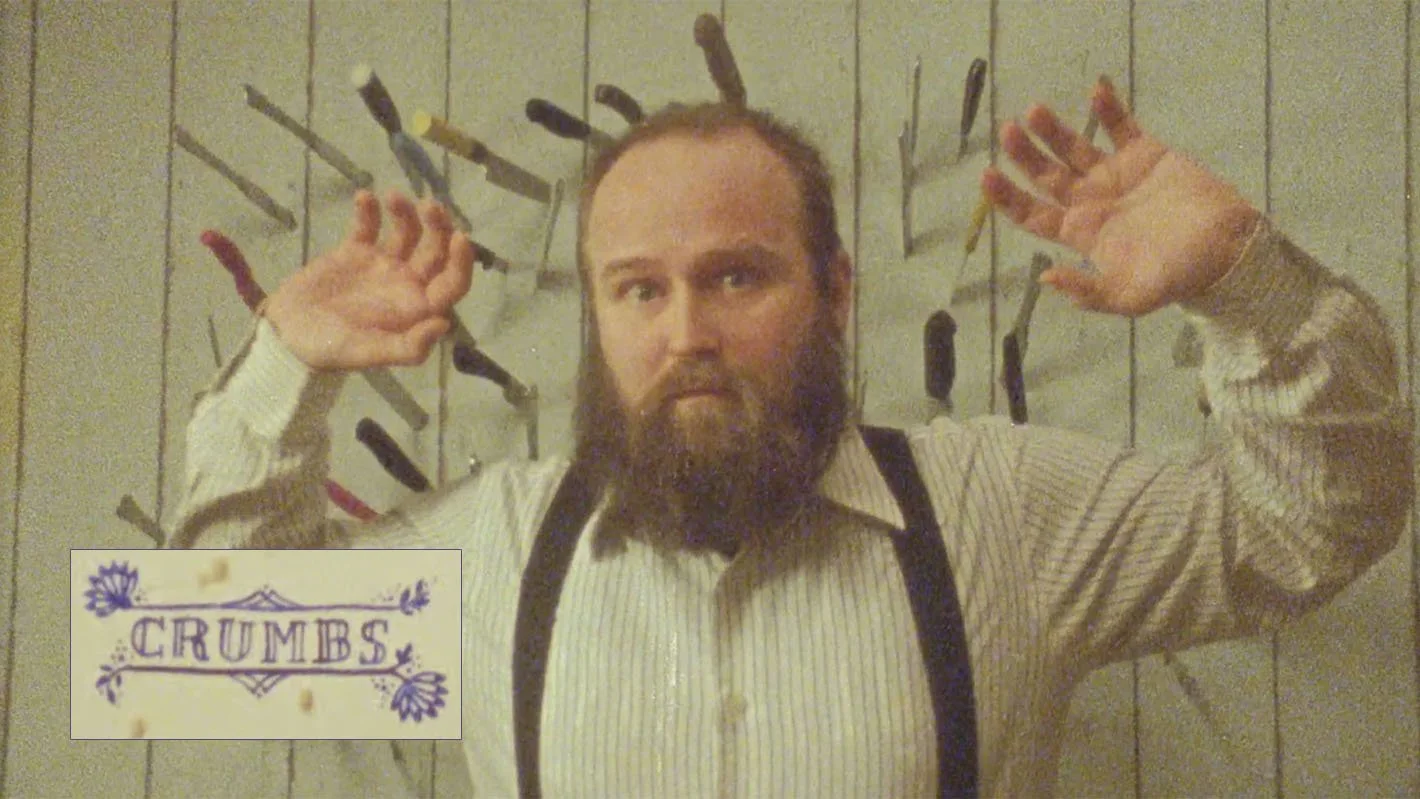
Crumbs
Tired of her husband’s noisy and messy eating, a wife starts a stop-motion battle and packs her bags.

Directed by Robot Chocolate (Gabriela Plačková & Robert Hloz)
Produced by Alexandra Kara Moravčíková
Tired of her husband’s noisy and messy eating, a wife starts a stop-motion battle and packs her bags. CRUMBS was made entirely in-camera for Straight 8's 2020 competition on one cartridge of super 8mm film with no post-production. Find out more about their unique filmmaking process in our interview below.
Want to make a super 8mm film? Check out Straight 8.
READ OUR INTERVIEW WITH ROBERT
Tell us a bit about yourself and your filmmaking background.
Hi, I am Robert and I am commercial and feature film director and I love when a movie can transport me to a different reality. Somehow when I was really young I promised to myself than I want to bring the joy I had from films to other people too and sticked. My (now already) wife Gabriela is a stopmotion animator and my partner in crime on Crumbs and was our first artistic child.
Tell us about the genesis of Crumbs? Did you have the concept in mind before deciding to join the Straight 8 competition or was Straight 8 the catalyst for the concept?
NO! We totally just heard about the idea and went crazy about how far can we push the medium. The question was how can we use the limitations to create something the would be impossible to do without the constraints?
Had you ever previously shot on film before? If so, can you tell us about that?
I shot a short scifi movie Transient Consciousness on a film stock. But that was a bigger crew so I didnt even touch the camera, this one was so much hands-on. Still I know very little about the whole exposure stuff so I totaly trusted our DoP Ondrej Nedved who did a great job navigating us through all the obstacles. It was his first 8mm experience as well, but he is a prodigy of stopmotion so I knew we were in good hands.


What was the biggest challenge in making Crumbs?
We were afraid of how all the special effects and flying knives on quite complicated rigs gonna work, but that turned out to be a great fun and collaborative effort that worked amazing. And vice versa we have been so sure we have the sound sync sorted out and boy, that was micromanagement nightmare. We had no idea if it is gonna be all in sync till the premiere.
How long did the stop motion process take?
I think we squeezed about one week of work into a three days of real time.
What was the biggest challenge with in-camera editing?
Never to forget to push the trigger both on the analog and the digital camera during thousands of frames. We used two cameras for syncing of the sound and with the amount of technical detail with very DIY conditions there were times of panic and leap of faith when you just hope you listened your muscle memory and automatically pushed all the right buttons even if you don't actually remember it. It is a true miracle and I still can't believe that the movie is in sync till the end:))


How did you handle creating the sound design for the film without watching your footage?
We made a custom camera rig for the analog and digital camera so both could sit next to the other with almost the same field of view. And then recorded frame by frame the same frames simultaneously. So we had a digital copy of the film available for the sound design. But still with a lot of analog-related complications, there were many moments of uncertainty if the cameras are actually in sync.
Tell us about the journey of getting your film to audiences.
The movie started to life its own life after the premiere and the Straight8 team helped a lot with that. Originaly, we didnt think the movie could be interesting to anybody outside the competition as the conditions were so specific, but we got a feedback from all around the world that floored us.
Words of wisdom. What advice would you give to other filmmakers?
When someone tells you that your plan can't possibly work, you know you are on the right track.
What are you working on now?
I am finishing my first feature movie, Restore Point, a scifi set in central Europe which is a kind of a this thing that few years ago everybody knew was an impossible dream. And now the teaser coming out in a month. I am writing this from a final sound mix session. It is an incredible experience. Imagine a world where you have the perfect insurance, so when you die prematurely, let's say a car hits you or someone shoots you, you wake up revived and continue as nothing has happened. Restore Point shows you how the society reacts and if the humanity actually deserves second chances.
Any film recommendations that we should add to our watchlist?
People who dont like the original Top Gun or Tom Cruise should see Top Gun 2, seriously.
Interested in getting your work selected?
eureka!
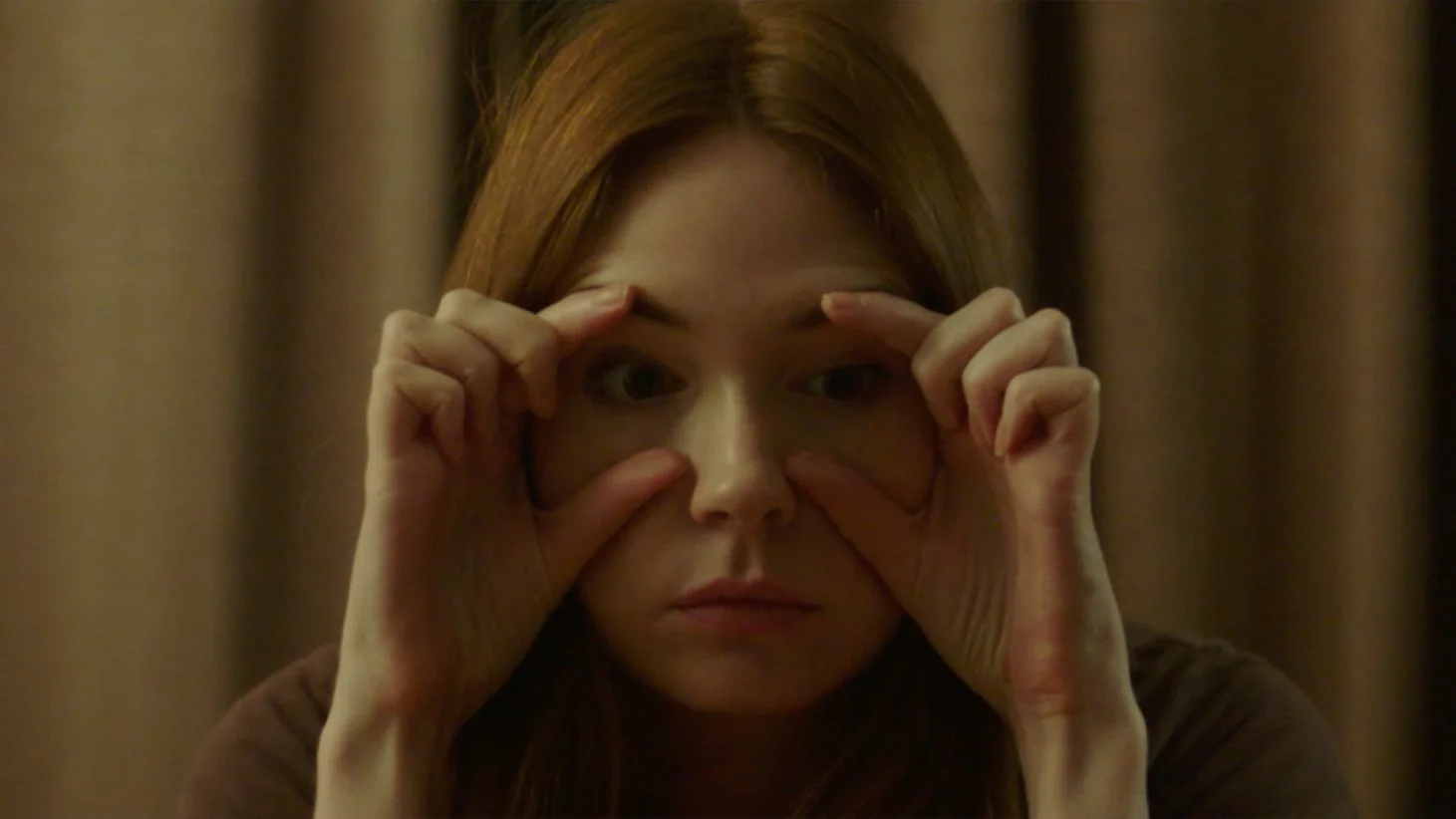
A lazy, uninspired woman (Karen Gillan) is visited by an otherworldly being responsible for giving humanity all its great ideas.
Directed by Laura Moss
Written by Nick Kocher
A lazy, uninspired woman (Karen Gillan) is visited by an otherworldly being responsible for giving humanity all its great ideas.
eureka! premiered at the Tribeca Film Festival as part of an anthology called Neurotica, and recently premiered online on Dust.
ABOUT THE FILMMAKERS
Laura started out in the film industry doing prosthetic and effects makeup. They wound their way through the industry as an art director and production designer. Laura just premiered their debut feature Birth/Rebirth at the Sundance Film Festival in January.
Nick went to school for acting and his early career included making youtube sketches under the name “BriTANicK” with his friend Brian McElhaney. Nick has written for Saturday Night Live, performed at the Edinburgh Fringe, continued to act in films and television, and has various writing projects in development.
READ OUR INTERVIEW WITH LAURA & NICK
Tell us about the genesis of eureka!. What inspired the film and how did the project come about?
Nick: The idea came from me wondering about the very nature of ideas themselves. Where they come from, and where they go if you don’t bring them from your brain into the real world. I wondered how many times throughout history the cure for cancer has popped into somebody’s head and then they just, like, forgot it or they didn’t want to put in the work to really flesh it out. I struggle constantly with procrastination and not seeing things through, so in some ways I was writing this script to therapeutically encourage myself to finish more of my dumb ideas (this short film included).
I had met Laura a few months before and had really enjoyed both of their shorts (Fry Day and Allen Anders: Live at the Comedy Castle). In the past, I’ve co directed everything I’ve written with my writing partner, but for this I wanted to take more of a backseat and see what a director from outside the comedy world could do with my material, and I was thrilled with the life Laura breathed into everything.
Laura: I knew Nick for a little bit and was honored when he asked me to join the eureka! team. I was really struck by how fast and funny the script was, while still having actual depth to it. I was instantly hooked.
Can you talk about casting eureka! At what stage did Jon Bass and Karen Gillan come on board the project? Were the roles written for them or, if not, what attracted them to the material?
Nick: I very much had Jon Bass in mind when I was writing the part (I mean the character is fully called “Jon’). He’s an old friend of mine and I’ve always been a fan of his work. Karen and I met when I was about halfway through the script, and I thought she would be great as Chloe (largely because she’s great in everything). Luckily both of them loved the script and immediately wanted to be involved.
Laura: We had this dream cast who also happened to be friends. I had the chance to play around and rehearse a bit with Karen and Jon before we shot, but I met Jillian and Karan the morning of, and they were amazing. They all knew each other, knew Nick, and it led to a really fun, relaxed environment on set that it usually takes more time to create.
What obstacles did you overcome while in the making of this film?
Nick: Laura had to deal with all the technical problems that pop up, so for me it was just the standard crippling self doubt.
Laura: For me it was one of the most common obstacles when you’re dealing with indie filmmaking: not enough time. We shot this 25-page script in three days, and at that breakneck pace I really had to rely heavily on Ben Rutkowski, our DP, and the prep work we had put into this to make sure it still had a cinematic quality. Karen, also, is a machine. She’s done so much - I had never had the chance to work with someone so technically proficient before. She would drop in, stay present, hit every mark, and find the humor in every scene without playing the humor. We never could’ve gotten this done if she wasn’t so lighting-fast.
So eureka! was first released at Tribeca as part of an anthology called Neurotica, correct? Can you tell us more about the journey of getting your film to audiences?
Nick: Yeah, so basically we just lied to Tribeca and told them it was a pilot to an anthology series because no one would ever have programmed this long of a short. THAT BEING SAID, it wasn’t a total lie because I would absolutely have loved to write a comedy science fiction anthology series, and this absolutely could be one of the episodes. It also ended up being sorta true, because after the festival a major network put “eureka!” into development as a narrative series featuring the “Jon” character visiting various humans and getting them to implement their assigned “ideas”. It was then in development for so long that everybody at the network who liked the project ended up leaving for other jobs, and so it just kinda petered out.
Laura: The short film universe, especially when it pertains to festivals, is pretty limited. A long short (ours is 20 minutes) is particularly difficult to program - it has to anchor a program and it’s one film potentially taking up the space of two or more pieces. The fact that Tribeca and other major festivals have been opening up their programming to include TV pilots and web content is huge: It allows works of this kind of length to reach an audience.
What do you think is the biggest challenge short filmmakers face trying to break into the industry?
Nick: I think the MAIN challenge for anything is just your own crippling self doubt. I believe if you just keep making good stuff, you’ll eventually break through. In the short world, I think it sucks that there aren’t more places that will pay for short films out there. If there were more established homes for short films, I think filmmakers would have an easier time raising the money necessary to make them.
Laura: I think right now it’s breaking through the noise. It’s easier now than ever to create good-looking content, but there’s just so much out there. A short film can be a calling card that helps you break into the industry, but it’s hard to find a way to make your work stand out.
What advice would you give to short filmmakers looking to use shorts as a way to launch them into a feature film career?
Nick: A lot of people use shorts as a proof of concept for their feature, or as a showcase for their own abilities. Which is fine and great and a totally valid way to approach them. But I would also encourage them to really think about and take advantage of the medium. I think the best short films come from ideas that could ONLY be short films.
Laura: I always suggest to young filmmakers seeing a lot of shorts that have been programmed at major festivals. You can find a lot of them online, or become a screener for a festival if you can. It’s helpful to expose yourself to a lot of work, to identify what you respond to. To really experience what feels new and different, and what kinds of things you see repeated over and over again - what well-trodden territory to avoid.
What are you working on now?
Nick: I’m working on a bunch of stuff with my writing partner that’s all at very different stages. We’re doing a final polish on a feature we sold a year ago, a second draft of a multi-cam sitcom for FOX, and we’re just starting to outline a low budget feature that we plan to direct later in the year.
Laura: I’m just finishing up my first feature, birth/rebirth, which was produced by Mali Elfman, who produced eureka! It’s a modern-day Frankenstein-inspired body horror, starring Marin Ireland and Judy Reyes, and it’ll be premiering at Sundance in January 2023.
Any film recommendations that we should add to our watchlist?
Nick: Laura Moss’s Birth/Re-Birth! And also, this came out in 1991, but I recently watched and loved “A Brighter Summer Day”.
Laura: Thank you Nick ;) Speak No Evil was my favorite movie of last year. It’s so funny and uncomfortable and horrifying, while being strategic and economical in terms of the violence it actually shows.
Apply to get your short selected as our Weekly Pick
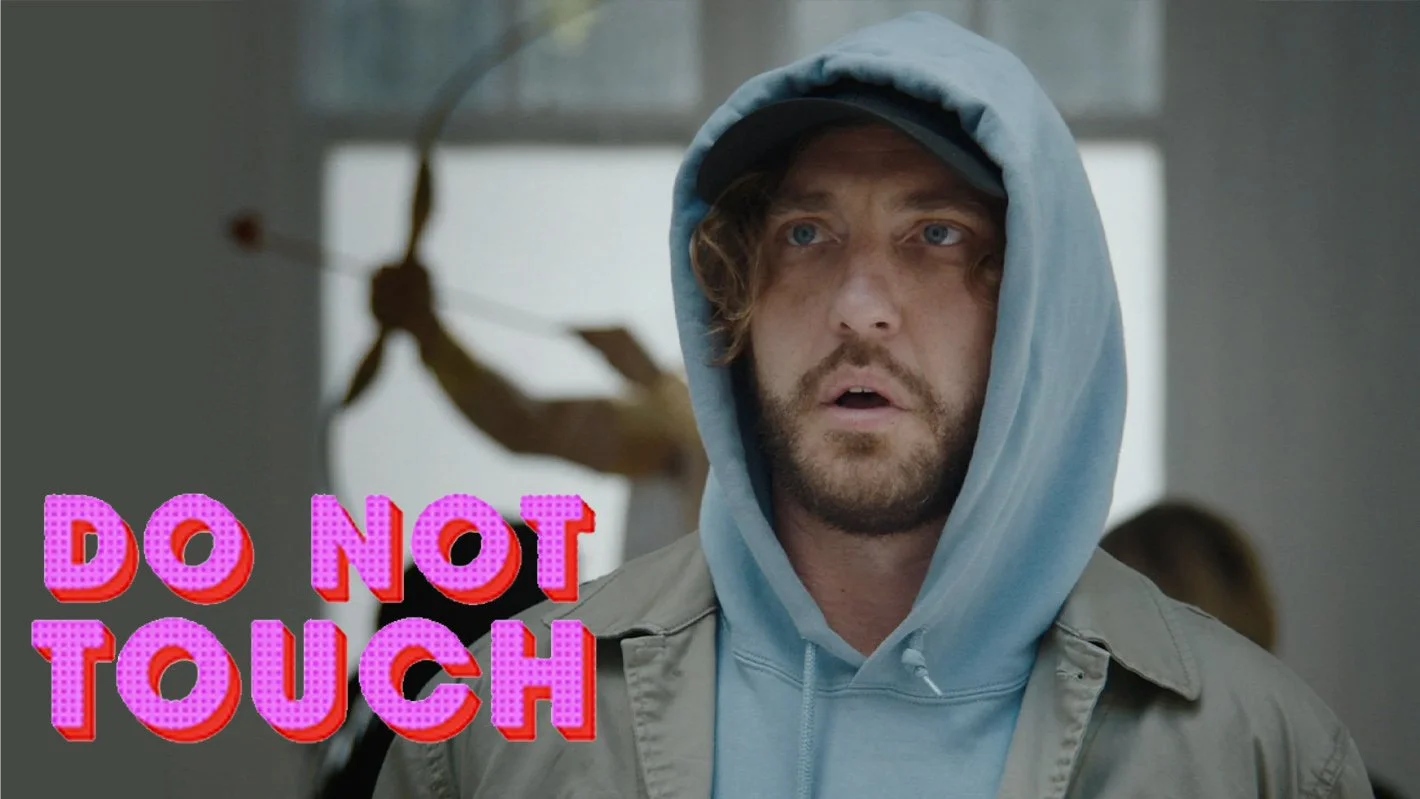
Do Not Touch
An adulterer (played by Seann Walsh) discovers his one-night stand is now the subject of an art exhibition to which his girlfriend has tickets. He must destroy the artwork before it destroys his relationship.
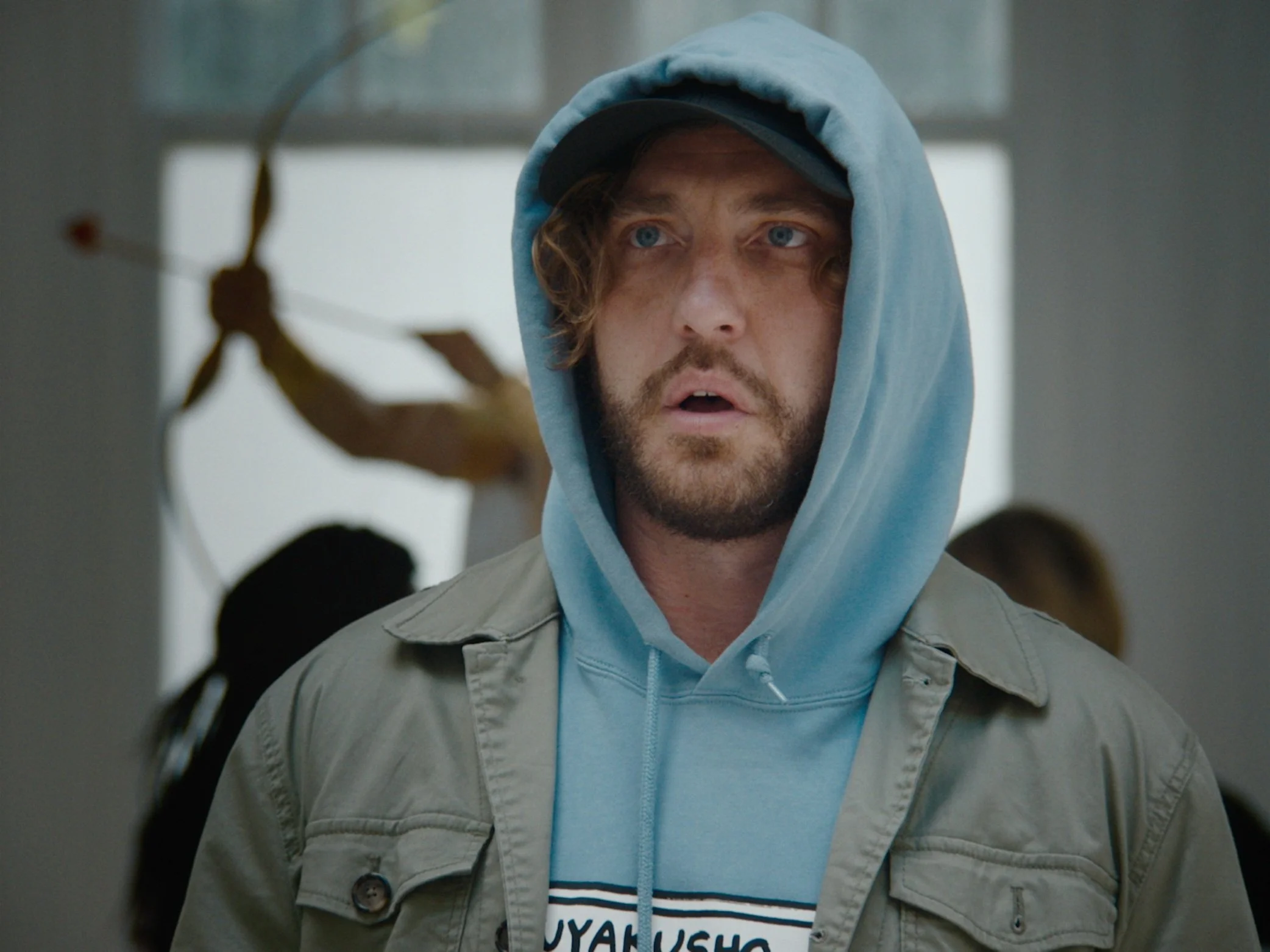
Directed by James & Harrison Newman
Producer Alex Waterhouse
An adulterer (played by Seann Walsh) discovers his one-night stand is now the subject of an art exhibition to which his girlfriend has tickets. He must destroy the artwork before it destroys his relationship.
ABOUT THE FILMMAKERS
James and Harrison Newman won the grand prize at the 2022 Kino London Short Film Festival with Viskar I Vinden unlocking our film fund. DO NOT TOUCH was produced summer 2022 and is fresh off the festival circuit.
READ OUR INTERVIEW WITH JAMES
Tell us about the genesis of DO NOT TOUCH? Where did you get the idea and why did you choose this project to focus on?
"Do Not Touch" was always just a dream sitcom episode in my mind. I always thought it would be a shame if we never brought it to life. But, it wasn't until I was isolated that I realised it could work as a short film. The inspiration came from Tracey Emin's artwork "Everyone I Have Ever Slept With 1963–1995". I had initially thought the artwork displayed the used condoms of everyone she'd ever slept with, but I was wrong. It was actually a tent with names stitched inside. However, that false memory was a great source of inspiration for the film. The reason we chose this is that it was completely different to the first short in terms of tone, this is a bit more of a straight comedy than Viskar I Vinden. We needed to do something different and ultimately have fun doing it, because if we’re not having fun - what’s the point?
Watch Behind the Scenes
Tell us about your experience winning the Kino fund and how it changed the way you approached making Do Not Touch? Would you still have put it into production at a lower budget or would you have continued to pitch it around?
It's a good thing the Kino Production fund came to our rescue! Without you guys, we would've been stuck twiddling our thumbs, trying to figure out how to make a short without breaking the bank. We were down to the last pound, and with the additional £2K we put into making this. I don’t think we would’ve shopped it around, I think we would’ve done a cheaper idea and gone ahead with that. So without you, this wouldn’t have happened.
What were some of the main obstacles you experienced when making Do Not Touch and how did you overcome them?
Do Not Touch was probably the most fun I’ve had doing this. We were really blessed with everyone, everyone wanted the best for the project and we were pulling in the right direction. I think the biggest obstacle was initial casting and getting the right people for the right roles in pre-production. We brought someone on board and it didn’t work out, but in the end, I think it was the best for both parties. We’ve learnt some lessons and how we approach casting in certain scenarios.
How did you secure the cast for the film?
It all started at the Crystal Palace Film Festival, Sofia, Tom and I met the brilliant Seann. He liked our first short and he agreed we could send him the script, and the rest is history! Seann brought Charlotte on board, and before we knew it, we had our dream team in place. We found Ingrid, Blair, and, Julia on casting websites, just like that. It was almost too easy, everyone killed it. And to top it all off, Ollie a friend from school was sweet enough to fill in as the cupid statue, what an absolute thirst trap. We couldn't be more grateful for everyone who has been a part of it.
Tell us about your festival journey. Any tips and tricks for other filmmakers?
Definitely! One great way to get your film in front of the right people is to find a film that's similar in genre or style to yours and see where they've played. Take note of the film festivals they've entered and won awards at, and consider submitting your film to those same festivals.
It’s a bit cheeky, but fuck it – you don’t want to waste loads of money on festivals that won’t accept you.
What do you think is the biggest challenge short filmmakers face trying to break into the industry?
It’s a closed circuit in this industry and you’re at the behest of gatekeepers. You’re working with such limited resources and at these festivals, you’re up against the BBC, BFI, Film4, and filmmakers with actual backing. The biggest challenge is competing and standing out. A key component for filmmaking is time, money and resource. You’ve got to make the largest impact with the least amount of resources and you’re competing with people who do have that resource. The biggest challenge is trying to get your work seen by the right people. I think people have to remember there’s a lot of luck that goes into this and it necessarily isn’t fair.
Any film recommendations that we should add to our watchlist?
All of the work of Nathan Fielder. The Rehearsal, and Nathan For You, it's hilarious. Also, check out Extraordinary on Disney plus; it’s ace.
Interested in getting your work selected?

Kino Short of the Week - Best of 2022
That’s a wrap on our Short of the Week series for 2022. If you’re looking for indie alternatives to add to your holiday watchlist, why not dip into our archives?
That’s a wrap on our Short of the Week series for 2022. Let’s take a moment to look back on some of the amazing shorts and filmmakers we featured on our online showcase.

10. SMASH AND GRAB | Written, Produced & Directed by NEIL LINPOW
Four women race a ticking clock across a bustling city, readying themselves for the ultimate Smash and Grab showdown.

9. PETRICHOR | Directed by Louis-Jack | Written by Kenneth Emson | Produced by Morgan Faverty
A washed up, former wunderkind of the snooker world has one last chance to revive his career. Battling with addiction and the ghosts of his past, there is more at stake than just the score.

8. MIDNIGHT DELIVERY | Written & Directed by Nathan Crooker | Produced by Nathan Crooker, Jake Silbermann, Mayumi Tatsuta
When a mysterious gift is delivered to an unsuspecting woman’s door at the stroke of midnight she unleashes a sinister evil from within.

8. true value | Directed and Produced by Alix Austin
| Written by Keir Siewert
A university student with an unusual part-time job collides with her tightly wound client in this beautifully dark crime thriller.
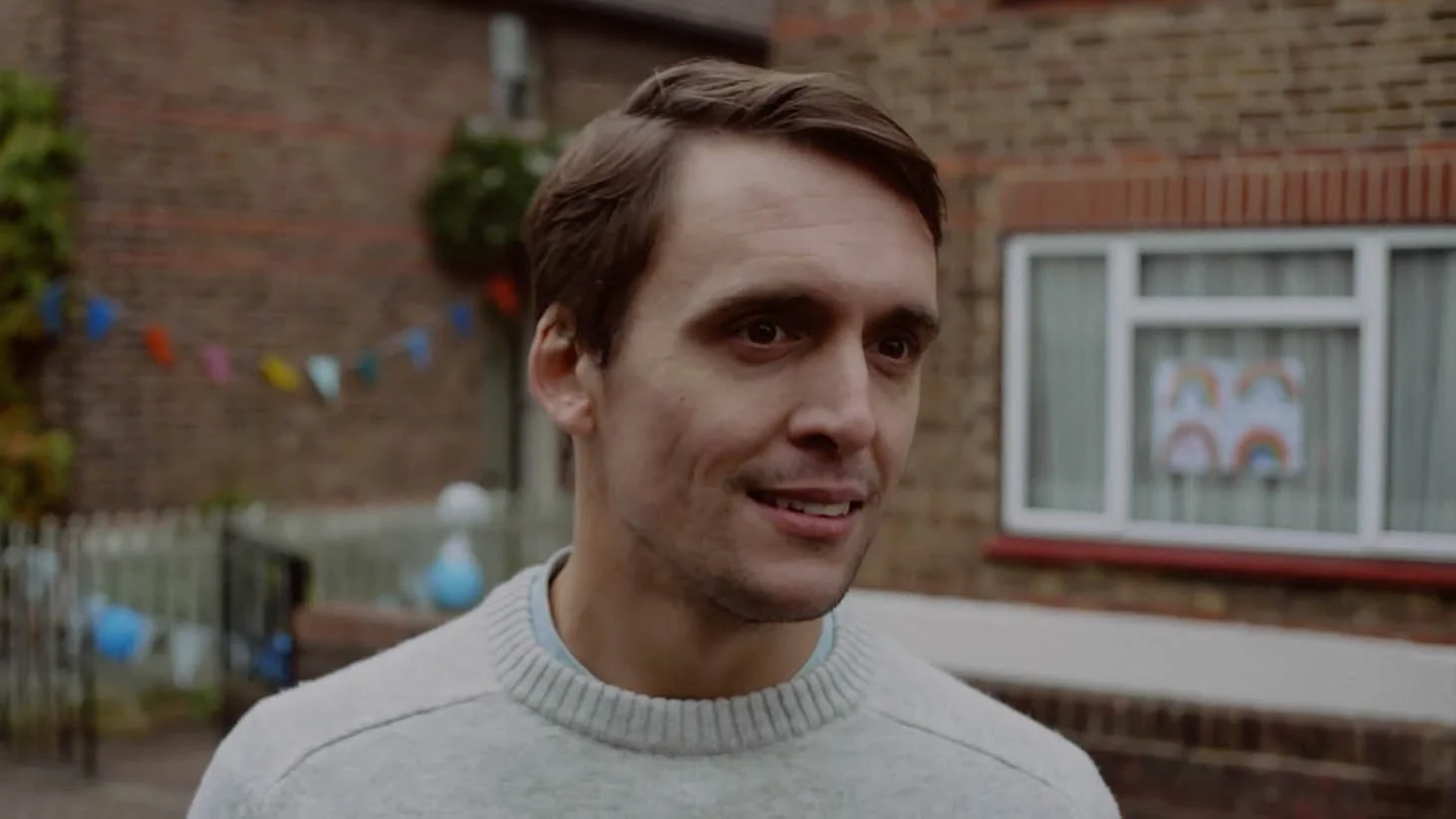
7. THANK YOU SO MUCH | Written & Directed by TOMASZ FRYMORGEN | Produced by TOMASZ FRYMORGEN & BRIANNA FERGUSON
It’s 8pm on a Thursday evening and the Clap for Carers is about to begin. Two neighbours battle it out to be the loudest, most grateful and most virtuous residents on the street - until someone finally calls them out. Will they swallow their pride and apologise, or will they silence the upstart who’s dared to embarrass them?

6. LOVE YA LIKE POISON! | Directed by Max Azulay & Rosie Yadid | Written by Rosie Yadid | Produced by Sarah Epstein & Rosie Yadid
Twenty-something Louise returns to NYC after university abroad. She is reunited with her firecracker of a Jewish mother, Nadine, and their relationship seems to pick up right where it left off.
While Nadine wants her back for good, Lou is desperately trying not to get too comfortable. When she reveals news of her engagement, old wounds are reopened as Nadine reveals secrets about her own failed marriage.
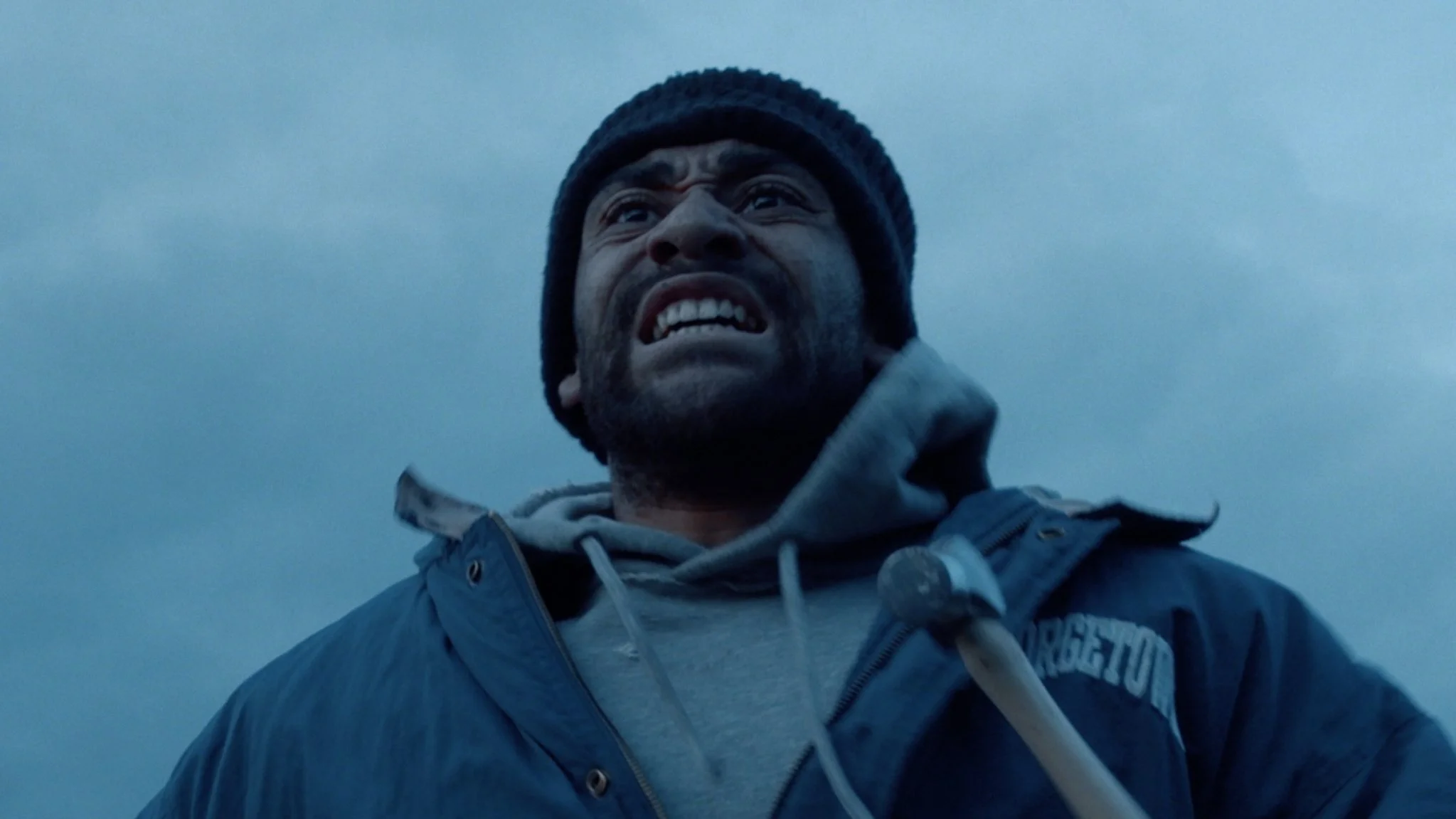
5. BULLDOG | Written & Directed by Kieran Stringfellow
| Produced by Tasha Williams
After spending the night in a cell, a rough sleeper has a score to settle.

3. VISKAR I VINDEN | Written & Directed by James Newman | PRODUCED BY James Newman & Harry Newman
Matilda is a forensic investigator gathering evidence at a crime scene, where an elderly man's body lies dead, gruesomely murdered by an unknown person.
It seems just another day on the job, and Matilda is told by the detective to get things done, though Matilda seems eager to take the detective role herself. When the corpse decides to communicate posthumously with the investigators in an unusual, decidedly earthy way, Matilda takes it upon herself to do some investigation on her own.

2. SAFEKEEPING | Written & Directed by DAVID YORKE
Produced by DAVID YORKE & PHIL BEASTALL
Young teen Jessica and her kid brother Charlie are setting out on a journey. They leave behind a dark, unsettling home life and set out into the larger world with few belongings. The countryside they travel through is idyllic, stretching out around them in a pastoral, seemingly peaceful expanse. Together, they make a stop at a place they once enjoyed in simpler, happier times. But all is not what it seems, both in the world and between the siblings, as they embark on a trip that will change their lives forever.

1. embers | Written, Produced & Directed by Tom Ganley
Alice sits alone at a restaurant, waiting for her date to arrive… Doesn’t sound like an interesting synopsis, but don’t be fooled by it. Embers is an emotionally complex film, winning multiple awards at film festival this past April for best screenplay, best performance in a drama & best first time filmmaker.
Honourable Mentions
Even though these films didn’t make our Top 10 we still think they’re pretty great and well worth a watch.
MILK

TALK RADIO

Submit to our Short of the Week series to be considered for our 2023 season
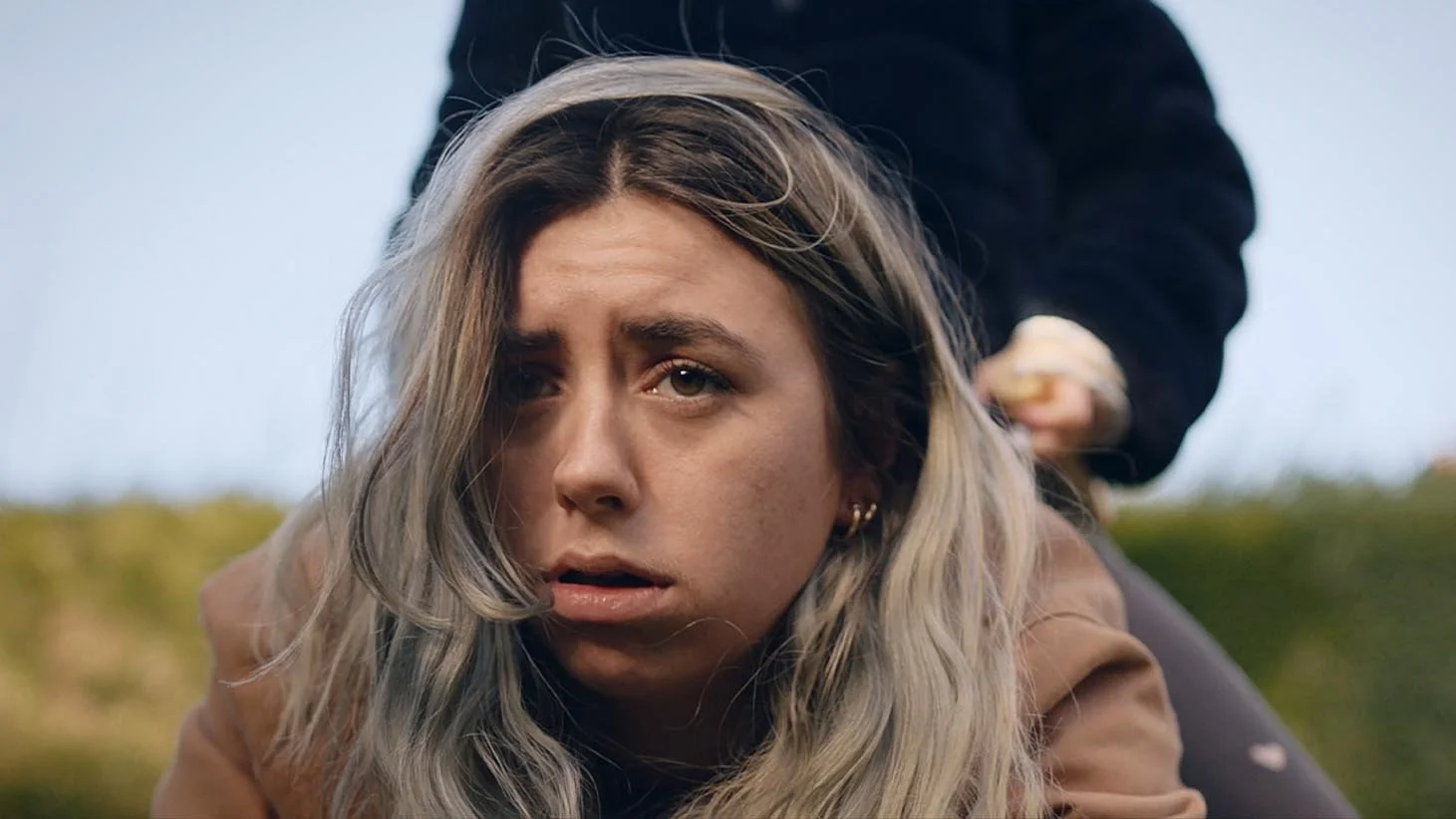
Nanny Neigh Neigh
An unsuspecting nanny is coerced into a game of make-believe. But when the stable doors close, she realises her playmate isn't horsing around.
Directed by Elliot Taylor & Liam Francis
Produced by Lucy Hilton-Jones
An unsuspecting nanny is coerced into a game of make-believe. But when the stable doors close, she realises her playmate isn't horsing around.
READ OUR INTERVIEW WITH LUCY
Welcome back to our Short of the Week series. What have you been up to since we last featured your film A Present for a Good Girl?
Thanks so much for having me back! I've been up to all sorts. Lots of creative stuff but also lots of catching up on life stuff. I've been lucky enough to get some amazing theatre gigs, which took me away from film for a little bit. But I missed it way too much. I'm very glad to be back into the swing of making things myself.
Can you tell us about Greenfingers Films?
Greenfingers Film is a collective set up by four filmmaking pals. We've known each other for years and have always bounced off each other creatively, but only got the ball rolling as a team in Jan 2020. We call ourselves a collective as we feel it allows us more freedom to work collaboratively and with equality.
Tell us about the genesis of Nanny Neigh Neigh. What inspired this film?
The inception of Nanny Neigh Neigh is quite a straightforward one. I worked as a nanny all the way through the pandemic, often playing games of 'horsey'. That job was a lifeline for me in uncertain times, but I often recognised how interchangeable I was to such a wealthy family. How many nannies had come before me? And how many would come after? So this film was a daft little response to that feeling.
What obstacles did you overcome while in the making of this film?
Finding the right kid to play Lavender was tricky. Because the film has some horror themes, we wanted to be extra careful in casting someone mature enough to handle the material but young enough looking to have a nanny. Ella (who plays Lavender) is the daughter of a theatre director I've worked with. When she mentioned Ella was obsessed with horror and wanted to get into acting, I knew she would be absolutely perfect for the role. She's a complete natural! Money was the other obstacle. It's a neverending obstacle. But we made it work with absolute pennies and to be honest, I think working like that has made us better filmmakers. Shout out to everyone that offered their time for free or at hugely discounted rates just for the love of it. We couldn't do it without people like that.
Tell us about the journey of getting your film to audiences and why you decided to self-release online vs venturing into the festival circuit.
We went back and forth as to whether we'd do the festival circuit with Nanny Neigh Neigh, but eventually decided not to. That in part comes down to funding (or lack thereof) and in part because you have to keep projects hidden away for so long when they're doing the rounds at festivals. This film is short and sweet and gives a good indication of our style so we wanted to share it in the hope that it may drum up some interest for longer projects we have in the works.
What do you think is the biggest challenge short filmmakers face trying to break into the industry?
I think getting your work actually seen is the hardest part of breaking into the industry. I still feel like I haven't cracked it. Nowadays, you really have to invest time in creating an online presence, and 'hype' around each project. It's a full-time job in itself and one that none of us at Greenfingers enjoy that much. That's why short film platforms like yours are so important!
What can we expect upcoming from Greenfingers?
At the end of November, we managed to make three new short films in as many days. Not sure whose idea that was, but miraculously it paid off! So they're all in post-production now, and we'll be looking to submit to festivals in 2023. We may release the shortest one straight away like Nanny Neigh Neigh, so keep your eyes peeled on our socials.
Any film recommendations that we should add to our watchlist?
Titane has yet to be topped for me this year. My mouth was on the floor throughout. But in a completely opposing way, Banshees of Insherin gave it a good run for it's money. I'm gonna throw Hail Satan? in as a documentary recommendation. I just re-watched it and it's so much fun.
Interested in getting your work selected as Short of the Week?
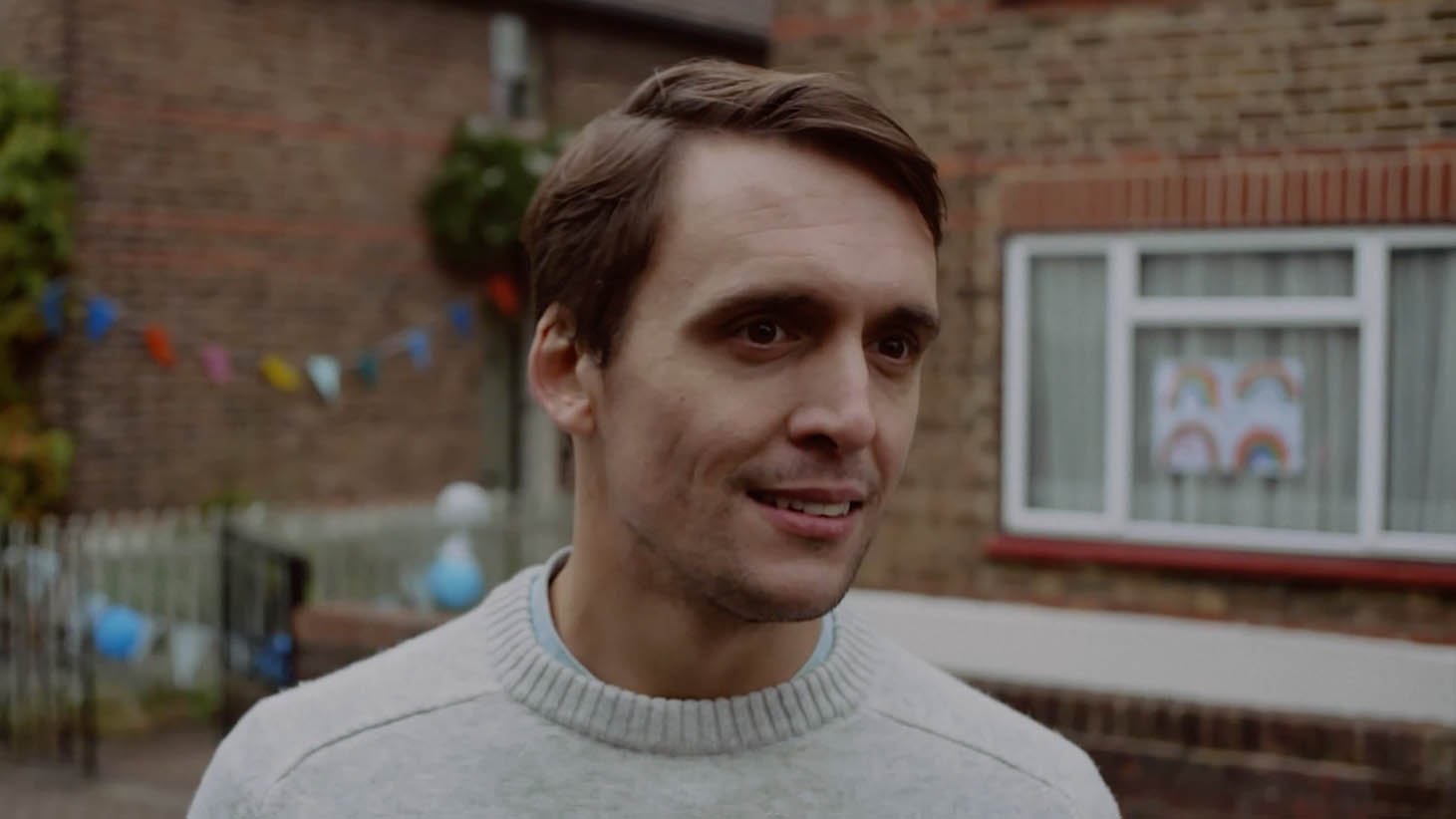
Thank You So Much
It’s 8pm on a Thursday evening and the Clap for Carers is about to begin. Two neighbours battle it out to be the loudest, most grateful and most virtuous residents on the street - until someone finally calls them out. Will they swallow their pride and apologise, or will they silence the upstart who’s dared to embarrass them?
Written & Directed by TOMASZ FRYMORGEN
Produced by TOMASZ FRYMORGEN & BRIANNA FERGUSON
It’s 8pm on a Thursday evening and the Clap for Carers is about to begin. Two neighbours battle it out to be the loudest, most grateful and most virtuous residents on the street - until someone finally calls them out. Will they swallow their pride and apologise, or will they silence the upstart who’s dared to embarrass them?
READ OUR INTERVIEW WITH TOMASZ
Tell us a bit about yourself and your filmmaking background.
I work in broadcast television making documentaries, but I've always wanted to write and direct fiction. When the pandemic hit and the television industry shut down, it felt like a now or never moment. So I made my first short, Thank You So Much.
Tell us about the genesis of Thank You So Much. Obviously, covid was your theme, but what else inspired this film?
I'd say that covid is just the background, rather than the theme. There's actually no mention of it in the film, though it does focus on the intensified behaviour covid produced. My hope is that TYSM says something a bit wider about the coercive potential of performative acts.
What obstacles did you overcome while in the making of this film?
Not knowing how to do anything. TYSM was an opportunity to learn the ropes on everything from unit bases to storyboarding. Luckily there were loads of incredibly capable and hugely generous people around who gave their time and skill to make the film possible and to drag my arse across the finish line. Thank God.
Tell us about the journey of getting your film to audiences.
FilmFreeway is like the most costly dating app ever. You keep swiping right for £30 a pop and they keep swiping left. Brutal. But it only takes that one special programmer...
We also did some things outside of festivals. We had a community screening in the area where the film was shot, and the film had a partnership with Nurses United - a brilliant grassroots organisation of nurses who fight for better conditions. We timed our online launch to coincide with International Nurses Day. The point here was to try and reach people online who you might not find at film festivals - and hopefully who can recognise something in the story of TYSM.
What do you think is the biggest challenge short filmmakers face trying to break into the industry?
Cash money $$$ . There's so little funding available for shorts. I've heard that in some other countries there's more of an infrastructure to support short film - e.g. slots before feature films in the cinema. It would be great to have something like that.
What are you working on now?
I've spent the last year co-writing a TV drama pilot as part of a Screen Yorkshire development scheme called Flex. I also have a short film script I'm hoping to shoot next year.
Any film recommendations that we should add to our watchlist?
This year I was lucky enough to watch Come And See, restored and on a big screen. That film will permanently change you.
Interested in getting your work selected as Short of the Week?

Cross
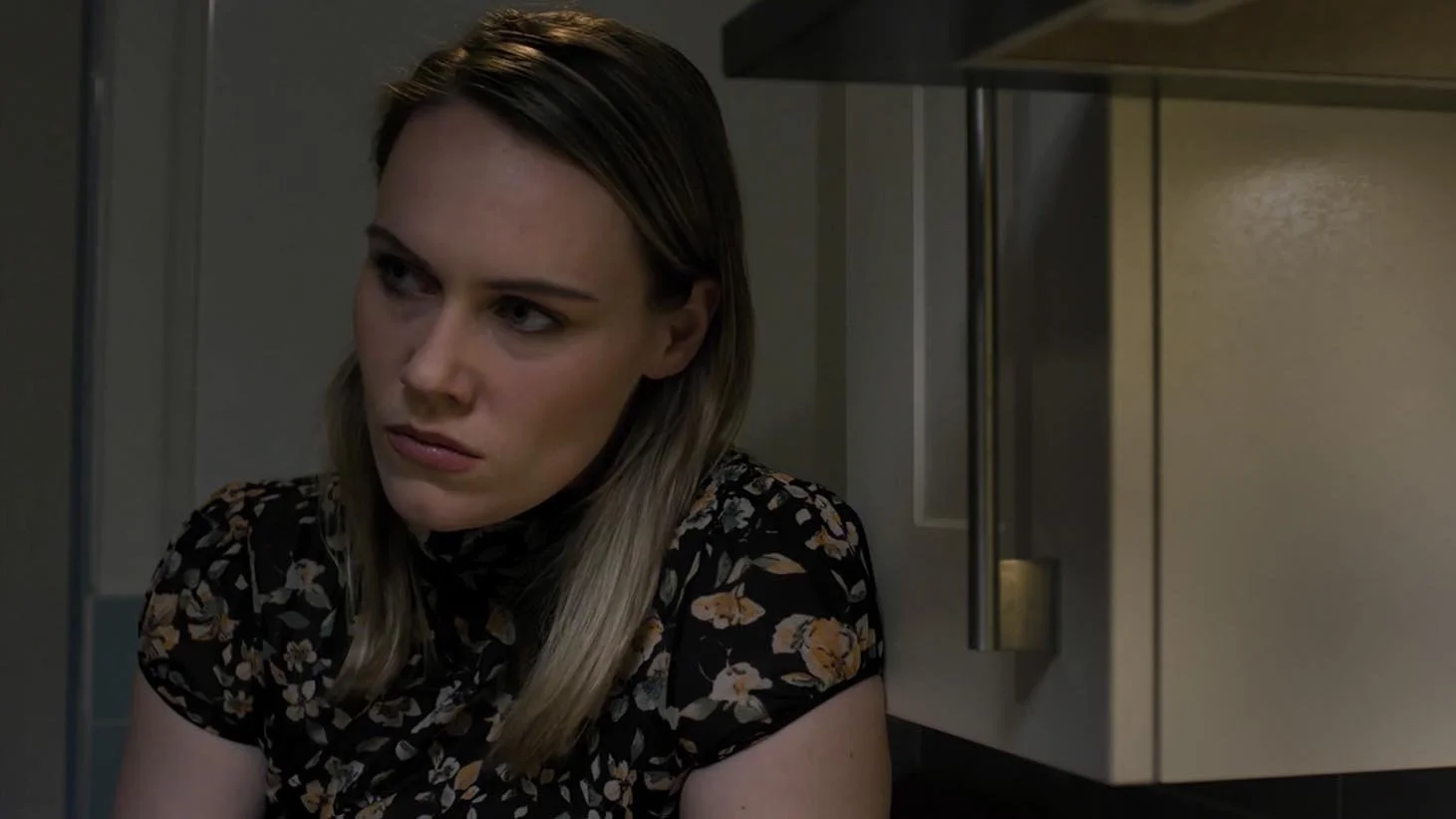
Tom and Kelly have, on the surface, a passionate, loving relationship. But Tom has a shameful secret he is desperate to keep hidden from Kelly.
Written & Directed by GILLIAN HARKER
Produced by DAVID ANTHONY THOMAS
Tom and Kelly have, on the surface, a passionate, loving relationship. But Tom has a shameful secret he is desperate to keep hidden from Kelly.
READ OUR INTERVIEW WITH GILLIAN
Tell us a bit about yourself and your filmmaking background.
I started out as an actor and found that I loved the camaraderie that comes with being on set. I started collaborating with other actors, writers and directors around 2017 /2018 and decided to take the plunge and make my first film in 2019- which was Cross! Since then, I've made a number of short films to hone my craft, widen my skill set and develop my cinematic voice. I love working on Super8 too- I think it has such a nostalgic quality to whatever you shoot.
Tell us about the genesis of Cross. What inspired you to make the film?
Really, at that point, Cross emerged from the need to just make something myself; test what I was capable as a writer and director. I knew I wanted to keep the parameters quite tight: two characters, 1 main location (my old flat!). So, when thinking who these two characters could be, my instinct was that they were a couple. So, then I had to think what the conflict would be? What did I want to examine?
At the time of writing, much discussion and debate had arisen on gender-identity, gender politics and the concept of toxic masculinity- topics which continue to ignite fierce debate. It's something that still feels very polarising,.. and everyone seems to have an opinion on how other people should live. I was keen explore the fluidity of self-expression, - particularly in terms of the stereotypes towards those that stray beyond the 'gender-normative' boundaries. I went down a rabbit hole, researching...just stuff. I don't remember looking for anything in particular in the beginning. I came across an interview from a man who had hidden his need to dress as a woman from his wife for years. Something he said really struck a chord with me: "I can cry when I'm her, but I can't when I'm me. If it wasn't for her, I'd be six-feet under." He talked about his fear and the feelings of shame. They interviewed his wife too. She talked about her shock and distress at finding out. There was so much complexity and nuance with their story- ~I felt that would be worth exploring in my first script.
Tom is terrified of Kelly finding out his secret and once Kelly does, she isn't entirely sure how to deal with the discovery. This ideal of masculinity that Tom appeared to represent to her has been turned on its head and she assumes all sorts about him and their relationship. One of the things I felt strongly about when making 'Cross' was that I wanted the film to not 'explain' away Tom's motives for doing what he does and to not attempt to sum up the behaviour of either character in a neat package. It felt audacious to complete a ten-minute short film of this nature in this way. First and foremost, the film is about love and trust. Male and female roles in relationships are continually evolving and at any one time, one may need to lead and support the other. Often, words fail to articulate complex feelings. Action is what is need to communicate and reconnect. Kelly, in my film, fails to find the words but knows that she can show her acceptance of this other side to Tom.
How did you find taking on the roles of both director and actor?
Ah I really loved that experience!. My lead actor, Ryan Hayes, and I had a great working relationship and natural chemistry so it made things much easier. I had a supportive crew which was what I needed as I was very green in terms of directing at that time. I've made a few more films since then where I've been the actor and director...and actually I find the worst part is when showing it to the audience. I hate it! So, the process of acting in my on films I love. But, the sharing it with the world...I hate! Hah!
What obstacles did you overcome while in the making of this film?
My own brain! That little voice in my head saying 'I'm not really the sort of person who directs!' I will always have that little voice rattling somewhere in the background, but I've made enough short films now where it's getting a bit easier to ignore!
Tell us about the journey of getting your film to audiences.
I really loved the festivals we screened at, but I was fairly naive going in. We applied to 'big festivals’, as you do. We had lots of rejections, but it found a home at some wonderful film festivals across the UK. I'm super proud of what we achieved with my debut short film. We generally had really lovely audiences, picking up a few awards. It resonates with people in different ways.
What do you think is the biggest challenge short filmmakers face trying to break into the industry?
Ultimately, a lot of it comes down to funding. Unfortunately. I’ve made a few super low budget shorts, with most being self-financed- but that isn’t a sustainable way of making films in the long term. In most cases, to make that ‘calling-card short’ we’re all hoping to make, we need a decent ish amount of cash. I think securing finance from brands is the way forward as public funding and soft financing is over super competitive.
What are you working on now?
I'm developing a scripted short film about grassroots girls' rugby league- called Rhino- which I'm super excited about. We're trying to secure the full finance for that. That's always the hard part, right? I’m co-producing a short, stop motion animation with a brilliant filmmaker- I love her work- so hopefully can share some updates on that soon.
Any film recommendations that we should add to our watchlist?
Hmmmm...new films I've seen recently that I'd recommend: Sebastian Lelio's The Wonder. I think Florence Pugh is such a fearless, charismatic, honest performer and I’d pay to watch her read the Argos catalogue!
I feel like I want to recommend some great short films I’ve seen recently, so here goes:
Voices, directed by Abbie Lucas
Suoterapia (Primal Retreat), directed by Santtu Salminen
I Heard You Calling in the Night, directed by Paul Bertellotti
Heart Failure, directed by Will Wightman
Candy, directed by Sarah Grant
Le Pompom, directed by David Hourregue.
Doughnut, directed by Liam White
The Ballard of Olive Morris, directed by Alex Kayode-Kay.
Interested in getting your work selected as Short of the Week?

Hangover Food
After a heavy night out, Bruce want's to get back on it but has a hard time convincing Lee, who feels like death; figuratively and literally.

Directed by Ross McGowan
Written & Produced by Craig McDonald-Kelly, David Hepburn, & Ross McGowan
After a heavy night out, Bruce want's to get back on it but has a hard time convincing Lee, who feels like death; figuratively and literally.
Hangover Food was the first short film by Deadline Films UK. Costing £500 all in. Written, cast, shot and edited within 5 months. Hangover Food went onto 15 film festivals round the world winning 4 awards.
READ OUR INTERVIEW WITH CRAIG
Tell us a bit about yourself and your filmmaking background.
Hi! I’m Craig, I’m one of the writers, producers and cast of Hangover Food. I’m an actor first, writer/producer second. We started Deadline Films UK in 2017 to create our own work, get off our bums and start the films we want to make. Hangover Food was our first, we shot it in a bedroom in our flat for £500 in 1 day in September. We had it finished and hitting festivals by January next year.
Tell us about the genesis of Hangover Food. What inspired you to make/get involved with this film?
The idea came from our director Ross McGowan. Two very hungover friends, but one isn’t actually hungover, he’s turning into a Vampire. We heard that and thought we could make a fun comedy with some horror elements. We wrote the script with our other Deadline Films UK founder David Hepburn and got to work.
What obstacles did you overcome while in the making of this film?
On such a low budget we had to figure out the best way to do what we wanted to do within our means. We had an amazing team of friends on board helping us out.
Tell us about the journey of getting your film to audiences.
We found that Hangover Food went down really well with American audiences. It’s very American style humour. In big theatres people would always laugh at completely different parts of the film. It hit different for some people and we loved seeing that. It’s still one of our most successful films to date. People loved these characters.
What do you think is the biggest challenge short filmmakers face trying to break into the industry?
Waiting around for something before they start making films. Money, the right script, the perfect location, the right actor. We met people who’d been working on a short for 7 years! That’s insane. We made 8 shorts from 2017 - 2020. Admittedly, some are much better than others. But we learned from our mistakes and went onto the next one with all that new information.
What are you working on now?
Over this summer I wrote a mini series based in the same world as Hangover Food. These 5 x 5min episodes should be out next year and we’d like to use that to get the Hangover Food feature film funded!
We wrote the feature during lockdown, reworked it a bunch and now have it ready to go. Unfortunately you can’t make a feature film for £500. We’re hoping the web series will show off what we can do with a minimal budget and the team we have. We want to focus on a great story, directing, acting and cinematography to bring it to life.
Any film recommendations that we should add to our watchlist?
My favourite film this year so far is Everything Everywhere All At Once. Absolutely batshit amazing. The bigger the screen you can watch it on the better. I also just finished Season 2 of an anime called Demon Slayer and it’s one of the most beautifully animated things I’ve ever seen for TV. Season 2 was brilliant.
Interested in getting your work selected as Short of the Week?

A Real Pair
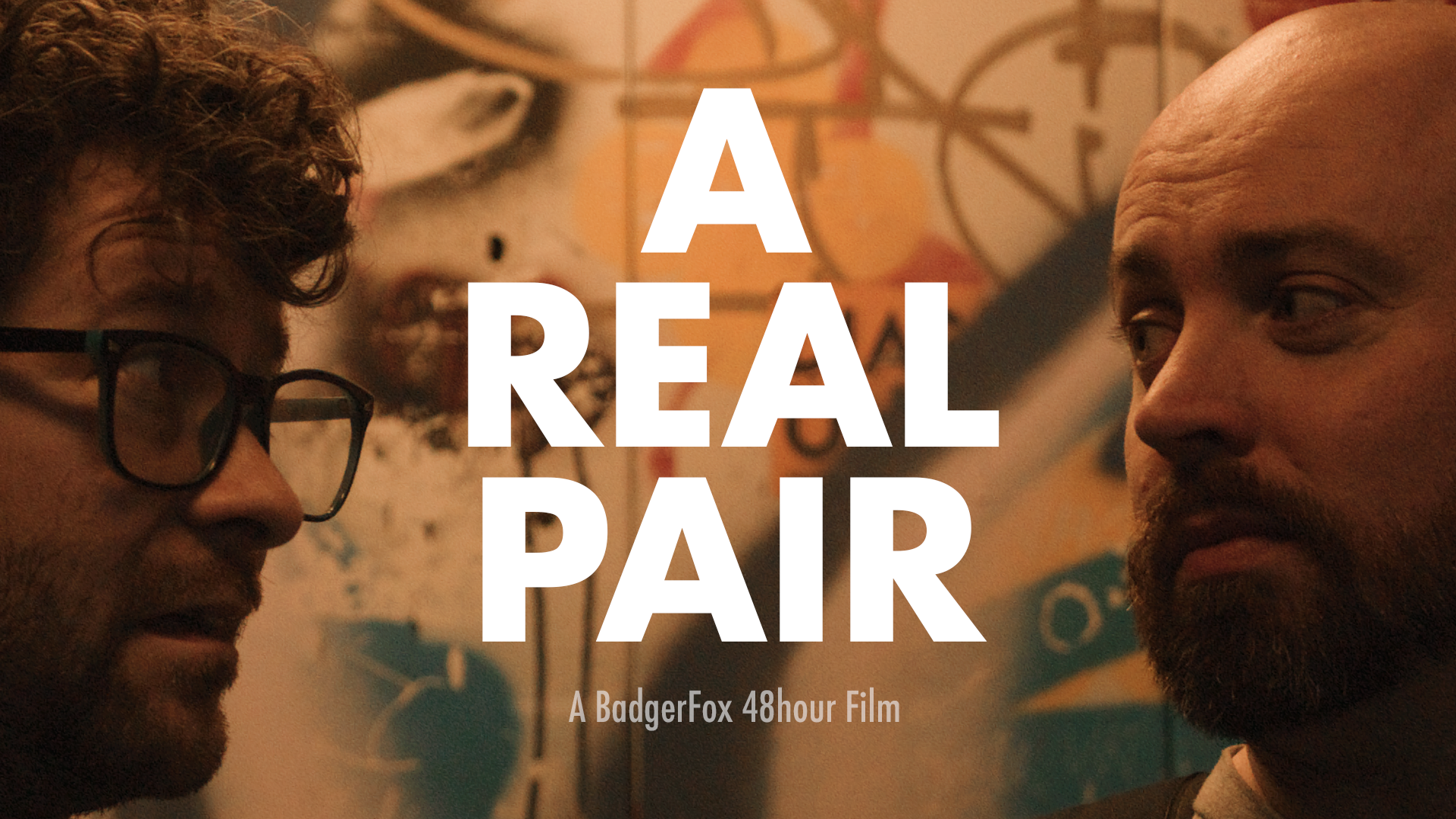
Tony and Archie, best friends and sci-fi fanatics rent out a funky apartment for a weekend on the town, but their host has other plans.
Directed by Ed Willey
Written by Rossella Di Pietro and Ed Willey
Tony and Archie, best friends and sci-fi fanatics rent out a funky apartment for a weekend on the town, but their host has other plans.
READ OUR INTERVIEW WITH ED
Tell us a bit about yourself and your filmmaking background.
I still consider myself quite new to the filmmaking game. At the start of 2020 I tried writing short stories but found myself getting annoyed that I could visualise them so well but couldn’t convey everything I was seeing in my head. A weird epiphany later filmmaking felt like a natural next step. I made my first short later that year on my phone and enrolled in a part-time course at MetFilm to learn how to do things properly. Since then I finished the course with another short, and have done the 48hour competition twice now. Being very new to the industry I enjoy working on other shorts as 1st AD (I love to be organised!) which has been a really great way to meet people. I met both Will and Macaulay (DoP and 1st AC on this film), working on shorts with other directors. Given my day job as a web developer, I’ve found filmmaking very naturally fits into a very technical and creative hole that I get a lot of enjoyment from being involved in all aspects of.
So this isn't your first time making a film in 48 hours. What makes you gravitate to such a challenge?
Foremost, you will end up with a finished film. It felt pretty weird on the Sat after wrapping the shoot saying “I’ll send you the finished film tomorrow” but also really exciting just knowing it will be done. The challenge and the restrictions the competition places on you (random genres, given character, prop and line of dialogue) can be really rewarding. Having to come up with something in such a short timeframe, leaves very little time to second guess yourself, you just have to get on and do it!
What is the most challenging and/or exciting aspect of creating a film in 48 hours?
Time is obviously the biggest challenge. You have to be pretty strict especially on shoot day, setting a hard finish time so you know you have a target to hit. Aside from that, trying to plan for anything and everything. Getting a cast and crew together and finding a location with absolutely no idea what your might be making can be quite daunting. Finding the location this year was one of my biggest stresses, we didn’t find the warehouse appt til I think the week before, definitely not something I want to repeat next year!
Did any pre-existing creative ideas happen to fit the brief for A Real Pair, or did you make the film 100% from scratch?
100% from scratch. We drew the genres of Comedy Horror + Legal Jeopardy (the rules say you can bin one genre) and started throwing ideas around, then the required elements were announced and we felt it was clear we wanted to make silly ‘horror’ and ran with that. There was a bunch of us at our place all pitching in with ideas until we had the basic story beats down, then myself and Rossella locked ourselves away and set about the script.
Would you ever continue working on the film after 48 hours for your own personal satisfaction, or once the deadline is complete do you walk away from making any tweaks?
For me I feel it defeats the point to continue to refine it after the fact, I like to be able to say “this is what we made in 48hours”. Having said that… I did make two very very very small tweaks removing a few frames from a couple of shots in the file that’s now on Vimeo, but I put that down to sleep deprivation towards the end of editing on the Sun! Am really proud of what we managed to achieve this year, the whole team was really awesome.
If you had more time to work on this project, what is the main thing you would like to change/develop further?
We would have definitely liked to have more time to work on the characters/story. The cast did a great job with what we had to work with, but we all felt there was more to explore both with the two guys, childhood friends, a shared passion, where are they in their lives now? And of course, Crystal, how did she get involved in what she's doing, how does she keep getting away with it? We kept joking there was enough of a foundation to work it up to a feature, which is an idea I haven't fully let go of yet...
After a 48 hour competition is over, what's the journey of the film look like in terms of trying to reach a wider audience?
Doing stuff like this? :) Am also submitting to a few small festivals, but it’s a weird one as obviously you’re going up against people who’ve spent months refining their films, so, we’ll see what happens!
Words of wisdom. What advice would you give to other filmmakers?
Collaboration. As a writer/director I find it absolutely essential to be able to be open to ideas from other members of the crew, you don’t always have to go with them, but at the very least be open to hearing ideas. Filmmaking is very much a team sport. By all means, have a vision, but let others collaborate with you to make it the best version of that vision.
What are you working on now?
Am back at the day job while I plan out my next short, ideally want to get something new done early next year, but still kicking around ideas right now. More long term I’m working on my first feature script with plenty more ideas waiting in the wings! And of course, keeping an eye on the job boards for other projects to help out on and meet more people!
Any film recommendations that we should add to our watchlist?
The first thing that popped into my head is ‘Prisoners’ by Denis Villeneuve. It preceded Sicario/Arrival/Blade Runner 2049 which obviously raised his profile considerably. It’s an incredibly tense movie with some outstanding performances that provide uncomfortable viewing at times, but a really beautifully made film. On the other end of things we recently re-watched ‘Popstar: Never Stop Never Stopping’ by the Lonely Island guys, I love everything they do and am very curious about their involvement in the upcoming Naked Gun reboot…!
Interested in getting your work selected as Short of the Week?

Myrrha
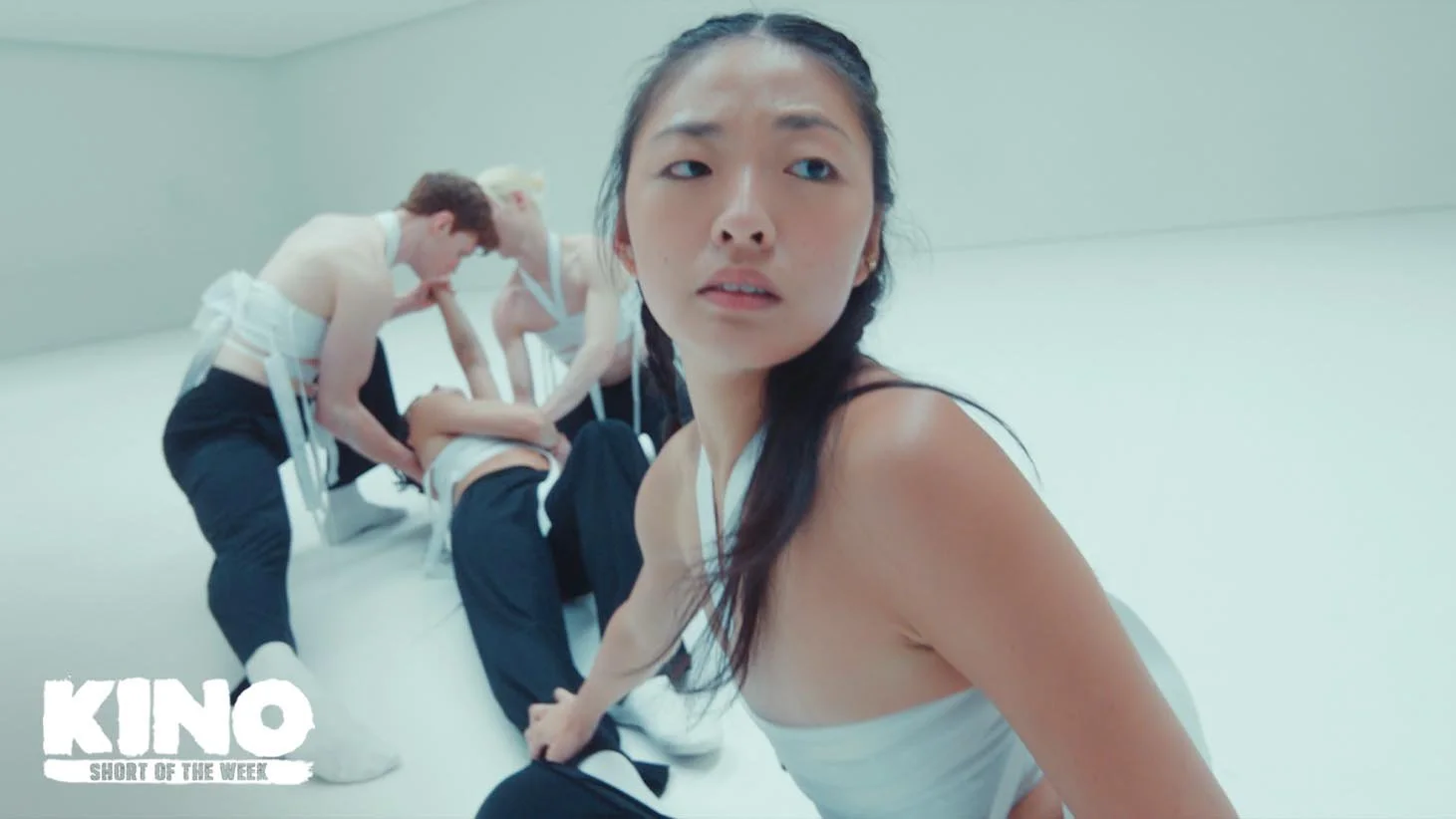
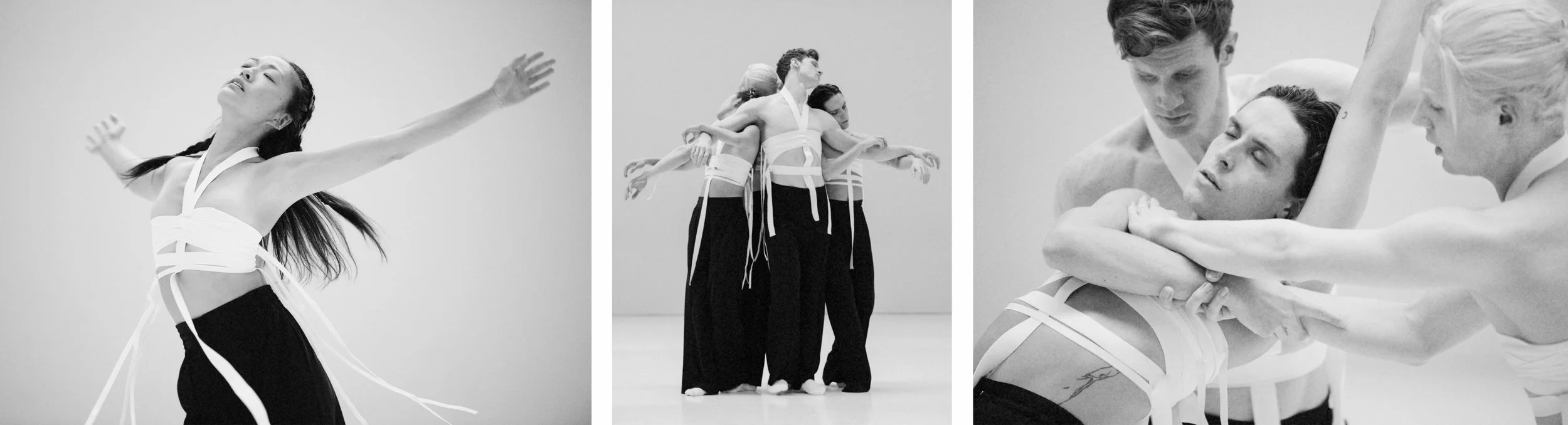
Loosely inspired by Ovid’s ‘Metamorphoses’, ‘Myrrha’ is a vivid fever dream exploring classical themes of fluidity and re-creation from a strikingly contemporary perspective.
Directed, Produced & Choreographed by Katya Bourvis
Created in collaboration with dance artists: J BAUTISTA, ALEXANDER NUTTALL, NOVAYA SHEY and PATRICIA ZHOU
Loosely inspired by Ovid’s ‘Metamorphoses’, ‘Myrrha’ is a vivid fever dream exploring classical themes of fluidity and re-creation from a strikingly contemporary perspective. Invited into the liminal space of Studio Wayne McGregor, the viewer observes a strange cabal of characters as they grapple with the boundaries of identity and gender - and over the course of the film’s three parts, we’re taken on a surreal odyssey of transformation, presided over by the immersive beauty of Ruaraid Achilleos’ camerawork. Supported by a Sadler’s Wells artist grant and featuring the genderless designs of Max Zara Sterck, ‘Myrrha’ is hypnotic and eerily arresting — and marks a powerful solo directorial debut for choreographer Katya Bourvis.
READ OUR INTERVIEW WITH KATYA
Tell us a bit about yourself and your filmmaking background.
I trained in classical ballet before dancing with Stuttgart Ballet, English National Ballet and the Royal Opera House. Later, I started freelancing in a more commercial and contemporary capacity, and worked a lot more for film. During the pandemic, I started experimenting with film and sound, and fell in love with how the body could be captured in moving image; how stories could be told through physicality and immersive sound design. Around this time I transitioned into Movement direction for music promo, branded content and film. My experience in the surreal and imaginative world of ballet and theatre and the sensitivity that I’ve acquired as a dancer has given me my own way of looking and feeling the world, which I feel is a huge attribute to my developing directorial eye. I co-directed and choreographed my first short ‘What are We Doing’ which featured on Girls In Film last April and will be showing at this years Leeds Festival. ‘Myrrha’ is my solo directorial debut.
Tell us about the genesis of 'Myrrha'? How did the project come about?
I started reading Ovid’s ‘Metamorphoses’ during the pandemic and it felt so relevant to the transformative time we were all facing. Rich in imagery and archetype, to me the myths craved a modern retelling and I felt a pull to explore classical themes of fluidity and recreation.In the Summer of 2021 I was afforded a Sadler’s Wells artist in residence grant; this was my first ever choreographic residency, and I decided to use it as the first step in creating ‘Myrrha’. A lot of the choreographic material was generated collaboratively with my brilliant dance artists, using the original text as a jumping off point. It also felt important to me to incorporate my dancers’ personal experiences, so I interviewed each dancer on transformation, gender and artistic identity. We used the interviews to layer intention over pre-existing movement language, which then informed how I imagined retelling the myths.When it came to filming a month or so later, I had a clear vision of the film being a triptych and I wanted it to feel like a fever dream. I owe a lot to Ruaraid Achilleos and Ken Schijf the Movi operator for the hypnotic and immersive camera work. And of course to the incredible Max Zara for creating such striking genderless designs! The project also owes a huge debt to Edmund Roberts, who’s atmospheric compositions form the backbone of the piece’s soundtrack; he was also very open to collaborating with me, and helped me to integrate my own field recordings into his work, building a surreal, but beautiful sound world. It was a real team effort, and I’m still genuinely moved by everyones generosity and contributions.
What obstacles did you overcome while in the making of this film?
I was very naive as a first time film maker and had no idea of what it actually takes to make a film, until I was deep in it! My budget was so low, so I ended up taking the role of choreographer, director, producer and stylist. It was a little overwhelming and I remember being found by a sales woman breaking down in a tiny cubicle in M+S surrounded by about 20 trouser options and being asked to leave as the shop had shut! A low moment! There were many moment like this — but I wouldn’t give up any of them for all that I learn’t and the resilience built… Well maybe a few ; ) It was hard to distance myself from my own creative vulnerability, and not to take things personally. I was working with sensitive personal stories and that takes a lot of awareness. Everything was new to me, it was my first residency choreographing, my first solo shoot, my first editing experience, my first time collaborating with a composer — and it was hard not to give in to doubt. But I was so lucky to have a brilliant creative team who got me through.
Tell us about the journey of getting your film to audiences.
It took a few of weeks of existential crisis - ‘aaah it’s shit… I’m awful… it was all for nothing…’ Luckily Schön picked it up for their platform and minute shorts. Finally, New Renaissance Film Festival have been wonderfully supportive, and it was incredibly vindicating to win Best Choreographer at their award ceremony last month!
Words of wisdom. What advice would you give to other filmmakers?
Work with good people and keep going. Try to zoom out in moments of feeling totally consumed or totally important. Get a producer!
What are you working on now?
I just finished choreographing on another short film and working on an immersive stage piece. I’m taking a little break to re-enter the world after a busy creative period. I hope to return to directing shortly, with a female led short set to a dream pop soundtrack, featuring some really incredible dancers.
Any film recommendations that we should add to our watchlist?
The Pandemic turned me into a bit of a arthouse genre geek - Possession, Les Bonheurs, Suspiria (the 70’s one) and The Night of The Hunter. In fact, all of those have a slightly Halloween appropriate mood. So those three!
Interested in getting your work selected as Short of the Week?

Paranormal Investigators
In a world where ghosts and ghouls aren't a matter of folklore and legend but more everyday pests in need of control, we follow Abi as she embarks on her first day as an intern with the British Paranormal Investigation Team.
Directed by Markus Meedt
Written & Produced by Alex Gibbons and Howard Perret
In a world where ghosts and ghouls aren't a matter of folklore and legend but more everyday pests in need of control, we follow Abi as she embarks on her first day as an intern with the British Paranormal Investigation Team.
READ OUR INTERVIEW WITH MARKUS
Welcome back to our Short of the Week series. What have you been up to since we showcased your last short Werewolf?
Right after Werewolf I got busy with Paranormal Investigators, which we wanted to function as a Proof Of Concept short, to develop into series. I also re-teamed with the lovely team from Werewolf to do another short and a series of sketches, which I hope to be sharing with you soon. And I also got to work with the Royal School of Speech And Drama on a series of short films for the graduation students. But mostly I have tried to do more script writing and bible development, to try and tell more ambitious stories than our short film budgets can handle.
Tell us about the genesis of Paranormal Investigators. How did the project come about?
One of my best friends, Alex Gibbons, who I have worked with on multiple projects introduced me to Howard Perret, who came up with the concept of the short. We all really fell in love with the characters and the world. So Howard and Alex went off and wrote a short that could also work as a condensed version of a pilot episode.
How did you find the crowdfunding process and what tips/tricks could you provide to filmmakers looking to do the same?
Crowdfunding is haaaaard and awkward. Admittedly, Alex and Howard did most of the leg work on getting the crowd funding. Obviously there is the video to entice an audience and the perks. But people don't organically stumble across your crowdfunding page, take the time to watch and read everything and then generously open their wallet. The truth is that mostly people will give you financial support because they know you, or because you successfully managed to talk them into your cause. So Alex and Howard (and the rest of the team) went out and directly approached people, rather than just post about it online. So, the horrible truth is, you can't just plonk it on social and hope for people to interact. You have to interact with the people, and then hope they see whatever you plonked on your socials.
What obstacles did you overcome while in the making of this film?
I love the film we ended up with. And I love the whole team. But holy smokes we ran into a lot of trouble on this one.
Alex Gibbons, who not only wrote and produced the film, was also our gaffer (he is a great Spark and Gaffer FYI). Before the shoot he went to pick up some props, including a large shelf, which fell apart while he was carrying it, slicing through his hand and sending him straight to the ER. So he became a one handed gaffer.
On shoot day 2 I received a call from home with some very sad news. This call came through before we went off to shoot the big comedy scene with Joshua McGuire.
Our Production Designer nearly got impaled by a curtain rod.
Howard had to sort out some location issues while also playing our male lead and doing dialogue re-writes with Alex on the fly.
So in short, most of the challenges we faced this time around, just somehow felt a little cursed at times. I guess the take away lesson here is that sometimes the hardest part about film making isn't the actual process of making the film, but trying to not let the unpredictable chaos of the "outside world" push you off course on your journey. And truly, now we are looking back and are laughing about it.
Tell us about the journey of getting your film to audiences.
Well one way of course is to have KINO shorts talk about the film. Our festival run wasn't as far reaching as we hoped, as the film was finalized in the peak of covid bonanza. But we managed to have a great Cast/Crew/Friends screening at a spectacular London location. The film went down well and just by sheer word of mouth we were invited by some more local film festivals. (Big Shout Out to Leighton Buzzard) Film Festival). The film has literally just gone live on the World Wide Web, so we are excited to see if, how, and where it finds its audience.
What do you think is the biggest challenge short filmmakers face trying to break into the industry?
I think I personally haven't broken into the industry properly. So I can only confirm that it is really challenging to break into the industry. I can't really say what it takes, though, to make it work (yet! If I find out, I will let you know fo sho!). But I would say in the current environment, the biggest challenge is to stay on top of the costs of living while also chasing a dream that requires you to spend a lot of your personal time and money to "create" the tools you need to break in. So while talent does go a long way, there is a certain amount of living costs you need to uphold while you are waiting for your right place at the right time moment.
What are you working on now?
We are in post on our series of sketches at the moment, which need to be delivered by end of November. I am co-writing a YA TV Pilot and developing an R-Rated animated Peppa Pig type series as well as a workplace dramedy. So a very mixed bag of joyful things.
Any film recommendations that we should add to our watchlist?
I just saw The Banshees of Inisherin, which is great (and horrendous) fun.
Interested in getting your work selected as Short of the Week?
Midnight Delivery
Some gifts aren’t meant to be opened.
Written & Directed by Nathan Crooker
Produced by Nathan Crooker, Jake Silbermann, Mayumi Tatsuta
Conjured from the imaginative mind behind the award-winning viral horror short, PLAYBACK, Nathan Crooker's latest supernatural thriller, MIDNIGHT DELIVERY, is sure to leave you second guessing that knock at your door. MIDNIGHT DELIVERY begins when a mysterious gift is delivered to an unsuspecting woman’s door at the stroke of midnight. The woman’s morbid fascination entices her to examine the gift, unleashing a sinister evil from within.
READ OUR INTERVIEW WITH NATHAN
Tell us a bit about yourself and your filmmaking background.
I started as an actor when I moved to NYC. After some time, I became a cameraman on documentaries that were shot in extremely dangerous places around the world. I really enjoyed helping tell these thought-provoking stories. Then I got lucky to make my way into commercials and music videos. Here I could experiment and work with all types of cameras and equipment. After some time, I began making short films and producing features. I really love film, especially the horror genre. It is a unique genre in that we not only get to have fun with these wild, crazy scary stories but also build stories with an underlying social commentary that makes us think and provoke conversation long after the movie ends.
Tell us about the genesis of Midnight Delivery? How did the project come about?
I have always loved 80's monster movies for their camp factor, unique monsters, and jump scares. So I wanted to make a film that would pay homage to these movies I grew up with as a kid. But I needed a monster. So one day, while I was lying in bed, I found it. It had been staring at me for years. On the coffee table, I saw a headdress I had been given many years ago while traveling abroad. Everything about it screamed, "horror movie." I knew it would be a great piece to center the story around. The headpiece in the film is an exact foam replica of the wooden one I owned.
What obstacles did you overcome while in the making of this film?
The biggest obstacle was shooting this film in two days because I had such an ambitious shot list in my tiny apartment in NYC with a four-person crew. Thankfully, we had Danielle Guldin as our lead actress, and she was consistently delivering gold on each take. This allowed me to spend time crafting camera moves that would enhance each scene's dread and scare factor.
Tell us about the journey of getting your film to audiences.
It is always hard to get a short film to audiences. Midnight Delivery did the festival run, and it was very successful, winning awards and screening in film festivals worldwide. But, when the festival run is over, shorts lose their heartbeat. I appreciate Kino shorts for always supporting filmmakers and helping us get our films seen!
What filmmaking tools are most useful to deliver a genuine scare?
I feel it is a combination of a few things. It starts with creating a real sense of dread with your camera movement and using little-to-no music. Then you work in a few misdirects before hitting your audience with the "scare" propelled with strong sound design. James Wan is the master at this.
Words of wisdom. What advice would you give to other filmmakers?
Stay true to your voice. If you're scared to make something, you should make it. Dont' be afraid to fail.
What are you working on now?
I have been lucky enough to sell a TV show this year to a major studio, and we are working on getting it out by the middle of 2023. I am currenlty in pre-production for my feature film Play With Me, which will shoot in February of 2023. I am also working on the feature length script based on my newest short #Nofiter.
Any film recommendations that we should add to our watchlist?
I have so many. Anything in the French Extremist category, especially, Calvaire. I also recommend Naked, Love Is The Devil, Man Bites Dog, Possession, Eden Lake, and Felt.
Interested in getting your work selected as Short of the Week?

Gänger
A dark surrealist comedy in which a girl becomes increasingly intimate with her friendship group.
Written, Produced & Directed by Max Davies
A dark surrealist comedy in which a girl becomes increasingly intimate with her friendship group.
READ OUR INTERVIEW WITH MAX
Tell us a bit about yourself and your filmmaking background.
I grew up making films and haven't stopped since, I don't remember a point in my life that I wasn't making some kind of ridiculous film or film trailer. I was very lucky to grow up with two very close friends who wouldn't consider themselves actors but didn't mind if I stuck a camera in their face from the age of about seven. This allowed me to experiment making rubbish films on phones and ancient camcorders that gradually became less rubbish. I learnt through trial and error over the years and naturally figured out what works and what doesn't, although truth be told I am still figuring that out.
Tell us about the genesis of Gänger? How did the project come about?
Ganger was a film in the back of my mind for a long time. I had just finished college and had dealt with a lot of frustration with certain power dynamics in different friendship groups. The film had loads of different iterations but I settled on this absurd heightened feeling that attempted to satirically dismantle these kinds of dynamics. It definitely came from a very personal place and that gave me the confidence to use my instinct in some of the decisions made throughout the process. I knew from the start this was a film I had to make, even if just to let some frustration out.
What obstacles did you overcome while in the making of this film?
I made this film solo behind the camera - doing the camera and audio by myself while directing. This certainly invited all kinds of problems. The most notable was a particularly challenging day when I had to pan the camera while focus pulling while audio mixing all simultaneously. Usually these can be done separately but this particular shot called for it all to be done at the same time.
Another challenge was the actor who played the boyfriend dropping out the day before, meaning I had to play the role having never really acted while doing all of the technical stuff- there is one point where I am in the shot while zooming with my off screen hand.
We had attempted to get permission many times for the final sequence in the car park, but were met with no luck. This meant we had to shoot very precisely and very quickly, before we got kicked out. It felt more like a SWAT operation than a film shoot.
Tell us about the journey of getting your film to audiences.
Due to the low budget nature of the film and fairly long runtime it was a challenge to get into festivals and at the time we only had the budget to apply to a couple. I posted the film to Reddit on a whim and it was met with a really warm reception and gained many more views than I was used to getting. It really connected there and found a surprising home.
Words of wisdom. What advice would you give to other filmmakers?
Don't wait around. There are always ways of practising your craft. Read loads. Start small and get bigger. Make sure you are writing to your limits. Don't be afraid of failure. Remember your vision is unique and don't be afraid to champion it. Let ideas brew. Keep notes on your phone.
Many of them may well be cliches but you know...
What are you working on now?
I've just finished writing a feature and I'm now developing a new comedy short that I'm very excited to start filming at the beginning of November.
Any film recommendations that we should add to our watchlist?
Of course. Here is one of the least cohesive lists ever:
- A Woman Under The Influence
- What happened was...
- A Palm Beach Story
- Eyes without a face
- Blue Angel
- Holy Motors
- The Science of Sleep
- The Master
- Love exposure
- The Happiness of the Katikuris
- The Long Goodbye
- Dreams
Interested in getting your work selected as Short of the Week?

US
A chef teaches his young colleague how to dance to prepare him for a very special date.
Directed by Marco Santi
Produced by Illmattic Film Group
A chef teaches his young colleague how to dance to prepare him for a very special date.
READ OUR INTERVIEW WITH MARCO
Tell us a bit about yourself and your filmmaking background.
I don't have great memories of when I fell in love with cinema, however I remember well how I started making films: in high school, with friends, making amateur films with bizarre plots. I started filming around 15 and have never stopped. My path has been singular and tortuous, but I had fun and I still enjoy it. I'm a self-taught Italian director, I've always experimented from the very first steps. Over the years I have shot shorts, music videos, advs, without ever forgetting what the only goal is: making movies.
Tell us about the genesis of Us? How did the project come about?
Nother and I are longtime collaborators and friends. When the green light for ''Us'' finally came, we had a very tight request for delivery of the video... I called Nother and said to him we were going to have a music video with people dancing and nothing more. So I listened to the track, I let a few days pass (just to increase the difficulty lol) and I came up with this idea of creating a bizarre and awkward story that could contrast the sensitive and nostalgic musicality of the piece. The process was very fast, but also a lot of fun. I called back Nother when the video was already shot.
What obstacles did you overcome while in the making of this film?
The main obstacles were the short lead time and low budget, maybe the worst possible situation but at the same time you are forced to be pragmatic and to make choices, find solutions and be smart. It's challenging but it's also good training.
Tell us about the journey of getting your film to audiences.
The post-production process was also quick and painless. we knew what we wanted to achieve and we used all the time available, even something more… hehe. 3, 2, 1 and we were already online. The audience's response was positive right from the start and two months after its release the video is still walking. For a tiny project like that this is really good. I thank everyone for the work done and for the support.
Words of wisdom. What advice would you give to other filmmakers?
I am not the man of advice, but what I can say is just to set small or big goals and to work every day to achieve them. This is what I do in my small way.
What are you working on now?
At the moment I'm working on a couple of subjects with a couple of my writing friends. We are looking to experience something new. Let's see... I will keep you posted.
Any film recommendations that we should add to our watchlist?
Among the films I've seen recently, Raw, the previous Ducourneau's movie comes to mind. It moved something in me. I also recommend Audiard's Paris, 13Arr. and Wheel of Fortune and Fantasy
Interested in getting your work selected as Short of the Week?

The Corridor
An endless corridor of locked doors holds a man prisoner as his mind begins to disintegrate.

Written, Produced & Directed by James Mansell
Animator & Executive Producer Hakim Ismail
An endless corridor of locked doors holds a man prisoner as his mind begins to disintegrate.
READ OUR INTERVIEW WITH JAMES
Welcome back to our Short of the Week series. What have you been up to since the last time we featured your film Ruptured?
Thanks! I've been concentrating on writing for the last few years, and developing short film projects. The Corridor was a brilliant lockdown project which we all found very cathartic throughout those rough months, so that kept me very busy. I'm prepping a new short film which I hope to shoot and complete by the end of the year.
So The Corridor is your first animated film, correct? Why did you choose animation?
It certainly is. I've made a lot of animated films for brands but nothing made independently. It was a combination of wanting to work with friend and animator Hakim Ismail, who saw Ruptured and really liked it, and wanted to work on something dark and nasty, and COVID coming along and stopping any live-action shooting for a while. I was heavily inspired by David Lynch's weird and wonderful internet shorts and wanted to do something completely different to what I'd done before, so I had the idea of an animated film. With Hakim, I pitched the idea of The Corridor, which was first meant as a live-action short, and we began developing it, and went from there. I'm also a huge fan of Richard Linklater's rotoscoped animation Waking Life, and have wanted to do something similar for a very long time. This isn't rotoscoped, but it's close.
Aside from the obvious, how is directing an animated film different from a live action?
We approached it the only way I knew how, so it wasn't as different as you'd think. Working closely with one person was challenging at times, but we still had actors and a story, so the elements of a live-action film were all there. We storyboarded the film together, as if we were shooting it, and I cut it together, as if it was footage, so it retains the feel of a conventionally shot, live-action film, with the added element of this abstract, surreal style of animation that Hakim achieved. This all added to the dream-like quality the film has. I'm not sure we could have achieved that tone if we shot live-action.
Tell us about the journey of getting your film to audiences.
The film took us 18 months to complete over lockdown. We really had to not worry about how long this took, and just went with the flow. Life was quite challenging for everyone, and we were working on this in our free time, so there were long periods of inactivity, which couldn't be avoided. Hakim and I worked closely throughout that period, exchanging ideas and references, and we slowly built the film. Ashley Pekri and Victoria Morrison, who were both in my film NightmARes, provided the voices, and the fantastically eerie music was by Grey Frequency. This all took a long time to come together. At some point, you just have to stop, as it can always improve with time. I think we'd burnt ourselves out on the idea and needed to stop, once it felt as good as it could get with the facilities we had. We're both really proud of the film, and it stands out as something quite different.
What do you think is the biggest challenge short filmmakers face trying to break into the industry?
I honestly think the biggest challenge is internal. Having the confidence and fortitude to keep going and stay positive is very difficult. Every filmmaker who hasn't had a 'break' yet sees other filmmakers getting opportunity's and directing feature films, which is really hard when said filmmakers are battling away on their own work and seemingly not getting anywhere. THE most important thing a filmmaker can do is keep the faith and keep working. If you work smart, adapt, learn and overcome challenges as best you can, and stay true to who you are as a filmmaker, and not forget the passion you have, you have the best chance of getting the opportunities you want. Also, don't dream of that Academy Award, or BAFTA, or Fangoria Chainsaw Award too much. While you're dreaming of winning, other filmmakers are getting on with making stuff. Concentrate with what's in front of you. That's all that matters right now.
Any film recommendations that we should add to our watchlist?
Some animated films which inspired The Corridor and are most certainly worth checking out are Richard Linklater's Waking Life and A Scanner Darkly. Both superbly bizarre and trippy. I also love Keith Maitland's animated documentary Tower. And lastly, I'd say check out the incredibly powerful Waltz with Bashir by Ari Folman.
Interested in getting your work selected as Short of the Week?
Milk
When she sees an old man unable to pay for his milk, a young girl has a change of heart.
Written & Directed by Celia Jaspers
Produced by Celia Jaspers Auriga Martin Juanita Deely
As an eight year old girl counts her pennies she realises she has enough to make a trip to the shop to buy candy. After careful consideration, she chooses a giant lollipop then joins the queue behind a old man buying milk and bread.
Impatient to purchase her lollipop, she only notices the old man when his bank card is declined. After he refuses charity from the shop keeper, he rummages around to find enough coins to pay for the bread, then leaves the milk on the counter and leaves the shop. The young girl eager to buy her lollipop watches the old man as he walks away and ponders her next move
READ OUR INTERVIEW WITH CELIA
Tell us a bit about yourself and your filmmaking background?
I’ve been lucky enough to find my vocation very early in life and while still at high school started working part time at a local tv studio. After finishing school at 18, instead of going to film school I was offered an internship at TVNZ and 30 years later I haven't stopped working since!
I’m primarily a director, and also producer and editor in TV, so do a lot of factual and documentary work. And whilst I started in narrative on film crews and TVC's, I was given the chance to direct very early on in TV so I went that route.
Now after many years and lot more maturity and life experience, I want to get back to narrative and I’m starting that transition by doing shorts with the aim of working tv drama and feature films.
Tell us about the genesis of Milk. How did the project come about?
Milk was written in the short 5 minute drive from my local village of Martinborough, where we shot it, to home, after our nations lockdown in 2020. Coming back from the shops the first time after 2 months at home, I felt a real shift of compassion and looking after your community in our village, and the idea of a child giving up something precious to them to help someone else was incredibly powerful on the page, I just hoped it would work on screen too! Its unfunded though, so with a lot of support from my amazing industry friends and local community, everyone loved the story and wanted to help. So Im incredibly lucky it attracted some top talent in all areas to get this over the line. IN particular my DP Jono Drew at StablizeNZ, camera from The Gear Room and the colourist and online from The Finishing Suite here in NZ, they did some huge work on this and would not be possible with out them.
What obstacles did you overcome while in the making of this film?
Only the obstacle of finance! And the task of asking talented people to do a job for nothing! Thats always a challenge and something I hate doing as I value their talents and know how skilled they are to get to this stage of their careers. Not being a student project that was the hardest bit. But everyone wanted to come on and offered so much. There really weren't any obstacles that we couldn't over come with some great planning and foresight.
Tell us about the journey of getting your film to audiences.
I've never done the film festival circuit before so that has been the greatest learning for me. I had some advice early on from Show Me Shorts here in NZ and started working on a very nerdy spreadsheet to work out who to target, how much I could spend and whats most likely to get traction. I decided the festivals for a set time was the way, then was always going to release online. I didn't want it to be locked up behind paywalls, even though we have been offered several distribution deals, it wasn't the ethos of this film to keep it private, I wanted to share it and spread the love a bit!
It’s had 96 selections so far and picked up an astonishing 46 awards. And after 18months or so of doing virtual QA's and lots of press, I have gained so many valuable skills in that area now, so Im very grateful for that, but the biggest shame was the world was mostly locked up since covid and here in NZ our borders were shut for nearly 2 years, so I couldn't actual travel to any festivals outside of NZ as I couldn't get back in the country. That has been a huge loss really. But Im hoping this next film will allow some travel and exposure.
Words of wisdom. What advice would you give to other filmmakers?
Just find a way and get it done! But I know how hard that is. Set a date for your film shoot and then things start to come in line once theres a date on the calendar. You may not know how to get there, but if you ask, someone will. And keep it simple. Don't do long waffley films, I think people want shorter, entertaining, funny if possible, and you've got more chance of selection in that 7-12 min zone. Get to the crux of your story and build around that moment.
What are you working on now?
I've written a feature screenplay and an accompanying short film to prove the idea. It’s a fun, kids family comedy with puppets and live action! Completely different. But still in that family friendly zone. I cut my teeth in kids TV, so I think I’m leaning back in to that space that I know so well. And I’m still directing for NZ highest rating TV show, Country Calendar and international juggernaut House Hunters International for HGTV out of the US, as well as developing my film projects and a feature film that Im producing next year.
Interested in getting your work selected as Short of the Week?
SMASH & GRAB
Four women race a ticking clock across a bustling city, readying themselves for the ultimate Smash and Grab showdown.
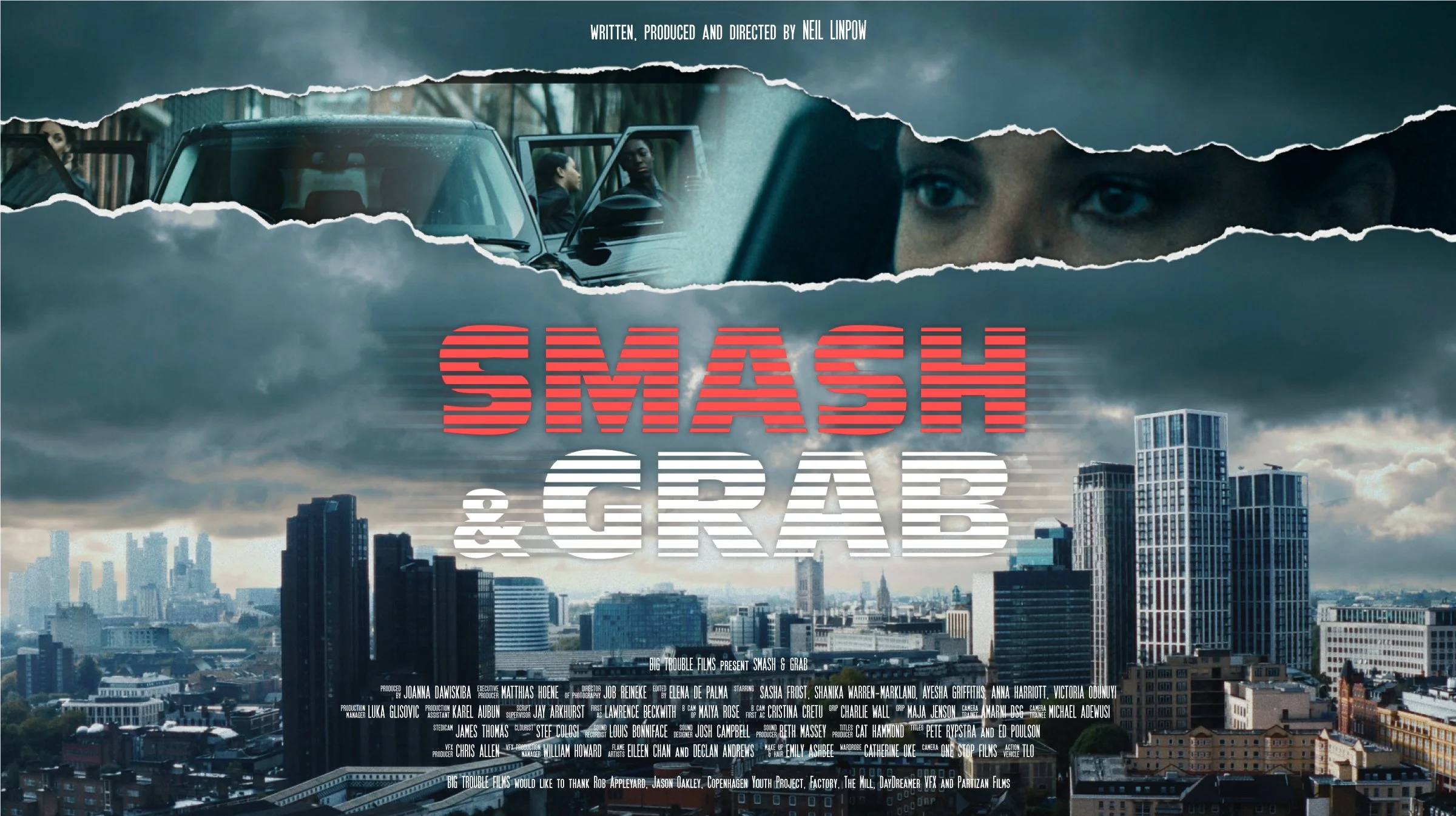
Written Produced & Directed by NEIL LINPOW
Four women race a ticking clock across a bustling city, readying themselves for the ultimate Smash and Grab showdown.
READ OUR INTERVIEW WITH NEIL
Welcome back to our Short of the Week series. What have you been up to since we featured your film Lesson 7?
It’s been a pretty amazing year to be fair, and it’s in no small part thanks to the support I received from platforms like Kino.
After screening ‘Lesson 7’ on Kino and at a number of Bafta and Oscar qualifying film festivals, I was approached with the opportunity to write a feature film project through Warner Bros and Tea Shop films. It was an interesting process, and I feel like I learned a lot along the way. We shot the film in Feb-March this year and it’s currently finishing up in post. It’s a contained thriller set in one location with only a handful of actors, so it feels in the same tone of voice as my previous shorts too.
What inspired you to make Smash and Grab?
Working in commercial production I’ve found that the despite it being a keen discussion point, there is still very little pro-active engagement to develop new and diverse talent. It’s not enough to just support existing filmmakers, we have to be looking to create projects and routes into film for people that don’t have an initial in. For the people that don’t even realise it’s a possibility.
This film was born out of a frustration that there is too much lip service, and not enough action.
I am a volunteer mentor for a UK organisation called ‘Creative Mentor Network.’ It looks to support people from lower socio-economic backgrounds, and find them routes into the business. But, as much as I love working with my mentee, I still felt like I could be doing more to create my own opportunities to get him and others practical work experience.
I created this project and then reached out to my local community centres. We had 10 young people on set that had never been on a film shoot before, but wanted to get into the industry. All of them were partnered up with an experienced crew member that was lending us their time.
The film was self financed, and all of the young people were paid full rates. I’ve also invited them onto paid commercial shoots afterwards too. One of them recently won a mentor scholarship with John Boyega’s Converse campaign to find the next crop of young diverse filmmakers. So, if nothing else, it’s felt worth it for that.
What obstacles did you overcome while in the making of this film?
To be honest, I think most notably we encountered the familiar ones that almost all short film makers can relate to. Time and money.
When you have no money, you can’t be pushy with peoples time. Especially when you have incredibly talented people offering to get involved in your project. I knew that the film would be immeasurably better by having these amazing collaborators pushing it to be the best film it could be, but it also meant that the post production timeline of the film was very slow.
I had this (optimistic) idea to get the film turned around within a couple of months of shooting, but in the end it took almost a year. A mix of lockdowns, family bereavements and other Covid complications meant that the film bubbled along slowly in the background as my feature film also developed.
That said, I am immensely grateful for everything everybody did to get this film together, and I am very proud of what we achieved.
Tell us about the journey of getting your film to audiences.
Unlike with ‘Time’ and ‘Lesson 7’ I didn’t make this film to go into festivals, so I didn’t really have a plan on what to do with it. I just wanted to create a community project, so I assumed that it would just live online, and perhaps that’s exactly what it will do. I have been approached by a couple of sports brands that liked the film and wondered if there was interest in them using it as a branded piece with a little reworking of the ending, so I will see how that plays out. But I am very happy to have the film on Kino where the short film audience can check it out.
In your experience, what's been the biggest or most surprising difference about making a feature vs a short. Is it just the difference between a sprint and a marathon, or how much does the craft change?
That’s such an interesting question. Broadly speaking, it’s obviously much slower. Decisions that you can usually make on your own in short form now take weeks or months for someone to feed back on. You are always at the mercy of someone else, which can be a frustrating place to be. If I wanted to make a short film next month, and asked you if you wanted to be involved, it’s a tangible thing that you can board or not. Often with a feature, it’s not really a real thing until the money is in place and you are in pre production. And the money is not really in place until you have cast secured. So you are mostly talking about this thing that you can never be sure will happen. It takes a minute to accept that.
In terms of the craft, I’d say that the development process is certainly very different. Interrogating and fine tuning the dramatic beats so that you have your story working before you start writing your script is arguably the hardest part of the creative journey. For me, I can’t start writing until I have my entire story blocked. I think in short form, you have slightly more scope to explore moments and allow the story beats to develop on the page.
I think probably the most exciting and frustrating process is the casting. So much of it is dictated by financing, and perceived ‘commercial value.’ It can potentially force you down a road that you perhaps didn’t want to go, and even when you do align with the financiers, it comes down to availability and schedule. Casting a feature during Covid wasn’t easy.
That said, we were very lucky that we got a cast that we would have absolutley cut our hands off to get. It definitely felt at times though that it could have been pushed another way, so I feel blessed to have gotten the talent we wanted.
What do you think is the biggest challenge short filmmakers face trying to break into the industry?
That’s a tricky one, and I wish I had the answer, but I think depending on where you are in your career, the answer is different. For filmmakers like me, the hardest part is financing. If I hadn’t financed my own short films, they wouldn’t have been made. There are no platforms that would finance me, so I never have the backing of any accredited film bodies that could then help me push my films afterwards, or develop future projects with. I had to go a bit ‘one man band’ in my approach.
Equally though, as I touched on above, I think another major problem for a lot of young filmmakers is access. There’s not enough grass roots outreach to find diverse new voices and a reluctance to invest in initiatives to change that. It took me until I was in my 30’s to have the connections and a tiny bit of money to put into my films, and I fear that we will lose so many potential talents because this is indicative of the industry as a whole. Perhaps there needs to be more ways to try and monetise short films so that there is a commercial value in making them for financiers.
Any film recommendations that we should add to our watchlist?
Hmm… I’ve been watching some good TV recently. Severance was great, and perhaps the best thing I’ve seen was Midnight Mass. It was a brilliantly subversive take on a classic myth, through a different lens and I loved that it was allowed to be slow-burn at times. 15 minute long scenes of two people just discussing existential ideas alone in a room, all the while still being at it’s core in the horror genre.
Film wise, I’d go back further. Check out ‘Wind River’ by the brilliant Taylor Sheridan if you are looking for something new and perhaps little seen. Great performances across the board and a nice cameo from one of my favourite actors, Jon Bernthal.
Interested in getting your work selected as Short of the Week?
SAFEKEEPING
Leaving their dangerous home life behind, Jessica and Charlie will embark on a journey that will change their lives forever.
Written & Directed by DAVID YORKE
Produced by DAVID YORKE & PHIL BEASTALL
Young teen Jessica and her kid brother Charlie are setting out on a journey. They leave behind a dark, unsettling home life and set out into the larger world with few belongings. The countryside they travel through is idyllic, stretching out around them in a pastoral, seemingly peaceful expanse. Together, they make a stop at a place they once enjoyed in simpler, happier times. But all is not what it seems, both in the world and between the siblings, as they embark on a trip that will change their lives forever.
SAFEKEEPING took home 3 awards at the 2020 edition of our film festival including Best Director.
READ OUR INTERVIEW WITH DAVID
Welcome back to our Short of the Week series. What have you been up to since the last time we featured your film Eject?
Hello and thank you again for featuring Eject and this film ‘Safekeeping’. Since Eject I have been doing a lot more writing. I also made another short horror film called Eric, we are currently on the festival circuit with that and I’m also in early pre-production for my first feature film ‘Crave’ which is also another horror.
Congrats on taking the first steps to kick off your debut feature. We understand that your latest short Eric was selected for FrightFrest at you were selected for their New Blood initiative. Can you tell us about that experience?
Thank you and yes Eric had its premier at Frightfest and it went down a treat. I was so overwhelmed with the very warm response and all of the kind words. We even got featured as one of the best shorts at heyyouguys. Having the film screen at Prince Charles Cinema was also a dream come true.
The New Blood initiative was a fantastic experience. I got the chance to pitch my new feature script ‘Crave’ to four separate mentors. It was very informal which is the way I like it and it also made it much easier to discuss your idea instead of the added pressure of standing and projecting it across a room.
Overall, it was just nice and encouraging to have industry professionals listen to you and give you advice. Ever since it ended, I have been feeling more confident than ever to get my feature made, watch this space!
Alright, back to Safekeeping. What inspired you to make this short?
I actually had written the script for Safekeeping a very long time ago, there was a script writing competition called Impact 50, the idea was you had to come up with a story that took place during a world ending event and then you submit and if you won you get to make film and it then be part of an anthology. Long story short, I didn’t win and my script was left to collect dust. It was a shame as I really thought it was strong concept.
But a few years went by and my friend and collaborator Phil Beastall was looking to shoot something, he had worked as my dop for many years on shorts and music videos and we always work well together. I told him about Safekeeping and even though it was ambitious we decided to go for it. Phil is also a great producer and director, so not your average DOP. With him on board as co-producer and dop the process was so much easier. I re-wrote the script and removed any restrictions I had from the competition and we were good to go.
What obstacles did you overcome while in the making of this film?
Like most of my films this was also self-funded. We had a very small crew and we were all wearing multiple hats. I was my own 1st ad as well and to say the film was challenging was an understatement.
We shot mostly in a field not too far from Gloucestershire and we only had a few days as the farmer was going to cut it all down. We were also battling the extreme heat, we had constant sound interruptions from trains, dogs and when you’re working with younger actors, your shooting times are much shorter. We also lost a cards worth of footage, luckily the camera we shot on has a monitor that also backs up HD footage, which was amazing but it also has all the time code/text burnt into the footage, so we had to zoom into some shots as there was no way we could do any reshoots.
It was very much a group effort and I learned a great deal from the experience and I’m still very proud of the film we made.
Tell us about the journey of getting your film to audiences.
Like many of my previous films I decided to go the festival route, we had some great success and won a few festivals, but ultimately it didn’t connect the way I’d hoped. But now I’m happy to say it’s just been selected by the amazing platform Omeleto and it’s now reached a much larger audience. The feedback has been phenomenal and I couldn’t be more proud.
What do you think is the biggest challenge at the moment facing filmmakers trying to break into the industry?
It really is tough. I’ve been at this for almost 20 years. I’ve had some success, but mostly rejection. Ultimately what I have learned is that you are pretty much on your own. You are the one that has to get shit done. Sometimes you can be very lucky, know the right people, or your film just hits and doors start opening. I have been trying to get a feature off the ground for over 10 years, I have 6 written and I went through all the proper channels, applying for all types of funding, getting a team together, contact producers and having meetings after meetings that went nowhere and even with the success of some of my short films I still can’t get any funding and without an agent I can’t get my scripts in front the right people.
But the upside is you have more creative control. It may be a little harder, but that’s where gathering a great team comes in because even though this industry lacks resources and support, especially for people from a working class background, you will always find people who will still want to create.
Any film recommendations that we should add to our watchlist?
Yes in no particular order I would definitely recommend –
The Worst Person in the World
X
Red Rocket
Top Gun: Maverick
Everything Everywhere all at Once
Fresh
Petite Maman
Cha Cha Real Smooth
Black Phone
Prey
Pleasure
Men
Orphan – First Kill
The Feast
Kimi
All My Friends Hate Me
The Unbearable Weight of a Massive Talent
Hustle
Watcher
Torn Hearts
Interested in getting your work selected as Short of the Week?
Petrichor
A washed up, former wunderkind of the snooker world has one last chance to revive his career. Battling with addiction and the ghosts of his past, there is more at stake than just the score.
Directed by Louis-Jack
Written by Kenneth Emson
Produced by Morgan Faverty
A washed up, former wunderkind of the snooker world has one last chance to revive his career. Battling with addiction and the ghosts of his past, there is more at stake than just the score.
PETRICHOR is a dark, psychological exploration of fame, sport and depression.
READ OUR INTERVIEW WITH LOUIS-JACK
Tell us a bit about yourself and your filmmaking background.
Image making is very much in my blood. My grandfather was a food photographer and my parents are photographers’ agents. I went to art school where I mainly created sculpture but constantly found myself drawn back towards photography: taking large format photos and displaying them in sculptural frames or making films that documented the collaborative processes behind making my sculptures. The moment I realised that filmmaking would allow me to pursue all of my interest in one medium whilst also working with other people (which I love doing), I was hooked. It’s been a love affair with the medium ever since.
What is your inspiration and influences behind PETRICHOR?
The film began first and foremost with my love of snooker. The game itself is wonderfully tense, atmospheric and beautiful. I find all of the tactics, skill and mind game within it so captivating. But, the thing I love above all else are the characters within it. At snooker’s peak of popularity in the 70s and 80s they called it ‘a soap opera with billiard balls.’ Punch ups, heavy drinking (including during matches!) and salacious scandals were the norm. If you don’t know snooker stars like Alex ‘Hurricane’ Higgins, Jimmy ‘Whirlwind’ White and Ronnie ‘The Rocket’ O’Sullivan look up their life stories. Their antics filled the tabloids front and back in equal measure.
Equally, I was fascinated by what happens to sportspeople once they retire from their profession. I was trying to imagine what it’s like when it comes to an end. When you’ve dedicated your whole life to a sport, where your entire being and raison d'être is bound up in this single activity. We tend to focus on sport stars, and whilst it must be hard for them too, what about the ones who never made it despite sacrificing just as much, if not more. With snooker’s waning popularity, that seemed even more pertinent. In Petrichor, we are confronted with the plight of an aging snooker star unable to quit the sport despite being forgotten by society and lacking any ability to play the game.
In terms of inspiration from cinema, I love ‘Slow Cinema’ and thought that it was the natural method of telling a snooker story. Treating the story like a flowing stream: peaceful on the surface whilst turbulent beneath. Filmmakers Claire Denis, Andrei Tarkovsky, Hiroshi Teshigahara and Gus Van Sant are just a few of the biggest influences on how I envisioned Petrichor during its making.
Can you tell us about the journey of developing your film with BFI Network and Film London?
The application process through Film London was long and rigorous. We applied through the normal route and once the project was long listed we had rounds of workshops and interviews until we were finally selected for funding. Although the waiting was frustrating at points I think the extra time and scrutiny from writing to editing definitely made the film better. I would definitely recommend people to apply with their shorts.
Can you tell us about your process working with actors and how working with such established actors on PETRICHOR affected your process?
In general, I like to spend a lot of time talking with actors about the character and the story well before filming. I want to hear their ideas, find out how they relate to the story and ultimately allow them to shape the character in their own way. Working with very established actors that’s even more true. Paul Kaye and Clive Russell gave so much to the roles and they needed very little direction. Leaning into their experience and instinct was an incredible ride that took us to some unexpected places. Paul’s commitment was beyond what I could have possibly hoped for: offering to strip down to his y-fronts and unleashing his animal side for the camera.
What obstacles did you overcome while in the making of this film?
Paul Kaye breaking three snooker cues! To be honest, the filming was a breeze compared to the many ups and downs with three years of development/ fund-raising and then releasing the film during a global pandemic.
Filmmakers are always curious to know how to make their projects more attractive to large funding bodies like the BFI. Since you've been through the process do you have any tips?
What really helped in my case was creating a really comprehensive and well-presented pitch book for the film. We had a PDF treatment of course but when you really want to grab someone’s attention nothing beats a sexy physical object. We sent this to Film London along with the standard online application and I can’t help but think it helped. I definitely made a big difference in brining on board actors (including Paul Kaye) and HODs who were out of my league.


Tell us about the journey of getting your film to audiences.
After working on the film for a very long time, including a 6 month post process, we finished the film in the first lockdown. Once festivals came back in various online forms we began applying. Although the film picked up selections and accolades, pretty much all of the festivals were online. The festivals did a great job at putting on online iterations but unfortunately, it’s not the same as attending in person – getting to see other people watch your film and meeting other filmmakers is such a buzz. Despite being a fairly niche subject matter the film has found an online audience, helped massively by snooker fan and mental health advocate Stephen Fry giving it his praise on twitter.
What are you working on now?
In development I have a feature-length snooker film and a short film titled Tondal: a cyclical and hallucinatory odyssey through purgatory set within the confines of a nightclub. The Tondal project was recently profiled in Fact Magazine with a trippy screen test and CGI painting a teaser for what’s to come!
Any film recommendations that we should add to our watchlist?
I’ve been looking out for clubbing scenes in films recently which lead to me A Fantastic Woman. A very touching and powerful film by Chilean director Sebastián Lelio about a transgender woman dealing with the aftermath of her lover’s sudden death.
The film was produced by (also Chilean) director Pablo Larrain, whose early film Tony Manero was a big influence on Petrichor. It’s the deliciously dark tale of a ‘Saturday Night Fever’ obsessive who will do anything to be crowned the best John Travolta impersonator.