

A Present for a Good Girl
Perry takes her best mate, Emma, to a rage room to smash the living hell out of inanimate objects. It's meant to be cathartic but after a recent heartbreak, Emma isn't convinced this will help realign her chakras.
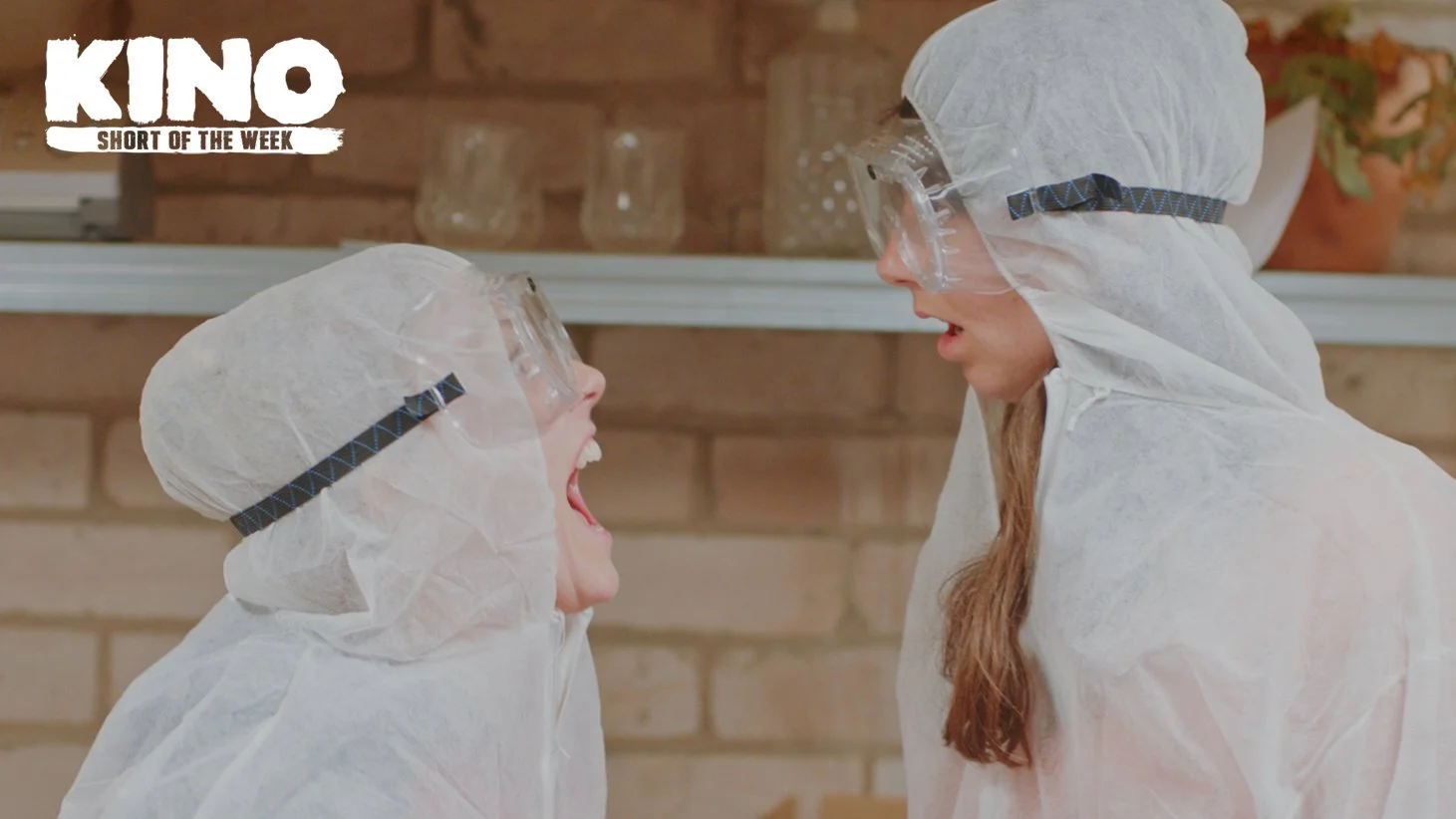
Directed by Stephanie Upsall | Written & Produced by Lucy Hilton-Jones
Perry takes her best mate, Emma, to a rage room to smash the living hell out of inanimate objects. It's meant to be cathartic but after a recent heartbreak, Emma isn't convinced this will help realign her chakras.
READ OUR INTERVIEW WITH LUCY
Lucy is an award-winning writer/actor based in Manchester. Starting in theatre, she co-created three Arts Council funded shows for From the Mill Theatre, with whom she is an associate artist. Moving into screenwriting soon after, she co-wrote and performed in Funemployed (2018) which gained her a Funny Women Award nomination. In 2019, she shot her comedy A Present for a Good Girl ensuring there was a 50/50 gender split in the crew. This went on to win Lift-Off Film Festival's Global June Sessions 2020 and be screened at Pinewood Studios, as well as winning Best Comedy and Best Micro-Budget at Kino London's The People's Film Festival in 2021. In early 2020, Lucy co-created the micro-comedy Greenfingers, which was selected as a Staff Pick by Raindance Film Festival for their #SixtySexySeconds challenge. Lucy's lockdown thriller Homestay (2020) has also been recognised internationally by festivals such as IndieFlicks and Screaming Ostrich. Her other works have been longlisted by Thousand Film and TV (created by the producer of Killing Eve), BBC Comedy Writer's Room and the BBC InterConnected Scheme. This year, Lucy completed a mentorship scheme with Media Trust and ITV as a writer. Keep your eyes peeled for her new comedy short, Total Eclipse of the Heart which is an Official Selection in The People’s Film Festival 2022
What inspiration and influences made you want to create A Present for a Good Girl?
When I read about rage rooms (yes, they're a real thing!), I became instantly fascinated in their divisiveness. Some believe they are cathartic, others say they're dangerous. As someone who has personally struggled in the past with how to process anger, I thought that this was the perfect setting for a film that investigates female rage, and how it manifests differently in people. I love shows like Broad City, and it's mix of empowering female friendship, absurdity and farce were most definitely an influence on this short.
What obstacles did you overcome while in the making of this film?
Our first obstacle was of course budget. I called in favours wherever possible and was overwhelmed by how much people were willing to help out. Second was our location, we couldn't afford to build a set so working in a small garage was difficult but necessary! We got a black marquee that juuuust slotted over the garage door which allowed us to have an extra room for all the crew that also didn't let in any natural light. It was cosy! Then we had a battle with time. We had one day for a 13 page script which is pretty wild. Everyone put in a shift to get it done and I'm so grateful for that. In the future I would definitely allow more time.
Any tips or tricks for micro-budget filmmaking?
Beg, borrow and steal wherever possible. You'll be surprised at what you can get from social media callouts for locations/props/costume etc. Understand that people need to be recognised for their work. If you can't do that financially, offer to work on their future projects. Plan within an inch of your life. If you're working with a tight budget, ensure that the shoot is within the means of possibility. The last thing you want is a half-finished film because you can't afford to complete it. And finally, create a fun atmosphere on set. If people are working hard for you, and for a small fee, at least make sure they're enjoying themselves!
Tell us about the journey of getting your film to audiences.
Post-production on the film finished up early in Lockdown 1. Soon after that I started to enter it into festivals, naively thinking cinemas would be back open in no time. Sadly, many festivals were cancelled or postponed, and I wondered if I'd ever see it on the big screen. However, one good thing that came out of lockdown was the accessibility of festivals as many moved to an online format. It was great to be selected for events that I knew all my friends and family could attend wherever they were in the world, as long as they had an internet connection! A Present for a Good Girl's final selection was at Womxnchester, a live event at The Everyman Cinema in the very city I call home, Manchester. That was a really satisfying end to the films run on the film festival circuit.
What are you working on now?
I'm in a film collective called Greenfingers and we continue to make films collaboratively. We are currently in pre-production for our next micro-short. Our most recent comedy, Total Eclipse of the Heart, is currently on the festival circuit and has already won several awards including Best Comedy at Berlin Indie FIlm Festival. It will also be screened at TPFF in 2022! I'm also is set to direct SMILE in November, which is a verbatim musical short.
Any film recommendations that we should add to our watchlist?
The first thing I did after coming out of a 10-day isolation was head straight to the cinema to watch Zola and it did not disappoint. It was tonally unique, playful and the dialogue was hilarious. Shiva Baby is another recommendation for very similar reasons. And if you want something starkly sobering, I would suggest the Safdie brother's lesser known film Heaven Knows What.
FOLLOW LUCY ON INSTAGRAM
Interested in getting your work selected as Short of the Week?

Ballet & I
Artistic expression can save your life. 'Ballet & I' is an intimate portrait spotlighting a dancer’s relationship with her mental health following the introduction of dance in her life.
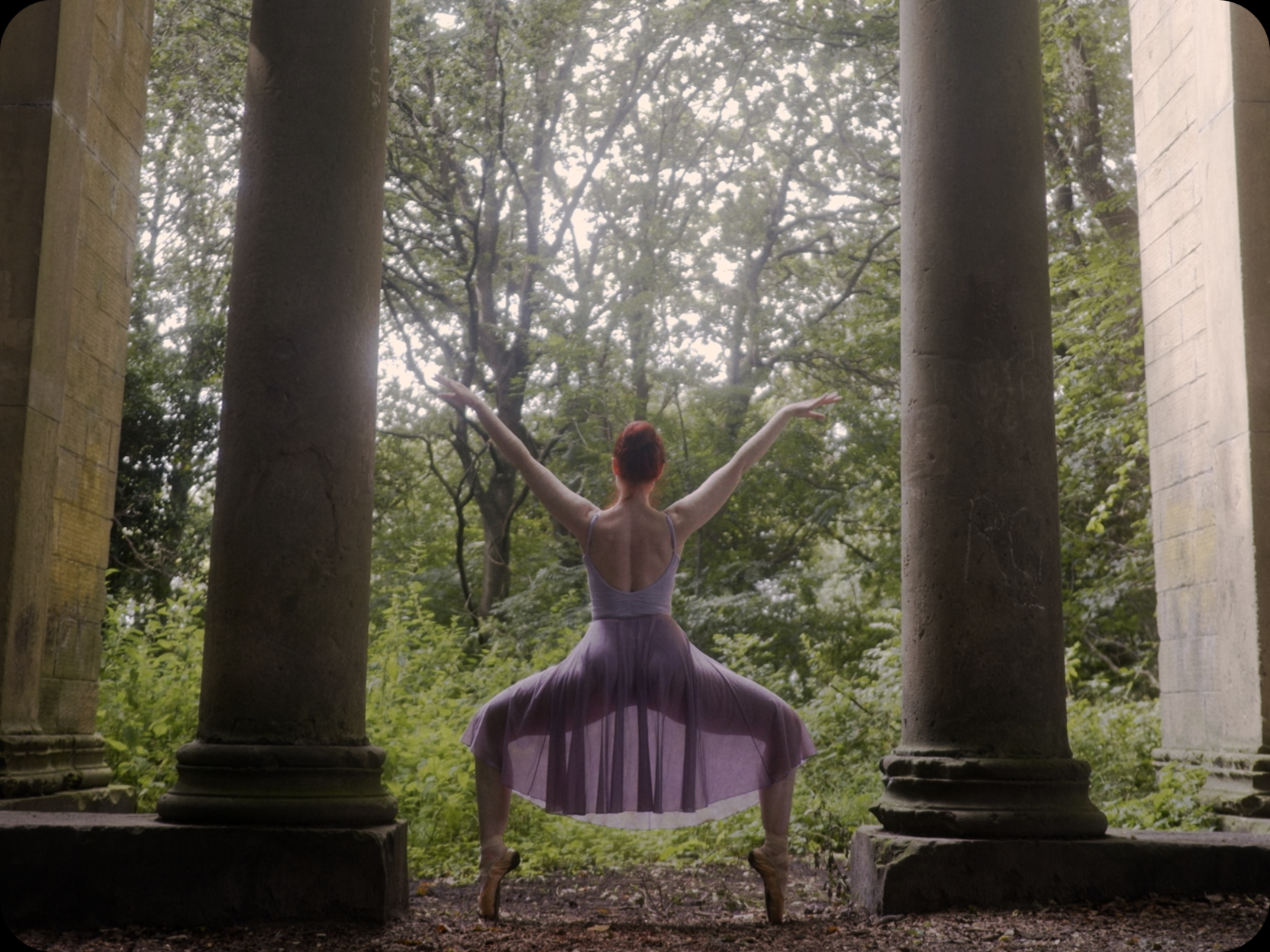
Written & Directed by Jonny White
Artistic expression can save your life. 'Ballet & I' is an intimate portrait spotlighting a dancer’s relationship with her mental health following the introduction of dance in her life.
READ OUR INTERVIEW WITH JAMES
Tell us a bit about yourself and your filmmaking background.
I studied Film & Television Production at York St John University in 2016, where I made my first documentary, which went on to win a Royal Television Society Student Award. The documentary told the story of one man’s experience with sleep paralysis, which I decided to tell through cinematic recreation. From this, it stemmed my interest in stories about people – what makes us tick, what makes us human. After Uni, I worked (and still work) several jobs which pay the bills, whilst self-producing and directing short films, experimenting with style and storytelling, figuring what kind of work I want to make. Eventually, I went back into documentary filmmaking, which is my passion and where I see my future in filmmaking as I continue to try and establish myself in the industry.
What inspiration and influences made you want to tell this story?
Christie – the dancer. I was reaching out for dancers for a new short film, where I wanted to capture why dancers dance, spotlighting unique and talented artists, looking at what drives them. Christie was one of those dancers who reached out, and her story completely encapsulated me. She is an incredibly inspiring person and I wanted to tell her story. What drives my passion for non-fiction, is using my work to try and educate and inspire audiences, telling those often untold stories from seemingly ordinary individuals, which can get lost in a very saturated world of celebrity culture and social media. These are the stories, in my opinion, that can resonate a lot further with audiences, because they are relatable, ‘ordinary’ people.
Documentary filmmaking is often run and gun, but your film feels so well thought out. What is your process?
My process changes depending on the project, and what drives that change is what creative elements the story needs to have the strongest impact on audiences. In the case of ‘Ballet & I’, Christie’s words are so powerful and inspiring, they hold on their own as a voiceover. You can really hear the emotion and passion in her voice, so I wanted to avoid a ‘run and gun’ style, as well as a traditional ‘talking head’ documentary approach, and compliment her fantastic testimony on how artistic expression ultimately saved her, with visuals that feel theatrical and dream-like, as if you’re watching an intimate ballet performance celebrating just being alive.
What obstacles did you overcome while in the making of this film?
As always with documentary filmmaking for me, the primary obstacle is my own anxieties and ensuring that I am doing the brave people who contribute justice. Those who agree to be part of your film are placing a lot of trust in you, particularly when it’s such a personal subject and they are opening a part of themselves which you are showing audiences they haven’t met. It’s the balancing of creating the film I want to make and ensuring the messages I want to convey come across, but also not letting down those involved. It’s probably a case of overthinking, but it always happens.
What advice would you have for filmmakers who want to make a documentary?
Perhaps it’s a cliché answer, but make sure what you want to make a documentary about, you are passionate about that subject. What resonates with you not only as a filmmaker, but as a person. Then think about what message you want to convey, what is telling this story going to achieve – what is the film’s purpose? Expect the unexpected. There is a certain element of control with fiction filmmaking, but documentary can often be reactive filmmaking, in terms of the actual content, which makes it challenging, but incredibly exciting. Be passionate, reactive, and adaptive, but with a consistent end goal, or ‘purpose’, in mind.
This film resonated with us because as artists ourselves, our art really helps balance our mental health. What advice would you give to filmmakers struggling with mental health?
This is something I’m still figuring out myself. I think a lot of artists can experience struggles due to the nature of our passion. There is a lot of rejection, reliance on validation, low income, self-comparison to other artists, frustrations that close friends and family perhaps don’t really care about our work but will support high profile public figures/organisations. I think it’s important to fixate on why we create our art for ourselves and forget everything else. For me, I love telling stories that I feel are important and will make a difference to how people think and feel, even if it’s in a tiny way. It makes me feel as though I’m making a meaningful contribution.
Tell us about the journey of getting your film to audiences.
My success at this stage of my career is still quite limited in terms of audience reach, as I’m still working to establish myself and ‘get noticed’ if you will. However, I’ve found I have had better success uploading my work to Vimeo and targeting online film platforms, such as KINO, alongside other platforms like Directors Notes, BOOOOOOM TV and Film Shortage, as opposed to film festivals. I love attending film festivals, I’ve been to Camerimage in Poland three times! However, through these online platforms, particularly for short form work, the right people are still seeing your work, you can still network, make contacts, build relationships. You can still showcase your work in the right place, in front of the right people without film festivals, and whilst I encourage people to still submit to festivals of course, I would certainly suggest putting an equal onus on submitting to online film platforms that feature work – especially short form.
Any film recommendations that we should add to our watchlist?
There’s a couple of shorts I came across on Vimeo that really stuck with me. One has such a shocking ending which perfectly encapsulates what message the film is trying to highlight, and that is ‘A Life Interrupted’. It does exactly what a documentary should do in my opinion – leave a profound effect on the audience that lingers in your mind long after viewing. Secondly, another documentary that stuck with for me, is ‘Gina’. It’s such a simple documentary but it left me completely speechless and emotional. Its power is in its simplicity. Thoroughly recommend those two, but Vimeo is plastered with incredible shorts as we all know.
In terms of feature films and just visually, anything Wong Kar-wai has directed, particularly ‘2046’ and ‘In the Mood for Love’. Christopher Doyle as a DoP is a genius, and those films contain such bold, visceral, and emotive imagery that really changed how I viewed cinema as a visual medium.
FOLLOW JONNY ON INSTAGRAM
Interested in getting your work selected as Short of the Week?

Swine
A local rapper and lovable smart-ass gets thrust into a world of mayhem after he wins the coveted SWINE Records competition. But instead of a lavish office filled with champagne and beautiful women, Danny discovers something much more sinister.
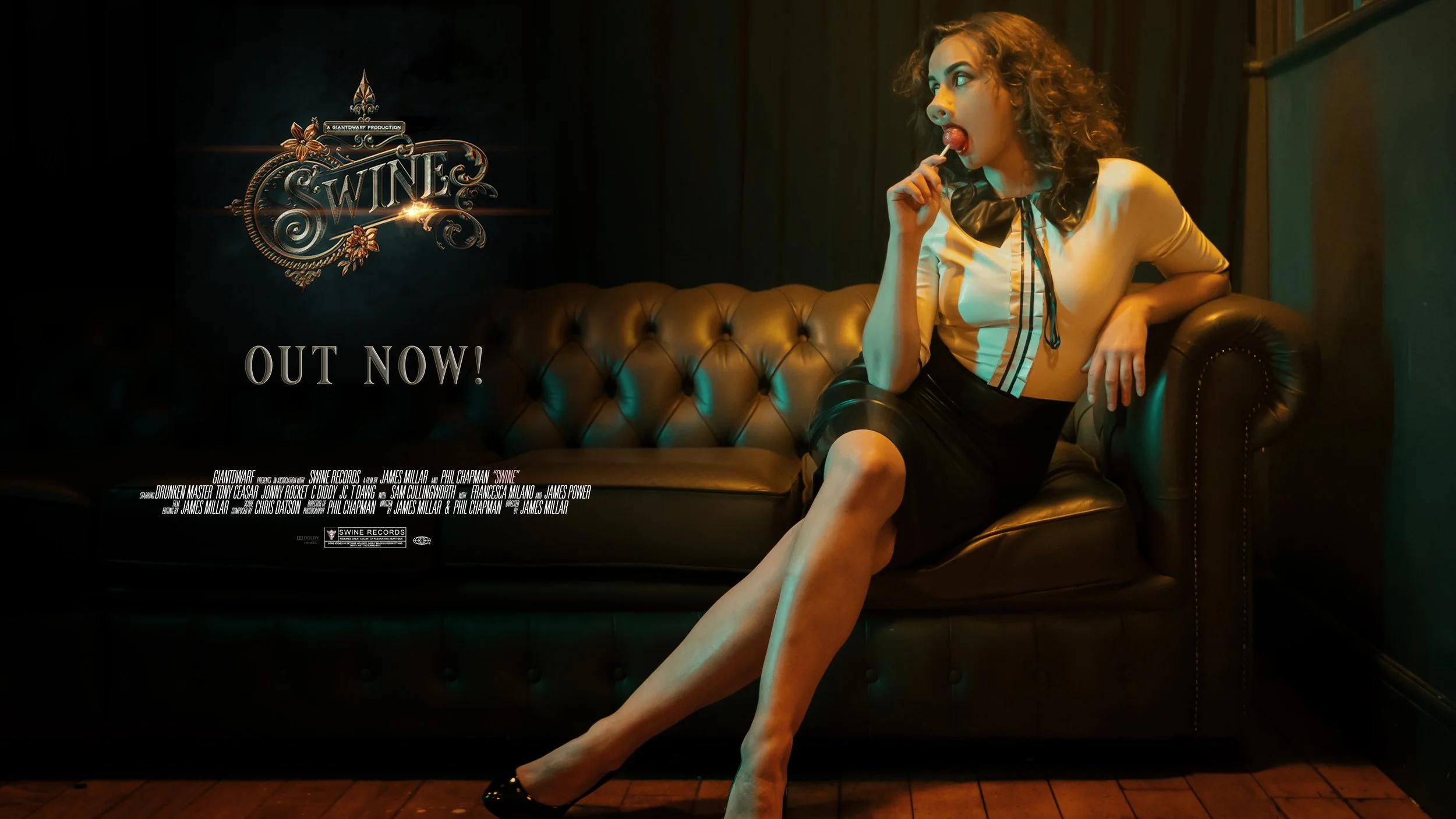
Written & Directed by James Millar
SWINE follows the journey of local rapper and lovable smart-ass Danny, AKA 'The Drunken Master'. On what seemed like a typical Friday night down the pub, Danny gets thrust into a world of mayhem after he wins the coveted SWINE Records competition. Despite a stark warning from fellow musician, Johnny Rocket, Danny decides to go and sign on the dotted line! Upon arriving at Swine Records he realizes he has made a huge mistake. Instead of a lavish office filled with champagne and beautiful women, Danny discovers something much more sinister. What follows is a high octane, pig throttling, raucous extravaganza into the unknown as 'The Big Dirty', led by 'Johnny Rocket', attempt the most insane rescue mission ever! Danny knew the competition would change his life... but not like this!
READ OUR INTERVIEW WITH JAMES
Tell us a bit about yourself and your filmmaking background.
Raised in a movie loving household there was only 1 thing I ever wanted to do in life, make movies!
I started making short films in college while studying interactive design and digital media. They we're mainly experimental shorts and terrible music videos but once I started there was no going back!
I've since made over 20 award winning short films and music videos as well as having 3 music videos appear on MTV.
What inspiration and influences made you want to create Swine?
After being let down and taken advantage of by some senior people in the music industry I was feeling very deflated by the whole prospect of music videos and production and decided I wanted to create something that showed the music industry for what it was.
This sparked a bit of an avengers moment and I decided to pull together some great local musicians and a very talented producer and create something special to show what we were capable of with no label interference.
Creatively I was inspired by films like Predator and Aliens - this idea of a group of people taking on something bigger and more powerful than them and then ultimately defeating it really resonated with me.
Stylistically I was massively influenced by the works of Edgar Wright, Guy Ritchie and James Gun - amazing directors who have managed to blend action and comedy so well!
What obstacles did you overcome while in the making of this film?
We had so many obstacles thrown at us when making SWINE, to start with we needed money to hire equipment and for props - more money than we had available anyway - and to raise the money we did a crowd funding campaign and even hosted a fund raising gig, both of which went really well and managed to raise just over £2k which was great.
Unfortunately though, that money only stretched so far and meant we had to go above and beyond to secure props and locations for as cheap as possible, if not free.
One example of this was the pig masks, we wanted to pig people to look as real as possible and the only masks we found that could achieve that were going to cost around £900 each and we needed at least 5 which quickly ruled them out, so instead myself and Phil Chapman went about making our own silicone pig masks from a 3d printed mould.
This actually ended up being a huge blessing as it meant our pig people were unique to our production and ended up being considerably cheaper as well!
The next set of issues for us were location based. Our first secured location, a place called Boothlane College in Northampton, unfortunately let us down after seeing some of our previous work and deciding that whatever we were making wouldn't be suitable which was a real shame as the majority of us had studied there at some point in our lives. We then found another location, an empty set of office blocks that was perfect for our shoot, but with less than two weeks before the shoot the building was condemned due to the discovery of asbestos.
So with two weeks till the shoot and everyone already booked in and everything organised we went on a crazy mission to find a new location in time and luckily for us a place in Kettering called the Knib an old victoriana school building stepped up and also let us use it for free!
There were many other setbacks and issues not to mention covid, which completely stopped our production half way through, but we were able to overcome them all and get SWINE out there eventually!
You have a pretty FX heavy film. How were you able to pull that off and how did that affect your budget?
Myself and Phil Chapman who own and run Giantdwarf have both worked in vfx for many years in different agencies and for different companies. We currently both work for Jaguar Land Rover in design working in the visualisation team.
We managed to create all of the vfx in the film between the two of us with myself focusing on pyrotechnics, explosions, edit and grade and Phil focusing on the big cg spots such as the van smashing through the wall and prison cells.
We also used a lot of practical effects alongside the cg to help uplift the realism for example we developed a system using an upturned leaf blower to create the clouds of money on each of the pig pop explosions.
Tell us about the journey of getting your film to audiences.
Promotion and social media have unfortunately for us always been a struggle especially when we were so focused on the post production of the film itself.
We created a lot of trailers for the film as well as a Press pack that we sent out to as many different film blogs as possible.
A major factor for SWINE was also the final edit length. Originally the film was 24 minutes long, which we were actually pretty happy with until we were turned down by some festivals and online film sites like Film Shortage due to the film being too long.
Then something really special happened and an editor called Colin Goudie who was the lead editor on Star Wars: Rouge One and Monsters messaged me saying he had come across the press pack and really enjoyed the film and he had some feedback if we were interested which of course we were!
A 2 hour zoom call later and Colin had helped me to get SWINE down to the 16min cut time it is now and to top it off Film Shortage said they loved the new cut and decided to accept the film!
What are you working on now?
Currently I'm extremely busy at JLR working on a collaboration project with Baracuta clothing which will be dropping in the next few weeks. It's a 1 min fashion film and promo spot that I'm very proud of.
I'm also writing my first feature script for a project were hoping to get started on next year called Shoetown.
Any film recommendations that we should add to our watchlist?
Being from Northampton and a huge fan of local hero Alan Moore who wrote Watchmen and many other gems there's only really 1 film I can recommend right now and that's a fantastic locally produced feature film called 'The Show' which was also edited by Colin Goudie.
FOLLOW GIANTDWARF ON INSTAGRAM
Interested in getting your work selected as Short of the Week?

Parting Frenzy
A confession of infidelity plunges Cate into a desperate fight for her life when her boyfriend tells her he already knew... and the doors locked.

Written, Directed & Produced by Ry Williams
Parting Frenzy was the winner of the Best Horror Short at The People’s Film Festival earlier this year.
On an impromptu tour of boyfriend, Lee's, newly inherited warehouse and would-be photography studio, Cate makes a confession of infidelity. But it plunges her into a desperate fight for her life when Lee tells her he already knew...and the doors locked.
READ OUR INTERVIEW WITH RY
Tell us a bit about yourself and your filmmaking background.
I’m born and raised in North Wales in a small town called Wrexham – it wasn’t a place where many filmmakers came from, if you wanted to be a plumber you were considered ambitious. Mobile phones had just started circulating in schools as I was growing up so I got a little Sony Ericson that had a camera and could record video. I used to shoot things with my friends and make little spoof adverts and things, and then my parents bought me a cheap video camera and I started making sketches with my friends. I studied creative media production at college and basically used the course to make loads of shitty short films, music videos etc. Somehow I got a grade from that course, then applied and got into The Northern Film School in Leeds - I graduated from there with a First in Directing. Whilst there I made some more films but really felt there was a big gap between what I wanted to make and what I was making in terms of quality. So I decided to get some experience in the industry and became a production runner working on shows like Peaky Blinders as Cillian Murphy’s PA and was able to basically be on set with him all the time, watching how a set is run - got to watch him rehearse with Tom Hardy and basically absorb as much as I could. Then I went to work in script development for 18 months, developing scripts with writers and pitching ideas to BBC, Channel 4, Sky etc. At that point I decided to step away and pursue my own work again. From there I started a small theatre company and wrote and directed some short plays and wrote a full length play too. I then wrote and shot Parting Frenzy, which was the first film I’d made in 3 years at that point. Since then, I’ve written another full length play, made a short experimental, and now I’m in prep on my next 2 shorts.
What inspiration and influences made you want to create Parting Frenzy?
I knew I wanted to make a genre film and I knew I also wanted to write something about a relationship, specifically between two people who have been together for a little while but not long . There is a period of time where you’re still getting to know the other person but you’re also very intimate with them. This is probably my own personal paranoia talking but I’ve always found it interesting that we can spend the night next to people because we’re in a relationship but have sometimes only known them a few months. I was fascinated with the idea of a relationship between two people who don’t fully know each other and then they find out and it’s awful. That dovetailed into the genre desire and it came out as a psychological horror thriller. I was hugely inspired by the Patrick Marber play, Closer, for an expert portrayal of relationships falling apart and took cinematic inspiration from films like Panic Room and the spate of fast-paced 90’s thrillers that don’t stop moving such as, Run Lola Run.
The aim was to combine all this into an archetypal genre film that dealt with two flawed human beings, and examine the masks we all wear throughout life and what is actually underneath.
What obstacles did you overcome while in the making of this film?
Biggest one was probably finding a location. I won’t bore you with the details but finding an empty warehouse with a side room, that’s also empty, and would allow me to film, was just impossible. I viewed about 30-40 under the pretence of purchasing it just so they would simply agree to show me the bloody thing. I had one lined up in the first place with a contact from a prior shoot and that’s why I wrote the film. Unfortunately, it fell through just as I finished the script and so we had no location but a script written for a specific one.
Then I would say all the obstacles we faced from there probably came down to money, but we felt the pinch on the schedule the most. It was a very tight shoot – I was behind schedule when I got out of bed. We had to basically use the ceiling lights for most of the shoot, which doesn’t look perfect but works and this allowed us to basically rattle through a 4 day shoot in 2 days. 1-2 takes per set up and then move on. Certainly not the way I would want to work in future but I feel you always have to adapt to the environment you’re in as a filmmaker. Plus, when you’re being pushed you have to find innovative ways to get around obstacles that sometimes end up coming out better than the original plan. The ups and downs of filmmaking!
Any tips or tricks for micro-budget filmmaking?
PFP – Plan for post! The project your making is not just leading up to the filming. It’s the day you finish the film with a poster, an EPK for festivals and a list of when and where you’re attacking with this film. So you need to make sure you have accounted for how you’re going to deliver the film on no budget. Why are you making the film? Work back from the end goal and plan from there. Too many filmmakers just work towards the filming days and don’t think about the end product. You’re baking a cake, if you mix all the ingredients in a bowl but don’t turn the oven on and put it in. You have cake mix. And you want a Victoria sponge.
Second big one, and this is free – make sure the script is really good. I know that sounds obvious but get other people to read it who will give you honest feedback. Listen to them when they say “hm, I didn’t really get this bit.” If you’re hearing that from a few people, do not go into production yet. I think if you’re learning, go out and film whatever - doesn’t need to be great, just the act of doing it and completing a film puts you ahead of 90% of other people who want to make narrative shorts. But for when you want to make a good one but you have no money, start with the script. Learn how to write even if you’re working with a writer - you need that knowledge of story and structure to direct and piece the film together at all levels.
Lastly, get yourself out there and it will give you a bigger playground to create work in. I attended acting classes to meet actors and I wrote a film around a location I knew I could get from a previous shoot I’d helped out on. Make sure you’re working on other people’s projects, attending workshops etc. Because when you come to make a film for nothing, you’ll need people who trust who, who are willing to work for free, and you’ll need to know what’s available to you. Essentially on this budget you’re writing a small concept piece or a character piece. The film will live and die on how well you tell a story in a space with actors. It’s as simple as that. Put all your time there because money can’t buy a good performance and a well told story. That’s on you.
What are you working on now?
I’m developing 2 new short films at the moment. One is an erotic thriller about a salesman who’s late for a meeting but gets trapped in the wardrobe of a mistress at a brothel. And the other is an autobiographical piece - a coming of age story set against the backdrop and harsh realities of working-class north Wales. It’s called - Isn’t my life interesting...
Only joking! I can’t say what they’re about at the moment as I think they’re pretty flipping great ideas and don’t want to spoil them before they’re developed properly. I’m super excited though and planning to shoot those in January and April, so should be knocking about Kino again soon. I also just finished a full-length play.
Any film recommendations that we should add to our watchlist?
Cinema Paradiso - watched that for the first time the other week and it blew me away. The ending...holy shit. Also love The Discreet Charm of the Bourgeoise from Buñuel. Pain and Glory and Volver by Almodóvar. And new films: Another Round – probably one of the best new films I’ve seen in a while and likely already on everyone’s list. It’s incredible. Beautiful portrait of life and how safety can be the most dangerous and stifling thing in the world for us. Again, what an ending!
FOLLOW RY ON INSTAGRAM
Interested in getting your work selected as Short of the Week?

TPFF: October 2021 Official Selections, Finalists & Semi-Finalists
Our jury has put forward the following films as Official Selections, Finalists & Semi-Finalists for this month’s edition of The People’s Film Festival which culminates at our annual gala - March 2022!
Our jury has put forward the following films as Official Selections, Finalists & Semi-Finalists for last month’s submission to The People’s Film Festival which culminates at our annual gala - March 2022!
Official Selections

MILK
directed by Celia Jaspers
When she sees an old man unable to pay for his milk, a young girl has a change of heart.
MILK is an Official Selection in the Micro-Budget Category.

BLINKERS
directed by Sophia Capasso
Two young women, their lives meticulously intertwined, are each on a fast paced journey to very different destinations. BLINKERS is a short film about the cracks we don’t see splitting in the rollercoaster that is modern life and how two experiences of one night can be drastically dissimilar.
BLINKERS is an Official Selection in the Low Budget Category.
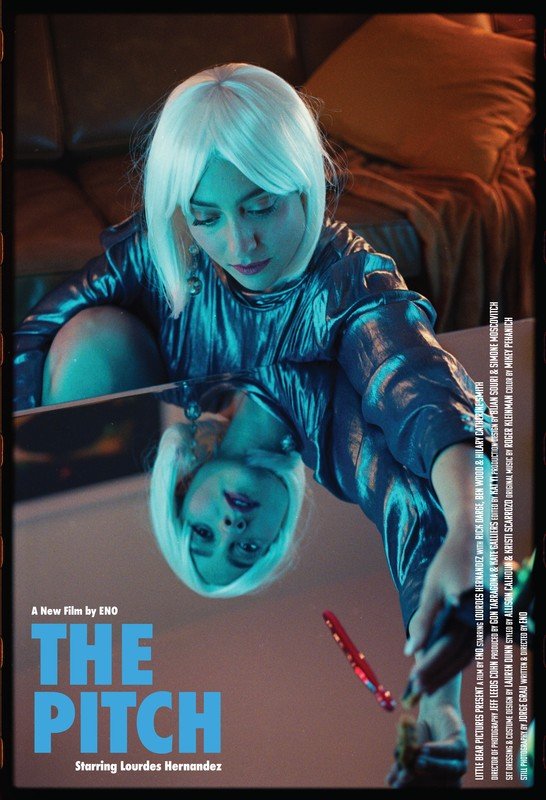
THE PITCH
directed by Eno Freedman Brodmann
The Pitch is a satirical short film that spoofs the advertising industry by imagining a potential collaboration between chicken nuggets and bluetooth speakers. Starring Lourdes Hernández, it follows a call between an agency creative and director trying to one up each other on the most important product of the year...vegan chicken nuggets. Ridiculous, absurd, yet only too real, The Pitch is a commentary on the agony of the creative process until it all becomes a mess.
THE PITCH is an Official Selection in the Sponsored Category.
finalists
Micro-Budget Category
AN ARTISTS REALITY directed by Adam John Davis
LAST ORDERS directed by Katie Harriman
PETER THE PENGUIN directed by Andrew Rutter

Low-Budget Category
THE LUCKIEST MAN ON EARTH directed by Muhammad Exsell
DUNDERWHELP directed by Jasper Valentine
JOURNEY directed by Panji Kaonga

Sponsored Category
TAKE THE VAX directed by Edsta
WHY WOULDN’T I BE? directed by Ella Greenwood

semi-finalists
THE BOY WHO GOT EVERYTHING HE WANTED directed by Karl Falconer
CAUGHT directed by Fred Kelley
CAVEMAN directed by Patrick Nathan Murray
NOSEBLEED directed by Andrew Jonathan Smith
PRANK directed by Robert Duncan
SPIN CYCLE directed by Gigi Nettles
WHAT MAKES OUR FESTIVAL DIFFERENT?
Every filmmaker gets FEEDBACK included with the price of submission regardless if their film is selected or not.
Our CATEGORIES ARE BASED ON BUDGET so micro-budget shorts don't have to compete with fully funded films.
Winning filmmaker walks away with our £1,000 FILM FUND.


Ārka
A visceral exploration of one’s consciousness, this film dives into the head of a timeless heroine.

Directed by LEILA BARTELL
A visceral exploration of one’s consciousness, this film dives into the head of a timeless heroine. We witness the torment caused by a contradiction between the mind and the soul, and the formation of her infinite being. Inspired by the idea of transcending one’s inner limitations and written with Laura Bailey in mind, the character in our film has the intensity and strong presence that Laura naturally possesses, and this is echoed powerfully in her performance.
READ OUR INTERVIEW WITH LEILA
Tell us a bit about yourself and your filmmaking background.
I am a London-based painter and director. I come from a painting background and my work is influenced by the various cultures I experienced growing up in different parts of the world. My films and paintings predominantly explore existential states or social issues and their underlying dynamics. My stories often revolve around empowerment, personal evolution as well as redemption. I often combine other art forms such as dance or abstract music with storytelling.
What inspiration and influences made you want to create ĀRKA?
Ārka was written with Laura Bailey in mind. She is a friend, but also someone I admire on many levels and really wanted to collaborate with her creatively for some time. I’m generally fascinated with the idea of telling a story using very few words, if any. That’s probably the reason I’m inclined to make films where movement, music and sound are a hugely important element of the narrative. From the get go I was drawn to the idea of creating an internal psychological drama, a universal one, conveyed through a heroine that is not bound by space or time.
What obstacles did you overcome while in the making of this film?
The biggest obstacle was the global pandemic, which meant a lot of uncertainty of course. Internally I, as a director, had to make sure my drive and passion were at their peak to keep everyone fully engaged in the midst of ever changing circumstances. In the end, with the support of an incredible cast and crew, things worked out really well and we managed to shoot the film within a tiny window between lockdowns. We felt incredibly lucky to be able to pull it off.
Any tips or tricks for micro-budget filmmaking?
I did my very first project, a drama short called Idira on a micro budget. I think not much beyond the obvious: shoot in as few locations as possible - ideally one; if you can, minimize the crew and number of days you need to shoot it. Also, I believe finding the perfect location can save a lot of worries in the art department. Ensure you work with a savvy and passionate producer who is fully aware of how best to achieve results with next to no money.
Tell us about the journey of getting your film to audiences.
We had a rough idea where we wanted to show it, even in the pre-production stage. Once the film was completed, we started identifying relevant avenues. Ārka premiered on Violet Book in July, then was shown on Soho House Notes in August, Nowness and Laboratory Arts Collective in September. We also had some arts platforms and festivals approach us directly, after seeing it and wanted to show it. The response so far has been amazing, and I’m truly grateful for that.
What are you working on now?
As a painter I’m in the process of launching my first NFT collection on OpenSea and in terms of directing, I’m writing a treatment for a sports brand that focuses on inclusivity and reading a feature film script I’ve been sent.
Any film recommendations that we should add to our watchlist?
Yes, two short films I love. Lunch date by Adam Davidson. It’s a beautiful short piece tackling race and class in America. The film has no dialogue and it really encouraged me to examine my own assumptions. And Bus 44 by Dayyan Eng, which is another short film that really stayed with me. I remember just sitting there looking at the screen as there was so much to process. I watched it at least a dozen times. It reminded me of how people can be vile, good and completely on the fence - often due to fear.
FOLLOW LEILA ON INSTAGRAM
Interested in getting your work selected as Short of the Week?

Retch
A visceral horror rollercoaster in which a young woman's illness takes a disturbing turn...

Written & Directed by Keir Siewert | Produced by Alix Austin
A visceral horror rollercoaster in which a young woman's illness takes a disturbing turn...
READ OUR INTERVIEW WITH KEIR
Tell us a bit about yourself and your filmmaking background.
I grew up watching Westerns and a lot of 50s sci-fi and horror with my father. Then when I was teenager I discovered John Carpenter and David Cronenberg and became enamoured with body horror. After I graduated from university I started out making club promos and low-budget music videos. It gave me a lot of room to try out different techniques and experiment a lot with editing. I see myself as a DIY filmmaker with a real interest in formalist visuals.
What's your inspiration behind RETCH?
It was a combination of things. I’ve always been really interested in how nature is quite dark and horrifying. I remember reading about how lobsters have to periodically shed their shells and how it’s incredibly stressful for them physically. I think there’s so much of human physiology that’s so strange and weird. Then I was thinking of menstruation and how it’s the monthly shedding of the uterine wall. Which led to me expanding that into thinking, what would it be like if that was a cycle for your whole body?
What obstacles did you overcome while in the making of this film?
It was very cold. We were shooting in an industrial basement with no heat, in January in London. Chloe Wigmore who plays the woman transforming was naked except for some nipple covers at the time. She had contact lenses in, which meant she couldn’t see, as well as wearing a bald cap. Then she was covered in a cold clear goo. I kept thinking she was gonna get hypothermia. We covered her in thermal wrap between each take and had a heater on that she could stand by in the corner, but she never complained and did an absolutely killer job.
How did you achieve some of the practical effects for the film?
I love practical effects, so for me I really wanted to make the film feel very physical. Ultimately a lot of it is very simple. The clear vomit is egg whites, the skin being ripped off is dried glue. The final look is some flesh coloured nipple coverings with a bald cap, white contacts and lit with green gels.
Any hacks or tips for making a short film?
Use your environment. I get so many comments on the shot in which the water ripples after she screams. That was an idea I just had on the day. There was this area where water collected in the basement and I thought it would look cool if we could get it in the film. I used a portable fan that happened to be in the studio and that’s how I came up with the idea on the fly.
Tell us about the journey of getting your film to audiences.
We built a following through the horror circuit. Douglas Cox, our executive producer, had a lot of experience and so was able to give us advice on what festivals to target and how to plan a festival strategy. The good thing about Retch is that because it’s quite short and punchy, it was very easy to fit into festival programs. The horror festival world is also very inter-connected, so as soon as it got a good response at a bunch of festivals, we started getting contacted by more and we were fortunate to be off to the races.
Congrats on getting distribution with Alter. Any tips on how other filmmakers can distribute their films online?
Alter got in touch with us after they’d seen the film at London Short Film Festival. I would say when it comes to shorts, do your research on which platforms are licensing shorts and look at what they’re offering and what their viewership is. We’re very happy to be on Alter, but we’ve definitely made the mistake of tying ourselves into a relationship with a different platform in the past and it can happen that a film just gets dumped and then we can’t do anything with it. So it’s important to know who you’re doing business with and what they can offer you. A big thing to consider is whether it's worth handing the exclusivity of your film over to a platform. Some platforms simply ask you to be exclusive for a month, before reverting back to a non-exclusive contract.
What are you working on now?
Alix Austin, the producer of Retch, recently directed her own horror short Sucker, which I produced. That should be doing the festival rounds next year. We’re planning to team up as a co-directing team to make our debut horror feature next year.
It’s early days but it would be in the body horror vein with themes very similar to Retch and Sucker. We're also thrilled that the horror anthology Isolation, which we directed the London segment for, has been seeing success at Frightfest, Screamfest and coming to video on demand soon.
Any film recommendations that we should add to our watchlist?
My favourite horror film of all time is The Thing so if you’ve never seen that, you should 100% watch it NOW. But otherwise I would say some of my favourite underappreciated gems are Wake in Fright (1971), Ravenous (1999), Society (1989) Invaders from Mars (1953), Them! (1954), The Loved Ones (2009) and The Blob (1988)
VISIT THE SWITCHBLADE CINEMA WEBSITE
Interested in getting your work selected as Short of the Week?
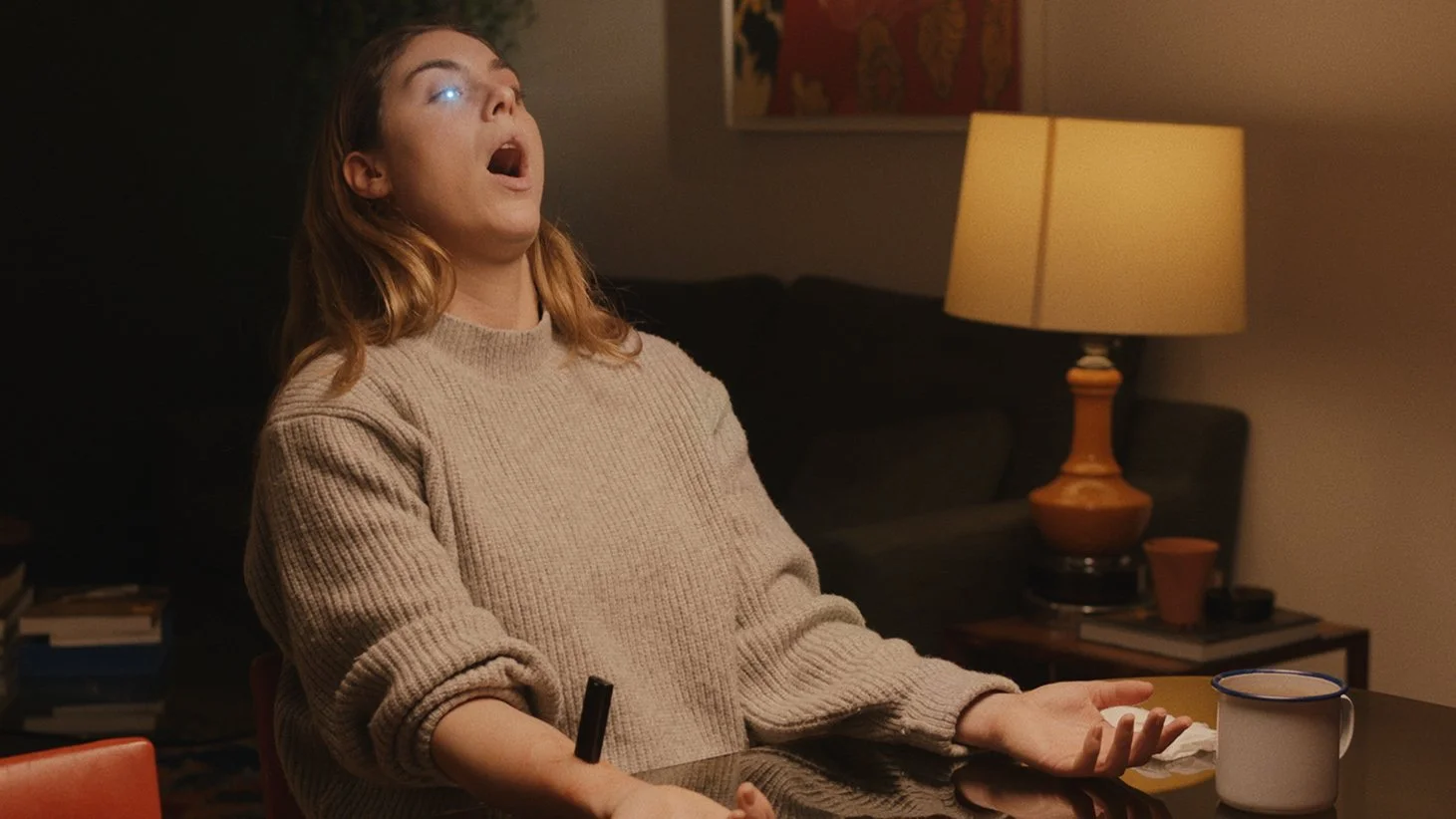
EJECT
After discovering a USB port in her wrist, Kate uncovers a world where she has the ability to change herself for the better. But she will slowly discover that greed will come at a cost.
Written & Directed by David Yorke
After discovering a USB port in her wrist, Kate uncovers a world where she has the ability to change herself for the better. But she will slowly discover that greed will come at a cost.
EJECT was featured in our Grindhouse section of The People’s Film Festival 2020 and recently won Best Short Film at Dead Northern. With over 30 festival selections, including the prestigious Sitges and Leeds Film Festivals, Eject is a great short to kick off this Halloween season.
READ OUR INTERVIEW WITH THE FILMMAKER
Welcome back to our Short of the Week series! What have you been up to since we last interviewed you for WE?:
Thanks for having me again, it mean’s a lot that you continue to spotlight myself and my work. Since WE I have been making more short films and submitting them to festivals, I have been fortunate to have my films play at alot, including Leeds and Sitges, which meant a great deal to me.
I have also been writing my feature scripts and building towards making one of them.
What is your inspiration and influences behind Eject? Have you ever found a USB port in your arm?
My inspirations stem from my love of John Carpenter films and just horror in general, many people think I’m influenced by David Cronenberg when truth be told I hadn’t seen many of his films until recently, so I didn’t grow up watching a lot of body horror, I’m much more of a drama director but I tend to add a horror spin to some of my stories.
Not just yet, I keep waking up and hoping that a USB port will appear. I will update you should anything change.
What obstacles did you overcome while in the making of this film?
It was a film I had been trying to make for over 10 years, so location was the biggest obstacle, but I managed to find the perfect place and really increase the production value of my whole film. There were many other obstacles along the way, but all my films tend to come with their fair share of problems to overcome. I think that’s what makes the process more interesting and it also keeps you on your toes.
Any hacks or tips for filmmakers working within the psychological thriller / horror genre?
Yes, watch as many horror films as possible, even the really bad ones, learn from their mistakes, figure out what’s been done and find your own new take. I tend to take something personal from my own life and inject it with a little horror. Also earn your jump scares, don’t just throw one in to scare an audience.
Tell us about the journey of getting your film to audiences.
It’s still a battle that I and many other filmmakers are facing, do you go the festival or online route? do viewing numbers or awards mean more to you? I think ultimately it’s about exposure, I make my films to be seen on a big screen and with an audience, so the festival route is really important to me and so far I have had some great experiences showcasing my work and meeting new people.
It’s not an easy journey though that’s for sure. A lot of rejection and mostly without feedback and also due to a little thing called the pandemic our work mostly has been viewed online, more people see it but audience engagement is missing and I’m excited for festivals now reopening the doors and audiences returning.
Any film recommendations that we should add to our watchlist for this Halloween season?
Halloween Kills is out soon which I’m excited for and I have to recommend Censor and Saint Maud, I thought both of them were fantastic. There’s also a show coming out on Netflix called Midnight Mass by Mike Flanagan, I think he’s one of the best and most interesting directors working in horror at the moment. I also recommend everyone subscribe to Shudder, it’s essentially if Netflix only showed horror films, there are two amazing 4 hour documentary’s called In Search of Darkness Part I and Part II. They cover the best of 80’s horror. I have no doubt I will give them both a rewatch in October.
Interested in getting your work selected as Short of the Week?

Oasis
Set in the deserts of 1935, a pilot finds himself in a place that is ready to destroy all ambitious men.
Written & Directed by Andrew De Zen
Set in the deserts of 1935, a pilot finds himself in a place that is ready to destroy all ambitious men.
READ OUR INTERVIEW WITH ANDREW
Tell us a bit about yourself and your filmmaking background.
Writing about yourself is always a bit of an interesting experience. I'm a runner. I feel like I'm always in motion to some degree. If you see me thinking, or on a set, I'm kinda just there vibrating or moving around like a bit of a lunatic. Directing is something that's been with me for a while so pretty early on I always knew I wanted to be making films. And what I'm interested in feels like it's constantly shifting. Like you're constantly finding something passionately fascinating, then later moving on out of boredom. When I was in my last year of college I found director representation here in Canada and things officially started there in my eyes. So here we are. You can probably find me now rewatching Princess Mononoke or some anime. Currently digging into Herzog's documentary films.
What is your inspiration and influences behind Oasis?
The inspiration for Oasis came like a crashing wave when I was reading Antoine de Saint-Exupéry's book "Wind, Sand, and Stars". The short film is based on his experiences and what he writes about when he crashed in the Libyan desert. His writing, the details he specifically brings to light, the strangeness of the way they hit the earth, all of it - as soon as I finished that chapter of the book I immediately sticky-noted it and burnt it into my brain - I had to make some form of this. When you get hit by something that hard you know there's no arguments, you simply have to do it. Animation is also a huge inspiration for me, maybe more so than live action at this point. Films from Hayao Miyazaki, Satoshi Kon, and Mamoru Hosoda I find especially refreshing. Influence and inspiration tend to blend together but the desert sequences in Lawrence of Arabia and landscapes of No Country For Old Men are definitely mixed in there, along with some nods to PTA's work and a fav of mine Porco Rosso.
What obstacles did you overcome while in the making of this film?
Other than having to bring a crew of 40 to Death Valley, fabricating a plane wreck and hauling it into the dunes, and spending every single day wondering how we were going to achieve this crazy little film, there weren't many obstacles... It was really just the scale of the production on the bones of a short film. The dunes, the visual effects, the practical and period elements, the animation being worked on internationally during covid. It was a lot and by far the most ambitious thing I've ever tried to do. Having a super dedicated crew makes things possible. Having my lovely producer Brooks Malberg to shepherd it into life along with my crazy talented DP Ian Rigby, the film would simply not have been possible without the amount of time people put into this.
Any hacks or tips for filmmakers looking to make an ambitious period film?
Just one tip. Make sure you have a good answer as to why you're doing this. That way when you have your own inner arguments with yourself, that answer can cut through the chatter and you can keep moving forward. And pay attention to the details. Period films mean more elaborate costumes and a special attention to detail that would normally not be scrutinized in the same way.
Tell us about the journey of getting your film to audiences.
The journey from the beginning to the end of this film was a long one. Prep was intense, and Brooks, Ian and myself spent months location scouting in LA and Death Valley. Researching planes and driving around. Production was intense. 5 shoot days where we took over a town of 35 people near our set and we had essentially doubled their size with our crew while some of us camped in the desert. And post-production was intense but immensely gratifying with CGF our amazing post house who handled all the VFX and animation.
What are you working on now?
Right now we're in the middle of editing the next short which we just shot this August. I'm prepping another short film that we shoot next month on 65mm that I'm very excited about. And I'm developing a handful of other scripts, with two specifically that are going to be gearing up for next year. Then just writing a feature script that is still in early stages.
Any film recommendations that we should add to our watchlist?
Some of my favourites at the moment are Ikiru, Wolf Children, Ida and Beanpole. Wolf Children is one of the most beautiful, soul-fulfilling films I've seen with a main character that never fails to warm my heart.
See more of Andrew's Work
Interested in getting your work selected as Short of the Week?

Raindance + Kino Short Film Open Mic
We’re excited to partner with Raindance to host an exclusive edition of our infamous Short Film Open Mic during this year’s Raindance Film Festival.

Our Short Film Open Mic Is Headed To Raindance!
We’re excited to partner with Raindance to host an exclusive edition of our infamous Short Film Open Mic during this year’s Raindance Film Festival.
Thursday, October 28, 18:30 - 21:30
Location: The House of Raindance I No 11 on Strand
This special event is a great place to showcase your work non-competitively for free at the House of Raindance in central London.
The rules for this special event are slightly different than our typical Open Mic events. Scroll down for rules.
Submit your Short Film
Preregistration slots are full, but you can submit to the wait list below.
Rules:
Films are accepted on a first-come, first-screened basis
Film running time cannot exceed 5 minutes
One film per filmmaker
All genres accepted
A representative must be present at the screening to introduce your film
Your place at the screening event is not guaranteed until you have sent us a copy of the film, and we have acknowledged receipt of it
Screening films must deliver their films in one of the following formats: .mp4 or .mov
Kino Short Film and Raindance reserve the right to make the final decision on whether or not to screen any particular film

Claire
It is often very challenging for teenagers to talk about their experiences and seek support. Asking for help or simply opening up and talking about what you're going through is a sign of weakness. This stigma has to go.
Written & Directed by Yury Vorobev
It is often very challenging for teenagers to talk about their experiences and seek support. Asking for help or simply opening up and talking about what you're going through is a sign of weakness. This stigma has to go.
READ OUR INTERVIEW WITH YURY
Welcome back to our Short of the Week series. What have you been working on since we last featured your film The Extinct?
I'm trying to get another short into pre-production at the moment. It touches on the migration crisis in Russia.
What was your inspiration behind Claire?
Last year, one of my best mates suddenly started to share his inner struggles. Actually, very, very few could do that. I just suddenly realised that mental health problems are quite a spectrum and the dark side of it is very scary.
Tell us a bit about the production. Any bumps along the way?
There were loads this time. The most annoying one though was that due to some technical issues, my playback stopped working, and the team could not revive it. So when it came down to filming a performance bit which was supposed to be happening in the car, on the road, I was a bit unsettled. Basically, the process slowed down massively as I only had a chance to see takes when they had been already taken. But table reads and rehearsals which we had had plenty made everything go very smoothly, and we managed to finish right on time.
What is your process working with actors and helping them with emotional performances?
Great emotional performance comes from a great cast. So that's why for me, it starts from writing a thoughtful self-tape brief that ideally should be exciting and challenging at the same time for a talent.
Plenty of table reads will not hurt either. That's also a great opportunity to properly walk the parties through a whole script, which I always prefer to make more like a chat. For me, it is the place where I decode scenes more thoroughly highlighting all the critical points in dialogues and performance in general. I prefer to keep this stage as open as possible, listening very carefully to what actors say, how they see their characters. I'm also always quite excited to see them bringing new ideas to the table. At rehearsals, I normally choose not to demand the best performance. From my perspective, it needs to be brewed until we get on the set. Then BOOM! Let's release all the beasts out in the best possible way. Hope that makes sense, haha.
Tell us about the journey of getting your film to audiences. Any milestones?
For me, it is extremely important to make sure the film is getting watched. This is a delicate topic, still with loads of tabu and 'no goes' though.
I believe that if people could start sharing their inner battles with zero fear of being judged, the world could be a better place.
The film has managed to be featured at 'Beyond the Short' and 'Retrospective of Jupiter'. Fingers crossed for more to come.
Any film recommendations that we should add to our watchlist?
There's so much to recommend. But here are the ones that you should definitely give a watch.
Annette by Leos Carax
Caótica Ana by Julio Medem
Follow Yury on Instagram
Interested in getting your work selected as Short of the Week?

The Widow
A young mother's cry for help in a man's world where silence is a virtue.

Directed by Ailish Castillo & Nicola Morris
A young mother's cry for help in a man's world where silence is a virtue.
THE WIDOW was an Official Selection at The People’s Film Festival earlier this year, nabbing the award for Best Production Design.
READ OUR INTERVIEW WITH Ailish
Tell us a bit about yourself and your filmmaking background
I grew up in Cork, Ireland, and worked as an actress, both in theatre, Film and TV. Past productions include, 'Romeo and Juliet' (Olympia Theatre Dublin), 'Spring Storm' (National Theatre, London) 'The Importance of Being Earnest' (Lyric Theatre, Belfast). 'Bachelor's Walk' (BBC and RTE) 'Starfish' (Irish Film Board). Through my experiences on set I found myself being more drawn to the production side of film so I began writing short films that then progressed into the founding of my production company, LionBear Films.
What's your inspiration behind The Widow?
The Widow is inspired by my Grandmother's life. I've always been interested in period drama so bringing this story to life was a real labour of love.
What was it like to co-direct and how did you manage the decision making with two people in the role?
Nicola and I both worked closely in pre production with a similar vision in mind. She was the main director on set for the days of filming while I acted as Nora and I then took on the director's role when it came to the edit.
What obstacles did you overcome while in the making of this film?
I would say time, it would've been so wonderful to have had more time to film the small details. By the end of filming we were lucky to get what we got in the can and we did our best. The whole team really pulled it together.
How did you pull off an authentic period piece on a low budget?
I got as much as possible in various vintage and charity shops and then Rowena Zoro, our Production Designer, married it all together beautifully. My local pub was being renovated at the time and they very kindly let me use their up stairs rooms to film the interior of Nora's house.
Any hacks or tips for making a short film?
Don't let money, or the lack of, stop you from producing what you envision for your film. Lots of people told me there was no way I could pull off a period piece on a small budget and I'm really glad I didn't listen to them. If you persevere then you will find a way to make your film. I used my home as the base and put some of the crew up in our home too. Crowd-Funding, asking local businesses for help, asking your family or friends if they will help on set with things like cooking the food, washing up etc... put in the blood sweat and tears and I think it will pay off.
Tell us about the journey of getting your film to audiences.
By the time my film was ready to be shown in festivals, COVID 19 had moved everything online so my experience with The Widow has been great but all virtual! It was accepted into 12 various festivals around the world and won awards like Best Cinematography, Best Costume, Best Production Design and Best Actress. I was afraid I wouldn't be able to make any contacts but actually I found that the film community really pulled together and I met some brilliant people and like minded film makers online. Thank goodness for social media!.
What are you working on now?
Since The Widow, I produced two more award winning short films and I'm now putting together a pitch for a TV series. I've written the pilot, it's a fantasy drama and I'm very excited about it's prospects.
Any film recommendations that we should add to our watchlist?
These aren't very "current" but some of my favourite films are- Green Book, The Hours, Pan's Labyrinth, Parasite and Elle.
Follow Lionbear Films on Instagram
Interested in getting your work selected as Short of the Week?

TPFF: September 2021 Official Selections
Our jury has put forward the following films as Official Selections, Finalists & Semi-Finalists for this month’s edition of The People’s Film Festival which culminates at our annual gala - March 2022!
Our jury has put forward the following films as Official Selections, Finalists & Semi-Finalists for last month’s submission to The People’s Film Festival which culminates at our annual gala - March 2022!
Official Selections

TINA AND PETER
directed by Dan Hodgson
Long-time Tina Turner enthusiast and tea expert, Tina T'urner Tea Lady, runs a greasy spoon café with Peter Longbody, Sheffield's disappointing answer to Alan Sugar. But in this brave new world of skinny macchiatti and pumpkin spiced lattes, how will these old school oddballs fare?
TINA AND PETER is an Official Selection in the Micro Budget category

EMBERS
directed by Tom Ganley
Alice sits alone at a restaurant, waiting for her date to arrive...
EMBERS is an Official Selection in the Low Budget category

HUNGER
directed by Mark Dollard
A heroin addict is pursued by a menacing figure.
HUNGER is an Official Selection in the Sponsored category
finalists
Micro-Budget Category
CONVALESCENCE directed by Zébulon Youra Goriely
TORN directed by Ron Sonedecker

Low-Budget Category
BLINKERS directed by Sophia Capasso
MORE JUICE directed by Gabriel Thibodeau

Sponsored Category
STING LIKE A BEE directed by Leone
TAKE THE VAX directed by Edsta

semi-finalists
A QUARK’S LOOKING GLASS directed by Adam Loxley
DISCONNECTED directed by Daniel Sheahan
THE FLOWER SELLER directed by Yasha Strongin
LUCKIEST MAN ON EARTH directed by Muhammad Exsell
LOVE EXHAUSTION directed by Sam Janot
THE PLAN directed by Gigi Burgdorf
WHAT SETS THE PEOPLE’S FILM FESTIVAL APART?
✔️ Win £1,000 in funding for your next short film
✔️ Free feedback w/ every submission
✔️ Categories based on budget vs genre

Slightly Red Handed
Out in the Wild West, a retired magician is confronted one stormy night by an anxious priest in search of a miracle, but once a confession is made, tensions surface.
Written & Directed by by James Hastings
Out in the Wild West, a retired magician is confronted one stormy night by an anxious priest in search of a miracle, but once a confession is made, tensions surface.
READ OUR INTERVIEW WITH JAMES
Tell us a bit about yourself and your filmmaking background.
My love for cinema emerged from my discovery of Steven Spielberg during school, when I found myself immersed in the shocking realism of ‘Schindler’s List’. This prompted me to spend the following week studying Spielberg’s entire filmography which ultimately led to my passion for filmmaking.
I set up my independent production company ‘Hastings Infinity Films’ and have been making films since the age of 13. At 16, I leaped into the deep-end and wrote/directed my first feature film, a chapter in my life I like to call ‘the ultimate film school’. Funded by Kickstarter, 'Raymond's 5' landed a spot on Amazon Prime. Additionally, I’ve directed a number of low/no-budget short films, one of which took me to Cannes. I’m constantly finding ways to make a little bit of money go a long way.
What's your inspiration behind Slightly Red Handed?
Greed and regret; two themes I knew I wanted to tackle in this project. Having been a practicing card magician from a young age, I’ve always contemplated the idea of making a ‘magic’ film… but the real question was how to make it unique. Why not merge it with an unlikely genre? Sparked by my love for Leone’s Spaghetti Westerns and inspired by the modern works of the Coen Brothers and Tarantino, I developed the idea for Slightly Red Handed; A confession story dealing with motives of greed accompanied by some awesome music.
What are your tips for convincing western production design on a micro budget?
This film was shot on the basis that it was a ‘Lockdown short’; small crew, small cast, reasonably simple locations.
Some advice I’ve always been aware of is to write about things you know you have access to - advice I often fail to follow. I guess my love for filmmakers like Spielberg, Kubrick and Nolan have led to my overly ambitious ideas.
My advice for making a micro-budget western, especially if you’re shooting in England, is to keep it simple. We had one room to kit out with props, and even that was a struggle to make it look busy, authentic and ‘lived in’. However, with some research, a creative visual style and a couple of spare shotguns, you’ll be good to go!
What obstacles did you overcome while in the making of this film?
Tackling Covid safety whilst shooting proved to be manageable, but very much a restrictive part of the process. Set-building my garden shed into looking like a ‘dishevelled cabin’ wasn’t easy. Every film comes with it’s own challenges, but it’s overcoming these obstacles that make you a better filmmaker.
Any hacks or tips for making a short film?
Some great advice comes from Tarantino, in which he said ‘If you truly love cinema with all your heart and with enough passion, you can't help but make a good movie’ and I couldn’t agree more. It takes a lot of time and a lot of work to learn your craft, but if you love cinema that much, then you’ll be willing to go all the way.
Short films are a perfect way to learn and develop your 'style' without the stress of having much to lose. They don’t require a large budget. Plus, many important lessons can be learnt from a micro budget shoot. Work with a cast and crew you trust and enjoy the process as much as you do (shout out to my super talented cast & crew!). Even use people you know; friends, family, anyone interested in helping out on a film, anyone who owns a horse and cart or some spare cowboy hats!
Tell us about the journey of getting your film to audiences.
Get it out there, get it seen - that was my release strategy. Release online, film festivals etc. I had no expectations with the distribution of this film. It’s always a tricky process, trying to reach an audience, but then again, if something is worth seeing, then it will find a way to be seen - sometimes!
What are you working on now?
I have multiple projects in development, however my main focus remains on my next feature film, an uplifting true story of a 14 year old boy growing up during the Second World War and his heroic determination to build an aeroplane, with the intention of flying to Berlin and single-handedly taking on Hitler.
Any film recommendations that we should add to our watchlist?
Most Spielberg and Kubrick films. Also, ‘Life is Beautiful’, ‘Fitzcarraldo’ and ‘Apocalypse Now’
Follow James on Instagram
Interested in getting your work selected as Short of the Week?

Miłość
Two gay men go through the most important moment of their lives.
Written & Directed by by Helena Ganjalyan & Bartosz Szpak
Two gay men go through the most important moment in their lives.
Andrzej Piaseczny is one of the most important Polish musicians and singers. His recent coming out as gay was initiated by an excerpt from the lyrics of "Miłość", which is a single from the artist's latest album. This music video gives a voice of support for the LGBT + community in Poland.
READ OUR INTERVIEW WITH HELENA & BARTOSZ
Tell us a bit about yourself and your filmmaking background.
H: For many years we have been working in various creative fields – I've graduated Academy of Theater Arts in Krakow. I work as an actress, theater and film director, choreographer and photographer, Bartek graduated from the Film School in Łódź – he is an actor, composer and he directs audio productions as well.
B: Our creative paths have come together for exactly this reason - conscious use of our collective skill-set as well as shared cinematic language & taste allowed us to take a unique perspective on our projects.
H: Our film „Me” for the Tyskie brand was awarded the Grand Prix and the 1st Prize in the Branded Stories category in Papaya Young Directors 2020.
Why did you decide to make Miłość?
Andrzej Piaseczny is one of the most important Polish pop musicians and singers, widely popular since the 90's. His recent coming out as gay was initiated by an excerpt from the lyrics of "Miłość", which is a single from the artist's latest album.
It was his and our intention to make this music video a voice of support for the LGBT + community in Poland. Our current political climate makes the conversation about equal rights for any minorities more important than ever.
We also considered this project to be a good opportunity to go outside of our own bubble audience-wise - Andrzej's main fanbase is very different from indie artists we have worked with so far.
When thinking about the message of the song and our music video, the words of Stephen Fry, British actor and activist who is privately homosexual, come to mind: it is all about love. Not about ideology or political deliberations, but about giving and receiving love, sharing it with other people.
We wanted to make a film that would not shock and seek sensation, but rather tell a story that is simple, delicate and ephemeral.
What obstacles did you overcome while in the making of this film?
We wanted to find the perfect actors for this task. Hence the lengthy process of assembling our cast - it required many days of research, conversations, setting deadlines and coordinating the work.
Thanks to Maciek and Bartek (portraying two main characters), we have created a romantic, sensitive atmosphere. The ease with which they interacted allowed, despite the short filming period, to create a subtle on-screen relationship.
The key words we started working with were tenderness, closeness and naturalness. Heroes whom you like and who keep your fingers crossed for their shared happiness. We wanted to find actors who would be credible, personally involved in the case and who, through their presence, would fill the entire story with organic emotions.
Another challenge was the need to find multiple locations in Krakow and stay within the budget. We knew we didn't want to switch to digital - making this music video on tape was one of our main tools for creating the mood of the story.
We also wanted to emphasize naturalness through what surrounds the characters. There is a shot in the clip where the protagonists sit under a plum tree growing at Krakus Mound in Krakow. The branches hanging above them are a symbol of nature that protects and surrounds them, with which they are in harmony.
Any hacks or tips on how to tell stories visually vs with dialog?
H: For me in both you have to know what is the essence of each scene and then create around it. For example I love one scene in „We are who we are” by Luca Guadagnino where two protagonists continue the dialog while camera leaves them and shows us the surrounding. For me it is like the director tries to tell us – this is important, this is how the characters will remember this situation.
B: While looking for the appropriate visual code for strictly visual, no-dialog projects, our main focus is the mood we want to convey & the vibe we want our viewer to get into.
In case of "Miłość" we wanted our concept to be "close to the protagonist" - natural, slightly documentary, highly emotional, full of subtle signals. We consider the 16mm negative to be the perfect tool to achieve this effect.
The home video sequences were shot using an analog Super8 camera. It gave us the opportunity to break the fourth wall, direct contact with the characters, and the characteristic trembling makes the editing more dynamic.
Tell us about the journey of getting your film to audiences.
H: We've sent it to several film or music video festivals as well as to some magazines and platforms where the audiences from abroad could find it. It was very important for us to reach to foreign audience as we feel that the story in „Miłość” is very universal.
B: It is different with every project. Some of our music videos had artists with their own PR plans, others were full indie. In terms of commercials there are two separate audiences - people who see the commercial as intended by the client, be it TV or WEB, and people who see it on our professional channnels (IG,Vimeo) as part of our portfolio. Each of those situations requires different tools and actions to be taken.
What are you working on now?
Currently we recieved funding from Polish Film Institute for development of our debut feature film "Jestem Kim Chcesz" produced by Stanisław Dziedzic, Film Produkcja. It is a story of a young girl who dares to take a risky step to fight for her dreams - a story of readiness for change and courage to find one's own way.
Any film recommendations that we should add to our watchlist?
During pandemic we were more into series than films (for example „High maintenance”) but those two are an interesting take: "There must be Heaven" by Elia Suleiman, „About endlessness” by Roy Andersson.
VISIT HELENA & BARTOSZ’S WEBSITE
Interested in getting your work selected as Short of the Week?
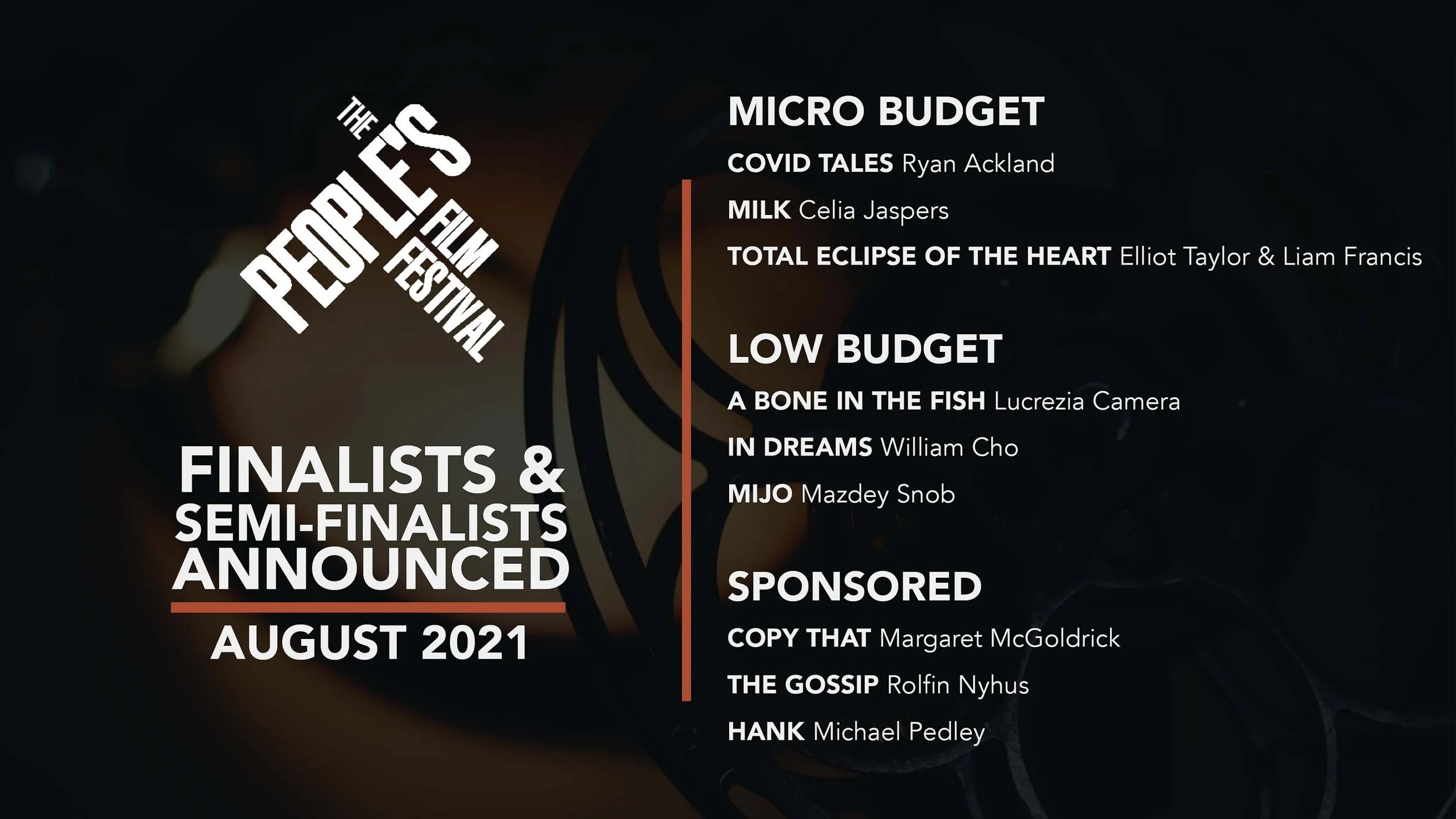
TPFF: August 2021 Official Selections, Finalists & Semi-Finalists
Our jury has put forward the following films as Official Selections, Finalists & Semi-Finalists for this month’s edition of The People’s Film Festival which culminates at our annual gala - March 2022!
Our jury has put forward the following films as Official Selections, Finalists & Semi-Finalists for last month’s submission to The People’s Film Festival which culminates at our annual gala - March 2022!
official Selections

TOTAL ECLIPSE OF THE HEART
directed by Elliot Taylor & Liam Francis
A listless Luna makes big life changes by leaving her boyfriend for the Moon. But when communication breaks down and the world is up in arms, she wonders how she can get him back into orbit, and her own life back on track.
TOTAL ECLIPSE OF THE HEART is an Official Selection in the Micro-Budget Category.

YOSHI FUNABASHI
directed by Mattia Ramberti
A stylised portrait surrounding Yoshi Funabashi, founder of Studio Ypsilon: a luxury atelier designing Italian classics with a Japanese touch. By mixing his sophisticated heritage with a fascination for Italian music, Yoshi’s character becomes the embodiment of the “Opera Connoisseur”.
YOSHI FUNABASHI is an Official Selection in the Low Budget Category.
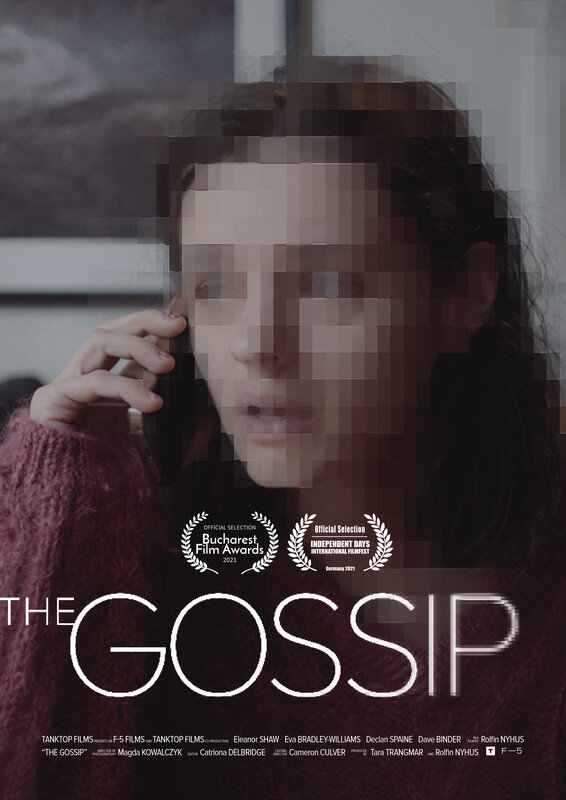
THE GOSSIP
directed by Rolfin Nyhus
A young woman's self-esteem shatters when her best friend launches into a tirade.
Set in Margate, a coastal town in the South East of Britain, The Gossip explores the moral and interpersonal effects of gossip between two best friends.
Careless talk and gossip occur in all walks of life and can create rifts in the closest of relationships. Repairing this damage requires compassion and understanding. Traits that are often most needed when they are least accessible. Healing a once loving relationship can be the hardest task of all.
THE GOSSIP is an Official Selection in the Sponsored Category.
finalists
Micro-Budget Category
COVID TALES directed by Ryan Ackland
MILK directed by Celia Jaspers

Low-Budget Category
A BONE IN THE FISH directed by Lucrezia Camera
IN DREAMS directed byWilliam Cho
MIJO directed by Mazdey Snob

Sponsored Category
COPY THAT directed by Margaret McGoldrick
HANK directed by Michael Pedley

semi-finalists
AN ARTIST’S REALITY directed by Adam John Davis
FEAST directed by Gillian Harker
I HOPE THIS FILM ISN’T ABOUT ME directed by Harry Plowden
SHAHIYA LAHORIYA - THE ACCOUNT OF AN ANTI-HERO directed by Muhammad Razi
SUNWORSHIPPER directed by Darin Caudle
UP-AND-COMING directed by Doug James Berwick
WHAT SETS THE PEOPLE’S FILM FESTIVAL APART?
✔️ Win £1,000 in funding for your next short film
✔️ Free feedback w/ every submission
✔️ Categories based on budget vs genre
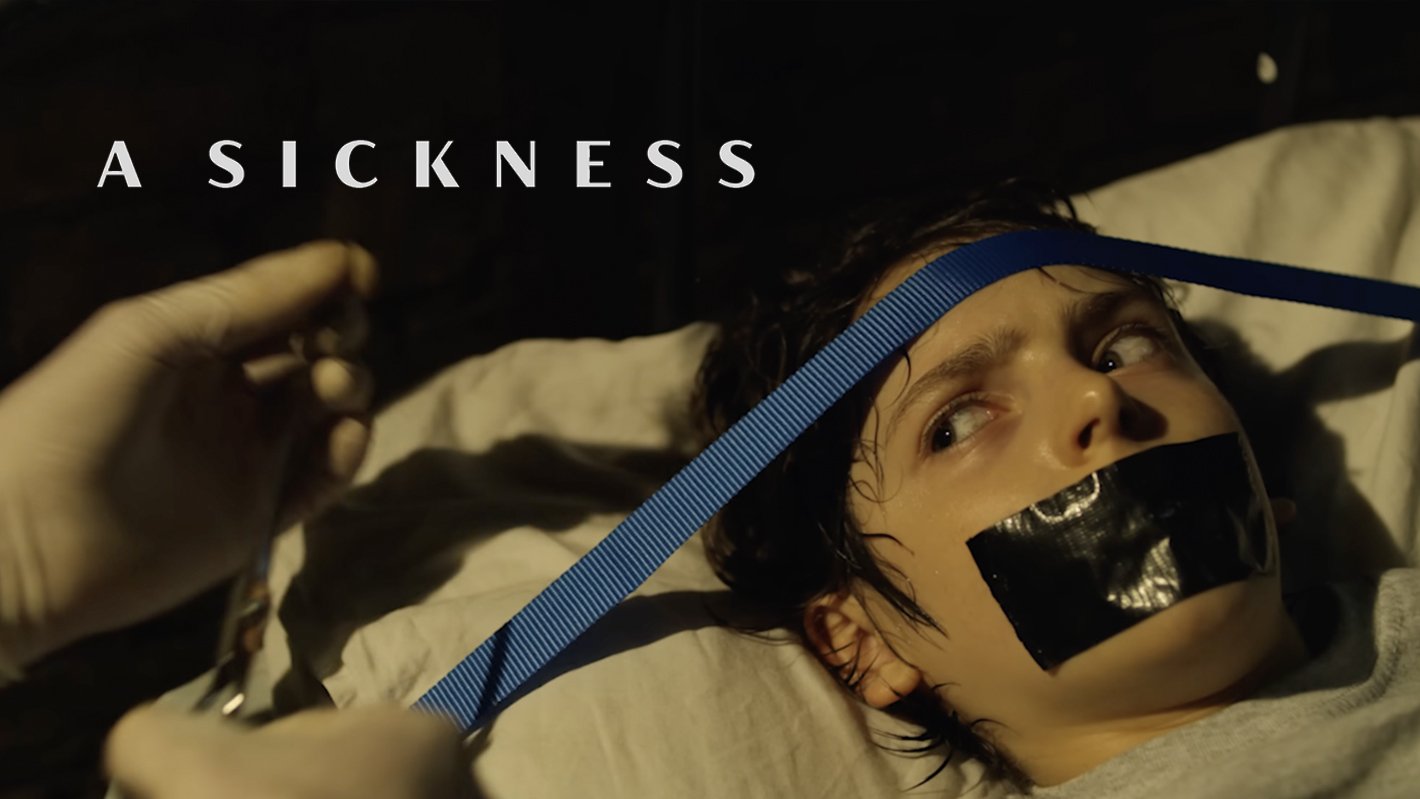
A SICKNESS
Stephen lives a solitary life, governed by routine and order. All things have their place and for good reason as a dark secret lurks beneath his feet.
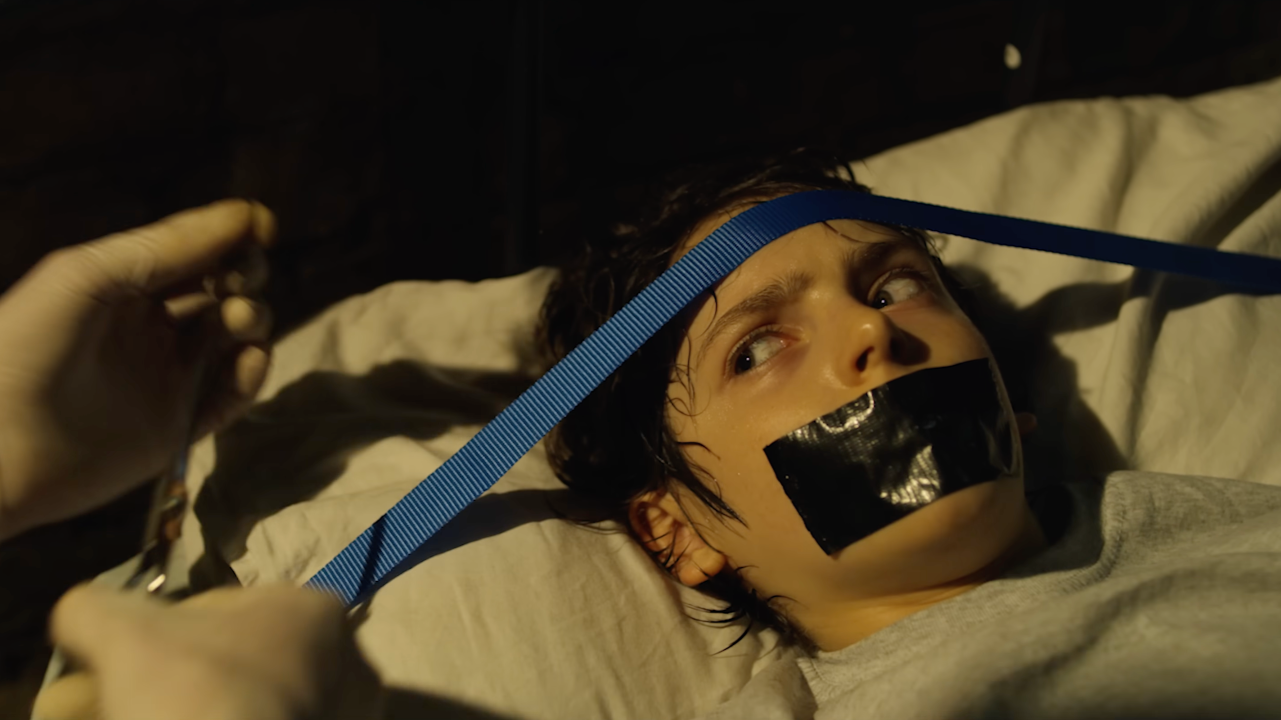
Written & Directed by Guy Soulsby | Produced by Jennifer Gelin
Stephen lives a solitary life. A loner. A man who keeps himself to himself and is governed by routine and order. All things have their place and for good reason as a dark secret lurks beneath his feet.
READ OUR INTERVIEW WITH GUY
Tell us a bit about yourself and your filmmaking background:
I am a writer and director based in London shooting TV commercials, content and short films. I've been directing for the past 17 years and have been very fortunate to direct work all around the world. My passion for short films and narrative work started as a teenager back in college in Yorkshire. I didn't know how to turn this into a job, so I ended up moving to London where I worked for various TV broadcasters directing commercials in the UK and the US. After a number of years I decided to leave and become a freelance director, which enabled me to create relationships with production companies and crew, who in turn helped me make short films.
How did you go about casting the film?
I spend a lot of time researching actors. Looking at recent and old TV shows and films. My missus also has a very keen eye for the right talent based on the characters I write, and she was in fact the one who brought David Langham (His Dark Materials, The Alienist, Doctor Who) to my attention. David is not only a fantastic actor but a lovely person. He was such a pleasure to work with from start to finish. I couldn't have asked for more and he's perfect in the role.
What obstacles did you overcome while in the making of this film?
Making a short film is always a huge task. It requires the help and support of many people. The first step is obviously to write something great but also a treatment to accompany the script so you can visually show contributors what you're thinking and how you see the film. Get a good, great producer. I was lucky to find Jennifer Gelin who had just produced a couple commercials with me. Then it's a case of financing the short, which is a big obstacle. Finding the cast, the crew and the right people who can help in post-production, and this is usually for little to no money. You have to be able to entice people and convince them that your short film will be a great piece of work and they should be part of the journey.
Your strength is really "visual storytelling". There's practically no dialog in the film, but you always keep the frame compelling. Any hacks or tips on how to tell stories visually vs with dialog?
Research is a big part, watching TV shows and films, and understanding how camera movement or the lack of it, pacing, as well as blocking conveys feelings, thoughts and emotions towards your cast and the unfolding scene. This really came together once we had the location as I could work with my DOP Michael Paleodimos to construct how we'd shoot the film and use each room. We shot in two different houses and added walls in the main house in post-production to help convey a sense of claustrophobia. We used almost every single set-up in the film, and so I had to make sure the film would cut together before we shot anything. There were many discussions with my regular editor Nick Armstrong based on location photos and shot lists, which we used to construct the film before we shot anything.
Tell us about the journey of getting your film to audiences:
The film has only just been released and so I'm keen to get it out to short film lovers around the world. KINO is a great platform to do just that, reach like minded filmmakers and people who want a short snippet of entertainment.
You've had previous work featured on Alter and Vimeo Staff Pick. Congrats! Any tips for filmmakers trying to get their work on those same platforms?
Vimeo was pretty mad. I was able to get an email contact from a mate of a mate, and so I sent a note hoping Vimeo would get back to me. I heard nothing. Then I got up one morning and had a ton of email notifications. I checked my short film DEVIL MAKES WORK and there it was a “Staff Pick” rosette. I was over the moon. I think it’s now up to about 60,000 views and counting. Thanks Vimeo!
I reached out to ALTER via their submissions. Like Vimeo I hoped that they would connect with my short film GOD’S KINGDOM and they did, which was amazing. They showcased it on their channels and the film has pulled in nearly 600,000 views, which has blown my mind, and it’s still going up. Thanks ALTER!
What are you working on now?
I am in pre-production on a short film called PROVISIONS. It’s a story about an elderly woman who has a visit from a homecare nurse. He quickly realises his patient is older, in fact much older than he first thought. I also have another short film called SLEEP. It focuses on woman’s husband who sleep walks. Every night she is woken by him wandering around the house. I am always writing ideas and putting together treatments. I’ve had a couple short films get very close to being made and then for one reason or another they don’t. Sometimes things come up that were unexpected and cost too much, other times the perfect location might become unavailable. I had a short film financed a few years ago with an A list actor, and we had a tiny window of opportunity to make the film. The actor got booked on a movie and so the money pulled out and that was that. The reason I mention all this is so people realise it’s not easy but you have to keep plugging away, you have to keep trying to get things made.
Any film recommendations that we should add to our watchlist?
I recently watched a Canadian film called "The Decline" about a group of survivalists, which is excellent, as well as the psychological thriller 'Swallow" and the new horror film "Saint Maud", both of which are great!
Apply to get your short selected as our Weekly Pick

Appetite
A young woman goes on several first dates and repeatedly runs out on the bill, until one day she gets caught.
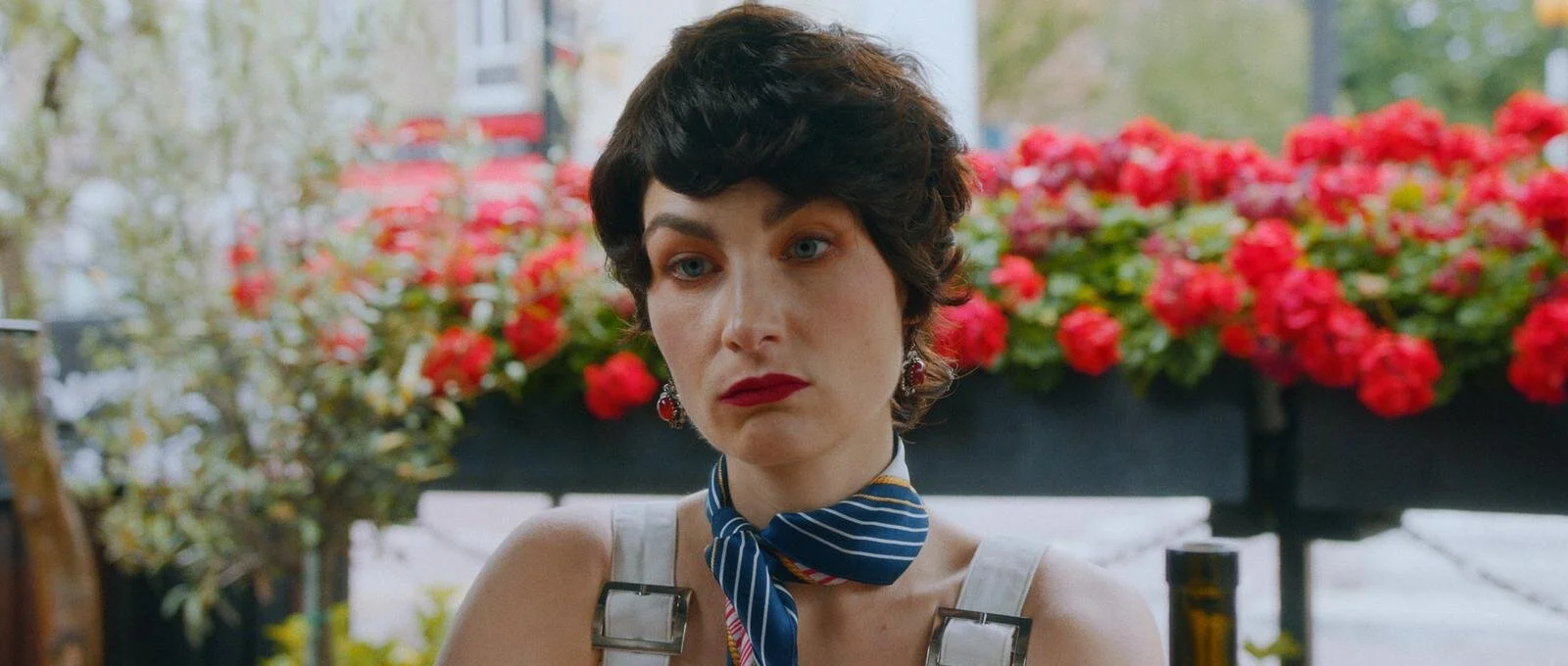
Directed by Xuemeng Li & Katrin Larissa Kasper
Steph is a predatory dater. She likes to indulge on an assortment of hapless men and women, whom she overawes, out-orders and out-eats. What‘s more, she insists she likes to pay. But Steph‘s dating habits are running away with her, just as she is running away from a terrifically large bill. Steph, it transpires, is a serial dine-and dasher. Wearing different guises and personas, each more elaborate than the last, she believes she can slip away from the table and not suffer the consequences. But everyone has to pay the bill in the end.
READ OUR INTERVIEW WITH KATRIN
Tell us a bit about yourself and your filmmaking background:
I’m originally from Germany and studied Theatre Arts in Portland, Oregon. I moved to London and tried to find my way into the industry here, but it’s not been easy, being a foreigner trying to book jobs here. And so a couple of years ago I decided to start creating my own work. First a few scenes for a showreel. Then the idea for Appetite came along. In 2018, a man in the US was found guilty of running out on restaurant bills, after a spree of expensive first dates. The media dubbed him the 'serial dine-and-dasher’. My partner and I heard his curious story on the radio, and we thought it had all the elements to be a comedy short film, and that’s how it all began. Some friends of mine got involved in the project and I recruited some extremely talented crew, and looking back, I’m very grateful that I had these people around me, because everyone had such a strong sense of the look and feel of the film, and so much enthusiasm for budget filmmaking, that it was a fun experience and I was able to focus on my acting as well, as well as the production.
What was it like to co-direct a film, and how did you manage creative decisions with two people in the director's chair?
I found it to be helpful – especially being first-time filmmakers. Xuemeng came at the script with fresh eyes and ideas, and a sensibility that kind of complemented mine. For instance, and partly because I was acting the lead role, and needed to think about my acting on set, I’d be very conscious about what needed to be shot and when, moving through the script, getting the details, without losing the light or the permission to be in the cafes, whereas Xuemeng thought deeply about the tensions and comic potentials in each scene, and making sure we got the right performances. I wanted something like a Wes Anderson tone, you know, not so natural, whereas Xuemeng wanted something much more natural from the actors. Of course, you don’t always agree on everything but we achieved a balance here.
What obstacles did you overcome while in the making of this film?
It was a first for some of us so there was a lot of learning by doing. I hadn’t had the experience of “what can go wrong” when making a film. So my approach as the producer was maybe a bit naïve, or rather very optimistic. I think that turned out to be a good thing though because I was convinced that anything was doable. Obviously when you’re on a small budget it’s not, but the right attitude can really help. Finding locations (mainly restaurants) that we could afford involved a lot of scouting and earning the trust of the owners. London thankfully is great in that regard because people are so used to being approached by filmmakers. Where London is not so great is the weather. To save money, we shot two different dates at the same restaurant on the same day, but made it look like two separate locations by shooting one date inside and the other outside. Of course, it rained buckets and was incredibly windy as soon as we were shooting al fresco. There’s no real way to overcome the weather but just power through, and make the best of the situation. In the end it’s one of the funnier sequences, and adds to the madness of it, this extravagant first date taking place in a gale.
Tell us about the journey of getting your film to audiences:
I asked friends and contacts in the industry for film festival advice and started to make a list of festivals for Appetite. I’d say it’s crucial that you do that and be strict and honest with yourself about what you can achieve. What I mean by that is: don’t waste money on submissions to prestigious festivals if you’re film can’t play in that league and don’t apply to random festivals. You’ll always end up spending more than you thought anyways so don’t make it harder on yourself. We were lucky to get into quite a few festivals in different countries and even won some awards. Sadly, most of them had to be online due to the pandemic but we were still very happy as our expectations weren’t high for our first film. Recently we’ve also joined the UK streaming platform Paus TV. We still have a few festivals to hear back from. After the festival round we might want to have Appetite on YouTube or Vimeo. There’s also a great new indie video platform called Klipist that we’re interested in.
What are you working on now?
I’m currently co-producing another short, a political drama called Kompromat which is based on the many stories in recent years of Russian spies tricking right wing politicians. We filmed a first scene a few months after we had shot Appetite in 2019 and continued production between lockdowns in summer 2020. At the moment we’re editing. Last year in lockdown I began developing an idea for a sci-fi drama about CGI actors and what it means for the industry. We’ve now got an exciting short film script, which is meant as a low-budget proof of concept piece for what will probably be a series, and we’ll be exploring how to get the short funded.
Any film recommendations that we should add to our watchlist?
More recently, I loved Ari Aster’s Midsommar and Charlie Kaufmann’s I’m Thinking of Ending Things. This past year, between rewatching all of Succession, I’ve binged on some films from the 30s-50s. A lot of Cary Grant, Hitchcock and Billy Wilder. I’d recommend A Foreign Affair by Wilder – with the amazing Marlene Dietrich. And His Girl Friday with Grant and Rosalind Russell.
FOLLOW APPETITE ON INSTAGRAM
Interested in getting your work selected as Short of the Week?

Andi
Andi, a Long Beach based roller skater, discusses her journey of shedding false identities and the value of finding a safe space among found family in order to grow past trauma.
Directed by Julia Kupiec
Andi, a Long Beach based roller skater, discusses her journey of shedding false identities and the value of finding a safe space among found family in order to grow past trauma.
READ OUR INTERVIEW WITH JULIE
Tell us a bit about yourself and your filmmaking background.
I was an actor before I was a filmmaker - but when it came to transitioning to screen acting when I was a teenager, I developed a real sense of anxiety in the audition room. It made it impossible for me to truly connect with a story because I was so worried about whether or not I was performing well, whether or not the people I was auditioning for thought I was good or worthwhile. I stopped enjoying it because I lost sight of how to like myself in that space. I ended up applying to a filmmaking program at my high school and I realized that I could connect with stories in a deeper sense behind the camera. I loved cinematography, editing, sound design - the whole thing. I could forget myself and just sink into something that interested me. I then attended NYU for film production and wound up diving into a bunch of different craft positions. I tried my hand at pretty much everything. Ultimately, I traveled farthest down the cinematography track and spent the majority of my time shooting for other students. It wasn’t until the end of my junior year of college that I thought to myself - you know, I think I’d really like to direct. It sounds like a hot mess of a path when I write it out like this, but ultimately my love for filmmaking comes from a bunch of different directions. I find every element of craft to be fiercely interesting and I think that’s essentially where I come from as a director: speaking the language of all of these different elements of storytelling and finding the common thread that weaves them together to create an emotional experience.
How did you find the subject for your film?
My partner / DP Ace and I had been living with my parents in Santa Barbara during the shutdown. A few months had gone by and COVID precautions had been announced for how to proceed with productions so we figured - well, we should probably make something, what else are we doing? We figured the only thing we could afford to do was a profile documentary with no production sound (couldn’t afford a sound mixer but a friend of mine in LA did have a little zoom recorder so I figured we could record a voice over). We were kind of just scrounging around social media for potential subjects and Ace remembered that the girlfriend of his god brother, Sean, was supposed to be a pretty talented roller skater. We reached out to Sean to see if Andi would be willing to hop on the phone with me to talk about putting a little project together. We Facetimed a few days later and we just clicked - right away I realized that she was an incredibly open person, very willing to dive deep into her background and insecurities and the things she’s overcome. I figured - there’s a story here. Let’s just keep talking.
What obstacles did you overcome while in the making of this film?
Ace and I decided to pool some money we had saved up to make the project happen. We figured together we could get to $2,500 and that was enough to get a camera package for a weekend and to hire a steadicam operator and an AC to assist them for one of the days. The second day, I would full focus and direct at the same time. There was so much movement, there was just no way Ace was going to be able to pull for himself. This is where having traveled down so many departmental positions kind of comes in handy. ACing is like breathing for me. I did it all throughout college and it’s how I supported myself when I graduated in 2019. It definitely isn’t easy to AC and direct at the same time, but if you’re paying for your own project and you really can’t afford someone to help you out - it’s nice to feel comfortable shouldering the extra work. It was just Ace, myself and our friend / producer, Samson on set. We all did everything. It’s funny writing about this as “an obstacle” of sorts, because it definitely was - but at the same time, I actually really enjoy working in a super stripped back form at times. It feels grounded, like you’re really getting your hands dirty.
The other obstacle was the VO. We only had a zoom recorder and no actual space to record the voice over (the only interior space we’d have access to was Andi’s apartment and she had a dog who had a tendency to bark if strangers were present). So it was like 7 pm and Andi and I crawled into my Volvo Station Wagon with a bunch of pillows and some mango White Claws and recorded her interview parked on the side of the street, HAH. I’m actually grinning ear to ear thinking about this. We constantly had to re-park because if you’ve ever been to Long Beach, parking is a DISASTER. It’s all permitted. We always had someone coming up to us being like, um, so sorry but this is my spot. We were a mess and it was so much fun. We talked about everything. I hope the intimacy of that conversation and the joy we felt comes through in the piece. It was like a 3 hour long heart to heart, and I just thought to myself while it was happening: I’m so glad to be here. This is amazing.
Any hacks or tips for making a documentary short?
I feel like there’s so many ways to approach this question. I suppose what first comes to mind is: I kind of have the philosophy that you could make an interesting documentary about anyone, you just have to pay close enough attention to find that person’s story. And their story probably isn’t what you came in thinking it was. So just keep your eyes and ears open - it’s all in the details, in the in-between spaces, in what isn’t said just as much as what is. That’s where nuance lives and that’s where you have to burrow in. If you create a safe space and allow yourself to be vulnerable, maybe someone else will open themselves up to you - and that’s a really beautiful thing to experience.
Tell us about the journey of getting your film to audiences.
This is a funny project because it’s something that isn’t really long enough to exist in an in-person festival space. It also has a somewhat branded feel. That was intentional - we partly made this project to try to get more work in the commercial space. We all want to make projects that we connect with and which feel like genuine modes of artistic expression - but we also need to figure out how to pay rent and simply survive. I wanted to see if I could make something which felt like it might get me more branded work, but which also felt like it fulfilled an artistic intention.
What are you working on now?
I recently wrapped production on a branded documentary for a fashion designer friend who owns her own label - By Liv Handmade. I decided to bring on a dear friend and collaborator, Nina Gofur, to co-direct the project with me. It felt like the right kind of challenge. We have a lot of crossover in the kinds of emotional themes we’re interested in, but we also have extremely different approaches to filmmaking. I lean narrative in a more traditional sense and Nina is primarily an experimental filmmaker. I just felt like we might have a really interesting chemical reaction on this particular project. I wanted to bring in a more experimental approach and I also wanted to really try to share that directorial space with another creative who thinks differently than I do. I learned more about myself as a filmmaker from that experience than I ever have. We’re currently in the editing phase and I’m incredibly excited to piece together what we’ve captured. Aside from that, I’m also heading into production for a solo-directorial music video for Columbia Records artist, Clinton Kane. And Nina and I are set to co-direct another music video for NYC based artist Halima.
Any film recommendations that we should add to our watchlist?
Oh gosh! So many. In the branded / doc space, I really love Haya Waseem’s work. She’s already established so perhaps you’ve heard of her but I think her directorial voice is really special. Her pieces capture subtlety and lean into a sense of naturalism that is so remarkable to me.
For a doc feature, Lance Oppenheim’s “Some Kind of Heaven” really struck me. The visual / editorial style he went with really resonated and it always feels great when you see a piece of work that’s better and more ambitious than anything you’ve made, but the core of the things the director thought about and implemented feel like choices you would also make. I suppose it’s reassuring in a way - like seeing a little bit of yourself out in the established filmmaking world and going, ok, that’s a touchstone for me. I think I could do something like that.
Narrative feature: literally anything by Andrea Arnold, Greta Gerwig or Noah Baumbach. Those are huge names and likely completely unhelpful recommendations, but they’re also my heart encapsulated. I recently also watched Pieces of a Woman and the first 30 minutes are maybe some of the most powerful filmmaking I’ve seen. Y Tu Mama Tambien, Portrait of a Lady on Fire, The Souvenir, Eighth Grade, A Ghost Story, Ida. Wow this is a random list. So many more, but I’ll stop there.
FOLLOW JULIA ON INSTAGRAM
Interested in getting your work selected as Short of the Week?

Soon Come
Ezra takes us on a journey through a desolate London as he reminisces on what life was like before all of this, whilst reminding us of how far we have come.
Directed by Richard Armitage & Josh Knox
Things are finally looking up, and it’s almost hard to imagine a locked-down London right now.
Ezra takes us on a journey through a desolate London as he reminisces on what life was like before all of this, whilst reminding us of how far we have come.
READ OUR INTERVIEW WITH RICHARD
Tell us a bit about yourself and your filmmaking background.
I have always had a keen interest in all things film and photo since a young age, I think skateboarding played a key part in that. I moved to London to study Photography, just from being here and surrounding myself with likeminded people, I soon found myself working in the world of film. Since then I have been shooting all types of content all over the world, I can't imagine doing anything else.
How did lockdown affect your creativity and inspiration to make art?
It’s been very up and down, at times being locked up has actually given me more inspiration to get out and create. Whilst on the other hand it can completely suck all of the life out of you, leaving you more demotivated than ever.
What obstacles did you overcome while in the making of this film?
With lockdown affecting the creative industry so hard, it has been difficult to keep motivated at times. Rather than letting it bring us down we took the opportunity to get out and make something.
I think the concept was the most difficult part of the whole process. We really wanted to create something that reflects these incredible times, something that we can look back on in the future to remind us of what we have all been through, and how far we have come. We chose to tell this story through a poem, describing all the things we love, what we miss and what we hope for once things open up again. We used a skateboarder as a visual vehicle to show the state of the city, London has never looked anything like this, and probably never will again, we had to document it.
Any hacks or tips for making a short film?
Just get out there and go for it, act on inspiration, the worst thing you can do is sit on an idea for too long and let it deteriorate.
Tell us about the journey of getting your film to audiences.
The whole process of promoting films like this is a very new journey for me, so I’m currently learning about how this works, it's very confusing.
What are you working on now?
I have another short film that I also shot at home over lockdown, I just haven’t had the time to really get stuck into the edit yet, I’m super excited to get working on it though!
Any film recommendations that we should add to our watchlist?
Too many to list!
I did watch ‘THE LAST STORM’ by Liam Saint-Pierre last night though and loved it, well worth a watch!