
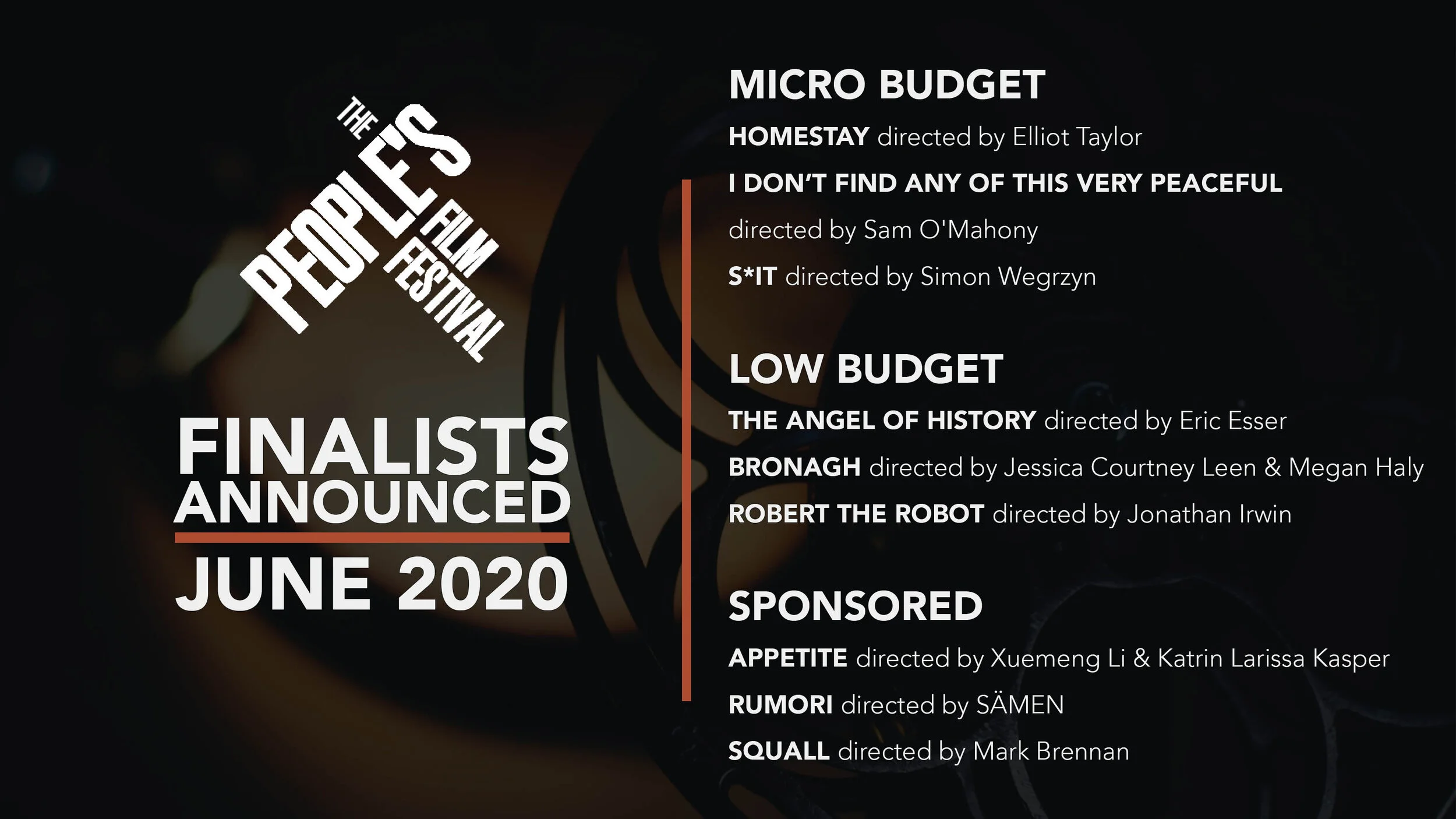
TPFF: June 2020 Official Selections
We are excited to announce our Finalists and Semi-Finalists from June’s edition of The People’s Film Festival.
Our jury has put forward the following films as Official Selections, Finalists & Semi-Finalists for this month’s edition of The People’s Film Festival!
official selections

I DON’T FIND ANY OF THIS VERY PEACEFUL
Directed by Sam O'Mahony
London. Lockdown. With her partner missing (again) anxiety-prone Katharine hits a catastrophic low. Her mother tries to persuade her to use the time to re-engage with her art, a passion long-suppressed by Katharine’s controlling partner. Katharine tries but quickly gives up. Soon the claustrophobic nature of their flat coupled with an abundance of newly-arrived houseflies and her growing anxiety about post-lockdown life, forces Katharine to consider the fatal option. One night, at the point of no return, a lost dog forces its way into her home. Relenting to its demands, Katharine allows it to stay, forgoing, her previous plans. As the long lockdown days drag on, Katharine becomes intrigued by her strange new house guest. Spurred on by the needs of another, Katharine begins to taste something of life once more. But as lockdown comes to an end, and the houseflies begin buzzing once more, Katharine is forced to reckon with the one last obstacle standing in the way of her her freedom.
I Don’t Find Any Of This Very Peaceful is a low-key psychological thriller about the darkness we must embrace before we can truly accept who we are. With echoes of Haneke and Hitchcock the film’s heightened cinematic style attempts to draw the audience into Katharine’s small world and experience her journey out of the darkness.
I DON’T FIND ANY OF THIS VERY PEACEFUL is an Official Selection in the Micro-Budget Category

THE ANGEL OF HISTORY
Directed by Eric Esser
A border in Europe. A painting by Paul Klee. A poem by Walter Benjamin. A film about yesterday and today, and how difficult it is to recognize one behind the other.
THE ANGEL OF HISTORY is an Official Selection in the Low Budget Category

RUMORI
Directed by SÄMEN (Ludovico Amen Galletti & Sami Schinaia)
Visually exploring the emotional complexity of a breakup, Rumori has at its core how the lack of understanding and communication between two people can destroy a relationship. Introspective, subtle and beautifully melancholic, the short film stands as a summary of the endless conversations and sleepless nights experienced as two people gradually drift apart and disappear from each other's minds.
Set in a house in the Italian countryside, we find the characters in the film, played by Andrea Arcangeli and Matilda De Angelis, stuck in a loop of internal arguments. They share the same space, yet they are unable to see and perceive one another. They live for each other, yet they are blind to each other's needs. Feeling trapped and alone within this space, the house becomes a metaphor for their stagnant and decaying relationship.
As a true reflection of our world, Rumori argues that to stand still is to disappear. The only way out of a toxic dynamic is to embrace change, transform and move forward.
RUMORI is an Official Selection in the Sponsored Category
finalists
Micro-Budget
HOMESTAY directed by Elliot Taylor
S*IT directed by Simon Wegrzyn

Low Budget
BRONAGH directed by Jessica Courtney Leen & Megan Haly
ROBERT THE ROBOT directed by Jonathan Irwin

Sponsored
APPETITE directed by Xuemeng Li & Katrin Larissa Kasper
SQUALL directed by Mark Brennan

Semi-Finalists
IT’S A WRAP directed by Brian Unwin
JUDAS directed by Adam Palmer
SAME TIME NEXT WEEK directed by Gigi Burgdorf
SO LONG directed by Jo Jo Lam
STOP AND SEARCH directed by Harry Jackson
WHAT SETS THE PEOPLE’S FILM FESTIVAL APART?
✔️ Win £1,000 in funding for your next short film
✔️ Free feedback w/ every submission
✔️ Categories based on budget vs genre


STOP AND SEARCH
If you're black in the UK, the police are 10 times more likely to stop and search you. How would they feel if it was the other way around?
If you're black in the UK, the police are 10 times more likely to stop and search you. How would they feel if it was the other way around?
Starring: SELOM AWADZI (Attack the Block), ALLESSANDRO BABALOLA (Top Boy, Flesh and Bone), PHIL BARANTINI (Band of Brothers, Ned Kelly, Chernobyl), DEAN KILBEY (All the Money in the World, Love Possibly)
Written and Directed by HARRY JACKSON
Produced by MILLY UPTON
Director of Photography MOLLY MANNING WALKER
Edited by CHOLE HARDWICK
STOP AND SEARCH is a great example of the right film at the right time. We first caught wind of the project thanks to our friends at Director’s Notes flagging it and we instantly thought that this was a special film we had to feature. Check out our interview with director Harry Jackson below.
TELL US A BIT ABOUT YOUR BACKGROUND:
I started in acting, having the honour of being murdered by Vanessa Redgrave four times a week for the RSC. Like all child actors I went off the rails, or in other words became a director. My graduation film ‘Little’ won an RTS award, aired on Sky Arts and screened at Foyle Film Festival. Since then my shorts ‘Lifeline’ (Julia Deakin) and ‘MatchBox’ (Simon Callow) have screened at Rhode Island, Kerry, Kinofilm Manchester, Fastnet and London Short Film Festivals between them.
STOP AND FRISK SEEMS VERY TIMELY. DID YOU MAKE THIS FILM AS A REACTION TO THE BLM PROTESTS OR DID YOU HAVE THIS IN THE WORKS PRIOR:
I actually shot the film in 2019 and by chance was planning to release it around this time anyway. After the initial BLM protests and a growing desire to address racism in the UK, it made sense to speed up the release. Hopefully it can be part of a larger effort to put the stop and search issue on the agenda.
WHAT WAS IT LIKE TO BRING THE SCRIPT TO LIFE (WAS IT MADE DURING LOCKDOWN?):
It was shot pre-lockdown, so fortunately I didn’t have to deal with any of the COVID restrictions. The main challenge of the shoot was time, as it so often is. We shot the whole film in one day during one of the shorter days of the year – so by the end it became rushed. It’s a shame that this so often happens, as if anything you want to invest the most time into your ending. If it wasn’t for the actors, I’d be tempted to work backward!
DID YOU HAVE ANY CREATIVE SOLUTIONS FOR CREATING QUALITY CONTENT ON A MINIMAL BUDGET:
I hate to bring it back to time again, but the ‘time is money’ cliché is very real. We didn’t have the budget for more than a one-day shoot, so we had to shoot quickly. Going handheld massively helped with this, as setting up a tripod or dolly can be so time consuming. I wouldn’t have done this if it didn’t suit the film, but thankfully it did as it probably saved more money than any other decision.
WHAT'S YOUR FAVOURITE PART OF THE FILMMAKING PROCESS:
Post-production. Script writing can go in so many directions that sometimes it can be quite overwhelming. Being on set is always time pressured, and there’s so much out of your control – which is surely a long way from being the best environment to make decisions. Editing is a pleasure because you get a sense of the film coming together, and you have the luxury of time to try out everything you want to. Then just as you get bored of the edit, you get to add sound, music and the grade, which is always a refreshing new layer. Also most importantly I can be lying down on the sofa in my trackies.
SCREENING RECOMMENDATIONS TO KEEP US BUSY WHILE SOCIAL DISTANCING
On a related theme to my film, I'd really recommend 'Fruitvale Station'. It's about Oscar Grant, a young black man who was killed by the police - it's brilliant. Otherwise I've recently enjoyed 'The Assistant' and I've also been revisiting all of David Lean's films, which are perfect for when you have plenty of time.
Interested in getting your work selected as Short of the Week?

19 COVID LANE
As the covid pandemic sweeps the world, three neighbors shelter in a makeshift bunker while struggling to maintain their sanity.

As the covid pandemic sweeps the world, three neighbors shelter in a makeshift bunker while struggling to maintain their sanity.
Director: RYAN MONOLOPOLOUS
Co-Writers: HAMID THOMPSON, RYAN MONOLOPOLOUS
Producers: CARLOS VELASCO, HAMID THOMPSON, PARIS SCHULMAN, CHRIS EVANS
In an amazing feat of lockdown filmmaking, the team behind 19 Covid Lane have created a wonderful satirical homage to 10 Cloverfield Lane, giving it a covid twist. Check out our interview with the filmmakers…
WE TYPICALLY ASK “WHAT WAS YOUR INSPIRATION” BUT I THINK WITH YOUR FILM IT’S PRETTY OBVIOUS. COULD YOU TELL US ABOUT THE PROCESS OF CREATING A 10 CLOVERFIELD LANE HOMAGE AROUND COVID-19:
Interestingly while the film is inspired, on a base level, by 10 Cloverfield Lane, we did not hold to that film’s structure, plot, or devices. Instead that film served as our thematic inspiration - embodying the paranoia and hysteria of the Covid-19 pandemic. When Georgia and the rest of the world issued a shelter in place order - suddenly millions of people felt afraid, trapped, and in a void of information - making this film a perfect parallel. Using 10 Cloverfield Lane as the foundational premise, we then constructed our story upon that; with scenes that satire the menagerie of the horror / psychological thriller genre. Our end goal was to not create a spoof, but to approach 19 Covid Lane as a piece of intelligent satire that stands on its own as original, entertaining, and thoughtful.
WHAT WAS IT LIKE TO BRING THE SCRIPT TO LIFE DURING LOCKDOWN:
People respond to crisis in a lot of ways. For Hamid and I, we try to funnel our thoughts and energy into something creative that may help progress the conversation. Bringing a project to life was a unique problem - in that we had to be very aware of safety concerns, but more importantly of creative something that spoke about the issue without mocking those affected by it. We feel we really hit that balance.
DID YOU HAVE ANY CREATIVE SOLUTIONS FOR CREATING QUALITY CONTENT DURING LOCKDOWN:
The biggest disruptor to our traditional production process was access to team. The solution there was to take the members of Hamid and I’s homes and turn them into our crew, to convert my basement into the bunker, and have everyone on double or triple duty (for example our producers served as crafty, camera assists, etc). In this way, we created the film in a fashion similar to film school - which was a fulfilling in that we grew to connect with and trust each other in new ways.
WHAT'S YOUR FAVOURITE PART OF THE FILMMAKING PROCESS:
RYAN: For me, my favorite part of filmmaking is the energy and tactical problem solving on set that leads to truth. And by truth here I don’t mean anything densely philosophical, I mean multiple parties working as hard as they can to create the great illusion that is a film - where characters and the story ultimately become believable and ‘real’. I am heavily involved in film technologies and immersive storytelling that are pushing filmmaking into new direction (something this pandemic will ultimately fast track) but I strongly believe nothing will ever replace the human energy of being on a set.
SCREENING RECOMENDATIONS FOR QUARANTINE:
HAMID: When it comes to gaining an audience - there are always challenges. During quarantine events and film festivals have been placed on hold, meaning short films have to work to find a new venue to reach audiences. We combined a social media push with a well planned marketing campaign that landed us with a distributer: Funny or Die where we will be releasing soon.
Interested in getting your work selected as Short of the Week?

ALEX & MR. FLUFFKINS
Alex and his cat Mr Fluffkins have been having a pretty chilled time in lockdown, but life is about to change for these two... or is it?
Alex and his cat Mr Fluffkins have been having a pretty chilled time in lockdown, but life is about to change for these two... or is it?
Directed by ADEENA GRUBB & ANDY BIDDLE
Recently featured at our Short Film Open Mic, this short animation is an amazing feat of lockdown filmmaking. It just goes to show that lockdown doesn’t have to hinder creativity or even the quality of your work. We recently caught up with director Andy Biddle whose past credits include three Wes Anderson films - Fantastic Mr Fox (2008), The Grand Budapest Hotel (2013) and Isle of Dogs (2017). In 2011 Andy joined Laika in Portland, Oregon for a year to animate on Paranorman, directed by Chris Butler and Sam Fell. He was also involved in Ma Vie De Courgette (2015), Paddington Bear (2014) and Wallace and Gromit Curse of the Were-Rabbit (2005).
WE TYPICALLY ASK "WHAT WAS YOUR INSPIRATION TO WRITE YOUR FILM", BUT I THINK IN YOUR CASE IT'S PRETTY OBVIOUS, SO CAN YOU TELL US A BIT ABOUT YOUR WRITING PROCESS:
In terms of writing process, myself and Adeena had, for one reason or another, decided to make a little Easter loop back in April called Little Hoppy Horror. We were both keen to make more personal projects and this little loop was very much the birth of Alex and Mr Fluffkins. We'd enjoyed making Little Hoppy Horror so much, we were spurred on to make more work together. Adeena had seen that Seed Animation were looking for lockdown films and we thought it would be fun to do something a little more ambitious with 'lockdown' as the theme. Adeena and I found that we were a good partnership and generally improved each others ideas. One of us would come up with an idea and then the other would suggest something to make it even better.
MAKING A FILM WHILE IN LOCKDOWN IS QUITE IMPRESSIVE. HOW DID YOU MANAGE TO PULL IT OFF:
We knew this film was something we could do this after the success of Little Hoppy Horror so we generally followed the same lockdown film making formula. Adeena again made Alex and Mr Fluffkins as well a bunch of props and mailed them to me. I set up in my spare room and both lit and animated it. Another friend of ours called Malcolm Hadley is a DOP and had very kindly Uber'd over some decent film lights and kit which was obviously a huge help. Both Adeena and I shared the load with post production and Adeena took on the soundtrack and edit. So to answer the question, it wasn't hard at all. Adeena and I spoke every day to talk about direction, the edit, set dressing, lighting etc and it obviously helped that I had a spare room to shoot in but we both found the process relatively painless. We definitely want to do more together and plan to do so.
DID YOU HAVE ANY CREATIVE SOLUTIONS FOR WORKING ON A SMALL BUDGET:
Adeena and I are both what we have since termed "craft hoarders'. We both have a lot of crafty bits and pieces and props from old projects tucked away in drawers and boxes as well as random bits of rubbish that we deem "might come in useful one day" that most would throw away. And of course favours! I've already mentioned Malcolm lending us some lights - that was a huge help. Without his help it wouldn't look half as good.
WHAT'S YOUR FAVOURITE PART OF THE FILMMAKING PROCESS:
I work predominantly as an animator and Adeena works in art department and i think, for both of us, just the making of something that we'd come up with way the most exciting. We've both worked for other people for so long now that actually making something where we made the directorial decisions was amazing. I also personally loved lighting this project. It's not something I'd ever really done before so that was great fun. I also really enjoyed making something out of nothing. A piece of set for example that was very much an after thought was the door that I made out of a scrappy bit of wood. A professional model maker would scoff at my efforts but I knew that it didn't matter that it wasn't perfect because I knew light would add so much so it would still look good on camera.
WHAT'S YOUR NEXT PROJECT:
I am working on another collaborative project with another model maker called Claudia Brugnaletti and Adeena is continuing to work on a personal film she has been doing for a few months now.
My project with Claudia is about the meeting of two characters - an electric lamp and a candle and Adeena's project is about multiple date fails.
Interested in getting your work selected as Short of the Week?

THE CALL CENTRE
Paige spends her days setting up people’s life insurance in a drab North London call centre. She is bored of her life, longing for intimacy and connection that she unexpectedly finds on the phone to a charming customer called David.

Written & Directed by LOUISA CONNOLLY-BURNHAM
Produced by LOUISA CONNOLLY-BURNHAM & EMILY EVERDEE
Paige spends her days setting up people’s life insurance in a drab North London call centre. She is bored of her life, longing for intimacy and connection that she unexpectedly finds on the phone to a charming customer called David.
About the Film:
If you were at our Short Film Open Mic last moth you may have already seen this film, but even so we think it’s worth a rewatch. Well-crafted and consistently compelling "The Call Centre" harkens back to the era of films like "Fatal Attraction" or "9 1/2 Weeks" - stories that explored the frontiers of human desire, desperation and violence in a provocative, powerful way.
Read our interview with Louisa
WHAT WAS YOUR INSPIRATION TO WRITE THE CALL CENTRE:
A few years ago whilst in-between jobs as an actress I started a part-time job at a call centre selling insurance in order to pay the bills. I was blown away by how much customer data I had at my fingertips. I knew where they lived, if they were married, how many kids they have, their email address, where they work…the list goes on. It got me wondering what could happen if all that information got into the wrong hands, or in the case of my film, into the hands of a very lonely young girl.
DID YOU HAVE ANY CREATIVE SOLUTIONS FOR CREATING QUALITY CONTENT ON A MINIMAL BUDGET:
Following a successful Kickstarter campaign the budget we got to work with was actually pretty decent - around the 18K mark. However, we certainly still had to pull some favours along the way. For example, I wanted the office scenes to feel super busy with lots of bodies, so all of my mates turned up for free to fill up the space and support me. We managed to get our gorgeous office location for free thanks to a family friend and another friend of mine also helped me out with our kit. I’ve done lots of favours for people over the years and I was certainly repaid during the process of making The Call Centre. I’m so unbelievably grateful to the many friends, family and even strangers that got behind me. I couldn’t have done it without them. So my biggest advice would be kind and generous on the way up and I believe you’ll be repaid. Don’t be afraid. Send the email. Ask for that favour. What have you got to lose?
WHAT'S YOUR FAVOURITE PART OF THE FILMMAKING PROCESS:
Having been an actress for 14 years prior to making the film, my favourite part had to be putting my directors hat on for the first time. I’ve never had that sort of control on set. It felt incredible. As an actress so many decisions are out of your hands and in a way you sort of fall to the bottom of the pecking order. It was also very liberating to create a piece of art that I’m incredibly proud of that originally stemmed from a day job that made me miserable. It came full circle.
SCREENING RECOMMENDATIONS TO KEEP US BUSY WHILE SOCIAL DISTANCING:
Well with it being the best month of the year, PRIDE MONTH, I’d like to recommend the documentaries The Death and Life of Marsha P. Johnson and Paris Is Burning. I also think with everything that’s going on in the world right now, the incredible Black Lives Matter movement in particular, I’d implore everyone to watch 13th and When They See Us - in my opinion these are both essential viewing, it’s time for all of us to get educated and energised. And then if you just fancy a bit of trashy tele (which is totally ok) treat yourself to Selling Sunset on Netflix (it’s awful and I love it).
Interested in getting your work selected as Short of the Week?

TPFF: May 2020 Official Selections
We are excited to announce our Finalists from May’s edition of The People’s Film Festival.
After receiving a record number of submissions in a single month, our jury has put forward the following films.
official selections

Home Stream
Directed by Giulia Gandini & Lily Blackham
Lily has been homeless for a year and a half. We gave her a phone to tell us her story.
HOME STREAM is an Official Selection in the Micro-Budget Category

BULL DOG
Directed by Kieran Stringfellow
After spending the night in a cell, a rough sleeper has a score to settle.
BULLDOG is an Official Selection in the Low Budget Category
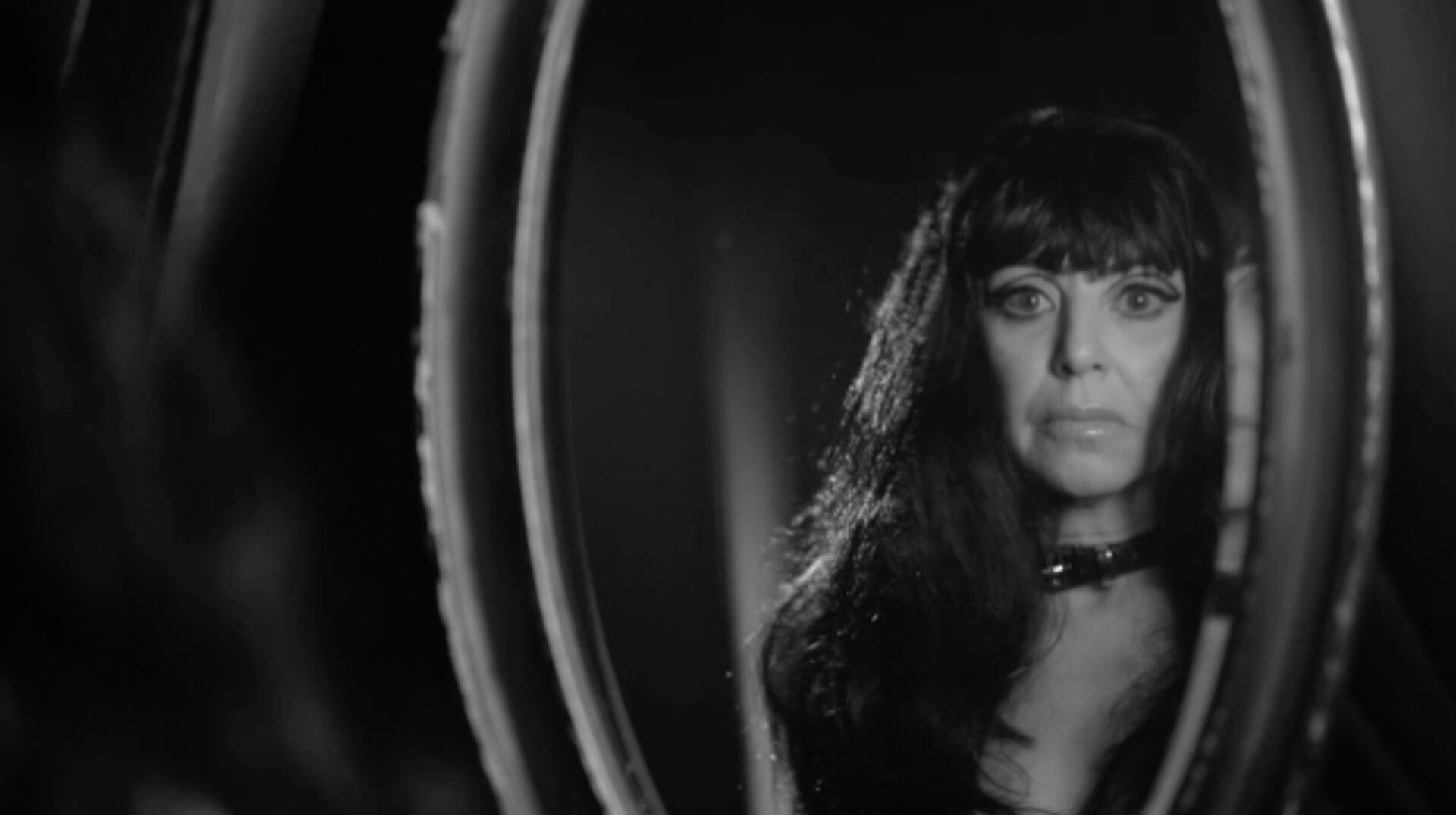
SWITCH
Directed by Desiree Faust, Stefana D. Brancastle
A dark love letter to the critic, from the artist. ‘Switch’...the one who is both slave and master…(in BDSM), questions the limits imposed on filmmakers.
SWITCH is an Official Selection in the Sponsored Category
finalists
Micro-Budget
EXHAUSTED directed by Chester Briscall-Harvey
A PRESENT FOR A GOOD GIRL directed by Stephanie Upsall

Low Budget
MOONSHINE directed by Tom Sands
OUTSIDERS directed by Grace Parry
Sponsored
SILENT MOVIE directed by Melo Viana
TINDERBOX directed by Rickey Larke

Semi-Finalists
2:40 TO LONDON directed by Gavin Irvine
THE COSMONAUT directed by Sami Abdul-Razzak
THE DEAL directed by Stuart Black &George Felner
(DIS)CONNECTED directed by Sophia Dabizha & Boris Bosilkov
EXTRA directed by Kioumars Ahmadi
THE FERALS directed by Stefan Ruiz
HUGS directed by Harry Plowden
JITTERS directed by Sara Jordan
LIGHTS OUT directed by Ben Walden
PLAYING WITH FIRE directed by Kevin Tsai
STRANGE directed by Cameron Carr
THIRTY FOR AN EIGHT directed by Oliver Ward
WELL MEANING PEOPLE directed by Charlie Brades-Price
WHAT SETS THE PEOPLE’S FILM FESTIVAL APART?
✔️ Win £1,000 in funding for your next short film
✔️ Free feedback w/ every submission
✔️ Categories based on budget vs genre

Inside the LA George Floyd Protests
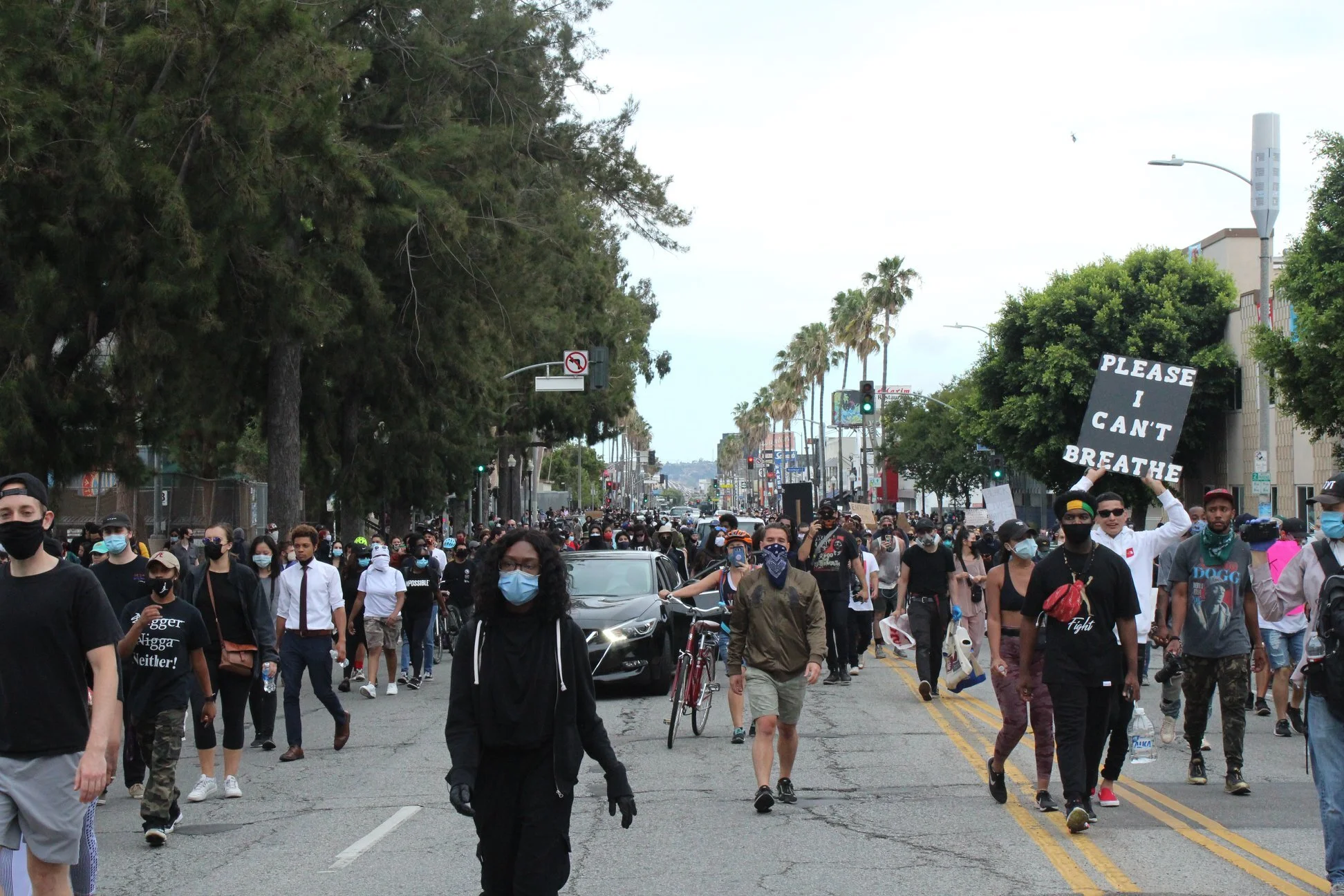
In this video journal, actress Shani Drake discusses her experiences at the Black Lives Matter Los Angeles protests over the police murder of George Floyd.

This week we take you inside the capitol of the entertainment industry - Los Angeles - and speak to actress Shani Drake. In this video journal, she discusses her experiences at the Black Lives Matter protests over the police murder of George Floyd - a single incident in police violence that we are sure needs no introduction since it sparked international outrage.


Shani has starred in TV series and many independent films including Avery Road which screened at our Short Film Open Mic in 2018. Read our interview with Shani below to get her eye witness perspective of what it’s like to be marching in the streets of LA.
Tell us a bit about yourself and your background as an LA based actress:
I’ve been acting out here in LA for a little over five years now. I’ve been able to be a part of some great projects, which I’m thankful for, and I’ve met a lot of talented people along the way. I’ve grown a lot as a person and an artist as well. Acting is my main focus but I have many other creative passions... music, writing, creating content. That’s one of the reasons I decided to document the protests. When I’m taking photos and creating videos I’m in my element.
What is the vibe of the protests that you’ve attended?
I’ve attended five over the past week and a half and the vibe has changed daily. The first BLM protest I went to was on May 27th, two days after George Floy’s passing, before the movement really gained momentum. There were still a lot of people out supporting but the spirit of it felt like a smaller tight-nit thing. Derek Chauvin, the officer who knelt on George Floyd’s neck hadn’t been arrested yet at that point so I think everyone out protesting that day was feeling outraged over that and just a strong sense of urgency and frustration.
My second day was May 30th. Protests had spread to multiple parts of the city at that point. I went out to the Beverly area that day and saw things I’d never seen before! Cars on fire and no one putting them out, people standing on top of abandoned city busses, someone spray painting the Beverly Hills sign... and crowds much bigger than just a few days prior. All of that in combination with the police using flash bangs and tear gas made it feel a bit like a war zone. Just a few days after that the vibe was completely different again. Overwhelmingly peaceful and even larger in size. The number of people I’ve seen showing up to protest has continued to blow my mind.
Have there been any stressful moments or close calls?
Yes! My second day protesting we marched from the Grove to Beverly Hills. There was a huge police presence that day. It was definitely intimidating. The crowd marching was very big and the leaders kept telling us to stick together because there was this ever looming threat of the police intervening at any moment. We were hearing rumors on Twitter that they were bringing jail busses and planning to arrest a lot of people. We were hearing lots of things. They were following us in helicopters and when we arrived in Beverly Hills we were met with a police barricade. They started setting things off into the crowd to try and disperse us. At that point I no longer felt safe.
Protesting definitely isn’t for the faint of heart. It can be stressful at times, there were some moments where I was truly scared, but there’s power in numbers. Being with so many people that day made me feel safe in some ways. If I could go back in time I’d still choose to go out and make my voice heard that day. There’s something so empowering about that.
What are your thoughts on the record numbers we’re seeing of police attacking journalists and those documenting the protests?
I’ve seen a lot of upsetting images and videos this past week. The police are literally responding to our police brutality protests with more police brutality. I hate violence and the things I’ve seen these past few days have made me so sad. There have been so many cases of people ending up in the hospital after getting hit with rubber bullets. Multiple people lost an eye. That’s just so upsetting to think about. A lot of these people who have been injured were participating in peaceful protests where the police instigated things. This is what I’ve witnessed myself being out there, the police instigating things. No one should have to lose their eye as a result of protesting!
Have you already seen positive change due to these protests?
Yes, there’s been positive change already! Minneapolis is planning to disband their police department which is so amazing and almost unreal to think about! Who would’ve imagined that happening just two weeks ago. Defunding the police is becoming a more widely understood and accepted idea and I think a lot of people want that now, especially since it could mean more money going towards education, healthcare, homelessness, mental health, communities, etc. Our mayor, Eric Garcetti, is listening to us a little bit... he’s agreed to cut $150 million from the police budget which is a start. We’re asking him to go a lot farther than that because right now the police budget is a whopping $3.14 billion! $150 million is only a 5% cut from that.
We have more demands and still need to be heard in many ways. There are still so many people who haven’t gotten justice, like Breonna Taylor (one of so many others). The cops who killed her haven’t been charged with anything. Those are some of the reasons why so many people are still out in the streets. I’m headed back out tomorrow!

Follow Shani on Instagram @ShaniDrakeLove
As always, we a Kino Short Film are committed to providing a safe space to artists to share their work. We promise to continue to use our platform to amplify black voices and we stand with the protestors as we work towards a widespread systemic change that holds police accountable for their actions.
Below is a work-in-progress collection of ways you can help end systemic racism and end police violence.
Interested in getting your work selected as Short of the Week?

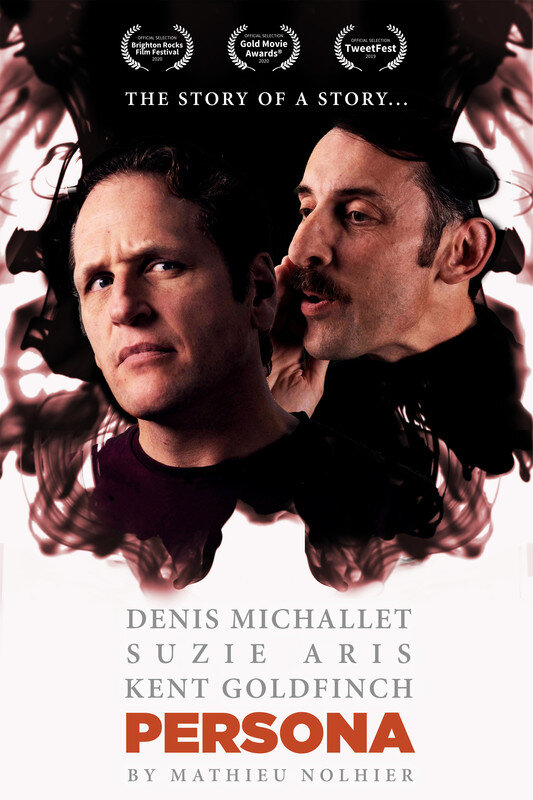
PERSONA
Marc, a talented film director, meets Lucien, the fictional character of his next movie.
Marc, a talented film director, meets Lucien, the fictional character of his next movie.
Written & Directed by MATHIEU NOLHIER
Assistant Director VINCENT SENECAT
Starring DENIS MICHALLET, KENT GOLDFINCH, SUZIE ARIS, & MICHELLE CALLCUT
Writer/director Mathieu Nolhier is no stranger to Kino Short Film. In fact his previous film HELENE was one of our 9 nominees for Best Picture at The People’s Film Festival. With PERSONA we were delighted to see Mathieu try his hand at a bit of comedy and we hope you enjoy. Below is a quick interview we conducted with Mathieu to gain a bit more insight into his latest film and his process.
WHAT WAS YOUR INSPIRATION TO WRITE PERSONA:
Some people were asking me how ideas come for my short movies. My reply was always the same: it appears in my mind, then I note it and go to something else. But when the idea is good, it comes back. And when you start to write, the story goes by itself. You can't create a story that doesn't work for your characters. Then I wanted to share this idea with people so I did this movie.
WHAT'S YOUR WRITING PROCESS:
I take notes for a few weeks, about the character, some parts of the story, shot framing or camera movement. Then I go in a coffee and start to write the script. I always find a coffee place for a story and only write here. After a few weeks and litters of coffee, I have my final script.
WHAT WAS IT LIKE TO BRING THE SCRIPT TO LIFE:
It's really funny to compare the final edit to your first idea. You see the journey from one point to the other and you feel a great feeling of achievement. There are a lot of differences between both points because it was only you at the beginning but then, a lot of people added their Art to the piece (actors, music composers, sound engineers etc..). I was so happy to screen it to peoples after so many months of work.
DID YOU HAVE ANY CREATIVE SOLUTIONS FOR WORKING ON A SMALL BUDGET:
I learnt how to shoot and edit myself to limit the budget on my shorts. You don't need a very expensive camera to make beautiful pictures, you just need to learn how to work with lights and composition. Also, take all the things you can that you already have (friends and family's locations, friends as extra actors etc...). To conclude, I always take the budget in mind when writing my scripts and it can offers you very creative ideas (Ex: using sound design instead of real shots during the script scene). But the most important thing when you have low budget: Organisation. I add much more days in preparation than shooting and it saves me a lot of time/money/energy for the global project.
WHAT'S YOUR FAVOURITE PART OF THE FILMMAKING PROCESS:
When you see the people looking at your movie and have emotions. Make the people laugh, be surprised or anything, that's always the best moment.
SCREENING RECOMENDATIONS FOR QUARANTINE:
I would say "Dark" on Netflix. Very good story, well written, very nice pictures and amazing casting. Last season releases at the end of June so be ready!
Interested in getting your work selected as Short of the Week?

MY TIME
A 12-year-old girl has her first period in class. Her skirt is stained red. She is up next to present her final paper in front of all her peers. Will she find a way out of the 'uncomfortable' situation?
A 12-year-old girl has her first period in class. Her skirt is stained red. She is up next to present her final paper in front of all her peers. Will she find a way out of the 'uncomfortable' situation?
Starring ABBY MIZON, CLARA READ, TREVOR MURPHY & ILARIAN BUSHI
Writer & Director: GIULIA GANDINI
Producer: ABBY MIZON
DOP: GABI NORLAND
Editor: BEN MILLS
Music: STEFANO FASCE

MY TIME is one of those rare treats in indie short form cinema. It was long-listed for the Academy Awards in 2020, and won Best Short Film at Chicago International Children's FF, at NFFTY, BUFF Malmo FF, TweetFest FF and Shooting People's New Shoots Competition (Summer Round 2019).
We first became aware of it when director Giulia Gandini submitted it to The People’s Film Festival. It was an instant favourite of our judges and eventually was nominated for Best Picture.
Today is the first day MY TIME is being widely released online - #MenstrualHygieneDay. We’ve been in touch with Gandini while she’s been in preproduction for what is sure to be another masterpiece…
WHAT WAS YOUR INSPIRATION TO WRITE MY TIME?
An experience from middle school! A friend of mine was bullied for weeks because she stained her jeans when she got her period. I wanted to take a negative memory and turn it into an empowering narrative and statement about menstrual blood.
WHAT'S YOUR WRITING PROCESS?
I usually think about the idea for weeks (if not more) without writing a word, then write the first draft of the script all in one evening. My first drafts are usually very visual, with little dialogue, quite dry, but the process of writing them is very instinctive and emotional. I don't share the concept of the film with anyone before I've written the first draft (if I do I feel like the idea loses emotional power in a way). I then usually write 2/3 more drafts over a few days before presenting the script to anyone or asking for feedback. Getting too much feedback is quite confusing rather than helpful for me, so I tend to select just a few people I trust (not only filmmakers) to share their notes on the script.
WHAT WAS IT LIKE TO BRING THE SCRIPT TO LIFE?
It was quite exciting. I've written scripts before, but this was the first one I approached with the intent of actually directing myself. So there was an additional layer of pressure (and I usually work well under pressure, it gives me adrenaline, drive and focus).
DID YOU HAVE ANY CREATIVE SOLUTIONS FOR WORKING ON A SMALL BUDGET?
I believe the best creative decisions I made in relation to a limited budget were to keep it to one character, one location, one moment. I already knew when writing the script that I wanted a specific visual style requiring good lighting and a dolly, so I couldn't really afford to follow multiple characters over more than one day in different locations of the school. Budget shouldn't restrain your creativity, but it shouldn't ruin the creative outcome either, so it's good to prepare and find a middle way.
WHAT ARE SOME OF YOUR FILM'S BIGGEST SUCCESSES?
Getting long-listed for the Oscars 2020 was quite special. But also winning the Best Short Film award at NFFTY in Seattle and at Chicago International Children's Film Festival were exciting highlights!
WHAT'S YOUR FAVOURITE PART OF THE FILMMAKING PROCESS?
Probably being on set. It's so magical to see what's been in your head for such a long time finally translated into real life. It's also the moment when I'm working with my actors the most, and I really love working with actors.
SCREENING RECOMMENDATIONS FOR QUARANTINE?
Subscribe to Mubi, they have incredible films that are not that easy to find! Watch Céline Sciamma's coming of age trilogy (Water Lilies, Tomboy, Girlhood). If you can't be bothered, Tiger King on Netflix is a pretty safe bet for entertainment.
Period products shouldn't be a luxury. But they are for so many women and girls right now. UN Women is working alongside the WHO to ensure all women and girls' voices are addressed in the COVID-19 response, including providing period products to women in quarantine centres, refuges and prisons that haven't been able to access these basic essentials during lockdown. You can play your part and donate here: unwomenuk.org/campaigns/covid-19
Just £15 can provide a week's worth of hygiene essentials and food for a woman and her children in quarantine. Follow UN Women UK on Twitter, Instagram and Facebook to unite with us for change.
Interested in getting your work selected as Short of the Week?
SAMARITAN
An immigrant doctor, fearing deportation and living off grid, stumbles upon the unconscious body of a racist politician whose been kidnapped and left for dead.
Written & Directed by DUSTIN CURTIS MURPHY
Produced by ADDY RAJA, NICCI BRIGHTEN, & DUSTIN CURTIS MURPHY
Starring CHRIS KYRIACOU & PETER ORMOND
Cinematography by JOSH BIRCH
Assistant Director TOP TARASIN
SAMARITAN was selected for The Climate Story Lab (March 2020) supported by BFI Network, Exposure Labs & The Doc Society.
THE LAST CONFESSION

Franz – an old, dying man, and former Nazi, calls a priest to his bedside for his last confession. But Father Kramer finds him chillingly unafraid and unrepentant. The story Franz tells, and what happens next, will go beyond the darkest imaginings of his confessor.
Writer/Producer Kev Hopgood is a Kino regular, having screened his previous shorts (STORY TIME & COLD CALLER) at our Short Film Open Mic. Kev brought his new WWII horror project to a Kino Writers group last summer and within a matter of days director Dustin Curtis Murphy came on board joining Kev and co-producer Marius Smuts. With the help of Greenlit the film was successfully crowdfunded and we had two days of production in the fall/winter of 2019. We’re currently putting the finishing touches (score and sound design) on The Last Confession with intentions to release it this summer.
Directed by DUSTIN CURTIS MURPHY
Produced by KEV HOPGOOD & MARIUS SMUTS
Written by KEV HOPGOOD
Starring PAUL BASSETT DAVIES, ADAM WITTEK, ROSE MUIRHEAD & RAY CALLEJA
Cinematography by JOAO DA SILVA
Original Score by PETER LEWINGTON Peter Lewington
Sound Design by JOHN MELLOR
Head of Makeup JO CHANG SMUTS
Makeup Artist ALEX PALUMBO
Visual FX by HOWARD GARDNER
Colourist MAX PRESKY

KISS ME MALIBU
This horror-comedy explores the insecurities that TV shows, religion, culture and belief systems create in us during male-female relationships and in courtship.
Horror-comedy film about the insecurities and overthinking that TV shows, religion, culture and belief systems create in us during male-female relationships and in courtship. It makes fun of us and the roles we take in that process, without making any moral judgements.
Director: MIKEL ARRAIZ
DoP: JORGE ROIG
Editor: MIKEL ARRAIZ
Starring ADRIAN BARINAGA, GARAZI BELOKI, ROSA NAGORE, AMAYAVALMASEDA, SANDRA AZCONA
Producer: ITZIAR LACUNZA & MIKEL ARRAIZ
This week we bring you the People’s Film Festival winner for Best Music Video - the gorgeously shot “Kiss Me Malibu”. We were stunned by this film’s visuals and its use of symbolism piqued our interest and threw us into debate as we shared a variety of interpretations. We interviewed director Mikel Arraiz to chat about his film and get his interpretation and learn more about how this project was made…
HOW DID YOUR FILM COME ABOUT? DID YOU APPROACH THE BAND WITH THE IDEA OR WERE YOU HIRED?
I wanted to create something shocking and technically very well done for my reel and my new film production company Valle del Cielo. For doing that I needed creative freedom, so I created the song. The song is mine. A couple of friends helped me with the drums and the bass. Usually bands, put some limitations in ideas.
WHAT WAS IT LIKE TO BRING THE PROJECT TO LIFE?
Difficult. I live in a small city, so I had to hire people from Madrid and Barcelona who were more expertise and experienced than people who live in my area. It was expensive and I had to do a big preproduction work. It was a long process... about a year working on the project. I learnt a lot.
YOUR FILM HAS A LOT OF SYMBOLISM IN IT. DID YOU INTENTIONALLY LEAVE IT OPEN FOR PEOPLE TO COME UP WITH THEIR OWN INTERPRETATIONS? WHAT'S YOUR INTERPRETATION?
I live in the Basque Country. People say that having sex and flirting in the Basque Country is really difficult. I would say, there is some kind of "blocking energy" or old cultural tradition which makes difficult for men and women to flirt in bars at night and overall. With this film I just wanted to make fun of this situation. I think if people see the roles they take during night and have fun of them, it helps to heal this cultural patterns.
Summarizing, the film makes fun of the patterns, insecurities and overthinking that TV shows, religion, culture and belief systems create in us during male-female relationships and in courtship.
By the way, the dance movements are mine, I used to dance like that just to have fun and break the typical flirt situation at night.
DID YOU HAVE ANY CREATIVE SOLUTIONS FOR WORKING ON A SMALL BUDGET?
Study a lot of courses, manuals, ask a lot of questions in Facebook groups, practice... this way I could work in more aspects of the film.
Also, for the main location, instead of paying them, I did a corporate film for them.
WHAT ARE SOME OF YOUR FILM'S BIGGEST SUCCESSES?
The fact of making them is a big success. Also, a lot of international awards, for Kiss Me Malibu we got more than 30 awards. Being on newspaper and media due to awards gave us a lot of promotion.
WHAT'S YOUR FAVOURITE PART OF THE FILMMAKING PROCESS?
When I get the ideas. For inspiration, I listen to music. I wrote all my scripts listening to music. I have synesthesia, so as soon as I listen to music I start downloading colors, images, tons of ideas, movements... For me it is like taking a drug and seeing things, but without taking any drug, just with music. I can feel a lot of emotions during that process. Once I get the idea and all the details, I start with the production process. You can see on my last commercial what I am talking about when I relate music, colors... https://vimeo.com/385781038/3087b08068 (this is not the final version...)
SCREENING RECOMENDATIONS FOR QUARANTINE?
Haha, I am not a big cinephile... I can recommend you all the music videos by Chris Cunningham, specially "Windowlicker".
For movies: "The Neon Demon" by Nicolas Winding, "Lost highway" by Lynch, "Punch Drunk Love" by Paul Thomas Anderson, "The Killing of a Sacred Deer" by Yorgos Lanthimos...
Interested in getting your work selected as Short of the Week?

NO GUARANTEE
London 2056 - the city is dying and those living in the smog-clogged ruins live by their wits. The ones who can afford to opt out by uploading their consciousnesses to Cloud 9. This is advertised as a one-way ticket to virtual heaven - but can the Company who run it really be trusted?
London 2056 - the city is dying and those living in the smog-clogged ruins live by their wits. The ones who can afford to opt out by uploading their consciousnesses to Cloud 9. This is advertised as a one-way ticket to virtual heaven - but can the Company who run it really be trusted?
This short film won the Sci-Fi London 48 Hour Film Challenge 2016.
Written & Directed by STUART BLACK & NICK MATHER
Produced by IOANNA KARAVELA
Starring JUSTIN MAROSA & ALICE HENLEY
We first came across No Guarantee as one of the earliest entries to The People’s Film Festival last year. It quickly rose to the top of the list of our favourite submissions, and at the time we had no idea the film was produced from concept to completion in 48 hours - which makes it even more impressive! Last week we caught up with director Stu Black to chat about his process…
SO THIS FILM WAS CREATED AT 48 FILM CHALLENGE, CORRECT? CAN YOU TELL US A BIT ABOUT THAT?
We made No Guarantee for the Sci-Fi-London 48 Hour Film Challenge. It was our second attempt at the competition with the same group of filmmakers, so we'd learnt a lot together and had a great team spirit.
WHAT WAS THE BIGGEST CHALLENGE IN CREATING A FILM IN 48 HOURS?
It's a fun but draining experience - you're shooting late into the evenings then staying up on the final night to get masses of post-production work done. Our poor composer was waiting until we had a locked edit - which was around 4am on Sunday night. But everyone pulls together and there's a huge feeling of satisfaction at the end.
DID YOU MAKE ANY TWEAKS TO THE FILM AFTER THE CHALLENGE BEFORE SENDING IT OUT TO FESTIVALS?
We tweaked some of the VFX and did a tiny bit more work on the grade - but it's essentially the same film we won with.
DID YOU HAVE ANY CREATIVE SOLUTIONS FOR WORKING ON A SMALL BUDGET?
Creative problem-solving is the key to these competitions - you have to get everyone helping each other, not constrained in their department. That meant rifling through all our collective cupboards to find props and costumes that would work. Our production designer actually works in motorcycles - so a lot of what we used came out of her stockroom - the Cloud 9 devices, for example, are ventilator plugs removed from a motorcycle face-mask.
WHAT ARE SOME OF YOUR FILM'S BIGGEST SUCCESSES?
We are very happy with the way the story builds - which is really down to the editor, actors and composer. It's also really cool to see different audiences react to the ultimate 'yes/no' twist - we always get a gasp or two.
WHAT'S YOUR FAVOURITE PART OF THE FILMMAKING PROCESS?
I've been a journalist for years which is basically a lone wolf profession - filmmaking is fun for me because you get to cook something up together with friends.
SCREENING RECOMENDATIONS FOR QUARANTINE:
If you've got through all the good stuff on Netflix and are at the bottom of their barrel, it's definitely worth trying out the less famous platforms (many have free trials too) - for example, I just signed up to Marquee TV, which is all opera and ballet - and not normally my thing - but it was refreshing to spend a night watching something totally different from the norm.
Visit the facebook page here: facebook.com/noguarantee/
Interested in getting your work selected as Short of the Week?

IT'S BEEN TOO LONG
Two ex-lovers meet at a rarely-used Aspen lodge to reignite their passions, but first they must confess their past sins.
Two ex-lovers meet at a rarely-used Aspen lodge to reignite their passions, but first they must confess their past sins.
Starring DAVID EBERT & KRISTA JENSEN
Directed by AMBER SCHAEFER
Written by KRISTA JENSEN & DAVID EBERT
Produced by SHANE OSGOOD
Cinematography by JORDAN T PARROTT
Edited by JOSHUA RATHMELL
This short comedy had our festival judges in hysterics with its witty dialog and unique style, making it one of our favourite films to screen at The People’s Film Festival this past March. While we were sad that we couldn’t meet this film’s creator in person, we’ve been emailing with director Amber Schaefer to ask her some questions about her film…
WHAT ATTRACTED YOU TO THIS PROJECT:
I was drawn to the absurdity of the script and really any excuse to work with the talented real-life and on-screen couple Krista Jensen and David Ebert.
DID YOU HAVE ANY INVOLVEMENT IN THE SCREENWRITING PROCESS:
Krista and Ebert came to me with the script fully baked; they had performed it together as a sketch at UCB. I think I threw in a punch-up or two but my biggest contribution to the script was a little bit of tightening. Some of that happened in the edit.
WHAT WAS IT LIKE TO BRING THE SCRIPT TO LIFE:
We filmed this with a micro-crew, just our DP Jordan Parrott, an AC, a gaffer, a sound person, producer and that's it! We rented two cabins on AirBnB in the Poconos, one to sleep in and one to shoot in. The cabins were essentially unchanged since the 90s so we needed very little art to get the look we wanted. All we really did was throw around some rose petals and put some candles in the cup holders on the couch.
DID YOU HAVE ANY CREATIVE SOLUTIONS FOR WORKING ON A SMALL BUDGET:
Most people got into the industry because they care about the art of cinema and want to make meaningful work. Don't be afraid to ask for favors if it's a passion project. Don't do everything yourself, work with people you respect. Invest in a professional sound person. Film at locations that don't need a ton of art or a big build. Pad the schedule in case something goes wrong. It always does.
WHAT ARE SOME OF YOUR FILM'S BIGGEST SUCCESSES:
The film has a really unique and really consistent tone and thats thanks to Krista and Ebert's focused performances, our talented editor Josh Rathmell, and our Basic Instinct inspired music composition courtesy of Pond5, lol.
WHAT'S YOUR FAVOURITE PART OF THE FILMMAKING PROCESS:
I live in a fantasy but it's chill because it's my job.
SCREENING RECOMENDATIONS FOR QUARANTINE:
Lately I've been on a crime bender.
1. The Player - Robert Altman
2. After Hours - Scorsese
3. Millers Crossing - The Coen Brothers
4. Body Double - Brian De Palma
5. The French Connection - William Friedkin
You can check out more of Amber’s work at www.ambermakes.tv and follow her on Letterboxd
Interested in getting your work selected as Short of the Week?

NIGHTMARES
Put on a headset and step inside a frighteningly immersive environment, where all is not as it seems.

Put on a headset and step inside a frighteningly immersive environment, where all is not as it seems.
Produced, Written, Edited, and Directed by JAMES MANSELL
Starring VICTORIA MORRISON & ASHLEY PEKRI
Director of Photography:ANNEKA SAUNDERS
Gaffer: AARON WESTHEAD
Art Director: JENNY DEE
Makeup Artist: RUBY BROWN
Sound Design: ANTHONY LYNCH & JAMES MANSELL
Music: OLIVER DRAKE
VFX: PAUL MONAGHAN
Colorist: CHRIS TEEDER
Writer/director James Mansell is regular at our Short Film Open Mic and a TPFF multi-award winner. His previous film RUPTURED won Best Horror Short and Best Sound Design at the first annual People’s Film Festival. Earlier last week we caught up with James to ask a few questions about his latest project…
WHAT WAS YOUR INSPIRATION TO WRITE NIGHTMARES:
I wanted to write a film about technology and somehow make it scary. I came across an in-development augmented reality horror game which allowed you to walk around your house and see frightening creatures, which I don't think ever got made. This was also at the time of the Pokemon Go craze. I thought how scary it must be to start seeing these things, like Pokemon or the creatures, when you've put away your phone or headset, and they're still there. I went with that idea and fleshed it out. This became only a part of it - the fun was thinking what happens to the poor, unsuspecting people who you point your device at. What happens to them?
WHAT'S YOUR WRITING PROCESS:
My short films are mostly an idea or a concept, so when I have that figured out, the writing process is relatively quick because I've already got the film. In the case of NIGHTMARES, I spent a few weeks working out who the characters are and how best to convey the idea. I played with more background to them - but settled on keeping it very simple to let the idea have space and not clutter it with details about the characters. I usually go through as many set ups as I can for the film - how the idea can presents itself, in what situation etc, and land on the one which I feel serves the idea the best but doesn't get the in the way of it and dilutes it.
WHAT WAS IT LIKE TO BRING THE SCRIPT TO LIFE:
Shooting the film all fell into place quite simply. As the script is straightforward, I kept the shoot similar in its simplicity. There's a small amount of green screen work and a light touch of VFX and SFX, but generally it's very basic. I shot the film in a way which meant the editing process would be quick, as we didn't shoot coverage but just focused on what I needed for the edit. This also kept the shooting time down to a single day.
DID YOU HAVE ANY CREATIVE SOLUTIONS FOR WORKING ON A SMALL BUDGET:
As I always knew the budget, I kept things within what was possible. There wasn't anything which I felt was stretching the budget or what we were capable of. I pulled in favours from a lot of people so I was working with a very experienced crew, both during production and during post. This was very helpful in not needing creative solutions as a result of the small budget. I cast Victoria Morrison and Ashley Pekri straight away without auditions. They're both brilliant actors and very keen to get involved with a small project, which helped with keeping them comfortable on set etc, as they were chilled with the low budget nature of the shoot.
WHAT'S YOUR FAVOURITE PART OF THE FILMMAKING PROCESS:
That's a very hard question. I'm not sure I have a favourite part. There are aspects that I enjoy more than others for sure, and aspects which I get very nervous about. The period before committing to a project makes me quite uncomfortable. I have to be very sure it's got potential but I pull the trigger, so to speak. I used to be a camera operator so I love shooting with actors. Getting great material in the camera is a great feeling. Knowing what you've got and what you can do with it in the edit is very exciting. But as for a favourite part, I'd say the entire process is my favourite part.
SCREENING RECOMENDATIONS FOR QUARANTINE:
I've been watching the science fiction show COUNTERPART on STARZ. It's brilliant. It's a multi-universe Philip K. Dick type sci-fi show with J.K. Simmons in the lead.
For more from James check out his website: www.james-mansell.com
Interested in getting your work selected as Short of the Week?

THE MANY FACES OF BETH JONES
Off the back of a successful stint on a TV show, Beth’s agent has been hard at work finder her new roles to make her a star.

Off the back of a successful stint on a television show, Beth's agent has been hard at work finding her new roles to make her a star. Beth excitedly arrives to meet her agent but the parts found for her might not be exactly what she was hoping for...
Screenings:
26th Raindance Film Festival (2018)
Century Club Film Club (2018)
Finalist & Best Actress Nomination at The People's Film Festival (2019)
TV Screening: London Live (2019)
Shortlisted for the Performance Short Film Competition
Cast:
Beth Jones - LUCY HILTON-JONES
Samantha - ANNINA KASKI
Crew:
Writer/Director - HARVEY PUTTOCK
Producer - JOE SUPPLE-TURNHAM
Executive Producer - DUSAN MRDEN
Director of Photography - ANTHONY MARTINEZ
Sound Recordist - SARAH NORMAN
Clapper Loader - BAPTISTE CHARLES
Story - HARVEY PUTTOCK & LEXY ANDERSON
We first stumbled upon THE MANY FACES OF BETH JONES when it was submitted to The People’s Film Festival last year. It was a fav of our jury, and even earned an acting award nomination for the Lucy Hilton-Jones. We recently caught up with writer/director Harvey Puttock to ask him a few questions:
WHAT WAS YOUR INSPIRATION TO WRITE THE MANY FACES OF BETH JONES:
Back in 2017 both myself and my then colleague Lexy Anderson were pretty obsessed with Orphan Black and the range that Tatiana Maslany had. In that show she played such a variety of characters that we jokingly started to say she could play anything. We began a list of roles that we thought she could do next, starting with realistic things and getting more and more obscure as the day went on.
Several months later, when exploring ideas for my next short, I found the pile of post-it notes we'd written. None of the ideas here seemed plausible or within budget (a piece of depressed driftwood becoming the frame for the Mona Lisa and finally lives it's dream at the Louvre) so instead I came up with the framing device to have an Agent throwing these ideas out to a disappointed wannabe actress and thus The Many Faces of Beth Jones was born.
If I remember correctly there's seventeen post-it note ideas that didn't make it to the film, but who knows, maybe they'll see the light of day sometime...
WHAT'S YOUR WRITING PROCESS:
My writing process, like any other, is an arduous, painstaking, deep dive into the inner soul. I mean, it's that, or it's drinking five cups of coffees and hammering thousands of words out (most of which are later deleted) until I realise it's 3am and I have work tomorrow.
WHAT WAS IT LIKE TO BRING THE SCRIPT TO LIFE:
It was a brilliant experience to bring The Many Faces of Beth Jones to life, what had started as a silly injoke grew into a film that played at a bunch of festivals and nominated for a couple of awards.
It was about four months from script to screen, with us using a casting call on Mandy to find Lucy Hilton-Jones for the titular role and building a crew of like-minded filmmaker friends. We shot the short in one day, starting at the Cinema in the morning, and moving on to the office later in the afternoon.
DID YOU HAVE ANY CREATIVE SOLUTIONS FOR WORKING ON A SMALL BUDGET:
I think the key thing when working on a low budget film is to not be afraid to ask for help. The budget for the film was around £500, we did pay the actors but the entire crew worked for free as I'm lucky enough to know a bunch of people as passionate about making films as me. You have to work out what equipment you need, and if you don't have it yourself, who you can borrow it from. Also consider what you can offer in return, your friend may have a camera but not know how to edit audio, this way it becomes an exchange rather than an I owe you one.
WHAT'S YOUR FAVOURITE PART OF THE FILMMAKING PROCESS:
My favourite part of the filmmaking process comes after all the writing, the meetings and planning. It's in the first few hours of the shoot day, where the coffee has kicked in and you're finally awake after a pre-shoot sleepless night, when action is called and you finally get to see the film take shape. You've probably done a rehearsal or two before, but the moment that the actors are on set, in costume, performing for the first time is pretty magical.
SCREENING RECOMENDATIONS FOR QUARANTINE:
I've mostly been binge watching a lot of TV shows that I've fallen behind on, but I did watch Uncut Gems the another night, a great film that I can't recommend enough. Looking forward to seeing what the Safdi Brothers do next!
Interested in getting your work selected as Short of the Week?

NORA
This week we’ve chosen to highlight a Kino Original as Short of the Week in honour of our amazing frontline NHS staff (of which the producer of this film - Addy Raja - is a part of).
Directed by DUSTIN CURTIS MURPHY
Produced by ADNAN RAJA
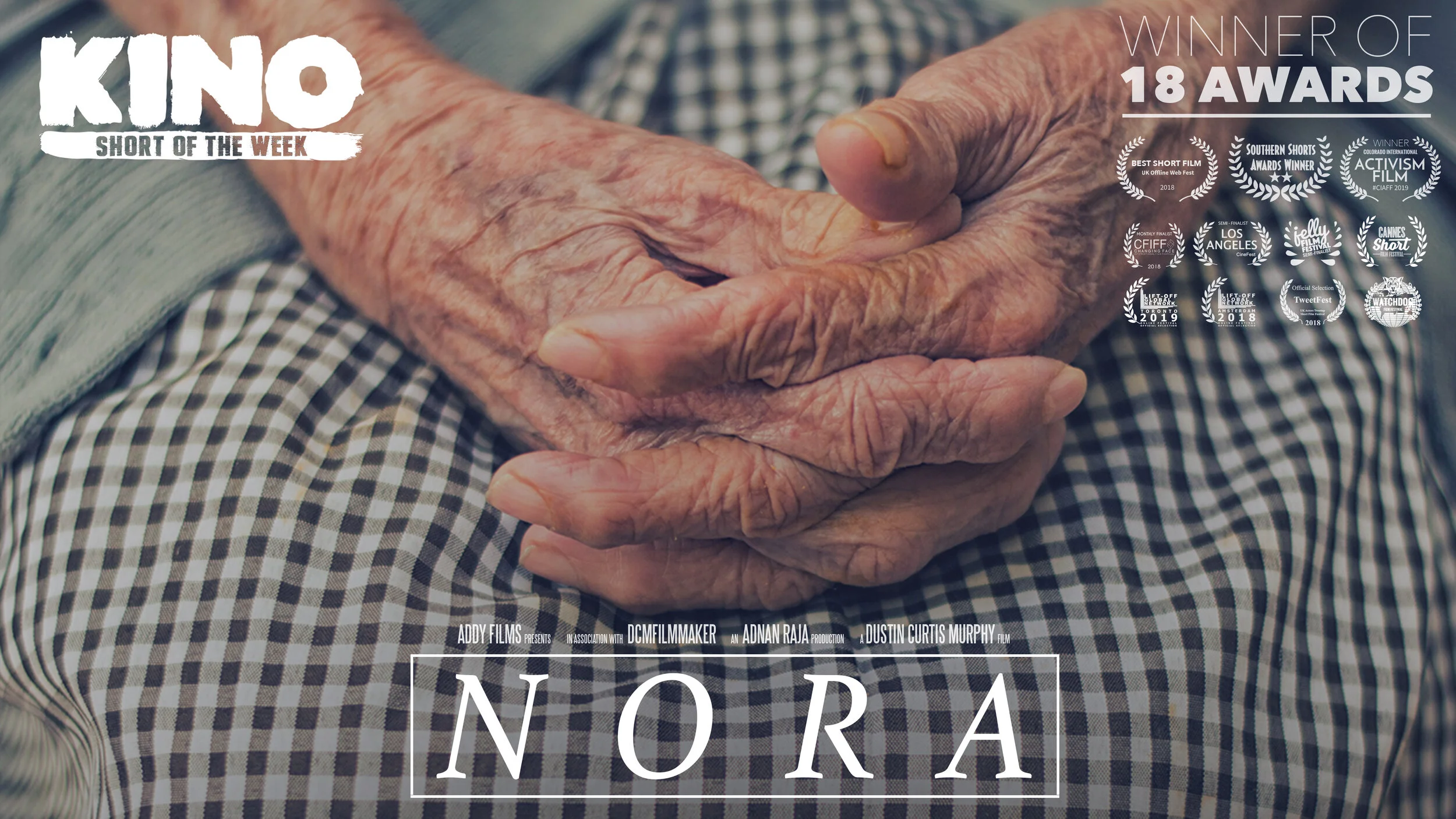
This is Nora. She’s about to turn 70. This is not how Nora wanted to spend her birthday...
In 1948 the largest universal healthcare system in the world was founded in the UK. 2018 marks it’s 70th birthday. We live in a critical time for our society and healthcare. This is our creative look at the NHS turning 70.
WORLD PREMIERE:
TEDxNHS, British Film Institute IMAX, London (Aug 18)
Director: DUSTIN CURTIS MURPHY
Producer: ADDY RAJA
Writers: DUSTIN CURTIS MURPHY & ADDY RAJA
Starring NICCI BRIGHTEN, ALVARO CEA, CHRIS HORTON, MIKE KELSON, ALASDAIR C. MELROSE, JENNIFER PRESTON, & RACHAEL SPARKES
Cinematography by KAMIL IWANOWICZ
Assistant Director TOP TARASIN
This week we’ve chosen to highlight a Kino Original as Short of the Week in honour of our amazing frontline NHS staff (of which the producer of this film is a part of). NORA was birthed out of a Kino networking event, and in a matter of a few months director Dustin Curtis Murphy and producer Addy Raja were in production to ensure that the film’s release would coincide with the 70th birthday of the NHS. Their project got the attention of TEDxNHS which was hosting it’s event at the BFI IMAX. Soon this Kino original was having its world premier on the largest screen in the UK. From there it went on to a successful festival run, winning 18 awards, and you can now watch it streaming on Amazon Prime.
We were able to catch up with Producer Addy Raja in between hospital shifts this past week to get his perspective on the project.
WHAT WAS YOUR INSPIRATION TO WRITE NORA:
Since childhood I’ve always been interested in filmmaking, but I decided to pursue a career in medicine instead. Still, that itch to pursue film was always there. Wanting a more creative outlet, I joined the Kino London network by attending their Open Mic nights, networking events, and Filmmaking workshops. I found myself spending more and more of my precious time off on film sets, whether that’d be holding a boom mic in a dinky East London warehouse, or donning a clown outfit in a short comedy that I’ve ensured no one will ever see.
NORA was the first film project that I really sunk my teeth into, and stepped up as head producer. It was my first baby in the world of filmmaking. Taking into account my day job, I figured my USP against most other filmmakers was to focus on healthcare stories. However rather than focusing on corporate and educational projects, I was keen to produce more creative and narrative films in healthcare.
With a few concepts bouncing around my head, I decided to springboard my first project with the upcoming 70th birthday of our precious NHS. I knew this would provide me with enough of a catalyst to make a medical film with a receptive audience around the world. After discussing various ideas within my filmmaking networks, I pursued the project with the key collaborator on the film, Dustin Curtis Murphy, a writer/director from Los Angeles. Dustin was new to Kino London and keen to get his hands on a project, and from there we developed the concept of NORA – personifying the NHS through a fictional elderly lady also turning 70, surrounded by her bickering family and the threat of being moved to a private nursing home, much like the threat of the NHS being privatised.
Since then Dustin has gone on to run the Kino London network, start the Kino Short film festival ‘The People’s Film Festival’ and grow the Kino Events to a wider audience. Utilising this network and Dustin’s passion for nurturing the independent film industry have been key to NORA’s success.
WHAT'S YOUR WRITING PROCESS:
As a doctor I work in Acute Medicine. This is where medical patients end up after being admitted into hospital via the Emergency Department. Whilst it is not a specialty that focuses on a particular area of the human body, the breadth of knowledge is the specialty itself. Your skills lie in having a broad understanding of various areas of medicine, and bringing together the right team at the right time for the benefit of the patient.
Similarly with filmmaking, I don’t regard myself as a writer, or director, but I have a lot of ideas and a general oversight of what’s needed. From there it’s a matter of finding the right collaborators to bring the idea to life. Initially my idea was to produce a standard documentary about NHS70, but it was in fact through discussions with Dustin that he suggested to turn it into a fictional mockumentary, that enhanced the creativity of the story and provided us with a lot more freedom on the characters and storyline.
Having not had any formal filmmaking or writing qualifications myself, I regularly met up with Dustin who had a lot more experience in this field as an award-winning writer. We took our time, hashing out the concept, thinking about the themes we were trying to illustrate, figuring the who the characters were, their needs and wants, the motivations behind their actions. Once we had that all figured out, along with the story arc, I then employed Dustin to write out the script. We went back and forth a few times until we had our shooting script.
Key to the writing process was the idea of open collaboration. Although Dustin was a seasoned writer, he knew that what I brought to the table were my creative ideas, unique medical insight, and a level of authenticity to the story. By working together in a level playing field, we were able to produce a truly unique script, and I strongly believe that our working relationship was just as important, if not more, than any technical aspects of our screenwriting process. This working relationship continued on set with an element of flexibility, where we ended up making some minor changes to dialogue and story arcs whilst filming. Dustin’s flexible and collaborative approach were a joy to work with, and in stark contrast to many others writers I worked with, whose scripts are still un-produced saved in a computer file somewhere in the world.
WHAT WAS IT LIKE TO BRING THE SCRIPT TO LIFE:
The process of production was both an exciting experience, but also tough. Working on a limited budget and tight deadline brought along it’s challenges, but also kept us on our toes. I chose the topic of NHS70 on purpose, to give us a deadline we had to work too. I’ve started too many short film projects that have ultimately led to nowhere because passion and enthusiasm has faded away. This was the opposite, we knew we had just under four months to make the film, and we were going to do it no matter what. For added pressure our writer, and subsequent director, Dustin, was going to be a father around the same time of the NHS70.
Pre-production is always the key to a successful project. We quickly found ourselves casting actors from across the world, desperately scouting for hospital locations, and pulling in al favours for crew and equipment. Due to the nature of the project about the NHS, we were overwhelmed with the response to our online advert for help, with over 100 responses for casting roles, and numerous filmmakers battling for crew positions. I found myself doing medical ward rounds in the morning, and skype calling actresses in New York in the evening. However the processes were the same, have a vision in mind for what you want to achieve, and find the right people to make it happen.
Not all of it was plain sailing though. On our first day of filming our lead actress called in sick. Luckily we cast one of our smaller roles Jennifer Preston to step up, and I ended up playing the small role myself as a non-screen filmmaker. Jennifer went on to receive a number of awards for her role, I unfortunately just missed out on a BAFTA nomination. I also underestimated the role of a producer in a low budget short film, and actually spent more time making sandwiches and picking up people from the train station, rather than being on set with the action, but that’s just as important. As a producer, you have to look after the cast and crew as a priority, just like doctors looking after patients. Other highlights included finding our locations the day before filming, not realising that catering and crew expenses would take up half our budget, and not getting the level of support I expected from healthcare organisations as a doctor making a creative project. But in the end it was the fantastic cast and crew that ensured we completed the project, and had fun whilst making it.
DID YOU HAVE ANY CREATIVE SOLUTIONS FOR WORKING ON A SMALL BUDGET:
As an independent filmmaker, you’ll never have the time budget you need, so you have to use what you have. Due to the time constraints we weren’t able to apply for any grants, but that’s always an option. Rather than the traditional film grants that are usually over competitive, think laterally about where else you can apply for funding. Four our project there were a number of ‘creative medical’ grant we could have applied for from various healthcare organisations such as the Wellcome Trust. We also could have raise money through a crowdfunding campaign. However given out timeline I decided to push forward and self-fund the project.
We were able to pull a lot of favours though. Starting with the cast and crew, we had an overwhelming response to our NHS story and many filmmakers made adjustments to our timeline and budget. It’s part of the reason why we picked this story. We also received free access to a hospital location after I literally begged all of my healthcare contacts. During our casting auditions we asked the actors if they had access to a rural house for filming, and we in fact ended up shooting most of our scenes at the main actresses home, Chris Horton, who played Nora. Ultimately what was most important was collaborating with filmmakers who were passionate for the project, rather than the size of the pay check, as we knew this was the only way to ensure the film was completed to a high standard within our budget constraints.
WHAT'S YOUR FAVOURITE PART OF THE FILMMAKING PROCESS:
I grew up watching films with my father as a child, and for me that’s the magic of filmmaking. I make films for the audience, not for myself. By far the most enjoyable aspect of filmmaking is watching my films with a live audience, seeing their reactions, watching them escape reality for a few minutes. When we completed NORA, we set up a cast and crew screening. As this was my first film, I invited a lot of my friends and colleagues from work. For them it was an opportunity to see my in a different light, and show them my creative side. This was the highlight for me, second to our world premiere at the British Film Institute IMAX in front of an audience of 500 people attending a TEDx talk about the NHS. I’m an audience led filmmaker, and always will be.
Interested in getting your work selected as Short of the Week?

UNCONTAINED
Set in a post viral outbreak world, two brothers reflect on their past and joint love of music.
Directed by Craig Jones
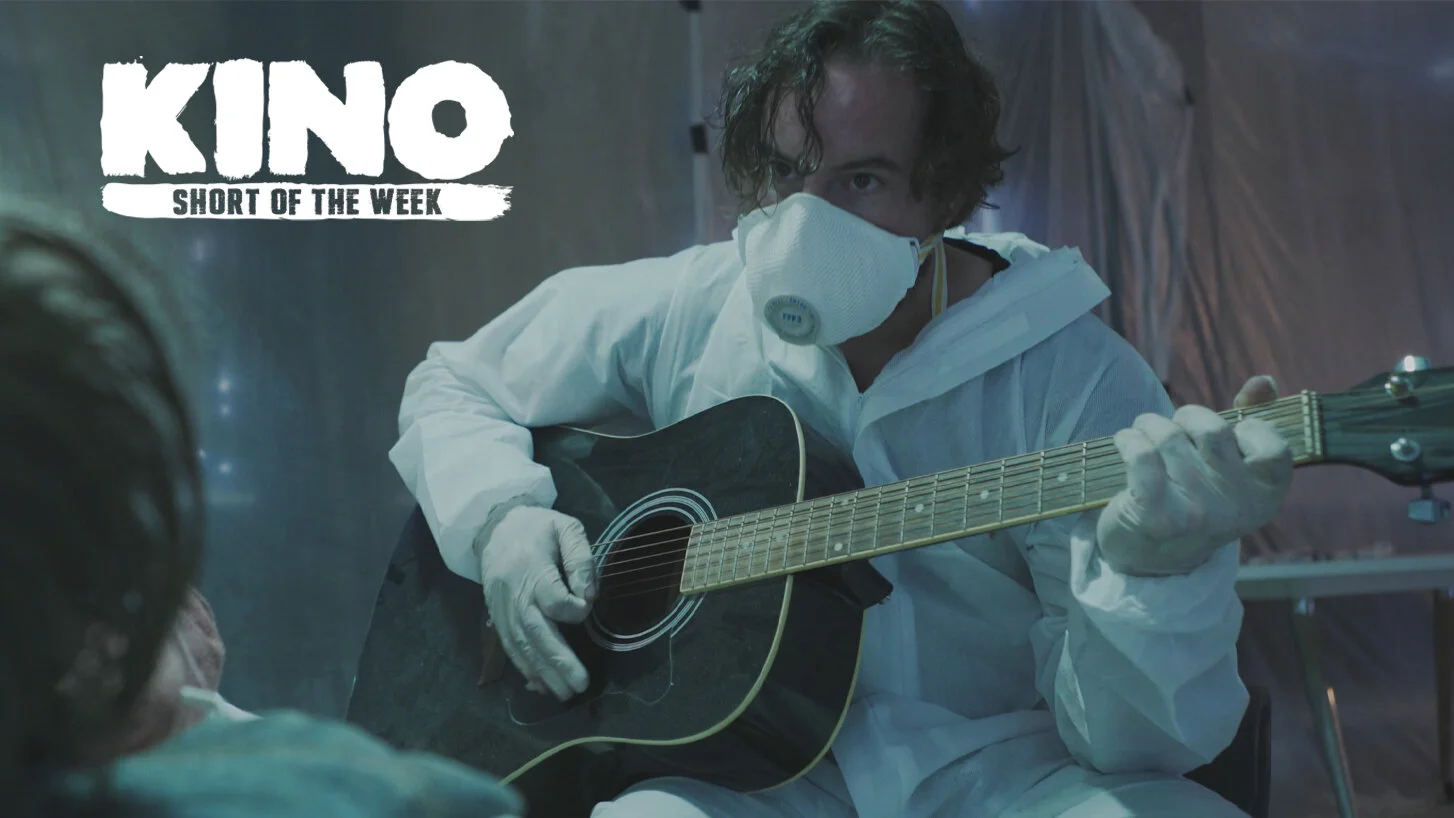
Written & Directed by CRAIG JONES
Set in a post viral outbreak world, two brothers reflect on their past and joint love of music.
Today we continue our Short of the Week series. After last weeks heartwarming, award-winning family drama - TMI - this week things take a more serious turn. Last year director Craig Jones brought his film UNCONTAINED to our Short Film Open Mic. Little did we know how topical it would soon become.
Recently we caught up with Craig (via email - practicing good social distancing) for a quick Q&A.
What was your inspiration to write Uncontained:
I had wanted to shoot a viral outbreak film for a while, and had the rough semblance of a story in my head. I didn’t want to make it an action film, or a zombie film though as has so often been done. To me the most interesting thing about situations like that are the human interactions, relationships pushed to the limits by extreme circumstances. So I decided to write about two brothers, and what their final moments would be like in a hopeless situation. In many ways it’s the most heart warming story I’ve written. Even though the setting is bleak, there is still this genuine connection there, with the older brother, “Pete”, refusing to give up hope for his little brother, and trying to keep him happy during his final moments. It’s a story about doing everything you can for someone you love, no matter how hard that might be.
What's your writing process:
This film was made as part of the Reading Fringe 48 Hour Film Festival, so it was written very differently from other scripts I’ve written. I had the framework for the story in my mind heading into this, which was driven by the location I’d secured. I was fortunate enough to be working in an office building that was partway through being renovated, there was no flooring down, but it had recently had the meeting rooms built. The front wall of the rooms were made of solid glass in a long corridor, and looked like it could be in a hospital, so I decided to turn the conference room into a quarantine space. Everything from that night was such a blur, I would be lying if I could tell you exactly what my process was. I knew the end of the story, but wasn’t sure of how I was going to get there. The actor that plays “Pete” wanted to bring a musical aspect to the piece, so we added a song to open and end the film with to bring it around full circle, and made the relationship the brothers had about music. I thought this would go down well, as music is a fantastic tool for bringing people together. As the film is dialogue driven, I wanted to make it realistic. The script was more of a framework for the actors, as some of the lines were ad libbed. In a tight time crunch of a 48 hour challenge, I want the actors to take responsibility to bring their characters to life, and I feel they did a great job.
What was it like to bring the script to life:
This piece came together very quickly. Sometimes when doing these 48 hour challenges you don’t really know what you’ve got until you get the footage into the edit, but with this one I think we all knew it would be special to us. There was a great energy on set, no one was sitting back, everyone was pitching in and in good spirits which helped tremendously. Watching it play out was a real honour, as everyone was contributing ideas, from lines of dialogue, to set design and even make up details. In fact some of the best moments in the film were thought up just minutes before shooting them. When I got the footage into the edit, the original cut was around 7 minutes long, but it needed to be nearer to 5 minutes for the contest. It always amazes me how much can be cut from a story and you still get the same message. Less is almost always more. I think I got about 4 hours sleep that whole weekend, as I was writing, directing and editing the piece, but very happy with how it turned out. It was worth all the effort.
Did you have any creative solutions for working on a small budget:
I was lucky enough to be working with a pretty resourceful crew. I can’t remember how much we spent on the piece in total, but it can’t have been more than £300. We got the location for free, as I was working in the building, and just asked if we could film. Sometimes it is just as easy as asking. The costumes were easily sourced, and the props were pretty minimal. I tend to write to my budget, it’s something I’ve had to learn. Dialogue is cheap, and as we were only in one location this also really kept the costs down. That would be my one piece of advice to anyone doing a 48 hour film challenge, the less locations the better. You’ll save time where you’re not having to setup and backup multiple times, and you can use this time to really focus on the details. A good story doesn’t need a big budget, but having an experienced and dedicated crew makes all the difference.
What's your favourite part of the filmmaking process:
For me, my favourite part of the process is always editing. It’s the first time where you can see these disparate pieces of data being pulled together into something tangible. You can see the shots as you film, sure, but there’s nothing like getting that first edit together and hitting play. To see it all the way through, knowing that it works as a piece, it’s normally a relief that all the hard work has paid off up until that point. Tightening up the edit, then getting the soundtrack in, and the audio design, you feel the piece coming to life, layer after layer of polish being added. There’s something almost magical about that for me, seeing it transform.
Interested in getting your work selected as Short of the Week?

TMI
When a mother reads her teenage son’s texts it triggers an awkward conversation which is way too much information. A humorous and touching comedy about miscommunication and the minefield of modern parenting.
directed by ita fitzgerald

When a mother reads her teenage son’s texts it triggers an awkward conversation which is way too much information. A humorous and touching comedy about miscommunication and the minefield of modern parenting.
Written & Directed by Ita FitzGerald
Starring Sarah Malin and Kai Medford
Cinematography by Gabi Norland
Produced by Fiona Wright
We are excited to be kicking off our brand new Short of the Week program with writer/director Ita Fitzgerald’s TMI.
Not only was TMI an Official Selection at The People’s Film Festival earlier this month, but our audience awarded it with the coveted Best Picture award, and Ita walked away with our £1000 Film Fund for her upcoming project DOIN’ BUSINESS.

Early this week we caught up with Ita (via email - practicing good social distancing) for a quick Q&A.
What was your inspiration to write TMI?
My kids were 13 and 10 when i made it, so younger than the character in the film, But I was aware that I would have to have candid conversations with them at some stage. Practically speaking, I wanted to make something new for my reel and the idea came to me when I was watching 'The last Leg' with my 13 year old son. Someone on the show made a joke about 'teabaggin' and I shouted out: 'what's teabaggin?' then realised that perhaps I should have googled it before blurting it out. After reading the definition it gave me the idea for the miscommunication.
What's your writing process?
Dialogue pours out of me, it's editing, plot and structure that I struggle with. I didn't really have an end when I started writing it, I just keep redrafting and redrafting it and on one particular draft I thought about the mother's struggle of seeing her son grow up and that feeling of 'shit i was only changing nappies a few years ago' that's when I added the scene at the door. I also wanted to show that Robert is in that in-between stage of 'kidulthood' which is why i added his joy at finding his light sabre. It felt like a nice balance between the physical barrier between them. The mother overthinking and sentimentalising and the young man living in the moment and blissfully unaware of his Mother's panic and pain. It felt like a fitting end.
What was it like to bring the script to life?
Ita: it was a lot of hard work but a joy to see 2 such accomplished actors that were able to perform it so naturally. I really wanted it to feel observed and their acting skills and in particular the rhythm of their delivery did that.
Did you have any creative solutions for working on a small budget?
Write something affordable, shoot in your own house, keep the art direction to a minimum and put a decent amount of money in to the food. I'm proud to say that everyone was fed very well.
What's your favourite part of the filmmaking process?
I do love working with actors and discovering different ways of delivering the dialogue and blocking it to make it work even without the words. That said editing is probably the most satisfying part for me, as the 'hard work' is done and it's just you and the machine and you can finally pull it together and it appears in front of you, hopefully as it was in your head, and if you are really lucky, it's even better than you imagined.
You can check out more about Ita on her website: www.itafitzgerald.work
Kino Independent Achievement Award 2020: Molly Brown
At The People's Film Festival we introduced the Kino Independent Achievement Award - an annual award where we honour one Kino member who’s achieved something great with their filmmaking. This year’s recipient is Molly Brown.

Kino Short Film hosts a monthly Short Film Open Mic where filmmakers of all levels come together to support each other in a non-competitive environment. Anyone can show a film on a first come first screened basis as long as the films are under 6 minutes, with a few exceptions for longer work of a certain quality. To date we've hosted 115th Short Film Open Mic events. The Kino International Filmmaking Movement is an initiative explained succinctly by the motto “Do well with nothing, do better with little, and do it now!”
Molly Brown is this year’s recipient of the Kino Independent Achievement Award. She is a regular at the Open Mic having first screened at the 29th event in 2011. Since then Molly has only missed a total of 3 events. She has made a new original work for each Kino Open Mic making her Kino filmography consist of 83 films in total, with several other films that she’s kept in her back pocket. Some of Molly's films have gone on to screen at countless festivals including a challenge film she made entitled “When Tickling Goes Wrong” which screened at more than fifteen festivals. Her dedication to keep producing new work proves that filmmaking is in her blood. We’re honouring Molly with this award because after 83 Kino screenings, what would a Kino screening be without Molly Brown?
The following is a retrospective of Molly’s work:

I bought a book on video editing in December of 2010, and by July of 2011, I had made my first short film (edited with my book on how to edit in Final Cut Pro 7 open in my lap) and was googling for somewhere to submit it when I stumbled across a listing for Kino London, a completely uncurated monthly event at which you could screen anything as long it was under six minutes long. All you had to do was email in and request a slot, so I did, and on the first of August, 2011, I screened my first short at Kino London.
A regular feature of Kino London back in those days were film challenges in which a filmmaker would be assigned a title chosen by the audience, and then they had to make a film with that title in time for screening the next month. The first night I went, in a fit of hubris I volunteered for a challenge and found myself not only making my second short film, but making it to a deadline. So I immediately got to work, my book on video editing once again open in my lap.
Fast forward eight years, and I have made more than eighty short films - many of them without an open how-to book in my lap! :) - and my work has been screened in festivals (and occasionally in galleries) in countries including the U.S., Canada, France, Italy, Serbia, Australia, India, Germany, Austria, Switzerland, and possibly one or two others I can't think of off the top of my head. I have even won a few awards.
Without a monthly screening at Kino London giving me a reason to keep making films, I doubt I would have made more than a handful of shorts by now (if that).
And as someone who learns by doing, having an - admittedly self-imposed - monthly deadline has been the best film school someone like me could have had.
And finally: one thing I've neglected to mention until now is that it's always been fun. :)
- Molly Brown Director, Animator