
The World Beyond Me
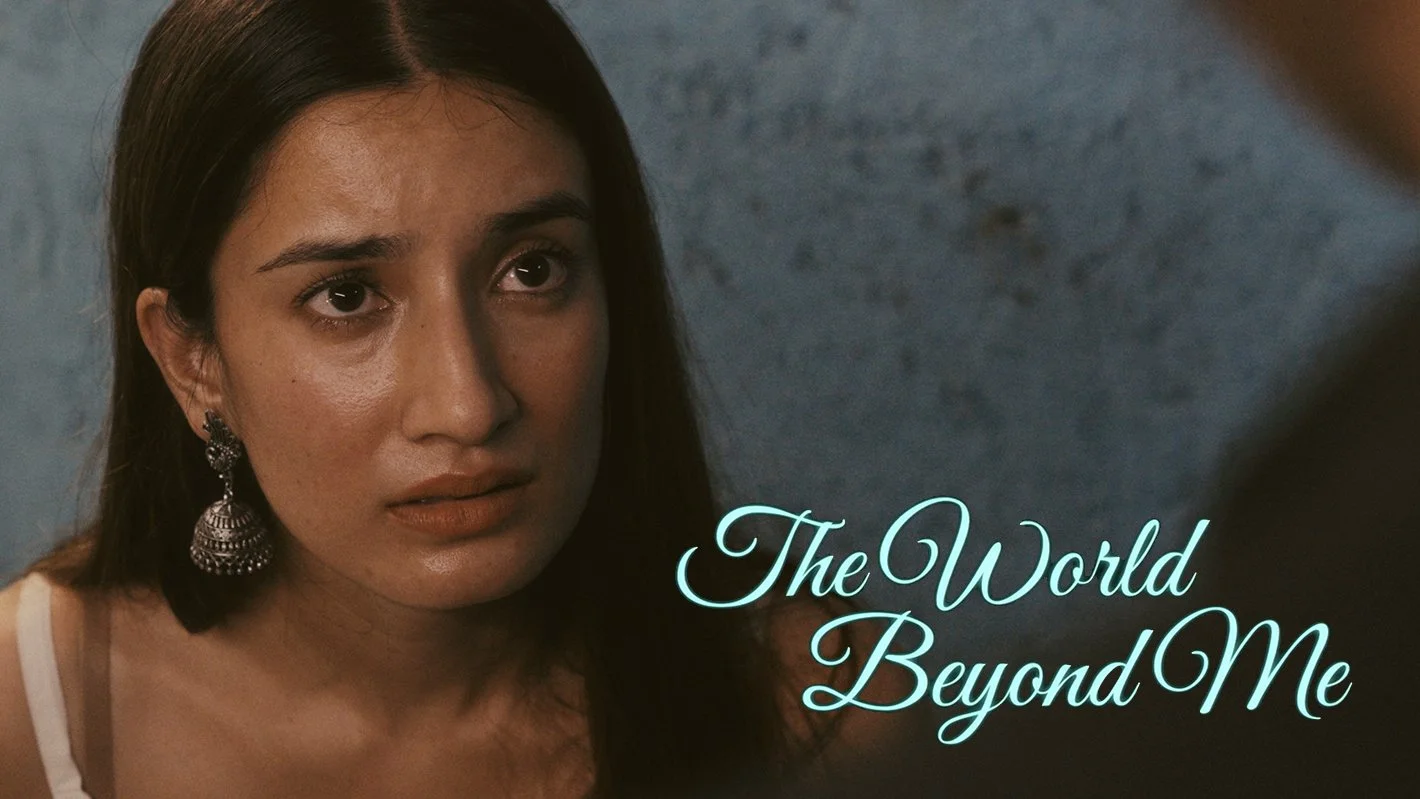
Written & Directed by Ashwin Agrawal
Produced by Julia Verdin
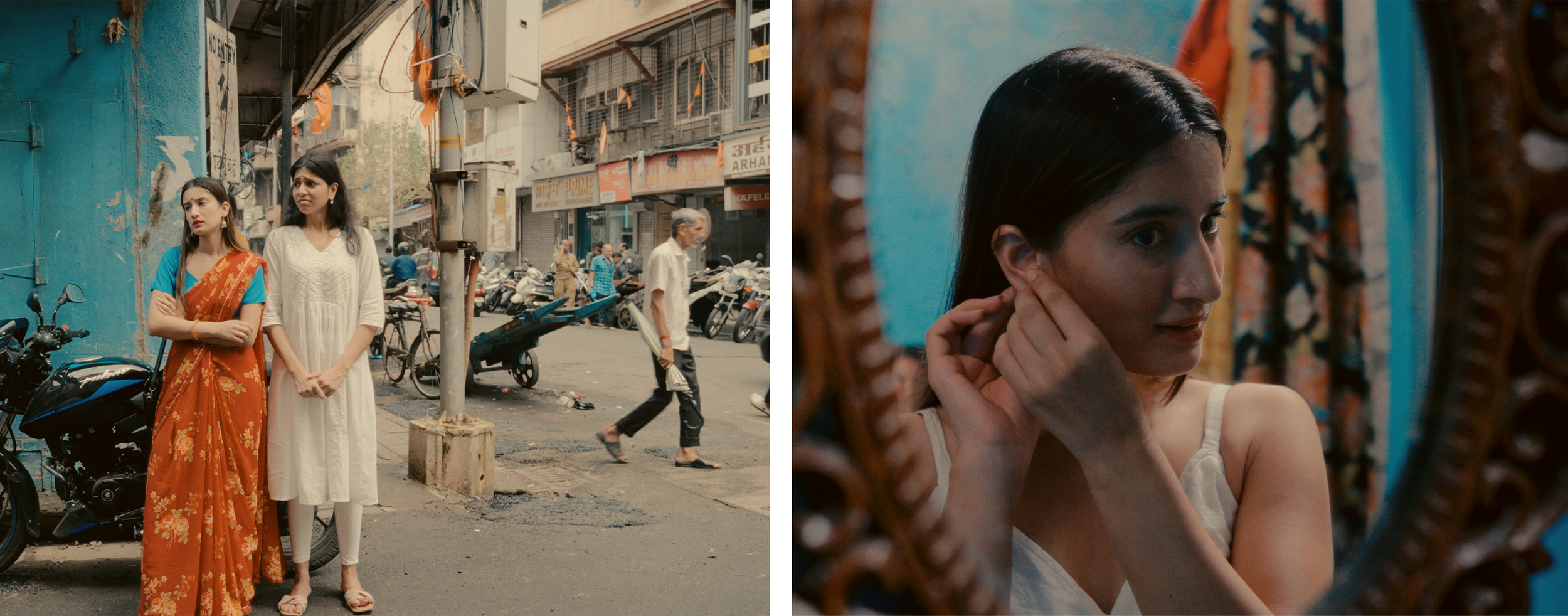
In the unforgiving world of Kamathipura, Mumbai’s notorious red-light district, a young woman clings to fragile moments of hope while trapped by sex-debt bondage in the grip of her ruthless pimp.
ABOUT THE FILMMAKER
Ashwin Agrawal is a Mumbai-based indie filmmaker. He studied filmmaking at the Sundance Collab Program and Raindance Film School, and is currently mentored by Peter Markham, the renowned filmmaking coach from the AFI Conservatory.
His first short film, Crossroad, won numerous awards at international film festivals. His debut feature, Broken Mirror, received recognition at the Los Angeles Film Awards in 2024. He also won the Audience Choice Award for his short film Half a Bite at the Emerging Lens Cultural Film Festival in Canada, a Canadian Screen Award-qualifying festival.
As an independent filmmaker, Ashwin often seeks collaboration to reduce the cost of production while building meaningful creative connections. He believes filmmaking is an multi-functional craft, where every person involved is essential to the life of the film.
Under Peter Markham’s mentorship, Ashwin has delved deeply into the craft of cinematic storytelling—studying the rarely taught discipline of narrative point of view and its articulation on screen. His work explores the flow of energy within a film, the resonance of images, tonal shifts, and the shaping of theme through cinematic language.
READ OUR INTERVIEW WITH ASHWIN
Welcome to our Short of the Week series. Tell us a bit about yourself and your filmmaking background.
I am an acting coach and film director based in India. I began my filmmaking journey in 2022 with my short film Crossroad, which I wrote and directed, casting my own students in the lead roles. The film performed well across several smaller festivals and marked the start of my directorial path.
Following that, I directed my first feature film, Broken Mirror, a story centered on body dysmorphia. The film reached the final stages of consideration at Directors’ Fortnight but, though it did not make the official selection, the experience deeply shaped my artistic growth.
I went on to direct The World Beyond, and soon after, I joined the Sundance Collab program for film directing. There, I met my current mentor, Peter Markham — a former AFI Conservatory coach and teacher of acclaimed director Ari Aster. I have been training with Peter remotely for over a year now, and his guidance has significantly refined my craft and cinematic vision.
Most recently, I directed a poetic short film titled Where the Waves Forget. Peter Markham loved the film and is serving as its Creative Consultant, continuing to mentor me on the project’s artistic development.
Tell us about the genesis of The World Beyond Me. Where did the idea come from and how did you develop that idea into the short that’s now made its way out into the world?
One ordinary day, I parked my car near Mumbai’s Kamathipura at 4 PM and noticed a sex worker standing by a wall. When I returned at 8 PM, she was still there—her face weary, her expression sombre, untouched by the passing hours. That moment struck me deeply. It wasn’t just her exhaustion; it was the realization that her world and mine, though physically separated by mere steps, were universes apart. While I could move freely, she seemed confined to those lanes, locked out of the life many take for granted.
This haunting realization gave birth to The World Beyond Me. I wanted to go beyond the surface, beyond what society sees and labels. Who was she behind the Prostitute Label, behind the weary face and the stereotypes? What were her dreams, hopes, and desires?
Too often, filmmakers dehumanize sex workers, portraying them as mere objects, stripping away their dignity and identity by using derogatory terms like “whore”. I wanted to change that narrative. The World Beyond Me tells the story of Sangam, not as a victim but as a person a woman with a longing for freedom, for something beyond the confines of her world.

What were some of the main obstacles you experienced when making The World Beyond Me and how did you overcome them?
The biggest challenge was balancing authenticity and sensitivity. We were very mindful of how we portrayed trauma and violence—most of it is conveyed through close-ups of Sangam’s face, focusing on her emotional state rather than the physical acts. Working with a low budget and ensuring that we did justice to the complexity of Sangam’s story also posed logistical and creative challenges, but it was a deeply fulfilling experience.
Another challenge was changing weather we were shooting at the end of rainy season so there was a lot of inconsistency in the lighting conditions.
The budget forced us to get creative. For the crucial beach scenes, our crew stripped down to just the essentials: me on camera, my assistant, and our lead actress. It was a marathon of multitasking—directing, operating the heavy gimbal, and problem-solving with a team of three. We captured the magic, though I felt the strain in my back long after the shoot wrapped.
I did the color grading of the film instead of spending money to hire a color artist and I believe I did pretty good job on that.
Tell us about the journey of getting your film to audiences and some of the festival circuit highlights and/or online release.
The Jorney was difficult at first some top channels rejected the film and it left me disappointed and then there was this shortframe channel in UK they accepted the film and also Klipist another good platform in UK and recently I released it on my own channel and it seems to be doing pretty good for the start.
What advice or hacks would you give to other short filmmakers?
The biggest advice I’d give to short filmmakers is: let your film begin as soon as possible skip long opening credits. Don’t make the audience wait to enter your story.
Another common misconception is that you need a “hook” at the beginning. Many filmmakers fall into this trap and end up diluting the authenticity of their work. If you watch Miller & Son, the Oscar-winning short by Asher Jelinsky, who also happens to be my coach there’s no flashy hook. It simply begins with a man going about his daily routine in his father’s garage, yet it pulls you in through truth and tone.
One of the most important yet overlooked aspects of directing is understanding the Narrative Point of View (NPOV) who is taking us through the journey, the emotion, the experience of the story. Sometimes it’s a single character, sometimes two (as in buddy stories), or even an ensemble.
The character we’re aligned with should guide the camera its movement, lens choice, and proximity/distance, sound mix, editing. For instance, in a film like American Honey, the NPOV is with Star, the lead girl. It’s what’s called a “Follow and Accompany” NPOV — the camera travels with her, not just after her.
Another great example is in Blue Valentine: when Ryan Gosling’s character pleads not to break up, he’s shot in a close-up — we’re emotionally close to him. Michelle Williams, however, is framed in a medium-wide shot, distancing her both emotionally and visually. Their differing shot sizes express their relational distance.
There’s a lot more to explore in understanding NPOV — it’s one of the most powerful tools a director has to make the audience feel exactly what they intend.
Any film recommendations that we should add to our watchlist?
Miller & Son – Short film – Student Oscar winner – Helps understanding how tonal shift happens in film
Contrapello – Short film – Oscar Nominee – Helps understand how simple story with 2 simple location can carry so much depth
Roma- To understand NPOV – 3 rd person objective and 3 rd person intimate only it never shifts to other NPOV styles like first person or other.
Nomadland- Amazing acting great microstories on face and blend of documentary fiction storytelling.

