
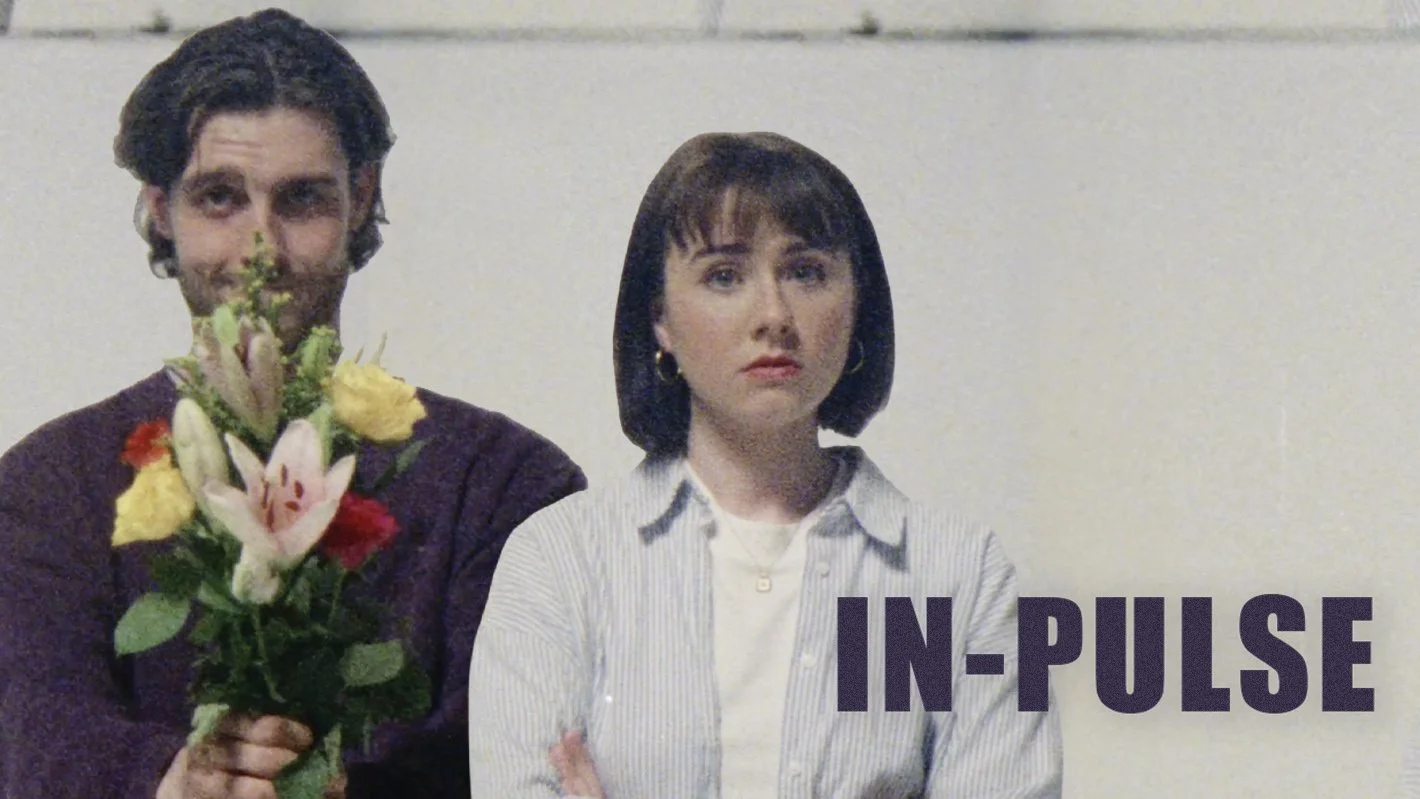
Directed & Produced by Riccardo Tito Pescini
Written by Freddie Walker & Riccardo Tito Pescini
A Government sanctioned programme of opting to repress the individual’s true feelings is rolled out - the ultimate masking tool that sees two people in a relationship not able to share their true feelings no matter how drastic they are.
ABOUT THE FILMMAKER
Riccardo Tito Pescini is a British-Italian filmmaker and producer based in London. In 2022, he founded Ricswrld Studios, an independent production company dedicated to supporting emerging talent and creating short films focused on identity, tension, and human connection through intimate character-driven and experimental storytelling. His work includes award-winning short films, a WeShort-acquired project distributed globally, and acclaimed Super8 films screened at international festivals.
Influenced by his cross-cultural upbringing between Italy and the UK, his work blends realism with experimentation. Drawn to characters in transition and the quiet moments that reveal who we are, he deeply focuses on performance and collaboration. Riccardo is currently developing his Italy–UK debut coming-of-age thriller feature co-production as well as working on a London-based mockumentary.
READ OUR INTERVIEW WITH RICCARDO
Welcome to our Weekly Pick!
We first saw IN-PULSE when you brought it to one of our Open Screen events. Since then you've also screened additional shorts with us that were also made for the Straight 8 competition.
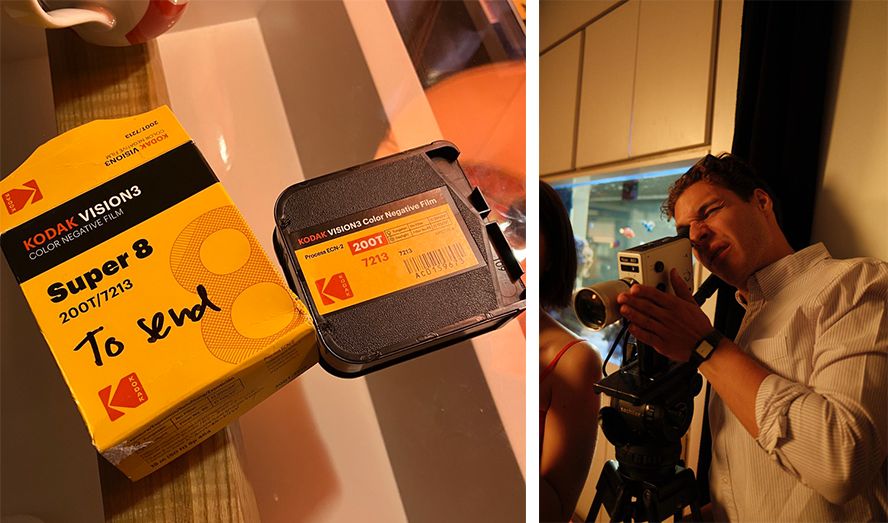
For our readers who may be unfamiliar with the competition: it's where filmmakers make a short on a single roll of Super 8mm film, all edited all in camera. Filmmakers then send off their film for processing and their soundtrack for syncing... They don't see the final product until after it's assembled. Top films are screened at the Cannes Film Festival and then a broader selection at a London showcase event.
How far into the Straight 8 competition has your work progressed?
I've actually been a part of two Straight 8 competitions.The international competition with my first Super 8 short called R-E-VOLUTION which also screened with Kino and the Straight 8 Shootout competition with my production company presenting the film IN-PULSE Which screened at the Prince Charles Cinema in Soho, London
In your case, what came first: the idea or the contest?
Were the creative concepts in IN-PULSE developed to possibly be actualised as a more traditional short film which you then pivoted to a Straight 8 film or did you develop this specifically for the competition?
I actually sat down with a collaborator of mine called Freddie, who's also credited as a writer in the short and the co-star alongside Sophie, to specifically develop a short film that would be engaging in such a short time window and with a concept that would be successfully executed and communicated through the Super 8 medium.
Your previous short, Hit or Stand, was a more traditional style short, as were a couple earlier shorts you made. Can you chat about the main differences between how you approach a short film depending if it's being created for the Straight 8 competition vs not?
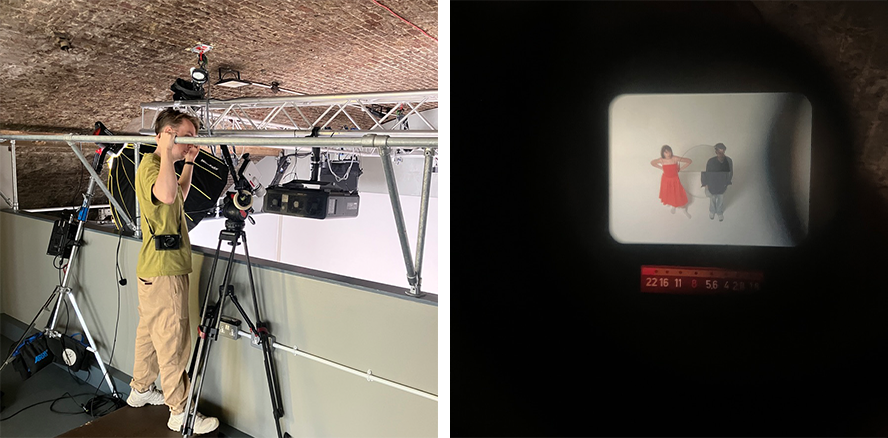
I think the whole approach changes completely. You have to be extremely aware of time and how many shots, frames, sequences, and scenes you can have because you are limited to the length of one roll of Super 8 film. Not only is this important in the development and writing of the short, but it has to be thought of as well once shooting, because everything has to be in sequence. Your locations have to be close enough to be able to shoot in a day or two so as to keep the flow of the film and minimise any technical errors.
Sound is also another major different because there isn’t any throughout the whole shooting process. Your storytelling has to mainly or solely rely on image because that’s all you got. If you attempt dialogue it will most likely fall out of sync, hence why people avoid it and if you need to rely on specific sound cues to happen those can also fall out of sync. It’s worth noting that in our short we did use dialogue but it was mainly done through the use of voice over or using reaction shots so that every time you heard a character’s line you would see the other character’s face. Lastly, the main difference between shooting a regular short and a Super8 for Straight8 is the real adrenaline and absolute excitement/fear you get every time that trigger on the camera is pressed… there’s no going back, there’s no fixing in post or trick that can save you, it’s honest, it’s real and it’s what you’ve shot, for better or for worse.
How did you handle the logistics of getting your visuals and sound to sync?
We actually used a reference camera, which is a bit of a cheat code when it comes to the Straight8 competition. With the digital footage of what was shot on the Super 8 and of when the trigger was pressed, we could reverse engineer our film by editing a digital version of it and then line it up with our score done by our composer Alex. That way we could play around with sound design and effects that are otherwise impossible to pull off with syncing.
Tell us about the challenges of in-camera editing.
I haven’t found it to be a challenge per say to edit in-camera. In a way it forced me as a Director to cut out all the fat and really distill the story to its most basic components and shoot only what is incredibly necessary. It could really heighten the film I found. There’s no stalling, no fillers, every frame counts. As mentioned before, whilst editing on camera, you really have to be aware of the locations and shot list you have planned so as to minimise mistakes that could occur by long travelling times or separate days of shooting. Most importantly editing in-camera makes the budget either a constraint or it frees the filmmaker of all budgeting headaches. It really allows for a film to be made practically with no money, which in turn creates its own set of challenges and only the most creative will prevail.
What makes you keep coming back to the Straight 8 competition and do you think you'll keep coming back for more?
I’m happy with what I've made so far. I’ve taken the ideas that I had for the competition and made them a reality. I have made another Super8 film since, outside of the competition, using spoken word and my shots to create a short piece titled Masculinity, it’s on my instagram. I like this way of working and I think i’ll continue shooting my own Super8s that way.
What's next for you?
What's next for me is Festrun, a tech venture I'm building alongside my filmmaking. Festrun is a platform where filmmakers privately track their festival submissions and publicly share their selections and wins on their feed where they can follow each other and build a name.
Every filmmaker I know runs their festival strategy out of a spreadsheet: submissions, deadlines, fees, who's said no, who's still pending. And when the good news arrives, it gets shared with a post or image across Instagram or LinkedIn and then momentum dies. I couldn't find one place that could do both and where your careers momentum could be tracked and built in real time.
Festrun has a private tracker where you can import your FilmFreeway history, follow your submissions and manage your budget. Nobody else sees your spend, rejections or pending entries. The built in social layer is the exciting part.
Festrun has a public side where you share the selections and wins you choose to, with a festival directory organised by tier and a leaderboard.
I built it from my own festival run as IN-PULSE kept being selected to festivals and I couldn’t keep track of it all, especially with other films doing the same so I wanted the tool I couldn't find.
It's in private beta with a small group of filmmakers using it right now, and I'd love to hear from anyone who'd like to try it and develop it further!
And last, but not least? Any film recommendations for our audience?
I have two films that have really stuck with me this past year.
The first is called Ed Wood (1995), a brilliant portrayal of an aspiring and extremely passionate yet unsuccessful filmmaker played by Johnny Depp directed by Tim Burton.
The second is Suzhou River (2000), an incredible Chinese film, with magnetic acting, fascinating camera work and mesmerising location, a thriller in bits and rom com in others it’s a wonderful watch.
