
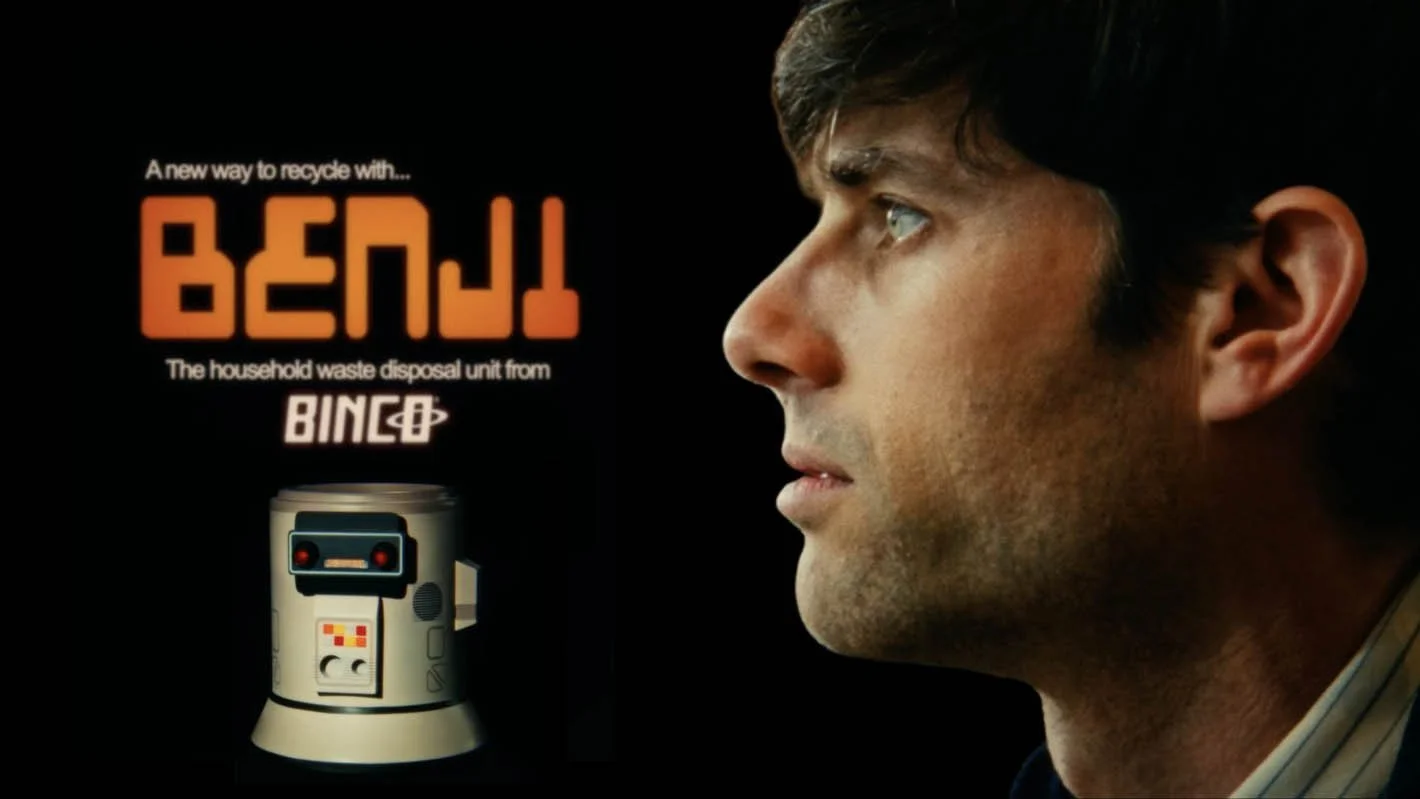
BENJI
A seemingly innocent TV commercial for a family-friendly recycling bin becomes increasingly bizarre when the father decides to recycle more than just household waste.
Written, Produced, & Directed by Oscar Garth
A seemingly innocent TV commercial for a family-friendly recycling bin becomes increasingly bizarre when the father decides to recycle more than just household waste.
ABOUT THE FILMMAKER
A director of photography with a bold, playful style, Oscar brings surreal stories to life through the lens. With multiple shorts under his belt, Oscar recently completed his first feature film, and is currently developing a series with comedy writer/director/performer James Button. Oscar's passion for storytelling has recently led him to explore directing as well, with his debut short Benji.
READ OUR INTERVIEW WITH OSCAR
Welcome to our Weekly Pick! Let's dive straight in.
Benji first caught our eye as an Official Selection at the 2024 edition of our film festival when it won an award for production design.
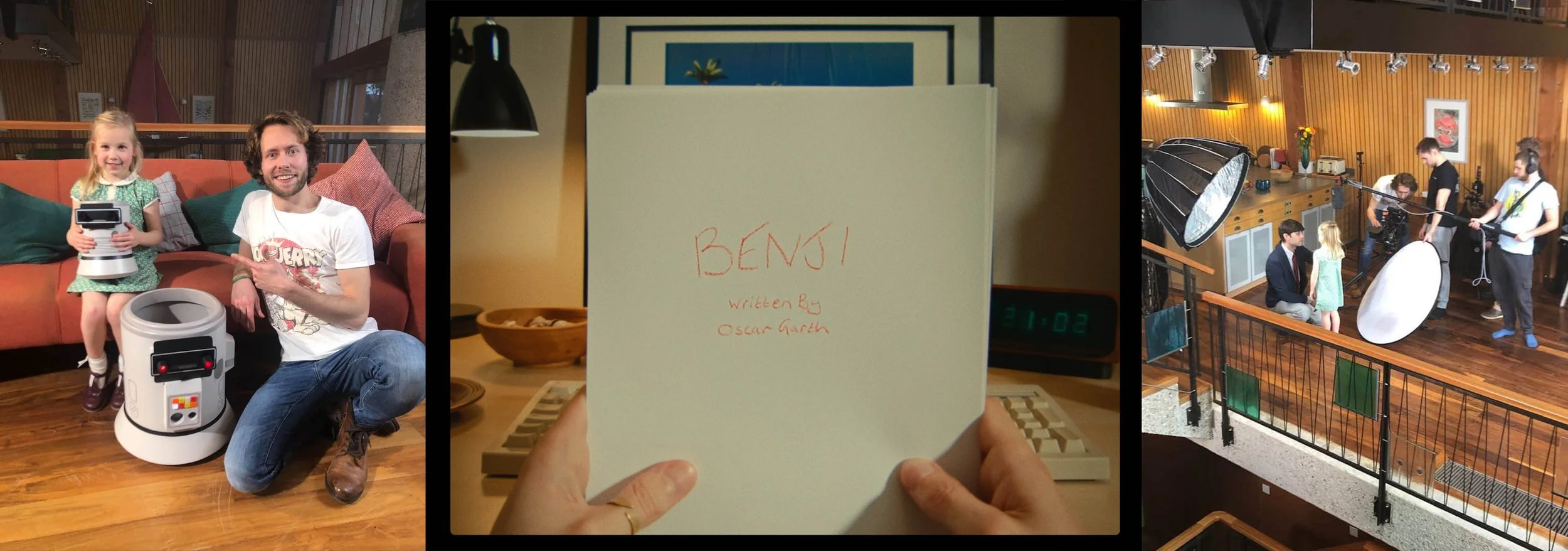
First let's chat about the design of the film and its awesome retro aesthetic. How did you go about sourcing all of the elements needed to pass off a convincing classic look that feels more like it's been plucked from the past vs made anytime recently?
I watched a LOT of old TV ads. They were bonkers back then, but there’s something incredibly charming about them that has always appealed to me. Possibly the happy-go-lucky, overly optimistic vision for the future, and all the goofy tech.
I was really meticulous about everything with Benji, it was so much fun to design the look for such a bold, playful world. It all clicked into place when I stumbled upon 'The Houseboat' in Dorset. Most locations I looked at were just normal modern houses with a bit of vintage wallpaper, but this place was a literal 1960s 'House of Tomorrow'. It came almost completely dressed, so our production designer Jamie just had to swoop in and add some finishing touches, along with a few random retro knick-knacks I nabbed from my flat.
On the tech side, I shot on a Blackmagic Micro, which has a gorgeous super 16mm sensor, getting me most of the way to a film look. Coupled with an old, beat-up Canon servo zoom lens to get those playful TV ad snap-zooms, and give an overall de-tuned feel.
And then of course, there are the Benji bins. I found an amazing illustrator on Instagram, Ann-Sophie De Steur, to sketch them out, and then JSM Model Makers down in Marlborough brought them to life with actual moving eyes, switches, and LEDs. They now live with me in my flat. One is a functioning desk bin.
Can you tell us a bit about your festival journey with this film? The highs, the lows, the inbetweens.
Well, Benji had a great run, and nabbed a handful of awards including the Andy Jones Award at Aesthetica, Best Micro-Budget Short at Kino, and was one of the Judges 6 at Exit6 fest. More importantly though were the reactions I got from people leaving the cinema. It was always a joy hearing peoples’ verdict on exactly what was going on in the film, with one notable review being “I’ve no idea what happened at the end there but I was in tears”.
Getting the film online has been a long time coming. How have you found the reception of the online release of the film?
I think again, the biggest joy for me is witnessing in-person reactions to the film, discussing it over a pint, and using it as a springboard to chat creatively about other projects. Now that it’s online, I honestly don’t think about it much, my head is already onto the next project.
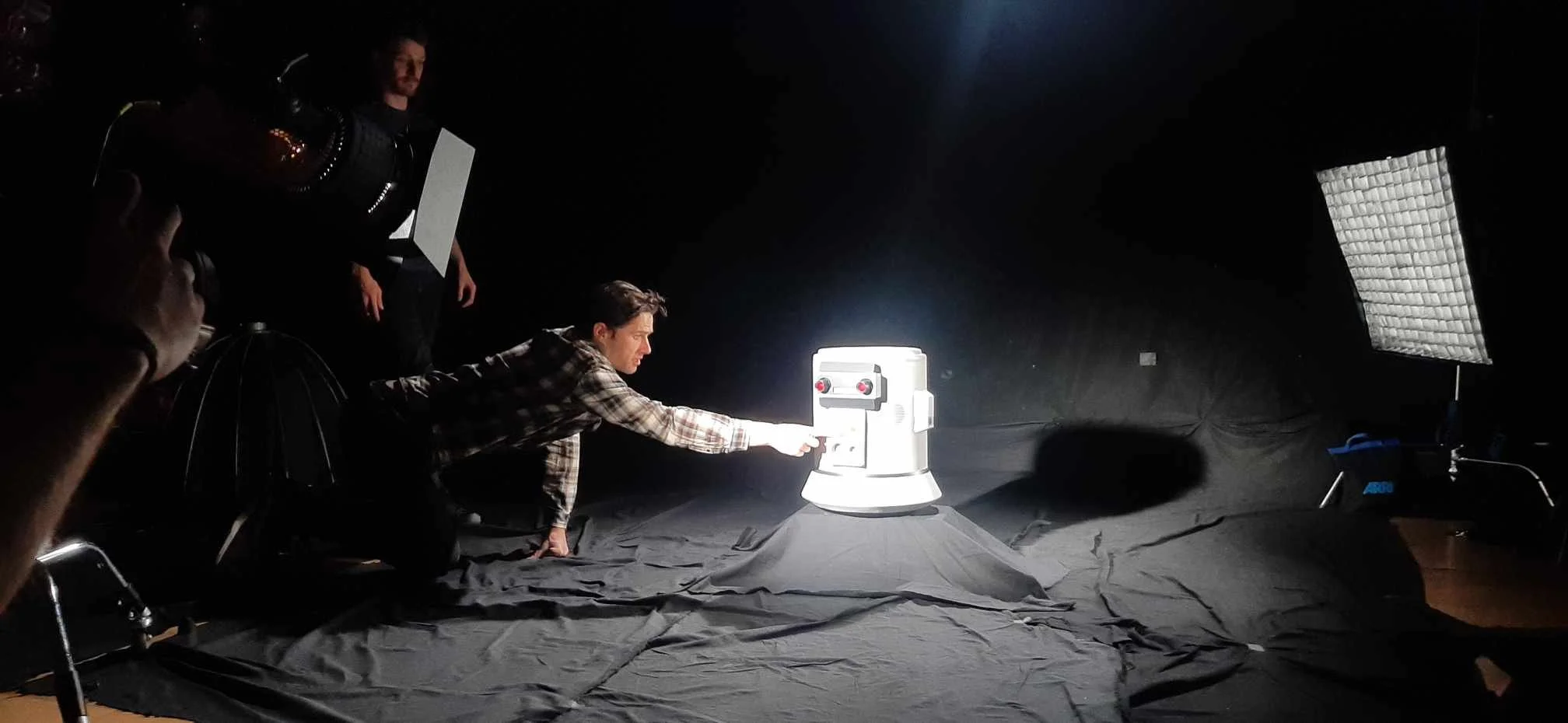
You often work as a cinematographer for other directors. Can you talk about how your process changes when shooting for others vs shooting for yourself?
When it’s your own film, you’ve got the whole project - the script, the performances, the existential dread, all of it your brain at once. When I’m just wearing the DP hat it gets a little simpler.
It’s pretty similar in terms of storytelling. I’m always thinking about the narrative and what my own creative eye can bring to the table. And so, the directors I love working with most trust that together we can create something more than the sum of its parts. It’s always a hugely collaborative effort, I’m not just chucking a camera down, the vision for the whole project has to be mutual. It’s a great feeling when you develop a shorthand with a director and suddenly every creative decision you both make it in-line with that vision.
What advice or hacks would you give to other short filmmakers?
My advice would be don’t look for hacks. Focus on creating something authentic, that brings up some emotion in you. Try and look at whatever anyone else is doing as little as possible, and for the love of god don’t hang your worth as a filmmaker on laurels or accolades.
What are you working on now?
I’ve always got a bunch of daft ideas bubbling away. The next one will likely be a short called Channelling Walter Fishman, about a hermit who lives underground and makes crap electronic music. Parallel to that, I’m jumping into feature development with long-time partner-in-crime James Button. We’re writing a comedy feature debut about a 900-year-old man stuck in a bleak care home who just wants to get back to his castle… so stay tuned for that nonsense.
Any film recommendations that we should add to our watchlist?
The last short I saw at a festival that really landed for me and deserves a shoutout, was ‘I Have a’ by Rory Waudby-Tolley. Fast-paced daft animation about a guy listing all the things he has… You have to just watch it.
One short I do keep coming back to as a solid source of inspiration is The Privates by Dylan Allen. “An unknown rock band struggles with a radioactive energy in their music that blows up amps, liquefies tape decks, and starts electrical fires”. It’s a little bit Edgar Wright, with a touch of Spielberg whimsy, and not only is it beautifully crafted in terms of cinematography, art direction, score and sound design, but the stand-out attraction for me is the naturalistic performances and editing. It all feels highly conversational, a bit like in Alien, where quite often you’re lingering on reactions rather than line delivery, and fully buying into the idea these guys are in the same room talking over each other. I honestly can’t believe it was never picked up for a feature.
Apply to get your short selected as our Weekly Pick
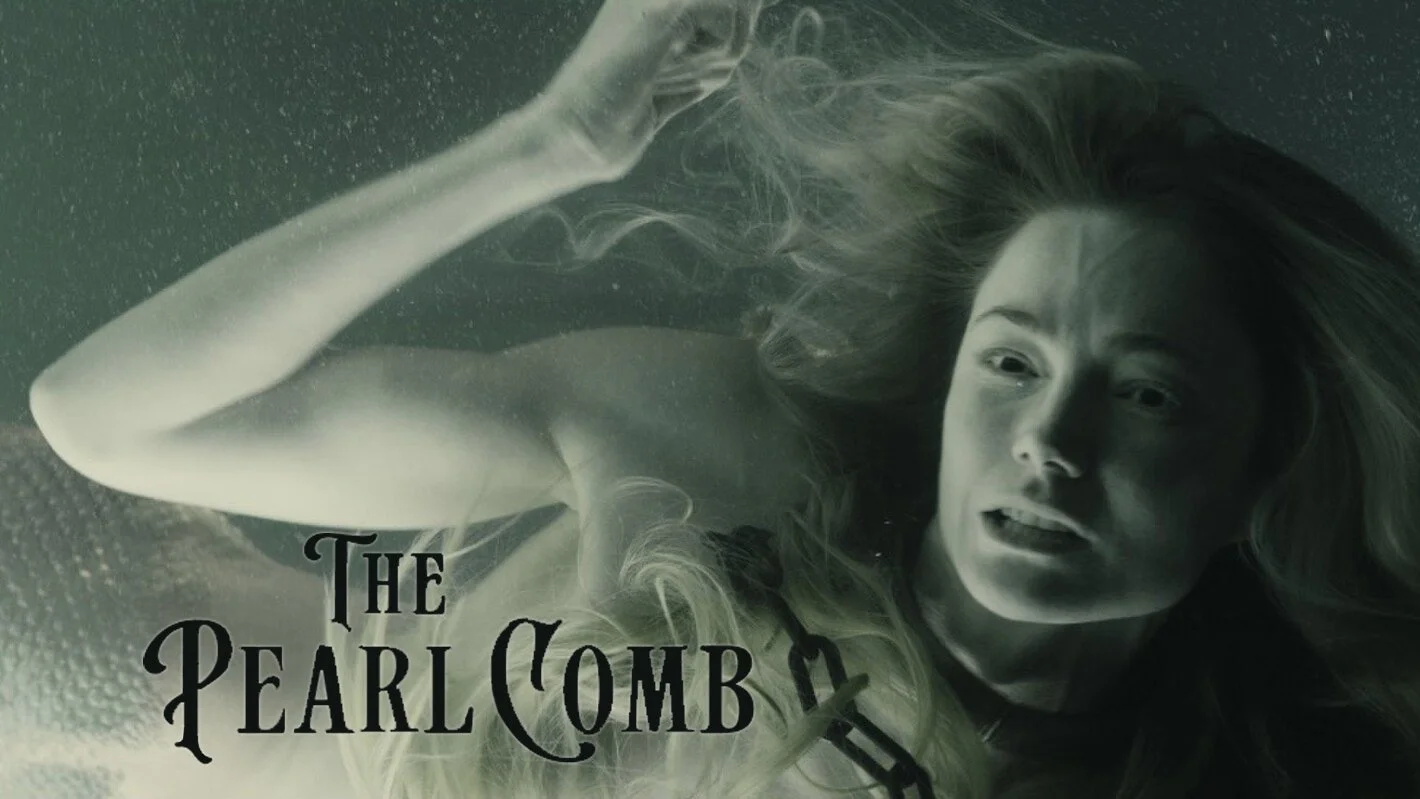
THE PEARL COMB
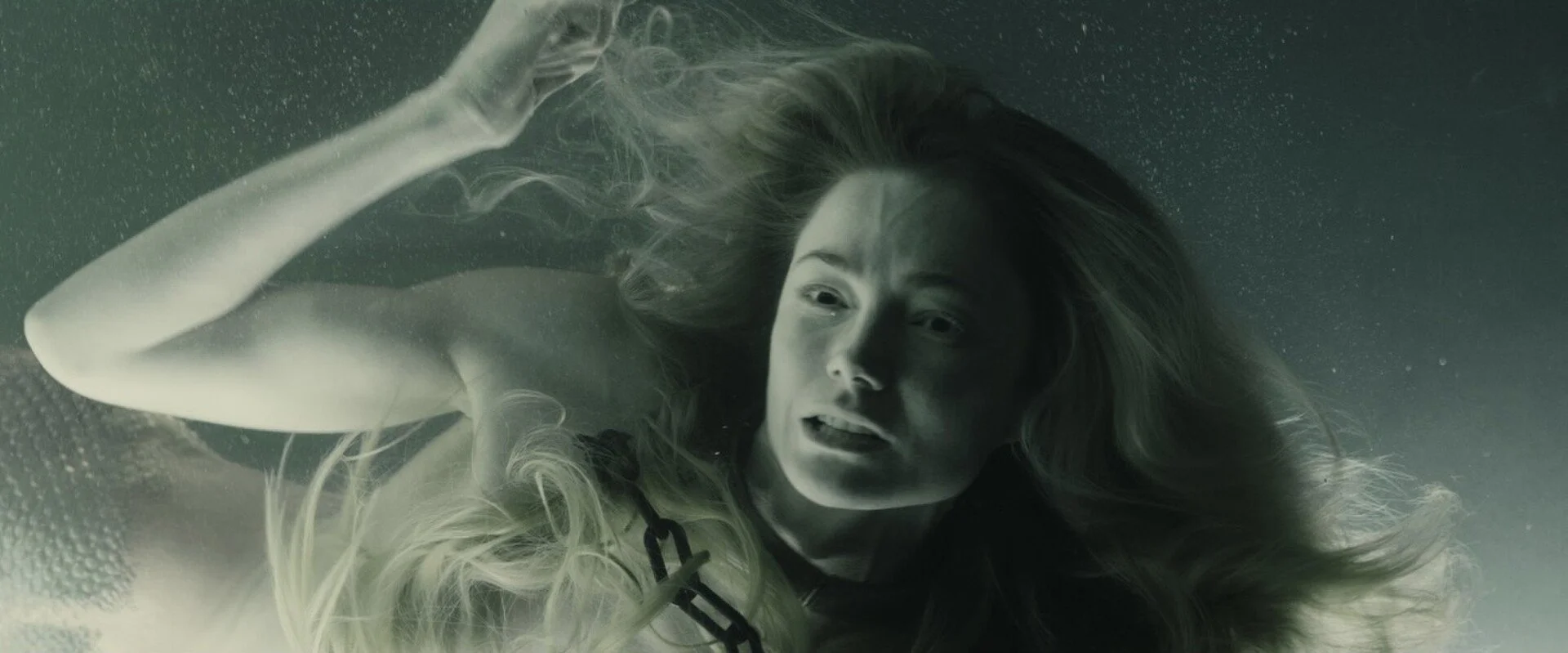
In 1893, a fisherman’s wife becomes the first person to cure someone of tuberculosis. A doctor, intent on proving a woman’s place is in the home and not practising medicine, investigates - only to discover the source of her unearthly power.
Watch on
Written & Directed by Ali Cook
Produced by Ross Williams & Matthew James Wilkinson
In 1893, a fisherman’s wife becomes the first person to cure someone of tuberculosis. A doctor, intent on proving a woman’s place is in the home and not practising medicine, investigates - only to discover the source of her unearthly power.
ABOUT THE FILM
The Pearl Comb was an Official Selection at our 2025 BIFA Qualifying Kino London Short Film Festival, having been nominated for 6 awards, and winning Best Production Design and Best Cinematography.
It premiered at FrightFest and Tampere, making quite a dent in the festival circuit. Highlights include winning a Méliès d’Argent Award – Best European Fantastic Short Film at Grossmann Fantastic Film and Wine Festival, winning Best Cinematography & Best Horror Short at Flickers Rhode Island’s Vortex, winning Best After Hours Short at Cleveland International Film Festival, and many, many more…
The film was recently Oscar Shortlisted and BAFTA Longlisted.
ABOUT THE FILMMAKER
The Pearl Comb follows Cook’s BAFTA-longlisted short The Cunning Man, which screened at 88 international festivals, including Cinequest, FrightFest, Cleveland, and the BAFTA- and BIFA-qualifying Norwich Film Festival, winning 33 awards and earning a Méliès d’Argent nomination.
Cook first broke out as a writer-performer with seven of his own comedy series, including Channel 4’s Dirty Tricks, which was nominated for a British Comedy Award. As an actor, he is known for playing Sgt. Paul McMellon in the BAFTA-nominated Kajaki and as series regular DCI Simmons in Ragdoll for AMC/BBC One. He will soon appear as Ben in Channel 4’s Falling, written by Jack Thorne.
Cook’s next directorial project will be the feature The Grimoire, co-written with Eric Garcia (showrunner of Netflix’s Kaleidoscope) and produced by Chris Curling at Zephyr Films. Curling has produced more than 60 films, including Oscar-nominated The Last Station, starring Helen Mirren, Christopher Plummer and James McAvoy, and The Miracle Club with Maggie Smith and Kathy Bates.
READ OUR INTERVIEW WITH ALI

Hi Ali!
We're excited to be featuring The Pearl Comb as our Weekly Pick. Not only because it's Oscar Shortlisted and BAFTA Longlisted, but because it's a film that we believed in even before its recent success.
Can you tell our audience a bit about yourself and all the hard work tha’s led to this point?
Originally, and for a long time, I was a professional magician. I was very lucky to be on TV as a magician, which is like the holy grail for most of us. I ended up making seven TV series for a company called Objective Productions. My old boss there was Andrew O’Connor who famously invented Peep Show; he’s a very clever TV producer. One day whilst we were making a TV series, he said: “You know I think you’d be a good actor.” And the cameraman said: “I think you’ve got a good face to be a villain”. These comments kind of stuck with me so I started acting, kept writing and here I am.
Tell us about the genesis of The Pearl Comb. Where did the idea come from and how did you develop that idea into the short that’s now made its way out into the world?
I’ve always wanted to portray mermaids authentically, as brutal killers like in the original folk tales, not as Disney princesses.
Then I heard the true story of the Edinburgh Seven: The first seven women to qualify as doctors in the UK. The medical profession did everything they could to stop them from practicing and the female doctors of that time had to come up with inventive lies to justify the work they were doing by claiming to be midwives or natural healers.
It felt like the right time to bring these stories together - especially now, when there’s a bigger conversation happening around gender, power, and the way women have historically been overlooked, misunderstood, or even seen as threatening or strange, just for being different.
What were some of the main obstacles you experienced during the making of the film?
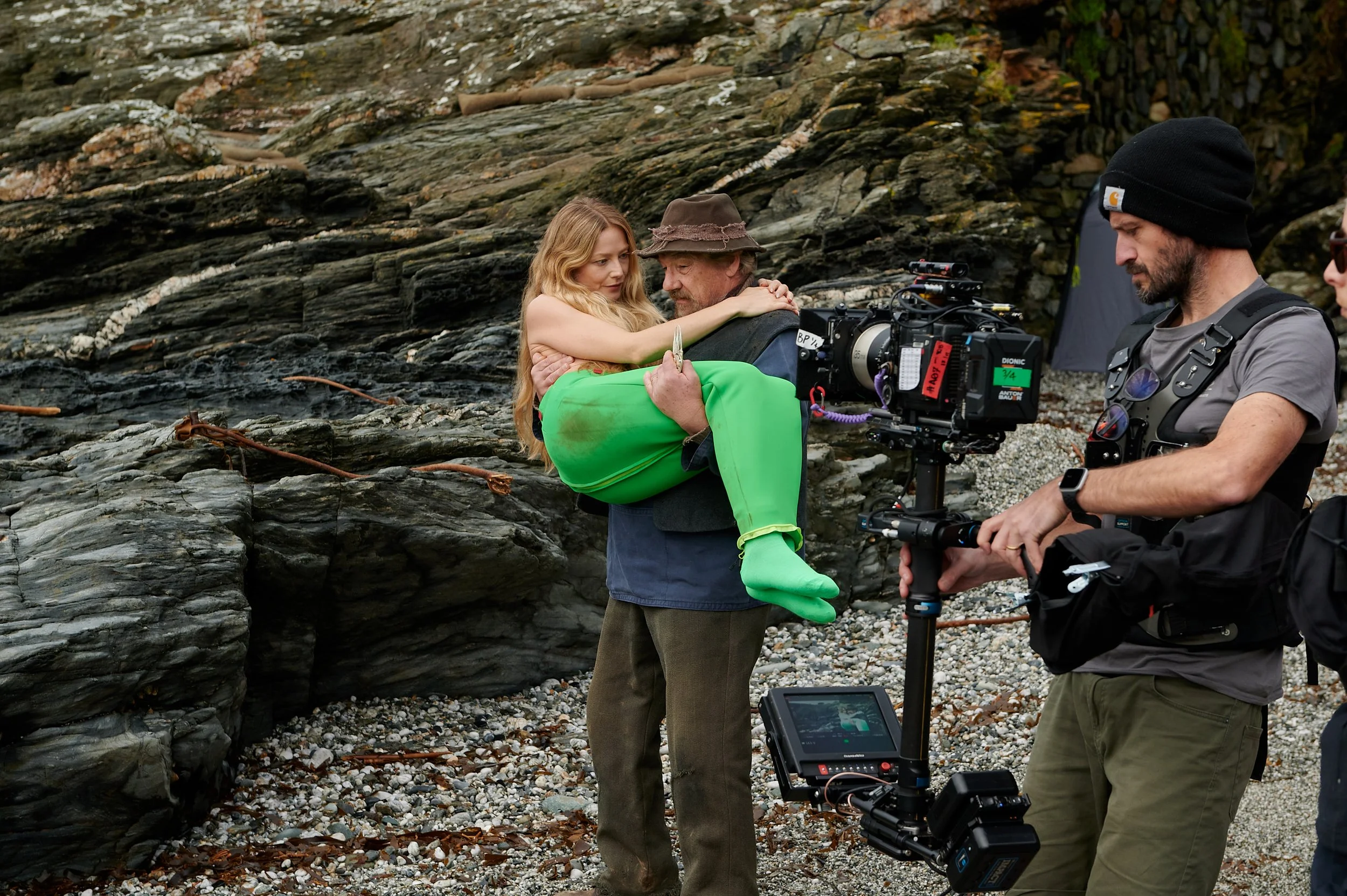
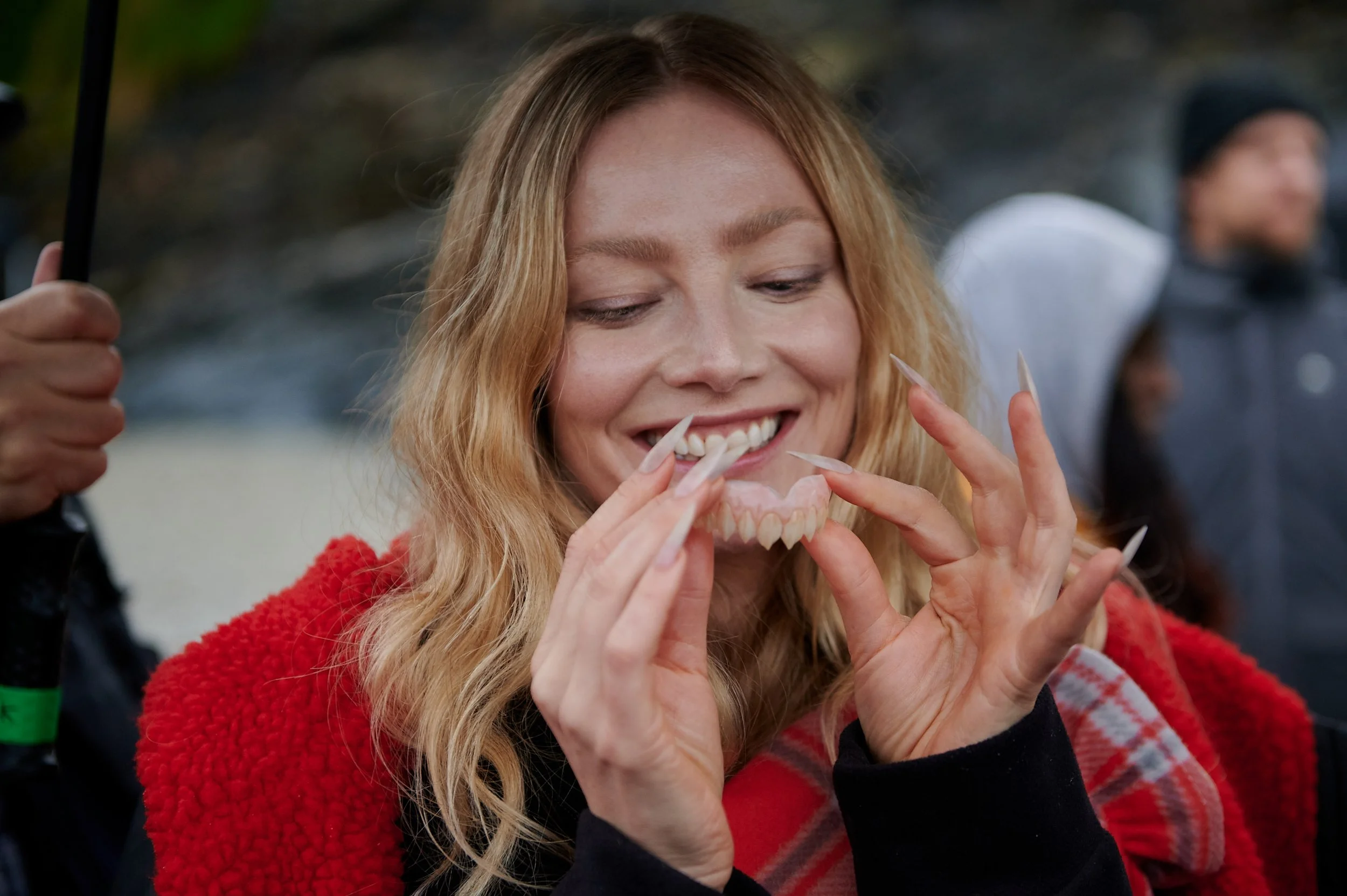
Creating a convincing mermaid on screen!
Also, the mermaid shooting out of the water during the boat scene springs to mind. It’s such a pivotal scene and the sequence was shot in a studio, with all the water effects achieved digitally. The challenge of creating that moment, making the digital effects blend seamlessly with the performance, gave me a whole new appreciation for how visual storytelling can transform a scene.
How did you overcome them?
It took months of discussion and inventive work with the SFX and VFX teams. I had to trust my imagination and the brilliance and experience of the team. When you believe in your instincts and you surround yourself with people who bring their own spark, the work starts to flow naturally.
Can you talk a bit about your process and how you balanced your performance with your role as director?
Preparation was crucial for me so that once I was in front of the camera, I could fully focus on the performance. I also found it invaluable to have someone I trust watching the monitor and giving me feedback, which I did.
Being an actor myself, I know how vulnerable it feels when all eyes are on you. Therefore, I know the best approach is to constantly reassure your actors and give them encouragement. Strangely, being in the ring with the other cast makes it feel more like a team effort for me, as if we’re all in it together. It really works well.
Who was the first collaborator to come on board the project and how did their early adoption help propel you forward?
Our storyboard artist Daniel O’Donnell-Smith and Koala FX.
We knew from the outset that the project would involve a significant amount of VFX, so it made sense for us to get to grips with this early on. Having a tight shot list allowed us to have conversations with Koala at an early stage and work out how to approach the work as economically as possible while still giving the story what it demanded.
Can you chat about your producers Ross and Matthew, how they came aboard the project and what they brought to the table?
I first met Ross on a short film I wrote called The Cunning Man. He did such a fantastic job that I knew I wanted to collaborate with him again on this project. When Ross had to jump on to the series Funny Woman, Matt Wilkinson came on board.
I’ve known Matt for years and have acted in several of his films. Even though this project was a short, he treated it the same as a feature and held me accountable to a tight shoot and post-production schedule. It really felt like I was responsible for delivering and that was a good push.
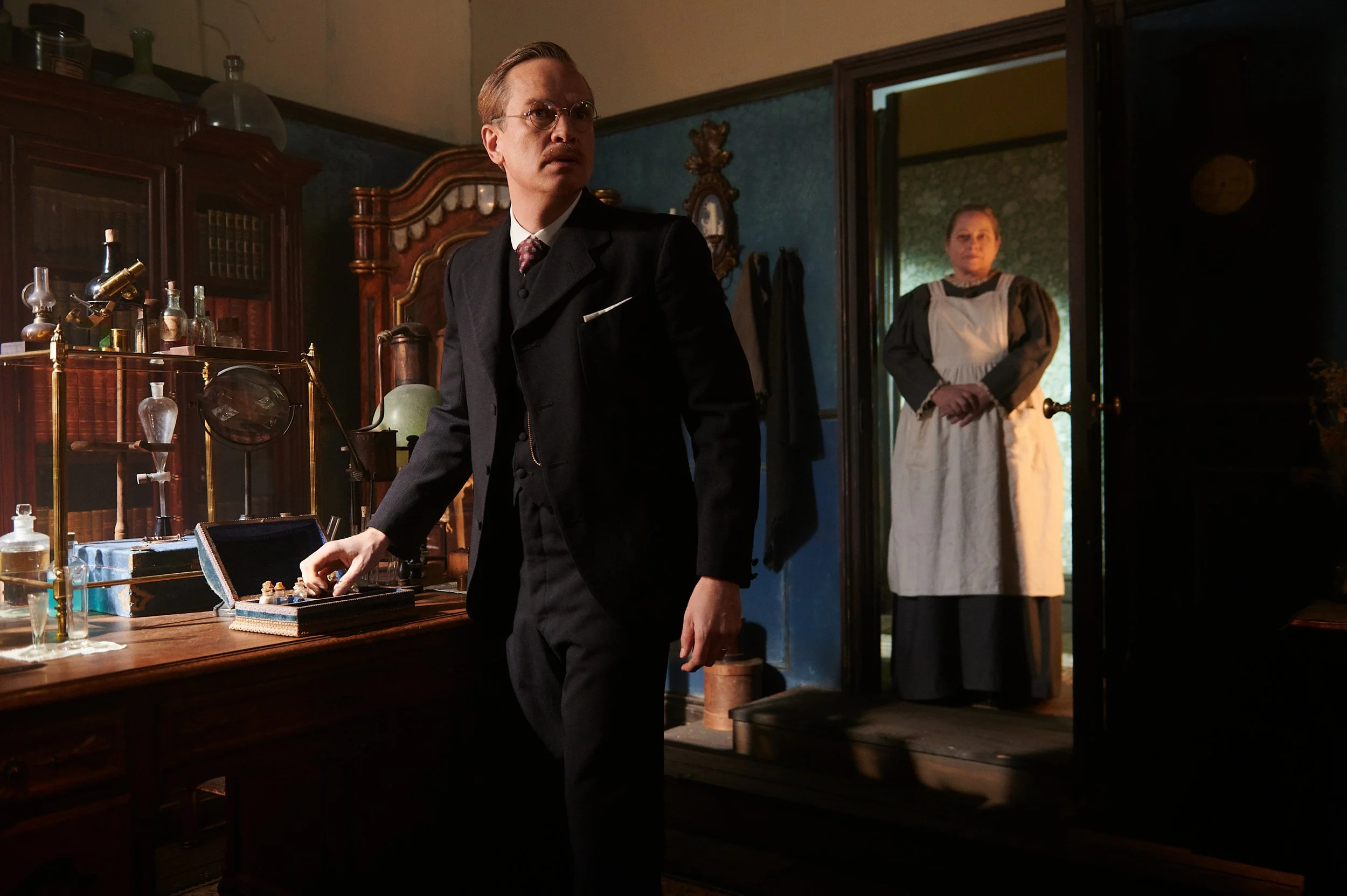
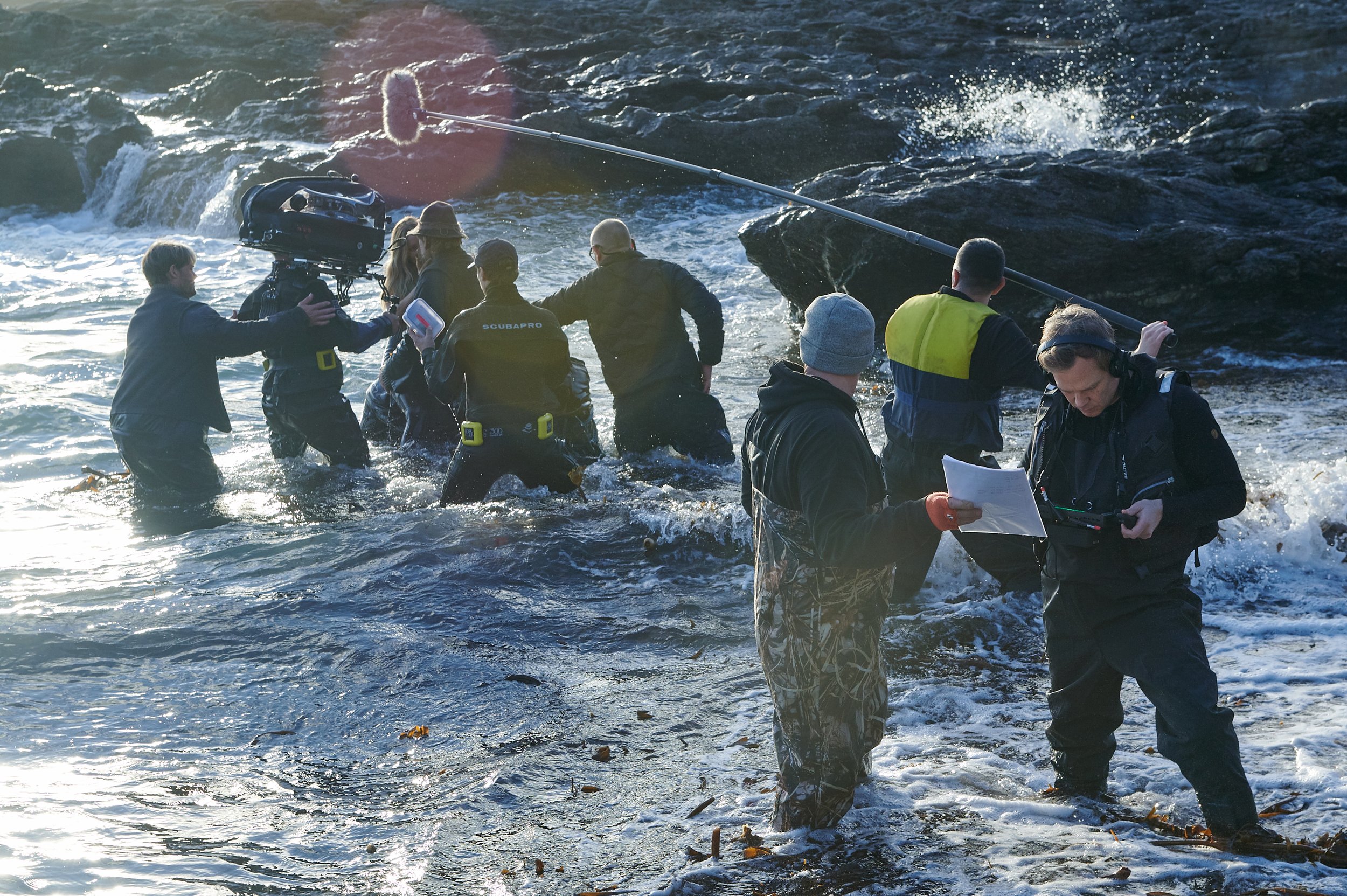
If I’ve done my research correctly, I believe you premiered at FrightFest, yes? How was that experience?
Yes, FrightFest was our first screening and UK premiere. Being recognised by one of the world’s top-reviewed genre festivals means so much. Genre films often push boundaries and take risks, and to have our work acknowledged in that space was so exciting.
At the same time, we premiered at Tampere Festival in Finland which is known for high-end art-house cinema. So, it was an honour to play both on the same weekend.
A lot of filmmakers believe they need to hit the world’s top festivals first. They often blow their submissions budget in the Sundance level festivals, and they wait to submit to (or skip altogether) second tier/genre/community festivals. But that doesn’t seem to be the approach you took.
The Pearl Comb has played quite a range of festivals, almost like working your way up the circuit. Can you chat about the approach you took to festival submissions?
I worked with Rebekah at Film Festival Doctor and trusted her strategy. We mainly hit the genre festivals first. When we started getting reviews that this is just as much a drama as a fantasy, we showed it to the drama festival organisers to expand the range of festivals. We just wanted to get it as far and wide as possible. Anything else was a bonus.
The festival circuit is a whiplash whirlwind - doldrums of rejection vs peaks of awards.
Most filmmakers can’t help but to compare themselves to their peers since we all advertise our successes on social media, but oftentimes keep our struggles hush-hush.
During your festival journey, what has been the hardest pill to swallow, and how did you keep going despite that setback?
I’m also a stand-up comedian, and the experience of trying out brand-new material is very similar and can feel quite scary! Ultimately, you have to say that new joke on stage and the audience either love it or they don’t. It’s the same with a short film. The overall motivation to keep going is that when it does kick in, it’s the greatest feeling in the world!
And now the question everyone has been waiting for... How did you manage to get your film released on Disney+ in multiple countries?
By the time the film had built momentum on the festival circuit, we already felt very happy with where things were. Then I came home one day to an email with an offer to stream on Disney which was completely unexpected. All interest is fantastic, but this was especially exciting.
What do you think are the biggest challenges facing emerging filmmakers at the moment, and as someone who’s been able to cut through the noise, what advice would you give to those hoping to follow in your footsteps?
My advice would be to get the story right first within the genre you are trying to master. Even if it’s a film you make on your iPhone with a budget of £500; if it’s a great story with great dialogue it doesn’t matter. The number one issue is people often shoot something where they have a premise or a theme, but no real story or ending.
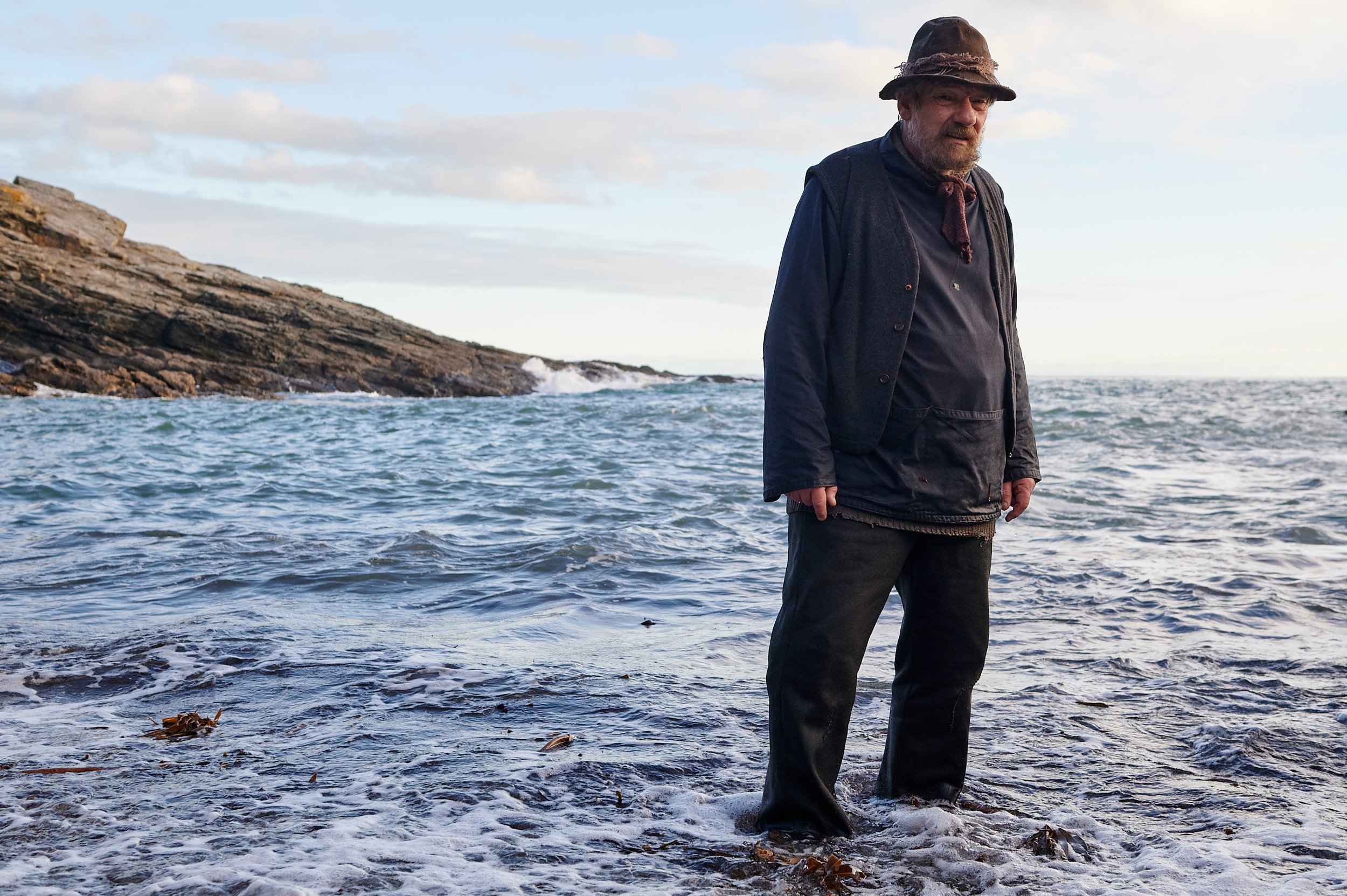
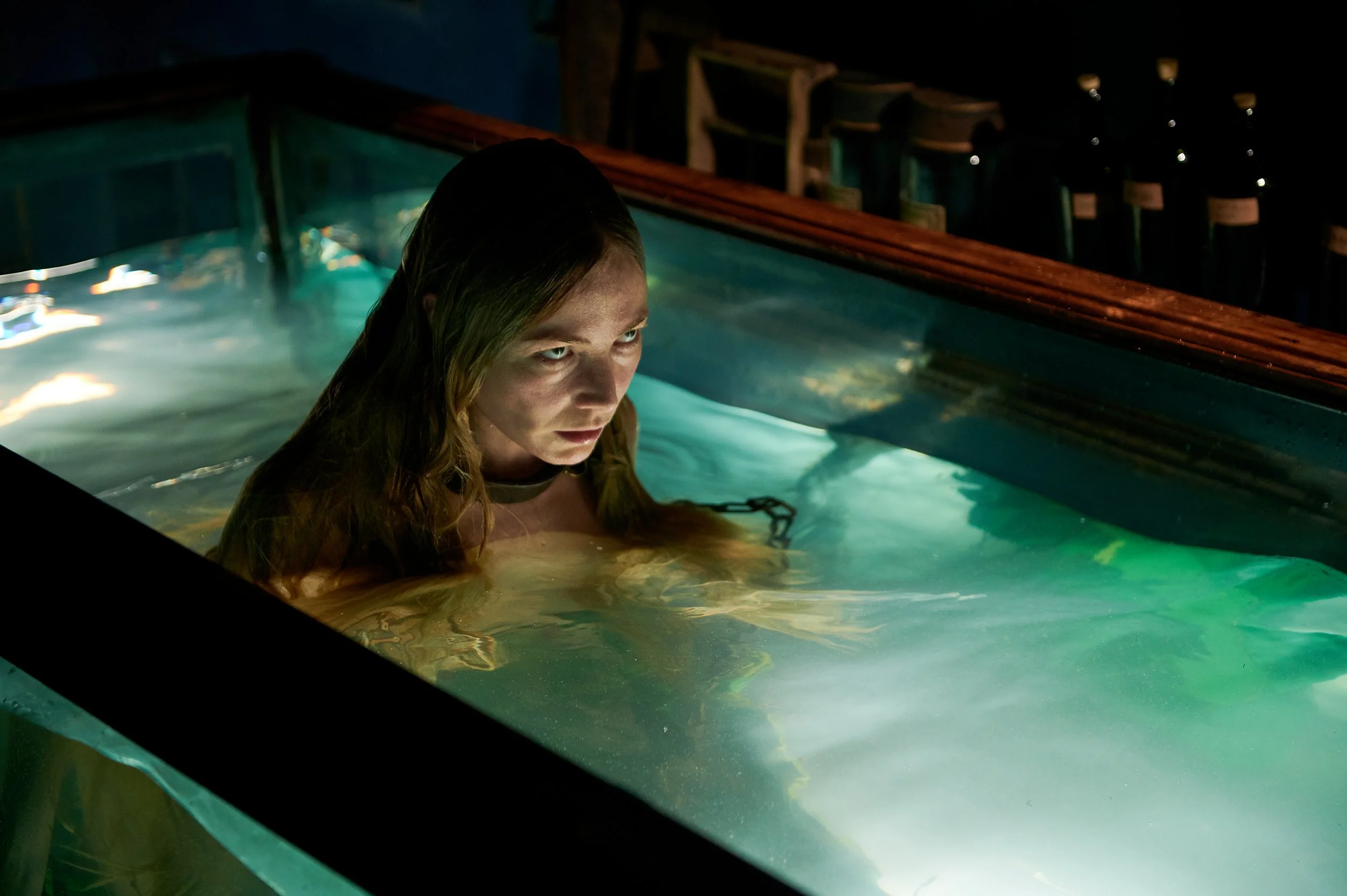
What aspirations do you have for what’s next?
I have a supernatural horror feature, The Grimoire, in pre-production with Zephyr Films so we’re heading full steams towards that!
How helpful has The Pearl Comb been in getting you on a trajectory of being able to actualise those aspirations?
This was the first film I’ve directed, and pardon the pun, I threw myself in at the deep end by taking on a high-end project with a lot of VFX. I wanted to see if I could handle that level of pressure. Now that I have that experience behind me, and with the encouraging response the film has received, I feel reassured both in myself and in showing others that I can do it again.
FOLLOW ALI COOK ON INSTAGRAM
Apply to get your short selected as our Weekly Pick
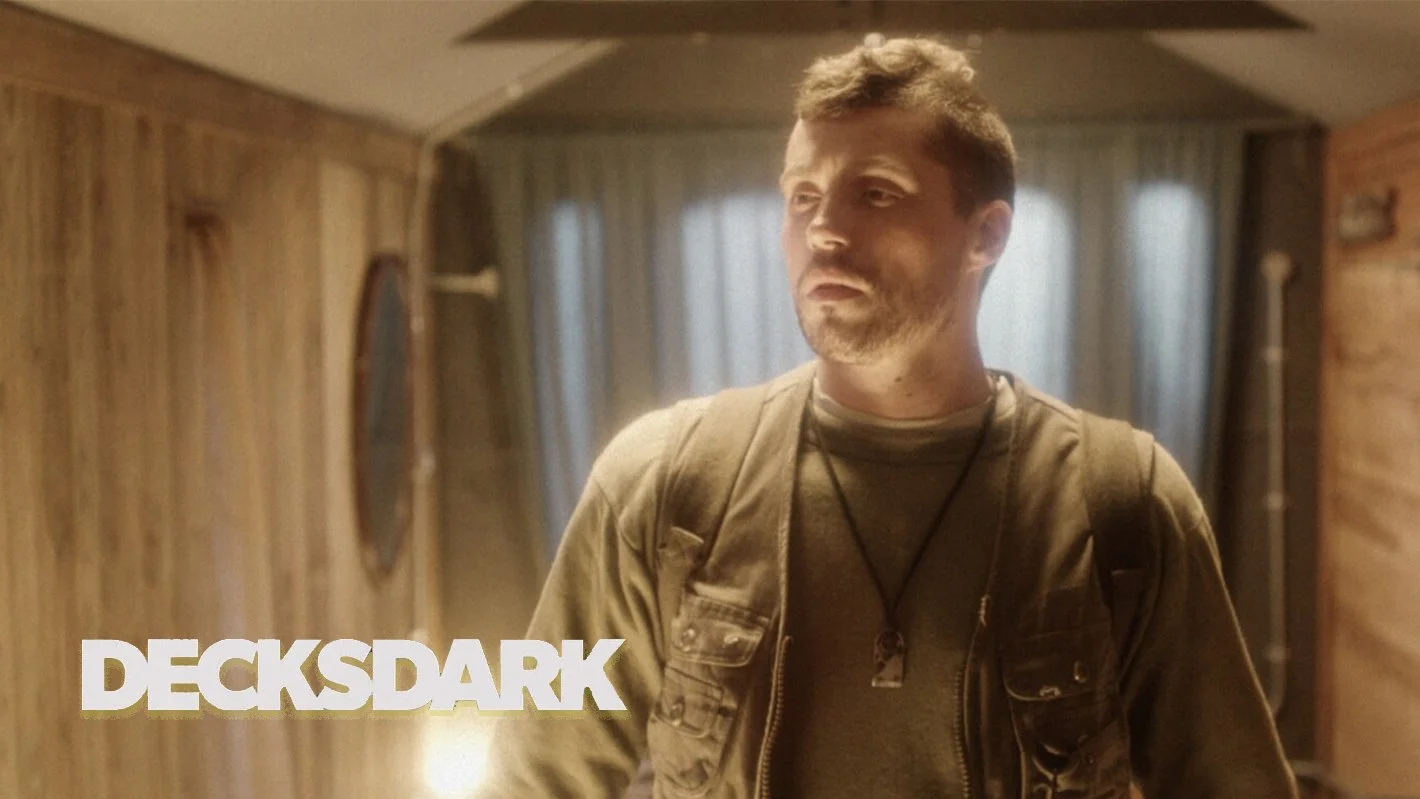
Decksdark
In a dystopian realm where consciousness is encased within neural implants, Logan, a solitary Decksdark, finds himself intertwined with an ethereal entity.
Written, Directed & Produced by Kane Wilson
Co-Produced by James Freeman
In a dystopian realm where consciousness is encased within neural implants, Logan, a solitary Decksdark, finds himself intertwined with an ethereal entity.
ABOUT THE FILM
DECKSDARK first came across our desk when it was in post-production and seeing completion funds via our Short Film Fund. We shortlisted the projected, and while it did not win the funding, we screened the film at the 2025 edition of our BIFA qualifying film festival as part of the Lovers & Ones That Got Away screening block which featured exclusively films either produced via our fund (a.k.a. “Lovers“) or shortlisted for our fund (a.k.a. “Ones That Got Away“).
Other festival highlights include winning Best Short Made in Wales at the BAFTA-qualifying Carmarthen Bay Film Festival, winning several awards at BIAFF, and winning the Big Picture Film Festival. It was nominated at SCI-FI LONDON, the BIFA qualifying Sunrise Film Festival, Waco Independent Festival, Northampton Film Festival, and a Smei-Finalist at Flickers' Rhode Island International Film Festival. The film was handpicked and given 5 Stars at Short Films Matter.
ABOUT THE FILMMAKER
Kane Wilson is a filmmaker from rural Leicestershire, England. Growing up surrounded by open landscapes and quiet spaces shaped his sensitivity to mood, silence, and human behaviour. He began making films as a teenager, quickly gaining recognition for his experimental approach to storytelling and earning Student of the Year in college.
Kane’s films inhabit dystopian worlds that feel uncomfortably close to our own. His work examines how technology reshapes intimacy, memory, and identity, always anchored by an emotional core.
READ OUR INTERVIEW WITH KANE
Welcome to our Short of the Week series. Tell us a bit about yourself and your filmmaking background.
I’m a UK-based writer and director who came into filmmaking in a fairly hands-on way. I started making shorts young, mostly through trial and error, and that process of experimenting and learning by doing has stuck with me. Early on I realised I was less interested in polish for its own sake and more interested in mood, character, and what sits beneath the surface of a story.
My work often leans toward dystopian ideas, but it’s really about human connection within those worlds, how people cling to intimacy, routine, or escape when systems start to fail them.
I’ve just finished a new film called We Dream in Colour, which has been an incredible experience to make. It pushed me creatively and emotionally in ways I couldn’t fully expect, and I genuinely can’t wait for people to see it and bring their own interpretations to it.
Tell us about the genesis of Decksdark. Where did the idea come from and how did you develop that idea into the short that's now made its way out into the world?
"Decksdark" was born out of my fascination with the rapid advancement of AI and the way technology shapes our lives. We live in an era where the world is completely reliant on technology, and our everyday existence is intricately woven with it. This film explores the desire to break free from that digital grip and live off-grid, away from the pervasive influence of a technology-driven society. Decksdark is a future where escaping that control isn’t easy, and Neural Implants become devices of societal oppression rather than tools for human evolution.
In today’s hyper-connected world, we ironically find ourselves more disconnected from each other than ever. Strangers remain strangers, and our ability to empathise and communicate on a deep, human level is diminishing. I see younger generations losing their connection to nature and their belief in the unexplainable magic of the world around us. Through "Decksdark," I wanted to create a beacon of hope, a reminder that true freedom lies in understanding oneself and reconnecting with the natural world, the only reality that cannot be manipulated by technology.
We're of course very familiar with this film as it was also shortlisted for our Kino Film Fund, and although it didn't win the funding in the end, we did feature it as an Official Selection at our 2025 festival. What were some of the main obstacles you experienced when making Decksdark and how did you overcome them?
The biggest obstacle on Decksdark was fairly simple but significant: we were filming in a very remote part of Wales, and we only had three days to make the film. That immediately shaped every creative and practical decision.
We got through it with a lot of preparation and a genuinely brilliant crew who were ready to adapt to anything the location threw at us. On the creative side, I designed the story so that character and atmosphere could do most of the heavy lifting, rather than relying on scale. In the end, those limitations pushed us to be more focused, and they played a big part in defining the tone and identity of the film.
Tell us about the journey of getting your film to audiences and some of the festival circuit highlights and/or online release.
Decksdark had a really strong journey to audiences. It began on the festival circuit, where it was fortunate enough to win at a BAFTA-qualifying Welsh film festival, which gave the film an incredible early boost.
As a fitting send-off to its festival run, the film was then selected to be showcased on DUST, the largest online platform dedicated to sci-fi short films. Seeing it reach a wider audience has been hugely rewarding. It’s now passed 80,000 views, which is far beyond anything I initially imagined for the film.
Licensing popular songs for use in a short film is something that's typically unaffordable for most filmmakers, but you have a pretty amazing story about how you got permission to use the Joy Division track. Can you tell us about it?
A lot of filmmakers shy away from using well-known music because licensing can feel intimidating or completely out of reach, which can be true for some films, but with shorts there’s a light at the end of the tunnel.
My approach was to take the time to properly understand how music licensing works for film.
It can feel complex at first, but once you get past that initial barrier, you realise there are people on the licensing side who genuinely want to help independent filmmakers, especially when it comes to short films.
Once you’ve made contact, I’d always suggest arranging a quick ten-minute phone call and simply shooting your shot. Speaking to someone directly makes the process feel far more human, and that personal connection often goes a long way in building trust and opening doors.
With Decksdark, I initially secured a licence that covered the festival run only. When the opportunity came to release the film on YouTube, I was worried that extending the licence would come with huge additional costs. Instead, I found the process long, but straightforward, and the agreement could be extended without dramatically changing the deal. That experience really changed how I think about using existing music in independent films.
What advice or hacks would you give to other short filmmakers?
I’ve always been drawn to telling stories where the world feels bigger than the film itself, so audiences leave wanting more. No matter where an idea starts, whether it’s a concept, a character, or even a piece of music - my biggest advice is to keep bringing your focus back to character. Ask yourself what you’re actually trying to say to the audience through that character’s journey.
I’d also say: don’t rush casting. Getting the right actor changes everything. When the performance is right, the film opens up in ways you can’t always plan for, and your role as a filmmaker shifts from controlling every detail to discovering new possibilities within the story.
Any film recommendations that we should add to our watchlist? Give us one Hollywood feature, one short, and one indie feature.
Go and watch Children of Men if you haven’t. If you have, watch it again. And if you can recite most of the scenes like I can, drag someone along and insist they experience it with you. Who you watch a film with, completely changes how it lands, and Children of Men manages to give you something new every single time.
For a true indie feature that inspired parts of Decksdark, I’d recommend The Survivalist. It uses its environment brilliantly, feels properly lived-in, and features some fantastic performances - including a very early, very memorable Mia Goth.
For a short film, check out Dogbone by Austen Taylor Pease. It’s a film that pulls every possible emotion out of its central character and delivers something genuinely honest. Austen and his team are absolutely ones to watch.
Interested in getting your work selected?
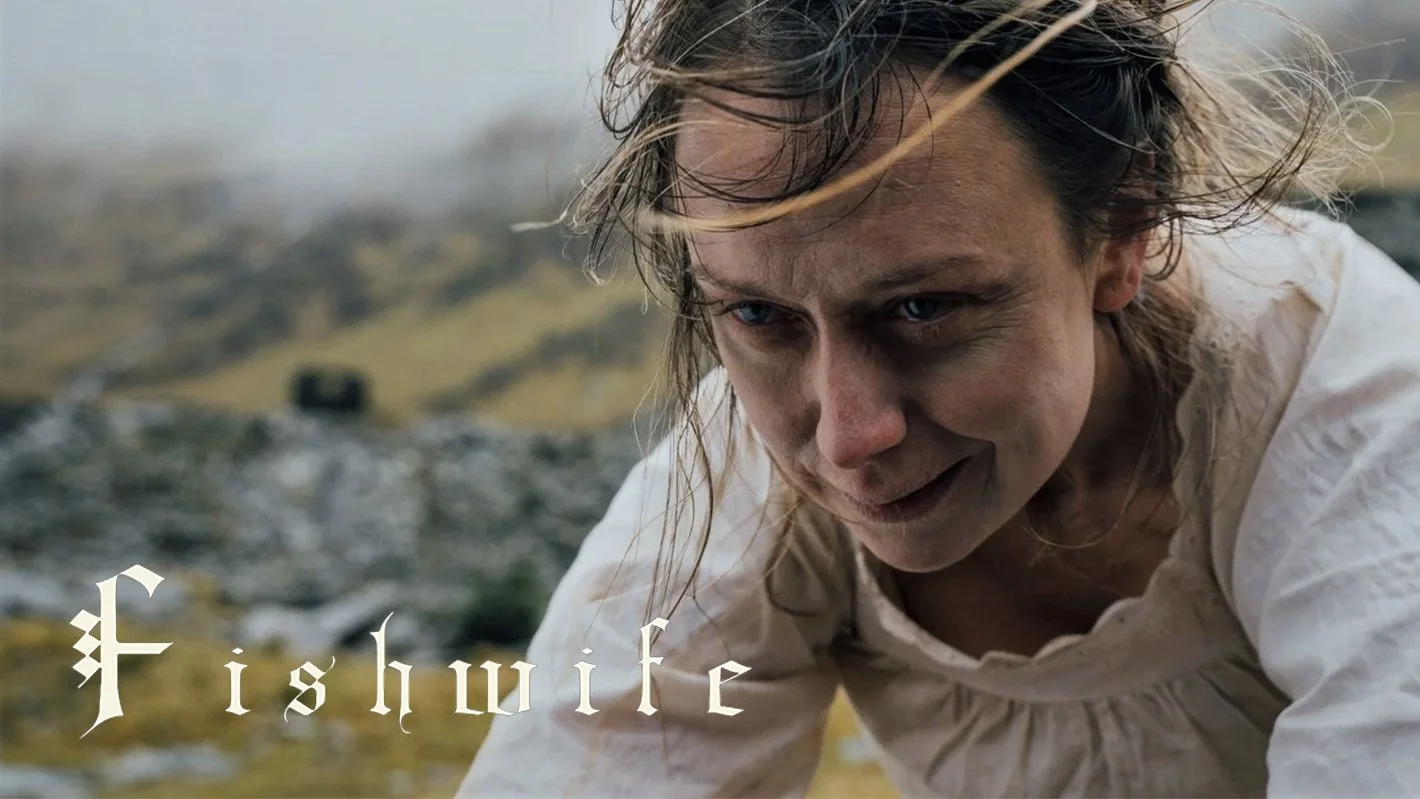
Fishwife
In wild 18th century Britain a lonely woman discovers that her menstrual cycle is of interest to a stranger.

Written, Produced & Directed by Beth Park
In wild 18th century Britain a lonely woman discovers that her menstrual cycle is of interest to a stranger.
ABOUT THE FILM
FISHWIFE is a dark and mysterious period piece which treads the line between horror and fantasy. In traditional horror a woman's fate is used as a plot point to terrify and excite an audience. In creating FISHWIFE filmmaker Beth Park was more interested in a true and specific female experience.
The film was shot in two days in Wales during a biblical storm, and once released it had one hell of a festival run. Not only was FISHWIFE nominated for several awards at our festival last year, it also played at renown genre festivals (Filmquest & SITGES), Academy Award qualifying festivals (Hollyshorts, Flickers Rhode Island, & Austin Film Festival), and BAFTA qualifying festivals (Underwire, Carmarthen Bay Film Festival, & Aesthetica). Recently, FISHWIFE premiered online with ALTER.
ABOUT THE FILMMAKER
Beth Park trained as an actor and worked for several years in theatre. She also works directing actors in video games including Baldur's Gate III. During the pandemic Beth wrote and directed her first short film, FISHWIFE.
READ OUR INTERVIEW WITH BETH
Welcome to our Short of the Week series. Tell us a bit about yourself and your filmmaking background.
I worked as an actor for about 10 years then when I took a year off to have a baby my world got flipped upside down. I was no longer content expending so much energy trying to fit into other peoples stories and I wanted to tell things from my perspective. I've always been imaginative but never really finished writing projects before. I think although I had some privileges growing up I've never had an abundance of time or money. When the pandemic hit I had time off work and a lump sum of a few thousand pounds in furlough money transferred into my account. That time and money combined with my new life experiences enabled me to create Fishwife.
How has your experience directing video games informed your narrative filmmaking process?
The two are not particularly closely linked. Video games are enormous machines with sometimes thousands of people in different countries working indirectly together. So when I direct an actor in a game there is a whole world of context, visuals, music etc which is nothing to do with me. In film I am trying to make the whole mise en scene cohesive and meaningful to the story. The only very useful transferable skill is that I direct actors every single day. So I'm good at reading what they need and don't get into my own head about that.
Tell us about the genesis of Fishwife. What inspired this film?
I was just driving along the motorway with my baby asleep in the back and the idea popped into my head! Initially I thought about writing it as a short story or even a novel but then when the furlough money came in I started to turn it into a script. At the time I didn't even want to be a filmmaker, I just wanted to make this specific film. Now I'm obsessed!
What were some of the main obstacles you experienced when making of Fishwife and how did you overcome them?
Oh gosh, there were so many. As I mentioned I got this lump sum, but it was only a few thousand pounds (which is a lot of money to get from nowhere but isn't a lot when it comes to film making!). So everything had to be bought or made as cheaply as possible. Then when we actually shot it there was a dreadful storm so we were contending against almost hurricane level winds in the middle of Snowdonia. And I was also crazy enough to make everyone do a 2.5 hour unit move between the internal and external locations. All shot in two days! Post production was hard as I was basically a team of 1 person, having produced it myself, so trying to get everything to the editor, colourist, composer, sound mixer myself was really tough. I was very burnt out when it was finally complete.
Fishwife has had some amazing festival success. Tell us about some of your favourite festival experiences.
There were a lot of festivals! Many of them were overseas so I didn't attend them, except Sitges which was absolutely incredible, the audiences there are just amazing! It wasn't easy for me to attend even some of the uk ones as I have a job and a small child so I have responsibilities I have to attend to. But my favourite thing about the festivals was being able to watch films to be honest, just a weekend of watching non stop movies is a real blast.
Any tips for filmmakers currently trying to navigate the festival circuit?
I used Festival Formula to create a list of festivals to target and a schedule for me to submit by. As I mentioned I was very burnt out when I finished the film. I was in kind of a hopeless state, I truly believed the film was bad and I had wasted everyones time and money. I couldn't afford to use Festival Formula but my parents very kindly paid the fee because they recognised what a mess I was in! I would recommend investing in this service if you can, they helped me find the right festivals to apply to and saved me wasting money on Festivals which weren't appropriate.
Now that you've completed your festival journey the film has been picked up by Alter. How have you found the online release of the film compared to the festival circuit? Any tips for filmmakers looking to release their film online?
I have really loved it being released online! There have been so many appreciative comments from people who really liked it and really seemed to get it! In comparison to the festival circuit this launch has been much more gratifying. I found many festivals to be quite impersonal, with no feedback or any kind of response about the film, just a 'congratulations you got a laurel, now please send us all the data', now I can actually see that there is an audience for it and people are mostly enjoying it!
What do you think is the biggest challenge short filmmakers face trying to break into the industry?
Money. It's so expensive to make a film. If you have money you're already so far ahead in the game. If you can combine that with having a good idea then you can hopefully make some headway. It takes a lot of hard work, but it's worth it.
Any film recommendations that we should add to our watchlist?
A couple of films I saw at Festivals are now available on Netflix; Nocebo and Vesper, I loved them both.