

Florescence
A Visual Essay and Contemporary Exploration of the Iconography and Symbolism of Plants’ Reproductive Systems.
Written and Directed by D I • A L (Alice Gatti & Diego Indraccolo)
Produced by Peter Wilson
Florescence is a visually stunning and thought-provoking exploration of the cultural, biological, and symbolic roles that flowers play in our understanding of gender and sexuality. Blending elements of a fashion film, short documentary, and experimental visual essay, Florescence dismantles the simplistic, often gendered associations that flowers have been assigned throughout history. The eclectic cast adds a rich layer of contemporary perspectives on gender discourse, anchoring the film’s narrative with authenticity and personal insight.
Crafted with a great amount of practical effects and a bit of old school CGI, Florescence juxtaposes serene beauty with violent transformations—drowning, burning, and battering the flowers—as a metaphor for the constraints imposed by societal norms. This relentless and symbolic treatment of flowers serves as a compelling vehicle to question cultural ideals surrounding gender and identity.
ABOUT THE FILMMAKERS
D I • A L is a directing duo formed by Diego Indraccolo and Alice Gatti in 2015. Alice’s and Diego met on commercial sets. They have covered several different roles in advertising as well as non-commercial productions including producing, directing, cinematography, editing and motion graphics. Their experiences together and the chemistry they have found on set has led them to undertake the roles of “director” together. Their work strives to depict reality in an otherworldly atmosphere. They are also a real life couple and they both share an addiction for "Buffy - The Vampire Slayer".
READ OUR INTERVIEW WITH D I • A L
Welcome to our Short of the Week series. Tell us a bit about yourself and your filmmaking background.
We are Diego and Alice, a directing duo working under the name of D I • A L.
Alice: I grew up in a small town near Rome in the late 90s, at the peak of the MTV generation, completely obsessed with music videos.
After studying media design I began working across different roles in production: video maker, editor, motion designer, and assistant director, all experiences that now feed directly into my directing work.
Diego: I was born in Naples, Italy, and moved to London at the age of 18, where I pursued my photographic career.
I worked my way up, from assisting to still photographer, then transition into the video, as a director and cinematographer. While I still work as a cinematographer, I am now focusing primarily on directing work together with Alice.
Tell us about the genesis of Florescence. Where did the idea come from and how did you develop that idea into the short that's now made its way out into the world?
It all started in the simplest way possible. We wanted to do something with a different sensibility from the commercial space we work in.
We love flowers and think they are beautiful. We knew they would make an incredible subject matter, but the more we delved into their biology and cultural significance, the more we realised that we had to layer the project with a sense of significance, something that spoke both to their beauty and their symbolism in a meaningful manner.
The gender and sexual perspective came later on and in hindsight it was inevitable all along.
What were some of the main obstacles you experienced when making Florescence and how did you overcome them?
It’s been such a journey.
Funding is always a struggle, which is why we decided to make it into an editorial and self-finance the project. Getting a publication attached means we could have access to models and styling beyond the scope of the project. It also becomes more appealing for getting other professionals involved, both in production and post-production.
Regarding the filming, “Florescence” features many different environments, so one of the main challenges was finding a few locations that could accommodate most scenes without having to move the crew. Aside from the lavender field, we managed to shoot everything in just two locations: one exterior and one interior. We had to get creative and adapt several elements from the original script to make it work.
In the end, every film comes with its share of logistical challenges. It’s part of the game, and also part of the fun.
Tell us about the journey of getting your film to audiences and some of the festival circuit highlights and/or online release.
Florescence was originally structured and produced to be a fashion editorial for Schon! magazine.
After we started to get an much warmer reception that we had hoped for, we felt that perhaps we had something more powerful in our hands and decided to do a festival run. This again has surpassed all our expectations, not only for the calibre of the festivals we have been shortlisted in, but also for the awards and accolades that it has steadily accumulated.
What advice or hacks would you give to other short filmmakers?
That’s really a million-dollar question because we are aware that each path is completely different and impossible to recreate.
Moreover, projects in the “shorts” space are incredible varied and some might require you to look for fundings and would not be possible to produced otherwise whilst others can be done with a tiny crew and a DIY approach.
With this in mind we would only dare to suggest to take the time to understand what makes you happy in the creative process. Do it with love and be nice to people.
Any film recommendations that we should add to our watchlist?
The latest film we watched and loved as we write this is “Steve” by Tim Mielants.
Other highlights from this year’s releases that truly stood out for us include Ryan Coogler’s “Sinners” and Rose Glass’s “Love Lies Bleeding.”
For those who have the chance to see them, we’d also like to recommend two remarkable Italian indie projects that both premiered at the Venice Film Festival.
“Orfeo”, the debut feature by Virgilio Villoresi, a reinterpretation of the Orpheus myth based on a graphic novel. The film blends stop-motion animation and live action to create truly unique, mesmerising visuals, accompanied by an exceptional original score.
“6:06” from Tekla Taidelli is a fast-paced road movie that follows the journey of a minimum-wage worker struggling with substance abuse, joined by Jo-Jo, a mysterious French girl. The film is infused with surreal moments, raw emotion, and genuine heart.
Both films have limited, niche distribution, but we strongly encourage you to seek them out if you have the opportunity. They’re the kind of projects that can be hard to find, imperfect perhaps, but they leave a mark.
Interested in getting your work selected?

Tear Gas
A dance of love between two humanoids entangled in the complexities of toxic love.
Staring HARRISON CHARLES & FLORENCE PICK
Directed by JASPER CABLE ALEXANDER
Produced by ASH HORNE
A dance of love between two humanoids entangled in the complexities of toxic love.
ABOUT THE FILMMAKER
Jasper's films entrap you into halcyon nostalgia that at any moment could flip from a sun drenched haze to a neon lit nightmare. There’s an impressive consistency of vision to his work that makes you hungry for more. His style is dark, surreal, and visually heightened, all driven by the narrative often with a humorous tone to his storytelling.
He has been telling stories all his life. From the age of 17 he left school early to pursue his creative career assisting, running and all sorts to end up working for the photographer Rankin who ended up signing him to his production company at the age of 19 as a director. Jasper is now 25 and has shot and been featured in many prestigious publications like the Face, Rolling Stone Magazine, Hunger magazine, Love Magazine, Pitchfork, Vogue Italy to name a few.
Most recently he has had a major eye accident temporarily blinding his left eye for over a year which has powered his creative vision even further to give him a perspective that not many have the opportunity to explore.
READ OUR INTERVIEW WITH JASPER
Welcome to our Short of the Week series. Can you tell us a little bit about yourself and your filmmaking background?
I’m a 25-year-old filmmaker focused on telling surreal & comedy narratives, I started in the world of music video and have now begun my journey into short films and documentary’s and hope to explore long form in the near future.
Tell us about the genesis of Tear Gas. What was the inspiration behind the film?
It ‘s a story of a past relationship that turned sour and all of the emotions that come along with toxicity, we began with the idea of a couple in a bedroom, showing them in their most intimate moments and entangled in the complexities of a toxic love, that idea really span from there into creating these creatures looking somewhat evil and distant but acting out relatable moments in a relationship.
I wanted to turn them into creatures because I felt that’s the kind of feeling that is evoked when you don’t quite feel like yourself, I think seeing the couple as other worldly speaks to the emotional tone that resonates within a toxic relationship.
Tell us about the experience of shooting on film.
Shooting on film is always a relative challenge, the day before the shoot the camera decided not to work, by this point it was too late to change cameras - thankfully the film gods came through and the aesthetics of 16mm really helped us translate that sentimental feeling that is felt when looking back at a past relationship.
What were some of the main obstacles you experienced when making Tear Gas and how did you overcome them?
Of course the Prosthetics was very challenging. However, Tilda our prosthetics artist completely outdid any challenge. No noses were lost during the process of shooting.
Tell us about the journey of getting your film to audiences and some of the festival circuit highlights.
Towards the end of the shoot, we had the idea to host a live screening alongside the music as our premiere. It went better than I ever imagined. To have live scoring alongside the film worked so well to capture the feeling that we wanted to show in the film.
Watching the film in front of an audience for the first time and to see people laughing and crying at this film that we’ve created felt incredibly special to me, it was the first time I’ve watched an audience laugh (intentionally) at a film I’ve made before. It felt like one of the best feelings in the world for me that’s what I most proud of. I’m very excited to explore comedy more.
What do you think is the biggest challenge short filmmakers face in the early stages of their career when trying to break into the industry? & What advice or hacks would you give to other short filmmakers?
I feel that the biggest challenge for a filmmakers initially is finding their voice once it’s found you have the ability to tell endless stories but it’s so hard to find a voice without doing lots of shorts and that’s a lot of money! I wanted to explore music videos in my early career because it gave me the ability to explore themes, stories and styles I liked while getting budget from the label.
Any film recommendations that we should add to our watchlist?
Well I would say keeping in the same world as Tear Gas the two I’d recommend is Buffalo 66 and In The Mood For Love.
Interested in getting your work selected?

Venus Again
After suffering a deep and painful heartbreak, a lost woman embarks on a ritualistic journey to rediscover herself.
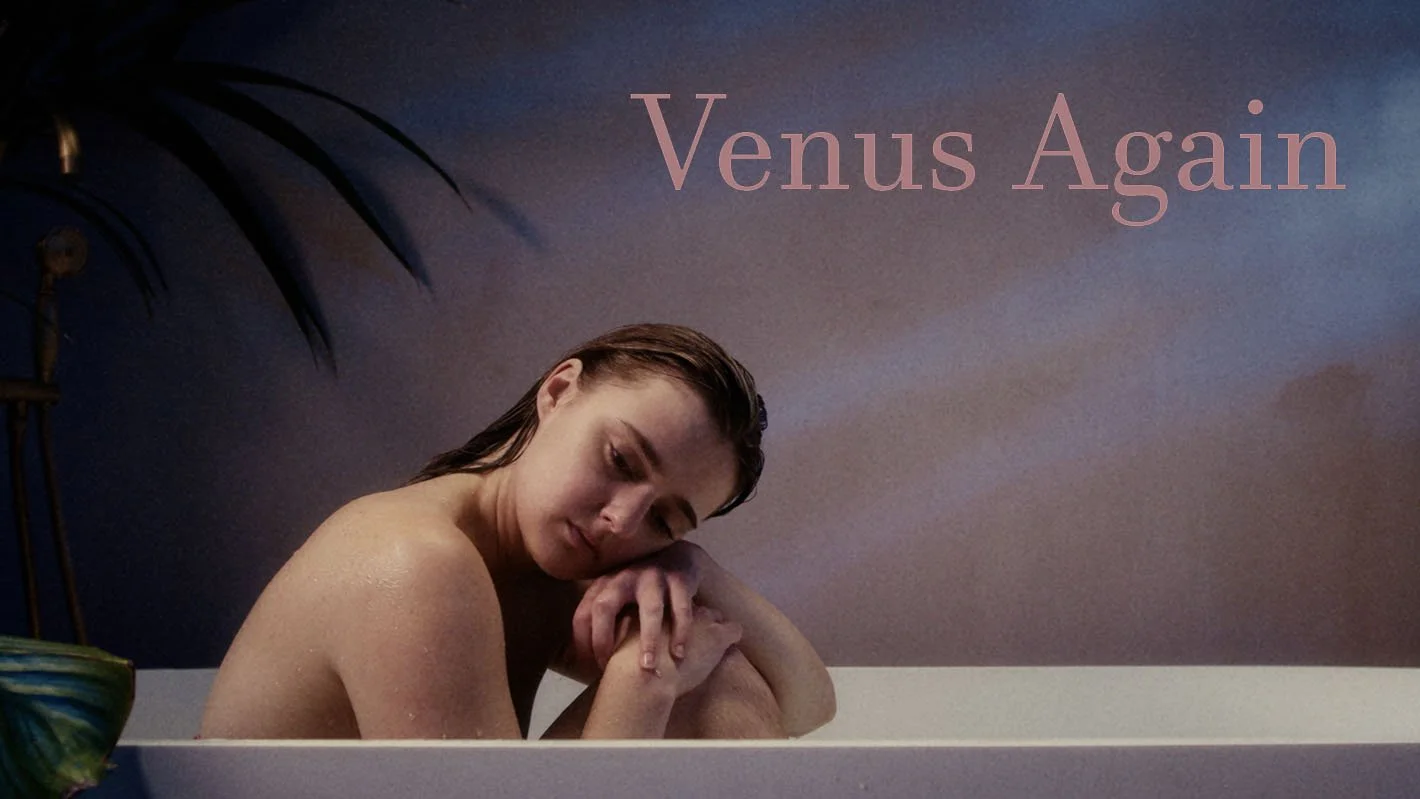
Directed by Sulin Hasso | Written by Jessica Balmer
Produced by Joseph Hobbs & Sulin Hasso
After suffering a deep and painful heartbreak, a lost woman embarks on a ritualistic journey to rediscover herself.
ABOUT THE FILM
Venus Again was selected for the Lift-Off Global Sessions 2023, in the First-Time Filmmaker category where it went on to be voted top 10 out of 100 films, and it is a finalist in the European Cinematography Awards.
ABOUT THE FILMMAKER
Sulin is a British Iraqi-Kurdish Actor/Writer and Director. As an Actor, Sulin has worked across theatre and tv. Her first narrative short film, which she wrote and starred in, The Yellow Wallpaper, premiered at Underwire Film Festival where she was nominated for Best Screenwriter. Venus Again is Sulin's first directorial piece.
READ OUR INTERVIEW WITH SULIN
Welcome to our Short of the Week series. Can you tell us a little bit about yourself and your filmmaking background?
My name is Sulin, I started off in this industry as an Actor, working in theatre and screen. Slowly I have been developing an itch to tell my own stories and I am making an effort to move into directing. My first short film that I wrote, The Yellow Wallpaper- which ended up being funded by Genera, got into Underwire Film Festival, where I was nominated for Best Screenwriter. Venus Again is my first ever directorial piece and I hope more opportunities to direct come my way!
Can you tell us about the genesis of Venus Again and how you came to be attached to the project?
So Venus Again, I guess started as a little bit of an experiment for myself. At this point, I had an inkling that I wanted to start directing, however I had no prior experience/knowledge on whether directing was something that I would enjoy or be good at. So I wanted to focus on doing a very short film, ideally a poetry piece, just to see (without putting immense pressure on myself) whether it would be something I would want to persue. I approached Jessica Balmer, who is a dear friend of mine and a brilliant poet and actor, and I essentially asked whether she would be willing to collaborate on turning one of her poems into a short film- thankfully she said yes, we then developed the script together- and the piece took off from there.
What were some of the main obstacles you experienced when making of Venus Again and how did you overcome them?
The two main obstacles that stick out to me were location and the hero shot with the flowers. In regards to location, because most of the film takes place in a bath tub, we had real difficulty in finding locations where the bathroom was simply big enough for us to be able to do the shots that we wanted. I ended up spending hours on websites like Airbnb, just sifting through houses all over London, with a reasonable budget. Finally, we found this location, where the bathtub is actually in the very same bedroom, where Jess is sat at the mirror. This was ideal because the film was nearly completely contained in that single room- I am very grateful to the owners of the property who allowed us to film in their home. Secondly, for the shot where we reveal Jess in the bath tub covered in flowers, we planned on having the camera on a close up on Jess's eyes as she opens them and then for the camera to pull upward in a single shot to reveal her in the bath with flowers all over. In the end we couldn't execute this because of the lack of space in the room, to be able to centre the camera and then to be able to get the camera high enough to reveal the full bath. Luckily my DOP, Joseph Hobbs, came to recce the room and pointed this out to me from the start. So I went in with a Plan B, that if we couldn't get that shot. We would get a close up of her eyes opening and then jump cut to a wider frame of her surrounded by the flowers. Which ultimately was the route we had to go down.
Tell us about the journey of getting your film to audiences.
We wanted to keep the release of the film fairly simple- Jess and I discussed entering it into some film festivals, but we were careful about the festivals, as most do not allow your film to be online whilst it's doing the festival run. Our aim was never getting the film into festivals, but more getting the film out to an online audience. So we set up a plan of posting the film on Instagram, Vimeo and reaching out to online platforms to see if they would take the film on.
What advice or hacks would you give to other short filmmakers?
For me, the best advice I can give is to surround yourself with people who have more experience than you and are willing to collaborate with you. I think viewing short films as a collaborative process, elevated my own knowledge and understanding of what goes into making a film. Each film that you make needs to be a learning curve, so surround yourself with people who you can learn from and who can push you into being a better filmmaker.
What do you think is the biggest challenge short filmmakers face trying to break into the industry?
The biggest challenge is accessibility and finances, which I think go hand in hand. There are not nearly enough opportunities for those who cannot afford to go to film school, or whom cannot finance their own films, to create shorts and develop their own voices and talents as filmmakers. Of the short film funds that are available, the competition is fierce and certain funds have specific genres and narrative styles that they favour over others. I have also noticed that a lot of courses and fellowships are within a specific age group, which is great- however alienates early career filmmakers who have chosen this path later on in life or who simply did not know that these existed, because the idea of being a filmmaker was never accessible in the first place.
What's next for you?
I have a short film that I have written and will be directing, called Dayke (which translates to Mum in Kurdish). I am currently in the long and very difficult process of finding funding for it- however I have a great team with me so hopefully we can get the ball rolling on this project soon!
Any film recommendations that we should add to our watchlist?
There are two films that I love, the first- which has been a recent watch is Limbo; the performances, story and visual language of the film is exactly up my street and falls within the space of films that I would love to create. The second, is a beautiful film called Half-Moon by Bahman Ghobadi- no matter how many times I watch this film it always takes my breath away.
Interested in getting your work selected?

The Room
Trapped in her room, a woman pops a pill eliciting a dreamlike vision of her history of toxic relationships.
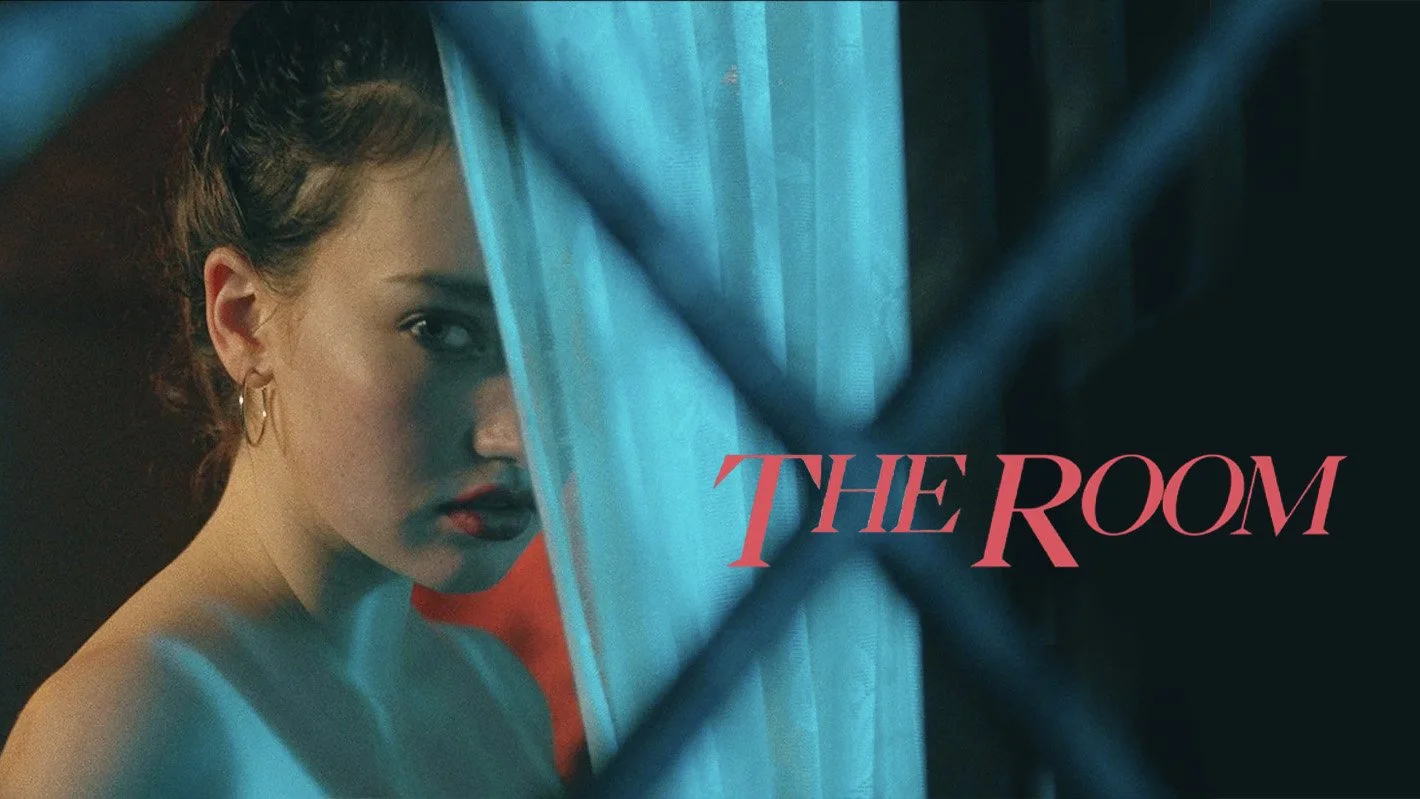
Directed by Fiorella Pomarino
Produced by Joaquin Jeri
The Room is a fashion film that talks about how a woman feels about being trapped in different relationships. The whole story happens in her room creating a tense atmosphere for her and the viewer.
ABOUT THE FILM
The Room is a fashion film that started as a photography project for a fashion editorial in 2019. It’s been featured in Beyond the Short, Curation Hour, and Latex Magazine.
ABOUT THE FILMMAKER
Fiorella is a multidisciplinary artist based in Lima. Her work is characterized by its great aesthetic care, the constant testing of different formats and the emphasis on the visual aspect to create new narratives. Pomarino’s personal work explores social and cultural issues related to identity of women and Latin America through films and photography.
READ OUR INTERVIEW WITH FIORELLA
Tell us a bit about yourself and your filmmaking background.
I grew up in Lima, Peru. I am Latin and was raised in a patriarchal society. I feel this two things have shaped the way I see the world or in what my attention is focus on. I started working in the film industry when I was 25 years old. I did a little bit of production and art. You could find me helping in the make up department or looking for some random prop the product designer needed. At the age of 28 I started doing art direction for photography and film. Although I love doing art Direcion or production design for feature films, short films, music videos and advertising I can’t deny I adore to direct my own projects.
I direct mostly fashion films and video art. These two moves me a lot. It is the only way I know how to express myself through film. Perhaps it is because I think first through images instead of words. I usually visualise and draw what I want to tell rather than write the script first. For me, it is really important to put into images the emotions I am feeling. None of my films have voice over, that’s why music and rhythm in the film are very important for me.
Currently, I work as an art director/production designer in advertising but I direct my own projects.


Tell us about the genesis of The Room? How did the project come about?
The Room is a fashion film that started as a fashion editorial in 2019. I was used to make fashion stories for magazines, so while I was planning “The Room” as a photography project it came to me that I could film it. I started with a photo board and from there everything started to grow. Some friends joined me in this adventure. It was the first time directing a short film with no notion of it. One night we sat down and started to break down all the scenes. It was a very nice process that I never had before. Just some friends making films. It was very enriching.
I think the moment I more struggled with was when I needed to say what I wanted to say with the film. I wanted to talk about some toxic experiences of women in really bad relationships. The use of only one main set, the bedroom, was a very important decision as for the wallpaper we used. I really wanted the viewer to feel trapped. It was my aim to visualise this story in a surrealistic, immersive, emotional and cinematic experience.
What obstacles did you overcome while in the making of this film?
The fear. It was my first time directing and being the person who leads a whole crew. I have seen it done before but being there and making all the decisions it was actually pretty hard. At the end of the day I saw my self directing and making my first short film. It was amazing.


Tell us about the journey of getting your film to audiences.
This film in particular was the first one I made but not the first one I showed. It took me three years to put it out. It was showed in some fashion film festivals and in some short film platforms but to be honest because it was my first film I didn’t have a plan for its diffusion. Now I know I need a distribution plan since day one.
Words of wisdom. What advice would you give to other filmmakers?
Have a distribution plan since day one. Don’t be afraid of doing something wrong. There is nothing wrong with your ideas or the way you film. Experiment as much as you can. Try new film genres. Listen to yourself, you know exactly what you want to say through your films. Film even though you don’t have the perfect camera or lenses. Some great films have been made with cellphones.
What are you working on now?
At the moment I am working on a film based project about the innocence of girls after facing a traumatic childhood. I am questioning if the innocence is lost after the childhood traumas or if it stays and how these women express it.
Any film recommendations that we should add to our watchlist?
The color of Pomegranates - Sayat Nova
La montana sagrada - Alejandro Jodorowsky
Mustang - Deniz Gamze
Interested in getting your work selected?

Myrrha
Loosely inspired by Ovid’s ‘Metamorphoses’, ‘Myrrha’ is a vivid fever dream exploring classical themes of fluidity and re-creation from a strikingly contemporary perspective.
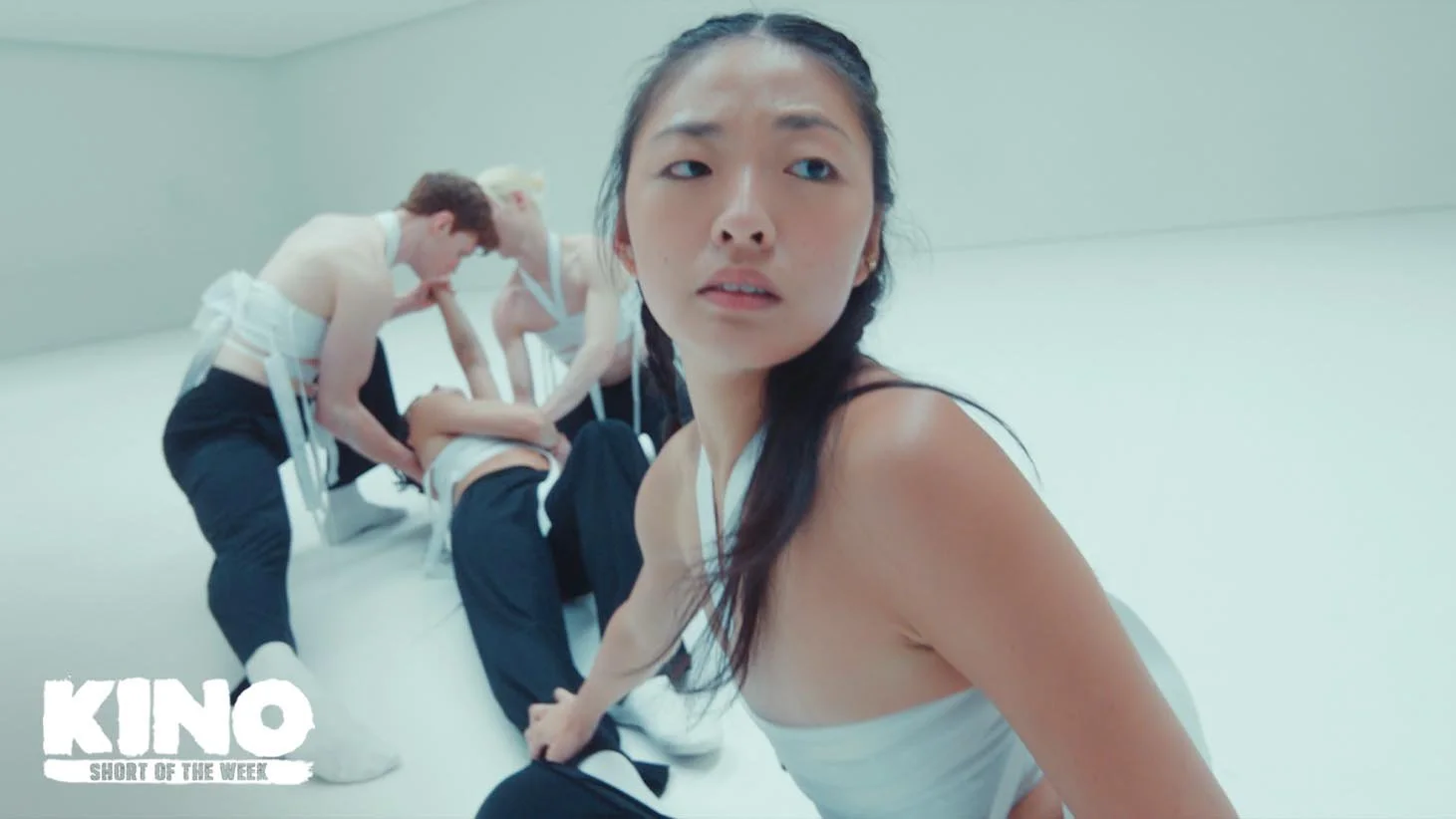
Directed, Produced & Choreographed by Katya Bourvis
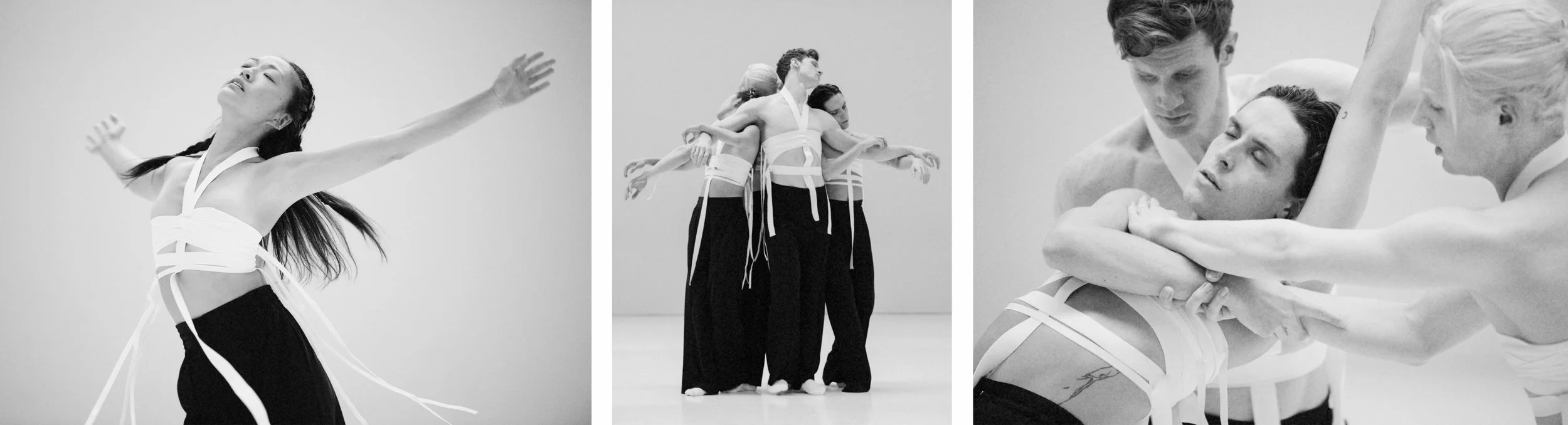
Created in collaboration with dance artists: J BAUTISTA, ALEXANDER NUTTALL, NOVAYA SHEY and PATRICIA ZHOU
Loosely inspired by Ovid’s ‘Metamorphoses’, ‘Myrrha’ is a vivid fever dream exploring classical themes of fluidity and re-creation from a strikingly contemporary perspective. Invited into the liminal space of Studio Wayne McGregor, the viewer observes a strange cabal of characters as they grapple with the boundaries of identity and gender - and over the course of the film’s three parts, we’re taken on a surreal odyssey of transformation, presided over by the immersive beauty of Ruaraid Achilleos’ camerawork. Supported by a Sadler’s Wells artist grant and featuring the genderless designs of Max Zara Sterck, ‘Myrrha’ is hypnotic and eerily arresting — and marks a powerful solo directorial debut for choreographer Katya Bourvis.
READ OUR INTERVIEW WITH KATYA
Tell us a bit about yourself and your filmmaking background.
I trained in classical ballet before dancing with Stuttgart Ballet, English National Ballet and the Royal Opera House. Later, I started freelancing in a more commercial and contemporary capacity, and worked a lot more for film. During the pandemic, I started experimenting with film and sound, and fell in love with how the body could be captured in moving image; how stories could be told through physicality and immersive sound design. Around this time I transitioned into Movement direction for music promo, branded content and film. My experience in the surreal and imaginative world of ballet and theatre and the sensitivity that I’ve acquired as a dancer has given me my own way of looking and feeling the world, which I feel is a huge attribute to my developing directorial eye. I co-directed and choreographed my first short ‘What are We Doing’ which featured on Girls In Film last April and will be showing at this years Leeds Festival. ‘Myrrha’ is my solo directorial debut.
Tell us about the genesis of 'Myrrha'? How did the project come about?
I started reading Ovid’s ‘Metamorphoses’ during the pandemic and it felt so relevant to the transformative time we were all facing. Rich in imagery and archetype, to me the myths craved a modern retelling and I felt a pull to explore classical themes of fluidity and recreation.In the Summer of 2021 I was afforded a Sadler’s Wells artist in residence grant; this was my first ever choreographic residency, and I decided to use it as the first step in creating ‘Myrrha’. A lot of the choreographic material was generated collaboratively with my brilliant dance artists, using the original text as a jumping off point. It also felt important to me to incorporate my dancers’ personal experiences, so I interviewed each dancer on transformation, gender and artistic identity. We used the interviews to layer intention over pre-existing movement language, which then informed how I imagined retelling the myths.When it came to filming a month or so later, I had a clear vision of the film being a triptych and I wanted it to feel like a fever dream. I owe a lot to Ruaraid Achilleos and Ken Schijf the Movi operator for the hypnotic and immersive camera work. And of course to the incredible Max Zara for creating such striking genderless designs! The project also owes a huge debt to Edmund Roberts, who’s atmospheric compositions form the backbone of the piece’s soundtrack; he was also very open to collaborating with me, and helped me to integrate my own field recordings into his work, building a surreal, but beautiful sound world. It was a real team effort, and I’m still genuinely moved by everyones generosity and contributions.
What obstacles did you overcome while in the making of this film?
I was very naive as a first time film maker and had no idea of what it actually takes to make a film, until I was deep in it! My budget was so low, so I ended up taking the role of choreographer, director, producer and stylist. It was a little overwhelming and I remember being found by a sales woman breaking down in a tiny cubicle in M+S surrounded by about 20 trouser options and being asked to leave as the shop had shut! A low moment! There were many moment like this — but I wouldn’t give up any of them for all that I learn’t and the resilience built… Well maybe a few ; ) It was hard to distance myself from my own creative vulnerability, and not to take things personally. I was working with sensitive personal stories and that takes a lot of awareness. Everything was new to me, it was my first residency choreographing, my first solo shoot, my first editing experience, my first time collaborating with a composer — and it was hard not to give in to doubt. But I was so lucky to have a brilliant creative team who got me through.
Tell us about the journey of getting your film to audiences.
It took a few of weeks of existential crisis - ‘aaah it’s shit… I’m awful… it was all for nothing…’ Luckily Schön picked it up for their platform and minute shorts. Finally, New Renaissance Film Festival have been wonderfully supportive, and it was incredibly vindicating to win Best Choreographer at their award ceremony last month!
Words of wisdom. What advice would you give to other filmmakers?
Work with good people and keep going. Try to zoom out in moments of feeling totally consumed or totally important. Get a producer!
What are you working on now?
I just finished choreographing on another short film and working on an immersive stage piece. I’m taking a little break to re-enter the world after a busy creative period. I hope to return to directing shortly, with a female led short set to a dream pop soundtrack, featuring some really incredible dancers.
Any film recommendations that we should add to our watchlist?
The Pandemic turned me into a bit of a arthouse genre geek - Possession, Les Bonheurs, Suspiria (the 70’s one) and The Night of The Hunter. In fact, all of those have a slightly Halloween appropriate mood. So those three!
Interested in getting your work selected as Short of the Week?

US
A chef teaches his young colleague how to dance to prepare him for a very special date.
Directed by Marco Santi
Produced by Illmattic Film Group
A chef teaches his young colleague how to dance to prepare him for a very special date.
READ OUR INTERVIEW WITH MARCO
Tell us a bit about yourself and your filmmaking background.
I don't have great memories of when I fell in love with cinema, however I remember well how I started making films: in high school, with friends, making amateur films with bizarre plots. I started filming around 15 and have never stopped. My path has been singular and tortuous, but I had fun and I still enjoy it. I'm a self-taught Italian director, I've always experimented from the very first steps. Over the years I have shot shorts, music videos, advs, without ever forgetting what the only goal is: making movies.
Tell us about the genesis of Us? How did the project come about?
Nother and I are longtime collaborators and friends. When the green light for ''Us'' finally came, we had a very tight request for delivery of the video... I called Nother and said to him we were going to have a music video with people dancing and nothing more. So I listened to the track, I let a few days pass (just to increase the difficulty lol) and I came up with this idea of creating a bizarre and awkward story that could contrast the sensitive and nostalgic musicality of the piece. The process was very fast, but also a lot of fun. I called back Nother when the video was already shot.
What obstacles did you overcome while in the making of this film?
The main obstacles were the short lead time and low budget, maybe the worst possible situation but at the same time you are forced to be pragmatic and to make choices, find solutions and be smart. It's challenging but it's also good training.
Tell us about the journey of getting your film to audiences.
The post-production process was also quick and painless. we knew what we wanted to achieve and we used all the time available, even something more… hehe. 3, 2, 1 and we were already online. The audience's response was positive right from the start and two months after its release the video is still walking. For a tiny project like that this is really good. I thank everyone for the work done and for the support.
Words of wisdom. What advice would you give to other filmmakers?
I am not the man of advice, but what I can say is just to set small or big goals and to work every day to achieve them. This is what I do in my small way.
What are you working on now?
At the moment I'm working on a couple of subjects with a couple of my writing friends. We are looking to experience something new. Let's see... I will keep you posted.
Any film recommendations that we should add to our watchlist?
Among the films I've seen recently, Raw, the previous Ducourneau's movie comes to mind. It moved something in me. I also recommend Audiard's Paris, 13Arr. and Wheel of Fortune and Fantasy
Interested in getting your work selected as Short of the Week?

MIJO
Mijo is a young dreamer, suddenly blessed with the gift of King Midas. However his ability has a unique twist: whatever and whoever he touches is stylishly pimped up.
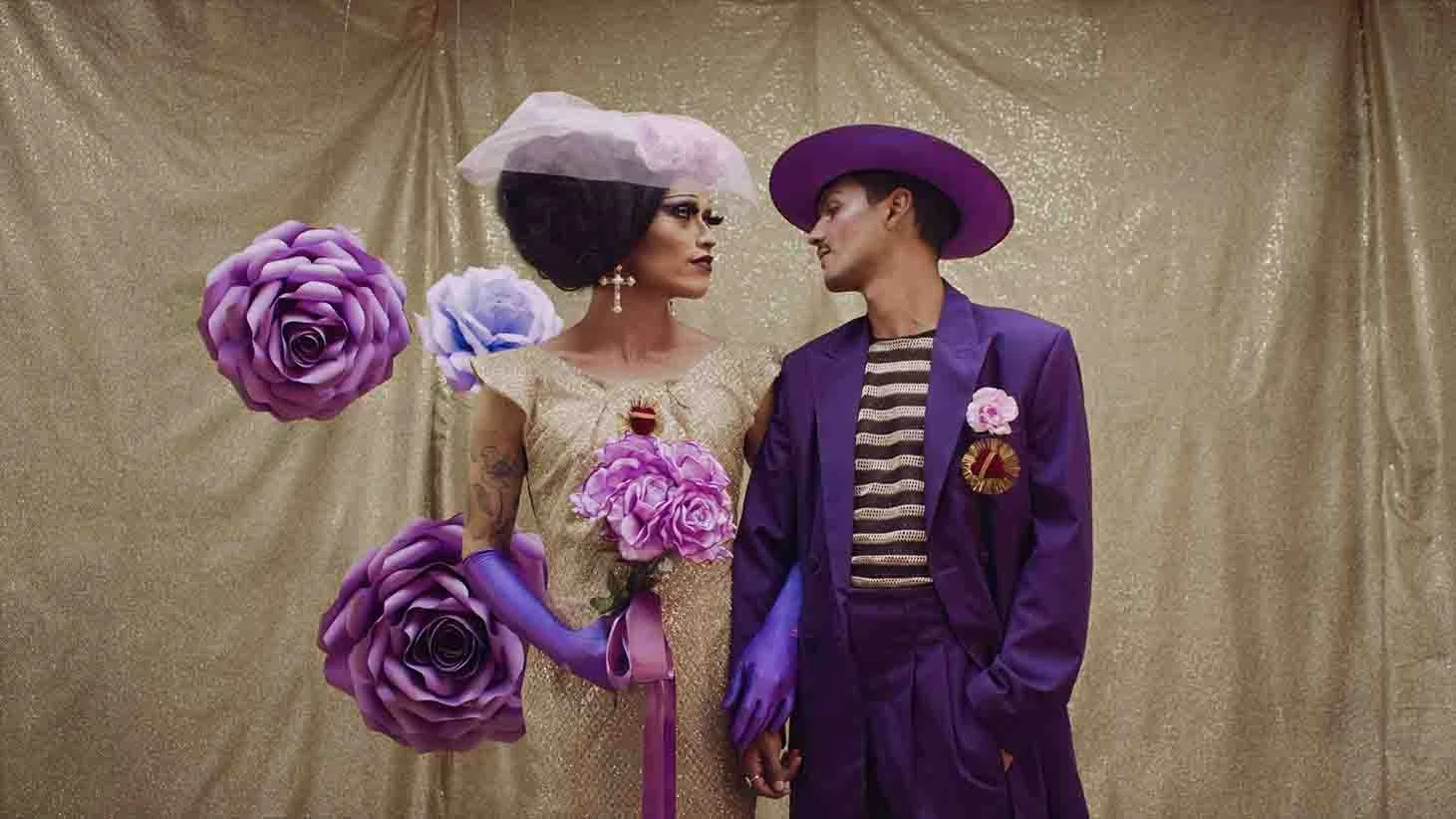
Written & Directed by Mazdey Snob
Shot in the uncharted streets of Mexico City, Mijo is a colourful and fun fashion film inspired by the pachucos fashion from the 40s. The film is a collaboration with independent local artists, showcasing traditional Mexican tailoring, fashion, music and illustrations all in one project. Channelling the city's edgy and urban spirit, Mijo reinterprets the myth of King Midas through a modern Mexican lens.
Tell us a bit about yourself and your filmmaking background.
I studied graphic design, but I always wanted to work on audiovisuals. So when I discovered the fashion film I fell in love with the genre and the freedom that it has to tell stories - I then I started making fashion films in 2014. Almost all of my work as a director has been done with designers, artists and fashion brands. It has been great to be able to create with them, since it has been a very personal process, managing to create artistic films with commercial projection and achieving that balance. And also being recognized at festivals like yours, which makes me very proud.
What was your inspiration? Why did you decide to make Mijo?
My idea was for Mijo was to be a Mexican fairy tale, created with the elements of our culture and our streets. I decided to take the myth of King Midas and appropriate it to turn it into something that happens in Mexico. Instead of turning things into gold, his gift was to stylize everything that “Mijo” touches, to give it a fashion twist. All of this is told in the language of comedy. I wanted it to be something fun to watch and I wanted to give it a lot of moments during the story that you can treasure as a viewer, like the encounter with the puppy, his walk, or his daydreams.
Mijo's clothing is inspired by the style of the Pachucos of the 40's, it is a style that has caught my attention since I was a child. This fashion represents a lot in Mexico and has also been a symbol of resistance of migrants in the United States. Something that is important to me is the positive representation for us Mexican/Latino people with brown skin. In Mexico, curiously, being brown, black or dark-skinned is a stigma and in “Mijo” and in other of my works I have tried to combat that.
What obstacles did you overcome while in the making of this film?
It's a very detailed production that we had to accomplish on a tight budget, so we had to be very careful with the shooting schedule and how we distribute the expenses. It was a slow process of searching for each prop in the city's popular markets, which was also part of the spirit of the film.
Another difficulty was that we had limited time to record on location, we did not have the benefit of any institution since in Mexico it is difficult to have government support for independent productions. We put up the street decorations ourselves and we asked the people of each house for permission to do so. The cars that appear belong to private individuals and I found them searching the streets. I mean everything was local and independent, many people participated and trusted us and what we were going to create.
Tell us about the journey of getting your film to audiences.
Bringing “Mijo” to the public has become a very great experience. It has been selected and nominated at several festivals and has also received several awards such as “Best Glam” at LA Fashion Festival, “Best Actor model” at UK Film Fashion Festival, “Cinema Femme Short Film Fest Phenomenal Woman in Film award” and the “People's choice award” at ASVOFF.
But the best part is that I have received messages from people through social networks to tell me how much they like “Mijo”, how fresh they find the film and the positive representation. Being able to connect with people through my work is really rewarding. I have to give a special thanks here to Niccolo Montanari who has handled the distribution and is really wonderful to work with.
Words of wisdom. What advice would you give to other filmmakers?
In my experience so far, I think it is important to be aware that the system is very complex and does not provide equal opportunities for all. So it does not always mean that our work is bad. If the opportunity presents itself, you have to hold on to it or create the opportunity yourself. Of course it is very difficult, but it is about betting on what we do despite the fears and uncertainties that arise along the way. There are always those who believe in you and your work (which I appreciate very much) and also the audience can identify with what you have to say and your vision. So keep going and don't let go.
What are you working on it now?
I received an invitation from various platforms to give conferences and workshops about fashion film in the coming months and also the invitation from the GRRL HAUS Cinema festival in Berlin to carry out specialized curatorship on the subject. I am now a permanent resident in Spain and I recently directed a music video in San Sebastián, Basque country, so I am excited for the projects to come and always looking and open for agencies and people who want to work with me.
Any film recommendations that we should add to our watchlist?
The “Namesake” and “Queen of katwe” by Mira Nair , “The Roof” by Vittorio de Sica, “The Tale of the Princess Kaguya “ and “Pompoko” by Isao Takahata, “My Happy Family” by Nana Ekvtimishvili, “Noche de fuego / Prayers for the Stolen ” by Tatiana Hueso, “A Cop Movie” by Alonso Ruizpalacios, “Tangerine” by Sean baker. And I just saw “The 7 Lives Of Lea” on Netflix and I loved it.
Interested in getting your work selected as Short of the Week?

Lost Time
A movement-led piece, Lost Time represents a positive journey into learning to coexist with time. We are presented with a path filled with challenges and frustrations, expressed in the video through sandstorms and exploding hourglasses, but also eternal moments of beauty and peace as we stand proud and unaffected by sand floating around us.

Directed by Anna Radchenko
Featuring alternative pop singer and songwriter Jones, Lost Time is the latest fashion film by multidisciplinary artist Anna Radchenko. The film looks at the passing of time as something fleeting and out of our control.
A movement-led piece, Lost Time represents a positive journey into learning to coexist with time. The film employs the malleability of sand as a metaphor for time slowly seeping through our hands. We are presented with a path filled with challenges and frustrations, expressed in the video through sandstorms and exploding hourglasses, but also eternal moments of beauty and peace as we stand proud and unaffected by sand floating around us. We thus become queens and kings of our own destiny, ready to accept, embrace and experience what is laid ahead of us.
To emphasise the feeling of the passing of time, movement director Jamie Neale supported Jones in ensuring that every minute movement worked as subtle detail to express her emotions. The styling also plays a vital role in emphasising the ethereal nature of the film. Curated by Elizabeth Jane Bishop and Max Saward, they involved labels such as the romantic non-binary Harris Reed and the effortlessly chic Ukrainian womenswear brand Nadya Dzyak.
Lost Time is currently touring across the international film festival circuit. With over 40 selections across 15 countries, the fashion film has already received 12 awards including Best Commonwealth Fashion Film and Best CGI at Canadian International Fashion Film Festival, Best Experimental at Bristol Independent Film Festival, French Riviera Film Festival, and Female Filmmakers Festival Berlin, as well as Best VFX at the Croatia Fashion Film Festival and Detroit Shetown Women's Film Festival.
READ OUR INTERVIEW WITH ANNA
Tell us a bit about yourself and your filmmaking background
I see myself as a multidisciplinary artist. I graduated in Fashion Photography from the London College of Fashion, so that was my first step into the creative world. Before that, I wasn’t particularly surrounded by creativity. But I had always been inspired by psychology and philosophy! Questions over our human existence explored by the likes of Alfried Längle - then video became a tool to explore all these ideas and arguments.
What inspiration and influences made you want to create Lost Time?
At the time I was doing a lot of reading on existential psychology, including the works of Viktor Frankl. For instance he argued that even in the most miserable of circumstances, we’ll still find our motivation in giving our lives meaning. Lost Time is a reflection of this existential drama, in which even though we are aware of the passing of time, we still aim to thrive and push forward.
What obstacles did you overcome while in the making of this film?
The biggest challenge in terms of production however was sourcing sand, as the stuff you can buy in bulk isn’t the fine sand I was looking for. So ended up having to look at kids stores who were selling small amounts for sand pits. The twist is that the sand you buy is wet, so we then had to spend a whole night trying to dry on time.
Tell us about the journey of getting your film to audiences.
It’s always tricky with content that doesn’t quite fit into a specific genre. My work spans across fashion, music, art and dance so it’s important to tap into these channels to reach the right audiences. With most of my video work I look at festivals and press as great outlets. It’s very much about doing research and being able to tap into the right niche.
What are you working on now?
With the pandemic still underway, I primarily have to focus on making sure I have a steady source of income coming through my shoots and productions. Lost Time is indeed a passion project, but it’s something I had started way before and as such it was just a matter of working on the post production and bringing the piece to different audiences.
I’m also very much focused on my online academy, an online school I set up years ago with a focus on young creatives. I tried to diversify the options by offering different packages and shorter and more affordable masterclasses. I wanted to make sure my courses are accessible even in these trying times.
Any film recommendations that we should add to our watchlist?
More than watching, recently I have mostly been reading and listening. I guess because so much of my work revolves around visuals, I like to distract myself in other ways. For example I really enjoyed The Will to Meaning by Viktor Frankl. It’s right up my alley to be honest, as it’s about learning the techniques to combat the "existential vacuum." In terms of music, I love The Comet is Coming: jazzy, electronic, funky and psychedelic. But let me also introduce you to some Russian talent that I’m particularly fond of:
Хаски & масло черного тмина - Убей меня
Follow Anna on Instagram
Interested in getting your work selected as Short of the Week?

Ārka
A visceral exploration of one’s consciousness, this film dives into the head of a timeless heroine.

Directed by LEILA BARTELL
A visceral exploration of one’s consciousness, this film dives into the head of a timeless heroine. We witness the torment caused by a contradiction between the mind and the soul, and the formation of her infinite being. Inspired by the idea of transcending one’s inner limitations and written with Laura Bailey in mind, the character in our film has the intensity and strong presence that Laura naturally possesses, and this is echoed powerfully in her performance.
READ OUR INTERVIEW WITH LEILA
Tell us a bit about yourself and your filmmaking background.
I am a London-based painter and director. I come from a painting background and my work is influenced by the various cultures I experienced growing up in different parts of the world. My films and paintings predominantly explore existential states or social issues and their underlying dynamics. My stories often revolve around empowerment, personal evolution as well as redemption. I often combine other art forms such as dance or abstract music with storytelling.
What inspiration and influences made you want to create ĀRKA?
Ārka was written with Laura Bailey in mind. She is a friend, but also someone I admire on many levels and really wanted to collaborate with her creatively for some time. I’m generally fascinated with the idea of telling a story using very few words, if any. That’s probably the reason I’m inclined to make films where movement, music and sound are a hugely important element of the narrative. From the get go I was drawn to the idea of creating an internal psychological drama, a universal one, conveyed through a heroine that is not bound by space or time.
What obstacles did you overcome while in the making of this film?
The biggest obstacle was the global pandemic, which meant a lot of uncertainty of course. Internally I, as a director, had to make sure my drive and passion were at their peak to keep everyone fully engaged in the midst of ever changing circumstances. In the end, with the support of an incredible cast and crew, things worked out really well and we managed to shoot the film within a tiny window between lockdowns. We felt incredibly lucky to be able to pull it off.
Any tips or tricks for micro-budget filmmaking?
I did my very first project, a drama short called Idira on a micro budget. I think not much beyond the obvious: shoot in as few locations as possible - ideally one; if you can, minimize the crew and number of days you need to shoot it. Also, I believe finding the perfect location can save a lot of worries in the art department. Ensure you work with a savvy and passionate producer who is fully aware of how best to achieve results with next to no money.
Tell us about the journey of getting your film to audiences.
We had a rough idea where we wanted to show it, even in the pre-production stage. Once the film was completed, we started identifying relevant avenues. Ārka premiered on Violet Book in July, then was shown on Soho House Notes in August, Nowness and Laboratory Arts Collective in September. We also had some arts platforms and festivals approach us directly, after seeing it and wanted to show it. The response so far has been amazing, and I’m truly grateful for that.
What are you working on now?
As a painter I’m in the process of launching my first NFT collection on OpenSea and in terms of directing, I’m writing a treatment for a sports brand that focuses on inclusivity and reading a feature film script I’ve been sent.
Any film recommendations that we should add to our watchlist?
Yes, two short films I love. Lunch date by Adam Davidson. It’s a beautiful short piece tackling race and class in America. The film has no dialogue and it really encouraged me to examine my own assumptions. And Bus 44 by Dayyan Eng, which is another short film that really stayed with me. I remember just sitting there looking at the screen as there was so much to process. I watched it at least a dozen times. It reminded me of how people can be vile, good and completely on the fence - often due to fear.
FOLLOW LEILA ON INSTAGRAM
Interested in getting your work selected as Short of the Week?

Miłość
Two gay men go through the most important moment of their lives.
Written & Directed by by Helena Ganjalyan & Bartosz Szpak
Two gay men go through the most important moment in their lives.
Andrzej Piaseczny is one of the most important Polish musicians and singers. His recent coming out as gay was initiated by an excerpt from the lyrics of "Miłość", which is a single from the artist's latest album. This music video gives a voice of support for the LGBT + community in Poland.
READ OUR INTERVIEW WITH HELENA & BARTOSZ
Tell us a bit about yourself and your filmmaking background.
H: For many years we have been working in various creative fields – I've graduated Academy of Theater Arts in Krakow. I work as an actress, theater and film director, choreographer and photographer, Bartek graduated from the Film School in Łódź – he is an actor, composer and he directs audio productions as well.
B: Our creative paths have come together for exactly this reason - conscious use of our collective skill-set as well as shared cinematic language & taste allowed us to take a unique perspective on our projects.
H: Our film „Me” for the Tyskie brand was awarded the Grand Prix and the 1st Prize in the Branded Stories category in Papaya Young Directors 2020.
Why did you decide to make Miłość?
Andrzej Piaseczny is one of the most important Polish pop musicians and singers, widely popular since the 90's. His recent coming out as gay was initiated by an excerpt from the lyrics of "Miłość", which is a single from the artist's latest album.
It was his and our intention to make this music video a voice of support for the LGBT + community in Poland. Our current political climate makes the conversation about equal rights for any minorities more important than ever.
We also considered this project to be a good opportunity to go outside of our own bubble audience-wise - Andrzej's main fanbase is very different from indie artists we have worked with so far.
When thinking about the message of the song and our music video, the words of Stephen Fry, British actor and activist who is privately homosexual, come to mind: it is all about love. Not about ideology or political deliberations, but about giving and receiving love, sharing it with other people.
We wanted to make a film that would not shock and seek sensation, but rather tell a story that is simple, delicate and ephemeral.
What obstacles did you overcome while in the making of this film?
We wanted to find the perfect actors for this task. Hence the lengthy process of assembling our cast - it required many days of research, conversations, setting deadlines and coordinating the work.
Thanks to Maciek and Bartek (portraying two main characters), we have created a romantic, sensitive atmosphere. The ease with which they interacted allowed, despite the short filming period, to create a subtle on-screen relationship.
The key words we started working with were tenderness, closeness and naturalness. Heroes whom you like and who keep your fingers crossed for their shared happiness. We wanted to find actors who would be credible, personally involved in the case and who, through their presence, would fill the entire story with organic emotions.
Another challenge was the need to find multiple locations in Krakow and stay within the budget. We knew we didn't want to switch to digital - making this music video on tape was one of our main tools for creating the mood of the story.
We also wanted to emphasize naturalness through what surrounds the characters. There is a shot in the clip where the protagonists sit under a plum tree growing at Krakus Mound in Krakow. The branches hanging above them are a symbol of nature that protects and surrounds them, with which they are in harmony.
Any hacks or tips on how to tell stories visually vs with dialog?
H: For me in both you have to know what is the essence of each scene and then create around it. For example I love one scene in „We are who we are” by Luca Guadagnino where two protagonists continue the dialog while camera leaves them and shows us the surrounding. For me it is like the director tries to tell us – this is important, this is how the characters will remember this situation.
B: While looking for the appropriate visual code for strictly visual, no-dialog projects, our main focus is the mood we want to convey & the vibe we want our viewer to get into.
In case of "Miłość" we wanted our concept to be "close to the protagonist" - natural, slightly documentary, highly emotional, full of subtle signals. We consider the 16mm negative to be the perfect tool to achieve this effect.
The home video sequences were shot using an analog Super8 camera. It gave us the opportunity to break the fourth wall, direct contact with the characters, and the characteristic trembling makes the editing more dynamic.
Tell us about the journey of getting your film to audiences.
H: We've sent it to several film or music video festivals as well as to some magazines and platforms where the audiences from abroad could find it. It was very important for us to reach to foreign audience as we feel that the story in „Miłość” is very universal.
B: It is different with every project. Some of our music videos had artists with their own PR plans, others were full indie. In terms of commercials there are two separate audiences - people who see the commercial as intended by the client, be it TV or WEB, and people who see it on our professional channnels (IG,Vimeo) as part of our portfolio. Each of those situations requires different tools and actions to be taken.
What are you working on now?
Currently we recieved funding from Polish Film Institute for development of our debut feature film "Jestem Kim Chcesz" produced by Stanisław Dziedzic, Film Produkcja. It is a story of a young girl who dares to take a risky step to fight for her dreams - a story of readiness for change and courage to find one's own way.
Any film recommendations that we should add to our watchlist?
During pandemic we were more into series than films (for example „High maintenance”) but those two are an interesting take: "There must be Heaven" by Elia Suleiman, „About endlessness” by Roy Andersson.
VISIT HELENA & BARTOSZ’S WEBSITE
Interested in getting your work selected as Short of the Week?

Alex
Alex tells us of a woman reliving and working through a trauma. Inspired by EMDR therapy, the film looks at abandonment during childhood as something that is likely to accompany us into adulthood. Through an experimental, movement-led approach, Alex takes us on a journey into the human psyche.

Written & Directed by Luca Spreafico
Exploring the more narrative soul of fashion film while staying true to the genre’s strong focus on aesthetics, Alex tells us of a woman reliving and working through a trauma. Inspired by EMDR therapy, the film looks at abandonment during childhood as something that is likely to accompany us into adulthood. Through an experimental, movement-led approach, Alex takes us on a journey into the human psyche.
READ OUR INTERVIEW WITH THE FILMMAKER
Tell us a bit about yourself and your filmmaking background.
I have always been fascinated by visual arts - since I was a kid. I still remember my first trip to Paris and how much of an impression the Musee D’Orsay left on me with all the great impressionist painters. Then my attention gradually shifted towards photography and video. It started as a passion then slowly it has become the job that I love. I began by making videos and taking photos, which helped understand the creative process and the work involved and led me towards a more directing role.
What was your inspiration behind Alex?
I have always been interested in exploring the subconscious. For example, anything to do with EMDR techniques fascinates me. As this is my first narrative project and there was no client involved, it made sense to experiment, do something for myself and not think too much about whether it would fit within a certain genre. Hence why I brought dance into it: I’ve always seen dancing as a way to free oneself from doubts and fears. With Alex I wanted it to be the tool the lead character employs to work through her trauma.
Any hacks or tips for making a short film?
Keep things simple and clear, but do focus on the details both on a narrative level as well as visually. And most importantly, surround yourself with a great team. This is what makes the difference.
Tell us about the journey of getting your film to audiences.
This is something that is always tricky as a filmmaker. I worked with festival strategist and publicist Niccolò Montanari to come up with a distribution strategy for Alex. As we weren’t in a rush, we decided to focus first on the film festival circuit, specifically on the fashion film festival world but also on those short film festivals that cater for content with a strong focus on aesthetics. We were selected by more than 25 international festivals, with 10 nominations and 5 wins, which has also helped us secure online coverage as the film has just been released.
Does your film have any landmarks that you can discuss (awards, special screenings, etc.)?
I feel that winning at A Shaded View on Fashion Film with Best Actress is definitely something I’m proud of. That’s the first ever fashion film festival and its founder Diane Pernet is a very respected personality within the industry.
Any film recommendations that we should add to our watchlist?
Among my favourites, I would definitely recommend The Tree of life, Moonlight, Cold War, 8 1/2.
Follow Luca Spreafico on Instagram
Interested in getting your work selected as Short of the Week?

KISS ME MALIBU
This horror-comedy explores the insecurities that TV shows, religion, culture and belief systems create in us during male-female relationships and in courtship.
Horror-comedy film about the insecurities and overthinking that TV shows, religion, culture and belief systems create in us during male-female relationships and in courtship. It makes fun of us and the roles we take in that process, without making any moral judgements.
Director: MIKEL ARRAIZ
DoP: JORGE ROIG
Editor: MIKEL ARRAIZ
Starring ADRIAN BARINAGA, GARAZI BELOKI, ROSA NAGORE, AMAYAVALMASEDA, SANDRA AZCONA
Producer: ITZIAR LACUNZA & MIKEL ARRAIZ
This week we bring you the People’s Film Festival winner for Best Music Video - the gorgeously shot “Kiss Me Malibu”. We were stunned by this film’s visuals and its use of symbolism piqued our interest and threw us into debate as we shared a variety of interpretations. We interviewed director Mikel Arraiz to chat about his film and get his interpretation and learn more about how this project was made…
HOW DID YOUR FILM COME ABOUT? DID YOU APPROACH THE BAND WITH THE IDEA OR WERE YOU HIRED?
I wanted to create something shocking and technically very well done for my reel and my new film production company Valle del Cielo. For doing that I needed creative freedom, so I created the song. The song is mine. A couple of friends helped me with the drums and the bass. Usually bands, put some limitations in ideas.
WHAT WAS IT LIKE TO BRING THE PROJECT TO LIFE?
Difficult. I live in a small city, so I had to hire people from Madrid and Barcelona who were more expertise and experienced than people who live in my area. It was expensive and I had to do a big preproduction work. It was a long process... about a year working on the project. I learnt a lot.
YOUR FILM HAS A LOT OF SYMBOLISM IN IT. DID YOU INTENTIONALLY LEAVE IT OPEN FOR PEOPLE TO COME UP WITH THEIR OWN INTERPRETATIONS? WHAT'S YOUR INTERPRETATION?
I live in the Basque Country. People say that having sex and flirting in the Basque Country is really difficult. I would say, there is some kind of "blocking energy" or old cultural tradition which makes difficult for men and women to flirt in bars at night and overall. With this film I just wanted to make fun of this situation. I think if people see the roles they take during night and have fun of them, it helps to heal this cultural patterns.
Summarizing, the film makes fun of the patterns, insecurities and overthinking that TV shows, religion, culture and belief systems create in us during male-female relationships and in courtship.
By the way, the dance movements are mine, I used to dance like that just to have fun and break the typical flirt situation at night.
DID YOU HAVE ANY CREATIVE SOLUTIONS FOR WORKING ON A SMALL BUDGET?
Study a lot of courses, manuals, ask a lot of questions in Facebook groups, practice... this way I could work in more aspects of the film.
Also, for the main location, instead of paying them, I did a corporate film for them.
WHAT ARE SOME OF YOUR FILM'S BIGGEST SUCCESSES?
The fact of making them is a big success. Also, a lot of international awards, for Kiss Me Malibu we got more than 30 awards. Being on newspaper and media due to awards gave us a lot of promotion.
WHAT'S YOUR FAVOURITE PART OF THE FILMMAKING PROCESS?
When I get the ideas. For inspiration, I listen to music. I wrote all my scripts listening to music. I have synesthesia, so as soon as I listen to music I start downloading colors, images, tons of ideas, movements... For me it is like taking a drug and seeing things, but without taking any drug, just with music. I can feel a lot of emotions during that process. Once I get the idea and all the details, I start with the production process. You can see on my last commercial what I am talking about when I relate music, colors... https://vimeo.com/385781038/3087b08068 (this is not the final version...)
SCREENING RECOMENDATIONS FOR QUARANTINE?
Haha, I am not a big cinephile... I can recommend you all the music videos by Chris Cunningham, specially "Windowlicker".
For movies: "The Neon Demon" by Nicolas Winding, "Lost highway" by Lynch, "Punch Drunk Love" by Paul Thomas Anderson, "The Killing of a Sacred Deer" by Yorgos Lanthimos...
Interested in getting your work selected as Short of the Week?