
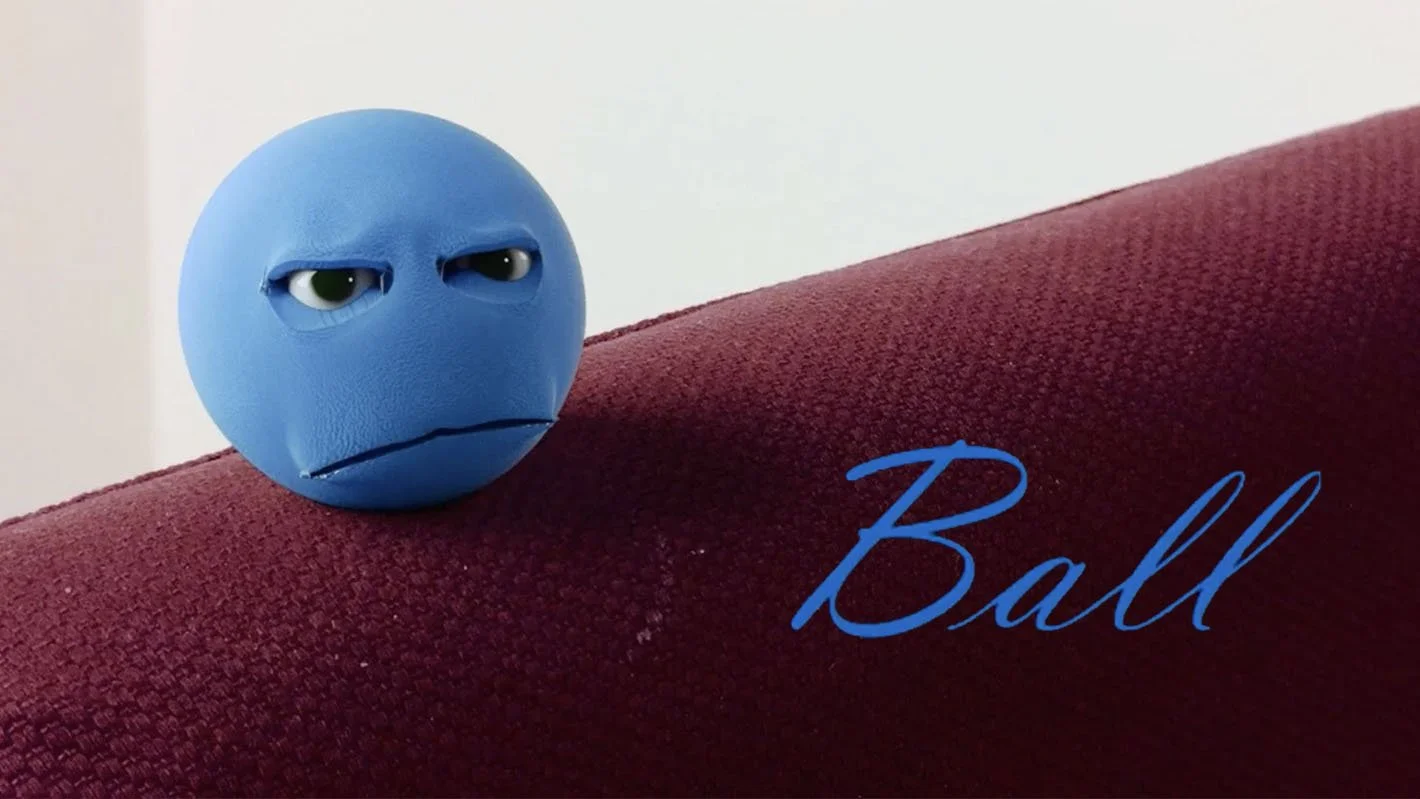
Ball
A painter has to deal with a hostile subject.
Written, Directed, Produced & Starring Enrico Mughetti
In this hybrid live action and animation short comedy, a painter has to deal with a hostile subject.
ABOUT THE FILM
BALL was shot on a camera phone and screened at our Short Film Open Mic. Additionally, festival selections include the XXV Festival Internazionale Corti da Sogni Antonio Ricci, the Lift-Off Filmmaker Sessions, London Cinefest, Deptford Cinema Film Festival, SmartPhilm Festival, and the African Smartphone International Film Festival.
ABOUT THE FILMMAKER
Enrico Mughetti started making short films in his hometown (Ravenna, Italy) to express his evergreen passion about cinema. He explored other video forms (documentaries, film concerts and spots) made on commission before moving to London, England for studies. The multicultural background of London and its rich artistic network gave Enrico a renewed creative flair. Enrico does not see short films as a business card to move to more complex projects but as an artform on their own. What fascinates him the most is the expressive freedom that comes from having a limitation from the start (duration of the movie).
READ OUR INTERVIEW WITH ENRICO
Welcome to our Short of the Week series. Can you tell us a little bit about yourself and your filmmaking background?
I was born in Ravenna (Italy) where I started making short films with the help of friends and no budget. Later on I explored other video forms (documentaries, film concerts and spots) made on commission before moving to London for my studies. Having then pursued a career in fire engineering, my passion for cinema never turned to a profession. I deem filmmaking as a means of self expression, not as a job opportunity. In time I realised my interests as a creator lay entirely on making short films where in few minutes an impression and/or emotion is conveyed to the audience via a combination of images, sound and music. I strongly believe in the power of experimentation that short movies have and feature films, not always but often, lack of, as these are burdened by commercial goals and the need for conventional storytelling viewers can easily digest.
Can you tell us about the genesis of Ball and how you came up with the idea?
In conjunction with filmmaking I'm also passionate about painting, which I find is another exciting means of artistic expression but more flexible and, very often, more practical. One of my favourite subjects is still life, which is called "dead nature" in italian. This sparked the idea of a subject, supposed to be "dead", taking on a life on its own and rebelling against its painter. I was also intrigued by the idea of making a sort of "live action cartoon", which is something I never tried before.
What were some of the main obstacles you experienced when making of Ball and how did you overcome them?
One of the main issues was shooting in the very tight space of my studio. Luckily, cast and crew were minimal (only 2 people) and it was a location I always had access to. Blocking beforehand, which I'd always recommend and even more when filming in small rooms, also helped. Another challenge was integrating the animation of the ball with the live action. Meticulous storyboarding to provide clear and effective communication with the visual effects artist and ensure all the necessary footage was captured was the key.


Tell us about the journey of getting your film to audiences.
I sent Ball to a number of festivals via few platforms (FilmFreeway, ShortFilmDepot, etc...). Competition is very high but with perseverance I was able to get my movie screened in front of an audience, which is my ultimate goal.
We first saw this film at our Short Film Open Mic event. Can you talk about that experience why you think short filmmakers need more accessible open mic type events?
It is a great opportunity to get used to talk in front of an audience and pitch your work. Also, knowing that each filmmaker has a chance to get his/her movie screened is also a very good motivation to create. Furthermore, I find invaluable the possibility to connect with like-minded individuals, who may become future collaborators. One of my short films, Mosquito, was made as a result of a networking event at Kino.
What advice or hacks would you give to other short filmmakers?
Given that filmmaking is a group effort grab every opportunity to network. However, bear in mind there are a lot of people who love the idea of filmmaking but much less people who actually love filmmaking in itself (and, therefore, are willing to make the necessary effort and disrupt their daily routine). Learn to recognise who is really motivated, disregard who is not and trust your instincts: few enthusiastic and reliable individuals are much better than a big team of time wasters. Also, as a director you have the final say but always listen to and respect any advice that may come your way. In the end all team members should share the same goal, which is not displaying egos but producing the best work possible with the available resources. Furthermore, enjoy the process, instead of considering filmmaking as a means to an end. Every short film I made was a passion project and I would not do otherwise. Last piece of advice is: catering. Your movie may be no budget but always keep your cast and crew (who are likely giving up their time for free) well fed!
What's next for you?
I'm writing the script of my next short film, which is intended to be a mix of horror and family drama. As always, I'm going to fund it out of my own pockets and, hopefully, build up a team of people willing to dedicate their time/energy and sharing the same enthusiasm as mine about the project.
Any film recommendations that we should add to our watchlist?
Not many as I spent the past year reading novels (something I neglected for too long), rather than watching movies. However, I'd recommend the works of Kyle Edward Ball (the feature "Skinamarink" and his Youtube channel "Bitesized Nightmares" containing all his short films), which go beyond traditional horror storytelling and provide a more visceral experience.
Interested in getting your work selected?
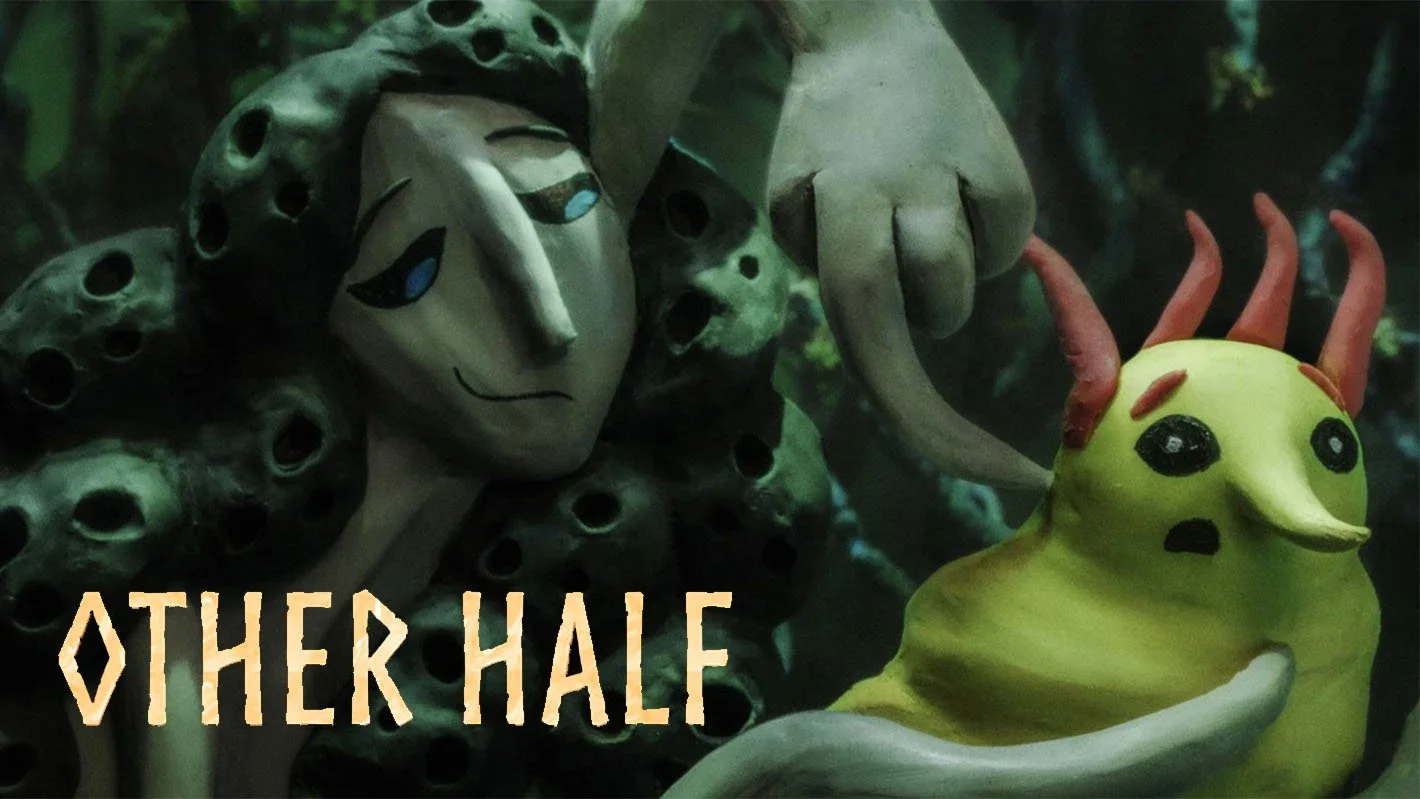
Other Half
As an Individual Being in a world comprised of Merged Couples, Ren longs to find his other half and become complete.
Directed by Lina Kalcheva
Written BY Laura Jayne Tunbridge
Produced by Michelle Brøndum
As an Individual Being in a world comprised of Merged Couples, Ren longs to find his other half and become complete.
ABOUT THE FILM
This animated short was produced as a graduation project at NFTS. It combines several animation techniques - namely plasticine, oil paint and model sets on a multiplane.
Other Half premiered at Cannes Cinéfondation, alongside 16 other student films of all genres as part of Festival de Cannes. It won the award for Best Sponsored Short at our festival this year. It was also nominated for Best Animated Short at the British Short Film Awards and Best Post-Graduate Animation at the British Animation Awards. Festival highlights include the Academy Award qualifying Hollyshorts, Flicker’s Rhode Island International Film Festival, SITGES, Underwire, British Shorts Berlin, Foyle Film Festival, The Chicago International Film Festival, Norwich Film Festival, Bolton Film Festival.
It was released online recently by Directors Notes.
ABOUT THE FILMMAKER
Lina is a Bulgarian animation director currently based in England. Her animation work uses combinations of different techniques across drawing, painting and stop-motion. Lina is interested in experimenting and mixing techniques. Her films are inspired by mythology, nature, the occult, and human relationships. She has also done some design and art direction work for student video games. Lina has a BA in Art, Film and Theatre from the University of Reading (2017), an MA in Animation from the London College of Communication (2018) and she has just finished her MA in Directing Animation from the National Film and Television School (2021).
READ OUR INTERVIEW WITH LINA
Welcome to our Short of the Week series. Can you tell us a little bit about yourself/yourselves and your filmmaking background?
I’m Lina Kalcheva and I’m an animation director. I have a background in film theory and fine art and switched onto animation as a kind of combination of everything I was interested in - research, visual storytelling, experimenting with techniques, working in a team. Before Other Half I had directed a few other shorts but nothing close to that kind of scale, so it was a really great experience for me.
Tell us about the genesis of Other Half. This was produced at NFTS, yes? What was that experience like?
We made Other Half as our graduate animation project. The support and resources we had available to make the film were something I’m appreciating even more in retrospect after graduating from NFTS, and in general the environment was very engaging and inspiring - while also of course being quite intense, always coming up with new things we wanted to achieve and never feeling like there is enough time for everything. It felt like there was a lot of space to experiment and try things we hadn’t done before, and we always ended up finding a way to make them work no matter how complicated they seemed initially - which was obviously stressful at the time but has given me a lot of confidence as and animator and a director in the long run. Generally though, having the team come together and working with so many talented people I could learn from was the best part and I’m super happy to have found collaborators I can bring to future projects.
What were some of the main obstacles you experienced when making Other Half and how did you overcome them?
I think the film would have always been challenging but doing it during the pandemic definitely didn’t do us many favours. Since it was a new technique there was a lot we had to just guess about without being able to test in person - things like scale, materials, colour, timing - which then inevitably required lots of adjustments once we got back to working together in person. Although I think we eventually realised that there was no way to fully plan for everything in advance and got really good at setting time aside for experimenting and problem-solving alongside the shoot, and we ended up with really cool things from that process.
Gender politics can be a divisive topic, but what we love so much about Other Half is that the character is gender neutral which enables audiences of all genders to relate to the protagonist. Can you talk about the decision to tell this story from a gender neutral perspective and how that contributes to the film's universality?
As far as I remember the decision was really easy - Michelle (producer), Laura (writer) and I were talking about all these archetypal characters we wanted to create and it just didn’t feel right to gender them because that felt like it immediately made the characters - “a vain woman”, or a “self-absorbed man”, or it made the relationships we’re representing seem like we’re addressing issues that pertain to a specific sexuality - when really all of this seemed irrelevant and unnecessary - we wanted to have a universality in these experiences for the film - and the reception to that aspect of it has been super positive: people who watched it refer to Ren and the other main characters sometimes as male, sometimes as female, sometimes as gender-neutral and I’ve never really corrected anyone because it seems like people are projecting themselves or people they know onto the character regardless of gender and just looking at their relationships and the story - which is exactly what we wanted to do.
Tell us about the journey of getting your film to audiences. How have you found the online release of your film compared to its festival run?
Very different experience! Obviously going to festivals, sitting in on the screenings and really seeing people’s reactions was amazing (and a little nerve-wracking too) - but it was also great to finally put the film online a few months ago and make it more widely accessible. It became a Vimeo Staff Pick this summer and got nearly 20k views in just a couple of weeks which is still overwhelming for me to comprehend - nothing I have made before has been seen by so many people. It feels kind of weirdly abstract compared to going to a cinema and being a part of the audience but it’s definitely a nice feeling knowing that everyone’s hard work is being seen by so many people.
What do you think is the biggest challenge short filmmakers face in the early stages of their career when trying to break into the industry?
For me at least in the moment it’s finding funding and support to make more short films that can eventually help me get work on longer format stuff. It’s difficult to have projects stuck in development for a long time and keep the momentum and excitement for it going.
What advice or hacks would you give to other short filmmakers?
I don’t know about hacks but the most useful thing I learned was making my work challenging and varied, so there’s always things to work out and solve the whole way through. Animation being such a long and repetitive process it’s easy to kind of go on autopilot and ending up finding the work tedious - but if there’s always something new to figure out and learn, I find it a lot more engaging and exciting.
Any film recommendations that we should add to our watchlist?
My favourite animation is La Planete Sauvage (1973) - beautiful visually and really unconventional, kind of distant approach to a fantasy narrative. I also love everything by Satoshi Kon and I’m a fan of campy fantasy and sci fi from the 70s and 80s - Labyrinth, Flash Gordon, Neverending Story, etc.
Interested in getting your work selected?
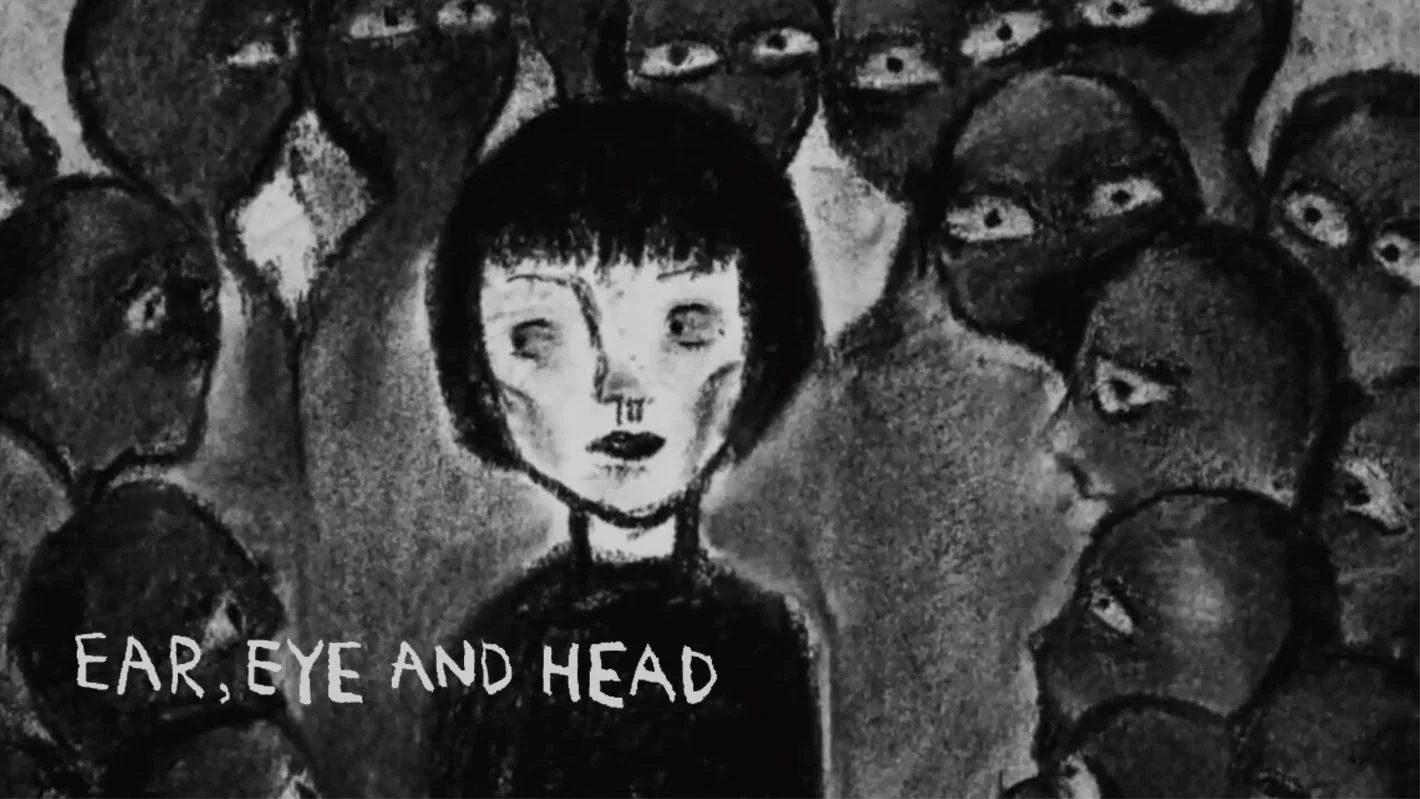
Ear, Eye & Head
To alleviate her struggles with social anxiety, a girl tries to block out the world by dismembering herself.

Directed & Produced by Hwanyi Kim
There is a girl who desires to block out the world, to silence her hearing, vision, and thoughts. This aversion to her senses stems from the presence of those around her. Their incessant chatter and constant scrutiny disrupt her thinking, making it difficult for her to concentrate. The reality is that she struggles with social anxiety, and the daily routines of life weigh heavily on her.
The portrayal shows that people with social anxiety think similarly to the average person, presented in a unique and casual way.
ABOUT THE FILM
This short animation is from South Korea and this is it’s online premeire.
ABOUT THE FILMMAKER
Hwanyi Kim is an artist who works in 2D animation and painting. She studied painting at Dongguk University in South Korea from 2011 to 2015, and animation at Royal College of Art in London from 2018 to 2020.
READ OUR INTERVIEW WITH HWANYI
Welcome to our Short of the Week series. Can you tell us a little bit about yourself and your filmmaking background?
Hi, I'm Hwanyi Kim, and I'm thankful to be part of Kino Short Week. I'm an animator and designer in London. I studied animation at the Royal College of Art from 2018 to 2020. My graduation film, 'EYES,' was shown at a few animation festivals. Right now, I'm planning more projects that explore social issues.
Tell us about the genesis of Ear, Eye & Head?
My work is inspired by my daily life, especially during the tough times of the COVID-19 pandemic when I faced depression. I withdrew from the world and stayed in my room, wanting to disconnect from everything. It was during this isolation that the idea for my story started to form in my mind.
What were some of the main obstacles you experienced when making of Ear, Eye & Head and how did you overcome them?
During the pandemic, I had financial difficulties and couldn't easily get the equipment needed for stop-motion animation. But I thought using charcoal animation with just a camera could be the best way to tell this story. Despite the challenges, I'm happy with how it's turning out.
What advice or hacks would you give to other short filmmakers?
I'm still a beginner, so I might not have many filmmaking tips. But I do think it's important for animators to connect with each other. Sharing information and asking for help with things like plot or technical aspects can be really helpful. Being open to other people's ideas is a big part of the creative process.
What do you think is the biggest challenge short filmmakers face trying to break into the industry?
The main challenge is budgeting, and there are limited opportunities to showcase short films. This creates a cycle where it's tough for short films to reach a broader audience, and small markets struggle to support creators financially.
Any film recommendations that we should add to our watchlist?
I'd like to recommend an animation by one of my RCA seniors titled 'A Girl Who's Afraid of Touching People' by Liang-Hsin Huang. It's not just because I was one of her assistants, her stop-motion animation is truly beautiful and distinctive in character, and the narrative of the protagonist's emotions is impressive.
Interested in getting your work selected?
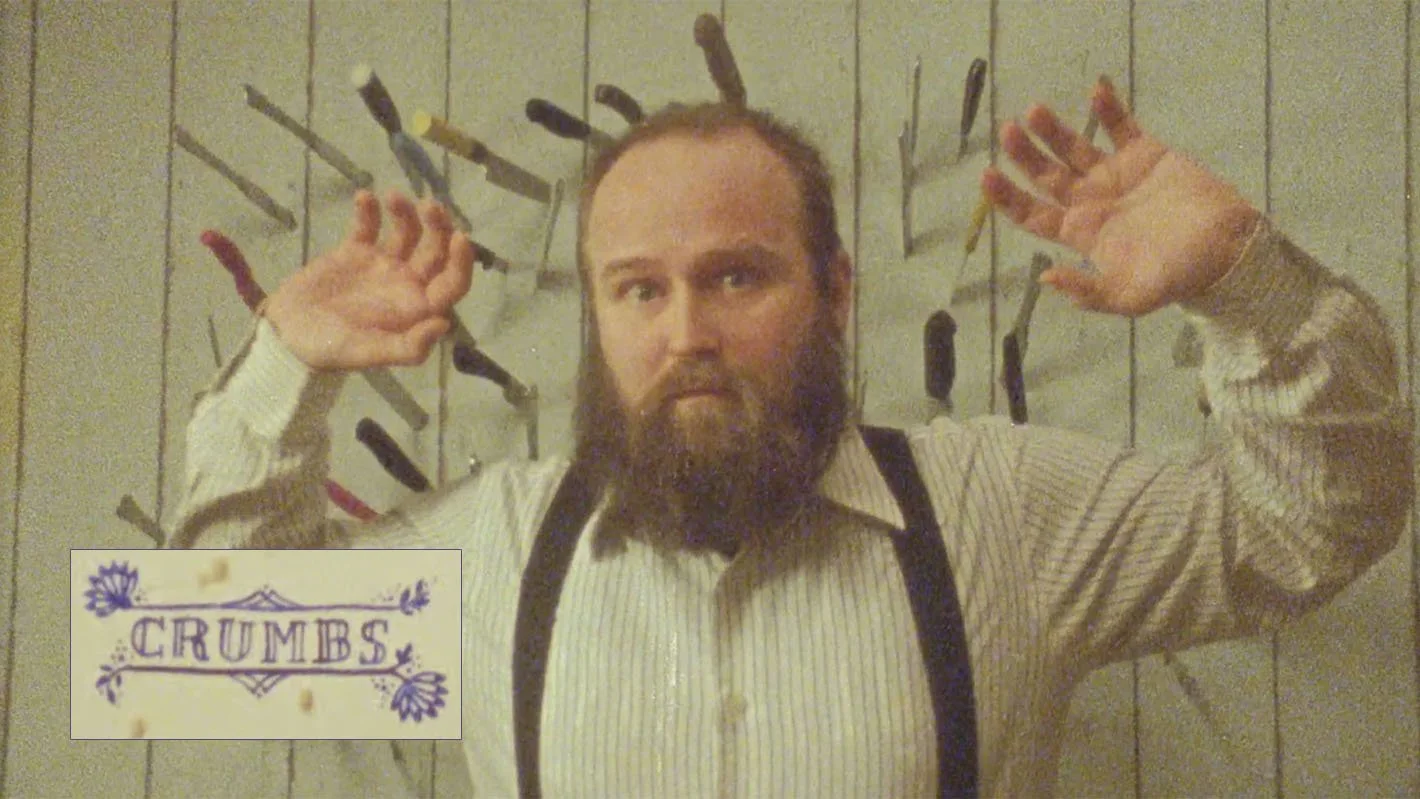
Crumbs
Tired of her husband’s noisy and messy eating, a wife starts a stop-motion battle and packs her bags.

Directed by Robot Chocolate (Gabriela Plačková & Robert Hloz)
Produced by Alexandra Kara Moravčíková
Tired of her husband’s noisy and messy eating, a wife starts a stop-motion battle and packs her bags. CRUMBS was made entirely in-camera for Straight 8's 2020 competition on one cartridge of super 8mm film with no post-production. Find out more about their unique filmmaking process in our interview below.
Want to make a super 8mm film? Check out Straight 8.
READ OUR INTERVIEW WITH ROBERT
Tell us a bit about yourself and your filmmaking background.
Hi, I am Robert and I am commercial and feature film director and I love when a movie can transport me to a different reality. Somehow when I was really young I promised to myself than I want to bring the joy I had from films to other people too and sticked. My (now already) wife Gabriela is a stopmotion animator and my partner in crime on Crumbs and was our first artistic child.
Tell us about the genesis of Crumbs? Did you have the concept in mind before deciding to join the Straight 8 competition or was Straight 8 the catalyst for the concept?
NO! We totally just heard about the idea and went crazy about how far can we push the medium. The question was how can we use the limitations to create something the would be impossible to do without the constraints?
Had you ever previously shot on film before? If so, can you tell us about that?
I shot a short scifi movie Transient Consciousness on a film stock. But that was a bigger crew so I didnt even touch the camera, this one was so much hands-on. Still I know very little about the whole exposure stuff so I totaly trusted our DoP Ondrej Nedved who did a great job navigating us through all the obstacles. It was his first 8mm experience as well, but he is a prodigy of stopmotion so I knew we were in good hands.


What was the biggest challenge in making Crumbs?
We were afraid of how all the special effects and flying knives on quite complicated rigs gonna work, but that turned out to be a great fun and collaborative effort that worked amazing. And vice versa we have been so sure we have the sound sync sorted out and boy, that was micromanagement nightmare. We had no idea if it is gonna be all in sync till the premiere.
How long did the stop motion process take?
I think we squeezed about one week of work into a three days of real time.
What was the biggest challenge with in-camera editing?
Never to forget to push the trigger both on the analog and the digital camera during thousands of frames. We used two cameras for syncing of the sound and with the amount of technical detail with very DIY conditions there were times of panic and leap of faith when you just hope you listened your muscle memory and automatically pushed all the right buttons even if you don't actually remember it. It is a true miracle and I still can't believe that the movie is in sync till the end:))


How did you handle creating the sound design for the film without watching your footage?
We made a custom camera rig for the analog and digital camera so both could sit next to the other with almost the same field of view. And then recorded frame by frame the same frames simultaneously. So we had a digital copy of the film available for the sound design. But still with a lot of analog-related complications, there were many moments of uncertainty if the cameras are actually in sync.
Tell us about the journey of getting your film to audiences.
The movie started to life its own life after the premiere and the Straight8 team helped a lot with that. Originaly, we didnt think the movie could be interesting to anybody outside the competition as the conditions were so specific, but we got a feedback from all around the world that floored us.
Words of wisdom. What advice would you give to other filmmakers?
When someone tells you that your plan can't possibly work, you know you are on the right track.
What are you working on now?
I am finishing my first feature movie, Restore Point, a scifi set in central Europe which is a kind of a this thing that few years ago everybody knew was an impossible dream. And now the teaser coming out in a month. I am writing this from a final sound mix session. It is an incredible experience. Imagine a world where you have the perfect insurance, so when you die prematurely, let's say a car hits you or someone shoots you, you wake up revived and continue as nothing has happened. Restore Point shows you how the society reacts and if the humanity actually deserves second chances.
Any film recommendations that we should add to our watchlist?
People who dont like the original Top Gun or Tom Cruise should see Top Gun 2, seriously.
Interested in getting your work selected?

The Corridor
An endless corridor of locked doors holds a man prisoner as his mind begins to disintegrate.

Written, Produced & Directed by James Mansell
Animator & Executive Producer Hakim Ismail
An endless corridor of locked doors holds a man prisoner as his mind begins to disintegrate.
READ OUR INTERVIEW WITH JAMES
Welcome back to our Short of the Week series. What have you been up to since the last time we featured your film Ruptured?
Thanks! I've been concentrating on writing for the last few years, and developing short film projects. The Corridor was a brilliant lockdown project which we all found very cathartic throughout those rough months, so that kept me very busy. I'm prepping a new short film which I hope to shoot and complete by the end of the year.
So The Corridor is your first animated film, correct? Why did you choose animation?
It certainly is. I've made a lot of animated films for brands but nothing made independently. It was a combination of wanting to work with friend and animator Hakim Ismail, who saw Ruptured and really liked it, and wanted to work on something dark and nasty, and COVID coming along and stopping any live-action shooting for a while. I was heavily inspired by David Lynch's weird and wonderful internet shorts and wanted to do something completely different to what I'd done before, so I had the idea of an animated film. With Hakim, I pitched the idea of The Corridor, which was first meant as a live-action short, and we began developing it, and went from there. I'm also a huge fan of Richard Linklater's rotoscoped animation Waking Life, and have wanted to do something similar for a very long time. This isn't rotoscoped, but it's close.
Aside from the obvious, how is directing an animated film different from a live action?
We approached it the only way I knew how, so it wasn't as different as you'd think. Working closely with one person was challenging at times, but we still had actors and a story, so the elements of a live-action film were all there. We storyboarded the film together, as if we were shooting it, and I cut it together, as if it was footage, so it retains the feel of a conventionally shot, live-action film, with the added element of this abstract, surreal style of animation that Hakim achieved. This all added to the dream-like quality the film has. I'm not sure we could have achieved that tone if we shot live-action.
Tell us about the journey of getting your film to audiences.
The film took us 18 months to complete over lockdown. We really had to not worry about how long this took, and just went with the flow. Life was quite challenging for everyone, and we were working on this in our free time, so there were long periods of inactivity, which couldn't be avoided. Hakim and I worked closely throughout that period, exchanging ideas and references, and we slowly built the film. Ashley Pekri and Victoria Morrison, who were both in my film NightmARes, provided the voices, and the fantastically eerie music was by Grey Frequency. This all took a long time to come together. At some point, you just have to stop, as it can always improve with time. I think we'd burnt ourselves out on the idea and needed to stop, once it felt as good as it could get with the facilities we had. We're both really proud of the film, and it stands out as something quite different.
What do you think is the biggest challenge short filmmakers face trying to break into the industry?
I honestly think the biggest challenge is internal. Having the confidence and fortitude to keep going and stay positive is very difficult. Every filmmaker who hasn't had a 'break' yet sees other filmmakers getting opportunity's and directing feature films, which is really hard when said filmmakers are battling away on their own work and seemingly not getting anywhere. THE most important thing a filmmaker can do is keep the faith and keep working. If you work smart, adapt, learn and overcome challenges as best you can, and stay true to who you are as a filmmaker, and not forget the passion you have, you have the best chance of getting the opportunities you want. Also, don't dream of that Academy Award, or BAFTA, or Fangoria Chainsaw Award too much. While you're dreaming of winning, other filmmakers are getting on with making stuff. Concentrate with what's in front of you. That's all that matters right now.
Any film recommendations that we should add to our watchlist?
Some animated films which inspired The Corridor and are most certainly worth checking out are Richard Linklater's Waking Life and A Scanner Darkly. Both superbly bizarre and trippy. I also love Keith Maitland's animated documentary Tower. And lastly, I'd say check out the incredibly powerful Waltz with Bashir by Ari Folman.
Interested in getting your work selected as Short of the Week?

ONLY FOOLS RUSH IN
A conversation about tea drinking unravels a world conflicted by the rush of everyday life.
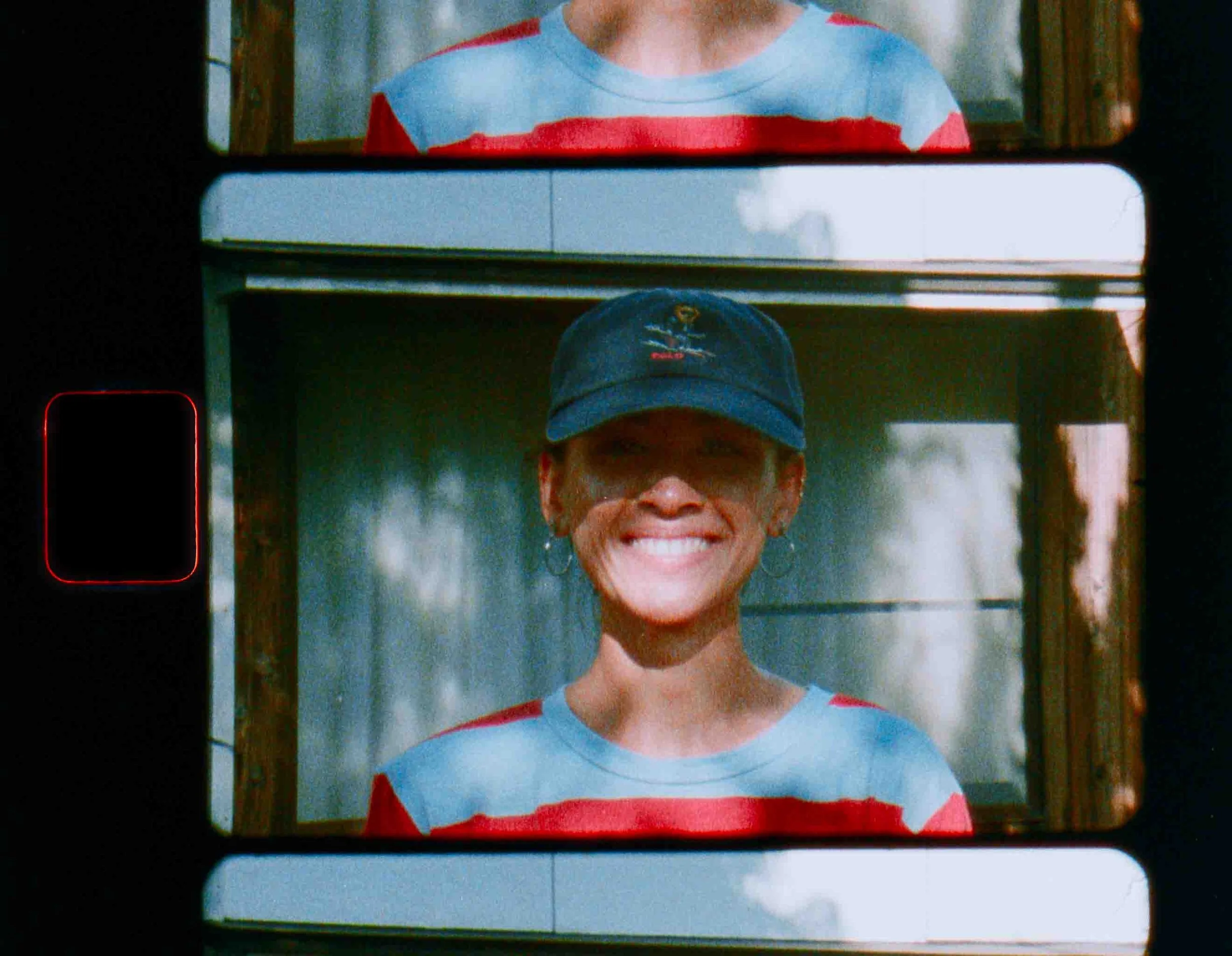
A film by Jack Turner
Poetry written and performed by Cat Hepburn
A conversation about tea drinking unravels a world conflicted by the rush of everyday life.
In 2018, I visited a small tea shop in Hong Kong where a man told me the taste of his tea tells him how he feels. An introspective and experimental short more about the little things in life than drinking tea.
Tell us a bit about yourself and your filmmaking background.
I’m a multi-disciplined director based in London who works across commercials, music videos, documentary and short film. Alumni of the National Film and Television School, I’ve directed for Rag ‘n’ Bone Man, Alfie Templeman and Zipcar.
What was your inspiration? Why did you decide to make Only Fools Rush In?
Only Fools Rush In was born from a conversation. I was in Hong Kong for a film job and it was my last day. I ended up in a tiny tea shop and spent almost 4 hours there, sat down with the owner, drinking tea and talking. At the time I never had any intention of making a film, but the conversation really stuck with me when I travelled home and I genuinely couldn’t stop thinking about it.
Did you source the film footage or actually travel to get all those beautiful shots in various locations?
I had already planned to go travelling, but the idea of this film came so close to it that I decided to shoot it in each of the countries I went to. I wrote a (very) rough outline of what I wanted to capture, thinking of simple contrasts that would begin to form my world. Shooting on Super 8mm provided an energy to the edit with its natural blemishes and texture, but most importantly it made me consider each shot. I went out with various stocks and filmed very much as an observer, no setups, no real planning. I always had the story in mind, but the process felt organic. Side note: I kept all my receipts, leaflets, cuttings and left over bank notes. They all ended up being used as texture in the transitions between the Super 8mm and 2D animation.
What obstacles did you overcome while in the making of this film?
As with a lot of passion projects one of the biggest challenges is keeping that momentum. Money isn’t on the line, time and deadlines are quite literally in your hands. It was definitely hard work to keep coming back to this one because the freedom meant you constantly tweaked and tweaked. Working with a small group of friends and collaborators really helped by giving their time to keep the energy, focus and bring new ideas and opinions to the table. Without them I think I’d still be editing now…
Tell us about the journey of getting your film to audiences.
It was a case of constant revisions, taking on opinion and comment from others. Like I mentioned before it was definitely a challenging process but I learnt so much about not hiding away with your own ideas and thoughts. When you finally feel you are in a position to share the film feels so much bigger than it ever could’ve been - a product of collaboration no matter how small the team is.
Words of wisdom. What advice would you give to other filmmakers?
I think what I’ve found over the past year or so is that spreading the wings far and wide is a massive help to your growth as a director. Don’t box yourself. Don’t set unobtainable targets or get yourself in a twist about what others are doing. Find your own path, take opportunity to meet and work with new people and form a network around you that makes you happy. Talk to people, offer to review work and share your own when you can - it gives you so much more value to film than just delivering the final product.
What are you working on now?
Pitching on music videos, commercials and developing a new short. I’m also in the midsts of delivering a sports documentary I directed. It’s going to the channel soon so more details to come!
Any film recommendations that we should add to our watchlist?
Some things you may not of watched; Parasite in black and white, completely different experience! Only God Forgives is one of those films that cemented what I wanted to do. It’s bold but it illuminated so many boundary-breaking things in cinema to me. Did I mention that Succession is the greatest TV show of all time?
Interested in getting your work selected as Short of the Week?

Oasis
Set in the deserts of 1935, a pilot finds himself in a place that is ready to destroy all ambitious men.
Written & Directed by Andrew De Zen
Set in the deserts of 1935, a pilot finds himself in a place that is ready to destroy all ambitious men.
READ OUR INTERVIEW WITH ANDREW
Tell us a bit about yourself and your filmmaking background.
Writing about yourself is always a bit of an interesting experience. I'm a runner. I feel like I'm always in motion to some degree. If you see me thinking, or on a set, I'm kinda just there vibrating or moving around like a bit of a lunatic. Directing is something that's been with me for a while so pretty early on I always knew I wanted to be making films. And what I'm interested in feels like it's constantly shifting. Like you're constantly finding something passionately fascinating, then later moving on out of boredom. When I was in my last year of college I found director representation here in Canada and things officially started there in my eyes. So here we are. You can probably find me now rewatching Princess Mononoke or some anime. Currently digging into Herzog's documentary films.
What is your inspiration and influences behind Oasis?
The inspiration for Oasis came like a crashing wave when I was reading Antoine de Saint-Exupéry's book "Wind, Sand, and Stars". The short film is based on his experiences and what he writes about when he crashed in the Libyan desert. His writing, the details he specifically brings to light, the strangeness of the way they hit the earth, all of it - as soon as I finished that chapter of the book I immediately sticky-noted it and burnt it into my brain - I had to make some form of this. When you get hit by something that hard you know there's no arguments, you simply have to do it. Animation is also a huge inspiration for me, maybe more so than live action at this point. Films from Hayao Miyazaki, Satoshi Kon, and Mamoru Hosoda I find especially refreshing. Influence and inspiration tend to blend together but the desert sequences in Lawrence of Arabia and landscapes of No Country For Old Men are definitely mixed in there, along with some nods to PTA's work and a fav of mine Porco Rosso.
What obstacles did you overcome while in the making of this film?
Other than having to bring a crew of 40 to Death Valley, fabricating a plane wreck and hauling it into the dunes, and spending every single day wondering how we were going to achieve this crazy little film, there weren't many obstacles... It was really just the scale of the production on the bones of a short film. The dunes, the visual effects, the practical and period elements, the animation being worked on internationally during covid. It was a lot and by far the most ambitious thing I've ever tried to do. Having a super dedicated crew makes things possible. Having my lovely producer Brooks Malberg to shepherd it into life along with my crazy talented DP Ian Rigby, the film would simply not have been possible without the amount of time people put into this.
Any hacks or tips for filmmakers looking to make an ambitious period film?
Just one tip. Make sure you have a good answer as to why you're doing this. That way when you have your own inner arguments with yourself, that answer can cut through the chatter and you can keep moving forward. And pay attention to the details. Period films mean more elaborate costumes and a special attention to detail that would normally not be scrutinized in the same way.
Tell us about the journey of getting your film to audiences.
The journey from the beginning to the end of this film was a long one. Prep was intense, and Brooks, Ian and myself spent months location scouting in LA and Death Valley. Researching planes and driving around. Production was intense. 5 shoot days where we took over a town of 35 people near our set and we had essentially doubled their size with our crew while some of us camped in the desert. And post-production was intense but immensely gratifying with CGF our amazing post house who handled all the VFX and animation.
What are you working on now?
Right now we're in the middle of editing the next short which we just shot this August. I'm prepping another short film that we shoot next month on 65mm that I'm very excited about. And I'm developing a handful of other scripts, with two specifically that are going to be gearing up for next year. Then just writing a feature script that is still in early stages.
Any film recommendations that we should add to our watchlist?
Some of my favourites at the moment are Ikiru, Wolf Children, Ida and Beanpole. Wolf Children is one of the most beautiful, soul-fulfilling films I've seen with a main character that never fails to warm my heart.
See more of Andrew's Work
Interested in getting your work selected as Short of the Week?

Rambling
Don your boots to ramble a rural expanse that's rich with doggers, mentally scarred artists, and You Are Here signs that are out to get you.

Created and written by WILL NOBLE and JOE REANEY
The Great British Countryside™ covers an area equivalent to a trillion football pitches. Probably. We don our boots to ramble a rural expanse that's rich with doggers, mentally scarred artists, and You Are Here signs that are out to get you.
READ OUR INTERVIEW WITH WILL NOBLE
Tell us a bit about yourself and your filmmaking background.
Myself and Joe met on a scriptwriting course at Bournemouth Uni and bonded over a love of Alan Partridge, Curb and Look Around You. Joe's previously made a couple of award-winning short films. Our first foray into animation was with BenPics - with a short called 'Spaghetti' - a cautionary tale about cooking too much pasta. The script itself was actually a sketch written for our comedy group, Birds.
So Rambling is part of a web series called The Green and Pleasant Guide. Can you tell us about your inspiration being this web series and in particular for the Rambling episode?
The Green and Pleasant Guide is basically an homage to/send up of those shows you get on the BBC on a Sunday afternoon, where people are banging on about how great the countryside is. We wanted to put a surreal/dark spin on that, through the lens of Londoners who know nothing about the countryside. So for instance, the Rambling episode features a 'You Are Here' sign that chases a poor rambler around until he winds up running into the thresher of a combine harvester. The presenter is that perma-smile type, who could keep grinning through a bit to camera in an abattoir.
What is your process for creating animation and any hacks or tips you can share?
Find an animator whose style you really love. In our case it was Ben. Plus, the voice talent (Celeste Dring, Luke Rollason, Amy Gledhill) were all people we'd admired from afar, and were fortunate enough to get on board.
Our process is: Joe and I write the scripts, then send them to Ben, who often chips in with one or two suggestions for visual gags. We'll change the script accordingly, before recording the voiceovers. At this point, Ben will make the final animations to fit the voices and everything else that's going on in the script.
How have to tried to get attention to your when releasing it direct online?
We've essentially set up a YouTube channel and a Twitter account, and put some bad jokes on the latter to try and get people to visit the former.
Any film recommendations that we should add to our watchlist?
I mean, the best films about the countryside are probably Nuts in May, Sightseers and Withnail and I. In each one, things go horrifically awry - just like in the Green and Pleasant Guide.
Subscribe to The Green & Pleasant Guide on YouTube
Interested in getting your work selected as Short of the Week?

SQUIB
This incredible stop motion animation takes you on the claustrophobic journey through lockdown and a hopeful look towards the future.
Written & Directed by Baz Sells
How will you feel "When All of This is Over?"
This incredible stop motion animation takes you on the claustrophobic journey through lockdown and a hopeful look towards the future. This poetry film, visualises Anthony Anaxagorou's poem 'Squib'. Commissioned by Bradford Literature Festival (UK), the poem was written in response to the post-lockdown provocation 'When All of This is Over'.
READ OUR INTERVIEW WITH THE FILMMAKER
Tell us a bit about yourself and your filmmaking background.
Hi, I’m Baz - director at One6th Animation Studio. I began creating stop-motion short films at film school, with our producer, Ben. As live-action filmmakers back then, stop-motion appealed to us thanks to the likes of Suzie Templeton and Tim Burton but also because it seemed like a good way to create imaginative visuals, on a small student budget.
Twelve years later, here we are. We’ve taken slightly different paths since film school - I’ve had various roles within commercials and film and Ben has been busy developing his business portfolio. In 2018 we established One6th Animation Studio where we create short films, commercials and commissions such as Squib.
So the film was commissioned by Bradford Literature Festival. What can you share with us about that process?
Recently, the BLF commissioned a series of poems which were written in response to lockdown and the provocation “When All of This is Over”.
We were approached by the BLF about collaborating with Anthony Anaxagorou. Anthony is a poet with great cadence, so I thought about building the film around a typewriter, which operates with a certain rhythmic quality. Also, being an old technology, it seemed to capture the restrictions and nostalgia we’ve all experienced during lockdown. Initially, the idea of creating a paper puppet for Anthony was a side note in our treatment - mainly because it would be (and was) extremely challenging to build and animate within the tight deadline.
One of the great things about a poem like Squib is that it really gets you thinking. Most people will interpret it differently, so we tried to let the poem speak for itself. From an animation point of view, we focused more broadly on creating Anthony’s environment and building a narrative to capture the emotion of the poem and the claustrophobic journey through lockdown.
We were fortunate that the BLF and Anthony really got behind our ideas and gave us the freedom to run with them. In the end, we delivered the film just 4 weeks after we started animating which is credit to our brilliant crew. I should also mention that the film only features the second Stanza of Anthony’s original poem, so there’s more Squib out there for poetry fans to look forward to.
How has lockdown affected your process as a filmmaker?
As a studio, the start of lockdown was a time for reflection. Given the financial impact, we had to drop certain projects and focus on those we are most passionate about. Refining our work load really improved our enjoyment of the creative process and in hindsight, has been the biggest revelation for us over the past year.
Any hacks or tips for making a stop motion animation?
If you haven’t tried stop-motion, I’d recommend searching for free apps on your smartphone and having a go! There really is something special about bringing inanimate objects to life. If you want to develop further, research the 12 principles of animation and practise movement exercises. I’d also encourage anyone interested to seek out creators in the stop-motion community and join in with social media groups and forums - they are full of supportive people who share work and exchange advice.
What's your favourite part of the filmmaking process?
For me, it’s all about collaboration and seeing ideas come to fruition - whether that’s seeing the puppet on set for the first time, or an animator finishing a great piece of action. Those are my favourite moments because you see how much work goes into them.
On Squib, one of our animators was working a night shift and a few hours into the shot the shoulder joint inside the puppet snapped. The animator then spent the next couple of hours opening up the puppet, replacing the joint and then positioned the puppet exactly in place to continue animating for hours more. That level of persistence and problem solving is so important.
Tell us about the journey of getting your film to audiences.
The film was first released online by Bradford Film Festival and then later on our website and social media - so far the response has been great. We have plans to submit to film festivals in the coming year and really appreciate Kino being the first to share it with their audience!
Any film recommendations that we should add to our watchlist?
‘Sound of Metal’ would be a great choice for those returning to cinemas right now!
Follow One6th Animation Studio
Interested in getting your work selected as Short of the Week?

Is Our Attention for Sale?
Is the technology we carry in our pockets distracting us from pursuing our life goals? If we’re serious about protecting human agency and democracy it’s time we started defending our freedom of attention.
Do you think our attention is for sale? Is the technology we carry in our pockets distracting us from pursuing our life goals? Have we woken up to the scale of the attention-capturing and persuasive powers being held by a small number of big tech companies? In the latest RSA Short, James Williams warns of the dangers that digital distraction poses to us individually and collectively. If we’re serious about protecting human agency and democracy, he argues, it’s time we started defending our freedom of attention.
Speaker: James Williams Director: Olga Makarchuk Animation: Olga Makarchuk, Kim Alexander Colouring Assistance: Anna Makarchuk Sound: Nico Antwerp Video Producer: Ross Henbest Joint Head of Public Events Programme: Mairi Ryan Intro and outro animation: Cabeza Patata
Tell us a bit about yourself & your filmmaking background.
The RSA Shorts is a popular and well established video series combining beautifully crafted illustration and animation with voices from the RSA’s public events programme.
In the early days of YouTube, we began to merge a number of animation techniques and illustration styles with critical ideas and voices to deliver a powerful “mental espresso”, designed to awaken the curiosity in all of us.
Over the years, The RSA Shorts series has achieved global viral success, garnering many millions of online views and several prestigious film festival awards, including most recently the 2020 Webby Award – widely recognized as ‘the Internet’s Highest Honour’ – in the Video Animation Series category.
Your film visualises a talk given by James Williams. How did it come about that you made his talk into a film?
The animation features an extract from a talk given as part of the RSA public events programme by James Williams, author of Stand Out of Our Light: Freedom and Resistance in the Attention Economy.
Mairi Ryan, Joint Head of Public Events at The RSA was really the driving force behind this commission. Having worked with James on delivering a public event, Mairi created a thought-provoking audio-excerpt which we then worked with Olga Makarchuk on in order to develop the idea.
What interested you in the topic of social media distraction and how does this topic resonate with you personally?
There can’t be many people who haven’t been concerned about the length of time they are spending on digital devices and the impact it might be having on their lives. In this film, Williams explores the impact that digital distraction has on both individuals and society at large.
He describes how digital technologies have been engineered to privilege our impulses over our intentions, resulting in a gradual erosion of human willpower and agency. Meanwhile, massive attention-capturing and persuasive powers are now held in the hands of a small number of dominant tech companies, posing a growing threat to democracy worldwide. All this, he argues, makes the task of reasserting and defending our freedom of attention, the defining moral and political challenge of our time.
Tell us about your animation process and where we can watch more of your work.
When we invite big thinkers to speak at the RSA in London, we take a high-quality audio recording of their talk so that, later, we can combine their words with moving image to make the ideas engaging and accessible to new audiences worldwide. We allow a pool of skilled animators and illustrators free rein to interpret and communicate the content in their unique style – but always with a focus on clarity, creativity and visual impact. It's a back and forth process during development that involves many cups of coffee!
Past animations have used various techniques including stop-motion animation, illustrative animation, 2D, 3D, character animation etc. We are forever searching for new creative talent and different ways to tell stories. Who knows, maybe we'll move into 360 Animation soon.
Explore more of The RSA Shorts on our YouTube channel; you can also stay up-to-date with everything we're up to at thersa.org
Any film recommendations that we should check out?
As far as recommendations go, within our team we've been talking about the new film 'The Social Dilemma' (2020) Directed by Jeff Orlowski on Netflix; which is exploring similar issues and expanding the discourse. We're currently working on two more shorts to be released soon, keep your eyes peeled.
Interested in getting your work selected as Short of the Week?

ALEX & MR. FLUFFKINS
Alex and his cat Mr Fluffkins have been having a pretty chilled time in lockdown, but life is about to change for these two... or is it?
Alex and his cat Mr Fluffkins have been having a pretty chilled time in lockdown, but life is about to change for these two... or is it?
Directed by ADEENA GRUBB & ANDY BIDDLE
Recently featured at our Short Film Open Mic, this short animation is an amazing feat of lockdown filmmaking. It just goes to show that lockdown doesn’t have to hinder creativity or even the quality of your work. We recently caught up with director Andy Biddle whose past credits include three Wes Anderson films - Fantastic Mr Fox (2008), The Grand Budapest Hotel (2013) and Isle of Dogs (2017). In 2011 Andy joined Laika in Portland, Oregon for a year to animate on Paranorman, directed by Chris Butler and Sam Fell. He was also involved in Ma Vie De Courgette (2015), Paddington Bear (2014) and Wallace and Gromit Curse of the Were-Rabbit (2005).
WE TYPICALLY ASK "WHAT WAS YOUR INSPIRATION TO WRITE YOUR FILM", BUT I THINK IN YOUR CASE IT'S PRETTY OBVIOUS, SO CAN YOU TELL US A BIT ABOUT YOUR WRITING PROCESS:
In terms of writing process, myself and Adeena had, for one reason or another, decided to make a little Easter loop back in April called Little Hoppy Horror. We were both keen to make more personal projects and this little loop was very much the birth of Alex and Mr Fluffkins. We'd enjoyed making Little Hoppy Horror so much, we were spurred on to make more work together. Adeena had seen that Seed Animation were looking for lockdown films and we thought it would be fun to do something a little more ambitious with 'lockdown' as the theme. Adeena and I found that we were a good partnership and generally improved each others ideas. One of us would come up with an idea and then the other would suggest something to make it even better.
MAKING A FILM WHILE IN LOCKDOWN IS QUITE IMPRESSIVE. HOW DID YOU MANAGE TO PULL IT OFF:
We knew this film was something we could do this after the success of Little Hoppy Horror so we generally followed the same lockdown film making formula. Adeena again made Alex and Mr Fluffkins as well a bunch of props and mailed them to me. I set up in my spare room and both lit and animated it. Another friend of ours called Malcolm Hadley is a DOP and had very kindly Uber'd over some decent film lights and kit which was obviously a huge help. Both Adeena and I shared the load with post production and Adeena took on the soundtrack and edit. So to answer the question, it wasn't hard at all. Adeena and I spoke every day to talk about direction, the edit, set dressing, lighting etc and it obviously helped that I had a spare room to shoot in but we both found the process relatively painless. We definitely want to do more together and plan to do so.
DID YOU HAVE ANY CREATIVE SOLUTIONS FOR WORKING ON A SMALL BUDGET:
Adeena and I are both what we have since termed "craft hoarders'. We both have a lot of crafty bits and pieces and props from old projects tucked away in drawers and boxes as well as random bits of rubbish that we deem "might come in useful one day" that most would throw away. And of course favours! I've already mentioned Malcolm lending us some lights - that was a huge help. Without his help it wouldn't look half as good.
WHAT'S YOUR FAVOURITE PART OF THE FILMMAKING PROCESS:
I work predominantly as an animator and Adeena works in art department and i think, for both of us, just the making of something that we'd come up with way the most exciting. We've both worked for other people for so long now that actually making something where we made the directorial decisions was amazing. I also personally loved lighting this project. It's not something I'd ever really done before so that was great fun. I also really enjoyed making something out of nothing. A piece of set for example that was very much an after thought was the door that I made out of a scrappy bit of wood. A professional model maker would scoff at my efforts but I knew that it didn't matter that it wasn't perfect because I knew light would add so much so it would still look good on camera.
WHAT'S YOUR NEXT PROJECT:
I am working on another collaborative project with another model maker called Claudia Brugnaletti and Adeena is continuing to work on a personal film she has been doing for a few months now.
My project with Claudia is about the meeting of two characters - an electric lamp and a candle and Adeena's project is about multiple date fails.
Interested in getting your work selected as Short of the Week?