

GHANIMAH
When a Muslim son tells his pacifist father and fundamentalist older brother that he is joining the British Military a heated family argument ensues.
Written & Directed by SAI KARAN TALWAR
Produced by Adi Alfa
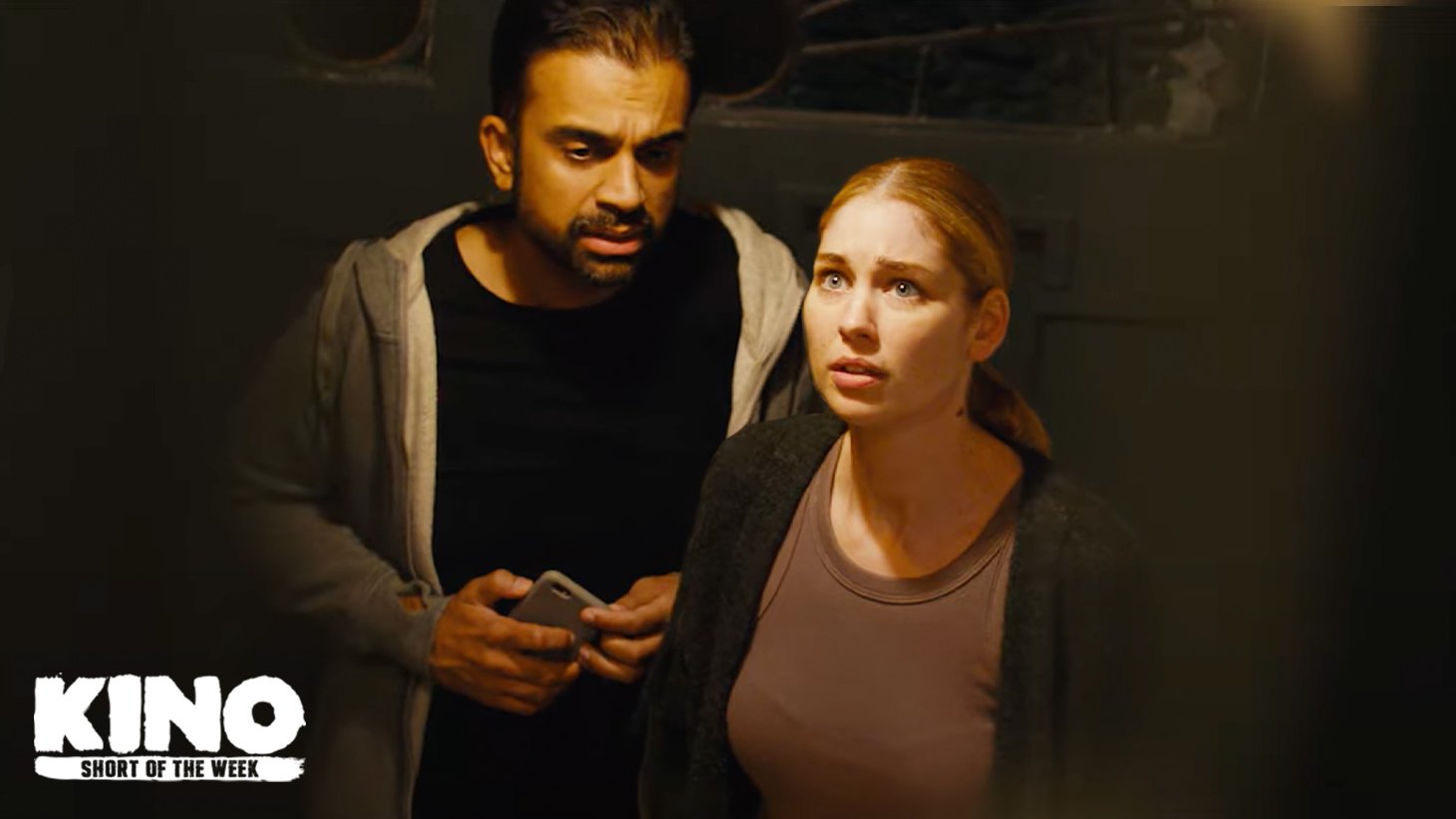
A heated argument occurs when Abdullah (Mikhail Sen - House of Dragon, A Suitable Boy) declares he is joining the British Military to the shock of his pacifist father Omar (Adil Akram - What's Love got to do with it?) and anger of his fundamentalist older brother Moh (James El-Sharawy - Tyrant, EastEnders). As their debate unfurls, past resentments and revelations rise to the surface, boiling to a point where they can no longer contain themselves. The war on terror, the 7/7 bombings, the loss of the son's mother and the allegiance to either Islam or Britain. What will unfold. Family, Duty or Honour?
ABOUT THE FILM
GHANIMAH was a Semi-Finalist at our Kino London Short Film Festival and screened at our Short Film Open Mic earlier this year. It’s the debut short film from Sai Karan Talwar, the writer/director of our upcoming Kino Original WHAT MEN DO FOR LOVE. Other noteable festival selections include Dances With Films, Flickers' Rhode Island International Film Festival, UK Asian Film Festival, and BIFA Qualifiers: Unrestricted View Film Festival, North East International Film Festival, Spirit of Independence Film Festival, & Brighton Rocks International Film Festival. James El Sharawy was nominated for Best Actor at the British Urban Film Festival, and the film won Best Short Film at the New Delhi Film Festival and Best Screenplay at the Rob Knox London Film Festival.
ABOUT THE FILMmakerS
SAI KARAN TALWAR is an award-winning writer and director. Sai is currently in a UK Writers program TBA in 2025 after its completion, and is a 2023 Alumni of the Respectability Entertainment Lab, with over forty accolades as a writer in some of the most esteemed screenwriting competitions. His Debut ‘GHANIMAH’ is a BAFTA & BIFA Qualified Short Film, that has been selected at 60 film festivals, with over a dozen wins and nominations, the film is about Islamic enrolment into the British Military. His upcoming short ‘What Men Do for Love’ is a 15-minute single take film about the masculine ego at breaking point, has begun its festival run and is currently BIFA qualified. Sai is working towards his debut feature film, and hopes that his short films showcase his talent to do so.
Film has always been a passion for Sai dating back to growing up in his late Grandfather’s video shop. Initially working with MADE from 2016, a charitable organization with a vision to reduce discrimination against BAME & LGBTQ+ Londoners. With MADE, he ran filmmaking workshops, screening events, held exhibitions at BFI Southbank and co-produced over 30 short films with 100,000+ online views. He worked in production companies such as Origin Pictures and 42 Management and Production within the development departments. He studied Economics and Finance at Durham University, leading to his undergraduate dissertation: ‘What are the key determinants of success for the box office within the UK motion picture industry?’ which received a first.
READ OUR INTERVIEW WITH SAI
Welcome to our Short of the Week series. Can you tell us a little bit about yourself and your filmmaking background?
Thank you for having me. I'm Sai, I am a writer and director based in London. currently in a UK Writers program TBA in 2025 after its completion and a Respectability Entertainment Lab Alumni. Film has always been a passion for me dating back to growing up in his late Grandfather’s video shop. I worked in production companies such as Origin Pictures and 42 Management and Production within the development departments during university, while studying Economics and Finance at Durham University. I started writing spec scripts fairly young, and after getting accolades for them, I needed to show that I could direct them. Which is what eventually led to 'GHANIMAH' being my first short film.
Tell us about the genesis of Ghanimah. What was the inspiration behind the film?
This is my debut short, after writing a few spec scripts that garnered a lot of finalist placements from competitions, I knew I wanted to direct them. But I hadn't directed before. Oddly, the idea of 'GHANIMAH' came to me in the shower. What if a British Muslim wanted to join the military, and the conflict that follows both externally and internally with his family. To fight in the military now is reduced to the 'war on terror'. I wanted to understand the subject as fully as I could so I researched the topic. I had read and studied the Quran, consulted Iman's, and British Muslims who were in law enforcement and the military. Recent statistics published by the Ministry of Defence indicate that there are 650 Muslims serving in the UK armed services and of these, 550 are in the British Army, constituting 0.5% of the total. Highlighting an interesting and controversial subject that hasn’t been covered widely in the media.
Our key motivation for this project was to shine a light on Islam, which tends to only be represented in terms of violence and hate. The Quran is much denser and more complicated than what is interpreted and presented in the modern media, and in some cases even when presented with sympathy, it is inherently vilified. In the world we live in today, it goes unsaid how relevant the topic is and the resonance it will have with an audience. Via our characters we are exploring why certain ideologies around Islam exist and the angst that surrounds these given interpretations.
We see so few quality projects about the non-white British experience, it feels like every story about Muslims centres on a young person being radicalised, these are perpetual two-dimensional stereotypes for ethnic minorities. Hence, giving us a strong motivation to put together this project. We have also seen many South Asian or Muslim actors offered terrorist roles, they are all frustrated that they do not get interesting characters, and that their faith tends to only be represented in terms of violence and hate. We are looking to expand the scope of what it means to be an immigrant in the UK through this narrative.
What were some of the main obstacles you experienced when making Ghanimah and how did you overcome them?
The whole journey was pretty rough, but rewarding in the end. I'm learning on the job trying to figure out how to get the funding, applying to as many funding bodies as I can find, then after a year realising that I'd have to pull out of my savings to do it. So I had to independently finance the project on a low budget and shoot in one day in order to get the film made. I had to do all the casting so there were hundreds of submissions and dozens of auditions to get through. My producer Adi however, was able to get together a really solid crew. We didn't have the time to do rehearsals, nor did we have the time to scout locations, we worked with what we had, you just get on with it in the end. The team was great, and I prepared as much as possible to mitigate any potential issues that could show up. There were the usual post-production issues as well when it came to ironing out the sound, settling on the right cuts and the score. So the whole process was a learning experience, but I think we got there in the end.
Tell us about the journey of getting your film to audiences and some of the festival circuit highlights.
I feel pretty grateful and lucky with the run we had to be honest. We had selections from the award accredited festivals and qualified for the Bafta and Bifa. Our UK premiere was at the BFI as a part of the UK Asian Film Festival which was a great start. We then had our US premiere at Dances With Film at the Legendary TCL Chinese Theatre, so we spent a week in the middle of Hollywood, it's a very strange place but I look back and enjoy the experience, getting to know other filmmakers across the pond, and watching some great films. But also quite nerve racking to have all those people watch your films, those theatres go up to 500 people. I tried to attend as many as possible when I came back to London, mostly travelling around the country to places I possibly wouldn't have thought of visiting before and had a great time. For example, It was BUFF's first year in Halifax, Spirit of Independence in Sheffield, NEIFF in Newcastle, even won a couple of awards while in attendance at the Wolverhampton Film Festival, and at the Rob Knox Film Festival, then we ended our run full circle back in London at the Unrestricted View Film Festival.
What do you think is the biggest challenge short filmmakers face in the early stages of their career when trying to break into the industry?
I'm still in the early stages. So not really sure how I can impart any advice, I'm still trying to break in. Everyone is fighting for the same pot of BFI money, so if you don't get the funding you would have hoped for, then you're back to square one trying to figure out how to get it made. Finding the right team that's on your wavelength, and that understands your vision is important, but they're also able to bring something interesting to your projects. You also want a team that wants to be there making the film with you, all short films are passion projects at the end of the day. Lastly, I feel that we need to control the urge to punch above our weight, at least in my case, this was my first film. I want to keep it small, and I'm not trying to throw in big fight scenes or explosions. I'm working with what I have and trying to be realistic with what we can achieve on our budget. so I do my best to write good characters and get some solid performances out of the actors.
What advice or hacks would you give to other short filmmakers?
I would say entering as many programs as possible, you would hope programs like the one I'm in currently or the Respectability lab would open doors, but I feel like you need to keep the momentum going, keep trying to make good films, and get them out there. Don't be discouraged by festivals, I would hope at the end of the day you're making films for yourself and finding an audience is a bonus, it is more competitive than ever, more films are being made, and more are being submitted. And you don't know which film is going to hit audiences the most, so the only way to mitigate that is to keep creating good work. Build a great team and a network of collaborators. Making sure that you're financially stable is probably the most important thing, and no one talks about it, I didn't stay in development because the pay would not have been good enough to sustain myself, I come from a working class background. So I studied economics and finance and continued to work in Investment Banking, so at least at the end of the day the bills and expenses are paid, and if I have to put money into the films, I can put some money aside to do it myself, which I've now done with 'GHANIMAH' and my most recent short, 'What Men Do For Love'.
Any film recommendations that we should add to our watchlist?
A short film that really stunned me recently was 'The Red Sea Makes Me Wanna Cry' . It is available on Mubi at the moment, it's very atmospheric and visceral, possibly the closest thing I've seen that reminded me of Antonioni. Just this year, there's a few feature films that came out that had made a strong impression on me, 'The Iron Claw', 'La Chimera' and 'Challengers' I think are all definitely worth seeing if anyone hasn't.
Interested in getting your work selected as Short of the Week?

The Other Woman
While isolated in a residential care home during the pandemic, an elderly woman ruminates about the pleasures of youth when her deceased sisters arrive from past memories to confront a life of lust and heartache.
Directed by Cameron Lee HoracE & SOPHIE COLQUHOUN
Written BY Cameron Lee HoracE & Miles Gibson
Produced by Lorna Lizzie & Lee Andrew Neil
While isolated in a residential care home during the pandemic, an elderly woman ruminates about the pleasures of youth when her deceased sisters arrive from past memories to confront a life of lust and heartache.
ABOUT THE FILM
THE OTHER WOMAN played at the BIFA Qualifying North East International Film Festival and Brighton Rocks Film Festival where it was awarded Runner Up in their Best Student Film category. Other noteable festival selections include Fastnet Film Festival, the Soho London Independent Film Festival and Fish Eye Film Festival.
ABOUT THE FILMmakerS
CAMERON LEE HORACE is an autistic filmmaker from the UK currently based in Cornwall. His documentary short 'Aspectrum - What is Autism to Me?' broadcast on Together TV, the channel for social change in December 2019 and was official selection at Barnes Film Festival and screened at Perth Festival Australia in 2021. Cameron later graduated with a First Class Honours degree from Coventry University in 2021.
SOPHIE COLQUHOUN is an English actor known for Plebs and the Royals. Alongside her central performance in the short film, Sophie worked extensively in the creative development and was co-directing during the post-production offline editing process.
READ OUR INTERVIEW WITH CAMERON
Welcome to our Short of the Week series. Can you tell us a little bit about yourself and your filmmaking background?
Thank you for featuring us, very much appreciated. I am Cameron Lee Horace, the writer and director of ‘The Other Woman’ and have been involved in small scale independent productions for the last five or so years. I started out interested in filming short video clips for reportage events and documentaries.
I was always interested in shooting little films and editing them and so my school got me to film a short video for the elderly citizens table tennis competition when I was 12 or 13 and I really enjoyed it. The teacher behind that, I will give a shout out to was Mrs Aguilar, an excellent English teacher that inspired me to develop my filmmaking skills and analytical watching with the film club. Later after GCSE’s I went into storytelling and short filmmaking from there with a college course in creative filmmaking.
During my college course I made a short documentary that screened at various festivals and got a small slot on Together TV in an advert break. I then went on to adapt The Other Woman. I self-funded this production and dived my heart and soul into making it. Instead of buying a new car or maybe something worthwhile I made a film. Not the best advice. But an artist’s desire will never die.
Tell us about the genesis of The Other Woman. What was the inspiration behind the film?
I am inspired by the stories of the many women across the world. I want to tell stories and bring visions to the screen. I wanted to make a film with a strong narrative and I also wished to adapt from a pre-existing material in which I hadn’t done before or had the opportunity to do. I had the privilege of knowing Miles Gibson through my extended family and so I contacted him for the off chance he had a short story suitable to make into a short film and wouldn’t mind giving me the shot at making it, and potentially ruining it. Luckily Miles was extremely supportive from the outset and here I read ‘The Other Woman’. I loved it immediately and wanted to make this into a short film for my University project. Then of course, Covid hit. But I wasn’t going to let that stop us.
What were some of the main obstacles you experienced when making The Other Woman and how did you overcome them?
Covid was the main obstacle we had to overcome. I was producing and directing as a one-man band. So, I had to be my own casting director, producer and everything in between and in the middle of a global pandemic wasn’t the easiest to conduct planning for a period drama short film. The only budget I had was the money I had saved and the contributions from friends and family. We luckily were able to film it in between the two lockdowns.
We booked an apartment to film, an Air B&B in Looe in Cornwall thanks to Karen and Mark that gave us permission to film in their lodge for 3 days and take over most of the outdoor space with clothes rails, equipment and crew. But unfortunately, I booked a day too short amongst all the juggling tasks I had to do. Luckily on hand was my Nan who lives in the lovely town of Fowey (I had the privilege of living for a year). We were able to film the rest of the scenes in the house she lived at the time. And so, it was a happy accident, as the new locations actually made the film better. Like I have explained at various Q/A’s at festivals for our film blocks. I had to write in a new line to adapt the new location with continuity. I think it was Joe Snape that plays James that came up with the bridge line we used, something like ‘what about a change of scenery?’. That wasn’t in my original script and wasn’t intended. We made that up on the spot to make the new scenes work in a new location and I think it works perfectly.
Tell us about the journey of getting your film to audiences and some of the festival circuit highlights.
Dealing with festival anxiety and depression is a big thing. Dealing with rejection is hard. Especially after putting in so much money, effort and time to make, edit and market your pride and joy to be turned down and said no to is very hard on your wellbeing. I actually suffered a lot. I decided to take a new approach from the past and submit my film to festivals and then not take note of the date so I am not anticipating anything. When the notification comes up that you get rejected or selected it does not have such an impact if you are not anticipating it will happen or know anything about it. Luckily, we have done fairly well on our festival fun. We have had the opportunity to screen at the lovely Fastnet Film Festival in the absolutely wonderful town of Schull. We had the most terrific time there and a massive thank you to Helen and Hilliary that run the festival which I have thanked before in other interviews.
I went to Newcastle to promote our film at the BIFA qualifying North East International Film Festival in September 2023. It was my first time in Newcastle and coming out of the Metro at the Monument was an astounding experience. I loved the city and we stayed on the Quay Side near the Millenium bridge. Not a festival highlight but related, anyone that goes to Newcastle needs to check out The Muddler, the food is amazing, I want to go back just for that! It was also a very big pat on the back achievement to be in the same running as a short film by Ricky Gervais. I made myself feel better by saying to myself if Ricky didn’t win an award, then I shouldn’t feel bad for myself for not winning one. I had just landed back in Bristol from Newcastle when I heard the news of our selection at Soho London Independent Film Festival and they were recording press junket interviews on Dean Street the following week. I was booked to go back to Cornwall, where I was living at the time. So, I had to quickly organise my travel back to the Midlands and then to London. I had a few days in Cornwall walking my Nan’s dog and then shot back on the train. Luckily my dear friend, Andy Anson, the actor not the football manager, let me stay with his wonderful Mother and was a great guide for London for me. We took a taxi to Dean Street and it was like a personal tour past Buckingham Palace with the windows down. I loved it! The film then went on to screen at Northampton Film Festival and Fish Eye Film Festival. It still goes on the circuit and by the time you will be reading this, it will have screened at Brighton Rocks in June 2024. Another BIFA qualifying festival!
What do you think is the biggest challenge short filmmakers face in the early stages of their career when trying to break into the industry?
Not knowing anyone. Film is a highly collaborative medium and immensely difficult to get anything made to a high standard if you are going at it alone. You start out using your family as actors and just filming one man band on a DSLR. All respect to the family actors but to make something on a higher scale you’ll need to branch out. Basically, find your people, find your actors, find your team and collaborate and work with them every time you make something. I am proud of my close-knit community ethos when I go into production and I bring in a lot of the same faces, I have a team of actors including Joe Snape and Helen Austin that I started working with to make my college and university projects so we work so well together I bring them back every time. When we went onto the set to shoot The Other Woman it was quite daunting for me working with a high calibre cast like Sophie Colquhoun from ITV Plebs and E4 Royals and a few other new faces, and it was for the cast too. It is so lovely to see when you build bonds and friendships where those you have worked with before are happy to see you and put their minds to rest. Actors put a lot of themselves on show, so they are usually insecure individuals that require a lot of emotional support to bring them out of their shell, so building a team has helped me tremendously.
What advice or hacks would you give to other short filmmakers?
Don’t go at it alone. Build a team and find those that work well with you and bond well on set. Also get an Editor. I worked with a brilliant editor called Philip Hockley and I also came in at the end and edited a master cut like a crude splice to remove scenes as the production was locked by this time and we needed more changes, but all the cuts in the film are Phil’s. Oh, and also don’t overlook the importance of sound. Get a good sound recordist, not just someone with a microphone, someone that really knows how to capture the best recordings and mix it in post with a professional.
Any film recommendations that we should add to our watchlist?
I am more of a doer than a watcher so my film pool is probably much less than most filmmakers. But ‘Brooklyn (2015)’ is my all-time favourite and one that inspired this film. A must watch. Also, I recommend Wish You Were Here (1987) as Emily Lloyd is so fantastic. Mike Leigh has always been a big influence to me when I take on the long take feel in my productions, so Life is Sweet and Secrets and Lies are good ones. I feel that Here Comes Mr Jordan (1941) is a must see. And I got nostalgic about old school days recently so something that came to mind, unrelated to classics of cinema but, a sound recommendation is ‘Afblijven’ (20016)’ or ‘XTC Just Don’t Do It.’ I remember really liking this film and I think it’s definitely worth watching.
Interested in getting your work selected as Short of the Week?

Waving
His worst fears seemingly realised; a distraught father takes one last walk through his ruined world.
Written, Produced & Directed by
ROlfIN NYHUS & Steven Brumwell
His worst fears seemingly realised; a distraught father takes one last walk through his ruined world. For most people, being at the centre of their own world and having a loving family is a wonderful thing. For Charlie, it's literally a nightmare. A short film about OCD.
Starring globally acclaimed actor Ralph Ineson (The Witch, The First Omen), Waving is an unflinching, but ultimately hopeful examination of the much-misunderstood condition of Obsessive-Compulsive Disorder.
** Viewer Discretion Advised **
The film contains scenes depicting intensive, intrusive thoughts that some may find triggering.
ABOUT THE FILM
Waving was recently made available as a general release on YouTube following a successful run on the global festival circuit (35 festivals, 35 Nominations, 20 Awards) including the 2023 edition of our Kino London Short Film Festival where it won Best Cinematography.
Other festival highlights include Sitges, being nominated for Best East Anglian Film at the BAFTA Qualifying Norwich Film Festival, winning Best Production Design at the 2023 British Short Film Awards (where it was also nominated for: Best Actor, Best British Short Film, and Best Sound), winning Best Actor for Ralph Ineson at the BIFA Qualifying Manchester Film Festival and the Romford Film Festival, winning Best Editing at the BIFA Qualifying Brighton Rocks Film Festival and winning Best Editing, Best Art Direction and Best Cinematography at the BIFA Qualifying Unrestricted View Film Festival.
The team behind the production were assembled across a wide range of neuro-diverse backgrounds, and the writer has lived with OCD since the age of 11, only being diagnosed at 18. Employing a surrealist filter to portray the terrifying thoughts that the condition causes sufferers, the film has been embraced by the community, festivals, and critics alike. The team hopes that this general release without any form of paywall will continue to shine a light on this cruel and misunderstood illness.
ABOUT THE FILMmakerS
ROLFIN NYHUS developed his interest in filmmaking while reading English Literature, producing work for other directors in his spare time. Spurred on by his love of European cinema - particularly the work of Bergman, Haneke, Herzog and Mike Leigh, he decided to abandon further academic study at King’s College to establish TankTop Films as a vehicle for his own projects. He is a native Londoner with English, Irish and Scandinavian roots and a fond habitué of the Cannes Film Festival. Waving is his 4th narrative film with a festival run planned from summer 2022.
STEVEN BRUMWELL has been fascinated by the silver screen since being left awestruck by the magnificence of Indiana Jones’ heroism at the ABC in Birmingham, 1981. A bit of a polymath, he has launched numerous enterprises but always returned to the written word. Influenced by Wilder, Lynch, Kurosawa and Lynne Ramsey, he strives to portray broad emotions in interesting ways. His work is continually drawn to the deep well of mental wellbeing by his battles with OCD since early childhood, Waving is his first project to be filmed
READ OUR INTERVIEW WITH ROlfIN
Welcome to our Short of the Week series. Can you tell us a little bit about yourself and your filmmaking background?
I am a native Londoner with English, Irish and Scandinavian roots. I developed an interest in filmmaking when reading English Literature, producing work for other directors in my spare time. Spurred on by a love of European cinema - particularly the work of Bergman, Haneke, Herzog and Mike Leigh - I decided to abandon further academic study at King’s College to establish TankTop Films as a vehicle for like minded creatives to collaborate and produce work they care about.
Tell us about the genesis of Waving. What was the inspiration behind the film and how did you come to be attached to the project?
My creative cohort (and brilliant writer) on ‘Waving’, Steve Brumwell, has had OCD since childhood. Along with writing his own material he has always been generous with his time when it comes to supporting other writers. That is how we met, with him helping me sharpen up my own scribbles. We hit it off and struck up a friendship. We often share script ideas with each other to move them along. ‘Waving’ was an idea in the mill we liked enough to not leave it languishing on a hard drive.
With 'Waving', Steve really wanted to portray OCD in a way as yet unseen: The internal torture rather than the external compulsions are rarely shown in any form of media. The idea for the dystopian elements comes from a love of horror and a desire to explore ways of showing how intrusive thoughts do make the sufferer feel as though existence is dependent on fulfilling the authoritarian orders OCD creates in one’s mind.
Tell us about the experience of working with a Casting Director to get Ralph Ineson attached.
Our Casting Director, Cameron Culver, has become a dear friend and supporter of TankTop Films’ work. We do our best to give him whatever materials are needed to pitch the project we are working on and he diligently does the rest. Forgive the platitude but casting is so, so vital and it is a godsend having someone you trust looking after that side of things, which can be fraught with rejection and disappointment.
With Ralph, I think we simply got lucky with the timing. So, hopefully, there is a ray of hope there for other filmmakers. All you can do is work hard on the material, have faith in it, and then hope for the best that the talent you really want are able to fit the project into their schedule. A word of caution, we did have to wait over a year for Ralph’s diary to free up, but it was 100% worth the wait.
What were some of the main obstacles you experienced when making Waving and how did you overcome them?
All the usual ones. Finance. Locations. Logistics. British weather. Namely, it pissing down with rain on the last day of shooting. There isn’t a magic formula, I don’t think. You overcome it all by, hopefully, keeping cool and maintaining a tenacious attitude as best you can.
Tell us about the journey of getting your film to audiences and some of the festival circuit highlights.
With festivals, my attitude after innumerable rejections is that every “No” is leading closer to a ‘Yes”. Reaching an audience hopefully starts via the festival circuit, and if what you have made is actually any good hopefully your peers and audiences respond. Given all the artistic modes of expression there are, film remains meritocratic, relatively speaking. I have friends in the art and music worlds and their experiences of getting eyes (and ears) on their work is even more brutal, believe it or not, despite their obvious talent and hard work.
Highlights on the circuit were our premiere at Sitges and the screening at Norwich Film Festival (as we shot some of the film in East Anglia). A stroke of luck meant we had four US festivals almost back to back, so I got the opportunity to attend Austin, Idyllwild, Dam Short and Cinema On The Bayou.
‘Waving’ was made in the hope people suffering from OCD might find some solace in the portrayal. We were deeply honoured that the IOCDF and OCD Action were unrelenting in their support. Through them (and our incredible Exec Producers, Ethan S. Smith and Catherine Benfield) we have been able to get the film out via the OCD Community first of all. Since releasing it, we have had a deluge of thank you messages which has left the entire team teary eyed. Our hope though, is that we eventually reach a more mainstream audience so that, slowly over time, some misconceptions about this widely misunderstood condition can start being challenged.

Cinematographer Andrew Alderslade accepting the award for Best Cinematography at our 2023 Kino London Short Film Festival for his work on “Waving“

What do you think is the biggest challenge short filmmakers face in the early stages of their career when trying to break into the industry?
The same challenges everyone experiences in anything they ever attempt to do. You start out not knowing much, really. You have to go through the pain of learning. Watch films and read as voraciously as you can. Make something and embrace whatever successes or failures it brings your way. Rinse and repeat.
What advice or hacks would you give to other short filmmakers?
Filmmaking needs “belief and momentum” - a few sage words I try to keep in mind courtesy of Terry Gilliam.
Any film recommendations that we should add to our watchlist?
Cache (2005) by Hankeke - a modern masterpiece.
Autumn Sonata (1976) by Bergman - a complex and compassionate exploration of the relationship dynamic between a mother and daughter.
Camera Buff (1978) by Kiewlowski - one of the most charming films ever made. Hard to find!
Nuts In May (1976) by Mike Leigh - an old ‘Play For Today’ TV Film by the BBC. A testimony to how you can create something relatively inexpensive with wise location choices, a great script and capable actors.
Interested in getting your work selected as Short of the Week?

Boy In The Back Seat
1986. A young boy is left unattended in the car while his volatile dad takes care of some ‘business’ in a dodgy local pub. What could possibly go wrong?
Written & Directed by SCOTT PICKUP
Produced by Jonny Ross, James Owen & Simon MarriotT
1986. A young boy is left unattended in the car while his volatile dad takes care of some ‘business’ in a dodgy local pub. What could possibly go wrong?
ABOUT THE FILM
The Boy in the Backseat won loads of awards including a couple at BIFA Qualifying film festivals including Best film at the Spirit of Independence Film Festival, Best Editing at Exit 6, and Best Actor at Tweetfest. Additional festival award highlights include Best Drama at the London Independent Film Festival, Best Drama at the London Director's Award and Best Overall Film, Best Male Actor, and Best Young Actor at the Wolverhampton Film Festival.
It also played at a variety of other festivals including the BIFA Qualifying Beeston Film Festival, Barnes Film Festival, North East Int Film Festival, and more.
ABOUT THE FILMmaker
Scott is a multi-award winning writer and director hailing from West Yorkshire. He’s worked in TV and advertising as Lead Creative for over 13 yrs, at major broadcasters such as SONY PICTURES, NBC UNIVERSAL, ITV & PARAMOUNT. A career highlight being getting to direct the Cookie Monster!
His 1st professional short BOY IN THE BACK SEAT has just finished its award winning festival run and his next Harm’s Way is in pre-production. Scott is in discussion with production companies to make the feature version of BOY IN THE BACK SEAT and another BFI shortlisted feature WINDSCALE is in development with producers Lindsay Fraser, Tom Kimberley and Jessi Gutch.
He believes in elevating complex working class stories from the often underrepresented regions.
READ OUR INTERVIEW WITH SCOTT
Welcome to our Short of the Week series. Can you tell us a little bit about yourself and your filmmaking background?
I’m a writer, director and editor originally from the darkest reaches of the North - Bradford, West Yorkshire. I freelanced on all manner of independent film shoots back home but it was clear there would never be enough to sustain a career. I then came to London in the age-old quest to be part of the creative world. I’ve been very lucky to have spent most of my time down south making promos, trailers, ads, idents etc. for a host of major broadcasters. I’ve always been striving to be a proper filmmaker though and this short has been my way into that world. I’ve now got a slate of other shorts I need to make and a couple of features in development with different producers. Just hoping I can make one of them happen!
Tell us about the genesis of The Boy In The Backseat. What was the inspiration behind the film?
Covid presented me with more time on my hands than I'd ever had in my adult life before. This led to a real burst of writing but also meant I was home more than ever. I could be the kind of hands in dad I'd never had the chance to be before too. Seeing how much influence this extra time had on my boy Finn really got me thinking about my own childhood (but please don’t worry too much about me after watching the film. It isn’t directly lifted from my life!) What I didn't want to do now was simply allow history to keep on repeating itself. Making the same choices. The film ended up being a combination of the past and the present, my messy human workings out about how we can break the cycle of toxic masculinity and give our kids what society couldn't when we were growing up. The script poured out of me very quickly over a day or so and the bones actually stayed the same from that draft onwards. I’ve been very grateful about just how many people seemed to have connected with this story.
What's it like working with child actors? Any tips in your process for enabling such a great performance?
I’d filmed with children quite a bit before this as I used to run the creative for a bunch of kids tv channels. Every time it was a challenge but it allowed me to figure out how to connect with young performers. You just have to find something they like and talk to them about it! Sounds simple but meeting them in their comfort zone, letting them know you're a friend when they’re surrounded by an adult workplace is really helpful. I also wanted both main actors to have a relationship outside of set too, as they’re playing father and son. We spent a day hanging out together, playing some daft games and rehearsing so that everyone was comfortable with each other.
Aron (adult lead) was amazing in this process too. His performance is so intense but he made sure that it never spilled out when he was around Jude off set. Aron did the friend thing as well without me even asking. He’s a very intuitive and experienced guy and just knew how to make it easy for Jude. I was so lucky to find Jude for the lead too. From the moment I saw his self tape I knew he was the one. His career is going to be insane, he’s already achieved more than a lot of adult actors- being in a BBC drama and sharing the stage with Ralph Fiennes already. Someone on the crew told him he’d be an amazing actor when he grew up. Jude rightly told them he was an amazing actor now! Couldn't agree more, he made my job very easy.
What were some of the main obstacles you experienced when making The Boy In The Backseat and how did you overcome them?
Time was the biggest challenge in making the film. I was lucky enough to get some financial backing (and emotional support!) from two great producers in Simon Marriott and James Owen but it still wasn’t enough for any of the core creative group to get paid. That meant finding time in the evenings on top of the day job, auditions on sundays, making costumes at midnight... The classic short film life! We’re so underfunded in this country that self made and self financed is the only real option for most people. Any help is amazing like the fund you guys have just started! Time was definitely still the biggest issue on set too. It's a compact story but ambitious emotionally, there was a lot to film. Working with an 8 yr old lead meant having a lot less time with him than we needed- for all the correct safeguarding reasons.
That meant shooting cleverly without him being there and managing his exposure to the set very carefully. I also tried to do too much as well - probably born out of the fear that I’d never get this chance again and had to knock it out of the park! We also had a scene with a dog but the handler unfortunately had a car crash on the way down. Everyone (dog included) was fine but it meant rewriting a scene in my head while simultaneously shooting another one while everyone needed answers about how the rest of the film was gonna work. That nearly popped my brain at one point but I had an amazingly strong crew and producing team (shout out to Jonny Ross) with me and we quickly found a way through.
Tell us about the journey of getting your film to audiences and some of the festival circuit highlights.
I literally knew nothing about the festival scene before making this film. I’d heard of the massive ones and had always loved going to the Bradford film festival when I was younger, but that was it. The whole submission process was new to me and I figured it out as I went along, making plenty of mistakes. I knew I had a strong enough film to go for some decent events and was lucky enough to get into many of them, picking up a great collection of awards on the way. It's such a great feeling actually winning something when you’ve poured your time, sanity and cash into a passion project. My first big wow moments were getting into my 1st BIFA level festival in Beeston and winning the main prize at Wolverhampton. These two things happened early on and really gave me a lot of confidence. I hope the organisers know what an impact they had on my journey. I’ve loved seeing my film play in front of packed screenings (the biggest crowd award goes to Exit 6) and travelling the country making new friends. It's been a blast. There's plenty of rejection too of course but I'm so jealous of people who have a new film already, who get to do it all again!
What do you think is the biggest challenge short filmmakers face in the early stages of their career when trying to break into the industry?
This is a tough one, because what isn’t a challenge at this point in your career! It’s just really hard crafting chances for yourself, knowing that no one is coming to your rescue, it’s down to you to find a way. How do you do that when you have a full time job, little or no spare cash, a family, no connections- the list goes on. I fought for a long time to find a way in, finally getting an office job at ITV in Leeds and using that to get access to the creative world jobs within the organisation- I applied for them all! I’m sure one of the main reasons I became a creative in London wasn’t my amazing Uni short films but connecting with the right people via an itv email account. It meant I wasn't so quickly dismissed because I already worked there, albeit in a very different capacity! It’s just so hard to find a way in.
What advice or hacks would you give to other short filmmakers?
Now I'm trying to break into features. It all starts again. One thing I know for sure is that it’s about the network. Going to festivals, events, making friends, sharing projects. You never know where the next opportunity might come from. I actually met someone great at a Kino London open mic night that will hopefully get me that one step closer to my feature film dream. I’m directing a charity advert soon and I have people to call for help because I’ve met them at an event, worked with them, hounded them on socials until they became my friend. So in short, talk to people, be respectful and friendly and see if you can’t help each other out.
My other tip applies to your own work specifically. Only make something you truly love, that you have to speak about. There will be so many knockbacks that your desire to tell that particular story has to be self-generating. It has to be fueled from within as no external validation will ever be enough to get you across the line. Love your work first and foremost.
Your passion will probably what sells it in the end too.
Any film recommendations that we should add to our watchlist?
I watch anything and everything. I’m a massive indie cinema guy but also more than happy to see Jason Statham punch a megalodon too. Poor Things was wildly imaginative and I loved Bottoms recently too- so fresh, funny and knew exactly what it was. TV wise Severance and Silo were the two things that captured my imagination recently. As for shorts, I’ve seen loads of incredible stuff on the circuit but 5 Weeks especially blew me away.
Interested in getting your work selected as Short of the Week?

Recovery of the Fallen
A lone man wanders a barren landscape on a foreign planet, salvaging items off of bodies that have fallen to the surface.
Written & Directed by Curtis Matzke
Produced by La Selva Ecosistema Creatiu
A lone man wanders a barren landscape on a foreign planet, salvaging items off of bodies that have fallen to the surface.
ABOUT THE FILM
Recovery of the Fallen was made as part of Werner Herzog's Filming a Strange Planet accelerator program. It won Best Horror/Thriller/Sci-Fi Short at Cinequest. Other festival highlights include the Chicago Critics Film Festival, Other Worlds, Tallahassee Film Festival, FilmQuest, and Hell’s Half Mile among others.
ABOUT THE FILMmaker
Curtis Matzke is a director, screenwriter, and producer based in Chicago, IL. His work has been recognized at dozens of festivals, including Athens International, Cinequest, NFMLA, and more. The legendary Werner Herzog recently mentored Curtis in the Canary Islands during a two-week accelerator program. In 2019, Curtis directed a short documentary celebrating Chicago’s Music Box Theatre, which earned him regional Emmy nominations for Off-Camera Directing and Historical Documentary. His full-length documentary (FIRST FEATURE), is in post and fiscally sponsored by Film Independent. His latest horror short film, SINK, premiered at the Academy-qualifying Chicago International Film Festival and has since screened at a dozen festivals. Curtis completed residencies at the Vermont Studio Center, Stowe Story Labs, Chicago International Feature Development Lab, Reykjavik Talent Lab, and Chateau Orquevaux. Three of his feature screenplays have advanced in the Austin Film Festival and won awards, including Best Screenplay at the Anchorage International Film Festival. He holds a B.A. in Media Arts and Technology and an M.A. in Telecommunication, Information Studies, and Media from Michigan State University with a concentration in Television, Cinema, and Radio, and a minor in Film Studies.
READ OUR INTERVIEW WITH CURTIS
Welcome to our Short of the Week series. Can you tell us a little bit about yourself and your filmmaking background?
Thanks so much for having me! I always say that my filmmaking evolved from an early interest in fine arts, particularly painting and drawing, which then evolved into an interest in photography, performance, writing, and cinematography. I went to Michigan State University, where I received my B.A. and M.A. in Media Arts and Technology I've been in Chicago ever since working as a freelance videographer and editor, which allowed me the time and flexibility to develop my own work. I've worked almost every role on a film set and directed nearly a dozen of my own short films and music videos. I also do a lot of documentary work which is nice because there are often a lot fewer logistics to deal with than in narrative fiction filmmaking. The work has certainly evolved into more directing and producing work, which is exciting. That being said, I'm most proud of my work as a writer and generating new ideas from the ground up.
Recovery of the Fallen was made as part of Werner Herzog's Filming a Strange Planet accelerator program. Can you tell us about that experience?
The program was an amazing experience. I could speak for hours about all that happened, including the many Herzog-isms he bestowed upon us during that time. I wrote a pretty in-depth article about what happened for Filmmaker Magazine so I could remember it all. The program consisted of about fifty international filmmakers, all of whom were mid-career professionals. I was one of only ten Americans. We spent two weeks on the island of Lanzarote off the coast of Spain, which is a beautiful island covered in black beaches and amazing landscapes. Herzog was with us every day. We would have lunch and dinner together and he would speak for hours after, answering any questions about his life and career. The program was set up where we would quickly have to scout pre-selected locations on the island, write our own short script, cast with local actors (many of whom were non-professionals), shoot and edit the film, and then present it to Werner and the other participants by the end of the trip. Because we were all well experienced, one of my takeaways was the importance of unlearning a lot of things about the traditional aspects of the filmmaking process and going back to the basics of storytelling. This new mindset allowed us to rely on our instincts while adding economy to the filmmaking approach. As we progress in our careers, we tend to put up barriers to what we think we may need for a production when it's often very simple. This program helped us refocus our skills.


Tell us about the genesis of Recovery of the Fallen. What was the inspiration behind the film?
The initial inspiration was just from walking around the island of Lanzarote. The first two days of the program were location scouting on a big bus with Werner, which is incredible (especially with his commentary over the microphone). We would stop at these locations and just wander, looking at the landscapes. He wanted us all to make science fiction films (which I love) because the island naturally looks like another planet. So the idea of walking around this barren planet came to mind in a way that was similar to Cormac McCarthy's "The Road." I thought about these portals and being thrown into space (which is how I felt at the time). It subconsciously evolved into an environmentalist film about Earth dying and how someone can maintain faith when there is no hope left in the universe. I'm drawn toward these open-ended ideas that hint at a bigger world, particularly in short films where it's tricky to cram in a full three-act structure. I wanted it to wash over you like a visual poem rather than a straight narrative. And as a horror filmmaker, I had to throw in a few dead bodies as well.
Tell us about the experience of shooting the film.
The film was shot digitally on my Sony a7sii with a limited crew of pretty much myself and the people you see on screen. Nacho, our lead actor who lived on Lanzarote, was incredibly gracious in driving us around the island. Production was only one day with Nacho coming in to record the voiceover on a separate day. I was the cinematographer and my friend Jake helped with a bit of the dialogue recording (and acted as the first body). I also included a bit of drone footage that was filmed during my initial scout on a separate day. I collected so much b-roll from the trip that I even made another short film, a documentary titled LA ISLA DE ALFREDO, in which I speak to a local character who lives in Lanzarote. That film screened at half a dozen film festivals as well.

What were some of the main obstacles you experienced when making Recovery of the Fallen and how did you overcome them?
The opening scene of the film takes place on a huge volcano, so practically, hiking up that thing with gear was quite the physical obstacle. Overall, I was under a deadline and only had one day to shoot. Luckily, the producer part of my brain kicked in and I overcame the logistical issues with a pretty detailed pre-production plan. I didn't storyboard the film but had an extensive shot list and trusted my instincts while shooting. I was very economical in the way we did it didn't overshoot. Pretty much everything I shot is in the film, aside from a few alternate takes.
It was quite stressful trying to pull off the film in a limited amount of time. The pressure of showing it to Herzog, without the time to analyze the edit in depth, added extra anxiety. He did not mince words about what he thought about the films, which was pretty intimidating at first. To my surprise, however, I wasn't as worried as I thought I would be on the day we showed him our work. We were all professionals selected for this experience so all of a sudden this strange relief washed over me. I think the greatest gift he gave me was that confidence moving forward: if I can stand up and show my work to such a legendary filmmaker, I can do the same with anybody. Thankfully he did like the film, calling it "well shot, well acted, and mysterious," which is probably the best pull quote I'm ever going to have for one of my films.
Tell us about the journey of getting your film to audiences and some of the festival circuit highlights, particularly your win at Cinequest.
The response has been amazing. It's an odd little film so I wasn't sure where it was going to go, particularly because it doesn't fit into one particular genre. That said, it did go to a few of my favorites that I've had films at in the past, including FilmQuest and Genre Blast. Cinequest was great because it screened before a feature and receiving a top award at an Academy Award-Qualifying festival was quite the surprise. I had been to that festival before with a short screenplay so was thrilled to come back and win. The context of making the film in such a short amount of time adds a lot to the story and has proven to be quite a good sample for me as I move into bigger projects. I've even had a few executives ask me if it was intended as a proof-of-concept for a feature. "The Wind Is Your Enemy" essay I wrote for Filmmaker Magazine was another great privilege and helped reach a lot of people.
What do you think is the biggest challenge short filmmakers face in the early stages of their career when trying to break into the industry?
I think a lot of short filmmakers struggle to find their voice early on and explore topics they don't know much about. I don't believe in the idea that you should "write what you know," but would encourage people to write what they're curious about instead. Explore something new, do research, and talk to different people. You may find something far more unexpected. So when it comes to career and "breaking in" you'll be able to do the job much better because you've put in the work. We live in an oversaturated landscape so the more unique you are, the more likely you are to get noticed. I'd also say to just keep making work consistently, don't sweat over one project. Try something new, keep writing, and move on to the next one.
What advice or hacks would you give to other short filmmakers?
One thing Herzog emphasized was to focus on what is achievable but don't shy away from being ambitious. Don't make a film just because you think Sundance is going to like it, make a film that you are going to like. I'd also say to learn about every part of the filmmaking process. A good filmmaker knows how to intimately communicate with every member of their team. Learn the ins and outs of cinematography, sound, editing, graphic design, etc. so you know what you need and how to articulate it. It's a collaborative medium but don't shy away from your vision and what compels you.
Any film recommendations that we should add to our watchlist?
Well, I just saw DUNE: PART II the other night, which was pretty enjoyable. In terms of newer films, this was a great year for international films so be sure not to shy away from subtitles and catch PAST LIVES, GODZILLA: MINUS ONE, PERFECT DAYS, etc. There are too many great things out there and I'm far too behind. I also just came back from SXSW and caught DICKWEED, AZRAEL, and THINGS WILL BE DIFFERENT. A lot to seek out!
Interested in getting your work selected as Short of the Week?

Tear Gas
A dance of love between two humanoids entangled in the complexities of toxic love.
Staring HARRISON CHARLES & FLORENCE PICK
Directed by JASPER CABLE ALEXANDER
Produced by ASH HORNE
A dance of love between two humanoids entangled in the complexities of toxic love.
ABOUT THE FILMmaker
Jasper's films entrap you into halcyon nostalgia that at any moment could flip from a sun drenched haze to a neon lit nightmare. There’s an impressive consistency of vision to his work that makes you hungry for more. His style is dark, surreal, and visually heightened, all driven by the narrative often with a humorous tone to his storytelling.
He has been telling stories all his life. From the age of 17 he left school early to pursue his creative career assisting, running and all sorts to end up working for the photographer Rankin who ended up signing him to his production company at the age of 19 as a director. Jasper is now 25 and has shot and been featured in many prestigious publications like the Face, Rolling Stone Magazine, Hunger magazine, Love Magazine, Pitchfork, Vogue Italy to name a few.
Most recently he has had a major eye accident temporarily blinding his left eye for over a year which has powered his creative vision even further to give him a perspective that not many have the opportunity to explore.
READ OUR INTERVIEW WITH JASPER
Welcome to our Short of the Week series. Can you tell us a little bit about yourself and your filmmaking background?
I’m a 25-year-old filmmaker focused on telling surreal & comedy narratives, I started in the world of music video and have now begun my journey into short films and documentary’s and hope to explore long form in the near future.
Tell us about the genesis of Tear Gas. What was the inspiration behind the film?
It ‘s a story of a past relationship that turned sour and all of the emotions that come along with toxicity, we began with the idea of a couple in a bedroom, showing them in their most intimate moments and entangled in the complexities of a toxic love, that idea really span from there into creating these creatures looking somewhat evil and distant but acting out relatable moments in a relationship.
I wanted to turn them into creatures because I felt that’s the kind of feeling that is evoked when you don’t quite feel like yourself, I think seeing the couple as other worldly speaks to the emotional tone that resonates within a toxic relationship.
Tell us about the experience of shooting on film.
Shooting on film is always a relative challenge, the day before the shoot the camera decided not to work, by this point it was too late to change cameras - thankfully the film gods came through and the aesthetics of 16mm really helped us translate that sentimental feeling that is felt when looking back at a past relationship.
What were some of the main obstacles you experienced when making Tear Gas and how did you overcome them?
Of course the Prosthetics was very challenging. However, Tilda our prosthetics artist completely outdid any challenge. No noses were lost during the process of shooting.
Tell us about the journey of getting your film to audiences and some of the festival circuit highlights.
Towards the end of the shoot, we had the idea to host a live screening alongside the music as our premiere. It went better than I ever imagined. To have live scoring alongside the film worked so well to capture the feeling that we wanted to show in the film.
Watching the film in front of an audience for the first time and to see people laughing and crying at this film that we’ve created felt incredibly special to me, it was the first time I’ve watched an audience laugh (intentionally) at a film I’ve made before. It felt like one of the best feelings in the world for me that’s what I most proud of. I’m very excited to explore comedy more.
What do you think is the biggest challenge short filmmakers face in the early stages of their career when trying to break into the industry? & What advice or hacks would you give to other short filmmakers?
I feel that the biggest challenge for a filmmakers initially is finding their voice once it’s found you have the ability to tell endless stories but it’s so hard to find a voice without doing lots of shorts and that’s a lot of money! I wanted to explore music videos in my early career because it gave me the ability to explore themes, stories and styles I liked while getting budget from the label.
Any film recommendations that we should add to our watchlist?
Well I would say keeping in the same world as Tear Gas the two I’d recommend is Buffalo 66 and In The Mood For Love.
Interested in getting your work selected as Short of the Week?

Voices
A couple overhears a violent fight next door and must decide whether or not to get involved.
DIRECTED BY Abbie Lucas
Written BY OMAR KHAN | PRODUCED BY Håkan Carlsson
A couple overhears a violent fight next door and must decide whether or not to get involved.
ABOUT THE FILM
Voices is a short film that defies genre. It won Best Drama at the BIFA Qualifying Beeston Film Festival, Best Horror Short at the Atlanta Shortsfest, and Best Suspense at Chicago Reel Shorts. Drama? Horror? Suspense? Whatever the genre is, all we know is that it’s goooooood!
It also won the Audience Award at Tweetfest and the Si Spencer Award & Best Screenplay at Unrestricted View (as well as a Special Mention for Best Director) - both festivals were BIFA qualifiers.
Voices played at over 45 festivals internationally, but highlights include the BAFTA Qualifying Aesthetica, Fastnet, the Oscar qualifying Seattle International, Durban, ScreamFest, Waterford, Milwaukee, Nevermore, and our very own BIFA qualifying Kino London Short Film Festival, where Omar Khan was nominated for Best Performance in a Comedy. The film was also nominated for Best Score.
ABOUT THE FILMmaker
Omar Khan has written for TV, theatre, short films and radio dramas. His short film The Plunge, premiered at Palm Springs ShortsFest and was long-listed for a BAFTA after being selected for over 60 international film festivals.
In 2021 he was selected for the BBC Children’s Scripted Development mentorship which led to a radio drama for the CBBC show, Malory Towers, and ten TV credits; episodes of the CBBC shows Princess Mirror-Belle, Odd Squad, Little BadMan and The Dumping Ground and the CBeebies show Biff and Chip. He also wrote an episode of the BBC3 show The Break. In 2023, he wrote two episodes of the Channel 4 continuing drama Hollyoaks and became a BAFTA Connect member.
Abbie Lucas is a film director based in London, originally from New Zealand. In 2018, Levile TV listed her as one of the Top 20 Rising Female Filmmakers in the UK. She is a member of Directors UK and BFI NETWORK x BAFTA Crew 2021. In 2022 she was invited to participate in the Reykjavik International Film Festival Talent Lab.
As a storyteller, she enjoys stories with flawed relationships, female protagonists, vigilantes, crime, and a bit of magical realism but most of all loves work with strong performances and impactful story lines. She is known for exploring dark themes in ways that are humorous and unexpected.
Her recent film credits include the award winning TESTING GRETA, an unusual story about domestic abuse, which took the 'Greeks of the World' Prize at the 40th Drama Film Festival in Greece and was screened at the BAFTA recognised Aesthetica Film Festival in 2018, and another short comedy titled DEAD TIRED which was been nominated for Best Script and Best Comedy at the Beeston Film Festival 2018 and also for Best International Comedy at the Austrian Film Festival 2018. In 2020 she completed two more dark comedies, GOOD VIBRATIONS and THE HANKERBOX, and in 2022 she completed CAPTURE HER and VOICES, all of which are on the festival circuit.
READ OUR INTERVIEW WITH OMAR & abbie
Welcome to our Short of the Week series. Can you tell us a little bit about yourself and your filmmaking background?
OMAR: My name is Omar Khan and I’m a screenwriter and reluctant producer! I’ve written and produced five short films, including The Plunge and Voices, both of which had successful festival journeys. I work mainly as a screenwriter, currently I am part of the team at Hollyoaks and I’ve worked extensively at CBBC.
ABBIE: My name is Abbie Lucas and I'm a Director, Writer and Editor. I studied Directing and Writing back home in Aotearoa, New Zealand and when I moved to the UK, got involved in directing theatre and then moved into web series and short films. I also co-write features with my US based writing partner Kevin Kautzman and have many years experience editing commercials, branded content and short films.
Tell us about the genesis of Voices. What was the inspiration behind the film and how did the project get greenlit?
OMAR: Voices started as an idea, after a news report about Boris Johnson and his partner having an argument at home, which was overheard by the neighbours who then called the police to report possible domestic violence. This turned into a small media frenzy, with some papers arguing that you have no right to call the police on a private, domestic matter and other saying that you have a duty to do so if you suspect someone is being hurt. This inspired the start of the film in which the couple have this very argument when overhearing their neighbours domestic dispute.
ABBIE: I first became involved with Voices when Omar sent me an email introducing himself. He had seen some of my work and was interested in potentially collaborating, so we met up for a coffee, got along well and he sent me a couple of shorts he's written. Voices was the one I connected with because I like stories that are told in an unusual way, it was almost like a modern myth or fairy tale about a very adult situation.
What were some of the main obstacles you experienced when making Voices and how did you overcome them?
OMAR: I had saved up funds of about £6k and had decided that I would make the film myself without any other funders. I didn’t want to be a the mercy of gatekeepers and had the utmost belief if the story I was telling. Though it did mean we didn’t go on any holidays for a while!
The main obstacles were around the limited funds and ensuring we could make the money within that and ensure everyone was paid. The last day became a bit of a mad rush and we only just got the last shot while the sun was about to go up. Also, I had a wonderful producer in Hakan Carlsson, who got a great acting job the week we were supposed to film. So he had to produce the film remotely from Sweden, while I took over some producing responsibilities on set. We made it work!
Tell us about the journey of getting your film to audiences and some of the festival circuit highlights.
OMAR: We started submitting to festivals in early 2022 via Film Freeway. We had a slow start. At first we were reluctant to submit to genre festivals. We had made a sort of horror/thriller but I was concerned the film wasn’t horror enough for the horror specific festivals. Once I embraced the horror festivals though, the festival submissions snowballed. This included selection to the renowned horror festival in LA, Screamfest. Other highlights include, Bafta qualifying Aesthetica, Oscar qualifying Seattle International and Durban. We were also grateful from the support of some UK festivals that had also liked my previous film The Plunge and were really supporting me as a filmmaker such as Tweetfest, Kino and Beeston.
What do you think is the biggest challenge short filmmakers face in the early stages of their career when trying to break into the industry?
OMAR: The biggest hurdles is raising the money and convincing people to make the film for lower than their usual rate. I am lucky that I have a day job as an optometrist and am reasonably well paid and so I was able to save up and raise the funds myself. This made it slightly easier as I wasn’t at the mercy of gatekeepers and funding bodies and could make the film I wanted. Low funds create other problems, such as reduced crews and less shoot days, which create a real pressure.
ABBIE: The biggest challenge I think filmmakers face early on in their career is finding a way to jump from shorts to features or TV. The technological advances have made it so much easier to get a short off the ground but it remains difficult to go professional as the industry is risk averse, expensive, cliquey and doesn't afford a great deal of opportunities to people that don't have private access to funds. I wish I had the kind of radical ideas that could provide a solution to this.
What advice or hacks would you give to other short filmmakers?
OMAR: The biggest hack is to have a script that can be made easily. Voices was a ten page script with two characters and one location. All of this lowered the cost and made the film possible. It also helped that people really liked the script and were willing to shoot the film for lower than their usual day rate. Always take the time to get the script right.
ABBIE: The advice I have to give is kind of cliched, but that's because there is truth to it - tell a story that you love because trying to predict what festivals will want to see is a losing battle. Figure out what interesting things (locations, cast etc) you have access to and tell a story based around that, it will help you keep a budget in control.
Any film recommendations that we should add to our watchlist?
OMAR: Film recommendations: I have to say I very rarely watch films these days as I have a three year old daughter and she controls what I watch, which is basically Disney princess films. We did enjoy Wish. But for a real recommendation, we just finished watching the TV show Succession, which was one of the best shows I’ve ever seen.
ABBIE: The best film I've seen recently is Zone of Interest (in terms of filmmaking, it's the opposite of feel good!) a movie I like to recommend in general is Mr. Death: The Rise and Fall of Fred A. Leuchter, Jr. a documentary by Errol Morris. I saw it at film school and it's a masterful character study and disturbing as it unfolds. Actually, both of those films have some crossover themes!
Interested in getting your work selected as Short of the Week?

Everybody Dies… Sometimes
Mara grapples with the belief that she has killed everybody she's gotten close to.
Written & directed by Charlotte Hamblin
Produced by Leonora Darby, Charlotte Hamblin, James Harris, & Mark Lane
A dark comedy about death anxiety that follows Mara as she grapples with the belief that she has killed everybody she's gotten close to.
ABOUT THE FILM
Everybody Dies… Sometimes swept our Kino London Short Film Festival 2023 awards taking home four awards including our Grand Prize Short Film Fund for writer/director Charlotte Hamblin’s next project, Best First Time Filmmaker, Best Performance in a Comedy for Tanya Reynolds, and our Audience Award. Additionally it was nominated for Best Original Score and Best Editing.
The film then went onto it’s International Premiere at Tribeca Film Festival and to win Best Director – Silver Prize at the Young Director Awards for CANNES LIONS 2023.
But… before all that Everybody Dies… Sometimes had it’s World Premiere at the Raindance Film Festival 2022 where it was Nominated for Best UK Short. It also won Best UK Short and Best Editing at the British Short Films Awards 2022, where it was also nominated for Best Director, Best Actress (Tanya Reynolds), and Best Supporting Actor (Mathew Horne).
Additional awards include the JURY PRIZE and Best Actress at Filmoramax 2023 and Best British Comedy at the Discover Film Awards 2023.
Festival highlights include the Academy Award qualifying HollyShorts, the BAFTA qualifying Norwich International Film Festival, Women X Festival, and the BIFA qualifying Bolton International Film Festival.
Everybody Dies Sometimes has been selected to screen on all Virgin Atlantic Flights.
ABOUT THE FILMmaker
Charlotte is a queer director, writer and actor. She is currently writer/director for her TV series THE COMMANDMENTS a comedy/drama starring and produced by Olivia Colman and her company South of the River Pictures. Charlotte is also co-creating a series with Keeley Hawes for her production company Buddy Club. Amongst other projects she’s adapting the best selling novel THE FAMILY UPSTAIRS by Lisa Jewell Paramount Plus, due to shoot in 2024. Her next second short film as a director is NOT A MOURNING PERSON, written by Toto Bruin produced by Izzy Meikle-Small has just started its festival journey and has screened at Women X Festival.
Charlotte has two feature films in development with Federation Stories and BAFTA Award winning producer Christine Langan. Charlotte has also written episodes of Amazon Series HANNA She has taken part in writers roomS for Sky, Working Title, NBC Universal, Paramount Plus UK, and South of the River Pictures to name a few. Charlotte currently has TV shows in development with Pure Fiction, Mark Gordon Pictures, Route24 and Federation US Charlotte took part in the Zurich Film Festival Film Lab 2023 as a director.
Charlotte has recently finished shadow directing Dearbhla Walsh on Bad Sisters Series 2. Charlotte was also on the Jury for RAINDANCE Film Festival 2023.
READ OUR INTERVIEW WITH CHARLOTTE
Welcome to our Short of the Week series. Can you tell us a little bit about yourself and your filmmaking background?
Thank you for having me! As you know I’m a massive fan of Kino. You guys have been so endlessly supportive so I’m chuffed to be featured! So, with filmmaking… I had none before Everybody Dies! Well that’s not strictly true, I did make what I called a ‘filming camera’ out of a ReadyBreck box and a toilet roll in my kitchen when I was six.
I’ve always been in this industry, I started as an actor and then went a bit mad because I had no say on how my life was going to go and so I started writing. So I was working as a full time screenwriter which is utterly dreamy, until I was encouraged to direct. And I wrote Everybody Dies… Sometimes and here we are! I’m so glad I just did it. I’ve honestly learnt so much and had the time of my life. Still a lot to learn I hasten to add!
Tell us about the genesis of Everybody Dies Sometimes. What was the inspiration behind the film and how did the project get greenlit?
So I was working on a feature film with Tea Shop Productions and producer Leonora Darby said that I should direct it. I thought she was a bit mental, but then the more she encouraged me I thought, yeah maybe I could do that. So I started with a short film. But it had to be story I wanted to tell, that only I could tell. I’m very open about this film being semi- autobiographical. I suffered really badly from death anxiety as a kid, because a lot of people in my life kicked the bucket. Anyway, I was sent to a therapist to deal with it and would you believe it, he died. Six sessions in. Couldn’t write it hey? But I did. I was telling someone that story in lockdown and they were saying how mad and really funny it is. So I put pen to paper and wrote the film in one sitting.
Very luckily Leo and Tea Shop backed me and put half the finance in, wanting to support me as a director. That was very cool and I couldn’t have done it without them. I put the other half in. It’s the best investment I’ve ever made, but I’m aware I was in a really lucky position to be able to do that. So that’s how it came to life!
Tell us about the casting process and getting Tanya Reynolds attached to the project.
I met Tanya when the casting director Claudia Blunt took me to see her in a play at the Royal Court and obviously I thought she was amazing. So we stayed in contact and then when Covid hit and I wrote this, I only had her in mind to play Mara. So I sent it to her and I can’t believe she said yes. She’s won awards on the festival journey and I’m not surprised. I think her performance is a master class for comedy/tragedy acting. The film wouldn’t be half as magic without her. Or any of the cast for that matter. Utter gems all of them.
What were some of the main obstacles you experienced when making Everybody Dies Sometimes and how did you overcome them?
Probably me having no idea what I was doing! But I was guided by a lot of experienced, generous people. The main one was we lost our grip the day before shooting. Turns out Peaky Blinders stole every grip in the country. So I had no set ending. I knew what I wanted in my head, but I didn’t have the vocabulary to verbalise it. I kept saying ‘I’ll fix it in edit’. I didn’t… the genius editor Caitlin Spiller did.
Tell us about the journey of getting your film to audiences and some of the festival circuit highlights.
Well, I knew very little about the festival circuit. I’d written a short a few years before that went to Aesthetica. But I didn’t really get how big of deal it all was. We submitted to a few initially, and then out of nowhere got Raindance and Nominated for Best UK Short. I don’t think at the time I realised how good that was, specifically as a debut. They amazingly, asked me to be on the jury the year later and it was only then was I like. Holy shit. That was big deal. I think the naivety played quite well into my hands as I had zero strategy and a lot of blind faith. James Newman who I met when I acted in his Kino orginal was such a lot of help and took me under his wing a lot which how/what to apply. I really would have been stuck without him. When we got Tribeca I was like holy fuck. I knew what that was! And honestly, I had the time of my life. I mean now I can say Ben Stiller and Martin Scorsese have seen my first short. I can die happy. Winning 4 Kino awards wasn’t bad either… that felt pretty wild too!
congrats on getting distribution on Virgin Atlantic! How did that come about?
Our film was selected to screen on all Virgin Atlantic Flights because we won Best Comedy at the Discover Film Awards. All the winners were offered to Virgin and luckily ours was selected!
What do you think is the biggest challenge short filmmakers face in the early stages of their career when trying to break into the industry?
Money. Money is always going to be the thing. Even if you make your film paying people a packet of crisps and a curly whirly, festival submissions are SO expensive. I dread to think what I spent on submissions. It’s quite grim, but I don’t know a way around it. Also, who you know… who you know helps so much. I always knew someone who knew someone. Mainly from being in the industry for so long. Coming to directing a bit later than my peers was weirdly good as my mates had been doing it a while and were so damn kind helping me out. Freddie Hall who I rang asking if he knew a newbie who wanted to first. He said he ‘d do it. And he was my guardian angel!
What advice or hacks would you give to other short filmmakers?
Ok. Keep your short under 10 minutes, if you have to 12. I think part of the reason Everybody Dies did well was because it was 8 minutes. As soon as people see it’s longer, your film has to work that much harder to get them on side. We live in a TikTok world now and peoples attention spans aren’t what they were.
If you’re starting out, go to a short film festival. I did that and must have watched nearly 100 in weekend. It kind of goes into your DNA what works, what doesn’t. I also think it super obvious if a short is a proof of concept. Now proof of concept shorts are great, we need them. BUT, your short has to stand alone as well. Short film is an art form in and of itself. I’m a bit traditional… I love a beginning middle and end. And a lot of shorts I’ve seen over the last eighteen months have a cracking beginning, middle and they end weirdly. Ending a short is way harder than ending a feature or a pilot. It’s hell. So give the script to three different people who have no idea what you’ve written about and ask them, doesn’t this make sense. What do you think you’re meant to be left feeling? Then you’ll work your way to a stronger ending.
Any film recommendations that we should add to our watchlist?
Oh well, Zone of Interest was unlike any other cinematic experience I’ve ever had. My favourite films of all time are Almodovar’s Bad Education and the 1994 version of Little Women. It’s perfect. Don’t come for me.
Interested in getting your work selected as Short of the Week?

Dead Whistle Stop
Daniel’s not going to the office today. A dying man asked him to deliver a letter. Though he’s not sure who the dying man was or where the person he’s delivering it to is. Or what, if anything, it has to do with his new neighbours, The Illuminated Brotherhood of the All Seeing Eye.
Written & directed by Sean Mckenna
PRODUCED by Jamie Macdonald
Daniel’s not going to the office today. A dying man asked him to deliver a letter. Though he’s not sure who the dying man was or where the person he’s delivering it to is. Or what, if anything, it has to do with his new neighbours, The Illuminated Brotherhood of the All Seeing Eye.
ABOUT THE FILM
Dead Whistle Stop was commissioned by BFI NETWORK and Film Hub North. Produced by Paisley Films and narrated by Kate Dickie (The Witch, Game of Thrones), the short film won the RTS NE Award for Best Short Form and has screened in competition at the BAFTA Qualifying festivals Aesthetica, POFF, Bolton and LA Shorts. We saw the film while attending the BIFA Qualifying Sunderland Shorts, a fellow member of AIFF.
ABOUT THE FILMmaker
Sean Mckenna makes funny, dark and often surreal films. Prior to Dead Whistle Stop he completed the short Future Perfect which was commissioned by Channel 4’s Random Acts and narrated byJulian Barratt (The Mighty Boosh, Flowers). It premiered in competition at Encounters Film Festival and was selected as Short of the Week following its festival run which included screenings at British Shorts Berlin, Aesthetica Short Film Festival and Reykjavik Film Festival, where it won best experimental short. He was also one third of Hot Gulp writing, directing and performing short form comedy for TV and online including writing a TV pilot for Bonefide Films and Channel 4 titled Storydweller starring Steve Oram (End of the F***ing World) which went on to win best sitcom pitch at LOCO.
Previously he’s also taken part in a comedy feature development programme with Screen Yorkshire and in funded development with Northern Film & Media on comedy sitcom Sea Bastards. In 2020 he was commissioned to direct a short comedy for Channel 4 online (1.7m views). Most recently he was selected for the Screen Yorkshire Talent Lab: Flex where he’s part of a newly formed team developing a mystery/drama TV series -All Souls. In 2023 he was selected for BAFTA’s Connect Programme. When not making his own work he works as a freelance filmmaker supporting young people and communities to develop their filmmaking skills. He works with a variety of organisations including New Writing North and Beacon Films.
READ OUR INTERVIEW WITH Sean
Welcome to our Short of the Week series. Can you tell us a little bit about yourself and your filmmaking background?
In my youth I used to work as a floor layer but after pulling up one too many stinking night club carpets I decided I didn’t enjoy that job so, as I’d always been the one in the group who liked weird (ie not mainstream) films, I decided to study film-making. I quickly discovered that most of the people teaching that in the college I went to didn’t seem to be enjoying their jobs either but I concentrated on using the gear and with friends to start making my own work. I’ve been making films since. And teaching film-making which I, fortunately, do also happen to enjoy.
For a number of years I was in a comedy group, Hot Gulp, with a couple of other of friends. We produced a lot of videos, writing, directing and appearing them – really as a collective but when we stopped doing that I returned to focusing on writing and directing my own films again. I was generally the one who’d be pulling for us to be a bit stranger and so now I’m back to doing my own thing that’s where I tend to gravitate. I still kind of think most of what I’ve done recently is funny. But it may just be a few people who are getting the joke now.
Tell us about the genesis of Dead Whistle Stop. This was produced with BFI Network, yes? What was that experience like?
I actually wrote the film several years before making it, before my previous short Future Perfect. When coming up with a follow up to that I was toying with an idea that I realised was like something I’d written before, so I dug it out and to my surprise I still liked it. BFI Network funded it and were great. I redrafted it myself, but really had very little requests for alterations from them and was left to my own devices, perhaps cause it’s so odd. Why take one odd bit out and not another?
Where the initial inspiration came from is hard to say but there are a lot of my own preoccupations in there. I would say broadly that we get fixated on some things in life, we want answers to mysteries and searching for the answers. Answers which mostly aren’t there. And all this distracts us from other, maybe more important things.
But then if you ask me this tomorrow I might say something else.
What were some of the main obstacles you experienced when making Dead Whistle Stop and how did you overcome them?
I think generally I was very lucky with Dead Whistle Stop. I had a group of people working with me who, despite wondering themselves what the fuck was going on a lot of the time, threw themselves into it and the shoot was a great experience. Having a team doing that in sync is a wonderful thing and all credit to producer Jamie Macdonald and AD Hal Branson for facilitating that. This was also the first time I’d worked with a casting team, Olly Gilbert and Katy Covell, and without them I wouldn’t have found Taurean or got to Kate Dickie for the narration.
I suppose figuring out how to travel round Europe without leaving the general Newcastle area was tricky. Finding places that could stand in for the other countries and arranging unit moves but overall that was quite good fun and finding the places got me out of the house during the fag end of the lockdown times.
Tell us about the journey of getting your film to audiences. How have you found the online release of your film compared to its festival run?
The festival process is a long one but I’m very pleased to have got into where we got to. One word of advice for other film-makers, if you get the opportunity to go to festivals, go to them. I attended a few but wish I’d gone to more. Having the film released through Omeleto has also been great. It’s really helped get it out to a broader audience than it otherwise would have. I’m not the greatest at online self promotion. I may in fact be the worst. So having that platform has been invaluable. Having people see it online is different to a festival. With the latter you get people who love film, want to be supportive and, if you’re there, will say nice things to you. Online, when people comment, they have no association with you or your film so are free to mouth off and pull it apart if they don’t like it. There’s value in both.
What do you think is the biggest challenge short filmmakers face in the early stages of their career when trying to break into the industry?
If we’re talking about Directors, Writers and Producers, the biggest challenge is you don’t get money from it. You may even end up out of pocket. As a result it’s hard to sustain, to make more, mess up and get better.
Having said that, access to cameras to shoot, software to edit, even software to create incredible FX has never been easier to come by. A lot of great stuff is on your phone, but even stepping beyond that is easier than it was in the past. As a result there’s a flood of stuff and getting yourself noticed is a skill in itself.
Ultimately though, I think another big hurdle is how much people get in the way of themselves. Often people are too self critical and scared of failing, so they don’t just get out and do it. On the other side some people are too convinced of their own brilliance and won’t take advice from anyone and feel like they're being treated unfairly cause they don't get their hands in the small pot that's out there..
You’ve got to find a sweet spot – being confident without being an arrogant arsehole and having some humility without being paralysed with doubt. If you figure out how to do that let me know.
What advice or hacks would you give to other short filmmakers?
If you don’t feel confident – fake it. Everyone is faking it.
Get good actors and make sure it’s in focus.
Related note – if you’ve not already done it, do some acting. What actors do is a total mystery until you do it yourself.
Get a good sound recordist.
Watch more films and read more books. The greats all steal. You’ve got to know where the jewellery box is if you want to stuff it under your coat.
Download DaVinci Resolve and Unreal Engine. It absolutely blows my mind that they’re free.
Any film recommendations that we should add to our watchlist?
I’m more inclined to say what not to watch, like Marvel films and the other big franchise behemoths that suck up all the air these days. If we don’t keep watching independent and leftfield stuff it will stop being made and we’ll miss it when it’s gone. One thing I’ll add is if you like someone don’t just watch what they’ve done, watch who they stole from.
Interested in getting your work selected as Short of the Week?

Ball
A painter has to deal with a hostile subject.
Written, directed, PRODUCED & starring Enrico Mughetti
In this hybrid live action and animation short comedy, a painter has to deal with a hostile subject.
ABOUT THE FILM
BALL was shot on a camera phone and screened at our Short Film Open Mic. Additionally, festival selections include the XXV Festival Internazionale Corti da Sogni Antonio Ricci, the Lift-Off Filmmaker Sessions, London Cinefest, Deptford Cinema Film Festival, SmartPhilm Festival, and the African Smartphone International Film Festival.
ABOUT THE FILMmaker
Enrico Mughetti started making short films in his hometown (Ravenna, Italy) to express his evergreen passion about cinema. He explored other video forms (documentaries, film concerts and spots) made on commission before moving to London, England for studies. The multicultural background of London and its rich artistic network gave Enrico a renewed creative flair. Enrico does not see short films as a business card to move to more complex projects but as an artform on their own. What fascinates him the most is the expressive freedom that comes from having a limitation from the start (duration of the movie).
READ OUR INTERVIEW WITH ENRICO
Welcome to our Short of the Week series. Can you tell us a little bit about yourself and your filmmaking background?
I was born in Ravenna (Italy) where I started making short films with the help of friends and no budget. Later on I explored other video forms (documentaries, film concerts and spots) made on commission before moving to London for my studies. Having then pursued a career in fire engineering, my passion for cinema never turned to a profession. I deem filmmaking as a means of self expression, not as a job opportunity. In time I realised my interests as a creator lay entirely on making short films where in few minutes an impression and/or emotion is conveyed to the audience via a combination of images, sound and music. I strongly believe in the power of experimentation that short movies have and feature films, not always but often, lack of, as these are burdened by commercial goals and the need for conventional storytelling viewers can easily digest.
Can you tell us about the genesis of Ball and how you came up with the idea?
In conjunction with filmmaking I'm also passionate about painting, which I find is another exciting means of artistic expression but more flexible and, very often, more practical. One of my favourite subjects is still life, which is called "dead nature" in italian. This sparked the idea of a subject, supposed to be "dead", taking on a life on its own and rebelling against its painter. I was also intrigued by the idea of making a sort of "live action cartoon", which is something I never tried before.
What were some of the main obstacles you experienced when making of Ball and how did you overcome them?
One of the main issues was shooting in the very tight space of my studio. Luckily, cast and crew were minimal (only 2 people) and it was a location I always had access to. Blocking beforehand, which I'd always recommend and even more when filming in small rooms, also helped. Another challenge was integrating the animation of the ball with the live action. Meticulous storyboarding to provide clear and effective communication with the visual effects artist and ensure all the necessary footage was captured was the key.


Tell us about the journey of getting your film to audiences.
I sent Ball to a number of festivals via few platforms (FilmFreeway, ShortFilmDepot, etc...). Competition is very high but with perseverance I was able to get my movie screened in front of an audience, which is my ultimate goal.
We first saw this film at our Short Film Open Mic event. Can you talk about that experience why you think short filmmakers need more accessible open mic type events?
It is a great opportunity to get used to talk in front of an audience and pitch your work. Also, knowing that each filmmaker has a chance to get his/her movie screened is also a very good motivation to create. Furthermore, I find invaluable the possibility to connect with like-minded individuals, who may become future collaborators. One of my short films, Mosquito, was made as a result of a networking event at Kino.
What advice or hacks would you give to other short filmmakers?
Given that filmmaking is a group effort grab every opportunity to network. However, bear in mind there are a lot of people who love the idea of filmmaking but much less people who actually love filmmaking in itself (and, therefore, are willing to make the necessary effort and disrupt their daily routine). Learn to recognise who is really motivated, disregard who is not and trust your instincts: few enthusiastic and reliable individuals are much better than a big team of time wasters. Also, as a director you have the final say but always listen to and respect any advice that may come your way. In the end all team members should share the same goal, which is not displaying egos but producing the best work possible with the available resources. Furthermore, enjoy the process, instead of considering filmmaking as a means to an end. Every short film I made was a passion project and I would not do otherwise. Last piece of advice is: catering. Your movie may be no budget but always keep your cast and crew (who are likely giving up their time for free) well fed!
What's next for you?
I'm writing the script of my next short film, which is intended to be a mix of horror and family drama. As always, I'm going to fund it out of my own pockets and, hopefully, build up a team of people willing to dedicate their time/energy and sharing the same enthusiasm as mine about the project.
Any film recommendations that we should add to our watchlist?
Not many as I spent the past year reading novels (something I neglected for too long), rather than watching movies. However, I'd recommend the works of Kyle Edward Ball (the feature "Skinamarink" and his Youtube channel "Bitesized Nightmares" containing all his short films), which go beyond traditional horror storytelling and provide a more visceral experience.
Interested in getting your work selected as Short of the Week?

This Film Is Not Yet Titled
An aspiring director attempts to make a personal account of his battles with depression but a neglected crew begin to turn against his unorthodox working methods.
directed BY Ned Caderni | PRODUCED BY Poppy O'Hagan
An aspiring director attempts to make a personal account of his battles with depression but a neglected crew begin to turn against his unorthodox working methods.
ABOUT THE FILM
THIS FILM IS NOT TITLED is a mockumentary about being on a film set and was cast with non-actors. More precisely, all the roles in the film are played by people who usually do that on set job for a living.
This is it’s premiere.
ABOUT THE FILMmaker
Ned is an award-winning director and writer from London. His last short, Hey Katie, was screened at the BIFA Qualifying Festival Kino London where it was praised for its comedic screenplay and direction. His previous film, Light Fantastic, won Best Film at the 2021 Reale Film Festival in Milan and was shown at the annual Independent Short Awards in Los Angeles. Ned has experience working under some of Britain's leading filmmakers, including Josie Rourke and Michael Winterbottom. Furthermore, he has written and directed for Unit9, Campaign’s Tech Company of the Year 2021. Ned is currently in post-production for his debut feature film, worm, a modern folk horror. When not making his own shorts or music videos, he works for a variety of clients both as a creative and copywriter. He spent the last year working as a Story Producer and editor for an upcoming docu-drama about immigrant chefs in London which will be premiering on a major SVOD platform in early 2024. He is allergic to penicillin.
Poppy is a producer who aims to engage both audiences and crew in narratives that explore themes of human bonds and wishes to support indie filmmakers with a variety of narrative styles. She currently has a film on the festival circuit and several short narrative films that are in various stages of post production. Alongside this, Poppy has a micro budget feature shot on Anglesey in Wales in September 2023 that is now in post production and has a slate of features that she will be developing in the new year under her company Giant Films, whilst working at Jeremy Thomas’ Recorded Picture Company.
READ OUR INTERVIEW WITH NED & POPPY
Welcome to our Short of the Week series (and "welcome back" to Ned). Poppy can you tell us a little bit about yourselves and your filmmaking background?
PO: Hi, it’s really great to be selected for your series and to meet another supporter of Ned’s work. I am a film producer, with a focus on indie features that challenge the audience. I’m a keen linguist and have worked across both film and television, working with French and Italian crews.
Ned what have you been up to since we featured your last short "Hey Katie"?
NC: Thanks for having me back! I started work on this short pretty much around the time Hey Katie was shown at Kino back in April 2023. Since then, Poppy and I went up to Wales to shoot a very low-budget horror feature. So that has taken up a lot of our time!
Can you tell us about the genesis of This Film Has No Title?
PO: This short was initially a way for Ned and I to get to know each other’s filmmaking styles and experiment with blurring the line between fiction and reality.
What were some of the main obstacles you experienced when making of This Film Has No Title and how did you overcome them?
NC: I’m not sure if I’d call it an obstacle, because I ended up really enjoying the challenge, but working with non-actors was incredibly rewarding. With the exception of Marnie, everyone in the film ‘played themselves’. Ed Glynne Jones is a DP, who played the DP. Eli Banfield is a 1st AD, she played the AD. So it was about giving them the space to be themselves but also make them feel as comfortable as possible with the camera in front of them.
PO: The obstacles were not too bad considering how hard it is to get any film made with little budget, but the crew were so generous with their time and energy that it made it a very easy ride.


Tell us about the journey of getting your film to audiences.
NC: This will be our premier! So ask us that again in a few weeks!
What advice or hacks would you give to other short filmmakers?
NC: I mentioned it last time I was here, but keep things as simple as possible. I re-watched my first film and although there is lots I love about it, I’m trying to throw so much into a short space of time. Also read short stories, especially anything by Chekhov or Maupassant. Not only will it make you a better writer, they also happen to be really quite good.
PO: From a producer side, I would say use what you have access to and what you can control. It is really not essential to spend lots of money on short films if you prepare a story well and make sure that it’s contained. Don’t overcomplicate. Shoot everything as if you were shooting on film, 13 to 1 take ratio.
What do you think is the biggest challenge short filmmakers face trying to break into the industry?
NC: I think one thing we all feel but don’t talk about enough is how disheartening social media and putting your movies out there can be. The highs are high, but the lows can be very crushing. I remember talking to a friend who spent years on a short and when it was over, they said to me something along the lines of ‘What’s the point? Some teenager is going to just put a video up on TikTok and it will get millions more views than what I’ve done’. I get it, even though I do like TikTok. But you have to believe that the work will somehow reach an audience, even if it’s small. If you change or touch one person with what you’ve created, then it’s kind of all worth it. Not to get too sententious, but one of my favourite quotes is from George Elliot and she puts it better then I could; “The greatest benefit we owe to the artist (...)is the extension of our sympathies.... Art is the nearest thing to life; it is a mode of amplifying experience and extending our contact with our fellow-men beyond the bounds of our personal lot.” And that’s pretty cool.
PO: Finding the right collaborators can be tricky. The almost essential need to pull in favours when doing short films on a budget can be a challenge for those who don’t have the connections. BUT I would say that you must be brave and make those peer to peer connections because whether they’ll serve you now or in the future, everyone is willing to do you a favour as they’ll likely be asking you for one not long from now! We must help each other.
What next for you?
PO: Ned and I have an exciting announcement actually. We are in post production on our first feature film! We can’t give too much away about it now, but let’s just say that it’s a genre film, combining folk mystery, drama and horror called WORM. We hope that the Short of the Week fans will support us in promoting it when it is released (hopefully in summer 2024) as we made it very much with the same crew from our short and on a super micro budget. Part of our short film process was to start building our audience so we hope you’ll all enjoy it!
A feature! that’s exciting! How have you found the difference between making a feature vs a short?
PO: Creatively, the timeline of a feature requires much more patience and planning I would say and the edit feels a lot more impactful on the overall story because you can really play around with pace and subplot. It really asks you to probe HOW you want to tell the story. More logistically, making a feature definitely involves a lot more admin and we definitely asked for all the help and advice we could get to make sure we got the film into the best position it could be. I do have to say though, that the guerrilla mentality of short filmmaking definitely helps you overcome the barriers to feature filmmaking and undoubtedly shaped how we shot ours.
Any film recommendations that we should add to our watchlist?
NC: If you liked this short, I’d highly recommend Symbiopsychotaxiplasm (what a title, right?), which you’ll realise I just ripped off for this film. Also sounds like I’m taking the piss, but I saw Gran Turismo this year and honestly thought it was such a blast. Proper No Bullshit Fun. Life is about balance after all!
PO: I have to say Anatomy of a Fall from autumn last year - a brilliant example of a high quality script.
Interested in getting your work selected as Short of the Week?

Bad Penny
An antiques dealer gets a lot more than he bargained for when he comes across a cursed object that won’t take no for an answer.
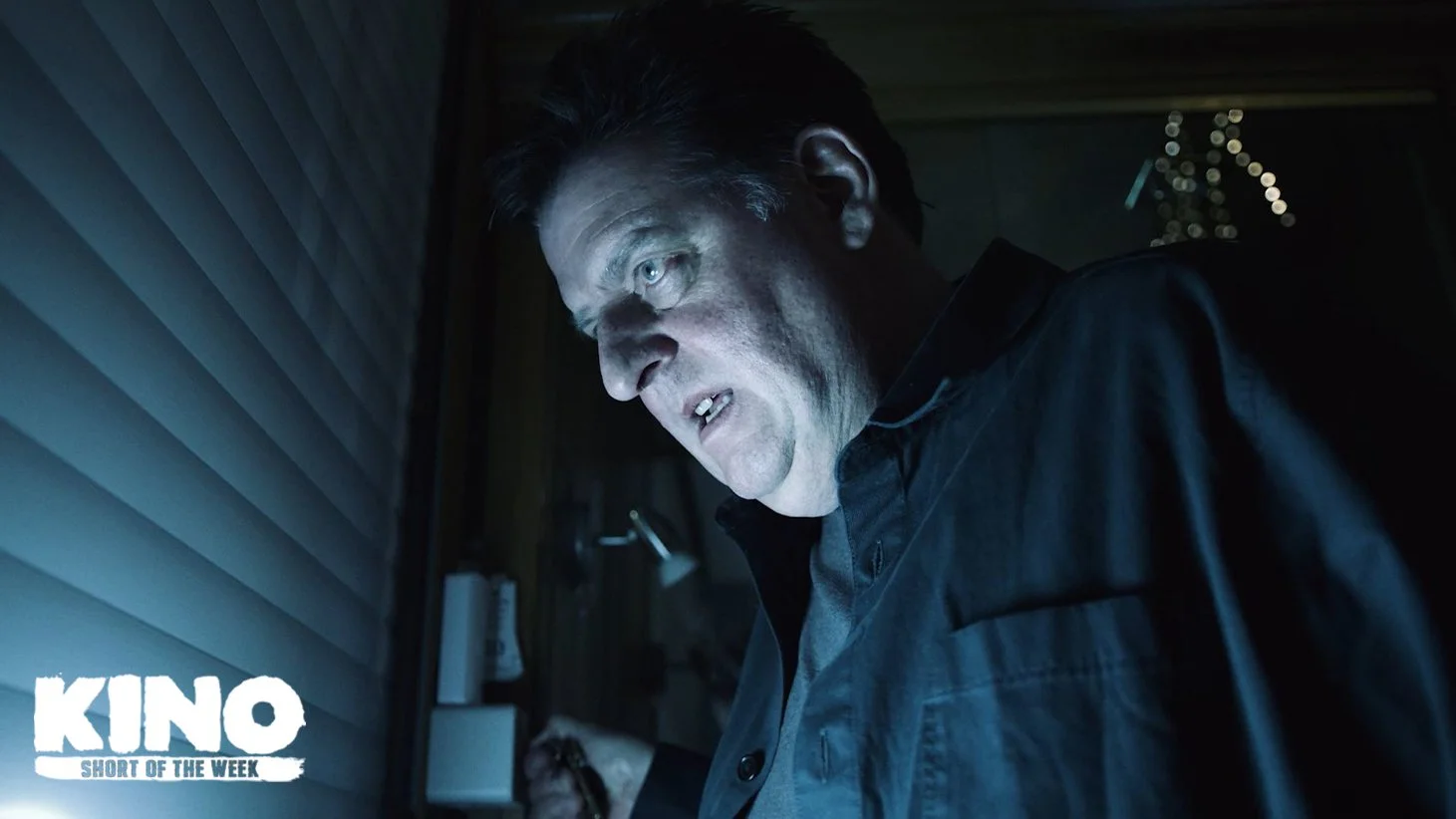
Written & directed by TONY HIPWELL
An antiques dealer gets a lot more than he bargained for when he comes across a cursed object that won’t take no for an answer.
ABOUT THE FILM
Bad Penny was an Official Selection at our BIFA Qualifying Kino London Short Film Festival. Other festival highlights include: Dead Northern, Beeston Film Festival
Panic Fest, Leeds Horror Festival. It won Best Horror Short at the Underground Indie Film Fest and was nominated for Best Actor at the Dark Red Film Festival, as well receiving an Honourable Mention from GASP!
It’s since been released online via Klipist.
ABOUT THE FILMmaker
Tony is a multi-award-winning filmmaker whose work has screened at Academy Award, Canadian Screen Award, BAFTA and BIFA qualifying festivals such as Fantasia, HollyShorts and the Edinburgh Film Festival.
Their debut feature, Whoops! premiered at Raindance 2013 and was the only British film selected for the Raindance Tour 2014. Since then, Tony has developed projects with the BBC and Searchlight Pictures, worked as the Video Producer for Young Thug Records in association with EMI Records and been selected for the inaugural Future of Film and IHS X FEAR incubators.
Tony's most recent projects include the award-winning adaptation of 'Standing Woman' by internationally acclaimed author Yasutaka Tsutsui which was nominated for the Yorkshire Film Award at Leeds International Film Festival 2021 and has since been acquired by ALTER. Their new short, 'The Lure' premiered at FrightFest 2023 and is touring festivals around the world now with sponsorship from CenterFrame.
READ OUR INTERVIEW WITH TONY
Welcome back to our Short of the Week series. What have you been up to since we featured your last short "Standing Woman"?
I’ve been winding down the festival run for Bad Penny and starting the tour for The Lure, my new micro short. We premiered at FrightFest which is always a thrill and it’s had a great response so far which has been really exciting. I also had the pleasure of seeing How To Kill Monsters launch its festival run which I worked on last year with Dark Rift Horror who also just released my low fi horror comedy Zomblogalypse on Blu Ray which is kind of like The Disaster Artist meets One Cut of the Dead.
Can you tell us about the genesis of Bad Penny?
Bad Penny was really borne from two things, a desperate desire to shoot anything after lockdown and lucking into a great location a friend had a small window of access to. I also just wanted to make something really stripped down. Standing Woman took 5 years to make and I wanted something closer to 5 months this time round!
What were some of the main obstacles you experienced when making of Bad Penny and how did you overcome them?
It was the definition of a skeleton crew, I did literally everything except the make up so that was a fun kind of stress – making sure everything was technically sound whilst still trying to actually just direct. We had a really short window of time to shoot so it’s probably the fastest I’ve ever shot something. I did have a DOP lined up to shoot the film but they quite rightly balked at the shooting schedule so I leapt in myself as I knew what I wanted and the cast were all old friends and pros so I knew they could nail what I needed quickly. I think the whole thing was shot in no more than 6-8 hours.
Tell us about the journey of getting Bad Penny to audiences.
It was relatively straightforward but also a bit of a sobering one. The Standing Woman run had given me a great education on what I really wanted out of a festival run and potential end point but BP had a really shaky start. I had the most rejections I’ve ever had up front and for a while I thought I’d fucked up for not making something as ambitious as Standing Woman as a follow up. But then the tide turned and it found an audience. We picked up two BIFA qualifiers and festivals like Dead Northern and Panic Fest so that was a really gratifying reminder that it’s a marathon, not a sprint. Now that the run is over, we’ve premiered with Klipist who we met at KINO last year and have been a great partner for the film. I’m also really excited to have it featured as a short of the week with KINO as that was a highlight of the festival run for the film.
What's next for you?
I’ve got some great new projects lined up for 2024 including a found footage collaboration with the Indie Horror Society, Orillo Films and FEAR as well as a seasonal horror feature with the producers of How To Kill Monsters.
Any film recommendations that we should add to our watchlist?
I saw Godzilla Minus One over Xmas and like most, absolutely adored it so will add to the chorus and give it an atomic breath sized recommendation. I’d also highly recommend The Moor and New Life, two phenomenal low budget horror features I caught on the circuit last year and will hopefully see release this year.
Interested in getting your work selected as Short of the Week?
Snake Dick
Jill's got the snake. Julia's got the flute. Alone, they have nothing. But together, they have a secret weapon to fight the darkness...

Written, Directed & Produced by David Mahmoudieh
Produced by George Lako & Annalea Fiachi
Jill's got the snake. Julia's got the flute. Alone, they have nothing. But together, they have a secret weapon to fight the darkness...
ABOUT THE FILM
Snake Dick won the Audience Award at Dances With Films, Curtas, and the Salem Horror Fest. It also won Best International Short at the South London Film Festival, and Best Short at Monsterfest, Los Angeles Super Shorts, Short Film Factory, Horror Vein, ScreamQueer and Darkveins Horror Fest. It also won two awards for Best Director at the Hallucinea Film Festival and the London Director Awards, plus two awards for Best Cinematography at the British Horror Film Festival and Los Angeles LGBTQ+ Film Festival. It was nominated at at several other festivals with highlights including FilmQuest & Scream Queen Film Festival. Plus it was an Official Selection at many more. Highlight including the Oscar Qualifying HollyShorts, the Venice Film Week, and the Nottingham International Film Festival just to name a few.
After it’s immense festival run, the film was picked up by Alter and released online having since accumulated over 2 million views. The filmmakers are currently in development for a feature length version.
ABOUT THE FILMMAKER
David Mahmoudieh - Born in the UK to an Iranian father and British-French mother, David began his career in commercials and music videos, shooting award-winning work for brands including Google, Lego and Samsung, and artists such as Coldplay, Just Jack and Ringo Starr. He founded and now directs through his production company, Alpha Wolves, with clients including Yahoo, Mercedes and Porsche.
As a writer, David won the ECU Screenwriting Contest with his script Rain, sold his spec The Frail in a competitive bid and was hired by Star Trek creators Roddenberry Entertainment to adapt their graphic novel Worth into a feature.
David's first feature as a "director-for-hire", See You Soon, starred Harvey Keitel and Liam McIntyre, and secured a US theatrical release.
Most recently David has been directing on Warner Bros/The CW's hit show Superman & Lois, and was selected for Sony Television's Diverse Director's Program.
David's Oscar-qualifying short-film Snake Dick won numerous awards on the festivals circuit and has amassed a cult following and millions of views online after going viral. The film is now being developed into a feature.
READ OUR INTERVIEW WITH DAVID
Welcome to our Short of the Week series. Can you tell us a little bit about yourself and your filmmaking background?
I was born and raised in the UK by an Iranian father and British-French mother, and I grew up in a cinema - literally. We had a projectionist in the family and I would go see a movie at the ramshackle theater where they worked pretty much every other night throughout my youth. So I knew early on I wanted to work in film. I started out in commercials, working my way up from a treatment writer to director before starting my own production company, Alpha Wolves, through which I direct most of my branded work these days. I also write, and have been fortunate enough to sell a few scripts and get hired to write a few others. After almost a decade of shooting commercials, which are fun but ultimately a very disposable artform, I decided it was time to start focusing on what made me want to be a director in the first place — film and television. I did one small TV move as a “director-for-hire”, a soccer movie originally intended for Russian television that somehow got a US theatrical release, but I walked away from it with an empty feeling having had no say in the edit. Snake Dick was in large part inspired by that frustration; making something purely for myself as opposed to working to someone else's brief. Most recently I’ve found my way into episodic television, directing on the Warner Bros/CW series Superman & Lois, and was also lucky enough to be selected for Sony Television’s Diverse Director’s Program, so TV is a path I’m pursuing diligently at the moment. But most importantly, I’m an Industry Ambassador for Kids In The Spotlight, a foster kids charity that transforms the lives of foster youth through filmmaking, and I direct a film for them every year written by and co-starring the foster youth who shadow me during the process. Teaching and mentoring is something I love and am hoping to do more of. The last two films I did for the charity were Parallel, a short/PSA about unreported abuses in high schools starring Cory Feldman, and Bully, a coming-of-age drama starring Terry Crews, Ariel Winter, Liam McIntyre and Rodney Jackson Brown, the brilliant foster kid who wrote and starred in the film. That last one will be hitting festivals next year.


Can you tell us about the genesis of Snake Dick and how you came up with the concept?
Drugs... lots of drugs. Just kidding. :)
My main filmmaking influences growing up were John Carpenter, James Cameron, Kathryn Bigelow, David Lynch, Peter Jackson, Wes Craven, Akira Kurosawa, Paul Verhoeven and Steven Spielberg. In other words, a little bit of everything. I knew I wanted to make something that channelled all these influences, and it would need to be weird. But the inspiration hadn’t quite hit yet. Then one day I was having a conversation with my wife (the film’s ever-so-talented costume designer, Susanna Song) about how it’s harder for an armed woman to travel alone in the US than it is for an unarmed man. According to her, that’s because “men are always carrying a weapon between their legs... and its name is Freedom.” While not a revelation to discover I too had a freedom-enabling accessory between my thighs, her statement hit me in a way that I couldn’t stop thinking about it. The other, rather timely factor was this creepy orange dude who, at the time, was somehow president of a country that pioneered women’s rights — all while bragging about his daughter’s breasts and grabbing women by the what-sits. Add in my love of Thelma & Louise, trashy 80’s movies, and — voila! Snake Dick was born.
How did you attach an Executive Producer to the project who also Exec Produced the Oscar nominated Minari?
The wonderful Josh Bachove is, first and foremost, a dear friend. My wife was the Costume Designer on Minari so I got to see Josh at work first-hand and knew I needed a producer of his talents in my corner. I had already shot the film by then but after showing Josh an early cut, he came aboard to shepherd us through post, help navigate our festival run and develop the feature with me. We’re very lucky to have him!
I must also shout out my other producers, George Lako, Annalea Fiachi and Exec Producers Steve Fusci and Fiona Campbell-Westgate, who all brought their own unique skills to the team. I'm super grateful for all of them.

What were some of the main obstacles you experienced when making Snake Dick and how did you overcome them?
The usual headaches: time, budget, resources and, of course, the unexpected. Let’s start with time. This was a one-day shoot. The location was more than half our budget and the availability of our cast meant we could only get them and all the other components we needed together for a single night. Murphy’s Law seemingly loves short-film productions, evidenced by the fact that very night turned out to be the shortest night of the year — effectively giving us roughly 8hrs of darkness to get everything. Thankfully I had a small but perfectly formed crew who were willing to hustle for the cause. Special props goes to our incredible DP, Chris Saul, who was able to light the set in a way that gave our actors some flexibility in the blocking without compromising the very particular look we wanted. Now for the unexpected… we had initially planned on using a real snake, then augmenting it with VFX. A friend of the producer was good enough to bring their pet python to set, but it ended up being too cold in the desert night so the snake had to go home and we shot without a live reference in spite of all our planning. Luckily we had assembled an incredible VFX team, headed by Fiona Campbell-Westgate who at the time was working on Avatar 2. That was both a huge blessing and challenge because, naturally, we had to be patient given her current commitments — especially as she was rendering her awesome skills for the love of it. She brought in VFX artists Stephen Cunnane and Ryan Wieber, who combined to create the snake, and then Chris Wells did the burning cityscape. Due to this being mostly favors — coupled with the onset of the pandemic — it was almost a year from the date we shot the short to having a fully finished version. But that's shorts, I guess.

Tell us about the journey of getting your film to audiences. Festival Circuit vs Online Release with Alter, the highs and lows of both.
Well, as we completed our film in the height of Covid, our first festival was supposed to be Fantastic Fest… until it got cancelled. After that we had to decide whether to wait until the following year and try for Sundance (the following January), or accept the invites we had from a few other festivals we loved. At the time no one knew how long the pandemic was going to last and whether other festivals would cancel too, so we took the offer to do a “virtual premiere” at Warsaw International Film Festival, and we’ve played at over 80 festivals since. One of those was HollyShorts, where the film was scouted by Alter. Amazingly, we were on the festival circuit for a whole year before we got to see the film in a physical theater. That honor went to Dances With Films, where we played in the Midnight Block and went on to win the Audience Award. That was definitely a high, seeing the film in LA, in a packed house at the Chinese Theatre where I had attended my first ever screening in the US. We also recently got invited by Clermont-Ferrand Film Festival in France to be part of a special screening called Bloody Girls on Friday 9 February at 9.30pm in their main Cocteau theater (1,300 seats!) so that will be a nice way to close out our festival run for the short.

What advice or hacks would you give to other short filmmakers?
Work within your resources. So many of my friends or other filmmakers who reach out for advice send me their 30 page script with 20 locations and 10 characters. By all means, if the story calls for it and you have the resources to pull it off, go for it. But if not, figure out what you can get your hands on and build your story around that. A short is ultimately a means to an end, so start with your means. Sure, there are exceptions, but the most important thing is that your short is well-executed. It needs to look and sound amazing, and it needs to have engaging performances. If it doesn’t, it’s going to be very hard to stand out amongst the ever-growing number of high-profile shorts being made each year. This is especially true for US-based filmmakers, as we don’t have access to government-funded film funds or nationalized programs like most of Europe and the UK. For us we either have to self-fund it or find private investment. So figure out what you want to say, then — before you do anything — figure out what you can realistically gather to say it. In my experience, short filmmaking is making the dream and reality meet somewhere in the middle, and turning that crossing-point into something more magical than its compromises. I always say it’s better to do a simple idea greatly than a great idea simply. At least that's been my experience.


What do you think is the biggest challenge short filmmakers face trying to break into the industry?
Breaking into any industry that’s already over-saturated is tough, but it’s also an opportunity to stand out from the norms. The advice I always give everyone is make the movie you’ve always wanted to see. Don’t chase trends, like making a horror movie because you think it’ll be "easier" to sell or turn into a feature. Make a horror movie because you love horror or that particular idea. The only way anything is going to turn out great is if you love it, so start there and the rest follows. The best advice I ever received in life was “Don’t chase carrots, just be a good rabbit.” In other words, focus on creating good stuff, on constantly improving your craft, and in time the carrots will come to you.


You're developing Snake Dick into a feature. How's that going?
Still going! I just got done with the feature script, which took a while as there’s a world-building component to it with potentials for sequels, etc, and I wanted it to be super tight. I also recently become a father to a beautiful baby daughter and, knowing she was on the way, was curious how that experience might affect my approach to the material. That may sound strange, but given the subject matter I had a feeling fatherhood would give me a new and better-informed perspective with a little girl in my life. Sure enough, her being in the world definitely altered my outlook on a few things and sharpened my focus on others — especially knowing she would one day likely watch the film. Now the script is complete and the strike is over, I’m excited to get it out there…
Any film recommendations that we should add to our watchlist?
Kelsey Bollig's upcoming short Inked is incredible and is going to clean up on the horror festivals circuit. Eric Palperth’s and Tyler March’s animated short Sucks To Be The Moon is a barrel of laughs and creativity. Matthew Berg’s Marked is a brilliant example of the “two-person-in-a-room” short done to perfection. Also, everyone needs to see my good friend Graham Denman’s micro-budget feature, Greenlight, which he made for a measly 50k! Easily the best feature film of its kind at that budget-level. And finally, I need to recommend the 2001 feature, Intacto, starring the late great Max Von Sydow. Barely anyone I know has seen it, which is a travesty as it’s one of the best and most original films of the early 2000's.
Apply to get your short selected as our Weekly Pick
The Foul
When a litterer doesn't pick up after his dog, he's taught a valuable lesson from a giant poo.
Written, directed, PRODUCED & starring James Button
When a litterer doesn't pick up after his dog, he's taught a valuable lesson from a giant poo. This short horror comedy was commissioned as a public information corporate video (but was deemed too gross by the council!)
ABOUT THE FILM
The Foul started off as a commission from a council for a PSA about picking up after your dog. What was supposed to be interviews about picking up dog poo, turned into filmmaker James Button dressing as a giant poo. He delivered a short film deemed “too disgusting!” for his client, however, not many BAFTA/BIFA and world renowned festivals didn’t feel the same way.
The film played at over 30 festivals, including our Kino London Short Film Festival. Other festival highlights include BAFTA/BIFA qualifiers such as the London Short Film Festival, Aesthetica Film Festival, Carmarthen Bay Film Festival, Short Com International Comedy Film Festival, and Norwich Film Festival. International festival highlights include FilmQuest, Screamfest® Horror Film Festival, MotelX Lisbon International Horror Film Festival, Santa Fe International Film Festival, Monster Fest, Rome International Film Festival, Atlanta Horror Film Festival.
It was nominated for 'Best Costume Design', 'Best Welsh Short Film' at the 2021 British Short Film Awards, and won Best Monster Short Film at the Adbhooture Film Festival 2021, Best Editing & Best Special Make-up at the Indie Short Fest, Best Costume at the Horror Film Award New York, and Best Dark Comedy Short at IndieX Film Fest.
ABOUT THE FILMmaker
James Button is a double BAFTA Cymru-nominated writer/director of 23 short films, all gaining official selections and screenings. Mostly comedies, they've nabbed 60 awards at international film festivals and competitions. James has had fun making fun films for fun for the past 10 years alongside working full-time in commercial work. In 2024, Jame is focussing on longer-form projects with two comedy feature scripts in development- and a brand new comedy short in post-production.
READ OUR INTERVIEW WITH JAMES
Welcome back to our Short of the Week series. What have you been up to since we featured your last short "RoButler”?
Hehe! No good at all. I literally just got back from another (mad) comedy horror short film shoot that my friend Paul Marke (always typo-ed to Pual*) cooked up over the past few months! Mainly out of the frustration of a year of trying to get funding for a level-up project and that build of a creative juices had to go somewhere, otherwise I’d go crazy…so we made a crazy new film as a cure. Can’t reveal much about it just yet as it is a spoiler-centric title but will be releasing a teaser in the very near future so look out for that…it’s going to make The Foul look tame. Also have a few short scripts on the boil which I hope to continue to hunt for some funding for because they are too fun not to make.
Can you tell us about the genesis of The Foul?
To an extent I can! But won’t name any names! As it is a bit of a funny story… It started off as a commission from a council (tragically the first job that came my way after lockdown!) and it was to try to encourage people to pick up after their dogs. Was supposed to be interviews about how gross dog poo is but instead I risked pitching me making a ‘memorable’ comedy horror instead. After some convincing…I put 100% of the budget into getting a poo costume for myself created. I found an incredible talented SFX master called Jayne Hyman who created something beyond my wildest dreams…or nightmares. Just a few (skilled!) friends of mine then came together and blasted this film out in a few fun days…only for the client to deem it “too disgusting!”. But obviously I knew this was too important a message to keep on a hard-drive so nobly sent it out to film festivals to get the word out there instead. Ended up traveling to MotelX in Portugal, FilmQuest in Utah and a whole bunch of other surprisingly forgiving film festivals who literally screened dog shit. So yeah, pick up after your dogs…or else.
Any interesting/funny stories about filming in public dressed as a giant poo?
So…we filmed in three locations. The first was an alley not to far from my mum’s house (a notorious spot for fouling)- and right next to a wall where a resident had graffitied his own wall saying: “if you don’t pick up after your dog you twats I will fucking kill you”. Which seemed rather apt. This slightly scary individual came out during the shoot (I was doing a lot of screeching after all) but surprisingly instead of killing what was surely(?) the largest poo he’d ever seen, approved of our endeavors. Phew. So after giving us a rant (which we should have recorded), let us get back to it. The second location was my sister’s street, where she had JUST bought her house…and I ended up meeting all her (concerned) neighbours before she did. “Hi there, I’m Laura’s brother. Just making a film for the council. Sorry about the noise!”. Then the third location was a random airbnb we chose for the nice decor for the nightmare scene where Arran Fear (perfect name for the role) wakes up in a bed of shit. To this day I still pray that the lovely AirBnb host never comes across the film and recognises his lovely bed and whatever that concoction was we filled it with (can’t for the live of me remember…but seem to remember the smell of coffee, beans, carrots and syrup?). I’m sure he’ll understand we had to do what we had to do…for the message.
What were some of the main obstacles you experienced when making of The Foul and how did you overcome them?
To be honest, it was a load of fun. I think the costume struggled in thirty degree heat (of course it was the bloody hottest day of the year!), let alone me inside it…but found going method was the key there! The dripping and splashing you can see in the film coming of the glistening costume is assumed to be SFX, but can proudly say that is all me. I’ve NEVER sweat so much in my life. Jayne not only did an excellent job re-sticking the poo face prosthetics to my face but kind enough to regularly drain me. Literally cutting a little hole in my flapping hand parts and emptying it like a lil hose. Nasty. But I think the dehydration, migraine and whatever else was going on, definitely only helped my performance. The only other obstacle really was the client…as I was aware that they might not give final sign off unless we included all the key bullet points in their brief e.g. the maximum amount you can be fined in the magistrate’s court etc., so made sure to slip these in amongst the improv and manic laughter.
Tell us about the journey of getting The Foul to audiences, and what kind of reactions you got.
I still love the sound of the audiences cry out (must have attended like 10+ screenings) when that bed sheet is thrown back! I always whip out my phone because it doesn’t seem to fail to get a visceral reaction from a cinema of unsuspecting gentlefolk. However can’t claim that as good filmmaking, it’s literally just a natural reaction to a bed full of poo. But it still makes me giggle (as it did my character). So the journey from the originally intended public information film which might have gotten a few dozen views on Facebook to the accidentally commissioned horror comedy short which has now been seen at some prestigious film festivals has been quite a nice turn of events. But to be honest I think it is all worth it to be told by people (I’ve lost count) that they think of my face every time their dog does a shit.
What do you think is the biggest challenge short filmmakers face trying to break into the industry?
Oof. I won’t go off on one but I think film funding is notoriously difficult to get! Applying and forms (and all that nonsense) It is such a different skill that us creatives have to somehow learn and even then, have to just get super lucky etc. Not ever having had a decent budget (and not even knowing anyone rich and generous!) I can’t help but feel a chasm between what we’ve managed to do as a small group of creative friends dying to make more and what we could be doing if someone took a risk in one of our bonkers scripts. I think making the jump todebut feature (MY DREAM) is therefore even scarier because I’ve been guilty of exhausting myself and pushing to get ambitious small scale projects made but know that a feature is a whole different thing…it is much longer for one! But I think it is still all about still making weekend project and whatever else to keep the dream alive and the juices flowing because it can be really easy to give up hope so it’s important to remind yourself how much you love it.
What next for you?
I’m stupidly excited to have left a shoot last week with a full harddrive of bants to get editing. The bruises and aches haven’t healed yet but can’t resist diving into the edit because it was truly a fun one. (Paul and I thought, if we’re going to make something ourselves, we might as well make something no one would ever give us funding for and have some fun doing it!). So that will tide me over for now, sanity-wise. But I’ve got a fancy new comedy script, a next level one (meaning, I’m not risking me in it!) which I’m going to be seeking funding because it could just be the flagship short film I’ve been needing to showcase what we can do! RoButler and The Foul to me will always be 48 hour projects capped by film challenge restrictions (or client briefs!) so am so eager to get out there and pour some creative energy into a calling card bant.
Any film recommendations that we should add to our watchlist?
I may have copped out last time on this question when I did the RoButler interview…but here I go again because it is worth repeating… Go to film festivals! Attend as many screenings as you can, bombard your eyes with short films great and small…and soak in all that work and inspiration. Then chat about what you saw, go into detail with (trusted) friends and collaborators. What would you do different? Which ones do you wish you had made? And what went wrong with that one? (Probably too long…that is usually the answer with short films…hehe). But yeah then dive into the next festival…or Kino Open Mic night (I’m not flirting I promise). I definitely learnt more about filmmaking from the shorts I’ve binged at festivals than 3 years at ‘film school’- plus even more so from the filmmakers (now collaborators/friends!) who made them! However one word of warning…be careful at film festivals about just how honest you are! Because although honesty is always the best policy, I will never leave a cinema shouting about which ones were “nonsense” because once I was lucky enough to screen a comedy film where I play a dinosaur as a warm-up for Jurassic Park at a open-air cinema…and when my silly lil short started and there I was naked and painted green, bouncing around like a bald raptor- a complete randomer turned to me (obviously not recognising me) out of the thousands of people there and went, “what the hell is this shit?!”. To which I obviously found hilarious and said, “pff, definitely not Spielberg, that’s for sure”. But does go to show that you never know who you’re turning to at a screening! Link to that film can be found on my website jamesbuttonfilms.com along with my full portfolio (the short film I mean, not Jurassic Park). Sorry for the shameless plug. Never sure how to sign off on these things! X (Thank you Dustin- keep doing what you’re doing please and promotion us silly little filmmakers who just wanna take play seriously and call it work)
Interested in getting your work selected as Short of the Week?

Kino Short of the Week - Best of 2023
That’s a wrap on our Short of the Week series for 2023. If you’re looking for indie alternatives to add to your holiday watchlist, why not dip into our archives?
In 2023 we featured 43 films in our Kino Short of the Week series. Selections were of all genres ranging from horror to drama, from fashion to animation, and more.
As always, we featured films on a non-exclusive basis helping to support releases from Omeleto, Alter, Directors Notes, Straight 8, Vimeo Staff Pick and Dust, as well as supporting those filmmakers who chose to self-distribute on their own channels. BUT… this year we started taking our own YouTube channel more seriously. Ten of the 43 films were distributed directly by us. Our YouTube channel received 44.8k views with our most popular release “Influencia” Written & Directed by Ryan Rosenheim & Patrick De Vinck receiving over 30k views.
Three of the 43 film featured were Kino Originals, so even though we love them and the filmmakers who made them, it does feel a bit like patting our own back to include them in our Top 10, so only the remaining 40 films were eligible for our Top 10.
BUT… if you’d like to watch (or rewatch) our Kino Originals we figured we’d add them below.
Thanks to our Sponsor
who will be providing the top 5 filmmakers on this list with a FREE copy of Final Draft
Kino Originals
MAMA’S WATCHING

DO NOT TOUCH

HIDDEN INSIGHT

and now for our top 10

10. Shallow
Directed & Produced by PAUL ASHTON
Written by JOE JOHNSEY
Deep in a forest, Barry and Larry indulge in conversation that is by turns light-hearted and extremely topical, revealing surprising revelations, both good and bad, along the way.

9. RoButler
Written & Directed by JAMES BUTTON
Overworked in the email department at the a local Welsh council, Cwnt Jones purchases a personalised AI assistant in order to help make his life better- the RoButler.

8. Blinkers
Written & Directed by SOPHIA CAPASSO
This short film is about the cracks we don't see splitting in the rollercoaster of modern life and how two experiences of one night can be drastically dissimilar. Blinkers touches on the complexity of mental health and female friendships.

7. Fishwife
Written, Produced, & Directed by BETH PARK
In wild 18th century Britain a lonely woman discovers that her menstrual cycle is of interest to a stranger.

6. Influencia
Written & Directed by RYAN ROSENHEIM & PATRICK DE VINCK
A despondent young influencer wakes up on the beach hungover. As he readies himself for the day, more and more of his poverty is revealed. Mourning the loss of his mother, Cesar drinks himself into a stupor, listening to his mother’s old voicemail on repeat. After sobering up enough, Cesar sneaks onto a wealthy Malibu property to film a video with a Lamborghini.

5. The Fool’s Mate
Written & Directed by CIAN LLEWELLYN
Produced by JACK POLLINGTON
A couple’s relationship is at a cross roads - as he attempts to break up, she thinks he’s about to propose. But will an impromptu chess game finally force the truth to come out?

4. No Filter
Written & Directed by NATHAN CROOKER
Prduced by MAYA KORN & NATHAN CROOKER
Insecure twenty-something Beth struggles with her digital self-image until her friend Micah introduces her to a transformative filter. The digital magic boosts her online presence and attracts new admirers, but the allure comes with a dark and insidious price.

3. Other Half
Directed by LINA KALCHEVA, Written by LAURA JAYNE TUNBRIDGE, and Produced by MICHELLE BRØNDUM
As an Individual Being in a world comprised of Merged Couples, Ren longs to find his other half and become complete.

2. Crumbs
Directed by ROBOT CHOCOLATE (GABRIELA PLAČKOVÁ, ROBERT HLOZ)
Produced by ALEXANDRA KARA MORAVČÍKOVÁ
Tired of her husband’s noisy and messy eating, a wife starts a stop-motion battle and packs her bags. CRUMBS was made entirely in-camera for Straight 8's 2020 competition on one cartridge of super 8mm film with no post-production. Find out more about their unique filmmaking process in our interview below..

1. Portrait
Directed by KEIR SIEWERT
Produced by ALIX AUSTIN
Written by KEIR SIEWERT & ANONYMOUS
Based on real accounts, a model takes matters into her own hands to expose a serial predator in the photography world.
Honourable Mentions
Even though these films didn’t make our Top 10 we still think they’re pretty great and well worth a watch.
Oluwale

Out of Orbit

Submit to our Short of the Week series to be considered for our 2024 season

Where The Dog Is Buried
After a man accidentally runs over a dog, he and his wife argue over how to hide it from their violent neighbor and whether they’re fit to raise a family.
WRITTEN & DIRECTED BY Santiago Bukovsky
produced by BRANDON BREFKA, Santiago Bukovsky & MARISSA CLEMENT
After Kaleb backs over a dog in the driveway, his wife Megan discovers it belongs to Eddie, their biker gang neighbor across the street. Anxious about their upcoming housewarming, Megan convinces Kaleb to hide the body in the backyard. Through the ordeal, they delve into the issues of their relationship including their willingness (or lack thereof) to raise children. All the while, Eddie draws closer having discovered his dog has gone missing.
ABOUT THE FILM
Where The Dog Is Buried won the Audience Choice Award at the 2023 "Cans" Film Festival, Grand Rapids, MI.
ABOUT THE FILMmaker
Santiago Bukovsky is a Mexican American filmmaker drawing inspiration from the oral storytelling traditions within his family and the magical realism of Mexican cinema. He is the founder of Wild Duck Films and is represented by Phoenix Films for commercial production. Raised in a low-income family in rural Oregon, he did not have access to formal training in filmmaking, instead embracing a self-taught approach. This unique path shaped his storytelling, emphasizing the raw, unpolished aspects of the human experience. After completing an undergraduate degree in chemistry, Santiago fully embraced his passion for filmmaking. But as a Mexican American filmmaker, he recognized the lack of accessible role models in the industry. These early career experiences fueled a desire to educate and support others interested in entering the film industry, making it a point to create a welcoming environment for other aspiring filmmakers. His commercial work has been featured on Ads of the World, part of the Clio Network, and his short film screenplay "Where the Dog is Buried" was named a semi-finalist in the 2019 Screencraft Short Screenplay Competition. The dark comedy film is currently entering its festival run and stars Elizabeth McLaughlin (Hand of God; the Clique) and Jordan Fry (Charlie and the Chocolate Factory; Meet the Robinsons).
READ OUR INTERVIEW WITH Santiago
Welcome to our Short of the Week series! Can you tell us a little bit about yourself and your filmmaking background?
Absolutely and thank you so much for having me and my film as part of Kino’s Short of the Week! My name is Santiago Bukovsky and I'm an independent film director living in Michigan. I’m an experienced assistant director, as well as a director of narrative films, commercials and music videos. My film background is completely self-taught, I learned everything I know from YouTube tutorials and a lot of different movies in order to piece my skills together. For a couple of years, I worked on small films by myself before eventually finding a filmmaking community out here in Michigan, where I've been able to collaborate with other artists on a variety of independent shorts and feature films.
Can you tell us about the genesis of where the dog is buried and how you came up with the idea?
Oh yeah! “Where the Dog is Buried,” had a really interesting start. I initially had the idea for a story where a couple's relationship falls apart after the death of a dog because I noticed some friends on my social media had, in fact, broken up after the death of a pet. There's no way of knowing what actually caused the break up but it seemed like a really interesting premise full of dramatic tension.
I was in my twenties and feeling a lot of anxiety about growing up and settling down so I wanted to explore that a bit further and create a story where the death of a pet causes a couple to confront their feelings about each other they may have been holding back. From there I sprinkled in dark comedy and a little bit of satire, poking fun at suburban living in order to keep things lighter and a bit more fun and entertaining. The end result was this dark comedy set in the suburbs.
What were some of the main obstacles you experienced when making where the dog is buried and how did you overcome them?
There were so many pieces when it came to making “Where the Dog is Buried.” But the biggest one had to be funding. This was a script that I had been working on for a while. I had actually shelved it in order to make other short film projects and work on projects in the community. And I knew that I wanted to do something really big with it. I wanted it to serve as my calling card, as my directorial voice for filmmaking.
So a big obstacle for that would be having the finances readily available in order to bring on the cast and crew that I wanted and to have the gear that we needed for the shots that I had envisioned for this piece. I was very fortunate that during that time the project was shelved, I was able to set aside a good amount of money from my own personal savings. And then we were able to come up with the rest of the budget for the film through the use of crowdfunding, through Seed and Spark, which I cannot say enough good things about. The good news is by the time it came to film, if a neighbor was out mowing their lawn, we could slip them some cash to hold off for a couple of hours. And we did, haha.


Tell us about the journey of getting your film to audiences.
The journey of getting “Where the Dog is Buried” to audiences has been an exciting one and something that I'm learning more and more about every day. We've submitted the film to festivals and have had mixed results.
We were rejected from the top tier festivals (but you have to try!) and we're hoping to make headway with some of the smaller regional festivals because it would be really great to take this film to live audiences.
I think playing live is really an exciting opportunity for filmmakers, but what cannot be overlooked is the importance of building an online community and getting the film out to audiences that way. Once we cleared festivals that had premiere requirements, I made the decision to release “Where the Dog is Buried” on YouTube, where it just crossed 900 views after being out for only about a week.
So it's been really exciting to see the response online and to see that the reach has been just about as good as you would hope from festivals.
What advice or hacks would you give to other short filmmakers?
There's so many elements when it comes to filmmaking that it's hard to pick just one piece of advice. But something that I’ve learned about is start thinking about your audience and your release early, the earlier, the better. If you can start building an audience for the short film as you're writing it, as you're taking it through pre-production, as you're filming it and editing it, you can bring people along on that process, get them excited about it, and then have a built in audience when it's ready to be released, most likely in an online space.
What do you think is the biggest challenge short filmmakers face trying to bring into the industry?
I'll speak from my own experience and say that the biggest challenge so far has been trying to get eyes on your work. There's so much good content out there right now that it can be really difficult to have people watch something that you have worked on, even if it is of good quality. That's kind of the bare minimum that audiences expect.
You know, short films used to serve as a calling card that would then springboard filmmakers into feature films. And that can still be the case. But I don't think it's as common these days.
So I really think that building a brand around your filmmaking, your aesthetic, your journey and building an audience around yourself, an audience that is excited to hear updates from you and see your work is a really great way to go these days.
What is next for you?
I'm currently working in post-production on a feature length film that I directed over the fall. It's titled “American Swelling,” and it's a crime family drama about estranged siblings who are forced to reunite after the younger brother gets a concussion in a home burglary.
It's a really unique piece because we filmed it in one location and we filmed it in a series of very long, unbroken takes that are going to be stitched together. Very similar to one of my favorite films, Birdman.
So I'm in post-production on that, and I'm also currently working on writing the feature length version of “Where the Dog is Buried.” I'm excited to take that story in new directions as it expands to a longer form.
Are there any film recommendations that we should add to our watch list?
I'm trying to think if there are any hidden gems out there that I might know of, but I'll just have to go with my favorite movie for the time being, which is “Little Miss Sunshine.” I love how it blends drama and comedy with a dysfunctional family environment. That's one of my favorite genres of movie and it's one of my favorite movies of all time.
I would also recommend the early works and Martin McDonagh. So if you haven't seen “In Bruges” or “Seven Psychopaths,” those are hilarious dark comedies that are a lot of fun and they had a big influence on “Where the Dog is Buried” at the same time.
Interested in getting your work selected as Short of the Week?

Hundreds & Thousands
One scorching hot summer, two misfits come up with a get-rich-quick scheme: illegally selling ice cream out of their car.

Written, PRODUCED, & directed by Rhys Aaron Lewis
One scorching hot summer, two misfits come up with a get-rich-quick scheme: illegally selling ice cream out of their car.
ABOUT THE FILM
Hundreds & Thousands was the winner of the night at Raindance’s Open Screen event. It also screened at OnlyinPeckhamplex short film night, the Stockholm City Film Festival and the Greenwich Film Festival.
ABOUT THE FILMmakerS
Rhys Aaron Lewis is a writer-director from London working across both documentary and fiction. His past work has been supported by the BFI, BBC, The Guardian and most recently, Amazon Prime. His films have screened at several BAFTA qualifying festivals such as Aesthetica, Bolton and SOUL Fest as well as appearing online on popular short film platforms such as Omeleto.
READ OUR INTERVIEW WITH RHYS
Welcome to our Short of the Week series. Can you tell us a little bit about yourself and your filmmaking background?
My career started as a documentary filmmaker. I always planned to eventually make fiction, but documentaries seemed like the easiest way to start making films, as all I needed was a camera. I began making a bunch of shorts (that no one will ever see) and eventually was awarded a grant by BFI Doc Society to make a short documentary. That was really my entry to the film industry (the process of making that film felt like doing a year of film school) and the experience gave me the confidence to start self-producing a series of comedy shorts. Each project has really led to the next and it’s been a bit of a snowball effect.
Can you tell us about the genesis of Hundreds & Thousands and how you came to be attached to the project?
I wish there was a deep reason why I made this film but it actually had a really simple genesis. About a month before we made the film I was shadowing on a film shoot where I met the DP, India Opzoomer, who was shooting the project. We really got along and decided to meet up again to talk film. We wanted to work together but she was heading back to film school in the USA like ten days after our meeting. So we knew that if we wanted to make something it’d have to be something super short, super cheap and super simple. So we decided that we would shoot everything in a car, using natural light. It was a really, really hot summer so I thought it would be funny to shoot in an ice cream van - but that would’ve been too expensive. So I thought if I can’t shoot in an ice cream van, then I would just make the story about two guys selling ice cream from their car. So the story emerged really organically from this desire to make something with the DP as quickly as possible!
What were some of the main obstacles you experienced when making of Hundreds & Thousands and how did you overcome them?
I wrote the script in a few hours on a Sunday morning and immediately sent it to India so that she could prep for the shoot three days later (the only day that week we were both free). I called up Maayan, who plays Alcia, an actor I’d wanted to work with for ages who was fortunately free on the shoot day. I found Naweed (who plays Matteo) online and fortunately he was free too. The only problem was that they were free at different times of the day with only a short overlap where they’d both be available. So we had to shoot everything really quickly. I spent like £20 on Fabs and ice lollies for the shoot. Maayan ate about ten Fabs during the shoot before she told me that she’s vegan - woops. I had an actor in mind to play the traffic warden but he couldn’t make it as it was too last minute. So I decided to play the part. So this is technically my acting debut haha
Tell us about the journey of getting your film to audiences.
The film sat on my hard drive for a long time because I initially thought I’d just use it as a proof of concept and as I shot it so cheaply I didn’t want to spend loads on festivals. Eventually I submitted it to a short film night organised by Raindance Film Festival. I wasn’t really sure what to expect as no one had seen the film yet, but we ended up winning Best Film that night! After I saw how much people loved the film I was encouraged to start sending it off to more festivals so that more people could see it.
What advice or hacks would you give to other short filmmakers?
Film festivals are really expensive and if you’re anything like me you’ll get rejected from A LOT of the ones you submit to. It took me a while to realise that sometimes it’s better to immediately release the film online (especially if you do so on a platform with a lot of subscribers). Not every film is a “festival film” but that doesn’t mean it’s not a “good film” and that it won’t find an audience.
What do you think is the biggest challenge short filmmakers face trying to break into theindustry?
Finding funding for projects is probably the number 1 challenge in my opinion.
What's next for you?
I have a bunch of projects in the pipeline. I just finished working on my biggest short yet, which I’m really excited about. I’m also writing my first feature.
Any film recommendations that we should add to our watchlist?
I wanna recommend a short film that’s probably one of my favourite films (short or feature length) of the past few years. Fauve by Jeremy Comte. It's a popular one (it was nominated for an Oscar) and I know a lot of filmmakers have watched it but I’d say it's really the film that showed me that a short can really be a work of art in and of itself. It's genius and I think it fits the short film format perfectly.
Interested in getting your work selected as Short of the Week?

Venus Again
After suffering a deep and painful heartbreak, a lost woman embarks on a ritualistic journey to rediscover herself.

DIRECTED BY SULIN HASSO | Written by JESSICA BALMER
produced by JOSEPH HOBBS & SULIN HASSO
After suffering a deep and painful heartbreak, a lost woman embarks on a ritualistic journey to rediscover herself.
ABOUT THE FILM
Venus Again was selected for the Lift-Off Global Sessions 2023, in the First-Time Filmmaker category where it went on to be voted top 10 out of 100 films, and it is a finalist in the European Cinematography Awards.
ABOUT THE FILMmaker
Sulin is a British Iraqi-Kurdish Actor/Writer and Director. As an Actor, Sulin has worked across theatre and tv. Her first narrative short film, which she wrote and starred in, The Yellow Wallpaper, premiered at Underwire Film Festival where she was nominated for Best Screenwriter. Venus Again is Sulin's first directorial piece.
READ OUR INTERVIEW WITH SULIN
Welcome to our Short of the Week series. Can you tell us a little bit about yourself and your filmmaking background?
My name is Sulin, I started off in this industry as an Actor, working in theatre and screen. Slowly I have been developing an itch to tell my own stories and I am making an effort to move into directing. My first short film that I wrote, The Yellow Wallpaper- which ended up being funded by Genera, got into Underwire Film Festival, where I was nominated for Best Screenwriter. Venus Again is my first ever directorial piece and I hope more opportunities to direct come my way!
Can you tell us about the genesis of Venus Again and how you came to be attached to the project?
So Venus Again, I guess started as a little bit of an experiment for myself. At this point, I had an inkling that I wanted to start directing, however I had no prior experience/knowledge on whether directing was something that I would enjoy or be good at. So I wanted to focus on doing a very short film, ideally a poetry piece, just to see (without putting immense pressure on myself) whether it would be something I would want to persue. I approached Jessica Balmer, who is a dear friend of mine and a brilliant poet and actor, and I essentially asked whether she would be willing to collaborate on turning one of her poems into a short film- thankfully she said yes, we then developed the script together- and the piece took off from there.
What were some of the main obstacles you experienced when making of Venus Again and how did you overcome them?
The two main obstacles that stick out to me were location and the hero shot with the flowers. In regards to location, because most of the film takes place in a bath tub, we had real difficulty in finding locations where the bathroom was simply big enough for us to be able to do the shots that we wanted. I ended up spending hours on websites like Airbnb, just sifting through houses all over London, with a reasonable budget. Finally, we found this location, where the bathtub is actually in the very same bedroom, where Jess is sat at the mirror. This was ideal because the film was nearly completely contained in that single room- I am very grateful to the owners of the property who allowed us to film in their home. Secondly, for the shot where we reveal Jess in the bath tub covered in flowers, we planned on having the camera on a close up on Jess's eyes as she opens them and then for the camera to pull upward in a single shot to reveal her in the bath with flowers all over. In the end we couldn't execute this because of the lack of space in the room, to be able to centre the camera and then to be able to get the camera high enough to reveal the full bath. Luckily my DOP, Joseph Hobbs, came to recce the room and pointed this out to me from the start. So I went in with a Plan B, that if we couldn't get that shot. We would get a close up of her eyes opening and then jump cut to a wider frame of her surrounded by the flowers. Which ultimately was the route we had to go down.
Tell us about the journey of getting your film to audiences.
We wanted to keep the release of the film fairly simple- Jess and I discussed entering it into some film festivals, but we were careful about the festivals, as most do not allow your film to be online whilst it's doing the festival run. Our aim was never getting the film into festivals, but more getting the film out to an online audience. So we set up a plan of posting the film on Instagram, Vimeo and reaching out to online platforms to see if they would take the film on.
What advice or hacks would you give to other short filmmakers?
For me, the best advice I can give is to surround yourself with people who have more experience than you and are willing to collaborate with you. I think viewing short films as a collaborative process, elevated my own knowledge and understanding of what goes into making a film. Each film that you make needs to be a learning curve, so surround yourself with people who you can learn from and who can push you into being a better filmmaker.
What do you think is the biggest challenge short filmmakers face trying to break into the industry?
The biggest challenge is accessibility and finances, which I think go hand in hand. There are not nearly enough opportunities for those who cannot afford to go to film school, or whom cannot finance their own films, to create shorts and develop their own voices and talents as filmmakers. Of the short film funds that are available, the competition is fierce and certain funds have specific genres and narrative styles that they favour over others. I have also noticed that a lot of courses and fellowships are within a specific age group, which is great- however alienates early career filmmakers who have chosen this path later on in life or who simply did not know that these existed, because the idea of being a filmmaker was never accessible in the first place.
What's next for you?
I have a short film that I have written and will be directing, called Dayke (which translates to Mum in Kurdish). I am currently in the long and very difficult process of finding funding for it- however I have a great team with me so hopefully we can get the ball rolling on this project soon!
Any film recommendations that we should add to our watchlist?
There are two films that I love, the first- which has been a recent watch is Limbo; the performances, story and visual language of the film is exactly up my street and falls within the space of films that I would love to create. The second, is a beautiful film called Half-Moon by Bahman Ghobadi- no matter how many times I watch this film it always takes my breath away.
Interested in getting your work selected as Short of the Week?

The Forfeit
When a working-class woman is thrown into her wealthy boyfriend’s eccentric family Christmas game, she begins to uncover a dark secret in the family’s past.
Written & directed by Josie Charles and Phoebe Brooks
Produced by Lily Donnelly and Amy George
A young working-class Welsh woman meets her wealthy English boyfriend’s eccentric family for the first time on Christmas Eve.
She’s thrown straight into the family’s traditional Christmas game, and struggles to keep up with its in-jokes and strange rules. But as she improves, she begins to uncover a dark secret in the family’s past.
ABOUT THE FILM
The Forfeit won Best Screenplay and Best Score at our film festival earlier this year, as well as being nominated for Best Director, Best Cinematography, and in the Best Sponsored Short category. Other notable awards are winning Best Director (Thriller) at the London Director Awards 2023 and Best UK-Made Short at The Gogs International Short Film Festival. The film was recognised as a finalist at the 2022 British Short Film Awards in the categories of Best Director, Best Production Design, and Best Sound Design. It also received praise and nominations from London Film Week, Underwire Festival, the BIFA qualifying Beeston Film Festival and Scream Queen Film Festival. Notable festivals selections include British Shorts Berlin 2023, Final Girls Berlin Film Festival, Brighton Rocks Film Festival 2023, Bute Street Film Festival, and more.
The film was recently release on Omeleto - a direct result of their screeners seeing the film as our festival.
ABOUT THE FILMmakerS
Josie is a director from Somerset, now based in London. Her previous shorts have screened at festivals including Underwire, London Film Week & Bolton Film Festival. In 2023 she was selected for the Directors UK ‘Inspire’ scheme, to be mentored by BAFTA-winning director Tom George. Her most recent short ‘Dead Cat Film’ features Hugh Bonneville (Notting Hill) & Will Gao (Heartstopper). www.josiecharles.com
Phoebe Brooks has directed short films, music videos, and commercials for global brands and charities, including Formula 1, Tinder, Samaritans and the NSPCC. Her short films have won multiple awards at international festivals, and she was recently selected as part of the BFI Flare x BAFTA Mentoring scheme for 2023. She is currently developing her debut feature. www.pbrooks501.com
READ OUR INTERVIEW WITH Josie & Phoebe
Welcome to our Short of the Week series. Can you tell us a little bit about yourself/yourselves and your filmmaking backgrounds?
PB: I made terrible videos with my mum’s camcorder from age 11. Like, really bad. And I just kept doing that and never really decided to do anything else. I’m often like - why did I let an 11 year old decide what my career would be? But it’s too late now.
JC: I originally trained as an actor, and my first short film was meant to be good showreel material - I was just co-writing and acting. But my co-writer promoted me to co-director when it was clear I would need to have a say in all aspects of it… and I haven’t looked back!
Tell us about the genesis of The Forfeit. You also co-wrote the script. What's your process for developing and writing together?
JC: Phoebe and I both come from families who love games and are very competitive about them.
PB: This film literally came about because me and Josie got too aggressively competitive at a party playing this game, and we realised no one else in the room cared at all, and it made us want to make a film about how weird we were.
What were some of the main obstacles you experienced when making The Forfeit and how did you overcome them?
PB: The pandemic was the big one. We shot this at the start of one of the lockdowns, and it was the most stressful thing that’s ever happened to me.
JC: Yeah we realised that with 8 principal cast members and a number of locations we’d designed a very impractical shoot for ourselves under COVID regulations.
How did your process work as co-directors? Did you delegate and each take aspects of directing duties, or did you work as a unified team on all aspects?
JC: I think because we’d co-written the script we were always pretty aligned on the characters and performances - we knew who those people were and how each moment should feel.
PB: I completely agree with what Josie said.
Tell us about the journey of getting your film to audiences.
PB: We submitted to a load of festivals, and got into some! It’s been an absolute joy travelling to different countries and seeing it with so many different kinds of audiences.
JC: Yeah it was your classic cocktail of some lovely acceptances with many other rejections. But we’ve been really lucky with the selections we’ve had, and because it’s a comedy there is nothing like hearing the audience’s reaction in person!
What do you think is the biggest challenge short filmmakers face in the early stages of their career when trying to break into the industry?
PB: It’s really, really hard. I think making shorts is so soul crushing. There’s so little funding, and so few opportunities.
JC: Funding is the big one. Even the funding that is available is tied up in long application processes, which feels a bit antithetical to the creative process. But I don’t think funding is ever easy to come by (unless you’re literally Steven Spielberg).
What advice or hacks would you give to other short filmmakers?
JC: Because funding is limited, I always tell people to design shorts based on the resources they have. Like, if you can’t afford multiple locations, write something in one location, ideally a place you have access to for free. If you know amazing actors who will help you out, write them a part! One of my most recent shorts is all shot on camcorder because the writer/performer told me she wanted to make something for under £500.
PB: In terms of hacks… find people who will help you do it. You can’t do this alone - The Forfeit was only possible because of all the amazing people who gave us their time and talents to make it happen. Also work with Josie Charles, she’s pretty good.
Any film recommendations that we should add to our watchlist?
PB: I just watched Valerie and her Week of Wonders. Completely batshit Czech film from the ‘70s. Zero plot, just vampires and vibes. Incredible film.
JC: I’m so basic with films, I don’t have a good niche recommendations like Phoebe.
PB: Harsh but fair.
Interested in getting your work selected as Short of the Week?
Other Half
As an Individual Being in a world comprised of Merged Couples, Ren longs to find his other half and become complete.
DIRECTED BY Lina Kalcheva
Written BY Laura Jayne Tunbridge
Produced by Michelle Brøndum
As an Individual Being in a world comprised of Merged Couples, Ren longs to find his other half and become complete.
ABOUT THE FILM
This animated short was produced as a graduation project at NFTS. It combines several animation techniques - namely plasticine, oil paint and model sets on a multiplane.
Other Half premiered at Cannes Cinéfondation, alongside 16 other student films of all genres as part of Festival de Cannes. It won the award for Best Sponsored Short at our festival this year. It was also nominated for Best Animated Short at the British Short Film Awards and Best Post-Graduate Animation at the British Animation Awards. Festival highlights include the Academy Award qualifying Hollyshorts, Flicker’s Rhode Island International Film Festival, SITGES, Underwire, British Shorts Berlin, Foyle Film Festival, The Chicago International Film Festival, Norwich Film Festival, Bolton Film Festival.
It was released online recently by Directors Notes.
ABOUT THE FILMMAKER
Lina is a Bulgarian animation director currently based in England. Her animation work uses combinations of different techniques across drawing, painting and stop-motion. Lina is interested in experimenting and mixing techniques. Her films are inspired by mythology, nature, the occult, and human relationships. She has also done some design and art direction work for student video games. Lina has a BA in Art, Film and Theatre from the University of Reading (2017), an MA in Animation from the London College of Communication (2018) and she has just finished her MA in Directing Animation from the National Film and Television School (2021).
READ OUR INTERVIEW WITH LINA
Welcome to our Short of the Week series. Can you tell us a little bit about yourself/yourselves and your filmmaking background?
I’m Lina Kalcheva and I’m an animation director. I have a background in film theory and fine art and switched onto animation as a kind of combination of everything I was interested in - research, visual storytelling, experimenting with techniques, working in a team. Before Other Half I had directed a few other shorts but nothing close to that kind of scale, so it was a really great experience for me.
Tell us about the genesis of Other Half. This was produced at NFTS, yes? What was that experience like?
We made Other Half as our graduate animation project. The support and resources we had available to make the film were something I’m appreciating even more in retrospect after graduating from NFTS, and in general the environment was very engaging and inspiring - while also of course being quite intense, always coming up with new things we wanted to achieve and never feeling like there is enough time for everything. It felt like there was a lot of space to experiment and try things we hadn’t done before, and we always ended up finding a way to make them work no matter how complicated they seemed initially - which was obviously stressful at the time but has given me a lot of confidence as and animator and a director in the long run. Generally though, having the team come together and working with so many talented people I could learn from was the best part and I’m super happy to have found collaborators I can bring to future projects.
What were some of the main obstacles you experienced when making Other Half and how did you overcome them?
I think the film would have always been challenging but doing it during the pandemic definitely didn’t do us many favours. Since it was a new technique there was a lot we had to just guess about without being able to test in person - things like scale, materials, colour, timing - which then inevitably required lots of adjustments once we got back to working together in person. Although I think we eventually realised that there was no way to fully plan for everything in advance and got really good at setting time aside for experimenting and problem-solving alongside the shoot, and we ended up with really cool things from that process.
Gender politics can be a divisive topic, but what we love so much about Other Half is that the character is gender neutral which enables audiences of all genders to relate to the protagonist. Can you talk about the decision to tell this story from a gender neutral perspective and how that contributes to the film's universality?
As far as I remember the decision was really easy - Michelle (producer), Laura (writer) and I were talking about all these archetypal characters we wanted to create and it just didn’t feel right to gender them because that felt like it immediately made the characters - “a vain woman”, or a “self-absorbed man”, or it made the relationships we’re representing seem like we’re addressing issues that pertain to a specific sexuality - when really all of this seemed irrelevant and unnecessary - we wanted to have a universality in these experiences for the film - and the reception to that aspect of it has been super positive: people who watched it refer to Ren and the other main characters sometimes as male, sometimes as female, sometimes as gender-neutral and I’ve never really corrected anyone because it seems like people are projecting themselves or people they know onto the character regardless of gender and just looking at their relationships and the story - which is exactly what we wanted to do.
Tell us about the journey of getting your film to audiences. How have you found the online release of your film compared to its festival run?
Very different experience! Obviously going to festivals, sitting in on the screenings and really seeing people’s reactions was amazing (and a little nerve-wracking too) - but it was also great to finally put the film online a few months ago and make it more widely accessible. It became a Vimeo Staff Pick this summer and got nearly 20k views in just a couple of weeks which is still overwhelming for me to comprehend - nothing I have made before has been seen by so many people. It feels kind of weirdly abstract compared to going to a cinema and being a part of the audience but it’s definitely a nice feeling knowing that everyone’s hard work is being seen by so many people.
What do you think is the biggest challenge short filmmakers face in the early stages of their career when trying to break into the industry?
For me at least in the moment it’s finding funding and support to make more short films that can eventually help me get work on longer format stuff. It’s difficult to have projects stuck in development for a long time and keep the momentum and excitement for it going.
What advice or hacks would you give to other short filmmakers?
I don’t know about hacks but the most useful thing I learned was making my work challenging and varied, so there’s always things to work out and solve the whole way through. Animation being such a long and repetitive process it’s easy to kind of go on autopilot and ending up finding the work tedious - but if there’s always something new to figure out and learn, I find it a lot more engaging and exciting.
Any film recommendations that we should add to our watchlist?
My favourite animation is La Planete Sauvage (1973) - beautiful visually and really unconventional, kind of distant approach to a fantasy narrative. I also love everything by Satoshi Kon and I’m a fan of campy fantasy and sci fi from the 70s and 80s - Labyrinth, Flash Gordon, Neverending Story, etc.