

Shadow Boxer
One man’s fight to get out of his father's shadow.
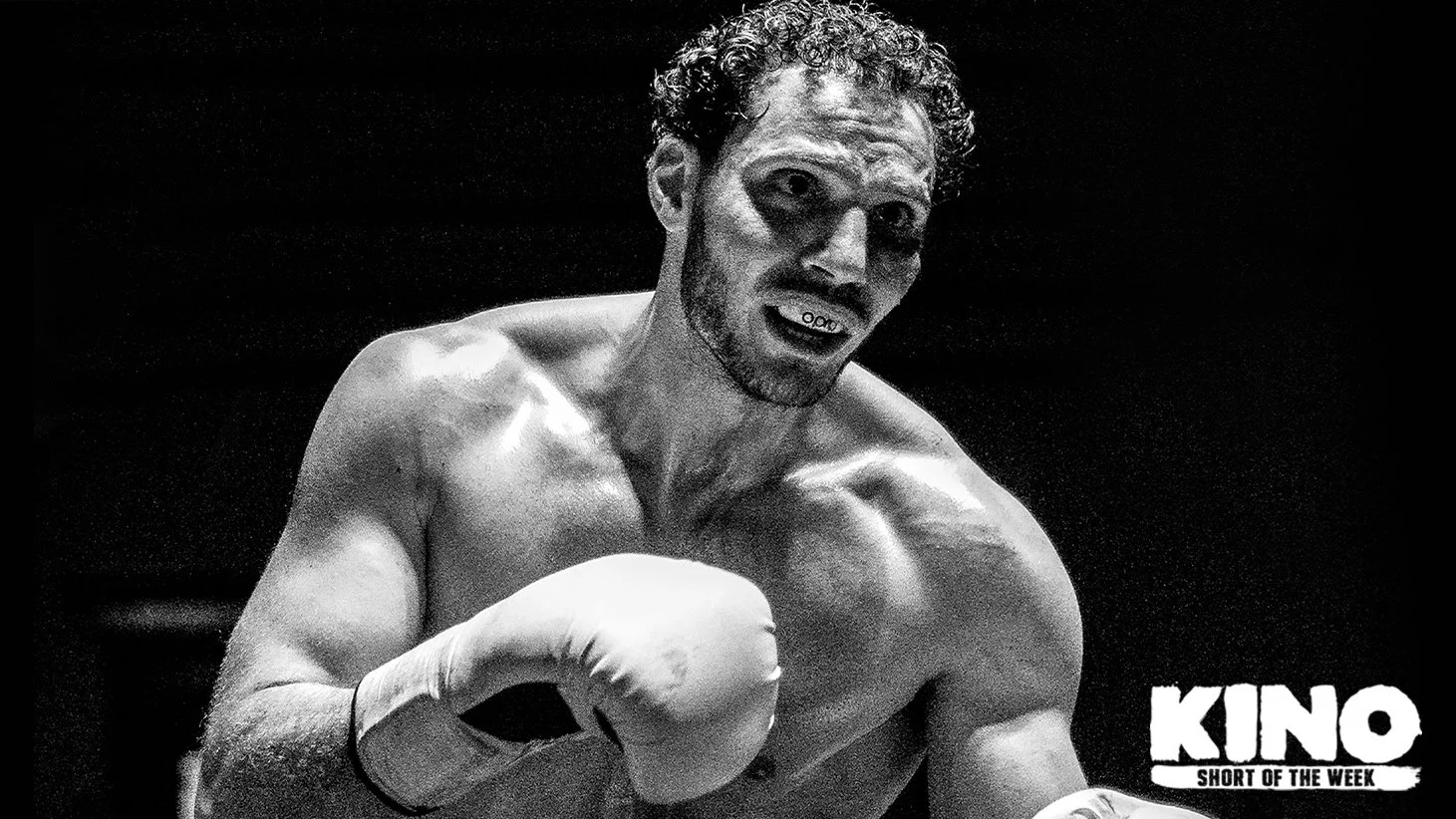
DIRECTED BY Ross McGowan
WRITTEN craig mcdonald-kelly
PRODUCED by Chris evangelou, Ross McGowan, David hepburn, & craig mcdonald-kelly
Round 9. WBF super middle weight fight. Against his old stable buddy, and with his father in the other corner, the challenger Mason Mendoza is down on points. Now he's fighting for his pride.
ABOUT THE FILM
Shadow Boxer was the winner of the Audience Choice award at the Exit 6 Film Festival. It was also an official selection at the Tallgrass, Another Hole in the Head, and the BAFTA qualifying Bolton International Film Festival. Finally, it screened as part of the monthly screenings for the Academy Award qualifying Hollyshorts.
ABOUT THE FILMmaker
Ross is the director of multi award winning films at Deadline Films UK. Since 2017 he has directed 4 shorts for the company which have gone on to win multiple awards on the international short film circuit. Before the formation of Deadline Films, Ross directed the Showbiz TV original shows, Country Sessions (2016) and Talent Spot (2016). He is currently in post production on an upcoming web series, and has numerous projects in development.
Ross also works as an assistant director on high end TV and films, one of his most recent credits being Queen Charlotte where he worked with the director to create the background action in scenes featuring supporting artists.
READ OUR INTERVIEW WITH ROSS
Welcome to our Short of the Week series. Can you tell us a little bit about yourself and your filmmaking background?
I'm Ross and I've been making short films for over 10 years. Since 2017 I've been a member of Deadline Films UK with Craig McDonald-Kelly and David Hepburn.
Before the formation of Deadline Films, I was making overlong and over expensive shorts that didn't screen at any festivals. I approached the shorts after forming the company with the mantra of 'do what you can with what you have and cut your cloth accordingly.' This is a quote from Ben Wheatley on his first feature Down Terrace.
Hangover Food, Shadow Boxer and Byte have all had great festival success and have all won awards. They were all made on this mantra.
Since 2016 I've worked in the film industry as an AD. The on set experience has been invaluable, I've learnt from great directors, not so great directors, and have been able to creatively have my input on projects when setting background.
Tell us about the genesis of Shadow Boxer and how the project came about?
I met Chris on the set of The Gentlemen where he was cast and I was the key set PA. We got talking about short films at the after party and arranged a meeting at Nandos in wood green.
He pitched the idea of a boxing film centering on a father son conflict which I was drawn to. He also said he had access to a real fight night where we could go and shoot the wides, and we could do the mids and close ups at a gym, low angle pointing at the ceiling. Being told I couldn't do something made me think how could I do it? Access to a ring for 30 minutes. How do you make a 10 minute short in 30 minutes?
This was February 2019. I was about to start work on 1917 where I was a crowd PA, in costume, in the trenches, on camera. With this in the back of my mind, it became obvious to do the film as a oner. It's a way of flipping our biggest disadvantage: time and the lack of coverage, into our USP.
Chris and I wrote a treatment which Craig adapted into a script. Bound by a oner, flashbacks would have to become VO and find a natural way to fit into the film. Exposition would have to be given through the fight and I wanted it to be an immersive experience, where the audience are dropped right in the middle of the action and we learn what's happening through the course of the film.
On first glance, Shadow Boxer looks and feels like a single take. How did you hide your editing so well?
The film is made up of 8 shots. Logically it had to be broken down to apply make up to the fighters but also, because we were shooting this in front of a live audience, in a 30 minute window, mistakes were going to happen. When the adrenaline is going and there's hundreds of eyes on you, people make mistakes, and it happened on the night. Breaking the film down into these shots gave us the chance to bank what had already been shot. Imagine if it was ran as a oner and 8 minutes in, someone misses their cue. We'd have to go back and start again which we would not have the time to do.
I insisted on 5 weeks of rehearsals, every sunday leading up to the shoot date which was July 5th at the York Hall. Starting by filming it on my phone, we worked out the blocking of the action and the camera, and hiding where the cut points were. At this point, late May to June, I was deep into shooting 1917 so I was stealing techniques on how to hide the edits in front of me. At the end of every rehearsal, I'd edit what was shot and send it to everyone to review. It's this rehearsal and review process that made the edits look so seamless.
We built up to a dress rehearsal the week before the shoot with all departments where we made the film in a gym without an audience. I needed to know we could do it before doing it live in front of a crowd.
Tell us about wrangling your location and extras.
There are no extras! We stole the crowd! It's cheaper.
Chris was able to strike a deal with ring king events where we were the 'halftime entertainment', also selling tickets on his name and his return to the ring. That's how we got access to the York Hall, the home of British boxing, for free.
Wrangling a real crowd, getting them on side and to react the way we wanted them to. That's a little harder if you're not paying them.
I thought of this short film as a culmination of my short films but also my crowd AD work. We did the trench run in 1917 with 500 SAs. The conversations I was having were to hundreds of extras so I knew I could speak in front of a large crowd.
We had between 300-400 people there on the night. How do you get them on side? Look sharp. I wore a suit, fresh hair cut, the small things that make a first impression. I interacted with the crowd, "how are you doing? HOW ARE YOU DOING?" Get them to immediately react to me. I introduced the two fighters, and then got them to pick a fighter they supported. I then got them to cheer for which fighter they supported before we even started rolling.
I had a 3 minute intro, I had a radio in one ear, and was on a mic. To start with I'd tell the audience exactly what to do, as the shooting progressed, I'd give them leading direction. "Mason is on the floor, if he gets up you're going to raise the roof!" He gets up and the crowd got to their feet. They all played ball. It was incredible. I remember sharing a look with the sound recordist which said 'fuck, this is incredible'.
It was the closest to doing something live that I've ever come whilst making a film.
watch the behind the scenes video for shadow boxer
What were some of the main obstacles you experienced when making Shadow Boxer and how did you overcome them?
We had a lot of crew drop outs and we were marching towards a shooting date so there was a lot of last minute crew replacement.
There were certain timings the actors had to go off, dialogue from the corner men that was drowned out by the sound of the crowd, so I had to identify that they couldn't hear these cues and shout them myself.
When we first got into the ring, the adrenaline was running so hard in everyone that some cues were missed. We had to do the opening shot 3 times before we got it right. We had to stay calm, and progress.My radio died half way through the shoot and i had to throw it at an AD and get chucked a new one. Suddenly I was communicating with the crew through the mic as well as the audience instead of on radio.
Whatever we got, we got. I knew we had to treat it like theatre.It was a HUGE rush when it was over.
Tell us about the journey of getting your film to audiences.
We worked with Festival Formula to put together a distribution strategy. We shot in 2019 and did a screening at the PCC Nov 2019. Seeing it on a big screen, the way it was intended was amazing. It went to festivals in early 2020, then lockdown hit. Suddenly a film which was intended to be seen on the big screen was being seen on laptops.
It went to Film Shortage after the festival run, and it's having a second wind now, having gone on Klipist and now being featured here on short of the week.
What advice or hacks would you give to other short filmmakers?
"Do what you can with what you have and cut your cloth accordingly".
Don't waste money aiming for something you don't know if you can pull off. Learn how to walk before you can run. Make something you know that you can have absolute control over rather than aiming to make something that will look like a cheap imitation of something else.
Get experience on sets. Not just your own.
I would recommend that everyone that wants to make films does some time as an AD. Learn time management. Learn how the floor runs.
I wouldn't be where I am today without the skills and the contacts I made from doing these jobs.
What do you think is the biggest challenge short filmmakers face trying to break into the industry?
Self inflicted problems like trying to run before you can walk. I believe everyone has to make their share of bad projects before they start to become good, so when you fail, fail small. Learn from my mistakes. It's not a sprint. It's a marathon. It's 26 marathons back to back.
Industry wide, funding is always the big one, but you can make a film on a phone now so it shouldn't stop you from being able to tell good stories.
Any film recommendations that we should add to our watchlist?
My whole mantra is based around Ben Wheatley's approach to his first feature, Down Terrace, so that as a feature plus his film four interview about how he made it for £7K.
Short film wise, watch as many as you can, Klipist and Kino short film of the week are great for that.
I'd recommend Vincent Laforte's course directing motion on MZED.com, plus the youtube channels studio binder, lessons from the screenplay, the royal oceanic film society, Thomas Flight plus many others.
Interested in getting your work selected as Short of the Week?

Mama's Watching
On her first business trip away after the birth of her child, a young mother has to fend off the unwanted advances of her boss, triggering the memories of a traumatic childhood event involving a monstrous figure called Mama.
directed by DUSTIN CURTIS MURPHY
WRITTEN BY ROSE MUIRHEAD
Produced by ALASDAIR C. MELROSE
On her first business trip away after the birth of her child, a young mother has to fend off the unwanted advances of her boss, triggering the memories of a traumatic childhood event involving a monstrous figure called Mama.
ABOUT THE FILM
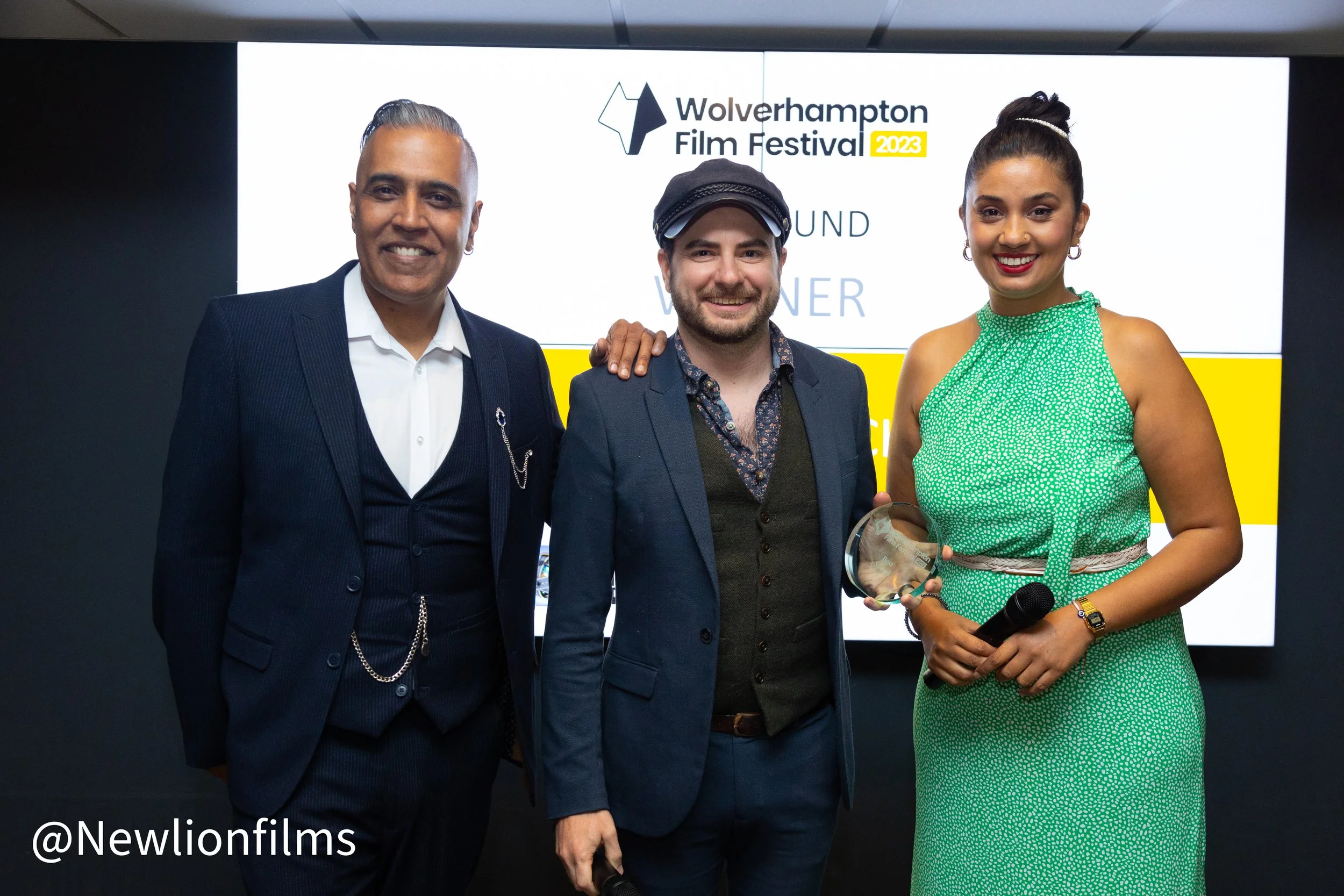
Mama’s Watching is a Kino Original co-production with Dutch London Pictures, founded by Alasdair C. Melrose. Production on the film took place in 2019, and it first hit the festival circuit in 2022 playing at the Wreak Havoc Horror Film Festival (where it was nominated for Best Short, Best Foreign Film, Best Actress, & Best Director), the Atlanta Horror Film Festival, HorrorHaus Film Festival, among others. It was also named a Semi-Finalist at the Oscar qualifying Flicker’s Rode Island Film Festival. Awards for Mama’s Watching include: second place in the AudPop Horror Film Challenge, Best Screenplay at the Monkey Bread Tree Film Awards, and two awards for Bets Sound from Echonation Audio & Film Festival and the Wolverhampton Film Festival.
ABOUT THE FILMmakerS
Dustin is no stranger to the Kino community. He is an award-winning writer, director, and producer creating work at the crossroads of social impact and commercial crowd-pleasers. His work focuses on character driven narratives with relevant social themes and tightly structured plots, often working in blended genre. Loves a good twist. Dustin has produced 2 web-series, 1 feature film, and 9 short films that have been recognized by Academy Award, BAFTA, and BIFA qualifying film festivals. His feature film debut - COYOTE - a dystopian sci-fi starring Therica Wilson-Read (Netflix's The Witcher), Borislava Stratieva (Luther: The Fallen Sun), Ailish Symons, (The Widow) and BIFA Winner Ruhtxjiaïh Bèllènéa (The Last Tree) - is on the festival circuit in the UK and getting a digital release in North America from June 20th, 2023.
Rose, a Yorkshire born actress, began acting at a young age and was involved with northern based productions such a Waterloo Road (2007-2008) before moving to Manchester for formal studies. In 2013 Rose took up a place at the International School of Screen Acting based in Three Mills Studios. Since graduating Rose has taken on many roles, most notably Jess in Book of Monsters (2018). Rose has always had a keen interest in writing and developed Mama's Watching as a concept in the winter of 2018. She continues to write and is working on a feature length dysoptian triptych which further explores the darker side of gender power dynamics.
Alasdair is a London-born producer and filmmaker. He got his start as a producer on Benjamin Rider’s indie feature Suburban Coffin (2018) then founded Dutch London Pictures, producing Dona & Vixen (2020), Mama’s Watching (2022) and Le Bebe Noir (2023). In 2022 he produced Holly de Jong’s TBA sophomore short and was associate producer on Dustin Curtis Murphy’s debut feature Coyote.
READ OUR INTERVIEW WITH DUSTIN
What have you been up to since we featured your last short film “The Last Confession”?
During my last interview I was talking about being in post-production on my debut feature film “Coyote”, and I’m now happy to say that the film has not only been completed, but also released!
Coyote premiered at the Phoenix Film Festival in March 2023. It was a great experience! PFF gives all films three screenings over the course of a week and a half. We were able to pick up buzz with each screening and our last one even sold out. While the festival wasn’t on my radar previously, our festival strategist put it on our list, and I’m glad they did. PFF gets some industry attention and we walked away with an offer from a distributor. We were already in talks with another distributor, so ultimately we decided to go another route, but it was encouraging to have multiple offers on the table - 5 in total. The film is getting a digital and DVD release in North America on June 20th, and we’re currently looking to expand to more territories throughout the year.
In the UK, Coyote also just had its UK premiere at the Romford Film Festival (again, sold out!) where we won the Audience Award for Best Feature, and coming up it’ll play at the Kingston International Film Festival on June 25th.
As if doing a feature wasn’t enough, last year I also shot a new short film ‘“Everything Is Out To Get Me.” It was my first time working on film which was a super cool experience. I’m about to head out to LA for its international premiere at Dances With Films - the largest indie festival in LA. Especially excited because they host their screenings at the historic Chinese Theatere on Hollywood Blvd.
Tell us about the genesis of Mama’s Watching and how the project came about.
I’d previously worked with Alasdair Melrose (producer of Mama’s Watching) on the first short film that I made after moving to the UK - “Nora”. In 2019, Alasdair approached me with a script called Monsters which he’d been developing with screenwriter/actress Rose Muirhead. He asked if I’d be interested in directing the project, and I was honoured to have his faith. Holly de Jong (who played Newt’s mom in Aliens) was already attached to the project as this point, so the prospective of working with her was exciting.
There was a lot of potential in the script, but I had concerns about the scope of the project when compared with the limited budget we had access to. Initially, the script had several monsters which followed the protagonist throughout her life. To pull it off, it would’e required extensive practical and visual effects, so I suggested that we pair it down to a single monstrous character, which eventually became “Mama”. That way we were able to focus all our attention on nailing one monster.
For a few months we would have regular development meetings and review subsequent drafts that Rose would churn out, and soon we found ourselves ready for production.
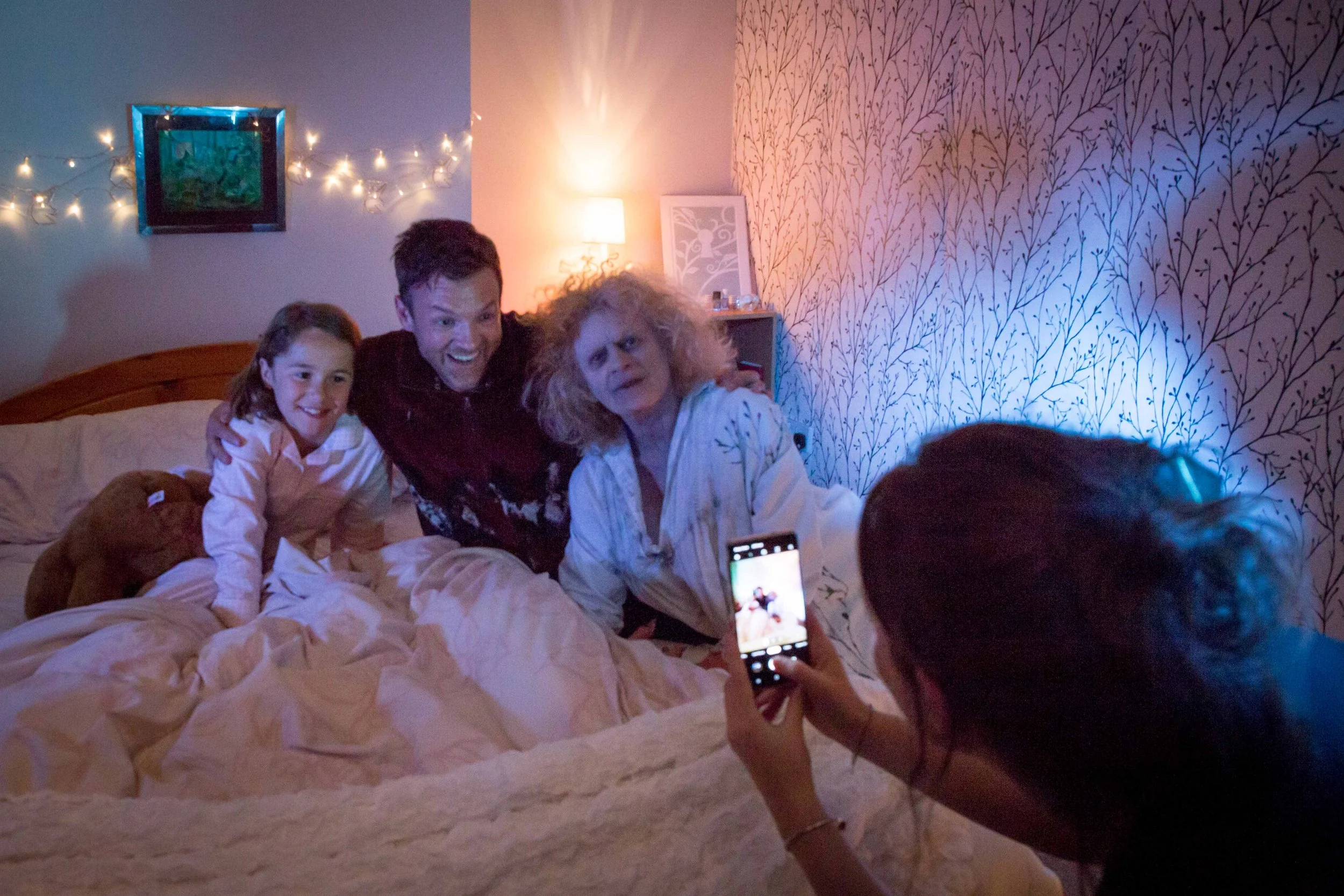
photos from the first table read
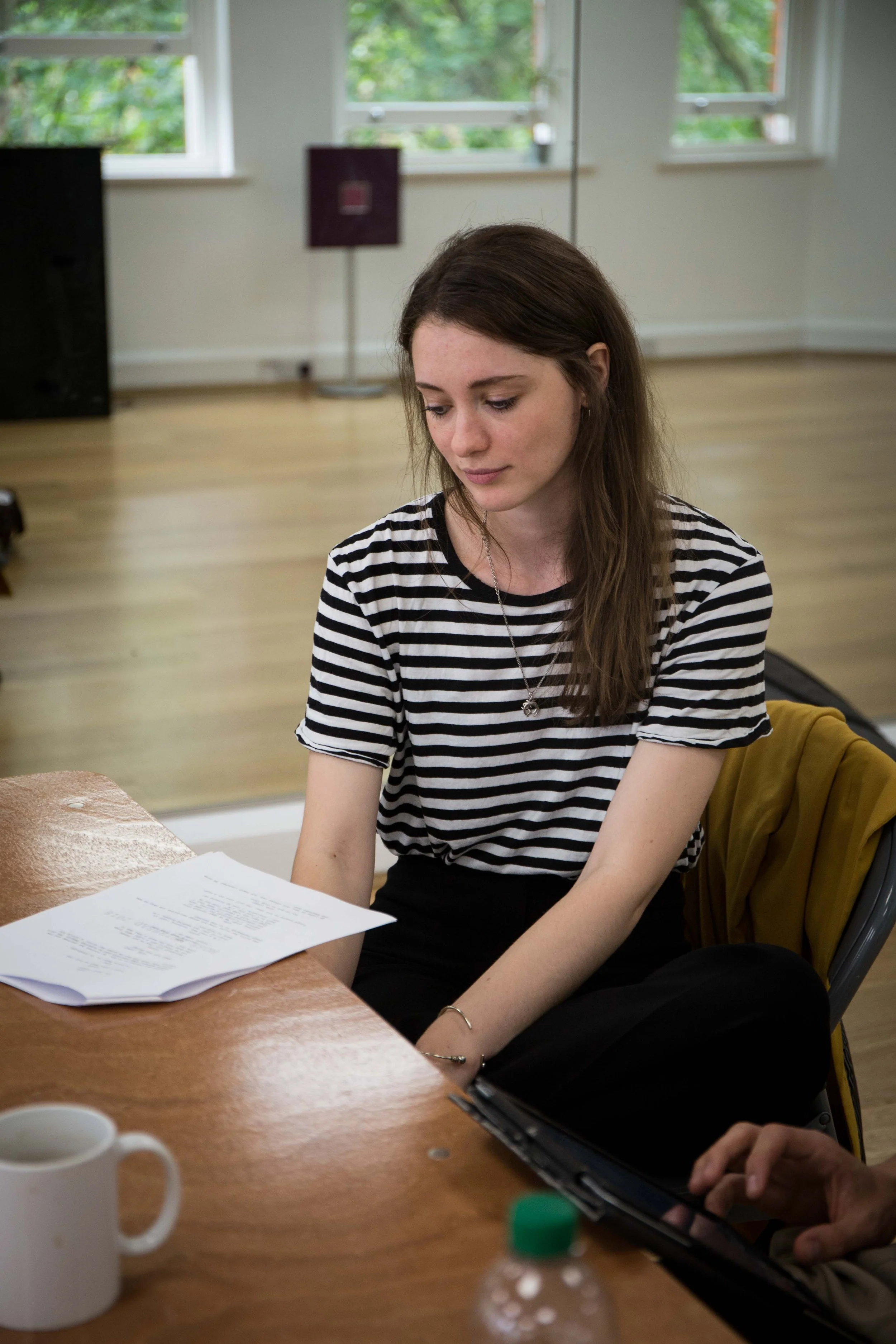
Rose Muirhead as “Liz”

Holly de Jong as “Mama”

Cast of Mama’s Watching with director and producer

Will Earle as “Lloyd”
Tell us about the development process and how you as a director provide feedback to the screenwriter.
Typically, I’m a writer/director, so when you’re coming in to actualise another writer’s vision, it’s a bit of a dance. You need to respect the initial intentions behind the script while also trying to find a personal hook into the material. You want to put your stamp on it, but you don’t want to be a bully. You need to protect the original spark that attracted you to the project in the first place.
Rose was wonderful to work with and it felt like we were really pushing the project in the same direction - which is key for a healthy collaboration. There’s nothing worse for a writer than working with a director who completely butchers their source material.
Monsters was written very “stream of consciousness” in its style and it was structured more like a feature film than a short. As a director, it was my job to search for the intensions behind what Rose put on the pages of her early drafts, so we could maintain the heart and soul of her concept while making necessary tweaks. The suggestions I made I hope elevated the project, but at the very least they made the film achievable within our budget limitations.

What were some of the main obstacles you experienced when making of Mama’s Watching and how did you overcome them?
The shooting draft of our script is actually quite different then the film you see now. The script was written linear without any flashbacks. We started with the story of Liz as a little girl. We see her interacting with Mama a lot more and ultimately Mama protects from her abusive uncle. Then, half way through the script, we introduced Liz in her twenties as a new mother on a business trip. In post-production we found that film didn’t quite flow when the scenes played out in a linear fashion. Although one could argue the 50/50 structure was quite Kubrickian, I think it’s important that a short film feels like one cohesive statement rather than two halves.
What you now see as the final cut of the film is pretty much all of the second half of the script. We utilised sections from the first have as our flashbacks. It did break my heart a little bit to cut some scenes with some great performances, but we needed to make the best decision for the big picture.
We shot the film over 3 days, it’s a 10 minutes film, and about 70% of what made the final cut was shot on 1 day. In hindsight, I would’ve liked to have more time to shoot the scenes that made the final cut, instead of spending 2/3rds of our time on 30% of the film.
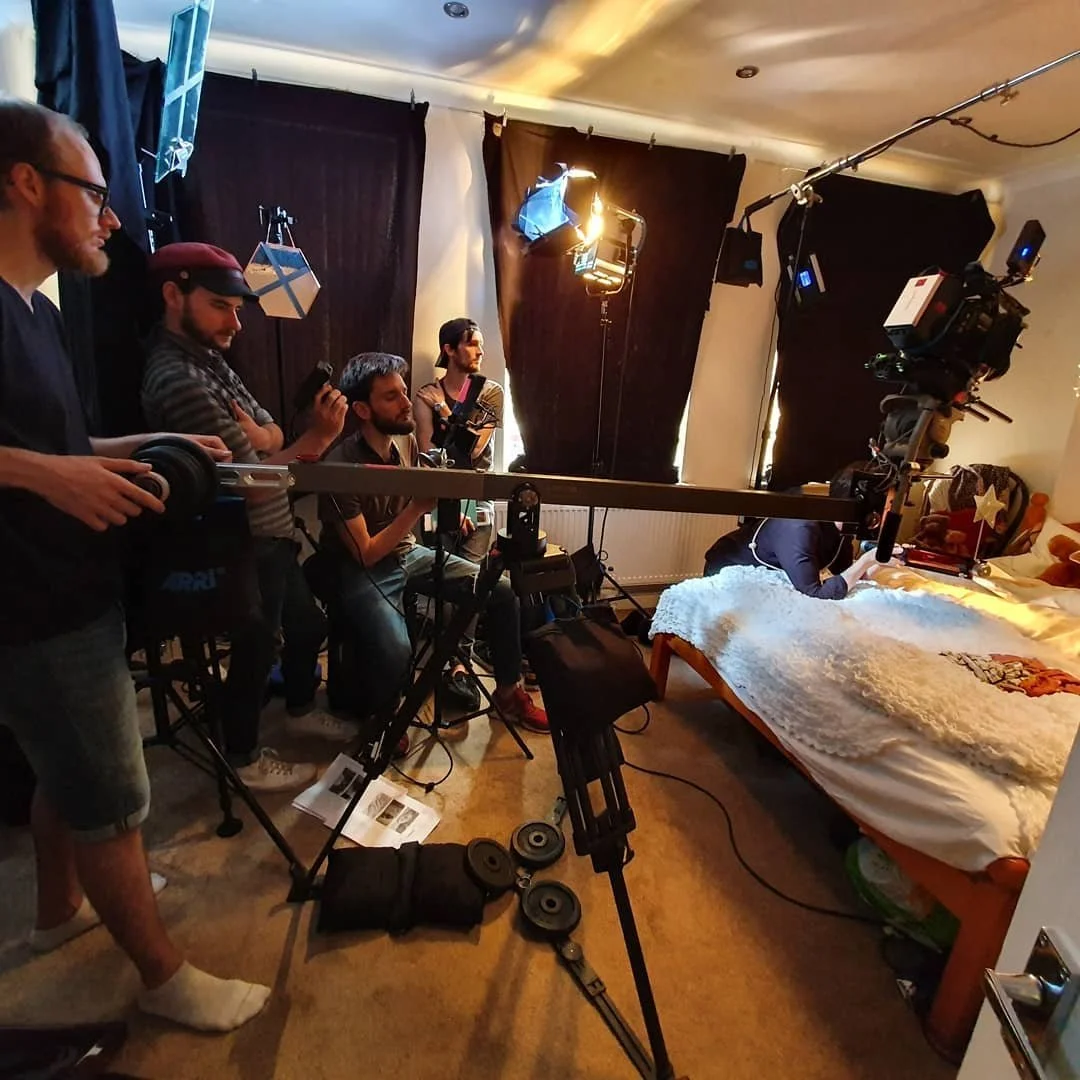
Day 3/3 on set was by far the most challenging. It was the day that we were shooting not only the most intense scene in the film - the attempted rape - but also every other scene that took place in the hotel. I asked for two days to focus on the hotel scenes, but due to access to the location we could only wrangle one day. The amount of coverage I wanted was quite extensive. In order to walk away with as many shots as possible, we had to shoot the attempted rape scene out of order which made continuity tough. We would shoot out one side of the room then move the lights to shoot out the other side of the room. If we’d shot it in order then we would’ve been resetting the lights back and forth. Shooting out of sequence was a complete puzzle. I’m pretty sure I was the only person on set who was confident that all the pieces would cut together, and while I’m generally happy with the final result, I do think the scene has a few rough cuts that don’t feel totally polished, but artists see the flaws in their work that oftentimes audience would never pick up on.
More budget, could’ve unlocked more time… A tighter script, could’ve meant we only shot what ended up in the film… but I think as a crew we did the best we could with the limitations.
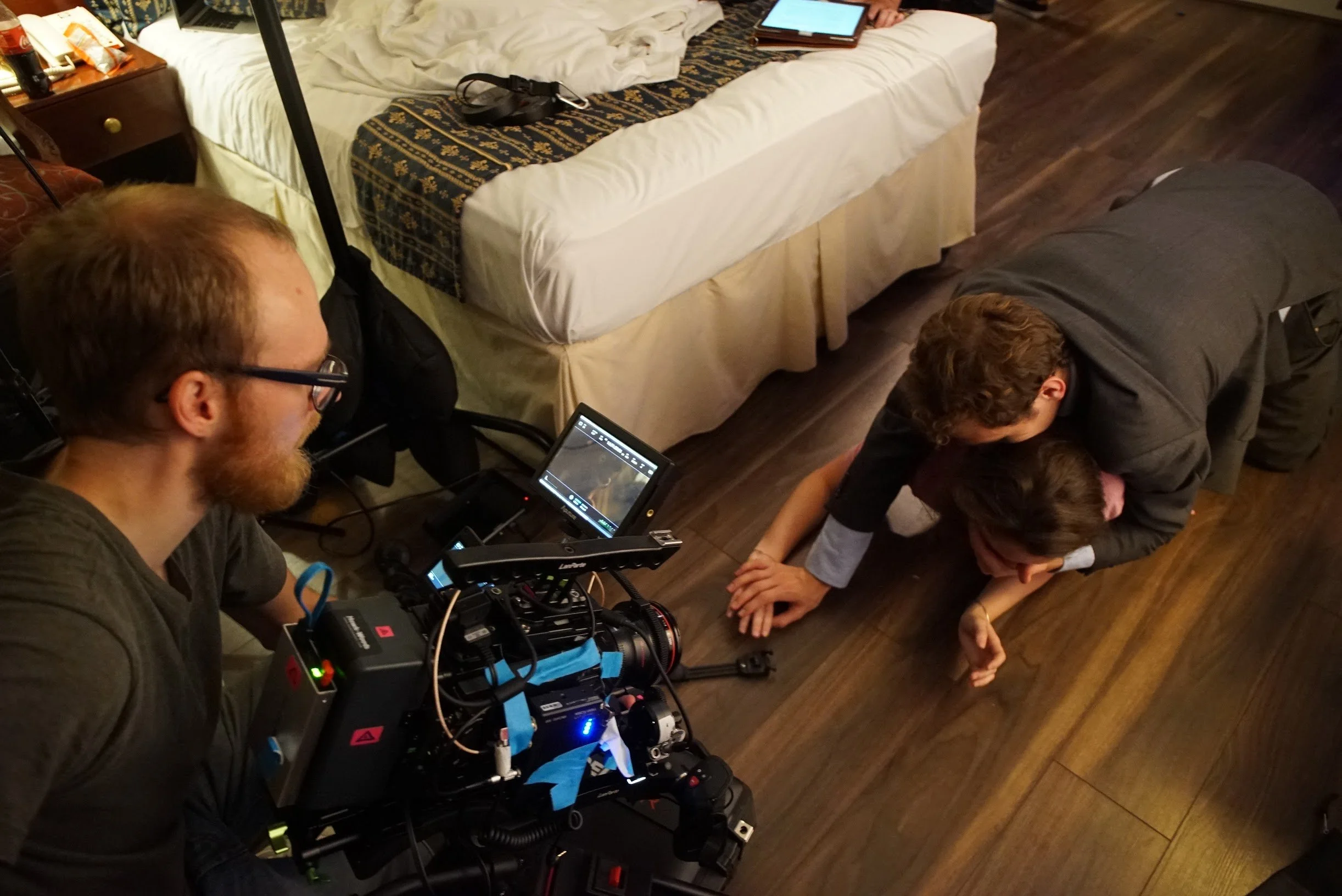
BEHIND THE SCENES STILLS FROM DAY 3
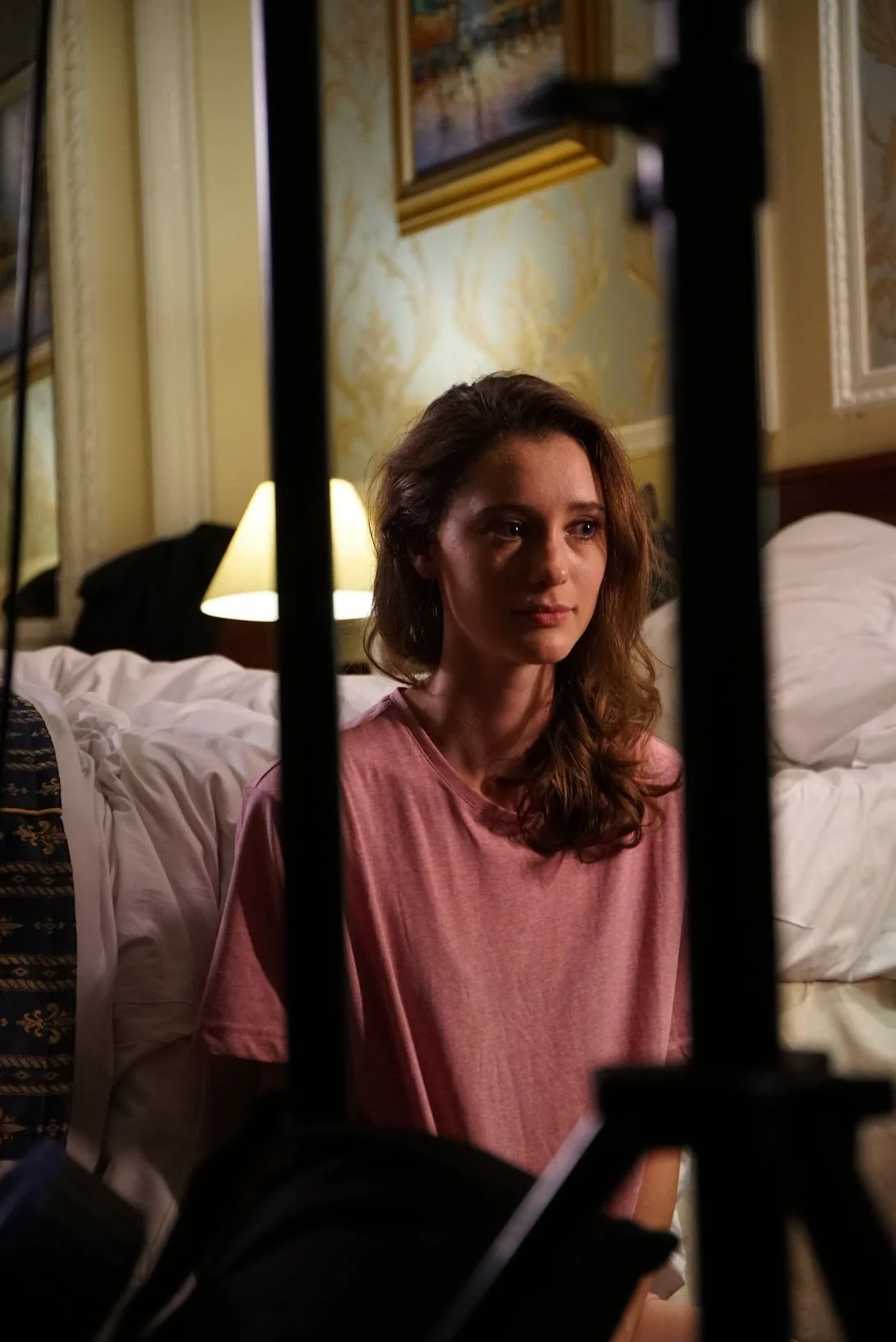


Dir. Dustin Curtis Murphy works with Rose Muirhead to perfect the pivotal hotel scene

Tell us about the journey of getting MAMA’S WATCHING to audiences.
Always a tough one, right? Unlike any other film that I’ve worked on, Mama’s Watching was really found during the edit. We were in post-production for awhile, so even though we shot summer 2019, we didn’t premiere until Halloween season 2022. Sure, there was covid smack dam in the middle of that, and I was also working on other projects.
As an American filmmaker living in the UK, I reflect quite a bit on my American influences and how they affect the choices I make as a filmmaker. Since moving to the UK I’ve met the best collaborators - the indie film scene in London is the absolute best - but I’ve noticed that most of my work gets programmed more at US festivals. Perhaps I have an inherently American style to my filmmaking and perhaps that puts off British programmers, but… I digress.
To be honest, during the festival tour I was getting a bit insecure about the lack of success of Mama’s Watching in the UK. I remember the rejection from Frightfest stung in particular because all of my peers got selected and I felt like the only one left out. I think I’m quite in tune with what’s wrong and what’s right about my projects, and while I massively respected the work of my peers that justifiably made it into Frightfest, I just couldn’t really see any clear reason why my film wouldn’t be selected to screen alongside them.
We ended up touring several horror based festivals in the US and picked up a few nominations, but it wasn’t until our Kino Original Short Film Showcase at The Garden Cinema at the end of November 2022 that I got to see the film with a live audience for the first time. I didn’t really know how I’d feel about it. Of course I hoped that audiences responded to the piece, but perhaps they wouldn’t. Feeling the energy in a cinema screening is so helpful for filmmakers. If you’re just watching your film by yourself on your laptop it can be difficult to see what elements are going to work with live audiences.
At that screening it really clicked for me. Mama’s Watching is not an easy watch. It’s about an attempted rape that triggers repressed memories of childhood sexual abuse. I can see how many programmers, even horror programmers, might be too afraid to attach their name to it and give it screen time. It’s not a fun watch, and quite frankly it shouldn’t be a fun watch. I think a lot of programmers and audiences in the horror space are looking for an element of fun in their horror films, and with Mama’s Watching I didn’t really provide any of that. I didn’t want to provide any of that. I feel if I were to make a film about sexual abuse “fun” then it would’ve felt inappropriate. Instead I wanted to show a real life horrific experience for what it was. Where other filmmakers tackling this subject may decide to execute it as a drama, I’d argue that is a safer, more programmable route to explore these themes. But I love challenging audiences vs just giving them what they expect.
Sitting watching Mama’s Watching with an audience I could tell that I’d definitely suceeded in creating a film that was suspenseful to the point of discomfort. So in a way, it feels like the success of effectively using filmmaking techniques to illicit uncomfortable feelings in audiences ultimately gave the film limited appeal during its festival run. I’ll be curious to see how the online release plays out.
At the Atlanta Horror Festival we caught the eye of Alter - the horror shorts distributor known for getting massive views on YouTube. Ultimately, they passed on the project, so I approached Omeleto who released my previous two shorts. I honestly thought Omeleto would pass on the film due to its content not being YouTube friendly (when my sound designer tried to upload a WIP version of the film privately for me to see his work, YouTube blocked it!), but I figured I might as well at least get the project in front of them. They said yes! Just goes to show that you never know. You get a lot of rejection, but the cliche is true: you just need one person to say yes, so best thing is to put yourself out there.


What do you think is the biggest challenge short filmmakers face trying to break into the industry?
Two things.
1. Over-saturation
Right now it’s easier than ever for anyone to make a film. Technology is a two edged sword. Yes, twenty/thirty years ago, perhaps you wouldn’t even be able to make a film at all, but now thousands and thousands of short film are made annually, and there are only a few slots available at the top tier festivals. That means that amazing work is getting rejection left, right and center. Which brings me to my next point…
2. Industry decision makers putting up barriers
In an over-saturated market, decision makers don’t have the capacity to have a personal connection with every talented filmmaker that comes their way. Some people in the industry are extremely well intentioned, but they are time-poor and overwhelmed by the sheer amount of people knocking on their doors looking for an opportunity. Other people in the industry are, quite frankly, negligent and uninterested in fostering an inclusive environment.
Keeping these two things in mind, I think short filmmakers should just continue striving to make their films better. We all need to put ourselves and our work out there. Yes, it’s an uphill battle. Yes, it’ll hurt along the journey when an avalanche of rejection comes your way. Manage your expectations, and don’t allow others to define what success is for you. You made a film. That’s a success. If you can, let that be enough and find pride in your work. Continually strive to find joy in the act of creating, and don’t let external accolades (or the lack thereof) make you feel bad about yourself. You’re doing the best you can.
What are you working on now?
The big project at the moment is my debut feature film Coyote. Technically, it is finished, but as an indie filmmaker your job is never done. It’s on the international festival circuit at the moment (which is a lot of work) and it’s being released on digital in North America on June 20th, so I’m doing a lot of PR for the film and I have my hand in marketing as well.
Although I’ve made the leap from shorts to features, looking forward I don’t ever see myself completely turning my back on shorts. I think doing a short or two in-between features keeps you sharp as a filmmaker.
Right now I have three short films in development…
1. A sci-fi alien film set on a space station which I’m just attached as director.
2. A family drama about climate anxiety which I’ve co-written and we’re applying for funding at the moment.
3. A comedy of errors because after all this heavy shit I really need to make something light! lol
…but my main focus is my slate of feature films…
1. My feature length adaptation of my award-winning short Samaritan is ready to go and I’m just looking for the right finance partner.
2. An ensemble folk horror structured where a bunch of seemingly random character’s lives intertwine. It’s like Magnolia, but in the horror space.
3. A Hitchcockian thriller than leans toward dark comedy.
4. An LGBTQ+ indie drama about struggling artists and community theatre.
Any film recommendations that we should add to our watchlist?
A great indie horror film, Little Bone Lodge, just became available on digital in the UK and I highly recommend that you check it out. It premiered at Frightfest Glasgow and it’s an absolutely intense white knuckle thriller.
Also, if you get a chance to see Birth/Rebirth playing at a festival, definitely don’t miss it. It’s the feature directorial debut from Laura Moss and it premiered at Sundance. It’s a super interesting twist on a modern Frankenstien-like story.
I was fortunate enough to meet both of the filmmakers through my work with Kino and I think they’re both going places. Ones to watch for sure - not just these films, but their future careers.
Interested in getting your work selected as Short of the Week?

Shallow
Deep in a forest, Barry and Larry indulge in conversation that is by turns light-hearted and extremely topical, revealing surprising revelations, both good and bad, along the way.
DIRECTED and PRODUCED by PAUL ASHTON
WRITTEN by Joe Johnsey
Deep in a forest, Barry and Larry indulge in conversation that is by turns light-hearted and extremely topical, revealing surprising revelations, both good and bad, along the way.
ABOUT THE FILM
Shallow was an Official Selection at our 2022 festival. It also won the Audience Award at the Short Focus Film Festival and won Best Comedy at the New York Short Film Festival. The screenplay was nominated for Best Screenplay at the English Riviera Film Festival where both actors (Michael Shon & Joe Johnsey) were also nominated for Best Actor. Other notable festival selections include: Nottingham International Film Festival, Earl’s Court International Film Festival, Liverpool Film Festival and Byron Bay Film Festival. Shallow was also a Semi-Finalist at the Academy Award qualifying Flickers’ Rhode Island International Film Festival.
ABOUT THE FILMmaker
Paul Ashton is a Writer/Director originally from Hertfordshire but now living in London. Shallow is his second short film as director. He’s currently prepping his third short while also developing a feature script.
READ OUR INTERVIEW WITH Paul
Welcome to our Short of the Week series. Can you tell us a little bit about yourself and your filmmaking background?
I have a Degree in Film and initially worked on a series of films and TV projects such as Saving Private Ryan and Band of Brothers before focusing on directing and scriptwriting. I've directed Music videos and documentary shorts and used to work at a camera hire company before writing and directing my first short film POV in 2018. POV was selected for a series of film festivals worldwide such as Australia, Germany, the USA and England.
What position did you have on Saving Private Ryan and Band of Brothers?
On Saving Private Ryan I was a Location Assistant while on Band of Brothers I started as a Location Assistant before then advancing to Crowd Runner and then Floor Runner.
What were some of your main takeaways from working on a large set that you absorbed into your own filmmaking?
The importance of the following:
Organisation
Whether you have a huge crew on a massive production or a small crew on a low-budget short film – you're all trying to capture the best footage you can within a tight schedule so everyone has to be extremely organised and prepared to help things runs as smoothly as possible. No one wants to be the weak link when so much is at stake.
Adaptability
I found that regardless of the size of the production and the prep involved, delays happen or some things just don't go to plan on the day - so the ability to think quickly and come up with a solution is vital, to think outside the box. Perhaps a big set piece needs to be reset which takes some time or an actor isn't free when you need them, can something else be shot in the meantime rather than waste that vital time.
Communication
Hugely vital on a large set where so many departments are involved who need to know what's required from them and when but also for individuals to be given the opportunity to showcase their thoughts and expertise. On my shorts I want everyone to be in the loop and always know what we're trying to achieve and why. To also create an environment where people are able to contribute their opinions freely and be part of the decision making process so that we're all collaborating as a team to make the best project possible.
Tell us about the genesis of Shallow and how the project came about?
Shallow grew from a conversation that took place between our two leads Joe Johnsey and Michael Shon who at the time were housemates – a version of which appears in the final film. I was looking for a short to make while I finished off another script and chose this one to develop from the ideas Joe sent me. Joe then wrote the script which we all fine-tuned in rehearsals. It's very dialogue heavy where the timing is vital so the rehearsals were extremely valuable as they allowed us to discover what did and didn't work before reworking it until we were all happy. It also allowed us to rehearse the script again and again so that it was second nature on shoot day, saving as valuable time as we only had one day.
What were some of the main obstacles you experienced when making of Shallow and how did you overcome them?
Shortly before we were due to shoot, our initial forest location was damaged by storms and we began to look again – but then Covid hit. Once restrictions eased we began to visit locations once again and came across the perfect spot in Black Park. Lockdown actually worked in our favour as Black Park was completely booked up before lockdown as it's such a popular filming location but as restrictions eased, shoots were slow to start up again. So thankfully they allowed us to shoot there for one day – straight after Jurassic World who delayed our shoot a few weeks as they were filming right next to us.
On the day of the shoot we had to contend with the changing weather. Shallow takes place in real time over 10 minutes so overcast conditions would have been ideal - but instead the weather alternated between sunny and overcast with a few showers. We also needed to lock off the surrounding area as it's a pubic park so members of the pubic were roaming around, usually walking their dogs.
I believe we had 27 shots to shoot that day, some of which were long steadicam takes but thankfully we managed it. And then post was all done remotely which wasn't ideal but perhaps did allow me to fine tune certain aspects.
Tell us about the journey of getting your film to audiences.
So we spent a lot of time researching festivals and trying to figure out where it had a chance of being selected and eliminating those where we thought we didn't stand a chance. We tried to target British film festivals more than anywhere else as we weren't sure how the northern accents and humour would travel.
But then surprisingly we won Best Comedy at the New York Short Film Festival, were Semi-Finalist's in the BAFTA and Academy Award qualifying Flickers Rhode Island International Film Festival, as well as being selected for a few other American festivals and the Byron Bay International Film Festival and a number of festivals in England. Some festivals we thought we had a great chance of getting into rejected us while some selections came as a complete surprise – you just don't know.
A lot of festivals were still being shown remotely so sadly we missed out on attending some fantastic festivals and being able to see it with an audience – though we did take part in some great Zoom Q&A's and managed to meet some very talented filmmakers. Furthermore, some festivals were delayed by up to a year which did draw out the Festival process. Luckily, the Kino London Short Film Festival (previously known as the People's Film Festival in 2022) was a live event and this is where Shallow had it's best screening to date in a packed out venue. Kino is such a well run festival with a great atmosphere and it's a place where I have met a number of very good friends.
What advice or hacks would you give to other short filmmakers?
Find a team of people that you work well who are also reliable. The process might be hard at times but it should also be enjoyable, otherwise why do it? And don't just make do, try and make the best short you can within your financial confines otherwise you're regret not fixing those little issues that then become magnified on the big screen – something I'm very happy I did with Shallow.
What do you think is the biggest challenge short filmmakers face trying to break into the industry?
Getting something made and then getting it seen. You're fighting to get something made, usually on a small budget that you probably financed yourself and which needs to stand out from the thousands of shorts out there.
Then once you've made something you have to fork out a lot of money for the festivals, and be rejected by many as there's just too many shorts out there. Whether you're selected or not is ultimately based on personal opinion and perhaps their desire to group certain shorts together based on themes or subject matter. Which sadly means that a lot of good films get rejected.
Plus the added hurdle of competing against much higher budgeted shorts – which is why the Kino London Short Film Festival works so well as the films are divided into groups based on budget.
Shorts are typically seen as a stepping stone to bigger things, which is a pity as they’re such an interesting art form in their own right and really allow you to experiment and find your voice. Sadly there's no financial gain (unlike features) – if there was it would be a lot easier to obtain funding which would thereby help to support your career progression.
Any film recommendations that we should add to our watchlist?
Some of my favourite shorts are Signs by Patrick Hughes, The Answers by Michael Goode,
Stutterer by Benjamin Cleary, Salt by Rob Savage and the shorts of David F. Sandberg who also includes making of videos for each of them.
Interested in getting your work selected as Short of the Week?

Blinkers
Two women, their lives meticulously intertwined, are each on a fast paced journey to two very different destinations.

WRITTEN & DIRECTED BY Sophia Capasso
PRODUCED TUTTI TUTTI Productions
This short film is about the cracks we don't see splitting in the rollercoaster of modern life and how two experiences of one night can be drastically dissimilar. Blinkers touches on the complexity of mental health and female friendships.
For best viewing watch with headphones, as the sound is binaural, cranking the volume up won’t hurt either!”
ABOUT THE FILM
Blinkers was an Official Selection at our 2022 festival where is was nominated for Best Editing & Best Score.
ABOUT THE FILMmaker
Sophia Capasso is a British/Italian writer and director from Suffolk.
Her directorial film debut L’Immigrato was based on her Italian heritage and follows three young brothers in south Italy during WW2. The short won The Hollywood First-Time Filmmakers Showcase 2020 and received an honourable mention at Ischia Film Festival 2020 amid other festival runs.
This was followed by her critically acclaimed one-woman show VOiD which premiered at the Vaults in January 2020, where it received four star reviews. Described as ‘an empowering and gut-wrenching drama’ the play was praised for its ‘confrontation of the criminal justice system’ and exploration of ‘psychological terror that leaves hearts racing to the rhythm of her words.’
Blinkers is her second short film.
READ OUR INTERVIEW WITH SOPHIA
Welcome to our Short of the Week series. Can you tell us a little bit about yourself and your filmmaking background?
Thank you! Sure. Um, I came into the industry at eighteen as an actor. I love people and human interaction which is what I think draws me to film making.
As a person I am hugely sentimental and I love bringing people together. I found being an actor can be quite lonely and often you have all these ideas and stories you want to tell but perhaps don’t feel like you can. So after a few years I decided to take what basic knowledge I had of sets and the process and make my first film, an Italian language short set and shot in south Italy.
I’ve been lucky to get collaborate with people who are open and passionate and have let me learn from them on the fly! I’ve also have a background in fine art and I see the film process in a similar way to building an elaborate painting.
Tell us about the genesis of Blinkers and how the project came about?
The two characters in Blinkers have been living rent free in my head for at least five years. I know them very well and they’ve appeared in my writing in various guises.
The voice over you hear in the film is a section of intertwined dialogue initially written for a play. When the two characters speak intertwined there is a semblance of sense but when you isolate either’s dialogue you also get a sensical monologue that reveals their individual truths. I eventually shelved the play and I left Lil and Con in an old folder on my desktop for a couple of years.
During the pandemic I had wanted to make a different film ('Que Sera’, which we are now finally in post for, yay!) but the restrictions at the time, and a serious lack of money, meant it wasn’t possible. I was having a look through old work, found the play and realised that these characters could possibly finally have a life of their own in short form! I re-worked the script and convinced a micro crew (by which I mean DOP Jan, we were the crew) to agree to shoot the piece…
Blinkers is quite meticulously edited featuring a lot of split screen elements that have to be timed just perfectly to work. How did you go about planning to execute such an ambitious short?
Initially I imagined more split screen than is in the final cut. We shot under the guise of a 4:4 aspect ratio but London is so present as a third character we changed to 16:9 and therefore scaled back the amount of split screen. We instead used split screen to mark moments of parallels between the girls, highlighting their connection.
For me the most important element in building Blinkers was the sound scape/ audio track. I’d decided early on that we would not be picking up audio on set, so the entire sound world would have to be build in post. I wanted it to be stylised, to mislead the audience and to give the film pace. I curated a playlist of how the film sounded and felt in my mind which I shared with the cast and crew.
Because there is no exact scripted visual we decided to edit to the music. I split the voice over dialogue into chapters and gave each chapter a look book of stills from the rushes alongside a list of feelings/ emotions. I gave this odd document to our incredible composer BYFYN.
BYFYN created the most awesome track. Which went to our glorious editor Fio along with the odd document and she built the first assembly. Because the film is literally a journey from A to B there was a clear structure for the edit; from home to the bus stop, on the bus, prom Piccadilly circus to the club/ bridge.
What were some of the main obstacles you experienced when making of Blinkers and how did you overcome them?
It was December 2020. So the bitter cold and the pandemic were our main obstacles. Sophie who plays Lil was an absolute champion in only a slip dress at times and DOP Jan still hasn’t forgiven me for the frost bite on his fingers!
We had a really small crew, Jan and I, which at first was daunting but actually allowed us to shoot in central London and on TFL without being detected (although carrying the kit from Piccadilly Circus to Millennium Bridge was gruelling). Shooting on to go prevented overthinking and gave us really surprising and intimate footage.
The pandemic meant we had more hoops to jump though with regards to insurance, risk assessments, covid protocols and permits. But again it worked in our favour in many ways as London was empty! So locations like Millennium Bridge, Piccadilly Circus, etc were unusually deserted, almost as if they were locked off for us!
Tell us about the journey of getting your film to audiences.
I struggle in some ways to know where to place it because Blinkers not a traditional drama/ narrative short and its not necessarily experimental either!
I spoke to people with more experience than me to gain a better idea of festivals suited to our film. We had a really good festival run and audiences reacted to the piece, which was a massive relief!
But I have to say that I am genuinely so delighted to have it as part of Kino’s ‘short of the week’ programme because it means people can see it whenever, wherever and ultimately that’s reason we tell storied right, to share them?
What do you think is the biggest challenge short filmmakers face trying to break into the industry?
An obvious hurdle is always going to be budget. Then once you’ve made the film it’s hard to know how to get your film in front of the ‘right people’.
But I think if you are confident enough in your piece to be vulnerable, ask for advice/ help you can eventually get past these things. Ultimately the work speaks for itself!
Any film recommendations that we should add to our watchlist?
Cinema Paradiso. I could watch it every day.
Interested in getting your work selected as Short of the Week?

Bologna
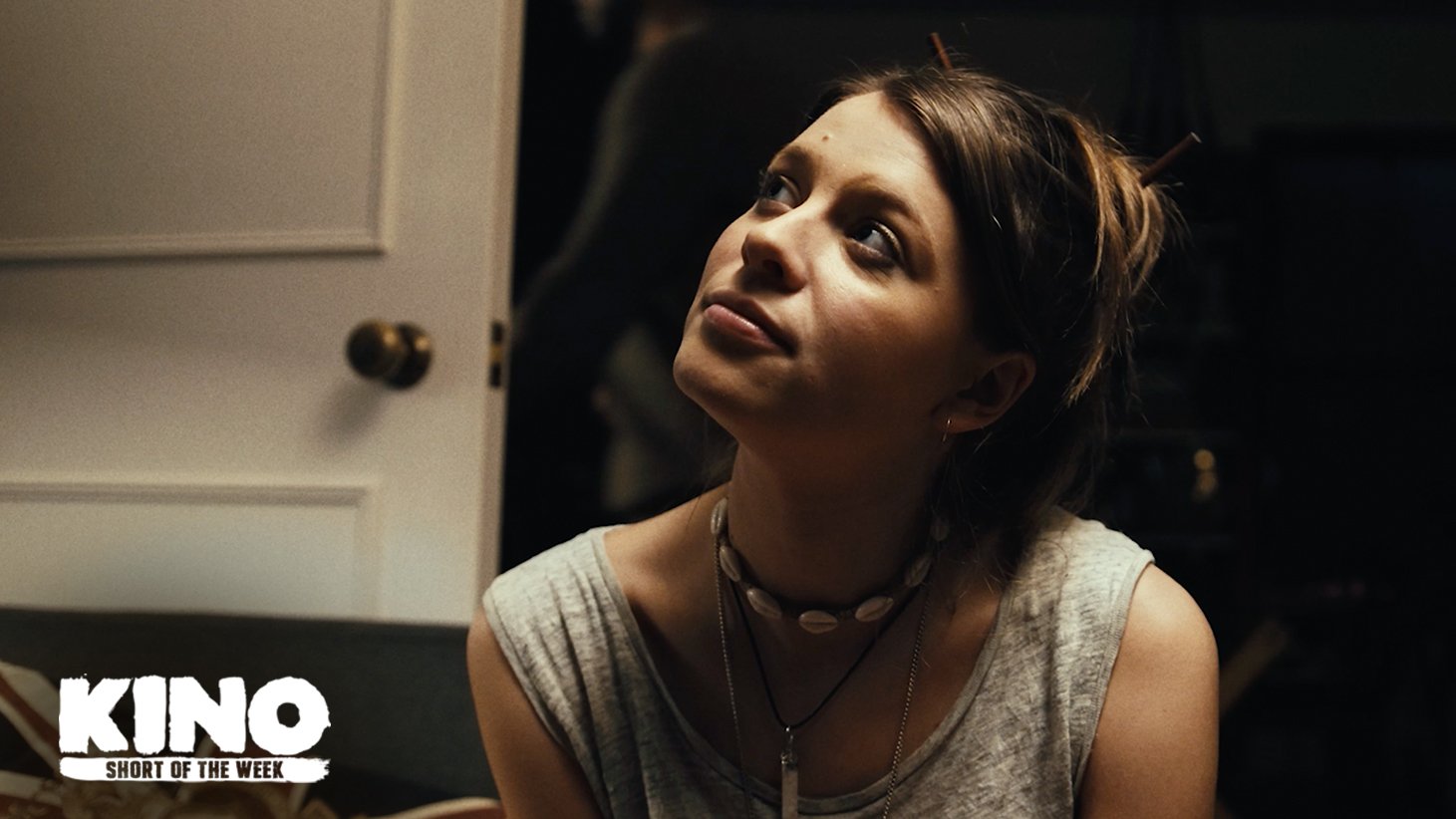
Harry & Tim just want to get on with their dinner, but when their trustafarian neighbour Debs turns up asking to steal their wifi password (again), it’s not quite as easy to get rid of her as they’d like.
Written, Produced & directed by Samuel galloway
Harry & Tim just want to get on with their dinner, but when their trustafarian neighbour Debs turns up asking to steal their wifi password (again), it’s not quite as easy to get rid of her as they’d like.
ABOUT THE FILM
Bologna first caught our attention at our Short Film Open Mic night where it had our audience in stitches. It was shot entirely in one day, with a grand total of 3 actors and 2 crew members, at the director Sam Galloway’s flatshare in Brixton.
ABOUT THE FILMmaker
Samuel Galloway is a filmmaker from New Zealand, currently living in Australia. He made several films during the two years he lived in London, including feature film One, Another and Bologna - despite having absolutely no budget for either. His film Mutt recently won Best Actor & Best Supporting Actor at Capricorn Film Festival after premiering at Monster Film Fest. Other recent credits include: The Dying Art of Cat Burglary, Past The Second Stage, Gastro, Moo, A White Horse in the Switch Cane, After School and Paternoster Square.
READ OUR INTERVIEW WITH the filmmakers
Welcome to our Short of the Week series. Can you tell us a little bit about yourself and your filmmaking background?
Sam’s approach to film is very much get it done. He is largely self taught, and will often write, direct, produce, art design and even cater his films before also editing, mixing, and grading them himself. There are so many hurdles stopping a film from going forward, so for him, the reason he does it all is more about actually getting to make stuff, rather than just because he’s being a total crazy control freak… (or, at least, that’s not the entire reason!)
Tell us about the genesis of Bologna and how the project came about?
Bologna, (originally titled “First Love, Favourite Food, Greatest Fear”) was shot entirely in one day, with a grand total of 3 actors and 2 crew members, at the director Sam Galloway’s flatshare in Brixton. Sam, as well as being the writer-director-producer, was also our sound guy. He'd already cast two of the aforementioned actors in the feature film he was writing at the time, (One, Another), and was using the same DOP too. So Bologna sort of came about as a warm up shoot. He figured if we were going to be embarking on the mission of making a no-budget feature film together, we might as well see how it went if we spend a day doing a short together first. It went well. Or, at least, we liked each other. So much so that we cracked straight on with filming One, Another, and the footage for Bologna was not touched for at least a year after it was shot!
What were some of the main obstacles you experienced when making of Bologna and how did you overcome them?
I suppose you’d say the main obstacle was the lack of hands on deck. The director isn’t exactly sat in a chair watching a monitor when he’s working the boom… I don’t entirely know how to say we overcame it though because we just sort of accepted it, trusted in everyone to do a good job, and made it work! It was also Flora’s first day ever acting for camera so she had no idea what she was doing with her face and was way too needy - we overcame that largely by ignoring her and saying “moving on". (As a result she now automatically looks to the sound guy for validation on her performance on any set, which is often unsettling for them.)
Tell us about the journey of getting your film to audiences.
This has been an interesting one. Sam single handedly edited & graded the film and was doing it around several other films projects he was working on as well as paid work for production companies, so it took a while to complete. We submitted to a few festivals but the lack of budget we had for this meant submission fees were coming out of our pockets so we were at the mercy of our own pursestrings, and timing wise, this meant we quite often didn’t get it where we needed to get it in time. Covid was also a factor! So actually, other than screening this film at the Kino Short Film Open Mic (which was great, and we were chuffed by the response we got whilst there!), and sending it to some friends, it hasn’t really had an audience yet!
What advice or hacks would you give to other short filmmakers?
Just do it. We made this with no money and 5 people. You think you need all the fancy kit and a load of different people in different roles to shoot a short film, but you don’t. You just need a good script, good actors, a location and people like Adam & Sam who know what they’re doing. And in the spirit of “just do it”, I would also say, “just finish it”. Don’t leave it too long to edit your film. Chances are your film is not timeless - the sooner you complete it the better chance you have of it feeling relevant and original and therefore the better chance you have of getting into festivals or finding audiences who will enjoy it/relate to it/think it is good.
And try to figure out where your film actually fits in before you spend money you don’t have on submission fees for festivals you never had a chance at, or who aren’t looking for films of your style/genre.
Any film recommendations that we should add to our watchlist?
Any other films featuring or made by any of us!! Most importantly One, Another. Soon to be available on streaming.
Interested in getting your work selected as Short of the Week?

No Filter
The story of a depressed young woman who bluntly reflects on her life and the world for her social media page, as she goes through what she’s decided will be the last day of her existence.

WRITTEN & DIRECTED BY MATTHIAS Fuchez
PRODUCED by KATIE ORGAN
The story of a depressed young woman who bluntly reflects on her life and the world for her social media page, as she goes through what she’s decided will be the last day of her existence.
ABOUT THE FILM
No Filter was an Official Selection at our 2023 festival where is was nominated for Best Screenplay. It was nominated for Best Short Film and Best Actress at the Monkey Bread Tree Film Awards. It screened at Poppy Jasper International Film Festival, Go Mental! Film Festival in Berlin, Festival Mental in Portugal and Tilt Shift Film Festival in Philidelphia. Disappear Here Film Festival in Ireland, and Peekskill Film Festival in New York. It was also a Semi-Finalist at the Academy Award qualifying Flicker’s Rhode Island International Film Festival.
ABOUT THE FILMmaker
Matthias works in film PR, previously for Universal Pictures, now for an agency that works with all the major film studios. His first short film, The Muse, won a variety of awards at film festivals all around the world, encouraging him to continue writing and directing. He has since written and directed 2 more award-winning short films. After advice from industry professionals on which project to advance with, Russian Moon (which was in competition for our 2023 Film Fund) will be his most ambitious and exciting yet. His artistic background gives him the rare opportunity to share the full potential of his story-telling ability; not only by writing and directing but also by composing the music and score.
Katie is a film Producer based in London who has worked at Universal Pictures in London for several years, concurrently producing short films. Her first short, Lily Meets Charlie was picked for the official selection at the BAFTA qualifying Underwire Festival, and has just reached 2 million views online. Katie has since produced 3 award-winning short films with Matthias under their joint production company, One Of Nine Ltd.
READ OUR INTERVIEW WITH MATTHIAS & KATIE
Welcome to our Short of the Week series. Can you tell us a little bit about yourself and your filmmaking background?
Matthias: I am French, I am 34 years old and I have been living in London for the last 13 years. I made my first short film on a road trip to Spain and Portugal with 2 Spanish actor friends (my housemates at the time) with one small camera, one go pro and one iPhone, and a mic I use to record songs with. I was writing the script (about 2 friends going on the exact same road trip twice for two different reasons) as we were driving, and we shot scenes everytime we found a beautiful location. I then came back, wrote and recorded the score and edited the film. I completely fell in love with the whole experience, and just couldn’t wait to make another one. That’s when I met Katie, and together we started One Of Nine Ltd, a creative British film company that prides itself on producing high-end impactful shorts, working with rising talent and nurturing exciting voices. Our first short film, which we shot in Paris, was called The Muse. and our second one is No Filter.
Katie: I am also 34 years old and a Film Producer based in London. I developed my passion for filmmaking whilst studying Film & Media at school. I didn’t go to University but instead sought out an internship at Pathe Productions, which led to 3 fantastic years learning the ropes of how films are made whilst I worked there as a Receptionist and Office Assistant. After a few years, I branched into the freelance world of production working on films such as The BFG and Trespass Against Us. Finally, I transitioned back in-house and now work at Universal Pictures in London where I have worked for several years, concurrently producing short films. My first short, Lily Meets Charlie was picked for the official selection at the BAFTA qualifying Underwire Festival, and has just reached 2 million views online. I have since produced 3 award-winning short films with Matthias under our joint production company, One Of Nine Ltd, most recently, No Filter was part of the BIFA qualifying – Kino Film Festival, which marked the film’s 10th festival selection.
Tell us about the genesis of No Filter and how the project came about?
Matthias: 13 years ago, right before I moved to London, I lost one of my close friends due to suicide, and this has had a really big impact on my life and the way I see the world. Though the idea of making a film about something really deep and profound was always on my mind, I didn’t want to start making this very personal film without having any experience in the field. So we did The Muse first, and were about to shoot a new short film. As we started working on the production of our second short film; an intense musical drama/thriller, the pandemic began. I then lost my job, and lost my flat, and was just left with one option: going back to my mum’s, in Tours, France, at 30 years old. As this time was incredibly difficult for millions of people around the world, it was also difficult for me. But I tried really hard to stay positive, and so thought it was now time for me to put all my doubts, and questions, and thoughts about the world in a screenplay, which eventually became No Filter.
What were some of the main obstacles you experienced when making of No Filter and how did you overcome them?
Matthias: The hardest thing for me was to continue working on the side at my day job. I work in film PR and it can get really busy and sometimes have to do crazy hours, or even work on weekends. Making No Filter was one of the most amazing experiences of my life, but the week before the shoot was one of the craziest weeks of my life, and I think I might have slept 15 hours that whole week.
Tell us about the journey of getting your film to audiences.
Katie: I believe that storytelling should not only entertain but also inform and create change. Mental health challenges and suicide have been exacerbated by the pandemic, yet the topic remains taboo and is not discussed enough. Film has the potential to normalise these conversations and reach a wide audience. This is why, in pre-production, we decided to get two charities on board - Papyrus and Chasing The Stigma - to put their rubber stamp on the film. Having their approval gave it added credibility when reaching out for funding and then eventually, now it's released, reaching a wider platform of viewers. My first short film was accepted into the Underwire Film Festival which was a BAFTA qualifying festival, this allowed us to submit the film to Omeleto, one of YouTube’s biggest platforms for short films, this is the reason it's just passed 2 million views. So, we knew this was the same route we wanted to go down with No Filter, so when we were selected for the Kino London Short Film Festival, as a BIFA qualifying festival, we were ecstatic because well, these big named festivals give us more opportunities to put it out to a wider audience.
You used a festival strategist - how was that experience?
Katie: It was a fantastic experience right from the beginning, we used Festival Formula and felt instantly supported. They believed in the project and its ability to do well at festivals which gave us a huge confidence boost. 30% of the festivals No Filter was selected for were from Festival Formula recommendations, Kino being one of them. I’m constantly seeing what they’re up to touring festivals worldwide, through their Instagram page, they seem to really know their stuff, but also, they are such lovely people, the experience was an absolute pleasure. I’d definitely recommend them to anyone needing help with a festival plan and/or submissions. We did the submissions ourselves because we were limited on funds but they offer this too which is great as sending films to multiple festivals and keeping on top of deadlines is very time consuming!
What advice or hacks would you give to other short filmmakers?
Matthias: We are very far from being in a position in which we can give advice as we still have so much to learn, but I guess it is all about forcing yourself to do as much as possible; to try and push your luck. Most evenings, weekends, and holidays become work days, but when the work is the passion; it helps! Working on projects that are not yours is also a good way to grow your circle, and will help make more connections.
What do you think is the biggest challenge short filmmakers face trying to break into the industry?
Katie: Well, in terms of getting a short film off the ground, there is the money hurdle. We’ve found that sponsorship from companies (start-ups, mainly) has been the most successful for us. Although film funding schemes are great, in my opinion, unless you have something very unique, it's very tough to get money through them. Some (not all) also tend to want projects that are already partially funded or have a team attached with previous credits. In my opinion they don't cater too well to filmmakers in their early careers.
Then, once the film is made, I think a big challenge is getting it seen, yes film festivals are great but ultimately, we want those sweets views clocking up online, this is very hard when there are so many fantastic films already out there, this is why this platform, Kino Short of the Week - is a great opportunity for filmmakers to have their stuff seen. There should be more platforms like this! Saying all this however, my advice though would be to not let this put you off - just make something - even if nothing comes from it, you’ll have the best experience of your life. There is nothing like the feeling when you shout ‘wrap’ on the last day of shoot. That sense of achievement… wow.
You're releasing the film in time for Mental Health Awareness Week. How do you think film (or art in general) can contribute to the wider public conversation about mental health, and what specifically is the message of No Filter?
Matthias: I think hearing about it more and more helps drive the conversation and increase awareness, and any means may it be art or media plays an important part. One of the messages of No Filter is that when we get lost in the really big questions and suffer from the heavy weight of life, it is important to remember that all the little things which we think are meaningless, actually have a massive importance. This is what Alex (No Filter’s lead character) realises whilst going through what she thinks will be the last day of her life.
And deep inside, on a very personal level, I wish that if my friend had seen this film, it could have inspired him to talk to us more, or would have pushed us all to be less superficial, and open up more, and share more, about what is real, and what we always keep for ourselves, when we shouldn’t. And who knows what would have happened.
I hope this little short film might change the story of many groups of friends.
Any film recommendations that we should add to our watchlist?
Matthias: the last film that I absolutely loved was ‘Swan Song’ by Benjamin Cleary. I thought it was such a beautiful film, and it was made in such a clever way. I like to be inspired by a film that uses smart writing to save money on production. And the music…just pierced my heart. Also great to know that it was the director’s first feature film, and that before that, he only did short films, including one which won the Oscar for best short film…
Katie: Well, as we’re talking about short films, I’ll start with that, sadly, I didn’t get to see all of the films at the Kino London Short Film Festival but from the two days I attended, two of my favorite shorts were A Mind Full, and Harold & Mary, two very different genres but both stuck with me for different reasons. And, feature film… one of the films I enjoyed the most recently was Triangle of Sadness. I laughed (a lot), I felt uncomfortable, happy and also sick, it was a rollercoaster of joy.
Interested in getting your work selected as Short of the Week?

Mayonnaise
A disgruntled film production assistant seeks advice from a young, eccentric producer with sadistic tendencies.
Written and directed by ELI Speigel
Produced by Joshua Rosen, Dan Feldman Green, & Zack Khan
A disgruntled film production assistant, Sam, carries out menial tasks handed down to him from his out-of-touch production manager. His final task of the day? To drive home the unusually young and abrasive producer, Sarah. During the car ride, Sam reveals his dreams and aspirations, but he is confused and frustrated with the unclear career paths in Hollywood. Enviously, he asks Sarah to reveal the secret is to her success. Sarah agrees to reveal her secret, but in exchange Sam must first fulfil a strange request.
ABOUT THE FILM
Mayonnaise premiered at the Naked Mountain Independent Film Festival in New York, and had its Canadian premiere at the Toronto Shorts International Film Festival. It was also Semi-Finalist at Hollyshorts & Flickers Rhode Island International Film Festival, both of which are Academy Award qualifying. Mayonnaise was nominated for Best Comedy at the Lonely Wolf Film Festival and the Climax Critics Awards. Veronika Slowikowska was Nominated for Best Actress at Film In Focus for her role as the sadistic producer. It also screened at the Pendance Film Festival.
ABOUT THE FILMmaker
Eli Speigel is a freelance director and editor born and raised in Toronto. His work spans from comedy shorts to sizzles for global toy companies, documentaries to music videos, talk-shows to advertisements and so on & on… & on.
Eli studied theatre and philosophy at the University of Guelph, but after being told that no one would be interested in the stories he wanted to create, he soon left the world of theatre behind him to pursue film.
In 2015-2017, Eli ran around with a camera and some friends and made some short films that he's a little embarrassed of now, but it lead to him creating the web series talkshow, Liver Than Live, which NOW magazine said "thrives on spontaneity by putting live performances at the forefront" and that's... pretty good! In 2018/2019, Eli directed and edited the web series, Blood, which premiered at the New York City Web Fest.
In 2020, his short film, Stain, participated in the Short Film Corner at the Cannes Film Festival, and later won Best Concept at the Lonely Wolf London Intl Film Festival, as well as being included in the IMDb Top 10 Nominees for Best Short Film. We’ve previously featured Stain in our Kino Short of the Week series.
Currently Eli has been editing for the YouTube channel, Dan and Riya and shooting for How to Cake it. This year Eli’s also released his feature-length cinéma-vérité film, Plains.
READ OUR INTERVIEW WITH ELI
Q: Welcome back to our Short of the Week series. What have you been up to since we last featured your film Stain?
A: Good to be back. Around the time Stain was shot, I shot a feature-length quasi-documentary called Plains with Romanne Walker. That will hopefully be streamable later this year. During COVID/lockdown-ish times, I made a short documentary called Tarana Ding Dong. Since then I’ve been gigging as an editor, director and videographer, and was able to save up some money to make Mayonnaise. And then in June, I hope to shoot a very short short, and then hopefully get approved for a grant to shoot a bigger short in the fall.
Q: Tell us about the genesis of Mayonnaise. What inspired this film?
A: Mayonnaise is an amalgamation of experiences from my time working as a production assistant in the strange and busy world of commercial film sets in Toronto. Some of these experiences come from as far back as 2015, so I wrote the script based on how these things felt rather than trying to recreate the situations verbatim. I let the fallibility of my memory and some of "what-if" daydreams dictate the action and warp the stories into something more absurd, but also more involving for the viewer.
Q: Mayonnaise appears to be birthed out of the very real struggle of people trying to break into the creative industry, searching for answers or their big break, and instead always finding people who want to take advantage of them, so... What’s the secret? What the fuck am I missing here? What ass am I not kissing? What inbox am I not stuffing with pathetic solicitations?
A: HA! The response to those questions lies in the conclusion of the film! The only commentary I can give is that the search and pursuit of the “big break” typically places value in the wrong places and makes yourself vulnerable to be taken advantage of by people faking auspiciousness. Or worse, you take a job believing it will provide you with the means for upward mobility despite the fact there is little evidence of such a thing. I stayed in shitty jobs (like being a production assistant) because I told myself I was working towards something greater, when in reality I was just in denial about having a dead-end job. It feels odd to say this as a person without a “big break” but I’ve felt real value in sticking to my guns and creating art that I want to see, and cultivating a community of energized and likeminded others that want to see and make weird videos and movies.
Q: You have a very unique sense of humour, and clear voice and style as an artist. How have you worked to develop your voice in an authentic way that helps your work stand out in a crowd?
A: Thank you. I guess I try to embrace the thoughts and ideas that scare me or freak me out. Creatively though, that kind of sounds like I’m embracing being possessed or something. When I have a weird dream/daydream, intrusive thought, or just a memory of something strange happening to me, I try to write it down, visualize it, and then format it into a script. Once it’s written down, there’s an opportunity for me to start putting together bigger ideas that pertain to psychology or philosophy… or just something that makes me laugh. Fleshing these things out is a way I can come to terms with any kind of darkness in my life or beyond… and using comedy to laugh at darkness is the best way I know to have catharsis.
Q: What obstacles did you overcome while in the making of this film?
A: TIME AND MONEY! It’s the killer of creativity in film (and probably most things). Being on set is stressful because it’s hard to push past these glaring worries and just focus on making the film the best it can be. I would have liked to spend more time shooting this movie, an extra day even… but it was simply WAY out of the budget, and I was mostly spending my own money. I overcame this by doing what I could with what I had and asking a (great) crew of people to work a little harder and longer in those two days than they had probably anticipated. After we finished filming, I had to work a bunch of extra jobs so I wouldn't go into debt.
Q: Tell us about the journey of getting your film to audiences. Did you do the festival route? If so, how did Mayonnaise fair on the circuit? Any highlights? Or have you taken an alternate approach to getting your work seen?
A: Much like my other short, Stain, the festival circuit yielded some pretty disappointing results and more money spent than I care to admit. I could rant a whole documentary’s worth of material on how terrible it is to be an independent filmmaker with a short film trying to get into festivals, but I’ll spare you. That being said, I do have a lot of appreciation for programmers such as yourself that showcase short films publicly and tastefully. It’s a great alternate route to the traditional festival circuit. The highlights would be watching Mayonnaise at a few local festivals in Toronto and seeing the positive reaction of audiences. It’s also been great meeting other local filmmakers at those events.
Q: You recently premiered your debut feature this year, a cinéma-vérité style film called "Plains". What can you tell us about it and how have you found making the leap from shorts to features?
A. It's more my collaborative partner's project than mine. I was the DoP and the two of us went out to a small fishing town in South Shore, Nova Scotia to document the lives of our two friends that were living there. My partner, Romanne, saw an interesting premise in that our friends are these two 28 year old art school graduates designing political MORPG games in a small fishing town where the prevailing occupation is lobster fishing with families whose presence there dates back to pioneer times. It was very bare bones, very cinema-verite. Just two people running around with a camera. We shot it in the summer of 2019. The COVID lockdowns in early 2020 saw everyone involved moving to different parts of the country and world (except for me lol) and the post-produciton process got put on hold for a long time. We were able to finish in 2022, premiered in Toronto this February, and it will play again at the Halifax Independent Filmmakers Festival in June. Hopefully after it will be available to stream. I left it out of my previous answers because this isn't REALLY how I would make the jump from shorts to feature. If I were to do a feature, it would be narrative and require a lot more than just two friends filming two other friends. It was a very cool opportunity ,and I'm glad we seized it and were able to churn out an hour of really visually interesting stuff.
Q: What do you think is the biggest challenge short filmmakers face trying to break into the industry?
A: TIme and money again. I was listening to a local filmmaker and artist named Isaac Roberts talk about his process, and he said something along the lines of: meet yourself where you’re at rather than shelling out for the best equipment. He might not have said it like that but it’s how I've internalized it and remember it. I used to think that I had to shoot on an expensive camera with great lenses, have a big grip and lighting package and lots of crew in order to be taken seriously by the gatekeepers of film festivals and the industry… but I did all that with two short films and they still didn’t take me seriously! And now I’m just missing a lot of money. So for my next short, I’m shooting it on my Sony A7s iii with my G series lens, the crew is going to be me, and sound recordist and an assistant, and the locations are in friend’s houses and places where they work. I'm spending my time and efforts these days trying to figure out how to get the best quality out of what I already own.
Q: Any film recommendations that we should add to our watchlist?
A: Lately I've seen some great shorts from local/Torontonian filmmakers Ralphael Elkabas-Besnard, Shelby Wilson, Sophy Romavari, Nate Wilson, Kunsang Kyirong, Adrian Patterson, and Matthew Lippman.
Interested in getting your work selected as Short of the Week?

Trigger
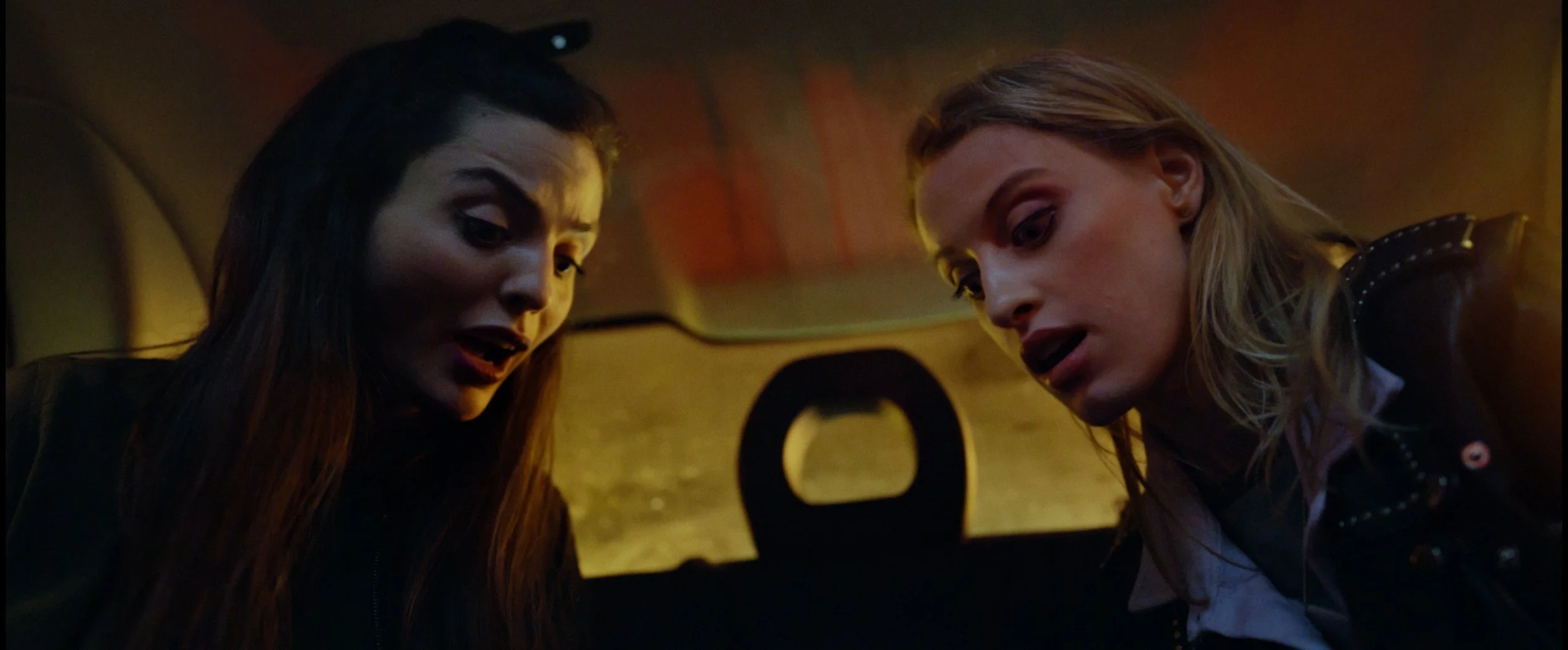
A cab's journey shifts pace when Claire and Hannah discover a bag neither of them had noticed when they climbed in. Can they keep the bag a secret from the driver?
Written and directed by Renzo Vasquez
Produced by Paul Coward
A cab's journey shifts pace when Claire and Hannah discover a bag neither of them had noticed when they climbed in. They are shocked to find out what is inside the bag and argue about what to do with it, anxious to keep their find a secret from the driver.
ABOUT THE FILM
The script for TRIGGER won the Challenge ALEXA 2020 competition supported by ARRI & Directors UK. Once produced it won the Jury Award for “Best London Film” at BELIFF - Be Epic! London International Film Festival. It was also nominated at the Wales International Film Festival & the Making Waves Film Festival. Other notable festival selections include: Crystal Palace International Film Festival & Sunderland Shorts Film Festival
It also received Semi-Finalist status at the Academy Award qualifying Flickers' Rhode Island International Film Festival.
TRIGGER first caught our attention as a submission to our upcoming Kino London Short Film Festival. We gave it Semi-Finalist status & if you’d like to watch it in person with the filmmaker in attendance then you can at our Short Film Open Mic event on Sunday, April 23rd.
ABOUT THE FILMmakerS
Renzo Vasquez is an award-winning director of narrative, commercials and experimental dance films who has worked on both sides of the Atlantic Oceans.
“Trigger” is Renzo’s debut as a writer-director. Born in Brazil and based in London since 2009, he is currently working on a slate of short films while developing his second feature film.
In his storytelling Renzo likes to explore characters that have an angle of complexity and find themselves in situations that often play with the unexpected getting under the audience’s skin when provoked by twists in the story.
READ OUR INTERVIEW WITH RENZO
Tell us a bit about yourself and your filmmaking background.
As a young teenager I had an appetite for cinema and storytelling that started with an interest for crime films, thrillers and Westerns. My career started as a copywriter, then producer, assistant director and director in commercials, and finally moved into directing fiction which coincided with me moving from São Paulo to London in 2009.
Tell us about the genesis of Trigger. What inspired this film?
Sometime ago, I came across a real story about two young women who found a bag of cash in the back seat of a London cab after a night out. I always thought this situation could be a fun short film with a script full of possibilities in terms of twists and unpredictable endings. Eventually, I merged this idea with another about two aspiring actresses who take their scene work a little too far.
You won the Challenge ALEXA 2020 supported by Directors UK, which enabled a two-day shoot with ARRI gear. Can you tell us about that experience?
As a Challenge ALEXA film with ARRI and Directors UK backing us, it gained support from top-level crew, cast and companies. It made a big difference for an indie filmmaker. It was like having a stamp on the project, meaning that it was a solid project with a deadline to shoot and delivery. We shot the film inside a cab at night, so using the ARRI ALEXA Mini LF and Signature Primes helped us to create a cinematic feel and explore different compositions inside the limited space we had.
What tips would you give to other filmmakers submitting their scripts to competitions? How can they also cut through the noise like you did?
Once you have a strong and polished script, it's time to prepare a compelling treatment. It is essential to keep the treatment concise, clear and on point, conveying your vision through a combination of textual and visual elements while ensuring that all competition submission requirements are met.
So Trigger is your debut as a writer, but you’ve previously directed material written by others, correct? How did you find the experience different directing your own material vs someone else?
I’ve previously directed a feature film written by another writer and it was by far a different experience. I’d say it’s like the difference between being a guest and a host at a party. If you write the film you are the host, meaning that you know every single detail, all the guests, the food, the drinks, how loud you can play the music and so on. But if someone else wrote the film, then you are more likely to be a guest at the party. Even if you were an early bird, a close friend of the host and knew a lot of the details, there were still some things you never or only noticed at the end of the party. Either way, directing yours or someone else's script is an amazing experience.
What obstacles did you overcome while in the making of this film?
As soon as the project had been selected I had to act very quickly because part of the Challenge Alexa was to shoot and deliver the film within a couple of months. So this wasn’t an obstacle, but definitely a challenge to get everything in place so quickly. A couple of obstacles we faced was limited shooting time and budget and we used our creative thinking to find solutions in pre-production. For instance, we couldn't afford a low loader, but we found the perfect actor who played the driver who also had real-life experience. During the shoot the weather was another challenge as it rained on the first day, but our art department created rain special effects for the second day. I would say embrace the challenges you are presented with because flexible thinking and finding solutions is an important part of becoming a stronger director and collaborator at the end of the day.
Tell us about the journey of getting your film to audiences. How was your experience in general with the festival circuit?
Watching “Trigger” on that huge cinema screen at Crystal Palace International Film Festival was a brilliant start for our festival run. We then got into a really interesting variety of festivals both in the UK and abroad. Taking part in the festivals in person and remotely online was an incredible opportunity to connect with other filmmakers and industry professionals, as well as receive feedback from audiences and peers. Another highlight was the 5 stars review we received from the UK Film Review Festival. All together, the official selections, awards and reviews really helped to create a buzz around the film and elevate its presence during the festival circuit.
What advice would you give to filmmakers submitting to festivals?
Firstly, don't rush to finish your film just to submit it to a particular festival. Once you're ready to start submitting, you have two options: hire someone to handle it for you or do it yourself. With Trigger, I did it myself, which was great but also hard work, time and money consuming. After two years on the festival circuit, I have a better understanding of how it works and have built a network, but for my next short film, I might consider hiring a company to handle the festival circuit so I can focus on my projects.
What do you think is the biggest challenge short filmmakers face trying to break into the industry?
Funding, getting their work noticed and finding an audience are probably some of the biggest challenges for short filmmakers. And when trying to move from short to long format the challenge is being able to prove that they can tell a longer story as well as manage all aspects of each step of a big production.
Any film recommendations that we should add to our watchlist?
Kore-eda Hirokazu’s Broker, Darius Marder’s Sound of Metal, Asghar Farhadi’s A Hero, Shaunak Sen’s All That Breathes and Luca Guadagnino’s Bones and All to name a few.
Interested in getting your work selected as Short of the Week?

Portrait
Based on real accounts, a model takes matters into her own hands to expose a serial predator in the photography world.
Directed by Keir Siewert
Produced by Alix Austin
Written by Keir Siewert & Anonymous
Based on real accounts, a model takes matters into her own hands to expose a serial predator in the photography world.
Rhetta, an industrious model, sets up a shoot with a predatory photographer, notorious for his coercion tactics and aggressive behaviour. However, little does he realise that Rhetta has orchestrated this meeting as a sting, to expose his inappropriate behaviour on an online video live stream.
Portrait is a film built on research from interviews with 21 models about their experiences in the photography world, including real stories.
ABOUT THE FILM
Not only was PORTRAIT a big hit at our 2022 film festival taking home the awards for Best Director, Best Drama, and Best Editing, it was also selected for the BAFTA qualifying Carmarthen Bay Film Festival, Beeston Film Festival, and the Independent Film Awards London. It’s been release online via Klipist.
ABOUT THE FILMmakerS
Co-directing Team Alix Austin & Keir Siewert: A/K (Kill Your Lover, currently in post-production)
Alix & Keir met 10 years ago on a music video shoot and have been making films together ever since.
They were selected to be part of FrightFest and Queensbury Picture's NEW BLOOD '22 initiative. The team are also the recipient of the Raimi Productions Scholarship as featured in FANGORIA.
Notable work includes co-directing the London segment for Horror Anthology 'ISOLATION', alongside Larry Fessenden, Bobby Roe and Dennie Gordon, which premiered at Frightfest and Screamfest 2021 and featured in Variety, Bloody Disgusting and more.
Their multiple award-winning short film roster has screened at over 100 festivals globally:
RETCH (2018): Available on ALTER & Bloody Disgusting TV
PORTRAIT (2020): Available to stream on Klipist
SUCKER (2022): Premiering online in Summer 2023
Their first feature film, toxic relationship body horror, KILL YOUR LOVER is currently in post-production, working closely with Executive Producer Douglas Cox (Host).
READ OUR INTERVIEW WITH ALIX & KEIR
Welcome back to our Short of the Week series. What have you been up to since we last interviewed you with True Value last August? How is post-production going for your feature, Kill Your Lover?
Hi there! Alix and Keir here - very excited to be back with Kino’s Short of the Week showcase. AA is Alix and KS is Keir, so that way you’ll know who’s answering the question!
For those who don’t know our work, we’ve been making films together for the last 10 years and recently officially joined forces as a co-directing team (A/K for short) on our first feature film KILL YOUR LOVER! In the case of PORTRAIT, Keir directed and wrote, while Alix produced.
What we’ve been up to since True Value premiered on Short of the week last Fall:
We shot the second block on our feature KILL YOUR LOVER in November, which was a wild ride! Now we’re in post and because the film is very music driven, we’ve been working closely with our Composer and good friend Thibault Chavanis.
Apart from that we’re definitely in more of a business driven phase, looking ahead to the future. It’s difficult to say no to new projects for fun rather than money, for instance, but we owe it to the feature and everyone’s hard work to put our all into finishing it well.
Tell us about the genesis of Portrait and how the project came about?
KS: Portrait initially came from an entirely innocent conversation. I was doing a photoshoot, chatting casually to the model and I asked her “what’s the weirdest shoot you ever had?”What she told me shocked me so much and it has stuck with me ever since.
She told me a photographer had once taken a break during a shoot to pleasure himself in the bathroom with the pictures he had just taken of her. It was a story I couldn’t get out of my head and ultimately became the catalyst for Portrait.
Your portfolio is heavily filled with horror films, so Portrait is quite a departure for you. Can you discuss how your horror background affected the way you approached a drama about a real life horrific encounter?
AA: A little known fact about us is that we’ve made a lot of non-horror films including and especially comedies. We just don’t promote them as much anymore because we’re not pulling in that direction anymore. That and it doesn’t support our feature film Slate.
When it comes to PORTRAIT, I think Keir will join me in saying that this film came about because it was a story that demanded to be made. We knew we had to make it.
RETCH (2018) was our first horror and PORTRAIT was made a year later. All our other, more strictly Horror genre work (Isolation, Do Not Resuscitate, Sucker) came after making PORTRAIT (2019).
KS: I think a lot of the skills that you learn through horror; like creating tension, working with intense emotion and understanding tone are translatable into most other genres. Our goal with PORTRAIT was to create a subjective experience and our horror work was a really good base to lead with the emotional content of the film rather than a more withdrawn perspective.
A lot of shorts thrive by embracing a minimalist master shot style, however, Portrait has SO much coverage which really helps amp the suspense. Can you talk about your process shotlisting and planning your shoots to ensure you walk away with such great coverage and still make it work on a micro-budget?
KS: We always try to lead with the idea that a scene has a design to it and that a sequence has a purpose. The goal isn’t really to cover the scene, it’s to tell the story of it, so we approach each scene individually.
So while there was a shotlist of the conversation in the first half of PORTRAIT, the second scene (the photo shoot) was more about blocking out the scene and then having a loose camera that can adjust and move within the space.
We knew there would be certain moments we wanted to highlight for the edit (like his hands touching her). So we grabbed that in slow motion as a distinct cutaway shot. But ultimately the first scene has a deliberate design, whereas the second we knew would be created through the edit.
Our general approach is to make sure to adapt to whatever will serve the narrative of the scene best, rather than just going for safety.
What were some of the main obstacles you experienced when making of Portrait and how did you overcome them?
KS: The content was definitely uncomfortable for some people, especially reading it in a written form. The stylistic approach of combining black and white and colour I think also alienated people. I think when looking for funding or support often these sorts of subject matters are more appealing if they can be wrapped up in a nice glossy moral lesson.
Portrait has had some good festival success - not just being selected for the BAFTA qualifying Carmarthen Bay Film Festival, but also several awards from Beeston, Independent Film Awards London, Swindon, Unrestricted View, and Southport. Any tips for filmmakers currently trying to navigate the festival circuit? Any festivals where you had a great experience and would recommend?
AA: My main recommendation would be to be really clear on what you think your film is and be targeted in your festival submissions. Go for a range of festivals, not just BAFTA or Oscar-qualifying festivals (so-called ‘mid tier’ festivals are way nicer anyway!).
The above obviously depends on how far along in your filmmaking journey you are, but it’s a good approach for everyone, unless you have the right funding bodies/connections attached to your project to get you through the door more easily with the so-called ‘prestige’ festivals.
Some great practical advice I got from a course recently and I wish I’d known sooner - set your own Finish Line by answering the 3 WHYs:
Ask yourself 3 Questions:
- WHY: Why filmmaking?
- WHY: Why this film?
- WHY: Why festivals?
(What are you looking to achieve by attending the festivals with a film? Are you looking for a team for your next project? Are you using it to show you have a proof of concept for a feature and are looking for investors? Could you achieve your goals by attending the festival rather than submitting a film?)
If you have a clear goal in mind it’ll deter you from scattergun submitting your film endlessly and most likely making yourself miserable (and poorer) in the process.
Measure your success, and don’t treat film submissions like a lottery ticket: It should ideally be the beginning of a partnership with the festival.
I would definitely shout out SHIFT Festival (Netherlands) and Beeston for great people and vibes. And I would be remiss not to mention KINO itself, because we felt incredibly supported throughout our journey and that they really GOT the film, for which we’ll always be grateful.
Latest film recommendations that we should add to our watchlist?
We recently rewatched Ken Russell’s THE DEVILS, truly one of the great British films that has never gotten the wide attention and acclaim it deserves. Togo on Disney+ for wholesome, good vibes and Willem Dafoe being a dogsledding boss.
Interested in getting your work selected as Short of the Week?

Charlie
A young man successfully orchestrates a double-ended rental scam until the weight of his own ego compromises everything.

WRITTEN & Directed by Matthew Horvat
PRODUCED by Peter Widdrington
Based on a true story, a young man successfully orchestrates a double-ended rental scam until the weight of his own ego compromises everything.
ABOUT THE FILM
CHARLIE premiered at the Academy Award Qualifying LA Shorts Fest and also screened at the Fort Lauderdale International Film Festival and the NY Shorts International Festival.
ABOUT THE FILMmaker
Matthew Horvat is a writer/director based in Toronto. His previous efforts as a creative producer include the short documentary 'Embers of Varanasi' which won the jury award at Nova Film Festival. While in film school, two of his projects as director were featured in the Kingston Canadian Film Festival. 'Charlie' is his directorial debut.
READ OUR INTERVIEW WITH Matthew
Welcome to our Short of the Week series and sharing your film Charlie with us! So Charlie was your directorial debut, yes? Can you tell us a little bit about yourself and what led you to filmmaking?
Thank you! Yes! Definitely my first 'real' short film out of film school to play at festivals. Writing has always been a hobby of mine, and that led me to try to visualize my stories through film. I've been working in the Toronto film industry for about 8 years now, doing various roles. I'll also produce my friends' short films from time to time and have some post production work experience as well. I never intended to be a jack of all trades, but working as a freelancer gives you opportunities to get a taste of everything (if you want).
Charlie is based on a true story... Can you tell us about the genesis of the film and how the project came about?
It was a news story that came out probably 18 months before we shot the film. It wasn't an unusual story, these and similar types of scams are often perpetuated in Toronto and other major cities. But I dug deep into who this grifter was, and a picture started to form of a young man desperately trying to perpetuate an image of success by any means necessary. It became less about the action and more about the character, and the lengths he was willing to go to keep his unearned sham of a lifestyle going at the expense of others.
What were some of your influences on the project? We get some hints of American Psycho - was that a conscious or unconscious homage?
More unconscious to be honest! It turned out great that way because I do love the absurdity and almost surreal quality of American Psycho. Charlie definitely has some similarities with Patrick Bateman. Charlie isn't violent though, he's more of an 'all bark and no bite' type of character, but our lead James definitely leaned into that motif. At the end of the day though, Charlie is more of a grifter than a killer. Inspiration wise, The Social Network, The Big Short, were definately referenced when we were discussing lighting and camera. Story wise, I borrowed a lot from The Wolf of Wall Street and Nightcrawler to achieve that sociopathic 'rags to riches' motif.
What were some of the main obstacles you experienced when making of Charlie and how did you overcome them?
I hate to be that guy, but it all went pretty smoothly! My producer and I are professional production coordinators and managers, so we used our experience managing larger budgets to keep things smooth with this passion project. The biggest hurdle was after the film got produced in late 2019, was when Covid hit afterwards. I'm sure everyone is sick of hearing about how Covid affected filmmakers, but our premiere at LA Shorts Fest was online, and as much as film festivals did their best to keep things going, film festivals just aren't the same not in person. Luckily we were able to host it at a couple in-person festivals later in its run, so at least we had a couple live screenings for it.
Tell us about the journey of getting your film to audiences. You premiered at the Academy qualifying LA Shorts - any other festival highlights?
A lot of them were online, but we played at the Fort Lauderdale International Film Festival and the NY Shorts International Festival, both of which were in person. These were the only two I and a few of the crew were able to attend, but we were thrilled nonetheless to screen our film in front of a live audience finally.
What do you think is the biggest challenge short filmmakers face trying to break into the industry?
Consistency. There are plenty of jobs in film, but the creative ones, directing, cinematography, editing, acting, all come with lack of consistency at the start. These top jobs are competitive, and it usually takes a while to break into them, but it's one of those things where you need to understand it takes a while to land consistent creative gigs. I'm still working on that personally, it's easy to lose track of it when you're busy with your day job and get lazy with honing your creative work. It's always a balance of keeping your livelihood while also remembering why you wanted to work in film to begin with, and nurture that side of you.
Any film recommendations that we should add to our watchlist?
Okay. It's super grimey, and I would recommend looking at the content warnings before anyone watches it, but a hidden gem film is Ms. 45. I've never seen a film pack such a punch with such a limited budget, set in New York of yesteryear that simply can't be captured anymore organically.
Interested in getting your work selected as Short of the Week?

Myrtle
A mother with one meal to prepare and no way out.
Directed by Patricia McCormack
WRITTEN BY MEGAN BARKER
PRODUCED by Patricia McCormack & Shaheen Schleifer
Myrtle, a trailer park Mom from Indiana cooks dinner for her son but something’s not quite right, this kitchen is anonymous, industrial and Myrtle is working to a deadline. As her composure unravels, we realize that 21 grams is all that separates life from death.
ABOUT THE FILM
MYRTLE was adapted from a play by Patricia McCormack and Megan Barker. It won the Audience Award at our festival in 2022, as well as earning other Official Selections at the Birmingham Film Festival, the Long Beach International Film Festival and Semi-Finalist status at the Academy Award qualifying Flickers Rhode Island International Film Festival. It was recently released online via Omeleto.
ABOUT THE FILMmaker
Patricia McCormack was born and raised in Glasgow, Scotland and trained as an Actress at Queen Margaret University in Edinburgh. Previous acting credits include ‘Pit’ at The Traverse Theatre, 'Lost At Sea' Finborough Theatre, The Field Of Blood 2 (BBC1), River City (BBC Scotland). She has featured in several Afternoon Play's on BBC Radio 4 and appeared in long-running series McLevy starring Brian Cox. MYRTLE is Patricia's directorial debut.
READ OUR INTERVIEW WITH PATRICIA
Tell us a bit about yourself and your filmmaking background.
“Myrtle” is in fact, my directorial debut. My background is as an actor, mainly in theatre and for the last few years I’ve been working in advertising. I’ve always had a fascination and love of storytelling and wanted to make my own film but I didn’t know where to start. So initially I’d sneak out of the agency I was working at and scroll through the books at the BFI library on the Southbank, teaching myself the basic tenets of movie making, this is where I wrote the shooting script for “Myrtle”.
Tell us about the genesis of Myrtle? What was your inspiration behind the concept?
It’s actually an adaptation from a play that Megan Barker wrote, I broached the idea of developing it into a film as I loved the premise and thought it had real dramatic potential. We felt it important to keep the audience in the dark initially as to where we are and why Myrtle is preparing this meal, in order for the final moments to (hopefully) have a stronger impact.
Not only did you direct Myrtle, but you’re also acting in it as well. Can you talk about how you balanced those two roles?
I tried to be as prepared as I possibly could be, taking all the time I needed to go over every detail in advance, rehearsing thoroughly, knowing exactly the look and feel of the film I wanted to make.
I also listened to actor/directors that I admire regarding their best practise. The key advice being, on the day, to simply keep moving and not get sucked into reviewing footage too much. So, I followed the principle of shoot more, if it feels right move on and don’t overthink it.
As an American myself, when I first saw the film I genuinely believed you were an American actress. What preparation did you do to nail the accent?
Well, that is the best praise so thank you! We placed Myrtle very specifically in Evansville, Southwest Indiana, I immersed myself listening to content from there. I then engaged with an amazing dialect coach Rebecca Gausnell (who is also from the States), so she helped me to be as specific as possible and iron out any lingering Scottish vowels.
What were some of the main obstacles you experienced when making Myrtle and how did you overcome them?
Number 1 would be finding the location. I had found a community centre but really the space was too small for how we wanted to shoot. I then put out an advert on a locations page on facebook and received 2 responses, one from a commercial kitchen that was charging a fortune and another from the wife of a restauranteur, who told me to give her husband a call. His restaurant was closed part of the week due to covid and he said he could accommodate us if we were able to film within the next 3 weeks, so suddenly everything was moving very quickly.
The second obstacle was finding a co producer as I had been setting everything up myself and it wasn’t until a week before the shoot that I met Shaheen Schleifer who luckily agreed to come on board and produce.
Myrtle won the Audience Award at our festival in 2022. Can you tell us about your experiences with other festivals? Also, any tips for filmmakers currently trying to navigate the festival circuit?
It’s a hard one as there’s so much out there and it’s tricky to navigate when you’re new to it. I’d say initially, if you’re not familiar with the festival, check out their website before you apply, to make sure they are legit, as it seems there are still a fair few out there that might not be worth the submission fee.
I suppose trying to get into a qualifier would be the main objective, as that can change things very quickly for you. I’d also say to make sure you have a strategy, research festivals, find ones that may be a good match for your film, ie. if there’s a specific issue or theme that they champion that aligns with your project, maybe target those festivals first.
Our festival run was quite strange in a way, as it started when covid travel restrictions were in place, so there were a number of festivals Stateside I wasn’t able to attend (except via zoom, which is never the same). Kino was among the first that I could go to which made being there in person, then winning an award on top of that, extra special.
Now that you've completed your festival journey the film has been picked up by Klipist. How have you found the online release of the film compared to the festival circuit? Any tips for filmmakers looking to release their film online?
I’m just thrilled that the film gets a longer life. At the end of the day, you make a film in the hope that it will get an audience, so the fact that Myrtle is now selected to play on Klipist is absolutely thrilling.
What do you think is the biggest challenge short filmmakers face trying to break into the industry?
Getting money and making connections are probably the hardest things initially and the fact that even if you have made something you are proud of, it can still be challenging getting your work seen.
Words of wisdom. What advice would you give to other filmmakers?
Go for it and believe. It’s really that simple, you have to have an unrelenting belief. If you feel uncertain at any point, ask yourself “What is my next best move” and go from there. As Goethe says, ‘Action has magic, power and grace’.
What are you working on now?
I’m editing my next short film “Anneka’s Problem” which will hopefully be finished by the end of April. It’s very different in tone from “Myrtle” and we shot it in Glasgow (which is where I’m from), so a departure from the Mid-West! It’s an ambitious little project, so I’m looking forward to seeing how it turns out.
Any film recommendations that we should add to our watchlist?
Obviously, the other shorts that are on Klipist, there’s some cracking films on there. I loved the Oscar and BAFTA winning short “An Irish Goodbye”. Highlights from the year for me have been “Aftersun”, “Blue Jean” and “Everything Everywhere All at Once”.
Interested in getting your work selected as Short of the Week?
Fishwife
In wild 18th century Britain a lonely woman discovers that her menstrual cycle is of interest to a stranger.

Written, Produced & Directed by Beth Park
In wild 18th century Britain a lonely woman discovers that her menstrual cycle is of interest to a stranger.
ABOUT THE FILM
FISHWIFE is a dark and mysterious period piece which treads the line between horror and fantasy. In traditional horror a woman's fate is used as a plot point to terrify and excite an audience. In creating FISHWIFE filmmaker Beth Park was more interested in a true and specific female experience.
The film was shot in two days in Wales during a biblical storm, and once released it had one hell of a festival run. Not only was FISHWIFE nominated for several awards at our festival last year, it also played at renown genre festivals (Filmquest & SITGES), Academy Award qualifying festivals (Hollyshorts, Flickers Rhode Island, & Austin Film Festival), and BAFTA qualifying festivals (Underwire, Carmarthen Bay Film Festival, & Aesthetica). Recently, FISHWIFE premiered online with ALTER.
ABOUT THE FILMMAKER
Beth Park trained as an actor and worked for several years in theatre. She also works directing actors in video games including Baldur's Gate III. During the pandemic Beth wrote and directed her first short film, FISHWIFE.
READ OUR INTERVIEW WITH BETH
Welcome to our Short of the Week series. Tell us a bit about yourself and your filmmaking background.
I worked as an actor for about 10 years then when I took a year off to have a baby my world got flipped upside down. I was no longer content expending so much energy trying to fit into other peoples stories and I wanted to tell things from my perspective. I've always been imaginative but never really finished writing projects before. I think although I had some privileges growing up I've never had an abundance of time or money. When the pandemic hit I had time off work and a lump sum of a few thousand pounds in furlough money transferred into my account. That time and money combined with my new life experiences enabled me to create Fishwife.
How has your experience directing video games informed your narrative filmmaking process?
The two are not particularly closely linked. Video games are enormous machines with sometimes thousands of people in different countries working indirectly together. So when I direct an actor in a game there is a whole world of context, visuals, music etc which is nothing to do with me. In film I am trying to make the whole mise en scene cohesive and meaningful to the story. The only very useful transferable skill is that I direct actors every single day. So I'm good at reading what they need and don't get into my own head about that.
Tell us about the genesis of Fishwife. What inspired this film?
I was just driving along the motorway with my baby asleep in the back and the idea popped into my head! Initially I thought about writing it as a short story or even a novel but then when the furlough money came in I started to turn it into a script. At the time I didn't even want to be a filmmaker, I just wanted to make this specific film. Now I'm obsessed!
What were some of the main obstacles you experienced when making of Fishwife and how did you overcome them?
Oh gosh, there were so many. As I mentioned I got this lump sum, but it was only a few thousand pounds (which is a lot of money to get from nowhere but isn't a lot when it comes to film making!). So everything had to be bought or made as cheaply as possible. Then when we actually shot it there was a dreadful storm so we were contending against almost hurricane level winds in the middle of Snowdonia. And I was also crazy enough to make everyone do a 2.5 hour unit move between the internal and external locations. All shot in two days! Post production was hard as I was basically a team of 1 person, having produced it myself, so trying to get everything to the editor, colourist, composer, sound mixer myself was really tough. I was very burnt out when it was finally complete.
Fishwife has had some amazing festival success. Tell us about some of your favourite festival experiences.
There were a lot of festivals! Many of them were overseas so I didn't attend them, except Sitges which was absolutely incredible, the audiences there are just amazing! It wasn't easy for me to attend even some of the uk ones as I have a job and a small child so I have responsibilities I have to attend to. But my favourite thing about the festivals was being able to watch films to be honest, just a weekend of watching non stop movies is a real blast.
Any tips for filmmakers currently trying to navigate the festival circuit?
I used Festival Formula to create a list of festivals to target and a schedule for me to submit by. As I mentioned I was very burnt out when I finished the film. I was in kind of a hopeless state, I truly believed the film was bad and I had wasted everyones time and money. I couldn't afford to use Festival Formula but my parents very kindly paid the fee because they recognised what a mess I was in! I would recommend investing in this service if you can, they helped me find the right festivals to apply to and saved me wasting money on Festivals which weren't appropriate.
Now that you've completed your festival journey the film has been picked up by Alter. How have you found the online release of the film compared to the festival circuit? Any tips for filmmakers looking to release their film online?
I have really loved it being released online! There have been so many appreciative comments from people who really liked it and really seemed to get it! In comparison to the festival circuit this launch has been much more gratifying. I found many festivals to be quite impersonal, with no feedback or any kind of response about the film, just a 'congratulations you got a laurel, now please send us all the data', now I can actually see that there is an audience for it and people are mostly enjoying it!
What do you think is the biggest challenge short filmmakers face trying to break into the industry?
Money. It's so expensive to make a film. If you have money you're already so far ahead in the game. If you can combine that with having a good idea then you can hopefully make some headway. It takes a lot of hard work, but it's worth it.
Any film recommendations that we should add to our watchlist?
A couple of films I saw at Festivals are now available on Netflix; Nocebo and Vesper, I loved them both.
Apply to get your short selected as our Weekly Pick

After - A Love Story
A married couple survives a traumatic event. But their relationship may not.
Directed by CLARE COONEY
written by Alyssa Thordarson
A couple is attending counseling together. Formerly close and affectionate with one another, Charlie and Edie are having trouble in the aftermath of a terrifying event. Not only do they have to reckon with the attack itself, but how it's affected them, both separately and as a couple. But as their session unfolds, neither partner knows how to bridge the gap between them. They have to be completely honest with one another about their deepest, most difficult feelings, or else risk growing even further apart.
ABOUT THE FILM
AFTER (a love story) premiered at the Academy Award qualifying Cleveland International Film Festival in 2022. It had quite the festival run with Official Selections at LA Shorts and winning Best Drama at the North Hollywood Cinefest. It’s now available to watch on Omeleto.
ABOUT THE FILMmaker
Clare is an actor and filmmaker. Originally from Detroit, Clare attended the University of Notre Dame and spent a year abroad at Trinity College, Dublin. Clare graduated with honors in Psychology and Film, Television & Theater and went on to Chicago to attend the prestigious School at Steppenwolf. Clare served as writer, director, editor, producer, and lead actor in her award-winning short film "Runner," which played at 15 film festivals, winning 6 awards, and garnering Cooney a "Filmmaker to Watch" nomination from the Academy-Qualifying Atlanta Film Festival. Clare made Newcity Magazine's Film 50 list in 2020 and 2019 for being "one of 50 individuals who shape Chicago's film scene." As an actor she is known for NBC's "Chicago PD", Pop TV's "Hot Date", Steve McQueen's "Widows." She is currently in post-production on her debut feature film “Departing Seniors“
READ OUR INTERVIEW WITH CLARE
Welcome to our Short of the Week series. Tell us a bit about yourself and your filmmaking background.
I started off as an actor in Chicago. I always had an interest in directing but wasn’t sure how to go about it. After a few years in the Chicago film and theater scene, I took a workshop with filmmaker Stephen Cone in which we developed and shot short films. I found the class to be really empowering and it helped me meet local film professionals. I met my favorite Chicago DP, Jason Chiu, by taking the class. Shortly after, I wrote my first short film RUNNER and begged Jason to collaborate on it with me. I was very lucky that he liked the script and said yes. I wrote, directed, produced, and starred in the film, and we shot it for very little money over the course of 2 days. A bunch of lovely and talented friends worked on it for free, and I’m so incredibly grateful that so many folks said “yes” and helped make it happen. I ended up teaching myself how to edit with a few Premiere Pro lessons from my co-producer, and I found that editing came really naturally to me. RUNNER ended up doing incredibly well on the film festival circuit, playing at over 15 fests, winning 6 awards, and securing me a “Filmmaker to Watch” nomination from the Atlanta Film Festival. That short film really catapulted my filmmaking career. Since then I’ve directed a handful of short films, most of which have gone on to play at Academy-Qualifying film festivals and have received a wonderful reception online. I just directed my first feature film, Departing Seniors, in Chicago this summer.
Tell us about the genesis of AFTER (A Love Story) and how the project came about?
My friend Alyssa Thordarson wrote her first short screenplay, and she sent it along to me for thoughts and feedback. I truly only had one note on the entire film, and had lots of complimentary things to say. Alyssa followed up by asking if I’d be interested in directing the film - I was very touched and immediately said yes. We quickly assembled the rest of the cast and creative team, and filmed the short 3 months later!
I was very compelled by the topic - the idea of “after.” Usually, in stories involving any kind of assault or trauma, we get a lot of the lead up to the event, then an overly graphic depiction of the assault or trauma itself, then a grief-stricken depiction of how broken the woman is. We rarely get to see how it affects her life, or her partner’s life, in unexpected ways.
You're also an actress and have directed yourself in previous shorts. Can you chat about your decisions on when to fill a role yourself and when you prefer to cast someone else in the role?
The reasoning is pretty simple and a little selfish, honestly. I love to act and don’t get to do it as often as I’d like because of how competitive and oversaturated the market is. Usually when I write a film, I subconsciously write a role for myself. All the characters I write are based off of a piece of me, or have a bit of my voice in them, so it’s not too surprising. Once I’m done with a script, if there’s a role that feels really right for me, I usually can’t imagine someone else playing it. It can make directing the film a little bit easier, actually — there’s one less person to give direction to! I already know what I want. :)
In the case of AFTER, Alyssa wrote the film (and stars in the film as Edie) this was always her role and always her baby. I approached this project as only a director. It never struck me to play a role, like the therapist or something. I could have broached the topic if I felt the role was really calling to me, but Susan Jamshidi was who we both saw in that role. It’s just based off gut instinct. I either see myself in the role and choose to pursue it, or I don’t. If I don’t think it’ll serve the project to have me play a role, then I stick to only directing.
What were some of the main obstacles you experienced when making AFTER and how did you overcome them?
I live in Los Angeles and the majority of the creative team is in Chicago, so that made pre-production a little more difficult, just in terms of production meetings, location scouting, etc. We also shot in August of 2021 during a relatively tough Covid time, so testing and keeping everyone safe was definitely an obstacle. Another major obstacle was, as always, money and time. We wanted to keep filming to only two days, rather than three, to save money. That was definitely doable, but it was very tight so we had to constantly keep an eye on the clock and be strategic with the shortlist. That being said, I didn’t want to ever rush the actors - particularly during the therapy scene - since that takes up so much of the film. It was crucial to get that right. Thankfully I have a pretty good sense of what scenes can be knocked out quickly and what scenes need extra time and care, so we always made our day and caught up when we fell behind. The only time I ever got really concerned was towards the very end of our second day. The majority of that day was filming the therapy scene. The natural light outside was changing significantly throughout the day, and our DP, gaffer, and grip were making magic happen to keep things consistent. But the weather was threatening to storm. The wind was very, very intense and it started to rain, which meant trouble and potential danger for the lights our team had placed outside. Thankfully mother nature was on our side, and though the weather put us a little behind and caused a lot of stress for our team, it didn't get so bad that we had to bring the lights inside and stop shooting. I was thankful that everyone kept a cool head, stayed positive, problem solved, and did what they could to make things work so that we could make our day and complete the film.
I'm fascinated by your decision to leave the ending unresolved as the characters never touch. Can you chat about the non-linear structure of the film, your intention behind these elements, and what you're trying to say with the piece
I can’t take credit for that — it was explicit in the script that the characters are on the couch, relatively content and “together,” but that there was still a clear space between them. I think in the initial script it said that Charlie and Edie were “a full six inches apart.” I decided to take it a step further by having their hands very close together, and still not touching. We then further accentuated that separateness, making the hand placement a bittersweet reveal as the camera slowly pulls back from their faces. It would have felt wrong to me if their hands touched. Healing doesn’t take place overnight. It takes time, effort, and love.
Similarly I can’t take credit for the nonlinear structure of the film, that was in the script as well. My goal was to allow the storytelling and visuals to be clear enough that you never needed a caption to explain when a scene was taking place — the world “before” and the world “after” needed to feel and look deeply different, and I think we achieved that really well. I think throughout the film we see these characters love each other, but sometimes that love can look drastically different.
The film was written by the lead actress, Alyssa Thordarson. Both performances feel very natural and authentic. It's rare to see a film about relationship issues where you can equally empathize with both people. Can you chat about the character development and how much actors brought to the role vs what was on the page?
Casting is everything for me. The script comes alive once the right actors speak the lines. We didn’t hold any auditions for this — Alyssa and I were familiar enough with Glenn and Susaan’s work and we felt deeply confident they were the right people for the roles. In terms of character development, I trust the actors to make strong choices and bring their full selves to the role, and then we navigate it together on set. I like my films to have a slice-of-life quality to them, I think it’s a great way to build tension. Whenever I see the acting, it takes me out of the film. So the actors came in already doing beautiful work, and I just sort of molded from there. I encouraged Susaan to approach the therapist role like a grounded, patient friend, because in my experience that’s the manner of good/real therapists. I wasn’t interested in depicting a TV therapist. Susaan took my direction brilliantly and fell right into it. As for Alyssa and Glenn, I encouraged them to take more time in the therapy scene and be a bit less fluent — particularly for Glenn’s character of Charlie. He’s going through shame, he’s upset, he’s confused, he’s probably a little embarrassed — I really pushed Glenn to take his time and struggle through the lines. The moment something felt inauthentic to him, he had my full permission to start over. That’s really not easy, but actors know when they truly have dropped into a character/emotion in a genuine way, and when they’re performing a tiny bit. It was beautiful to watch him relax into his monologue and really connect to the words. I’m really proud of all the performances in this piece. It’s not an easy task to make this sort of scene feel natural, when it could easily lean towards the melodramatic.
AFTER has had some good festival success. Can you tell us about your experiences premiering at the Cleveland Film Festival and screening the film with LA Shorts and other festivals? Also any tips for filmmakers currently trying to navigate the festival circuit? Any festivals where you had a great experience and would recommend?
Screening at Cleveland was such a great way to start the run. It’s an Academy-Qualifying film festival and the programming is really top notch. Paul Sloop is the shorts programmer, and he was such a champion of our film. I’d absolutely recommend Cleveland to everyone. LA Shorts was our other Academy-Qualifier, and our CA Premiere. It was such a treat to get to mingle with other filmmakers in Hollywood. I saw quite a few short blocks at LA Shorts and was blown away by the talent. In terms of advice, I’d say to aim for a premiere at an Academy Qualifying fest — that really sets you up for a strong festival run, because other film festivals look to those fests for guidance and programming ideas. We had so many fests reach out to us directly and give us fee waivers after we premiered at an Academy-qualifying fest. Short of Academy-fests, you just want to aim for a festival with a great reputation — fests that have been around for several years that consistently get great reviews on Filmfreeway or get listed on Top 50 Film Festivals lists. Just start your run as strong as you can. Research, research, research. Seek out festivals that are known for their shorts programming and for the way they treat filmmakers. I’d focus your submissions on festivals that have a mission or programming niche that is a good fit for your film’s topic or your film’s team. For instance, did your film dive into a social justice issue? If so, seek out fests that prioritize that sort of work or have a mission/focus on that topic. Was your film directed/written by a woman? If so, make sure to submit to fests that champion female-centric filmmaking and leaders. I’d also track what festivals have filmmaker networking events or parties set up. Sidewalk Film Festival, for instance, is one of my favorite film festivals — aside from their stellar programming, they just show filmmakers SUCH a good time. That sort of networking and fun energy is the best part of attending a festival, and I've met so many friend and collaborators through that fest.
Now that you've completed your festival journey and premiered on Omeleto, how are you finding the online release of the film compared to the festival circuit? Any tips for filmmakers looking to release their film online?
The film festival audiences were incredibly positive and emotionally connected to the film. We always had a really lively Q&A and folks approached us to talk about how much they related to a certain moment or character. When releasing it online, I was slightly nervous we’d get some trolls — Youtube is an enormous platform and films are bound to get a bit of hate. But the response online was just as kind and empathetic as our festival response. I’m so glad so many people felt this was an authentic portrayal of a couple struggling after a traumatic experience.
As far as tips, I certainly recommend Omeleto! The sort of films that do well on Omeleto are narrative, plot-heavy, character-driven stories. Those are the types of films I generally gravitate towards (and write), so Omeleto is a great place for my work -- two other films of mine are on there as well! It has helped to bring a lot of attention to my work, and having it among so many other amazing films on the channel is an honor.
What do you think is the biggest challenge short filmmakers face trying to break into the industry?
I mean, the challenges are usually the same, aren’t they? Money, resources, and connections. I still don’t know of any good way for short films to make much money, so I’ve always had to keep my budgets for my shorts extremely small. It’s really tough. Even once you’ve had a couple successful short films, that’s a great calling card, but you have to fight to make the jump into a longer-form project. This is such a competitive, huge industry and it’s very tough to get noticed by people who might be able to help your career rise. We all definitely need a little bit of luck :)
Interested in getting your work selected as Short of the Week?

Hidden Insight
During a conversation with his psychiatrist, an aspiring jazz musician suffering from social anxiety learns to find his place in the world through music.
Produced & Directed by James Hastings & Ben Ashton
written by James Hastings
During a conversation with his psychiatrist, Elliot, an aspiring jazz musician suffering from social anxiety, learns to find his place in the world through music.
ABOUT THE FILM
Ben Ashton and James Hastings won the grand prize at the 2021 Kino London Short Film Festival (the year we had to host our festival online… thanks covid!) with SEND IN THE CLOWNS unlocking our film fund. HIDDEN INSIGHT was produced early 2022 and is fresh off the festival circuit.
ABOUT THE FILMmakers
BEN ASHTON has been a professional actor since graduating from the world renowned drama school, Bristol Old Vic Theatre School. He trained in all forms of theatre ranging from Classical Theatre to Contemporary Theatre, Screen, Radio & Stage Combat. Since graduating Ben has gone on to perform professionally on stage and screen for many companies including the Royal Shakespeare Company, Guildford Shakespeare Company, The Watermill Theatre, Reading Between the Lines, Creation Theatre, BBC Television, ITV, BBC Radio 4 and many more.
JAMES HASTINGS first turned industry heads when he set up his independent film production company Hastings Infinity Films at the age of 12. He has since worked on numerous award-winning projects, including The Distance, a short film he took to Cannes film festival, being one of its youngest directors to attend. He made his feature debut at the age of 16, Raymond’s 5 (2017), which was funded through a successful Kickstarter campaign and distributed on Amazon Prime. After winning the inspiring young filmmaker award in 2017, James became a Global Youth Ambassador for RoundTable Global.
READ OUR INTERVIEW WITH ben & james
Tell us about the genesis of HIDDEN INSIGHT Where did you get the idea and why did you choose this project to focus on?
JAMES: As an enthusiast of jazz, it’s always been something I wanted to incorporate into a film, so after much brainstorming we developed the idea of a young musician dealing with mentalhealth issues, a timely subject worthy of exploring, and overcoming it through his passion for jazz. The themes of the film came partly from my own experience, with my creative passion being film often becoming a source of escapism in my own life. Our protagonist must balance his self-conscious, socially-anxious thoughts with his desire to live up to his heroes,the jazz maestros of the past, specifically saxophonist Charlie Parker. This combination led him to comparing his abilities to others and questioning his own self-worth.

Tell us about your experience winning the Kino fund and how it changed the way you approached making Hidden Insight? I know at first you were thinking of utilising our fund for a different project altogether - can you talk about the evolution of the development process?
BEN: When writing the story and then turning it into a fully-fledged film, it wasn’t in my thought-process that it could perform well at festivals and appeal to others - I just wanted to make the film I felt passionate about and spent years developing. Therefore winning the Kino Fund was a huge honour and something I’m very proud of and grateful for. At first we were thinking of utilising the fund for another film that I had written, but, in all honesty, we just didn’t have the resources, even with the generous fund that Kino provided, to create in the short amount of time (it’s set in the 90s and involves a house fire etc). James then pitched his script of Hidden Insight and due to James being integral in creating Send in the Clowns,with many hours of hard work, expertise, sweat and tears, I felt it would be a great project to do. The characters had many layers and I was interested in the challenge of creating the film within a small budget.
JAMES: Winning the Kino Fund was a huge honour and not only were we provided the funds, but the support and encouragement every step of the way. Originally, Ben had the idea for a different film which we decided to put on hold, due to various reasons. So, once we pitched our new idea to Dustin, he was very understanding and shared his ideas and feedback allowing us to get the ball rolling on something completely new.


What were some of the main obstacles you experienced when making Hidden Insight and how did you overcome them?
JAMES: When music performances are involved, another layer of difficulty is automatically added. Not only would we need original songs, but we needed actors who could sing and play instruments. Having established Elliot’s influence as Charlie Parker, we delved into his recordings, hearing the quick unpredictable bebop style he is so famous for, and whilst using it as inspiration, chose to slow it down, as if Elliot slowed Parker’s notes down to the speed of his own life. The songs were written by my sister, Sophie, and orchestrated by Archie Combe, with the Sax recordings by musician, Steph Plunkett. We were very lucky to find such talented actors willing to dive into their roles and work extremely hard to pull it off. Max Hoftgartner (Elliot), had just a few weeks to learn the Sax, and Jordan Wallace had only a few hours! Katie Mckenna pulled off her vocals phenomenally and so between them we had an awesome ensemble who I believe nailed it.
BEN: Only one thing I’d like to add is the challenge of creating this film with a small budget and timescale. We only had the theatre space booked for one day and being able to film all the interior shots was always going to be tough.Cast and crew worked tirelessly together to ensure we shot what we needed to shoot and it was a buzzing collaborative experience.
Tell us about your festival journey. Any tips and tricks for other filmmakers?
JAMES: Festivals have always been a little mystifying to me. It’s always a great delight to get accepted, but I've never gone in with a game plan or enough financing to enter all the ones I’m interested in! Hidden Insight is currently on the circuit and we are waiting to hear. If I had any advice it would be to devise a list of the festivals you think would help you as a filmmaker, because from our experience with Kino, you may end up receiving a great source of support and community of like-minded filmmakers.


What do you think is the biggest challenge short filmmakers face trying to break into the industry?
BEN: I think the biggest challenges short filmmakers face is having the resources and time to develop and nurture the craft of filmmaking. You can absolutely create films with no budget and with little time but there comes a point that when you want to step up to the next level, there needs to be sufficient budget and time set aside to enhance the creativity. The short filmmaking industry is huge and needing to stand out and be original is important within that network. However, I strongly believe in creating a film/story you are passionate about and believe in, and to not worry about originality or if it will appeal to others: make the film you want to make and I’m sure others will like it.
JAMES: The road to the industry is a difficult one and it’s a road I’m still on. The journey is a marathon, not a race and for me the best way to be a director is… to keep creating my own work. I’m always thinking about what the best route is? And the answer is there isn’t one single route - All you can do is keep going and keep being creative!
What are you working on now?
JAMES: I have a few projects in the early stages of development - I’m currently writing a feature film, a musically narrated story of three brothers reunited at the death of their father, and their hundred mile journey along the Cornish coast with his coffin on their backs and his memories in their hearts.
BEN: I am currently working on being a father. I have a 9 month old and it’s been amazing to watch him develop and grow and to be around to witness all that. The film projects are on hiatus for the moment, however, there is a feature, Queen of the Redwood Mountains, in which I play the priest, that is due to be released into the festival circuit very soon. It was directed by Nic Saunders and was the last film Gavan O’Herlihy starred in before his passing. A fantastic actor and a privilege to share the screen with.


Any film recommendations that we should add to our watchlist?
BEN: I recently watched Captain Fantastic, written and directed by Matt Ross and starring Viggo Mortensen - a gem of a film and brilliant performances from the adult and child cast.
JAMES: I’ve been on a Cronenberg spree lately, so I’d say check out ‘A History of Violence’ and ‘Spider’.
Interested in getting your work selected as Short of the Week?

Jettison
A restless young woman ships off to fight an interstellar war, only to struggle with the effects of being cut off from her home by both time and space.
Written & Directed by JJ Pollack
produced by Cassie Wineland & Carrie Cates
A restless young woman ships off to fight an interstellar war, only to struggle with the effects of being cut off from her home by both time and space.
ABOUT THE FILM
JETTISON screened at the Academy Award qualifying Hollyshorts and Austin Film Festival before being released online via Dust. It was also nominated for Best Sci-Fi short at FilmQuest and played at the Sci-Fi London Film Festival.
READ OUR INTERVIEW WITH JJ
Welcome to our Short of the Week series. Tell us a bit about yourself and your filmmaking background.
Outside of some early attempts at screenwriting, and the occasional random gig working on local sets as a teenager (restacking cases of Mark Wahlberg’s special bottled water in the production office of The Fighter is truly an experience I’ll never forget), most of my background with film is as a viewer, rather than as a maker. It wasn’t until going to college that I really started participating in filmmaking, working on student sets every semester and directing my first short my senior year. After graduating I moved to the indie-film utopia of Austin, TX and continued making shorts, and now work as a freelance editor there.
Tell us about the genesis of Jettison What inspired this film?
There was a great (and unfortunately now defunct) sci-fi film festival in Austin called Other Worlds, who were at one point awarding pretty sizable grants for filmmakers to make sci-fi shorts. I figured it was a super competitive process and wasn’t ever planning on applying, until I mentioned it to a friend who knew some of the people who worked at the fest. She told me they had a whopping two people apply the year prior. So knowing that my odds were a lot better than expected, I wrote something that combined two subjects I’m always interested in exploring (science fiction and veterans’ experiences) and surprise surprise, got the grant to make it.
In terms of tonal influences on the film, the two biggest were actually books, not other movies — Joe Haldeman’s The Forever War, and Tim O’Bren’s The Things They Carried. Me and my cinematographer, Garson Ormiston, did look at lot of other films for visual and aesthetic references though — Arrival, Interstellar, Elysium, Annihilation, Aliens, as well as others outside the sci-fi genre like The Thin Red Line.
What were some of the main obstacles you experienced when making of Jettison and how did you overcome them?
Far and away the biggest snafu we encountered on set involved the costumes. Originally the soldier characters were only supposed to wear jumpsuits during the mess hall and non-combat scenes, and were going to have enclosed space suits when out on patrol, since the implication is that these are alien planets and one wouldn’t necessarily expect them to have breathable atmospheres. Without getting into it too deeply, those costumes weren’t ready in time, and we had to think of alternate solutions the same morning we shot the scene of soldiers patrolling the beach. Ultimately we pivoted to an Annihilation-type look, repurposing the jumpsuits and adding backpacks & sleeping bags bought from Walmart on the way to set (they’ve got a very filmmaker-friendly return policy!). While it’s certainly far from perfect, I think we did an okay job of cobbling something usable together in the span of, quite literally, hours.
Jettison is extremely understated for a sci-fi. I notice you always cut away when an action sequence is about to occur, and instead you focus on the moments in between the action. Can you tell us about why you decided to make that creative choice?
Part of that decision, frankly, is due to the practicalities of trying to make sci-fi on a low budget. I really hate when obvious, cheap-looking VFX ruins your immersion in a film, and wanted to avoid using it as much as possible. Going into pre-production, I also knew that we were never going to have the budget to do a whole battle scene with practical effects. So I was very intentional about the story not needing to revolve around the action itself.
But another, more artistically-driven part of it is that I didn’t want the audience fixating on any violence we depicted, when the film is really more about the psychological effect it has on soldiers. When people talk about the horrors of war, I think they’re usually picturing the bloodshed and carnage that can happen on the battlefield. But since 9/11, four times as many US service members have killed themselves than have died in combat. To me, that’s just as horrifying an idea. So if we’re going to use film to talk about why war is hell, the disconnect veterans feel when returning home and the terrible job we do of successfully reintegrating them into society has to be part of that conversation.
The use of black and white is also a bold artististic choice, why did you choose to make the film in this style?
I wish I could say it was purely an artistic choice. But between the aforementioned costuming problems, the lack of a huge budget to afford shooting at more exotic locations, and my desire to have the VFX be as seamless and unobtrusive as possible, black & white was ultimately just our way of smoothing some of the film's rougher edges. That’s the the thing about art though, constraints and mistakes within the process of making it can sometimes help the final product as much as they hurt.
There’s a great story I heard about Steven Spielberg asking Akira Kurosawa why he framed a certain shot in Ran the way he did. Kurosawa responded (and I’m paraphrasing here) “It was a period piece. And if we moved the camera an inch left you'd see a Sony factory, and an inch right you'd see an airport." That's more or less the same sentiment behind Jettison being black and white -- practical necessity.
Jettison has had some good festival success. Can you tell us about your experiences screening the film with Austin and Hollyshorts? Also any tips for filmmakers currently trying to navigate the festival circuit?
Both those festivals were wonderful experiences. I volunteered for AFF the first year I moved to Austin, so getting to be a part of it was literally a dream come true. Playing at Grauman’s for Hollyshorts was equally exciting, and despite expecting any LA-based fest to be filled with unpleasant people (live there for a month and you’ll understand why!), everybody I met there was extremely nice and genuine. And that’s the most important thing I look for now in fests — Do the people who organize it really care? Do they actually engage and make the effort to get filmmakers to attend?
As easy as FilmFreeway has made the submission process for filmmakers, it’s also unfortunately attracted a lot of people starting (air-quotes) “fests” who don’t care whether they’re providing anything of value to audiences or filmmakers. And the site’s rating & reviews system is beyond useless, since anonymous feedback is kept hidden and people don’t want to risk backlash for publicly calling out a fest as being a waste of time. So my advice when deciding whether to submit to a fest or not is to privately reach out to filmmakers who’ve attended previously, and see how they really feel about it. If you’re not actively developing relationships with other filmmakers at those fests, and getting to discover quality new work that excites and informs you, why spend the money to submit?
Now that you've completed your festival journey the film has been picked up by Dust and Film Shortage. How have you found the online release of the film compared to the festival circuit? Any tips for filmmakers looking to release their film online?
More people saw Jettison in its first hour online than did at all its festival screenings combined. And that’s about a hundred times more views than anything else I’ve ever made, so I was definitely very lucky to be able to tap into the pre-existing userbases of DUST and Film Shortage. Validating as those kinds of numbers are though, it doesn’t really change anything for my career trajectory. No one can make a living just doing shorts. So whether it got 50 views or 50 million, the film was always just going to be a portfolio piece, and (hopefully) a stepping stone to bigger things.
So my advice for other shorts filmmakers is to not worry too much about online exhibition, and just make the movie you want to make, however weird or uncommercial you think that is. If you’re able to get it on a shorts curation site and get some exposure for your work, that’s great. But the format is perfect for experimentation and finding your voice as a creative, and in my opinion that’s the most important thing you can do with a short.
What do you think is the biggest challenge short filmmakers face trying to break into the industry?
I think it’s probably the same challenge that everyone faces trying to break in, whether you’re making shorts or features or are a writer or actor or producer— How do I get noticed by the people who matter? How do I cut through the noise and convince those with money that I’m the right person to back? If anything we may have it a little easier as shorts directors, since we have a pretty digestible, sub-20 minute piece that we can show to demonstrate our abilities. It’s way harder to get someone to read a full TV pilot or commit 90+ minutes to watching a feature, say. But with how many people want to be in the film industry, there’s naturally going to be a lot of competition for a limited number of spots. Figuring out how you make yourself valuable enough to snag one is the problem we all face.
Any film recommendations that we should add to our watchlist?
So many to choose from...I’ll go with two new movies and two underrated ones.
New:
Breaking - My favorite film of 2022, I really wish more people had seen this one. With how awful the new Star Wars films were, I kinda forgot that John Boyega could actually act. But man is he amazing in it. Feels like it could be our generation’s Dog Day Afternoon, in the way that it combines a tense bank robbery plot with pointed social commentary. And of course I’ve got a soft spot for anything that highlights the problems veterans face.
The Whale - Uncomfortable as it was to watch, this is an extremely well made, well acted, and genuinely empathetic movie that had me and everyone else in the theater bawling by the end (granted it was a Sunday night and there were only six of us there, but the point stands!). I was ready to put Aronofsky in movie jail after suffering through Mother!, but he totally redeemed himself!
Underrated:
Streets of Fire - Walter Hill is at his absolute best here with endlessly quotable dialogue, memorable action sequences (Willem Dafoe wielding a pickaxe in leather overalls, anyone?) and a truly fantastic soundtrack. Apparently this was the first film of a planned trilogy, and it’s a shame we’ll never get to see the rest. I feel bad for Michael Pare too, think he really should’ve been a bigger action star.
The Core - I had to put at least one sci-fi film on the list, right? I don’t care if the premise is complete nonsense, I don’t care if it’s schlocky B-grade action, I don’t even care that they used the word “unobtainium” (though they did hang a lampshade on it). This is the best disaster movie ever made, as far as I’m concerned. Wickedly fun dialogue and loads of chemistry between the cast. Plus it’s got Stanley Tucci with hair! How often do you see that?
What are you working on now?
I'm currently trying to find funding to shoot a grounded sci fi-thriller feature I wrote. The story’s about the slowly deteriorating mental state of a social media moderator, and how we as a society are handling (or rather, failing to handle) the sheer volume of negative information we’re constantly bombarded with on the internet. Think Taxi Driver, but instead of the Vietnam War and urban decay, it’s conspiracy theories and the 24/7 news cycle that’s wearing on our collective psyche.
Interested in getting your work selected as Short of the Week?

Crumbs
Tired of her husband’s noisy and messy eating, a wife starts a stop-motion battle and packs her bags.

Directed by robot chocolate (gabriela plačková, robert hloz)
produced by alexandra kara moravčíková
Tired of her husband’s noisy and messy eating, a wife starts a stop-motion battle and packs her bags. CRUMBS was made entirely in-camera for Straight 8's 2020 competition on one cartridge of super 8mm film with no post-production. Find out more about their unique filmmaking process in our interview below.
Want to make a super 8mm film? Straight 8 is open for entries now to anyone. Use discount code 10KINOCLUB10 for 10% off entry.
READ OUR INTERVIEW WITH ROBERT
Tell us a bit about yourself and your filmmaking background.
Hi, I am Robert and I am commercial and feature film director and I love when a movie can transport me to a different reality. Somehow when I was really young I promised to myself than I want to bring the joy I had from films to other people too and sticked. My (now already) wife Gabriela is a stopmotion animator and my partner in crime on Crumbs and was our first artistic child.
Tell us about the genesis of Crumbs? Did you have the concept in mind before deciding to join the Straight 8 competition or was Straight 8 the catalyst for the concept?
NO! We totally just heard about the idea and went crazy about how far can we push the medium. The question was how can we use the limitations to create something the would be impossible to do without the constraints?
Had you ever previously shot on film before? If so, can you tell us about that?
I shot a short scifi movie Transient Consciousness on a film stock. But that was a bigger crew so I didnt even touch the camera, this one was so much hands-on. Still I know very little about the whole exposure stuff so I totaly trusted our DoP Ondrej Nedved who did a great job navigating us through all the obstacles. It was his first 8mm experience as well, but he is a prodigy of stopmotion so I knew we were in good hands.


What was the biggest challenge in making Crumbs?
We were afraid of how all the special effects and flying knives on quite complicated rigs gonna work, but that turned out to be a great fun and collaborative effort that worked amazing. And vice versa we have been so sure we have the sound sync sorted out and boy, that was micromanagement nightmare. We had no idea if it is gonna be all in sync till the premiere.
How long did the stop motion process take?
I think we squeezed about one week of work into a three days of real time.
What was the biggest challenge with in-camera editing?
Never to forget to push the trigger both on the analog and the digital camera during thousands of frames. We used two cameras for syncing of the sound and with the amount of technical detail with very DIY conditions there were times of panic and leap of faith when you just hope you listened your muscle memory and automatically pushed all the right buttons even if you don't actually remember it. It is a true miracle and I still can't believe that the movie is in sync till the end:))


How did you handle creating the sound design for the film without watching your footage?
We made a custom camera rig for the analog and digital camera so both could sit next to the other with almost the same field of view. And then recorded frame by frame the same frames simultaneously. So we had a digital copy of the film available for the sound design. But still with a lot of analog-related complications, there were many moments of uncertainty if the cameras are actually in sync.
Tell us about the journey of getting your film to audiences.
The movie started to life its own life after the premiere and the Straight8 team helped a lot with that. Originaly, we didnt think the movie could be interesting to anybody outside the competition as the conditions were so specific, but we got a feedback from all around the world that floored us.
Words of wisdom. What advice would you give to other filmmakers?
When someone tells you that your plan can't possibly work, you know you are on the right track.
What are you working on now?
I am finishing my first feature movie, Restore Point, a scifi set in central Europe which is a kind of a this thing that few years ago everybody knew was an impossible dream. And now the teaser coming out in a month. I am writing this from a final sound mix session. It is an incredible experience. Imagine a world where you have the perfect insurance, so when you die prematurely, let's say a car hits you or someone shoots you, you wake up revived and continue as nothing has happened. Restore Point shows you how the society reacts and if the humanity actually deserves second chances.
Any film recommendations that we should add to our watchlist?
People who dont like the original Top Gun or Tom Cruise should see Top Gun 2, seriously.
Interested in getting your work selected as Short of the Week?
eureka!
A lazy, uninspired woman (Karen Gillan) is visited by an otherworldly being responsible for giving humanity all its great ideas.
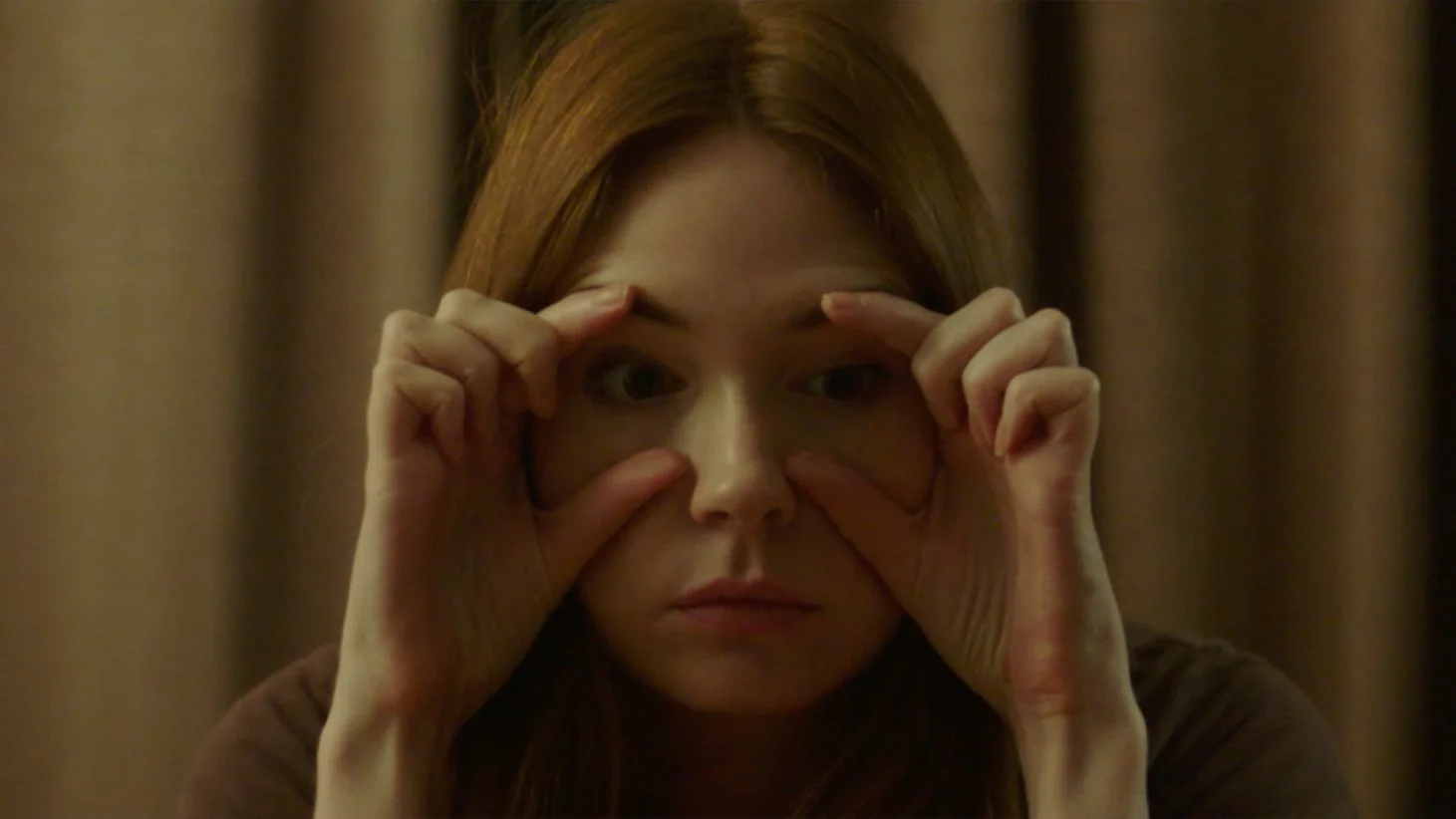
Directed by Laura Moss
Written by Nick Kocher
A lazy, uninspired woman (Karen Gillan) is visited by an otherworldly being responsible for giving humanity all its great ideas.
eureka! premiered at the Tribeca Film Festival as part of an anthology called Neurotica, and recently premiered online on Dust.
ABOUT THE FILMMAKERS
Laura started out in the film industry doing prosthetic and effects makeup. They wound their way through the industry as an art director and production designer. Laura just premiered their debut feature Birth/Rebirth at the Sundance Film Festival in January.
Nick went to school for acting and his early career included making youtube sketches under the name “BriTANicK” with his friend Brian McElhaney. Nick has written for Saturday Night Live, performed at the Edinburgh Fringe, continued to act in films and television, and has various writing projects in development.
READ OUR INTERVIEW WITH LAURA & NICK
Tell us about the genesis of eureka!. What inspired the film and how did the project come about?
Nick: The idea came from me wondering about the very nature of ideas themselves. Where they come from, and where they go if you don’t bring them from your brain into the real world. I wondered how many times throughout history the cure for cancer has popped into somebody’s head and then they just, like, forgot it or they didn’t want to put in the work to really flesh it out. I struggle constantly with procrastination and not seeing things through, so in some ways I was writing this script to therapeutically encourage myself to finish more of my dumb ideas (this short film included).
I had met Laura a few months before and had really enjoyed both of their shorts (Fry Day and Allen Anders: Live at the Comedy Castle). In the past, I’ve co directed everything I’ve written with my writing partner, but for this I wanted to take more of a backseat and see what a director from outside the comedy world could do with my material, and I was thrilled with the life Laura breathed into everything.
Laura: I knew Nick for a little bit and was honored when he asked me to join the eureka! team. I was really struck by how fast and funny the script was, while still having actual depth to it. I was instantly hooked.
Can you talk about casting eureka! At what stage did Jon Bass and Karen Gillan come on board the project? Were the roles written for them or, if not, what attracted them to the material?
Nick: I very much had Jon Bass in mind when I was writing the part (I mean the character is fully called “Jon’). He’s an old friend of mine and I’ve always been a fan of his work. Karen and I met when I was about halfway through the script, and I thought she would be great as Chloe (largely because she’s great in everything). Luckily both of them loved the script and immediately wanted to be involved.
Laura: We had this dream cast who also happened to be friends. I had the chance to play around and rehearse a bit with Karen and Jon before we shot, but I met Jillian and Karan the morning of, and they were amazing. They all knew each other, knew Nick, and it led to a really fun, relaxed environment on set that it usually takes more time to create.
What obstacles did you overcome while in the making of this film?
Nick: Laura had to deal with all the technical problems that pop up, so for me it was just the standard crippling self doubt.
Laura: For me it was one of the most common obstacles when you’re dealing with indie filmmaking: not enough time. We shot this 25-page script in three days, and at that breakneck pace I really had to rely heavily on Ben Rutkowski, our DP, and the prep work we had put into this to make sure it still had a cinematic quality. Karen, also, is a machine. She’s done so much - I had never had the chance to work with someone so technically proficient before. She would drop in, stay present, hit every mark, and find the humor in every scene without playing the humor. We never could’ve gotten this done if she wasn’t so lighting-fast.
So eureka! was first released at Tribeca as part of an anthology called Neurotica, correct? Can you tell us more about the journey of getting your film to audiences?
Nick: Yeah, so basically we just lied to Tribeca and told them it was a pilot to an anthology series because no one would ever have programmed this long of a short. THAT BEING SAID, it wasn’t a total lie because I would absolutely have loved to write a comedy science fiction anthology series, and this absolutely could be one of the episodes. It also ended up being sorta true, because after the festival a major network put “eureka!” into development as a narrative series featuring the “Jon” character visiting various humans and getting them to implement their assigned “ideas”. It was then in development for so long that everybody at the network who liked the project ended up leaving for other jobs, and so it just kinda petered out.
Laura: The short film universe, especially when it pertains to festivals, is pretty limited. A long short (ours is 20 minutes) is particularly difficult to program - it has to anchor a program and it’s one film potentially taking up the space of two or more pieces. The fact that Tribeca and other major festivals have been opening up their programming to include TV pilots and web content is huge: It allows works of this kind of length to reach an audience.
What do you think is the biggest challenge short filmmakers face trying to break into the industry?
Nick: I think the MAIN challenge for anything is just your own crippling self doubt. I believe if you just keep making good stuff, you’ll eventually break through. In the short world, I think it sucks that there aren’t more places that will pay for short films out there. If there were more established homes for short films, I think filmmakers would have an easier time raising the money necessary to make them.
Laura: I think right now it’s breaking through the noise. It’s easier now than ever to create good-looking content, but there’s just so much out there. A short film can be a calling card that helps you break into the industry, but it’s hard to find a way to make your work stand out.
What advice would you give to short filmmakers looking to use shorts as a way to launch them into a feature film career?
Nick: A lot of people use shorts as a proof of concept for their feature, or as a showcase for their own abilities. Which is fine and great and a totally valid way to approach them. But I would also encourage them to really think about and take advantage of the medium. I think the best short films come from ideas that could ONLY be short films.
Laura: I always suggest to young filmmakers seeing a lot of shorts that have been programmed at major festivals. You can find a lot of them online, or become a screener for a festival if you can. It’s helpful to expose yourself to a lot of work, to identify what you respond to. To really experience what feels new and different, and what kinds of things you see repeated over and over again - what well-trodden territory to avoid.
What are you working on now?
Nick: I’m working on a bunch of stuff with my writing partner that’s all at very different stages. We’re doing a final polish on a feature we sold a year ago, a second draft of a multi-cam sitcom for FOX, and we’re just starting to outline a low budget feature that we plan to direct later in the year.
Laura: I’m just finishing up my first feature, birth/rebirth, which was produced by Mali Elfman, who produced eureka! It’s a modern-day Frankenstein-inspired body horror, starring Marin Ireland and Judy Reyes, and it’ll be premiering at Sundance in January 2023.
Any film recommendations that we should add to our watchlist?
Nick: Laura Moss’s Birth/Re-Birth! And also, this came out in 1991, but I recently watched and loved “A Brighter Summer Day”.
Laura: Thank you Nick ;) Speak No Evil was my favorite movie of last year. It’s so funny and uncomfortable and horrifying, while being strategic and economical in terms of the violence it actually shows.
Apply to get your short selected as our Weekly Pick

Do Not Touch
An adulterer (played by Seann Walsh) discovers his one-night stand is now the subject of an art exhibition to which his girlfriend has tickets. He must destroy the artwork before it destroys his relationship.
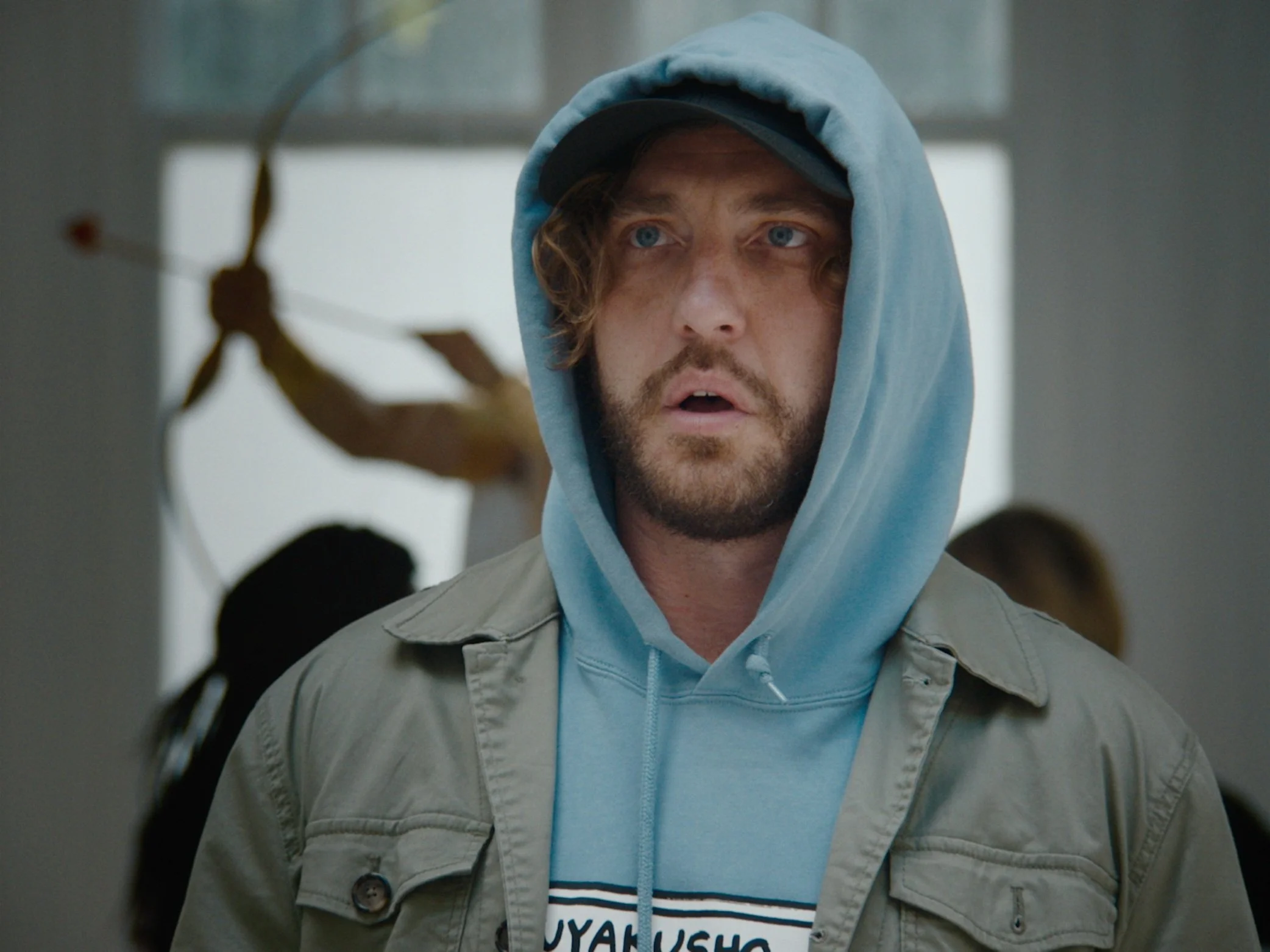
Directed by JAMES & HARRISON NEWMAN
Producer Alex Waterhouse
An adulterer (played by Seann Walsh) discovers his one-night stand is now the subject of an art exhibition to which his girlfriend has tickets. He must destroy the artwork before it destroys his relationship.
ABOUT THE FILMMAKERS
James and Harrison Newman won the grand prize at the 2022 Kino London Short Film Festival with Viskar I Vinden unlocking our film fund. DO NOT TOUCH was produced summer 2022 and is fresh off the festival circuit.
READ OUR INTERVIEW WITH JAMES
Tell us about the genesis of DO NOT TOUCH? Where did you get the idea and why did you choose this project to focus on?
"Do Not Touch" was always just a dream sitcom episode in my mind. I always thought it would be a shame if we never brought it to life. But, it wasn't until I was isolated that I realised it could work as a short film. The inspiration came from Tracey Emin's artwork "Everyone I Have Ever Slept With 1963–1995". I had initially thought the artwork displayed the used condoms of everyone she'd ever slept with, but I was wrong. It was actually a tent with names stitched inside. However, that false memory was a great source of inspiration for the film. The reason we chose this is that it was completely different to the first short in terms of tone, this is a bit more of a straight comedy than Viskar I Vinden. We needed to do something different and ultimately have fun doing it, because if we’re not having fun - what’s the point?
Watch the Behind the Scenes featurette
Tell us about your experience winning the Kino fund and how it changed the way you approached making Do Not Touch? Would you still have put it into production at a lower budget or would you have continued to pitch it around?
It's a good thing the Kino Production fund came to our rescue! Without you guys, we would've been stuck twiddling our thumbs, trying to figure out how to make a short without breaking the bank. We were down to the last pound, and with the additional £2K we put into making this. I don’t think we would’ve shopped it around, I think we would’ve done a cheaper idea and gone ahead with that. So without you, this wouldn’t have happened.
What were some of the main obstacles you experienced when making Do Not Touch and how did you overcome them?
Do Not Touch was probably the most fun I’ve had doing this. We were really blessed with everyone, everyone wanted the best for the project and we were pulling in the right direction. I think the biggest obstacle was initial casting and getting the right people for the right roles in pre-production. We brought someone on board and it didn’t work out, but in the end, I think it was the best for both parties. We’ve learnt some lessons and how we approach casting in certain scenarios.
How did you secure the cast for the film?
It all started at the Crystal Palace Film Festival, Sofia, Tom and I met the brilliant Seann. He liked our first short and he agreed we could send him the script, and the rest is history! Seann brought Charlotte on board, and before we knew it, we had our dream team in place. We found Ingrid, Blair, and, Julia on casting websites, just like that. It was almost too easy, everyone killed it. And to top it all off, Ollie a friend from school was sweet enough to fill in as the cupid statue, what an absolute thirst trap. We couldn't be more grateful for everyone who has been a part of it.
Tell us about your festival journey. Any tips and tricks for other filmmakers?
Definitely! One great way to get your film in front of the right people is to find a film that's similar in genre or style to yours and see where they've played. Take note of the film festivals they've entered and won awards at, and consider submitting your film to those same festivals.
It’s a bit cheeky, but fuck it – you don’t want to waste loads of money on festivals that won’t accept you.
What do you think is the biggest challenge short filmmakers face trying to break into the industry?
It’s a closed circuit in this industry and you’re at the behest of gatekeepers. You’re working with such limited resources and at these festivals, you’re up against the BBC, BFI, Film4, and filmmakers with actual backing. The biggest challenge is competing and standing out. A key component for filmmaking is time, money and resource. You’ve got to make the largest impact with the least amount of resources and you’re competing with people who do have that resource. The biggest challenge is trying to get your work seen by the right people. I think people have to remember there’s a lot of luck that goes into this and it necessarily isn’t fair.
Any film recommendations that we should add to our watchlist?
All of the work of Nathan Fielder. The Rehearsal, and Nathan For You, it's hilarious. Also, check out Extraordinary on Disney plus; it’s ace.
Interested in getting your work selected as Short of the Week?

Kino Short of the Week - Best of 2022
That’s a wrap on our Short of the Week series for 2022. If you’re looking for indie alternatives to add to your holiday watchlist, why not dip into our archives?
That’s a wrap on our Short of the Week series for 2022. Let’s take a moment to look back on some of the amazing shorts and filmmakers we featured on our online showcase.

10. SMASH AND GRAB | Written, Produced & Directed by NEIL LINPOW
Four women race a ticking clock across a bustling city, readying themselves for the ultimate Smash and Grab showdown.

9. PETRICHOR | Directed by Louis-Jack | Written by Kenneth Emson | Produced by Morgan Faverty
A washed up, former wunderkind of the snooker world has one last chance to revive his career. Battling with addiction and the ghosts of his past, there is more at stake than just the score.

8. MIDNIGHT DELIVERY | Written & Directed by Nathan Crooker | Produced by Nathan Crooker, Jake Silbermann, Mayumi Tatsuta
When a mysterious gift is delivered to an unsuspecting woman’s door at the stroke of midnight she unleashes a sinister evil from within.

8. true value | Directed and Produced by Alix Austin
| Written by Keir Siewert
A university student with an unusual part-time job collides with her tightly wound client in this beautifully dark crime thriller.
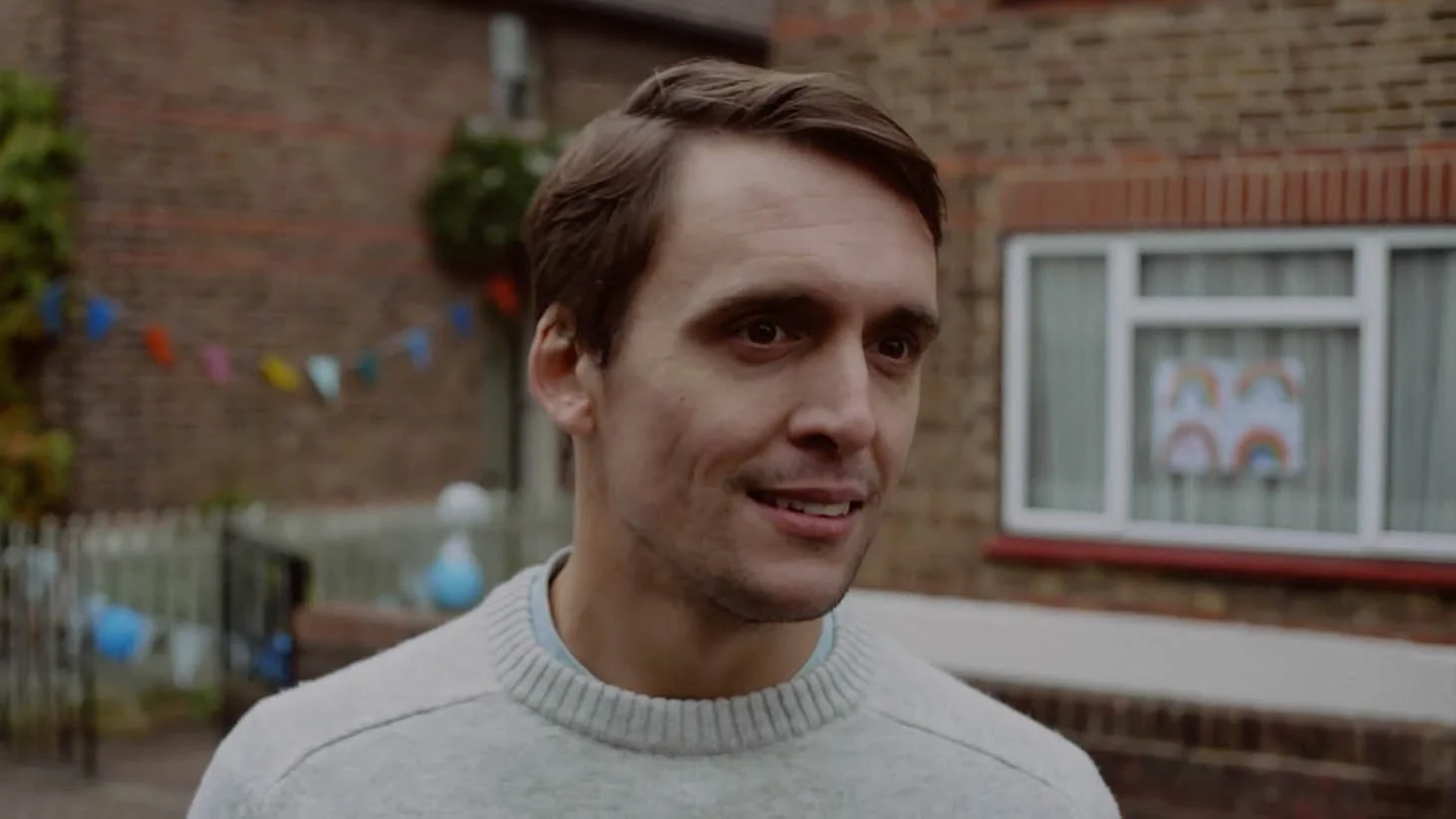
7. THANK YOU SO MUCH | Written & Directed by TOMASZ FRYMORGEN | Produced by TOMASZ FRYMORGEN & BRIANNA FERGUSON
It’s 8pm on a Thursday evening and the Clap for Carers is about to begin. Two neighbours battle it out to be the loudest, most grateful and most virtuous residents on the street - until someone finally calls them out. Will they swallow their pride and apologise, or will they silence the upstart who’s dared to embarrass them?

6. LOVE YA LIKE POISON! | Directed by Max Azulay & Rosie Yadid | Written by Rosie Yadid | Produced by Sarah Epstein & Rosie Yadid
Twenty-something Louise returns to NYC after university abroad. She is reunited with her firecracker of a Jewish mother, Nadine, and their relationship seems to pick up right where it left off.
While Nadine wants her back for good, Lou is desperately trying not to get too comfortable. When she reveals news of her engagement, old wounds are reopened as Nadine reveals secrets about her own failed marriage.
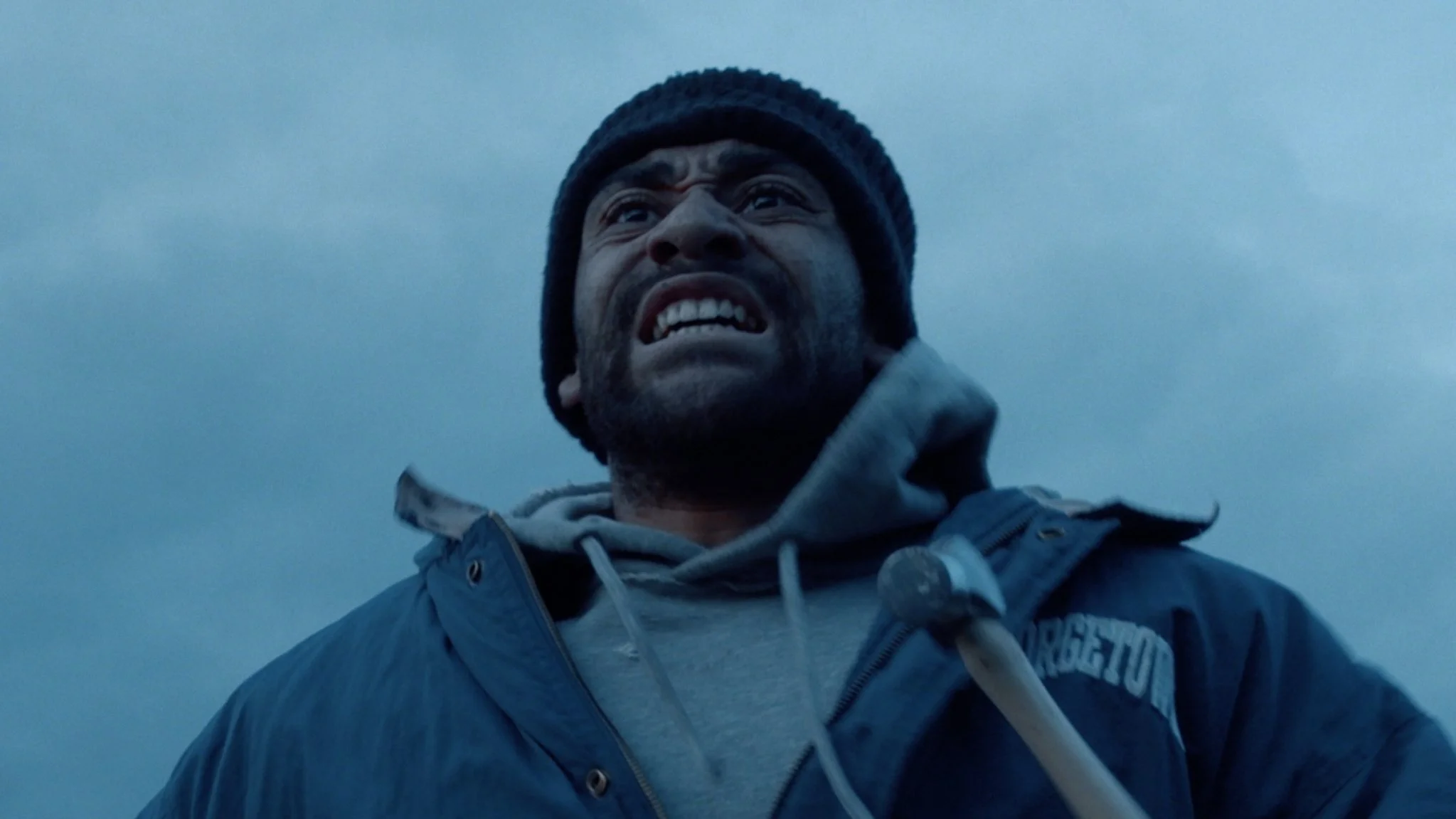
5. BULLDOG | Written & Directed by Kieran Stringfellow
| Produced by Tasha Williams
After spending the night in a cell, a rough sleeper has a score to settle.

3. VISKAR I VINDEN | Written & Directed by James Newman | PRODUCED BY James Newman & Harry Newman
Matilda is a forensic investigator gathering evidence at a crime scene, where an elderly man's body lies dead, gruesomely murdered by an unknown person.
It seems just another day on the job, and Matilda is told by the detective to get things done, though Matilda seems eager to take the detective role herself. When the corpse decides to communicate posthumously with the investigators in an unusual, decidedly earthy way, Matilda takes it upon herself to do some investigation on her own.

2. SAFEKEEPING | Written & Directed by DAVID YORKE
Produced by DAVID YORKE & PHIL BEASTALL
Young teen Jessica and her kid brother Charlie are setting out on a journey. They leave behind a dark, unsettling home life and set out into the larger world with few belongings. The countryside they travel through is idyllic, stretching out around them in a pastoral, seemingly peaceful expanse. Together, they make a stop at a place they once enjoyed in simpler, happier times. But all is not what it seems, both in the world and between the siblings, as they embark on a trip that will change their lives forever.

1. embers | Written, Produced & Directed by Tom Ganley
Alice sits alone at a restaurant, waiting for her date to arrive… Doesn’t sound like an interesting synopsis, but don’t be fooled by it. Embers is an emotionally complex film, winning multiple awards at film festival this past April for best screenplay, best performance in a drama & best first time filmmaker.
Honourable Mentions
Even though these films didn’t make our Top 10 we still think they’re pretty great and well worth a watch.
MILK

TALK RADIO

Submit to our Short of the Week series to be considered for our 2023 season
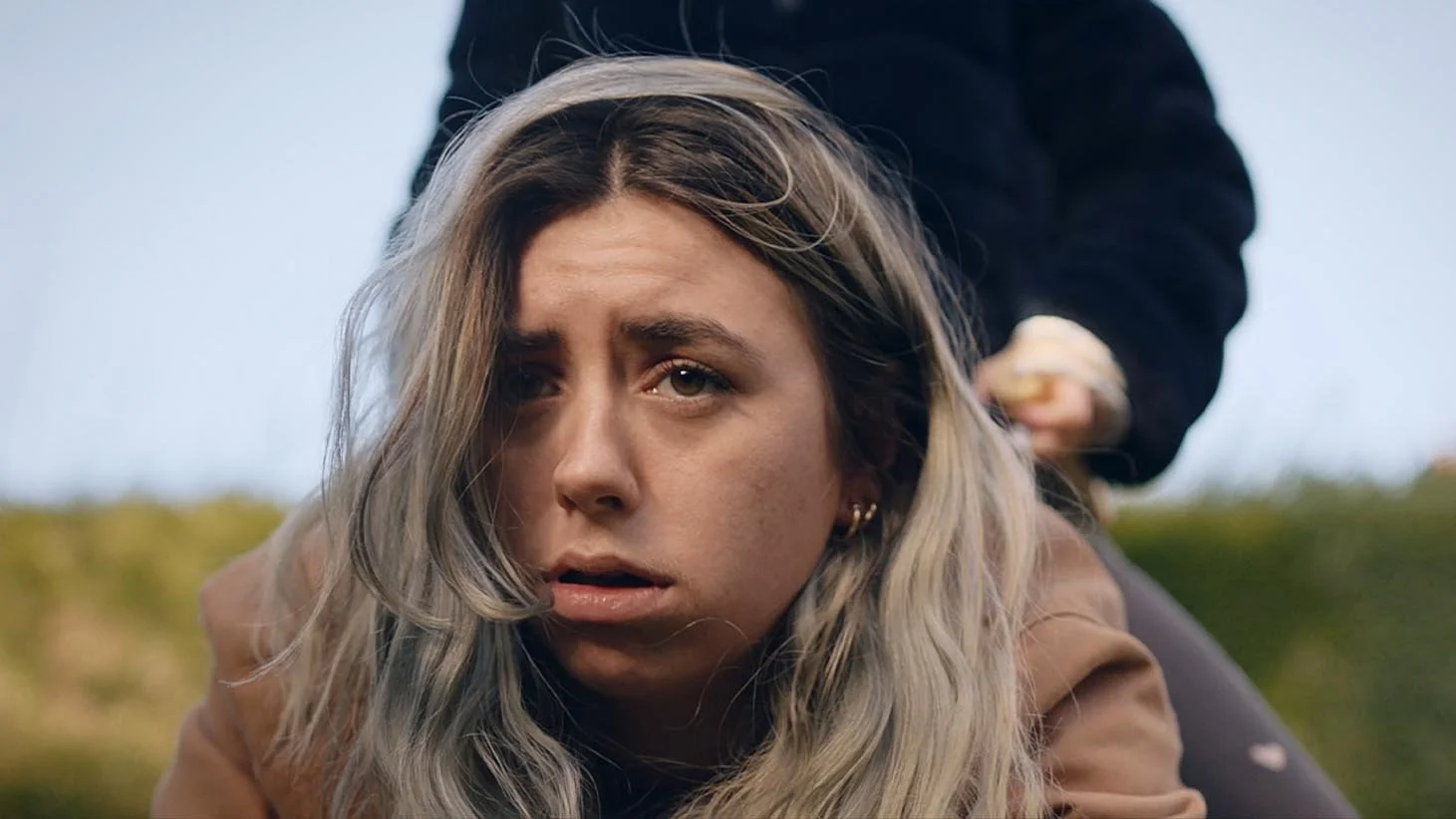
Nanny Neigh Neigh
An unsuspecting nanny is coerced into a game of make-believe. But when the stable doors close, she realises her playmate isn't horsing around.
Directed by Elliot Taylor & Liam Francis
Produced by Lucy Hilton-Jones
An unsuspecting nanny is coerced into a game of make-believe. But when the stable doors close, she realises her playmate isn't horsing around.
READ OUR INTERVIEW WITH LUCY
Welcome back to our Short of the Week series. What have you been up to since we last featured your film A Present for a Good Girl?
Thanks so much for having me back! I've been up to all sorts. Lots of creative stuff but also lots of catching up on life stuff. I've been lucky enough to get some amazing theatre gigs, which took me away from film for a little bit. But I missed it way too much. I'm very glad to be back into the swing of making things myself.
Can you tell us about Greenfingers Films?
Greenfingers Film is a collective set up by four filmmaking pals. We've known each other for years and have always bounced off each other creatively, but only got the ball rolling as a team in Jan 2020. We call ourselves a collective as we feel it allows us more freedom to work collaboratively and with equality.
Tell us about the genesis of Nanny Neigh Neigh. What inspired this film?
The inception of Nanny Neigh Neigh is quite a straightforward one. I worked as a nanny all the way through the pandemic, often playing games of 'horsey'. That job was a lifeline for me in uncertain times, but I often recognised how interchangeable I was to such a wealthy family. How many nannies had come before me? And how many would come after? So this film was a daft little response to that feeling.
What obstacles did you overcome while in the making of this film?
Finding the right kid to play Lavender was tricky. Because the film has some horror themes, we wanted to be extra careful in casting someone mature enough to handle the material but young enough looking to have a nanny. Ella (who plays Lavender) is the daughter of a theatre director I've worked with. When she mentioned Ella was obsessed with horror and wanted to get into acting, I knew she would be absolutely perfect for the role. She's a complete natural! Money was the other obstacle. It's a neverending obstacle. But we made it work with absolute pennies and to be honest, I think working like that has made us better filmmakers. Shout out to everyone that offered their time for free or at hugely discounted rates just for the love of it. We couldn't do it without people like that.
Tell us about the journey of getting your film to audiences and why you decided to self-release online vs venturing into the festival circuit.
We went back and forth as to whether we'd do the festival circuit with Nanny Neigh Neigh, but eventually decided not to. That in part comes down to funding (or lack thereof) and in part because you have to keep projects hidden away for so long when they're doing the rounds at festivals. This film is short and sweet and gives a good indication of our style so we wanted to share it in the hope that it may drum up some interest for longer projects we have in the works.
What do you think is the biggest challenge short filmmakers face trying to break into the industry?
I think getting your work actually seen is the hardest part of breaking into the industry. I still feel like I haven't cracked it. Nowadays, you really have to invest time in creating an online presence, and 'hype' around each project. It's a full-time job in itself and one that none of us at Greenfingers enjoy that much. That's why short film platforms like yours are so important!
What can we expect upcoming from Greenfingers?
At the end of November, we managed to make three new short films in as many days. Not sure whose idea that was, but miraculously it paid off! So they're all in post-production now, and we'll be looking to submit to festivals in 2023. We may release the shortest one straight away like Nanny Neigh Neigh, so keep your eyes peeled on our socials.
Any film recommendations that we should add to our watchlist?
Titane has yet to be topped for me this year. My mouth was on the floor throughout. But in a completely opposing way, Banshees of Insherin gave it a good run for it's money. I'm gonna throw Hail Satan? in as a documentary recommendation. I just re-watched it and it's so much fun.