
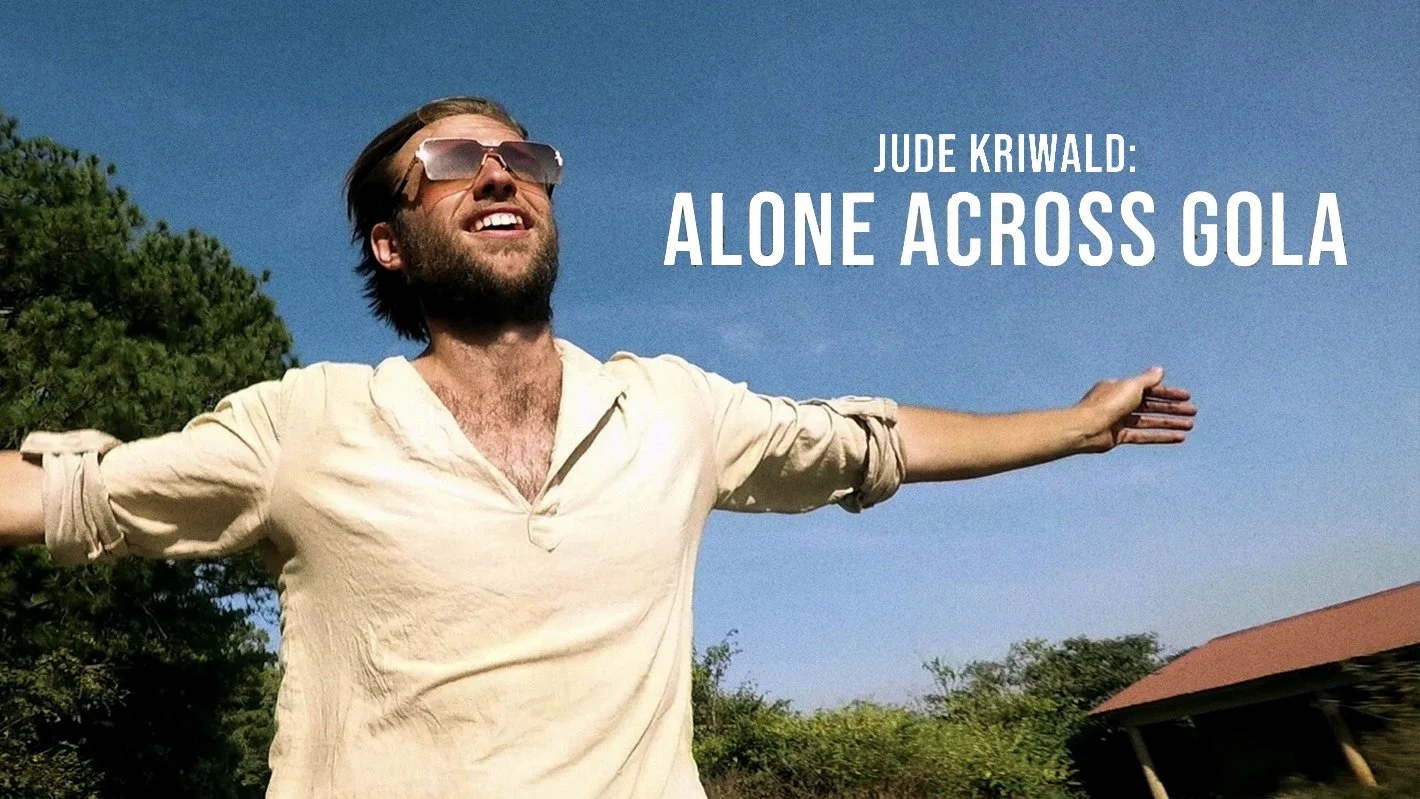
Alone Across Gola
Follow Jude’s extraordinary solo journey through Liberia's dense Gola rainforest - a landscape uncharted by roads or paths, where every step meant battling through thick undergrowth with nothing more than a bicycle and a tent.
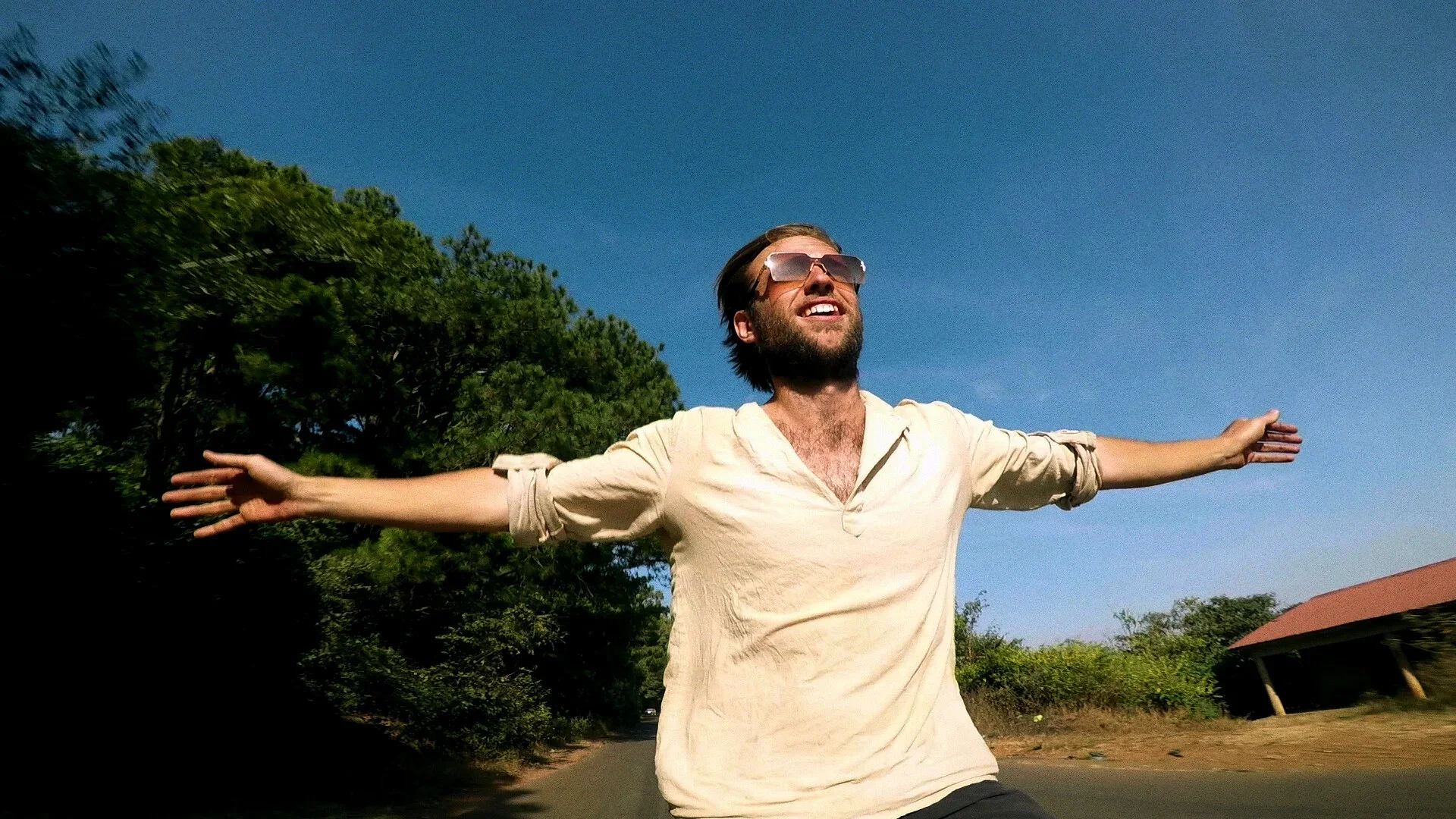
Written, Directed & Produced by Jude Kriwald
Edited by Christian Burnett
Alone Across Gola is an award-winning adventure documentary by debut filmmaker Jude Kriwald. This gripping short film follows Jude’s extraordinary solo journey through Liberia's dense Gola rainforest - a landscape uncharted by roads or paths, where every step meant battling through thick undergrowth with nothing more than a bicycle and a tent.
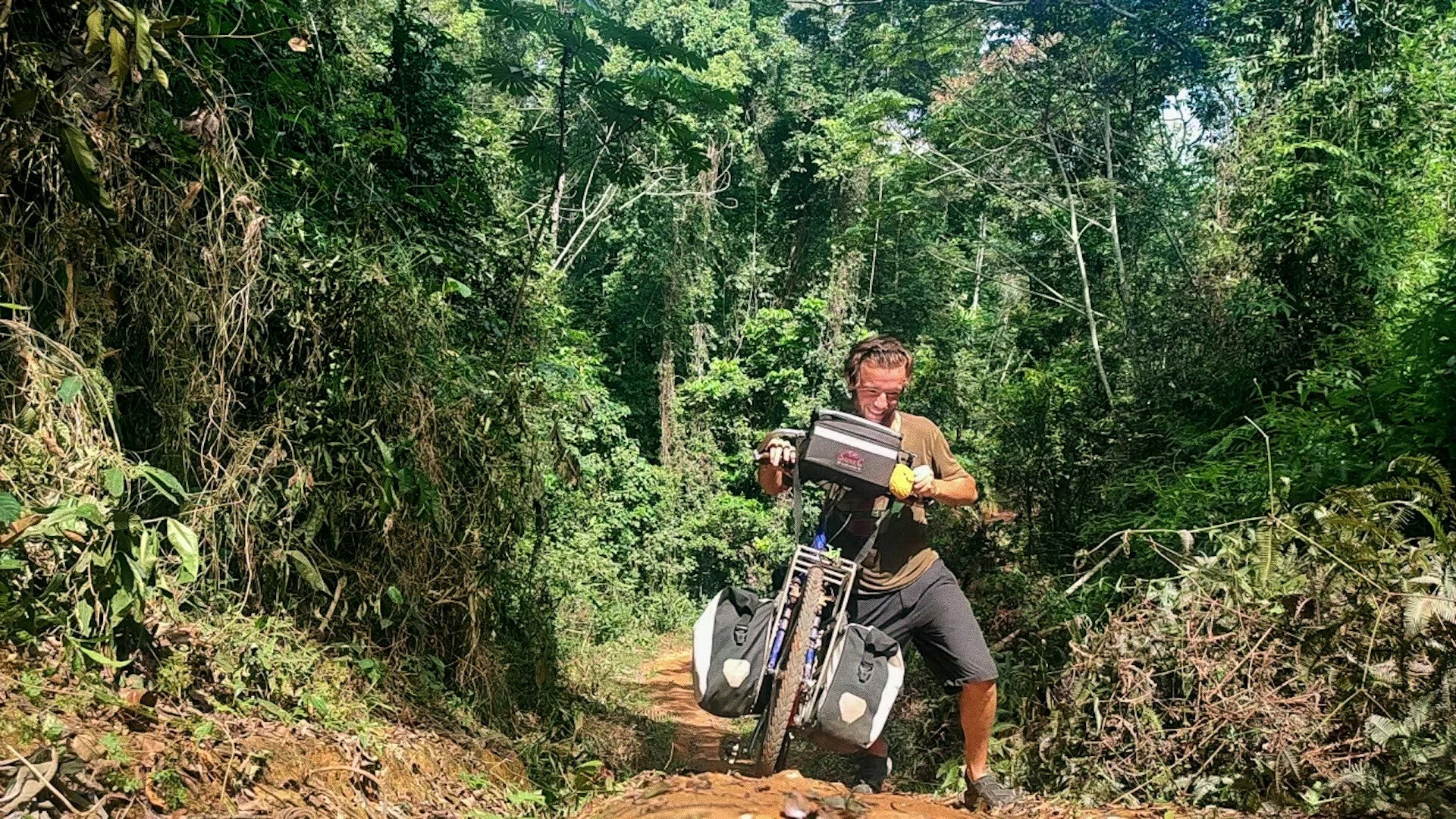
His clothes drenched with sweat, Jude carried his 53kg bike over fallen trees, navigated ravines with collapsed bridges, and faced life-threatening moments. It’s an adventure that pushes the limits of endurance, self-reliance and the human spirit, and often has Jude asking “is this route even possible”, all whilst filming the endeavour totally unsupported.
The film goes beyond clichés of gnarly adventure to offer a reflection on the struggles of pursuing childhood dreams that often get sidelined by the pressures of modern life. Through moments of profound introspection, Jude’s journey asks: What happens when we step off the beaten track of our careers and everyday routines to follow the dreams we thought we’d left behind?
ABOUT THE FILM
ALONE ACROSS GOLA won Best Micro-Budget Short at our BIFA qualifying film festival this past summer 2025. Other festival awards highlights include winning Best Short Documentary at the London Global Film Awards and Best Documentary at Phoenix Rising Film Festival and Feel the Reel Film Festival. It was nominated for Best Documentary at Cambridge Short Film Festival and selected for the Royal Geographical Society Preview - Explore Symposium.
ABOUT THE FILMMAKER
Jude Kriwald is a first-time filmmaker from Bristol, UK. An experienced explorer, he has recently turned his hand to creating his first short film, a documentary edited by award-winning editor Christian Burnett.
Jude was recently named as Emerging Leader of the Year by the British Exploring Society, in recognition of his voluntary work as Basecamp Manager on their summer expedition. The expedition saw Jude and 11 other leaders guide 30 teenagers and young adults from difficult backgrounds on a life-changing and confidence-building two-week expedition in the Scottish Highlands.
In 2012, aged just 19, Jude cycled from England to India through regions such as Afghanistan and Tibet, whilst enduring temperatures as low as -31c and navigating malaria, typhoid, and being held up at gunpoint.
In 2023, Jude has opened his adventures up to the world. He is the founder of AdventureMentor.org, a service which offers free mentoring for people typically under-represented in the world of adventure. Through Adventure Mentor, Jude offers practical support as well as confidence and mindset mentoring to ensure that lack of knowledge, confidence or privilege should never be a reason someone misses out on the life-changing benefits of adventure.
READ OUR INTERVIEW WITH JUDE
Hi Jude!
Welcome to our Short of the Week series.
Alone Across Gola isn’t only your debut film, but it was also an Award Winner at our festival this past summer. Impressive debut! Can you tell our audiences a bit about yourself and your background?
I'm an adventurer interested in using challenging trips to explore what drives us, connects us and, sometimes, troubles us. My real passion lies in authentic adventures and I share these through film, public speaking and writing. Alone Across Gola is my first film and has exceeded all my expectations in terms of how much I've enjoyed it and how it's been received!
Let's talk about the genesis of Alone Across Gola.
This is a very personal documentary project. It's more about you documenting your ambitious journey vs scratching a filmmaking desire.
I assume the idea for the trip came before the idea to film it. Can you tell us about how and why you decided to take this journey, and when you decided filming would be a part of it?
Great question! I decided to make the journey through West Africa after ignoring, for too long, a burning desire to get back out in the wild. West Africa seemed like the perfect blend of fascinating cultures, untamed wilderness, and the right amount of large animals to make things exciting. I initially filmed the trip for my own YouTube series that I was editing and producing on the go, from West African hotel rooms. In the end, I got fed up with using my travel time for post production so continued filming and resolved to edit upon returning home.
It was only after having the wild, unexpected and immensely challenging experience on the jungle, the key vehicle of the film, that I decided to create a proper short film.
We usually ask filmmakers what the main obstacles were experienced when making their films, however, in your case the entire journey is one big obstacle that you had to overcome. Maybe you can chat about how documenting this trip added to the challenges?
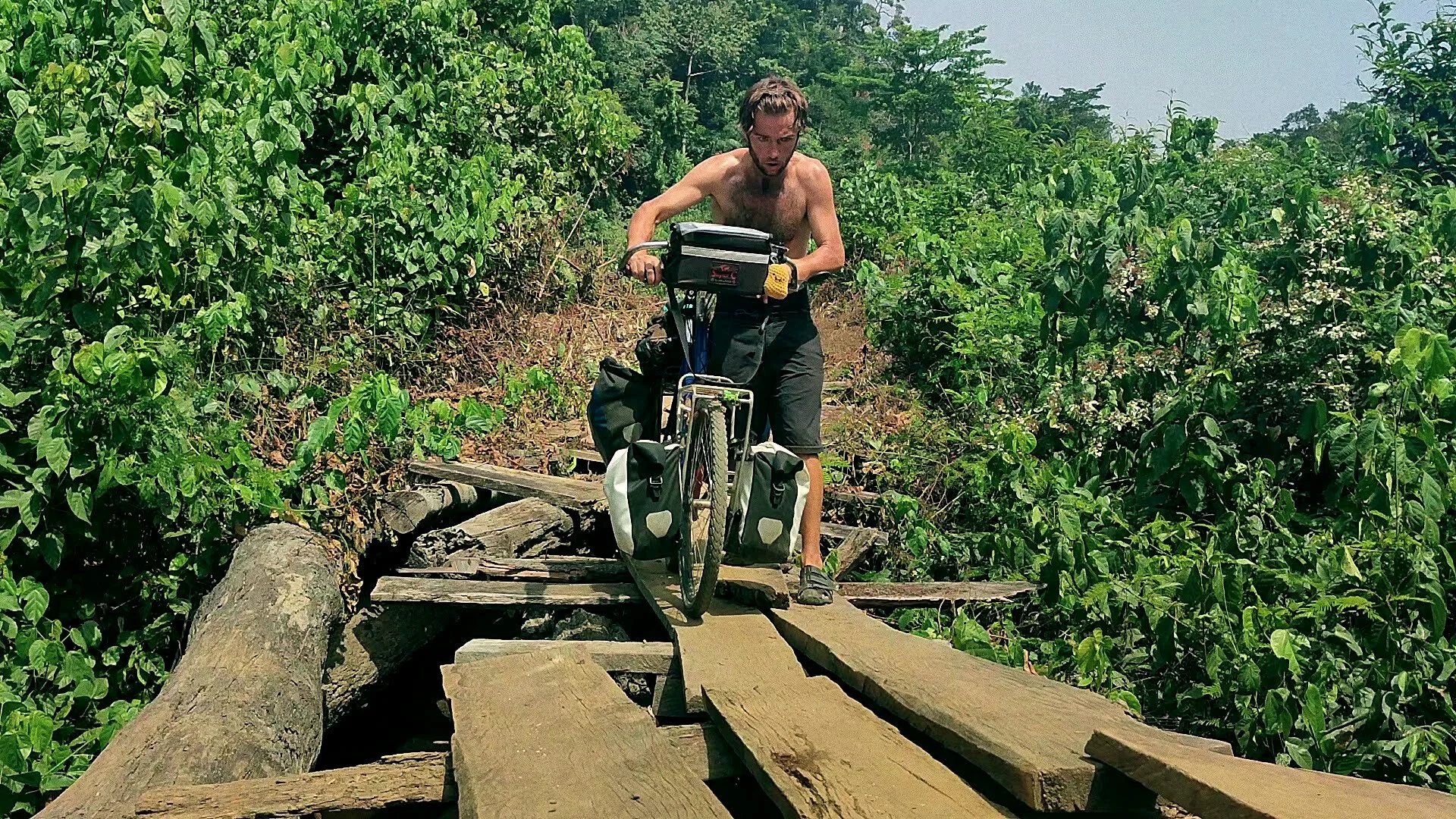
That was a pretty unique challenge! I was truly alone in the jungle - no crew or fixers of any sort. So after 12 hours of slogging my bike across jungle terrain each day, often progressing only 7km every 24 hours, I'd have to sit up in my sauna of a tent and spend an hour copying files from my SD cards, onto my laptop and then onto my hard drive at night. That hard drive was the only "copy" I had of any of those files, so I always feared losing it.
Then there's of course the challenge of setting up tripods before any tough section of the jungle - essential if I wanted to capture the right footage to share the story back home. There were times when the going was just too tough and I didn't film - safety had to come first!
Let's chat about the editing process. Your film has a longer run time for a short, yet it's captivating every minute without a second of run time wasted. How much footage did you walk away with and what stuff ended up on the cutting room floor?
The best decision I ever made was to work with seasoned editor, Christian Burnett. He not only edited the film but mentored me through the whole post-production stage. I ended up with about 100 clips each day to choose from. There are still whole stories and fascinating sections that have never been seen as we were really conscious to keep the flow tight. We even discussed making it a feature film at the start, there was that much footage. On the other hand, once we had a tight cut, one of my favourite parts was going through and working with Christian to add short bits of space for the audience to breathe - it's such a high octane and emotive film that it felt important to allow people to catch their breath and reflect.
Tell us about the journey of getting your film to audiences and some of the festival circuit highlights and online release.
What advice or hacks would you give to other short documentary filmmakers?
The festival circuit was such a journey for me! It started with six straight "no"s but, by the end of its run a year later, I was getting almost all "yes"s, even from the big ones. That just showed to me that, rightly or wrongly, many festivals do look at how your film has performed at other festivals, and I had to build up organically. I also changed my film poster after that first run of rejections, working with a pro to make something more reflective of the film itself, which I think made a huge difference.
It's been such a momentous joy sharing it with audiences, and there are too many highlights to properly choose from. Ones that stand out are picking up the Audience Award at the very first festival I attended (English Riviera) - that meant a lot as all the "judges" were sat in the room with me! To finish, Alone Across Gola ended its festival run by showing at the Grand Rex in Paris, the largest cinema hall in Europe - where it also picked up an award - that was a night I'll never forget! As for its YouTube release, that's just been crazy, especially in terms of the viewing numbers - it's so moving to see people from around the world, that I'd never otherwise reach, resonate with the message and share that back to me.
My best tip would be to make sure you're applying to at least some festivals that are very specific for your niche (in my case mountain film festivals). That's where at least 50% of your selections are likely to come from, plus you'll meet people directly involved in your industry or interests. And don't be too perturbed if you get a load of "no"s at the start!
What's next for you, in terms of filmmaking?
Honestly, I'm not too sure. I've grown increasingly aware of how filming myself on adventures can detract from having an authentic adventure. I'm very interested in exploring more analogue adventures (e.g. no GPS or phone, navigating with a compass and the stars), so that would either require someone else to film or, alternatively, maybe I'll write about these explorations rather than make a film, we'll have to wait and see!
Any film recommendations that we should add to our watchlist?
Do all you can to see the short film Sand Dancers. I saw it recently at Kendal Mountain Film Festival - it left me inspired, deeply moved and with tears rolling down my cheeks.
Apply to get your short selected as our Weekly Pick
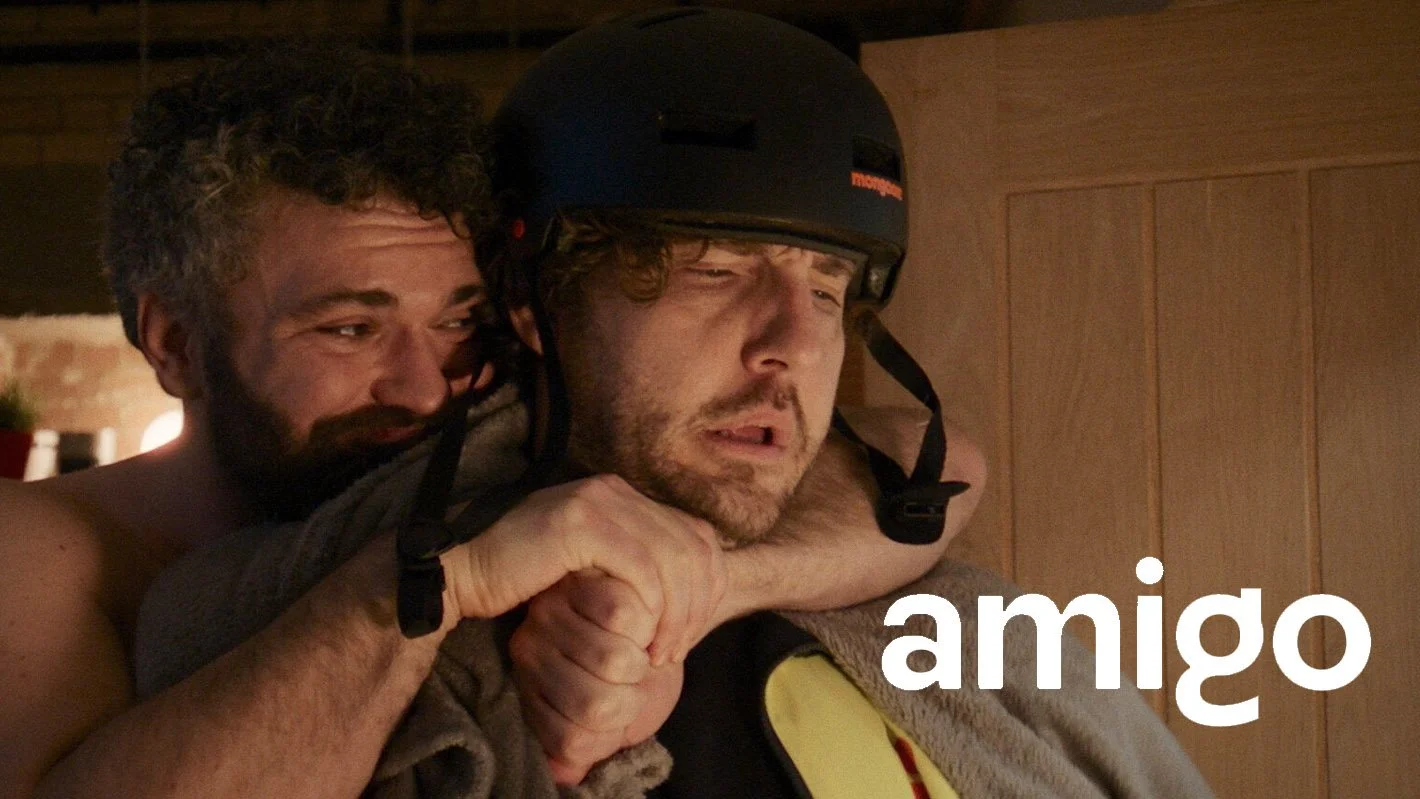
Amigo
'Amigo', the rent-a-friend app has taken London by storm. An unfriendly Amigo's life comes crashing down when he finds out his life is a lie.
Directed by James & Harrison Newman
Written by James Newman & Tom Waterhouse
Produced by Guy Lindley
'Amigo', the rent-a-friend app has taken London by storm. An unfriendly Amigo's life comes crashing down when he finds out his life is a lie.
ABOUT THE FILM
AMIGO was an Official Selection at the 2025 edition of our BIFA qualifying Kino London Short Film Festival. Other festival highlights include the BAFTA qualifying Bolton International Film Festival & Aesthetica Film Festival. It also played at Discover Film Festival, Indie-Lincs Film Festival, Northampton Film Festival, and Cardiff Mini Film Festival. It was released online by Directors Notes.
ABOUT THE FILMMAKER
James Newman is an award-winning writer-director from Reading, Berkshire, specializing in comedy. With 7-8 short films and an award-winning feature screenplay under his belt, Newman has quickly become a rising force in British independent cinema.
Starting as a runner in Soho’s production companies, he’s since earned 2nd place at Slamdance’s Short Film Screenwriting Competition, 2nd place in The Pitch Film Fund, a British Short Film Award for Best Comedy, and Best Short at our very own Kino London Short Film Festival.
READ OUR INTERVIEW WITH JAMES
Welcome James!
You’re no stranger to Kino. Your film Viskar I Vinden won the 2022 edition of our festival, which awarded you our film fund to help make Do Not Touch - your first collaboration with comedian Sean Walsh. Now you’ve teamed up with Sean once again on your latest film to have just come off the festival circuit, Amigo.
Can you talk about how you came up with the idea for Amigo and how it was initially developed as series, and why you decided to pivot to make it as a short film instead?
So initially, it was about a prostitution app like Uber, and the lead would have been a male prostitute. We wrote that as a TV pilot around 5 or 6 years ago. But we pivoted as the storylines we came up with were about people being lonely and not using the app for sex, but for companionship. And then we thought that there was something in that—the core of the idea is about lonely people desperate to connect with someone. The most valuable thing I’ve learned from going to short film festivals is that all cinema and media which involves storytelling is about human connection, or the lack thereof.
Currently, you’re branching out as you gear up to make another short, The Ladder. You often co-direct. Will this be your first time solo-directing a short?
This isn’t my first time solo directing—I directed my first short, Viskar I Vinden, on my own. But I have co-directed recently on The Pitch’s new comedy short, Kitty, with Lizzie Hart, which I didn’t write. It was incredible to come in on a project that I hadn’t been involved in the writing process for. It’s so far away from what I normally do—it’s super duper charming and sweet. It was really nice to play in someone else’s really well-constructed world.

Join us for a sneak peak at THE LADDER
We’ll screen the key creative team’s previous works + do a public table read of upcoming work in order to get audience feedback.
All proceeds to go directly to topping up production funding for The Ladder, shooting early 2026.
In the past, what has been your motivation to co-direct in most instances & what excites you about helming the director’s chair solo this time around?
The motivation to go back to being solo is that I really enjoy the full responsibility of the film. I want to become a better director, and I think the way to do that is to be fully responsible for all areas of the production rather than delegating between two people. With Kitty, I was more of a conduit for the crew and technical aspects than the actual story and world, whereas I want to stretch myself and get out of my comfort zone to do things that I’m creatively excited about. With the rise of AI, I think we need to tell more human stories and have choices that the characters make that an LLM won’t agree with but makes sense to humans.
The Ladder will be another Kino Original, making you the first filmmaker in Kino’s history to have been granted funds twice. What’s your secret to closing deals to secure funding?
I think the key is to try to outwork your competition. Enter everything, as I think it’s a numbers game. Do your research—what are they likely to commission? I think the key is to write things that interest you rather than trying to win the fund, otherwise people will be able to sniff it out, especially when it’s made and screening at festivals.
The Ladder has also been shortlisted for several other funds including Slick Films, From The Silver Screen, First Flights & more. Can you talk a bit about your funding strategy?
To be honest, I’m very surprised we’ve gotten into the finals or been longlisted for like 75% of the funds we’ve gone after. I think it’s actually quite bizarre. I’m not sure if it’s the subject matter or that it’s quite relatable and speaks to something people are feeling at the moment? But I think the strategy is: package it nicely, reach out to talent and get them attached. I think the goal is to make an undeniable film where everyone can see it doing well on the festival circuit.
Many short filmmakers struggle with even getting in the room to pitch, so well done on making it the room so many times. What do you think within your work and your funding application materials has made the difference to get such positive reception?
I think the subject matter of the housing crisis and intergenerational inequality is something I’m quite angry about, and it’s blended with real experiences with a bailiff. And it’s from lived experience of being really poor in London that I don’t think sounds like a repurposed Guardian article. It helps having producers like yourself and Guy Lindley on board, and a great creative team with Nathan Claridge. I think what’s helped me was going to a webinar with First Flights about what they care about in a funding application, and that helped. I think they have some resources on their website. But I think having a story that connects and characters you care about are crucial, because if you don’t have that, you don’t have a film, in my opinion.
Recommendations to add to our watchlist? Give us 1 short, 1 Hollywood feature, & 1 indie feature.
Short: The Farm
Feature: Bugonia
Indie feature: Grand Theft Hamlet
Interested in getting your work selected?
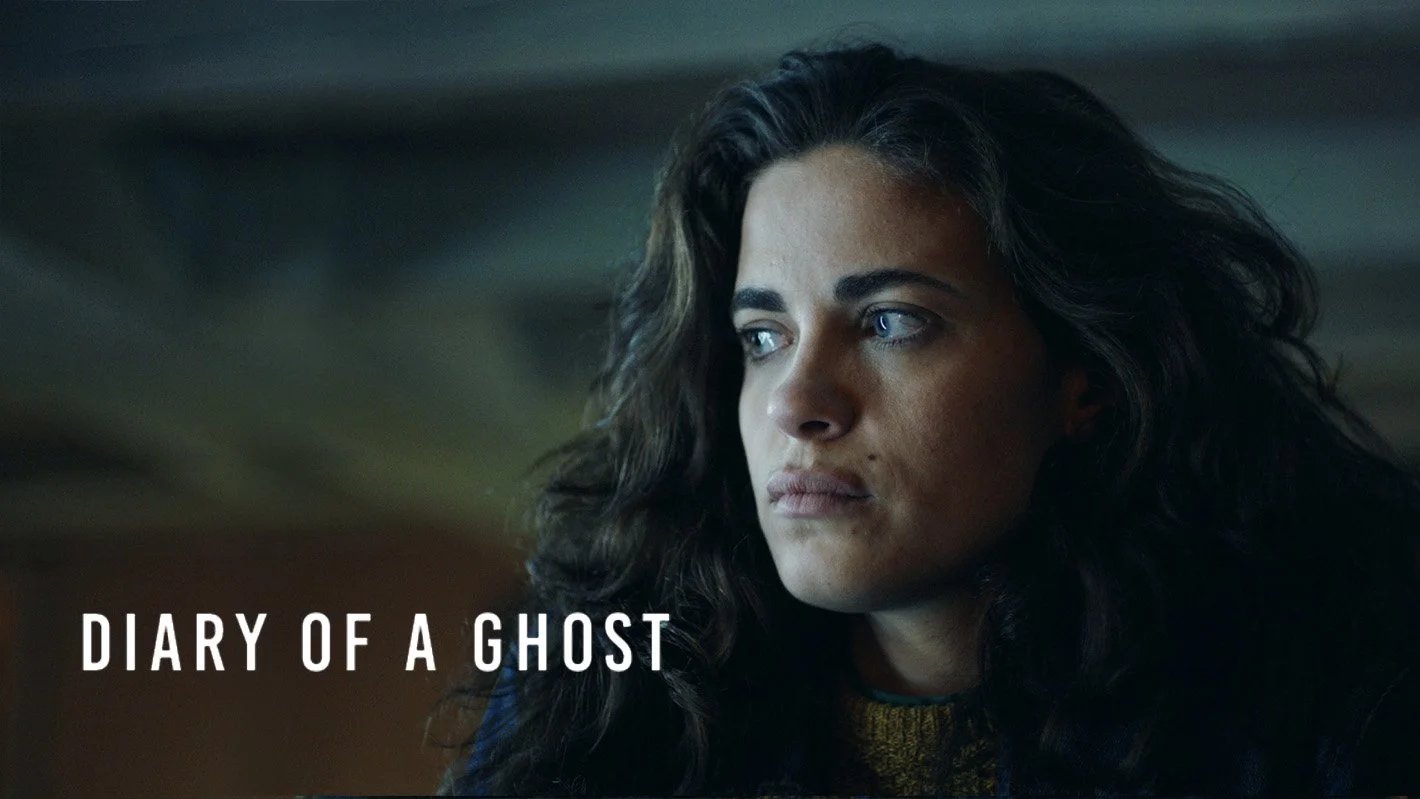
Diary of a Ghost
After the loss of her first love, a young woman keeps a diary to process her grief, blurring the line between reality and imagination.
Directed by Caroline Hajny | Written by Maren Koenigs
Produced by Sophia Ogilvie, Caroline Hajny
After the loss of her first love, a young woman keeps a diary to process her grief, blurring the line between reality and imagination.
ABOUT THE FILM
DIARY OF A GHOST was a Semi-Finalist at our very own Kino London Short Film Festival and won Honorable Mention at the BIFA Qualifying Brighton Rocks Film Festival, as well playing as an Official Selection at the also BIFA Qualifying Sunrise Film Festival Lowestoft. It was longlisted for the 225 Film Club, and longlisted for Best Director and Best England Film at The British Short Film Awards. Other festival highlights include: North East International Film Festival (BIFA Qualifying), Fastnet Film Festival, Fine Line Film Festival, Ealing Film Festival, and Australia Independent Film Festival.
ABOUT THE FILMMAKER
Born and raised in Germany, Carrie relocated to London to pursue a career in film, where she has been working across fashion, music and commercials since. Her previous ventures into fashion photography and documentary filmmaking continue to influence her aesthetic and approach to working with talent. Since then, her distinct style has led to collaborations with brands and artists such as Puma, Vinted, Dua Lipa, Red Bull Racing, Barbour and Amazon.
Her first short film ‘Last Dance’ premiered at the 2019 BAFTA qualifying Underwire Film Festival, where it was nominated for best U25 production. 'Diary of a Ghost', a short drama exploring grief and mental health, stars Genevieve Chenneour (Bridgerton), Alfie Noble and Mia Rodgers (The Sex Lives of College Girls). Her latest film, ‘Requirements’, a political science fiction drama set in a near future dystopia, is currently in post production.
Carrie has been curating film screenings at Sarah Kravitz Gallery and Southampton Film Week and served as a judge at Fine Line Film Festival in Serbia and the BIFA qualifying Sunrise Film Festival. She is also the co-founder of CHERRYPICK.
READ OUR INTERVIEW WITH CAROLINE
Welcome to our Short of the Week series. Tell us a bit about yourself and your filmmaking background.
Thanks so much for having me and Diary of a Ghost! I’m a German director based in London and I work across fashion, commercial and narrative projects. I started out as a camera trainee - a friend of mine took me under his wing and opened the door to the ‘real’ industry for me after I dropped out of uni. I always wanted to be a director, but working on set as crew was a great way to learn how the industry works, what different departments do, meet people and observe other directors work. I took whatever job came my way, a lot of running, PA’ing, assisting, BTS taking, you name it! Simultaneously I worked as a photographer shooting mainly fashion and live music - I enjoy photography a lot, and it helped me find a style I enjoyed, however for me it was always a tool to meet people: designers and artists I could hopefully direct a campaign or music video for. That’s how I built a reel which allowed me to move into commercials. I often get the sense that in the narrative world commercials are looked down on - for me they’ve been such an invaluable training ground! Over the years I’ve been able to build relationships with crew and actors, which allowed to shift focus on narrative projects.
Tell us about the genesis of Diary of a Ghost. Where did the idea come from and how did you develop that idea into the short that's now made its way out into the world?
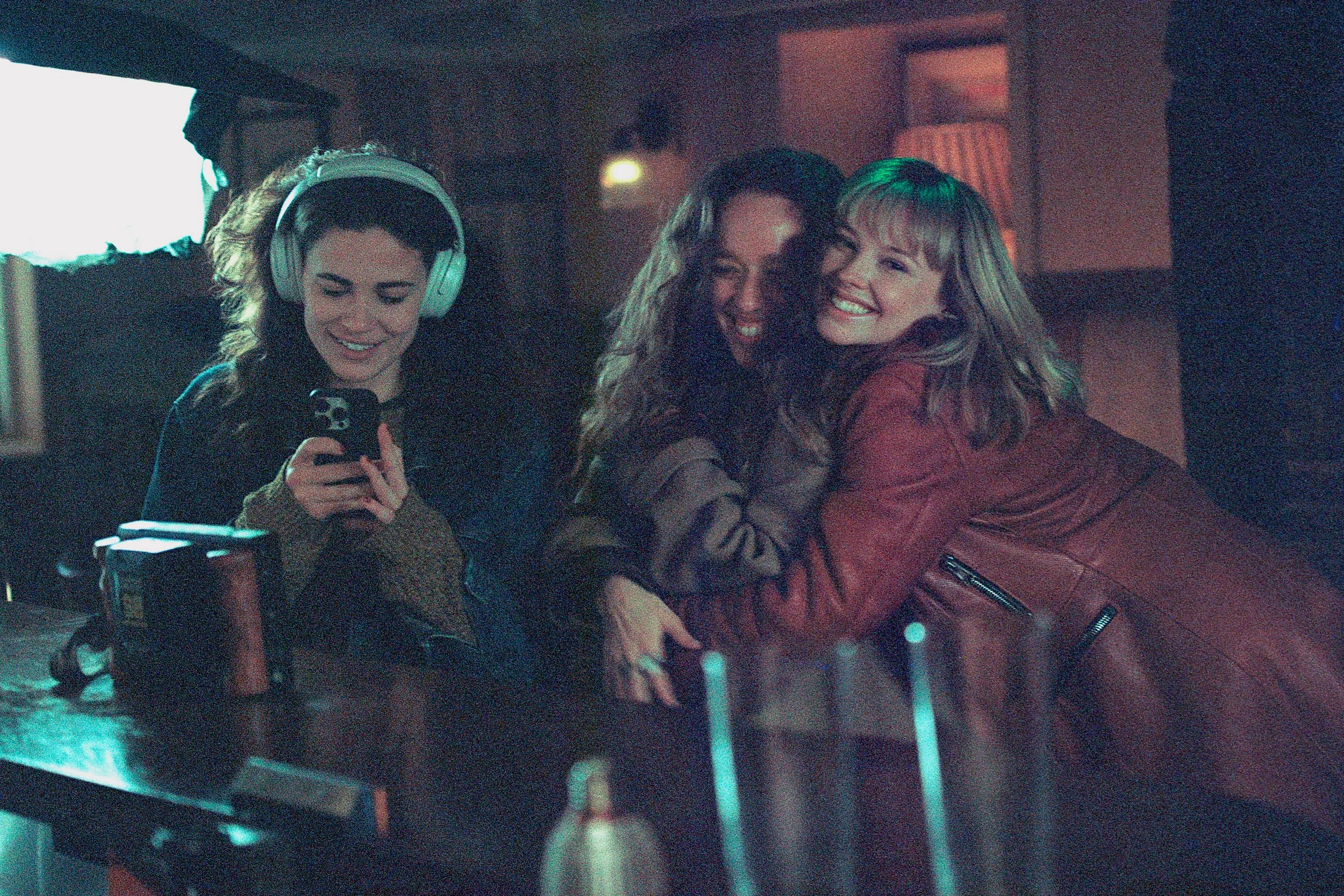
Diary of a Ghost was written by my wonderful friend Maren Koenigs and was loosely inspired by her witnessing a close relative experiencing prolonged grief disorder. Her relative struggled to cope with the loss, slowly distancing themselves from the rest of the family and losing themselves in an imaginary world in which the person they lost was still around. Luckily, the family managed to intervene, but Maren took the idea and ran with it, asking herself what might happen to someone who doesn’t have a support network. The film was originally written to be a feature and Maren then turned it into a short!
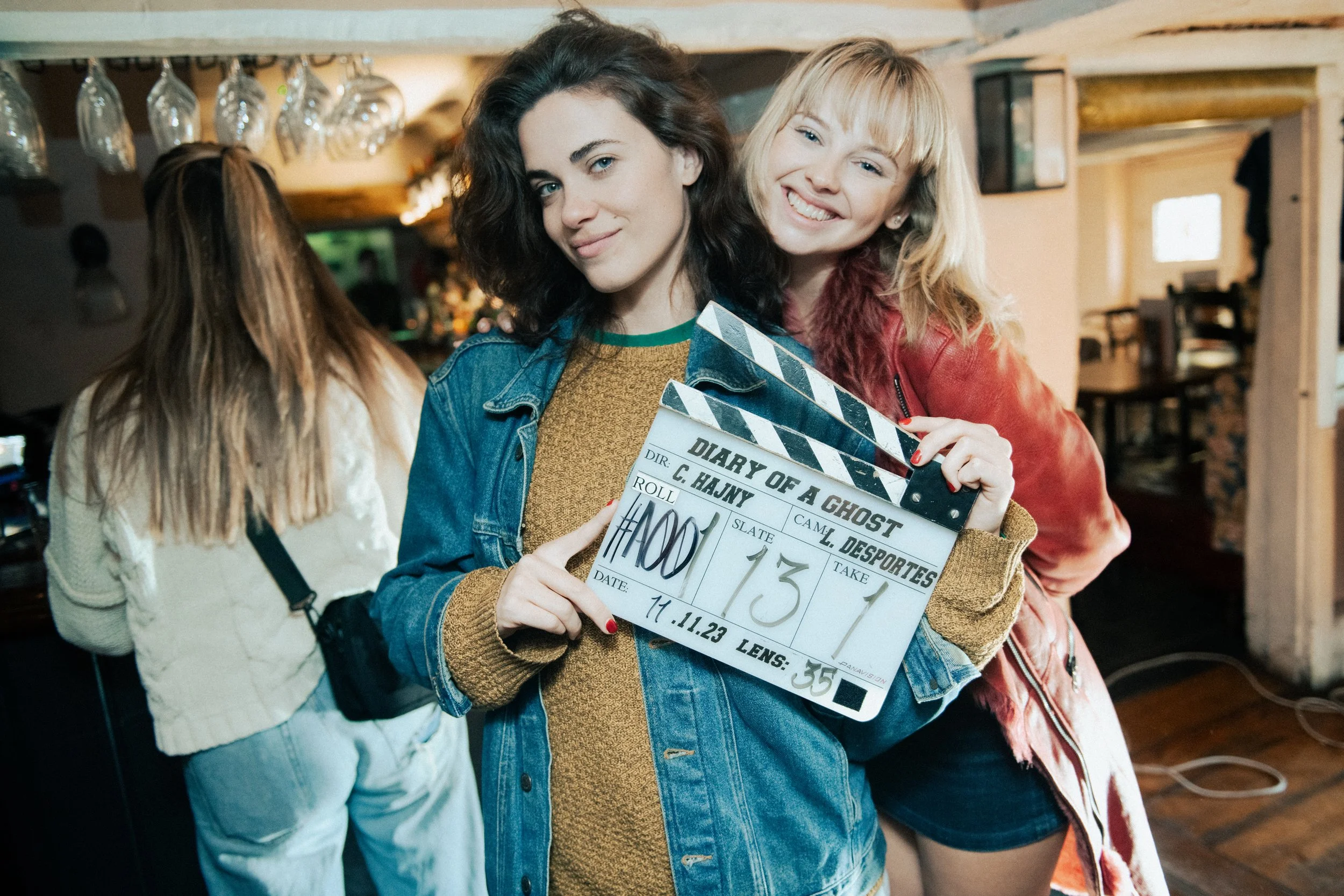

What were some of the main obstacles you experienced when making Diary of a Ghost and how did you overcome them?
I’m definitely not the first person to mention budget and finances here, but as a self funded project we definitely had to get nifty and call in a lot of favors to make this film happen. We almost lost our main location less than a week before the shoot due to my producer’s grandma’s superstitions, getting a bullet hole into a piece of glass might have involved some dodgy business (we’re not sure ourselves) and filling two notebooks with hundreds of diary entries for authenticity within a few days causes serious hand pain.
We shot the film over the course of 2 days, in 4 different locations - some in central London, but most in Surrey - so I’d say one of the biggest challenges was probably to fit everything into the days, getting everything we needed while still allowing some room for exploration and play and keeping the shooting hours sensible for our crew. Diary of a Ghost explores incredibly sensitive topics and as a director it’s so important to create an environment in which the actors can be vulnerable - however, when working on a super tight schedule that can be tricky.
For example, the second to last scene of Sage and Riley in the living room was shot in only an hour - it’s 6 or 7 minutes long and it’s the emotional climax of the film - but because we had some delays earlier in the day and we needed to leave the location, we had to somehow squeeze everything into the last hour of our final shoot day. It wasn’t easy to hide how stressed I was at that point, but I knew if I didn’t, it would sabotage the performances.

Tell us about the journey of getting your film to audiences and some of the festival circuit highlights and/or online release.
It’s been really lovely sharing our film with audiences - this was my first ‘proper’ festival run, so I don’t have anything to compare it to, but ultimately we make films for the big screen, so it’s always special to see them projected in a cinema to an audience. It’s been lovely to see the passion and interest for short films - we’ve been asked such thoughtful questions at Q&As or after screenings about the story, themes and process of making the film, sometimes people have come out of the screening in tears and that feels like the ultimate compliment to me.
What advice or hacks would you give to other short filmmakers?
Your team is everything, so make sure you find a crew that shares your vision and enthusiasm for the film. Great HoDs can make or break your film and will hopefully elevate whatever it is you had in mind.
Any film recommendations that we should add to our watchlist?
The Lives of Others, The Florida Project and Thelma & Louise
Interested in getting your work selected?

Cry Like A Guy
Why do we cry? What’s the deal with those little droplets of emotion? Kieran Bew (HBO's 'House of the Dragon', Netflix's 'Warrior') leads us on a gruff, goofy, educational and emotional adventure through the senses into the fascinating world of tears. A feast for the feels.
Directed by Ant Rubinstein
Written by Catherine Willoughby
PRODUCED BY UNIT 9 FILMS
Why do we cry? What’s the deal with those little droplets of emotion? Kieran Bew (HBO's 'House of the Dragon', Netflix's 'Warrior') leads us on a gruff, goofy, educational and emotional adventure through the senses into the fascinating world of tears. A feast for the feels.
ABOUT THE FILM
CRY LIKE A GUY has been featured online with Film Shortage, Beyond the Short, Minute Shorts, and Curation Hour. I won awards at Sunday Shorts and Indie Short Fest in LA, received Honourable Mention at the Margate Film Festival, and was nominated for Best Micro Film, best editing, and best sound at Phoenix Rising. Additional festival highlights include Little Venice Film Festival and Boundless Film Festival.
ABOUT THE FILMmakers
Ant Rubinstein is a London based director / VFX artist / general creative nerd. Armed with an Engineering degree from the University of Cambridge and a couple of years working internally at Red Bull Media House - he’s recently moved into directing commercials for global brands (Google, Meta, Mastercard, Honda, Ford) and music videos for Chart topping artists (Sean Paul, Camilla Cabello). He picked up aa Young Director Award at Cannes for a zero-budget pandemic short film - which is now preserved in the BFI national archives. In his filmmaking he is all about innovating and pushing boundaries wherever possible, he loves that intersection where tech meets art, and especially loves getting his hands dirty building creative contraptions using the latests tools and technologies.
Catherine Willoughby is a planing director at Adam & Eve DDB by day, and a passionate poet / writer of spoken word by night.
READ OUR INTERVIEW WITH ANT & CATHERINE
Welcome to our Short of the Week series. Tell us a bit about yourself and your filmmaking background.
We’re a London based writer director duo - by day Catherine (writer) is a planning director at Adam & Eve DDB and by night an avid poet / writer of spoken word. Ant (director) is a freelance filmmaker working in commercials, with a keen interest in VFX and messing about with the latest tools and technology. Together we love collabing on projects like this, we like to make things that play to our creative strengths and that can also inspire, educate and entertain at the same time. Our last short ‘There’s Something Going Around’ was about how memes kept us sane during the pandemic, and it ended up preserved in the BFI national archives (as well as garnering a coveted Kino short of the week selection too) .


Tell us about the genesis of Cry Like A Guy and your motivation for making this film.
Believe it or not, the topic was inspired by a disagreement between Catherine and Ant. We realised we’d been socially conditioned to have opposing views about the value and usefulness of tears, and wanted to explore that in a piece of creative writing. Catherine wrote a longer spoken word poem originally, then we decided to make it into a film - and target it specifically at men as that had more of a cultural hook than crying in general.
We started by researching to answer the simple question “why do we cry?”, and the explanation fit into those three broad themes. So we wove them together in a story that builds continuously; starting with what’s happening in your body (biological), then looking outwards to your interaction with other people around you (sociological), and then zooming out even further to consider people across time (historical) - painting the full picture that today’s stigmatisation of male tears is not very productive or sensible. The whole process was a fascinating journey of research and discovery.
This is a huge topic, and such an important one too. We feel that the boundaries of traditional masculinity are very much in flux at the moment, and we hope this film can play a small part in reshaping the narrative. We’d love it to be seen by as many people as possible in an educational context and we’re working on charity partnerships / amplification to get it in front of the people who could benefit the most from the messaging.


What were some of the main obstacles you experienced when making Cry Like A Guy and how did you overcome them?
The hardest bit of any short film project has go to be getting it off the ground and building that initial momentum! We had such a great script and I knew we needed to find the right narrator who could do it justice, but at the start when it’s just an idea in your head how do you convince people to see the value in it? Because I do a lot of VFX, my approach was to create a really intricate 3D animatic of the whole thing, we plotted out exactly what was going to happen and when - particularly how it was going to flow together with these theatrical sliding scenery pieces. I worked on this for a good few months, knitting the story together and figuring out exactly what we needed. This was the only thing I could really do to drive the project forward by myself, but the pre-vis actually became invaluable in getting people excited and on board - It’s what enabled us to attract Kieran as our narrator. It also meant on the shoot we could be super efficient with coverage, as we had the film pretty much all laid out already in terms of what shots we needed where, to stretch our slender budget to the absolute maximum.
Tell us about the journey of getting your film to audiences and some of the festival circuit highlights.
My approach to getting this out there in the world has just been make as much noise as I possibly can about it online! Our premiere was just on my YouTube channel (after a screening for friends and crew) - and I’m constantly posting behind the scenes snippets and making-ofs on instagram to get people to go and watch the full thing. Side note: I’d definitely recommend behind the scenes content as a great way to promote a film on social media, little snackable snippets are much more engaging and shareable than a full film that requires attention and focus, plus there’s a multitude of pages that will repost good behind the scenes content if you make it for them! Because we both work in advertising we’re trying to get it in front of as many industry people, brands and agencies as we can - with the ambition being we can find a purpose for it with a charity or a cause to amplify the message.
What advice or hacks would you give to other short filmmakers?
This was my time doing a short with a really established actor, we were so lucky to get Kieran on board and I think my big learning / hack would be don’t be scared to go after a big star! If you can find a way to get through to them and you’ve got a good idea I don’t think anyone is off limits. That applies to crew, VFX artists and everyone involved in the process. Filmmaking is a team sport and you never know who you might be able to get on board and how much they might be able to elevate your work if you don’t try! For us, the narrator was always going to be what the success of the film hinged on and Kieran’s experience in House of the Dragon, Netflix’s Warrior and all manner of other ‘tough guy’ roles made him a perfect fit for the part.
Any film recommendations that we should add to our watchlist?
An inspiration for this film that I heartily recommend was Wes Anderson’s adaptation of Henry Sugar on Netflix, mainly for the theatrical transitions and sliding set pieces - they add a whimsical sprinkle of surprise and delight to every scene and elevate moments that could just be a mundane cut. I think in this world of oppressive CGI and Ai there’s something so special about clunky mechanical transitions that really feel handmade. Another big inspiration for us was ‘Quarter life poetry’ by Samantha Jane, we love the spoken word narrator lead narrative. It’s such a great way to tell a story with so much lyrical flair and creative flourish, a piece we defintely aspired to emulate!
Interested in getting your work selected as Short of the Week?
Waving
His worst fears seemingly realised; a distraught father takes one last walk through his ruined world.
Written, Produced & Directed by Rolfin Nyhus & Steven Brumwell
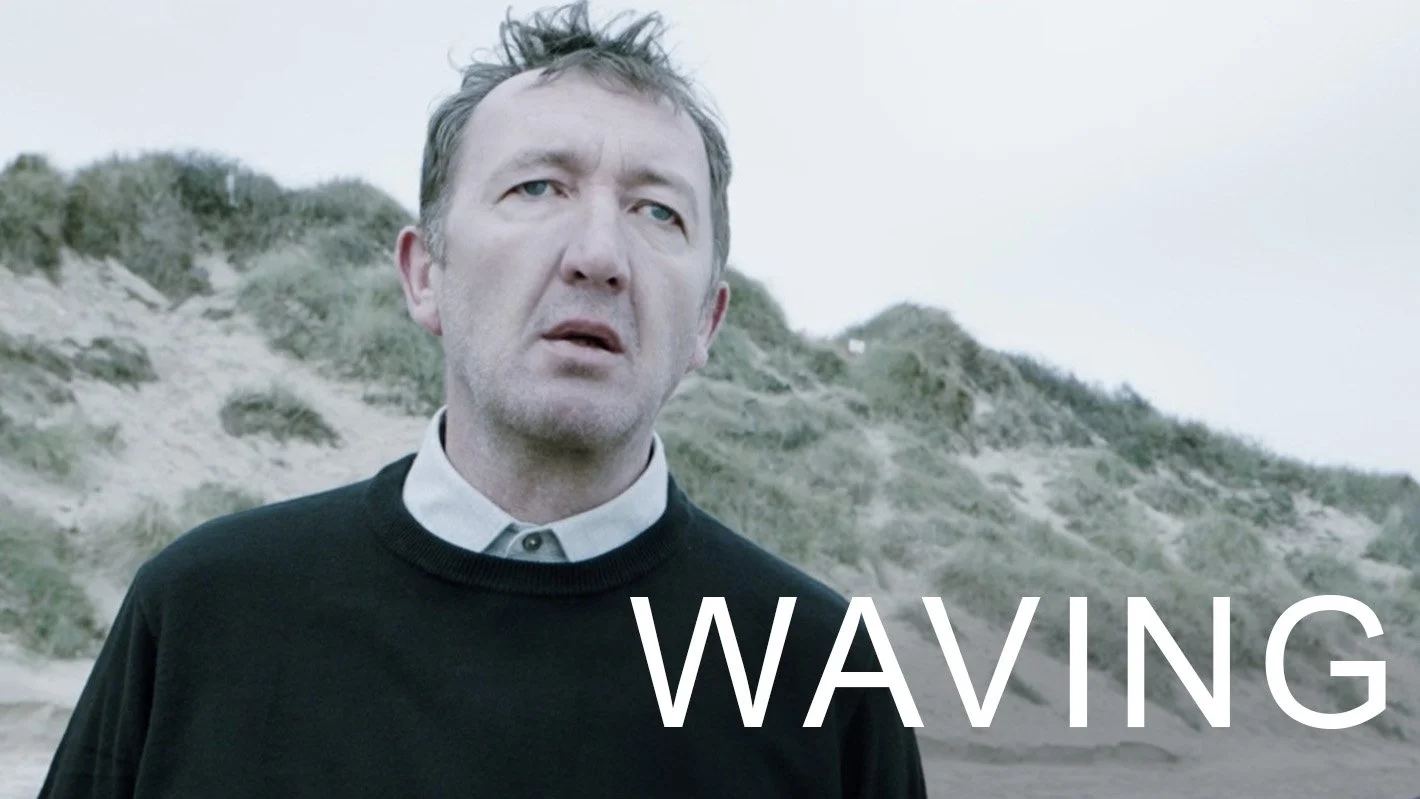
His worst fears seemingly realised; a distraught father takes one last walk through his ruined world. For most people, being at the centre of their own world and having a loving family is a wonderful thing. For Charlie, it's literally a nightmare. A short film about OCD.
Starring globally acclaimed actor Ralph Ineson (The Witch, The First Omen), Waving is an unflinching, but ultimately hopeful examination of the much-misunderstood condition of Obsessive-Compulsive Disorder.
** Viewer Discretion Advised **
The film contains scenes depicting intensive, intrusive thoughts that some may find triggering.
ABOUT THE FILM
Waving was recently made available as a general release on YouTube following a successful run on the global festival circuit (35 festivals, 35 Nominations, 20 Awards) including the 2023 edition of our Kino London Short Film Festival where it won Best Cinematography.
Other festival highlights include Sitges, being nominated for Best East Anglian Film at the BAFTA Qualifying Norwich Film Festival, winning Best Production Design at the 2023 British Short Film Awards (where it was also nominated for: Best Actor, Best British Short Film, and Best Sound), winning Best Actor for Ralph Ineson at the BIFA Qualifying Manchester Film Festival and the Romford Film Festival, winning Best Editing at the BIFA Qualifying Brighton Rocks Film Festival and winning Best Editing, Best Art Direction and Best Cinematography at the BIFA Qualifying Unrestricted View Film Festival.
The team behind the production were assembled across a wide range of neuro-diverse backgrounds, and the writer has lived with OCD since the age of 11, only being diagnosed at 18. Employing a surrealist filter to portray the terrifying thoughts that the condition causes sufferers, the film has been embraced by the community, festivals, and critics alike. The team hopes that this general release without any form of paywall will continue to shine a light on this cruel and misunderstood illness.
ABOUT THE FILMMAKERS
ROLFIN NYHUS developed his interest in filmmaking while reading English Literature, producing work for other directors in his spare time. Spurred on by his love of European cinema - particularly the work of Bergman, Haneke, Herzog and Mike Leigh, he decided to abandon further academic study at King’s College to establish TankTop Films as a vehicle for his own projects. He is a native Londoner with English, Irish and Scandinavian roots and a fond habitué of the Cannes Film Festival. Waving is his 4th narrative film with a festival run planned from summer 2022.
STEVEN BRUMWELL has been fascinated by the silver screen since being left awestruck by the magnificence of Indiana Jones’ heroism at the ABC in Birmingham, 1981. A bit of a polymath, he has launched numerous enterprises but always returned to the written word. Influenced by Wilder, Lynch, Kurosawa and Lynne Ramsey, he strives to portray broad emotions in interesting ways. His work is continually drawn to the deep well of mental wellbeing by his battles with OCD since early childhood, Waving is his first project to be filmed
READ OUR INTERVIEW WITH ROLFIN
Welcome to our Short of the Week series. Can you tell us a little bit about yourself and your filmmaking background?
I am a native Londoner with English, Irish and Scandinavian roots. I developed an interest in filmmaking when reading English Literature, producing work for other directors in my spare time. Spurred on by a love of European cinema - particularly the work of Bergman, Haneke, Herzog and Mike Leigh - I decided to abandon further academic study at King’s College to establish TankTop Films as a vehicle for like minded creatives to collaborate and produce work they care about.
Tell us about the genesis of Waving. What was the inspiration behind the film and how did you come to be attached to the project?
My creative cohort (and brilliant writer) on ‘Waving’, Steve Brumwell, has had OCD since childhood. Along with writing his own material he has always been generous with his time when it comes to supporting other writers. That is how we met, with him helping me sharpen up my own scribbles. We hit it off and struck up a friendship. We often share script ideas with each other to move them along. ‘Waving’ was an idea in the mill we liked enough to not leave it languishing on a hard drive.
With 'Waving', Steve really wanted to portray OCD in a way as yet unseen: The internal torture rather than the external compulsions are rarely shown in any form of media. The idea for the dystopian elements comes from a love of horror and a desire to explore ways of showing how intrusive thoughts do make the sufferer feel as though existence is dependent on fulfilling the authoritarian orders OCD creates in one’s mind.
Tell us about the experience of working with a Casting Director to get Ralph Ineson attached.
Our Casting Director, Cameron Culver, has become a dear friend and supporter of TankTop Films’ work. We do our best to give him whatever materials are needed to pitch the project we are working on and he diligently does the rest. Forgive the platitude but casting is so, so vital and it is a godsend having someone you trust looking after that side of things, which can be fraught with rejection and disappointment.
With Ralph, I think we simply got lucky with the timing. So, hopefully, there is a ray of hope there for other filmmakers. All you can do is work hard on the material, have faith in it, and then hope for the best that the talent you really want are able to fit the project into their schedule. A word of caution, we did have to wait over a year for Ralph’s diary to free up, but it was 100% worth the wait.
What were some of the main obstacles you experienced when making Waving and how did you overcome them?
All the usual ones. Finance. Locations. Logistics. British weather. Namely, it pissing down with rain on the last day of shooting. There isn’t a magic formula, I don’t think. You overcome it all by, hopefully, keeping cool and maintaining a tenacious attitude as best you can.
Tell us about the journey of getting your film to audiences and some of the festival circuit highlights.
With festivals, my attitude after innumerable rejections is that every “No” is leading closer to a ‘Yes”. Reaching an audience hopefully starts via the festival circuit, and if what you have made is actually any good hopefully your peers and audiences respond. Given all the artistic modes of expression there are, film remains meritocratic, relatively speaking. I have friends in the art and music worlds and their experiences of getting eyes (and ears) on their work is even more brutal, believe it or not, despite their obvious talent and hard work.
Highlights on the circuit were our premiere at Sitges and the screening at Norwich Film Festival (as we shot some of the film in East Anglia). A stroke of luck meant we had four US festivals almost back to back, so I got the opportunity to attend Austin, Idyllwild, Dam Short and Cinema On The Bayou.
‘Waving’ was made in the hope people suffering from OCD might find some solace in the portrayal. We were deeply honoured that the IOCDF and OCD Action were unrelenting in their support. Through them (and our incredible Exec Producers, Ethan S. Smith and Catherine Benfield) we have been able to get the film out via the OCD Community first of all. Since releasing it, we have had a deluge of thank you messages which has left the entire team teary eyed. Our hope though, is that we eventually reach a more mainstream audience so that, slowly over time, some misconceptions about this widely misunderstood condition can start being challenged.

Cinematographer Andrew Alderslade accepting the award for Best Cinematography at our 2023 Kino London Short Film Festival for his work on “Waving“

What do you think is the biggest challenge short filmmakers face in the early stages of their career when trying to break into the industry?
The same challenges everyone experiences in anything they ever attempt to do. You start out not knowing much, really. You have to go through the pain of learning. Watch films and read as voraciously as you can. Make something and embrace whatever successes or failures it brings your way. Rinse and repeat.
What advice or hacks would you give to other short filmmakers?
Filmmaking needs “belief and momentum” - a few sage words I try to keep in mind courtesy of Terry Gilliam.
Any film recommendations that we should add to our watchlist?
Cache (2005) by Hankeke - a modern masterpiece.
Autumn Sonata (1976) by Bergman - a complex and compassionate exploration of the relationship dynamic between a mother and daughter.
Camera Buff (1978) by Kiewlowski - one of the most charming films ever made. Hard to find!
Nuts In May (1976) by Mike Leigh - an old ‘Play For Today’ TV Film by the BBC. A testimony to how you can create something relatively inexpensive with wise location choices, a great script and capable actors.
Interested in getting your work selected?
Snake Dick
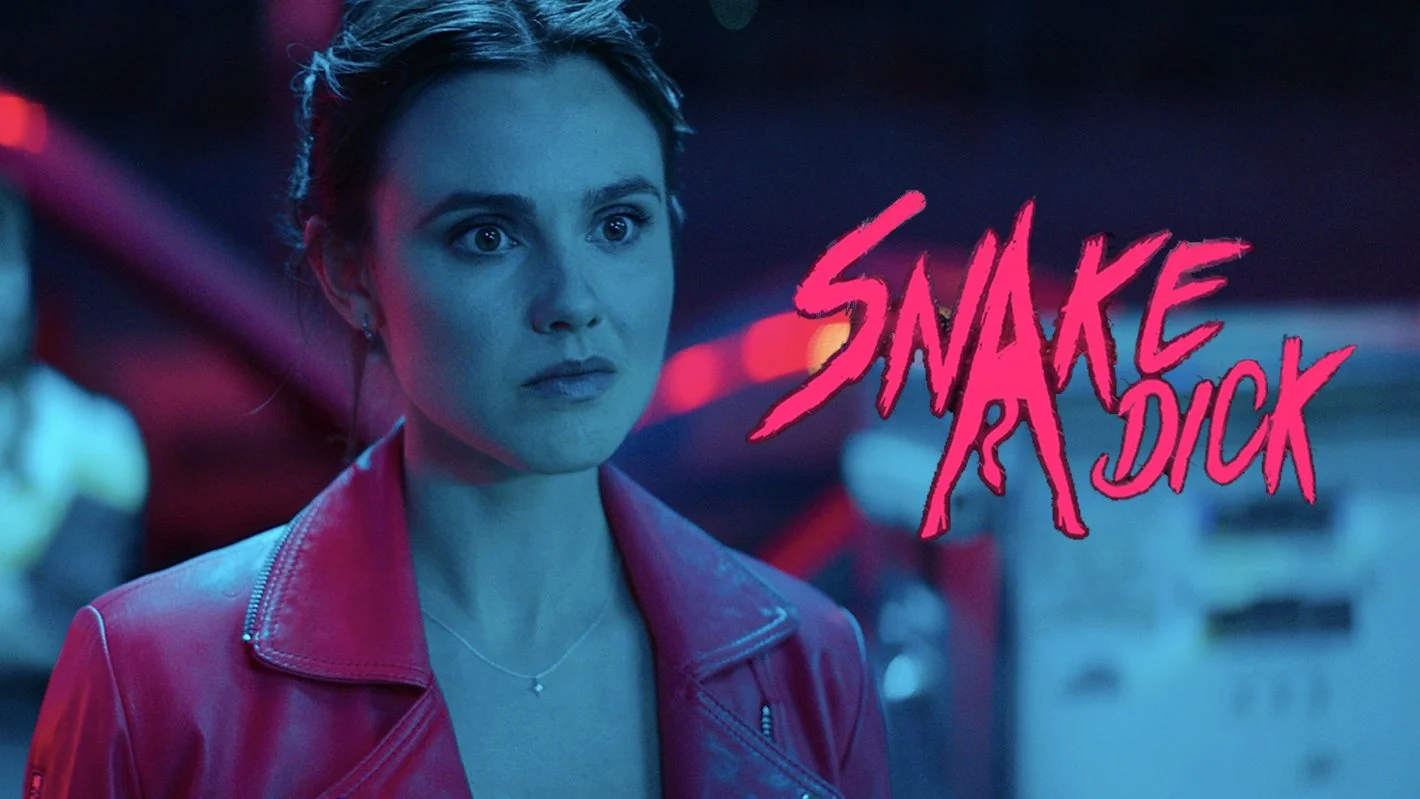
Jill's got the snake. Julia's got the flute. Alone, they have nothing. But together, they have a secret weapon to fight the darkness...

Written, Directed & Produced by David Mahmoudieh
Produced by George Lako & Annalea Fiachi
Jill's got the snake. Julia's got the flute. Alone, they have nothing. But together, they have a secret weapon to fight the darkness...
ABOUT THE FILM
Snake Dick won the Audience Award at Dances With Films, Curtas, and the Salem Horror Fest. It also won Best International Short at the South London Film Festival, and Best Short at Monsterfest, Los Angeles Super Shorts, Short Film Factory, Horror Vein, ScreamQueer and Darkveins Horror Fest. It also won two awards for Best Director at the Hallucinea Film Festival and the London Director Awards, plus two awards for Best Cinematography at the British Horror Film Festival and Los Angeles LGBTQ+ Film Festival. It was nominated at at several other festivals with highlights including FilmQuest & Scream Queen Film Festival. Plus it was an Official Selection at many more. Highlight including the Oscar Qualifying HollyShorts, the Venice Film Week, and the Nottingham International Film Festival just to name a few.
After it’s immense festival run, the film was picked up by Alter and released online having since accumulated over 2 million views. The filmmakers are currently in development for a feature length version.
ABOUT THE FILMMAKER
David Mahmoudieh - Born in the UK to an Iranian father and British-French mother, David began his career in commercials and music videos, shooting award-winning work for brands including Google, Lego and Samsung, and artists such as Coldplay, Just Jack and Ringo Starr. He founded and now directs through his production company, Alpha Wolves, with clients including Yahoo, Mercedes and Porsche.
As a writer, David won the ECU Screenwriting Contest with his script Rain, sold his spec The Frail in a competitive bid and was hired by Star Trek creators Roddenberry Entertainment to adapt their graphic novel Worth into a feature.
David's first feature as a "director-for-hire", See You Soon, starred Harvey Keitel and Liam McIntyre, and secured a US theatrical release.
Most recently David has been directing on Warner Bros/The CW's hit show Superman & Lois, and was selected for Sony Television's Diverse Director's Program.
David's Oscar-qualifying short-film Snake Dick won numerous awards on the festivals circuit and has amassed a cult following and millions of views online after going viral. The film is now being developed into a feature.
READ OUR INTERVIEW WITH DAVID
Welcome to our Short of the Week series. Can you tell us a little bit about yourself and your filmmaking background?
I was born and raised in the UK by an Iranian father and British-French mother, and I grew up in a cinema - literally. We had a projectionist in the family and I would go see a movie at the ramshackle theater where they worked pretty much every other night throughout my youth. So I knew early on I wanted to work in film. I started out in commercials, working my way up from a treatment writer to director before starting my own production company, Alpha Wolves, through which I direct most of my branded work these days. I also write, and have been fortunate enough to sell a few scripts and get hired to write a few others. After almost a decade of shooting commercials, which are fun but ultimately a very disposable artform, I decided it was time to start focusing on what made me want to be a director in the first place — film and television. I did one small TV move as a “director-for-hire”, a soccer movie originally intended for Russian television that somehow got a US theatrical release, but I walked away from it with an empty feeling having had no say in the edit. Snake Dick was in large part inspired by that frustration; making something purely for myself as opposed to working to someone else's brief. Most recently I’ve found my way into episodic television, directing on the Warner Bros/CW series Superman & Lois, and was also lucky enough to be selected for Sony Television’s Diverse Director’s Program, so TV is a path I’m pursuing diligently at the moment. But most importantly, I’m an Industry Ambassador for Kids In The Spotlight, a foster kids charity that transforms the lives of foster youth through filmmaking, and I direct a film for them every year written by and co-starring the foster youth who shadow me during the process. Teaching and mentoring is something I love and am hoping to do more of. The last two films I did for the charity were Parallel, a short/PSA about unreported abuses in high schools starring Cory Feldman, and Bully, a coming-of-age drama starring Terry Crews, Ariel Winter, Liam McIntyre and Rodney Jackson Brown, the brilliant foster kid who wrote and starred in the film. That last one will be hitting festivals next year.


Can you tell us about the genesis of Snake Dick and how you came up with the concept?
Drugs... lots of drugs. Just kidding. :)
My main filmmaking influences growing up were John Carpenter, James Cameron, Kathryn Bigelow, David Lynch, Peter Jackson, Wes Craven, Akira Kurosawa, Paul Verhoeven and Steven Spielberg. In other words, a little bit of everything. I knew I wanted to make something that channelled all these influences, and it would need to be weird. But the inspiration hadn’t quite hit yet. Then one day I was having a conversation with my wife (the film’s ever-so-talented costume designer, Susanna Song) about how it’s harder for an armed woman to travel alone in the US than it is for an unarmed man. According to her, that’s because “men are always carrying a weapon between their legs... and its name is Freedom.” While not a revelation to discover I too had a freedom-enabling accessory between my thighs, her statement hit me in a way that I couldn’t stop thinking about it. The other, rather timely factor was this creepy orange dude who, at the time, was somehow president of a country that pioneered women’s rights — all while bragging about his daughter’s breasts and grabbing women by the what-sits. Add in my love of Thelma & Louise, trashy 80’s movies, and — voila! Snake Dick was born.
How did you attach an Executive Producer to the project who also Exec Produced the Oscar nominated Minari?
The wonderful Josh Bachove is, first and foremost, a dear friend. My wife was the Costume Designer on Minari so I got to see Josh at work first-hand and knew I needed a producer of his talents in my corner. I had already shot the film by then but after showing Josh an early cut, he came aboard to shepherd us through post, help navigate our festival run and develop the feature with me. We’re very lucky to have him!
I must also shout out my other producers, George Lako, Annalea Fiachi and Exec Producers Steve Fusci and Fiona Campbell-Westgate, who all brought their own unique skills to the team. I'm super grateful for all of them.

What were some of the main obstacles you experienced when making Snake Dick and how did you overcome them?
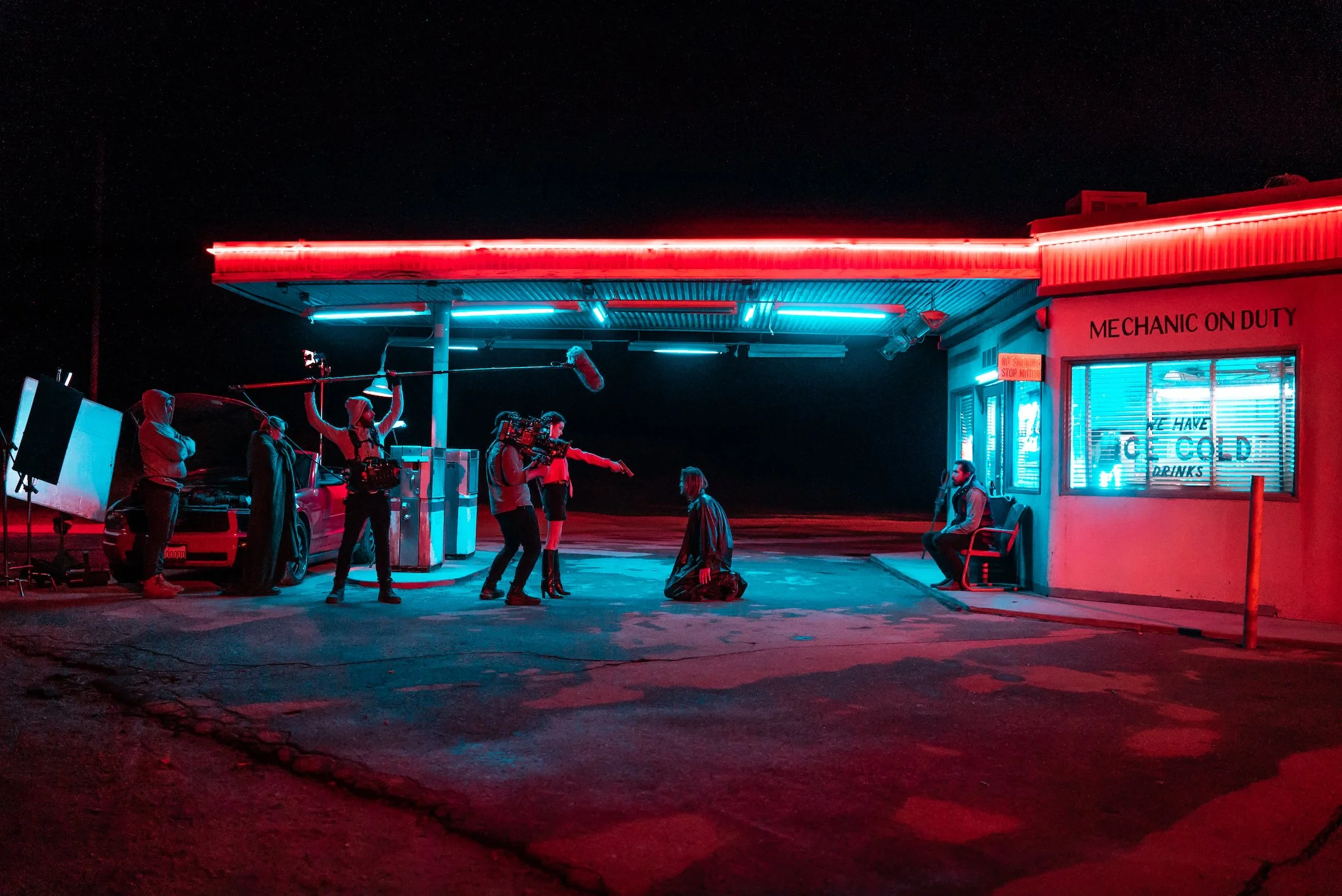
The usual headaches: time, budget, resources and, of course, the unexpected. Let’s start with time. This was a one-day shoot. The location was more than half our budget and the availability of our cast meant we could only get them and all the other components we needed together for a single night. Murphy’s Law seemingly loves short-film productions, evidenced by the fact that very night turned out to be the shortest night of the year — effectively giving us roughly 8hrs of darkness to get everything. Thankfully I had a small but perfectly formed crew who were willing to hustle for the cause. Special props goes to our incredible DP, Chris Saul, who was able to light the set in a way that gave our actors some flexibility in the blocking without compromising the very particular look we wanted. Now for the unexpected… we had initially planned on using a real snake, then augmenting it with VFX. A friend of the producer was good enough to bring their pet python to set, but it ended up being too cold in the desert night so the snake had to go home and we shot without a live reference in spite of all our planning. Luckily we had assembled an incredible VFX team, headed by Fiona Campbell-Westgate who at the time was working on Avatar 2. That was both a huge blessing and challenge because, naturally, we had to be patient given her current commitments — especially as she was rendering her awesome skills for the love of it. She brought in VFX artists Stephen Cunnane and Ryan Wieber, who combined to create the snake, and then Chris Wells did the burning cityscape. Due to this being mostly favors — coupled with the onset of the pandemic — it was almost a year from the date we shot the short to having a fully finished version. But that's shorts, I guess.

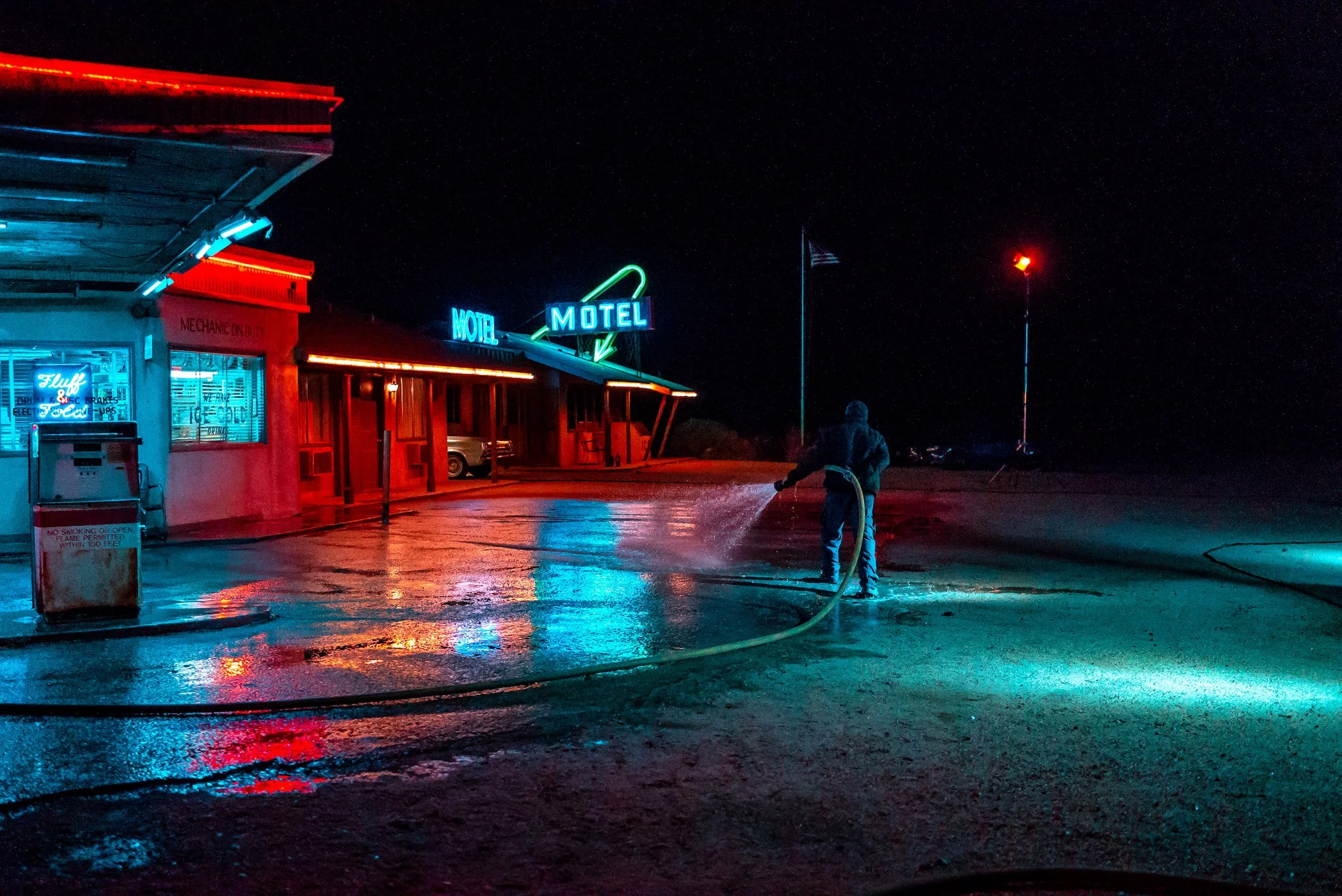
Tell us about the journey of getting your film to audiences. Festival Circuit vs Online Release with Alter, the highs and lows of both.
Well, as we completed our film in the height of Covid, our first festival was supposed to be Fantastic Fest… until it got cancelled. After that we had to decide whether to wait until the following year and try for Sundance (the following January), or accept the invites we had from a few other festivals we loved. At the time no one knew how long the pandemic was going to last and whether other festivals would cancel too, so we took the offer to do a “virtual premiere” at Warsaw International Film Festival, and we’ve played at over 80 festivals since. One of those was HollyShorts, where the film was scouted by Alter. Amazingly, we were on the festival circuit for a whole year before we got to see the film in a physical theater. That honor went to Dances With Films, where we played in the Midnight Block and went on to win the Audience Award. That was definitely a high, seeing the film in LA, in a packed house at the Chinese Theatre where I had attended my first ever screening in the US. We also recently got invited by Clermont-Ferrand Film Festival in France to be part of a special screening called Bloody Girls on Friday 9 February at 9.30pm in their main Cocteau theater (1,300 seats!) so that will be a nice way to close out our festival run for the short.

What advice or hacks would you give to other short filmmakers?
Work within your resources. So many of my friends or other filmmakers who reach out for advice send me their 30 page script with 20 locations and 10 characters. By all means, if the story calls for it and you have the resources to pull it off, go for it. But if not, figure out what you can get your hands on and build your story around that. A short is ultimately a means to an end, so start with your means. Sure, there are exceptions, but the most important thing is that your short is well-executed. It needs to look and sound amazing, and it needs to have engaging performances. If it doesn’t, it’s going to be very hard to stand out amongst the ever-growing number of high-profile shorts being made each year. This is especially true for US-based filmmakers, as we don’t have access to government-funded film funds or nationalized programs like most of Europe and the UK. For us we either have to self-fund it or find private investment. So figure out what you want to say, then — before you do anything — figure out what you can realistically gather to say it. In my experience, short filmmaking is making the dream and reality meet somewhere in the middle, and turning that crossing-point into something more magical than its compromises. I always say it’s better to do a simple idea greatly than a great idea simply. At least that's been my experience.


What do you think is the biggest challenge short filmmakers face trying to break into the industry?
Breaking into any industry that’s already over-saturated is tough, but it’s also an opportunity to stand out from the norms. The advice I always give everyone is make the movie you’ve always wanted to see. Don’t chase trends, like making a horror movie because you think it’ll be "easier" to sell or turn into a feature. Make a horror movie because you love horror or that particular idea. The only way anything is going to turn out great is if you love it, so start there and the rest follows. The best advice I ever received in life was “Don’t chase carrots, just be a good rabbit.” In other words, focus on creating good stuff, on constantly improving your craft, and in time the carrots will come to you.


You're developing Snake Dick into a feature. How's that going?
Still going! I just got done with the feature script, which took a while as there’s a world-building component to it with potentials for sequels, etc, and I wanted it to be super tight. I also recently become a father to a beautiful baby daughter and, knowing she was on the way, was curious how that experience might affect my approach to the material. That may sound strange, but given the subject matter I had a feeling fatherhood would give me a new and better-informed perspective with a little girl in my life. Sure enough, her being in the world definitely altered my outlook on a few things and sharpened my focus on others — especially knowing she would one day likely watch the film. Now the script is complete and the strike is over, I’m excited to get it out there…
Any film recommendations that we should add to our watchlist?
Kelsey Bollig's upcoming short Inked is incredible and is going to clean up on the horror festivals circuit. Eric Palperth’s and Tyler March’s animated short Sucks To Be The Moon is a barrel of laughs and creativity. Matthew Berg’s Marked is a brilliant example of the “two-person-in-a-room” short done to perfection. Also, everyone needs to see my good friend Graham Denman’s micro-budget feature, Greenlight, which he made for a measly 50k! Easily the best feature film of its kind at that budget-level. And finally, I need to recommend the 2001 feature, Intacto, starring the late great Max Von Sydow. Barely anyone I know has seen it, which is a travesty as it’s one of the best and most original films of the early 2000's.
Apply to get your short selected as our Weekly Pick
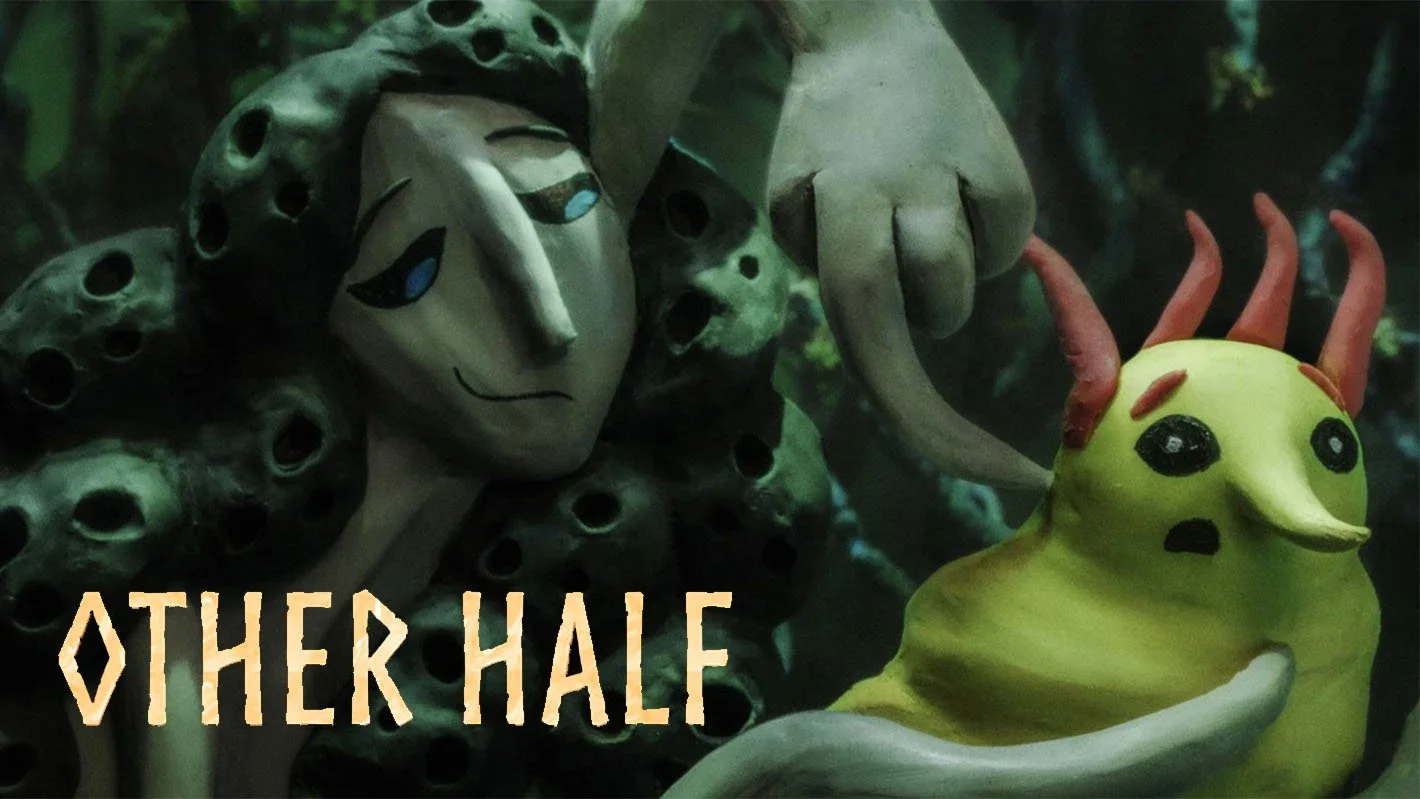
Other Half
As an Individual Being in a world comprised of Merged Couples, Ren longs to find his other half and become complete.
Directed by Lina Kalcheva
Written BY Laura Jayne Tunbridge
Produced by Michelle Brøndum
As an Individual Being in a world comprised of Merged Couples, Ren longs to find his other half and become complete.
ABOUT THE FILM
This animated short was produced as a graduation project at NFTS. It combines several animation techniques - namely plasticine, oil paint and model sets on a multiplane.
Other Half premiered at Cannes Cinéfondation, alongside 16 other student films of all genres as part of Festival de Cannes. It won the award for Best Sponsored Short at our festival this year. It was also nominated for Best Animated Short at the British Short Film Awards and Best Post-Graduate Animation at the British Animation Awards. Festival highlights include the Academy Award qualifying Hollyshorts, Flicker’s Rhode Island International Film Festival, SITGES, Underwire, British Shorts Berlin, Foyle Film Festival, The Chicago International Film Festival, Norwich Film Festival, Bolton Film Festival.
It was released online recently by Directors Notes.
ABOUT THE FILMMAKER
Lina is a Bulgarian animation director currently based in England. Her animation work uses combinations of different techniques across drawing, painting and stop-motion. Lina is interested in experimenting and mixing techniques. Her films are inspired by mythology, nature, the occult, and human relationships. She has also done some design and art direction work for student video games. Lina has a BA in Art, Film and Theatre from the University of Reading (2017), an MA in Animation from the London College of Communication (2018) and she has just finished her MA in Directing Animation from the National Film and Television School (2021).
READ OUR INTERVIEW WITH LINA
Welcome to our Short of the Week series. Can you tell us a little bit about yourself/yourselves and your filmmaking background?
I’m Lina Kalcheva and I’m an animation director. I have a background in film theory and fine art and switched onto animation as a kind of combination of everything I was interested in - research, visual storytelling, experimenting with techniques, working in a team. Before Other Half I had directed a few other shorts but nothing close to that kind of scale, so it was a really great experience for me.
Tell us about the genesis of Other Half. This was produced at NFTS, yes? What was that experience like?
We made Other Half as our graduate animation project. The support and resources we had available to make the film were something I’m appreciating even more in retrospect after graduating from NFTS, and in general the environment was very engaging and inspiring - while also of course being quite intense, always coming up with new things we wanted to achieve and never feeling like there is enough time for everything. It felt like there was a lot of space to experiment and try things we hadn’t done before, and we always ended up finding a way to make them work no matter how complicated they seemed initially - which was obviously stressful at the time but has given me a lot of confidence as and animator and a director in the long run. Generally though, having the team come together and working with so many talented people I could learn from was the best part and I’m super happy to have found collaborators I can bring to future projects.
What were some of the main obstacles you experienced when making Other Half and how did you overcome them?
I think the film would have always been challenging but doing it during the pandemic definitely didn’t do us many favours. Since it was a new technique there was a lot we had to just guess about without being able to test in person - things like scale, materials, colour, timing - which then inevitably required lots of adjustments once we got back to working together in person. Although I think we eventually realised that there was no way to fully plan for everything in advance and got really good at setting time aside for experimenting and problem-solving alongside the shoot, and we ended up with really cool things from that process.
Gender politics can be a divisive topic, but what we love so much about Other Half is that the character is gender neutral which enables audiences of all genders to relate to the protagonist. Can you talk about the decision to tell this story from a gender neutral perspective and how that contributes to the film's universality?
As far as I remember the decision was really easy - Michelle (producer), Laura (writer) and I were talking about all these archetypal characters we wanted to create and it just didn’t feel right to gender them because that felt like it immediately made the characters - “a vain woman”, or a “self-absorbed man”, or it made the relationships we’re representing seem like we’re addressing issues that pertain to a specific sexuality - when really all of this seemed irrelevant and unnecessary - we wanted to have a universality in these experiences for the film - and the reception to that aspect of it has been super positive: people who watched it refer to Ren and the other main characters sometimes as male, sometimes as female, sometimes as gender-neutral and I’ve never really corrected anyone because it seems like people are projecting themselves or people they know onto the character regardless of gender and just looking at their relationships and the story - which is exactly what we wanted to do.
Tell us about the journey of getting your film to audiences. How have you found the online release of your film compared to its festival run?
Very different experience! Obviously going to festivals, sitting in on the screenings and really seeing people’s reactions was amazing (and a little nerve-wracking too) - but it was also great to finally put the film online a few months ago and make it more widely accessible. It became a Vimeo Staff Pick this summer and got nearly 20k views in just a couple of weeks which is still overwhelming for me to comprehend - nothing I have made before has been seen by so many people. It feels kind of weirdly abstract compared to going to a cinema and being a part of the audience but it’s definitely a nice feeling knowing that everyone’s hard work is being seen by so many people.
What do you think is the biggest challenge short filmmakers face in the early stages of their career when trying to break into the industry?
For me at least in the moment it’s finding funding and support to make more short films that can eventually help me get work on longer format stuff. It’s difficult to have projects stuck in development for a long time and keep the momentum and excitement for it going.
What advice or hacks would you give to other short filmmakers?
I don’t know about hacks but the most useful thing I learned was making my work challenging and varied, so there’s always things to work out and solve the whole way through. Animation being such a long and repetitive process it’s easy to kind of go on autopilot and ending up finding the work tedious - but if there’s always something new to figure out and learn, I find it a lot more engaging and exciting.
Any film recommendations that we should add to our watchlist?
My favourite animation is La Planete Sauvage (1973) - beautiful visually and really unconventional, kind of distant approach to a fantasy narrative. I also love everything by Satoshi Kon and I’m a fan of campy fantasy and sci fi from the 70s and 80s - Labyrinth, Flash Gordon, Neverending Story, etc.
Interested in getting your work selected?
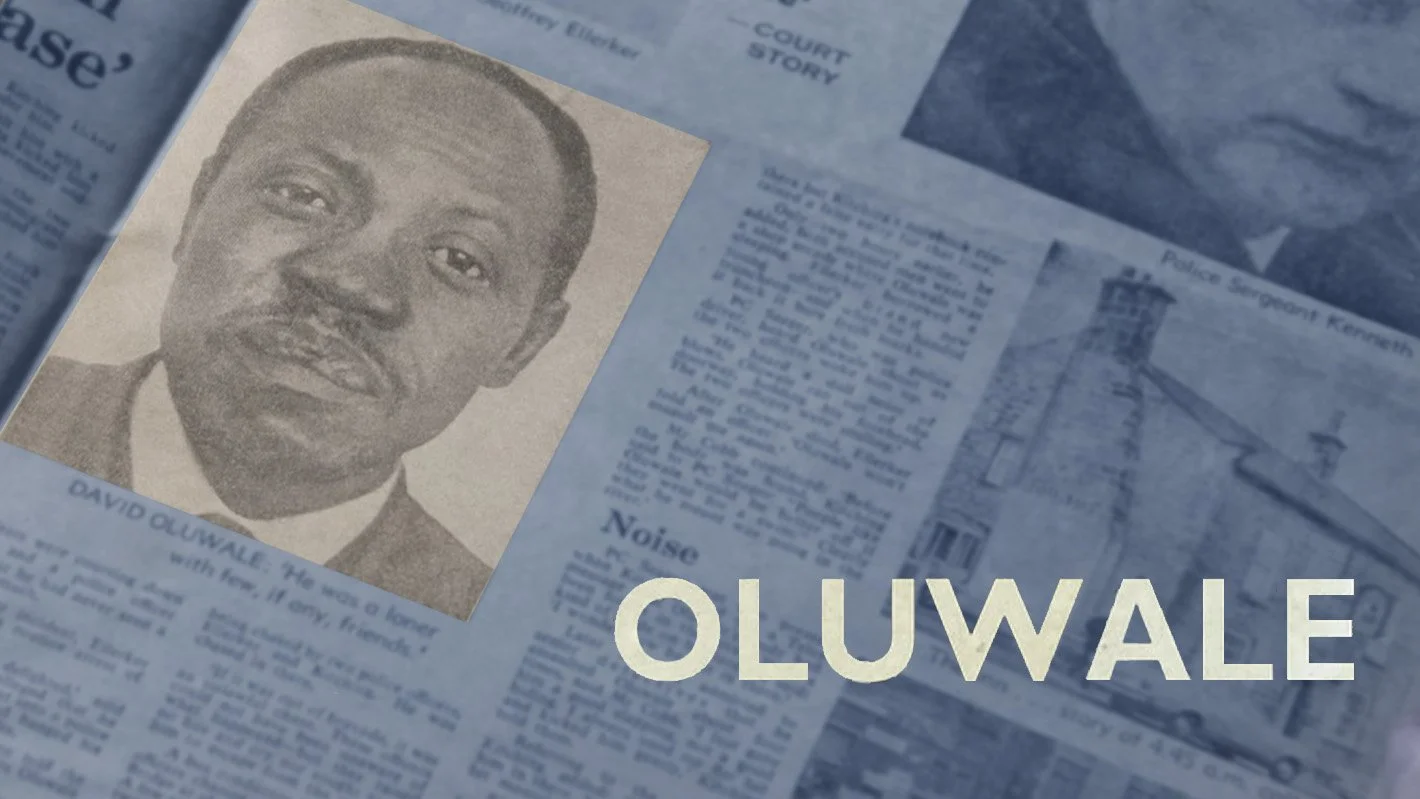
Oluwale
The first documentary to explore the story of David Oluwale, a Nigerian immigrant chased or thrown into the River Aire by Leeds Police in 1969.
Written, Produced & Directed by Jeremiah Quinn
OLUWALE is the first documentary to explore the story of David Oluwale, a Nigerian immigrant chased or thrown into the River Aire by Leeds Police in 1969.
ABOUT THE FILM
Oluwale won the Best Micro-Budget Short award at our 2023 film festival and was also nominated for Best Screenplay. It also won Best Documentary at the Kino Manchester Film Festival and Small Axe Radical Film Festival. It was also an Officials Selection at the BAFTA and BIFA qualifying festivals - British Urban Film Festival and Bolton International Film Festival. It also played at the Real Documentary Film Festival, Filmmakers for Change, and Shorts on Tap Venice.
ABOUT THE FILMMAKER
Jeremiah Quinn is a screenwriter, filmmaker and lecturer. He has won many awards in film festivals all over the world. He often tells stories of real people who aren't well-known. He has had various feature scripts optioned. Jeremiah is shooting his first feature documentary right now.
READ OUR INTERVIEW WITH JEREMIAH
Welcome to our Short of the Week series. Can you tell us a little bit about yourself and your filmmaking background?
When I was 19 I was offered a few weeks work in a 35mm cutting room and have never looked back. I worked on a lot of high budget productions but took to videography when cheaper cameras came out. I have also written screenplays. Have an agent. Had some scripts optioned, others commissioned. I also teach filmmaking in a few places.
Tell us about the genesis of Oluwale? When did you first get exposed to this story and how did it affect you?
Oluwale is an old Leeds United song which haunted me since I was a boy. I always wondered what it was about. I didn't recognise "Oluwale" as a name, so I thought it was a nonsense rhyme. Decades went by and one day I found a book about the case and the mystery was solved. I thought it was an amazing story and I wanted to tell it. I found it very moving. I grew up in Leeds and it was very multicultural and inclusive and the Oluwale story was very disturbing and in the end satisfying. It's like Red Riding blending into Line of Duty. It's incredible that my film is the first on the subject. It would make an extraordinary film or TV show. I didn't have the budget or the profile for that so I made a personal documentary.


What were some of the main obstacles you experienced when making Oluwale and how did you overcome them?
We needed archive to tell it. Yorkshire Film Archive did a deal which reflected it was my own money. They were great. The archive is so beautiful, it was my first time making an archive film. Aarif Laljee the editor was my main collaborator on this. He watched everything in the archive. We did an edit and sent it off to YFA and they told us which bits we couldn't use. There were some LUFC matches that were off limits and a few other bits and pieces. They also told us at this point that the police cadet film which we had used extensively was part-owned by West Yorkshire Police. We were crestfallen. But Graham at YFA gave us an email address to write to and the police surprisingly gave their permission for free and with no further questions. Oluwale is about a police atrocity, but it was a young police cadet who told Scotland Yard about it and they went after the perpetrators and got convictions.
Aarif then played a blinder by finding the son of the policeman who was the whistleblower, and adding him on LinkedIn. He told him we were making a film about Oluwale and his dad. As it turns out, the son is also a policeman. He let us film his dad's scrapbook and gave us a video of his dad getting his Ph.D. So we've ended up making a tribute to his father, who is not known or recognised for what he did. The son is absolutely delighted with the film and has passed it on to be used as part of police diversity training.


Tell us about the journey of getting your film to audiences.
I always say to my students not to make a short film over 15 minutes. The reality is that for a programmer looking at our film which is 21 minutes, they are saying No to perhaps three or four other films to say Yes to us. And that is very hard for them. But Oluwale did pretty well at fests. It opened a couple of festivals and was played by itself in a couple of festivals, won three awards, including one at Kino. We are just starting to share online and the numbers are good so far. Online is the most important section of distribution of a documentary I think. You want it out there being seen by thousands. I find it strange that the police love it so much. I imagine that for anyone who knows Leeds it will be very interesting to see it in the past and present in the film but it will take time and the algorithm to find them. The first two motion picture shots in the world were shot in Leeds in 1888 and one of them includes the very place that Oluwale was thrown into the river. We have not yet connected to Leeds United's fanbase, and they are bound to love it.


Jeremiah Quinn pictured here at the Kino London Short Film Festival awards show.
What do you think is the biggest challenge emerging documentary filmmakers face in the early stages of their career?
With the invention of the 5d Mark ii on the 17th September 2008, suddenly filmmaking was in the hands of anyone with a disposable income. Youtube was just three years old back then, and small affordable handheld audio recorders and cheap editing software and powerful computers were already in place. So the access is incredible for me because I can remember each of these inventions and the very dark era that we lived in before that.
The challenge now is the noise. Years ago I applied to a festival where I knew no one: Milan IFF. I sent them two copies of my film on DVD, that was still how it was done in 2012. I won Best Short that year. When I submitted there were hundreds of submissions but now there are a few thousand. That is the problem. Would that same film get picked out today against thousands of others? Probably not. Look at the submission numbers, they are huge. And remember that any programmer goes to other festivals and probably invites some films. They also have friends who are filmmakers and so not all the slots in any festival are up for grabs. Added to that many festivals will block book BFI funded films or all the NFTS graduate films, or all the regional funding body films so there aren't 80 slots in an 80-film festival. It's really hard to get into festivals no matter how good your film is you will have to face a lot of rejection. You have to keep going, keep the passion for your project, and set a budget and a time limit for your festival run. You should also focus on what you want to do by making a film. Take pride in your craft, enjoy what successes come, and don't curse the festivals that don't accept your film. Except Leeds IFF, who rejected Oluwale, which is unforgivable.
What advice or hacks would you give to other documentary filmmakers?
I think you should be very generous as director of short films. Nobody will ask you about your editor or your scriptwriter. We won a prize with Oluwale and in the review they wrote they wrote "[Jeremiah] Quinn cuts to images of newspaper clippings". It was edited by Aarif Laljee during lockdown. I literally wasn't there when it was cut. Nobody will ask about your team. So do what I just did and big them up. They will want to work with you again and you will still be given all the credit.
Very few narrative short films are based on truth. I don't know why this is. With documentary or films based on truth, however obscure the story, there are still people who are interested in that area and they make a natural audience for your film. I recommend niche projects as well, and that is one very effective way of cutting through noise. I made a film called Incognito, closely based on truth, about two Nazis on the run who used to meet for coffee. UK Jewish FF played it and then loads of other Jewish fests around the world picked it up. I didn't even have to apply, they wrote to me and requested it on FilmFreeway. Naturally the submission numbers for any niche festival are tiny compared to non-niche so you are much more likely to be selected. Also many of them are free. This is a big hack. Whoever you are, there are niche things that you love, whether it's your religion, your sexuality, or the fact that you go foraging each weekend.
Another hack of mine, and it took me a while to latch on to this, is that small festivals rock. There's a natural prejudice in novice filmmakers against lower prestige and smaller fests. I got into a small festival a few years ago, Souq, in Milan. I saw a brilliant film and got introduced to the director. I told him how much I loved his film. We had a great old chat. He was remaking the short into a feature which was called Les Miserable, which was nominated for Best Foreign Oscar the following year. At a small festival you meet everyone and you are aware of all the filmmakers. By contrast there's a festival, big and prestigious, I got into a few times. Each time you file in, watch your film with a packed audience and then file out into the night. I stopped applying as there didn't seem to be any point. Some big festivals are very good at the networking and introductions thing, but small fests don't have to be. If there are thirty people at an event, you are going to meet most of them.
Any film recommendations that we should add to our watchlist?
I love An Irish Goodbye, it deserved every bit of success that it got. It doesn't seem to be released yet, but the French short The Girl who Never Watched Friends is superb. I make my students watch Standby so I've seen it twenty times but it still hits me.
Did you mean by me? I made a very quirky short about a man I met in bookshop who told me extraordinary stories about himself and they were all true. Charles - A Life in 5 Books. Otherwise Incognito and The Strange Death of Harry Stanley are the films I'm proudest of.
Interested in getting your work selected?

The Fool's Mate
A man tries to break up with his girlfriend. She thinks he’s about to propose.
WRITTEN & DIRECTED BY Cian Llewellyn
produced by Jack Pollington
A couple’s relationship is at a cross roads - as he attempts to break up, she thinks he’s about to propose. But will an impromptu chess game finally force the truth to come out?
Fred and Holly have met up at London’s most eccentric pub, the Nag’s Head. Fred’s there to confess he’s been cheating and that they’re breaking up. But he’s nervous…so nervous in fact that Holly assumes he’s about to propose and tries anything to keep the conversation from getting serious, since she wants to keep things casual. To her aid come the pub’s ‘House Rules’ requiring the couple to engage in an impromptu chess match, strictly enforced by an over attentive waiter who sees all, says little but implies plenty. As the battle on the board reflects the psychological one between Fred and Holly, the distraction tactics become more obscure and the frustration, palpable.
ABOUT THE FILM
The Fool’s Mate stars Chris Lew Kum Hoi and BIFA Winner Nell Barlow as the couple in question. At Kino, we first became aware of this awesome short when it was submitted to our Kino London Short Film Festival. It was selected to screen and Nell Barlow earned a Best Performance in a Comedy nomination. The film also played at the BAFTA/BIFA qualifying Bolton International Film Festival, and the Wales International Film Festival. It was recently released online via Omeleto.
ABOUT THE FILMmaker
Cian Llewellyn’s debut short, ‘The Outing’ gained UK and US recognition, picking up 11 Official Selections and 4 Awards including ‘Best Short Comedy’ at the Wales International Film Festival and during the lockdown of 2020, Cian wrote, performed and produced ‘The Bike’ a short film, shot entirely on an iPhone, inspired by his own experience of fear and anxiety in a Covid lockdown which went onto win ‘Best Monologue’ at the Imagine Rain Film Awards and ‘Best Covid Film’ at the Toronto Independent Film Festival of Cift.
READ OUR INTERVIEW WITH CIAN
Welcome to our Short of the Week series. Can you tell us a little bit about yourself and your filmmaking background?
Having initially trained as an actor at RADA, I adapted Dylan Thomas’ timeless short story ‘The Outing’ into a short film. Born in Nottingham and fiercely proud of my Welsh roots, we shot it in the village I was brought up using a group of local friends, not actors, relying on their natural wit, camaraderie and chemistry to come through on-screen. It was a great fun to make and opened my eyes to directing and in particular it’s very collaborative nature.
I then ran on commercials and high end TV, including Steve McQueen’s ‘Small Axe’ - watching him work was enlightening and inspiring. He actually watched ‘The Outing’ in a prison cell in Canterbury on the last day of the shoot which was pretty special - thankfully he liked it.
In 2020, following the death of a close friend, I wrote a monologue on the nature of fear and anxiety during the Covid lockdown. We shot it in the area surrounding my parents home and I edited it myself. It felt fulfilling to have something creative going on during that strange, empty time and poignant that something positive came out of something tragic. It was a bit of a wake up call personally too - proving that there’s no excuse not to be making something - even if it is on an iPhone. A year later we shot the Fool’s Mate.
Tell us about the genesis of The Fool's Mate?
I love a pub and the older, more characterful the better. I was introduced to the Nags Head when at drama school and as I grew into film I couldn’t help but think it would make for the most brilliant set - unique, beautiful and eccentric. Every single thing you see in the pub, apart from the House Rules board, is as you find it - it’s one of London’s great gems.
First and foremost, I wanted to make something engaging and entertaining that didn’t take the audience for granted. I was keen for the story to somehow reflect the idiosyncrasy of the setting and to play with the characters having very clear goals but mistaking each other’s. As an audience we are in a privileged position (or so we think…) jumping between both characters to understand what they want, then to see that manifest in them being unable to be honest for fear of hurting the other person, in a way only the British can do so brilliantly.


What were some of the main obstacles you experienced when making The Fool's Mate and how did you overcome them?
We shot the film in May 2021 towards the end of the second Covid lockdown. The landlord of the pub, Kevin Moran, is nothing if not eccentric and I couldn’t track down his whereabouts or phone number - it transpires, fittingly, he doesn’t own a mobile. Instead, I posted a hand written, wax stamp sealed letter through the front door and hoped for the best. A month later I received a call from an unknown number, it was Kevin. He took a little persuading…we needed to close the pub for the two day shoot, or at least not open until the evening, and he said he’d never closed for anyone apart from when the government forced him to and he wasn’t starting for me. Luckily we managed to twist his arm. Years ago he was an extra in films and secretly, and most certainly by the end, he loved the experience.


Tell us about the journey of getting your film to audiences. Tips and tricks for other short filmmakers looking to crack the festival circuit?
We were fortunate enough to have our premier at BAFTA/BIFA Qualifying Bolton International Film Festival which is brilliantly run and in a great city. But I’d say try not to make something with the sole aim of ‘cracking’ the festival circuit - it’s almost impossible to do so and even the most successful of films receive plenty of rejections. I think it’s just important to remember (and I have to remind myself of this) that every festival is subjective, it’s just a few people’s opinions and very often there can appear to be no rhyme or reason to an acceptance or rejection. Try not to pin your hopes on any one specific festival and celebrate all the acceptances. Tell the story you connect with the most and feels worthy of the blood, sweat and tears short films require - if it’s true to who you are you’ll have the best chance at festivals anyway. Just to add, we genuinely loved KINO - Dustin and the team are a force of nature and have created a vibrant, celebratory event in some of London’s most beautiful art house cinemas. Kudos.
How did you find the online release of your film compared to your festival run?
We submitted the film to Omeleto and they released it three weeks ago. I couldn’t believe it as the viewing numbers kept going up and two weeks in we were at over 66k views. The whole point of being an artist is to put your work into the world and have it seen, so reading all the positive comments, people sharing and liking it has been incredibly satisfying and rewarding - in that sense, it feels like the film has truly found it's audience.
What advice or hacks would you give to other short filmmakers?
Use every contact you have. Be as tenacious and courageous as possible. If it feels risky and uncomfortable (but just about in reach) then do it. Just go make something!
What do you think is the biggest challenge short filmmakers face trying to break into the industry?
Money - it’s widely accepted that short films are the way you progress your career but there just aren’t enough short film funds. Crowdfunding is a great option and then it’s self funding but even once you’ve finished the film you’re paying for the privilege to submit to festivals. The industry knows that 95% of people making shorts have no money but it also uses festival recognition, which you pay for, as a career barometer. So those with the most to gain (career wise) also have the most to lose (financially). That can be very demoralising for young filmmakers - especially when, in most cases, there’s no feedback on your work - something feels broken to me in that system.
Something a little less tangible is the lack of any real ‘ladder’ especially for director’s - there’s no clear path that people can walk, knowing they’re ticking off achievements one by one, like the qualifications of a lawyer or doctor. But in all honesty it is the work and the process of that work that is so invigorating. Getting up every day and thinking how I can make the next film - there is no better challenge than that.
Any film recommendations that we should add to our watchlist?
I love Thomas Vinternberg - anything by him but in particular, ‘Festen’, ‘Another Round’ and ‘The Hunt’. I’ve loved, ’SuperNova’, ‘Fanny and Alexander’, ‘Un Prophete’, ‘The Fallen Idol’, ‘Local Hero’, Withnail and I’. They are in the front of my mind at the moment as I’m developing something in that vain. It's not a film but, 'A Spy Among Friends' on ITVX - brilliant storytelling.
Interested in getting your work selected as Short of the Week?
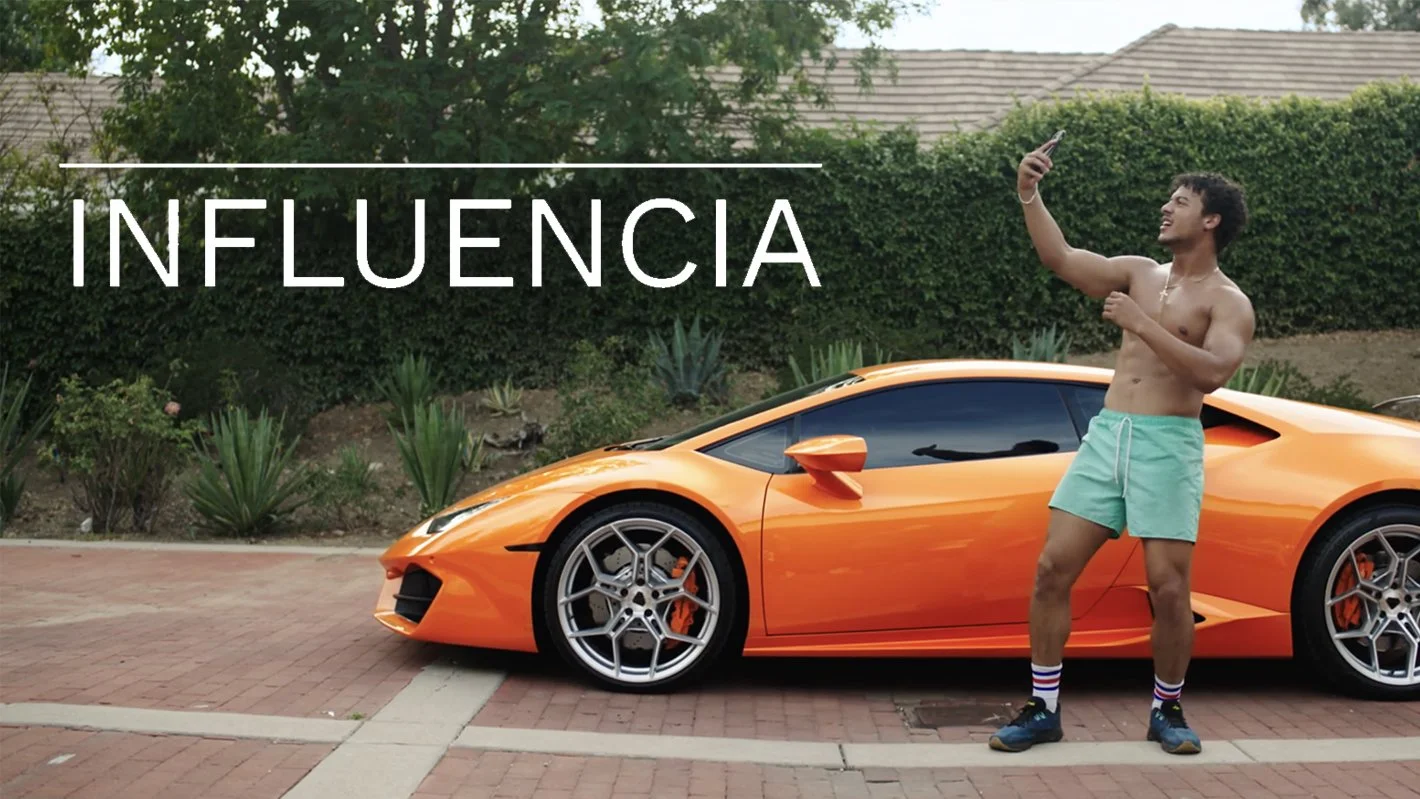
Influencia
After the loss of his mother, a drunk hunk juggles two very different identities.

Written & Directed by Ryan Rosenheim & Patrick De Vinck
Produced by Jan Luis Castellanos
A despondent young man, Cesar, wakes up on the beach hungover. As he readies himself for the day, more and more of his poverty is revealed. Mourning the loss of his mother, Cesar drinks himself into a stupor, listening to his mother’s old voicemail on repeat. After sobering up enough, Cesar sneaks onto a wealthy Malibu property to film a video with a Lamborghini.
ABOUT THE FILM
“Influencia” won Best Actor in a Drama at the 8th Annual Official Latino Film & Arts Festival.
ABOUT THE FILMMAKES
Ryan Rosenheim is an LA native, valley rat with a BFA in acting from the University of Michigan. There, he also minored in screenwriting and creative writing. After short acting stints at The Public in New York and The Eugene O’Neill Theater Center, Ryan returned to LA to pursue writing and filmmaking. Since then, he’s scored, written, directed, and acted in dozens of indie projects, some of which led to very educational optioning and pitching opportunities in the industry.
Patrick de Vinck, also a valley man, came back from his own east coast adventures at Rutgers where he studied economics. During the pandemic, Patrick delved back into creative endeavors and was able to seamlessly blend in his proclivity for numbers. Thus he put on his producer hat and reoriented his filmmaking aspirations toward being a producer-writer.
READ OUR INTERVIEW WITH RYAN and PATRICK
Welcome to our Short of the Week series. Can you tell us a little bit about yourself and your filmmaking background?
Throughout highschool, we (Ryan and Patrick) threw together a handful of goofy films. Despite Patrick dislocating his knee at the bottom of a three-mile hike shooting location, the joy we experienced while shooting these shorts mused about in the backs of our minds as we endeavored different paths at uni.
Ryan continued on, not in film exactly, but as an acting major and screenwriting minor at the University of Michigan. His senior year, however, Ryan returned to his roots to shoot a film called Scott for Now about a man with high quality intentions but horrendous execution.
Meanwhile, Patrick took a more practical route in school, but ultimately his love for filmmaking resurfaced. The childhood videographer and raconteur couldn’t hide from his true nature.
Tell us about the genesis of INFLUENCIA?
After graduating, Patrick joined his long-time friend Jan Luis Castellanos on the set of 13 Reasons Why. There, Patrick was inspired and began spitballing an idea that he wanted to write for several members of the cast.
A little rusty, Patrick called up Ryan for some pilot pointers. Per usual with Ryan, eccentric that he is, he became quite invested in the idea. That said, the initial pilot was a raunchy comedy and Ryan saw its merit as a dark comedy drama and began mining the comedy for its riches in drama. Ultimately, the two became co-writers and had at last reunited.
After the pilot’s ten millionth draft, the satisfied creative team decided to shoot a proof of concept to buff up our pitch. That said, all our schedules had only one brief overlap...two weeks out. We pulled a montage from the pilot, tweaked it, and voila we had a script. We used our recognizable talent to bait in a brilliant crew, and voila we had Kenzen Takahashi behind the camera.
Suddenly our two day shoot was over and Influencia was in the oven baking.
What were some of the main obstacles you experienced when making of Influencia and how did you overcome them?
No film ever goes “as planned.” Sometimes the car transporting talent to location breaks down. Sometimes you have to shoot sunset to look like a sunrise. Sometimes you run out of fake vomit. A lack of location permits, a two-day timeframe, a wee baby of a budget, and a whole lot of vertigo (Ryan’s got a condition) made the process a challenge for sure. That said, with an enormous amount of generosity from the crew, we managed to pull ourselves — and a nice little poem of a film — together.
Obstacles are inherent to the filmmaking process. As much as we love film, we love mediation and problem solving. So any hiccup — big or small — is, in our minds, a reset. Forget the plan, forget the old idea. It’s irrelevant now. The obstacle forces you to think of something better. “Oh, we’re out of fake blood? Fine, let’s give him blunt force head trauma and have him stutter, moan, and spit about like a mummy.” You suddenly find your actor giving the performance of a lifetime, a choice much more horrifying than the bit of classic gore you had planned.
Tell us about the journey of getting your film to audiences.
When people aren’t getting paid much, the goal to finish is — while perhaps impassioned — not priority. That said, even though the film was intended to be a supplement to our pitch, when we finally finished, we couldn’t bear to put the film up on a shelf (or pitch deck) where it’d only see the light of day by the dog-eating studio execs.
Being a fan of the Annual Latino Film Festival, our star and executive producer, Jan Luis, submitted Influencia to the festival. We premiered our film in Palm Springs, but still were hesitant to post it on socials. Alas, we finally decided our hard work was worth viewing. We threw it up on Vimeo and have had great feedback from viewers. It surprisingly has meant a lot to folks.
What advice or hacks would you give to other short filmmakers?
The best advice is, “Become great friends with rich people.” That, however, is not so easily done, so some practical advice would be to practice thinking on your feet. Just as an experiment, go into events or work without a plan. Don’t set ultimatums and don’t put on limiters. See where things take you and wherever they do take you, try to make the circumstances work for you, for your tastes and needs.
Also, ask for help. Control is hard to give up, but there’s too many hats to wear as an independent filmmaker. If you can surround yourself with trusted advisors and talent, shed a load and ask for help. You don’t have to do it all by yourself.
What do you think is the biggest challenge short filmmakers face trying to break into the industry?
When “readers” read your scripts or executives hear out your pitch, they aren’t assuming you have any merit. You could be the absolute greatest screenwriter of all time, but they aren’t looking at your work with the lens of genius on. We are not often given a chance to be taken seriously. So, with that, we think the biggest challenge facing indie filmmakers is breaking out of the “indie” title. Eventually, once your catalog is big enough, they might start looking. Until then, it’s pretty damn hard to not have to fund your own projects.
Any film recommendations that we should add to our watchlist?
For short films, selfishly, check out the very amateur, very heartfelt Scott for Now. Unselfishly, we’re very into a couple A24 newbies out, Aftersun and Past Lives. There’s also a Colombian film we just stumbled into called Embrace of the Serpent that absolutely had us jaw-dropped.
Also, Worst Person in the World was so damn moving that Patrick passed out in the theater next to Ryan…he also has a condition.
Apply to get your short selected as our Weekly Pick

Shadow Boxer
One man’s fight to get out of his father's shadow.
DIRECTED BY Ross McGowan
WRITTEN craig mcdonald-kelly
PRODUCED by Chris evangelou, Ross McGowan, David hepburn, & craig mcdonald-kelly
Round 9. WBF super middle weight fight. Against his old stable buddy, and with his father in the other corner, the challenger Mason Mendoza is down on points. Now he's fighting for his pride.
ABOUT THE FILM
Shadow Boxer was the winner of the Audience Choice award at the Exit 6 Film Festival. It was also an official selection at the Tallgrass, Another Hole in the Head, and the BAFTA qualifying Bolton International Film Festival. Finally, it screened as part of the monthly screenings for the Academy Award qualifying Hollyshorts.
ABOUT THE FILMmaker
Ross is the director of multi award winning films at Deadline Films UK. Since 2017 he has directed 4 shorts for the company which have gone on to win multiple awards on the international short film circuit. Before the formation of Deadline Films, Ross directed the Showbiz TV original shows, Country Sessions (2016) and Talent Spot (2016). He is currently in post production on an upcoming web series, and has numerous projects in development.
Ross also works as an assistant director on high end TV and films, one of his most recent credits being Queen Charlotte where he worked with the director to create the background action in scenes featuring supporting artists.
READ OUR INTERVIEW WITH ROSS
Welcome to our Short of the Week series. Can you tell us a little bit about yourself and your filmmaking background?
I'm Ross and I've been making short films for over 10 years. Since 2017 I've been a member of Deadline Films UK with Craig McDonald-Kelly and David Hepburn.
Before the formation of Deadline Films, I was making overlong and over expensive shorts that didn't screen at any festivals. I approached the shorts after forming the company with the mantra of 'do what you can with what you have and cut your cloth accordingly.' This is a quote from Ben Wheatley on his first feature Down Terrace.
Hangover Food, Shadow Boxer and Byte have all had great festival success and have all won awards. They were all made on this mantra.
Since 2016 I've worked in the film industry as an AD. The on set experience has been invaluable, I've learnt from great directors, not so great directors, and have been able to creatively have my input on projects when setting background.
Tell us about the genesis of Shadow Boxer and how the project came about?
I met Chris on the set of The Gentlemen where he was cast and I was the key set PA. We got talking about short films at the after party and arranged a meeting at Nandos in wood green.
He pitched the idea of a boxing film centering on a father son conflict which I was drawn to. He also said he had access to a real fight night where we could go and shoot the wides, and we could do the mids and close ups at a gym, low angle pointing at the ceiling. Being told I couldn't do something made me think how could I do it? Access to a ring for 30 minutes. How do you make a 10 minute short in 30 minutes?
This was February 2019. I was about to start work on 1917 where I was a crowd PA, in costume, in the trenches, on camera. With this in the back of my mind, it became obvious to do the film as a oner. It's a way of flipping our biggest disadvantage: time and the lack of coverage, into our USP.
Chris and I wrote a treatment which Craig adapted into a script. Bound by a oner, flashbacks would have to become VO and find a natural way to fit into the film. Exposition would have to be given through the fight and I wanted it to be an immersive experience, where the audience are dropped right in the middle of the action and we learn what's happening through the course of the film.
On first glance, Shadow Boxer looks and feels like a single take. How did you hide your editing so well?
The film is made up of 8 shots. Logically it had to be broken down to apply make up to the fighters but also, because we were shooting this in front of a live audience, in a 30 minute window, mistakes were going to happen. When the adrenaline is going and there's hundreds of eyes on you, people make mistakes, and it happened on the night. Breaking the film down into these shots gave us the chance to bank what had already been shot. Imagine if it was ran as a oner and 8 minutes in, someone misses their cue. We'd have to go back and start again which we would not have the time to do.
I insisted on 5 weeks of rehearsals, every sunday leading up to the shoot date which was July 5th at the York Hall. Starting by filming it on my phone, we worked out the blocking of the action and the camera, and hiding where the cut points were. At this point, late May to June, I was deep into shooting 1917 so I was stealing techniques on how to hide the edits in front of me. At the end of every rehearsal, I'd edit what was shot and send it to everyone to review. It's this rehearsal and review process that made the edits look so seamless.
We built up to a dress rehearsal the week before the shoot with all departments where we made the film in a gym without an audience. I needed to know we could do it before doing it live in front of a crowd.
Tell us about wrangling your location and extras.
There are no extras! We stole the crowd! It's cheaper.
Chris was able to strike a deal with ring king events where we were the 'halftime entertainment', also selling tickets on his name and his return to the ring. That's how we got access to the York Hall, the home of British boxing, for free.
Wrangling a real crowd, getting them on side and to react the way we wanted them to. That's a little harder if you're not paying them.
I thought of this short film as a culmination of my short films but also my crowd AD work. We did the trench run in 1917 with 500 SAs. The conversations I was having were to hundreds of extras so I knew I could speak in front of a large crowd.
We had between 300-400 people there on the night. How do you get them on side? Look sharp. I wore a suit, fresh hair cut, the small things that make a first impression. I interacted with the crowd, "how are you doing? HOW ARE YOU DOING?" Get them to immediately react to me. I introduced the two fighters, and then got them to pick a fighter they supported. I then got them to cheer for which fighter they supported before we even started rolling.
I had a 3 minute intro, I had a radio in one ear, and was on a mic. To start with I'd tell the audience exactly what to do, as the shooting progressed, I'd give them leading direction. "Mason is on the floor, if he gets up you're going to raise the roof!" He gets up and the crowd got to their feet. They all played ball. It was incredible. I remember sharing a look with the sound recordist which said 'fuck, this is incredible'.
It was the closest to doing something live that I've ever come whilst making a film.
watch the behind the scenes video for shadow boxer
What were some of the main obstacles you experienced when making Shadow Boxer and how did you overcome them?
We had a lot of crew drop outs and we were marching towards a shooting date so there was a lot of last minute crew replacement.
There were certain timings the actors had to go off, dialogue from the corner men that was drowned out by the sound of the crowd, so I had to identify that they couldn't hear these cues and shout them myself.
When we first got into the ring, the adrenaline was running so hard in everyone that some cues were missed. We had to do the opening shot 3 times before we got it right. We had to stay calm, and progress.My radio died half way through the shoot and i had to throw it at an AD and get chucked a new one. Suddenly I was communicating with the crew through the mic as well as the audience instead of on radio.
Whatever we got, we got. I knew we had to treat it like theatre.It was a HUGE rush when it was over.
Tell us about the journey of getting your film to audiences.
We worked with Festival Formula to put together a distribution strategy. We shot in 2019 and did a screening at the PCC Nov 2019. Seeing it on a big screen, the way it was intended was amazing. It went to festivals in early 2020, then lockdown hit. Suddenly a film which was intended to be seen on the big screen was being seen on laptops.
It went to Film Shortage after the festival run, and it's having a second wind now, having gone on Klipist and now being featured here on short of the week.
What advice or hacks would you give to other short filmmakers?
"Do what you can with what you have and cut your cloth accordingly".
Don't waste money aiming for something you don't know if you can pull off. Learn how to walk before you can run. Make something you know that you can have absolute control over rather than aiming to make something that will look like a cheap imitation of something else.
Get experience on sets. Not just your own.
I would recommend that everyone that wants to make films does some time as an AD. Learn time management. Learn how the floor runs.
I wouldn't be where I am today without the skills and the contacts I made from doing these jobs.
What do you think is the biggest challenge short filmmakers face trying to break into the industry?
Self inflicted problems like trying to run before you can walk. I believe everyone has to make their share of bad projects before they start to become good, so when you fail, fail small. Learn from my mistakes. It's not a sprint. It's a marathon. It's 26 marathons back to back.
Industry wide, funding is always the big one, but you can make a film on a phone now so it shouldn't stop you from being able to tell good stories.
Any film recommendations that we should add to our watchlist?
My whole mantra is based around Ben Wheatley's approach to his first feature, Down Terrace, so that as a feature plus his film four interview about how he made it for £7K.
Short film wise, watch as many as you can, Klipist and Kino short film of the week are great for that.
I'd recommend Vincent Laforte's course directing motion on MZED.com, plus the youtube channels studio binder, lessons from the screenplay, the royal oceanic film society, Thomas Flight plus many others.
Interested in getting your work selected as Short of the Week?

Shallow
Deep in a forest, Barry and Larry indulge in conversation that is by turns light-hearted and extremely topical, revealing surprising revelations, both good and bad, along the way.
DIRECTED and PRODUCED by PAUL ASHTON
WRITTEN by Joe Johnsey
Deep in a forest, Barry and Larry indulge in conversation that is by turns light-hearted and extremely topical, revealing surprising revelations, both good and bad, along the way.
ABOUT THE FILM
Shallow was an Official Selection at our 2022 festival. It also won the Audience Award at the Short Focus Film Festival and won Best Comedy at the New York Short Film Festival. The screenplay was nominated for Best Screenplay at the English Riviera Film Festival where both actors (Michael Shon & Joe Johnsey) were also nominated for Best Actor. Other notable festival selections include: Nottingham International Film Festival, Earl’s Court International Film Festival, Liverpool Film Festival and Byron Bay Film Festival. Shallow was also a Semi-Finalist at the Academy Award qualifying Flickers’ Rhode Island International Film Festival.
ABOUT THE FILMmaker
Paul Ashton is a Writer/Director originally from Hertfordshire but now living in London. Shallow is his second short film as director. He’s currently prepping his third short while also developing a feature script.
READ OUR INTERVIEW WITH Paul
Welcome to our Short of the Week series. Can you tell us a little bit about yourself and your filmmaking background?
I have a Degree in Film and initially worked on a series of films and TV projects such as Saving Private Ryan and Band of Brothers before focusing on directing and scriptwriting. I've directed Music videos and documentary shorts and used to work at a camera hire company before writing and directing my first short film POV in 2018. POV was selected for a series of film festivals worldwide such as Australia, Germany, the USA and England.
What position did you have on Saving Private Ryan and Band of Brothers?
On Saving Private Ryan I was a Location Assistant while on Band of Brothers I started as a Location Assistant before then advancing to Crowd Runner and then Floor Runner.
What were some of your main takeaways from working on a large set that you absorbed into your own filmmaking?
The importance of the following:
Organisation
Whether you have a huge crew on a massive production or a small crew on a low-budget short film – you're all trying to capture the best footage you can within a tight schedule so everyone has to be extremely organised and prepared to help things runs as smoothly as possible. No one wants to be the weak link when so much is at stake.
Adaptability
I found that regardless of the size of the production and the prep involved, delays happen or some things just don't go to plan on the day - so the ability to think quickly and come up with a solution is vital, to think outside the box. Perhaps a big set piece needs to be reset which takes some time or an actor isn't free when you need them, can something else be shot in the meantime rather than waste that vital time.
Communication
Hugely vital on a large set where so many departments are involved who need to know what's required from them and when but also for individuals to be given the opportunity to showcase their thoughts and expertise. On my shorts I want everyone to be in the loop and always know what we're trying to achieve and why. To also create an environment where people are able to contribute their opinions freely and be part of the decision making process so that we're all collaborating as a team to make the best project possible.
Tell us about the genesis of Shallow and how the project came about?
Shallow grew from a conversation that took place between our two leads Joe Johnsey and Michael Shon who at the time were housemates – a version of which appears in the final film. I was looking for a short to make while I finished off another script and chose this one to develop from the ideas Joe sent me. Joe then wrote the script which we all fine-tuned in rehearsals. It's very dialogue heavy where the timing is vital so the rehearsals were extremely valuable as they allowed us to discover what did and didn't work before reworking it until we were all happy. It also allowed us to rehearse the script again and again so that it was second nature on shoot day, saving as valuable time as we only had one day.
What were some of the main obstacles you experienced when making of Shallow and how did you overcome them?
Shortly before we were due to shoot, our initial forest location was damaged by storms and we began to look again – but then Covid hit. Once restrictions eased we began to visit locations once again and came across the perfect spot in Black Park. Lockdown actually worked in our favour as Black Park was completely booked up before lockdown as it's such a popular filming location but as restrictions eased, shoots were slow to start up again. So thankfully they allowed us to shoot there for one day – straight after Jurassic World who delayed our shoot a few weeks as they were filming right next to us.
On the day of the shoot we had to contend with the changing weather. Shallow takes place in real time over 10 minutes so overcast conditions would have been ideal - but instead the weather alternated between sunny and overcast with a few showers. We also needed to lock off the surrounding area as it's a pubic park so members of the pubic were roaming around, usually walking their dogs.
I believe we had 27 shots to shoot that day, some of which were long steadicam takes but thankfully we managed it. And then post was all done remotely which wasn't ideal but perhaps did allow me to fine tune certain aspects.
Tell us about the journey of getting your film to audiences.
So we spent a lot of time researching festivals and trying to figure out where it had a chance of being selected and eliminating those where we thought we didn't stand a chance. We tried to target British film festivals more than anywhere else as we weren't sure how the northern accents and humour would travel.
But then surprisingly we won Best Comedy at the New York Short Film Festival, were Semi-Finalist's in the BAFTA and Academy Award qualifying Flickers Rhode Island International Film Festival, as well as being selected for a few other American festivals and the Byron Bay International Film Festival and a number of festivals in England. Some festivals we thought we had a great chance of getting into rejected us while some selections came as a complete surprise – you just don't know.
A lot of festivals were still being shown remotely so sadly we missed out on attending some fantastic festivals and being able to see it with an audience – though we did take part in some great Zoom Q&A's and managed to meet some very talented filmmakers. Furthermore, some festivals were delayed by up to a year which did draw out the Festival process. Luckily, the Kino London Short Film Festival (previously known as the People's Film Festival in 2022) was a live event and this is where Shallow had it's best screening to date in a packed out venue. Kino is such a well run festival with a great atmosphere and it's a place where I have met a number of very good friends.
What advice or hacks would you give to other short filmmakers?
Find a team of people that you work well who are also reliable. The process might be hard at times but it should also be enjoyable, otherwise why do it? And don't just make do, try and make the best short you can within your financial confines otherwise you're regret not fixing those little issues that then become magnified on the big screen – something I'm very happy I did with Shallow.
What do you think is the biggest challenge short filmmakers face trying to break into the industry?
Getting something made and then getting it seen. You're fighting to get something made, usually on a small budget that you probably financed yourself and which needs to stand out from the thousands of shorts out there.
Then once you've made something you have to fork out a lot of money for the festivals, and be rejected by many as there's just too many shorts out there. Whether you're selected or not is ultimately based on personal opinion and perhaps their desire to group certain shorts together based on themes or subject matter. Which sadly means that a lot of good films get rejected.
Plus the added hurdle of competing against much higher budgeted shorts – which is why the Kino London Short Film Festival works so well as the films are divided into groups based on budget.
Shorts are typically seen as a stepping stone to bigger things, which is a pity as they’re such an interesting art form in their own right and really allow you to experiment and find your voice. Sadly there's no financial gain (unlike features) – if there was it would be a lot easier to obtain funding which would thereby help to support your career progression.
Any film recommendations that we should add to our watchlist?
Some of my favourite shorts are Signs by Patrick Hughes, The Answers by Michael Goode,
Stutterer by Benjamin Cleary, Salt by Rob Savage and the shorts of David F. Sandberg who also includes making of videos for each of them.
Interested in getting your work selected as Short of the Week?

No Filter
The story of a depressed young woman who bluntly reflects on her life and the world for her social media page, as she goes through what she’s decided will be the last day of her existence.

WRITTEN & DIRECTED BY MATTHIAS Fuchez
PRODUCED by KATIE ORGAN
The story of a depressed young woman who bluntly reflects on her life and the world for her social media page, as she goes through what she’s decided will be the last day of her existence.
ABOUT THE FILM
No Filter was an Official Selection at our 2023 festival where is was nominated for Best Screenplay. It was nominated for Best Short Film and Best Actress at the Monkey Bread Tree Film Awards. It screened at Poppy Jasper International Film Festival, Go Mental! Film Festival in Berlin, Festival Mental in Portugal and Tilt Shift Film Festival in Philidelphia. Disappear Here Film Festival in Ireland, and Peekskill Film Festival in New York. It was also a Semi-Finalist at the Academy Award qualifying Flicker’s Rhode Island International Film Festival.
ABOUT THE FILMmaker
Matthias works in film PR, previously for Universal Pictures, now for an agency that works with all the major film studios. His first short film, The Muse, won a variety of awards at film festivals all around the world, encouraging him to continue writing and directing. He has since written and directed 2 more award-winning short films. After advice from industry professionals on which project to advance with, Russian Moon (which was in competition for our 2023 Film Fund) will be his most ambitious and exciting yet. His artistic background gives him the rare opportunity to share the full potential of his story-telling ability; not only by writing and directing but also by composing the music and score.
Katie is a film Producer based in London who has worked at Universal Pictures in London for several years, concurrently producing short films. Her first short, Lily Meets Charlie was picked for the official selection at the BAFTA qualifying Underwire Festival, and has just reached 2 million views online. Katie has since produced 3 award-winning short films with Matthias under their joint production company, One Of Nine Ltd.
READ OUR INTERVIEW WITH MATTHIAS & KATIE
Welcome to our Short of the Week series. Can you tell us a little bit about yourself and your filmmaking background?
Matthias: I am French, I am 34 years old and I have been living in London for the last 13 years. I made my first short film on a road trip to Spain and Portugal with 2 Spanish actor friends (my housemates at the time) with one small camera, one go pro and one iPhone, and a mic I use to record songs with. I was writing the script (about 2 friends going on the exact same road trip twice for two different reasons) as we were driving, and we shot scenes everytime we found a beautiful location. I then came back, wrote and recorded the score and edited the film. I completely fell in love with the whole experience, and just couldn’t wait to make another one. That’s when I met Katie, and together we started One Of Nine Ltd, a creative British film company that prides itself on producing high-end impactful shorts, working with rising talent and nurturing exciting voices. Our first short film, which we shot in Paris, was called The Muse. and our second one is No Filter.
Katie: I am also 34 years old and a Film Producer based in London. I developed my passion for filmmaking whilst studying Film & Media at school. I didn’t go to University but instead sought out an internship at Pathe Productions, which led to 3 fantastic years learning the ropes of how films are made whilst I worked there as a Receptionist and Office Assistant. After a few years, I branched into the freelance world of production working on films such as The BFG and Trespass Against Us. Finally, I transitioned back in-house and now work at Universal Pictures in London where I have worked for several years, concurrently producing short films. My first short, Lily Meets Charlie was picked for the official selection at the BAFTA qualifying Underwire Festival, and has just reached 2 million views online. I have since produced 3 award-winning short films with Matthias under our joint production company, One Of Nine Ltd, most recently, No Filter was part of the BIFA qualifying – Kino Film Festival, which marked the film’s 10th festival selection.
Tell us about the genesis of No Filter and how the project came about?
Matthias: 13 years ago, right before I moved to London, I lost one of my close friends due to suicide, and this has had a really big impact on my life and the way I see the world. Though the idea of making a film about something really deep and profound was always on my mind, I didn’t want to start making this very personal film without having any experience in the field. So we did The Muse first, and were about to shoot a new short film. As we started working on the production of our second short film; an intense musical drama/thriller, the pandemic began. I then lost my job, and lost my flat, and was just left with one option: going back to my mum’s, in Tours, France, at 30 years old. As this time was incredibly difficult for millions of people around the world, it was also difficult for me. But I tried really hard to stay positive, and so thought it was now time for me to put all my doubts, and questions, and thoughts about the world in a screenplay, which eventually became No Filter.
What were some of the main obstacles you experienced when making of No Filter and how did you overcome them?
Matthias: The hardest thing for me was to continue working on the side at my day job. I work in film PR and it can get really busy and sometimes have to do crazy hours, or even work on weekends. Making No Filter was one of the most amazing experiences of my life, but the week before the shoot was one of the craziest weeks of my life, and I think I might have slept 15 hours that whole week.
Tell us about the journey of getting your film to audiences.
Katie: I believe that storytelling should not only entertain but also inform and create change. Mental health challenges and suicide have been exacerbated by the pandemic, yet the topic remains taboo and is not discussed enough. Film has the potential to normalise these conversations and reach a wide audience. This is why, in pre-production, we decided to get two charities on board - Papyrus and Chasing The Stigma - to put their rubber stamp on the film. Having their approval gave it added credibility when reaching out for funding and then eventually, now it's released, reaching a wider platform of viewers. My first short film was accepted into the Underwire Film Festival which was a BAFTA qualifying festival, this allowed us to submit the film to Omeleto, one of YouTube’s biggest platforms for short films, this is the reason it's just passed 2 million views. So, we knew this was the same route we wanted to go down with No Filter, so when we were selected for the Kino London Short Film Festival, as a BIFA qualifying festival, we were ecstatic because well, these big named festivals give us more opportunities to put it out to a wider audience.
You used a festival strategist - how was that experience?
Katie: It was a fantastic experience right from the beginning, we used Festival Formula and felt instantly supported. They believed in the project and its ability to do well at festivals which gave us a huge confidence boost. 30% of the festivals No Filter was selected for were from Festival Formula recommendations, Kino being one of them. I’m constantly seeing what they’re up to touring festivals worldwide, through their Instagram page, they seem to really know their stuff, but also, they are such lovely people, the experience was an absolute pleasure. I’d definitely recommend them to anyone needing help with a festival plan and/or submissions. We did the submissions ourselves because we were limited on funds but they offer this too which is great as sending films to multiple festivals and keeping on top of deadlines is very time consuming!
What advice or hacks would you give to other short filmmakers?
Matthias: We are very far from being in a position in which we can give advice as we still have so much to learn, but I guess it is all about forcing yourself to do as much as possible; to try and push your luck. Most evenings, weekends, and holidays become work days, but when the work is the passion; it helps! Working on projects that are not yours is also a good way to grow your circle, and will help make more connections.
What do you think is the biggest challenge short filmmakers face trying to break into the industry?
Katie: Well, in terms of getting a short film off the ground, there is the money hurdle. We’ve found that sponsorship from companies (start-ups, mainly) has been the most successful for us. Although film funding schemes are great, in my opinion, unless you have something very unique, it's very tough to get money through them. Some (not all) also tend to want projects that are already partially funded or have a team attached with previous credits. In my opinion they don't cater too well to filmmakers in their early careers.
Then, once the film is made, I think a big challenge is getting it seen, yes film festivals are great but ultimately, we want those sweets views clocking up online, this is very hard when there are so many fantastic films already out there, this is why this platform, Kino Short of the Week - is a great opportunity for filmmakers to have their stuff seen. There should be more platforms like this! Saying all this however, my advice though would be to not let this put you off - just make something - even if nothing comes from it, you’ll have the best experience of your life. There is nothing like the feeling when you shout ‘wrap’ on the last day of shoot. That sense of achievement… wow.
You're releasing the film in time for Mental Health Awareness Week. How do you think film (or art in general) can contribute to the wider public conversation about mental health, and what specifically is the message of No Filter?
Matthias: I think hearing about it more and more helps drive the conversation and increase awareness, and any means may it be art or media plays an important part. One of the messages of No Filter is that when we get lost in the really big questions and suffer from the heavy weight of life, it is important to remember that all the little things which we think are meaningless, actually have a massive importance. This is what Alex (No Filter’s lead character) realises whilst going through what she thinks will be the last day of her life.
And deep inside, on a very personal level, I wish that if my friend had seen this film, it could have inspired him to talk to us more, or would have pushed us all to be less superficial, and open up more, and share more, about what is real, and what we always keep for ourselves, when we shouldn’t. And who knows what would have happened.
I hope this little short film might change the story of many groups of friends.
Any film recommendations that we should add to our watchlist?
Matthias: the last film that I absolutely loved was ‘Swan Song’ by Benjamin Cleary. I thought it was such a beautiful film, and it was made in such a clever way. I like to be inspired by a film that uses smart writing to save money on production. And the music…just pierced my heart. Also great to know that it was the director’s first feature film, and that before that, he only did short films, including one which won the Oscar for best short film…
Katie: Well, as we’re talking about short films, I’ll start with that, sadly, I didn’t get to see all of the films at the Kino London Short Film Festival but from the two days I attended, two of my favorite shorts were A Mind Full, and Harold & Mary, two very different genres but both stuck with me for different reasons. And, feature film… one of the films I enjoyed the most recently was Triangle of Sadness. I laughed (a lot), I felt uncomfortable, happy and also sick, it was a rollercoaster of joy.
Interested in getting your work selected as Short of the Week?

Portrait
Based on real accounts, a model takes matters into her own hands to expose a serial predator in the photography world.
Directed by Keir Siewert
Produced by Alix Austin
Written by Keir Siewert & Anonymous
Based on real accounts, a model takes matters into her own hands to expose a serial predator in the photography world.
Rhetta, an industrious model, sets up a shoot with a predatory photographer, notorious for his coercion tactics and aggressive behaviour. However, little does he realise that Rhetta has orchestrated this meeting as a sting, to expose his inappropriate behaviour on an online video live stream.
Portrait is a film built on research from interviews with 21 models about their experiences in the photography world, including real stories.
ABOUT THE FILM
Not only was PORTRAIT a big hit at our 2022 film festival taking home the awards for Best Director, Best Drama, and Best Editing, it was also selected for the BAFTA qualifying Carmarthen Bay Film Festival, Beeston Film Festival, and the Independent Film Awards London. It’s been release online via Klipist.
ABOUT THE FILMmakerS
Co-directing Team Alix Austin & Keir Siewert: A/K (Kill Your Lover, currently in post-production)
Alix & Keir met 10 years ago on a music video shoot and have been making films together ever since.
They were selected to be part of FrightFest and Queensbury Picture's NEW BLOOD '22 initiative. The team are also the recipient of the Raimi Productions Scholarship as featured in FANGORIA.
Notable work includes co-directing the London segment for Horror Anthology 'ISOLATION', alongside Larry Fessenden, Bobby Roe and Dennie Gordon, which premiered at Frightfest and Screamfest 2021 and featured in Variety, Bloody Disgusting and more.
Their multiple award-winning short film roster has screened at over 100 festivals globally:
RETCH (2018): Available on ALTER & Bloody Disgusting TV
PORTRAIT (2020): Available to stream on Klipist
SUCKER (2022): Premiering online in Summer 2023
Their first feature film, toxic relationship body horror, KILL YOUR LOVER is currently in post-production, working closely with Executive Producer Douglas Cox (Host).
READ OUR INTERVIEW WITH ALIX & KEIR
Welcome back to our Short of the Week series. What have you been up to since we last interviewed you with True Value last August? How is post-production going for your feature, Kill Your Lover?
Hi there! Alix and Keir here - very excited to be back with Kino’s Short of the Week showcase. AA is Alix and KS is Keir, so that way you’ll know who’s answering the question!
For those who don’t know our work, we’ve been making films together for the last 10 years and recently officially joined forces as a co-directing team (A/K for short) on our first feature film KILL YOUR LOVER! In the case of PORTRAIT, Keir directed and wrote, while Alix produced.
What we’ve been up to since True Value premiered on Short of the week last Fall:
We shot the second block on our feature KILL YOUR LOVER in November, which was a wild ride! Now we’re in post and because the film is very music driven, we’ve been working closely with our Composer and good friend Thibault Chavanis.
Apart from that we’re definitely in more of a business driven phase, looking ahead to the future. It’s difficult to say no to new projects for fun rather than money, for instance, but we owe it to the feature and everyone’s hard work to put our all into finishing it well.
Tell us about the genesis of Portrait and how the project came about?
KS: Portrait initially came from an entirely innocent conversation. I was doing a photoshoot, chatting casually to the model and I asked her “what’s the weirdest shoot you ever had?”What she told me shocked me so much and it has stuck with me ever since.
She told me a photographer had once taken a break during a shoot to pleasure himself in the bathroom with the pictures he had just taken of her. It was a story I couldn’t get out of my head and ultimately became the catalyst for Portrait.
Your portfolio is heavily filled with horror films, so Portrait is quite a departure for you. Can you discuss how your horror background affected the way you approached a drama about a real life horrific encounter?
AA: A little known fact about us is that we’ve made a lot of non-horror films including and especially comedies. We just don’t promote them as much anymore because we’re not pulling in that direction anymore. That and it doesn’t support our feature film Slate.
When it comes to PORTRAIT, I think Keir will join me in saying that this film came about because it was a story that demanded to be made. We knew we had to make it.
RETCH (2018) was our first horror and PORTRAIT was made a year later. All our other, more strictly Horror genre work (Isolation, Do Not Resuscitate, Sucker) came after making PORTRAIT (2019).
KS: I think a lot of the skills that you learn through horror; like creating tension, working with intense emotion and understanding tone are translatable into most other genres. Our goal with PORTRAIT was to create a subjective experience and our horror work was a really good base to lead with the emotional content of the film rather than a more withdrawn perspective.
A lot of shorts thrive by embracing a minimalist master shot style, however, Portrait has SO much coverage which really helps amp the suspense. Can you talk about your process shotlisting and planning your shoots to ensure you walk away with such great coverage and still make it work on a micro-budget?
KS: We always try to lead with the idea that a scene has a design to it and that a sequence has a purpose. The goal isn’t really to cover the scene, it’s to tell the story of it, so we approach each scene individually.
So while there was a shotlist of the conversation in the first half of PORTRAIT, the second scene (the photo shoot) was more about blocking out the scene and then having a loose camera that can adjust and move within the space.
We knew there would be certain moments we wanted to highlight for the edit (like his hands touching her). So we grabbed that in slow motion as a distinct cutaway shot. But ultimately the first scene has a deliberate design, whereas the second we knew would be created through the edit.
Our general approach is to make sure to adapt to whatever will serve the narrative of the scene best, rather than just going for safety.
What were some of the main obstacles you experienced when making of Portrait and how did you overcome them?
KS: The content was definitely uncomfortable for some people, especially reading it in a written form. The stylistic approach of combining black and white and colour I think also alienated people. I think when looking for funding or support often these sorts of subject matters are more appealing if they can be wrapped up in a nice glossy moral lesson.
Portrait has had some good festival success - not just being selected for the BAFTA qualifying Carmarthen Bay Film Festival, but also several awards from Beeston, Independent Film Awards London, Swindon, Unrestricted View, and Southport. Any tips for filmmakers currently trying to navigate the festival circuit? Any festivals where you had a great experience and would recommend?
AA: My main recommendation would be to be really clear on what you think your film is and be targeted in your festival submissions. Go for a range of festivals, not just BAFTA or Oscar-qualifying festivals (so-called ‘mid tier’ festivals are way nicer anyway!).
The above obviously depends on how far along in your filmmaking journey you are, but it’s a good approach for everyone, unless you have the right funding bodies/connections attached to your project to get you through the door more easily with the so-called ‘prestige’ festivals.
Some great practical advice I got from a course recently and I wish I’d known sooner - set your own Finish Line by answering the 3 WHYs:
Ask yourself 3 Questions:
- WHY: Why filmmaking?
- WHY: Why this film?
- WHY: Why festivals?
(What are you looking to achieve by attending the festivals with a film? Are you looking for a team for your next project? Are you using it to show you have a proof of concept for a feature and are looking for investors? Could you achieve your goals by attending the festival rather than submitting a film?)
If you have a clear goal in mind it’ll deter you from scattergun submitting your film endlessly and most likely making yourself miserable (and poorer) in the process.
Measure your success, and don’t treat film submissions like a lottery ticket: It should ideally be the beginning of a partnership with the festival.
I would definitely shout out SHIFT Festival (Netherlands) and Beeston for great people and vibes. And I would be remiss not to mention KINO itself, because we felt incredibly supported throughout our journey and that they really GOT the film, for which we’ll always be grateful.
Latest film recommendations that we should add to our watchlist?
We recently rewatched Ken Russell’s THE DEVILS, truly one of the great British films that has never gotten the wide attention and acclaim it deserves. Togo on Disney+ for wholesome, good vibes and Willem Dafoe being a dogsledding boss.
Interested in getting your work selected as Short of the Week?
Fishwife
In wild 18th century Britain a lonely woman discovers that her menstrual cycle is of interest to a stranger.

Written, Produced & Directed by Beth Park
In wild 18th century Britain a lonely woman discovers that her menstrual cycle is of interest to a stranger.
ABOUT THE FILM
FISHWIFE is a dark and mysterious period piece which treads the line between horror and fantasy. In traditional horror a woman's fate is used as a plot point to terrify and excite an audience. In creating FISHWIFE filmmaker Beth Park was more interested in a true and specific female experience.
The film was shot in two days in Wales during a biblical storm, and once released it had one hell of a festival run. Not only was FISHWIFE nominated for several awards at our festival last year, it also played at renown genre festivals (Filmquest & SITGES), Academy Award qualifying festivals (Hollyshorts, Flickers Rhode Island, & Austin Film Festival), and BAFTA qualifying festivals (Underwire, Carmarthen Bay Film Festival, & Aesthetica). Recently, FISHWIFE premiered online with ALTER.
ABOUT THE FILMMAKER
Beth Park trained as an actor and worked for several years in theatre. She also works directing actors in video games including Baldur's Gate III. During the pandemic Beth wrote and directed her first short film, FISHWIFE.
READ OUR INTERVIEW WITH BETH
Welcome to our Short of the Week series. Tell us a bit about yourself and your filmmaking background.
I worked as an actor for about 10 years then when I took a year off to have a baby my world got flipped upside down. I was no longer content expending so much energy trying to fit into other peoples stories and I wanted to tell things from my perspective. I've always been imaginative but never really finished writing projects before. I think although I had some privileges growing up I've never had an abundance of time or money. When the pandemic hit I had time off work and a lump sum of a few thousand pounds in furlough money transferred into my account. That time and money combined with my new life experiences enabled me to create Fishwife.
How has your experience directing video games informed your narrative filmmaking process?
The two are not particularly closely linked. Video games are enormous machines with sometimes thousands of people in different countries working indirectly together. So when I direct an actor in a game there is a whole world of context, visuals, music etc which is nothing to do with me. In film I am trying to make the whole mise en scene cohesive and meaningful to the story. The only very useful transferable skill is that I direct actors every single day. So I'm good at reading what they need and don't get into my own head about that.
Tell us about the genesis of Fishwife. What inspired this film?
I was just driving along the motorway with my baby asleep in the back and the idea popped into my head! Initially I thought about writing it as a short story or even a novel but then when the furlough money came in I started to turn it into a script. At the time I didn't even want to be a filmmaker, I just wanted to make this specific film. Now I'm obsessed!
What were some of the main obstacles you experienced when making of Fishwife and how did you overcome them?
Oh gosh, there were so many. As I mentioned I got this lump sum, but it was only a few thousand pounds (which is a lot of money to get from nowhere but isn't a lot when it comes to film making!). So everything had to be bought or made as cheaply as possible. Then when we actually shot it there was a dreadful storm so we were contending against almost hurricane level winds in the middle of Snowdonia. And I was also crazy enough to make everyone do a 2.5 hour unit move between the internal and external locations. All shot in two days! Post production was hard as I was basically a team of 1 person, having produced it myself, so trying to get everything to the editor, colourist, composer, sound mixer myself was really tough. I was very burnt out when it was finally complete.
Fishwife has had some amazing festival success. Tell us about some of your favourite festival experiences.
There were a lot of festivals! Many of them were overseas so I didn't attend them, except Sitges which was absolutely incredible, the audiences there are just amazing! It wasn't easy for me to attend even some of the uk ones as I have a job and a small child so I have responsibilities I have to attend to. But my favourite thing about the festivals was being able to watch films to be honest, just a weekend of watching non stop movies is a real blast.
Any tips for filmmakers currently trying to navigate the festival circuit?
I used Festival Formula to create a list of festivals to target and a schedule for me to submit by. As I mentioned I was very burnt out when I finished the film. I was in kind of a hopeless state, I truly believed the film was bad and I had wasted everyones time and money. I couldn't afford to use Festival Formula but my parents very kindly paid the fee because they recognised what a mess I was in! I would recommend investing in this service if you can, they helped me find the right festivals to apply to and saved me wasting money on Festivals which weren't appropriate.
Now that you've completed your festival journey the film has been picked up by Alter. How have you found the online release of the film compared to the festival circuit? Any tips for filmmakers looking to release their film online?
I have really loved it being released online! There have been so many appreciative comments from people who really liked it and really seemed to get it! In comparison to the festival circuit this launch has been much more gratifying. I found many festivals to be quite impersonal, with no feedback or any kind of response about the film, just a 'congratulations you got a laurel, now please send us all the data', now I can actually see that there is an audience for it and people are mostly enjoying it!
What do you think is the biggest challenge short filmmakers face trying to break into the industry?
Money. It's so expensive to make a film. If you have money you're already so far ahead in the game. If you can combine that with having a good idea then you can hopefully make some headway. It takes a lot of hard work, but it's worth it.
Any film recommendations that we should add to our watchlist?
A couple of films I saw at Festivals are now available on Netflix; Nocebo and Vesper, I loved them both.
Apply to get your short selected as our Weekly Pick
Crumbs
Tired of her husband’s noisy and messy eating, a wife starts a stop-motion battle and packs her bags.

Directed by Robot Chocolate (Gabriela Plačková & Robert Hloz)
Produced by Alexandra Kara Moravčíková
Tired of her husband’s noisy and messy eating, a wife starts a stop-motion battle and packs her bags. CRUMBS was made entirely in-camera for Straight 8's 2020 competition on one cartridge of super 8mm film with no post-production. Find out more about their unique filmmaking process in our interview below.
Want to make a super 8mm film? Check out Straight 8.
READ OUR INTERVIEW WITH ROBERT
Tell us a bit about yourself and your filmmaking background.
Hi, I am Robert and I am commercial and feature film director and I love when a movie can transport me to a different reality. Somehow when I was really young I promised to myself than I want to bring the joy I had from films to other people too and sticked. My (now already) wife Gabriela is a stopmotion animator and my partner in crime on Crumbs and was our first artistic child.
Tell us about the genesis of Crumbs? Did you have the concept in mind before deciding to join the Straight 8 competition or was Straight 8 the catalyst for the concept?
NO! We totally just heard about the idea and went crazy about how far can we push the medium. The question was how can we use the limitations to create something the would be impossible to do without the constraints?
Had you ever previously shot on film before? If so, can you tell us about that?
I shot a short scifi movie Transient Consciousness on a film stock. But that was a bigger crew so I didnt even touch the camera, this one was so much hands-on. Still I know very little about the whole exposure stuff so I totaly trusted our DoP Ondrej Nedved who did a great job navigating us through all the obstacles. It was his first 8mm experience as well, but he is a prodigy of stopmotion so I knew we were in good hands.


What was the biggest challenge in making Crumbs?
We were afraid of how all the special effects and flying knives on quite complicated rigs gonna work, but that turned out to be a great fun and collaborative effort that worked amazing. And vice versa we have been so sure we have the sound sync sorted out and boy, that was micromanagement nightmare. We had no idea if it is gonna be all in sync till the premiere.
How long did the stop motion process take?
I think we squeezed about one week of work into a three days of real time.
What was the biggest challenge with in-camera editing?
Never to forget to push the trigger both on the analog and the digital camera during thousands of frames. We used two cameras for syncing of the sound and with the amount of technical detail with very DIY conditions there were times of panic and leap of faith when you just hope you listened your muscle memory and automatically pushed all the right buttons even if you don't actually remember it. It is a true miracle and I still can't believe that the movie is in sync till the end:))


How did you handle creating the sound design for the film without watching your footage?
We made a custom camera rig for the analog and digital camera so both could sit next to the other with almost the same field of view. And then recorded frame by frame the same frames simultaneously. So we had a digital copy of the film available for the sound design. But still with a lot of analog-related complications, there were many moments of uncertainty if the cameras are actually in sync.
Tell us about the journey of getting your film to audiences.
The movie started to life its own life after the premiere and the Straight8 team helped a lot with that. Originaly, we didnt think the movie could be interesting to anybody outside the competition as the conditions were so specific, but we got a feedback from all around the world that floored us.
Words of wisdom. What advice would you give to other filmmakers?
When someone tells you that your plan can't possibly work, you know you are on the right track.
What are you working on now?
I am finishing my first feature movie, Restore Point, a scifi set in central Europe which is a kind of a this thing that few years ago everybody knew was an impossible dream. And now the teaser coming out in a month. I am writing this from a final sound mix session. It is an incredible experience. Imagine a world where you have the perfect insurance, so when you die prematurely, let's say a car hits you or someone shoots you, you wake up revived and continue as nothing has happened. Restore Point shows you how the society reacts and if the humanity actually deserves second chances.
Any film recommendations that we should add to our watchlist?
People who dont like the original Top Gun or Tom Cruise should see Top Gun 2, seriously.
Interested in getting your work selected?
eureka!
A lazy, uninspired woman (Karen Gillan) is visited by an otherworldly being responsible for giving humanity all its great ideas.
Directed by Laura Moss
Written by Nick Kocher
A lazy, uninspired woman (Karen Gillan) is visited by an otherworldly being responsible for giving humanity all its great ideas.
eureka! premiered at the Tribeca Film Festival as part of an anthology called Neurotica, and recently premiered online on Dust.
ABOUT THE FILMMAKERS
Laura started out in the film industry doing prosthetic and effects makeup. They wound their way through the industry as an art director and production designer. Laura just premiered their debut feature Birth/Rebirth at the Sundance Film Festival in January.
Nick went to school for acting and his early career included making youtube sketches under the name “BriTANicK” with his friend Brian McElhaney. Nick has written for Saturday Night Live, performed at the Edinburgh Fringe, continued to act in films and television, and has various writing projects in development.
READ OUR INTERVIEW WITH LAURA & NICK
Tell us about the genesis of eureka!. What inspired the film and how did the project come about?
Nick: The idea came from me wondering about the very nature of ideas themselves. Where they come from, and where they go if you don’t bring them from your brain into the real world. I wondered how many times throughout history the cure for cancer has popped into somebody’s head and then they just, like, forgot it or they didn’t want to put in the work to really flesh it out. I struggle constantly with procrastination and not seeing things through, so in some ways I was writing this script to therapeutically encourage myself to finish more of my dumb ideas (this short film included).
I had met Laura a few months before and had really enjoyed both of their shorts (Fry Day and Allen Anders: Live at the Comedy Castle). In the past, I’ve co directed everything I’ve written with my writing partner, but for this I wanted to take more of a backseat and see what a director from outside the comedy world could do with my material, and I was thrilled with the life Laura breathed into everything.
Laura: I knew Nick for a little bit and was honored when he asked me to join the eureka! team. I was really struck by how fast and funny the script was, while still having actual depth to it. I was instantly hooked.
Can you talk about casting eureka! At what stage did Jon Bass and Karen Gillan come on board the project? Were the roles written for them or, if not, what attracted them to the material?
Nick: I very much had Jon Bass in mind when I was writing the part (I mean the character is fully called “Jon’). He’s an old friend of mine and I’ve always been a fan of his work. Karen and I met when I was about halfway through the script, and I thought she would be great as Chloe (largely because she’s great in everything). Luckily both of them loved the script and immediately wanted to be involved.
Laura: We had this dream cast who also happened to be friends. I had the chance to play around and rehearse a bit with Karen and Jon before we shot, but I met Jillian and Karan the morning of, and they were amazing. They all knew each other, knew Nick, and it led to a really fun, relaxed environment on set that it usually takes more time to create.
What obstacles did you overcome while in the making of this film?
Nick: Laura had to deal with all the technical problems that pop up, so for me it was just the standard crippling self doubt.
Laura: For me it was one of the most common obstacles when you’re dealing with indie filmmaking: not enough time. We shot this 25-page script in three days, and at that breakneck pace I really had to rely heavily on Ben Rutkowski, our DP, and the prep work we had put into this to make sure it still had a cinematic quality. Karen, also, is a machine. She’s done so much - I had never had the chance to work with someone so technically proficient before. She would drop in, stay present, hit every mark, and find the humor in every scene without playing the humor. We never could’ve gotten this done if she wasn’t so lighting-fast.
So eureka! was first released at Tribeca as part of an anthology called Neurotica, correct? Can you tell us more about the journey of getting your film to audiences?
Nick: Yeah, so basically we just lied to Tribeca and told them it was a pilot to an anthology series because no one would ever have programmed this long of a short. THAT BEING SAID, it wasn’t a total lie because I would absolutely have loved to write a comedy science fiction anthology series, and this absolutely could be one of the episodes. It also ended up being sorta true, because after the festival a major network put “eureka!” into development as a narrative series featuring the “Jon” character visiting various humans and getting them to implement their assigned “ideas”. It was then in development for so long that everybody at the network who liked the project ended up leaving for other jobs, and so it just kinda petered out.
Laura: The short film universe, especially when it pertains to festivals, is pretty limited. A long short (ours is 20 minutes) is particularly difficult to program - it has to anchor a program and it’s one film potentially taking up the space of two or more pieces. The fact that Tribeca and other major festivals have been opening up their programming to include TV pilots and web content is huge: It allows works of this kind of length to reach an audience.
What do you think is the biggest challenge short filmmakers face trying to break into the industry?
Nick: I think the MAIN challenge for anything is just your own crippling self doubt. I believe if you just keep making good stuff, you’ll eventually break through. In the short world, I think it sucks that there aren’t more places that will pay for short films out there. If there were more established homes for short films, I think filmmakers would have an easier time raising the money necessary to make them.
Laura: I think right now it’s breaking through the noise. It’s easier now than ever to create good-looking content, but there’s just so much out there. A short film can be a calling card that helps you break into the industry, but it’s hard to find a way to make your work stand out.
What advice would you give to short filmmakers looking to use shorts as a way to launch them into a feature film career?
Nick: A lot of people use shorts as a proof of concept for their feature, or as a showcase for their own abilities. Which is fine and great and a totally valid way to approach them. But I would also encourage them to really think about and take advantage of the medium. I think the best short films come from ideas that could ONLY be short films.
Laura: I always suggest to young filmmakers seeing a lot of shorts that have been programmed at major festivals. You can find a lot of them online, or become a screener for a festival if you can. It’s helpful to expose yourself to a lot of work, to identify what you respond to. To really experience what feels new and different, and what kinds of things you see repeated over and over again - what well-trodden territory to avoid.
What are you working on now?
Nick: I’m working on a bunch of stuff with my writing partner that’s all at very different stages. We’re doing a final polish on a feature we sold a year ago, a second draft of a multi-cam sitcom for FOX, and we’re just starting to outline a low budget feature that we plan to direct later in the year.
Laura: I’m just finishing up my first feature, birth/rebirth, which was produced by Mali Elfman, who produced eureka! It’s a modern-day Frankenstein-inspired body horror, starring Marin Ireland and Judy Reyes, and it’ll be premiering at Sundance in January 2023.
Any film recommendations that we should add to our watchlist?
Nick: Laura Moss’s Birth/Re-Birth! And also, this came out in 1991, but I recently watched and loved “A Brighter Summer Day”.
Laura: Thank you Nick ;) Speak No Evil was my favorite movie of last year. It’s so funny and uncomfortable and horrifying, while being strategic and economical in terms of the violence it actually shows.
Apply to get your short selected as our Weekly Pick

Above the Rim
Faruq Balarabe is an up-and-coming basketball player from the UK. This film documents his story.
Directed by Keenan Lam
This short cine-doc follows Faruq Balarabe, an 18 year old basketball player from London who was recently scouted to move to Canada to play for a college. The film explores his skills and mindset, delving into his thought process during games and intense training routines.
Sponsored by Lumix and shot on the S5 in BRAW.
READ OUR INTERVIEW WITH KEENAN
Tell us a bit about yourself and your filmmaking background
My name is Keenan Lam, and I am a 23 year old travel and lifestyle cinematographer and director based in London. I started my journey in filmmaking by making travel vlogs whenever I was fortunate to go on holiday with my family, and have since then been creating social media video content for brands across the globe. I’ve recently started to direct my attention toward sports based cine-doc films, as it allows me to get creative and produce high energy content that hopefully gets my audience excited when they watch it.
What drew you to tackling basketball as a subject and how did you find Faruq Balarabe?
Basketball was always been a sport I never got into until recently. My brother got into it last year, and has been going to play at our local outdoor court very regularly, so I joined him one day and found myself really enjoying it. I met Faruq whilst playing video games during lockdown, he was a friend of a friend. He told me that he played basketball, and I said that one day we’ll make a film together. Fast forward just over a year, Lumix came to me with a budget and a camera and asked me to create whatever I wanted. I knew this would be the perfect opportunity to film Faruq before he flew to Canada to play for a prep academy for the foreseeable future.
How did Lumix find you? Had you worked with them previously?
I had worked with Lumix previously on the launch of the S5 camera. I created a short film around a climber called Tom Gough and we shot it in the Peak District/Manchester. Lumix approached me with the idea of working together through a client I had worked with in the past who knew someone in the communications & marketing department in the Lumix HQ. With Above the Rim, they approached me again as they were a fan of my previous work, with the aim of me creating a film shot on BRAW. A new firmware update allowed the S5 to shoot in this codec via HDMI to the Blackmagic Design Video Assist 12G HDR monitor.
What obstacles did you overcome while in the making of this film?
Obstacle wise, the biggest thing to overcome was mainly time. The crew I wanted to work with were only available for 2 days, and the turnaround time for the final video was pretty tight (within 2 weeks). It meant I had to plan and organise the location, kit rental, shoot and edit within that timeframe.
The location rental costs were pretty high, and we only had 3 hours in the indoor basketball court to light it, shoot it and pack down. Initially, I was going to split the shoot into two days as I wanted to book another court, but as that was not available, we shot the whole film in a day.
Tell us about the journey of getting your film to audiences.
I posted my film onto Instagram and YouTube. I have a relatively decent following on Instagram, and used that to help get some exposure to the video. I was really pleased to see that a lot of people enjoyed the film and they kindly reshared it on their profiles to widen the reach. I then entered it into the Kino Short of the Week series as this was my first ever entry and my proudest video to date, and fortunately it was picked to be featured.
Any advice that you can give to other documentary filmmakers?
Tough one! I think my advice to documentary based filmmakers is to really focus on projects and ideas that you are genuinely in love with. Only then can you pour your best work into them and have the passion to develop interesting shot ideas and think out of the box. Another would be to bring people in on your project who you trust and love working with, because they get to see your process and filming from an outside perspective, and they can often offer up different framing and shot ideas that you might not have thought about because you’re so caught up in a shotlist you’ve created.
What are you working on now?
Currently, I’m working on developing an idea for a short film/commercial for an outdoor clothing company. I’d like to tie in a story to it, and document a creative who utilises the outdoors for inspiration or work.
Any film recommendations that we should add to our watchlist?
Film recommendations, interesting one! If we’re talking Hollywood, I’d recommend DUNE. Beautiful cinematography and the sound design is intense. Independent wise, I’d recommend checking out my friend Calum Currie, a London based DP. He’s recently created short films for Bertinet Bakery and Nokian Tyres, both incredibly encapsulating in terms of the story, shots and sound design.
Follow Keenan on Instagram
Interested in getting your work selected as Short of the Week?

Retch
A visceral horror rollercoaster in which a young woman's illness takes a disturbing turn...

Written & Directed by Keir Siewert | Produced by Alix Austin
A visceral horror rollercoaster in which a young woman's illness takes a disturbing turn...
READ OUR INTERVIEW WITH KEIR
Tell us a bit about yourself and your filmmaking background.
I grew up watching Westerns and a lot of 50s sci-fi and horror with my father. Then when I was teenager I discovered John Carpenter and David Cronenberg and became enamoured with body horror. After I graduated from university I started out making club promos and low-budget music videos. It gave me a lot of room to try out different techniques and experiment a lot with editing. I see myself as a DIY filmmaker with a real interest in formalist visuals.
What's your inspiration behind RETCH?
It was a combination of things. I’ve always been really interested in how nature is quite dark and horrifying. I remember reading about how lobsters have to periodically shed their shells and how it’s incredibly stressful for them physically. I think there’s so much of human physiology that’s so strange and weird. Then I was thinking of menstruation and how it’s the monthly shedding of the uterine wall. Which led to me expanding that into thinking, what would it be like if that was a cycle for your whole body?
What obstacles did you overcome while in the making of this film?
It was very cold. We were shooting in an industrial basement with no heat, in January in London. Chloe Wigmore who plays the woman transforming was naked except for some nipple covers at the time. She had contact lenses in, which meant she couldn’t see, as well as wearing a bald cap. Then she was covered in a cold clear goo. I kept thinking she was gonna get hypothermia. We covered her in thermal wrap between each take and had a heater on that she could stand by in the corner, but she never complained and did an absolutely killer job.
How did you achieve some of the practical effects for the film?
I love practical effects, so for me I really wanted to make the film feel very physical. Ultimately a lot of it is very simple. The clear vomit is egg whites, the skin being ripped off is dried glue. The final look is some flesh coloured nipple coverings with a bald cap, white contacts and lit with green gels.
Any hacks or tips for making a short film?
Use your environment. I get so many comments on the shot in which the water ripples after she screams. That was an idea I just had on the day. There was this area where water collected in the basement and I thought it would look cool if we could get it in the film. I used a portable fan that happened to be in the studio and that’s how I came up with the idea on the fly.
Tell us about the journey of getting your film to audiences.
We built a following through the horror circuit. Douglas Cox, our executive producer, had a lot of experience and so was able to give us advice on what festivals to target and how to plan a festival strategy. The good thing about Retch is that because it’s quite short and punchy, it was very easy to fit into festival programs. The horror festival world is also very inter-connected, so as soon as it got a good response at a bunch of festivals, we started getting contacted by more and we were fortunate to be off to the races.
Congrats on getting distribution with Alter. Any tips on how other filmmakers can distribute their films online?
Alter got in touch with us after they’d seen the film at London Short Film Festival. I would say when it comes to shorts, do your research on which platforms are licensing shorts and look at what they’re offering and what their viewership is. We’re very happy to be on Alter, but we’ve definitely made the mistake of tying ourselves into a relationship with a different platform in the past and it can happen that a film just gets dumped and then we can’t do anything with it. So it’s important to know who you’re doing business with and what they can offer you. A big thing to consider is whether it's worth handing the exclusivity of your film over to a platform. Some platforms simply ask you to be exclusive for a month, before reverting back to a non-exclusive contract.
What are you working on now?
Alix Austin, the producer of Retch, recently directed her own horror short Sucker, which I produced. That should be doing the festival rounds next year. We’re planning to team up as a co-directing team to make our debut horror feature next year.
It’s early days but it would be in the body horror vein with themes very similar to Retch and Sucker. We're also thrilled that the horror anthology Isolation, which we directed the London segment for, has been seeing success at Frightfest, Screamfest and coming to video on demand soon.
Any film recommendations that we should add to our watchlist?
My favourite horror film of all time is The Thing so if you’ve never seen that, you should 100% watch it NOW. But otherwise I would say some of my favourite underappreciated gems are Wake in Fright (1971), Ravenous (1999), Society (1989) Invaders from Mars (1953), Them! (1954), The Loved Ones (2009) and The Blob (1988)
VISIT THE SWITCHBLADE CINEMA WEBSITE
Interested in getting your work selected as Short of the Week?
A SICKNESS
Stephen lives a solitary life, governed by routine and order. All things have their place and for good reason as a dark secret lurks beneath his feet.
Written & Directed by Guy Soulsby | Produced by Jennifer Gelin
Stephen lives a solitary life. A loner. A man who keeps himself to himself and is governed by routine and order. All things have their place and for good reason as a dark secret lurks beneath his feet.
READ OUR INTERVIEW WITH GUY
Tell us a bit about yourself and your filmmaking background:
I am a writer and director based in London shooting TV commercials, content and short films. I've been directing for the past 17 years and have been very fortunate to direct work all around the world. My passion for short films and narrative work started as a teenager back in college in Yorkshire. I didn't know how to turn this into a job, so I ended up moving to London where I worked for various TV broadcasters directing commercials in the UK and the US. After a number of years I decided to leave and become a freelance director, which enabled me to create relationships with production companies and crew, who in turn helped me make short films.
How did you go about casting the film?
I spend a lot of time researching actors. Looking at recent and old TV shows and films. My missus also has a very keen eye for the right talent based on the characters I write, and she was in fact the one who brought David Langham (His Dark Materials, The Alienist, Doctor Who) to my attention. David is not only a fantastic actor but a lovely person. He was such a pleasure to work with from start to finish. I couldn't have asked for more and he's perfect in the role.
What obstacles did you overcome while in the making of this film?
Making a short film is always a huge task. It requires the help and support of many people. The first step is obviously to write something great but also a treatment to accompany the script so you can visually show contributors what you're thinking and how you see the film. Get a good, great producer. I was lucky to find Jennifer Gelin who had just produced a couple commercials with me. Then it's a case of financing the short, which is a big obstacle. Finding the cast, the crew and the right people who can help in post-production, and this is usually for little to no money. You have to be able to entice people and convince them that your short film will be a great piece of work and they should be part of the journey.
Your strength is really "visual storytelling". There's practically no dialog in the film, but you always keep the frame compelling. Any hacks or tips on how to tell stories visually vs with dialog?
Research is a big part, watching TV shows and films, and understanding how camera movement or the lack of it, pacing, as well as blocking conveys feelings, thoughts and emotions towards your cast and the unfolding scene. This really came together once we had the location as I could work with my DOP Michael Paleodimos to construct how we'd shoot the film and use each room. We shot in two different houses and added walls in the main house in post-production to help convey a sense of claustrophobia. We used almost every single set-up in the film, and so I had to make sure the film would cut together before we shot anything. There were many discussions with my regular editor Nick Armstrong based on location photos and shot lists, which we used to construct the film before we shot anything.
Tell us about the journey of getting your film to audiences:
The film has only just been released and so I'm keen to get it out to short film lovers around the world. KINO is a great platform to do just that, reach like minded filmmakers and people who want a short snippet of entertainment.
You've had previous work featured on Alter and Vimeo Staff Pick. Congrats! Any tips for filmmakers trying to get their work on those same platforms?
Vimeo was pretty mad. I was able to get an email contact from a mate of a mate, and so I sent a note hoping Vimeo would get back to me. I heard nothing. Then I got up one morning and had a ton of email notifications. I checked my short film DEVIL MAKES WORK and there it was a “Staff Pick” rosette. I was over the moon. I think it’s now up to about 60,000 views and counting. Thanks Vimeo!
I reached out to ALTER via their submissions. Like Vimeo I hoped that they would connect with my short film GOD’S KINGDOM and they did, which was amazing. They showcased it on their channels and the film has pulled in nearly 600,000 views, which has blown my mind, and it’s still going up. Thanks ALTER!
What are you working on now?
I am in pre-production on a short film called PROVISIONS. It’s a story about an elderly woman who has a visit from a homecare nurse. He quickly realises his patient is older, in fact much older than he first thought. I also have another short film called SLEEP. It focuses on woman’s husband who sleep walks. Every night she is woken by him wandering around the house. I am always writing ideas and putting together treatments. I’ve had a couple short films get very close to being made and then for one reason or another they don’t. Sometimes things come up that were unexpected and cost too much, other times the perfect location might become unavailable. I had a short film financed a few years ago with an A list actor, and we had a tiny window of opportunity to make the film. The actor got booked on a movie and so the money pulled out and that was that. The reason I mention all this is so people realise it’s not easy but you have to keep plugging away, you have to keep trying to get things made.
Any film recommendations that we should add to our watchlist?
I recently watched a Canadian film called "The Decline" about a group of survivalists, which is excellent, as well as the psychological thriller 'Swallow" and the new horror film "Saint Maud", both of which are great!