

Jinx
An embittered, young woman discovers she has the power to exact revenge on her ex-boyfreind who has the audacity to move on with another woman.
Written, directed & Produced by Gillian Harker
An embittered, young woman discovers she has the power to exact revenge on her ex-boyfreind who has the audacity to move on with another woman.
ABOUT THE FILM
JINX was created for the 2020 Straight 8 competition and placed Top 25. It also won Best Celuloid at Film Only Festival, was an official section at Tweetfest 2020, and was selected by Shiny Network for the New Directors Programme 2021.
ABOUT THE FILMMAKER
Gillian is an award-winning writer and director, recognised by Shiny Network as one of the ‘best new directing talents worldwide’. She is a member of Directors UK and specialises in bold, character-driven storytelling.
Her latest short film, Strip the Peacock Bare- starring Abigail Hardingham, Jess Douglas-Welch, Andre Flynn and Simon Phillips- is currently in post-production. Her previous short film, Tackling, premiered at the BAFTA-qualifying Aesthetica Film Festival in 2022. As a writer, she reached the quarter-finals of the Outstanding Screenplays TV Pilot Competition (2024) with her debut pilot script, 'Blooming Elle.'
Gillian’s debut short, Cross, starring Ryan Hayes, won multiple awards, including Best Male Actor at the BIFA-qualifying Little Wing Film Festival 2019 and the Audience Award at the 20th Keswick Film Festival 2020.
Her Straight 8 films Jinx and Day 60 were selected for the 2020 and 2021 competitions by a judging panel that included Academy Award-winners Asif Kapadia and Robbie Ryan. Her 2021 film Feast screened at several UK festivals, including BIFA-qualifying Little Wing and Kino: The People’s Festival, and was nominated for Best English Short Film at the British Short Film Awards 2021.
READ OUR INTERVIEW WITH GILLIAN
Welcome Gill!
You’re no stranger to Kino. A few of your shorts have been Official Selections during the early years of our festival, we’ve featured Cross as a previous Short of the Week, and you’ve been programming for KLSFF the past three years.
How has your experience as a film programmer informed your own filmmaking?
My experience as a film programmer has definitely informed my filmmaking, though the influence is sometimes more instinctive which I find harder to articulate. After three years programming at Kino, I’d say I've developed a much sharper sense of what doesn’t work in a film and a real appreciation for not wasting a single second of screen time. The opening has to be strong and decisive, of course, but it also needs a distinct tone, whatever the genre. How to achieve that is the challenge every filmmaker wishes they had a blueprint for. Whether I'm able to harness that understanding and apply it to my own filmmaking remains to be seen! No film is ever perfect.
Programming has also reinforced something I've felt almost allergic to: films that lean too heavily on style over substance. I want every creative choice- the aesthetic, the costumes, the production design, etc...- to feel rooted in the world of the story, not just a “let’s make it a bit Wes Anderson here”. Finding your own distinct voice is hard, and trusting it without being swayed by what looks “cool” is even harder. When I made my latest short, Strip the Peacock Bare, I was really conscious of staying anchored in the roots of the story when making stylistic decisions. Part of the fun for me is always asking why: Why do they wear this and not that? Why does the scene take place here and not somewhere else? Why this choice over that one?
I’d also hope my experience as a programmer will make rejection a little easier to swallow, because I’ve genuinely seen how often we have to make really tough decisions. We’ve rejected films that one (or more) of us have absolutely loved, for reasons completely beyond the filmmaker’s control. Having said that, I don't feel like rejection is ever palatable!
You’ve also been quite heavily involved with the Straight 8 community, and Jinx was created specifically for their competition. Can you tell us a bit about the competition?
I love the Straight 8 competition and I love talking about it. I’ve recommended it to so many people, especially emerging filmmakers, I feel like I should be on commission! In a nutshell, you shoot on a single roll of Super 8, which gives you around 2.5 to 3 minutes. Only in-camera editing is allowed, and there’s zero post-production. The sound and score have to be created separately and then synced at the lab, so nailing the timing is everything. It’s really challenging. But so, so fun! It's a wonderful community of filmmakers and I've been so incredibly inspired by many of the Straight 8 films I've seen.
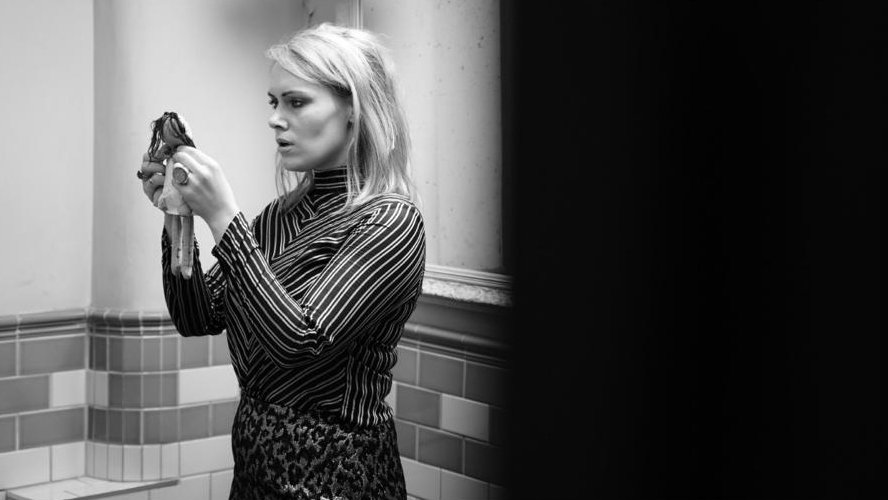
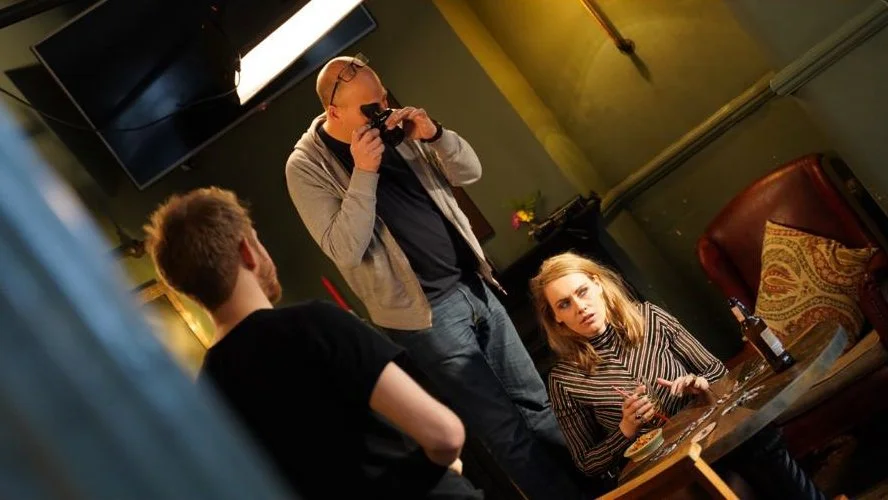
Sounds quite challenging. How did you find the process, and any tips & tricks for filmmakers looking to try Straight 8?
I absolutely loved making Jinx. Hard to believe it was over five years ago now. It was my first time doing Straight 8 and also my first time working on celluloid, and the process ended up teaching me a huge amount, especially about “show, don’t tell.” Because syncing dialogue is so difficult in Straight 8, I decided early on to make it a silent film, which pushed me to think in a much more purely visual way. With only one roll of Super 8, every frame had to matter and every moment had to move the story forward. Oddly enough, those limitations were incredibly energising.
Acting in it myself added another layer. I felt that in past projects I had been a bit vague with my character intentions, but Straight 8 leaves no room for that- there’s no rescuing a performance in the edit. I had to be very precise about what the character wanted in every single take. And honestly, I loved the chance to lean into something a bit heightened; Super 8 can really embrace slightly over-the-top performances.
Because you only get one take per shot, rehearsal became a crucial part of the process. I adore rehearsing with actors anyway- it’s where the magic happens- but for Straight 8 it’s basically essential. That would be my number one tip to someone looking to make a Straight 8 film. Rehearse!
To help with the musical score sync, I also shot and edited a rough proxy version on my phone, which acted as both a storyboard and a pacing guide. It was incredibly useful, and I’d definitely recommend that to anyone attempting Straight 8 for the first time. My 1st AD was really dilligent with helping me keep the pacing accurate for each shot. The whole process is challenging, but if you embrace the constraints, it becomes really fun.

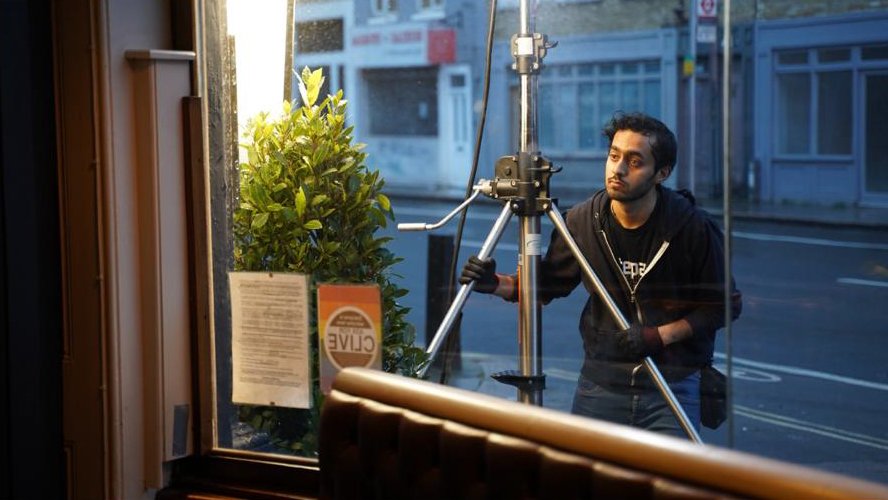
What’s the inspiration behind Jinx? Would the themes & characters you explore in Jinx have manifested themselves in a digital short had you not done the Straight 8 competition or is there something specific to this story that you felt needed to be told via an 8mm format?
One of my favourite short stories is Thomas Hardy’s 'The Withered Arm'. The ostrasized protagonist learns her ex-lover, and father to her illegitimate child, has just got married to a beautiful, younger woman. Her curiosity and jealously of the new bride quickly becomes a dark obsession and the story takes a gory, supernatural turn with devastating consequences. It's incredible. The seeds of Jinx came from a really and truly dreadful short script I had written based, very loosely, on this brilliant Hardy story, but in a contemporary setting. I soon abandoned that version but the themes of jealousy- particularly between women- loneliness and obsession present in 'The Withered Arm' was something I wanted to keep exploring. I also loved the supernatural element in the original story.
I did feel Super 8 was naturally suited to a tale with gothic undertones. Its texture and moodiness complement that world beautifully. And, as I mentioned before, Super 8 also lends itself to slightly heightened performances reminiscent of the silent era, which fit the tone of the film perfectly.
The idea for the doll came from exploring and researching folk magic and witchcraft in Old England. 'Poppets' were dolls made to represent a person, for casting spells on that person- sometimes love spells, but often harmful, vengeful spells. I quite liked the idea of exploring the reasons for wanting to use one of these dolls on someone, and it was particularly fascinating to think about its use for revenge. I wish I had a more scholarly answer as to why I was interested in exploring themes of revenge and jealously at that time, but I had just come out of a long-term relationship so I thought maybe it would be best to channel my heartbreak in a healthy, creative way!! I also wanted to find the dark humour in it all, and hopefully that translates in the final film.
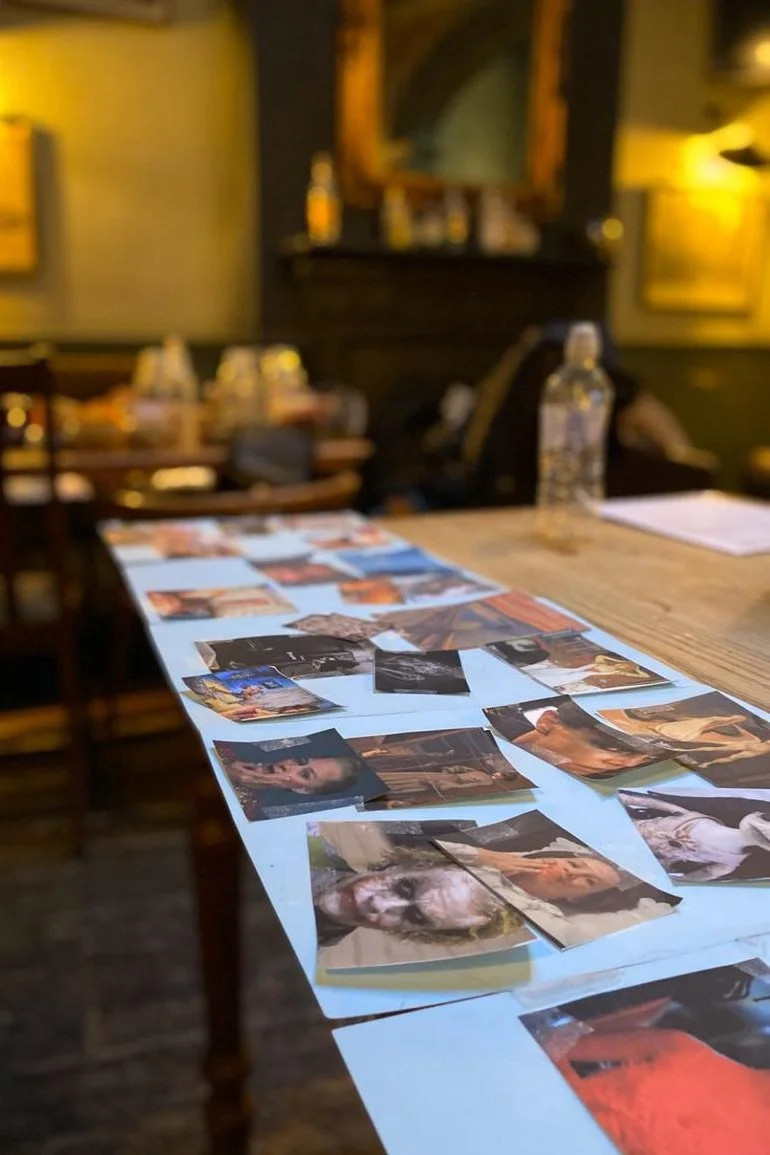
The characters actually did manifest themselves more becasue of the 8mm and competition restraints. Everything had to come down to the aesthetic. My mood board for this film was an eclectic mix of visuals. I was really drawn to the work of Edvard Munch too, not just The Scream, but his other works which all depict mental illness, self-loathing, isolation and loneliness in such vividly harrowing, heart-breaking ways. The raw, devastation leaps off the canvas and I wanted to capture some of that in my film. I was really struck by the iconic images of Heath Ledger as The Joker with the smeared red lips, which I echoed for the first moment of possession. I hoped to evoke from that a sense of madness, unbalance and the thirst for violence the protagonist has. For the choreography and movement visuals, we looked at moments from The Exorcist, and images of contortionists to try to evoke the feeling of violence being inflicted on Maddy's character, and the fear and pain she would be in having been possessed.
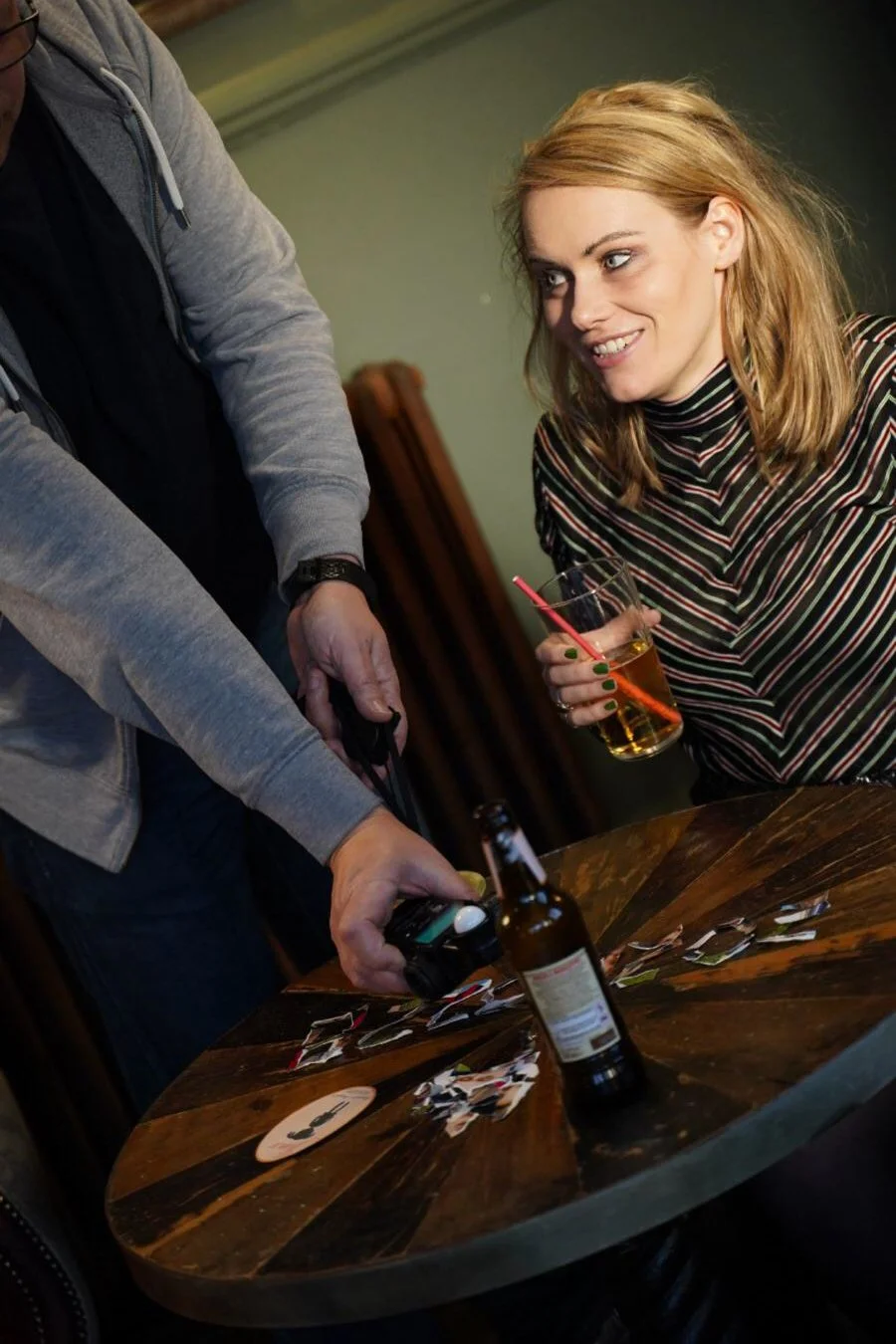
As a short film programmer, what pieces of feedback do you find yourself giving to filmmakers most consistently? How can filmmakers looking to make moves in the short film space avoid common mistakes?
I don’t really know if I give advice. I think most filmmaker can sense what works and what doesn’t when they watch something but it’s much harder to apply to our own work. I would say that the opening few moments in a short film really do matter. If other programmers are like me, they’ll be watching your short on their laptop with a bunch of other films waiting to get seen. I would definitely watch lots of short films, not just features. Watch some early short films from filmmakers that you are inspired by. I think it’s important to watch the early stuff because in most cases you can see the spark but without the finesse which can perhaps be intimidating to grassroots filmmakers.
You’ve recently wrapped your next short, the ambitious period drama Strip the Peacock Bare. How did production go & can you give us a sneak peak?
I’m really excited to get Strip the Peacock out there. It’s an idea that’s been brewing for about a decade but lay dormant for many years. Production went (mostly) really well. There were really stressful moments at the time, but I look back now and think how much luck was on our side. In terms of a sneak peak, I can't share anything just yet other than a still from the film, but what I will say is that the actors are astonishing. I think we have something really unique to show people. I'm a little apprehensive to talk about it becasue I don't want to 'jinx' anything!!
Recommendations to add to our watchlist? Give us 1 short, 1 Hollywood feature, & 1 indie feature.
This is tough, but as we're talking about a film I made on film, I thought I would recommend films also shot on film.
1 Short:
I’d definitely recommend browsing the Straight 8 website as they’ve got a great selection of past films. One of my favourites is Crumbs, which you can find there. It’s a perfect example of how inventive filmmakers can get within the Straight 8 constraints.
1 Hollywood Feature:
Since it’s currently in cinemas, I’d suggest One Battle After Another. It’s bold, beautifully crafted and dizzyingly exciting. It's definitely worth seeing on the big screen.1 Indie:
Bait by Mark Jenkin. I adore this British indie, shot on 16mm. It’s a brilliant example of a filmmaker with a truly distinct voice- someone who isn’t swayed by trends or what’s considered “marketable,” and instead commits completely to the aesthetic and storytelling style that serves the film. I also think its trajectory is incredibly inspiring for grassroots filmmakers.
Interested in getting your work selected?

Everything Is Out To Get Me
A housewife finds out her ex-husband has happily re-married and has a newborn baby, but there’s more to his newfound happiness than meets the eye.

Written & Directed by Dustin Curtis Murphy
Produced by Dustin Curtis Murphy & Joshua Carrington Birch
Cinematography by Joshua Carrington Birch
An abused housewife finds out that her ex-husband has happily re-married and has a newborn baby, but there’s more to his newfound happiness than meets the eye.
ABOUT THE FILM
EVERYTHING IS OUT TO GET ME was shot on 16mm film and screened at 21 festivals internationally, including 9 BIFA Qualifiers. Highlights include the Unrestricted View Film Festival (Honourable Mention for Best Editing & Nominated for Best Score & Best Make Up), Dances With Films, Fastnet, Beeston Film Festival, Crystal Palace International Film Festival, North East International Film Festival, Spirit of Independence Film Festival, Sunderland Shorts Film Festival, Romford Film Festival (Nominated for Best Score and Best Screenplay) and TweetFest. The film was also nominated for Best Cinematography at the 2023 British Short Film Awards where it was also long-listed for Best Score and Best Costume Design. Upon wide release it’s been featured by Kodak’s Shoot Film channel, Minute Shorts, and Beyond the Short.
ABOUT THE FILMMAKER
Dustin Curtis Murphy is an award-winning writer, director, and producer creating work at the crossroads of social impact and commercial appeal. His films often focus on character-driven narratives with relevant social themes and tightly structured plots, frequently working in blended genre. His debut feature film "Coyote" won the Grand Prize for Best Sci-Fi Feature at VORTEX, the Audience Award for Best Feature at the Romford Film Festival, and Best Director at the Unrestricted View Film Festival. He is also the CEO of Kino Short Film and the festival director for the BIFA-qualifying Kino London Short Film Festival.
READ OUR INTERVIEW WITH DUSTIN

Tell us about the origin of EVERYTHING IS OUT TO GET ME and how this project came about.
It was summer 2022 and I was just about to wrap production on my debut feature film, COYOTE. I’d spent many years making short films, developing my voice as an artist, experimenting, failing, dusting myself off and getting up again… That process was always leading me towards the lifelong goal of feature filmmaking.
Having finally rolled the feature film boulder up the cinematic mountain, Sisyphean-style to appease the film gods, I certainly wasn’t feeling the need to start at the bottom of the mountain again with another short… but then frequent collaborator, DOP Joshua Carrington Birch, approached me with an offer I couldn’t refuse…
”Let’s do something we’ve never done before.”
He had my curiosity.
“Let’s shoot a project on 16mm film.”
...but now he had my attention.
Growing up in the 90’s, all of my early student projects were all shot on digital. That technology followed me into all of my subsequent work, but I was always trying to make my work look filmic and cinematic (with varying degrees of success). However, there really is no substitute for the real thing.
So how did the story develop from there?
Since 16mm film just oozes the textures of a bygone era, it felt natural to develop this project as a period piece. It was also important to me to create a mutually beneficial portfolio piece for all involved. Something that really showcased all of my friend’s immense talent vs just wrangling them to enable a singular vision.
I was also extremely interested in playing with structure, subverting the usual formulas rampant in modern filmmaking to deliver something fresh. With this film (spoiler alert) I wanted to the audience to feel completely different about these characters by the end of the film than they did at the beginning. The good guy becomes the bad guy and the bad guy becomes the victim of who we thought was the good guy… I wanted to use these narrative twists to challenge audiences biases.
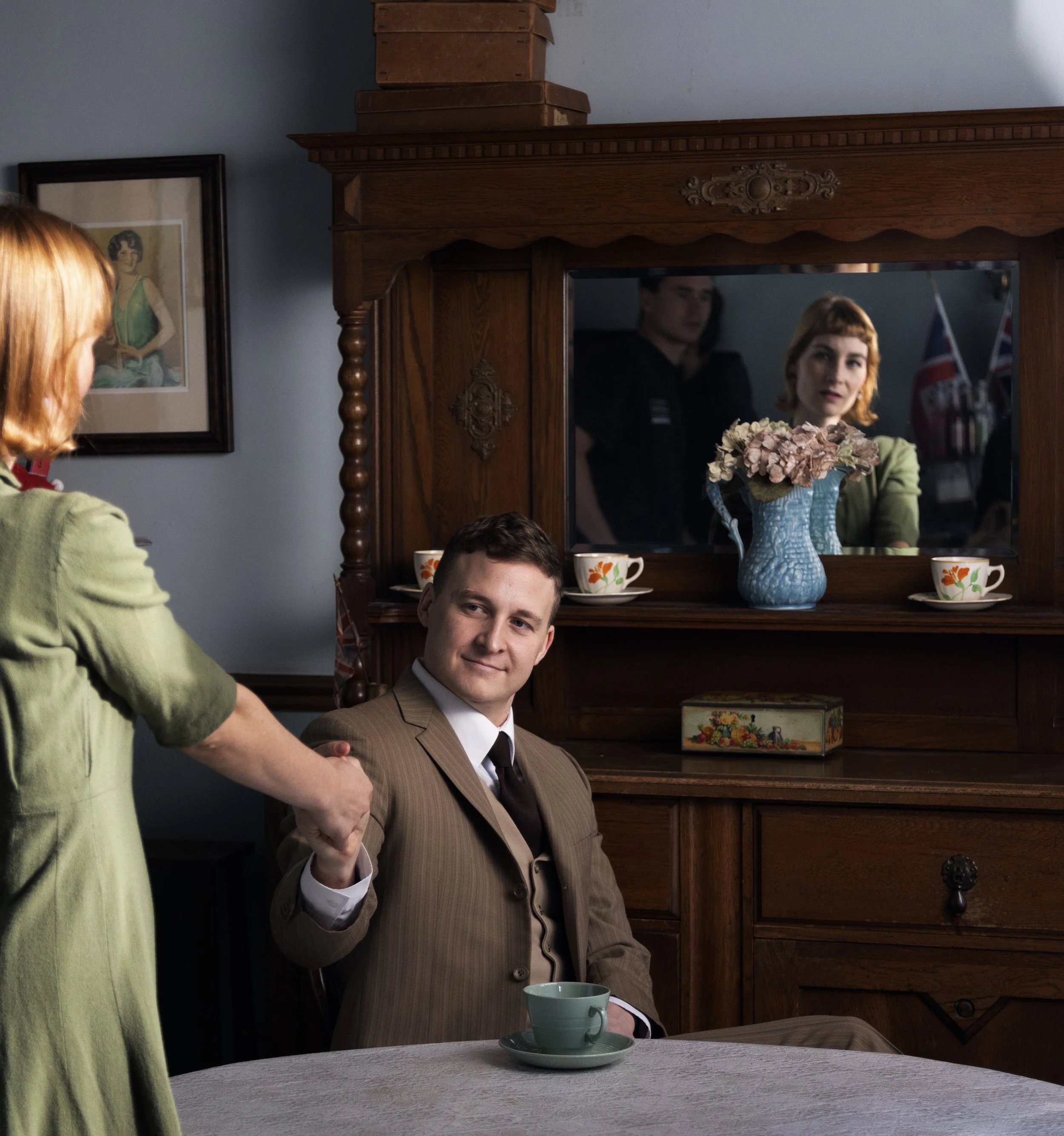
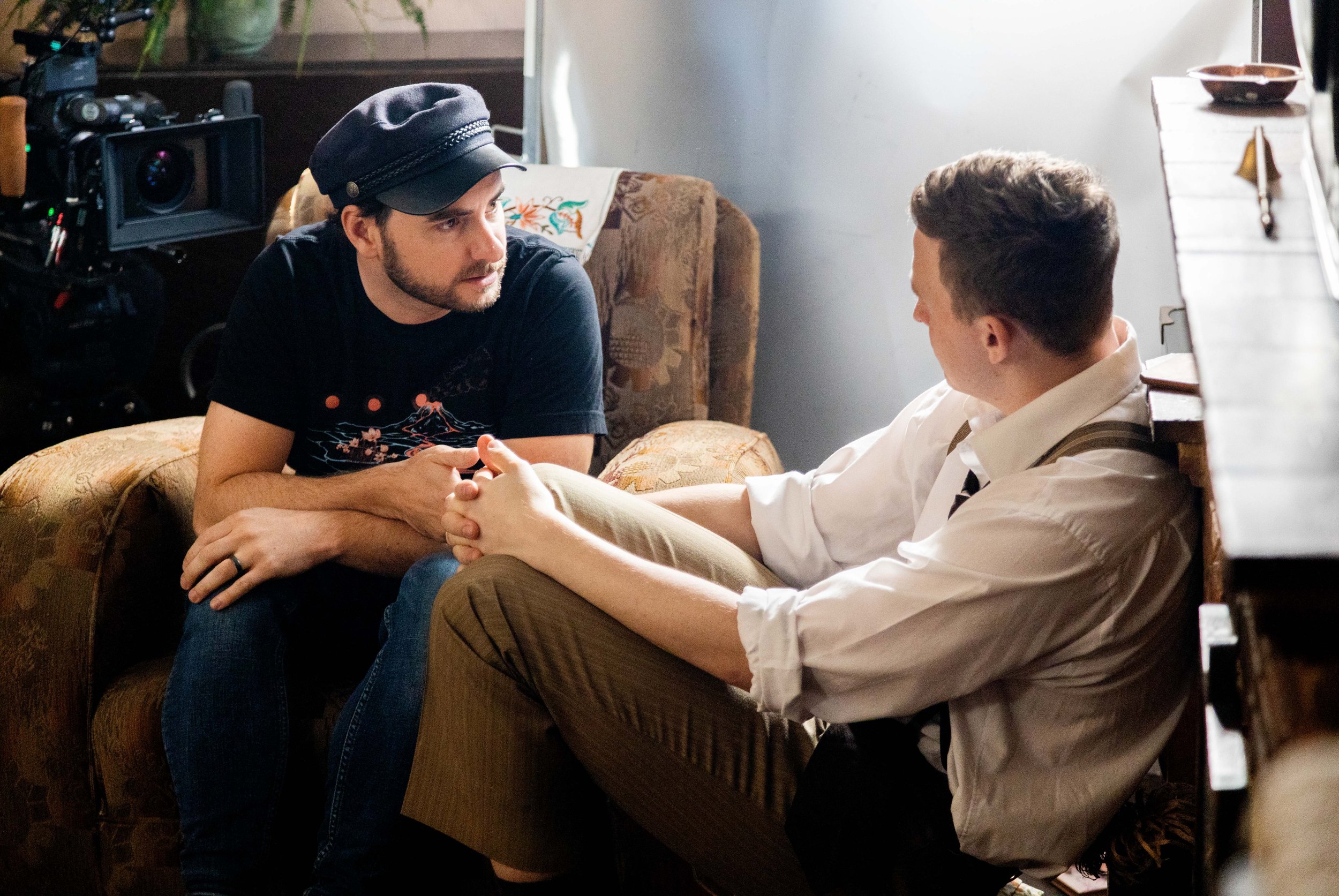
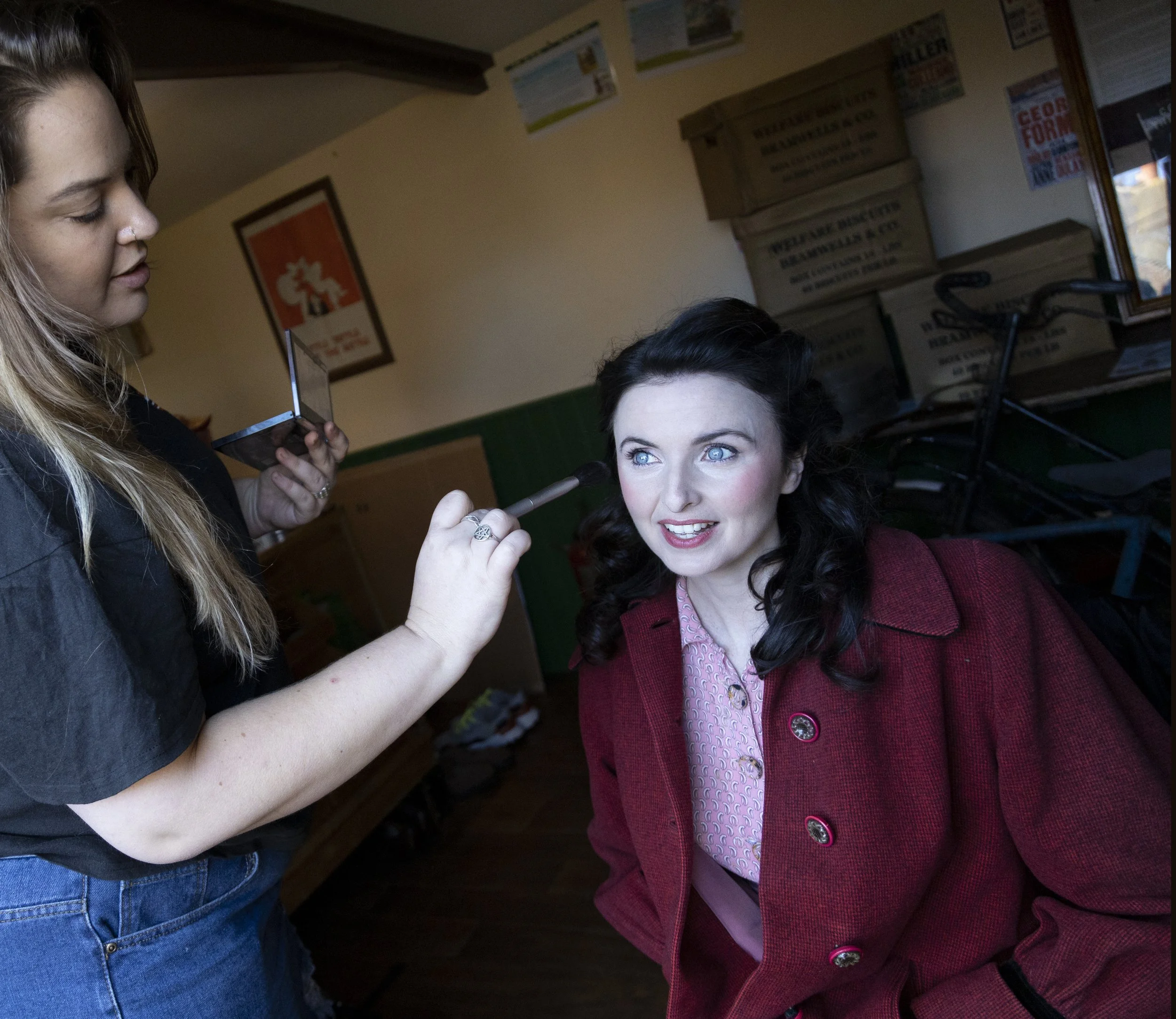
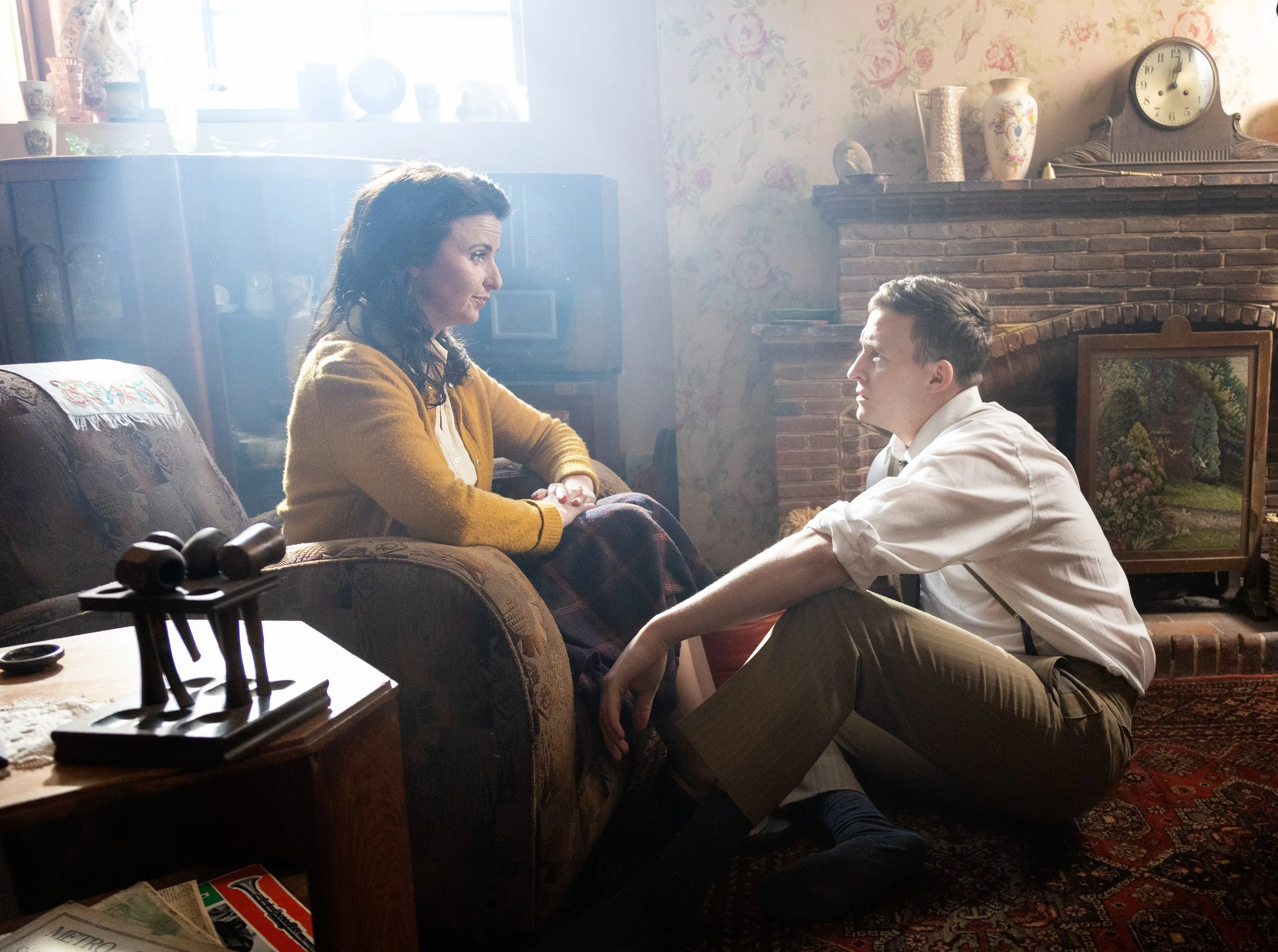
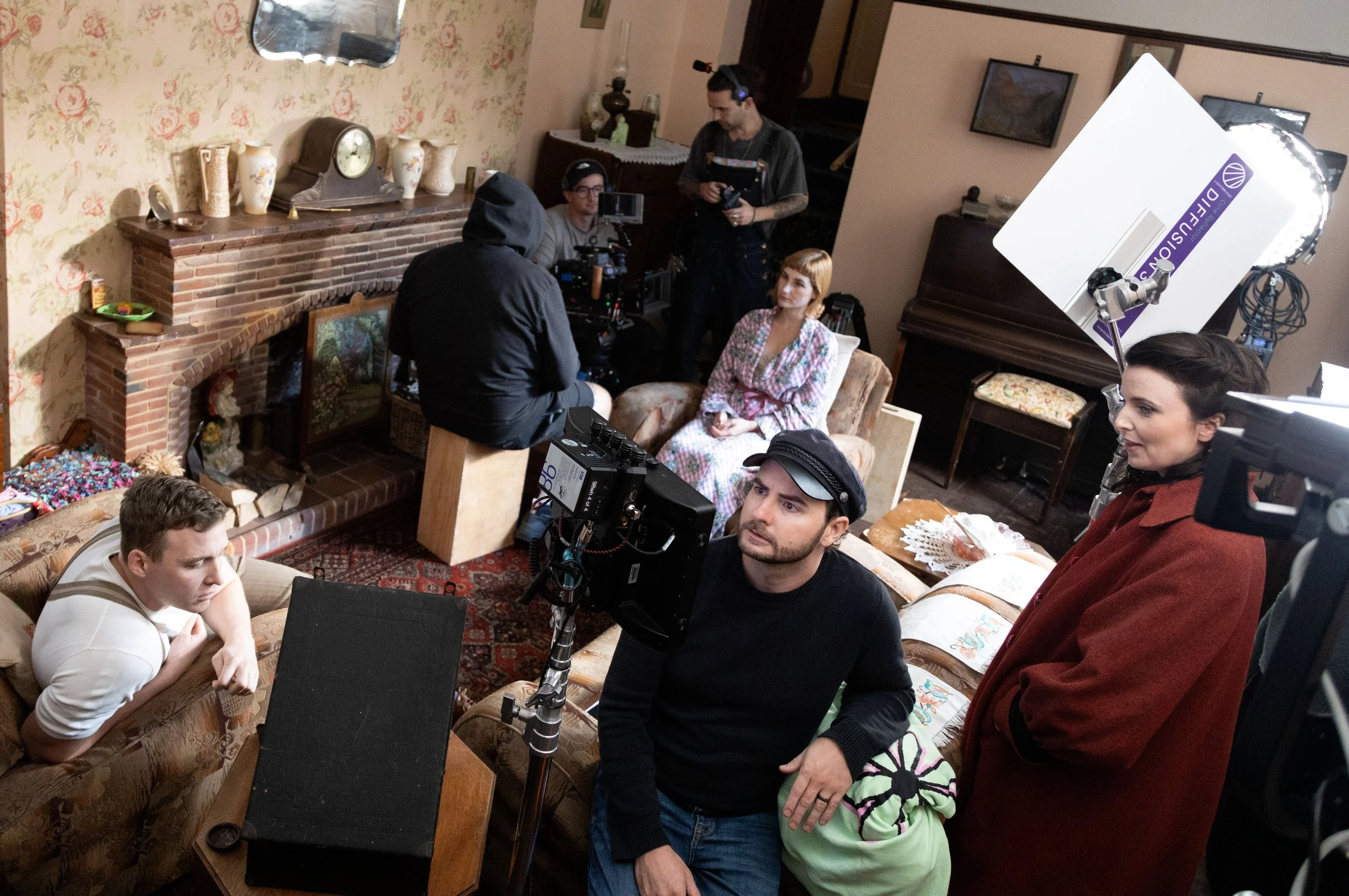
Let’s chat about your choice to tell this story through narration. Why did you make that choice?
It’s odd, but narration can be quite controversial in some pretentious screenwriting / industry circles. Some people consider the use of narration to be “bad writing” or “lazy writing”, but I wholeheartedly disagree. Narration done badly is indeed awful, but then again the same is true for dialog or plot.
Creating a blanket rule that narration should never be used because it’s an inferior art-form is hogwash malarkey. Imagine Fight Club without narration. Same with Forrest Gump, Stand By Me, Apocalypse Now, Adaptation, Casino… I could go on forever. If you look at IMDB’s list of Top 250 films of all time you will see so many examples of narration.
One key deciding factor in making this film a 100% narrated piece was the fact that our film camera was noisy which would’ve impacted our ability to record clean dialog. Additionally the narrative spans many years in the matter of a few minutes. Our film is about the entire scope of a relationship, not a single defining moment of a relationship, so narration was a great tool to link scenes together over the passage of time. The film is also heavily rooted in the misrepresentations of the leading character. Our narrator is the quintessential “unreliable narrator”. The audience starts off believing everything she’s telling us. We empathise with her tale of victimhood, but as the story unfolds we start to realise that the images we’re seeing don’t line up with her words and we’ve been lied to. I wanted the lead character to not only gaslight her partner in the film, but also to gaslight the audience - what a better tool to use for that than narration.
I don’t think the essential components that make this short film what it needed to be would’ve worked without the use of narration, and it certainly was a fun style to experiment with. However, I will say that in the final mix we noticed that the music and visuals were so strong that we didn’t need as much narration as was initially scripted.

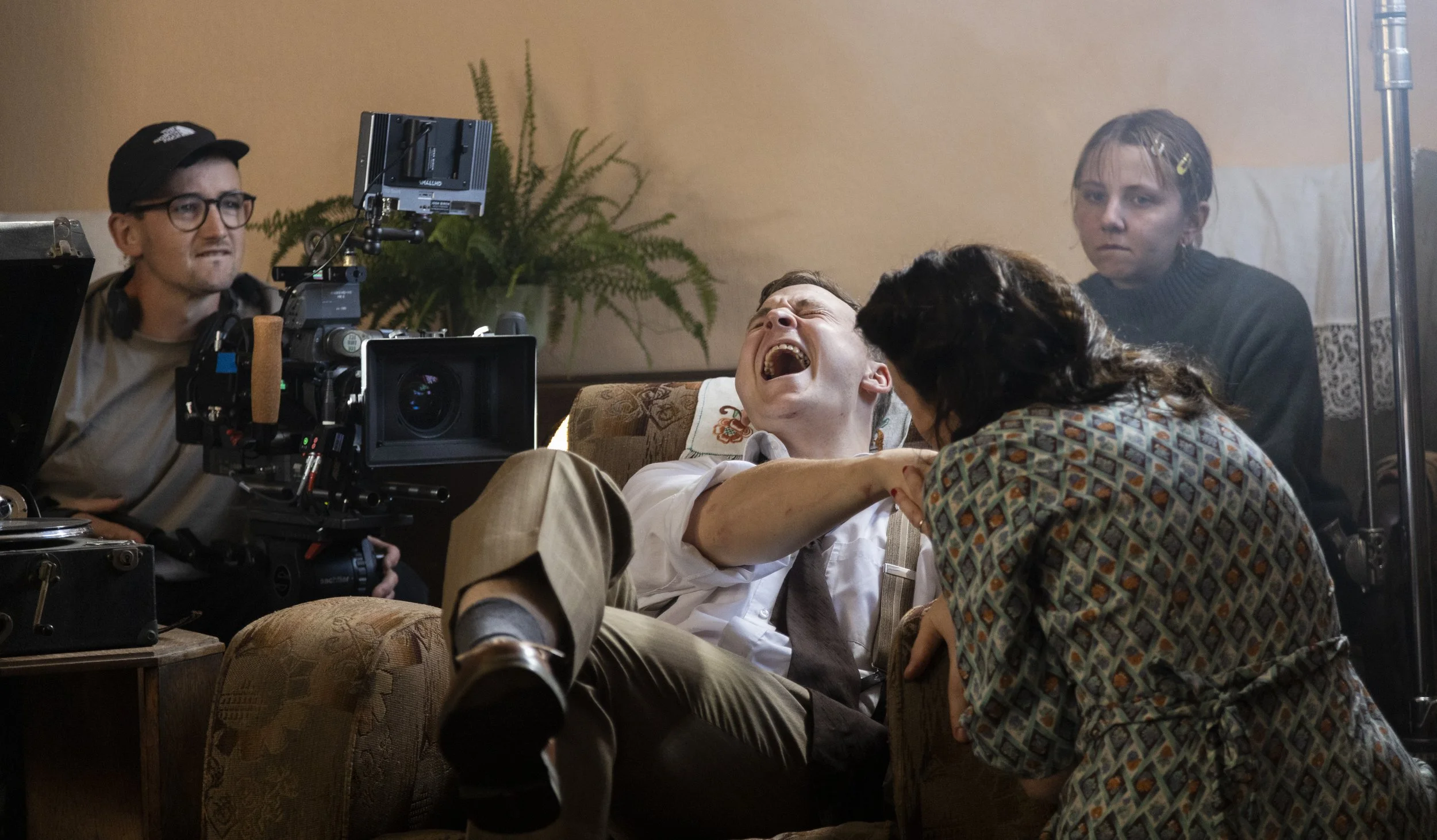
Tell us about the music of EVERYTHING IS OUT TO GET ME.
The score is truly one of my favorite things about this film, and in general working with composers is one of my favorite parts of the collaborative process of filmmaking. (I love many other collaborative relationships as well, so this is in no way meant to throw shade at those who aren’t composers…)
I’d met Thom Robson after he won the award for Best Score at the first year of Kino’s film festival for his work on From Fragments - a beautiful dance film about dementia. I often scout talent via my work with Kino, and I was always looking for an excuse to finally collaborate with Thom. We did work briefly together on my micro-short Filthy Animals, but Everything Is Out To Get Me was what I’d consider our first proper collab.
Thom and I both have a very sensitive ear for digitally created string instruments, so to make the score the portfolio piece it needed to be, we were fortunate enough to work with a 40 piece string orchestra out of Budapest who recorded remotely. It was the same orchestra who does many Hollywood projects including Tim Burton’s Wednesday, but they still set aside 50 minute sessions to help out smaller projects. It was amazing to hear them nail Thom’s composition in just a few takes.
The score is available on Spotify is anyone fancies adding it to their playlist.
Tell us about the journey of getting your film to audiences and some of the festival circuit highlights.
This short was blessed with a very healthy festival run, and while there are great several festival experiences throughout, it’s US premiere at Dances With Films remains my favorite festival experience to date, not just for this film, but for all that I’ve done.
Dances With Films takes place at the historic TGC Theaters on Hollywood Blvd. and it’s everything you think a big Hollywood film festival should be. It’s very well attending and they have special industry events for screening filmmakers where you can actually get in the room with key industry decisions makers. The staff is very friendly and they absolutely champion grass roots filmmakers vs succumbing to the rampant nepotism and privilege that many other big festivals do.
What are you working on next?
The feature length script for Everything Is Out To Get Me is deep into development at this point with several drafts completed. For the feature I’m leaning more heavily into the genre elements that are hinted at towards the end of the short, in particular the home invasion. However, after directing, producing, writing, and editing my debut feature film, it’s certainly not an experience I’m willing to subject myself to again. Making the feature certainly came with it’s highs (and lows) and I’ll always be thankful to some amazing collaborators and investors that believed in the project, but at the end of the day it was a micro-budget production which meant that the solution to most problems was for me to do the work myself. This of course lead me down a path of massive burnout, so for my own wellbeing I’ll not longer be looking to take on four full time production jobs at the same time.
To ease into doing another feature, I’d actually like to get my mojo back by doing a few shorts. I think a lot of people look at shorts as something you graduate from once you’re in the feature film world, but they’re such different mediums. I have a lot of stories I’d like to tell and not all of them should be features.
Hey, if David Lynch can make shorts throughout his career without being embarrassed then why should anyone else feel any different. Go scratch your creative itch any way that feels right to you.
Any film recommendations that we should add to our watchlist?
I’ve mostly spent the last year revisiting my old favorites. Previously, it became kind of a competition between me and friends to see who could boost their IMDB/Letterbox’d view count the highest, but I realized that after being exposed to SO many films over the years I’ve become harder and harder to impress. Pair that with the current state of the industry pushing out more data-driven content vs grand artistic achievements, and I became one bored viewer when it came to new releases…
In slightly similar vein to Everything Is Out To Get Me, I just revisited Marriage Story which is an absolute masterpiece.
For something newer… I super enjoyed Mickey 17 and don’t care what any of the haters had to say about it. Most entertained I’ve been in the cinema in awhile.
Apply to get your short selected as our Weekly Pick

Hold My Hand
In this recognisable advert, a gang of giddy sunseekers go on a trip they’ll never forget.

Written, directed by Lucy Hilton Jones & Elliot Taylor
PRODUCED by Greenfingers Film
In this recognisable advert, a gang of giddy sunseekers go on a trip they’ll never forget.
ABOUT THE FILM
HOLD MY HAND was a straight-to-online release, but has since been screened at Blade and Bow Showcase, Glasgow and Adult Film Club, Manchester.
ABOUT THE FILMmaker
Lucy Hilton Jones is an award-winning actor/writer/director and co-founder of Greenfingers Film. A two-time Funny Women Award finalist and BBC Comedy Collective semi-finalist, her short films have been screened nationally and internationally. She loves working on projects that mix realism and the absurd with levity and playfulness. Her first feature film is currently in development.
Elliot Taylor is a Manchester based Writer, Director and Editor. As a filmmaker, he is interested in using comedy and horror to poke fun at societal issues. His previous short film Bin Day (2023) was a silly exploration into AI and how it can be used for job automation. This film went on to be screened at the BAFTA qualifying Manchester Film Festival. It also won Best Ensemble Cast at the Comedy Short Awards, as well as winning Best Low Budget Short Film at Romford Film Festival.
Greenfingers Films is an internationally award-winning film collective based in Manchester. It consists of Writer/Directors Lucy Hilton-Jones and Elliot Taylor as well as Director of Photography Dann Cooper. All of our films have a focus on the silly, spooky and surreal.
READ OUR INTERVIEW WITH elliot and lucy
Welcome back to our Short of the Week series. What have you been up to since we last featured your work - Nanny Neigh Neigh?
Thanks so much for having us again! We've been up to all sorts. At the end of 2022 we, for some reason, decided it would be a good idea to shoot three films in a weekend. Luckily our delusions paid off! They're now all at the end of their festival runs having done very nicely, so we'll be releasing those soon. We also shot another short in the Hold My Hand location (can you tell we like to make our lives hard) and that's almost done in post so we'll be submitting that to festivals soon.
Tell us about the genesis of Hold My Hand.
We were asked to collaborate with Cozmos Films on a project shooting in a villa in Spain. Our only stipulation was that we could use the location for a Greenfingers project as well. Elliot worked on a certain set of travel adverts that you may recognise. HMH is a response to the horror of hearing such a chirpy pop song on repeat in the edit suite.
What were some of the main obstacles you experienced when making Hold My Hand and how did you overcome them?
This is the first time we've worked with VFX in one of our shorts. We're super happy with how it turned out (shout out to Natascha Farmer) but in retrospect, we should have consulted with someone before we filmed to make post-production even easier. Also, Lucy learned the hard way that there are both edible and toxic versions of fake blood.
Tell us about the journey of getting your film to audiences.
Like Nanny Neigh Neigh, we decided to put this film straight online. It's short and snappy and, in all honestly, we simply don't have a festival budget for all of our projects. We've had an amazing response on our Instagram and Youtube but we'd always like to reach more people so thanks for giving us a platform!
What advice or hacks would you give to other short filmmakers?
Keep momentum going if you can because the only way you'll learn is by doing. The simplest films can be the most effective so don't wait around for funding. Your taste will never match your art because your taste evolves with your development so don't be afraid to put things out if they aren't perfect in your eyes.
Any film recommendations that we should add to our watchlist:
Elliot: Paprika and Kneecap
Lucy: Sick of Myself and A Bunch of Amateurs (2022)
Interested in getting your work selected as Short of the Week?

Voices
A couple overhears a violent fight next door and must decide whether or not to get involved.
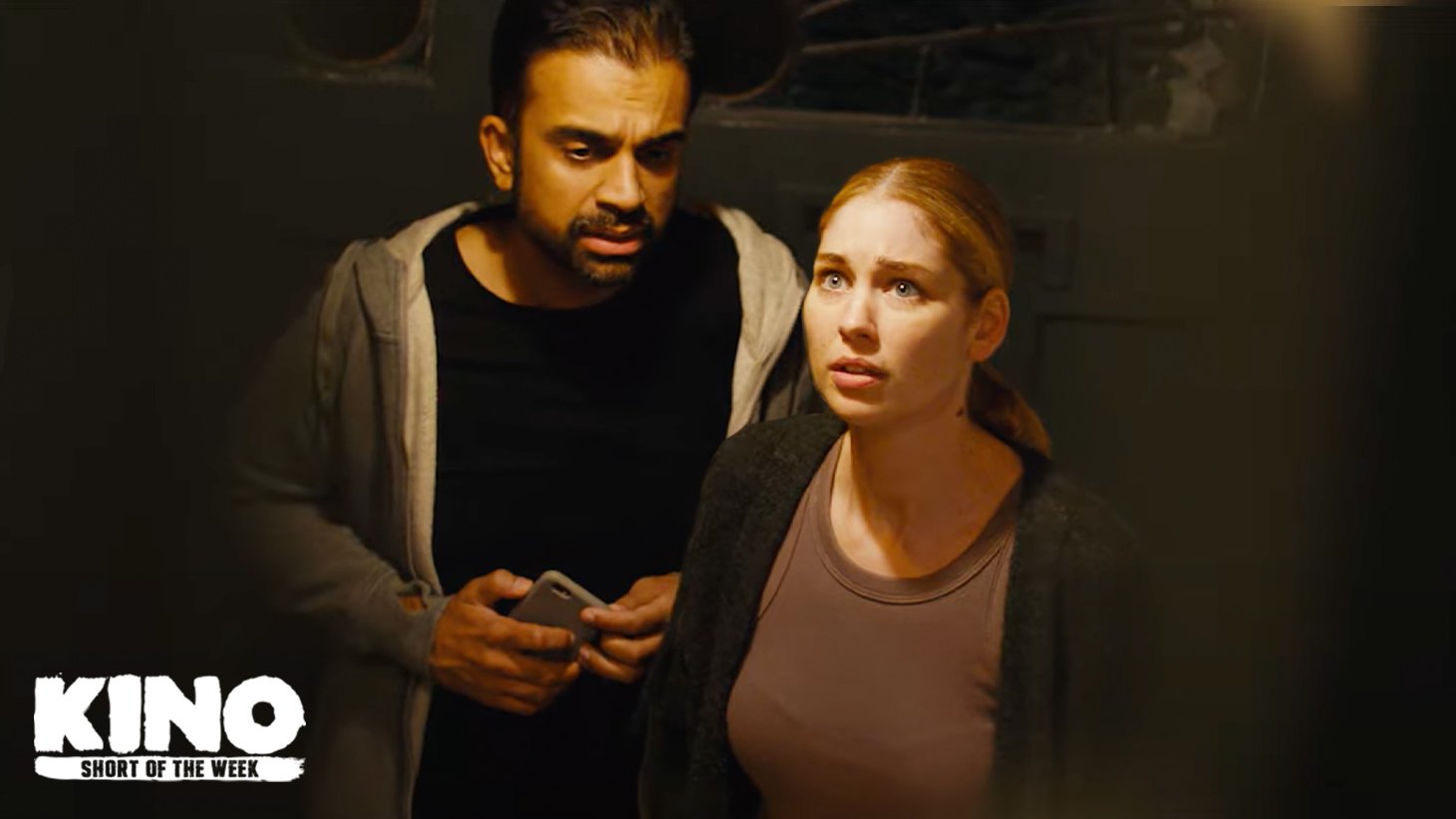
DIRECTED BY Abbie Lucas
Written BY OMAR KHAN | PRODUCED BY Håkan Carlsson
A couple overhears a violent fight next door and must decide whether or not to get involved.
ABOUT THE FILM
Voices is a short film that defies genre. It won Best Drama at the BIFA Qualifying Beeston Film Festival, Best Horror Short at the Atlanta Shortsfest, and Best Suspense at Chicago Reel Shorts. Drama? Horror? Suspense? Whatever the genre is, all we know is that it’s goooooood!
It also won the Audience Award at Tweetfest and the Si Spencer Award & Best Screenplay at Unrestricted View (as well as a Special Mention for Best Director) - both festivals were BIFA qualifiers.
Voices played at over 45 festivals internationally, but highlights include the BAFTA Qualifying Aesthetica, Fastnet, the Oscar qualifying Seattle International, Durban, ScreamFest, Waterford, Milwaukee, Nevermore, and our very own BIFA qualifying Kino London Short Film Festival, where Omar Khan was nominated for Best Performance in a Comedy. The film was also nominated for Best Score.
ABOUT THE FILMmaker
Omar Khan has written for TV, theatre, short films and radio dramas. His short film The Plunge, premiered at Palm Springs ShortsFest and was long-listed for a BAFTA after being selected for over 60 international film festivals.
In 2021 he was selected for the BBC Children’s Scripted Development mentorship which led to a radio drama for the CBBC show, Malory Towers, and ten TV credits; episodes of the CBBC shows Princess Mirror-Belle, Odd Squad, Little BadMan and The Dumping Ground and the CBeebies show Biff and Chip. He also wrote an episode of the BBC3 show The Break. In 2023, he wrote two episodes of the Channel 4 continuing drama Hollyoaks and became a BAFTA Connect member.
Abbie Lucas is a film director based in London, originally from New Zealand. In 2018, Levile TV listed her as one of the Top 20 Rising Female Filmmakers in the UK. She is a member of Directors UK and BFI NETWORK x BAFTA Crew 2021. In 2022 she was invited to participate in the Reykjavik International Film Festival Talent Lab.
As a storyteller, she enjoys stories with flawed relationships, female protagonists, vigilantes, crime, and a bit of magical realism but most of all loves work with strong performances and impactful story lines. She is known for exploring dark themes in ways that are humorous and unexpected.
Her recent film credits include the award winning TESTING GRETA, an unusual story about domestic abuse, which took the 'Greeks of the World' Prize at the 40th Drama Film Festival in Greece and was screened at the BAFTA recognised Aesthetica Film Festival in 2018, and another short comedy titled DEAD TIRED which was been nominated for Best Script and Best Comedy at the Beeston Film Festival 2018 and also for Best International Comedy at the Austrian Film Festival 2018. In 2020 she completed two more dark comedies, GOOD VIBRATIONS and THE HANKERBOX, and in 2022 she completed CAPTURE HER and VOICES, all of which are on the festival circuit.
READ OUR INTERVIEW WITH OMAR & abbie
Welcome to our Short of the Week series. Can you tell us a little bit about yourself and your filmmaking background?
OMAR: My name is Omar Khan and I’m a screenwriter and reluctant producer! I’ve written and produced five short films, including The Plunge and Voices, both of which had successful festival journeys. I work mainly as a screenwriter, currently I am part of the team at Hollyoaks and I’ve worked extensively at CBBC.
ABBIE: My name is Abbie Lucas and I'm a Director, Writer and Editor. I studied Directing and Writing back home in Aotearoa, New Zealand and when I moved to the UK, got involved in directing theatre and then moved into web series and short films. I also co-write features with my US based writing partner Kevin Kautzman and have many years experience editing commercials, branded content and short films.
Tell us about the genesis of Voices. What was the inspiration behind the film and how did the project get greenlit?
OMAR: Voices started as an idea, after a news report about Boris Johnson and his partner having an argument at home, which was overheard by the neighbours who then called the police to report possible domestic violence. This turned into a small media frenzy, with some papers arguing that you have no right to call the police on a private, domestic matter and other saying that you have a duty to do so if you suspect someone is being hurt. This inspired the start of the film in which the couple have this very argument when overhearing their neighbours domestic dispute.
ABBIE: I first became involved with Voices when Omar sent me an email introducing himself. He had seen some of my work and was interested in potentially collaborating, so we met up for a coffee, got along well and he sent me a couple of shorts he's written. Voices was the one I connected with because I like stories that are told in an unusual way, it was almost like a modern myth or fairy tale about a very adult situation.
What were some of the main obstacles you experienced when making Voices and how did you overcome them?
OMAR: I had saved up funds of about £6k and had decided that I would make the film myself without any other funders. I didn’t want to be a the mercy of gatekeepers and had the utmost belief if the story I was telling. Though it did mean we didn’t go on any holidays for a while!
The main obstacles were around the limited funds and ensuring we could make the money within that and ensure everyone was paid. The last day became a bit of a mad rush and we only just got the last shot while the sun was about to go up. Also, I had a wonderful producer in Hakan Carlsson, who got a great acting job the week we were supposed to film. So he had to produce the film remotely from Sweden, while I took over some producing responsibilities on set. We made it work!
Tell us about the journey of getting your film to audiences and some of the festival circuit highlights.
OMAR: We started submitting to festivals in early 2022 via Film Freeway. We had a slow start. At first we were reluctant to submit to genre festivals. We had made a sort of horror/thriller but I was concerned the film wasn’t horror enough for the horror specific festivals. Once I embraced the horror festivals though, the festival submissions snowballed. This included selection to the renowned horror festival in LA, Screamfest. Other highlights include, Bafta qualifying Aesthetica, Oscar qualifying Seattle International and Durban. We were also grateful from the support of some UK festivals that had also liked my previous film The Plunge and were really supporting me as a filmmaker such as Tweetfest, Kino and Beeston.
What do you think is the biggest challenge short filmmakers face in the early stages of their career when trying to break into the industry?
OMAR: The biggest hurdles is raising the money and convincing people to make the film for lower than their usual rate. I am lucky that I have a day job as an optometrist and am reasonably well paid and so I was able to save up and raise the funds myself. This made it slightly easier as I wasn’t at the mercy of gatekeepers and funding bodies and could make the film I wanted. Low funds create other problems, such as reduced crews and less shoot days, which create a real pressure.
ABBIE: The biggest challenge I think filmmakers face early on in their career is finding a way to jump from shorts to features or TV. The technological advances have made it so much easier to get a short off the ground but it remains difficult to go professional as the industry is risk averse, expensive, cliquey and doesn't afford a great deal of opportunities to people that don't have private access to funds. I wish I had the kind of radical ideas that could provide a solution to this.
What advice or hacks would you give to other short filmmakers?
OMAR: The biggest hack is to have a script that can be made easily. Voices was a ten page script with two characters and one location. All of this lowered the cost and made the film possible. It also helped that people really liked the script and were willing to shoot the film for lower than their usual day rate. Always take the time to get the script right.
ABBIE: The advice I have to give is kind of cliched, but that's because there is truth to it - tell a story that you love because trying to predict what festivals will want to see is a losing battle. Figure out what interesting things (locations, cast etc) you have access to and tell a story based around that, it will help you keep a budget in control.
Any film recommendations that we should add to our watchlist?
OMAR: Film recommendations: I have to say I very rarely watch films these days as I have a three year old daughter and she controls what I watch, which is basically Disney princess films. We did enjoy Wish. But for a real recommendation, we just finished watching the TV show Succession, which was one of the best shows I’ve ever seen.
ABBIE: The best film I've seen recently is Zone of Interest (in terms of filmmaking, it's the opposite of feel good!) a movie I like to recommend in general is Mr. Death: The Rise and Fall of Fred A. Leuchter, Jr. a documentary by Errol Morris. I saw it at film school and it's a masterful character study and disturbing as it unfolds. Actually, both of those films have some crossover themes!
Interested in getting your work selected as Short of the Week?

Bad Penny
An antiques dealer gets a lot more than he bargained for when he comes across a cursed object that won’t take no for an answer.
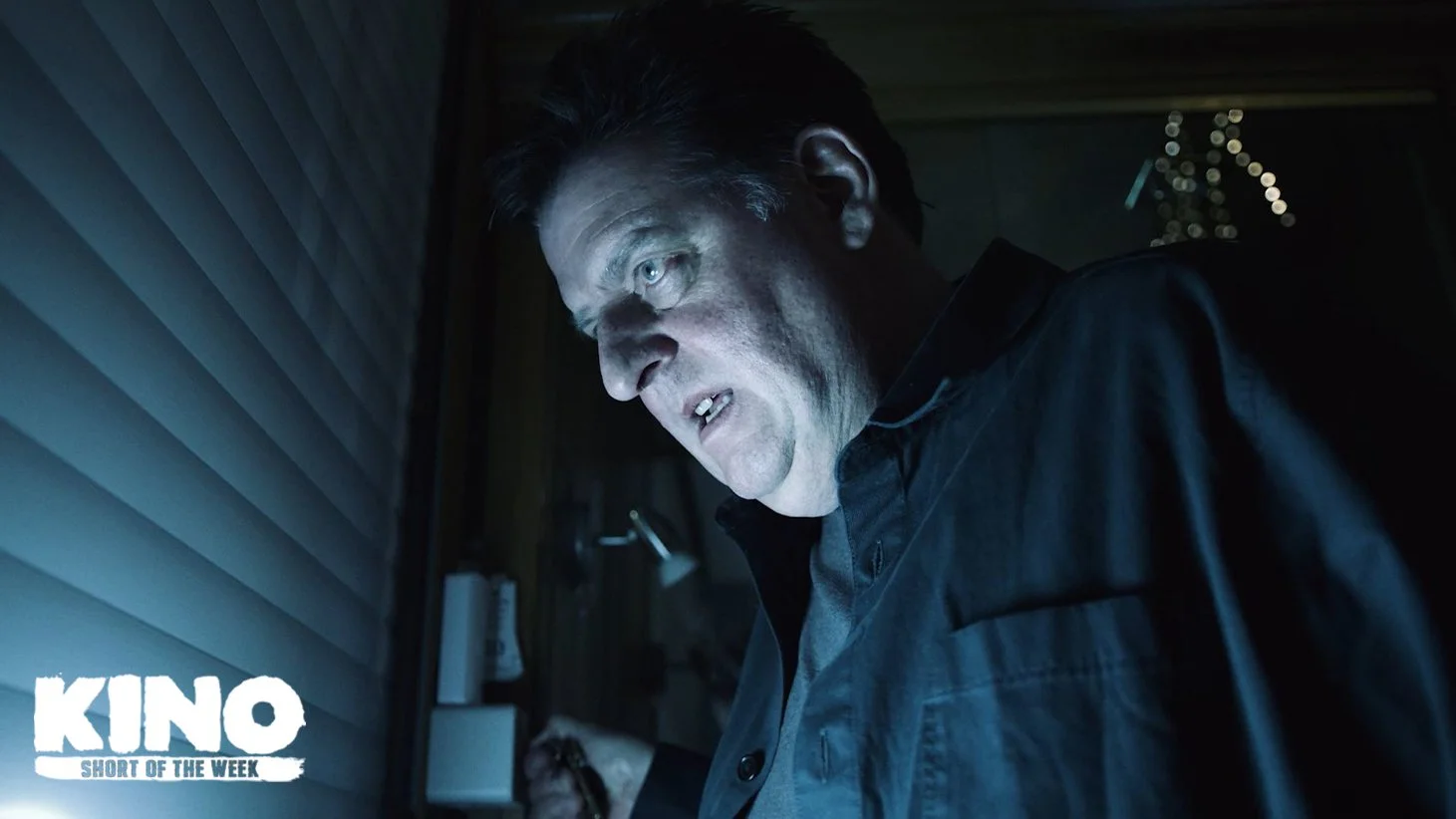
Written & directed by TONY HIPWELL
An antiques dealer gets a lot more than he bargained for when he comes across a cursed object that won’t take no for an answer.
ABOUT THE FILM
Bad Penny was an Official Selection at our BIFA Qualifying Kino London Short Film Festival. Other festival highlights include: Dead Northern, Beeston Film Festival
Panic Fest, Leeds Horror Festival. It won Best Horror Short at the Underground Indie Film Fest and was nominated for Best Actor at the Dark Red Film Festival, as well receiving an Honourable Mention from GASP!
It’s since been released online via Klipist.
ABOUT THE FILMmaker
Tony is a multi-award-winning filmmaker whose work has screened at Academy Award, Canadian Screen Award, BAFTA and BIFA qualifying festivals such as Fantasia, HollyShorts and the Edinburgh Film Festival.
Their debut feature, Whoops! premiered at Raindance 2013 and was the only British film selected for the Raindance Tour 2014. Since then, Tony has developed projects with the BBC and Searchlight Pictures, worked as the Video Producer for Young Thug Records in association with EMI Records and been selected for the inaugural Future of Film and IHS X FEAR incubators.
Tony's most recent projects include the award-winning adaptation of 'Standing Woman' by internationally acclaimed author Yasutaka Tsutsui which was nominated for the Yorkshire Film Award at Leeds International Film Festival 2021 and has since been acquired by ALTER. Their new short, 'The Lure' premiered at FrightFest 2023 and is touring festivals around the world now with sponsorship from CenterFrame.
READ OUR INTERVIEW WITH TONY
Welcome back to our Short of the Week series. What have you been up to since we featured your last short "Standing Woman"?
I’ve been winding down the festival run for Bad Penny and starting the tour for The Lure, my new micro short. We premiered at FrightFest which is always a thrill and it’s had a great response so far which has been really exciting. I also had the pleasure of seeing How To Kill Monsters launch its festival run which I worked on last year with Dark Rift Horror who also just released my low fi horror comedy Zomblogalypse on Blu Ray which is kind of like The Disaster Artist meets One Cut of the Dead.
Can you tell us about the genesis of Bad Penny?
Bad Penny was really borne from two things, a desperate desire to shoot anything after lockdown and lucking into a great location a friend had a small window of access to. I also just wanted to make something really stripped down. Standing Woman took 5 years to make and I wanted something closer to 5 months this time round!
What were some of the main obstacles you experienced when making of Bad Penny and how did you overcome them?
It was the definition of a skeleton crew, I did literally everything except the make up so that was a fun kind of stress – making sure everything was technically sound whilst still trying to actually just direct. We had a really short window of time to shoot so it’s probably the fastest I’ve ever shot something. I did have a DOP lined up to shoot the film but they quite rightly balked at the shooting schedule so I leapt in myself as I knew what I wanted and the cast were all old friends and pros so I knew they could nail what I needed quickly. I think the whole thing was shot in no more than 6-8 hours.
Tell us about the journey of getting Bad Penny to audiences.
It was relatively straightforward but also a bit of a sobering one. The Standing Woman run had given me a great education on what I really wanted out of a festival run and potential end point but BP had a really shaky start. I had the most rejections I’ve ever had up front and for a while I thought I’d fucked up for not making something as ambitious as Standing Woman as a follow up. But then the tide turned and it found an audience. We picked up two BIFA qualifiers and festivals like Dead Northern and Panic Fest so that was a really gratifying reminder that it’s a marathon, not a sprint. Now that the run is over, we’ve premiered with Klipist who we met at KINO last year and have been a great partner for the film. I’m also really excited to have it featured as a short of the week with KINO as that was a highlight of the festival run for the film.
What's next for you?
I’ve got some great new projects lined up for 2024 including a found footage collaboration with the Indie Horror Society, Orillo Films and FEAR as well as a seasonal horror feature with the producers of How To Kill Monsters.
Any film recommendations that we should add to our watchlist?
I saw Godzilla Minus One over Xmas and like most, absolutely adored it so will add to the chorus and give it an atomic breath sized recommendation. I’d also highly recommend The Moor and New Life, two phenomenal low budget horror features I caught on the circuit last year and will hopefully see release this year.
Interested in getting your work selected as Short of the Week?

Snake Dick
Jill's got the snake. Julia's got the flute. Alone, they have nothing. But together, they have a secret weapon to fight the darkness...

Written, Directed & Produced by David Mahmoudieh
Produced by George Lako & Annalea Fiachi
Jill's got the snake. Julia's got the flute. Alone, they have nothing. But together, they have a secret weapon to fight the darkness...
ABOUT THE FILM
Snake Dick won the Audience Award at Dances With Films, Curtas, and the Salem Horror Fest. It also won Best International Short at the South London Film Festival, and Best Short at Monsterfest, Los Angeles Super Shorts, Short Film Factory, Horror Vein, ScreamQueer and Darkveins Horror Fest. It also won two awards for Best Director at the Hallucinea Film Festival and the London Director Awards, plus two awards for Best Cinematography at the British Horror Film Festival and Los Angeles LGBTQ+ Film Festival. It was nominated at at several other festivals with highlights including FilmQuest & Scream Queen Film Festival. Plus it was an Official Selection at many more. Highlight including the Oscar Qualifying HollyShorts, the Venice Film Week, and the Nottingham International Film Festival just to name a few.
After it’s immense festival run, the film was picked up by Alter and released online having since accumulated over 2 million views. The filmmakers are currently in development for a feature length version.
ABOUT THE FILMMAKER
David Mahmoudieh - Born in the UK to an Iranian father and British-French mother, David began his career in commercials and music videos, shooting award-winning work for brands including Google, Lego and Samsung, and artists such as Coldplay, Just Jack and Ringo Starr. He founded and now directs through his production company, Alpha Wolves, with clients including Yahoo, Mercedes and Porsche.
As a writer, David won the ECU Screenwriting Contest with his script Rain, sold his spec The Frail in a competitive bid and was hired by Star Trek creators Roddenberry Entertainment to adapt their graphic novel Worth into a feature.
David's first feature as a "director-for-hire", See You Soon, starred Harvey Keitel and Liam McIntyre, and secured a US theatrical release.
Most recently David has been directing on Warner Bros/The CW's hit show Superman & Lois, and was selected for Sony Television's Diverse Director's Program.
David's Oscar-qualifying short-film Snake Dick won numerous awards on the festivals circuit and has amassed a cult following and millions of views online after going viral. The film is now being developed into a feature.
READ OUR INTERVIEW WITH DAVID
Welcome to our Short of the Week series. Can you tell us a little bit about yourself and your filmmaking background?
I was born and raised in the UK by an Iranian father and British-French mother, and I grew up in a cinema - literally. We had a projectionist in the family and I would go see a movie at the ramshackle theater where they worked pretty much every other night throughout my youth. So I knew early on I wanted to work in film. I started out in commercials, working my way up from a treatment writer to director before starting my own production company, Alpha Wolves, through which I direct most of my branded work these days. I also write, and have been fortunate enough to sell a few scripts and get hired to write a few others. After almost a decade of shooting commercials, which are fun but ultimately a very disposable artform, I decided it was time to start focusing on what made me want to be a director in the first place — film and television. I did one small TV move as a “director-for-hire”, a soccer movie originally intended for Russian television that somehow got a US theatrical release, but I walked away from it with an empty feeling having had no say in the edit. Snake Dick was in large part inspired by that frustration; making something purely for myself as opposed to working to someone else's brief. Most recently I’ve found my way into episodic television, directing on the Warner Bros/CW series Superman & Lois, and was also lucky enough to be selected for Sony Television’s Diverse Director’s Program, so TV is a path I’m pursuing diligently at the moment. But most importantly, I’m an Industry Ambassador for Kids In The Spotlight, a foster kids charity that transforms the lives of foster youth through filmmaking, and I direct a film for them every year written by and co-starring the foster youth who shadow me during the process. Teaching and mentoring is something I love and am hoping to do more of. The last two films I did for the charity were Parallel, a short/PSA about unreported abuses in high schools starring Cory Feldman, and Bully, a coming-of-age drama starring Terry Crews, Ariel Winter, Liam McIntyre and Rodney Jackson Brown, the brilliant foster kid who wrote and starred in the film. That last one will be hitting festivals next year.


Can you tell us about the genesis of Snake Dick and how you came up with the concept?
Drugs... lots of drugs. Just kidding. :)
My main filmmaking influences growing up were John Carpenter, James Cameron, Kathryn Bigelow, David Lynch, Peter Jackson, Wes Craven, Akira Kurosawa, Paul Verhoeven and Steven Spielberg. In other words, a little bit of everything. I knew I wanted to make something that channelled all these influences, and it would need to be weird. But the inspiration hadn’t quite hit yet. Then one day I was having a conversation with my wife (the film’s ever-so-talented costume designer, Susanna Song) about how it’s harder for an armed woman to travel alone in the US than it is for an unarmed man. According to her, that’s because “men are always carrying a weapon between their legs... and its name is Freedom.” While not a revelation to discover I too had a freedom-enabling accessory between my thighs, her statement hit me in a way that I couldn’t stop thinking about it. The other, rather timely factor was this creepy orange dude who, at the time, was somehow president of a country that pioneered women’s rights — all while bragging about his daughter’s breasts and grabbing women by the what-sits. Add in my love of Thelma & Louise, trashy 80’s movies, and — voila! Snake Dick was born.
How did you attach an Executive Producer to the project who also Exec Produced the Oscar nominated Minari?
The wonderful Josh Bachove is, first and foremost, a dear friend. My wife was the Costume Designer on Minari so I got to see Josh at work first-hand and knew I needed a producer of his talents in my corner. I had already shot the film by then but after showing Josh an early cut, he came aboard to shepherd us through post, help navigate our festival run and develop the feature with me. We’re very lucky to have him!
I must also shout out my other producers, George Lako, Annalea Fiachi and Exec Producers Steve Fusci and Fiona Campbell-Westgate, who all brought their own unique skills to the team. I'm super grateful for all of them.

What were some of the main obstacles you experienced when making Snake Dick and how did you overcome them?
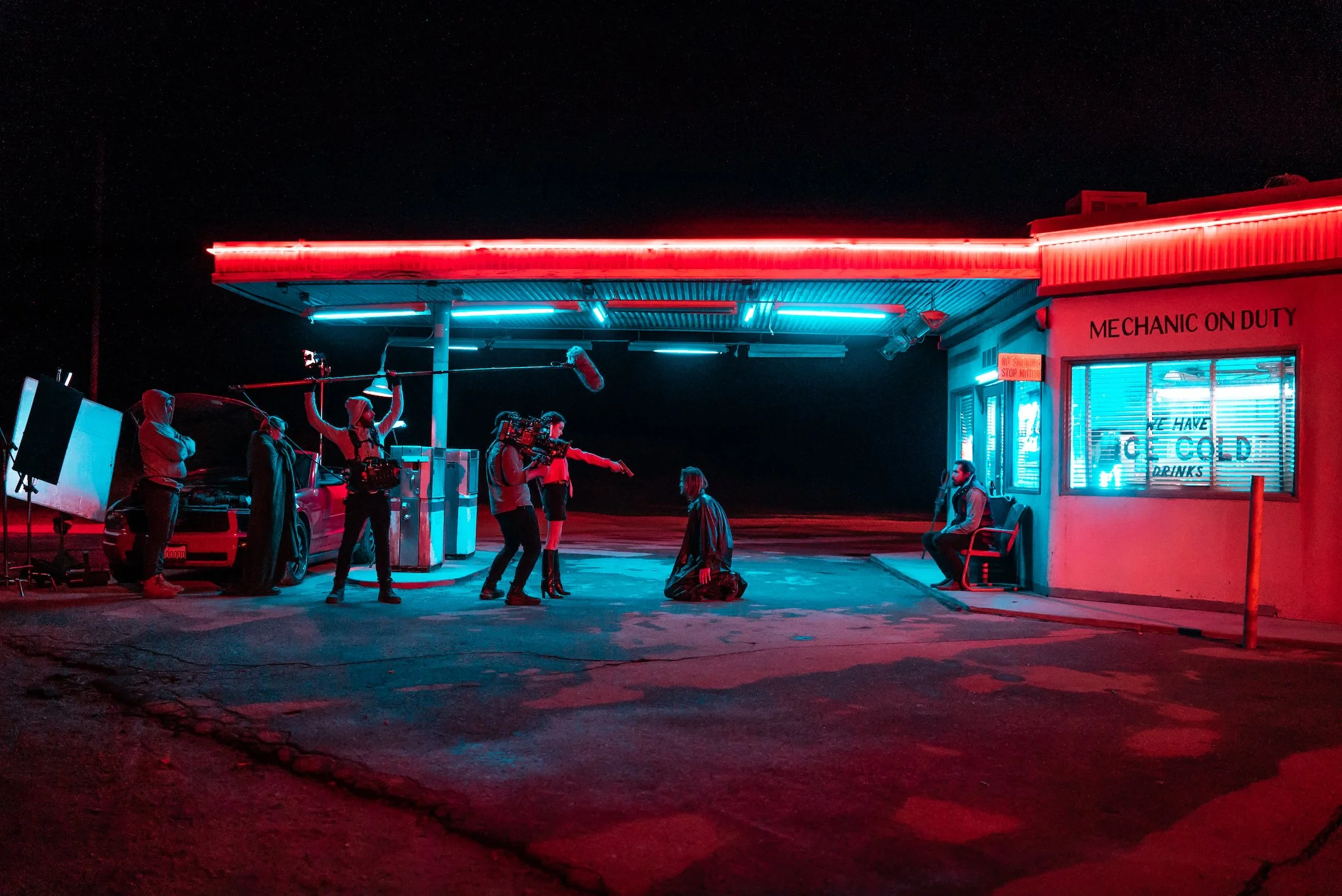
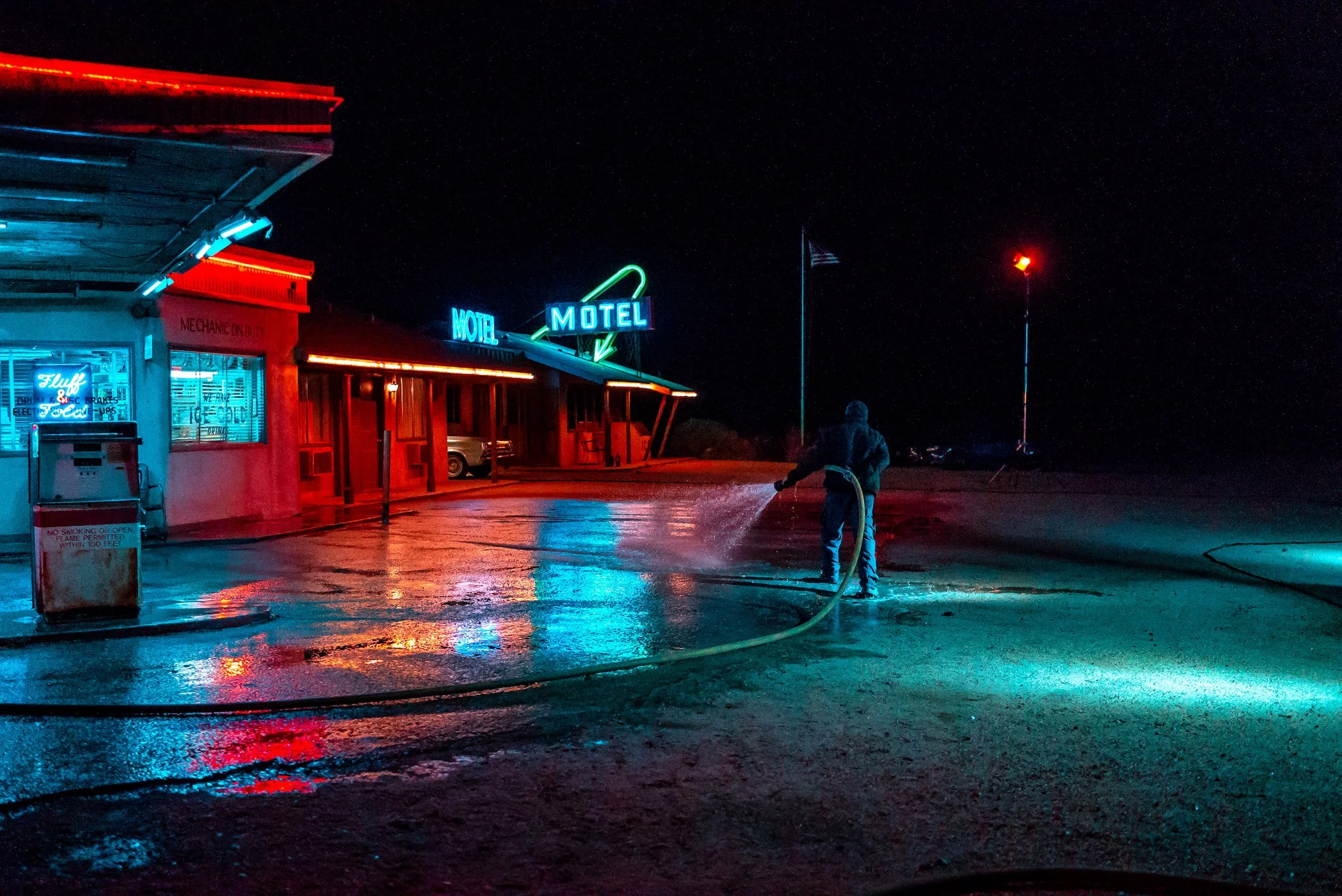
The usual headaches: time, budget, resources and, of course, the unexpected. Let’s start with time. This was a one-day shoot. The location was more than half our budget and the availability of our cast meant we could only get them and all the other components we needed together for a single night. Murphy’s Law seemingly loves short-film productions, evidenced by the fact that very night turned out to be the shortest night of the year — effectively giving us roughly 8hrs of darkness to get everything. Thankfully I had a small but perfectly formed crew who were willing to hustle for the cause. Special props goes to our incredible DP, Chris Saul, who was able to light the set in a way that gave our actors some flexibility in the blocking without compromising the very particular look we wanted. Now for the unexpected… we had initially planned on using a real snake, then augmenting it with VFX. A friend of the producer was good enough to bring their pet python to set, but it ended up being too cold in the desert night so the snake had to go home and we shot without a live reference in spite of all our planning. Luckily we had assembled an incredible VFX team, headed by Fiona Campbell-Westgate who at the time was working on Avatar 2. That was both a huge blessing and challenge because, naturally, we had to be patient given her current commitments — especially as she was rendering her awesome skills for the love of it. She brought in VFX artists Stephen Cunnane and Ryan Wieber, who combined to create the snake, and then Chris Wells did the burning cityscape. Due to this being mostly favors — coupled with the onset of the pandemic — it was almost a year from the date we shot the short to having a fully finished version. But that's shorts, I guess.

Tell us about the journey of getting your film to audiences. Festival Circuit vs Online Release with Alter, the highs and lows of both.
Well, as we completed our film in the height of Covid, our first festival was supposed to be Fantastic Fest… until it got cancelled. After that we had to decide whether to wait until the following year and try for Sundance (the following January), or accept the invites we had from a few other festivals we loved. At the time no one knew how long the pandemic was going to last and whether other festivals would cancel too, so we took the offer to do a “virtual premiere” at Warsaw International Film Festival, and we’ve played at over 80 festivals since. One of those was HollyShorts, where the film was scouted by Alter. Amazingly, we were on the festival circuit for a whole year before we got to see the film in a physical theater. That honor went to Dances With Films, where we played in the Midnight Block and went on to win the Audience Award. That was definitely a high, seeing the film in LA, in a packed house at the Chinese Theatre where I had attended my first ever screening in the US. We also recently got invited by Clermont-Ferrand Film Festival in France to be part of a special screening called Bloody Girls on Friday 9 February at 9.30pm in their main Cocteau theater (1,300 seats!) so that will be a nice way to close out our festival run for the short.

What advice or hacks would you give to other short filmmakers?
Work within your resources. So many of my friends or other filmmakers who reach out for advice send me their 30 page script with 20 locations and 10 characters. By all means, if the story calls for it and you have the resources to pull it off, go for it. But if not, figure out what you can get your hands on and build your story around that. A short is ultimately a means to an end, so start with your means. Sure, there are exceptions, but the most important thing is that your short is well-executed. It needs to look and sound amazing, and it needs to have engaging performances. If it doesn’t, it’s going to be very hard to stand out amongst the ever-growing number of high-profile shorts being made each year. This is especially true for US-based filmmakers, as we don’t have access to government-funded film funds or nationalized programs like most of Europe and the UK. For us we either have to self-fund it or find private investment. So figure out what you want to say, then — before you do anything — figure out what you can realistically gather to say it. In my experience, short filmmaking is making the dream and reality meet somewhere in the middle, and turning that crossing-point into something more magical than its compromises. I always say it’s better to do a simple idea greatly than a great idea simply. At least that's been my experience.


What do you think is the biggest challenge short filmmakers face trying to break into the industry?
Breaking into any industry that’s already over-saturated is tough, but it’s also an opportunity to stand out from the norms. The advice I always give everyone is make the movie you’ve always wanted to see. Don’t chase trends, like making a horror movie because you think it’ll be "easier" to sell or turn into a feature. Make a horror movie because you love horror or that particular idea. The only way anything is going to turn out great is if you love it, so start there and the rest follows. The best advice I ever received in life was “Don’t chase carrots, just be a good rabbit.” In other words, focus on creating good stuff, on constantly improving your craft, and in time the carrots will come to you.


You're developing Snake Dick into a feature. How's that going?
Still going! I just got done with the feature script, which took a while as there’s a world-building component to it with potentials for sequels, etc, and I wanted it to be super tight. I also recently become a father to a beautiful baby daughter and, knowing she was on the way, was curious how that experience might affect my approach to the material. That may sound strange, but given the subject matter I had a feeling fatherhood would give me a new and better-informed perspective with a little girl in my life. Sure enough, her being in the world definitely altered my outlook on a few things and sharpened my focus on others — especially knowing she would one day likely watch the film. Now the script is complete and the strike is over, I’m excited to get it out there…
Any film recommendations that we should add to our watchlist?
Kelsey Bollig's upcoming short Inked is incredible and is going to clean up on the horror festivals circuit. Eric Palperth’s and Tyler March’s animated short Sucks To Be The Moon is a barrel of laughs and creativity. Matthew Berg’s Marked is a brilliant example of the “two-person-in-a-room” short done to perfection. Also, everyone needs to see my good friend Graham Denman’s micro-budget feature, Greenlight, which he made for a measly 50k! Easily the best feature film of its kind at that budget-level. And finally, I need to recommend the 2001 feature, Intacto, starring the late great Max Von Sydow. Barely anyone I know has seen it, which is a travesty as it’s one of the best and most original films of the early 2000's.
Apply to get your short selected as our Weekly Pick

The Foul
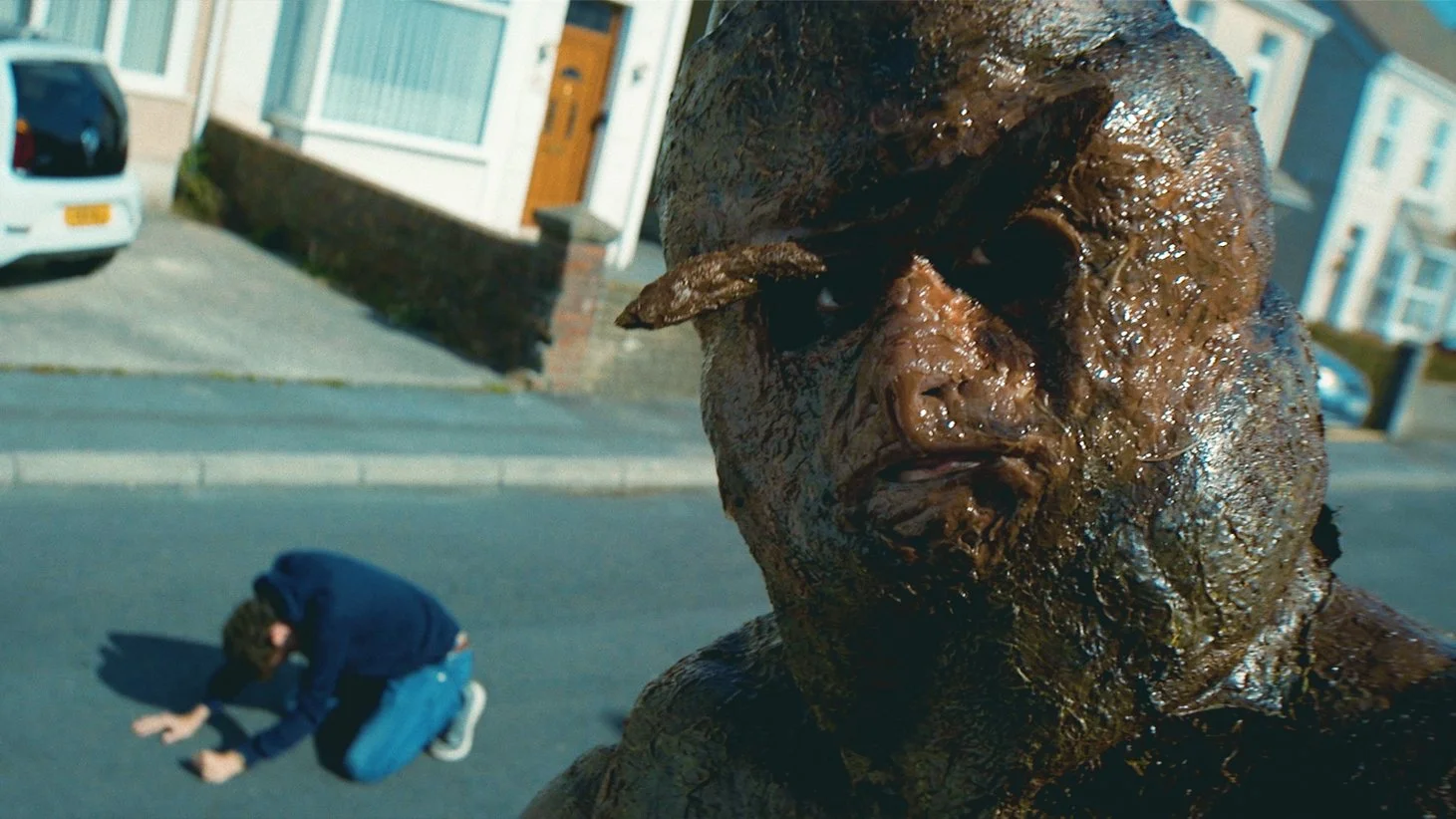
When a litterer doesn't pick up after his dog, he's taught a valuable lesson from a giant poo.
Written, directed, PRODUCED & starring James Button
When a litterer doesn't pick up after his dog, he's taught a valuable lesson from a giant poo. This short horror comedy was commissioned as a public information corporate video (but was deemed too gross by the council!)
ABOUT THE FILM
The Foul started off as a commission from a council for a PSA about picking up after your dog. What was supposed to be interviews about picking up dog poo, turned into filmmaker James Button dressing as a giant poo. He delivered a short film deemed “too disgusting!” for his client, however, not many BAFTA/BIFA and world renowned festivals didn’t feel the same way.
The film played at over 30 festivals, including our Kino London Short Film Festival. Other festival highlights include BAFTA/BIFA qualifiers such as the London Short Film Festival, Aesthetica Film Festival, Carmarthen Bay Film Festival, Short Com International Comedy Film Festival, and Norwich Film Festival. International festival highlights include FilmQuest, Screamfest® Horror Film Festival, MotelX Lisbon International Horror Film Festival, Santa Fe International Film Festival, Monster Fest, Rome International Film Festival, Atlanta Horror Film Festival.
It was nominated for 'Best Costume Design', 'Best Welsh Short Film' at the 2021 British Short Film Awards, and won Best Monster Short Film at the Adbhooture Film Festival 2021, Best Editing & Best Special Make-up at the Indie Short Fest, Best Costume at the Horror Film Award New York, and Best Dark Comedy Short at IndieX Film Fest.
ABOUT THE FILMmaker
James Button is a double BAFTA Cymru-nominated writer/director of 23 short films, all gaining official selections and screenings. Mostly comedies, they've nabbed 60 awards at international film festivals and competitions. James has had fun making fun films for fun for the past 10 years alongside working full-time in commercial work. In 2024, Jame is focussing on longer-form projects with two comedy feature scripts in development- and a brand new comedy short in post-production.
READ OUR INTERVIEW WITH JAMES
Welcome back to our Short of the Week series. What have you been up to since we featured your last short "RoButler”?
Hehe! No good at all. I literally just got back from another (mad) comedy horror short film shoot that my friend Paul Marke (always typo-ed to Pual*) cooked up over the past few months! Mainly out of the frustration of a year of trying to get funding for a level-up project and that build of a creative juices had to go somewhere, otherwise I’d go crazy…so we made a crazy new film as a cure. Can’t reveal much about it just yet as it is a spoiler-centric title but will be releasing a teaser in the very near future so look out for that…it’s going to make The Foul look tame. Also have a few short scripts on the boil which I hope to continue to hunt for some funding for because they are too fun not to make.
Can you tell us about the genesis of The Foul?
To an extent I can! But won’t name any names! As it is a bit of a funny story… It started off as a commission from a council (tragically the first job that came my way after lockdown!) and it was to try to encourage people to pick up after their dogs. Was supposed to be interviews about how gross dog poo is but instead I risked pitching me making a ‘memorable’ comedy horror instead. After some convincing…I put 100% of the budget into getting a poo costume for myself created. I found an incredible talented SFX master called Jayne Hyman who created something beyond my wildest dreams…or nightmares. Just a few (skilled!) friends of mine then came together and blasted this film out in a few fun days…only for the client to deem it “too disgusting!”. But obviously I knew this was too important a message to keep on a hard-drive so nobly sent it out to film festivals to get the word out there instead. Ended up traveling to MotelX in Portugal, FilmQuest in Utah and a whole bunch of other surprisingly forgiving film festivals who literally screened dog shit. So yeah, pick up after your dogs…or else.
Any interesting/funny stories about filming in public dressed as a giant poo?
So…we filmed in three locations. The first was an alley not to far from my mum’s house (a notorious spot for fouling)- and right next to a wall where a resident had graffitied his own wall saying: “if you don’t pick up after your dog you twats I will fucking kill you”. Which seemed rather apt. This slightly scary individual came out during the shoot (I was doing a lot of screeching after all) but surprisingly instead of killing what was surely(?) the largest poo he’d ever seen, approved of our endeavors. Phew. So after giving us a rant (which we should have recorded), let us get back to it. The second location was my sister’s street, where she had JUST bought her house…and I ended up meeting all her (concerned) neighbours before she did. “Hi there, I’m Laura’s brother. Just making a film for the council. Sorry about the noise!”. Then the third location was a random airbnb we chose for the nice decor for the nightmare scene where Arran Fear (perfect name for the role) wakes up in a bed of shit. To this day I still pray that the lovely AirBnb host never comes across the film and recognises his lovely bed and whatever that concoction was we filled it with (can’t for the live of me remember…but seem to remember the smell of coffee, beans, carrots and syrup?). I’m sure he’ll understand we had to do what we had to do…for the message.
What were some of the main obstacles you experienced when making of The Foul and how did you overcome them?
To be honest, it was a load of fun. I think the costume struggled in thirty degree heat (of course it was the bloody hottest day of the year!), let alone me inside it…but found going method was the key there! The dripping and splashing you can see in the film coming of the glistening costume is assumed to be SFX, but can proudly say that is all me. I’ve NEVER sweat so much in my life. Jayne not only did an excellent job re-sticking the poo face prosthetics to my face but kind enough to regularly drain me. Literally cutting a little hole in my flapping hand parts and emptying it like a lil hose. Nasty. But I think the dehydration, migraine and whatever else was going on, definitely only helped my performance. The only other obstacle really was the client…as I was aware that they might not give final sign off unless we included all the key bullet points in their brief e.g. the maximum amount you can be fined in the magistrate’s court etc., so made sure to slip these in amongst the improv and manic laughter.
Tell us about the journey of getting The Foul to audiences, and what kind of reactions you got.
I still love the sound of the audiences cry out (must have attended like 10+ screenings) when that bed sheet is thrown back! I always whip out my phone because it doesn’t seem to fail to get a visceral reaction from a cinema of unsuspecting gentlefolk. However can’t claim that as good filmmaking, it’s literally just a natural reaction to a bed full of poo. But it still makes me giggle (as it did my character). So the journey from the originally intended public information film which might have gotten a few dozen views on Facebook to the accidentally commissioned horror comedy short which has now been seen at some prestigious film festivals has been quite a nice turn of events. But to be honest I think it is all worth it to be told by people (I’ve lost count) that they think of my face every time their dog does a shit.
What do you think is the biggest challenge short filmmakers face trying to break into the industry?
Oof. I won’t go off on one but I think film funding is notoriously difficult to get! Applying and forms (and all that nonsense) It is such a different skill that us creatives have to somehow learn and even then, have to just get super lucky etc. Not ever having had a decent budget (and not even knowing anyone rich and generous!) I can’t help but feel a chasm between what we’ve managed to do as a small group of creative friends dying to make more and what we could be doing if someone took a risk in one of our bonkers scripts. I think making the jump todebut feature (MY DREAM) is therefore even scarier because I’ve been guilty of exhausting myself and pushing to get ambitious small scale projects made but know that a feature is a whole different thing…it is much longer for one! But I think it is still all about still making weekend project and whatever else to keep the dream alive and the juices flowing because it can be really easy to give up hope so it’s important to remind yourself how much you love it.
What next for you?
I’m stupidly excited to have left a shoot last week with a full harddrive of bants to get editing. The bruises and aches haven’t healed yet but can’t resist diving into the edit because it was truly a fun one. (Paul and I thought, if we’re going to make something ourselves, we might as well make something no one would ever give us funding for and have some fun doing it!). So that will tide me over for now, sanity-wise. But I’ve got a fancy new comedy script, a next level one (meaning, I’m not risking me in it!) which I’m going to be seeking funding because it could just be the flagship short film I’ve been needing to showcase what we can do! RoButler and The Foul to me will always be 48 hour projects capped by film challenge restrictions (or client briefs!) so am so eager to get out there and pour some creative energy into a calling card bant.
Any film recommendations that we should add to our watchlist?
I may have copped out last time on this question when I did the RoButler interview…but here I go again because it is worth repeating… Go to film festivals! Attend as many screenings as you can, bombard your eyes with short films great and small…and soak in all that work and inspiration. Then chat about what you saw, go into detail with (trusted) friends and collaborators. What would you do different? Which ones do you wish you had made? And what went wrong with that one? (Probably too long…that is usually the answer with short films…hehe). But yeah then dive into the next festival…or Kino Open Mic night (I’m not flirting I promise). I definitely learnt more about filmmaking from the shorts I’ve binged at festivals than 3 years at ‘film school’- plus even more so from the filmmakers (now collaborators/friends!) who made them! However one word of warning…be careful at film festivals about just how honest you are! Because although honesty is always the best policy, I will never leave a cinema shouting about which ones were “nonsense” because once I was lucky enough to screen a comedy film where I play a dinosaur as a warm-up for Jurassic Park at a open-air cinema…and when my silly lil short started and there I was naked and painted green, bouncing around like a bald raptor- a complete randomer turned to me (obviously not recognising me) out of the thousands of people there and went, “what the hell is this shit?!”. To which I obviously found hilarious and said, “pff, definitely not Spielberg, that’s for sure”. But does go to show that you never know who you’re turning to at a screening! Link to that film can be found on my website jamesbuttonfilms.com along with my full portfolio (the short film I mean, not Jurassic Park). Sorry for the shameless plug. Never sure how to sign off on these things! X (Thank you Dustin- keep doing what you’re doing please and promotion us silly little filmmakers who just wanna take play seriously and call it work)
Interested in getting your work selected as Short of the Week?

The Forfeit
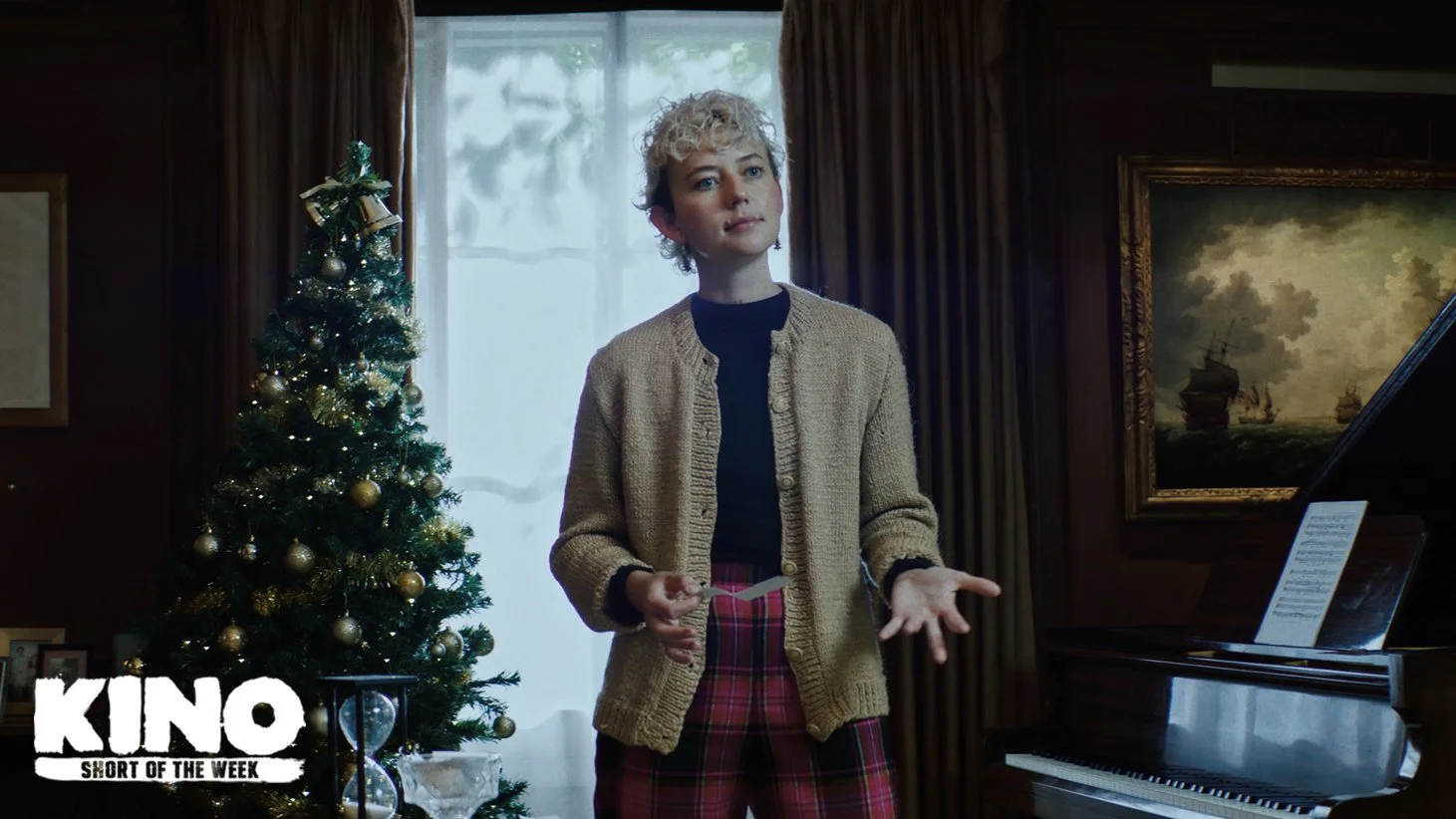
When a working-class woman is thrown into her wealthy boyfriend’s eccentric family Christmas game, she begins to uncover a dark secret in the family’s past.
Written & directed by Josie Charles and Phoebe Brooks
Produced by Lily Donnelly and Amy George
A young working-class Welsh woman meets her wealthy English boyfriend’s eccentric family for the first time on Christmas Eve.
She’s thrown straight into the family’s traditional Christmas game, and struggles to keep up with its in-jokes and strange rules. But as she improves, she begins to uncover a dark secret in the family’s past.
ABOUT THE FILM
The Forfeit won Best Screenplay and Best Score at our film festival earlier this year, as well as being nominated for Best Director, Best Cinematography, and in the Best Sponsored Short category. Other notable awards are winning Best Director (Thriller) at the London Director Awards 2023 and Best UK-Made Short at The Gogs International Short Film Festival. The film was recognised as a finalist at the 2022 British Short Film Awards in the categories of Best Director, Best Production Design, and Best Sound Design. It also received praise and nominations from London Film Week, Underwire Festival, the BIFA qualifying Beeston Film Festival and Scream Queen Film Festival. Notable festivals selections include British Shorts Berlin 2023, Final Girls Berlin Film Festival, Brighton Rocks Film Festival 2023, Bute Street Film Festival, and more.
The film was recently release on Omeleto - a direct result of their screeners seeing the film as our festival.
ABOUT THE FILMmakerS
Josie is a director from Somerset, now based in London. Her previous shorts have screened at festivals including Underwire, London Film Week & Bolton Film Festival. In 2023 she was selected for the Directors UK ‘Inspire’ scheme, to be mentored by BAFTA-winning director Tom George. Her most recent short ‘Dead Cat Film’ features Hugh Bonneville (Notting Hill) & Will Gao (Heartstopper). www.josiecharles.com
Phoebe Brooks has directed short films, music videos, and commercials for global brands and charities, including Formula 1, Tinder, Samaritans and the NSPCC. Her short films have won multiple awards at international festivals, and she was recently selected as part of the BFI Flare x BAFTA Mentoring scheme for 2023. She is currently developing her debut feature. www.pbrooks501.com
READ OUR INTERVIEW WITH Josie & Phoebe
Welcome to our Short of the Week series. Can you tell us a little bit about yourself/yourselves and your filmmaking backgrounds?
PB: I made terrible videos with my mum’s camcorder from age 11. Like, really bad. And I just kept doing that and never really decided to do anything else. I’m often like - why did I let an 11 year old decide what my career would be? But it’s too late now.
JC: I originally trained as an actor, and my first short film was meant to be good showreel material - I was just co-writing and acting. But my co-writer promoted me to co-director when it was clear I would need to have a say in all aspects of it… and I haven’t looked back!
Tell us about the genesis of The Forfeit. You also co-wrote the script. What's your process for developing and writing together?
JC: Phoebe and I both come from families who love games and are very competitive about them.
PB: This film literally came about because me and Josie got too aggressively competitive at a party playing this game, and we realised no one else in the room cared at all, and it made us want to make a film about how weird we were.
What were some of the main obstacles you experienced when making The Forfeit and how did you overcome them?
PB: The pandemic was the big one. We shot this at the start of one of the lockdowns, and it was the most stressful thing that’s ever happened to me.
JC: Yeah we realised that with 8 principal cast members and a number of locations we’d designed a very impractical shoot for ourselves under COVID regulations.
How did your process work as co-directors? Did you delegate and each take aspects of directing duties, or did you work as a unified team on all aspects?
JC: I think because we’d co-written the script we were always pretty aligned on the characters and performances - we knew who those people were and how each moment should feel.
PB: I completely agree with what Josie said.
Tell us about the journey of getting your film to audiences.
PB: We submitted to a load of festivals, and got into some! It’s been an absolute joy travelling to different countries and seeing it with so many different kinds of audiences.
JC: Yeah it was your classic cocktail of some lovely acceptances with many other rejections. But we’ve been really lucky with the selections we’ve had, and because it’s a comedy there is nothing like hearing the audience’s reaction in person!
What do you think is the biggest challenge short filmmakers face in the early stages of their career when trying to break into the industry?
PB: It’s really, really hard. I think making shorts is so soul crushing. There’s so little funding, and so few opportunities.
JC: Funding is the big one. Even the funding that is available is tied up in long application processes, which feels a bit antithetical to the creative process. But I don’t think funding is ever easy to come by (unless you’re literally Steven Spielberg).
What advice or hacks would you give to other short filmmakers?
JC: Because funding is limited, I always tell people to design shorts based on the resources they have. Like, if you can’t afford multiple locations, write something in one location, ideally a place you have access to for free. If you know amazing actors who will help you out, write them a part! One of my most recent shorts is all shot on camcorder because the writer/performer told me she wanted to make something for under £500.
PB: In terms of hacks… find people who will help you do it. You can’t do this alone - The Forfeit was only possible because of all the amazing people who gave us their time and talents to make it happen. Also work with Josie Charles, she’s pretty good.
Any film recommendations that we should add to our watchlist?
PB: I just watched Valerie and her Week of Wonders. Completely batshit Czech film from the ‘70s. Zero plot, just vampires and vibes. Incredible film.
JC: I’m so basic with films, I don’t have a good niche recommendations like Phoebe.
PB: Harsh but fair.
Interested in getting your work selected as Short of the Week?

Ooze
Mysterious goo drips from an awkward young man’s luggage while visiting his overbearing parents for dinner
Written & Directed by MATTHEW ROLLINS
Produced by MATTHEW ROLLINS & BEN TUROK
Mysterious goo drips from an awkward young man’s luggage while visiting his overbearing parents for dinner.
ABOUT THE FILM
Ooze premiered at the film at Ridgewood Off-Kilter Film Festival in Queens, NY. This is it’s online premiere.
ABOUT THE FILMmaker
Matthew Rollins is a Brooklyn-based filmmaker, sound designer, and composer from Santa Barbara, CA. He is a graduate of the film program at Emerson College.
READ OUR INTERVIEW WITH MATTHEW
Welcome to our Short of the Week series. Can you tell us a little bit about yourself and your filmmaking background?
I’m Matthew Rollins and I’m a 23 year-old filmmaker and sound designer based in Brooklyn. I grew up in Santa Barbara, CA and focused mostly on making experimental electronic music and hosting a radio show at UCSB’s radio station in high school. I’ve always loved movies, but I feel like I really discovered my taste in them during my time at Emerson College. There, I’d do post-production sound and scoring for my friends’ work. Eventually, that led to me wanting to make films of my own that put an emphasis on sound design as a key player in the storytelling.
My first short, Whiskey Throttle, had no dialogue and the sound was re-created entirely after the shoot. Ooze is kind of a development on that, where we use the dialogue in a rhythmic way that ties into the whole soundscape of the film to create this unsettling atmosphere.
Tell us about the genesis of Ooze? Where did the idea come from and why did you choose to pursue this film to make?
Ooze came from the idea of wanting to make a monster movie inspired by practical effects-heavy 80s movies. Leaning into the fact that we were working with a very limited budget, it resulted in this elusive ooze. We also wanted to lean into, and exaggerate, the humor of movies like that, and the humor in family dynamics in general. This film came out of the feeling of the time when I was writing it—about to graduate college and anxious about the future, and connecting that to the fear of disappointment and distance from parents—something I know a lot of people my age go through.
What were some of the main obstacles you experienced when making of Ooze and how did you overcome them?
Ooze was a run-n-gun project, so there were little hurdles at every step of the way, but that’s expected. For example, having to get all the shots we need before getting kicked out of the train station or having to keep an eye out for the train conductor while pouring a vat of ooze onto Gus, our actor. Otherwise, it was fairly smooth.


Ooze is a bit abstract, but very visceral. Does the symbolism in the film hold a specific meaning for you, or did you leave it intentionally open-ended to allow audiences to draw their own interpretations?
The ooze, to me, is this growing, living material (or monster) that holds our guilt, anxieties, pressures, etc. Everything. Something that we all have to control, maintain, and deal with. The film is a cautionary tale about a young man who could not control his ooze. He gets lost in the ooze. I did intentionally keep it abstract, though, just like the very nature of the ooze. Everybody’s got their own ooze with a different recipe, a different concoction of anxieties and pressures. I hope this film gives people a chance to reflect on their personal ooze.
Tell us about the journey of getting your film to audiences.
This is the journey! I’m on it! I’m submitting the film to everyone that might want it. It’s a weird film so it’s not going to be for everyone. Nonetheless, it’s fun to cast a wide net and see what happens. Hopefully some people resonate with it.
What advice or hacks would you give to other short filmmakers?
I’m still figuring out what I’m doing! One thing I’d say is that when you have an idea that you’re excited about, get some people on board and get the ball rolling. It’s a lot easier to get it done when other people are relying on you.
What do you think is the biggest challenge short filmmakers face trying to break into the industry?
It’s purely an uphill battle, but it’s a pretty fun one. It seems like people need validation to like stuff a lot of the time. More people will pay attention to your film if names they know are attached to it. So maybe one of the most challenging things, for me at least, is that initial push.
Any film recommendations that we should add to our watchlist?
As it relates to Ooze, I’d definitely say Videodrome (and most other Cronenberg films) is at the top of the list. The comedy side of the film can be traced back to the feeling of flipping to Adult Swim on accident as a young child—things like Tim & Eric. Their movie, Tim & Eric’s Billion Dollar Movie, is an essential watch. The last one I’d say is Eraserhead. The energy and use of sound design in that film is something I’ll always be inspired by. That inspiration was definitely put to use with Ooze.
Interested in getting your work selected as Short of the Week?

#NOFILTER
Beth, an insecure twenty-something, becomes obsessed with an insidious filter, leaving her to question real beauty.
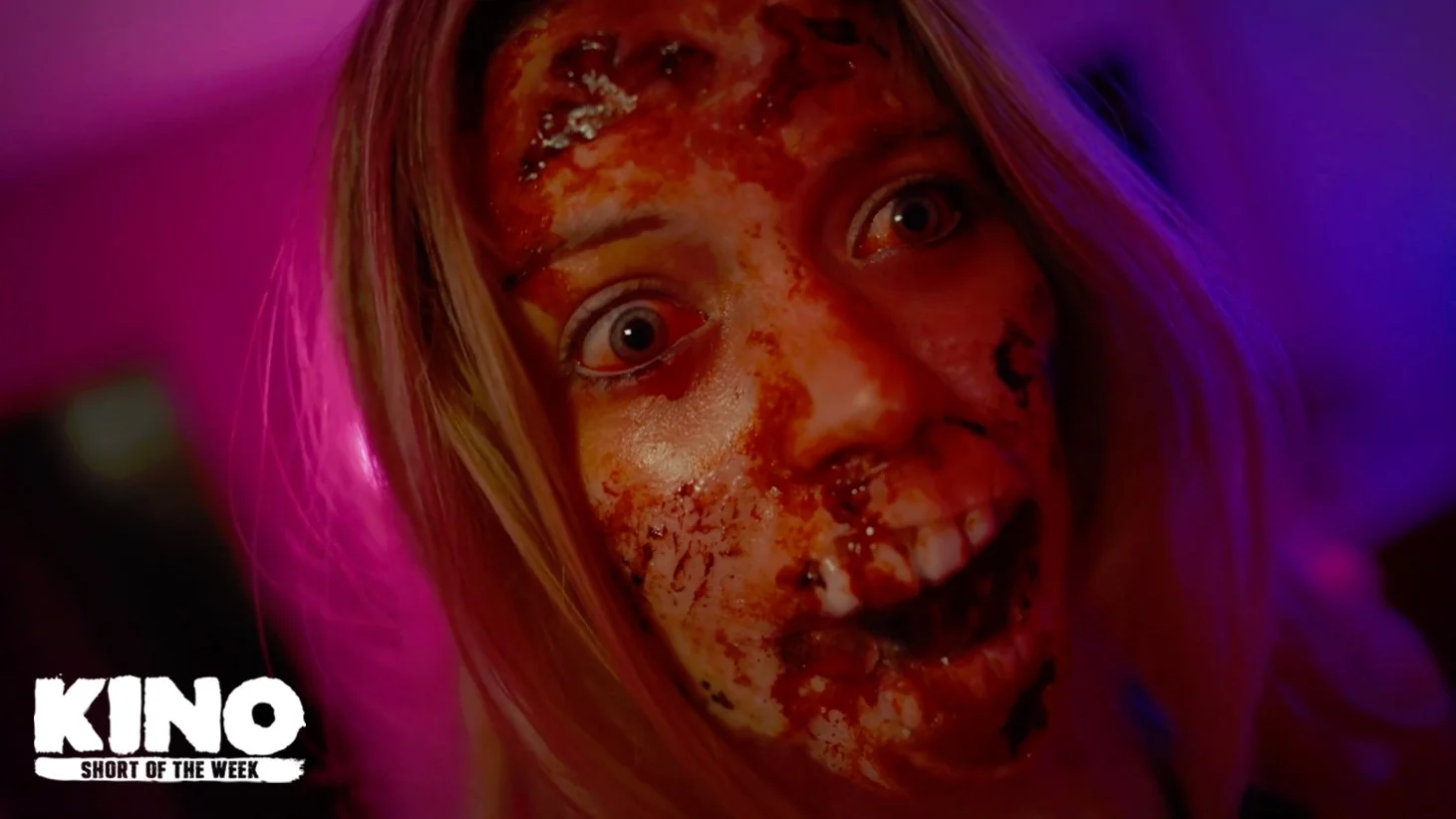
Written & Directed by Nathan Crooker
Produced by Maya Korn & Nathan Crooker
Insecure twenty-something Beth struggles with her digital self-image until her friend Micah introduces her to a transformative filter. The digital magic boosts her online presence and attracts new admirers, but the allure comes with a dark and insidious price.
ABOUT THE FILM
#NOFILTER won Best Horror Short at the 2022 edition of our film festival. Not only did we think it was a winner, but this short hit 100+ festivals & won 50+ awards including Best Horror Short at the Phoenix International Horror and Sci-fi Film Festival, Director Award for Unique Concept and Execution at Filmquest, Best Score at Horror Haus Film Festival, and a Special Jury Mention at Shockfest. Other notable Official Selections include Flickers Rhode Island, Dances with Films, Chicago International, Screamfest LA, Crystal Palace, Unrestricted View, Boston Sci-FI, Atlanta After Dark, Horror-On-Sea, and Shivers.
It was recently released online via Omeleto.
ABOUT THE FILMmaker
NATHAN CROOKER, with roles as a Producer, Director, Writer, and Actor, transitioned from commercials and music videos to specialize in horror. His recent shorts, "Playback" and "Midnight Delivery," have achieved global acclaim, with "#Nofilter" making significant strides in the festival circuit. As a producer, he masterminded the horror anthology "Isolation" and produced "Before Someone Gets Hurt," featuring Michael Welch from "Twilight."
Behind Nathan is Ghost Gang Productions, dedicated to bold content across various platforms. Ghost Gang is passionate about diverse, disruptive narratives that echo contemporary social issues, especially in horror and dark drama. With a commitment to artistic collaborations and genre innovation, Ghost Gang's essence is about disruptive and compelling storytelling.
READ OUR INTERVIEW WITH NATHAN
Welcome back to our Short of the Week series. What have you been up to since we featured your film Midnight Delivery?
Thank you for welcoming me back to the Short of the Week series! I deeply appreciate the feature of "Midnight Delivery." That film, with the incredibly talented Danielle Guldin at its helm, holds a special place in my heart. Lately, I've been immersed in writing a few features and intensively developing projects with my production company, GhostGangProductions.com We're actively seeking scripts and building collaborations with visionary filmmakers.I'm also thrilled to share that "Isolation," an anthology film I created and co-produced with the talented James P. Gannon, at the height of lockdown is now on VOD. This anthology paints a vivid picture of a pandemic-stricken world through the lens of iconic horror directors like Larry Fessenden, Bobby Roe, Keir Sewart, Alix Austin, Andrew Kasch, and Christian Pasquariello. Lastly, I'm gearing up for my debut feature film, aiming to start shooting by year-end. It's indeed shaping up to be an exhilarating year!
Tell us about the genesis of #NoFilter. What was your inspiration and decided to put it into production?
The genesis of #NoFilter is deeply rooted in the phenomena I observed during the pandemic. As isolation became the norm, I began to notice a surge in the use of digital filters amongst friends and acquaintances. Whether it was borne out of boredom or insecurities, the filter usage increased noticeably. What began as perhaps a fun, quirky way to interact online seemed to morph into a standard. Suddenly, it wasn't just about sharing a digitally enhanced photo; the filters extended to casual family dinners and regular catch-ups. This continuous, perhaps excessive, use of filters began to concern me. It wasn't just a harmless phase unique to the pandemic's isolation anymore; it appeared to evolve into an integral aspect of self-presentation. The thought of "this isn't truly you" kept lingering. What happens when you post unfiltered content? Does your perception of self-worth hinge on the number of 'likes' a digitally enhanced version of you receives? Delving deeper into this, I stumbled upon the term "Snapchat Dysmorphia". It was alarming to discover that Snapchat had to retract certain filters due to the potential dysmorphic effects they could have. But even more startling was the growing trend in Europe and the US, where plastic surgeons, who once modeled procedures after celebrities, were now being presented with filtered selfies by clients wanting to emulate their digitally altered selves. While #NoFilter is undeniably a cautionary tale, it underscores pertinent issues that society grapples with today, issues that I believe, show no sign of fading away.

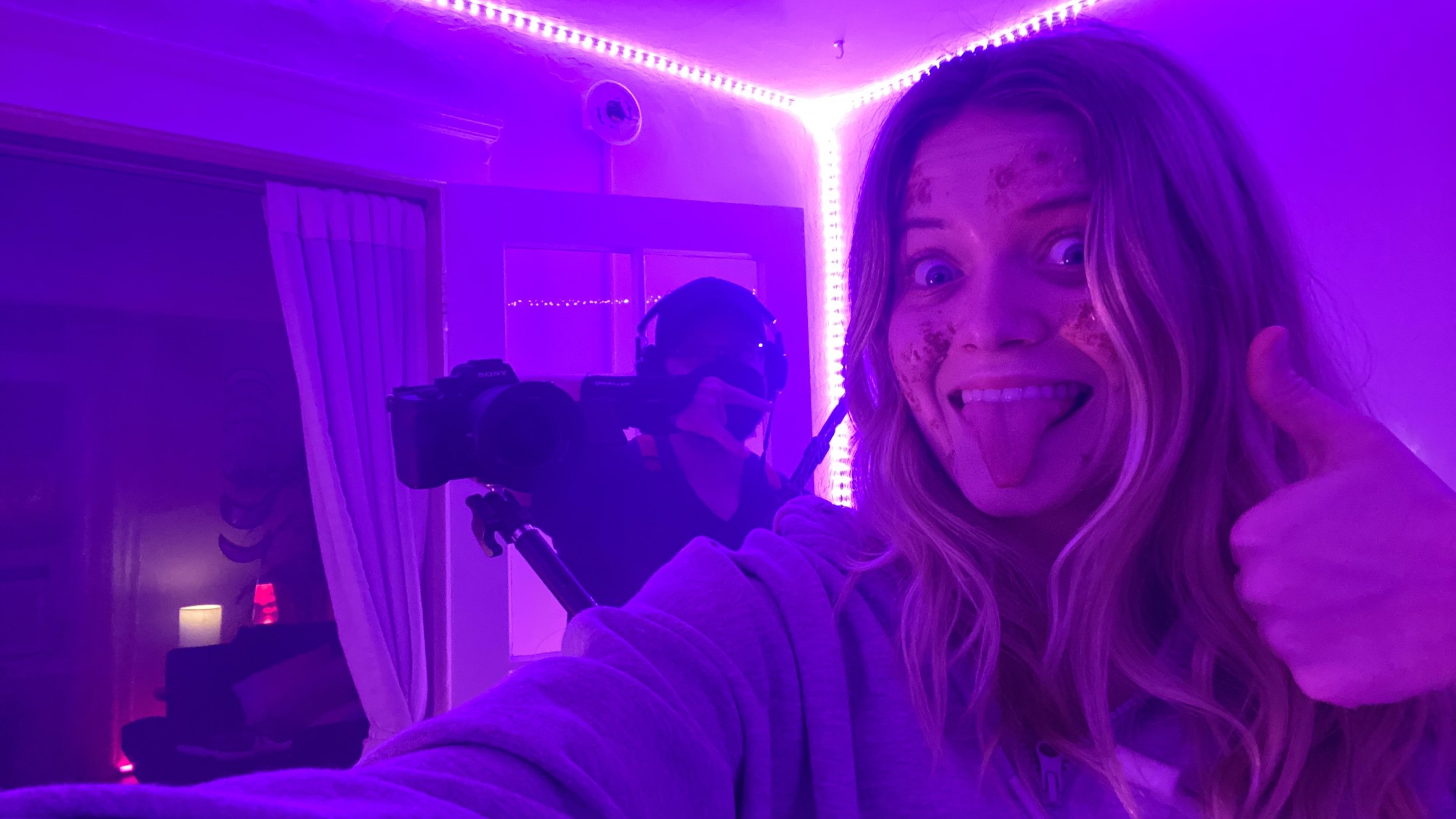

What I love about about #NoFilter is that not only is it a well crafted horror film, but it also has a lot to say. Can you talk about how you balanced the elements of social commentary with elements of horror?
Absolutely. When creating #NoFilter, it was essential for me to seamlessly blend horror with relevant social commentary. What I’ve always loved about the horror genre is it has always been a powerful medium to reflect societal fears, concerns, and critiques. So from the start story integration was key. I wanted to ensure that the social commentary was integral to the plot. Instead of just adding it as a secondary layer, it was woven into the fabric of the story. This ensured that the narrative wasn't just unnerving, but also thought-provoking. Character development was always key. Our characters are representative of various facets of society. Their experiences, reactions, and choices within the setting reflect broader societal issues, allowing the audience to both relate to them and I hope evaluate the deeper messages. I wanted incorporate subtle nuances as well. While it was tempting to be overt about our social critiques, we used subtlety to our advantage. We allowed the horror elements to serve as metaphors. I wanted to give the audience a chance to engage and interpret the film on multiple levels, depending on their own experiences and perspectives. In the filmmaking process I love sound design and the use of audio cues. The sound design done by Andrew Smetek, played a pivotal role. By juxtaposing certain sounds with key moments, we were able to accentuate the underlying themes without detracting from the suspense and terror. Ultimately you need to respect the genre. At its very essence, #NoFilter is a poignant drama about a young woman grappling with deep-seated feelings of inadequacy and pain. While the film is undeniably steeped in horror, every narrative twist and social commentary was carefully woven in to enhance the story's dramatic undertones, rather than overshadow them. My primary mission was to deliver a thrilling cinematic experience, but it was equally vital to leave the audience introspective and contemplative about the broader implications presented.The fusion of drama and horror enabled us to craft a tale that was both deeply unsettling and profoundly resonant. In the realm of horror, there's a unique potential to make viewers confront and reflect upon uncomfortable truths. With #NoFilter, our ambition was to harness this potential, using it as a vessel to spotlight critical societal concerns.
What were some of the main obstacles you experienced when making #NoFilter and how did you overcome them?
Creating #NoFilter presented a myriad of challenges, but time undoubtedly stood out as the primary one. My vision for the film encompassed an extensive range of shots, each tailored to make the cinematic world feel not just immersive, but thrillingly dynamic. I aimed for the film's pace and flow to emulate the restless energy of a doom scroller, constantly moving and capturing the audience's attention. A significant credit for this achievement goes to my director of photography, Jason Banker. His expertise was pivotal in translating my vision to the screen. It's one thing to envision a story, but another to have an exceptional cinematographer who understands the nuances of storytelling. Jason's innate ability to capture the essence of a scene, coupled with his technical prowess, added layers of depth and dynamism to #NoFilter. His collaboration was instrumental in ensuring that every frame not only looked visually stunning but also narrated a part of the story, driving the narrative forward. Jason is also a director, who’s done some two incredible horror features that are must see, the cult hit Toad Road and Felt. Back to our story, both Jason and I were keen on achieving unique shots that not only looked visually compelling but also significantly advanced the narrative. This often translated to numerous takes to capture a scene just right, leading to extended hours on set. However, the dedication of our cast played a crucial role in helping us manage time. Our lead Kelly Lamor Wilson, Misha Osherovich, and Sam Bixby were nothing short of exceptional. Their ability to consistently deliver on every take, regardless of the demands of the scene, was a incredible. Their professionalism and commitment helped us save precious hours. Another significant time challenge was the intricate makeup required for Kelly. The removal process was notably lengthier than the application, eating into our tight schedule. That said, our makeup team was absolutely stellar. Their expertise and efficiency ensured that the quality of work wasn't compromised, even under time constraints. What made a considerable difference was the foresight to conduct makeup tests before the actual shoot. This pre-emptive approach allowed us to perfect the look in advance, ensuring that no time was wasted on set making adjustments. Despite these challenges, the dedication and expertise of our fantastic crew ensured that #NoFilter was realized as envisioned, and I hope delivers a visually and narratively compelling film to the viewer.


Tell us about the journey of getting your film to audiences. Midnight Delivery and Playback both had good festival runs, but #NoFilter seems to be your biggest festival hit yet. Is that fair to say? You played over 100 festivals and won more than 50 awards. What do you think is the secret to your success?
Thank you for recognizing our journey. Indeed, the path from 'Midnight Delivery' and 'Playback' to #NoFilter has been marked with both challenges and triumphs. #NoFilter, in particular, has seen remarkable success in the festival circuit, which has been wonderful. The subject of Snapchat filters and body dysmorphia is undeniably timely. Today, with the pervasive influence of social media, the issues surrounding self-image, digital alterations, and their impact on mental health are more relevant than ever. #NoFilter sought to explore these nuances, diving deep into the psychological repercussions in a horror setting. The success of the film, I believe, lies in its resonance with the zeitgeist. Audiences could see a part of their own experiences and anxieties reflected in the narrative. Couple this with a passionate team dedicated to perfecting every detail, from story to production, and we had a film that both entertained and provoked thought. Every element, from storytelling to cinematography, was meticulously crafted. We aimed for each frame to echo the aesthetic of an Instagram feed. In post-production, tools like Neat Video were utilized to eliminate noise, rendering a crisp, saturated image, emulating that quintessential 'Insta' vibrancy. Our cast and crew's dedication was unparalleled, ensuring our vision was perfectly translated on screen. Another pivotal element to the success of #NoFilter is its compelling musical composition. I'm an avid collector of horror soundtracks on vinyl, which has cultivated in me a deep appreciation for the nuances of musical storytelling. Because of this passion, I'm especially discerning when it comes to selecting music for my films. This led me to the brilliant composer, Alexander Taylor. His grasp on musical composition is truly unparalleled. Alexander doesn't just create music; he meticulously crafts auditory experiences. He understands the intricacies of timing, ensuring that each note or chord strikes at the perfect moment to elicit the desired emotion from the audience. Beyond his technical mastery, Alexander possesses an intuitive sense for the nuances of music, enabling him to create scores that breathe life into scenes, adding layers of tension, dread, or relief as needed. Working with him was an enlightening experience, and his contributions significantly elevated the atmospheric depth of the film. Go check out Alexander Taylor’s score for the film on Spotify! I also want to add that we were fortunate to be able to incorporate a song from the gifted and up-and-coming artist Cottontail. Their track "Earworm" also on Spotify isn't just thematically in sync with our film's message, but it's also irresistibly catchy and dance-worthy. It's a testament to their versatility as an artist, to be able to produce a track that resonates on such a thematic level. It is all these nuanced elements really make this film a success.
What do you think is the biggest challenge short filmmakers face trying to break into the industry?
One of the most daunting challenges that short filmmakers face when trying to break into the industry is visibility. The film landscape is vast, and ensuring that your work gets seen by the right eyes can be an uphill task. Many talented filmmakers produce incredible shorts that unfortunately go unnoticed because they lack the right platform or avenue for exposure. That’s why I feel Kino Short Films is invaluable. Your dedication to celebrating the art of short filmmaking is commendable. What I truly appreciate about you is your genuine love for cinema and your unwavering commitment to championing filmmakers. Kino offers a much-needed spotlight, ensuring that these short films don't just get seen, but that they're appreciated by audiences and industry professionals alike. I love that you don’t just provide a platform but you cultivate a community. It helps bridge the gap between emerging filmmakers and industry insiders, granting us as creators the visibility and connections we need to make our mark in the film world. Kino helps to level the playing field, allowing talent and passion to shine through. So thank you. Also budget constraints are always a challenge. Short films typically operate on limited budgets, which can restrict the quality of equipment, locations, talent, and post-production elements available to the filmmaker. You have to call in favor and in my case put on multiple hats if you want your film to excel. A real bummer after putting all the time an money into a short is you don’t really get it back. There’s no monetary ROI. It's often harder to monetize short films compared to feature-length projects. The traditional avenues of revenue for films, such as box office and distribution deals, are not as accessible or lucrative for shorts. Yet, some of us get lucky and a deal comes our way to turn our film into a feature or we find that companies who want to buy our shorts in put them into an anthology. This has happened to me numerous times with Playback and Midnight Delivery which can be seen in the anthology feature Nightmare Radio - The Night Stalker, Strange Events and Charlotte The Return. As short filmmakers reach out to these companies with your films!
Any film recommendations that we should add to our watchlist?
There are countless films I'd recommend, but since we're focusing on shorts, I'd love to highlight a few that really stand out to me. First off, Kelsey Bollig’s “The Fourth Wall” and "Kickstart My Heart" which is a must-see. Then there's Ramone Menon’s wild works "My Scary Indian Wedding" and "The Pey." Ryan Valdez’s incomparable films, "Make It Stop" and "We Got A Dog," are both amazing. The talented twin duo, Rob and Russell Summers, have created impactful pieces with "I’ll Be Back Tomorrow" and "See You On The Other Side." The pulse pounding bangers, “Retch” by Keir Siewert and “Sucker” by by Alix Austin. “Lastly, don't miss out on Christian Bachini’s bat shit crazy film “Escalation." All these filmmakers are making waves in the industry, and I'd highly recommend following them on their social media platforms. They're rising talents are worth keeping an eye on!
Interested in getting your work selected as Short of the Week?

Stuck
When Cassie's dismissive boyfriend refuses to take her home for Christmas, it looks like she's going to be stuck in her flat, in more ways than one.

Written & Directed by Hannah Nixon
Produced by Natalie Wetherall
When Cassie's dismissive boyfriend refuses to take her home for Christmas, it looks like she's going to be stuck in her flat, in more ways than one.
ABOUT THE FILM
“Stuck” played at Sunday Shorts, and this is its online premiere.
ABOUT THE FILMmaker
Hannah Nixon is a writer/director who has been hailed by theatre critic Lyn Gardner (stagedoor) as a “real talent”. She graduated from The Royal Central School of Speech and Drama with an MFA in Writing for Stage and Broadcast Media. In 2016 she produced a short play night in response to Donald Trump’s election called ‘This is happening’ which raised over $800 for Planned Parenthood. Hannah is supported by the Peggy Ramsey Foundation and The Arts Council. She previously wrote the short BARNEY which was nominated for Best Script at Underwire Festival. STUCK is her directing debut.
READ OUR INTERVIEW WITH HANNAH
Welcome to our Short of the Week series. Can you tell us a little bit about yourself and your filmmaking background?
I'm predominately a writer and STUCK is my first time directing. I did my MFA in Playwriting at Royal Central School of Speech and Drama and then off the back of that I had a short film I'd written get made called Barney. The experience of that made me realise I wanted to try directing.
Tell us about the genesis of Stuck? It's somewhat based on a personal experience, right?
Everyone thinks it's my personal experience but it's not! It happened to a friend of mine, Loretta almost 10 years ago. I remember when she posted the photo of the door on facebook and people were making jokes like, "I would have taken a bath" but I could tell from the state of the door she'd been frantic and terrified. I thought it was such a strong story about saving yourself when no one is coming to help you. I saw it as a story about female strength and almost a rebirth. When I got the chance to make a film years later I got in touch with her to ask if she'd be up for me making it and she said yes, though that was a week before Covid so it obviously had to go on hold for a couple of years.
What were some of the main obstacles you experienced when making of Stuck and how did you overcome them?
The main obstacle was finding a producer. Once Natalie agreed to be the producer, everything fell quickly into place because she's highly skilled with strong industry relationships. I think that it's a real slog to find someone who is as excited about your project as you are and who can see solutions and not just problems.
In order to demolish the door did you guys have to do a set build or did you still shoot in a real location?
We had four doors because we knew they were going to get hammered. Georgina Pragnell is a set designer who works in fashion and this was her first set that was going to be interacted with. We had three people standing behind the door helping to brace it when Michelle was kicking it. Our biggest worry was the set would wobble and ruin the effect. When we had our rough edit that was one of the main questions we asked everyone, but no one noticed a wobble so I think it held together - just.
Tell us about the journey of getting your film to audiences.
I've put Stuck in to film festivals but I think that my attitude to them has changed recently. As wonderful as it is to see your film on a big screen, I also want as many people to see it as possible and online platforms deliver that audience.
What advice or hacks would you give to other short filmmakers?
You don't need a huge amount of money to get a short made. My boyfriend used stills and a voice over and made one of the most inventive and scary shorts I've seen.
What do you think is the biggest challenge short filmmakers face trying to break into the industry?
Funding and distribution. In an ideal world short films would be played before features at the cinema so if you were into it you could watch them before a film. I think that would encourage more funding as well.
Any film recommendations that we should add to our watchlist?
I tell everyone to watch After Hours by Martin Scorsese. It's got Griffin Dunne in it (Joan's nephew), as a man who can't get home. It was made in '80s New York when SoHo was still grimy artists lofts and it's incredible to see how NYC used to be before it was cleaned up. I also love the story, it's basically another Stuck, he has to get out of the situation he's in even when everything is conspiring against him.
Interested in getting your work selected as Short of the Week?

Kill List
While carrying out his latest contract, a hitman’s demons are exposed when he comes face to face with the man who killed his brother.
Written & Directed by JAMES MILLAR
Produced by Chris Datson & Ashley Millar
Get ready for an action-packed ride with 'Kill List'! Follow a ruthless bounty hunter as he sets out to take down his latest target. This short film is a proof of concept for a larger story that will keep you hooked.
ABOUT THE FILM
Kill List Won Best Cinematography at the Midland Movies Awards. It also played at the Northampton Film Festival and the Lift Off Global Network Sessions.
ABOUT THE FILMmaker
Growing up in a movie-loving household, James Millar knew he was destined to make films. Since his first short film in college, he's made over 20 shorts and music videos, snagging a variety of awards, including one judged by Watchmen author Alan Moore.
With experience as a CG artist for major brands like O2 and Marks and Spencer, James is now head of video production at Jaguar Land Rover. But his ultimate dream is to write and direct a feature film.
READ OUR INTERVIEW WITH James
Welcome back to our Short of the Week series. What have you been up to since we featured SWINE?
Since the release of SWINE in 2021, my creative journey has been an exhilarating ride. Following the labour of love that SWINE entailed, I experienced a period of fatigue and burnout, especially while balancing a full-time role at Jaguar Land Rover and the responsibilities of family life alongside my passion projects.
However, I am thrilled to share that things are now back on track. SWINE's journey took us to some fantastic festivals where we had the pleasure of connecting with incredible individuals from the film community. The film's success was further bolstered by the recognition it received through various awards, which served as an inspiration and validation of our hard work.
As the dust settled, I dedicated my time to writing and nurturing exciting new projects. The experience with SWINE has fuelled my passion and motivated me to embark on an array of future endeavors.
With a renewed sense of enthusiasm and a vision for what lies ahead, I am eager to delve into these upcoming projects.
Tell us about the genesis of Kill List and how the project came about.
For years, I've been brewing an idea for a project called Shoe Town, named after my hometown of Northampton. This place holds a special significance as it was once a global hub for shoe manufacturing, and that legacy lives on through our football team, the Cobblers, and the enduring nickname 'Shoe Town' among the locals.
Shoe Town delves into the gritty underbelly of the town, drawing inspiration from personal experiences and the tales of others. It revolves around larger-than-life characters whose paths intertwine in unexpected ways, building up to a climactic finale.
Kill List emerged as an audacious experiment. We wanted to test the limits of our small filmmaking team, pushing the boundaries of what we could achieve without any external funding. We decided to shoot exactly what we envisioned, curious to see if compromises would hinder our artistic vision. To our delight, the outcome far exceeded our initial expectations.
It was an exhilarating journey, breathing life into our passion project, and discovering the untapped potential within our talented crew. Kill List stands as a testament to our collective dedication and creativity, proving that even with limited resources, we could craft a compelling and impactful film.


Kill List seems like it's part of a much larger story. Is this a proof of concept for a feature or just one in a series of Shoe Town short stories?
Kill List serves as an exciting glimpse into a larger narrative universe we've been developing. In our discussions, we envisioned a twofold approach: continuing to produce Shoe Town story shorts as standalone proof-of-concept projects, while ultimately aiming to bring forth a feature film set within the same universe.
Kill List, being the inaugural entry in this series of shorts, was a bold proof-of-concept experiment. It allowed us to test the waters, exploring the potential of this dark and immersive world we've created. As we move forward, we're thrilled to expand on the compelling characters and intricate storylines, paving the way for a future feature that will truly bring the Shoe Town universe to life.
Can you tell us about the world of Shoe Town?
Certainly! Welcome to the captivating realm of Shoe Town, a hyper-real, darkly comic reimagination of my hometown, Northampton. Prepare to be immersed in a world steeped in visceral crime, rampant corruption, and a multitude of sins that intertwine with its very fabric. In this twisted reflection of reality, the characters that inhabit Shoe Town serve as amplified caricatures, embodying the town's pervasive darkness in larger-than-life ways.
Within these streets, you'll encounter a colourful cast of characters whose lives intertwine amidst the chaos. Each individual represents a unique facet of the town's seedy underbelly, revealing the extremes of human nature in a way that blurs the boundaries of plausibility and amplifies the grotesque.
Shoe Town is a place where every corner hides secrets, every interaction brims with tension, and every moment pulses with a dark energy that keeps you on the edge of your seat. It's a world that challenges perceptions, provokes laughter through discomfort, and pushes the boundaries of storytelling.
Check out this awesome behind the scenes video
What were some of the main obstacles you experienced when making of Kill List and how did you overcome them?
Throughout the making of Kill List, we encountered several formidable obstacles that tested our creativity and problem-solving skills. The first challenge arose with continuity as we commenced shooting during a local fair's arrival last May. To capitalize on the golden hour lighting, we aimed to capture as much footage as possible before nightfall.
Initially, this approach worked seamlessly. However, as the week progressed, we faced sudden closures of the fair due to low attendance. In some instances, we found ourselves in the middle of a take only to have all the rides abruptly shut down. This disruption threatened our desired consistency.
To mitigate this issue, we ingeniously implemented Astera Titan tubes to light our talent. By simulating the hues emitted by the rides, we could seamlessly match the lighting and maintain visual continuity when the fair abruptly closed.
Given that Kill List was a proof-of-concept project, we embarked with a loose idea of what we wanted to capture. Our vision truly took shape as we pieced together the footage during post-production. Unfortunately, this coincided with the fair's final week, resulting in its departure and leaving us in a bind, in need of additional footage.
To overcome this setback, we actively tracked the fair's movements through social media. As it relocated to different locations, we strategically shot in each new setting. For instance, the scenes featuring the talent walking around were captured in the initial location, while the drone shots were taken in a completely new location where the fair had relocated. We repeated this process for a total of three different fairgrounds to obtain all the necessary footage.
Despite these challenges, our resourcefulness and adaptability enabled us to triumph over unexpected hurdles. We emerged with a cohesive and visually stunning short film, Kill List, that captures the essence of our original vision.
Awesome location! How did you go about securing that or did you pull it off guerilla style?
Thank you! The truth is, securing the location was mostly a guerrilla-style endeavour. One evening, while visiting the fair with friends and family, I was struck by the incredible atmosphere and realized it would be the perfect setting for a shoot. Inspired by this revelation, I quickly formulated a rough plan that aligned with the Shoe Town concept, and we took the plunge!
During the shoot, we did encounter fair workers who expressed curiosity about our project. Fortunately, their inquiries were never derogatory; instead, they showed genuine interest and excitement about us shooting something in their workplace.
Embracing the guerrilla-style approach allowed us to capture the essence of the fair authentically and without constraints. It added an element of spontaneity and adventure to the process, enhancing the overall experience and resulting in some truly remarkable footage.
Tell us about the journey of getting your film to audiences.
The journey of bringing our film to audiences has been nothing short of exhilarating. Like every project we've undertaken in the past, our approach has always been to harness the power of social media and expand our reach. It can sometimes feel like an uphill battle, but through incredible platforms like yours and the support of remarkable film festivals, we've been able to ensure that the right people discover and appreciate our work.
With this film, we took a unique approach that added a new layer of excitement. We collaborated with a local musician, the sensational FFSYTHO, and incorporated her electrifying track, "Bop Through your manor," as the opening music of the film. Being a literal local legend and boasting a devoted fan base, it made perfect sense to infuse her high-energy track into our cinematic creation. The result was a seamless fusion of music and visuals, elevating the overall cinematic quality of the film to new heights.
This collaboration was just the beginning of our exciting journey together. We have plans to reciprocate the creative energy by working with FFSYTHO on one of her upcoming projects. It's a testament to the power of collaboration and mutual support within the artistic community.
We are grateful for the platforms and partnerships that have allowed us to connect with audiences who appreciate our work. It is through these meaningful connections that our film finds its way into the hearts and minds of those who truly resonate with it.
What do you think is the biggest challenge short filmmakers face trying to break into the industry?
Undeniably, one of the biggest challenges facing short filmmakers breaking into the industry lies in making a significant impact within an already vast and competitive market. With the rise of short-form videos on platforms like TikTok and Instagram Reels, capturing audiences' attention has become increasingly challenging. People's attention spans have shortened, and the patience to watch content exceeding a minute online has diminished compared to the past.
Countless successful individuals in the industry have emphasized the importance of not solely relying on short films as a means to break through. Instead, they suggest using short films as a platform to showcase one's capabilities and seize opportunities to secure talented actors, crew members, and funding. The prevailing advice has been to leverage these short films as stepping stones toward embarking on ambitious feature film projects.
Navigating this landscape requires strategic thinking, adaptability, and the willingness to embrace change. As short filmmakers, we must find innovative ways to captivate audiences, while simultaneously utilizing our short films as powerful tools to demonstrate our vision, talents, and potential. By leveraging these opportunities effectively, we can build the necessary foundation to make a lasting impact within the industry.
Any film recommendations that we should add to our watchlist?
Something I watched recently was a short film called Lay Me by the Shore by David Findlay which was a Vimeo staff pick and It just got me! I loved it, also another short film I loved recently was Look at Me by Sally Potter starring Chris Rock and Javier Bardem and again it was just great! Also, the latest season of ‘Love Death and Robots’ on Netflix is inspiring! Feature film wise the new Spiderverse movie was epic! And I randomly watched ‘Wheelman’ on Netflix starring Frank Grillo from 2017 and I thought it was a cool concept kind of like DRIVE if he never left the car. Also, Guy Ritchie's new film on Amazon called Covenant was really cool.
Interested in getting your work selected as Short of the Week?

Mama's Watching
A young mother has to fend off the unwanted advances of her boss, triggering the memories of a traumatic childhood event involving a monstrous figure called Mama.
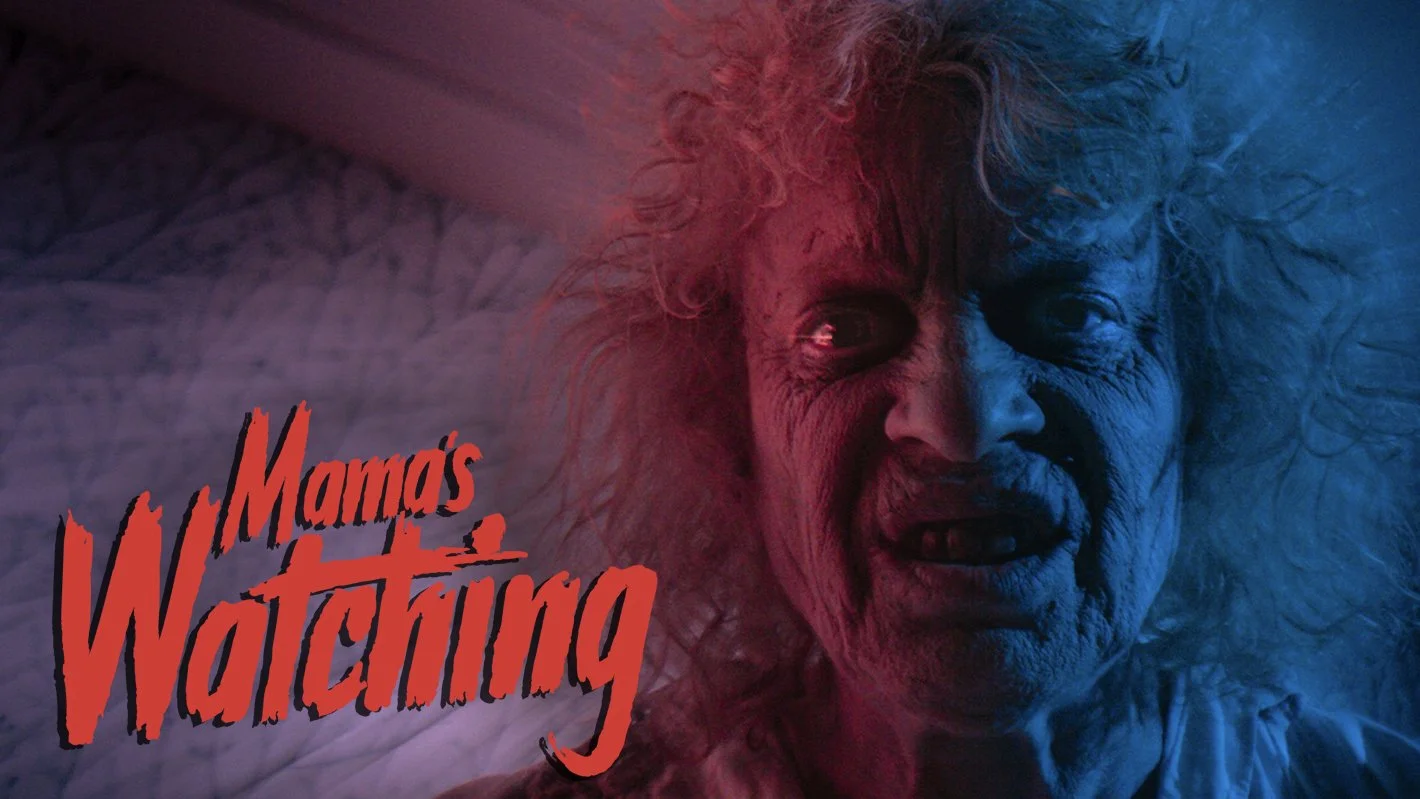
Directed by Dustin Curtis Murphy
Written by Rose Muirhead
Produced by Alasdair C. Melrose
On her first business trip away after the birth of her child, a young mother has to fend off the unwanted advances of her boss, triggering the memories of a traumatic childhood event involving a monstrous figure called Mama.
ABOUT THE FILM
Mama’s Watching is a Kino Original co-production with Dutch London Pictures, founded by Alasdair C. Melrose. Production on the film took place in 2019, and it first hit the festival circuit in 2022 playing at the Wreak Havoc Horror Film Festival (where it was nominated for Best Short, Best Foreign Film, Best Actress, & Best Director), the Atlanta Horror Film Festival, HorrorHaus Film Festival, among others. It was also named a Semi-Finalist at the Oscar qualifying Flicker’s Rode Island Film Festival. Awards for Mama’s Watching include: second place in the AudPop Horror Film Challenge, Best Screenplay at the Monkey Bread Tree Film Awards, and two awards for Bets Sound from Echonation Audio & Film Festival and the Wolverhampton Film Festival.
ABOUT THE FILMMAKERS
Dustin is no stranger to the Kino community. He is an award-winning writer, director, and producer creating work at the crossroads of social impact and commercial crowd-pleasers. His work focuses on character driven narratives with relevant social themes and tightly structured plots, often working in blended genre. Loves a good twist. Dustin has produced 2 web-series, 1 feature film, and 9 short films that have been recognized by Academy Award, BAFTA, and BIFA qualifying film festivals. His feature film debut - COYOTE - a dystopian sci-fi starring Therica Wilson-Read (Netflix's The Witcher), Borislava Stratieva (Luther: The Fallen Sun), Ailish Symons, (The Widow) and BIFA Winner Ruhtxjiaïh Bèllènéa (The Last Tree) - is on the festival circuit in the UK and getting a digital release in North America from June 20th, 2023.
Rose, a Yorkshire born actress, began acting at a young age and was involved with northern based productions such a Waterloo Road (2007-2008) before moving to Manchester for formal studies. In 2013 Rose took up a place at the International School of Screen Acting based in Three Mills Studios. Since graduating Rose has taken on many roles, most notably Jess in Book of Monsters (2018). Rose has always had a keen interest in writing and developed Mama's Watching as a concept in the winter of 2018. She continues to write and is working on a feature length dysoptian triptych which further explores the darker side of gender power dynamics.
Alasdair is a London-born producer and filmmaker. He got his start as a producer on Benjamin Rider’s indie feature Suburban Coffin (2018) then founded Dutch London Pictures, producing Dona & Vixen (2020), Mama’s Watching (2022) and Le Bebe Noir (2023). In 2022 he produced Holly de Jong’s TBA sophomore short and was associate producer on Dustin Curtis Murphy’s debut feature Coyote.
READ OUR INTERVIEW WITH DUSTIN
What have you been up to since we featured your last short film “The Last Confession”?
During my last interview I was talking about being in post-production on my debut feature film “Coyote”, and I’m now happy to say that the film has not only been completed, but also released!
Coyote premiered at the Phoenix Film Festival in March 2023. It was a great experience! PFF gives all films three screenings over the course of a week and a half. We were able to pick up buzz with each screening and our last one even sold out. While the festival wasn’t on my radar previously, our festival strategist put it on our list, and I’m glad they did. PFF gets some industry attention and we walked away with an offer from a distributor. We were already in talks with another distributor, so ultimately we decided to go another route, but it was encouraging to have multiple offers on the table - 5 in total. The film is getting a digital and DVD release in North America on June 20th, and we’re currently looking to expand to more territories throughout the year.
In the UK, Coyote also just had its UK premiere at the Romford Film Festival (again, sold out!) where we won the Audience Award for Best Feature, and coming up it’ll play at the Kingston International Film Festival on June 25th.
As if doing a feature wasn’t enough, last year I also shot a new short film ‘“Everything Is Out To Get Me.” It was my first time working on film which was a super cool experience. I’m about to head out to LA for its international premiere at Dances With Films - the largest indie festival in LA. Especially excited because they host their screenings at the historic Chinese Theatere on Hollywood Blvd.
Tell us about the genesis of Mama’s Watching and how the project came about.
I’d previously worked with Alasdair Melrose (producer of Mama’s Watching) on the first short film that I made after moving to the UK - “Nora”. In 2019, Alasdair approached me with a script called Monsters which he’d been developing with screenwriter/actress Rose Muirhead. He asked if I’d be interested in directing the project, and I was honoured to have his faith. Holly de Jong (who played Newt’s mom in Aliens) was already attached to the project as this point, so the prospective of working with her was exciting.
There was a lot of potential in the script, but I had concerns about the scope of the project when compared with the limited budget we had access to. Initially, the script had several monsters which followed the protagonist throughout her life. To pull it off, it would’e required extensive practical and visual effects, so I suggested that we pair it down to a single monstrous character, which eventually became “Mama”. That way we were able to focus all our attention on nailing one monster.
For a few months we would have regular development meetings and review subsequent drafts that Rose would churn out, and soon we found ourselves ready for production.
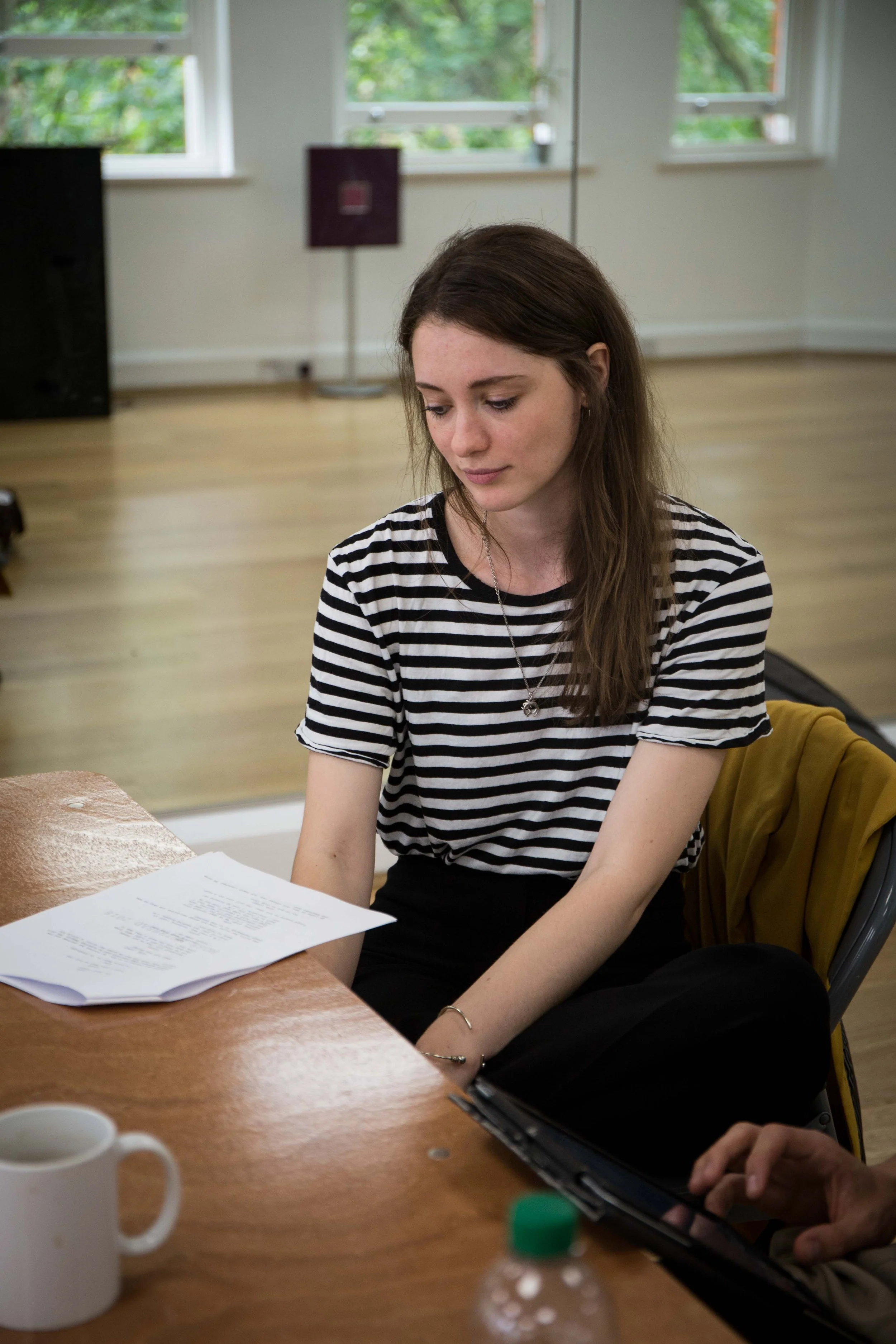
Rose Muirhead as “Liz”

Holly de Jong as “Mama”

Cast of Mama’s Watching with director and producer

Will Earle as “Lloyd”
Tell us about the development process and how you as a director provide feedback to the screenwriter.
Typically, I’m a writer/director, so when you’re coming in to actualise another writer’s vision, it’s a bit of a dance. You need to respect the initial intentions behind the script while also trying to find a personal hook into the material. You want to put your stamp on it, but you don’t want to be a bully. You need to protect the original spark that attracted you to the project in the first place.
Rose was wonderful to work with and it felt like we were really pushing the project in the same direction - which is key for a healthy collaboration. There’s nothing worse for a writer than working with a director who completely butchers their source material.
Monsters was written very “stream of consciousness” in its style and it was structured more like a feature film than a short. As a director, it was my job to search for the intensions behind what Rose put on the pages of her early drafts, so we could maintain the heart and soul of her concept while making necessary tweaks. The suggestions I made I hope elevated the project, but at the very least they made the film achievable within our budget limitations.
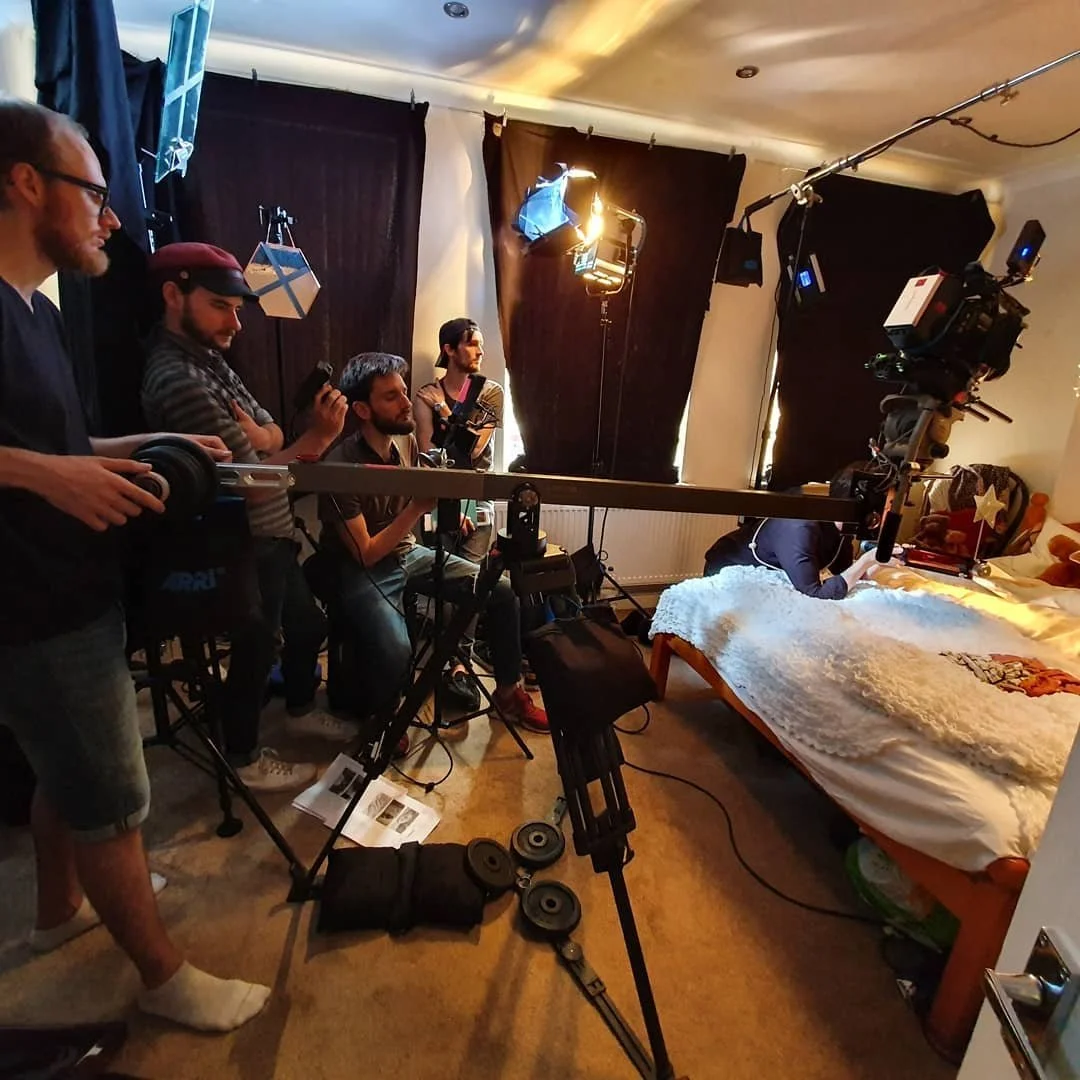

What were some of the main obstacles you experienced when making of Mama’s Watching and how did you overcome them?
The shooting draft of our script is actually quite different then the film you see now. The script was written linear without any flashbacks. We started with the story of Liz as a little girl. We see her interacting with Mama a lot more and ultimately Mama protects from her abusive uncle. Then, half way through the script, we introduced Liz in her twenties as a new mother on a business trip. In post-production we found that film didn’t quite flow when the scenes played out in a linear fashion. Although one could argue the 50/50 structure was quite Kubrickian, I think it’s important that a short film feels like one cohesive statement rather than two halves.
What you now see as the final cut of the film is pretty much all of the second half of the script. We utilised sections from the first have as our flashbacks. It did break my heart a little bit to cut some scenes with some great performances, but we needed to make the best decision for the big picture.
We shot the film over 3 days, it’s a 10 minutes film, and about 70% of what made the final cut was shot on 1 day. In hindsight, I would’ve liked to have more time to shoot the scenes that made the final cut, instead of spending 2/3rds of our time on 30% of the film.
Day 3/3 on set was by far the most challenging. It was the day that we were shooting not only the most intense scene in the film - the attempted rape - but also every other scene that took place in the hotel. I asked for two days to focus on the hotel scenes, but due to access to the location we could only wrangle one day. The amount of coverage I wanted was quite extensive. In order to walk away with as many shots as possible, we had to shoot the attempted rape scene out of order which made continuity tough. We would shoot out one side of the room then move the lights to shoot out the other side of the room. If we’d shot it in order then we would’ve been resetting the lights back and forth. Shooting out of sequence was a complete puzzle. I’m pretty sure I was the only person on set who was confident that all the pieces would cut together, and while I’m generally happy with the final result, I do think the scene has a few rough cuts that don’t feel totally polished, but artists see the flaws in their work that oftentimes audience would never pick up on.
More budget, could’ve unlocked more time… A tighter script, could’ve meant we only shot what ended up in the film… but I think as a crew we did the best we could with the limitations.
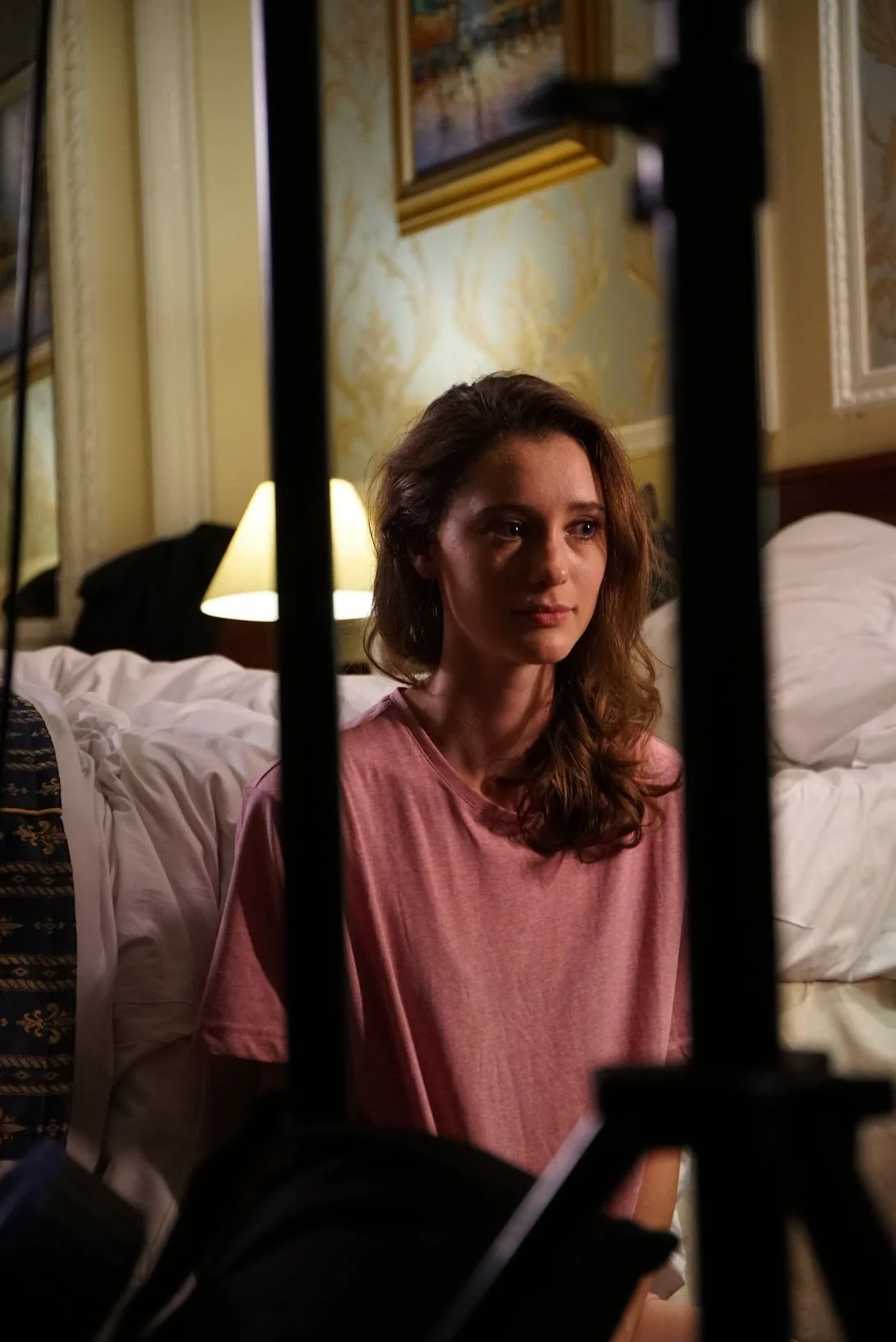


Dir. Dustin Curtis Murphy works with Rose Muirhead to perfect the pivotal hotel scene

Tell us about the journey of getting Mama’s Watcing to audiences.
Always a tough one, right? Unlike any other film that I’ve worked on, Mama’s Watching was really found during the edit. We were in post-production for awhile, so even though we shot summer 2019, we didn’t premiere until Halloween season 2022. Sure, there was covid smack dam in the middle of that, and I was also working on other projects.
As an American filmmaker living in the UK, I reflect quite a bit on my American influences and how they affect the choices I make as a filmmaker. Since moving to the UK I’ve met the best collaborators - the indie film scene in London is the absolute best - but I’ve noticed that most of my work gets programmed more at US festivals. Perhaps I have an inherently American style to my filmmaking and perhaps that puts off British programmers, but… I digress.
To be honest, during the festival tour I was getting a bit insecure about the lack of success of Mama’s Watching in the UK. I remember the rejection from Frightfest stung in particular because all of my peers got selected and I felt like the only one left out. I think I’m quite in tune with what’s wrong and what’s right about my projects, and while I massively respected the work of my peers that justifiably made it into Frightfest, I just couldn’t really see any clear reason why my film wouldn’t be selected to screen alongside them.
We ended up touring several horror based festivals in the US and picked up a few nominations, but it wasn’t until our Kino Original Short Film Showcase at The Garden Cinema at the end of November 2022 that I got to see the film with a live audience for the first time. I didn’t really know how I’d feel about it. Of course I hoped that audiences responded to the piece, but perhaps they wouldn’t. Feeling the energy in a cinema screening is so helpful for filmmakers. If you’re just watching your film by yourself on your laptop it can be difficult to see what elements are going to work with live audiences.
At that screening it really clicked for me. Mama’s Watching is not an easy watch. It’s about an attempted rape that triggers repressed memories of childhood sexual abuse. I can see how many programmers, even horror programmers, might be too afraid to attach their name to it and give it screen time. It’s not a fun watch, and quite frankly it shouldn’t be a fun watch. I think a lot of programmers and audiences in the horror space are looking for an element of fun in their horror films, and with Mama’s Watching I didn’t really provide any of that. I didn’t want to provide any of that. I feel if I were to make a film about sexual abuse “fun” then it would’ve felt inappropriate. Instead I wanted to show a real life horrific experience for what it was. Where other filmmakers tackling this subject may decide to execute it as a drama, I’d argue that is a safer, more programmable route to explore these themes. But I love challenging audiences vs just giving them what they expect.
Sitting watching Mama’s Watching with an audience I could tell that I’d definitely succeeded in creating a film that was suspenseful to the point of discomfort. So in a way, it feels like the success of effectively using filmmaking techniques to illicit uncomfortable feelings in audiences ultimately gave the film limited appeal during its festival run. I’ll be curious to see how the online release plays out.
At the Atlanta Horror Festival we caught the eye of Alter - the horror shorts distributor known for getting massive views on YouTube. Ultimately, they passed on the project, so I approached Omeleto who released my previous two shorts. I honestly thought Omeleto would pass on the film due to its content not being YouTube friendly (when my sound designer tried to upload a WIP version of the film privately for me to see his work, YouTube blocked it!), but I figured I might as well at least get the project in front of them. They said yes! Just goes to show that you never know. You get a lot of rejection, but the cliche is true: you just need one person to say yes, so best thing is to put yourself out there.

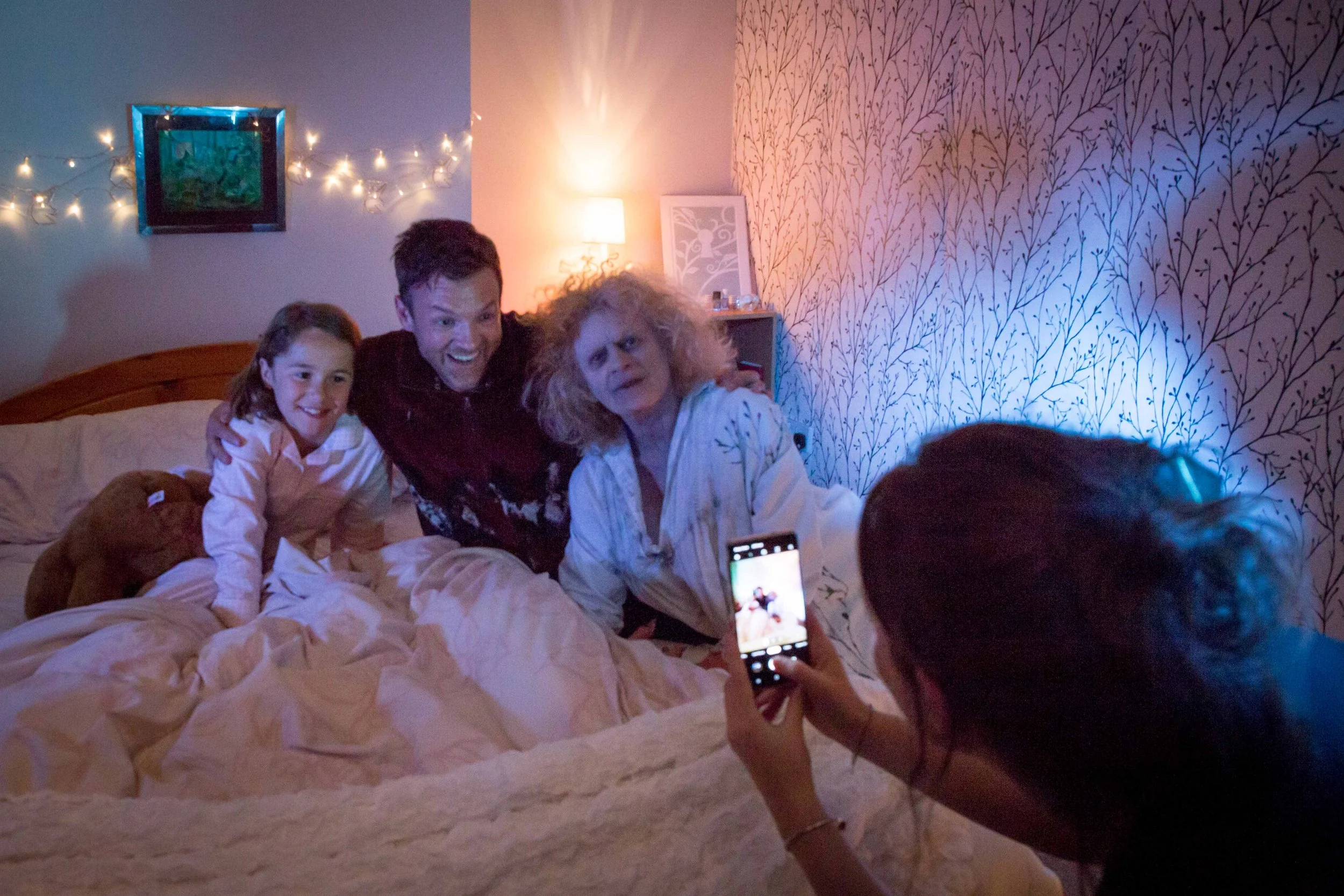

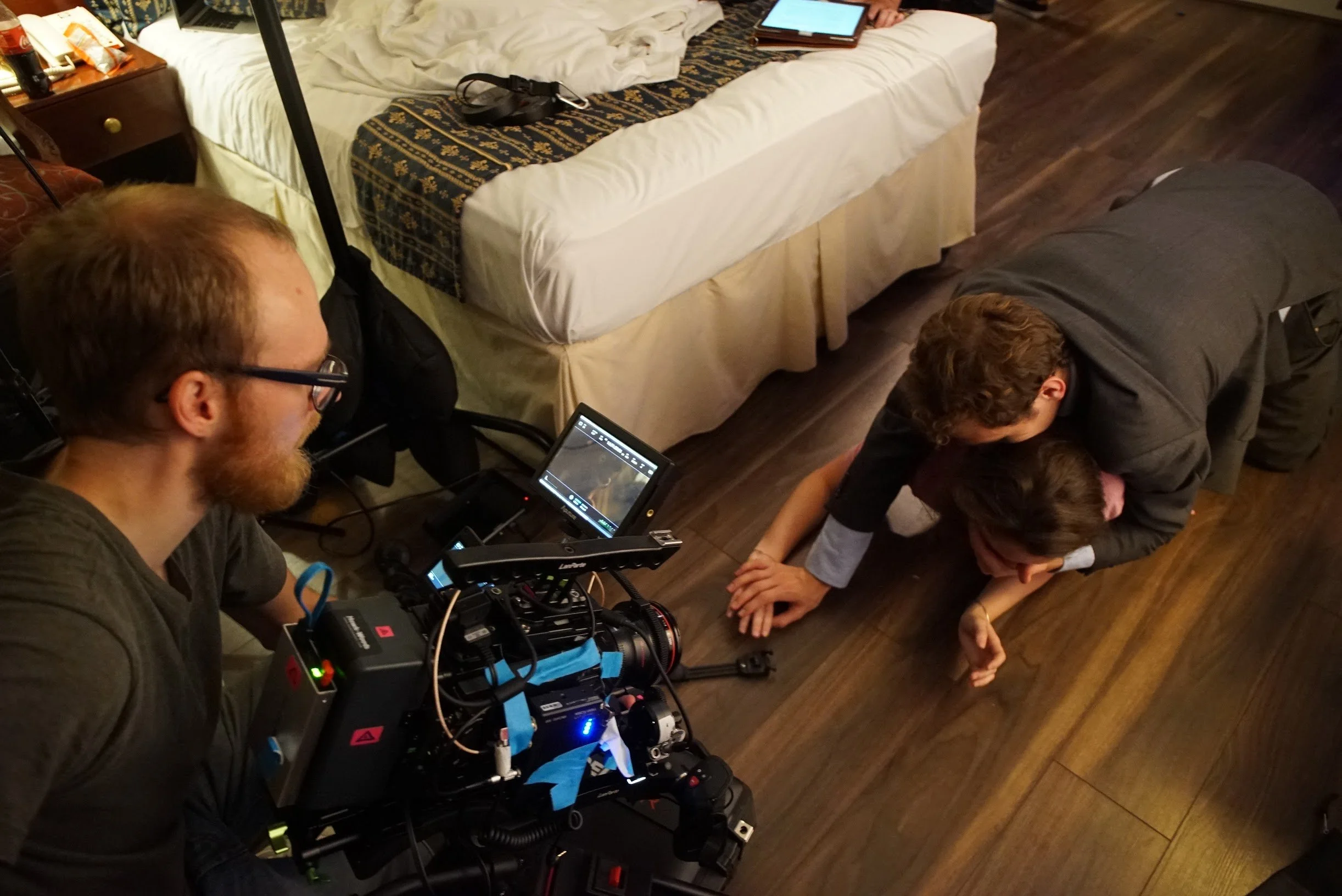
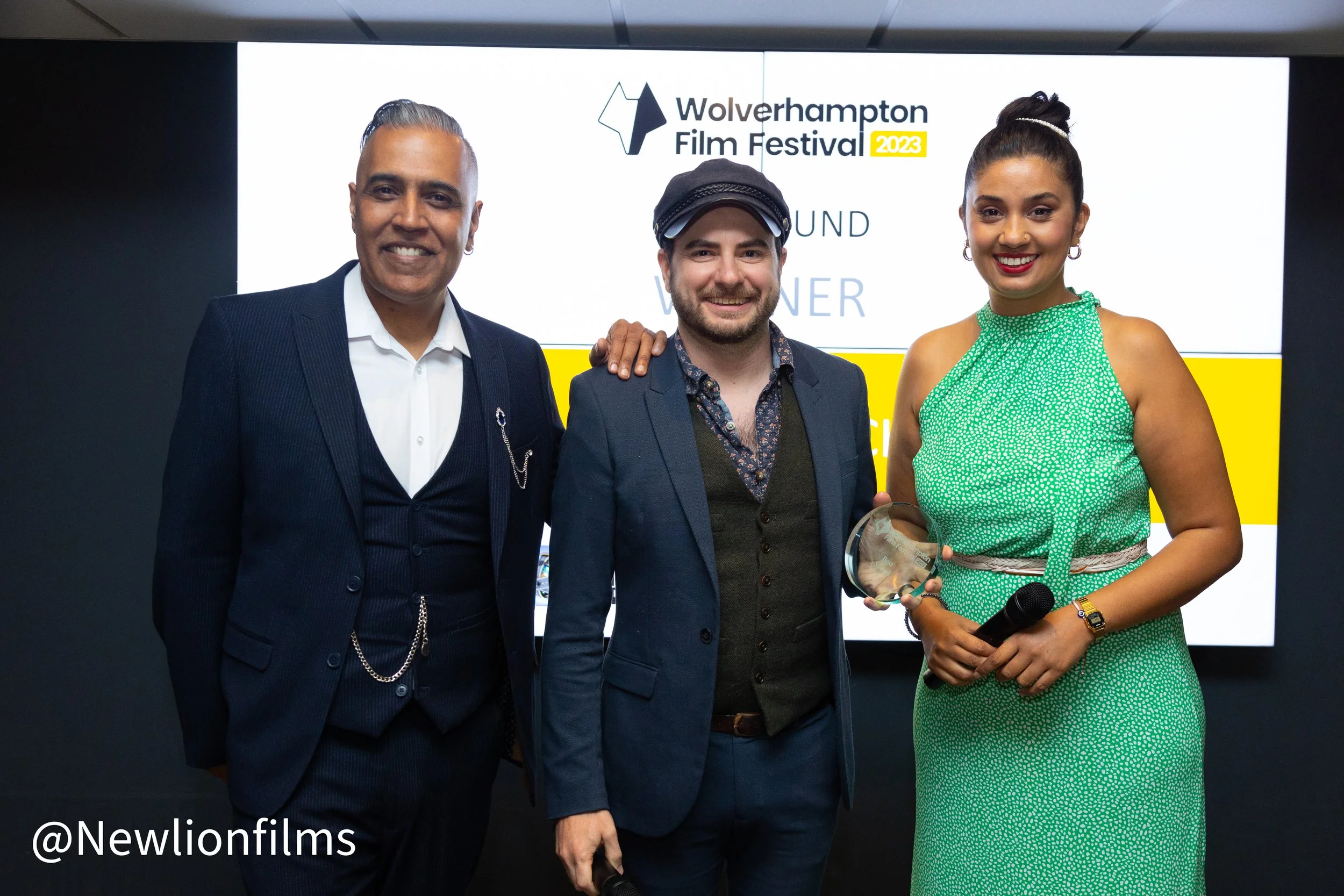
What do you think is the biggest challenge short filmmakers face trying to break into the industry?
Two things.
1. Over-saturation
Right now it’s easier than ever for anyone to make a film. Technology is a two edged sword. Yes, twenty/thirty years ago, perhaps you wouldn’t even be able to make a film at all, but now thousands and thousands of short film are made annually, and there are only a few slots available at the top tier festivals. That means that amazing work is getting rejection left, right and center. Which brings me to my next point…
2. Industry decision makers putting up barriers
In an over-saturated market, decision makers don’t have the capacity to have a personal connection with every talented filmmaker that comes their way. Some people in the industry are extremely well intentioned, but they are time-poor and overwhelmed by the sheer amount of people knocking on their doors looking for an opportunity. Other people in the industry are, quite frankly, negligent and uninterested in fostering an inclusive environment.
Keeping these two things in mind, I think short filmmakers should just continue striving to make their films better. We all need to put ourselves and our work out there. Yes, it’s an uphill battle. Yes, it’ll hurt along the journey when an avalanche of rejection comes your way. Manage your expectations, and don’t allow others to define what success is for you. You made a film. That’s a success. If you can, let that be enough and find pride in your work. Continually strive to find joy in the act of creating, and don’t let external accolades (or the lack thereof) make you feel bad about yourself. You’re doing the best you can.
What are you working on now?
The big project at the moment is my debut feature film Coyote. Technically, it is finished, but as an indie filmmaker your job is never done. It’s on the international festival circuit at the moment (which is a lot of work) and it’s being released on digital in North America on June 20th, so I’m doing a lot of PR for the film and I have my hand in marketing as well.
Although I’ve made the leap from shorts to features, looking forward I don’t ever see myself completely turning my back on shorts. I think doing a short or two in-between features keeps you sharp as a filmmaker.
Right now I have three short films in development…
1. A sci-fi alien film set on a space station which I’m just attached as director.
2. A family drama about climate anxiety which I’ve co-written and we’re applying for funding at the moment.
3. A comedy of errors because after all this heavy shit I really need to make something light! lol
…but my main focus is my slate of feature films…
1. My feature length adaptation of my award-winning short Samaritan is ready to go and I’m just looking for the right finance partner.
2. An ensemble folk horror structured where a bunch of seemingly random character’s lives intertwine. It’s like Magnolia, but in the horror space.
3. A Hitchcockian thriller than leans toward dark comedy.
4. An LGBTQ+ indie drama about struggling artists and community theatre.
Any film recommendations that we should add to our watchlist?
A great indie horror film, Little Bone Lodge, just became available on digital in the UK and I highly recommend that you check it out. It premiered at Frightfest Glasgow and it’s an absolutely intense white knuckle thriller.
Also, if you get a chance to see Birth/Rebirth playing at a festival, definitely don’t miss it. It’s the feature directorial debut from Laura Moss and it premiered at Sundance. It’s a super interesting twist on a modern Frankenstien-like story.
I was fortunate enough to meet both of the filmmakers through my work with Kino and I think they’re both going places. Ones to watch for sure - not just these films, but their future careers.
Interested in getting your work selected as our Weekly Pick?

Shallow
Deep in a forest, Barry and Larry indulge in conversation that is by turns light-hearted and extremely topical, revealing surprising revelations, both good and bad, along the way.

DIRECTED and PRODUCED by PAUL ASHTON
WRITTEN by Joe Johnsey
Deep in a forest, Barry and Larry indulge in conversation that is by turns light-hearted and extremely topical, revealing surprising revelations, both good and bad, along the way.
ABOUT THE FILM
Shallow was an Official Selection at our 2022 festival. It also won the Audience Award at the Short Focus Film Festival and won Best Comedy at the New York Short Film Festival. The screenplay was nominated for Best Screenplay at the English Riviera Film Festival where both actors (Michael Shon & Joe Johnsey) were also nominated for Best Actor. Other notable festival selections include: Nottingham International Film Festival, Earl’s Court International Film Festival, Liverpool Film Festival and Byron Bay Film Festival. Shallow was also a Semi-Finalist at the Academy Award qualifying Flickers’ Rhode Island International Film Festival.
ABOUT THE FILMmaker
Paul Ashton is a Writer/Director originally from Hertfordshire but now living in London. Shallow is his second short film as director. He’s currently prepping his third short while also developing a feature script.
READ OUR INTERVIEW WITH Paul
Welcome to our Short of the Week series. Can you tell us a little bit about yourself and your filmmaking background?
I have a Degree in Film and initially worked on a series of films and TV projects such as Saving Private Ryan and Band of Brothers before focusing on directing and scriptwriting. I've directed Music videos and documentary shorts and used to work at a camera hire company before writing and directing my first short film POV in 2018. POV was selected for a series of film festivals worldwide such as Australia, Germany, the USA and England.
What position did you have on Saving Private Ryan and Band of Brothers?
On Saving Private Ryan I was a Location Assistant while on Band of Brothers I started as a Location Assistant before then advancing to Crowd Runner and then Floor Runner.
What were some of your main takeaways from working on a large set that you absorbed into your own filmmaking?
The importance of the following:
Organisation
Whether you have a huge crew on a massive production or a small crew on a low-budget short film – you're all trying to capture the best footage you can within a tight schedule so everyone has to be extremely organised and prepared to help things runs as smoothly as possible. No one wants to be the weak link when so much is at stake.
Adaptability
I found that regardless of the size of the production and the prep involved, delays happen or some things just don't go to plan on the day - so the ability to think quickly and come up with a solution is vital, to think outside the box. Perhaps a big set piece needs to be reset which takes some time or an actor isn't free when you need them, can something else be shot in the meantime rather than waste that vital time.
Communication
Hugely vital on a large set where so many departments are involved who need to know what's required from them and when but also for individuals to be given the opportunity to showcase their thoughts and expertise. On my shorts I want everyone to be in the loop and always know what we're trying to achieve and why. To also create an environment where people are able to contribute their opinions freely and be part of the decision making process so that we're all collaborating as a team to make the best project possible.
Tell us about the genesis of Shallow and how the project came about?
Shallow grew from a conversation that took place between our two leads Joe Johnsey and Michael Shon who at the time were housemates – a version of which appears in the final film. I was looking for a short to make while I finished off another script and chose this one to develop from the ideas Joe sent me. Joe then wrote the script which we all fine-tuned in rehearsals. It's very dialogue heavy where the timing is vital so the rehearsals were extremely valuable as they allowed us to discover what did and didn't work before reworking it until we were all happy. It also allowed us to rehearse the script again and again so that it was second nature on shoot day, saving as valuable time as we only had one day.
What were some of the main obstacles you experienced when making of Shallow and how did you overcome them?
Shortly before we were due to shoot, our initial forest location was damaged by storms and we began to look again – but then Covid hit. Once restrictions eased we began to visit locations once again and came across the perfect spot in Black Park. Lockdown actually worked in our favour as Black Park was completely booked up before lockdown as it's such a popular filming location but as restrictions eased, shoots were slow to start up again. So thankfully they allowed us to shoot there for one day – straight after Jurassic World who delayed our shoot a few weeks as they were filming right next to us.
On the day of the shoot we had to contend with the changing weather. Shallow takes place in real time over 10 minutes so overcast conditions would have been ideal - but instead the weather alternated between sunny and overcast with a few showers. We also needed to lock off the surrounding area as it's a pubic park so members of the pubic were roaming around, usually walking their dogs.
I believe we had 27 shots to shoot that day, some of which were long steadicam takes but thankfully we managed it. And then post was all done remotely which wasn't ideal but perhaps did allow me to fine tune certain aspects.
Tell us about the journey of getting your film to audiences.
So we spent a lot of time researching festivals and trying to figure out where it had a chance of being selected and eliminating those where we thought we didn't stand a chance. We tried to target British film festivals more than anywhere else as we weren't sure how the northern accents and humour would travel.
But then surprisingly we won Best Comedy at the New York Short Film Festival, were Semi-Finalist's in the BAFTA and Academy Award qualifying Flickers Rhode Island International Film Festival, as well as being selected for a few other American festivals and the Byron Bay International Film Festival and a number of festivals in England. Some festivals we thought we had a great chance of getting into rejected us while some selections came as a complete surprise – you just don't know.
A lot of festivals were still being shown remotely so sadly we missed out on attending some fantastic festivals and being able to see it with an audience – though we did take part in some great Zoom Q&A's and managed to meet some very talented filmmakers. Furthermore, some festivals were delayed by up to a year which did draw out the Festival process. Luckily, the Kino London Short Film Festival (previously known as the People's Film Festival in 2022) was a live event and this is where Shallow had it's best screening to date in a packed out venue. Kino is such a well run festival with a great atmosphere and it's a place where I have met a number of very good friends.
What advice or hacks would you give to other short filmmakers?
Find a team of people that you work well who are also reliable. The process might be hard at times but it should also be enjoyable, otherwise why do it? And don't just make do, try and make the best short you can within your financial confines otherwise you're regret not fixing those little issues that then become magnified on the big screen – something I'm very happy I did with Shallow.
What do you think is the biggest challenge short filmmakers face trying to break into the industry?
Getting something made and then getting it seen. You're fighting to get something made, usually on a small budget that you probably financed yourself and which needs to stand out from the thousands of shorts out there.
Then once you've made something you have to fork out a lot of money for the festivals, and be rejected by many as there's just too many shorts out there. Whether you're selected or not is ultimately based on personal opinion and perhaps their desire to group certain shorts together based on themes or subject matter. Which sadly means that a lot of good films get rejected.
Plus the added hurdle of competing against much higher budgeted shorts – which is why the Kino London Short Film Festival works so well as the films are divided into groups based on budget.
Shorts are typically seen as a stepping stone to bigger things, which is a pity as they’re such an interesting art form in their own right and really allow you to experiment and find your voice. Sadly there's no financial gain (unlike features) – if there was it would be a lot easier to obtain funding which would thereby help to support your career progression.
Any film recommendations that we should add to our watchlist?
Some of my favourite shorts are Signs by Patrick Hughes, The Answers by Michael Goode,
Stutterer by Benjamin Cleary, Salt by Rob Savage and the shorts of David F. Sandberg who also includes making of videos for each of them.
Interested in getting your work selected as Short of the Week?

Trigger
A cab's journey shifts pace when Claire and Hannah discover a bag neither of them had noticed when they climbed in. Can they keep the bag a secret from the driver?
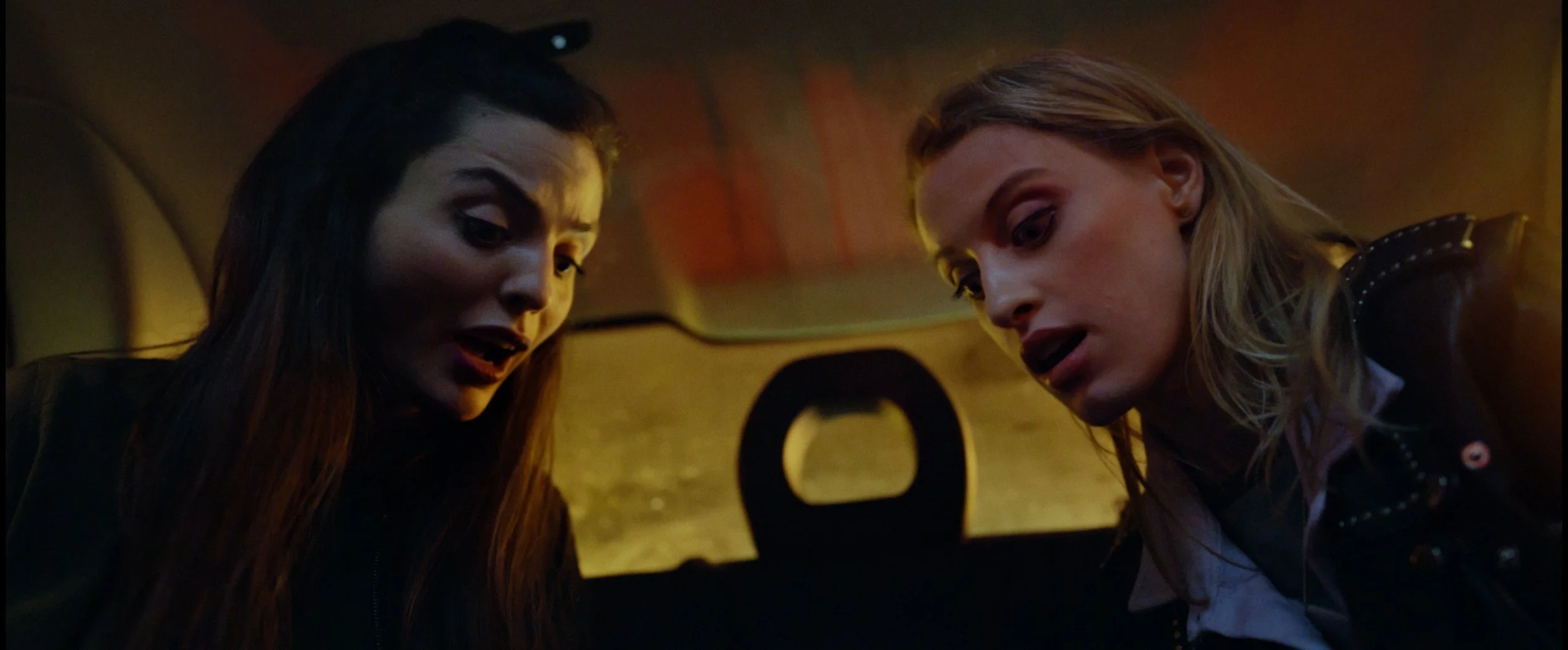
Written and directed by Renzo Vasquez
Produced by Paul Coward
A cab's journey shifts pace when Claire and Hannah discover a bag neither of them had noticed when they climbed in. They are shocked to find out what is inside the bag and argue about what to do with it, anxious to keep their find a secret from the driver.
ABOUT THE FILM
The script for TRIGGER won the Challenge ALEXA 2020 competition supported by ARRI & Directors UK. Once produced it won the Jury Award for “Best London Film” at BELIFF - Be Epic! London International Film Festival. It was also nominated at the Wales International Film Festival & the Making Waves Film Festival. Other notable festival selections include: Crystal Palace International Film Festival & Sunderland Shorts Film Festival
It also received Semi-Finalist status at the Academy Award qualifying Flickers' Rhode Island International Film Festival.
TRIGGER first caught our attention as a submission to our upcoming Kino London Short Film Festival. We gave it Semi-Finalist status & if you’d like to watch it in person with the filmmaker in attendance then you can at our Short Film Open Mic event on Sunday, April 23rd.
ABOUT THE FILMmakerS
Renzo Vasquez is an award-winning director of narrative, commercials and experimental dance films who has worked on both sides of the Atlantic Oceans.
“Trigger” is Renzo’s debut as a writer-director. Born in Brazil and based in London since 2009, he is currently working on a slate of short films while developing his second feature film.
In his storytelling Renzo likes to explore characters that have an angle of complexity and find themselves in situations that often play with the unexpected getting under the audience’s skin when provoked by twists in the story.
READ OUR INTERVIEW WITH RENZO
Tell us a bit about yourself and your filmmaking background.
As a young teenager I had an appetite for cinema and storytelling that started with an interest for crime films, thrillers and Westerns. My career started as a copywriter, then producer, assistant director and director in commercials, and finally moved into directing fiction which coincided with me moving from São Paulo to London in 2009.
Tell us about the genesis of Trigger. What inspired this film?
Sometime ago, I came across a real story about two young women who found a bag of cash in the back seat of a London cab after a night out. I always thought this situation could be a fun short film with a script full of possibilities in terms of twists and unpredictable endings. Eventually, I merged this idea with another about two aspiring actresses who take their scene work a little too far.
You won the Challenge ALEXA 2020 supported by Directors UK, which enabled a two-day shoot with ARRI gear. Can you tell us about that experience?
As a Challenge ALEXA film with ARRI and Directors UK backing us, it gained support from top-level crew, cast and companies. It made a big difference for an indie filmmaker. It was like having a stamp on the project, meaning that it was a solid project with a deadline to shoot and delivery. We shot the film inside a cab at night, so using the ARRI ALEXA Mini LF and Signature Primes helped us to create a cinematic feel and explore different compositions inside the limited space we had.
What tips would you give to other filmmakers submitting their scripts to competitions? How can they also cut through the noise like you did?
Once you have a strong and polished script, it's time to prepare a compelling treatment. It is essential to keep the treatment concise, clear and on point, conveying your vision through a combination of textual and visual elements while ensuring that all competition submission requirements are met.
So Trigger is your debut as a writer, but you’ve previously directed material written by others, correct? How did you find the experience different directing your own material vs someone else?
I’ve previously directed a feature film written by another writer and it was by far a different experience. I’d say it’s like the difference between being a guest and a host at a party. If you write the film you are the host, meaning that you know every single detail, all the guests, the food, the drinks, how loud you can play the music and so on. But if someone else wrote the film, then you are more likely to be a guest at the party. Even if you were an early bird, a close friend of the host and knew a lot of the details, there were still some things you never or only noticed at the end of the party. Either way, directing yours or someone else's script is an amazing experience.
What obstacles did you overcome while in the making of this film?
As soon as the project had been selected I had to act very quickly because part of the Challenge Alexa was to shoot and deliver the film within a couple of months. So this wasn’t an obstacle, but definitely a challenge to get everything in place so quickly. A couple of obstacles we faced was limited shooting time and budget and we used our creative thinking to find solutions in pre-production. For instance, we couldn't afford a low loader, but we found the perfect actor who played the driver who also had real-life experience. During the shoot the weather was another challenge as it rained on the first day, but our art department created rain special effects for the second day. I would say embrace the challenges you are presented with because flexible thinking and finding solutions is an important part of becoming a stronger director and collaborator at the end of the day.
Tell us about the journey of getting your film to audiences. How was your experience in general with the festival circuit?
Watching “Trigger” on that huge cinema screen at Crystal Palace International Film Festival was a brilliant start for our festival run. We then got into a really interesting variety of festivals both in the UK and abroad. Taking part in the festivals in person and remotely online was an incredible opportunity to connect with other filmmakers and industry professionals, as well as receive feedback from audiences and peers. Another highlight was the 5 stars review we received from the UK Film Review Festival. All together, the official selections, awards and reviews really helped to create a buzz around the film and elevate its presence during the festival circuit.
What advice would you give to filmmakers submitting to festivals?
Firstly, don't rush to finish your film just to submit it to a particular festival. Once you're ready to start submitting, you have two options: hire someone to handle it for you or do it yourself. With Trigger, I did it myself, which was great but also hard work, time and money consuming. After two years on the festival circuit, I have a better understanding of how it works and have built a network, but for my next short film, I might consider hiring a company to handle the festival circuit so I can focus on my projects.
What do you think is the biggest challenge short filmmakers face trying to break into the industry?
Funding, getting their work noticed and finding an audience are probably some of the biggest challenges for short filmmakers. And when trying to move from short to long format the challenge is being able to prove that they can tell a longer story as well as manage all aspects of each step of a big production.
Any film recommendations that we should add to our watchlist?
Kore-eda Hirokazu’s Broker, Darius Marder’s Sound of Metal, Asghar Farhadi’s A Hero, Shaunak Sen’s All That Breathes and Luca Guadagnino’s Bones and All to name a few.
Interested in getting your work selected as Short of the Week?

Fishwife
In wild 18th century Britain a lonely woman discovers that her menstrual cycle is of interest to a stranger.

Written, Produced & Directed by Beth Park
In wild 18th century Britain a lonely woman discovers that her menstrual cycle is of interest to a stranger.
ABOUT THE FILM
FISHWIFE is a dark and mysterious period piece which treads the line between horror and fantasy. In traditional horror a woman's fate is used as a plot point to terrify and excite an audience. In creating FISHWIFE filmmaker Beth Park was more interested in a true and specific female experience.
The film was shot in two days in Wales during a biblical storm, and once released it had one hell of a festival run. Not only was FISHWIFE nominated for several awards at our festival last year, it also played at renown genre festivals (Filmquest & SITGES), Academy Award qualifying festivals (Hollyshorts, Flickers Rhode Island, & Austin Film Festival), and BAFTA qualifying festivals (Underwire, Carmarthen Bay Film Festival, & Aesthetica). Recently, FISHWIFE premiered online with ALTER.
ABOUT THE FILMMAKER
Beth Park trained as an actor and worked for several years in theatre. She also works directing actors in video games including Baldur's Gate III. During the pandemic Beth wrote and directed her first short film, FISHWIFE.
READ OUR INTERVIEW WITH BETH
Welcome to our Short of the Week series. Tell us a bit about yourself and your filmmaking background.
I worked as an actor for about 10 years then when I took a year off to have a baby my world got flipped upside down. I was no longer content expending so much energy trying to fit into other peoples stories and I wanted to tell things from my perspective. I've always been imaginative but never really finished writing projects before. I think although I had some privileges growing up I've never had an abundance of time or money. When the pandemic hit I had time off work and a lump sum of a few thousand pounds in furlough money transferred into my account. That time and money combined with my new life experiences enabled me to create Fishwife.
How has your experience directing video games informed your narrative filmmaking process?
The two are not particularly closely linked. Video games are enormous machines with sometimes thousands of people in different countries working indirectly together. So when I direct an actor in a game there is a whole world of context, visuals, music etc which is nothing to do with me. In film I am trying to make the whole mise en scene cohesive and meaningful to the story. The only very useful transferable skill is that I direct actors every single day. So I'm good at reading what they need and don't get into my own head about that.
Tell us about the genesis of Fishwife. What inspired this film?
I was just driving along the motorway with my baby asleep in the back and the idea popped into my head! Initially I thought about writing it as a short story or even a novel but then when the furlough money came in I started to turn it into a script. At the time I didn't even want to be a filmmaker, I just wanted to make this specific film. Now I'm obsessed!
What were some of the main obstacles you experienced when making of Fishwife and how did you overcome them?
Oh gosh, there were so many. As I mentioned I got this lump sum, but it was only a few thousand pounds (which is a lot of money to get from nowhere but isn't a lot when it comes to film making!). So everything had to be bought or made as cheaply as possible. Then when we actually shot it there was a dreadful storm so we were contending against almost hurricane level winds in the middle of Snowdonia. And I was also crazy enough to make everyone do a 2.5 hour unit move between the internal and external locations. All shot in two days! Post production was hard as I was basically a team of 1 person, having produced it myself, so trying to get everything to the editor, colourist, composer, sound mixer myself was really tough. I was very burnt out when it was finally complete.
Fishwife has had some amazing festival success. Tell us about some of your favourite festival experiences.
There were a lot of festivals! Many of them were overseas so I didn't attend them, except Sitges which was absolutely incredible, the audiences there are just amazing! It wasn't easy for me to attend even some of the uk ones as I have a job and a small child so I have responsibilities I have to attend to. But my favourite thing about the festivals was being able to watch films to be honest, just a weekend of watching non stop movies is a real blast.
Any tips for filmmakers currently trying to navigate the festival circuit?
I used Festival Formula to create a list of festivals to target and a schedule for me to submit by. As I mentioned I was very burnt out when I finished the film. I was in kind of a hopeless state, I truly believed the film was bad and I had wasted everyones time and money. I couldn't afford to use Festival Formula but my parents very kindly paid the fee because they recognised what a mess I was in! I would recommend investing in this service if you can, they helped me find the right festivals to apply to and saved me wasting money on Festivals which weren't appropriate.
Now that you've completed your festival journey the film has been picked up by Alter. How have you found the online release of the film compared to the festival circuit? Any tips for filmmakers looking to release their film online?
I have really loved it being released online! There have been so many appreciative comments from people who really liked it and really seemed to get it! In comparison to the festival circuit this launch has been much more gratifying. I found many festivals to be quite impersonal, with no feedback or any kind of response about the film, just a 'congratulations you got a laurel, now please send us all the data', now I can actually see that there is an audience for it and people are mostly enjoying it!
What do you think is the biggest challenge short filmmakers face trying to break into the industry?
Money. It's so expensive to make a film. If you have money you're already so far ahead in the game. If you can combine that with having a good idea then you can hopefully make some headway. It takes a lot of hard work, but it's worth it.
Any film recommendations that we should add to our watchlist?
A couple of films I saw at Festivals are now available on Netflix; Nocebo and Vesper, I loved them both.
Apply to get your short selected as our Weekly Pick

Nanny Neigh Neigh
An unsuspecting nanny is coerced into a game of make-believe. But when the stable doors close, she realises her playmate isn't horsing around.
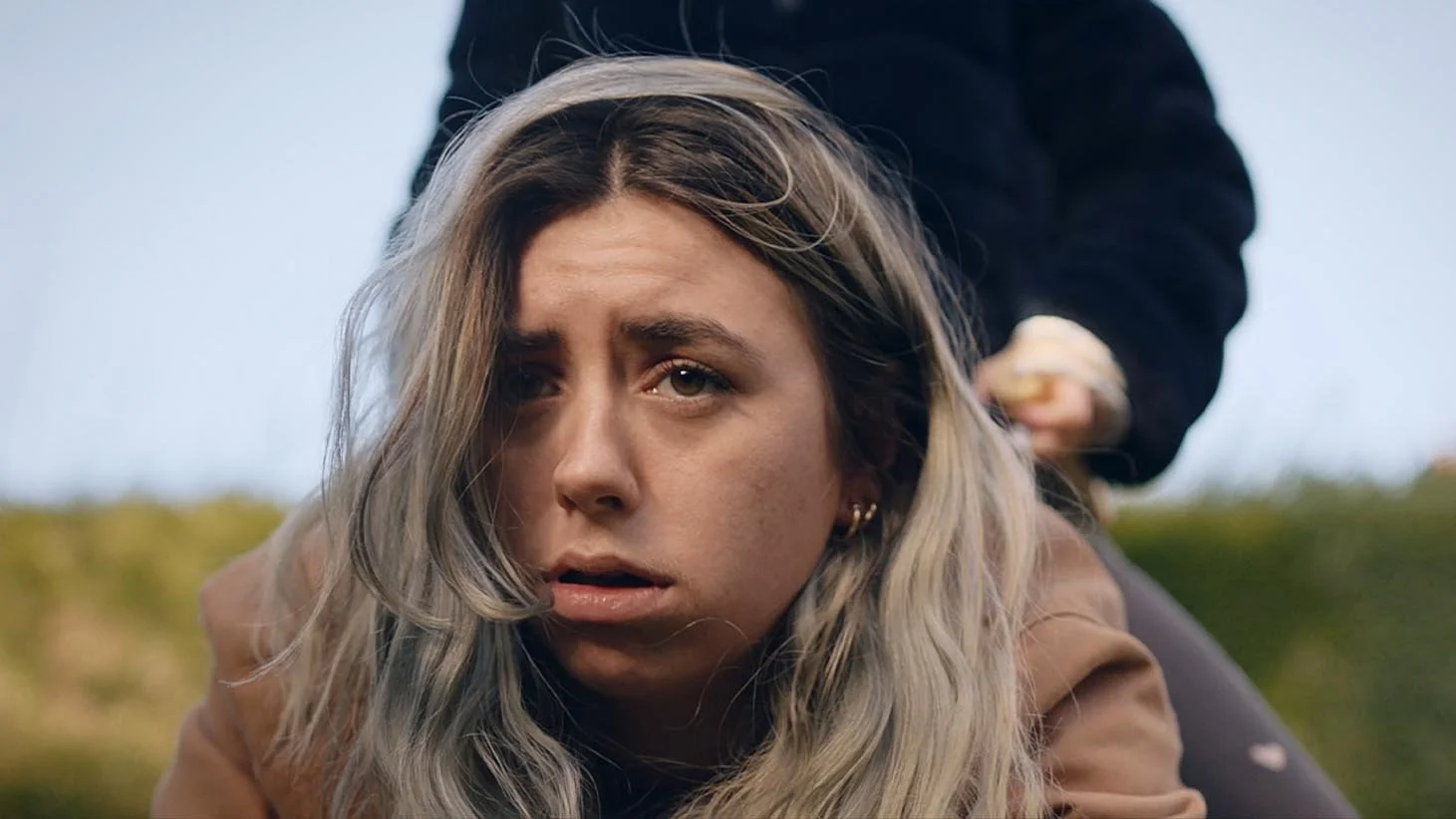
Directed by Elliot Taylor & Liam Francis
Produced by Lucy Hilton-Jones
An unsuspecting nanny is coerced into a game of make-believe. But when the stable doors close, she realises her playmate isn't horsing around.
READ OUR INTERVIEW WITH LUCY
Welcome back to our Short of the Week series. What have you been up to since we last featured your film A Present for a Good Girl?
Thanks so much for having me back! I've been up to all sorts. Lots of creative stuff but also lots of catching up on life stuff. I've been lucky enough to get some amazing theatre gigs, which took me away from film for a little bit. But I missed it way too much. I'm very glad to be back into the swing of making things myself.
Can you tell us about Greenfingers Films?
Greenfingers Film is a collective set up by four filmmaking pals. We've known each other for years and have always bounced off each other creatively, but only got the ball rolling as a team in Jan 2020. We call ourselves a collective as we feel it allows us more freedom to work collaboratively and with equality.
Tell us about the genesis of Nanny Neigh Neigh. What inspired this film?
The inception of Nanny Neigh Neigh is quite a straightforward one. I worked as a nanny all the way through the pandemic, often playing games of 'horsey'. That job was a lifeline for me in uncertain times, but I often recognised how interchangeable I was to such a wealthy family. How many nannies had come before me? And how many would come after? So this film was a daft little response to that feeling.
What obstacles did you overcome while in the making of this film?
Finding the right kid to play Lavender was tricky. Because the film has some horror themes, we wanted to be extra careful in casting someone mature enough to handle the material but young enough looking to have a nanny. Ella (who plays Lavender) is the daughter of a theatre director I've worked with. When she mentioned Ella was obsessed with horror and wanted to get into acting, I knew she would be absolutely perfect for the role. She's a complete natural! Money was the other obstacle. It's a neverending obstacle. But we made it work with absolute pennies and to be honest, I think working like that has made us better filmmakers. Shout out to everyone that offered their time for free or at hugely discounted rates just for the love of it. We couldn't do it without people like that.
Tell us about the journey of getting your film to audiences and why you decided to self-release online vs venturing into the festival circuit.
We went back and forth as to whether we'd do the festival circuit with Nanny Neigh Neigh, but eventually decided not to. That in part comes down to funding (or lack thereof) and in part because you have to keep projects hidden away for so long when they're doing the rounds at festivals. This film is short and sweet and gives a good indication of our style so we wanted to share it in the hope that it may drum up some interest for longer projects we have in the works.
What do you think is the biggest challenge short filmmakers face trying to break into the industry?
I think getting your work actually seen is the hardest part of breaking into the industry. I still feel like I haven't cracked it. Nowadays, you really have to invest time in creating an online presence, and 'hype' around each project. It's a full-time job in itself and one that none of us at Greenfingers enjoy that much. That's why short film platforms like yours are so important!
What can we expect upcoming from Greenfingers?
At the end of November, we managed to make three new short films in as many days. Not sure whose idea that was, but miraculously it paid off! So they're all in post-production now, and we'll be looking to submit to festivals in 2023. We may release the shortest one straight away like Nanny Neigh Neigh, so keep your eyes peeled on our socials.
Any film recommendations that we should add to our watchlist?
Titane has yet to be topped for me this year. My mouth was on the floor throughout. But in a completely opposing way, Banshees of Insherin gave it a good run for it's money. I'm gonna throw Hail Satan? in as a documentary recommendation. I just re-watched it and it's so much fun.
Interested in getting your work selected as Short of the Week?

Hangover Food
After a heavy night out, Bruce want's to get back on it but has a hard time convincing Lee, who feels like death; figuratively and literally.

Directed by Ross McGowan
Written & Produced by Craig McDonald-Kelly, David Hepburn, & Ross McGowan
After a heavy night out, Bruce want's to get back on it but has a hard time convincing Lee, who feels like death; figuratively and literally.
Hangover Food was the first short film by Deadline Films UK. Costing £500 all in. Written, cast, shot and edited within 5 months. Hangover Food went onto 15 film festivals round the world winning 4 awards.
READ OUR INTERVIEW WITH CRAIG
Tell us a bit about yourself and your filmmaking background.
Hi! I’m Craig, I’m one of the writers, producers and cast of Hangover Food. I’m an actor first, writer/producer second. We started Deadline Films UK in 2017 to create our own work, get off our bums and start the films we want to make. Hangover Food was our first, we shot it in a bedroom in our flat for £500 in 1 day in September. We had it finished and hitting festivals by January next year.
Tell us about the genesis of Hangover Food. What inspired you to make/get involved with this film?
The idea came from our director Ross McGowan. Two very hungover friends, but one isn’t actually hungover, he’s turning into a Vampire. We heard that and thought we could make a fun comedy with some horror elements. We wrote the script with our other Deadline Films UK founder David Hepburn and got to work.
What obstacles did you overcome while in the making of this film?
On such a low budget we had to figure out the best way to do what we wanted to do within our means. We had an amazing team of friends on board helping us out.
Tell us about the journey of getting your film to audiences.
We found that Hangover Food went down really well with American audiences. It’s very American style humour. In big theatres people would always laugh at completely different parts of the film. It hit different for some people and we loved seeing that. It’s still one of our most successful films to date. People loved these characters.
What do you think is the biggest challenge short filmmakers face trying to break into the industry?
Waiting around for something before they start making films. Money, the right script, the perfect location, the right actor. We met people who’d been working on a short for 7 years! That’s insane. We made 8 shorts from 2017 - 2020. Admittedly, some are much better than others. But we learned from our mistakes and went onto the next one with all that new information.
What are you working on now?
Over this summer I wrote a mini series based in the same world as Hangover Food. These 5 x 5min episodes should be out next year and we’d like to use that to get the Hangover Food feature film funded!
We wrote the feature during lockdown, reworked it a bunch and now have it ready to go. Unfortunately you can’t make a feature film for £500. We’re hoping the web series will show off what we can do with a minimal budget and the team we have. We want to focus on a great story, directing, acting and cinematography to bring it to life.
Any film recommendations that we should add to our watchlist?
My favourite film this year so far is Everything Everywhere All At Once. Absolutely batshit amazing. The bigger the screen you can watch it on the better. I also just finished Season 2 of an anime called Demon Slayer and it’s one of the most beautifully animated things I’ve ever seen for TV. Season 2 was brilliant.
Interested in getting your work selected as Short of the Week?

A Real Pair
Tony and Archie, best friends and sci-fi fanatics rent out a funky apartment for a weekend on the town, but their host has other plans.
Directed by Ed Willey
Written by Rossella Di Pietro and Ed Willey
Tony and Archie, best friends and sci-fi fanatics rent out a funky apartment for a weekend on the town, but their host has other plans.
READ OUR INTERVIEW WITH ED
Tell us a bit about yourself and your filmmaking background.
I still consider myself quite new to the filmmaking game. At the start of 2020 I tried writing short stories but found myself getting annoyed that I could visualise them so well but couldn’t convey everything I was seeing in my head. A weird epiphany later filmmaking felt like a natural next step. I made my first short later that year on my phone and enrolled in a part-time course at MetFilm to learn how to do things properly. Since then I finished the course with another short, and have done the 48hour competition twice now. Being very new to the industry I enjoy working on other shorts as 1st AD (I love to be organised!) which has been a really great way to meet people. I met both Will and Macaulay (DoP and 1st AC on this film), working on shorts with other directors. Given my day job as a web developer, I’ve found filmmaking very naturally fits into a very technical and creative hole that I get a lot of enjoyment from being involved in all aspects of.
So this isn't your first time making a film in 48 hours. What makes you gravitate to such a challenge?
Foremost, you will end up with a finished film. It felt pretty weird on the Sat after wrapping the shoot saying “I’ll send you the finished film tomorrow” but also really exciting just knowing it will be done. The challenge and the restrictions the competition places on you (random genres, given character, prop and line of dialogue) can be really rewarding. Having to come up with something in such a short timeframe, leaves very little time to second guess yourself, you just have to get on and do it!
What is the most challenging and/or exciting aspect of creating a film in 48 hours?
Time is obviously the biggest challenge. You have to be pretty strict especially on shoot day, setting a hard finish time so you know you have a target to hit. Aside from that, trying to plan for anything and everything. Getting a cast and crew together and finding a location with absolutely no idea what your might be making can be quite daunting. Finding the location this year was one of my biggest stresses, we didn’t find the warehouse appt til I think the week before, definitely not something I want to repeat next year!
Did any pre-existing creative ideas happen to fit the brief for A Real Pair, or did you make the film 100% from scratch?
100% from scratch. We drew the genres of Comedy Horror + Legal Jeopardy (the rules say you can bin one genre) and started throwing ideas around, then the required elements were announced and we felt it was clear we wanted to make silly ‘horror’ and ran with that. There was a bunch of us at our place all pitching in with ideas until we had the basic story beats down, then myself and Rossella locked ourselves away and set about the script.
Would you ever continue working on the film after 48 hours for your own personal satisfaction, or once the deadline is complete do you walk away from making any tweaks?
For me I feel it defeats the point to continue to refine it after the fact, I like to be able to say “this is what we made in 48hours”. Having said that… I did make two very very very small tweaks removing a few frames from a couple of shots in the file that’s now on Vimeo, but I put that down to sleep deprivation towards the end of editing on the Sun! Am really proud of what we managed to achieve this year, the whole team was really awesome.
If you had more time to work on this project, what is the main thing you would like to change/develop further?
We would have definitely liked to have more time to work on the characters/story. The cast did a great job with what we had to work with, but we all felt there was more to explore both with the two guys, childhood friends, a shared passion, where are they in their lives now? And of course, Crystal, how did she get involved in what she's doing, how does she keep getting away with it? We kept joking there was enough of a foundation to work it up to a feature, which is an idea I haven't fully let go of yet...
After a 48 hour competition is over, what's the journey of the film look like in terms of trying to reach a wider audience?
Doing stuff like this? :) Am also submitting to a few small festivals, but it’s a weird one as obviously you’re going up against people who’ve spent months refining their films, so, we’ll see what happens!
Words of wisdom. What advice would you give to other filmmakers?
Collaboration. As a writer/director I find it absolutely essential to be able to be open to ideas from other members of the crew, you don’t always have to go with them, but at the very least be open to hearing ideas. Filmmaking is very much a team sport. By all means, have a vision, but let others collaborate with you to make it the best version of that vision.
What are you working on now?
Am back at the day job while I plan out my next short, ideally want to get something new done early next year, but still kicking around ideas right now. More long term I’m working on my first feature script with plenty more ideas waiting in the wings! And of course, keeping an eye on the job boards for other projects to help out on and meet more people!
Any film recommendations that we should add to our watchlist?
The first thing that popped into my head is ‘Prisoners’ by Denis Villeneuve. It preceded Sicario/Arrival/Blade Runner 2049 which obviously raised his profile considerably. It’s an incredibly tense movie with some outstanding performances that provide uncomfortable viewing at times, but a really beautifully made film. On the other end of things we recently re-watched ‘Popstar: Never Stop Never Stopping’ by the Lonely Island guys, I love everything they do and am very curious about their involvement in the upcoming Naked Gun reboot…!
Interested in getting your work selected as Short of the Week?

Paranormal Investigators
In a world where ghosts and ghouls aren't a matter of folklore and legend but more everyday pests in need of control, we follow Abi as she embarks on her first day as an intern with the British Paranormal Investigation Team.
Directed by Markus Meedt
Written & Produced by Alex Gibbons and Howard Perret
In a world where ghosts and ghouls aren't a matter of folklore and legend but more everyday pests in need of control, we follow Abi as she embarks on her first day as an intern with the British Paranormal Investigation Team.
READ OUR INTERVIEW WITH MARKUS
Welcome back to our Short of the Week series. What have you been up to since we showcased your last short Werewolf?
Right after Werewolf I got busy with Paranormal Investigators, which we wanted to function as a Proof Of Concept short, to develop into series. I also re-teamed with the lovely team from Werewolf to do another short and a series of sketches, which I hope to be sharing with you soon. And I also got to work with the Royal School of Speech And Drama on a series of short films for the graduation students. But mostly I have tried to do more script writing and bible development, to try and tell more ambitious stories than our short film budgets can handle.
Tell us about the genesis of Paranormal Investigators. How did the project come about?
One of my best friends, Alex Gibbons, who I have worked with on multiple projects introduced me to Howard Perret, who came up with the concept of the short. We all really fell in love with the characters and the world. So Howard and Alex went off and wrote a short that could also work as a condensed version of a pilot episode.
How did you find the crowdfunding process and what tips/tricks could you provide to filmmakers looking to do the same?
Crowdfunding is haaaaard and awkward. Admittedly, Alex and Howard did most of the leg work on getting the crowd funding. Obviously there is the video to entice an audience and the perks. But people don't organically stumble across your crowdfunding page, take the time to watch and read everything and then generously open their wallet. The truth is that mostly people will give you financial support because they know you, or because you successfully managed to talk them into your cause. So Alex and Howard (and the rest of the team) went out and directly approached people, rather than just post about it online. So, the horrible truth is, you can't just plonk it on social and hope for people to interact. You have to interact with the people, and then hope they see whatever you plonked on your socials.
What obstacles did you overcome while in the making of this film?
I love the film we ended up with. And I love the whole team. But holy smokes we ran into a lot of trouble on this one.
Alex Gibbons, who not only wrote and produced the film, was also our gaffer (he is a great Spark and Gaffer FYI). Before the shoot he went to pick up some props, including a large shelf, which fell apart while he was carrying it, slicing through his hand and sending him straight to the ER. So he became a one handed gaffer.
On shoot day 2 I received a call from home with some very sad news. This call came through before we went off to shoot the big comedy scene with Joshua McGuire.
Our Production Designer nearly got impaled by a curtain rod.
Howard had to sort out some location issues while also playing our male lead and doing dialogue re-writes with Alex on the fly.
So in short, most of the challenges we faced this time around, just somehow felt a little cursed at times. I guess the take away lesson here is that sometimes the hardest part about film making isn't the actual process of making the film, but trying to not let the unpredictable chaos of the "outside world" push you off course on your journey. And truly, now we are looking back and are laughing about it.
Tell us about the journey of getting your film to audiences.
Well one way of course is to have KINO shorts talk about the film. Our festival run wasn't as far reaching as we hoped, as the film was finalized in the peak of covid bonanza. But we managed to have a great Cast/Crew/Friends screening at a spectacular London location. The film went down well and just by sheer word of mouth we were invited by some more local film festivals. (Big Shout Out to Leighton Buzzard) Film Festival). The film has literally just gone live on the World Wide Web, so we are excited to see if, how, and where it finds its audience.
What do you think is the biggest challenge short filmmakers face trying to break into the industry?
I think I personally haven't broken into the industry properly. So I can only confirm that it is really challenging to break into the industry. I can't really say what it takes, though, to make it work (yet! If I find out, I will let you know fo sho!). But I would say in the current environment, the biggest challenge is to stay on top of the costs of living while also chasing a dream that requires you to spend a lot of your personal time and money to "create" the tools you need to break in. So while talent does go a long way, there is a certain amount of living costs you need to uphold while you are waiting for your right place at the right time moment.
What are you working on now?
We are in post on our series of sketches at the moment, which need to be delivered by end of November. I am co-writing a YA TV Pilot and developing an R-Rated animated Peppa Pig type series as well as a workplace dramedy. So a very mixed bag of joyful things.
Any film recommendations that we should add to our watchlist?
I just saw The Banshees of Inisherin, which is great (and horrendous) fun.