
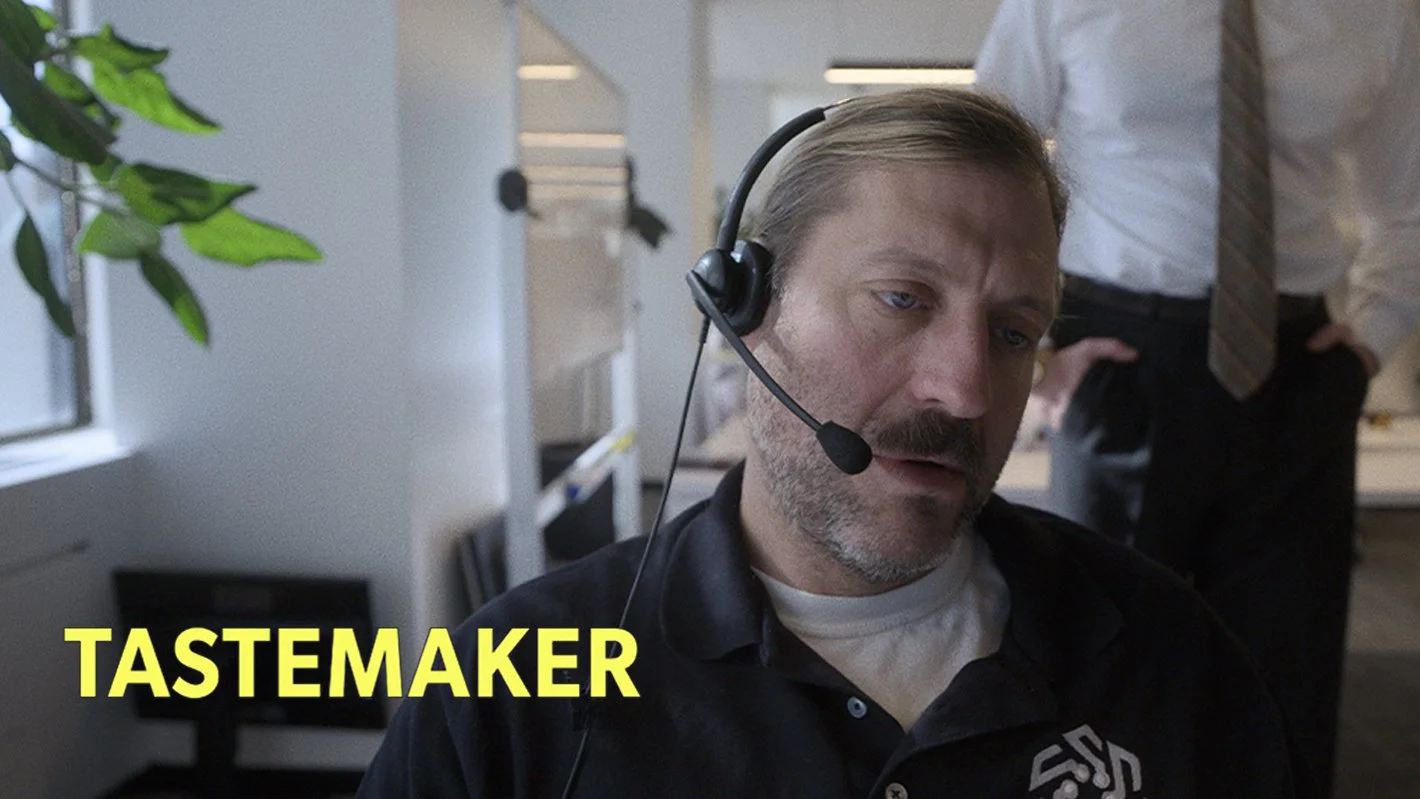
Tastemaker
When apps use human spies to generate suggested content, one data analyst struggles with matters of taste.
Written & Directed by Eli Speigel
Produced by Joshua Rosen, Dan Feldman Green, & Conrad Osei-Bonsu
When apps use human spies to generate suggested content, one data analyst struggles with matters of taste.
ABOUT THE FILMMAKER
Eli Speigel is a freelance director, editor, and shooter based in Toronto.
READ OUR INTERVIEW WITH ELI
Welcome back! Other than making Tastemaker, what have you been up to since we featured your short The Jokes?
Woo! In between The Jokes and Tastemaker, I made another short called Gone Fishin' which is available online in a few places. I didn't send it around too much but I really like it!
Tell us about the origins of Tastemaker. What inspired the story and what are your personal feelings about Tim Buckley and Scott Walker?
Tastemaker originated as a sketch idea based on people saying, “Our phones are listening to us.”
I had just been complaining about how Spotify constantly recommends Scott Walker to me, despite the fact that I’ve never actively sought out his music or even talked about him in my life. It got me thinking about how these algorithms essentially function like curators: they listen to our behaviour, collect information about our tastes, and make suggestions based on what they think we might like. And if that algorithmic curator were an actual person and were actually listening to us through our phones, then maybe I’d be hurting their feelings by complaining about their recommendations.
For the record, I actually like Scott Walker. I just don’t necessarily think I should be listening to him simply because I happened to listen to Tim Buckley.
At the same time, I had been receiving a consistent stream of spam calls from a call centre offering air-duct cleaning services. These two things started to bleed together in my mind.
I had also just rewatched Mulholland Drive, and I began thinking about what a call-centre employee might dream about. Ie, what does someone dream about when their entire job consists of recommending things people don’t necessarily want or need? Would they ever fantasize about spying on people? Not to exploit them, but to understand what they actually want? Would they dream of becoming a respected curator/tastemaker/selector whose recommendations people genuinely value, rather than a nuisance whose calls everyone wants to avoid?
From there, the idea started to warp, much like when you become aware that you’re dreaming and are starting to wake up. What does it look like when the reality of your everyday life starts seeping into your dreams? What happens when the facade begins to wear away? And ultimately, when are we actually our most real? I don’t know XD!
I love the desperation of the personified algorithm. It really illustrates how invasive algorithm based marketing is. How much do you want your film to speak for itself vs how much do you want to use this film to engage in a conversation about the strange brave new world we live in?
Ideally, the film should always be able to speak for itself.
That said, I recognize that my shorts often do not have an easily traceable narrative.
There is a lot to be said about the role online algorithms play in our lives, but I’m more interested in the absurdity of it all. It feels like magic realism to be living alongside systems that are constantly trying to predict, and influence us to... shape us! That sounds scary but there’s humour in that absurdity. And if we can find a way to laugh at these things, they don’t necessarily have to dominate our lives. Or, if they inevitably dominate our practical lives, they don’t necessarily have to weigh on us emotionally.
Tell us a bit about this film's journey.
Any interesting hurdles you needed to overcome during pre-production, production, post-production?
Making a movie of any size will break your heart in ways you didn’t even think were possible. Thankfully, nothing too outrageous happened on this one, but there were still plenty of bumps along the way: an actor dropping out at the last second; a DoP having a scheduling conflict, which meant we ended up having two different DoPs shoot on different days (I wouldn’t recommend it, but they were both excellent); and never quite having enough time in each location, which meant fewer takes and setups than I would have liked.
The most stressful was the night of the outdoor scene at the music venue with all the extras. It started to very lightly drizzle, but the rain wasn't enough to actually register on camera, only enough to make everyone look wet. I had to hand out a collection of umbrellas from my closet to everyone, emphasising the drizzle as actual rain and an intentional visual choice rather than pretending it wasn’t happening... and also I wanted to keep my friends dry.
Where are you at in getting this film in front of audiences? Any festival highlights, etc.
I had high hopes for this short, but the festival circuit is a cruel one. One highlight would be Low Budge No Budge in Portland, Maine. They gave me a beautiful ceramic trophy. They rock. Getting to be a part of Bleeding Edge Fest here in Toronto is always a treat; a fun summit of local filmmakers and foreign. Getting to be a part of NoBudge's online collection is a point of pride, and so is getting to talk about my shorts with Kino!
What are you working on next?
Since finishing Tastemaker, I made a short documentary called Tasty Morsels, which is about a music label of the same name. I'm currently wrapping up post for a feature length documentary about an amateur entering the world of professional Elvis Tribute Artists, and have just started post for another comedic short with Joel Edmiston called Bongo Laundromat.
Any film recommendations that we should add to our watchlist? Give us both a short and a feature.
Toronto Apartment by Tristan Wheeler, Taxi Drivers by Sacha Kingston-Wayne
Apply to get your short selected as our Weekly Pick
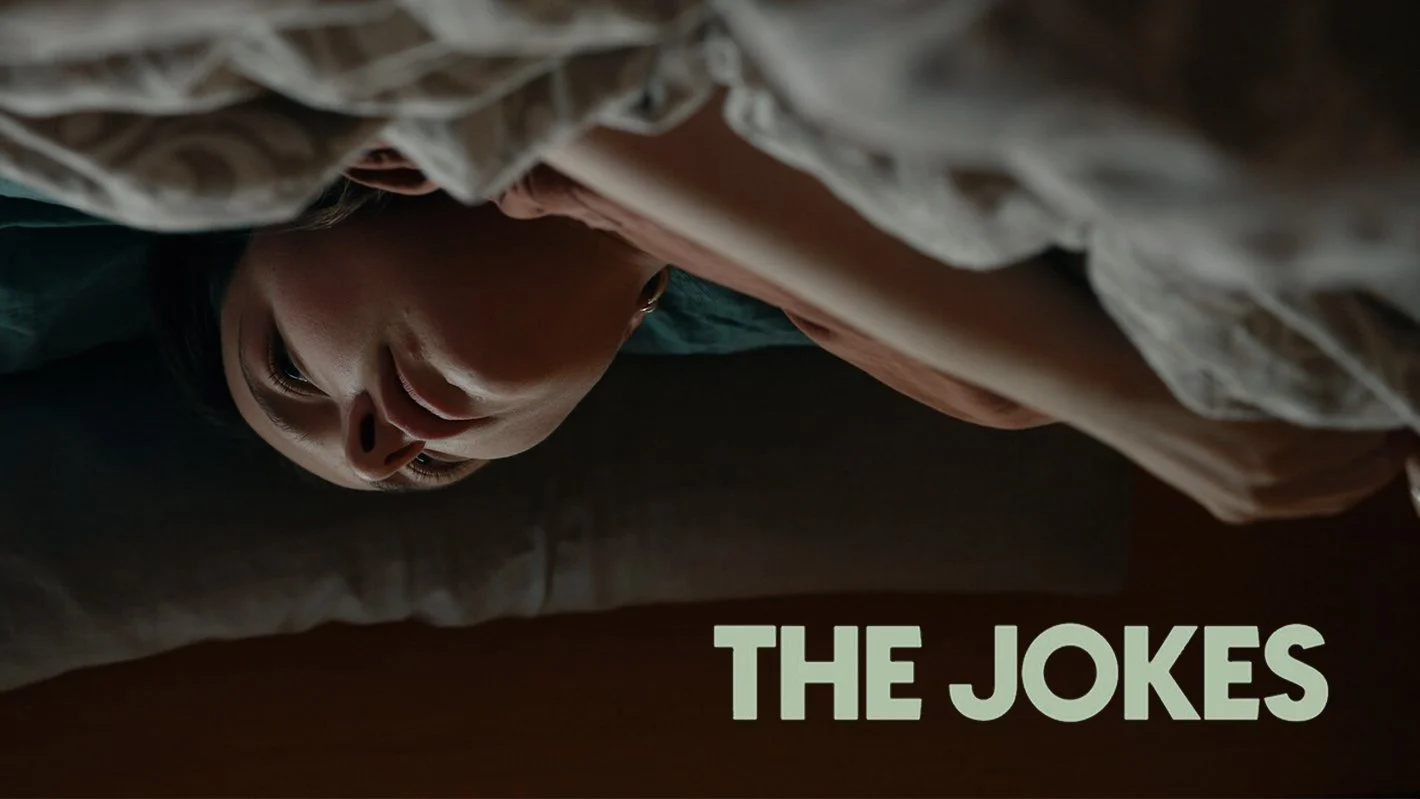
The Jokes
After accidentally burning his breakfast, a man goes to a nearby cafe and struggles to read a graphic novel.
Directed by Eli Speigel
Written by Eli Speigel & Stephen Thomas | Produced by Joshua Rosen & Daniel Feldman Green
After accidentally burning his breakfast, a man goes to a nearby cafe and struggles to read a graphic novel.
ABOUT THE FILM
THE JOKES premiered at Toronto Based Shorts and was an Official Selection at Naked Mountain IIFF, Tiny Film Festival, and Picture's Up Film Festival. It’s also been featured
with Beyond the Short and Film Shortage's Daily Short Pick.
ABOUT THE FILMMAKER
Eli Speigel is a freelance director and editor born and still stuck in Toronto. He is typically seen puttering around the Christie Pits neighbourhood, and surfaces on social media when he has short films, videos, or music to release.
READ OUR INTERVIEW WITH ELI
Welcome back to our Short of the Week series. What have you been up to since we featured you last short Mayonnaise?
Thanks for having me back. That feels like kind of a while ago and yet I've still been doing the same old. I currently have another short film called Gone Fishin' in the can... and I have no idea what to do with it. Next week I will find out if I get a grant to do another short film about a guy who watches people through their phones in order to generate suggested content for them in real time.
Tell us about the genesis of The Jokes. What was the inspiration behind the film?
The inspiration for The Jokes came from a collection of short stories of the same name by Stephen Thomas. It's technically an adaptation of a handful of those stories... some I combined, others I warped. Thomas' stories don’t have beginnings, middles, or ends; they are moments more than anything else. I singled out the ones that felt like the characters were disassociating, experiencing the intense mental process of disconnecting from oneself, and doing so in mundane locations and trivial environments. Having an intense emotion while in a disconnected public place brings out a certain comedy due to its juxtaposition. Having an existential crisis in a cafe while the stranger beside you is filming a TikTok on their phone could cause you to question the significance of the crisis itself. I wanted to explore this scenario visually and sonically and meld several of Thomas’ micro moments into a series of connected vignettes; slivers of life rather than slices of life. I think suffering from mental illness can be funny. Or maybe the world around me is just a funny place to be suffering from mental illness. I'm not sure which.
What were some of the main obstacles you experienced when making The Jokes and how did you overcome them?
The main obstacle wasn't really an obstacle, it was more of a test. I decided to shoot this by myself with my Sony A7s iii. I wanted to see how good I could make something look without having to ball out on a camera that I would need at least two other people to build and operate. I had friends come on different days as an extra pair of hands and a sound recordist, but that was the extent of the crew! And then I had the amazing Erik Bayley and Deanna Marano colour grade and sound mix respectively. The ACTUAL obstacle for me is typically location. How can I find well lit, visually interesting places that suit my story and characters... and then get proper access to them? In this case I was able to shoot at my friends Shelby and Stephen's house, as well as the main actor Conrad's apartment. Luckily I also have an in with the picturesque First and Last Coffee Shop. The tough one was the scene in the alleyway. It was so bright that day, I could only kind-of see my camera monitor and we were shooting guerilla style near the back of a restaurant called Banjara in the early afternoon before they opened. The market scene was also tough because the Nut House (as far as I could tell) was the only market/grocery store that closed with enough time before sundown. I sent them an email, and they were into hosting a little film shoot, but said we could only come in after they close. That gave us about 2 hours to get the scene done... and we did it!
Tell us about the journey of getting your film to audiences and some of the festival circuit highlights.
I simplified that journey and I'm more interested in local screenings and making the films as accessible and easy to find as possible, rather than playing the lottery that is submitting to big festivals. I'm 32, and I think I'm a few emails with the word "unfortunately" away from snapping. Although a few film festivals still pique my interest. The Jokes premiered at a locals only festival in Toronto in December called Toronto Based Shorts. It's only 2 years old but it's one of the best nights for local film here. This week The Jokes is playing at a fun festival in West Hollywood called Picture's Up.
What advice or hacks would you give to other short filmmakers?
Save up to buy your own camera and make friends with people that are interested in running around with that camera. Start a favour network with other filmmakers and actors around you.
Any film recommendations that we should add to our watchlist?
I just watched ...and Every Cavity was a God-Shaped Hole by Zachary George and it rocked. I also saw A Year of Staring at Noses by Karen Knox and Matt Eastman, Northened by Una Di Gallo, Goblin High by Isaac Roberts, and The Sweater by Maziyar Khatam recently and loved them!
Interested in getting your work selected?
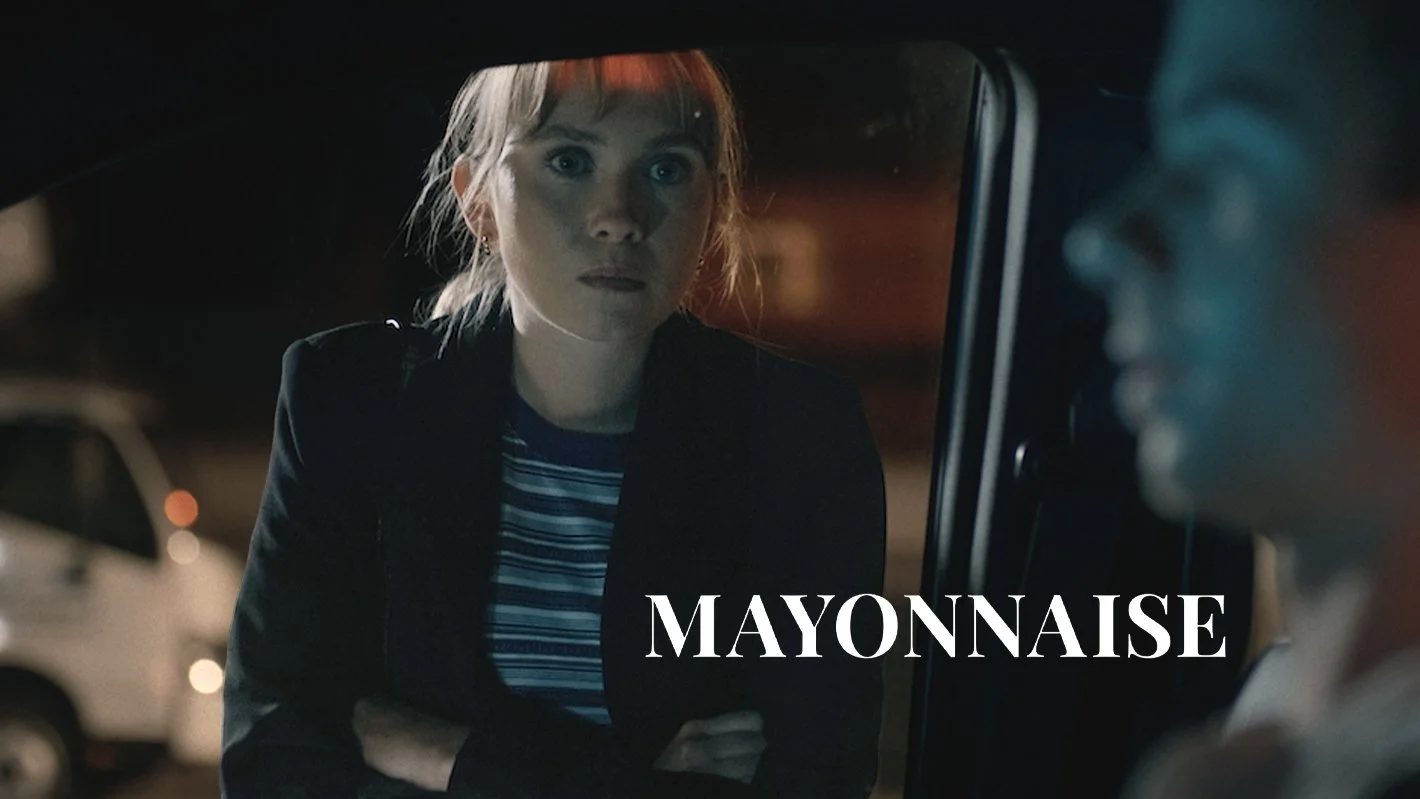
Mayonnaise
A disgruntled film production assistant seeks advice from a young, eccentric producer with sadistic tendencies.
Written & Directed by Eli Speigel
Produced by Joshua Rosen, Dan Feldman Green, & Zack Khan
A disgruntled film production assistant, Sam, carries out menial tasks handed down to him from his out-of-touch production manager. His final task of the day? To drive home the unusually young and abrasive producer, Sarah. During the car ride, Sam reveals his dreams and aspirations, but he is confused and frustrated with the unclear career paths in Hollywood. Enviously, he asks Sarah to reveal the secret is to her success. Sarah agrees to reveal her secret, but in exchange Sam must first fulfil a strange request.
ABOUT THE FILM
Mayonnaise premiered at the Naked Mountain Independent Film Festival in New York, and had its Canadian premiere at the Toronto Shorts International Film Festival. It was also Semi-Finalist at Hollyshorts & Flickers Rhode Island International Film Festival, both of which are Academy Award qualifying. Mayonnaise was nominated for Best Comedy at the Lonely Wolf Film Festival and the Climax Critics Awards. Veronika Slowikowska was Nominated for Best Actress at Film In Focus for her role as the sadistic producer. It also screened at the Pendance Film Festival.
ABOUT THE FILMMAKER
Eli Speigel is a freelance director and editor born and raised in Toronto. His work spans from comedy shorts to sizzles for global toy companies, documentaries to music videos, talk-shows to advertisements and so on & on… & on.
Eli studied theatre and philosophy at the University of Guelph, but after being told that no one would be interested in the stories he wanted to create, he soon left the world of theatre behind him to pursue film.
In 2015-2017, Eli ran around with a camera and some friends and made some short films that he's a little embarrassed of now, but it lead to him creating the web series talkshow, Liver Than Live, which NOW magazine said "thrives on spontaneity by putting live performances at the forefront" and that's... pretty good! In 2018/2019, Eli directed and edited the web series, Blood, which premiered at the New York City Web Fest.
In 2020, his short film, Stain, participated in the Short Film Corner at the Cannes Film Festival, and later won Best Concept at the Lonely Wolf London Intl Film Festival, as well as being included in the IMDb Top 10 Nominees for Best Short Film. We’ve previously featured Stain in our Kino Short of the Week series.
Currently Eli has been editing for the YouTube channel, Dan and Riya and shooting for How to Cake it. This year Eli’s also released his feature-length cinéma-vérité film, Plains.
READ OUR INTERVIEW WITH ELI
Welcome back to our Short of the Week series. What have you been up to since we last featured your film Stain?
Good to be back. Around the time Stain was shot, I shot a feature-length quasi-documentary called Plains with Romanne Walker. That will hopefully be streamable later this year. During COVID/lockdown-ish times, I made a short documentary called Tarana Ding Dong. Since then I’ve been gigging as an editor, director and videographer, and was able to save up some money to make Mayonnaise. And then in June, I hope to shoot a very short short, and then hopefully get approved for a grant to shoot a bigger short in the fall.
Tell us about the genesis of Mayonnaise. What inspired this film?
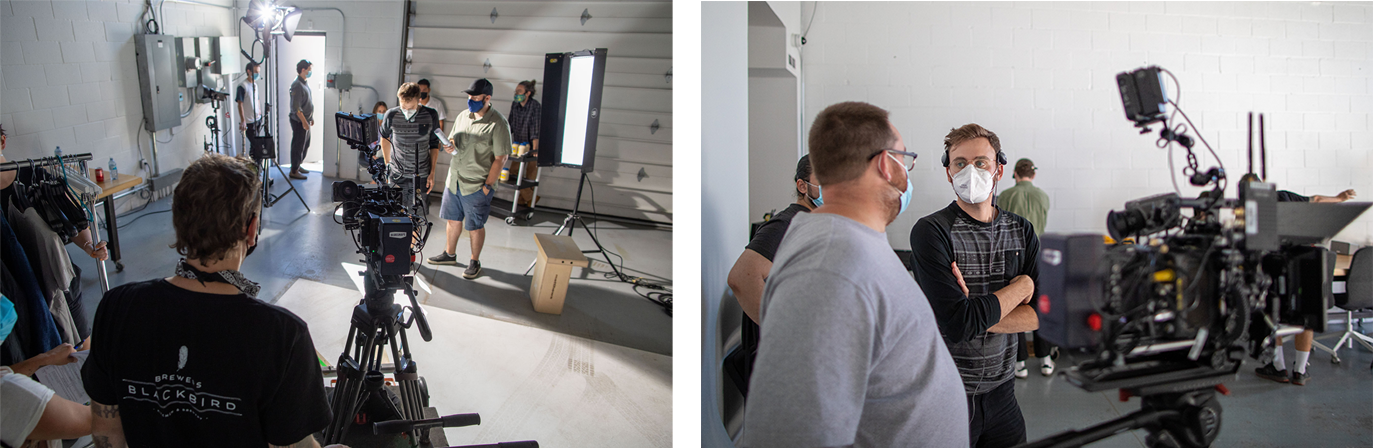
Mayonnaise is an amalgamation of experiences from my time working as a production assistant in the strange and busy world of commercial film sets in Toronto. Some of these experiences come from as far back as 2015, so I wrote the script based on how these things felt rather than trying to recreate the situations verbatim. I let the fallibility of my memory and some of "what-if" daydreams dictate the action and warp the stories into something more absurd, but also more involving for the viewer.
Mayonnaise appears to be birthed out of the very real struggle of people trying to break into the creative industry, searching for answers or their big break, and instead always finding people who want to take advantage of them, so... What’s the secret? What the fuck am I missing here? What ass am I not kissing? What inbox am I not stuffing with pathetic solicitations?
HA! The response to those questions lies in the conclusion of the film! The only commentary I can give is that the search and pursuit of the “big break” typically places value in the wrong places and makes yourself vulnerable to be taken advantage of by people faking auspiciousness. Or worse, you take a job believing it will provide you with the means for upward mobility despite the fact there is little evidence of such a thing. I stayed in shitty jobs (like being a production assistant) because I told myself I was working towards something greater, when in reality I was just in denial about having a dead-end job. It feels odd to say this as a person without a “big break” but I’ve felt real value in sticking to my guns and creating art that I want to see, and cultivating a community of energized and likeminded others that want to see and make weird videos and movies.
You have a very unique sense of humour, and clear voice and style as an artist. How have you worked to develop your voice in an authentic way that helps your work stand out in a crowd?
Thank you. I guess I try to embrace the thoughts and ideas that scare me or freak me out. Creatively though, that kind of sounds like I’m embracing being possessed or something. When I have a weird dream/daydream, intrusive thought, or just a memory of something strange happening to me, I try to write it down, visualize it, and then format it into a script. Once it’s written down, there’s an opportunity for me to start putting together bigger ideas that pertain to psychology or philosophy… or just something that makes me laugh. Fleshing these things out is a way I can come to terms with any kind of darkness in my life or beyond… and using comedy to laugh at darkness is the best way I know to have catharsis.
What obstacles did you overcome while in the making of this film?
TIME AND MONEY!
It’s the killer of creativity in film (and probably most things).
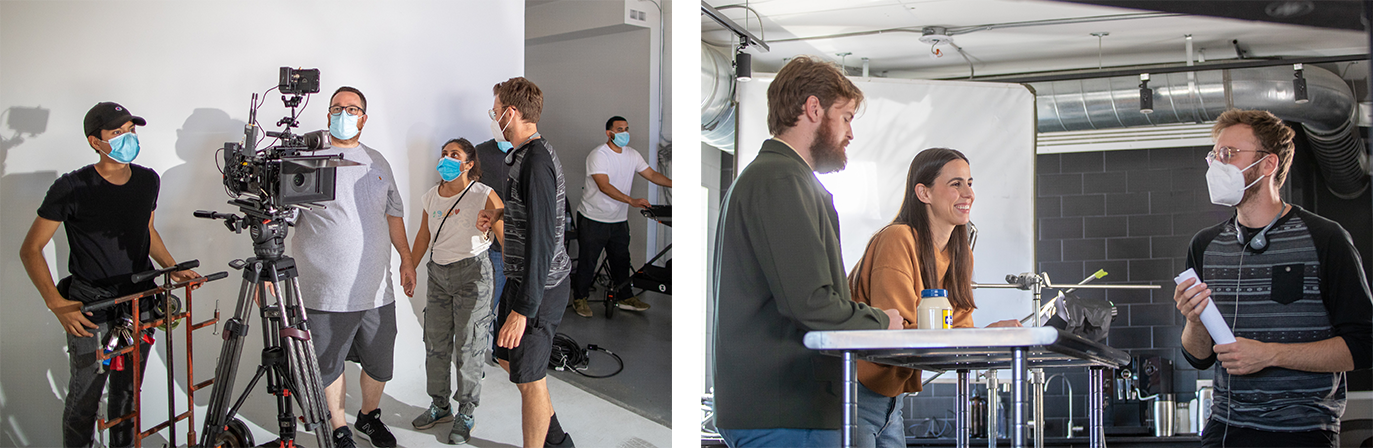
Being on set is stressful because it’s hard to push past these glaring worries and just focus on making the film the best it can be. I would have liked to spend more time shooting this movie, an extra day even… but it was simply WAY out of the budget, and I was mostly spending my own money. I overcame this by doing what I could with what I had and asking a (great) crew of people to work a little harder and longer in those two days than they had probably anticipated. After we finished filming, I had to work a bunch of extra jobs so I wouldn't go into debt.
Tell us about the journey of getting your film to audiences. Did you do the festival route? If so, how did Mayonnaise fair on the circuit? Any highlights? Or have you taken an alternate approach to getting your work seen?
Much like my other short, Stain, the festival circuit yielded some pretty disappointing results and more money spent than I care to admit. I could rant a whole documentary’s worth of material on how terrible it is to be an independent filmmaker with a short film trying to get into festivals, but I’ll spare you. That being said, I do have a lot of appreciation for programmers such as yourself that showcase short films publicly and tastefully. It’s a great alternate route to the traditional festival circuit. The highlights would be watching Mayonnaise at a few local festivals in Toronto and seeing the positive reaction of audiences. It’s also been great meeting other local filmmakers at those events.
You recently premiered your debut feature this year, a cinéma-vérité style film called "Plains". What can you tell us about it and how have you found making the leap from shorts to features?
It's more my collaborative partner's project than mine. I was the DoP and the two of us went out to a small fishing town in South Shore, Nova Scotia to document the lives of our two friends that were living there. My partner, Romanne, saw an interesting premise in that our friends are these two 28 year old art school graduates designing political MORPG games in a small fishing town where the prevailing occupation is lobster fishing with families whose presence there dates back to pioneer times. It was very bare bones, very cinema-verite. Just two people running around with a camera. We shot it in the summer of 2019. The COVID lockdowns in early 2020 saw everyone involved moving to different parts of the country and world (except for me lol) and the post-produciton process got put on hold for a long time. We were able to finish in 2022, premiered in Toronto this February, and it will play again at the Halifax Independent Filmmakers Festival in June. Hopefully after it will be available to stream. I left it out of my previous answers because this isn't REALLY how I would make the jump from shorts to feature. If I were to do a feature, it would be narrative and require a lot more than just two friends filming two other friends. It was a very cool opportunity ,and I'm glad we seized it and were able to churn out an hour of really visually interesting stuff.
What do you think is the biggest challenge short filmmakers face trying to break into the industry?
Time and money again.
I was listening to a local filmmaker and artist named Isaac Roberts talk about his process, and he said something along the lines of: meet yourself where you’re at rather than shelling out for the best equipment. He might not have said it like that but it’s how I've internalized it and remember it. I used to think that I had to shoot on an expensive camera with great lenses, have a big grip and lighting package and lots of crew in order to be taken seriously by the gatekeepers of film festivals and the industry… but I did all that with two short films and they still didn’t take me seriously! And now I’m just missing a lot of money. So for my next short, I’m shooting it on my Sony A7s iii with my G series lens, the crew is going to be me, and sound recordist and an assistant, and the locations are in friend’s houses and places where they work. I'm spending my time and efforts these days trying to figure out how to get the best quality out of what I already own.
Any film recommendations that we should add to our watchlist?
Lately I've seen some great shorts from local/Torontonian filmmakers Ralphael Elkabas-Besnard, Shelby Wilson, Sophy Romavari, Nate Wilson, Kunsang Kyirong, Adrian Patterson, and Matthew Lippman.
Interested in getting your work selected?
STAIN
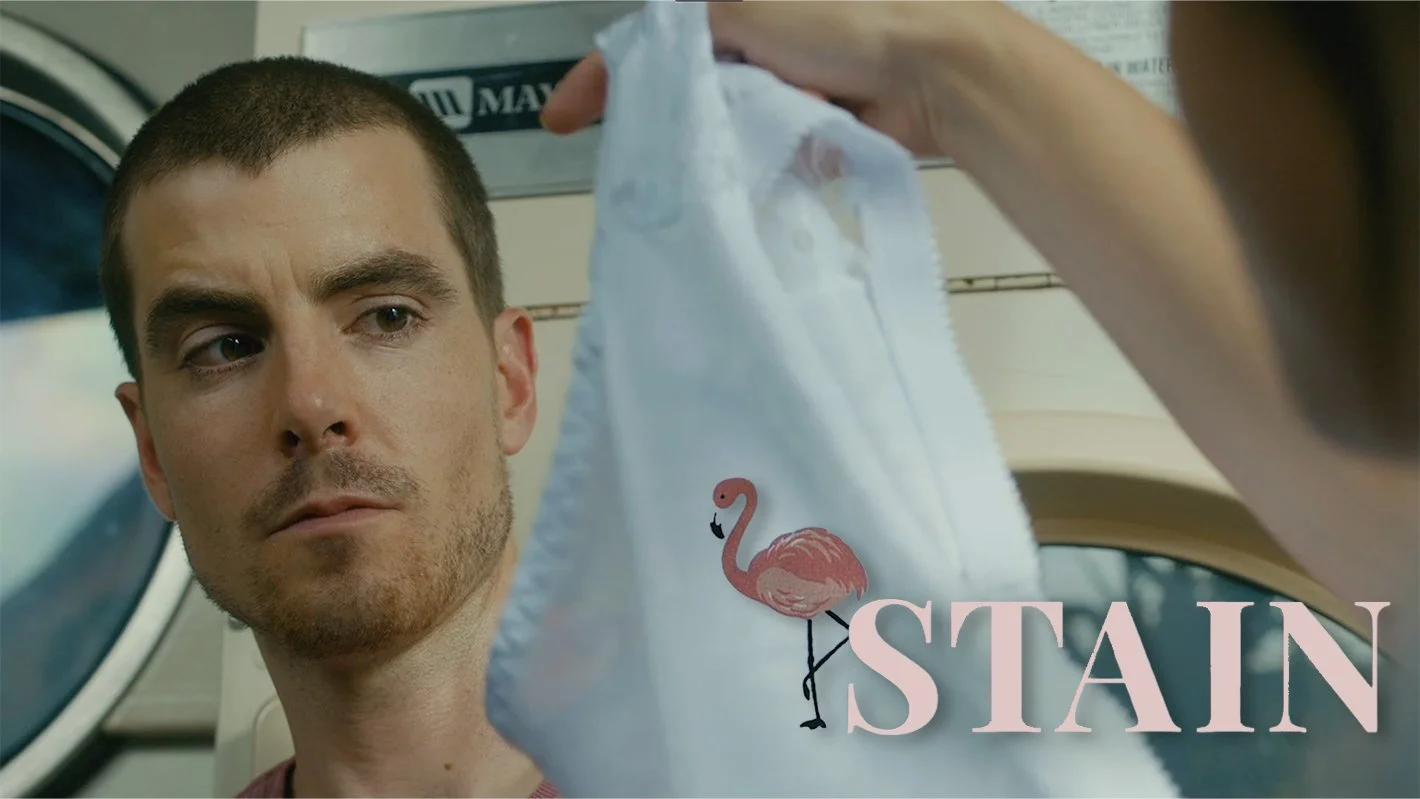
After uncovering a strange stain on his bedsheets, Miles struggles to return to his routine.
Written & Directed by Eli Speigel
After uncovering a strange stain on his bedsheets, Miles struggles to return to his routine.
READ OUR INTERVIEW WITH ELI
Tell us a bit about yourself and your filmmaking background.
I'm a director and editor from Toronto, Canada. I went to school for theatre, I was very interested in the Theatre of the Absurd. While at the University of Guelph, Judith Thompson told me that there's no longer a place for the Theatre of the Absurd in the current theatre landscape, and therefore no place for me. After graduating, and an additional year of drifting around Toronto in a depressed state, I cold-called a production manager and found myself working as a production assistant on commercial sets. I treated these often large film sets as my new school, and gradually learned to shoot, edit and direct on my own. This meant I could make my stupid and absurd scripts into a reality whether Judith Thompson liked it or not. So far, I'm still small potatoes, but I did get to go to New York City for a web series I directed, and I got accredited to go to Cannes to shop Stain in France (it got cancelled, of course, but I had nice daydreams for a few months), among other smaller things.
What was your inspiration behind Stain?
Stain is inspired by experiences I either actually had, exaggeratedly had, almost had, or sort-of had. The first bit of the inciting incident did really happen, the remainder of it is based on where one's mind sometimes goes when faced with a physical ailment that can't immediately be diagnosed. Those flashes of worst-case-scenarios that are often... farce. The setting and supporting characters of Stain are a distorted version of my own. Toronto is often viewed as a "safe and clean" city but in reality, it's a city of strange characters and well-to-do types masquerading as normal people.
We love the absurd awkward hilarity of your film. What advice would give filmmakers interested in making a comedy?
I'm not sure I'm in a position to give advice yet. I can say this though: if you're working in film, and you have a silly idea, and creative authorities around you don't like it, it's probably actually a really good idea and you should do everything in your power to finance it getting made, and well. Take favour jobs from talented people you respect in the industry. You'll likely learn so much from them and can call upon them when it comes time to make something of your own. If you consider yourself a "creative", still take every opportunity to learn the technical side of things. If you're like me, no one's lining up to buy your scripts, or shoot your movie. Fuck 'em. You can do it.
Tell us about the journey of getting your film to audiences.
It sucked. I finished post around October/November of 2019 and then spent a bunch of money to send it to "reputable" film festivals. These festivals all got screwed up by COVID, which is of course not their fault, but they decided to remedy the situation by just doing it online, not giving you a refund, delaying dates, and demanding your film stay private during that delay. The best part of these fests is supposed to be the theatrical experience, rubbing elbows, parties, etc, POOF. Eventually I turned my sights to Vimeo channels and websites like Beyond the Short, Film Shortage, Kino, Boom TV and others that have excellent programming for short films and it's all public. It costs either nothing or 5-10 bucks to submit and they get back to you in a few days. So everyone can watch it now! And it's not just clicking the "public" button on Vimeo, it's much nicer. People care.
Also Shoutout to Plastic Attic for talking to me about Stain. They're very good. Give 'em your attention.
Any film recommendations that we should add to our watchlist?
When it comes to shorts, there's a very long list. So I'll make a slightly shorter list of sites that program great stuff. In COVID times, ripping through great shorts is an excellent way to pass the time and see great filmmaking in quick hits.
I really like these sites and Vimeo channels: Director's Notes, Retrospective of Jupiter, Kino Short Film (hi!), Short of the Week, Beyond the Short, Booooooom TV, Film Shortage, Nowness, Director's Library, Divert Your Eyes