
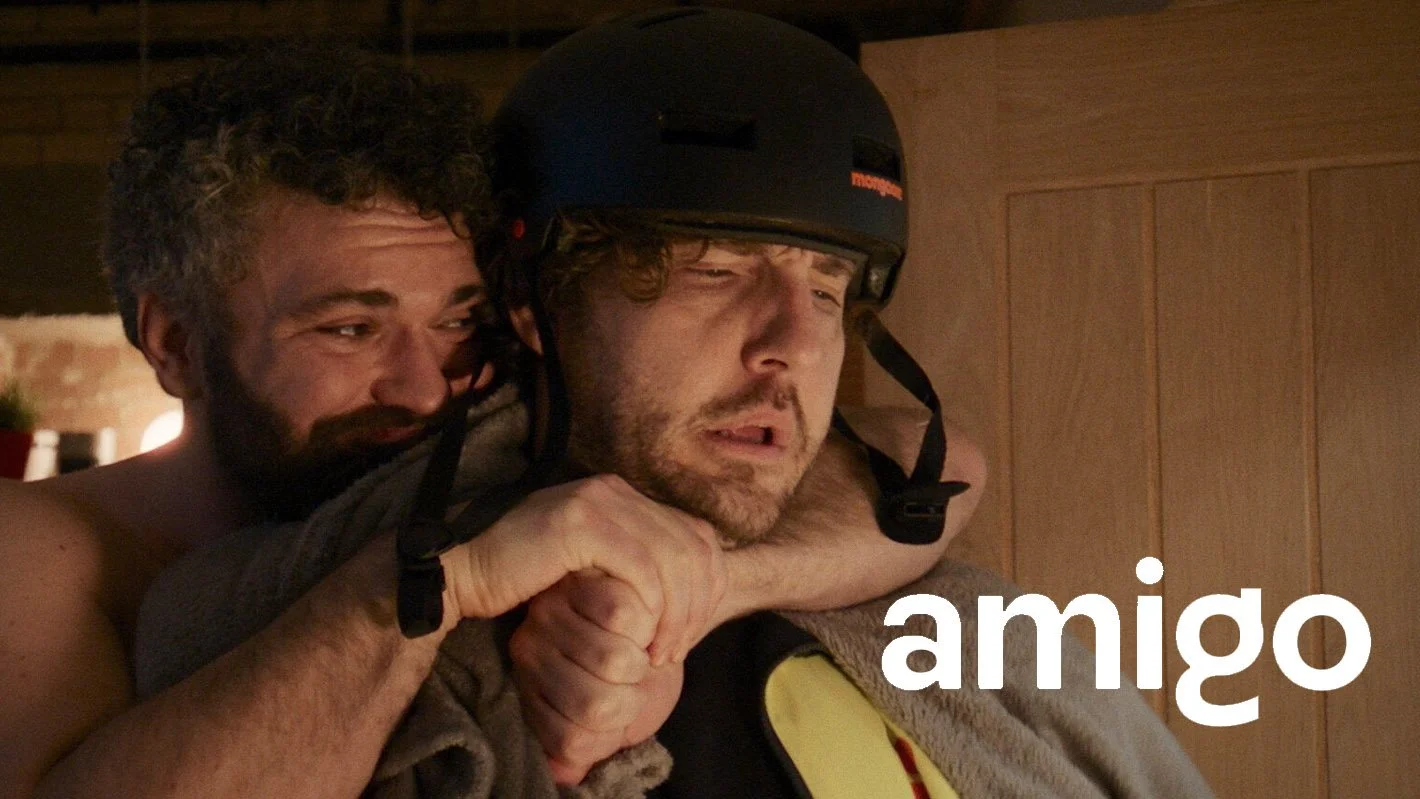
Amigo
'Amigo', the rent-a-friend app has taken London by storm. An unfriendly Amigo's life comes crashing down when he finds out his life is a lie.
Directed by James & Harrison Newman
Written by James Newman & Tom Waterhouse
Produced by Guy Lindley
'Amigo', the rent-a-friend app has taken London by storm. An unfriendly Amigo's life comes crashing down when he finds out his life is a lie.
ABOUT THE FILM
AMIGO was an Official Selection at the 2025 edition of our BIFA qualifying Kino London Short Film Festival. Other festival highlights include the BAFTA qualifying Bolton International Film Festival & Aesthetica Film Festival. It also played at Discover Film Festival, Indie-Lincs Film Festival, Northampton Film Festival, and Cardiff Mini Film Festival. It was released online by Directors Notes.
ABOUT THE FILMMAKER
James Newman is an award-winning writer-director from Reading, Berkshire, specializing in comedy. With 7-8 short films and an award-winning feature screenplay under his belt, Newman has quickly become a rising force in British independent cinema.
Starting as a runner in Soho’s production companies, he’s since earned 2nd place at Slamdance’s Short Film Screenwriting Competition, 2nd place in The Pitch Film Fund, a British Short Film Award for Best Comedy, and Best Short at our very own Kino London Short Film Festival.
READ OUR INTERVIEW WITH JAMES
Welcome James!
You’re no stranger to Kino. Your film Viskar I Vinden won the 2022 edition of our festival, which awarded you our film fund to help make Do Not Touch - your first collaboration with comedian Sean Walsh. Now you’ve teamed up with Sean once again on your latest film to have just come off the festival circuit, Amigo.
Can you talk about how you came up with the idea for Amigo and how it was initially developed as series, and why you decided to pivot to make it as a short film instead?
So initially, it was about a prostitution app like Uber, and the lead would have been a male prostitute. We wrote that as a TV pilot around 5 or 6 years ago. But we pivoted as the storylines we came up with were about people being lonely and not using the app for sex, but for companionship. And then we thought that there was something in that—the core of the idea is about lonely people desperate to connect with someone. The most valuable thing I’ve learned from going to short film festivals is that all cinema and media which involves storytelling is about human connection, or the lack thereof.
Currently, you’re branching out as you gear up to make another short, The Ladder. You often co-direct. Will this be your first time solo-directing a short?
This isn’t my first time solo directing—I directed my first short, Viskar I Vinden, on my own. But I have co-directed recently on The Pitch’s new comedy short, Kitty, with Lizzie Hart, which I didn’t write. It was incredible to come in on a project that I hadn’t been involved in the writing process for. It’s so far away from what I normally do—it’s super duper charming and sweet. It was really nice to play in someone else’s really well-constructed world.

Join us for a sneak peak at THE LADDER
We’ll screen the key creative team’s previous works + do a public table read of upcoming work in order to get audience feedback.
All proceeds to go directly to topping up production funding for The Ladder, shooting early 2026.
In the past, what has been your motivation to co-direct in most instances & what excites you about helming the director’s chair solo this time around?
The motivation to go back to being solo is that I really enjoy the full responsibility of the film. I want to become a better director, and I think the way to do that is to be fully responsible for all areas of the production rather than delegating between two people. With Kitty, I was more of a conduit for the crew and technical aspects than the actual story and world, whereas I want to stretch myself and get out of my comfort zone to do things that I’m creatively excited about. With the rise of AI, I think we need to tell more human stories and have choices that the characters make that an LLM won’t agree with but makes sense to humans.
The Ladder will be another Kino Original, making you the first filmmaker in Kino’s history to have been granted funds twice. What’s your secret to closing deals to secure funding?
I think the key is to try to outwork your competition. Enter everything, as I think it’s a numbers game. Do your research—what are they likely to commission? I think the key is to write things that interest you rather than trying to win the fund, otherwise people will be able to sniff it out, especially when it’s made and screening at festivals.
The Ladder has also been shortlisted for several other funds including Slick Films, From The Silver Screen, First Flights & more. Can you talk a bit about your funding strategy?
To be honest, I’m very surprised we’ve gotten into the finals or been longlisted for like 75% of the funds we’ve gone after. I think it’s actually quite bizarre. I’m not sure if it’s the subject matter or that it’s quite relatable and speaks to something people are feeling at the moment? But I think the strategy is: package it nicely, reach out to talent and get them attached. I think the goal is to make an undeniable film where everyone can see it doing well on the festival circuit.
Many short filmmakers struggle with even getting in the room to pitch, so well done on making it the room so many times. What do you think within your work and your funding application materials has made the difference to get such positive reception?
I think the subject matter of the housing crisis and intergenerational inequality is something I’m quite angry about, and it’s blended with real experiences with a bailiff. And it’s from lived experience of being really poor in London that I don’t think sounds like a repurposed Guardian article. It helps having producers like yourself and Guy Lindley on board, and a great creative team with Nathan Claridge. I think what’s helped me was going to a webinar with First Flights about what they care about in a funding application, and that helped. I think they have some resources on their website. But I think having a story that connects and characters you care about are crucial, because if you don’t have that, you don’t have a film, in my opinion.
Recommendations to add to our watchlist? Give us 1 short, 1 Hollywood feature, & 1 indie feature.
Short: The Farm
Feature: Bugonia
Indie feature: Grand Theft Hamlet
Interested in getting your work selected?

High Beams
In the early hours of the morning, two best friends must journey home from a party off the M25 amidst a visitation from the past which tests their limits and their friendship.
Written & Directed by Flora Scott
Produced by Diana Amado, Flora Scott and Charlotte Favre
In the early hours of the morning, two best friends must journey home from a party off the M25 amidst a visitation from the past which tests their limits and their friendship.
ABOUT THE FILM
HIGH BEAMS premiered online with Girls in Film and was a Semi-Finalist at our very own Kino London Short Film Festival. Online festival & screening highlights include Minute shorts, Somesuch Director’s showcase, and Filmfiles Emerging Filmmakers showcase. It also screened at The Photographers Gallery in July 2024 for the exhibition ‘Meditations on Love’ and was a special selection at Women winemakers Biennale.
ABOUT THE FILMMAKER
Flora Scott is a photographer and director born, raised and based in Hackney, London. After picking up her dads old camera at the age of 16, Flora began capturing the lives of the people around her, exploring how family can be formed outside of the traditional sense of home.
Flora has exhibited at The Photographers’ Gallery London, and been published in Women CineMakers Biennale 2024, Guap Mag, 6 FT Zine and online at I-D, Dazed and Vogue.
Flora is currently freelancing with the long terms of directing feature films.
READ OUR INTERVIEW WITH FLORA
Welcome to our Short of the Week series. Tell us a bit about yourself and your filmmaking background.
Thank you for having me and High Beams! This is my debut short film, finished in early 2024 with a debut performance from Connie Swift who plays Dani in the film and has never been on screen. My filmmaking background was birthed as an only child left to their own devices - watching countless films on my own. I came to understand early on what I loved about a film is its uniqueness, especially across drama, horror and sci-fi. Over time and after attending Ravensbourne’s Foundation diploma specialising in film and a BA at London College of Communication in Film Practice, making films became more tangible.
Tell us about the genesis of High Beams. Where did the idea come from and how did you develop that idea into the short that's now made its way out into the world?
High Beams is heavily inspired by experiences of my own as a young person in tandem with some of the things I was witness to in my friends’ lives - I wanted to write something that could speak from the point of view of a young woman grieving whilst also the friend on the other end trying their best to be there. It felt important to me to make both points of view feel felt. It also felt important for my first short to be grounded in my own experiences. The rave scene at the beginning is directly inspired by a squat rave we attended as 15/16 year olds off a motorway in Barnet.
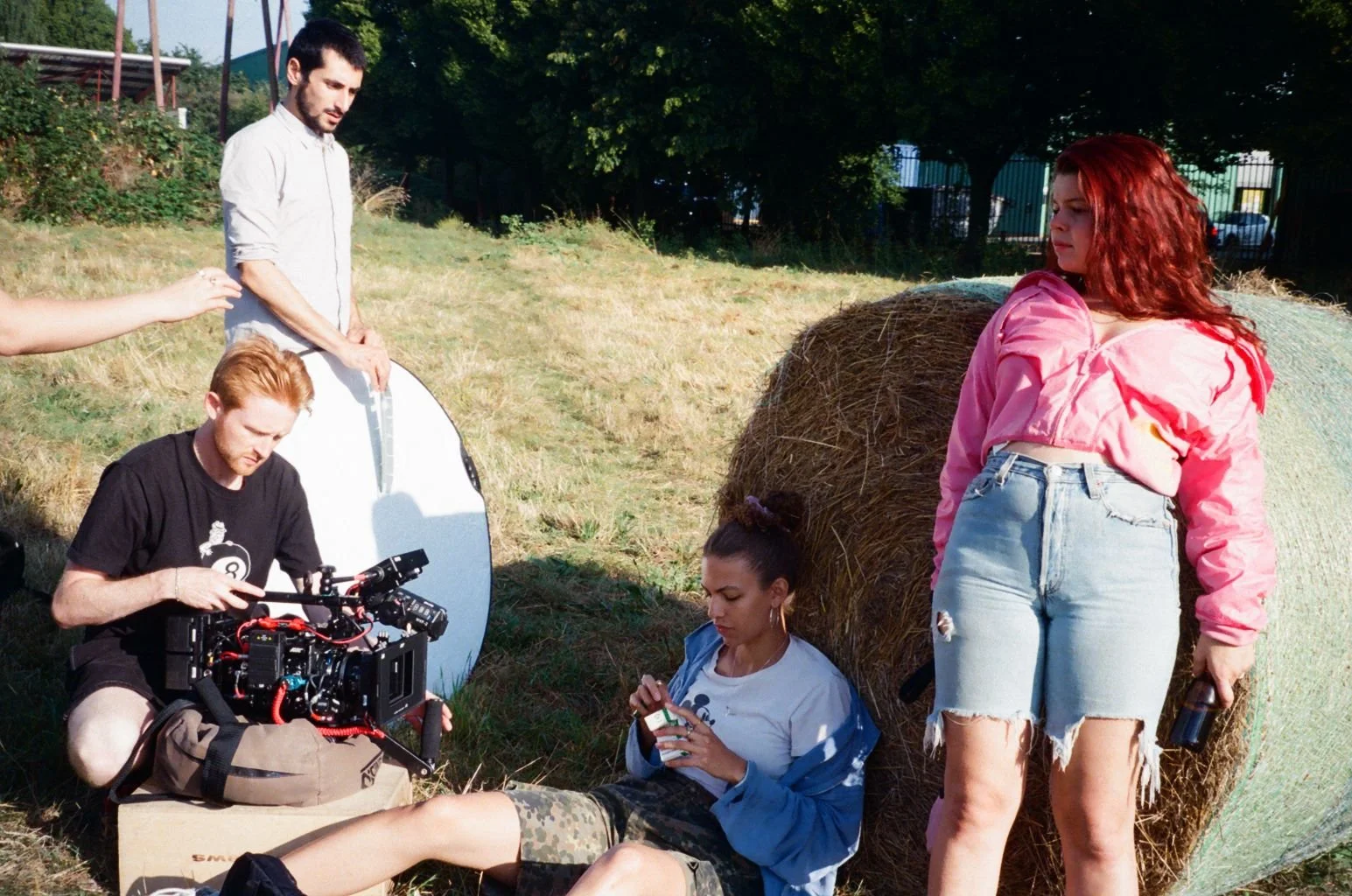
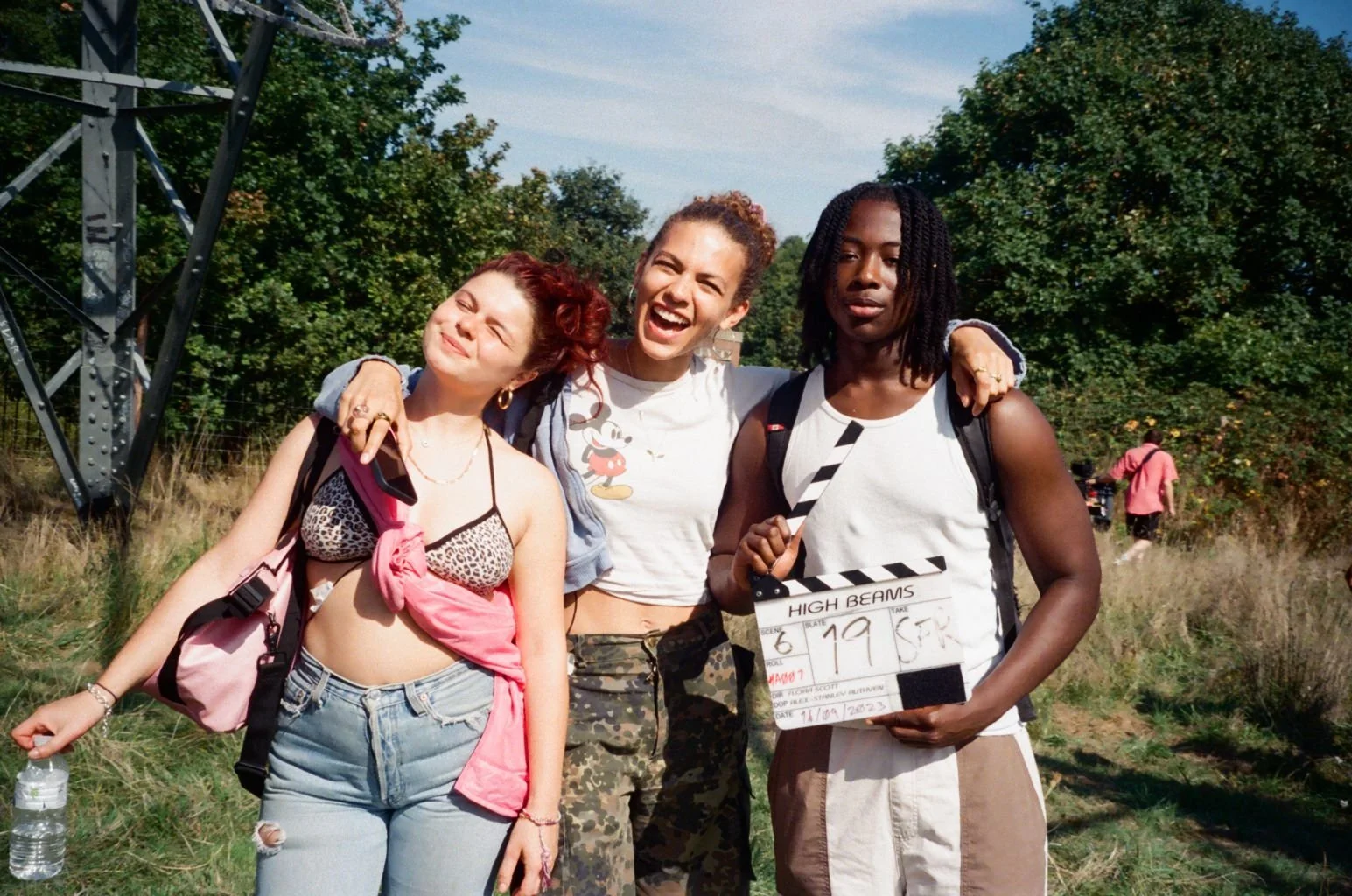
What were some of the main obstacles you experienced when making High Beams and how did you overcome them?
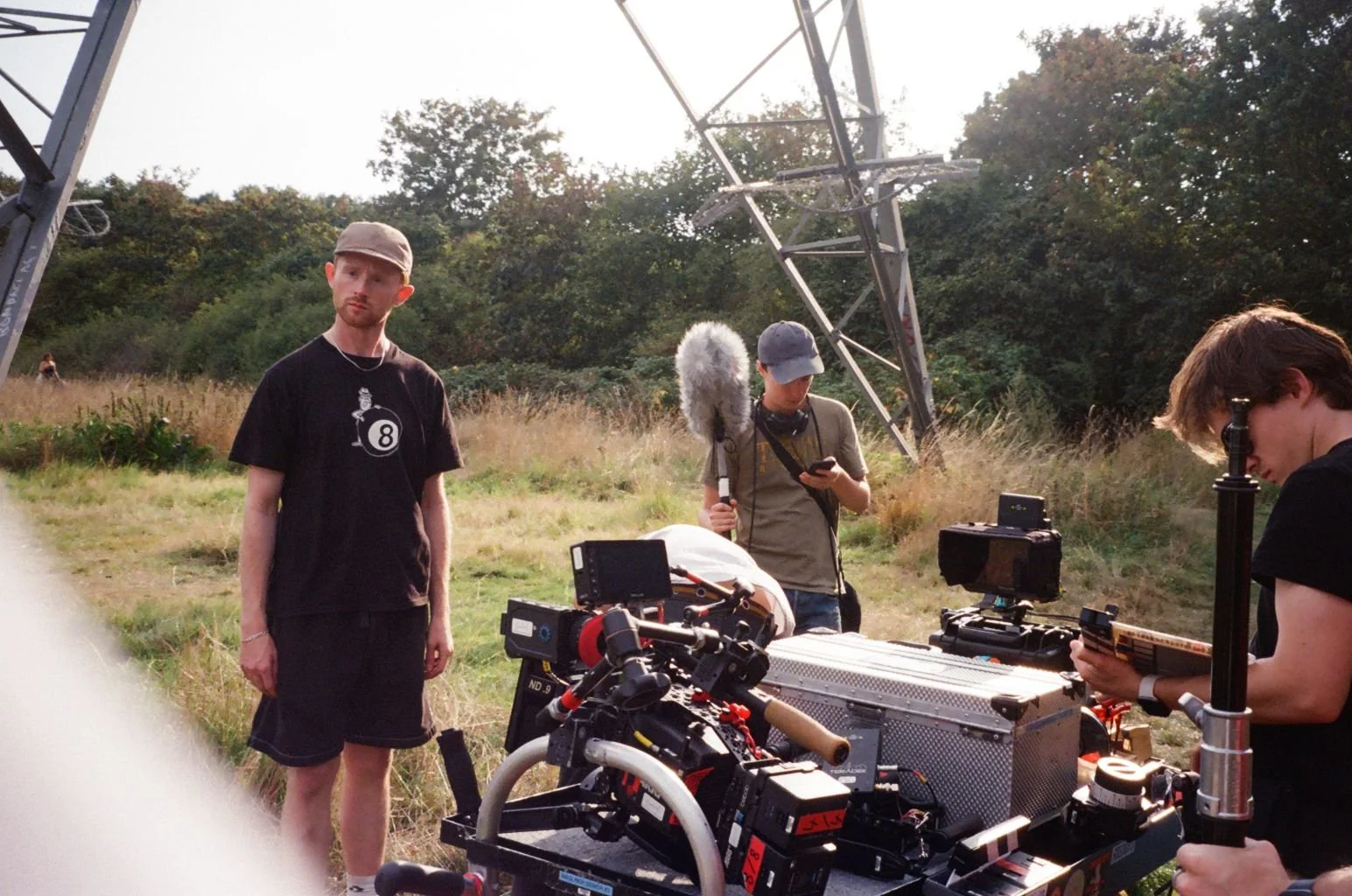
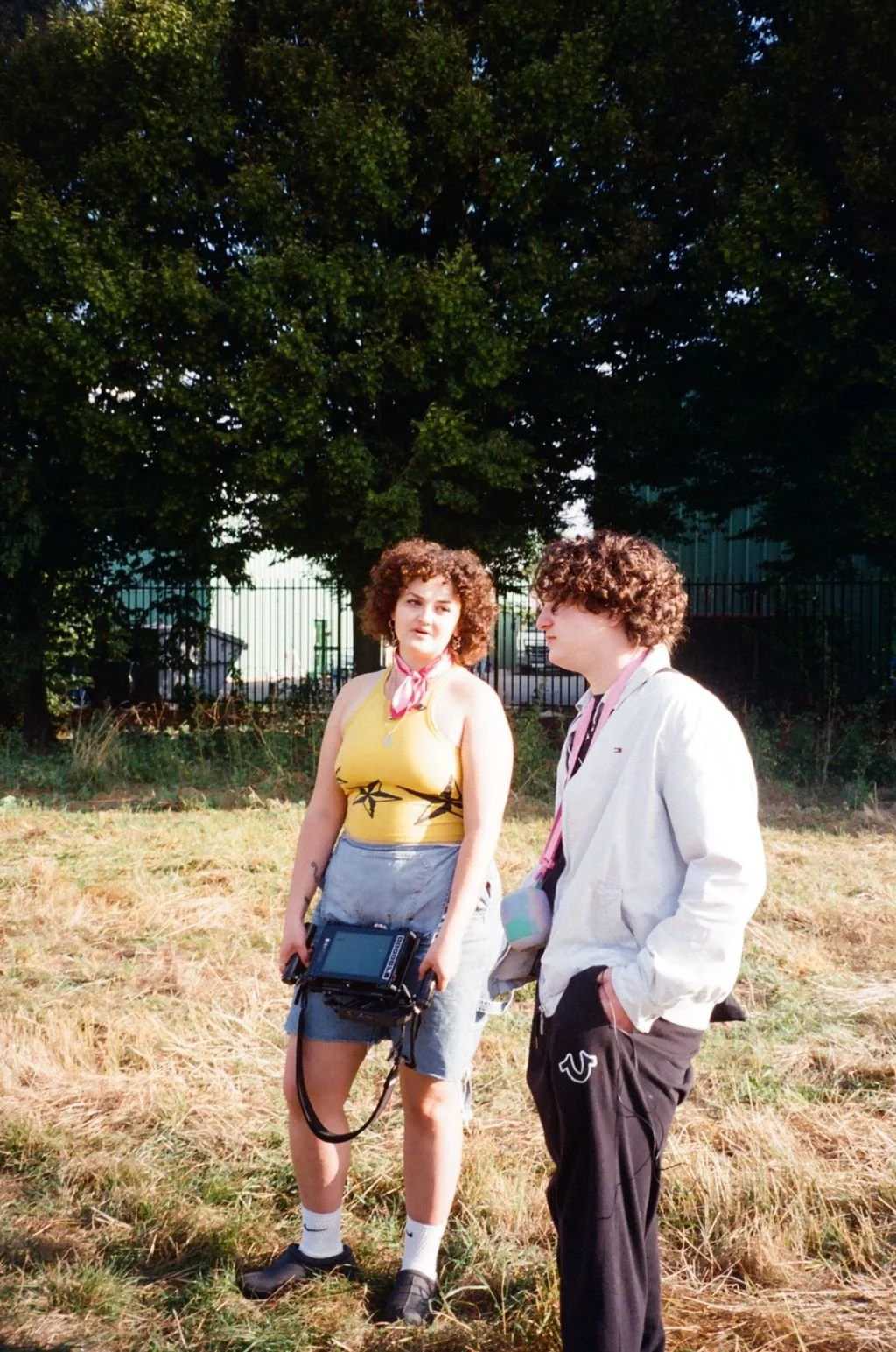
My producer unfortunately fell ill (she is ok now!) a week prior to filming was to commence and as she was in Portugal, was unable to come back for shooting. As you can imagine, this made me panic slightly, but in the end we were still able to make things work. Instead for our two days of filmmaking we had two PM’s to save the day - Leyla and Alicia. Aside from that, typical filmmaking travails ensued - we got locked out of a van hired to transport kit, working with a horse for the first time (Ember the horse was very patient) and a super tight window to shoot. All in all I think we did pretty well aside from this!
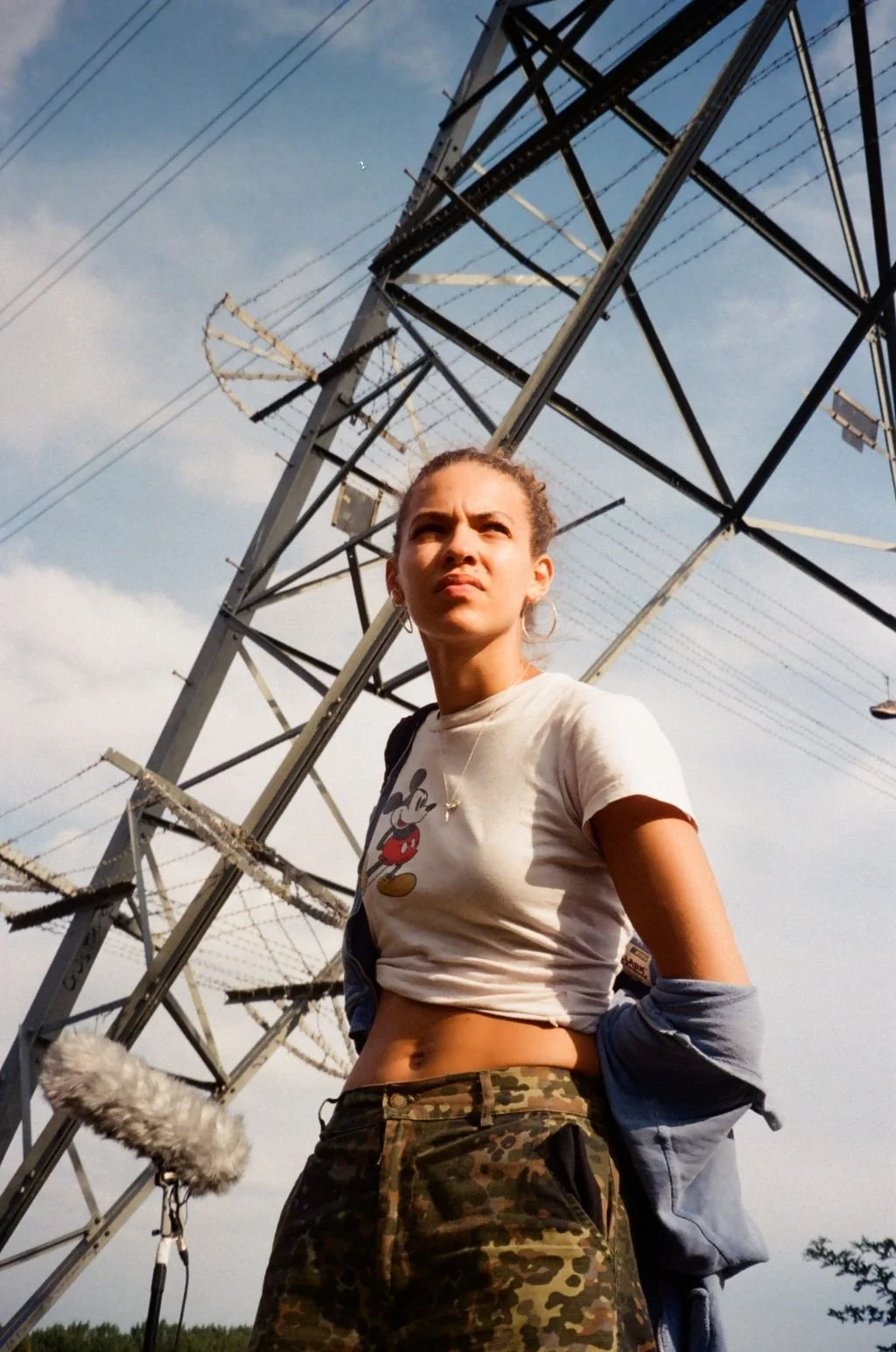
Tell us about the journey of getting your film to audiences and some of the festival circuit highlights and/or online release.
At the moment, although it is now available to watch online at Minute Shorts and Girls In Film we are still submitting for more festivals. We were lucky enough to be a semi-finalist for this years Kino fest! I think our main challenge with this has been the price point of submissions, I’ve taken it as a learning curve to ensure for us to budget appropriately for festival fees for the next one! However, High Beams has screened at some wonderful places so far including The Photographers’ Gallery, for Somesuch’s new director showcase at the Curzon Shoreditch and with Filmfiles at their emerging directors showcase. As this is my first short, I’ve definitely had a welcomed lesson in making sure that the festival side of things is thought about from the inception of the film.
What advice or hacks would you give to other short filmmakers?
1. Stay true to your vision.
2. Collaboration is the root of a film
3. Look at art outside of cinema
4. Welcome the mistakes, they are inevitable and can lead to better creative solutions
Any film recommendations that we should add to our watchlist?
Baghdad Cafe, Atlantics, We The Animals, McQueen (2018) - All not to be missed.
Interested in getting your work selected?
Diary of a Ghost
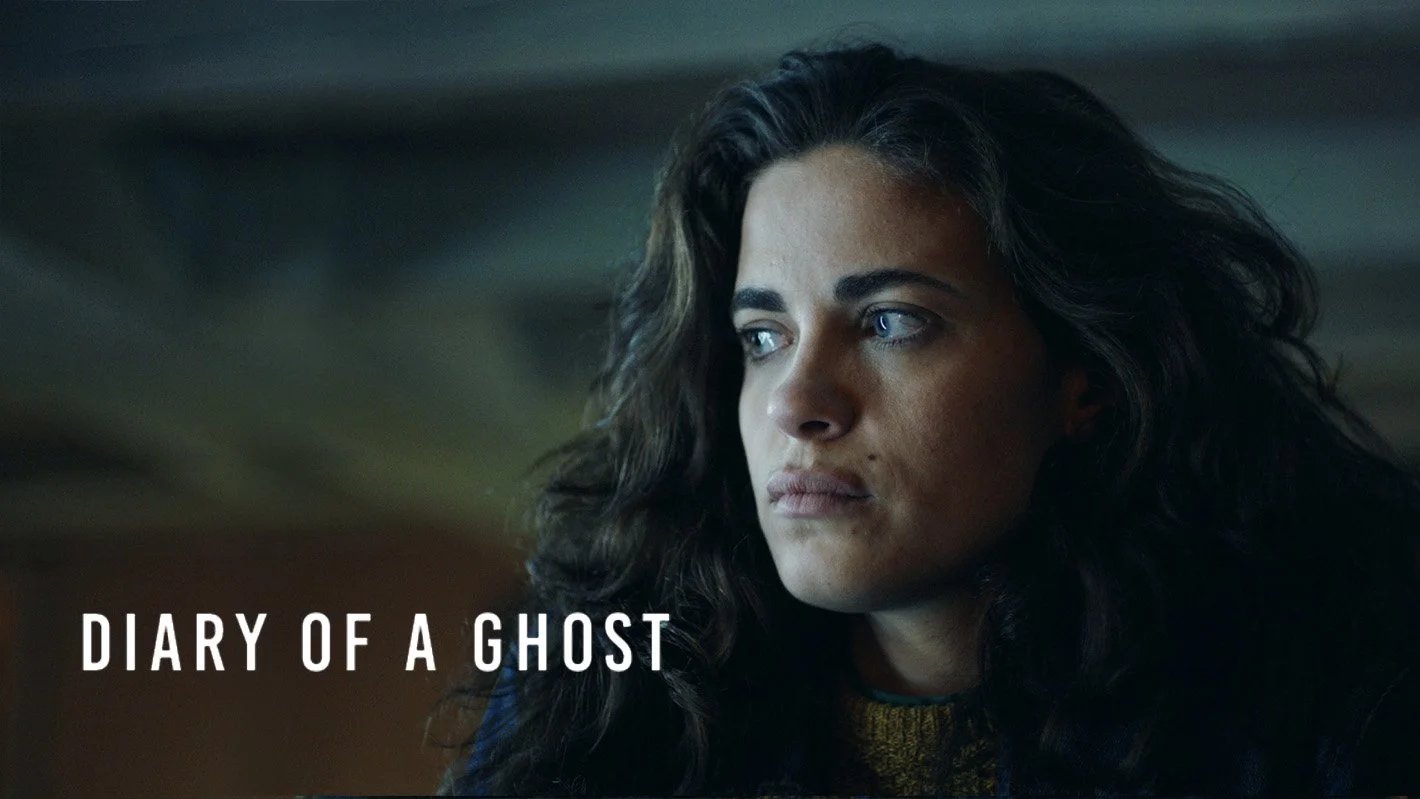
After the loss of her first love, a young woman keeps a diary to process her grief, blurring the line between reality and imagination.
Directed by Caroline Hajny | Written by Maren Koenigs
Produced by Sophia Ogilvie, Caroline Hajny
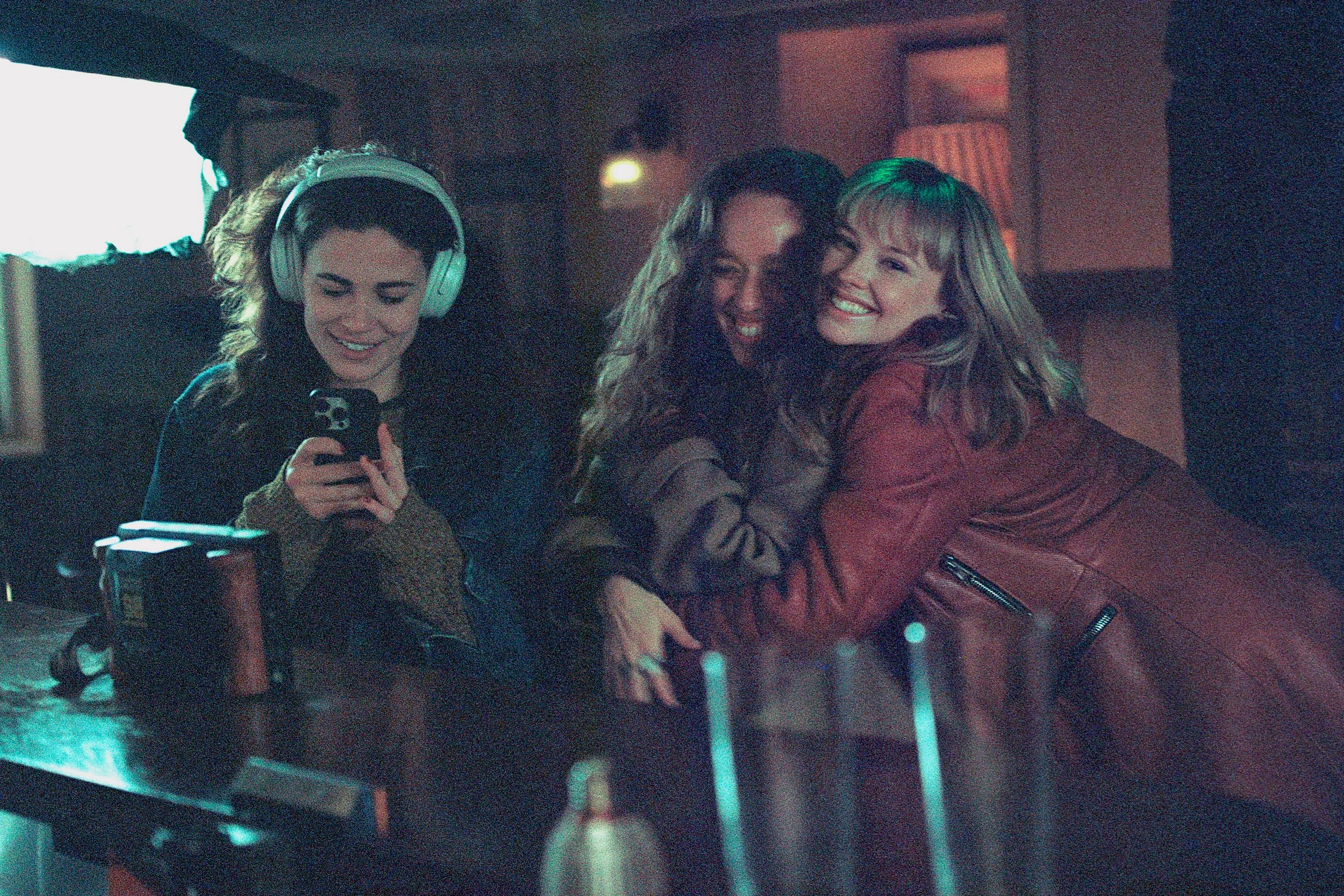
After the loss of her first love, a young woman keeps a diary to process her grief, blurring the line between reality and imagination.
ABOUT THE FILM
DIARY OF A GHOST was a Semi-Finalist at our very own Kino London Short Film Festival and won Honorable Mention at the BIFA Qualifying Brighton Rocks Film Festival, as well playing as an Official Selection at the also BIFA Qualifying Sunrise Film Festival Lowestoft. It was longlisted for the 225 Film Club, and longlisted for Best Director and Best England Film at The British Short Film Awards. Other festival highlights include: North East International Film Festival (BIFA Qualifying), Fastnet Film Festival, Fine Line Film Festival, Ealing Film Festival, and Australia Independent Film Festival.
ABOUT THE FILMMAKER
Born and raised in Germany, Carrie relocated to London to pursue a career in film, where she has been working across fashion, music and commercials since. Her previous ventures into fashion photography and documentary filmmaking continue to influence her aesthetic and approach to working with talent. Since then, her distinct style has led to collaborations with brands and artists such as Puma, Vinted, Dua Lipa, Red Bull Racing, Barbour and Amazon.
Her first short film ‘Last Dance’ premiered at the 2019 BAFTA qualifying Underwire Film Festival, where it was nominated for best U25 production. 'Diary of a Ghost', a short drama exploring grief and mental health, stars Genevieve Chenneour (Bridgerton), Alfie Noble and Mia Rodgers (The Sex Lives of College Girls). Her latest film, ‘Requirements’, a political science fiction drama set in a near future dystopia, is currently in post production.
Carrie has been curating film screenings at Sarah Kravitz Gallery and Southampton Film Week and served as a judge at Fine Line Film Festival in Serbia and the BIFA qualifying Sunrise Film Festival. She is also the co-founder of CHERRYPICK.
READ OUR INTERVIEW WITH CAROLINE
Welcome to our Short of the Week series. Tell us a bit about yourself and your filmmaking background.
Thanks so much for having me and Diary of a Ghost! I’m a German director based in London and I work across fashion, commercial and narrative projects. I started out as a camera trainee - a friend of mine took me under his wing and opened the door to the ‘real’ industry for me after I dropped out of uni. I always wanted to be a director, but working on set as crew was a great way to learn how the industry works, what different departments do, meet people and observe other directors work. I took whatever job came my way, a lot of running, PA’ing, assisting, BTS taking, you name it! Simultaneously I worked as a photographer shooting mainly fashion and live music - I enjoy photography a lot, and it helped me find a style I enjoyed, however for me it was always a tool to meet people: designers and artists I could hopefully direct a campaign or music video for. That’s how I built a reel which allowed me to move into commercials. I often get the sense that in the narrative world commercials are looked down on - for me they’ve been such an invaluable training ground! Over the years I’ve been able to build relationships with crew and actors, which allowed to shift focus on narrative projects.
Tell us about the genesis of Diary of a Ghost. Where did the idea come from and how did you develop that idea into the short that's now made its way out into the world?
Diary of a Ghost was written by my wonderful friend Maren Koenigs and was loosely inspired by her witnessing a close relative experiencing prolonged grief disorder. Her relative struggled to cope with the loss, slowly distancing themselves from the rest of the family and losing themselves in an imaginary world in which the person they lost was still around. Luckily, the family managed to intervene, but Maren took the idea and ran with it, asking herself what might happen to someone who doesn’t have a support network. The film was originally written to be a feature and Maren then turned it into a short!

What were some of the main obstacles you experienced when making Diary of a Ghost and how did you overcome them?
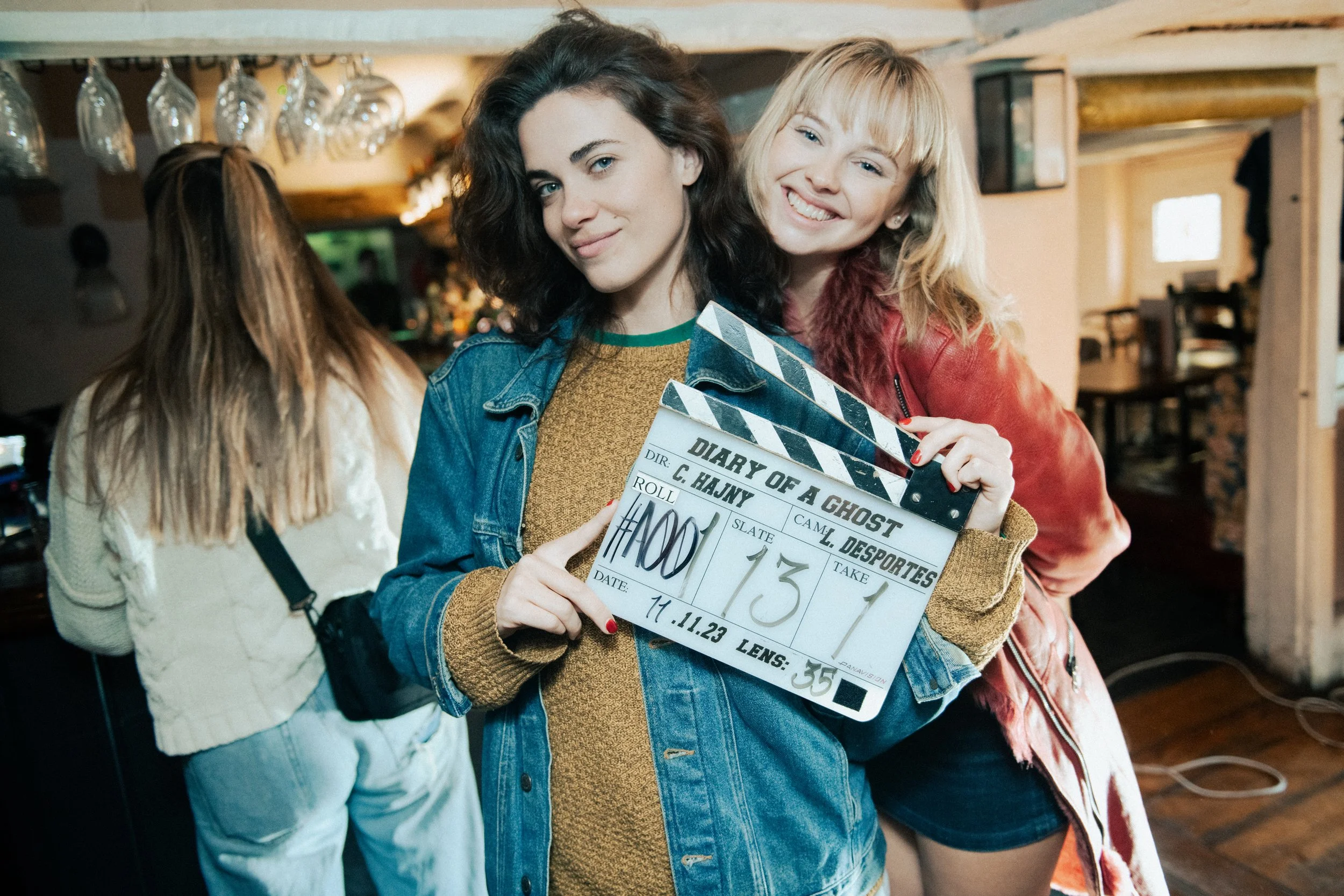
I’m definitely not the first person to mention budget and finances here, but as a self funded project we definitely had to get nifty and call in a lot of favors to make this film happen. We almost lost our main location less than a week before the shoot due to my producer’s grandma’s superstitions, getting a bullet hole into a piece of glass might have involved some dodgy business (we’re not sure ourselves) and filling two notebooks with hundreds of diary entries for authenticity within a few days causes serious hand pain.
We shot the film over the course of 2 days, in 4 different locations - some in central London, but most in Surrey - so I’d say one of the biggest challenges was probably to fit everything into the days, getting everything we needed while still allowing some room for exploration and play and keeping the shooting hours sensible for our crew. Diary of a Ghost explores incredibly sensitive topics and as a director it’s so important to create an environment in which the actors can be vulnerable - however, when working on a super tight schedule that can be tricky.
For example, the second to last scene of Sage and Riley in the living room was shot in only an hour - it’s 6 or 7 minutes long and it’s the emotional climax of the film - but because we had some delays earlier in the day and we needed to leave the location, we had to somehow squeeze everything into the last hour of our final shoot day. It wasn’t easy to hide how stressed I was at that point, but I knew if I didn’t, it would sabotage the performances.

Tell us about the journey of getting your film to audiences and some of the festival circuit highlights and/or online release.
It’s been really lovely sharing our film with audiences - this was my first ‘proper’ festival run, so I don’t have anything to compare it to, but ultimately we make films for the big screen, so it’s always special to see them projected in a cinema to an audience. It’s been lovely to see the passion and interest for short films - we’ve been asked such thoughtful questions at Q&As or after screenings about the story, themes and process of making the film, sometimes people have come out of the screening in tears and that feels like the ultimate compliment to me.
What advice or hacks would you give to other short filmmakers?
Your team is everything, so make sure you find a crew that shares your vision and enthusiasm for the film. Great HoDs can make or break your film and will hopefully elevate whatever it is you had in mind.
Any film recommendations that we should add to our watchlist?
The Lives of Others, The Florida Project and Thelma & Louise
Interested in getting your work selected?

On Purple
Seeking constructive criticism, a couple shares their poetry with each other. But it turns into a condescending competition of who’s the better poet.
Written & Directed BY Joe Quartararo
Produced by Thomas D White
Seeking constructive criticism, a couple shares their poetry with each other. But it turns into a condescending competition of who’s the better poet.
ABOUT THE FILM
ON PURPLE was a Semi-Finalist at the past edition of our very own Kino London Short Film Festival. It’s also played at the New York Short Film Festival and online with Film Shortage and Short Films Matter.
ABOUT THE FILMMAKER
Joe Quartararo is a Brooklyn-based filmmaker and graduate of the film program at the School of Visual Arts. He has been making films professionally through his production company Lakhota Film for over a decade. Joe grew up on Long Island and before going to film school worked as a truck driver, delivering furniture and granite while pursuing filmmaking. His films focus on social class and ambition.
READ OUR INTERVIEW WITH JOE
Welcome to our Short of the Week series. Tell us a bit about yourself and your filmmaking background.
I am a Brooklyn based filmmaker. I have worked, and continue to work in the film industry both in production and adjacent in presentation. Whether it is handling film, 70mm, 35mm and now Vista Vision, or shooting film both digital and analog formats. I am always interested in helping others create and produce their work, in addition to my own creative pursuits. I've been fortunate to be part of a great collective of filmmakers and crew members in NYC, who helped produce "On Purple," as well as many others projects.
Tell us about the genesis of On Purple. Where did the idea come from and how did you develop that idea into the short that's now made its way out into the world?
The idea for On Purple, came from wanting to explore the idea of indirect communication and the dysfunction of relationships. Poetry felt like a fitting device for the characters to use to build off of and illustrate the marital discord without being too heavy handed.
What were some of the main obstacles you experienced when making On Purple and how did you overcome them?
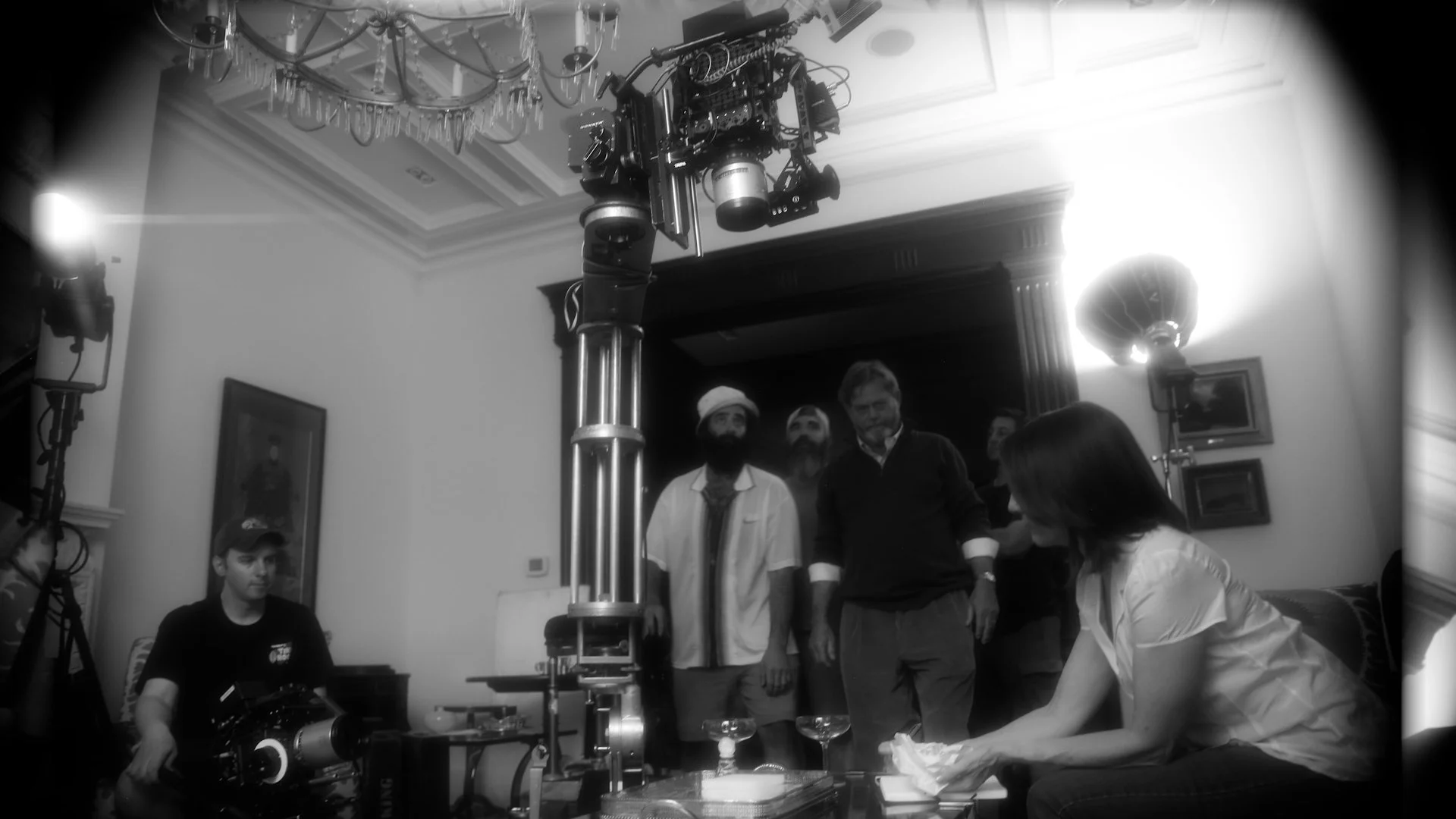
Many of the obstacles we would've incurred on this shoot were mitigated by the technical strengths and expertise of the cast & crew we were very fortunate to have. We shot the interiors of this film in one 10hr day with exteriors shot the morning after for a few hours. The amount of material we were able to cover in a single day of shooting without compromising setups & script is uncommon, and that's coming from experience. Because of their collective preparedness and professionalism we were able to maximize the effect of the film.

The score does a really good job elevating and supporting the film, as well as set the tone. Can you tell us a bit about the process of working with your composer on this?
Really glad you asked that question. I was very happy to have connected with Sam Carey, to compose the music for this film. While editing the film, I felt strongly that we would need an original composition to help elevate the material and Sam excelled at capturing the tone of the piece. He developed a musical contrast for the individual poets, to shed light on the subtext of their characters and importantly guide the viewer. Whereas one poet was erratic and angry, the other was elegant and grand. The associated instrumentation was a deliberate mixture of piano, violin and electronics that said a lot about the ebb and flow of their relationship. I had a great collaboration with Sam on this project, I think we both understood that music could help with detailing that mysterious, cryptic and unspoken thing between the two dueling poets.
Tell us about the journey of getting your film to audiences and some of the festival circuit highlights and/or online release.
We are screening in person in New York next week, and have had multiple online releases (Film Shortage, Short Films Matter, and now Kino). Online releases have been very helpful in that you can reach such a wide audience quickly, although we are excited about screening in person next week, so we can meet and engage with New York filmmakers & producers.
What advice or hacks would you give to other short filmmakers?
Write within your means, write from experience and what you know. If you are passionate about making films, then be around the process of filmmaking as much as you can be. It will not only make you learn to be a better filmmaker, but it will introduce you to the network of people you will need to collaborate with. It truly is a group effort to make a film. Be positive, helpful and resourceful and your film will be better for it.
Interested in getting your work selected?
Also Resisters
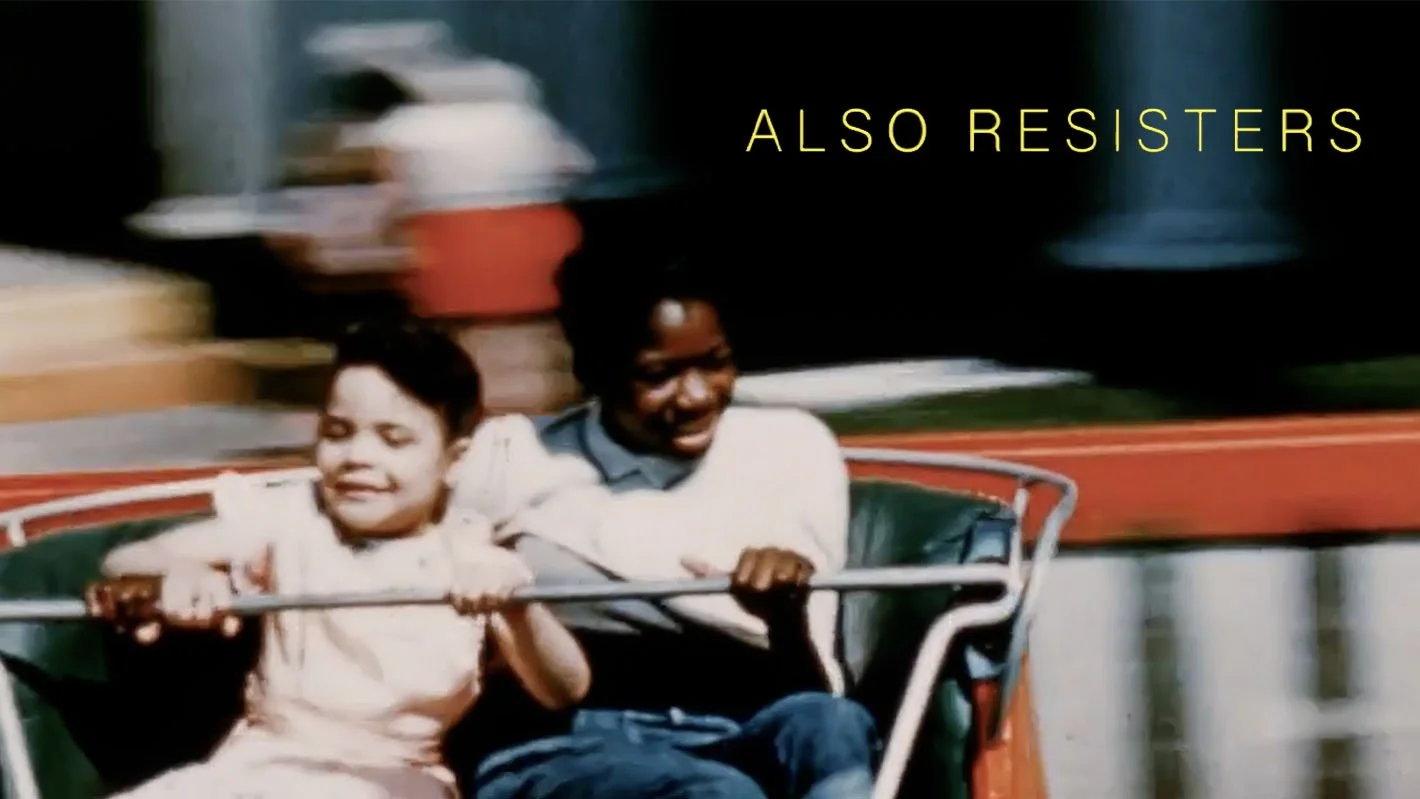
Also Resisters considers solidarity across generations and geography. Adapted from a 1968 essay by the gay American socialist David E. McReynolds, the short archival film takes the images and sounds of the American war in Vietnam to reflect on the feedback loop between militarism abroad and at home — and the people who resisted it.
Directed & Produced Christina D. Bartson
Narration by Sonia Desai Rayka
Also Resisters considers solidarity across generations and geography. Adapted from a 1968 essay by the gay American socialist David E. McReynolds, the short archival film takes the images and sounds of the American war in Vietnam to reflect on the feedback loop between militarism abroad and at home — and the people who resisted it.
ABOUT THE FILM
ALSO RESISTERS premiered at the Big Sky Film Festival. It also played at Mountainfilm, Mimesis Film Festival, Sarajevo Film Festival, SFFILM Doc Stories, DOC NYC, and was an Official Selection of The Smalls.
ABOUT THE FILMMAKER
Christina D. Bartson is a filmmaker and archivist based in London with roots in the American Midwest. Her work explores the political economy of media and how narratives of conflict, social movements, and land are mobilized—and often metastasized—through archival materials.
Her work has been supported by If/Then Shorts and Field of Vision, Arts Council England, 2024 NBCUniversal Original Voices Accelerator Fellowship, 2023 Global Research Initiatives Fellowship (New York University), 2023 Moore Research Fellowship (Swarthmore College), and more. She holds her M.A. from New York University where her graduate research focused on critical media theory, ethnographic cinema, and war media, and her B.A. from Emerson College.
READ OUR INTERVIEW WITH CHRISTINA
Welcome to our Short of the Week series. Tell us a bit about yourself and your filmmaking background.
Thank you so much for sharing Also Resisters as part of this series—it means a lot to be among many talented filmmakers.
My name is Christina, and I’m a filmmaker and archivist based in London, with roots in the American Midwest. Like many of my peers, I came to film in a roundabout way. My first love has always been dance, and I think that sensibility—an attention to rhythm, gesture, movement—still shapes the way I approach storytelling.
Film came later, after years of working as a journalist and researcher, while secretly harboring a desire to put images, words, and music together on screen. At 25, I began working in documentary production and quickly found myself drawn to archival research, which has since become my professional home. My practice as a filmmaker is entirely animated by the archive and my fascination with questions of inheritance, collective memory, and how we can mobilize materials from the past to resist violences, shatter our psychological complicity, and reveal our porousness to others near and far.
My academic background is in journalism and media theory, and my political grounding comes from a Marxist critical media practice. Anti-imperialism, solidarity, mutual aid, and civic engagement are inseparable from my practice. Editing my own work during graduate school was the first time I felt I’d finally found the right form to express, and deepen, these commitments.
I live in archives and libraries, constantly encountering materials that surprise me and move me. Years ago I began keeping a spreadsheet of the gems I found, and eventually started cutting small experiments. That process grew into Also Resisters. Editing has become the heart of my practice—the challenge of assembling disparate fragments into something whole is endlessly compelling to me. I love it.
Because I come to filmmaking with what might seem like a random, patchwork background—dancer, journalist, academic, activist—it may not make sense on paper. But when I sit down to edit, it really clicks. For me, filmmaking is a way of locating myself and others in our complex, confusing, joyous, and heartbreaking world. It’s a way to feel less lonely when we’re puzzling the big questions and trying to metabolize a world that often doesn’t make any sense. Today, I see myself as an artist who is equally devoted to the archive, to writing, to dance, to political organizing, and to my friends.
Tell us about the genesis of Also Resisters. Where did the idea come from and how did you develop it?
The film began with a book I stumbled upon: We’ve Been Invaded by the 21st Century, a 1968 collection of political essays by the American socialist and nonviolence activist David McReynolds. I fell in love with his voice—flawed but deeply moral, incisive, and resonant with my own experience of being politicized by living in the heart of the very violent and undemocratic empire called America. For David, it was the American war in Vietnam; for me, it has been Israel’s genocide in Palestine. He was a twenty-something in New York protesting daily; I was a twenty-something in New York protesting nightly. Reading his work was a way of locating my grief and rage in that of another generation.
While researching David, I discovered Googling him one day that he was also a gifted photographer. I found a website showcasing his images and sent over a message to the email listed asking about the archive. Then something totally odd happened. A woman named Ruth responded – she is an activist and an old friend of David’s who worked for many years with him at the War Resisters League. It turns out that Ruth holds his archive and lives just blocks from my old home in Brooklyn. She invited me over to her house the next day. That encounter sparked one of the most extraordinary friendships of my life with Ruth and her husband Ed, both longtime activists. I spent much of 2023 and 2024 sprawled across their living room floor, sifting through David’s images while having the most incredible conversations about politics, war resistance, cats, art, love, and everything in between. They are still dear friends and when I go back to New York for DOC NYC this November, they’re among the people I am most excited to catch up with.
At first, I imagined the film might be biographical. I even spent time at David’s archive at Swarthmore College as a research fellow. But gradually it became clear that what I wanted to explore was solidarity, especially intergenerational solidarity. So I returned to the essay that first drew me in. My best friend Sonia – who is also the greatest artist I know – recorded herself reading a passage, and I began cutting archival footage to her voice. The first sequence I assembled became the center of the film, and it’s remained virtually unchanged since.
The film is ultimately about how young people locate themselves in histories of resistance—because David believed, rightly I think, that young people not only have a strong moral compass but act on it. That belief runs through the film’s images and sounds. And actually, I should mention that all of the images at the end of student protests are photographs taken by other student photographers.
What were some of the main obstacles you experienced when making also resisters and how did you overcome them?
Audio turnover. Honestly, audio turnover is excruciating. I watched probably dozens of YouTube tutorials and phoned my best friend Elisa, who’s an incredible editor, whenever I got stuck.
The bigger, recurring obstacle was the research itself. When you’re working with archives, the temptation is to never stop—there’s always one more box, one more reel. Part of the discipline is knowing when to step away and start shaping what you already have.
I’m drawn to archival footage precisely because it forces us to confront what we’ve inherited. The archive is both a repository of history and a technology of power. I’m always asking: What do we do with these materials? How do they locate us in history, materially and emotionally? How do images make us confront our complicity within structures of violence and resistance?
For me, it isn’t about making new images but about resurfacing existing ones and asking what they mean in our present. It’s about using images as a site of power analysis: what’s inside the frame, and just as importantly, what lies outside it—the institutions, money, and politics that shape what we see. That’s also why the Department of Defense footage is so interesting to me. It is shocking and dizzying to see these young men running around with really nice government issued cameras filming mundane things, but also literally filming their participation in war crimes.
Tell us about the journey of getting your film to audiences and some of the festival circuit highlights and/or online release.
The film premiered at Big Sky in February 2025, just weeks after a really big life rupture. Standing on stage during the Q&A, experiencing an audience engage with this piece of my heart and mind, really reminded me what cinema is all about: the desire to be moved and to exchange these fragments of our humanity. It marked the beginning of a year of wild connection, of returning to myself by opening up to others.
One highlight was screening in Sarajevo. Afterward, a young activist and filmmaker approached me. We went for coffee the next day and talked about her studies, growing up in the Balkans, and why art is so central to resistance. That conversation remains one of the most meaningful parts of this whole journey.
Cinema, at its best, is resistance to apathy. In a world that numbs and pacifies us, film insists on feeling—on mobilizing our emotions toward solidarity. The process is necessarily vulnerable, and that’s what makes it so precious.
What advice or hacks would you give to other short filmmakers?
Watch everything you can. Cultivate deep, beautiful friendships with other artists—these are the most sustaining relationships in life. Stop judging yourself. And always keep your heart on your sleeve. That, to me, feels like the most important thing.
Any film recommendations that we should add to our watchlist?
Scenes of Extraction by Sanaz Sohrabi
Soundtrack for a Coup d’État by Johan Grimonprez
My Name Is Oil by Igor Smola (I’m working on a new project about oil, so I’ve been immersed in these works)
Everything by Agnès Varda, Chris Marker, RaMell Ross, Elizabeth Lo, and Sierra Pettengill
And one reading recommendation: Hanif Abdurraqib. He recently quoted Lester Bangs writing about Richard Hell in 1977: “The only questions worth asking today are whether humans are going to have any emotions tomorrow and what the quality of life will be if the answer is no.”
That line has stayed with me. As Hanif puts it, the work—whether art, writing, or filmmaking—only matters if it deepens our solidarity and our friendships. If your heart isn’t growing, it’s atrophying. And once it atrophies, it’s nearly impossible to retrieve.
Interested in getting your work selected?
Milking The Dog
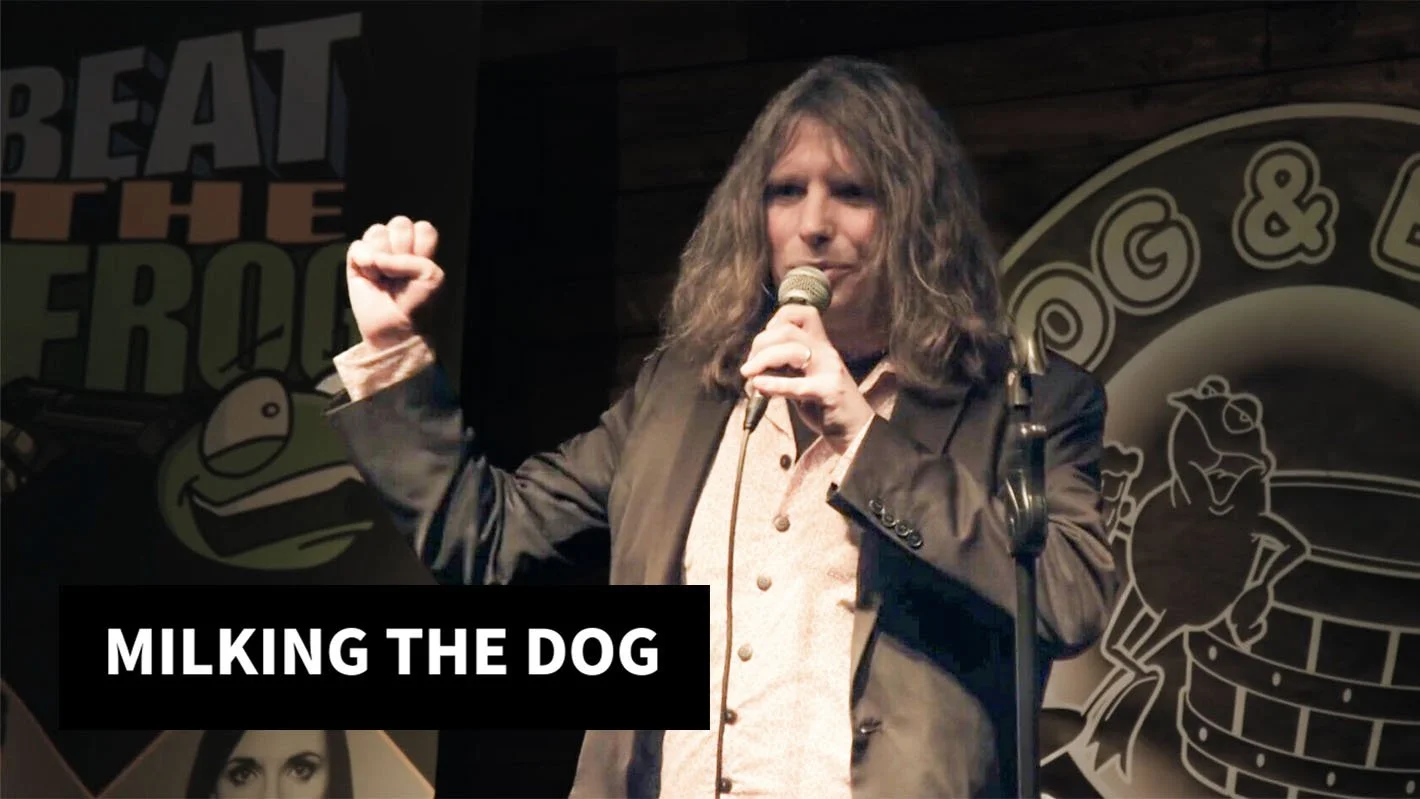
Phil Rochester battles to conquer Manchester's toughest standup contest, revealing the relentless drive of an artist to perform - even when he's not thanked by audiences for doing so.
Directed by Joe Murphy
Produced by Joe Murphy & Clare McCahery
Phil Rochester battles to conquer Manchester's toughest standup contest, revealing the relentless drive of an artist to perform - even when he's not thanked by audiences for doing so.
ABOUT THE FILMMAKER
Joe Murphy is a filmmaker based in the North West of England. He directed his first short documentary in 2024, which was a finalist at the BIFA-qualifying Kino London Short Film Festival and won Best Documentary at both the Shared Visions Film Festival and the Gloucester Independent Film Festival. With an early background in comedy, his focus has shifted towards intimate, character-driven documentaries, maintaining an eye for the small moments of humour in otherwise dark and challenging circumstances.
READ OUR INTERVIEW WITH JOE
Welcome to our Short of the Week series. Tell us a bit about yourself and your filmmaking background.
I originally started out as a teenager focused on comedy. I created an online sketch show with a couple of friends who were kind enough to perform in it, and I was surprised to find that some (I’ll reiterate—some) people actually thought it was funny. That gave me a bit of confidence when it came to writing and directing.
I ended up falling in love with documentary at university. One thing I hadn’t really understood before was that direct cinema often includes funny moments, even if the overall tone of the film is more serious. People tend to be quite funny in their daily lives without even realising it.
Milking the Dog is my first “real” film after graduating in 2020 - and my first-ever documentary. So, to me, it made sense to follow a story with comedy baked into its DNA. That familiarity helped when it came to the pacing and editing of a scene, and it gave me room to experiment and start figuring out my tone of voice.
Tell us about the genesis of Milking the Dog. Where did the idea come from and how did you develop that idea into the short that's now made its way out into the world?
In 2018 I was shooting b-roll for a student film about a brutal gong show in Manchester. Phil happened to be performing that night. After a short and rough set, we grabbed a quick backstage interview - only for Phil to ignore every question and launch into a wild story about performing at a pub where a man milking a dog stole the spotlight. The footage was totally unusable for that project, but in 2023 I finally reconnected with Phil and began making a film centred entirely around him - he’s definitely not a side character in someone else’s story.
As a filmmaker, I was drawn to rejection as a central theme. It’s a universal part of life that everyone experiences, and as a creative, you quickly learn it's part of the process. Stand-up comedy, in particular, offers the most immediate and unforgiving feedback - you get a laugh, a heckle, or silence. There’s no hiding from it. I wanted to make a film about someone who embraces that, and Phil is exactly that person. He creates for himself - not necessarily to “make it” as a comedian, but simply because he loves being on stage. That kind of drive is rare and admirable.
What were some of the main obstacles you experienced when making Milking the Dog and how did you overcome them?
The obstacles were mostly logistical - the film had the budget of a ham sandwich, like most indie projects. The only real way to overcome that was by massively scaling down the production - which, in the end, I think really benefited the film. One thing the low budget taught me is that you can make a documentary with just two people, as long as the director is comfortable handling sound. It actually helps the people that you're filming feel more relaxed and open, which leads to better and more honest material.
The real creative obstacle was making sure the film never strayed into exploitation. It would’ve been easy - and boring - to make a cringe comedy by just following a stand-up around and laughing at them bombing. I think the only way to avoid that is by never losing sight of the humanity of the person you're filming. Phil is one of the kindest people I've met, and I felt that as long as I conveyed that - and reflected some of our relationship within the narrative - we could steer clear of it becoming a cynical piss-take.
Tell us about the journey of getting your film to audiences and some of the festival circuit highlights and/or online release.
I first screened the film for friends and family - including Phil, who showed up with a bin bag over his head to avoid drawing attention to himself. My main goal was simply to share the film with as many audiences as possible. I submitted it to just a handful of festivals, hoping one might be interested. The response has blown me away - it’s been accepted into far more than I expected, including making the finals at Kino, which felt surreal. Since it leans into comedy, watching it with live audiences has been fantastic - people’s laughter tends to grow as the film progresses, which I take as a sign they’re warming to Phil.
One of my favourite memories is when I first sent the film to Phil. I woke up to three missed calls and a message - he’d planned to terrify me by pretending to be furious about how he was portrayed, before admitting he actually really liked it. A lot of the shoot was like that: Phil constantly trying to wind me up.
What advice or hacks would you give to other short filmmakers?
I feel like a fraud handing out any advice, as Milking the Dog is my first film, and I’ve learned so much from others at the various festivals I’ve been lucky enough to attend. I guess my main advice is to always focus on the story first and spectacle second - something that is attainable - and then frame the superficial stuff around it; otherwise, you could end up losing a lot of money. Taking a break from the film for a few weeks at a time usually helps me look at it in a fresh way and stops me from going crazy reviewing the same material constantly.
Also, befriend someone really rich and trick them into funding your film. I’m still searching for my sugar daddy.
Any film recommendations that we should add to our watchlist?
Streetwise (1984), directed by Martin Bell, is an absolute masterclass in documentary filmmaking. It follows a group of kids in Seattle who survive by selling drugs or partaking in sex work. The film conveys deep empathy without shying away from the harsh realities they face. The fact it was shot on film blows my mind, it must have been a logistical nightmare. It also just looks beautiful and serves as a powerful time capsule of 1980s America.
Crumb (1994) is an insane documentary. It follows Robert Crumb, who is a super controversial American artist, and to me, the whole thing plays like a repulsive stream of consciousness that perfectly matches the tone of Crumb's grotesque cartoons. A fantastic documentary about a collection of people I hope I never have to meet.
Interested in getting your work selected?
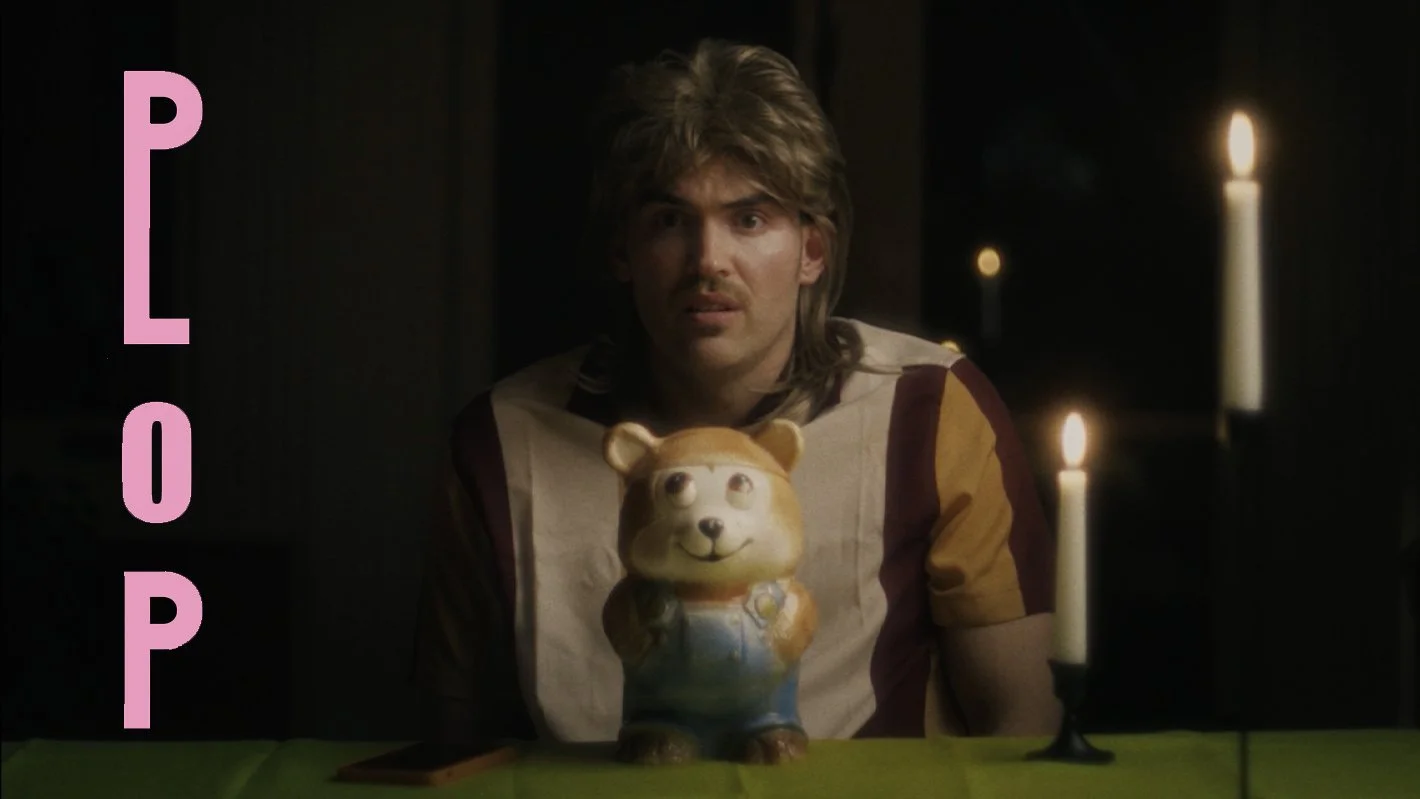
Plop
A desperate woman from the society of rejected singles, known as the Leftovers, takes a bold leap of faith on a revolutionary new dating app, risking everything for one last chance at love.
Directed & Produced Darius Shu
Written by Arron Blake
A desperate woman from the society of rejected singles, known as the Leftovers, takes a bold leap of faith on a revolutionary new dating app, risking everything for one last chance at love.
ABOUT THE FILM
PLOP premiered in competition at the Manchester Film Festival 2025. Other festival highlights include the BIFA qualifying Sunrise Film Festival & Brighton Rocks Film Festival. Plop also played at SCI-FI London, Clapham International Film Festival, Big Fridge International Film Festival and it was a Semi-Finalist at our very own Kino Short Film Festival earlier this year.
ABOUT THE FILMMAKER
Darius Shu is a writer-director drawn to humanistic, emotionally resonant stories told through a visually poetic lens. His work often centres on underrepresented voices and overlooked narratives.
A passionate advocate for Asian and LGBTQIA+ representation in cinema, Darius is committed to using film as a catalyst for meaningful dialogue and cultural progress. His stories aim to create space, for reflection, visibility, and connection.
Darius made his directorial debut with His Hands (2019), a silent psychological drama nominated for Best Narrative Short at the Tribeca Festival 2019. He followed this with I Am Norman (2021), a fictional documentary thriller which premiered at the Oscar-qualifying Rhode Island International Film Festival. His latest short film PLOP (2025) premiered In Competition at the Manchester Film Festival and has screened at Picturehouse Finsbury Park, with selections at over five BAFTA/BIFA-qualifying festivals.
With over nine years of experience as a cinematographer, Darius has shot a wide range of acclaimed projects, including the BAFTA-nominated film Always, Asifa (2023), the Netflix documentary Peach Paradise (2022), Queer Parivaar (2022), Where We Came From (2024) starring Archie Panjabi, Cuddle (2026) featuring Mark Gatiss and served as 2nd Unit DOP on the feature film Last Days, directed by Justin Lin (Fast & Furious franchise, Star Trek Beyond) which world premiered at Sundance Film Festival 2025. He shot his first feature 'Slim', directed by Sky Yang and produced by Chi Thai.
Through his work, Darius continues to push the boundaries of independent film while championing stories that challenge, heal, and humanise.
READ OUR INTERVIEW WITH DARIUS
Welcome to our Short of the Week series. Tell us a bit about yourself and your filmmaking background.
Thank you so much for having me and for spotlighting PLOP. I’m Darius Shu, a director and cinematographer based in London. I'm drawn to stories that explore the existential questions of identity, humanity, connection and the social constructs that shape our lives. I'm always fascinated to create something fresh out of something ordinary, to have my characters deal with the presence of anxiety, and be morally ambiguous. My background started in cinematography and have been a DP for 9 years, where I learnt how to build moods and emotion visually, and over the years that naturally led me into directing and storytelling. I like to blend social awareness with a touch of surrealism, creating films that feel both emotionally grounded and a little poetic. At the heart of it, I’m just obsessed with cinema’s ability to connect people and spark conversations.
Tell us about the genesis of Plop. Where did the idea come from and how did you develop that idea into the short that's now made its way out into the world?
My writer and actor, Arron Blake, pitched me a story he’d been developing, one I knew could really surprise and challenge audiences. I’ve always wanted to make a sci-fi film, being a huge fan of shows like Star Trek and Black Mirror, so I thought, why not take his concept and set it within a dystopian world? Finally getting the chance to bring that vision to life was incredibly exciting. The idea came from observing the absurdity and vulnerability of modern dating, one we both relate and is really fed up of...the endless swiping, algorithms, and the curated personas we present to the world. I wanted to see what happens when these societal constructs collide with our raw, unfiltered desire to be loved and accepted for who we truly are.
In the story, we disguise this in the app’s unconventional way of assessing compatibility which pushes people to confront their most honest, primal selves. The Leftovers aren’t just single people, they represent anyone who has ever felt rejected, outcast, or unworthy. Through the protagonist’s journey, we get a world where societal expectations clash with personal desires, and humour helps highlight the awkwardness, fears, and hopes that come with love and rejection on a first date. Developing Plop meant blending genres to feel fresh, using a sci-fi backdrop to exaggerate societal norms while keeping the emotions grounded, awkward, and relatable. At its heart, it’s about relationships, human connection, and navigating the modern world of AI and dating in a way that hopefully sparks both reflection and conversation.
What were some of the main obstacles you experienced when making Plop and how did you overcome them?
One of the biggest challenges with making Plop was juggling the sci-fi elements while keeping the human emotion grounded and awkwardly relatable. I wanted a world that looked heightened and visually striking, but with characters who still felt like real people stumbling through life and love. Another hurdle was the logistics of creating a dystopian world on a short film shoestring budget… because let’s face it, sci-fi is expensive, and our budget definitely wasn’t.
We got creative with production design, most of the story is in a single room, so we had to make it feel engaging without breaking the bank. A mix of practical and simple VFX, clever camera work, lighting, and little details helped make the world feel bigger than it actually was. Working closely with Joanna and Arron was crucial, we were constantly bouncing ideas off each other, improvising on set, and not afraid to scrap or tweak things in the moment.
In the end, all these obstacles forced us to be more inventive, and honestly, it made the process way more fun. I think that energy and chaos comes through on screen and maybe a little of our stress too!
Tell us about the journey of getting your film to audiences and some of the festival circuit highlights and/or online release.
The festival circuit has been amazing, we had our world premiere at Manchester Film Festival and 3 other BIFA qualifying festivals. It’s been so rewarding to see how audiences react in real time, especially when they laugh, cringe, or feel moved by the characters’ awkward, relatable moments.
Every film I make leaves room for interpretation and I like giving people the chance to come up with wildly different takes on the story’s metaphors, symbolism and concept. Honestly, sometimes I listen to someone’s interpretation and think, “Wow… I didn’t even notice that!", or "That was darker than what I had in mind" and at times "You're spot on, you just said exactly what I had in mind". Meeting fellow filmmakers and audiences who really get the world we were trying to create has been amazing. But the absolute best part of Plop? Watching it spark conversations about connection, dating, and human vulnerability… and realising that, just like my characters, people are awkward, confused, and completely winging it when it comes to love. Makes me feel a little less alone, and hopefully makes them laugh too, because in the world we are living now, we just have to have some laughs in our lives.
What advice or hacks would you give to other short filmmakers?
My biggest advice? Embrace the chaos. Short films are tiny worlds with tiny budgets, but that doesn’t mean you can’t make them look beautiful. Be creative, flexible, and a little fearless. Use your limitations as an advantage, turn a one-room set into a whole universe, and don’t be afraid to improvise on set. Feed your crew good food, happy people make better films. And most importantly, don’t take yourself too seriously; if you can laugh at your mistakes, the audience probably will too.
Any film recommendations that we should add to our watchlist?
Might be a completely different genre but I really love Monster by Hirokazu Kore-eda
Interested in getting your work selected?
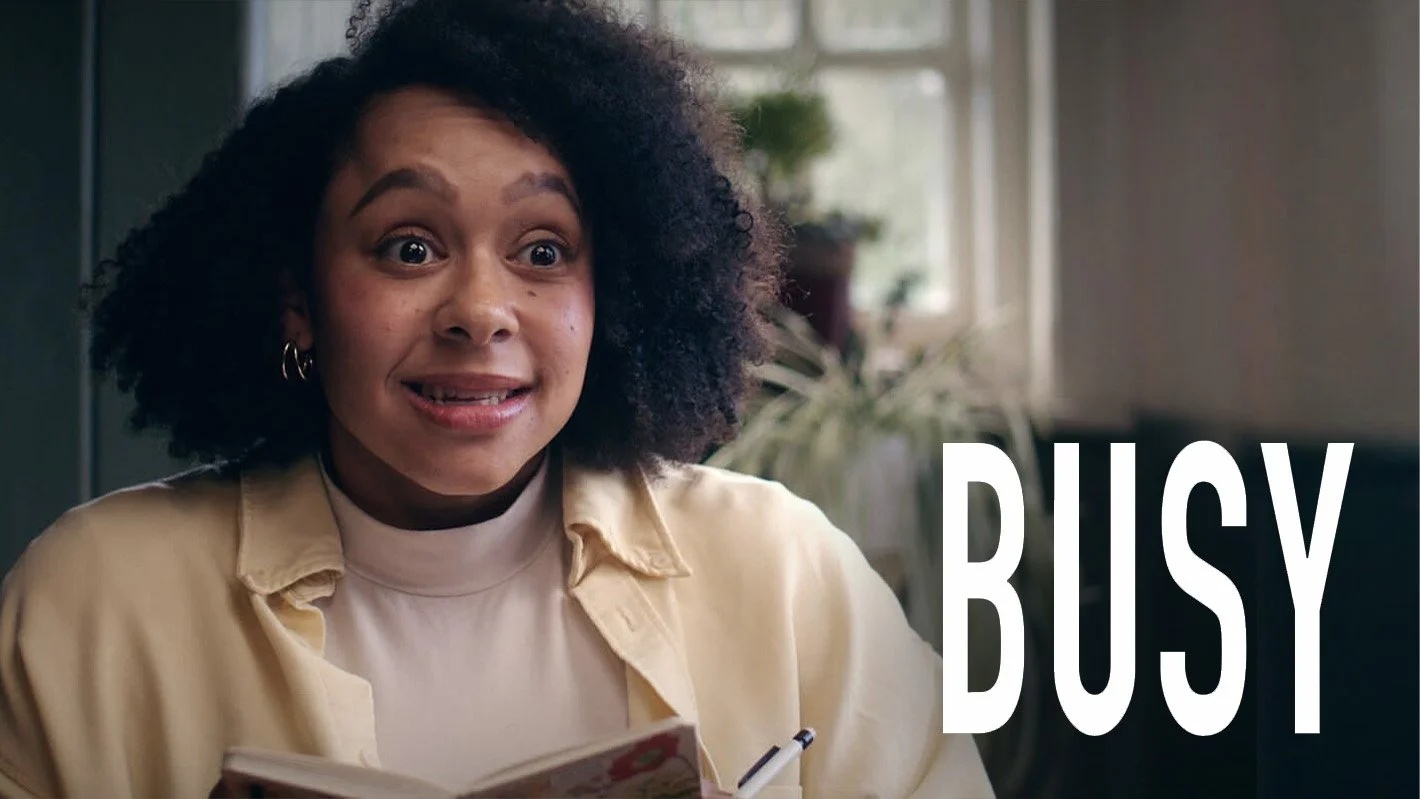
Busy
Emma-Leigh and her friends decide to put their next date in the diary, but it proves harder than they anticipate.
Written & Produced Megan Smith
Directed by Jane Moriarty
Emma-Leigh and her friends decide to put their next date in the diary, but it proves harder than they anticipate.
ABOUT THE FILM
BUSY screened earlier this year at our BIFA Qualifying Kino London Short Film Festival. Additionally it’s played at Brighton Rocks Film Festival & Spirit of Independence Film Festival, both also BIFA qualifiers.
ABOUT THE FILMMAKER
Jane Moriarty is a theatre and film director, working in the UK and Ireland. Jane directed SHUSH, a 25-minute drama produced by Charmer Pictures for RTÉ, written by and starring Liv O’Donoghue. It can be streamed on the RTE Player. Jane’s debut short film KITCHEN TALES, is now featured on BFI Player Her second film, I CALLED YOU, recently screened at the IFTA and BAFTA-qualifying IndieCork Film Festival. Jane was the Rehearsal Director for Sky comedy-drama series THE LOVERS, working with the lead cast prior to filming and during production. And she was a voice and performance director on the BAFTA-winning video game, BALDUR’S GATE 3. Jane was awarded the Young Directors Silver Screen Award 2025 for SHUSH.
Megan Smith is an actor, writer and producer for theatre and film. Megan's latest film BUSY, has qualified for BIFA 2025.. Her other comedy films received international recognition. SURGEONS (2021 ) was selected for BAFTA qualifying Bolton Film Festival and won 6 awards. BEST FRIENDS (2020) won 9 film festival awards. Other producing credits include I CALLED YOU AND ROBOT LADY. Megan is currently producing FROG, a short film written by Rebecca Crookshank about IVF, to be filmed later this year.
READ OUR INTERVIEW WITH MEGAN
Tell us about the genesis of Busy. Where did the idea come from and how did you develop that idea into the short that's now made its way out into the world?
Busy came after I observed several conversations with friends. I noticed people were very quick to make out I was the busiest person in the room, or that I had to send dates to find a time to meetup, but when it came down to it, everyone was actually as busy as each other. We all have different commitments in our lives, albeit children, family, work or selfcare, but sometimes it's easy to see yourself as the least busy because then you're not the problem. I thought it would be funny to have a double ending, just to show it wasn't about being mean. I talked about the idea for a while. to gauge the connectivity, and if other people would relate, and then I wrote the script very quickly and then went about trying to get it made.
What were some of the main obstacles you experienced when making Busy and how did you overcome them?
As with many films, we were constrained by budget and scheduling. We used a minimal crew and an empty location (pub was closed!) to make sure we could get the most out of the day.
Tell us about the journey of getting your film to audiences and some of the festival circuit highlights and/or online release.
Hearing BUSY with a live audience for the first time was amazing, as you could slowly hear the slow reveal being realised by the audience. Making people laugh, who you don't know, is the best thing in the world.
What advice or hacks would you give to other short filmmakers?
Work with people who are as caring and enthusiastic as you are.
Any film recommendations that we should add to our watchlist?
Check out SHUSH by our very own talented Jane Moriarty.
Interested in getting your work selected?

Sherbet
Set entirely inside the confines of a taxi cab, on what seems like just another late-night taxi fare, this particular trip is anything but, altering the course of the lives of both driver and rider forever.
Written & Directed by Danny Gibbons
Produced by Charles Meunier
Co-Producer Eduard Mitra
Set entirely inside the confines of a taxi cab, on what seems like just another late-night taxi fare, this particular trip is anything but, altering the course of the lives of both driver and rider forever.
One evening 15-year-old Isa enters Rene's cab and his life. At first, he perceives her as just another annoying 'woke' teenager on what he hoped was another simple and quiet journey, but as a revelation about Isa's situation comes to light, this goes from a dime-a-dozen taxi fare to a life-changing experience that forces Rene to confront things in his life that he has been running from for the longest time.
ABOUT THE FILM
Sherbet won Best Director at the BIFA Qualifying Brighton Rocks where it was also the runner up for Best Drama. Other notable festival awards include Best Makeup at the BIFA Qualifying Unrestricted View Film Festival (where India Brown was also Runner Up for Best Performance), the Emerging Talent award and Best Actress at New Renaissance Film Festival, and Best Cinematrography & Best Coulourist at the Wolverhampton Film. It also won the Audience Choice award at Film Tottenham.
Other notable festival screenings include theNorthampton Film Festival, Beeston Film Festival, Sunrise Film Festival, Mansfield Town, Romford Film, and Poppy Jasper.
ABOUT THE FILMMAKER
Born and raised in the East Midlands, Danny Gibbons has what many would call a 'late' start in the industry, not making his first short film until the age of 27. Taking a creative look at the less publicised emotional abuse, Danny quickly finds success on the festival circuit with his debut short film Mark’d, winning the one-off Warner Brothers Short Film Festival, with Tom Hooper (The King’s Speech, Les Misérables) calling it a "powerful and visceral physicalisation of a very real issue". Mark’d goes on to amass over 1.4 million views online across all platforms and is included in dozens of Domestic Violence Resource packs across the UK.
Danny’s next short, Last Dance, is a psychological horror that plays with the horror trope of a monster lurking in the shadows, but with the twist of incorporating current real-world issues. The film has a very successful festival run, being selected and winning awards worldwide, including the Melies D’Argent at Razorreel Film Festival and culminating with the Melies D’Or for Best European Short Film at the prestigious Sitges Film Festival in 2021.
In 2024, Danny releases Sherbet, starring Jay Simpson (Chernobyl (2019), Blitz (2024)) and India Brown (Invasion (2021–), That Christmas (2024)). The film screens worldwide, winning several awards including Best Director at the BIFA-Qualifying Brighton Rocks and “Best Emerging Talent” at the New Renaissance Film Festival.
READ OUR INTERVIEW WITH DANNY
Welcome to our Short of the Week series. Tell us a bit about yourself and your filmmaking background.
Much like everyone else chasing the filmmaking dream, I fell in love with films from a very early age, they were worlds I loved getting lost in and they fed my wild imagination that I had as a child. I used to think I wanted to be an actor, and I pursued that for a while with varied levels of success, but it wasn’t until I was in my mid twenties that I pivoted and decided to give the behind the camera side of things a go. So I went back to university as a “mature student” and learned the craft of filmmaking. It was there I made Mark’d, a short, which was an experimental look and physicalisation of emotional abuse. Somehow the short went viral and amassed over 1.5 Million views across all platforms, which are rookie numbers now for social media but back then it was pretty substantial and set me up quite nicely going forward into my next short ‘Last Dance’, a horror which won the Méliès d'Argent at Razor Reel Flanders Film Festival and ultimately went on to win the prestigious Méliès d'Or at Sitges Film Festival. Sherbet is my third and follow up short.
Tell us about the genesis of Sherbet. Where did the idea come from and how did you develop that idea into the short that's now made its way out into the world?
What a great question. The genesis of Sherbet sort of came about from a multitude of different avenues for me, three in particular, so please stick with me. The first one being I have always been fascinated with the taxi driver and passenger dynamic, anyone who has ridden for a long time in a cab can attest to the unique conversation that can take place within the confines of the cab, and it’s something that won’t be around forever with market of self driving cars growing. It’s also a familiar and relatable concept to set a story in.
The second one being that about the time I conceptualised Sherbet I was in a bit of a slump, with running the risk of sounding super pretentious, I was basically the embodiment of both Rene and Isa. I was in my thirties and I hadn’t had the success that younger me had planned, everyone around me was getting promotions in their jobs, getting married, having children and I was angry and bitter for a while that it wasn’t fair, and contemplated quitting. I felt stuck, but that dreamer in me remained. The hunger and passion for it remained, so it was this inner turmoil that I battled with for a while and Rene and Isa were sort of born from that.
The final ingredient in the sherbet conceptualisation was actually a specific experience I had in a taxi one evening. I had just screened Mark’d at Pinewood Studios and I was getting a cab home. The driver, obviously curious why he was picking me up from Pinewood enquired about myself and ultimately Mark’d. He asked if he could watch it, and thinking he was just being polite, I nonchalantly told him where he could find it online and we quickly moved on. About a week later I got an email from a name I didn’t recognise, and it so turns out that the taxi driver had in fact watched the film, and had emailed me to tell me that after watching it he had recognised some traits of emotional abuse in his own marriage and that the short film was an eye opener for him and it was going to change his life. I often wonder if it ever did, but it made me realise that the most innocuous of conversations/interaction with strangers can change the course of either person's trajectory and that is one of the central themes of Sherbet.
What were some of the main obstacles you experienced when making Sherbet and how did you overcome them?
As with making any short film, the first obstacle to overcome is always…money. You’d think with it just being two characters in one location, it’s quite contained and cheap, but my producers hated me, it’s never cheap. Especially if you want to make it to a professional standard. We were in a unique position that while it was a singular location, our singular location was a moving one. So outside of money, our biggest obstacle was ‘how do we do this, and do it well?’.
A moving car is so hard to shoot in, it’s risky and if you do it through all the legal channels it’s expensive, so we quickly ruled that out. I have also never been a fan of green screens when it comes to moving car scenes, the light just never looks natural and there is always an artificial look to it all. The future is definitely Virtual Production walls, and we explored this option, but you are talking thousands of pounds per day, which we just couldn’t afford, so we had to get creative and think outside the box. Firstly we established what the technology was from a hardware point of view, just huge TV's, right? So we decided to rent three large TV's instead, and pair it with a software largely used on high end sets for video playback, called QTAKE, and ran our own driving plates that we’d shot through that to the TV's, essentially creating our own smaller Virtual Production volume wall. I’m biased but I think it worked well for a fraction of the cost.
WATCH THE MAKING OF “SHERBET“
Tell us about the journey of getting your film to audiences and some of the festival circuit highlights and/or online release.
I have to be honest, the journey through the festival circuit in many ways is my least favourite part of the whole process. It’s the first time you’re not really in control of your own films fate. We knew that having a twenty-three minute short was going to hinder us and be an uphill battle in some ways, but we believed its quality would shine through in the long run. I know it’s quite a controversial take, but I’m also not the biggest fan of sitting in a cinema and watching my own work play out in front of a live audience. Saying that, Sherbet’s festival run was ultimately a good one and I consider it a success. We went up and down the country with it, met some amazing people along the way and got lots of lovely laurels for our poster which is the true barometer of one’s worth, right? I kid. Seriously though, winning Best Director at Brighton Rocks, and the Best Emerging Talent Award at New Renaissance Film Festival where the prize was £1000 were particular highlights, because short films NEVER make money so that’s always nice. Now the film is out in the world for everyone to watch, enjoy, critique, and the response from everyone that has seen it has genuinely been amazing, and I am super happy and content with Sherbet’s life cycle and it’s one that I’m truly proud of.
What advice or hacks would you give to other short filmmakers?
I’ll double down on what I said above, if you’re going to shoot a moving car scene, and consider the technique above as a ‘hack’. I don’t know if I’m allowed to advertise here, but we did a masterclass for British Cinematographer where we break down how we pulled it off, which I think is worth checking out, but I’m biased. Or I'm more than happy for people to reach out to me with questions. I guess as a broader statement, what I’m trying to say is, and I don’t want to sound too preachy here, but don’t let people dictate you or price you out of making your film. So many people will tell you it’s not possible, or it’s too ambitious, or it won’t work, but if you know it will, find a way to do it anyway. It’s not enough to be a good storyteller these days, you need to be a good problem solver too, an ability to pivot, think outside the box, and find a way. Don’t wait for permission.
Any film recommendations that we should add to our watchlist?
Well if you’re here watching Sherbet, and you enjoy this sort of thing, I’ll try and keep it within theme, and it would be amiss of me not to recommend a film that heavily inspired me/it, which is Locke. It always surprises me the amount of people who haven’t seen it, a concept you think can’t/shouldn’t work, but it’s truly a grounded and gripping piece of cinema, is a captivating watch, and comes with a phenomenal performance from Tom Hardy.
Congrats on winning the Kino Short Film Fund with your next project. Can you give us a sneak peek?
Thank you very much. We’re very grateful and very excited to be working with Kino on our next short, Pushing Daisy. It’s a zainy, genre bending short set largely in a morgue that blends sitcom and drama. It follows Daisy, a seemingly buoyant mortician as she navigates an offbeat world of sitcom absurdity and somber reality as she grapples with her own unresolved trauma when her late husband’s mistress ends up on her slab. It’s such a stark contrast from Sherbet, (but somehow explores some of the same themes?) its wildly ambitious and if I’m being completely honest, the challenge of pulling it off scares me, which is usually a good indicator that we’re on the right path, so we’re super excited to get it made.
Interested in getting your work selected?
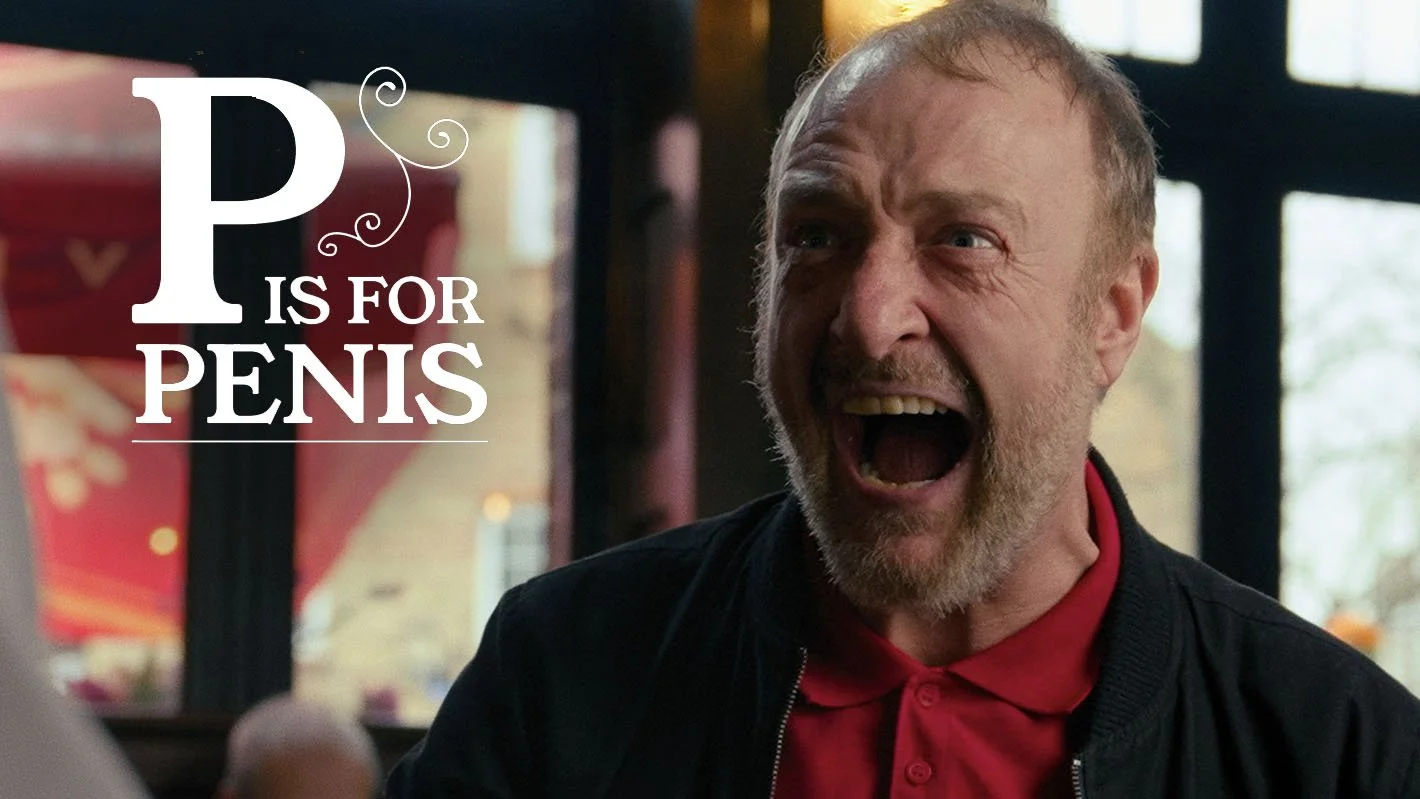
P is for Penis
An overdue catch up down the pub between two old friends is thrown into chaos by the inclusion of a terrifying third wheel with an embarrassing secret.

Written, Produced & Directed by Joe Mcgowan
An overdue catch up down the pub between two old friends is thrown into chaos by the inclusion of a terrifying third wheel with an embarrassing secret.
ABOUT THE FILM
P is for Penis was a Semi-Finalist at our BIFA qualifying Kino London Short Film Festival in 2024. It also won the Audience Choice award at the BIFA Qualifying Exit 6 Film Festival. Other notable festival highlights include the BIFA Qualifying Sunderland Short Film Festival and The Shortest Nights, The Romford Film Festival, London Lift-Off Film Festival, and the Funny Life Film Festival where it was nominated for Best Screenplay. Other awards include Best Micro Short and Best British Film at the Lit Laughs International Comedy Film Festival, Best Comedy Film at the WILDsound FEEDBACK Film & Screenplay Festival, Best Comedy Short at the London Seasonal Short Film Festival, and Best UK Comedy at the London Worldwide Comedy Short Film Festival.
ABOUT THE FILMMAKER
Joe is a London born and Essex-raised filmmaker with over ten years of experience as a director and editor in the TV commercial and branded content world. Comedy caught his eyes and ears at a young age, listening to Blackadder cassette tapes late into the night and being shattered for school the next day. His love of comedy and passion for filmmaking allow him to explore the funny, silly, and absurd and have an absolute blast doing so! Joe’s comedy work has racked up millions of views across social media, won numerous awards at film festivals in the UK and internationally, and has been featured on BBC Radio. Not bad for an Essex boy!
READ OUR INTERVIEW WITH JOE
Welcome back to our Short of the Week series. What have you been up to since we featured your last short Couple Noises ?
Thanks for having me back! It’s been a busy year for me. Have been up and down the country on the festival run with P is for Penis, have worked with British comedy legends Kimberly Nixon (Fresh Meat) and Simon Greenall (I’m Alan Partridge) on some training videos for a company set up by John Cleese in the 1980’s, worked with Kelly Brooke and Big Narstie on a campaign for SlimFast, and most importantly got married in June. How time flies!
Tell us about the genesis of P Is For Penis. Where did the idea come from, and how did you develop that idea into the short that's now made its way out into the world?
My end goal is to work in sitcoms, so I treated this as practice in creating a scene that you’d expect to see in a sitcom show. Comedy and conflict are my happy place when watching films or TV shows, and I’ve always found the dynamic of someone oversharing a secret about another person in a social setting a great setting for some real comedic sparks to fly.
I don’t know exactly how I landed on a misshapen penis being somebody's deepest and darkest secret, but once I thought of it the ball started rolling from there. The big question was what peculiar shape could it be to create a double-take moment in the film, but also lead to some snappy jokes for the script. I was in the car with my wife (who was my girlfriend at the time) and was brainstorming this out loud to her. I started going through shape options like a square, a triangle, a parallelogram, before moving onto letters from the alphabet. I thought a lower-case ‘T’ would be funny and said that a ‘T’ with two O’s from the testicles would spell the word ‘Too’, and maybe there’s a joke there. My wife, who this isn’t her sense of humour at all, turned to me and said ‘Well, if his penis was shaped like the letter ‘P’, it would spell the word ‘Poo’. I simply looked at her adoringly and said I love you so much, and quickly came up with the title after she said that. I started writing it in December 2023, and by March 2024, the film was done and dusted, and I proposed to my wife to be!
What were some of the main obstacles you experienced when making P Is For Penis and how did you overcome them?
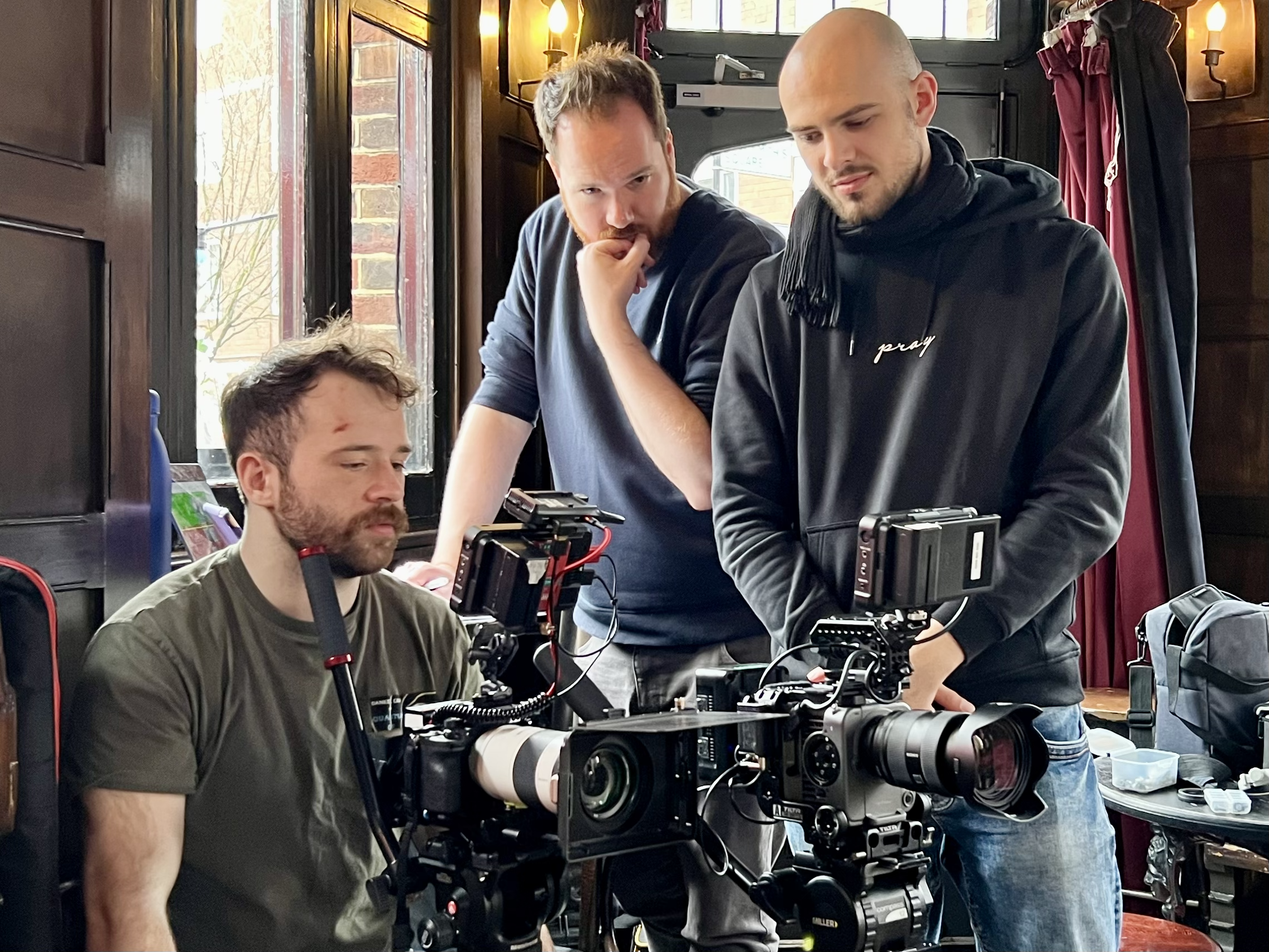
The main challenge was time. I hired a pub called The Virgin Queen in Bethnal Green for eight hours, 7am-3pm. The pub opened at 4pm and the script was 13 pages long. I had originally planned some more cinematic shots with a dolly and track, some fun POV shots with a fish eye lens, and a dramatic lighting change when Perry realises Tim and Dom know about his appendage. Very quickly into the shoot, those bells and whistles were cut. We were shooting on two cameras (thank God), and we locked them off and cross-shot all the coverage. It still has that sitcom feel to it that I wanted, but it also comes across as an extended sketch rather than a cinematic short film, like I’d originally intended. It was a big lesson in what you can realistically achieve with a tight turnaround.
The other challenge was shooting the nudity. The pub was fine with it as long as we covered the windows so the public couldn’t see anything. The problem with that was that the windows had no curtains, and there were a lot of windows. When it came to shooting those shots, we used an old trick I’d learnt from a gaffer to block light out quickly from windows. We sprayed the windows with window cleaner from a spray bottle and stuck sheets of tin foil on them. Took fifteen minutes to block out all the windows with the whole crew on board. Would highly recommend this method if you’re in a pinch.

Tell us about the journey of getting your film to audiences and some of the festival circuit highlights.
Sitting in an audience when P is for Penis is screening has been a real treat. Overall, it’s had a fantastic reception and get’s lot of laughs, which, as the writer, director, producer, and editor of the film, is amazing to hear live. It’s become a BIFA qualifying short, been played on BBC Radio as a radio sketch, and won multiple awards at film festivals. The highlight on the festival circuit was winning the Audience Choice awards at the BIFA Qualifying Exit 6 Film Festival. The films that were winning all the awards were incredibly cinematic films, with heavy subject matters, and had funding from the BFI and other film funding outlets. To see my self-funded short about a maniac with a funny shaped knob standing with these juggernaughts in the short film world was very gratifying for me.
Any film recommendations that we should add to our watchlist?
‘Bad Thoughts’, Tom Segura’s Netflix sketch show, is a must watch for any twisted sickos like myself. If you like my film, this is a show you need to check out.
I’d like to recommend some short films I’ve seen over the last year that stood out to me. James Button’s latest absurd short, ‘The Quackening’, is a must see. Twenty minutes of non-stop madness and big laughs. ‘Daddy Superior’, directed by Benjamin Partridge. Such a wholesome and hilarious masterpiece of a short film. This is the perfect small cast and one location comedy short. ‘Us & In Between’ directed by Katia Shannon. A wonderful, heartwarming tale of two people finding love in their later years. Beautifully shot too.
What are you working on next?
Earlier this year, I directed a National Film & Television School comedy short called Pushing Up Plastic. Set in the near future, a couple finds out their microplastic test results from their solicitor to see if they can be legally buried without becoming an environmental hazard, or risk being recycled. It’s got a Wes Anderson meets Edgar Wright aesthetic to it, and it's been a lot of fun to work on. It should be on the film festival circuit next year.
I’m slowly writing a short mockumentary called Good Egg, which revolves around an omelette chef who works in a Chinese restaurant, so he rarely has anything to do. I’m also writing a sitcom pilot that’s a mash up of It’s Always Sunny in Philadelphia meets Lord of the Rings.
Interested in getting your work selected?

Freedom to be alone
A young woman, Jade, ends a toxic relationship to start a journey or liberation and healing.
Written & Directed by Alexandre Laurent
Produced by Maël Hajos
Jade opens up through a poem, sharing her story of an intense relationship with a former lover, marked by a toxic hold fuelled by stereotypes and the societal pressure to avoid being alone. Their breakup, far from being a tragic end, becomes a liberation a journey back to herself where solitude emerges as a soothing and healing remedy.
READ OUR INTERVIEW WITH ALEXANDRE
Welcome to our Short of the Week series. Tell us a bit about yourself and your filmmaking background.
I've been working in film for seven years now as a director/cinematographer. I was a first assistant for three years, then I became a director of photography by chance. This is my very first real project as a director, a subject that has been close to my heart for a long time.
Tell us about the genesis of Freedom to be alone and your motivation for making this film.
I have had various experiences in life, which have led me to a certain clarity about energies. In this short film, I tell the story through a poem about karmic bonds, using the image of a ball of yarn to symbolize these ties, interpreted with the sensitivity of a woman. I explore what can be resolved by emerging from these very powerful relationships.
The idea came to me while listening to music mainly, then there were the inspirations of directors that I followed like Théo le Sourd I like his work, but also the different experiences and revelations that I had during my filming, I had my vision like all directors of photography and I wanted to give a cinematographic interpretation to the story.
What were some of the main obstacles you experienced when making Freedom to be alone and how did you overcome them?
We had a small budget and had a lot of constraints, and then a lot of concessions, which allowed me to open my eyes to certain aspects of production. And the importance of having a team you can count on.
What advice or hacks would you give to other short filmmakers?
I advise the young director to give himself time to do things, even if there are many budgetary constraints, and then to have a trustworthy and competent team where communication reigns.
Any film recommendations that we should add to our watchlist?
- Baby Bright by Oscar Keys
- Sometimes / Wonder by Theo le sourd
What are you working on next?
Right now I'm working on a feature film called "The Lemon Life" I'm going to adapt it into a short film to approach production companies and then make a film
Interested in getting your work selected?
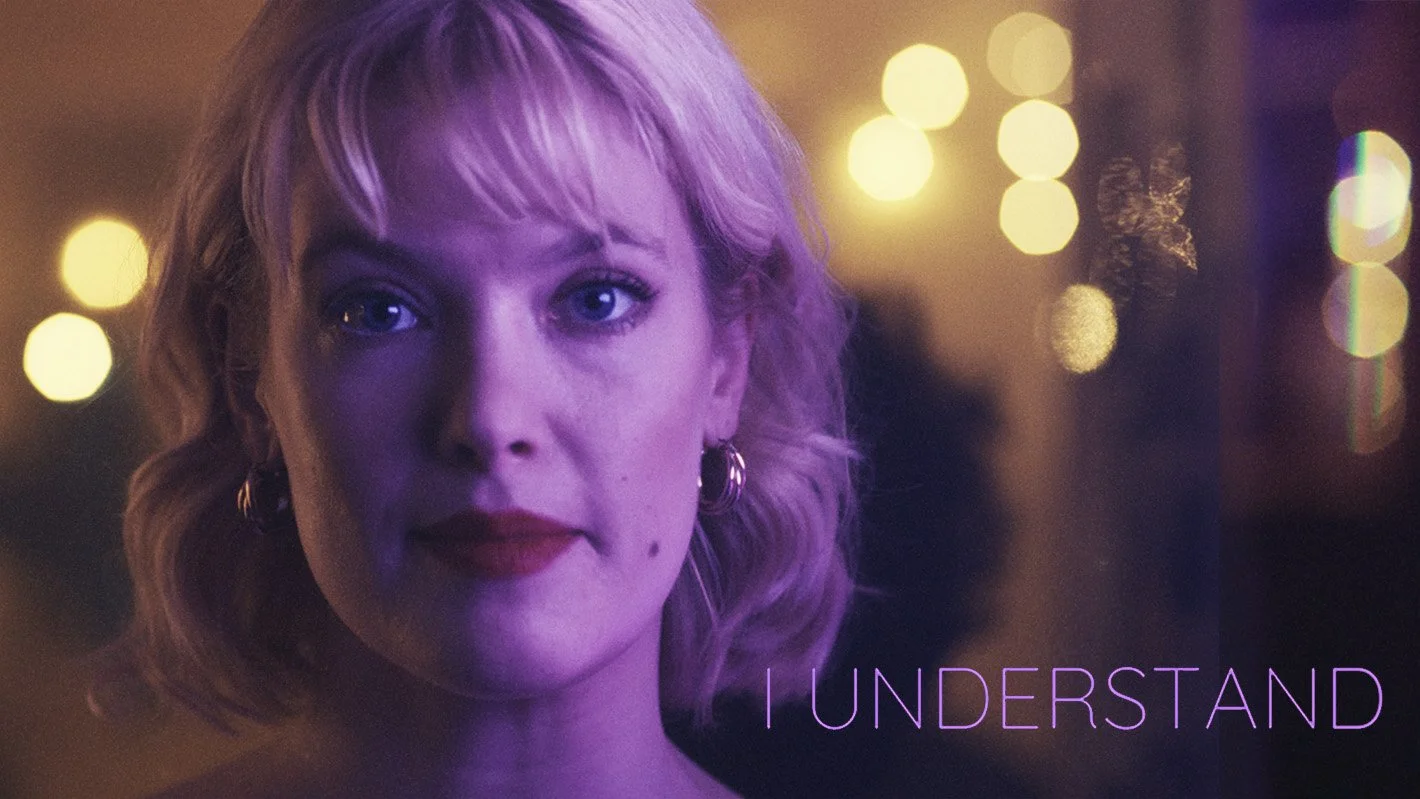
I Understand
After an argument, Ben and Eve meet a friend in a pub to each tell their side of the story. But what really happened that night?
Written & Directed by Mark Van Heusden
Produced by Victoria Fäh
After a heated argument Ben and Eve let off some steam by meeting a friend in a pub and each telling their side of the story. As they both tell their version of events and what they wished they had done instead, we find out what really happened that night.
ABOUT THE FILM
I Understand is the third short film from festival alumni Mark van Heusden. Thus far all three of his shorts have been screened by Kino, with I Understand being an official selection at our 2024 edition of the BIFA qualifying Kino London Short Film Festival. Other highlights for I Understand include screening at the Kingston International Film Festival and it’s online premiere with Film Shortage.
ABOUT THE FILMMAKER
Mark is a London based editor and occasionally writer and director. His films as director include British Graffiti (Norfolk Film Festival best student film winner, Birmingham Film Festival best short film & best editing nominee) and David French Is a Piece of Shit and I want Him Dead (Hollyshorts Film Festival official selection, Kino London Short Film Festival best short, best screenplay, best actor nominee and winner of best score). His latest effort as an editor Us & In Between just finished it’s highly successful festival run and premiered on Director’s Notes.
Mark also works as a visual effects editor on feature films and tv shows (House of the Dragon, The Witcher, The Lord of the Rings: The Rings of Power, Doctor Who)
READ OUR INTERVIEW WITH MARK
Welcome back to our Short of the Week series. What have you been up to since we featured your last short David French Is A Piece of Shit And I Want Him Dead?
After David French Is a Piece of Shit and I Want Him Dead, I took a long mental health break because I burned myself out a bit. This film is a direct result of that because I wrote it to make sense of all the thoughts going through my head. Before I went into production on I Understand I directed a few music videos (for bands Wyldest and GUYY respectively) working with Max Conran who is a great DOP and even greater friend. And I was fortunate enough to edit Katia Shannon’s short film Us & In Between which is probably my favourite thing I worked on so far.
Tell us about the genesis of I Understand. Where did the idea come from and how did you develop that idea into the short that's now made its way out into the world?
As I said I wrote this when I wasn’t feeling very well. I went through a break up which was quite messy and I kept thinking about what was said by both of us and what I wished I had said or done instead. I wanted to explore that strange occurrence where you lie to yourself and don’t say what you mean because you’re afraid to hurt the other person. Initially I wrote it as a breakup movie but I ended up changing it to a brother/sister story because I got over the break up and didn’t want to open those wounds again. I felt I moved on. Also my grandmother was dying at the time and she had a difficult relationship with my mother. Despite this my mum was by her side day and night before she died. And that made me realise that with family, even if you don’t get along, you have this connection that you can’t ignore. So I wanted to explore the difficulties of a family quarrel because I know many people will have experienced something similar.
What were some of the main obstacles you experienced when making I Understand and how did you overcome them?
We shot a house party with 20 extras in a 2 bedroom apartment. I was adamant we use a dolly in there too. It was very tight. But it all went smooth because the crew was prepared and we had set up a chill area outside so not everyone had to be in the apartment all the time.
Tell us about the journey of getting your film to audiences and some of the festival circuit highlights.
Honestly this has been a difficult part of the journey for me. You hope a film gets into loads of festivals and that it connects to people that way, but I Understand had only two festival selections out of many submissions. However of people who did see it at these festivals I got some nice responses of people who had troubled relationships with their siblings or their parents, and said that this is exactly what it feels like. Ever the self critic, I have some gripes with the film too, but instead of seeing it as a failure I see it as part of my journey as a filmmaker to see the mistakes I’ve made and focus on improving my craft.
What advice or hacks would you give to other short filmmakers?
Don’t do everything by yourself. I’m very introverted and do as much as I can by by myself. I edited this, mainly because I love editing and to save money, but I was too close to the material and afraid to kill any darlings. I think having an editor on board would have been better for the film in hindsight.
Any film recommendations that we should add to our watchlist?
Some things I saw recently that I really liked.
Carnal Knowledge
Lone Star
Ponyo
The Return of the Living Dead
Flow
Ordinary People
What are you working on next?
I’m attached to edit a short by the end of this year and I’m hoping to edit more shorts in the next year and to connect with directors that way. Otherwise I wrote a feature film I’m very passionate about, a thriller about a young girl who finds out her father is an incarcerated serial killer. A director friend of mine read it, loves it and we’re hoping to get this made as his directorial debut feature.
Interested in getting your work selected?

Amina
As a way of mastering her skills, Amina takes on every new relationship as a chance to perfect her cooking.
Written, Produced & Directed by Christie Fewry
A girl tries her best to master love through her artistic expression of cooking. She learns as quickly as she keeps making mistakes. For her, making the perfect dish and finding love is an act of service to herself that she is relentless on achieving. This micro-short film is based on West African, Sierra Leone/British women who love to cook.
ABOUT THE FILM
Aminia had it’s UK Premiere at the Manchester Film Festival and it’s London Premiere at the New Renaissance Film Festival where it also received an Honourable Mention for Best Short Short. It won the Black Power Award at the Reale Film Festival and it was nominated for the Best Micro Short Award at the Wolverhampton Film Festival. Other festival highlights include Women Of The Lens Film Festival, Spark Micro-Short Film Festival, FILMSshort Online Film Festival, Atlanta Micro Short Film 2024, and the Austin Micro Film Festival.
ABOUT THE FILMMAKER
Christie Fewry is a natural storyteller, actor and filmmaker, who recently graduated from Rose Bruford College in BA Acting. She produced her debut award-winning short film, Amina, which had its UK premiere at the BAFTA and BIFA qualifying Manchester Film Festival, then received an Honourable Mention at the New Renaissance Film Festival. Amina earned a total of nine festival selections worldwide. Christie made her stage debut in the world premiere of The Great Privation: How To Flip Ten Cents Into a Dollar at Theatre503. Beyond acting and filmmaking, Christie delves into her spiritual experiences through her writing, with her poems published in Breadfruit magazine’s Black British Writers Feature Project.
READ OUR INTERVIEW WITH CHRISTIE
Welcome to our Short of the Week series. Tell us a bit about yourself and your filmmaking background.
I’m Christie Fewry, a London-based actor and emerging filmmaker of Sierra Leonean heritage. I made my debut as a writer-director with Amina, a micro-short that explores love, identity and heritage through the act of cooking. My background is in performance, I graduated from Rose Bruford College with a First Class in BA Acting but storytelling has always been at the heart of my creative journey.
As a filmmaker, I'm fascinated with the stories of the women around me, and I’m always drawn to intimate, character-driven stories centring African and Black-British women and girls. Amina was made with heart and community, and it’s been incredibly affirming to see it resonate on the festival circuit, especially making its UK Premiere at Manchester Film Festival. I screened my second short film, Made of A Million, in 2025 and am now developing my third short. I’m excited to continue building stories that feel both grounded and bold.
Tell us about the genesis of Amina. Where did the idea come from and how did you develop that idea into the short that's now made its way out into the world?
Growing up, I observed women in my family commit to one specific stereotypical gender role, which was to spend a lot of time in the kitchen, and this bothered me. Rebelliously, I observed their behaviour from a place of judgment. However, as I investigated the reasoning behind why they cooked so much, I found it was their love language. A way of presenting and expressing their artistry as a gift to the family and with every dish they strived for excellence. This inspired me to write Amina and explore the parallels of a young woman cooking the perfect dish and finding love. Her relentlessness causes her to move on quickly from mistakes in order to create what she knows she deserves, whether it is through cooking or a new relationship.


What were some of the main obstacles you experienced when making Amina and how did you overcome them?
One of the biggest obstacles I faced making Amina was working with limited resources while being far from home. It was a self-funded, micro-budget project costing 900 GBP, and I was making it in Los Angeles without an established network. Every decision from locations to the size of the crew had to be incredibly intentional. On top of that, finding the right collaborators in an unfamiliar city felt daunting.
That changed when I attended a screening and saw a short film that really moved me. I reached out to the DP, Isaak Kimmel, and to my surprise and gratitude, he connected with Amina and came on board. That moment reminded me of the power of sharing your vision and not being afraid to ask, even as a new filmmaker. In the end, what felt like limitations became a source of strength. They pushed me to focus on the emotional core of the story and lean into creativity, collaboration, and belief in the work and in myself.
Tell us about the journey of getting your film to audiences and some of the festival circuit highlights and/or online release.
Getting Amina to audiences has been such a rewarding journey. The film screened at Manchester Film Festival as a UK Premiere, was nominated for Best Micro Short at Wolverhampton Film Festival, and received an Honourable Mention for Best Short Short at the New Renaissance Film Festival, each moment felt like a meaningful nod to the story and the work behind it. One of the most special highlights was screening at the National Youth Theatre, where the film was watched by a room full of young, aspiring creatives, the kind of audience I deeply hope Amina connects with. Now that the festival circuit has wrapped, I’m excited for it to live online through Kino Short of The Week and continue reaching new viewers.
What advice or hacks would you give to other short filmmakers?
My biggest piece of advice is, start with what you have. Amina began as a poem, and I had a very clear moving image in my head that I couldn’t ignore. I didn’t wait for the “perfect” conditions, I used what I had, trusted the story, and let that lead the way. Also, don’t be afraid to submit to festivals, even the ones that feel “too big.” I almost didn’t apply to Manchester Film Festival because I thought it was out of my league, but it ended up being one of the most affirming experiences of the journey. Take the risk. Let your film travel further than your doubt allows.
Any film recommendations that we should add to our watchlist?
The Photograph (2020), Soul (2020), Molly's Game (2017), Slumdog Millionaire (2008), and The Woman King (2022).
What are you working on next?
Next, I'm working on a new short called Pageant Sweet, that's sits in the sports drama genre. The Premise is a competitive and desperate young woman wants to win a beauty pageant, to pay back a loan shark but her biggest competitor is winning. Using her beauty, she turns to the pageant sponsors for help. When that fails, she goes to extreme lengths to win.
Interested in getting your work selected?

Contemporary
Explore the transformative power of art through the stories of three groundbreaking UK-based artists—Denai Moore, a vegan Jamaican chef revolutionizing cuisine; Mr Cenz, a graffiti artist reshaping urban landscapes; and Bimini, a drag performer pushing the boundaries of identity and performance.

Directed by Zaeem Asad
Produced by Emma Raz
Contemporary explores the transformative power of art through the stories of three groundbreaking UK-based artists—Denai Moore, a vegan Jamaican chef revolutionizing cuisine; Mr Cenz, a graffiti artist reshaping urban landscapes; and Bimini, a drag performer pushing the boundaries of identity and performance. This visually rich documentary celebrates their unique journeys, challenges conventions, and reveals how they are shaping modern culture by turning everyday moments into extraordinary expressions of creativity.
ABOUT THE FILMMAKER
Zaeem Asad is a London-based filmmaker known for his compelling commercials and documentaries. Having directed over 60 commercials, mainly in food and beverages, he brings a sharp eye for storytelling. His passion lies in crafting authentic narratives, capturing the lives of real people who challenge societal norms, and exploring culture and creativity through film.
READ OUR INTERVIEW WITH ZAEEM
Welcome to our Short of the Week series. Tell us a bit about yourself and your filmmaking background.
I’m Zaeem Asad, a London-based filmmaker. My career began in music and local TV before transitioning to commercials, with notable clients like Nestle and PepsiCo. I’m also known for directing Pakistan's first locally made food commercial. My passion for storytelling through visual mediums, particularly around cultural themes, led me to direct Katalina, a documentary about communal living in northeast London. In addition to filmmaking, I’ve always had a deep connection to art, which has been central to my creative journey.
Tell us about the genesis of Contemporary and your motivation for making this film.
Contemporary was born out of a shared passion for art between myself and producer Emma Raz. We both have personal connections to the arts—Emma through painting and I through music—that shaped our desire to explore how art influences contemporary society. The motivation for making this documentary was to showcase how art exists in everyday life, through unique perspectives like Denai Moore's innovative culinary approach, Mr. Cenz’s street art, and Bimini’s performances. We wanted to highlight the transformative power of art and its ability to shape identity and culture.
What were some of the main obstacles you experienced when making Contemporary and how did you overcome them?
One of the main challenges was coordinating with artists who have such diverse and dynamic practices. Each of them operates in unique spaces, from kitchens to the streets to stages, which made scheduling and capturing the essence of their work difficult. To overcome this, we relied on flexibility, adjusting our shooting schedules to work around their creative processes. Another challenge was balancing the vision of each artist with the overarching narrative of the film, but through collaboration and constant communication, we were able to maintain a cohesive story.
Tell us about the journey of getting your film to audiences and some of the festival circuit highlights.
The journey of getting Contemporary to audiences has been incredibly rewarding. We began by submitting to various festivals, and it was humbling to see how well the film resonated with audiences. A highlight was being selected for [specific festivals], where it sparked deep conversations about art's role in shaping modern culture. The festival circuit allowed us to connect with diverse audiences and filmmakers, further amplifying the message of the film.
What advice or hacks would you give to other short filmmakers?
Start with what you’re passionate about, and stay true to your vision. The journey of filmmaking is full of compromises, but never lose sight of why you wanted to tell that story in the first place. Additionally, collaboration is key. Surround yourself with a team that shares your enthusiasm and perspective. Lastly, embrace the process—every obstacle is an opportunity to learn and grow.
Any film recommendations that we should add to our watchlist?
I recommend watching Inside Llewyn Davis, as it offers incredible perspectives on the challenging life of an artist as well as the wider culture surrounding art. These films, like Contemporary, challenge conventions and offer deep reflections on the world we live in.
What are you working on next?
Currently, I’m developing a new project that explores the concept of heritage. It’s still in the early stages, but I’m excited to dive deeper into how art and identity intersect in different cultural contexts. Stay tuned for more updates!
Interested in getting your work selected?
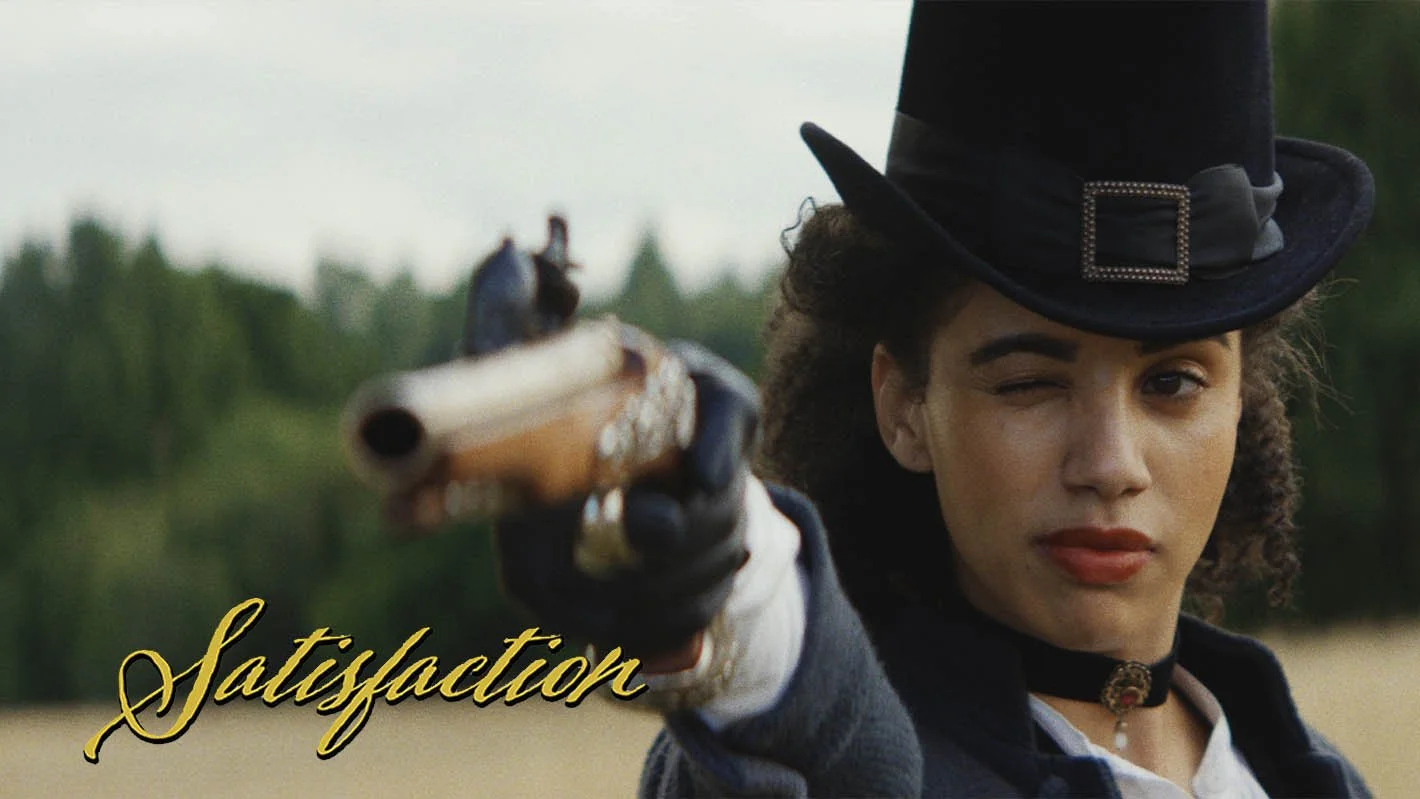
Satisfaction
Georgian England. A society lady raises her pistol to duel with her aristocratic mentor over a grave insult.

Directed by Bailey Tom Bailey
Written BY Christopher Buckley
Produced by Marek Lichtenberg & Nathan Craig
Georgian England. A society lady raises her pistol to duel with her aristocratic mentor over a grave insult.
ABOUT THE FILM
Satisfaction was an Official Selection at our very own BIFA qualifying Kino London Short Film Festival in 2024 where it was nominated for Best Score. Other festival highlights include the Oscar Qualifying Flickers’ Rhode Island IFF, the BAFTA qualifying Bolton IFF, the four other BIFA qualifying festivals including Exit 6 (Nominated for Best Editing), Crystal Palace IFF, Brighton Rocks FF, and Sunderland SFF.
ABOUT THE FILMMAKER
Bailey Tom Bailey has made many shorts and music videos that have played international BIFA, BAFTA & OSCAR qualifying festivals and online platforms including Short of the Week, Slamdance, Fright Fest, Berlinale, LSFF, Rhode Island, Bolton, Nowness, Omeleto, 1.4 awards, Shiny awards, and have won several awards along the way. He also works as an editor and sometimes VFX artist for clients including Nike, Adidas, Somesuch, AMV, BBH, Dazed. He has a background in painting, is an alumnus of Arts University College Bournemouth, Berlinale Talent Campus and has studied Meisner acting and improv comedy. Bailey is developing several features and a series based on Satisfaction.
Christopher Buckley is an actor and writer. He has written two shorts, including Satisfaction and a play ‘Third Grade’ performed at the online ‘8x8’ theatre festival in May 2020. Chris was a lead part in the original cast of Stranger Things: The First Shadow. He has performed onstage across the UK and Europe, winning the Theatrepreis Hamburg Rolfe Mares award for ‘Best Actor’ in 2017 for ‘Orphans’. He has also recorded various radio and audio dramas for BBC4 and Audible. Through his writing, he hopes to champion and elevate neglected stories and characters, both onscreen and onstage.
READ OUR INTERVIEW WITH BAILEY
Tell us about the genesis of Satisfaction and your motivation for making this film.
I (Bailey) and Christopher connected through Centerframe's Get It Made competition. Christopher had written a script about petticoat duels (duels between women), which were uncommon but happened throughout history. In his research, he found a famous Georgian cartoon of two women duelling with pistols, and the script grew from there. We were fascinated by how Georgian social structures were dehumanising these old friends, making them rivals. Over the course of the script, they rediscover their humanity, their mercy. Chris developed a brilliant Georgian slang that had me looking up various words, but gave the project a unique voice and tone. In later drafts, I encouraged Chris to draw out the duel and heighten the suspense, an approach that continued into production, where I took cues from how Sergio Leone built his shootouts.
What were some of the main obstacles you experienced when making Satisfaction and how did you overcome them?
Fields. It's surprisingly hard to find a field / landscape that offered compositional possibilities, where you don't risk some member of the public slowly traipsing across the back of the frame. We realised the answer was to find a location that had private grounds, likely a stately home. However, these came with a hefty price tag, and often their lawns were too manicured. Finally, one of our producers Nathan Craig, found a stately home (that anecdotally, had briefly been owned by Led Zepplin) that wasn't on a location library, which was sympathetic to our project and had natural and photogenic grounds.
As we led up to the shoot day it was forecast to rain on our second day, but didn't feel we could move everything. So we crossed our fingers - and the gods laughed. It was torrential and our morning was mostly rained out. To cover ourselves, we had shot longer on our first day, then on the second we worked under cover for close-ups and grabbed the remaining necessary shots in a brief dry patch at day's end.

Photo Credit: DEVIN DE VIL @ licence to capture
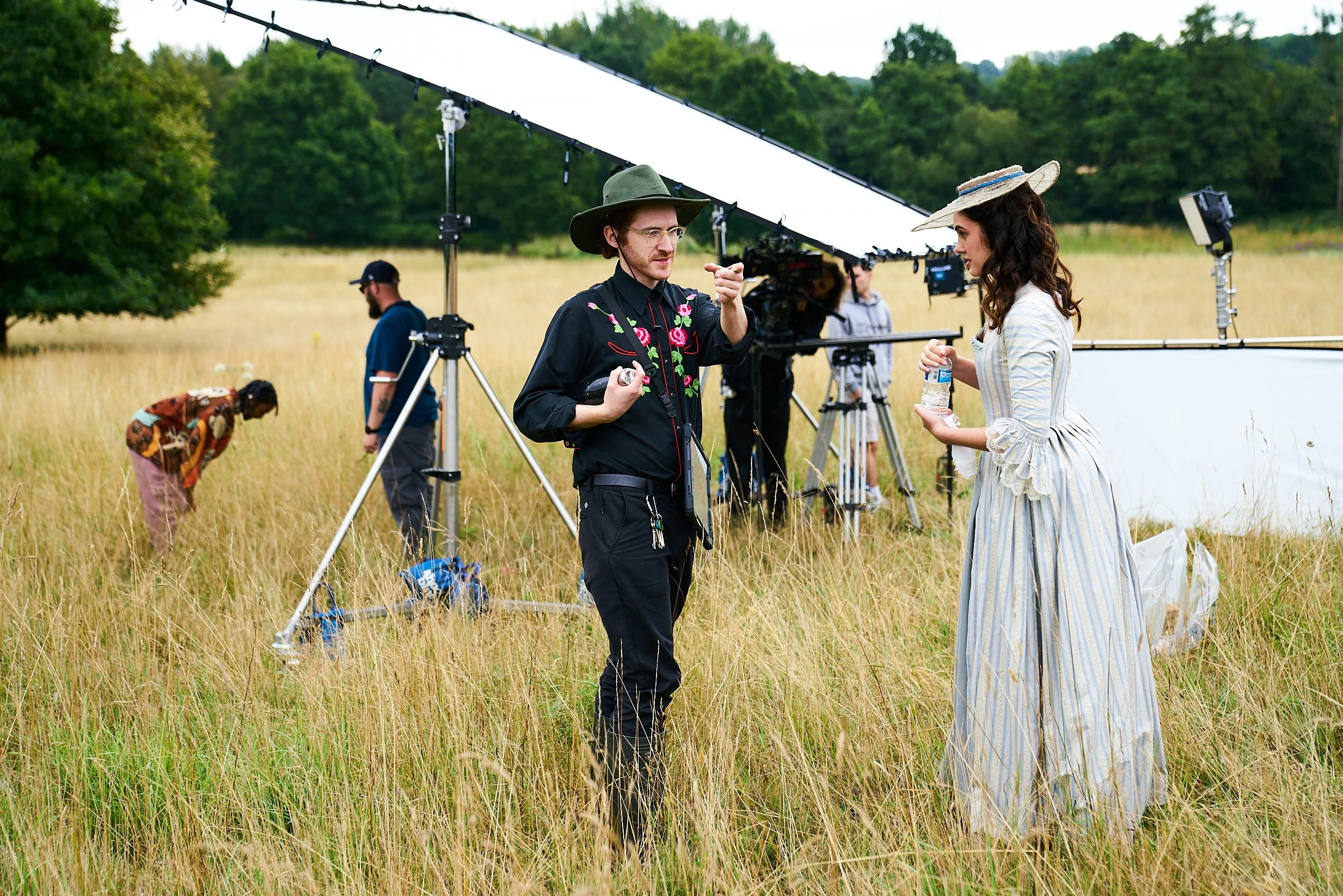
Tell us about the journey of getting your film to audiences and some of the festival circuit highlights.
Post on a short can be slow but we managed to complete this within 5 month, with a deadline for a screening hosted by our funders Centerframe. Iron Box Films came on as a partner to fund the festival run. We quickly got it onto the festival circuit and focused on BIFA qualifying events. The film is short and fairly punchy so was often programmed towards the end of blocks as a big finish or pick-me-up before people left. It was nice to see the film, an intended audience pleaser, was landing with gasps, 'oo's and 'no's in the right place. Kino London gave us our first nomination for Andreas Aaser's score, which I believe was much deserved. Music is such an important part of my films and Andreas is very gifted and imaginative. Rhode Island gave us our US premiere and Bolton International film festival also stood out as a great experience.
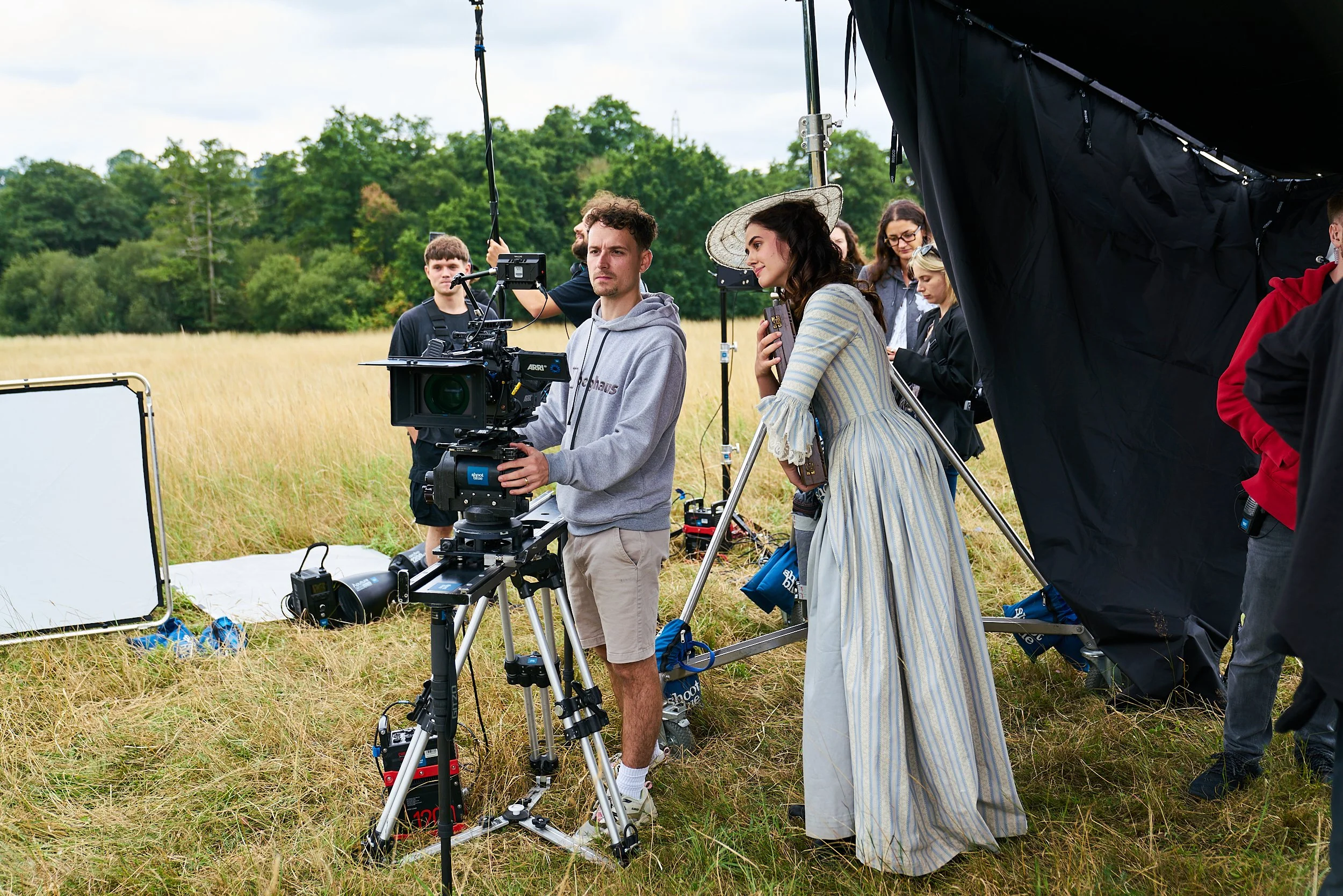
What advice or hacks would you give to other short filmmakers?
Keep it short of focus the story and make it easy to programme. Keep it in one location so its easier to produce. iIf you're trying to make something that opens doors - keep the audience in mind.
Plan as much as you can, I storyboard everything myself, which is the final re-write before shooting (until we edit, of course!), which saves time.
Have an idea for every department, and brief them as clearly as you can.
Get the best cast you can! Our casting director, Chloe Blake was really helpful, she works with the National Theatre and has her ear to the ground about new talent.
Any film recommendations that we should add to our watchlist?
Once Upon a Time in the West, is a film I thought about a lot during the making of this film, as with the rest of the dollars trilogy, its inventive, plays with audience expectation and has such an operatic quality. It's climax's and pure cinema and I get the buzz I get when I watch a Hitchcock movie that you can see what the director is doing, which I always find thrilling.
Sweet Smell of Success, a noir-drama that I thought of because in his book 'On Filmmaking' the director Alexander Mackendrick (a Brit making his first US film) said he had been given a 'wordy' script but the writer Clifford Odett's (a famous playwright) told him - 'just do it fast'. I thought about that when dealing with the stylised language of Satisfaction. I also marvelled at the blocking of the film and stole moments from it. I'm a huge fan of the blocking of mid-centrury movies (40s-60s).
Days of Heaven - is always and inspiration for its editing, structure and elliptical storytelling, but this time I was thinking about the photography. Along with the paintings of Andrew Wyeth, this film helped me figure out the look and composition of the landscape. It was pivotal in me picking a location that have long grass that was somewhat yellowing, like corn, but not as difficult to work around.
All Watched Over by Machines of Loving Grace, Adam Curtis' documentary, draws incredible connections between obscure historical figures, science, philosophy, politics and society - I believe these alternative versions of history are a little subjective, but the ideas and stories had my jaw on the floor every ten minutes. Expanding Saisfactions' historical subject into a series we're constantly finding the roots of social concepts we now take for granted and Curtis will be in my mind when doing this.
What are you working on next?
We’re developing Satisfaction into a limited series about Ann and Belinda becoming hired guns fighting for women’s honour.
I’m also developing a few features, and packaging one caled Torn Velvet, about a fashion marketer who unravels when she discovers that the sight of safety pins triggers orgasmic, spiritually awakening seizues.
Interested in getting your work selected?
Everything Is Out To Get Me
A housewife finds out her ex-husband has happily re-married and has a newborn baby, but there’s more to his newfound happiness than meets the eye.

Written & Directed by Dustin Curtis Murphy
Produced by Dustin Curtis Murphy & Joshua Carrington Birch
Cinematography by Joshua Carrington Birch
An abused housewife finds out that her ex-husband has happily re-married and has a newborn baby, but there’s more to his newfound happiness than meets the eye.
ABOUT THE FILM
EVERYTHING IS OUT TO GET ME was shot on 16mm film and screened at 21 festivals internationally, including 9 BIFA Qualifiers. Highlights include the Unrestricted View Film Festival (Honourable Mention for Best Editing & Nominated for Best Score & Best Make Up), Dances With Films, Fastnet, Beeston Film Festival, Crystal Palace International Film Festival, North East International Film Festival, Spirit of Independence Film Festival, Sunderland Shorts Film Festival, Romford Film Festival (Nominated for Best Score and Best Screenplay) and TweetFest. The film was also nominated for Best Cinematography at the 2023 British Short Film Awards where it was also long-listed for Best Score and Best Costume Design. Upon wide release it’s been featured by Kodak’s Shoot Film channel, Minute Shorts, and Beyond the Short.
ABOUT THE FILMMAKER
Dustin Curtis Murphy is an award-winning writer, director, and producer creating work at the crossroads of social impact and commercial appeal. His films often focus on character-driven narratives with relevant social themes and tightly structured plots, frequently working in blended genre. His debut feature film "Coyote" won the Grand Prize for Best Sci-Fi Feature at VORTEX, the Audience Award for Best Feature at the Romford Film Festival, and Best Director at the Unrestricted View Film Festival. He is also the CEO of Kino Short Film and the festival director for the BIFA-qualifying Kino London Short Film Festival.
READ OUR INTERVIEW WITH DUSTIN

Tell us about the origin of EVERYTHING IS OUT TO GET ME and how this project came about.
It was summer 2022 and I was just about to wrap production on my debut feature film, COYOTE. I’d spent many years making short films, developing my voice as an artist, experimenting, failing, dusting myself off and getting up again… That process was always leading me towards the lifelong goal of feature filmmaking.
Having finally rolled the feature film boulder up the cinematic mountain, Sisyphean-style to appease the film gods, I certainly wasn’t feeling the need to start at the bottom of the mountain again with another short… but then frequent collaborator, DOP Joshua Carrington Birch, approached me with an offer I couldn’t refuse…
”Let’s do something we’ve never done before.”
He had my curiosity.
“Let’s shoot a project on 16mm film.”
...but now he had my attention.
Growing up in the 90’s, all of my early student projects were all shot on digital. That technology followed me into all of my subsequent work, but I was always trying to make my work look filmic and cinematic (with varying degrees of success). However, there really is no substitute for the real thing.
So how did the story develop from there?
Since 16mm film just oozes the textures of a bygone era, it felt natural to develop this project as a period piece. It was also important to me to create a mutually beneficial portfolio piece for all involved. Something that really showcased all of my friend’s immense talent vs just wrangling them to enable a singular vision.
I was also extremely interested in playing with structure, subverting the usual formulas rampant in modern filmmaking to deliver something fresh. With this film (spoiler alert) I wanted to the audience to feel completely different about these characters by the end of the film than they did at the beginning. The good guy becomes the bad guy and the bad guy becomes the victim of who we thought was the good guy… I wanted to use these narrative twists to challenge audiences biases.
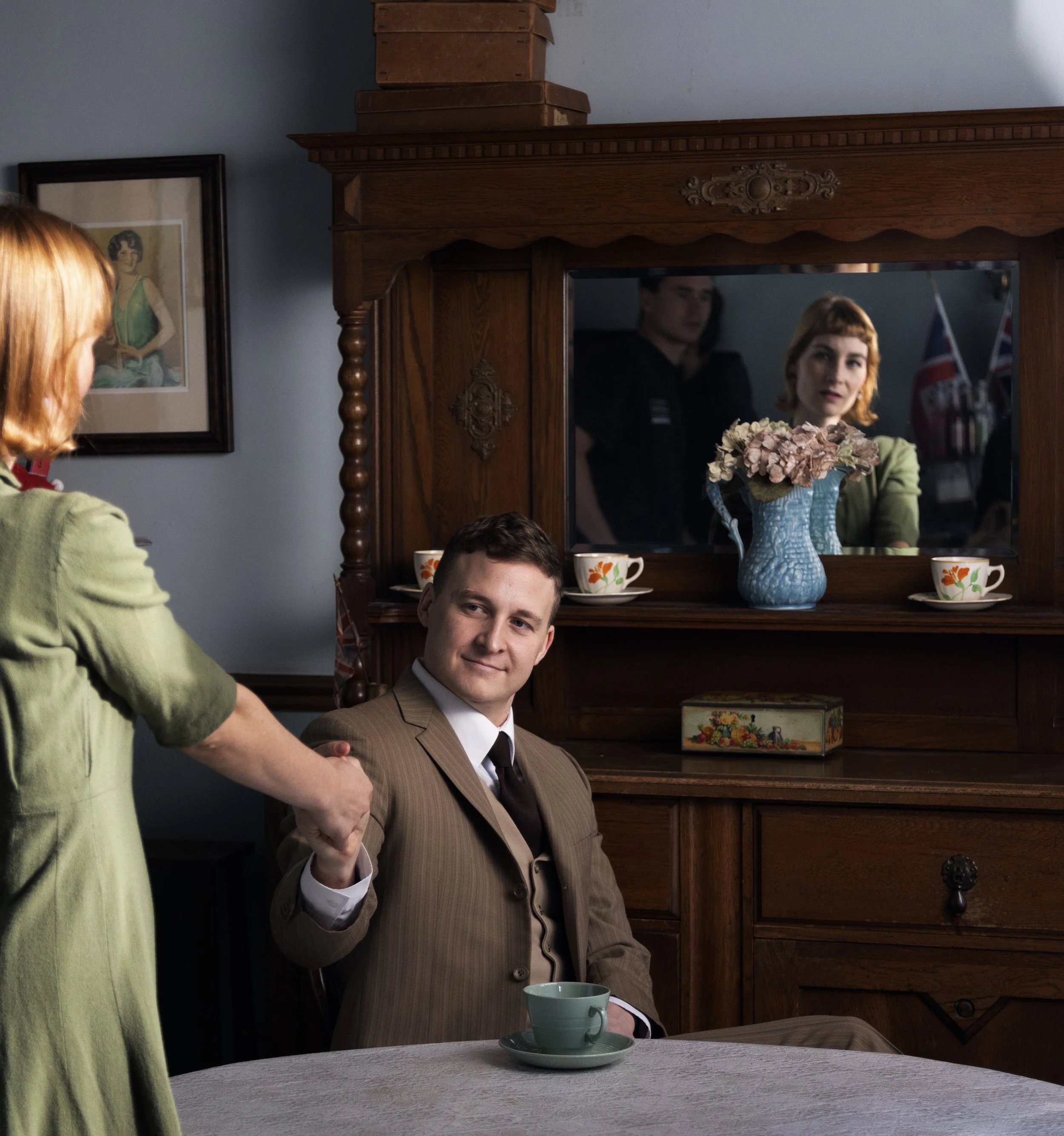
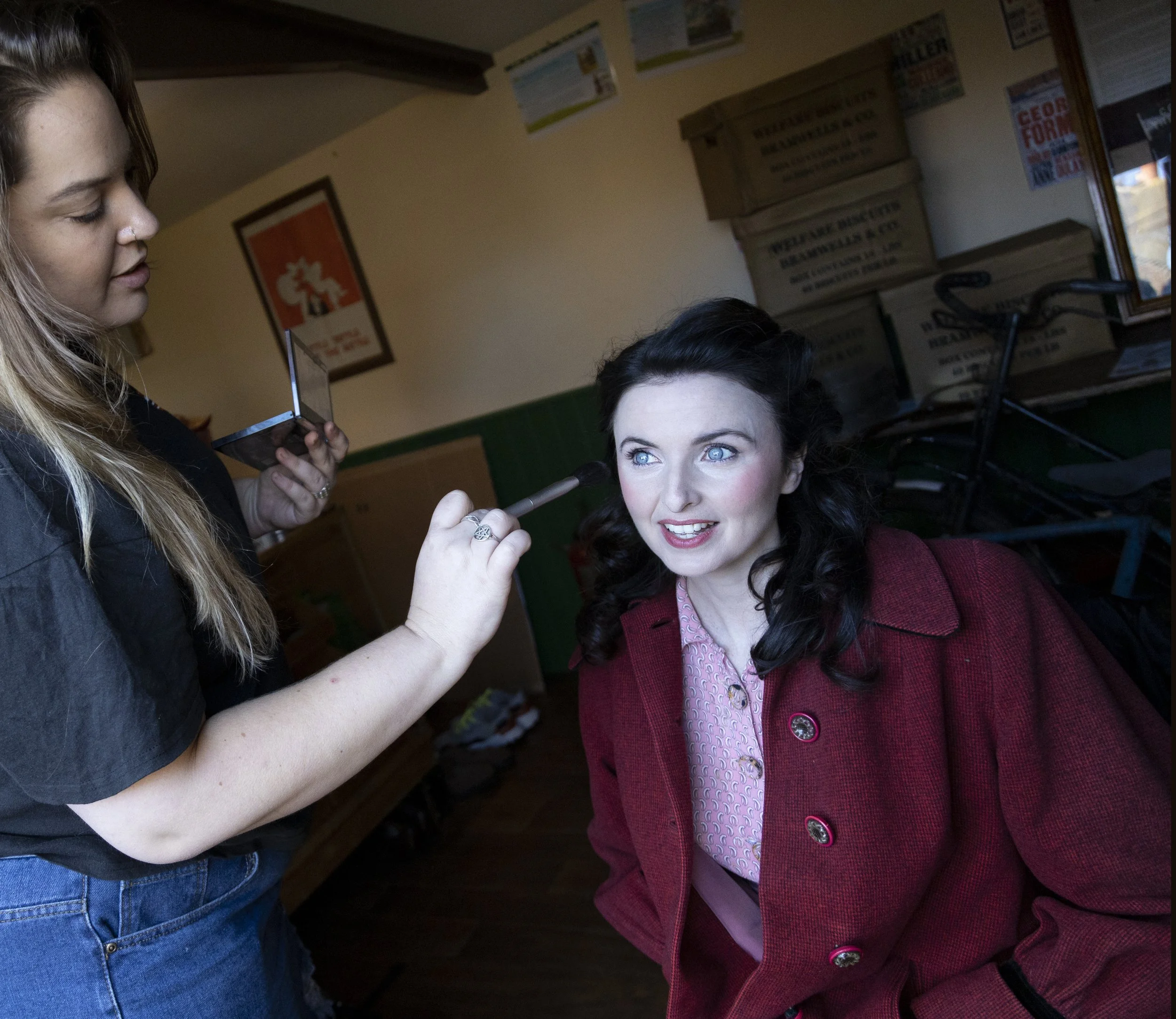
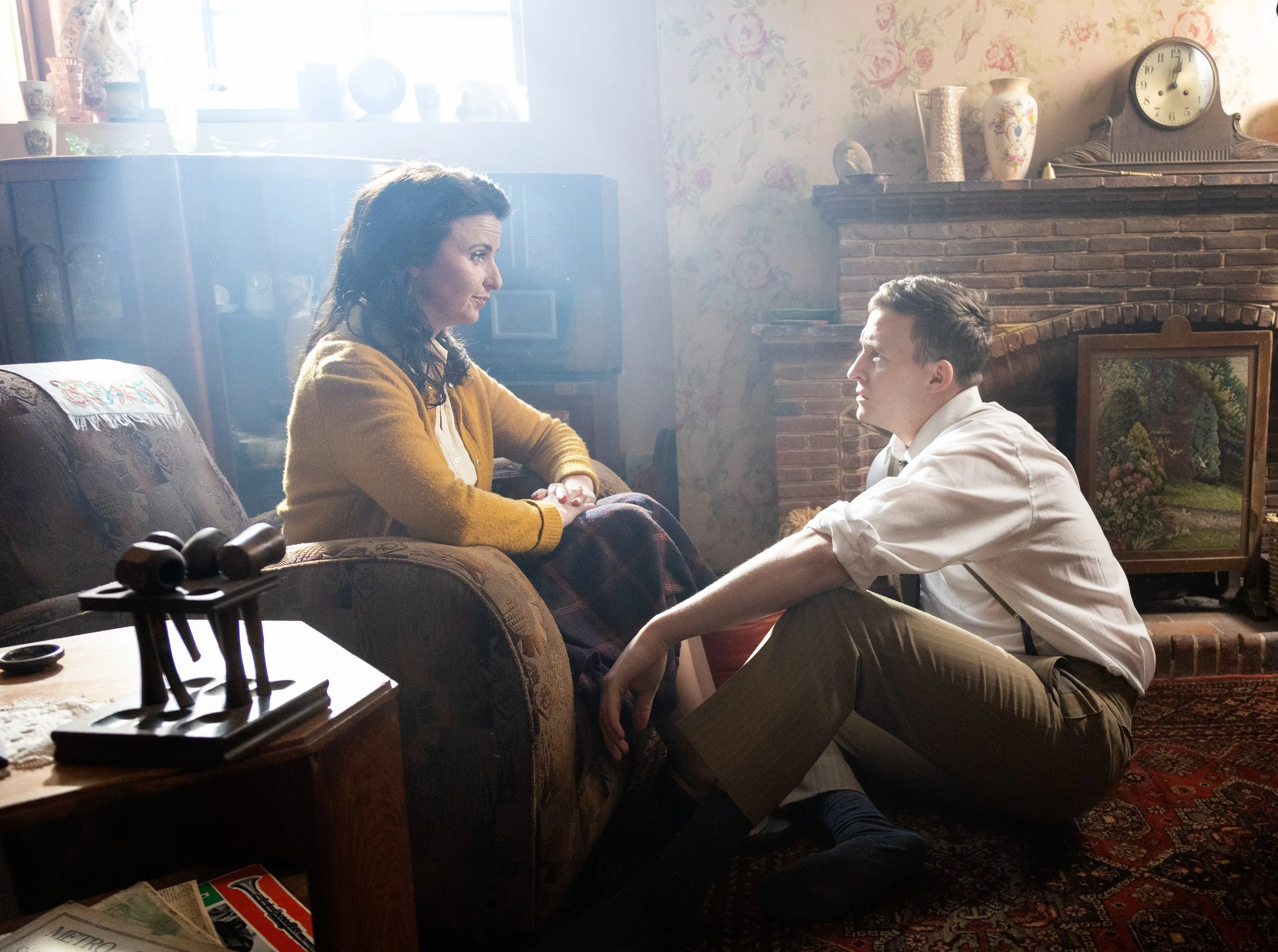
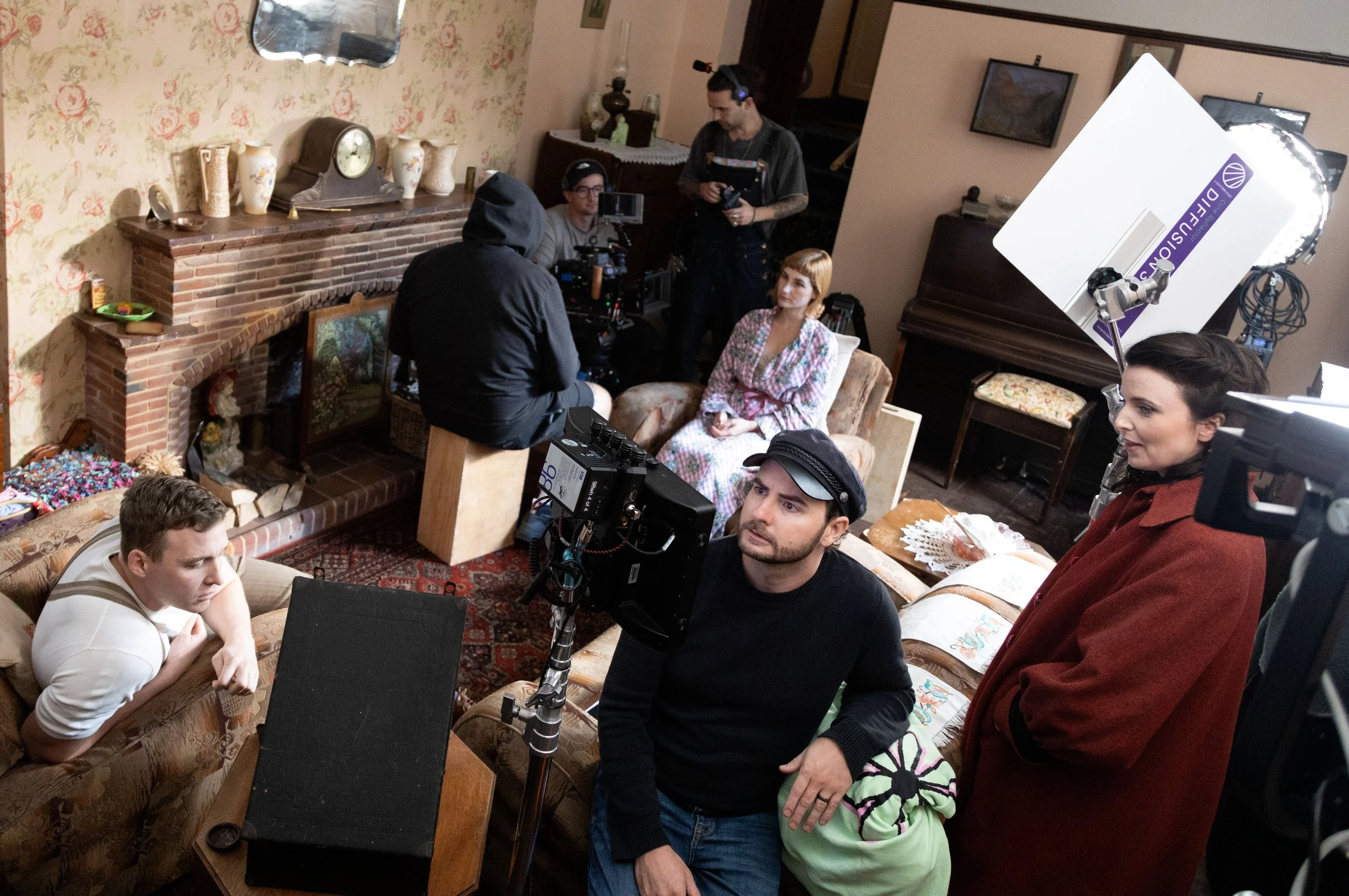
Let’s chat about your choice to tell this story through narration. Why did you make that choice?
It’s odd, but narration can be quite controversial in some pretentious screenwriting / industry circles. Some people consider the use of narration to be “bad writing” or “lazy writing”, but I wholeheartedly disagree. Narration done badly is indeed awful, but then again the same is true for dialog or plot.
Creating a blanket rule that narration should never be used because it’s an inferior art-form is hogwash malarkey. Imagine Fight Club without narration. Same with Forrest Gump, Stand By Me, Apocalypse Now, Adaptation, Casino… I could go on forever. If you look at IMDB’s list of Top 250 films of all time you will see so many examples of narration.
One key deciding factor in making this film a 100% narrated piece was the fact that our film camera was noisy which would’ve impacted our ability to record clean dialog. Additionally the narrative spans many years in the matter of a few minutes. Our film is about the entire scope of a relationship, not a single defining moment of a relationship, so narration was a great tool to link scenes together over the passage of time. The film is also heavily rooted in the misrepresentations of the leading character. Our narrator is the quintessential “unreliable narrator”. The audience starts off believing everything she’s telling us. We empathise with her tale of victimhood, but as the story unfolds we start to realise that the images we’re seeing don’t line up with her words and we’ve been lied to. I wanted the lead character to not only gaslight her partner in the film, but also to gaslight the audience - what a better tool to use for that than narration.
I don’t think the essential components that make this short film what it needed to be would’ve worked without the use of narration, and it certainly was a fun style to experiment with. However, I will say that in the final mix we noticed that the music and visuals were so strong that we didn’t need as much narration as was initially scripted.

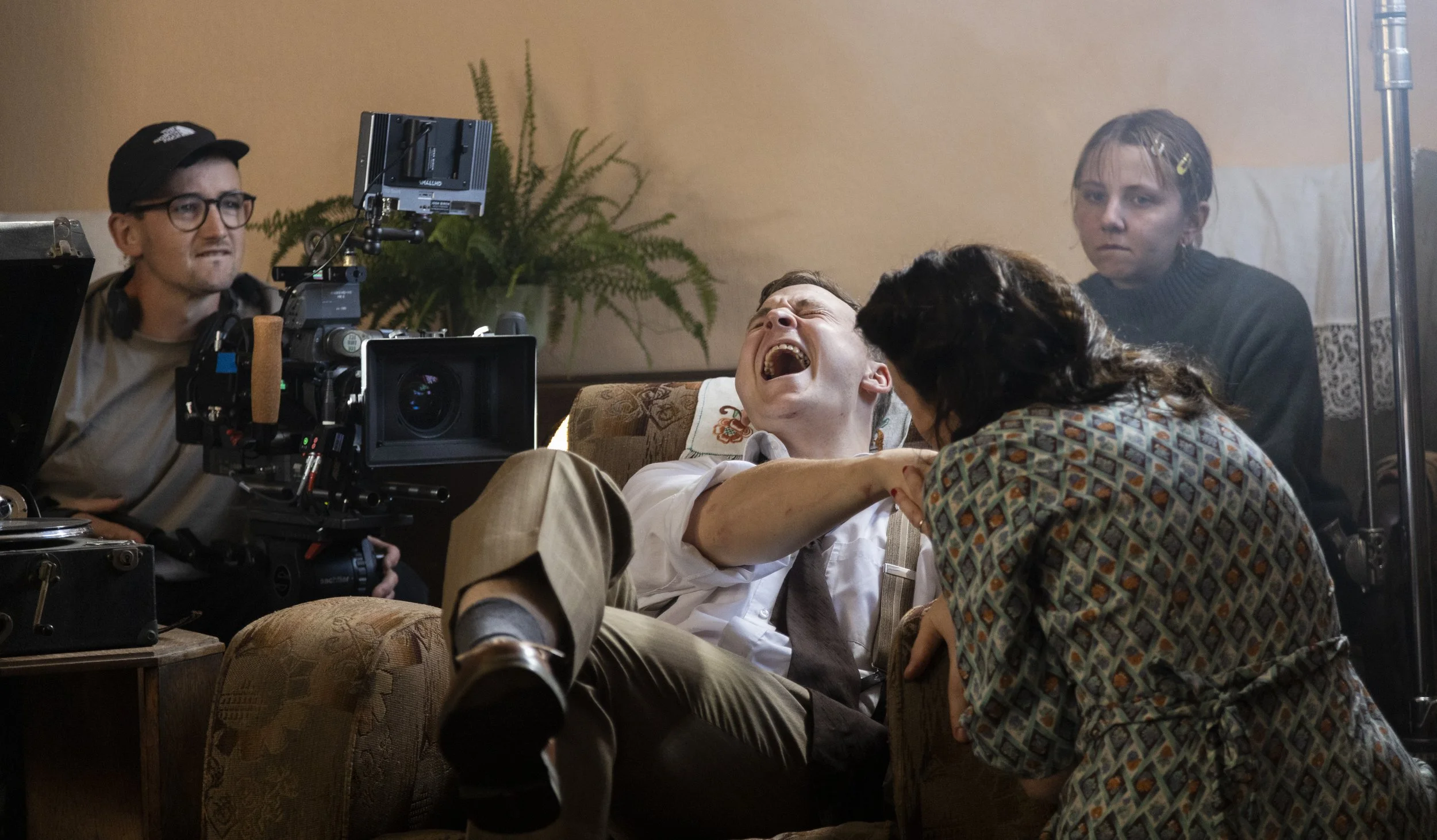
Tell us about the music of EVERYTHING IS OUT TO GET ME.
The score is truly one of my favorite things about this film, and in general working with composers is one of my favorite parts of the collaborative process of filmmaking. (I love many other collaborative relationships as well, so this is in no way meant to throw shade at those who aren’t composers…)
I’d met Thom Robson after he won the award for Best Score at the first year of Kino’s film festival for his work on From Fragments - a beautiful dance film about dementia. I often scout talent via my work with Kino, and I was always looking for an excuse to finally collaborate with Thom. We did work briefly together on my micro-short Filthy Animals, but Everything Is Out To Get Me was what I’d consider our first proper collab.
Thom and I both have a very sensitive ear for digitally created string instruments, so to make the score the portfolio piece it needed to be, we were fortunate enough to work with a 40 piece string orchestra out of Budapest who recorded remotely. It was the same orchestra who does many Hollywood projects including Tim Burton’s Wednesday, but they still set aside 50 minute sessions to help out smaller projects. It was amazing to hear them nail Thom’s composition in just a few takes.
The score is available on Spotify is anyone fancies adding it to their playlist.
Tell us about the journey of getting your film to audiences and some of the festival circuit highlights.
This short was blessed with a very healthy festival run, and while there are great several festival experiences throughout, it’s US premiere at Dances With Films remains my favorite festival experience to date, not just for this film, but for all that I’ve done.
Dances With Films takes place at the historic TGC Theaters on Hollywood Blvd. and it’s everything you think a big Hollywood film festival should be. It’s very well attending and they have special industry events for screening filmmakers where you can actually get in the room with key industry decisions makers. The staff is very friendly and they absolutely champion grass roots filmmakers vs succumbing to the rampant nepotism and privilege that many other big festivals do.
What are you working on next?
The feature length script for Everything Is Out To Get Me is deep into development at this point with several drafts completed. For the feature I’m leaning more heavily into the genre elements that are hinted at towards the end of the short, in particular the home invasion. However, after directing, producing, writing, and editing my debut feature film, it’s certainly not an experience I’m willing to subject myself to again. Making the feature certainly came with it’s highs (and lows) and I’ll always be thankful to some amazing collaborators and investors that believed in the project, but at the end of the day it was a micro-budget production which meant that the solution to most problems was for me to do the work myself. This of course lead me down a path of massive burnout, so for my own wellbeing I’ll not longer be looking to take on four full time production jobs at the same time.
To ease into doing another feature, I’d actually like to get my mojo back by doing a few shorts. I think a lot of people look at shorts as something you graduate from once you’re in the feature film world, but they’re such different mediums. I have a lot of stories I’d like to tell and not all of them should be features.
Hey, if David Lynch can make shorts throughout his career without being embarrassed then why should anyone else feel any different. Go scratch your creative itch any way that feels right to you.
Any film recommendations that we should add to our watchlist?
I’ve mostly spent the last year revisiting my old favorites. Previously, it became kind of a competition between me and friends to see who could boost their IMDB/Letterbox’d view count the highest, but I realized that after being exposed to SO many films over the years I’ve become harder and harder to impress. Pair that with the current state of the industry pushing out more data-driven content vs grand artistic achievements, and I became one bored viewer when it came to new releases…
In slightly similar vein to Everything Is Out To Get Me, I just revisited Marriage Story which is an absolute masterpiece.
For something newer… I super enjoyed Mickey 17 and don’t care what any of the haters had to say about it. Most entertained I’ve been in the cinema in awhile.
Apply to get your short selected as our Weekly Pick

Swimming
A film about a girl who wants to be a fish…

Written & Directed by Gregory Randolph Jr.
Produced by Stanley Mathews
Cinematography by Bethany Yang
A film about a girl who wants to be a fish…
ABOUT THE FILM
SWIMMING premiered at Animal Nature Future Film Festival. It appeared at 2 iterations of Day Dream Fantasy Youth Festival in Glasgow, Scotland and Milan, Italy, as well as being selected for the Earls Court International Film Festival (UK), Goa International Film Festival (India), Canal Dream ICI as part of the London Design Festival, and the Lift Off Global Network Sessions 2023 Jury Choice.
ABOUT THE FILMMAKER
Gregory Randolph Jr. (writer/director) was born in New York City and raised in Boston, Massachusetts. After graduating from Providence College in Rhode Island he moved back to New York to pursue a career in filmmaking. There he worked as a video editor for NBC Universal, ABC News, and HBO. He started his own production company Grandolp Media in 2016. Greg enrolled in the MA filmmaking program at London Film School in 2021. Greg is currently working on a feature film which he is developing now.
Stanley Mathews (producer) is an Indian-born, Qatar-raised filmmaker and producer known for his captivating storytelling. With a Bachelor of Arts in Filmmaking from Whistling Woods India and a Master of Arts in International Film Business from the University of Exeter and the London Film School, Stanley has worked on over 15 short films, some available on Disney+ Hotstar India. He has also directed brand videos with 400k social media views and co-produced the upcoming Indian Feature documentary "Rest in Manhole." Recent credits include the Doha Film Institute Granted short film "Project: Aisha ", Swimming & Different Faces (16mm, 35mm) supported by Kodak & shot on film.
Bethany Yang (cinematographer) is a cinematographer and gaffer from Harbin, China. She enrolled at the London Film School in 2021. Since then she has DoP'd over 15 grad films from London Film School and worked extensively in the camera and lighting department for film and television.
READ OUR INTERVIEW WITH GREGORY
Welcome to our Short of the Week series. Tell us a bit about yourself and your filmmaking background.
Sure, I've been making films for quite a while. I was born in New York City and raised in Boston. I was always making short movies with my friends growing up. I did my undergrad at Providence College as an English major and film minor. I made a short documentary on a music venue and a short narrative. I also did a short experimental film called Purgatory Brook with a friend from BU who has an assignment to do somehting in the vein of David Lynch.
I worked as a video editor after college. I lived in New York and worked for the television show Open House NYC and National as a segment and show editor. I worked on all aspects of post-production from ingest of footage to delivery of the final show for broadcast internationally.
I joined the London Film School in 2021. There I made several shorts both narrative and documentary. Swimming is an independent film I made in between terms at LFS. We shot it on 16mm film and had a wonderful time making it. I am glad its received recognition and I have a brilliant cast and crew to thank for helping me make this film a reality.
Tell us about the genesis of Swimming and your motivation for making this film.
Swimming is about a girl who wants to be a fish. I got the idea one day after another shoot we had just wrapped. A friend of mine brought a book out of a bookshop we were having a coffee at. I thought it odd and asked if she had stolen the book. She didn't have a receipt or bag. For some reason, it got in my head - what if someone was stealing books from a bookshop because they didn't want to confront the cashier with what it was they were reading? As if they were embarrassed about the contents of the book. That was the genesis of Swimming. To me, Swimming is about achieving want you want in life and finding your "school" or community.
What were some of the main obstacles you experienced when making Swimming and how did you overcome them?
We wanted to shoot from film and challenge ourselves in that regard. Finding an affordable way to shoot the film and rent the camera equipment necessary was difficult. We have Kodak London to thank for offering an affordable rate to shoot film. We have the now inactive Pro Cam Take 2 for offering the camera equipment necessary to make the project. We also tapped Student Union Lighting at the London Film School for all the necessary lighting equipment and camera dolly.
The film was also about explaining the world of the film to the actors. A world in which it is possible to become a fish. The film is metaphorical but I wanted to find that line between metaphorical and real. That is what makes the movie special.
Tell us about the journey of getting your film to audiences and some of the festival circuit highlights.
It took some time to find an audience for Swimming as it usually does with a new film from an emerging filmmaker. There is often a lot of rejection and self-doubt when trying to find a home for a film you spent so much of your time and thought on. We were very happy when an LFS alumni-run film festival Animal Nature Future Film Festival saw merit in the project. We premiered the film and it has been received very well by audiences since then. I was able to speak in front of an audience at ANFFF. It was then accepted at the Day Dream Fantasy Youth Festival in Glasgow. I was able to go there to speak about the film. Since then it has had some other nice film festival placements in Milan, Goa, India, and at Earls Court International Film Festival. We are very excited to have Swimming be a part of Kino Short of the Week. Swimming was also recently accepted to the Ukrainian short film festival Max Sir International Film Festival. Swimming will be shown at Lviv Art Palace in Ukraine. It will also be screened at over 100 schools in small towns and villages where children have limited access to international films.
What advice or hacks would you give to other short filmmakers?
Just make it. Try and write something possible within your means, but dream big. Think about the simplicity of Swimming's log line. A girl who wants to be a fish. There is a lot possible there. I hope one can watch Swimming and be inspired to think conceptually about whatever it is you are looking to make. We made this film on a very small budget and it is now being shown all over the world. You can make a film with a limited budget and still receive praise for it if that is what you wish. For me, I am grateful to my co-collaborators for achieving the things we did within our means. I am happy others can watch the film and be inspired by it.
Any film recommendations that we should add to our watchlist?
I just watched Kneecap and enjoyed it. It's a nice mix of storytelling sensibilities, but also something fresh about it. And the rapping is absolutely terrific. I highly recommend it.
What are you working on next?
My grad film from London Film School, Different Faces is currently in the film festival selection process. We are excited to announce its premiere soon.
A short film script I wrote was recently accepted to the Linz International Short Film Festival Talent Academy. They offer a short film lab with residencies at both the Cannes Film Festival and the Linz International Short Film Festival. The lab also offers courses to improve the script and market the film. I will start the lab in January and am very much looking forward to making the next film. It's about a failing actress who is looking for the next step in her career.
Interested in getting your work selected?
Slay
Living with flatmates can be tough. Living with an influencer can be even tougher. Phoebe, Jade and Heather have had enough and conspire to 'deal with' Danielle once and for all.
Written, Directed & Produced by Fran St. Clair
Living with flatmates can be tough. Living with an influencer can be even tougher. Phoebe, Jade and Heather have had enough and conspire to 'deal with' Danielle once and for all.
ABOUT THE FILM
SLAY screened at Sunday Shorts, Nightmares Film Festival, the Greenwich Film Festival (where Fran St Clair won for Emerging Actor) Boundless Film Festival (where it won a Special Mention), Rome Prisma, Poor Life Choices (winning Best Horror Comedy Short), Independent Shorts Awards (winning Best Dark Comedy Short) and Women’s Comedy Film Festival in Atlanta
ABOUT THE FILMMAKER
Fran St Clair is an award-winning actor, writer, and director based in London. What started as an actor's desire to create her own roles evolved into the founding of Myrtle Tree Studios. Her passion for comedic storytelling was sparked by SLAY, leading her to focus on writing comedy. Her latest surreal comedy, NICE PACKAGE, is currently in post-production, and she also stars in her co-created web series DO WE EAT HIM. The series has quickly gained attention worldwide, racking up 70,000 views in just over a week, with plans to bring it into the mainstream. Other notable projects include GREENSLEEVES INC., a co-written sustainability satire that won the 2024 VMI Sustainable Script competition. Fran will take on the lead role of eco-fashion influencer Fleur in the upcoming film, which is set to premiere at the BIFA-Qualifying Crystal Palace Film Festival in March 2025.
READ OUR INTERVIEW WITH FRAN
Welcome to our Short of the Week series. Tell us a bit about yourself and your filmmaking background.
Thank you so much for featuring SLAY as part of your Short Film of the Week series! My name is Fran St Clair and I’m the writer, directer, producer of the film. Oh, and I also play Jade! My journey into filmmaking has been a little different as my main passion is acting. I’ve always loved storytelling and I’ve acted for as long as I can remember, so naturally with the unpredictable nature of this industry I decided that if I wanted to keep working on creative projects I would have to start making my own. That’s how SLAY was born. Prior to this, I’d made another film called CAKE earlier in 2023 which was my first little experimental short with just me and my DoP and friend Jay Fisher. After that experience, I decided I wanted to make something bigger, better, less serious and much more ridiculous. So I gathered all of my amazingly talented filmmaker and actor friends and we got to work.
Tell us about the genesis of slay and your motivation for making this film.
The SLAY journey began in December 2022 with the intention of writing a flatmate horror story. There were few people in my life at the time that has shared their annoyances with flat sharing. People leaving their dirty dishes in the sink for weeks, using up and never replacing the toilet roll, helping themselves to snacks that aren’t theirs and so on. I also love stories about unlikeable characters and the complexities of female friendships and thought it would be a really fun premise for a short. So, I took all of these flatmate dramas, threw in some unlikeable characters and thought of what the worst case scenario could be when you’ve absolutely had enough. I knew from the very start that I wanted my friends Kelsey Cooke and Charlotte Pathe (who are amazing actors) to take on the roles of Heather and Phoebe. This made the writing process super easy as I pictured all of their voices so strongly and knew we would have so much fun together in these roles. I wanted the film to be fun, camp and feminine and even though it’s a comedy and the surface level themes are unserious, the characters are also complex and emotionally intelligent. Once we had the script, we found the talented India Plummer to take on the role of the terrible ‘Influencer' flatmate Danielle and we were all set. Some of my references included Mean Girls, Heathers and Bodies Bodies Bodies.
Tell us about the genesis of Slay and your motivation for making this film.
We had a fair few obstacles when making this film! It was made on a very low budget. Though we did raise some funds through crowdfunding, like most things it would have been much easier with some more money. We also booked a location that didn’t quite look like the photos, so we had to do some re-jigging when it came to our floor plans. The house next door was also having an entire renovation happening. So that was a nice surprise. During filming for the living room scene we had to stop and start quite a few times whenever they starting drilling and banging - which was the whole day. I was so lucky to have such an amazing and passionate team around me that really believed in the vision and worked so hard to make it happen. So obstacles aside this film was such a dream to make!
What were some of the main obstacles you experienced when making Slay and how did you overcome them?
We had a fair few obstacles when making this film! It was made on a very low budget. Though we did raise some funds through crowdfunding, like most things it would have been much easier with some more money. We also booked a location that didn’t quite look like the photos, so we had to do some re-jigging when it came to our floor plans. The house next door was also having an entire renovation happening. So that was a nice surprise. During filming for the living room scene we had to stop and start quite a few times whenever they starting drilling and banging - which was the whole day. I was so lucky to have such an amazing and passionate team around me that really believed in the vision and worked so hard to make it happen. So obstacles aside this film was such a dream to make!
Tell us about the journey of getting your film to audiences and some of the festival circuit highlights.
After a few selections, SLAY had its first in person screening at Big Fridge Film Festival which was really exciting. Some of the team were able to join and it was exciting seeing it up on the big screen. I have a few other shots in the works right now so the hope is to do a special screening event for all of them in the future.
What advice or hacks would you give to other short filmmakers?
Not sure I’m in the position yet to impart wisdom, but I do feel like I’m always learning. I think the most important thing is having a great team around you that share your vision. If you don’t have those people yet you’ll find them, that’s why networking events and festival screenings are so great because you can meet so may interesting and talented people. Another piece of advice to offer would just be if you have an idea - write it. It doesn’t matter if you don’t make it, getting something down on paper is the only way you’ll ever start.
Any film recommendations that we should add to our watchlist?
Sticking to comedy, Bottoms by Emma Seligman was an instant 5 star from me. Then leaning more towards drama, Scrapper by Charlotte Regan. Loved it.
What are you working on next?
I have a few things in the works right now that are keeping me nice and busy. I’m in pre-production for my next short film Nice Package which is filming at the end of January. Another comedy but this one is a more dreamy and surreal approach to the mundane life of a very bored young woman. I’m also working on another short film called Lava Cake with my friend and collaborator Govind Chandran, as well as a Zom-Com mini series.
Interested in getting your work selected?
Kino Short of the Week - Best of 2024
That’s a wrap on our Short of the Week series for 2024. If you’re looking for indie alternatives to add to your holiday watchlist, why not dip into our archives?
In 2024 our Kino Short of the Week series featured shorts of all genres ranging from horror to drama, from animation to experimental, comedy and more.
As always, to help maximise viewership for filmmakers, we featured films on a non-exclusive basis helping to support releases from Omeleto, Alter, Directors Notes, and Vimeo Staff Pick as well as supporting those filmmakers who chose to self-distribute on their own channels.
We of course think every film we selected is worth a watch, but here’s 10 that stood out.
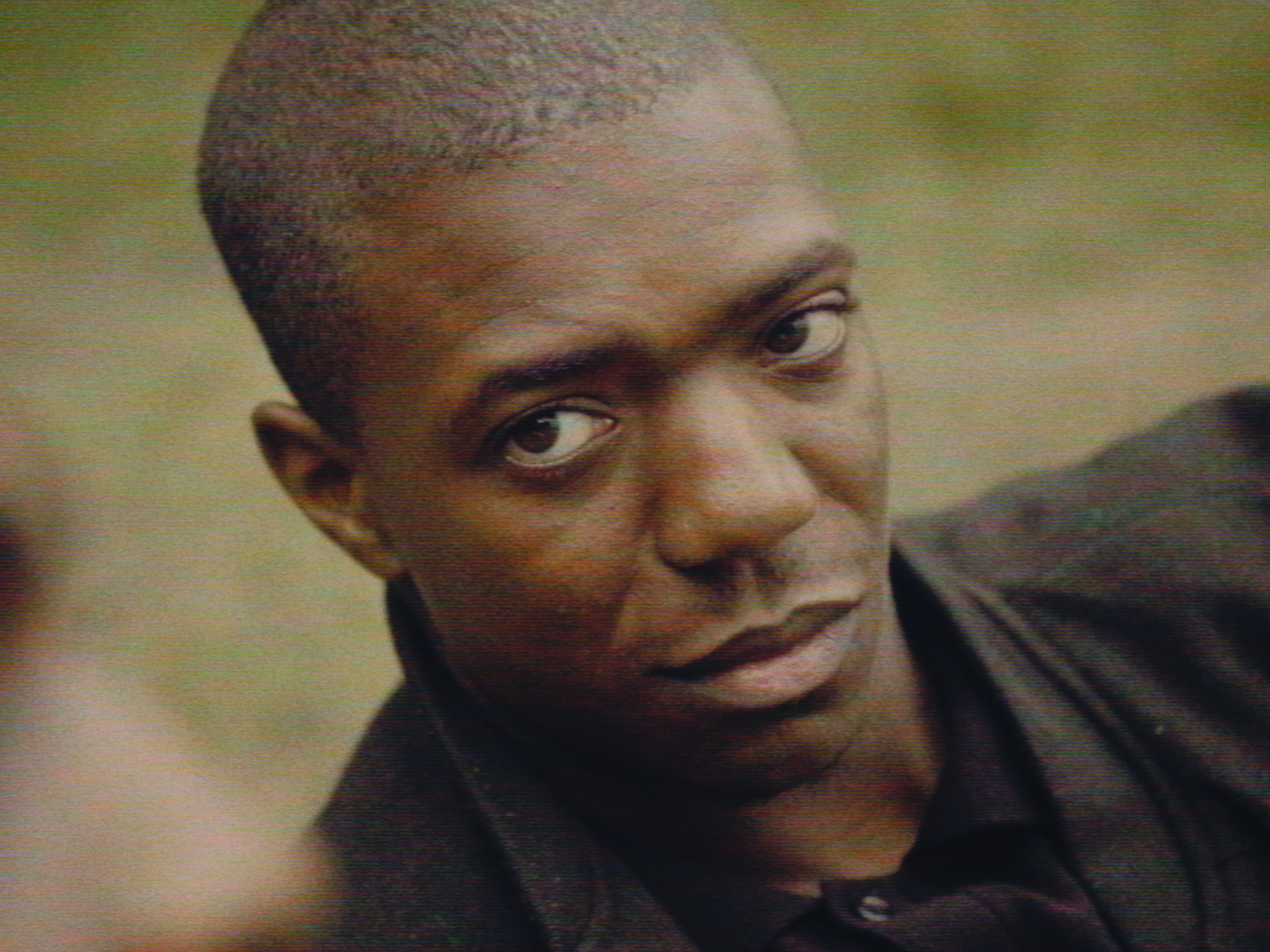
10. SCRUTINY
Written & Directed by James Quinn
Produced by Maria Ogunyale
On a bus journey across south London, a young man’s anxiety spirals into a vortex of self-doubt and torment - causing him to question: can he trust his memories?
An illustration of the process and impact of anxiety, and the demands of city life that intensify it.

9. LONDON’S FORGOTTEN
Written & Directed by Liam Pinheiro-Rogers
PRODUCED BY Cyrus Mirzashafa & Levon Gharibian
In the urban streets of London, the stories of would-be knife crime victims are connected by a wandering drifter who has loose ends to tie.

8. VOICES
Directed by Abbie Lucas
Written by Omar Khan | Produced by Håkan Carlsson
A couple overhears a violent fight next door and must decide whether or not to get involved.

7. DEAD WHISTLE STOP
Written & Directed by Sean Mckenna
Produced by Jamie Macdonald
Daniel’s not going to the office today. A dying man asked him to deliver a letter. Though he’s not sure who the dying man was or where the person he’s delivering it to is. Or what, if anything, it has to do with his new neighbours, The Illuminated Brotherhood of the All Seeing Eye.

6. SNAKE DICK
Written, directed & Produced by David Mahmoudieh
PRODUCED by George Lako & Annalea Fiachi
Jill's got the snake. Julia's got the flute. Alone, they have nothing. But together, they have a secret weapon to fight the darkness...

5. STONES
Written, produced, & Directed by Matthew Hopper
On a trip to his old family home in the Scottish Highlands, a troubled man argues on the phone with his stoic father, forcing him to confront a dark issue in their relationship.

4. CRY LIKE A GUY
Directed by Ant Rubinstein
Written by Catherine Willoughby
Why do we cry? What’s the deal with those little droplets of emotion? Kieran Bew (HBO's 'House of the Dragon', Netflix's 'Warrior') leads us on a gruff, goofy, educational and emotional adventure through the senses into the fascinating world of tears. A feast for the feels.

3. WAVING
Written, Produced & Directed by Rolfin Nyhus & Steven Brumwell
His worst fears seemingly realised; a distraught father takes one last walk through his ruined world. For most people, being at the centre of their own world and having a loving family is a wonderful thing. For Charlie, it's literally a nightmare. A short film about OCD.

2. EVERYBODY DIES SOMETIMES
Written & Directed by Charlotte Hamblin
Produced by Leonora Darby, Charlotte Hamblin, James Harris, & Mark Lane
A dark comedy about death anxiety that follows Mara as she grapples with the belief that she has killed everybody she's gotten close to.

1. BOY IN THE BACK SEAT
Written & Directed by Scott Pickup
Produced by Jonny Ross, James Owen & Simon Marriott
1986. A young boy is left unattended in the car while his volatile dad takes care of some ‘business’ in a dodgy local pub. What could possibly go wrong?
Honourable Mentions
Even though these films didn’t make our Top 10 we still think they’re pretty great and well worth a watch.
Hold my hand

gHanimah

Submit to our Short of the Week series to be considered for our 2025 season

Snapshot
An aspiring autistic photographer is plagued by a painful memory that exacerbates his persistent struggles with unemployment and negotiating the job interview process.

Written & Directed by JOHN CLARK
PRODUCED BY SAM BARNETT & JIM WRAITH
An aspiring autistic photographer is plagued by a painful memory that exacerbates his persistent struggles with unemployment and negotiating the job interview process.
ABOUT THE FILM
SNAPSHOT is the debut film from John Clark and was funded and supported by the BFI Network. Snapshot is based on John Clark's lived experience, of trying to gain employment as an autistic adult. The film includes a debut performance from Josh Ward, whose real-life experiences mirror the character and themes presented within the film.
The film won Best International Short Film a the Wigan & Leigh Film Festival, and also screened out of competition at the BAFTA Qualifying Bolton Film Festival as part of the Film Hub North Showcase. Other festival highlights include the BIFA qualifying North East International Film Festival, Catalyst International Film Festival, Romford Film Festival and Mansfield Film Festival where it received 4 nominations including Working Class Voice Category, Best Lead Performance, Best Editing, and the Heart Of Mansfield (Top Prize). It was release on Omeleto earlier this year.
ABOUT THE FILMmakers
John Clark is a Writer and Director who first garnered national attention with his candid, introspective short documentary; Asperger's: And What Of It? a paraphrased edition of his surrounding work of his lived experiences as an Autistic Adult. It was screened at The National Autistic Society's Autism Uncut Film Festival in 2017, and from there applied for funding through Film Hub North for what became the short Snapshot, his professionally credited Written and Directorial debut.
READ OUR INTERVIEW WITH JOHN
Welcome to our Short of the Week series. Tell us a bit about yourself and your filmmaking background.
Many thanks for having us! Snapshot is my professionally credited Writer and Directorial debut. Before this, I had made a series of self-produced short films, with one in particular that led on to the development of Snapshot. The short; Asperger's: And What Of It? is a paraphrased film of my similar work of the time which was entered into The National Autistic Society's Autism Uncut Film Festival in 2017. Gaining nationwide attention as a Finalist in the Aspiring Filmmakers category. It is a candid, introspective short documentary of my lived experiences as an Autistic adult.
Tell us about the genesis of Snapshot and your motivation for making this film.
Whilst residing in South Yorkshire, I'd meet Sam Barnett (after being introduced to him) at Sheffield Showrooms over a series of Coffee meetings about the (then) possibility of creating a short film together. I'd discussed my lived experiences of unemployment and regaled tales of various disastrous job interviews as an Autistic adult, and wanted to highlight the lack of support Autistic adults such as myself face, due to perpetuated stigmas and stereotypes about those with the condition. Only 22% of Autistic adults are in any form of employment due to these barriers, and not only did I wish to highlight this alarming statistic, but I also wished to create a visually immersive experience that put the audience directly into the subjective world of an Autistic person, and their direct experiences with sensory and communication difficulties, amongst the intrusive thoughts as a result of pervasive mockery, scrutiny and misunderstandings. From there, Sam introduced me to his small creative team, where we put together a funding application into Film Hub North which we were successfully awarded for. We're still working together on future projects!
Throughout, DOP Jim Wraith helped with in kind support from Sheffield Hallam University, with kit hire, crew and locations, all proving highly beneficial as a further utilising of our resources.
What were some of the main obstacles you experienced when making Snapshot and how did you overcome them?
We were greenlit for funding in January 2020. 3 months later...As a result of the occurring events, we then had to develop Snapshot over a series of Zoom meetings. It was a blessing in disguise, as it gave us a real opportunity to flesh out the story into what you see today. Film Hub North were incredibly supportive of me and us, especially through a rather difficult time in everyone's lives. Though the film went through constant development right up until the final cut! The real challenge came from utilising our limited resources. £10,000 leaves little margin for error! Auditions were Self-Tapes and Zoom calls, and further development was remote, until we were finally able to film over 5 days in April 2021, still under COVID guidelines of that given time, which meant we didn't really have enough time for on-set rehearsals, or blocking. COVID also meant we were running on a skeleton crew of about 8-10 people, who all appear in Snapshot at some point. I cameo twice! From script to screen, we all really had to think on our feet. The Bus sequence was originally set on a Train, but the Train company quoted a third of the budget! Such a sequence (which has been seen as something of a highlight) was also supposed to be a flash-in-the-pan moment when one Interviewer asks; "Getting here's not a problem for you, is it? No?" We also spent a year remotely editing Snapshot, where we evolved the idea of using the Bus sequence as a Turning Point for the film. Originally, it would cut straight from Ian's bedroom to the Interview, but it didn't feel right. You know in your mind when you're that involved with the creation of a deeply personal story to you what works, and what doesn't.
Tell us about the journey of getting your film to audiences and some of the festival circuit highlights.
Film Freeway can be costly! But we divided the remainder of the budget into attempting to hit the bigger festivals, before the local ones. Any selection was a win in our eyes, and for a low-budget debut, getting into 8 out of a possible 38 is quite the achievement! It is ridiculously competitive! All of the firsts were highlights for me. Snapshot premiered at Wigan & Leigh and won its award. We were unaware there was going to be any awards there, leaving me (ironically) speechless! Seeing Snapshot on the big screen for the first time sinking into my seat, was something of an experience too. My first panel interview at Romford Film Festival, where I was bricking it on the inside, but managed to explain how the film came to pass. The Omeleto selection also meant the world to me. The comments in particular. Reaching a further and wider audience, and having many Autistic people (and friends, family and Carers of Autistic people) deeply resonate with Snapshot was one of many other goals we set out when making it. The 5 star review on UK Film Review. Being selected here as well! Revisiting my old place of studies to screen the film and inspire Aspiring Filmmaking Students. Because of how this story is semi-autobiographical, there will always be that personal touch and deep gratitude for every success and accolade Snapshot has received. Especially with the rest of the cast and crew, who all have a personal connection with Autism too.
What advice or hacks would you give to other short filmmakers?
If writer's block rears its ugly head, write what you know. Yes, it's old hat, but it works. Even if you strip back the content, and amplify the context and underlying ring of truth with what your story's core message is, it should strike a chord with many. Kill your darlings. Also cliched, but true. You may very well have spent an incredibly long time setting up an exquisite shot, but if it's only served purpose is aesthetic, and doesn't help drive the story, cut it. It's a Short Film. You don't have long. When Snapshot's first pass was 22 minutes, it was far from engaging. Each scene needs to drive the next, progressing the story, and cementing its core arcs and messages until the very end.
Any film recommendations that we should add to our watchlist?
For similar short films, I highly recommend Pennywort, which tells a similar story from the perspective of a Young Autistic Woman. One scene in particular deeply resonated with me. Attempting to articulate Snapshot's vision was initially difficult. So, I was asked to cite past Films of inspiration or similar to what I had in mind. Films that we all have a mutual love for, such as; Pi, and Jacob's Ladder cropped up. Both have had a long lasting impact, because they tell compelling subjectively driven stories that help the audience get inside the mind of each character. I'd also recommend Tyrannosaur as that's also been a huge inspiration on the kinds of stories I wish to tell. Raw, subjective and unapologetic at times. A view of the world that sometimes needs a lens over.
What are you working on next?
With Hidden Pictures North, we are currently working on a Documentary Project that will emerge next year.
I also moved to Peterborough, where I shared Snapshot and am currently chasing funding for a Combined Arts Project with Metal Culture, examining how Deaf, Disabled and Neurodiverse communities within the city feel pigeonholed within a dichotomy of being branded as either Lazy Scroungers on the Benefits system, or put on pedestals as Paralympian Superheroes with unrealistic presumptions and expectations.
And finally, I currently tinker with my Feature Script which serves as an elongation of Snapshot that hopefully emerges some day! There's still a lot that needs to be said about Autism.


Tell us about the journey of getting your film to audiences and some of the festival circuit highlights.
We had our premiere in the Peckhamplex in October 2022 where we screened our film to not just the cast and crew but also those that are part of the community, charities and those who contributed to our crowdfund campaign. After that, we got good news after good news with various festivals. We managed to get into a decent amount at the end of the day. Highlights include meeting some great likeminded filmmakers at the Leeds International Film Festival and seeing some great horror shorts there. The South London Film Festival was another highlight as it unexpectedly snowed heavily that night! At the end of the day, every festival was great as I got to see some awesome films and meet some talented people.
What advice or hacks would you give to other short filmmakers?
I think that it is great to be ambitious and you should have a lot of ambition when it comes to making your short film but be realistic and know your limitations. I see too many short films that are very clunky and rushed because they tried to cram a lot of big budget aspects into it with a small budget. London's Forgotten was ambitious and had many locations but it's not something I'm expecting to get all the time, and we had a decent budget to go with that. Also, take time with the script. As stated above, it took a year until I truly understood what London's Forgotten was. Don't rush into things.
Any film recommendations that we should add to our watchlist?
Oh, well, I'll recommend some good ones that fit in with the style of London's Forgotten for sure. I would say David Lynch films, such as Eraserhead and Muholland Drive for the surrealism. The Exterminating Angel by Luis Buñuel is also a good shout equally for the surrealism as well as using it for social commentary. Bullet Boy if you're looking for a grounded urban London story.
What are you working on next?
A proof of concept social-horror short film called Scelus! (Scelus is Latin for "To commit a crime"). I'm currently looking to shoot Scelus sometime within the next six months after I secure funding, and I couldn't be more excited to share the story with the rest of the world! The short deals with Riley, a 24 year old ex-criminal on community service, who plans to use his gift of seeing the dead to confront an entity in a run-down council flat before his curfew begins. I'm hoping to develop this short film into a feature to expand the world further.