
What Men Do For Love
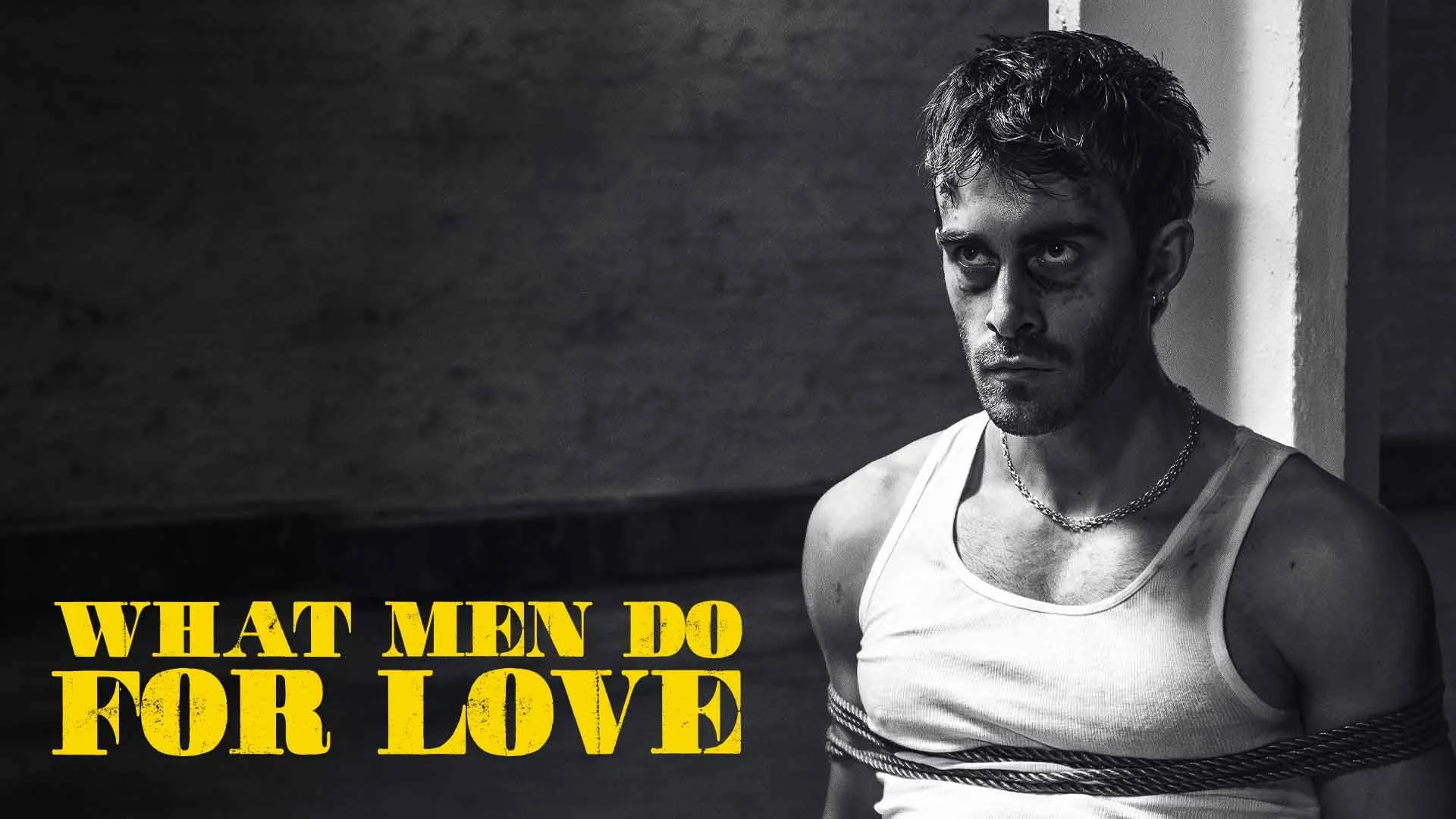
Written & Directed by Sai Karan Talwar
Produced by Dustin Curtis Murphy
An aging dentist kidnaps a young man with intentions of killing him because he's had an affair with his wife, but an unlikely connection starts to form between them.
ABOUT THE FILMMAKER
Sai Karan Talwar is an OSCAR Longlisted and YDA winning writer-director.
His upcoming short film ‘I AM THE PRIZE’ stars Russell Tovey, it is based on the spec script he wrote with the BBC during the BBC Writers Room Programme. The film is OSCAR Longlisted, BAFTA & BIFA qualified. ' I AM THE PRIZE' premiered at Raindance nominated for Best UK Short, and Frameline nominated for Best Narrative Short. The film has won the Gold Screen Award at the Young Directors Award during Cannes Lions and the Inaugural Best Performance award for Russell Tovey at Hollyshorts, in addition to nominations for Best Live Action Short, Grand Prix, and Best Director.
Sai is currently a BAFTA Connect Member, a recent BBC Writers' Access Group Alumnus, and a 2023 Alumnus of the Disability Belongs Entertainment Lab.
His Short Film debut ‘GHANIMAH’ was a BAFTA & BIFA Qualified Short Film that had been selected at just over 60 film festivals, with over a dozen wins and nominations. His second short film ‘WHAT MEN DO FOR LOVE’ is a 15-minute single-take film; the film was OSCAR Longlisted for 2026.
READ OUR INTERVIEW WITH SAI
Welcome back!
We last spoke when interviewing you about your debut short Ghanimah. Since then, your second short What Men Do For Love was produced as a Kino Original, and your third short I Am The Prize is now in the middle of its festival run.
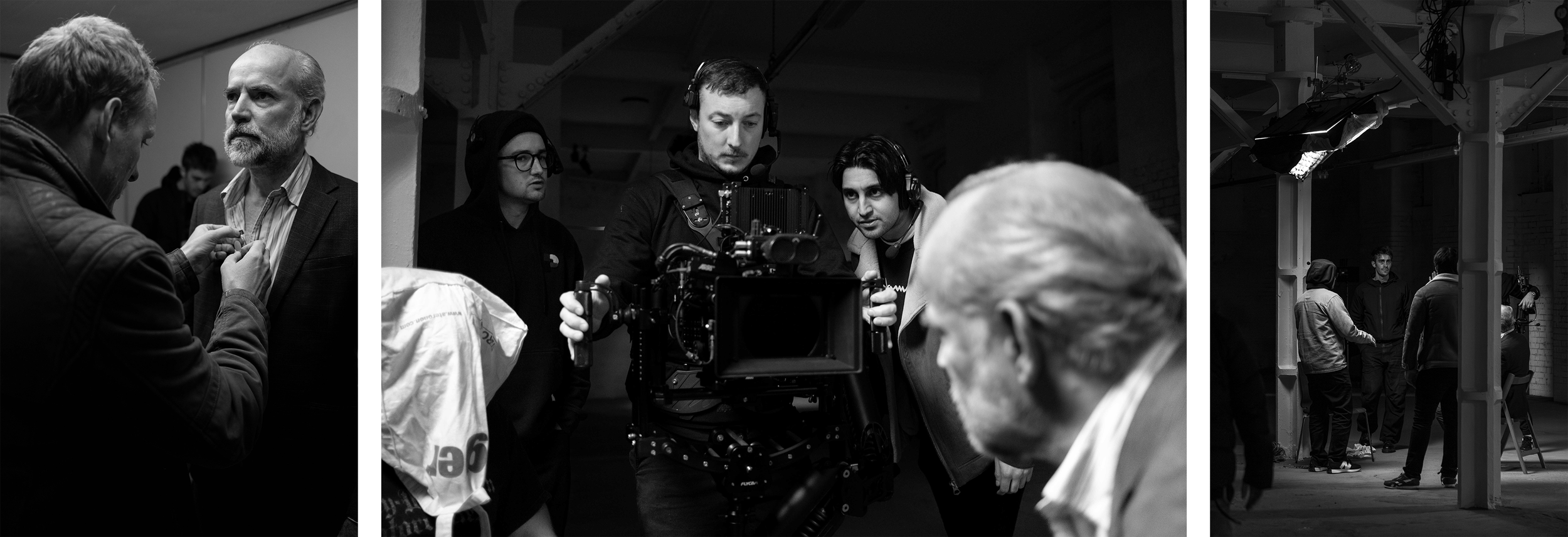
Most Kino Originals are produced via our Film Fund, but What Men Do For Love is a different story. Can you tell us about how the project came to be a Kino Original?
It really came out of the relationship I’d built with Kino through the festival circuit. I first met Dustin at the BFI during my premiere of my first short GHANIMAH, during that we pretty much played the circuit together with his film ‘Everything is out to get me’ all over the UK and even in LA as a part of Dances With Films at the Chinese Theatre, so there was already a genuine relationship and an understanding of the kind of films I wanted to make.
By the time What Men Do For Love came around, I already had some finance in place and a producer attached. The project was moving forward, but we were having conversations about the budget and what we would need to properly realise the film. My producer at the time felt that we needed more resources behind it to make the film at the level the script demanded.
That was when Kino became involved. Because we already knew each other and there was an existing level of trust, it wasn't really a case of me approaching Dustin from scratch with a project and asking them to fund it. It was much more organic than that. They understood me as a filmmaker, they understood the project, and they could see where the film could go with the right intervention.
Once Kino was onboard, how did this change the trajectory of the project?
Kino ultimately came onboard as a producer, working with the budget and financing that was already in place and helping me build the production around it. That relationship was what allowed What Men Do For Love to become a Kino Original. That included Dustin finding the crew, developing the script; allowing us to take bigger risks while adding more depth, and taking it to its fullest potential.
For me, that was really exciting because it felt like a continuation of a relationship rather than simply another funding application. But I believe this was just before the Kino Fund launched, so the film was a precursor to the Kino Fund and how it may operate now.
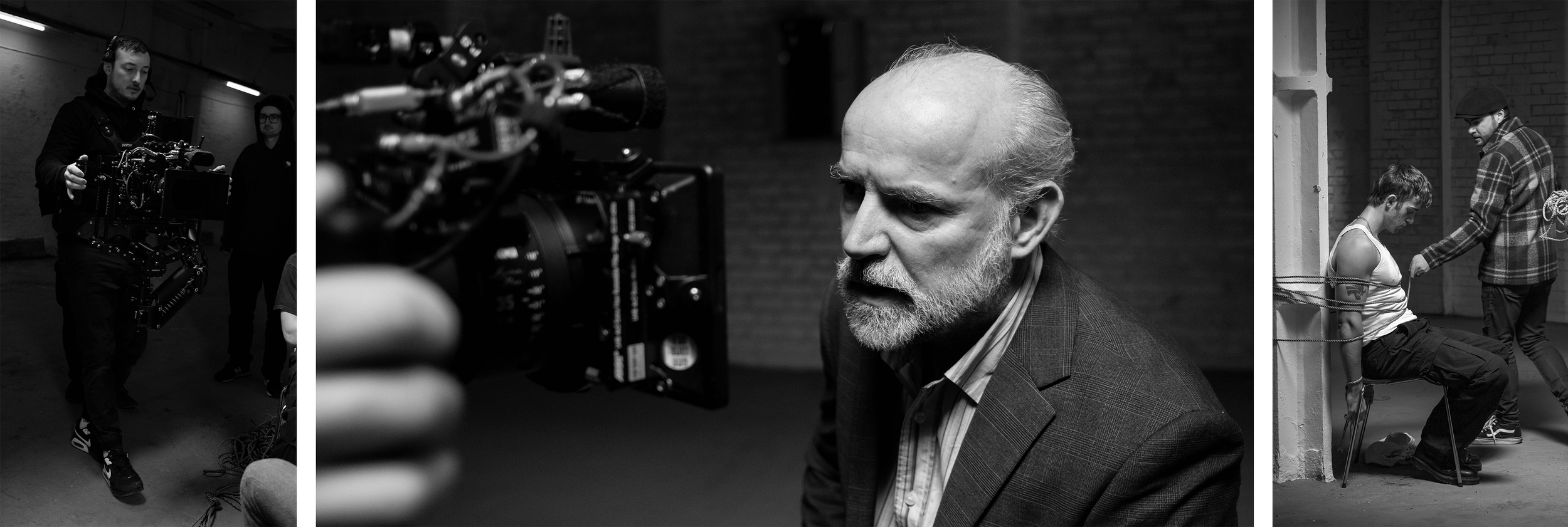
A fifteen minute 360° single take is quite ambitious. Chat us through how you went about prepping to shoot.
It was definitely the most ambitious thing I’d attempted at that point, and a fifteen-minute 360° single take leaves absolutely no room to hide. There’s no cutting around a mistake, no changing the lighting between setups and no opportunity to reset the camera. Everything had to be incredibly considered beforehand.
A huge part of the preparation was shot listing. Josh Carrington Birch (our Cinematographer) and I spent a lot of time breaking the sequence down beat by beat and working out exactly where the camera needed to be at every point in the story. Because the camera is constantly moving, we had to think not just about what the audience was seeing, but what they would be seeing a few seconds later and where the camera would need to go after that. The movement of the camera became part of the storytelling.
We also had to think about the 360° nature of the shot from the very beginning. Normally, you can position lights and equipment outside the frame, but with the camera effectively seeing everywhere, there was nowhere to hide. That had a huge impact on how we approached the lighting. We had to work out where lights could physically go, how we could motivate them within the environment and how we could move through the space without revealing the equipment or creating unwanted shadows.
The blocking with the actors was probably one of the most important parts of the process. We rehearsed extensively, initially focusing purely on the performances and movement, and then gradually introducing the camera movement. Every actor had to know exactly where they needed to be at different points, but we also didn't want it to feel overly choreographed or mechanical. There needed to be enough freedom for the performances to feel alive.
There was definitely a moment where you realise, we're about to attempt fifteen minutes of this and if something goes wrong at minute fourteen, we're going all the way back to the beginning. But that pressure was also part of what made it exciting. The form demanded a level of collaboration and precision from everyone, and I think that ultimately became a big part of the film's identity.
When it came time to shoot, how many attempts did it take to get the shot you wanted, and how many different versions did you walk away with?
We had two days in total, but a day and a half of that was dedicated to rehearsals, so we only had half a day to actually shoot the film. That made the pressure of getting the single take right pretty intense.
We ended up doing 14 takes. Of those, four were genuinely usable, which was actually a really good result given how complicated the shot was and how little time we had to shoot.
Since you had multiple takes, and thus multiple versions of the film, how did you decide which take to go with? What made that take stand out from the others?
By the end, we had narrowed it down to the final two takes. They were both strong for very different reasons, so the decision came down to what best served the film as a whole. Ultimately, we went with the last take.
It had the perfect balance between the camera movement and the performances. With a shot like this, you can have a technically brilliant take where the camera movement is flawless, but if the performance isn't quite there, it doesn't work. Equally, you can have an incredible performance, but the camera doesn't quite land where you need it to.
The final take felt like everything had come together at once. The camera movement felt natural, the performances had the right energy, and there was a sense of spontaneity that we'd been trying to achieve throughout the rehearsals. So, after all that preparation, it was the last take that ultimately became the film.
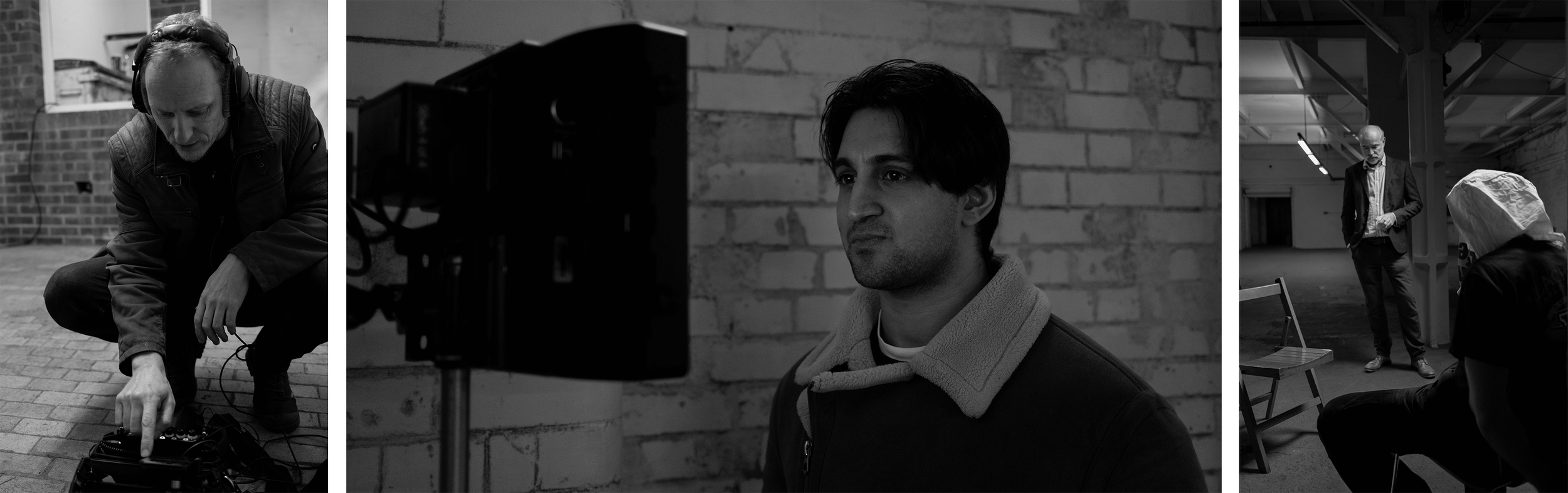
Let’s chat about the festival circuit. What were the festival highlights for this project?
We had a really rewarding festival run. Over the year that it was on the circuit, we played at more than 25 festivals, and the film was Oscar longlisted as well as BAFTA and BIFA qualified, which was a fantastic outcome.
One of the highlights for me was the St. Louis International Film Festival. It's somewhere I probably never would have visited otherwise, so it was a real privilege to be able to travel there with the film.
I hadn't really known much about St. Louis before going, but I was completely taken by the city. There's so much history there, and there's also a really strong and passionate film community. The festival team were incredible and really looked after us while we were there, which made the whole experience particularly memorable.
I think that's one of the things I love most about the festival circuit. Of course, the awards, qualifications and opportunities that come from it are important, but you also get to experience places and communities that you might never otherwise encounter. You meet filmmakers from all over the world, see how different audiences respond to your work.
Now that the film has been released via Omeleto, what’s been your experience with the online release of the film?
It's been really exciting to finally have What Men Do For Love available to a much wider audience through Omeleto. The festival run gave the film a really strong life before the online release, and being able to bring that audience with us has been fantastic. We've had people who discovered the film at festivals, as well as people who are encountering it for the first time online, so it's been interesting to see the film continue to find its audience in a completely different way.
For me, the biggest thing is that the film now has a life beyond the traditional festival window. You spend so much time making a film and then travelling with it, so ultimately you want it to be seen.
Typically, we ask all the filmmakers we interview “what’s next”, but in your case we already know.
I Am the Prize starring Russell Tovey is already on the festival circuit having just played at our film festival where you were nominated for Best Screenplay. You were also recently at Hollyshorts where Tovey won Best Actor.
What are you hoping to achieve with your third short that you were unable to with your first two?
I think with each film I've made, the ambition has grown. Ghanimah was about proving to myself that I could make a film, and What Men Do For Love allowed me to develop that voice and push myself further as a filmmaker. With I Am The Prize, I wanted to take everything I'd learnt from those films and make something that could operate on a much bigger level.
A big part of that was ambition. Working with Russell Tovey was a huge part of that. He's an incredible actor, and having someone of his calibre leading the film allowed me to push the material and the filmmaking further than I'd been able to previously.
The response so far has been incredibly encouraging. Having Russell win Best Actor at HollyShorts, winning the Young Directors Award, being nominated at Raindance, HollyShorts, and Frameline for their respective best short film awards, as well as, Kino for Best Screenplay has been amazing. Particularly because the screenplay and the performance are so central to what the film is trying to do.
The first two shorts gave me the opportunity to learn, experiment and establish myself. With I Am The Prize, I'm trying to turn that experience into momentum. It's about showing that I can make something ambitious, emotionally resonant and technically accomplished, and hopefully using the film as a springboard towards making my first feature, the film is a proof of concept for an ensemble drama that I originally developed within the BBC Writersroom programme. After the programme I redeveloped the project into a feature film. So now with a script in place in combination with I Am The Prize, we hope the feature has the ability to attract the right producers, cast, finance, etc.
And last, but not least? Any film recommendations for our audience?
Two of my favourite films from last year were Eddington and Marty Supreme. I loved how completely different they are, but both felt incredibly confident in their filmmaking. Eddington really stayed with me for the way it captures the anxiety and absurdity of the moment we're living through, while Marty Supreme has this incredible energy and sense of character. I’m always drawn to films that have a strong authorial voice but still feel alive, unpredictable and emotionally human, and both of those films really achieved that for me.
