
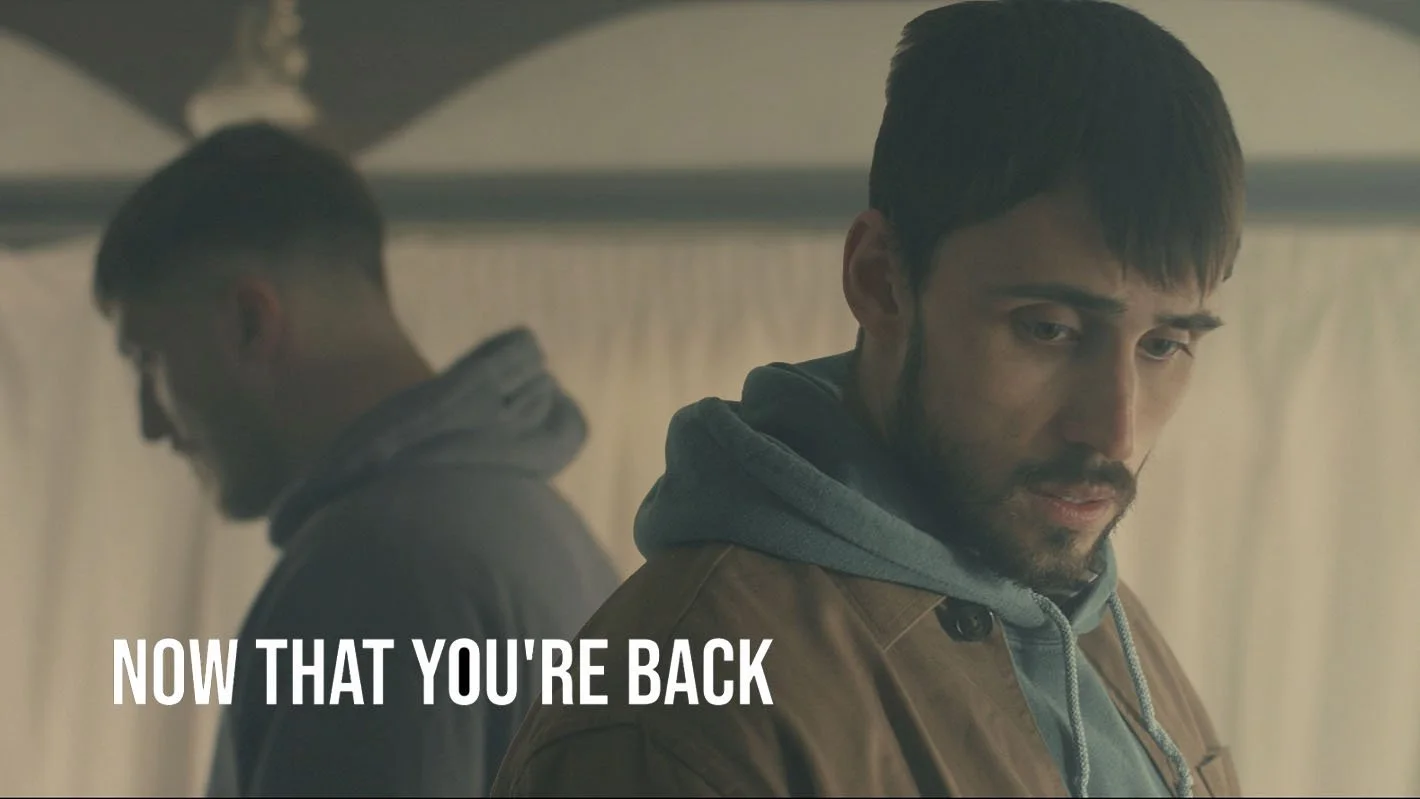
NOW THAT YOU’RE BACK
Written & Directed by Seth Hope Barnard Chodzko
Produced by Seth Hope Barnard Chodzko, Cora Needham & Joe Everitt
After losing a childhood friend to suicide, Connor and Liam reunite for the painful task of choosing his burial clothes — a moment that forces old wounds and unspoken truths to surface.
ABOUT THE FILMMAKER
Seth is a writer/director originally from Kent in the UK who studied at the Northern Film School in Leeds, passionate about creating both documentary and fiction films. Through his work’s particular subject matters and forms I hope to raise awareness and provoke questions in the viewer, positively influencing our precarious world. He also likes to blend documentary and fiction, inspired by the stories and people around him, incorporating reality into his narrative projects.
READ OUR INTERVIEW WITH SETH
Tell us about the genesis of Now That You're Back. Where did the idea come from?
The very initial idea, came to me whilst I was driving on the M62 between Leeds and Manchester, as I often did. It is very scenic and the rolling hills, for some reason, made me think about grief and disconnection, particularly between two men. The first working title was therefore “Rolling Hills” and was about two brothers who had lost their other brother to suicide. Although not directly, suicide has been a consistent event in my life and I have therefore often thought about the culture of it. Further discussing the idea with my mum, she told me about a time she and a friend, had to pick out the funeral clothes for a mutual friend who had died. I found this idea compelling. The unusual process of having to pick out the clothes, to dress a recently deceased loved one. This “task”, also acted as an affective structure for a short film I felt, driving it forward with a clear through line (the task being set at the beginning, and then completed at the end).
How did you develop that idea into the short that's now made its way out into the world?
I wrote the script and pitched the idea to my film school (students and tutors) as part of the graduation films that were to be made. Unfortunately, the film was not selected. This was a really important lesson for me, about rejection. I found it difficult at first but in the end, it was a blessing because it gave me more time to develop the script into something, I believe, was stronger. I was determined to make the film and so, thanks to my piers and the Northern Film School, I shot it after everyone had finished their graduation projects! The film would not be what it is, without that initial rejection and extended time to develop it.
Tell us about the journey of getting your film to audiences.
Once the film was finished, I jumped straight into entering it into film festivals. This was mainly done by entering via FilmFreeway. I entered as many as I could afford at the time, but also any free festivals that had a category for our film. Other than that, I tried to push it out wherever I could. I screened it at my film school, in a cinema in my home county of Kent, emailed it to friends and family etc. Of course, I also promoted the film via social media, exposing it to the world and hopefully get audiences interested in seeing it!
What advice or hacks would you give to other short filmmakers?
1. This one is very cliche, but the biggest lesson I learnt with this film is, believe in your idea, even if it gets rejected. That was a big one for me. Take it on the chin and move on with pursuing it! No matter what, you will learn and benefit from making the film.
2. Try not to be precious with your script, even from early development. Share your ideas and drafts with the people around you, including non-film buffs! Have conversations about it. Anything I have made has been strongly influenced by the feedback I get from the people in my life.
3. Start your short film right in the action, and set up the narrative as early as possible. Draw the audience into the world immediately. Let them know what it is roughly about, early on, to keep them engaged, and want to see what happens at the end. In short film, you don’t have time to beat around the bush (in my opinion!).
What are you working on now?
I am writing two short film scripts whilst I travel around South America, which has been a massive privilege. I work in the film industry as a runner back home and it’s really difficult to find the time to work on my own stuff. Both scripts are dramas and will be around 10 pages long. I hope to make them soon after I get back to the UK!
Any film recommendations that we should add to our watchlist?
I’m going to try recommend something that hopefully hasn’t been seen by that wide of an audience. Since we’re talking about short films, I would recommend a short by one of my favourite filmmakers, Abbas Kiarostami, called “The Bread And Alley”. It’s simply about a young boy who meets an aggressive stray dog, on his walk home. It forces him into a new situation that he has to deal with on his own. It is such a simple concept yet it takes you through an array of emotions, and is ultimately a great coming of age story! This short, for me, encapsulates exactly what a “strong” short film is, simple and effective in addressing a wider concept/idea.
