
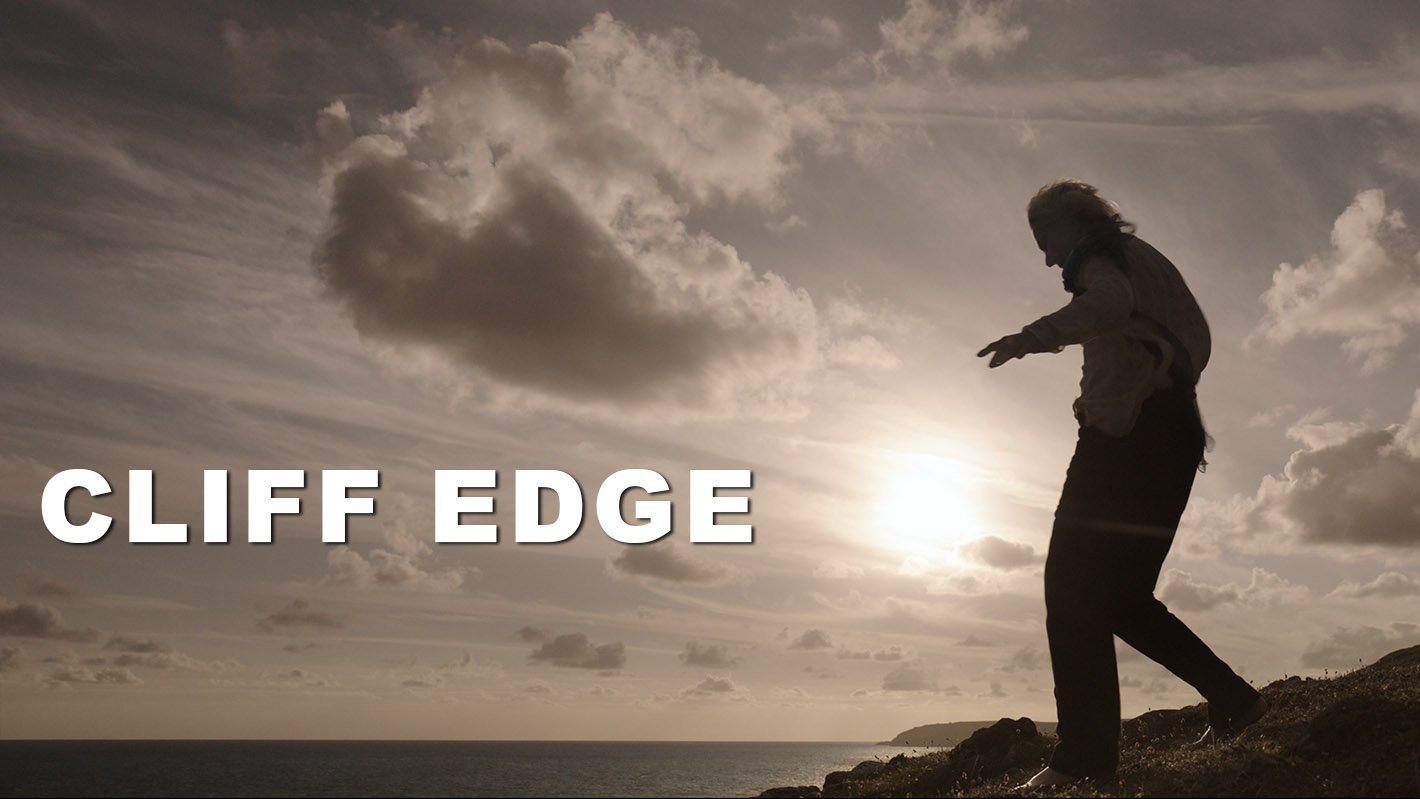
CLIFF EDGE
Written & Directed by Ann Hawker
Produced by Ann Hawker & Shelagh McLeod
A woman’s search for her estranged daughter takes her to a seaside cliff tops where ghosts and reality intertwine.
ABOUT THE FILMMAKER
Ann works across drama and documentary as an award-winning director and writer. She has delivered landmark single films for international broadcasters including BBC, Channel 4, ITV, CNN and Discovery. She is known for her thoughtful, sensitive direction bringing underrepresented voices to the screen. She was nominated for Best Director and Best Film in the Film the House Awards with her short film drama, Fly Free. Her film, Cliff Edge, won Best International Short in the Short Sweet Film Festival and Best Editing in the Francigena Film Festival. She won the JETS European co-production initiative with her feature project, An Austrian Holiday. The script was selected for the Academy Nicholl Fellowship top 50, the Writer’s Lab US, sponsored by Meryl Streep, the Red Planet Prize finals and was a winner in the Screen Writing Goldmine competition. Her previous drama shorts have shown at international and BIFA qualifying festivals. She wrote and directed a verbatim drama for Channel Four about smugglers and was commended in the Mental Health Awards for her documentary on bullied children.
READ OUR INTERVIEW WITH ANN
Welcome to our Weekly Pick! Let’s dive straight in.
Cliff Edge first caught our attention when you applied for Post-Production Funding during our Spring 2024 Funding Round. We shortlisted the project, and while ultimately we didn’t support the film with hard cash, we did come onboard to support with some in-kind services. First-off, good-on-ya for persevering in the face of not landing funding dollars.
Can you tell our readers a bit about your experience of being shortlisted?
Being shortlisted is exciting. Getting some external validation and support gave us all a boost on the project. As everyone knows, making a short film is a labour of love and can be challenging at times, so having someone from outside the project recognise its worth and give it support is always fantastic.
Can you chat about what in-kind support via Kino looked like for Cliff Edge?
We got a great festival strategy from Kino. Understanding what festivals, (out of the many hundreds out there), are worth-while entering can be challenging. Kino provided us with an extensive spread sheet of the festivals which would make the best fit for the film and a time-line for submission. It was great to have some insider knowledge about what individual festivals were looking for and which ones were right for Cliff Edge. Getting a bespoke festival strategy can be expensive and Kino’s input helped us save both time and money. It also gave us the chance to have a preview screening of the film in London which was great.
Now let's go back in time... Tell us a bit about the genesis of Cliff Edge.
Where did the idea come from?
The idea for Cliff Edge came from witnessing the loneliness of people, often older, who have become isolated and have lost contact with their families. Loneliness is widespread in the UK. Seven per cent of people suffer from chronic loneliness and nearly half of the population say they have experienced loneliness at some point. I know my own mother experienced loneliness as she got older, and I was not always there for her, so this film is a tribute to all the neighbours and carers who extend the hand of friendship to isolated people.
How did you develop that idea into the short that’s now made its way out into the world?
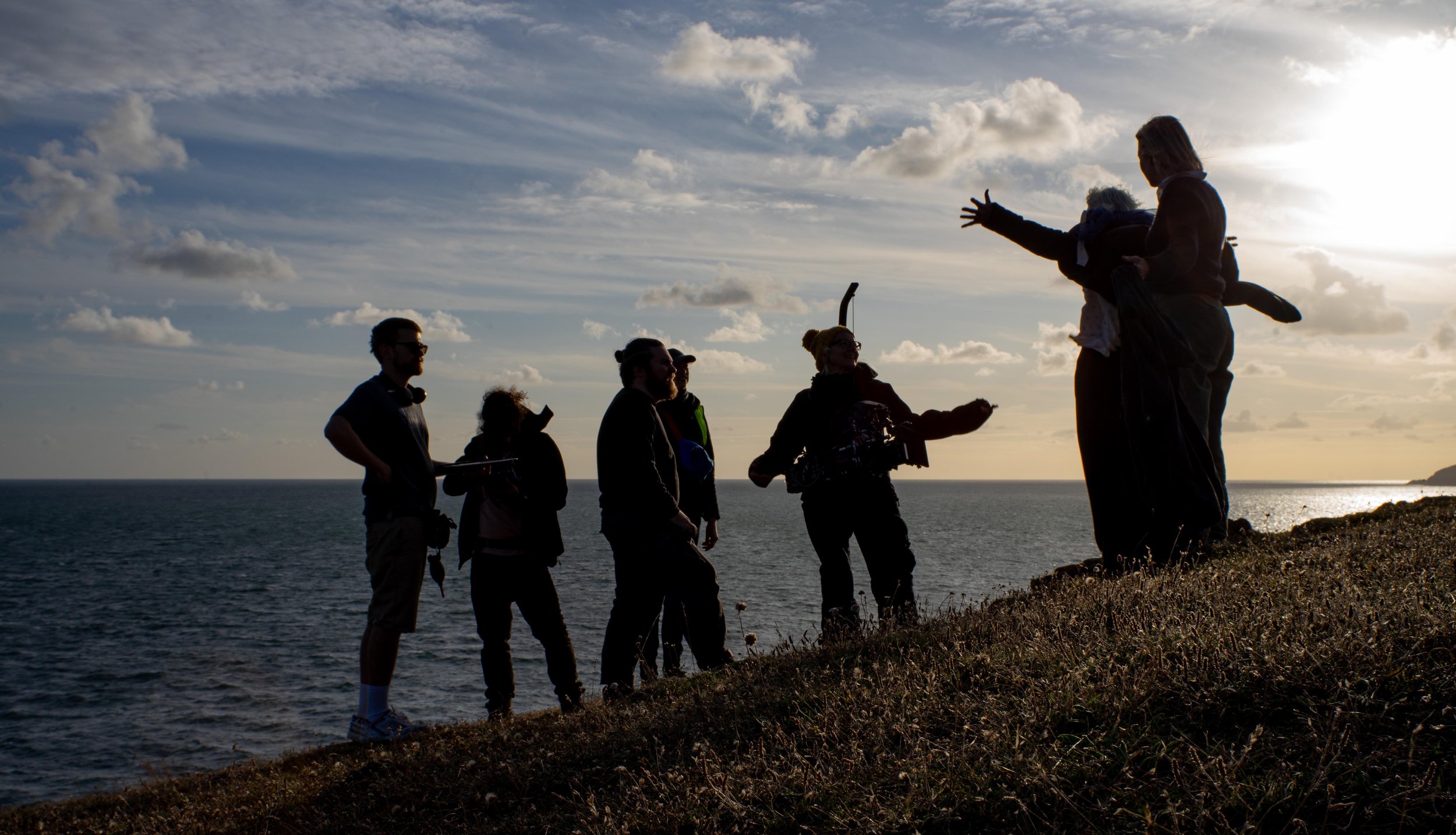
Working through several versions of the script I realised I wanted to make a film which was hopeful. I developed a relationship between the main character and her carer, and gave it a short film twist by turning it into a ghost story. Short films, are a massive team effort, and rely on a lot of good will to make them happen. Working with producer Shelagh McLeod and casting director Catriona Dickie we attached amazing cast; the esteemed stage actor Dearbhla Molloy and the BAFTA winner Anamarina Marinca. Finding the perfect location was the next hurdle, in the end we filmed in Swanage, Dorset, which had a fantastic traditional pier and beachfront, right by some beautiful cliff walks, and as an added bonus we were warmly supported by the local community. I was lucky to have a fantastic team onboard, including cinematographer Mary Farbrother, editor Julie Buckland, sound designer Dan Hibbert, and composers Sylvia Strand and Jonathan Gregory. I was pleased to have a female led team in many of the main creative roles. We also had invaluable help from both Focus Canning and Arri who supplied us with top end camera and lighting equipment. The final piece of the puzzle was the amazing support from Onsight post production and one of their senior colourists Emily Russul-Saib.
Can you tell us a bit about your festival journey with this film? The highs, the lows, the in-betweens.
All festival journeys are long and you will inevitably get rejected by some, which can be demoralising. It’s important to remember how many films are being entered into festivals and how competitive it can be. However, I was really thrilled by the warmth and fantastic screenings provided by the festivals that the film was selected for. Sadly, I couldn’t attend all the festivals. A couple of highlights include the Middlebury Film Festival in Vermont, amazingly well organised with fantastic audiences. Another was Purbeck Film Festival, which gave us the opportunity to take the film back to Dorset, close to where it was shot. The film was shown in the wonderful Rex Cinema in Wareham, one of Britain’s oldest cinemas, and it was a chance for local people involved in the film to come and see it on the big screen.
What advice or hacks would you give to other short filmmakers?
Preparation is key to keeping on time, and saving money. I extensively researched seaside locations from Kent to Dorset to find the right place. Eventually I found somewhere which had both iconic beach and pier as well as near by cliffs. The more you get the locations right, the less you need to spend on production design and art department. Keep your crew tight, but find the right balance. Both too few people and too many will slow you down! You need enough to be efficient with time, but not so many to break your budget or to become unwieldly. Have a targeted festival strategy, don’t waste your money on entering films into festivals which are unlikely to screen them.
What are you working on now?
I am currently working on another short and a feature film. The short is based on the real story of a man who met the killer of his twin brother. It’s a very emotional story, with a positive message about the power of restorative justice to heal.
Any film recommendations that we should add to our watchlist?
Rental Family, (2025) directed by Hikari, starring Brendan Fraser. It’s a Japanese film, a comedy drama, which is also about loneliness. Brendan Fraser plays the part of an American hired by a Japanese company that rents out family members and friends to people. It is a wonderful window into Japanese society and a really touching film.
