
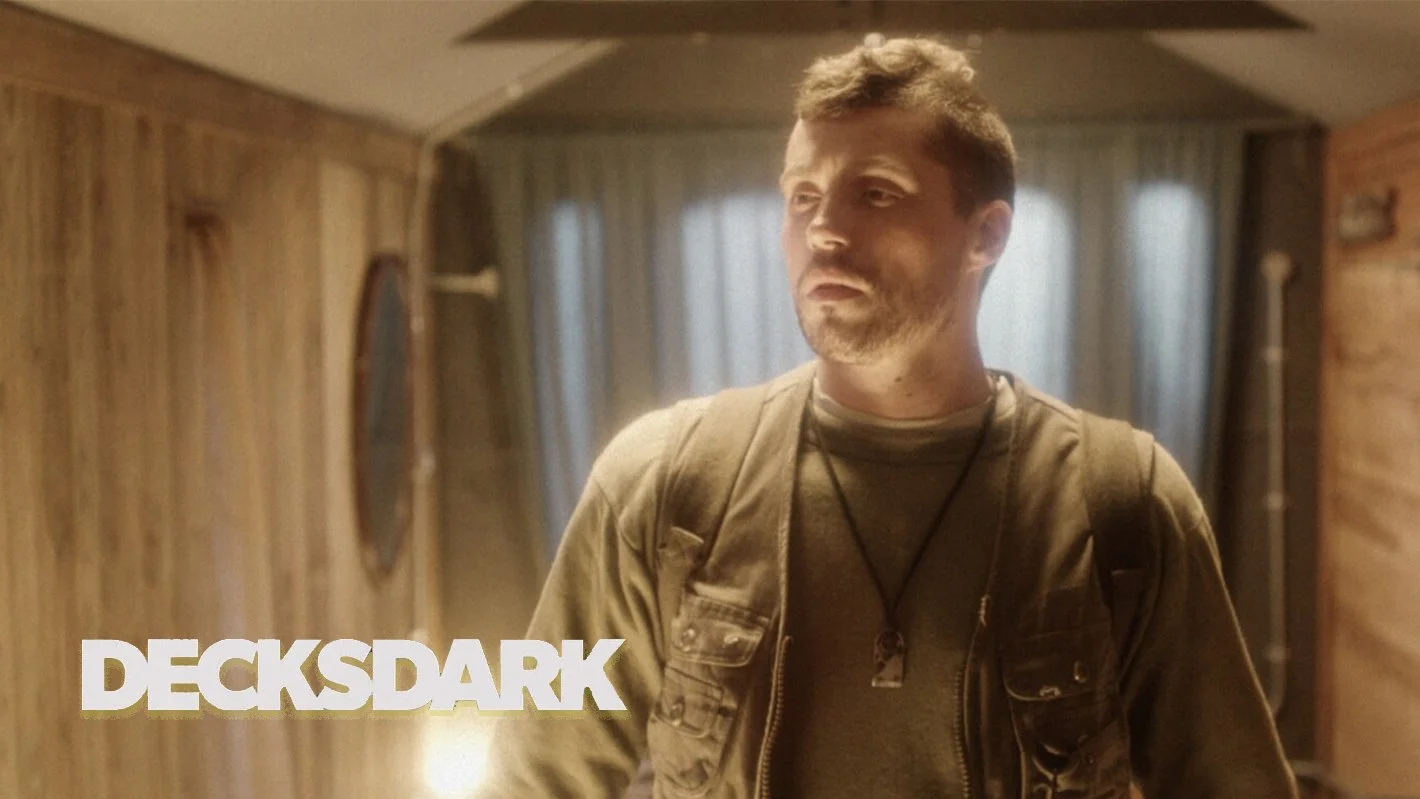
Decksdark
In a dystopian realm where consciousness is encased within neural implants, Logan, a solitary Decksdark, finds himself intertwined with an ethereal entity.
Written, Directed & Produced by Kane Wilson
Co-Produced by James Freeman
In a dystopian realm where consciousness is encased within neural implants, Logan, a solitary Decksdark, finds himself intertwined with an ethereal entity.
ABOUT THE FILM
DECKSDARK first came across our desk when it was in post-production and seeing completion funds via our Short Film Fund. We shortlisted the projected, and while it did not win the funding, we screened the film at the 2025 edition of our BIFA qualifying film festival as part of the Lovers & Ones That Got Away screening block which featured exclusively films either produced via our fund (a.k.a. “Lovers“) or shortlisted for our fund (a.k.a. “Ones That Got Away“).
Other festival highlights include winning Best Short Made in Wales at the BAFTA-qualifying Carmarthen Bay Film Festival, winning several awards at BIAFF, and winning the Big Picture Film Festival. It was nominated at SCI-FI LONDON, the BIFA qualifying Sunrise Film Festival, Waco Independent Festival, Northampton Film Festival, and a Smei-Finalist at Flickers' Rhode Island International Film Festival. The film was handpicked and given 5 Stars at Short Films Matter.
ABOUT THE FILMMAKER
Kane Wilson is a filmmaker from rural Leicestershire, England. Growing up surrounded by open landscapes and quiet spaces shaped his sensitivity to mood, silence, and human behaviour. He began making films as a teenager, quickly gaining recognition for his experimental approach to storytelling and earning Student of the Year in college.
Kane’s films inhabit dystopian worlds that feel uncomfortably close to our own. His work examines how technology reshapes intimacy, memory, and identity, always anchored by an emotional core.
READ OUR INTERVIEW WITH KANE
Welcome to our Short of the Week series. Tell us a bit about yourself and your filmmaking background.
I’m a UK-based writer and director who came into filmmaking in a fairly hands-on way. I started making shorts young, mostly through trial and error, and that process of experimenting and learning by doing has stuck with me. Early on I realised I was less interested in polish for its own sake and more interested in mood, character, and what sits beneath the surface of a story.
My work often leans toward dystopian ideas, but it’s really about human connection within those worlds, how people cling to intimacy, routine, or escape when systems start to fail them.
I’ve just finished a new film called We Dream in Colour, which has been an incredible experience to make. It pushed me creatively and emotionally in ways I couldn’t fully expect, and I genuinely can’t wait for people to see it and bring their own interpretations to it.
Tell us about the genesis of Decksdark. Where did the idea come from and how did you develop that idea into the short that's now made its way out into the world?
"Decksdark" was born out of my fascination with the rapid advancement of AI and the way technology shapes our lives. We live in an era where the world is completely reliant on technology, and our everyday existence is intricately woven with it. This film explores the desire to break free from that digital grip and live off-grid, away from the pervasive influence of a technology-driven society. Decksdark is a future where escaping that control isn’t easy, and Neural Implants become devices of societal oppression rather than tools for human evolution.
In today’s hyper-connected world, we ironically find ourselves more disconnected from each other than ever. Strangers remain strangers, and our ability to empathise and communicate on a deep, human level is diminishing. I see younger generations losing their connection to nature and their belief in the unexplainable magic of the world around us. Through "Decksdark," I wanted to create a beacon of hope, a reminder that true freedom lies in understanding oneself and reconnecting with the natural world, the only reality that cannot be manipulated by technology.
We're of course very familiar with this film as it was also shortlisted for our Kino Film Fund, and although it didn't win the funding in the end, we did feature it as an Official Selection at our 2025 festival. What were some of the main obstacles you experienced when making Decksdark and how did you overcome them?
The biggest obstacle on Decksdark was fairly simple but significant: we were filming in a very remote part of Wales, and we only had three days to make the film. That immediately shaped every creative and practical decision.
We got through it with a lot of preparation and a genuinely brilliant crew who were ready to adapt to anything the location threw at us. On the creative side, I designed the story so that character and atmosphere could do most of the heavy lifting, rather than relying on scale. In the end, those limitations pushed us to be more focused, and they played a big part in defining the tone and identity of the film.
Tell us about the journey of getting your film to audiences and some of the festival circuit highlights and/or online release.
Decksdark had a really strong journey to audiences. It began on the festival circuit, where it was fortunate enough to win at a BAFTA-qualifying Welsh film festival, which gave the film an incredible early boost.
As a fitting send-off to its festival run, the film was then selected to be showcased on DUST, the largest online platform dedicated to sci-fi short films. Seeing it reach a wider audience has been hugely rewarding. It’s now passed 80,000 views, which is far beyond anything I initially imagined for the film.
Licensing popular songs for use in a short film is something that's typically unaffordable for most filmmakers, but you have a pretty amazing story about how you got permission to use the Joy Division track. Can you tell us about it?
A lot of filmmakers shy away from using well-known music because licensing can feel intimidating or completely out of reach, which can be true for some films, but with shorts there’s a light at the end of the tunnel.
My approach was to take the time to properly understand how music licensing works for film.
It can feel complex at first, but once you get past that initial barrier, you realise there are people on the licensing side who genuinely want to help independent filmmakers, especially when it comes to short films.
Once you’ve made contact, I’d always suggest arranging a quick ten-minute phone call and simply shooting your shot. Speaking to someone directly makes the process feel far more human, and that personal connection often goes a long way in building trust and opening doors.
With Decksdark, I initially secured a licence that covered the festival run only. When the opportunity came to release the film on YouTube, I was worried that extending the licence would come with huge additional costs. Instead, I found the process long, but straightforward, and the agreement could be extended without dramatically changing the deal. That experience really changed how I think about using existing music in independent films.
What advice or hacks would you give to other short filmmakers?
I’ve always been drawn to telling stories where the world feels bigger than the film itself, so audiences leave wanting more. No matter where an idea starts, whether it’s a concept, a character, or even a piece of music - my biggest advice is to keep bringing your focus back to character. Ask yourself what you’re actually trying to say to the audience through that character’s journey.
I’d also say: don’t rush casting. Getting the right actor changes everything. When the performance is right, the film opens up in ways you can’t always plan for, and your role as a filmmaker shifts from controlling every detail to discovering new possibilities within the story.
Any film recommendations that we should add to our watchlist? Give us one Hollywood feature, one short, and one indie feature.
Go and watch Children of Men if you haven’t. If you have, watch it again. And if you can recite most of the scenes like I can, drag someone along and insist they experience it with you. Who you watch a film with, completely changes how it lands, and Children of Men manages to give you something new every single time.
For a true indie feature that inspired parts of Decksdark, I’d recommend The Survivalist. It uses its environment brilliantly, feels properly lived-in, and features some fantastic performances - including a very early, very memorable Mia Goth.
For a short film, check out Dogbone by Austen Taylor Pease. It’s a film that pulls every possible emotion out of its central character and delivers something genuinely honest. Austen and his team are absolutely ones to watch.
Interested in getting your work selected?
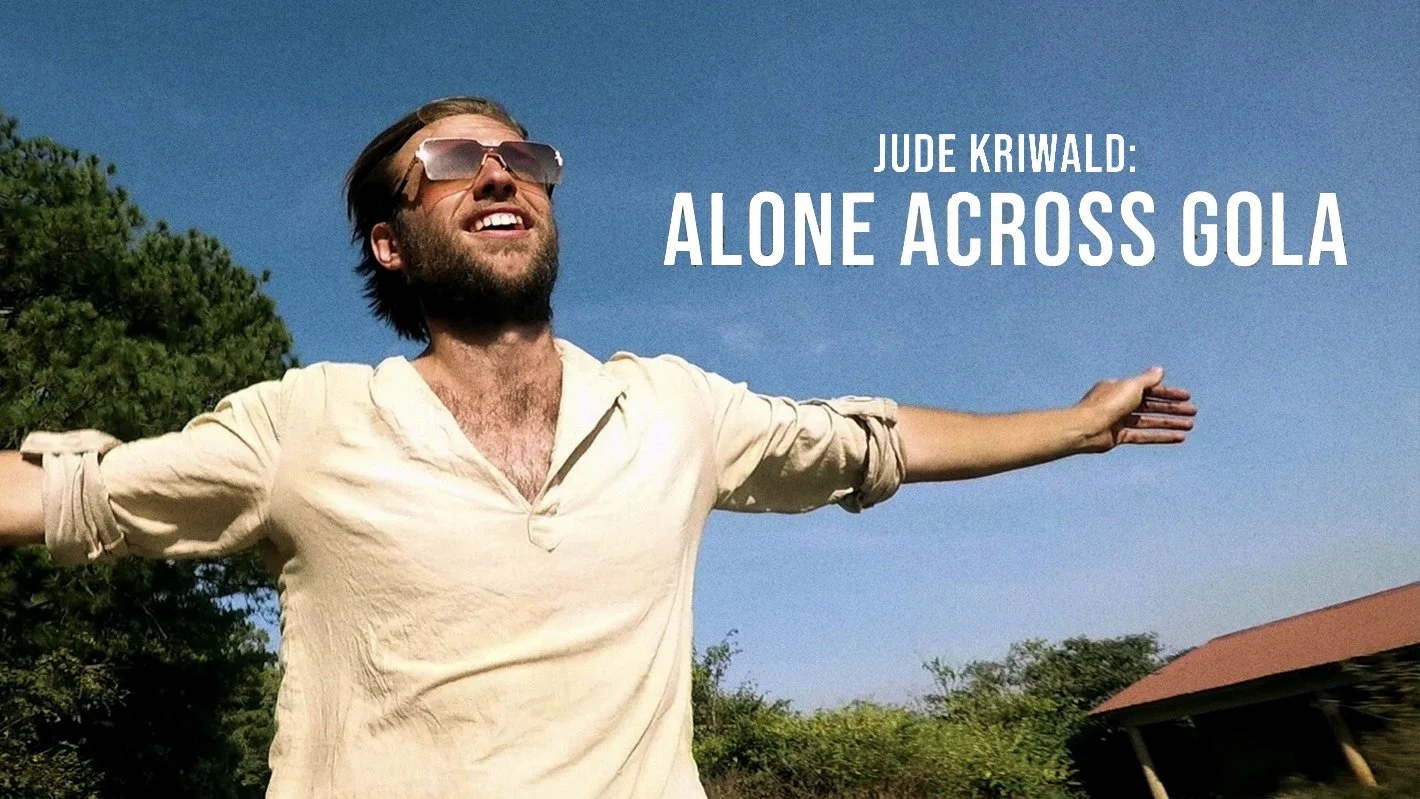
Alone Across Gola
Follow Jude’s extraordinary solo journey through Liberia's dense Gola rainforest - a landscape uncharted by roads or paths, where every step meant battling through thick undergrowth with nothing more than a bicycle and a tent.
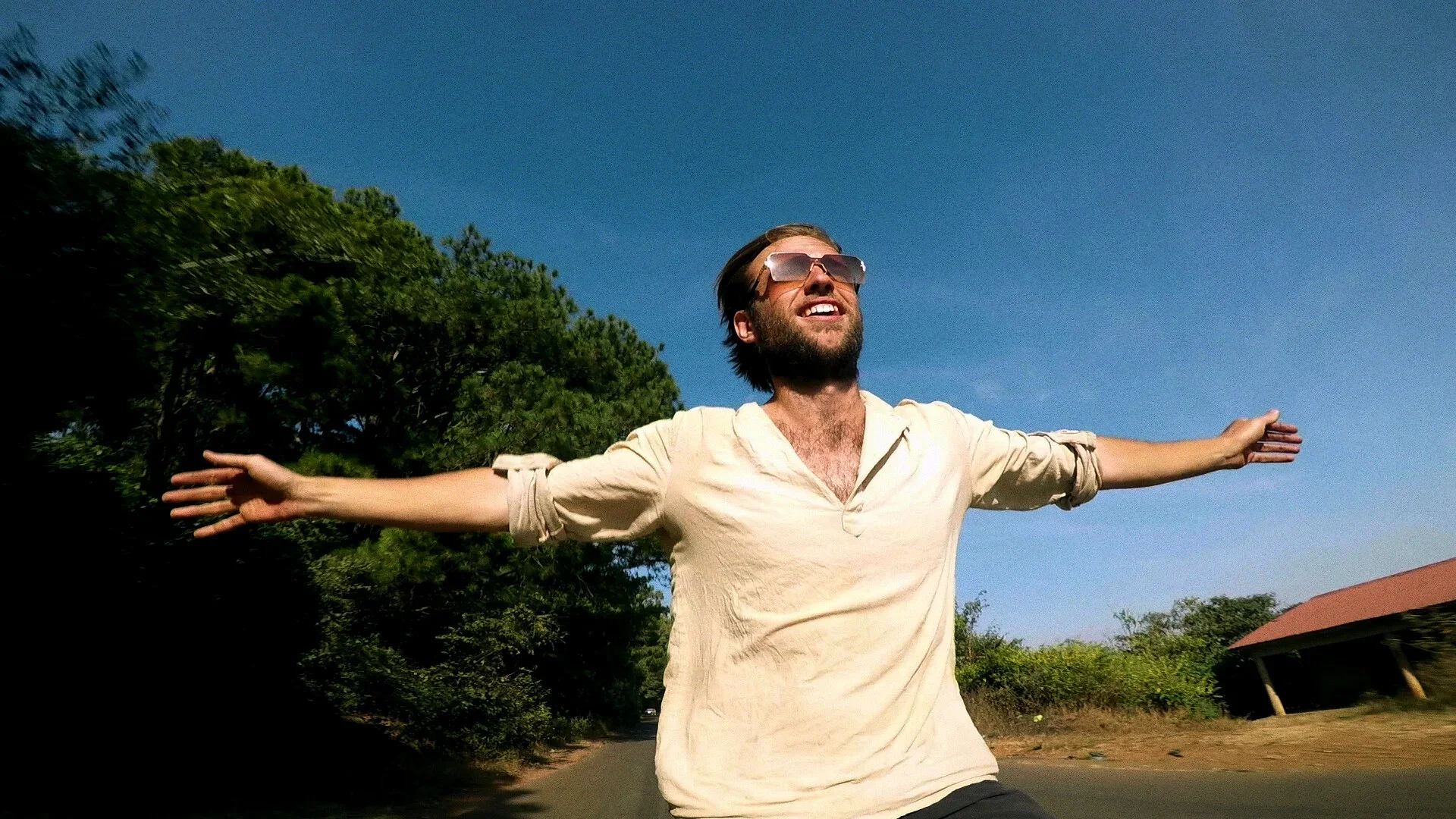
Written, Directed & Produced by Jude Kriwald
Edited by Christian Burnett
Alone Across Gola is an award-winning adventure documentary by debut filmmaker Jude Kriwald. This gripping short film follows Jude’s extraordinary solo journey through Liberia's dense Gola rainforest - a landscape uncharted by roads or paths, where every step meant battling through thick undergrowth with nothing more than a bicycle and a tent.
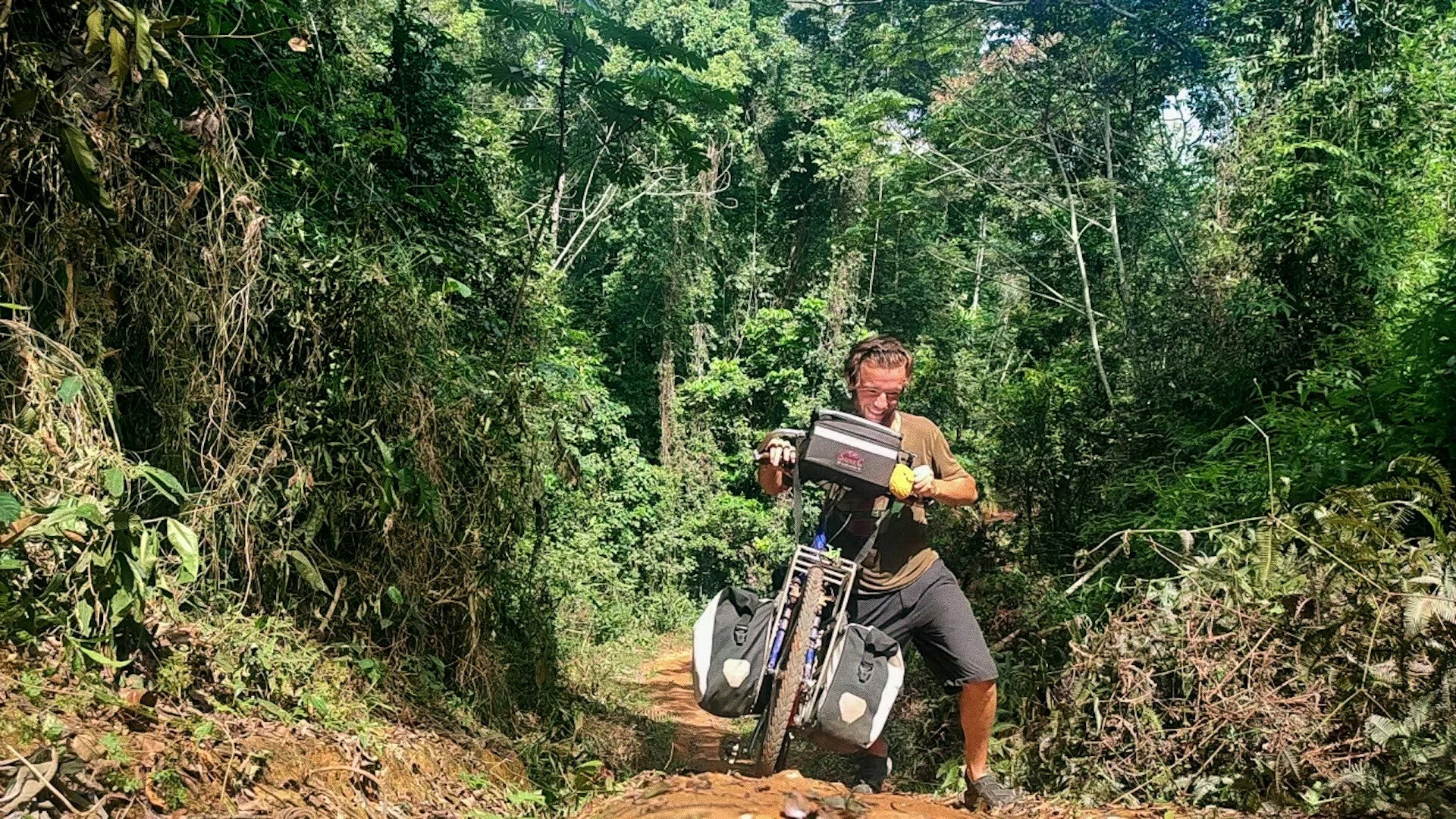
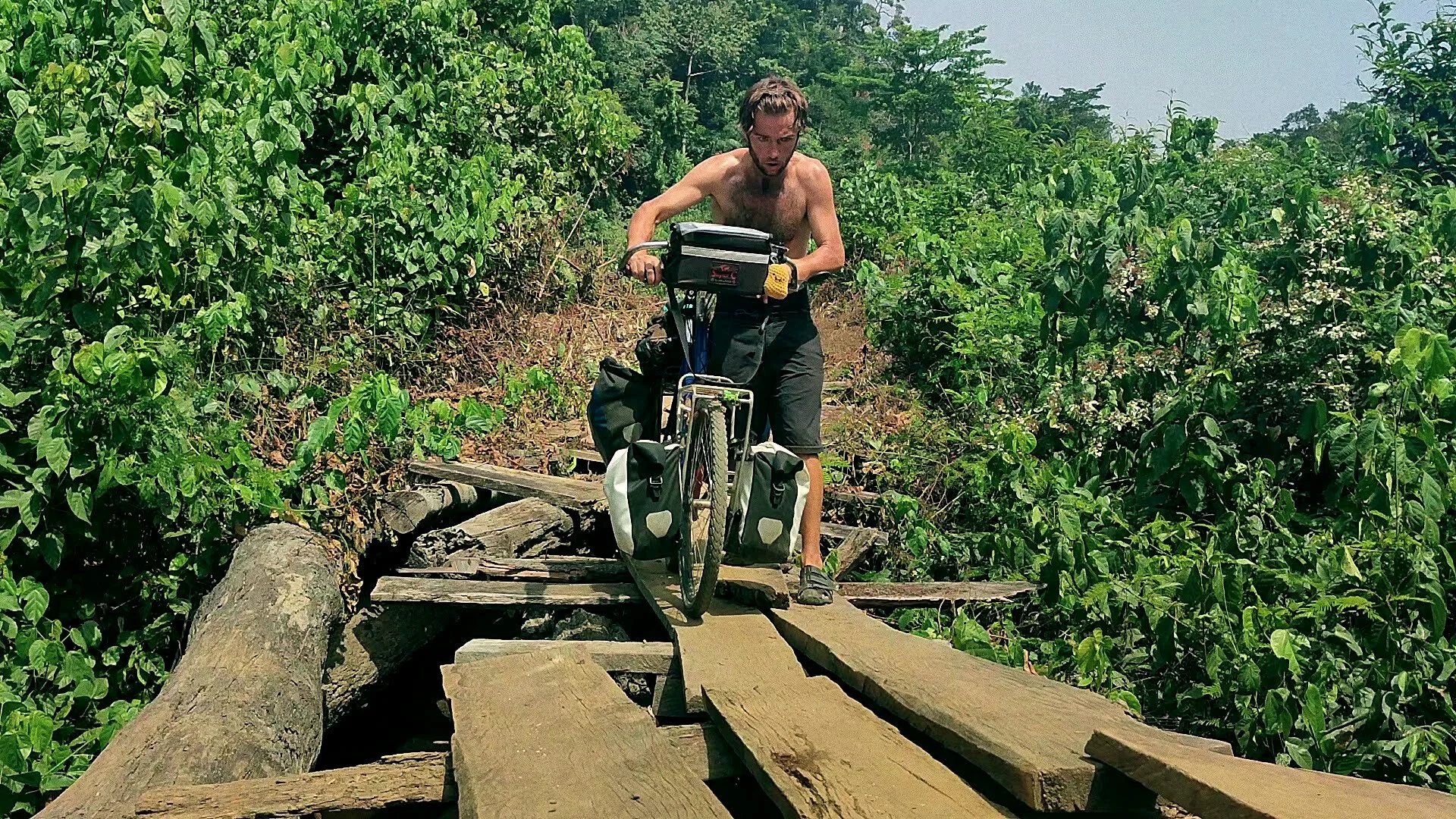
His clothes drenched with sweat, Jude carried his 53kg bike over fallen trees, navigated ravines with collapsed bridges, and faced life-threatening moments. It’s an adventure that pushes the limits of endurance, self-reliance and the human spirit, and often has Jude asking “is this route even possible”, all whilst filming the endeavour totally unsupported.
The film goes beyond clichés of gnarly adventure to offer a reflection on the struggles of pursuing childhood dreams that often get sidelined by the pressures of modern life. Through moments of profound introspection, Jude’s journey asks: What happens when we step off the beaten track of our careers and everyday routines to follow the dreams we thought we’d left behind?
ABOUT THE FILM
ALONE ACROSS GOLA won Best Micro-Budget Short at our BIFA qualifying film festival this past summer 2025. Other festival awards highlights include winning Best Short Documentary at the London Global Film Awards and Best Documentary at Phoenix Rising Film Festival and Feel the Reel Film Festival. It was nominated for Best Documentary at Cambridge Short Film Festival and selected for the Royal Geographical Society Preview - Explore Symposium.
ABOUT THE FILMMAKER
Jude Kriwald is a first-time filmmaker from Bristol, UK. An experienced explorer, he has recently turned his hand to creating his first short film, a documentary edited by award-winning editor Christian Burnett.
Jude was recently named as Emerging Leader of the Year by the British Exploring Society, in recognition of his voluntary work as Basecamp Manager on their summer expedition. The expedition saw Jude and 11 other leaders guide 30 teenagers and young adults from difficult backgrounds on a life-changing and confidence-building two-week expedition in the Scottish Highlands.
In 2012, aged just 19, Jude cycled from England to India through regions such as Afghanistan and Tibet, whilst enduring temperatures as low as -31c and navigating malaria, typhoid, and being held up at gunpoint.
In 2023, Jude has opened his adventures up to the world. He is the founder of AdventureMentor.org, a service which offers free mentoring for people typically under-represented in the world of adventure. Through Adventure Mentor, Jude offers practical support as well as confidence and mindset mentoring to ensure that lack of knowledge, confidence or privilege should never be a reason someone misses out on the life-changing benefits of adventure.
READ OUR INTERVIEW WITH JUDE
Hi Jude!
Welcome to our Short of the Week series.
Alone Across Gola isn’t only your debut film, but it was also an Award Winner at our festival this past summer. Impressive debut! Can you tell our audiences a bit about yourself and your background?
I'm an adventurer interested in using challenging trips to explore what drives us, connects us and, sometimes, troubles us. My real passion lies in authentic adventures and I share these through film, public speaking and writing. Alone Across Gola is my first film and has exceeded all my expectations in terms of how much I've enjoyed it and how it's been received!
Let's talk about the genesis of Alone Across Gola.
This is a very personal documentary project. It's more about you documenting your ambitious journey vs scratching a filmmaking desire.
I assume the idea for the trip came before the idea to film it. Can you tell us about how and why you decided to take this journey, and when you decided filming would be a part of it?
Great question! I decided to make the journey through West Africa after ignoring, for too long, a burning desire to get back out in the wild. West Africa seemed like the perfect blend of fascinating cultures, untamed wilderness, and the right amount of large animals to make things exciting. I initially filmed the trip for my own YouTube series that I was editing and producing on the go, from West African hotel rooms. In the end, I got fed up with using my travel time for post production so continued filming and resolved to edit upon returning home.
It was only after having the wild, unexpected and immensely challenging experience on the jungle, the key vehicle of the film, that I decided to create a proper short film.
We usually ask filmmakers what the main obstacles were experienced when making their films, however, in your case the entire journey is one big obstacle that you had to overcome. Maybe you can chat about how documenting this trip added to the challenges?
That was a pretty unique challenge! I was truly alone in the jungle - no crew or fixers of any sort. So after 12 hours of slogging my bike across jungle terrain each day, often progressing only 7km every 24 hours, I'd have to sit up in my sauna of a tent and spend an hour copying files from my SD cards, onto my laptop and then onto my hard drive at night. That hard drive was the only "copy" I had of any of those files, so I always feared losing it.
Then there's of course the challenge of setting up tripods before any tough section of the jungle - essential if I wanted to capture the right footage to share the story back home. There were times when the going was just too tough and I didn't film - safety had to come first!
Let's chat about the editing process. Your film has a longer run time for a short, yet it's captivating every minute without a second of run time wasted. How much footage did you walk away with and what stuff ended up on the cutting room floor?
The best decision I ever made was to work with seasoned editor, Christian Burnett. He not only edited the film but mentored me through the whole post-production stage. I ended up with about 100 clips each day to choose from. There are still whole stories and fascinating sections that have never been seen as we were really conscious to keep the flow tight. We even discussed making it a feature film at the start, there was that much footage. On the other hand, once we had a tight cut, one of my favourite parts was going through and working with Christian to add short bits of space for the audience to breathe - it's such a high octane and emotive film that it felt important to allow people to catch their breath and reflect.
Tell us about the journey of getting your film to audiences and some of the festival circuit highlights and online release.
What advice or hacks would you give to other short documentary filmmakers?
The festival circuit was such a journey for me! It started with six straight "no"s but, by the end of its run a year later, I was getting almost all "yes"s, even from the big ones. That just showed to me that, rightly or wrongly, many festivals do look at how your film has performed at other festivals, and I had to build up organically. I also changed my film poster after that first run of rejections, working with a pro to make something more reflective of the film itself, which I think made a huge difference.
It's been such a momentous joy sharing it with audiences, and there are too many highlights to properly choose from. Ones that stand out are picking up the Audience Award at the very first festival I attended (English Riviera) - that meant a lot as all the "judges" were sat in the room with me! To finish, Alone Across Gola ended its festival run by showing at the Grand Rex in Paris, the largest cinema hall in Europe - where it also picked up an award - that was a night I'll never forget! As for its YouTube release, that's just been crazy, especially in terms of the viewing numbers - it's so moving to see people from around the world, that I'd never otherwise reach, resonate with the message and share that back to me.
My best tip would be to make sure you're applying to at least some festivals that are very specific for your niche (in my case mountain film festivals). That's where at least 50% of your selections are likely to come from, plus you'll meet people directly involved in your industry or interests. And don't be too perturbed if you get a load of "no"s at the start!
What's next for you, in terms of filmmaking?
Honestly, I'm not too sure. I've grown increasingly aware of how filming myself on adventures can detract from having an authentic adventure. I'm very interested in exploring more analogue adventures (e.g. no GPS or phone, navigating with a compass and the stars), so that would either require someone else to film or, alternatively, maybe I'll write about these explorations rather than make a film, we'll have to wait and see!
Any film recommendations that we should add to our watchlist?
Do all you can to see the short film Sand Dancers. I saw it recently at Kendal Mountain Film Festival - it left me inspired, deeply moved and with tears rolling down my cheeks.
Apply to get your short selected as our Weekly Pick
Florescence
A Visual Essay and Contemporary Exploration of the Iconography and Symbolism of Plants’ Reproductive Systems.
Written and Directed by D I • A L (Alice Gatti & Diego Indraccolo)
Produced by Peter Wilson
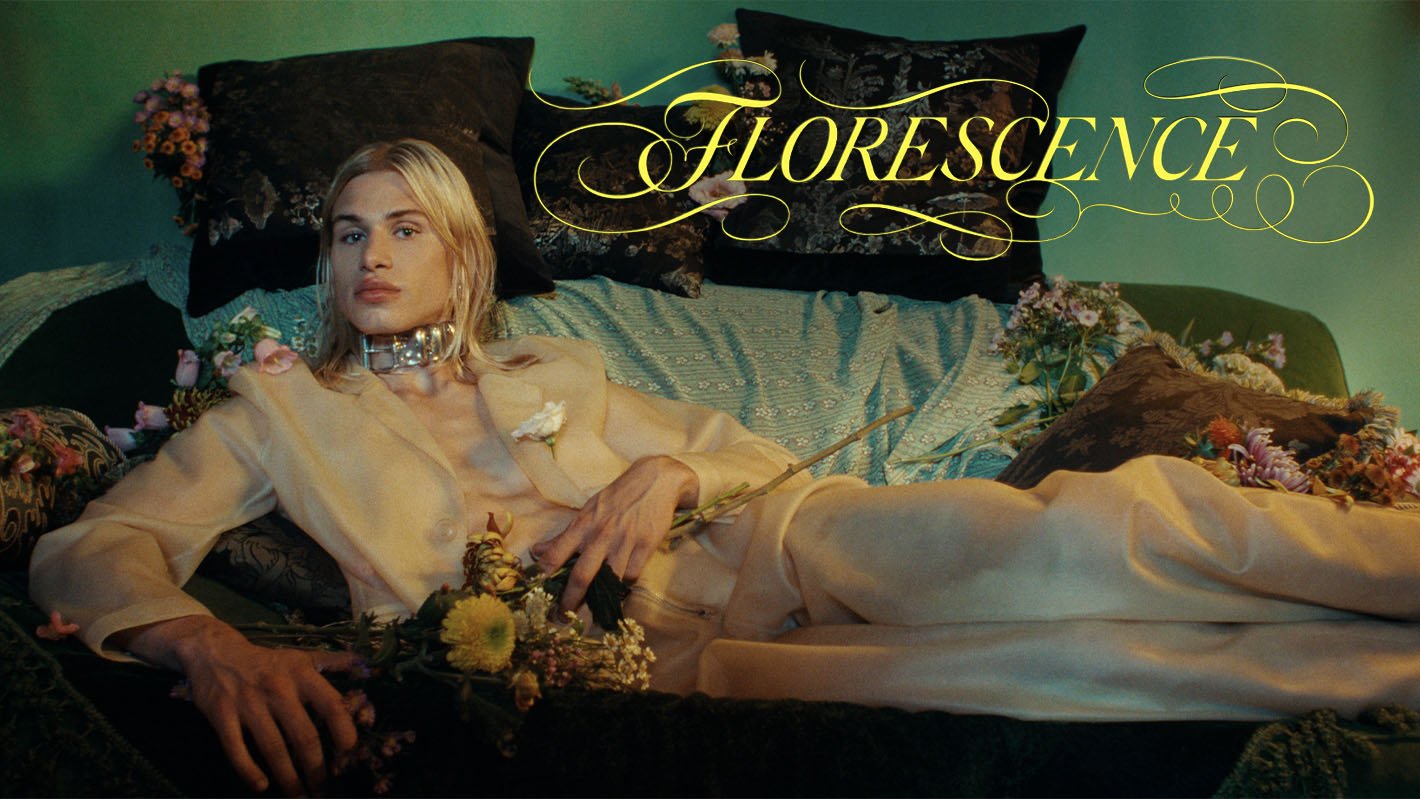
Florescence is a visually stunning and thought-provoking exploration of the cultural, biological, and symbolic roles that flowers play in our understanding of gender and sexuality. Blending elements of a fashion film, short documentary, and experimental visual essay, Florescence dismantles the simplistic, often gendered associations that flowers have been assigned throughout history. The eclectic cast adds a rich layer of contemporary perspectives on gender discourse, anchoring the film’s narrative with authenticity and personal insight.
Crafted with a great amount of practical effects and a bit of old school CGI, Florescence juxtaposes serene beauty with violent transformations—drowning, burning, and battering the flowers—as a metaphor for the constraints imposed by societal norms. This relentless and symbolic treatment of flowers serves as a compelling vehicle to question cultural ideals surrounding gender and identity.
ABOUT THE FILMMAKERS
D I • A L is a directing duo formed by Diego Indraccolo and Alice Gatti in 2015. Alice’s and Diego met on commercial sets. They have covered several different roles in advertising as well as non-commercial productions including producing, directing, cinematography, editing and motion graphics. Their experiences together and the chemistry they have found on set has led them to undertake the roles of “director” together. Their work strives to depict reality in an otherworldly atmosphere. They are also a real life couple and they both share an addiction for "Buffy - The Vampire Slayer".
READ OUR INTERVIEW WITH D I • A L
Welcome to our Short of the Week series. Tell us a bit about yourself and your filmmaking background.
We are Diego and Alice, a directing duo working under the name of D I • A L.
Alice: I grew up in a small town near Rome in the late 90s, at the peak of the MTV generation, completely obsessed with music videos.
After studying media design I began working across different roles in production: video maker, editor, motion designer, and assistant director, all experiences that now feed directly into my directing work.
Diego: I was born in Naples, Italy, and moved to London at the age of 18, where I pursued my photographic career.
I worked my way up, from assisting to still photographer, then transition into the video, as a director and cinematographer. While I still work as a cinematographer, I am now focusing primarily on directing work together with Alice.
Tell us about the genesis of Florescence. Where did the idea come from and how did you develop that idea into the short that's now made its way out into the world?
It all started in the simplest way possible. We wanted to do something with a different sensibility from the commercial space we work in.
We love flowers and think they are beautiful. We knew they would make an incredible subject matter, but the more we delved into their biology and cultural significance, the more we realised that we had to layer the project with a sense of significance, something that spoke both to their beauty and their symbolism in a meaningful manner.
The gender and sexual perspective came later on and in hindsight it was inevitable all along.
What were some of the main obstacles you experienced when making Florescence and how did you overcome them?
It’s been such a journey.
Funding is always a struggle, which is why we decided to make it into an editorial and self-finance the project. Getting a publication attached means we could have access to models and styling beyond the scope of the project. It also becomes more appealing for getting other professionals involved, both in production and post-production.
Regarding the filming, “Florescence” features many different environments, so one of the main challenges was finding a few locations that could accommodate most scenes without having to move the crew. Aside from the lavender field, we managed to shoot everything in just two locations: one exterior and one interior. We had to get creative and adapt several elements from the original script to make it work.
In the end, every film comes with its share of logistical challenges. It’s part of the game, and also part of the fun.
Tell us about the journey of getting your film to audiences and some of the festival circuit highlights and/or online release.
Florescence was originally structured and produced to be a fashion editorial for Schon! magazine.
After we started to get an much warmer reception that we had hoped for, we felt that perhaps we had something more powerful in our hands and decided to do a festival run. This again has surpassed all our expectations, not only for the calibre of the festivals we have been shortlisted in, but also for the awards and accolades that it has steadily accumulated.
What advice or hacks would you give to other short filmmakers?
That’s really a million-dollar question because we are aware that each path is completely different and impossible to recreate.
Moreover, projects in the “shorts” space are incredible varied and some might require you to look for fundings and would not be possible to produced otherwise whilst others can be done with a tiny crew and a DIY approach.
With this in mind we would only dare to suggest to take the time to understand what makes you happy in the creative process. Do it with love and be nice to people.
Any film recommendations that we should add to our watchlist?
The latest film we watched and loved as we write this is “Steve” by Tim Mielants.
Other highlights from this year’s releases that truly stood out for us include Ryan Coogler’s “Sinners” and Rose Glass’s “Love Lies Bleeding.”
For those who have the chance to see them, we’d also like to recommend two remarkable Italian indie projects that both premiered at the Venice Film Festival.
“Orfeo”, the debut feature by Virgilio Villoresi, a reinterpretation of the Orpheus myth based on a graphic novel. The film blends stop-motion animation and live action to create truly unique, mesmerising visuals, accompanied by an exceptional original score.
“6:06” from Tekla Taidelli is a fast-paced road movie that follows the journey of a minimum-wage worker struggling with substance abuse, joined by Jo-Jo, a mysterious French girl. The film is infused with surreal moments, raw emotion, and genuine heart.
Both films have limited, niche distribution, but we strongly encourage you to seek them out if you have the opportunity. They’re the kind of projects that can be hard to find, imperfect perhaps, but they leave a mark.
Interested in getting your work selected?
Amigo
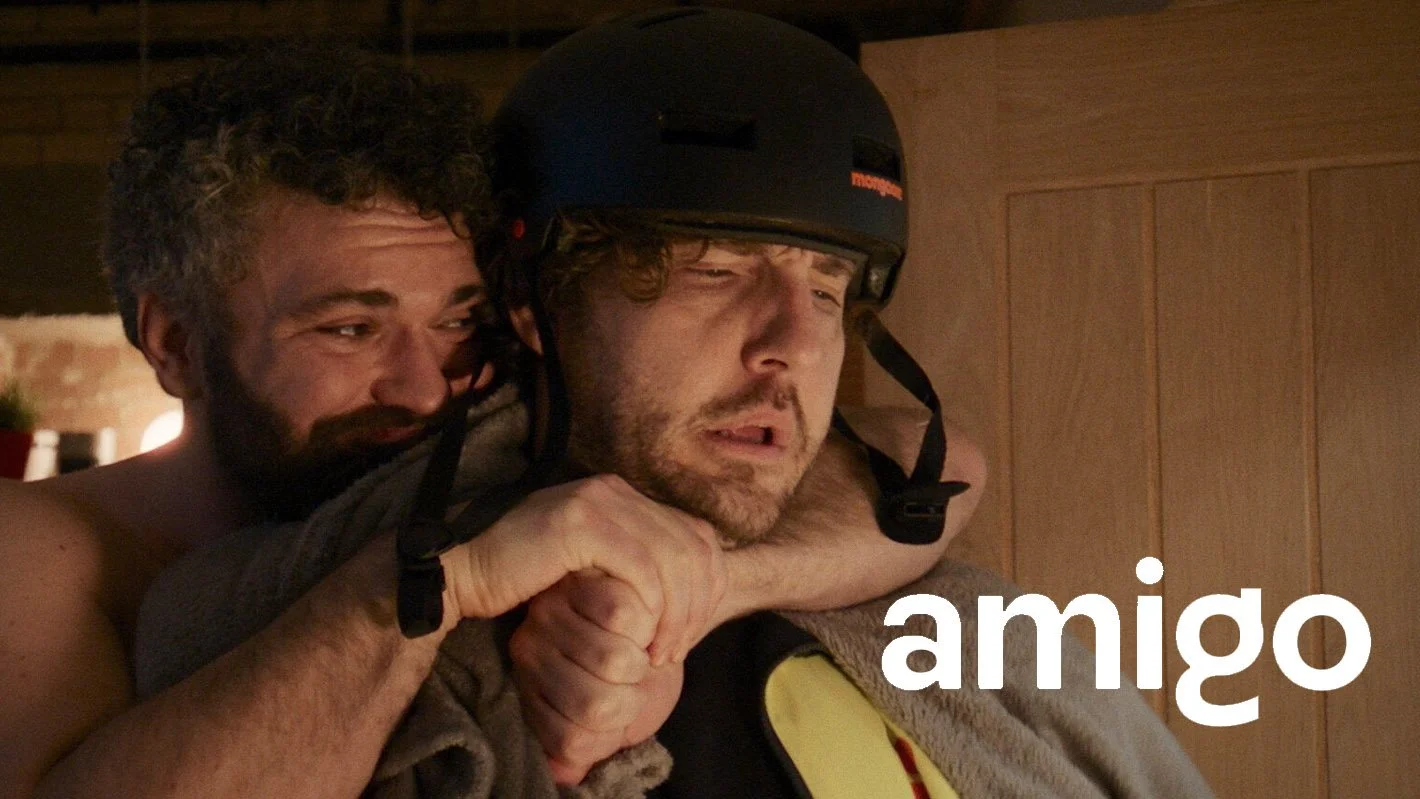
'Amigo', the rent-a-friend app has taken London by storm. An unfriendly Amigo's life comes crashing down when he finds out his life is a lie.
Directed by James & Harrison Newman
Written by James Newman & Tom Waterhouse
Produced by Guy Lindley
'Amigo', the rent-a-friend app has taken London by storm. An unfriendly Amigo's life comes crashing down when he finds out his life is a lie.
ABOUT THE FILM
AMIGO was an Official Selection at the 2025 edition of our BIFA qualifying Kino London Short Film Festival. Other festival highlights include the BAFTA qualifying Bolton International Film Festival & Aesthetica Film Festival. It also played at Discover Film Festival, Indie-Lincs Film Festival, Northampton Film Festival, and Cardiff Mini Film Festival. It was released online by Directors Notes.
ABOUT THE FILMMAKER
James Newman is an award-winning writer-director from Reading, Berkshire, specializing in comedy. With 7-8 short films and an award-winning feature screenplay under his belt, Newman has quickly become a rising force in British independent cinema.
Starting as a runner in Soho’s production companies, he’s since earned 2nd place at Slamdance’s Short Film Screenwriting Competition, 2nd place in The Pitch Film Fund, a British Short Film Award for Best Comedy, and Best Short at our very own Kino London Short Film Festival.
READ OUR INTERVIEW WITH JAMES
Welcome James!
You’re no stranger to Kino. Your film Viskar I Vinden won the 2022 edition of our festival, which awarded you our film fund to help make Do Not Touch - your first collaboration with comedian Sean Walsh. Now you’ve teamed up with Sean once again on your latest film to have just come off the festival circuit, Amigo.
Can you talk about how you came up with the idea for Amigo and how it was initially developed as series, and why you decided to pivot to make it as a short film instead?
So initially, it was about a prostitution app like Uber, and the lead would have been a male prostitute. We wrote that as a TV pilot around 5 or 6 years ago. But we pivoted as the storylines we came up with were about people being lonely and not using the app for sex, but for companionship. And then we thought that there was something in that—the core of the idea is about lonely people desperate to connect with someone. The most valuable thing I’ve learned from going to short film festivals is that all cinema and media which involves storytelling is about human connection, or the lack thereof.
Currently, you’re branching out as you gear up to make another short, The Ladder. You often co-direct. Will this be your first time solo-directing a short?
This isn’t my first time solo directing—I directed my first short, Viskar I Vinden, on my own. But I have co-directed recently on The Pitch’s new comedy short, Kitty, with Lizzie Hart, which I didn’t write. It was incredible to come in on a project that I hadn’t been involved in the writing process for. It’s so far away from what I normally do—it’s super duper charming and sweet. It was really nice to play in someone else’s really well-constructed world.

Join us for a sneak peak at THE LADDER
We’ll screen the key creative team’s previous works + do a public table read of upcoming work in order to get audience feedback.
All proceeds to go directly to topping up production funding for The Ladder, shooting early 2026.
In the past, what has been your motivation to co-direct in most instances & what excites you about helming the director’s chair solo this time around?
The motivation to go back to being solo is that I really enjoy the full responsibility of the film. I want to become a better director, and I think the way to do that is to be fully responsible for all areas of the production rather than delegating between two people. With Kitty, I was more of a conduit for the crew and technical aspects than the actual story and world, whereas I want to stretch myself and get out of my comfort zone to do things that I’m creatively excited about. With the rise of AI, I think we need to tell more human stories and have choices that the characters make that an LLM won’t agree with but makes sense to humans.
The Ladder will be another Kino Original, making you the first filmmaker in Kino’s history to have been granted funds twice. What’s your secret to closing deals to secure funding?
I think the key is to try to outwork your competition. Enter everything, as I think it’s a numbers game. Do your research—what are they likely to commission? I think the key is to write things that interest you rather than trying to win the fund, otherwise people will be able to sniff it out, especially when it’s made and screening at festivals.
The Ladder has also been shortlisted for several other funds including Slick Films, From The Silver Screen, First Flights & more. Can you talk a bit about your funding strategy?
To be honest, I’m very surprised we’ve gotten into the finals or been longlisted for like 75% of the funds we’ve gone after. I think it’s actually quite bizarre. I’m not sure if it’s the subject matter or that it’s quite relatable and speaks to something people are feeling at the moment? But I think the strategy is: package it nicely, reach out to talent and get them attached. I think the goal is to make an undeniable film where everyone can see it doing well on the festival circuit.
Many short filmmakers struggle with even getting in the room to pitch, so well done on making it the room so many times. What do you think within your work and your funding application materials has made the difference to get such positive reception?
I think the subject matter of the housing crisis and intergenerational inequality is something I’m quite angry about, and it’s blended with real experiences with a bailiff. And it’s from lived experience of being really poor in London that I don’t think sounds like a repurposed Guardian article. It helps having producers like yourself and Guy Lindley on board, and a great creative team with Nathan Claridge. I think what’s helped me was going to a webinar with First Flights about what they care about in a funding application, and that helped. I think they have some resources on their website. But I think having a story that connects and characters you care about are crucial, because if you don’t have that, you don’t have a film, in my opinion.
Recommendations to add to our watchlist? Give us 1 short, 1 Hollywood feature, & 1 indie feature.
Short: The Farm
Feature: Bugonia
Indie feature: Grand Theft Hamlet
Interested in getting your work selected?
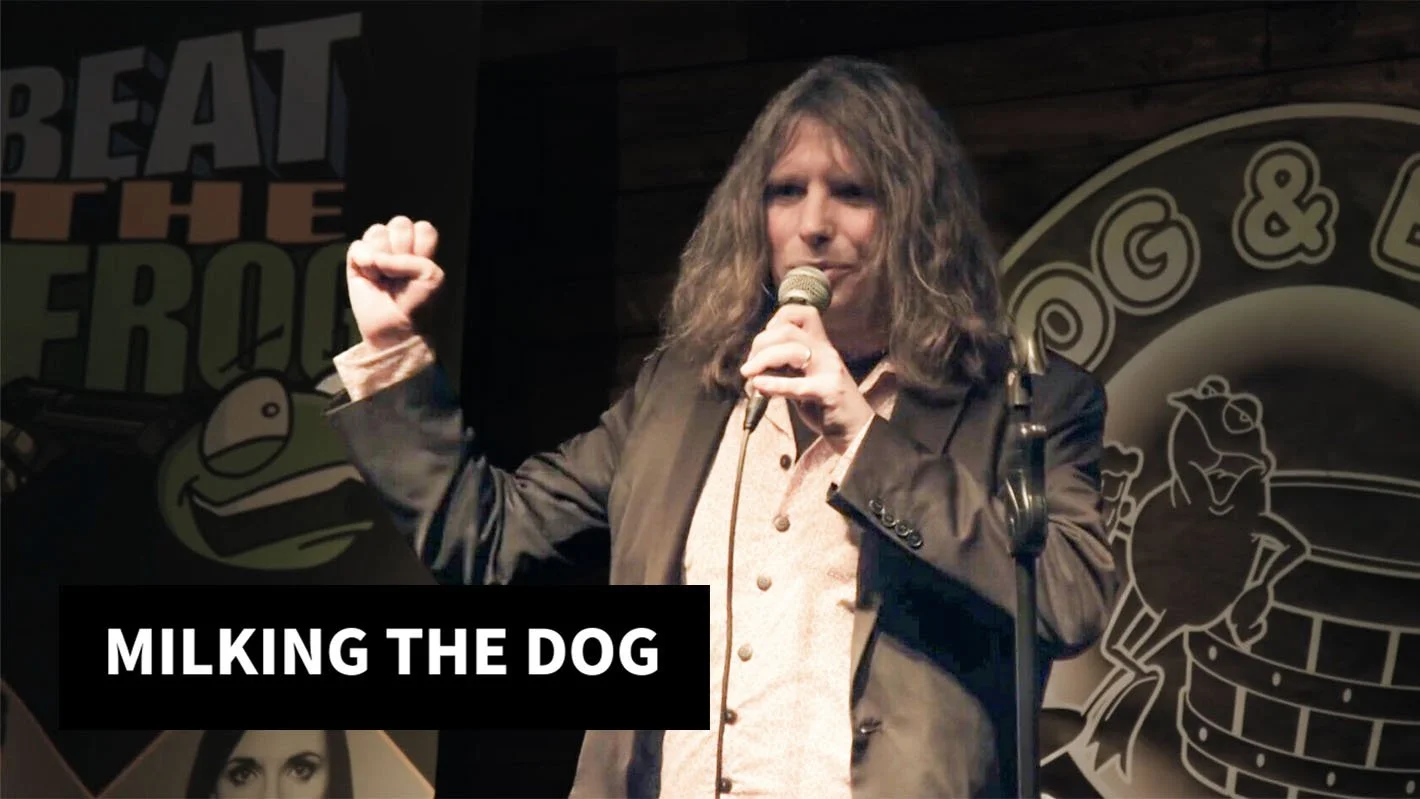
Milking The Dog
Phil Rochester battles to conquer Manchester's toughest standup contest, revealing the relentless drive of an artist to perform - even when he's not thanked by audiences for doing so.
Directed by Joe Murphy
Produced by Joe Murphy & Clare McCahery
Phil Rochester battles to conquer Manchester's toughest standup contest, revealing the relentless drive of an artist to perform - even when he's not thanked by audiences for doing so.
ABOUT THE FILMMAKER
Joe Murphy is a filmmaker based in the North West of England. He directed his first short documentary in 2024, which was a finalist at the BIFA-qualifying Kino London Short Film Festival and won Best Documentary at both the Shared Visions Film Festival and the Gloucester Independent Film Festival. With an early background in comedy, his focus has shifted towards intimate, character-driven documentaries, maintaining an eye for the small moments of humour in otherwise dark and challenging circumstances.
READ OUR INTERVIEW WITH JOE
Welcome to our Short of the Week series. Tell us a bit about yourself and your filmmaking background.
I originally started out as a teenager focused on comedy. I created an online sketch show with a couple of friends who were kind enough to perform in it, and I was surprised to find that some (I’ll reiterate—some) people actually thought it was funny. That gave me a bit of confidence when it came to writing and directing.
I ended up falling in love with documentary at university. One thing I hadn’t really understood before was that direct cinema often includes funny moments, even if the overall tone of the film is more serious. People tend to be quite funny in their daily lives without even realising it.
Milking the Dog is my first “real” film after graduating in 2020 - and my first-ever documentary. So, to me, it made sense to follow a story with comedy baked into its DNA. That familiarity helped when it came to the pacing and editing of a scene, and it gave me room to experiment and start figuring out my tone of voice.
Tell us about the genesis of Milking the Dog. Where did the idea come from and how did you develop that idea into the short that's now made its way out into the world?
In 2018 I was shooting b-roll for a student film about a brutal gong show in Manchester. Phil happened to be performing that night. After a short and rough set, we grabbed a quick backstage interview - only for Phil to ignore every question and launch into a wild story about performing at a pub where a man milking a dog stole the spotlight. The footage was totally unusable for that project, but in 2023 I finally reconnected with Phil and began making a film centred entirely around him - he’s definitely not a side character in someone else’s story.
As a filmmaker, I was drawn to rejection as a central theme. It’s a universal part of life that everyone experiences, and as a creative, you quickly learn it's part of the process. Stand-up comedy, in particular, offers the most immediate and unforgiving feedback - you get a laugh, a heckle, or silence. There’s no hiding from it. I wanted to make a film about someone who embraces that, and Phil is exactly that person. He creates for himself - not necessarily to “make it” as a comedian, but simply because he loves being on stage. That kind of drive is rare and admirable.
What were some of the main obstacles you experienced when making Milking the Dog and how did you overcome them?
The obstacles were mostly logistical - the film had the budget of a ham sandwich, like most indie projects. The only real way to overcome that was by massively scaling down the production - which, in the end, I think really benefited the film. One thing the low budget taught me is that you can make a documentary with just two people, as long as the director is comfortable handling sound. It actually helps the people that you're filming feel more relaxed and open, which leads to better and more honest material.
The real creative obstacle was making sure the film never strayed into exploitation. It would’ve been easy - and boring - to make a cringe comedy by just following a stand-up around and laughing at them bombing. I think the only way to avoid that is by never losing sight of the humanity of the person you're filming. Phil is one of the kindest people I've met, and I felt that as long as I conveyed that - and reflected some of our relationship within the narrative - we could steer clear of it becoming a cynical piss-take.
Tell us about the journey of getting your film to audiences and some of the festival circuit highlights and/or online release.
I first screened the film for friends and family - including Phil, who showed up with a bin bag over his head to avoid drawing attention to himself. My main goal was simply to share the film with as many audiences as possible. I submitted it to just a handful of festivals, hoping one might be interested. The response has blown me away - it’s been accepted into far more than I expected, including making the finals at Kino, which felt surreal. Since it leans into comedy, watching it with live audiences has been fantastic - people’s laughter tends to grow as the film progresses, which I take as a sign they’re warming to Phil.
One of my favourite memories is when I first sent the film to Phil. I woke up to three missed calls and a message - he’d planned to terrify me by pretending to be furious about how he was portrayed, before admitting he actually really liked it. A lot of the shoot was like that: Phil constantly trying to wind me up.
What advice or hacks would you give to other short filmmakers?
I feel like a fraud handing out any advice, as Milking the Dog is my first film, and I’ve learned so much from others at the various festivals I’ve been lucky enough to attend. I guess my main advice is to always focus on the story first and spectacle second - something that is attainable - and then frame the superficial stuff around it; otherwise, you could end up losing a lot of money. Taking a break from the film for a few weeks at a time usually helps me look at it in a fresh way and stops me from going crazy reviewing the same material constantly.
Also, befriend someone really rich and trick them into funding your film. I’m still searching for my sugar daddy.
Any film recommendations that we should add to our watchlist?
Streetwise (1984), directed by Martin Bell, is an absolute masterclass in documentary filmmaking. It follows a group of kids in Seattle who survive by selling drugs or partaking in sex work. The film conveys deep empathy without shying away from the harsh realities they face. The fact it was shot on film blows my mind, it must have been a logistical nightmare. It also just looks beautiful and serves as a powerful time capsule of 1980s America.
Crumb (1994) is an insane documentary. It follows Robert Crumb, who is a super controversial American artist, and to me, the whole thing plays like a repulsive stream of consciousness that perfectly matches the tone of Crumb's grotesque cartoons. A fantastic documentary about a collection of people I hope I never have to meet.
Interested in getting your work selected?
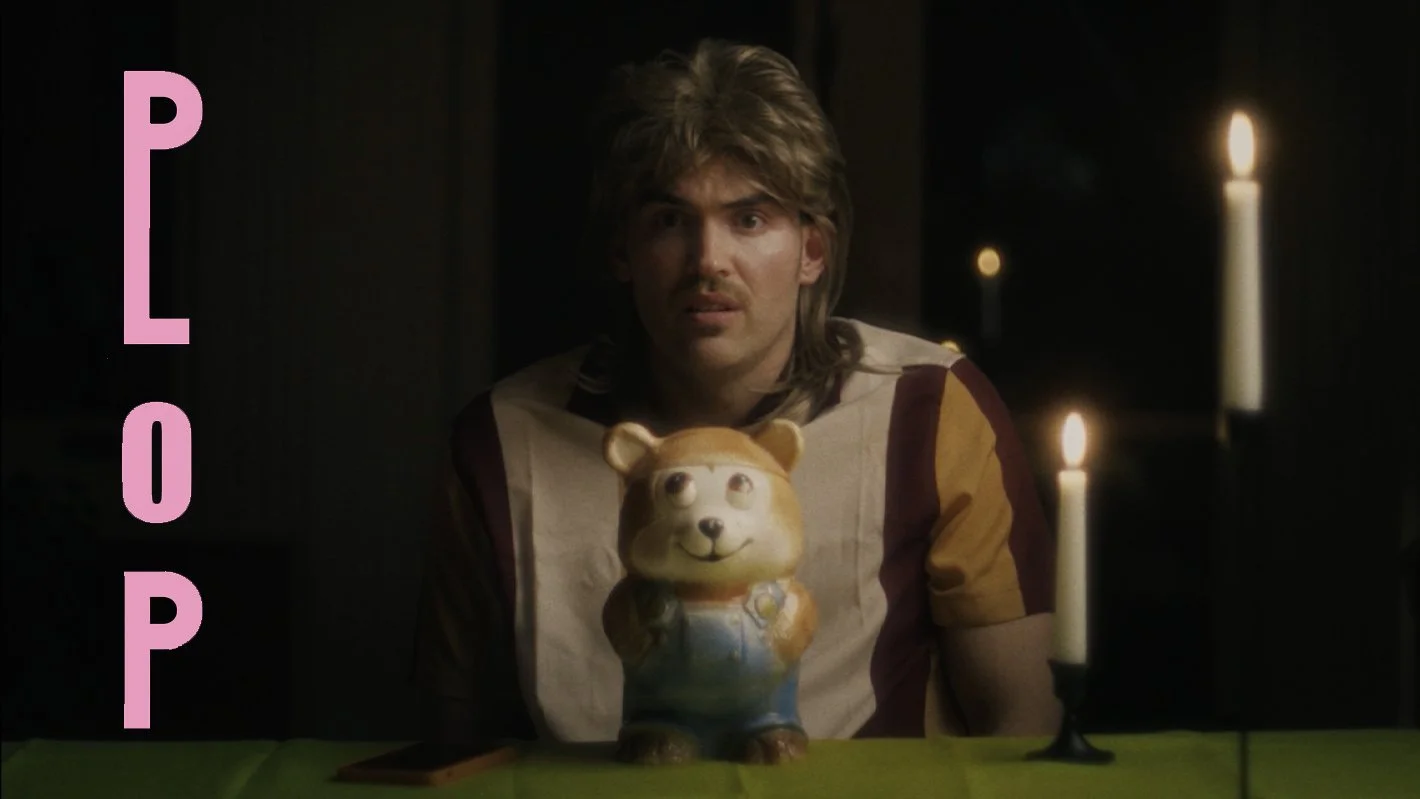
Plop
A desperate woman from the society of rejected singles, known as the Leftovers, takes a bold leap of faith on a revolutionary new dating app, risking everything for one last chance at love.
Directed & Produced Darius Shu
Written by Arron Blake
A desperate woman from the society of rejected singles, known as the Leftovers, takes a bold leap of faith on a revolutionary new dating app, risking everything for one last chance at love.
ABOUT THE FILM
PLOP premiered in competition at the Manchester Film Festival 2025. Other festival highlights include the BIFA qualifying Sunrise Film Festival & Brighton Rocks Film Festival. Plop also played at SCI-FI London, Clapham International Film Festival, Big Fridge International Film Festival and it was a Semi-Finalist at our very own Kino Short Film Festival earlier this year.
ABOUT THE FILMMAKER
Darius Shu is a writer-director drawn to humanistic, emotionally resonant stories told through a visually poetic lens. His work often centres on underrepresented voices and overlooked narratives.
A passionate advocate for Asian and LGBTQIA+ representation in cinema, Darius is committed to using film as a catalyst for meaningful dialogue and cultural progress. His stories aim to create space, for reflection, visibility, and connection.
Darius made his directorial debut with His Hands (2019), a silent psychological drama nominated for Best Narrative Short at the Tribeca Festival 2019. He followed this with I Am Norman (2021), a fictional documentary thriller which premiered at the Oscar-qualifying Rhode Island International Film Festival. His latest short film PLOP (2025) premiered In Competition at the Manchester Film Festival and has screened at Picturehouse Finsbury Park, with selections at over five BAFTA/BIFA-qualifying festivals.
With over nine years of experience as a cinematographer, Darius has shot a wide range of acclaimed projects, including the BAFTA-nominated film Always, Asifa (2023), the Netflix documentary Peach Paradise (2022), Queer Parivaar (2022), Where We Came From (2024) starring Archie Panjabi, Cuddle (2026) featuring Mark Gatiss and served as 2nd Unit DOP on the feature film Last Days, directed by Justin Lin (Fast & Furious franchise, Star Trek Beyond) which world premiered at Sundance Film Festival 2025. He shot his first feature 'Slim', directed by Sky Yang and produced by Chi Thai.
Through his work, Darius continues to push the boundaries of independent film while championing stories that challenge, heal, and humanise.
READ OUR INTERVIEW WITH DARIUS
Welcome to our Short of the Week series. Tell us a bit about yourself and your filmmaking background.
Thank you so much for having me and for spotlighting PLOP. I’m Darius Shu, a director and cinematographer based in London. I'm drawn to stories that explore the existential questions of identity, humanity, connection and the social constructs that shape our lives. I'm always fascinated to create something fresh out of something ordinary, to have my characters deal with the presence of anxiety, and be morally ambiguous. My background started in cinematography and have been a DP for 9 years, where I learnt how to build moods and emotion visually, and over the years that naturally led me into directing and storytelling. I like to blend social awareness with a touch of surrealism, creating films that feel both emotionally grounded and a little poetic. At the heart of it, I’m just obsessed with cinema’s ability to connect people and spark conversations.
Tell us about the genesis of Plop. Where did the idea come from and how did you develop that idea into the short that's now made its way out into the world?
My writer and actor, Arron Blake, pitched me a story he’d been developing, one I knew could really surprise and challenge audiences. I’ve always wanted to make a sci-fi film, being a huge fan of shows like Star Trek and Black Mirror, so I thought, why not take his concept and set it within a dystopian world? Finally getting the chance to bring that vision to life was incredibly exciting. The idea came from observing the absurdity and vulnerability of modern dating, one we both relate and is really fed up of...the endless swiping, algorithms, and the curated personas we present to the world. I wanted to see what happens when these societal constructs collide with our raw, unfiltered desire to be loved and accepted for who we truly are.
In the story, we disguise this in the app’s unconventional way of assessing compatibility which pushes people to confront their most honest, primal selves. The Leftovers aren’t just single people, they represent anyone who has ever felt rejected, outcast, or unworthy. Through the protagonist’s journey, we get a world where societal expectations clash with personal desires, and humour helps highlight the awkwardness, fears, and hopes that come with love and rejection on a first date. Developing Plop meant blending genres to feel fresh, using a sci-fi backdrop to exaggerate societal norms while keeping the emotions grounded, awkward, and relatable. At its heart, it’s about relationships, human connection, and navigating the modern world of AI and dating in a way that hopefully sparks both reflection and conversation.
What were some of the main obstacles you experienced when making Plop and how did you overcome them?
One of the biggest challenges with making Plop was juggling the sci-fi elements while keeping the human emotion grounded and awkwardly relatable. I wanted a world that looked heightened and visually striking, but with characters who still felt like real people stumbling through life and love. Another hurdle was the logistics of creating a dystopian world on a short film shoestring budget… because let’s face it, sci-fi is expensive, and our budget definitely wasn’t.
We got creative with production design, most of the story is in a single room, so we had to make it feel engaging without breaking the bank. A mix of practical and simple VFX, clever camera work, lighting, and little details helped make the world feel bigger than it actually was. Working closely with Joanna and Arron was crucial, we were constantly bouncing ideas off each other, improvising on set, and not afraid to scrap or tweak things in the moment.
In the end, all these obstacles forced us to be more inventive, and honestly, it made the process way more fun. I think that energy and chaos comes through on screen and maybe a little of our stress too!
Tell us about the journey of getting your film to audiences and some of the festival circuit highlights and/or online release.
The festival circuit has been amazing, we had our world premiere at Manchester Film Festival and 3 other BIFA qualifying festivals. It’s been so rewarding to see how audiences react in real time, especially when they laugh, cringe, or feel moved by the characters’ awkward, relatable moments.
Every film I make leaves room for interpretation and I like giving people the chance to come up with wildly different takes on the story’s metaphors, symbolism and concept. Honestly, sometimes I listen to someone’s interpretation and think, “Wow… I didn’t even notice that!", or "That was darker than what I had in mind" and at times "You're spot on, you just said exactly what I had in mind". Meeting fellow filmmakers and audiences who really get the world we were trying to create has been amazing. But the absolute best part of Plop? Watching it spark conversations about connection, dating, and human vulnerability… and realising that, just like my characters, people are awkward, confused, and completely winging it when it comes to love. Makes me feel a little less alone, and hopefully makes them laugh too, because in the world we are living now, we just have to have some laughs in our lives.
What advice or hacks would you give to other short filmmakers?
My biggest advice? Embrace the chaos. Short films are tiny worlds with tiny budgets, but that doesn’t mean you can’t make them look beautiful. Be creative, flexible, and a little fearless. Use your limitations as an advantage, turn a one-room set into a whole universe, and don’t be afraid to improvise on set. Feed your crew good food, happy people make better films. And most importantly, don’t take yourself too seriously; if you can laugh at your mistakes, the audience probably will too.
Any film recommendations that we should add to our watchlist?
Might be a completely different genre but I really love Monster by Hirokazu Kore-eda
Interested in getting your work selected?
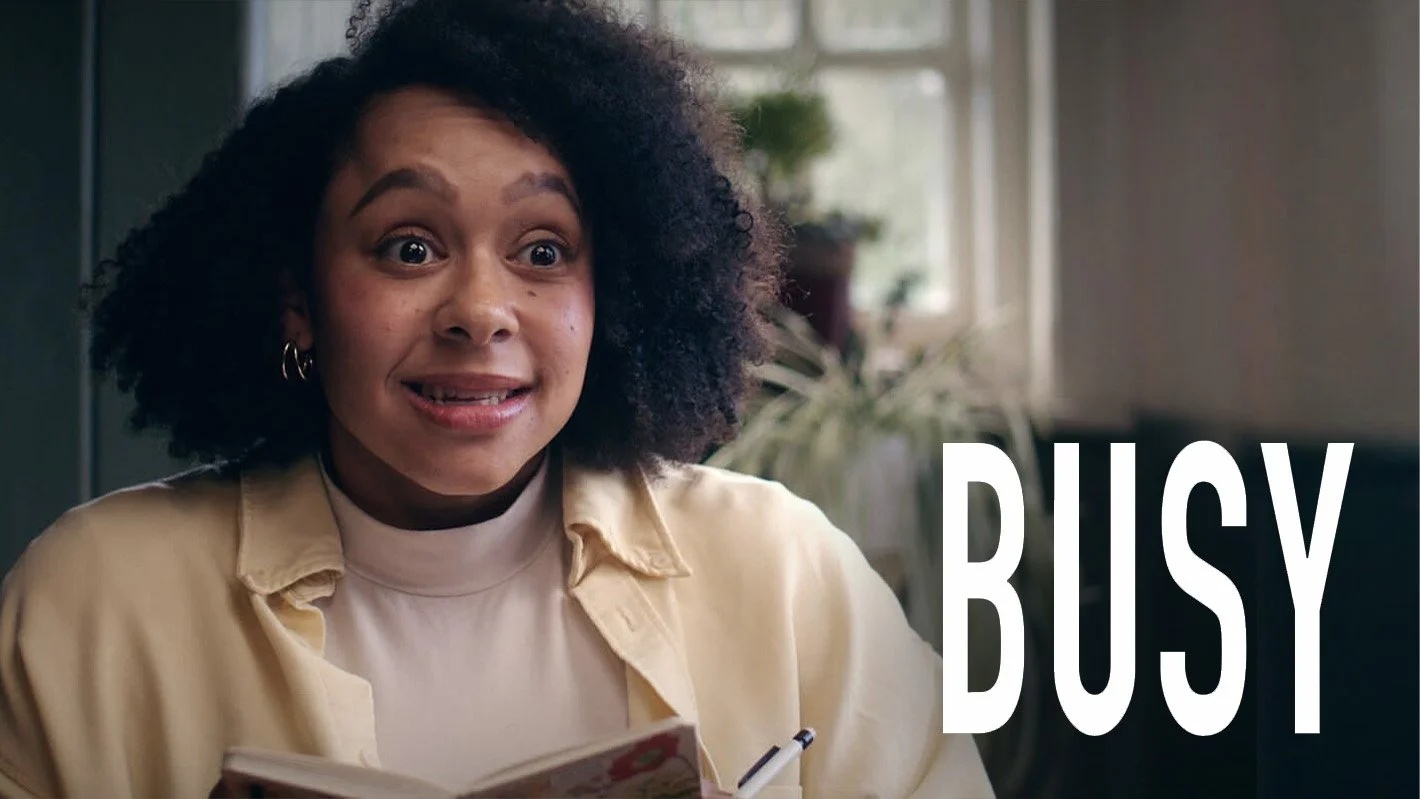
Busy
Emma-Leigh and her friends decide to put their next date in the diary, but it proves harder than they anticipate.
Written & Produced Megan Smith
Directed by Jane Moriarty
Emma-Leigh and her friends decide to put their next date in the diary, but it proves harder than they anticipate.
ABOUT THE FILM
BUSY screened earlier this year at our BIFA Qualifying Kino London Short Film Festival. Additionally it’s played at Brighton Rocks Film Festival & Spirit of Independence Film Festival, both also BIFA qualifiers.
ABOUT THE FILMMAKER
Jane Moriarty is a theatre and film director, working in the UK and Ireland. Jane directed SHUSH, a 25-minute drama produced by Charmer Pictures for RTÉ, written by and starring Liv O’Donoghue. It can be streamed on the RTE Player. Jane’s debut short film KITCHEN TALES, is now featured on BFI Player Her second film, I CALLED YOU, recently screened at the IFTA and BAFTA-qualifying IndieCork Film Festival. Jane was the Rehearsal Director for Sky comedy-drama series THE LOVERS, working with the lead cast prior to filming and during production. And she was a voice and performance director on the BAFTA-winning video game, BALDUR’S GATE 3. Jane was awarded the Young Directors Silver Screen Award 2025 for SHUSH.
Megan Smith is an actor, writer and producer for theatre and film. Megan's latest film BUSY, has qualified for BIFA 2025.. Her other comedy films received international recognition. SURGEONS (2021 ) was selected for BAFTA qualifying Bolton Film Festival and won 6 awards. BEST FRIENDS (2020) won 9 film festival awards. Other producing credits include I CALLED YOU AND ROBOT LADY. Megan is currently producing FROG, a short film written by Rebecca Crookshank about IVF, to be filmed later this year.
READ OUR INTERVIEW WITH MEGAN
Tell us about the genesis of Busy. Where did the idea come from and how did you develop that idea into the short that's now made its way out into the world?
Busy came after I observed several conversations with friends. I noticed people were very quick to make out I was the busiest person in the room, or that I had to send dates to find a time to meetup, but when it came down to it, everyone was actually as busy as each other. We all have different commitments in our lives, albeit children, family, work or selfcare, but sometimes it's easy to see yourself as the least busy because then you're not the problem. I thought it would be funny to have a double ending, just to show it wasn't about being mean. I talked about the idea for a while. to gauge the connectivity, and if other people would relate, and then I wrote the script very quickly and then went about trying to get it made.
What were some of the main obstacles you experienced when making Busy and how did you overcome them?
As with many films, we were constrained by budget and scheduling. We used a minimal crew and an empty location (pub was closed!) to make sure we could get the most out of the day.
Tell us about the journey of getting your film to audiences and some of the festival circuit highlights and/or online release.
Hearing BUSY with a live audience for the first time was amazing, as you could slowly hear the slow reveal being realised by the audience. Making people laugh, who you don't know, is the best thing in the world.
What advice or hacks would you give to other short filmmakers?
Work with people who are as caring and enthusiastic as you are.
Any film recommendations that we should add to our watchlist?
Check out SHUSH by our very own talented Jane Moriarty.
Interested in getting your work selected?

Freedom to be alone
A young woman, Jade, ends a toxic relationship to start a journey or liberation and healing.
Written & Directed by Alexandre Laurent
Produced by Maël Hajos
Jade opens up through a poem, sharing her story of an intense relationship with a former lover, marked by a toxic hold fuelled by stereotypes and the societal pressure to avoid being alone. Their breakup, far from being a tragic end, becomes a liberation a journey back to herself where solitude emerges as a soothing and healing remedy.
READ OUR INTERVIEW WITH ALEXANDRE
Welcome to our Short of the Week series. Tell us a bit about yourself and your filmmaking background.
I've been working in film for seven years now as a director/cinematographer. I was a first assistant for three years, then I became a director of photography by chance. This is my very first real project as a director, a subject that has been close to my heart for a long time.
Tell us about the genesis of Freedom to be alone and your motivation for making this film.
I have had various experiences in life, which have led me to a certain clarity about energies. In this short film, I tell the story through a poem about karmic bonds, using the image of a ball of yarn to symbolize these ties, interpreted with the sensitivity of a woman. I explore what can be resolved by emerging from these very powerful relationships.
The idea came to me while listening to music mainly, then there were the inspirations of directors that I followed like Théo le Sourd I like his work, but also the different experiences and revelations that I had during my filming, I had my vision like all directors of photography and I wanted to give a cinematographic interpretation to the story.
What were some of the main obstacles you experienced when making Freedom to be alone and how did you overcome them?
We had a small budget and had a lot of constraints, and then a lot of concessions, which allowed me to open my eyes to certain aspects of production. And the importance of having a team you can count on.
What advice or hacks would you give to other short filmmakers?
I advise the young director to give himself time to do things, even if there are many budgetary constraints, and then to have a trustworthy and competent team where communication reigns.
Any film recommendations that we should add to our watchlist?
- Baby Bright by Oscar Keys
- Sometimes / Wonder by Theo le sourd
What are you working on next?
Right now I'm working on a feature film called "The Lemon Life" I'm going to adapt it into a short film to approach production companies and then make a film
Interested in getting your work selected?

Contemporary
Explore the transformative power of art through the stories of three groundbreaking UK-based artists—Denai Moore, a vegan Jamaican chef revolutionizing cuisine; Mr Cenz, a graffiti artist reshaping urban landscapes; and Bimini, a drag performer pushing the boundaries of identity and performance.

Directed by Zaeem Asad
Produced by Emma Raz
Contemporary explores the transformative power of art through the stories of three groundbreaking UK-based artists—Denai Moore, a vegan Jamaican chef revolutionizing cuisine; Mr Cenz, a graffiti artist reshaping urban landscapes; and Bimini, a drag performer pushing the boundaries of identity and performance. This visually rich documentary celebrates their unique journeys, challenges conventions, and reveals how they are shaping modern culture by turning everyday moments into extraordinary expressions of creativity.
ABOUT THE FILMMAKER
Zaeem Asad is a London-based filmmaker known for his compelling commercials and documentaries. Having directed over 60 commercials, mainly in food and beverages, he brings a sharp eye for storytelling. His passion lies in crafting authentic narratives, capturing the lives of real people who challenge societal norms, and exploring culture and creativity through film.
READ OUR INTERVIEW WITH ZAEEM
Welcome to our Short of the Week series. Tell us a bit about yourself and your filmmaking background.
I’m Zaeem Asad, a London-based filmmaker. My career began in music and local TV before transitioning to commercials, with notable clients like Nestle and PepsiCo. I’m also known for directing Pakistan's first locally made food commercial. My passion for storytelling through visual mediums, particularly around cultural themes, led me to direct Katalina, a documentary about communal living in northeast London. In addition to filmmaking, I’ve always had a deep connection to art, which has been central to my creative journey.
Tell us about the genesis of Contemporary and your motivation for making this film.
Contemporary was born out of a shared passion for art between myself and producer Emma Raz. We both have personal connections to the arts—Emma through painting and I through music—that shaped our desire to explore how art influences contemporary society. The motivation for making this documentary was to showcase how art exists in everyday life, through unique perspectives like Denai Moore's innovative culinary approach, Mr. Cenz’s street art, and Bimini’s performances. We wanted to highlight the transformative power of art and its ability to shape identity and culture.
What were some of the main obstacles you experienced when making Contemporary and how did you overcome them?
One of the main challenges was coordinating with artists who have such diverse and dynamic practices. Each of them operates in unique spaces, from kitchens to the streets to stages, which made scheduling and capturing the essence of their work difficult. To overcome this, we relied on flexibility, adjusting our shooting schedules to work around their creative processes. Another challenge was balancing the vision of each artist with the overarching narrative of the film, but through collaboration and constant communication, we were able to maintain a cohesive story.
Tell us about the journey of getting your film to audiences and some of the festival circuit highlights.
The journey of getting Contemporary to audiences has been incredibly rewarding. We began by submitting to various festivals, and it was humbling to see how well the film resonated with audiences. A highlight was being selected for [specific festivals], where it sparked deep conversations about art's role in shaping modern culture. The festival circuit allowed us to connect with diverse audiences and filmmakers, further amplifying the message of the film.
What advice or hacks would you give to other short filmmakers?
Start with what you’re passionate about, and stay true to your vision. The journey of filmmaking is full of compromises, but never lose sight of why you wanted to tell that story in the first place. Additionally, collaboration is key. Surround yourself with a team that shares your enthusiasm and perspective. Lastly, embrace the process—every obstacle is an opportunity to learn and grow.
Any film recommendations that we should add to our watchlist?
I recommend watching Inside Llewyn Davis, as it offers incredible perspectives on the challenging life of an artist as well as the wider culture surrounding art. These films, like Contemporary, challenge conventions and offer deep reflections on the world we live in.
What are you working on next?
Currently, I’m developing a new project that explores the concept of heritage. It’s still in the early stages, but I’m excited to dive deeper into how art and identity intersect in different cultural contexts. Stay tuned for more updates!
Interested in getting your work selected?
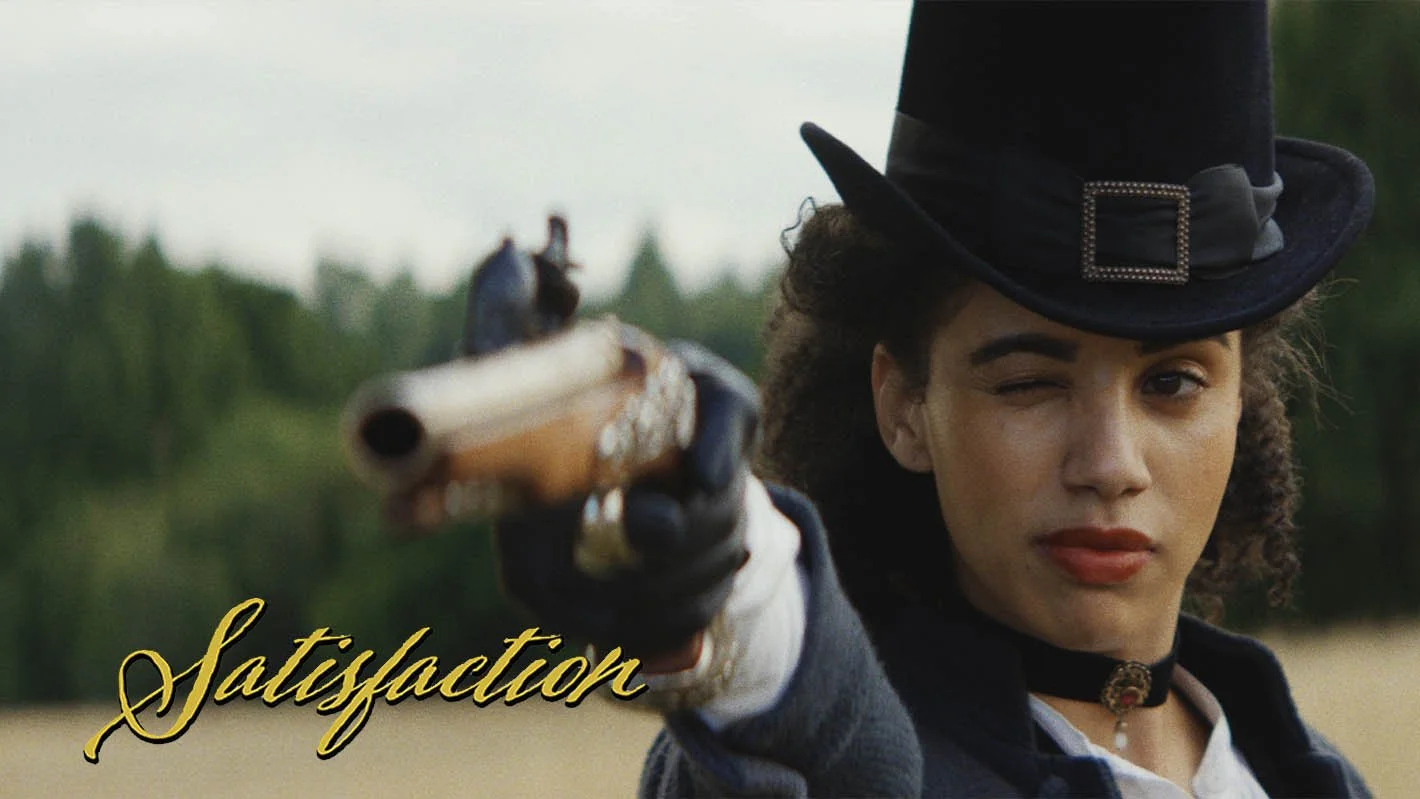
Satisfaction
Georgian England. A society lady raises her pistol to duel with her aristocratic mentor over a grave insult.

Directed by Bailey Tom Bailey
Written BY Christopher Buckley
Produced by Marek Lichtenberg & Nathan Craig
Georgian England. A society lady raises her pistol to duel with her aristocratic mentor over a grave insult.
ABOUT THE FILM
Satisfaction was an Official Selection at our very own BIFA qualifying Kino London Short Film Festival in 2024 where it was nominated for Best Score. Other festival highlights include the Oscar Qualifying Flickers’ Rhode Island IFF, the BAFTA qualifying Bolton IFF, the four other BIFA qualifying festivals including Exit 6 (Nominated for Best Editing), Crystal Palace IFF, Brighton Rocks FF, and Sunderland SFF.
ABOUT THE FILMMAKER
Bailey Tom Bailey has made many shorts and music videos that have played international BIFA, BAFTA & OSCAR qualifying festivals and online platforms including Short of the Week, Slamdance, Fright Fest, Berlinale, LSFF, Rhode Island, Bolton, Nowness, Omeleto, 1.4 awards, Shiny awards, and have won several awards along the way. He also works as an editor and sometimes VFX artist for clients including Nike, Adidas, Somesuch, AMV, BBH, Dazed. He has a background in painting, is an alumnus of Arts University College Bournemouth, Berlinale Talent Campus and has studied Meisner acting and improv comedy. Bailey is developing several features and a series based on Satisfaction.
Christopher Buckley is an actor and writer. He has written two shorts, including Satisfaction and a play ‘Third Grade’ performed at the online ‘8x8’ theatre festival in May 2020. Chris was a lead part in the original cast of Stranger Things: The First Shadow. He has performed onstage across the UK and Europe, winning the Theatrepreis Hamburg Rolfe Mares award for ‘Best Actor’ in 2017 for ‘Orphans’. He has also recorded various radio and audio dramas for BBC4 and Audible. Through his writing, he hopes to champion and elevate neglected stories and characters, both onscreen and onstage.
READ OUR INTERVIEW WITH BAILEY
Tell us about the genesis of Satisfaction and your motivation for making this film.
I (Bailey) and Christopher connected through Centerframe's Get It Made competition. Christopher had written a script about petticoat duels (duels between women), which were uncommon but happened throughout history. In his research, he found a famous Georgian cartoon of two women duelling with pistols, and the script grew from there. We were fascinated by how Georgian social structures were dehumanising these old friends, making them rivals. Over the course of the script, they rediscover their humanity, their mercy. Chris developed a brilliant Georgian slang that had me looking up various words, but gave the project a unique voice and tone. In later drafts, I encouraged Chris to draw out the duel and heighten the suspense, an approach that continued into production, where I took cues from how Sergio Leone built his shootouts.
What were some of the main obstacles you experienced when making Satisfaction and how did you overcome them?
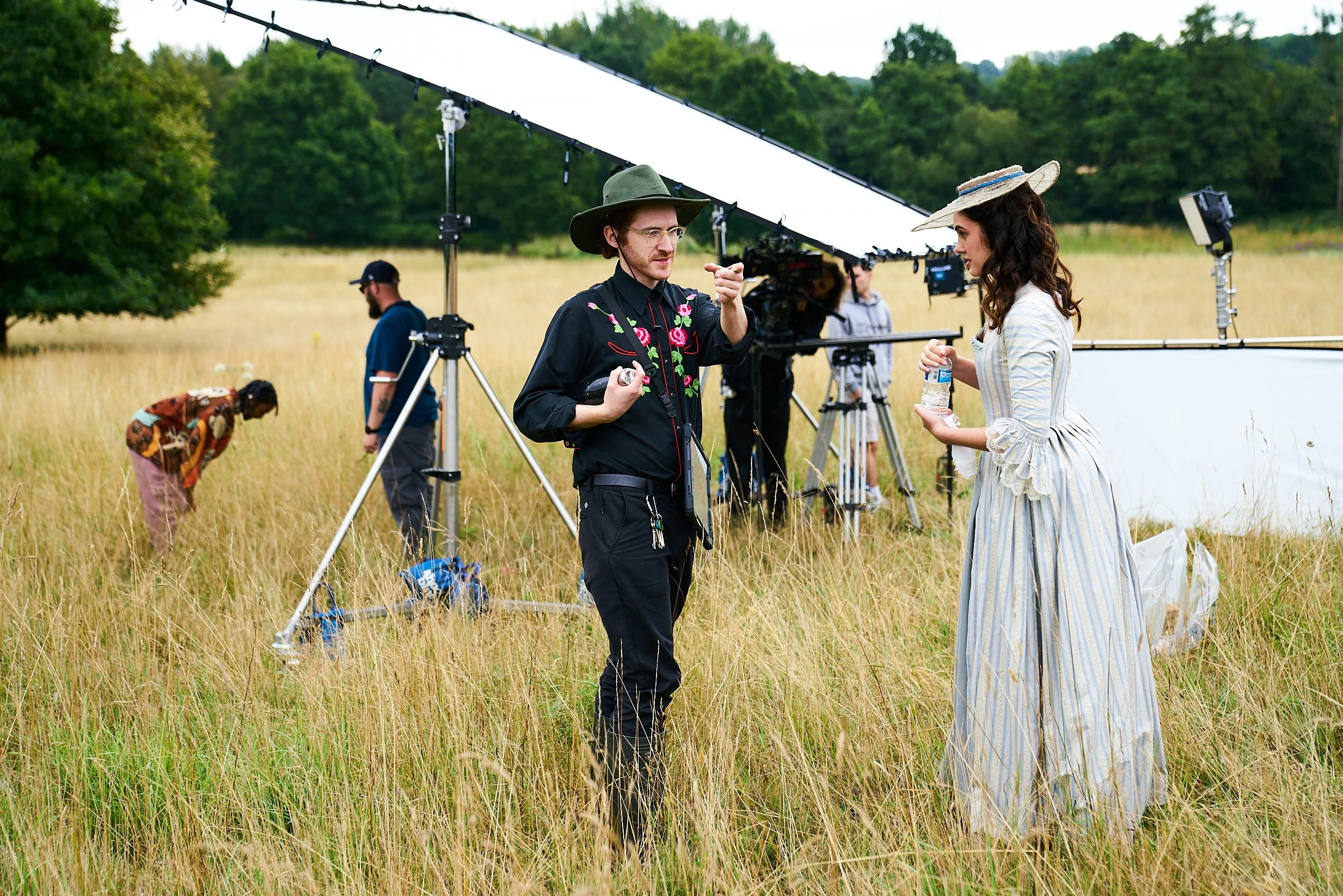
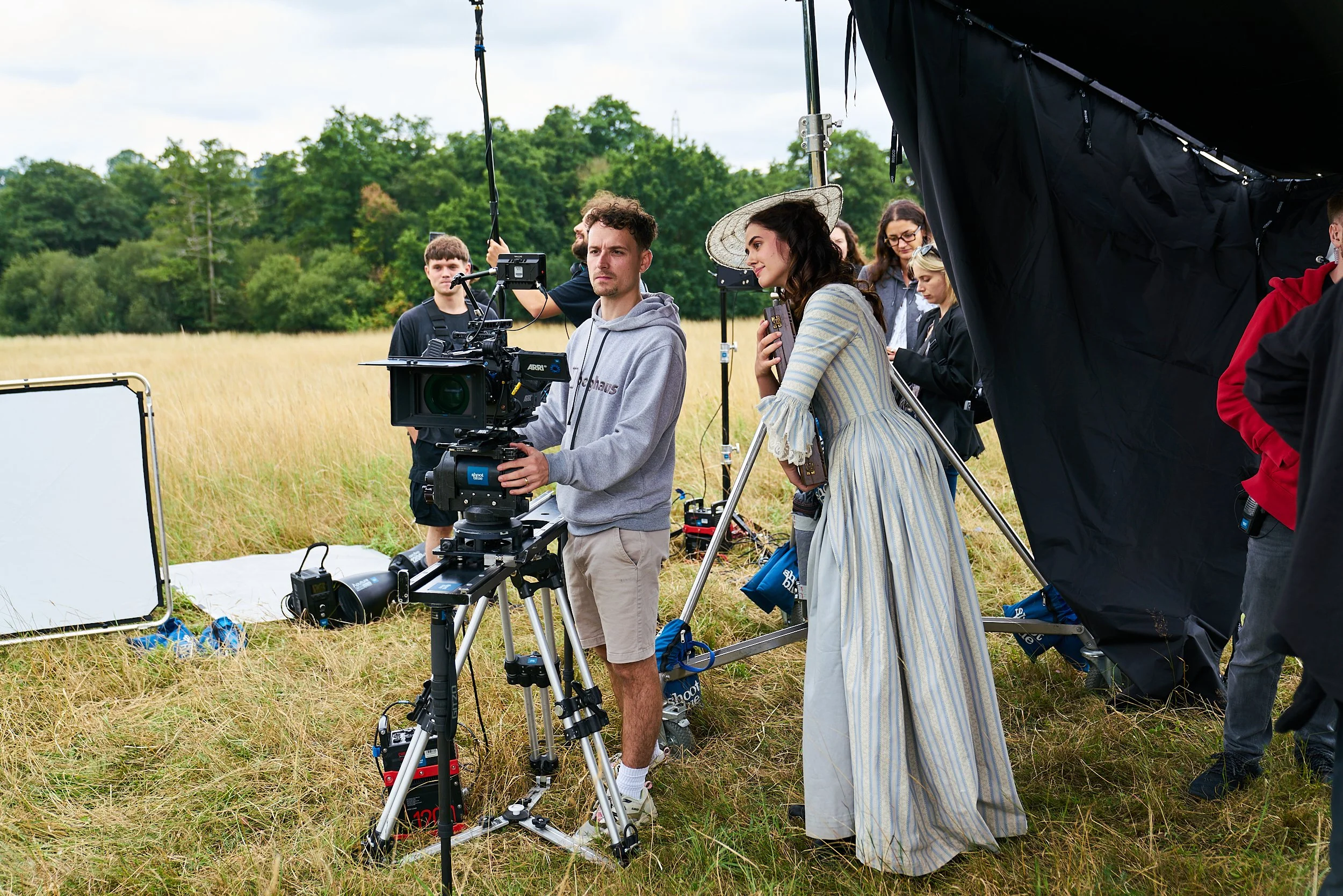
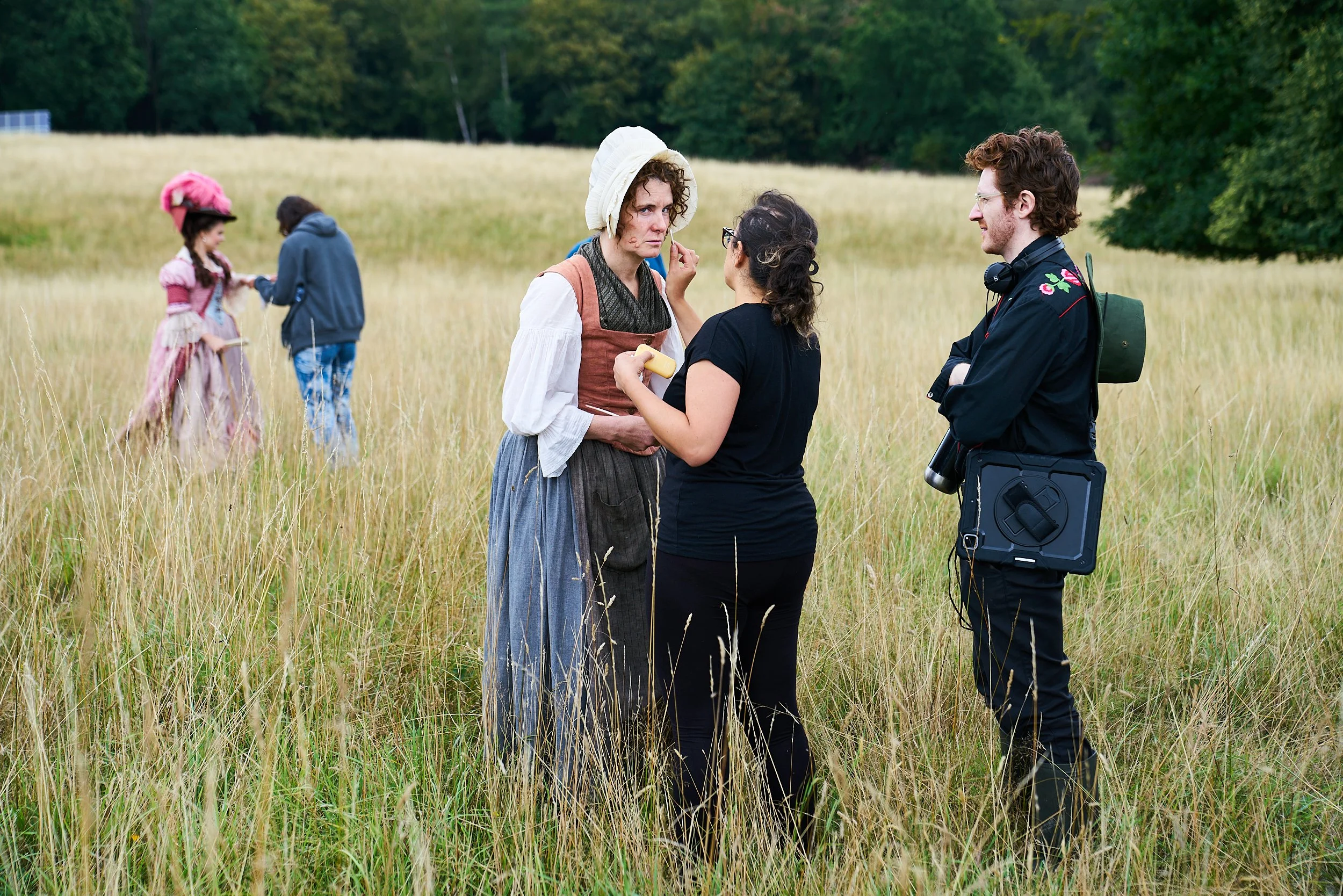
Fields. It's surprisingly hard to find a field / landscape that offered compositional possibilities, where you don't risk some member of the public slowly traipsing across the back of the frame. We realised the answer was to find a location that had private grounds, likely a stately home. However, these came with a hefty price tag, and often their lawns were too manicured. Finally, one of our producers Nathan Craig, found a stately home (that anecdotally, had briefly been owned by Led Zepplin) that wasn't on a location library, which was sympathetic to our project and had natural and photogenic grounds.
As we led up to the shoot day it was forecast to rain on our second day, but didn't feel we could move everything. So we crossed our fingers - and the gods laughed. It was torrential and our morning was mostly rained out. To cover ourselves, we had shot longer on our first day, then on the second we worked under cover for close-ups and grabbed the remaining necessary shots in a brief dry patch at day's end.

Photo Credit: DEVIN DE VIL @ licence to capture
Tell us about the journey of getting your film to audiences and some of the festival circuit highlights.
Post on a short can be slow but we managed to complete this within 5 month, with a deadline for a screening hosted by our funders Centerframe. Iron Box Films came on as a partner to fund the festival run. We quickly got it onto the festival circuit and focused on BIFA qualifying events. The film is short and fairly punchy so was often programmed towards the end of blocks as a big finish or pick-me-up before people left. It was nice to see the film, an intended audience pleaser, was landing with gasps, 'oo's and 'no's in the right place. Kino London gave us our first nomination for Andreas Aaser's score, which I believe was much deserved. Music is such an important part of my films and Andreas is very gifted and imaginative. Rhode Island gave us our US premiere and Bolton International film festival also stood out as a great experience.
What advice or hacks would you give to other short filmmakers?
Keep it short of focus the story and make it easy to programme. Keep it in one location so its easier to produce. iIf you're trying to make something that opens doors - keep the audience in mind.
Plan as much as you can, I storyboard everything myself, which is the final re-write before shooting (until we edit, of course!), which saves time.
Have an idea for every department, and brief them as clearly as you can.
Get the best cast you can! Our casting director, Chloe Blake was really helpful, she works with the National Theatre and has her ear to the ground about new talent.
Any film recommendations that we should add to our watchlist?
Once Upon a Time in the West, is a film I thought about a lot during the making of this film, as with the rest of the dollars trilogy, its inventive, plays with audience expectation and has such an operatic quality. It's climax's and pure cinema and I get the buzz I get when I watch a Hitchcock movie that you can see what the director is doing, which I always find thrilling.
Sweet Smell of Success, a noir-drama that I thought of because in his book 'On Filmmaking' the director Alexander Mackendrick (a Brit making his first US film) said he had been given a 'wordy' script but the writer Clifford Odett's (a famous playwright) told him - 'just do it fast'. I thought about that when dealing with the stylised language of Satisfaction. I also marvelled at the blocking of the film and stole moments from it. I'm a huge fan of the blocking of mid-centrury movies (40s-60s).
Days of Heaven - is always and inspiration for its editing, structure and elliptical storytelling, but this time I was thinking about the photography. Along with the paintings of Andrew Wyeth, this film helped me figure out the look and composition of the landscape. It was pivotal in me picking a location that have long grass that was somewhat yellowing, like corn, but not as difficult to work around.
All Watched Over by Machines of Loving Grace, Adam Curtis' documentary, draws incredible connections between obscure historical figures, science, philosophy, politics and society - I believe these alternative versions of history are a little subjective, but the ideas and stories had my jaw on the floor every ten minutes. Expanding Saisfactions' historical subject into a series we're constantly finding the roots of social concepts we now take for granted and Curtis will be in my mind when doing this.
What are you working on next?
We’re developing Satisfaction into a limited series about Ann and Belinda becoming hired guns fighting for women’s honour.
I’m also developing a few features, and packaging one caled Torn Velvet, about a fashion marketer who unravels when she discovers that the sight of safety pins triggers orgasmic, spiritually awakening seizues.