
MIJO
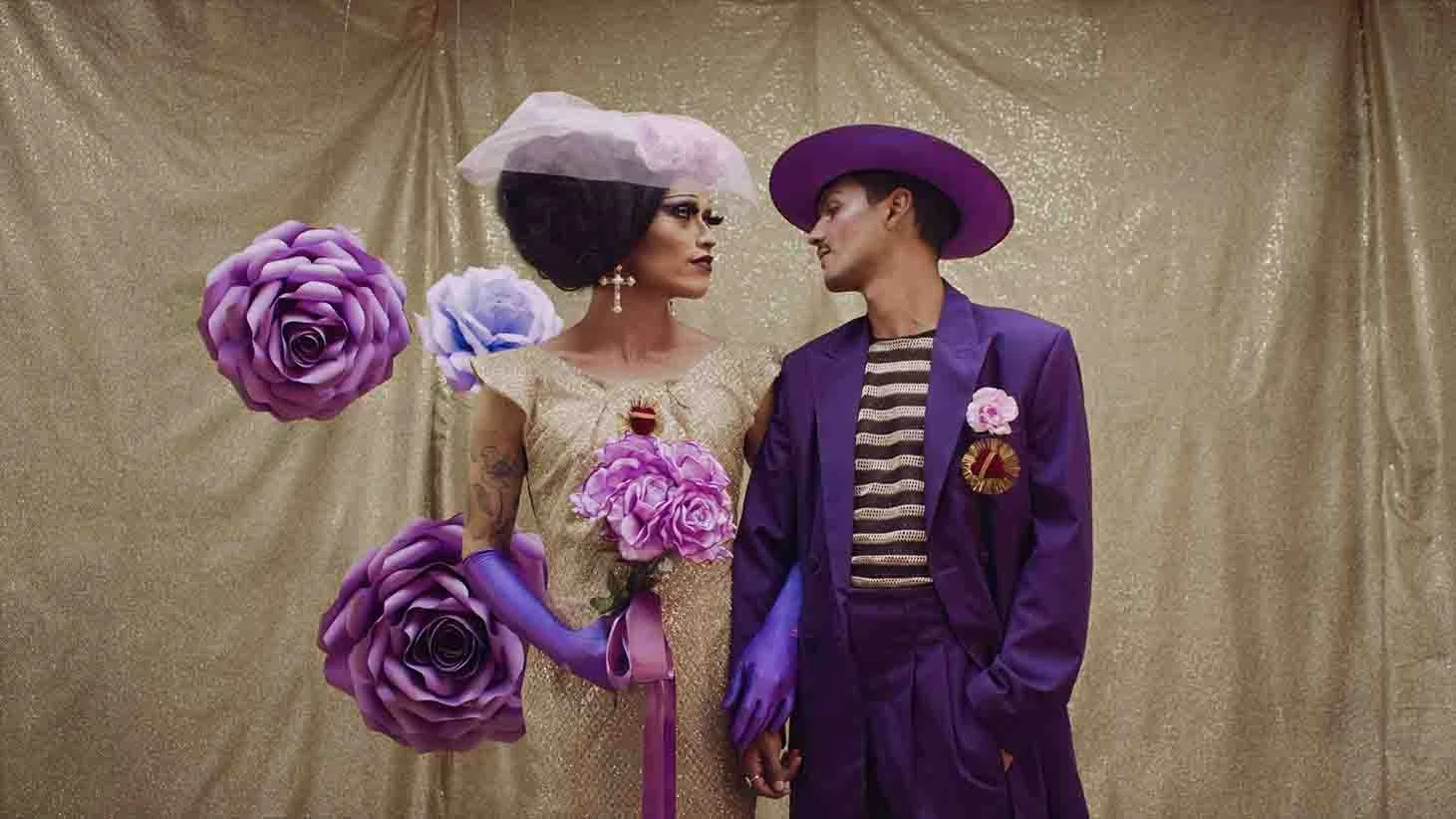
Mijo is a young dreamer, suddenly blessed with the gift of King Midas. However his ability has a unique twist: whatever and whoever he touches is stylishly pimped up.
Written & Directed by Mazdey Snob
Shot in the uncharted streets of Mexico City, Mijo is a colourful and fun fashion film inspired by the pachucos fashion from the 40s. The film is a collaboration with independent local artists, showcasing traditional Mexican tailoring, fashion, music and illustrations all in one project. Channelling the city's edgy and urban spirit, Mijo reinterprets the myth of King Midas through a modern Mexican lens.
Tell us a bit about yourself and your filmmaking background.
I studied graphic design, but I always wanted to work on audiovisuals. So when I discovered the fashion film I fell in love with the genre and the freedom that it has to tell stories - I then I started making fashion films in 2014. Almost all of my work as a director has been done with designers, artists and fashion brands. It has been great to be able to create with them, since it has been a very personal process, managing to create artistic films with commercial projection and achieving that balance. And also being recognized at festivals like yours, which makes me very proud.
What was your inspiration? Why did you decide to make Mijo?
My idea was for Mijo was to be a Mexican fairy tale, created with the elements of our culture and our streets. I decided to take the myth of King Midas and appropriate it to turn it into something that happens in Mexico. Instead of turning things into gold, his gift was to stylize everything that “Mijo” touches, to give it a fashion twist. All of this is told in the language of comedy. I wanted it to be something fun to watch and I wanted to give it a lot of moments during the story that you can treasure as a viewer, like the encounter with the puppy, his walk, or his daydreams.
Mijo's clothing is inspired by the style of the Pachucos of the 40's, it is a style that has caught my attention since I was a child. This fashion represents a lot in Mexico and has also been a symbol of resistance of migrants in the United States. Something that is important to me is the positive representation for us Mexican/Latino people with brown skin. In Mexico, curiously, being brown, black or dark-skinned is a stigma and in “Mijo” and in other of my works I have tried to combat that.
What obstacles did you overcome while in the making of this film?
It's a very detailed production that we had to accomplish on a tight budget, so we had to be very careful with the shooting schedule and how we distribute the expenses. It was a slow process of searching for each prop in the city's popular markets, which was also part of the spirit of the film.
Another difficulty was that we had limited time to record on location, we did not have the benefit of any institution since in Mexico it is difficult to have government support for independent productions. We put up the street decorations ourselves and we asked the people of each house for permission to do so. The cars that appear belong to private individuals and I found them searching the streets. I mean everything was local and independent, many people participated and trusted us and what we were going to create.
Tell us about the journey of getting your film to audiences.
Bringing “Mijo” to the public has become a very great experience. It has been selected and nominated at several festivals and has also received several awards such as “Best Glam” at LA Fashion Festival, “Best Actor model” at UK Film Fashion Festival, “Cinema Femme Short Film Fest Phenomenal Woman in Film award” and the “People's choice award” at ASVOFF.
But the best part is that I have received messages from people through social networks to tell me how much they like “Mijo”, how fresh they find the film and the positive representation. Being able to connect with people through my work is really rewarding. I have to give a special thanks here to Niccolo Montanari who has handled the distribution and is really wonderful to work with.
Words of wisdom. What advice would you give to other filmmakers?
In my experience so far, I think it is important to be aware that the system is very complex and does not provide equal opportunities for all. So it does not always mean that our work is bad. If the opportunity presents itself, you have to hold on to it or create the opportunity yourself. Of course it is very difficult, but it is about betting on what we do despite the fears and uncertainties that arise along the way. There are always those who believe in you and your work (which I appreciate very much) and also the audience can identify with what you have to say and your vision. So keep going and don't let go.
What are you working on it now?
I received an invitation from various platforms to give conferences and workshops about fashion film in the coming months and also the invitation from the GRRL HAUS Cinema festival in Berlin to carry out specialized curatorship on the subject. I am now a permanent resident in Spain and I recently directed a music video in San Sebastián, Basque country, so I am excited for the projects to come and always looking and open for agencies and people who want to work with me.
Any film recommendations that we should add to our watchlist?
The “Namesake” and “Queen of katwe” by Mira Nair , “The Roof” by Vittorio de Sica, “The Tale of the Princess Kaguya “ and “Pompoko” by Isao Takahata, “My Happy Family” by Nana Ekvtimishvili, “Noche de fuego / Prayers for the Stolen ” by Tatiana Hueso, “A Cop Movie” by Alonso Ruizpalacios, “Tangerine” by Sean baker. And I just saw “The 7 Lives Of Lea” on Netflix and I loved it.
Interested in getting your work selected as Short of the Week?

BULLDOG
After spending the night in a cell, a rough sleeper has a score to settle.
Written & Directed by Kieran Stringfellow
Produced by Tasha Williams
After spending the night in a cell, a rough sleeper has a score to settle.
Tell us a bit about yourself and your filmmaking background.
My filmmaking background, like most, comes from a pure love of cinema. As a child, I was transfixed by movies, they formed much of my earlier years. However, a career in movies was something, if I’m being honest, that I never knew existed until I dropped out of college and started googling different career paths. As soon as I came across filmmaking, I knew it was for me, and I’ve been working at it ever since.
For now, I’m moonlighting as a filmmaker whilst working a full-time job.
What was your inspiration? Why did you decide to make Bulldog?
I made Bulldog partly out of a necessity to make something, and partly due to being inspired by the new city that I had moved to at the time. I had just graduated and found myself at a bit of a crossroads – I was keen to make something, but didn’t have the kit, support, and peers that I had been accustomed to at university. So, I knew I needed to make something within my means, but without compromising on the cinematic quality.
At the same time, I was living and working in the centre of Manchester, which unfortunately has a large homeless population, especially compared to the city’s relatively small size. I was particularly disappointed by my initial reaction, and how I was quick to judge these people, assuming their circumstances were a result of their own actions. Bulldog formed my response to these assumptions, leaning into stereotypes and genre tropes to make something that would confront audiences with their own pre-conceived assumptions.
What obstacles did you overcome while in the making of this film?
Budget, time, weather, the list could go on. We didn’t really have any money, and it was just a few of us running around Manchester with a small camera, most likely breaking every filmmaking rule. Thankfully, we had a really clear vision for what we wanted to capture, and in this instance, the storyboards proved more important than the script.
But the biggest obstacle for me was probably post production. To keep costs down, I took on the edit, and it was a difficult process to say the least. With the films lack of dialogue and an obvious structure, and not to mention the fact I was editing without sound, I often struggled to make sense of what I was making. The vision that had been so clear throughout the shoot disappeared, and I was constantly doubting whether the film worked or made sense. It wasn’t until I received the score and sound design from my amazing sound designer Brian Lane, that I could be certain that we had made something of worth.
Tell us about the journey of getting your film to audiences.
Me and my producing partner had some experience of the festival circuit with our graduation short, and with Bulldog, our approach was the more the merrier. We just wanted to get the film as far and wide as possible, and with the film being a lean six minutes and featuring no dialogue, we felt it was very programmable. Unfortunately, the pandemic coincided with our festival release which meant all the festivals we got selected for transitioned to online events. But that said, it did enable us to watch so many more short films and establish relationships with people that we would never have otherwise.
Words of wisdom. What advice would you give to other filmmakers?
Be selective with the films you make. I think it’s so easy to go down the route of making anything and everything, but often that can result in work that never gets seen. For me, I found it’s more useful to let any ideas sit before I reach for the keyboard. Really deliberate and scrutinise your ideas, does it demand to be made? Because every film takes a Herculean effort to bring to screen and there’s no point in going through all that pain to make something that even you’re not 100% sure about.
What are you working on now?
Me and my producer have just boxed off our latest short which was backed by BFI Network. The film’s called Tow Truck, and we’re both excited and nervous to release it out into the wild.
We’re now in the script stages on our next short, as well as chipping away at some long-term feature length projects. Whilst a feature film is the dream, I still feel I have lots to gain from short filmmaking, and I’m keen not to rush the process.
Any film recommendations that we should add to our watchlist?
These are my go-to’s:
Distant Voices, Still Lives (Terrence Davies) – best film about dysfunctional families.
Beau Travail (Claire Denis) – best film about toxic masculinity.
The Headless Woman (Lucretia Martel) – best film about class divide.
Dust Devil (Richard Stanley) – best acid western.
Phoenix (Christian Petzold) – Just mint.